A Journey into Hexagon
Dissecting Qualcomm Basebands
Seamus Burke
Agenda
● About me
● Why Basebands?
● History
● Modern SoC Architecture
● Hexagon
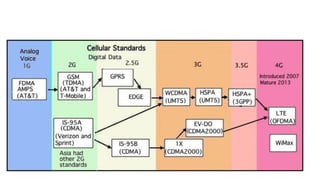
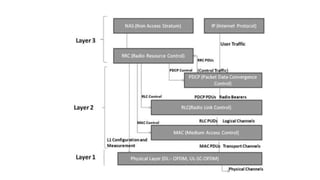
● Cellular Stack architecture
● Analysis
About Me
● Student, still finishing up my undergrad
● Interested in kernel internals, exploit development, and embedded systems
● Plays a lot of CTFs
Goals
● Find bugs in the baseband
● Understand how it works and how it interacts with Android
Prior Work
“Reverse Engineering a Qualcomm Baseband” - Guillaume Delugré(fix char)
“Baseband Exploitation in 2013” - Ralph-Philipp Weinmann (PacSec 2013)
“Exploring Qualcomm Baseband via Modkit” - Peter Pi, XiLing Gong, Gmxp (CSW
2018)
Agenda
● About me
● Why Basebands?
● History
● Modern SoC Architecture
● Hexagon
● Cellular Stack architecture
● Analysis
What is a baseband exactly?
● The chip in a phone which communicates with the cellular network
● Handles the radio signal processing over the air
● Has to support a large number of standards -
(GSM,UMTS,CDMA2k,cdmaOne, GPRS,EDGE, LTE, etc)
● The phones main interface to the rest of the world
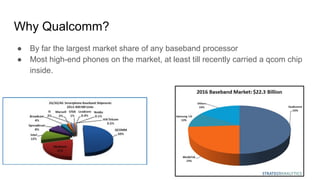
Why Qualcomm?
● By far the largest market share of any baseband processor
● Most high-end phones on the market, at least till recently carried a qcom chip
inside.
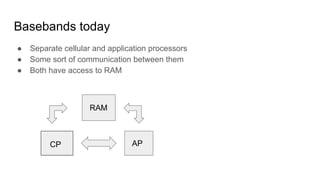
Basebands today
● Separate cellular and application processors
● Some sort of communication between them
● Both have access to RAM
CP AP
RAM
Agenda
● About me
● Why Basebands?
● History
● Modern SoC Architecture
● Hexagon
● Cellular Stack architecture
● Analysis
RTOS
● Real-time, embedded operating systems.
● 2 major categories
○ Unprotected - logical and physical addresses are the same
○ Protected - virtual memory
● Time bound, with well defined time constraints
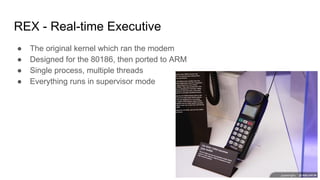
REX - Real-time Executive
● The original kernel which ran the modem
● Designed for the 80186, then ported to ARM
● Single process, multiple threads
● Everything runs in supervisor mode
● Tasks are basically the threads of REX.
● Every task has a TCB storing the the SP, priority, stack_limit, etc
● Each task has it’s own stack, when tasks are suspended, context is saved in
a special context frame on top of it’s stack
● Pointer to the saved context stored in the tasks TCB
● TCBs stored in a doubly linked list, trivial to mess with
● Why did Qualcomm switch from REX?
● Well, it had it’s issues:
“Programmers should use these functions only according to the interface
specifications, since REX does not check any parameter for validity”
● Flat address space, lack of memory protections
○ Did they switch for security? Hah, no, debugging millions of lines of C with no memory
protections was a nightmare
L4 + Iguana
● Multiple-process and multiple-threaded
● Only the kernel runs in supervisor mode, everything else in userland
● A REX emulation layer is supported
○ REX tasks are L4 threads
○ No changes to the REX api, it’s converted transparently
○ AMSS runs in user mode
○ Interrupts split between kernel and user mode
QuRT
● Qualcomm Real-time OS
● Used to be named BLAST, name changed as part of OpenDSP initiative
● Most of the APIs are backwards compatible, with the exception of some
threading things.
● QuRT provides all the OS primitives you would expect
○ Mutexes
○ Futexes
○ Semaphores
○ Task Scheduling
● Priority based scheduling
○ Priorities 0-256, 0 is the highest
○ Tries to schedule an interrupt in an idle hw thread, instead of preempting a running task
Exceptions
● Application exceptions
○ Page faults, misaligned operations, processor exceptions, etc
○ Handled by registered exception handlers
● Kernel exceptions
○ Page faults and other processor exceptions (TODO like what?)
○ Cause all execution to be terminated and the processor to be shut down
○ Processor state is saved as best it can be
Mitigations? Sorta
● Complete lack of ASLR
● There is a form of DEP, can’t write to code, can’t execute data
● XORd stack cookies
● Heap protection
○ Different magic values for the headers of in-use and free’d blocks
● Lots of fixed addresses everywhere. The RTOS loads at the same spot every
time, as does just about everything else.
● Hardcoded addresses prevalent in the code
AMSS
● Advanced Mobile Subscriber Software, drivers and protocol stacks which
make up the modem
● Configured differently for different chipsets
○ Which air interface protocols are supported
○ Hardware specific drivers
○ Multimedia software
● > 60 tasks running
○ Diag, Dog, Sleep, CM, PS, DS, etc
Diagnostics
● DIAG, or Diagnostic Services provides a server that clients can request info
from about AMSS
● DIAG is a REX task, usually handles requests from Serial or USB
● Packet based protocol
● Lots of useful stuff
○ Debug messages
○ OTA logs
○ Status
○ Statistics
Agenda
● About me
● Why Basebands?
● History
● Modern SoC Architecture
● Hexagon
● Cellular Stack architecture
● Analysis
Qfuses
● Internal bank of one time programmable fuses, the QFPROM
● Publically undocumented
● Inter-chip configuration settings, cryptographic keys
● Secure boot and TrustZone both make heavy use of these
● Hardware debugging usually disabled in prod by blowing a fuse
SoC Architecture I
● Multiple interconnected subsystems
○ MPSS - Modem Processor
○ APPS - Application processor
○ RPM - Resource and Power Management
○ WCNSS - Wireless Connectivity
○ LPASS - Low Power Audio
AP <-> CP communication
● So how does Android talk to the modem?
● Shared memory
● QMI
Shared Memory
● Main idea is for the Modem to write some data, and the AP pick it up
● Common APIs on both the modem (and other subsystems) and linux side
○ Smem_init, smem_alloc, smem_find, smem_get_entry
● SMD - Shared Memory Driver
○ Wrapper around SMEM
○ Abstracts into things like pipes
○ Separate channels for DS, DIAG, RPC, GPS
QMI
● Qualcomm MSM Interface - designed to supplant the AT cmd set
● High level interface over older protocol (DMSS)
● Used to interface with modem components, but not drive hw
● Client-server model
● Packet structure with a header and then TLV payloads
Agenda
● About me
● Why Basebands?
● History
● Modern SoC Architecture
● Hexagon
● Cellular Stack architecture
● Analysis
Hexagon
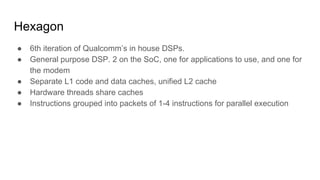
● 6th iteration of Qualcomm’s in house DSPs.
● General purpose DSP. 2 on the SoC, one for applications to use, and one for
the modem
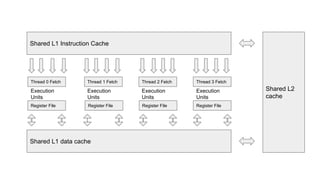
● Separate L1 code and data caches, unified L2 cache
● Hardware threads share caches
● Instructions grouped into packets of 1-4 instructions for parallel execution
Shared L1 Instruction Cache
Shared L1 data cache
Shared L2
cache
Thread 0 Fetch Thread 1 Fetch Thread 2 Fetch Thread 3 Fetch
Register File Register File Register File Register File
Execution
Units
Execution
Units
Execution
Units
Execution
Units
General Info I
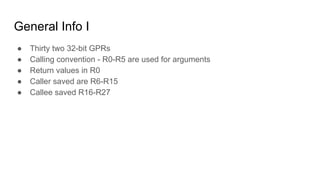
● Thirty two 32-bit GPRs
● Calling convention - R0-R5 are used for arguments
● Return values in R0
● Caller saved are R6-R15
● Callee saved R16-R27
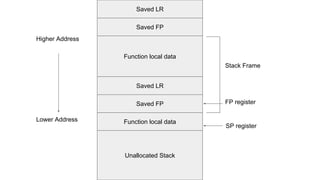
The stack on QDSP
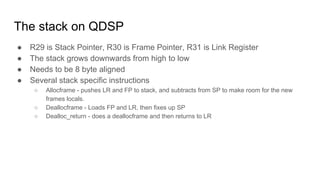
● R29 is Stack Pointer, R30 is Frame Pointer, R31 is Link Register
● The stack grows downwards from high to low
● Needs to be 8 byte aligned
● Several stack specific instructions
○ Allocframe - pushes LR and FP to stack, and subtracts from SP to make room for the new
frames locals.
○ Deallocframe - Loads FP and LR, then fixes up SP
○ Dealloc_return - does a deallocframe and then returns to LR
Saved LR
Saved FP
Saved LR
Saved FP
Function local data
Unallocated Stack
Function local data
Stack Frame
FP register
SP register
Higher Address
Lower Address
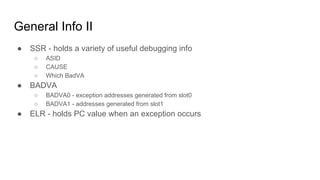
General Info II
● SSR - holds a variety of useful debugging info
○ ASID
○ CAUSE
○ Which BadVA
● BADVA
○ BADVA0 - exception addresses generated from slot0
○ BADVA1 - addresses generated from slot1
● ELR - holds PC value when an exception occurs
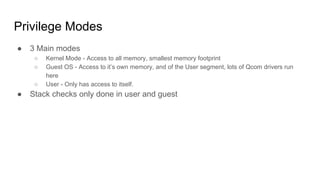
Privilege Modes
● 3 Main modes
○ Kernel Mode - Access to all memory, smallest memory footprint
○ Guest OS - Access to it’s own memory, and of the User segment, lots of Qcom drivers run
here
○ User - Only has access to itself.
● Stack checks only done in user and guest
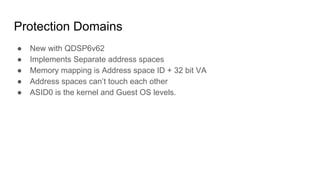
Protection Domains
● New with QDSP6v62
● Implements Separate address spaces
● Memory mapping is Address space ID + 32 bit VA
● Address spaces can’t touch each other
● ASID0 is the kernel and Guest OS levels.
Agenda
● About me
● Why Basebands?
● History
● Modern SoC Architecture
● Hexagon
● Cellular Stack architecture
● Analysis
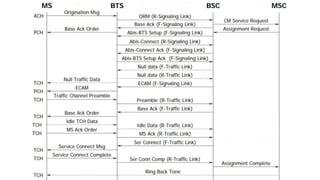
Call flow
● There are a dozen different ways the cell stack can make/receive a call
○ 1x voice call
○ 1x data call
○ Hdr call
○ Gsm voice call
○ Gprs data call
○ Wcdma voice call
○ Wcdma data call
○ Td-scdma call
○ Lte data call
● Multiple ways to do the same thing implies added complexity, and these aren’t
as simple as a 3-way handshake to begin with
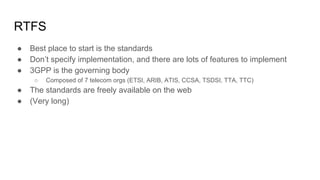
RTFS
● Best place to start is the standards
● Don’t specify implementation, and there are lots of features to implement
● 3GPP is the governing body
○ Composed of 7 telecom orgs (ETSI, ARIB, ATIS, CCSA, TSDSI, TTA, TTC)
● The standards are freely available on the web
● (Very long)
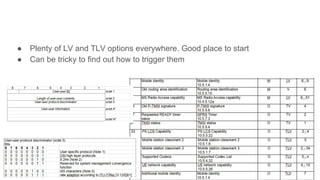
● Plenty of LV and TLV options everywhere. Good place to start
● Can be tricky to find out how to trigger them
Agenda
● About me
● Why Basebands?
● History
● Modern SoC Architecture
● Hexagon
● Cellular Stack architecture
● Analysis
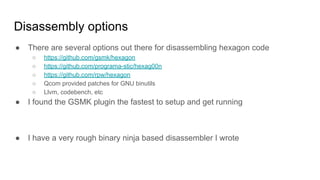
Disassembly options
● There are several options out there for disassembling hexagon code
○ https://github.com/gsmk/hexagon
○ https://github.com/programa-stic/hexag00n
○ https://github.com/rpw/hexagon
○ Qcom provided patches for GNU binutils
○ Llvm, codebench, etc
● I found the GSMK plugin the fastest to setup and get running
● I have a very rough binary ninja based disassembler I wrote
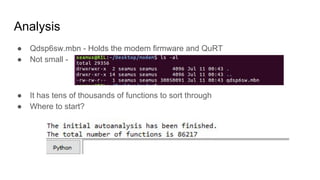
Analysis
● Qdsp6sw.mbn - Holds the modem firmware and QuRT
● Not small -
● It has tens of thousands of functions to sort through
● Where to start?
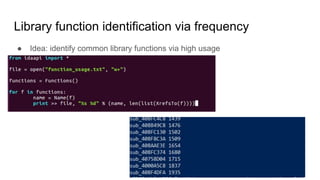
Library function identification via frequency
● Idea: identify common library functions via high usage
Debugging
● A few different options here
○ Qcom tools like QXDM/QPST, talk to the phone over USB
■ Acquiring, licensing, ramdumps(!)
○ JTAG
■ More cost, slightly higher difficulty
○ Lauterbach Trace 32
■ Expensive, licensing, gets you as low level as you’re gonna get
■ More on this later
○ Memory R/W via exploit
○ Modem Image modification
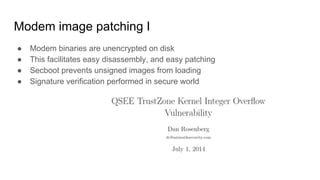
Modem image patching I
● Modem binaries are unencrypted on disk
● This facilitates easy disassembly, and easy patching
● Secboot prevents unsigned images from loading
● Signature verification performed in secure world
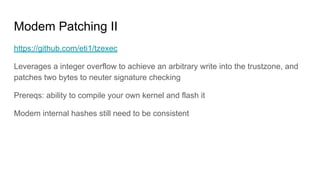
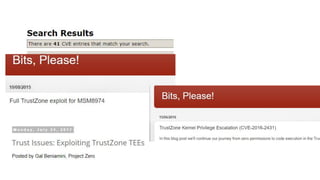
Modem Patching II
https://github.com/eti1/tzexec
Leverages a integer overflow to achieve an arbitrary write into the trustzone, and
patches two bytes to neuter signature checking
Prereqs: ability to compile your own kernel and flash it
Modem internal hashes still need to be consistent
What are the preconditions of a debugger?
● Able to read and write from/to memory (setting breakpoints, etc)
● Breakpoints and the like implies the ability to change memory permissions
● Setting register values
How does a baseband take input?
● Over the air interface
● Shared memory
● Serial
Implementing a debugger
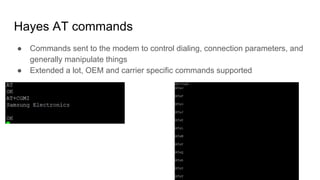
Hayes AT commands
● Commands sent to the modem to control dialing, connection parameters, and
generally manipulate things
● Extended a lot, OEM and carrier specific commands supported
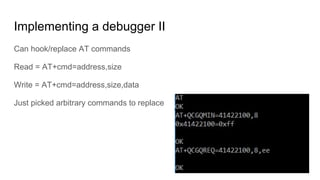
Implementing a debugger II
Can hook/replace AT commands
Read = AT+cmd=address,size
Write = AT+cmd=address,size,data
Just picked arbitrary commands to replace
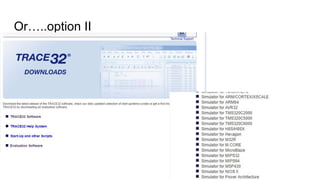
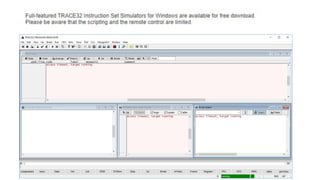
Or…..option II
Testing
● Usually need a license to broadcast on cellular frequencies (depending on
country)
● Or get a Faraday cage
● Can use a Software Defined Radio (SDR) to implement our own cell stack
● A SDR is a general purpose transceiver, they usually support a variety of
different frequencies
Testing II
● Various hardware options
○ BladeRF x40 ~$420
○ BladeRF x115 ~$650
○ USRP B200 ~$675
Testing III
● Quite a few open source projects have sprung up in the past few years
● YateBTS - GSM and GPRS
● OpenBTS - GSM, GPRS, 3G (UMTS)
● OpenBSC - GSM, GPRS
● OpenAirInterface - LTE
● OpenLTE - LTE
● srsLTE - LTE
Questions?

A Journey into Hexagon: Dissecting Qualcomm Basebands

  • 1.
    A Journey intoHexagon Dissecting Qualcomm Basebands Seamus Burke
  • 2.
    Agenda ● About me ●Why Basebands? ● History ● Modern SoC Architecture ● Hexagon ● Cellular Stack architecture ● Analysis
  • 3.
    About Me ● Student,still finishing up my undergrad ● Interested in kernel internals, exploit development, and embedded systems ● Plays a lot of CTFs
  • 4.
    Goals ● Find bugsin the baseband ● Understand how it works and how it interacts with Android
  • 5.
    Prior Work “Reverse Engineeringa Qualcomm Baseband” - Guillaume Delugré(fix char) “Baseband Exploitation in 2013” - Ralph-Philipp Weinmann (PacSec 2013) “Exploring Qualcomm Baseband via Modkit” - Peter Pi, XiLing Gong, Gmxp (CSW 2018)
  • 6.
    Agenda ● About me ●Why Basebands? ● History ● Modern SoC Architecture ● Hexagon ● Cellular Stack architecture ● Analysis
  • 7.
    What is abaseband exactly? ● The chip in a phone which communicates with the cellular network ● Handles the radio signal processing over the air ● Has to support a large number of standards - (GSM,UMTS,CDMA2k,cdmaOne, GPRS,EDGE, LTE, etc) ● The phones main interface to the rest of the world
  • 8.
    Why Qualcomm? ● Byfar the largest market share of any baseband processor ● Most high-end phones on the market, at least till recently carried a qcom chip inside.
  • 9.
    Basebands today ● Separatecellular and application processors ● Some sort of communication between them ● Both have access to RAM CP AP RAM
  • 10.
    Agenda ● About me ●Why Basebands? ● History ● Modern SoC Architecture ● Hexagon ● Cellular Stack architecture ● Analysis
  • 11.
    RTOS ● Real-time, embeddedoperating systems. ● 2 major categories ○ Unprotected - logical and physical addresses are the same ○ Protected - virtual memory ● Time bound, with well defined time constraints
  • 12.
    REX - Real-timeExecutive ● The original kernel which ran the modem ● Designed for the 80186, then ported to ARM ● Single process, multiple threads ● Everything runs in supervisor mode
  • 13.
    ● Tasks arebasically the threads of REX. ● Every task has a TCB storing the the SP, priority, stack_limit, etc ● Each task has it’s own stack, when tasks are suspended, context is saved in a special context frame on top of it’s stack ● Pointer to the saved context stored in the tasks TCB ● TCBs stored in a doubly linked list, trivial to mess with
  • 14.
    ● Why didQualcomm switch from REX? ● Well, it had it’s issues: “Programmers should use these functions only according to the interface specifications, since REX does not check any parameter for validity” ● Flat address space, lack of memory protections ○ Did they switch for security? Hah, no, debugging millions of lines of C with no memory protections was a nightmare
  • 15.
    L4 + Iguana ●Multiple-process and multiple-threaded ● Only the kernel runs in supervisor mode, everything else in userland ● A REX emulation layer is supported ○ REX tasks are L4 threads ○ No changes to the REX api, it’s converted transparently ○ AMSS runs in user mode ○ Interrupts split between kernel and user mode
  • 16.
    QuRT ● Qualcomm Real-timeOS ● Used to be named BLAST, name changed as part of OpenDSP initiative ● Most of the APIs are backwards compatible, with the exception of some threading things.
  • 17.
    ● QuRT providesall the OS primitives you would expect ○ Mutexes ○ Futexes ○ Semaphores ○ Task Scheduling ● Priority based scheduling ○ Priorities 0-256, 0 is the highest ○ Tries to schedule an interrupt in an idle hw thread, instead of preempting a running task
  • 18.
    Exceptions ● Application exceptions ○Page faults, misaligned operations, processor exceptions, etc ○ Handled by registered exception handlers ● Kernel exceptions ○ Page faults and other processor exceptions (TODO like what?) ○ Cause all execution to be terminated and the processor to be shut down ○ Processor state is saved as best it can be
  • 19.
    Mitigations? Sorta ● Completelack of ASLR ● There is a form of DEP, can’t write to code, can’t execute data ● XORd stack cookies ● Heap protection ○ Different magic values for the headers of in-use and free’d blocks ● Lots of fixed addresses everywhere. The RTOS loads at the same spot every time, as does just about everything else. ● Hardcoded addresses prevalent in the code
  • 20.
    AMSS ● Advanced MobileSubscriber Software, drivers and protocol stacks which make up the modem ● Configured differently for different chipsets ○ Which air interface protocols are supported ○ Hardware specific drivers ○ Multimedia software ● > 60 tasks running ○ Diag, Dog, Sleep, CM, PS, DS, etc
  • 21.
    Diagnostics ● DIAG, orDiagnostic Services provides a server that clients can request info from about AMSS ● DIAG is a REX task, usually handles requests from Serial or USB ● Packet based protocol ● Lots of useful stuff ○ Debug messages ○ OTA logs ○ Status ○ Statistics
  • 22.
    Agenda ● About me ●Why Basebands? ● History ● Modern SoC Architecture ● Hexagon ● Cellular Stack architecture ● Analysis
  • 23.
    Qfuses ● Internal bankof one time programmable fuses, the QFPROM ● Publically undocumented ● Inter-chip configuration settings, cryptographic keys ● Secure boot and TrustZone both make heavy use of these ● Hardware debugging usually disabled in prod by blowing a fuse
  • 24.
    SoC Architecture I ●Multiple interconnected subsystems ○ MPSS - Modem Processor ○ APPS - Application processor ○ RPM - Resource and Power Management ○ WCNSS - Wireless Connectivity ○ LPASS - Low Power Audio
  • 25.
    AP <-> CPcommunication ● So how does Android talk to the modem? ● Shared memory ● QMI
  • 26.
    Shared Memory ● Mainidea is for the Modem to write some data, and the AP pick it up ● Common APIs on both the modem (and other subsystems) and linux side ○ Smem_init, smem_alloc, smem_find, smem_get_entry ● SMD - Shared Memory Driver ○ Wrapper around SMEM ○ Abstracts into things like pipes ○ Separate channels for DS, DIAG, RPC, GPS
  • 27.
    QMI ● Qualcomm MSMInterface - designed to supplant the AT cmd set ● High level interface over older protocol (DMSS) ● Used to interface with modem components, but not drive hw ● Client-server model ● Packet structure with a header and then TLV payloads
  • 28.
    Agenda ● About me ●Why Basebands? ● History ● Modern SoC Architecture ● Hexagon ● Cellular Stack architecture ● Analysis
  • 29.
    Hexagon ● 6th iterationof Qualcomm’s in house DSPs. ● General purpose DSP. 2 on the SoC, one for applications to use, and one for the modem ● Separate L1 code and data caches, unified L2 cache ● Hardware threads share caches ● Instructions grouped into packets of 1-4 instructions for parallel execution
  • 30.
    Shared L1 InstructionCache Shared L1 data cache Shared L2 cache Thread 0 Fetch Thread 1 Fetch Thread 2 Fetch Thread 3 Fetch Register File Register File Register File Register File Execution Units Execution Units Execution Units Execution Units
  • 31.
    General Info I ●Thirty two 32-bit GPRs ● Calling convention - R0-R5 are used for arguments ● Return values in R0 ● Caller saved are R6-R15 ● Callee saved R16-R27
  • 32.
    The stack onQDSP ● R29 is Stack Pointer, R30 is Frame Pointer, R31 is Link Register ● The stack grows downwards from high to low ● Needs to be 8 byte aligned ● Several stack specific instructions ○ Allocframe - pushes LR and FP to stack, and subtracts from SP to make room for the new frames locals. ○ Deallocframe - Loads FP and LR, then fixes up SP ○ Dealloc_return - does a deallocframe and then returns to LR
  • 33.
    Saved LR Saved FP SavedLR Saved FP Function local data Unallocated Stack Function local data Stack Frame FP register SP register Higher Address Lower Address
  • 34.
    General Info II ●SSR - holds a variety of useful debugging info ○ ASID ○ CAUSE ○ Which BadVA ● BADVA ○ BADVA0 - exception addresses generated from slot0 ○ BADVA1 - addresses generated from slot1 ● ELR - holds PC value when an exception occurs
  • 35.
    Privilege Modes ● 3Main modes ○ Kernel Mode - Access to all memory, smallest memory footprint ○ Guest OS - Access to it’s own memory, and of the User segment, lots of Qcom drivers run here ○ User - Only has access to itself. ● Stack checks only done in user and guest
  • 36.
    Protection Domains ● Newwith QDSP6v62 ● Implements Separate address spaces ● Memory mapping is Address space ID + 32 bit VA ● Address spaces can’t touch each other ● ASID0 is the kernel and Guest OS levels.
  • 37.
    Agenda ● About me ●Why Basebands? ● History ● Modern SoC Architecture ● Hexagon ● Cellular Stack architecture ● Analysis
  • 40.
    Call flow ● Thereare a dozen different ways the cell stack can make/receive a call ○ 1x voice call ○ 1x data call ○ Hdr call ○ Gsm voice call ○ Gprs data call ○ Wcdma voice call ○ Wcdma data call ○ Td-scdma call ○ Lte data call ● Multiple ways to do the same thing implies added complexity, and these aren’t as simple as a 3-way handshake to begin with
  • 42.
    RTFS ● Best placeto start is the standards ● Don’t specify implementation, and there are lots of features to implement ● 3GPP is the governing body ○ Composed of 7 telecom orgs (ETSI, ARIB, ATIS, CCSA, TSDSI, TTA, TTC) ● The standards are freely available on the web ● (Very long)
  • 43.
    ● Plenty ofLV and TLV options everywhere. Good place to start ● Can be tricky to find out how to trigger them
  • 44.
    Agenda ● About me ●Why Basebands? ● History ● Modern SoC Architecture ● Hexagon ● Cellular Stack architecture ● Analysis
  • 45.
    Disassembly options ● Thereare several options out there for disassembling hexagon code ○ https://github.com/gsmk/hexagon ○ https://github.com/programa-stic/hexag00n ○ https://github.com/rpw/hexagon ○ Qcom provided patches for GNU binutils ○ Llvm, codebench, etc ● I found the GSMK plugin the fastest to setup and get running ● I have a very rough binary ninja based disassembler I wrote
  • 46.
    Analysis ● Qdsp6sw.mbn -Holds the modem firmware and QuRT ● Not small - ● It has tens of thousands of functions to sort through ● Where to start?
  • 47.
    Library function identificationvia frequency ● Idea: identify common library functions via high usage
  • 48.
    Debugging ● A fewdifferent options here ○ Qcom tools like QXDM/QPST, talk to the phone over USB ■ Acquiring, licensing, ramdumps(!) ○ JTAG ■ More cost, slightly higher difficulty ○ Lauterbach Trace 32 ■ Expensive, licensing, gets you as low level as you’re gonna get ■ More on this later ○ Memory R/W via exploit ○ Modem Image modification
  • 49.
    Modem image patchingI ● Modem binaries are unencrypted on disk ● This facilitates easy disassembly, and easy patching ● Secboot prevents unsigned images from loading ● Signature verification performed in secure world
  • 50.
    Modem Patching II https://github.com/eti1/tzexec Leveragesa integer overflow to achieve an arbitrary write into the trustzone, and patches two bytes to neuter signature checking Prereqs: ability to compile your own kernel and flash it Modem internal hashes still need to be consistent
  • 52.
    What are thepreconditions of a debugger? ● Able to read and write from/to memory (setting breakpoints, etc) ● Breakpoints and the like implies the ability to change memory permissions ● Setting register values How does a baseband take input? ● Over the air interface ● Shared memory ● Serial Implementing a debugger
  • 53.
    Hayes AT commands ●Commands sent to the modem to control dialing, connection parameters, and generally manipulate things ● Extended a lot, OEM and carrier specific commands supported
  • 54.
    Implementing a debuggerII Can hook/replace AT commands Read = AT+cmd=address,size Write = AT+cmd=address,size,data Just picked arbitrary commands to replace
  • 55.
  • 57.
    Testing ● Usually needa license to broadcast on cellular frequencies (depending on country) ● Or get a Faraday cage ● Can use a Software Defined Radio (SDR) to implement our own cell stack ● A SDR is a general purpose transceiver, they usually support a variety of different frequencies
  • 58.
    Testing II ● Varioushardware options ○ BladeRF x40 ~$420 ○ BladeRF x115 ~$650 ○ USRP B200 ~$675
  • 59.
    Testing III ● Quitea few open source projects have sprung up in the past few years ● YateBTS - GSM and GPRS ● OpenBTS - GSM, GPRS, 3G (UMTS) ● OpenBSC - GSM, GPRS ● OpenAirInterface - LTE ● OpenLTE - LTE ● srsLTE - LTE
  • 60.