The Way of the Hybrid NOC Michael T. Jones The Fletcher School EIB B234
Presentation Outline Overview of National Oil Companies The Hybrids Petronas Petrobras Statoil Future Outlook
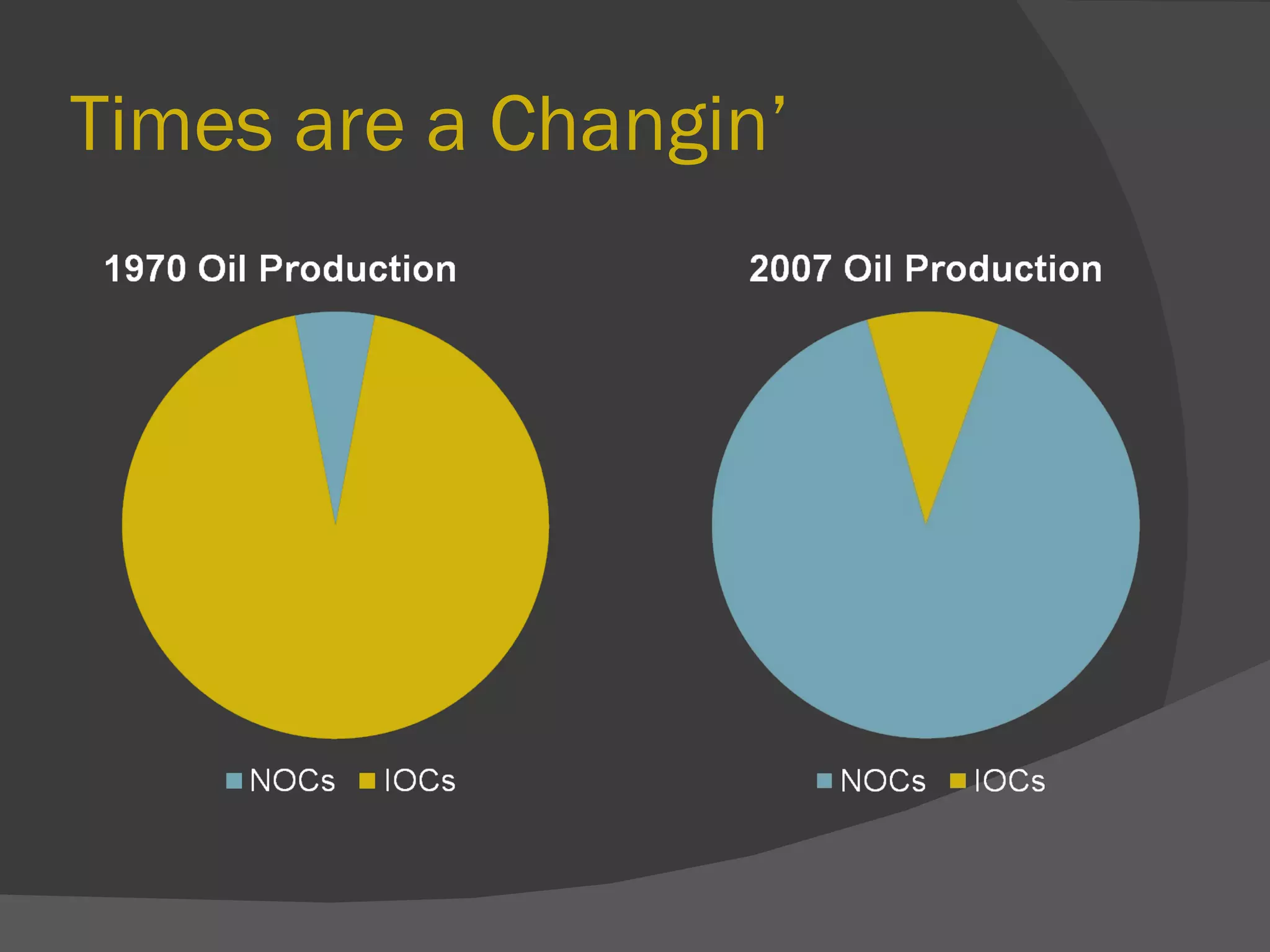
Times are a Changin’
Oil Prices, Nationalizations, and Privatizations Government Takeovers Government Divestitures $137 b in divestitures $6 trillion to go!
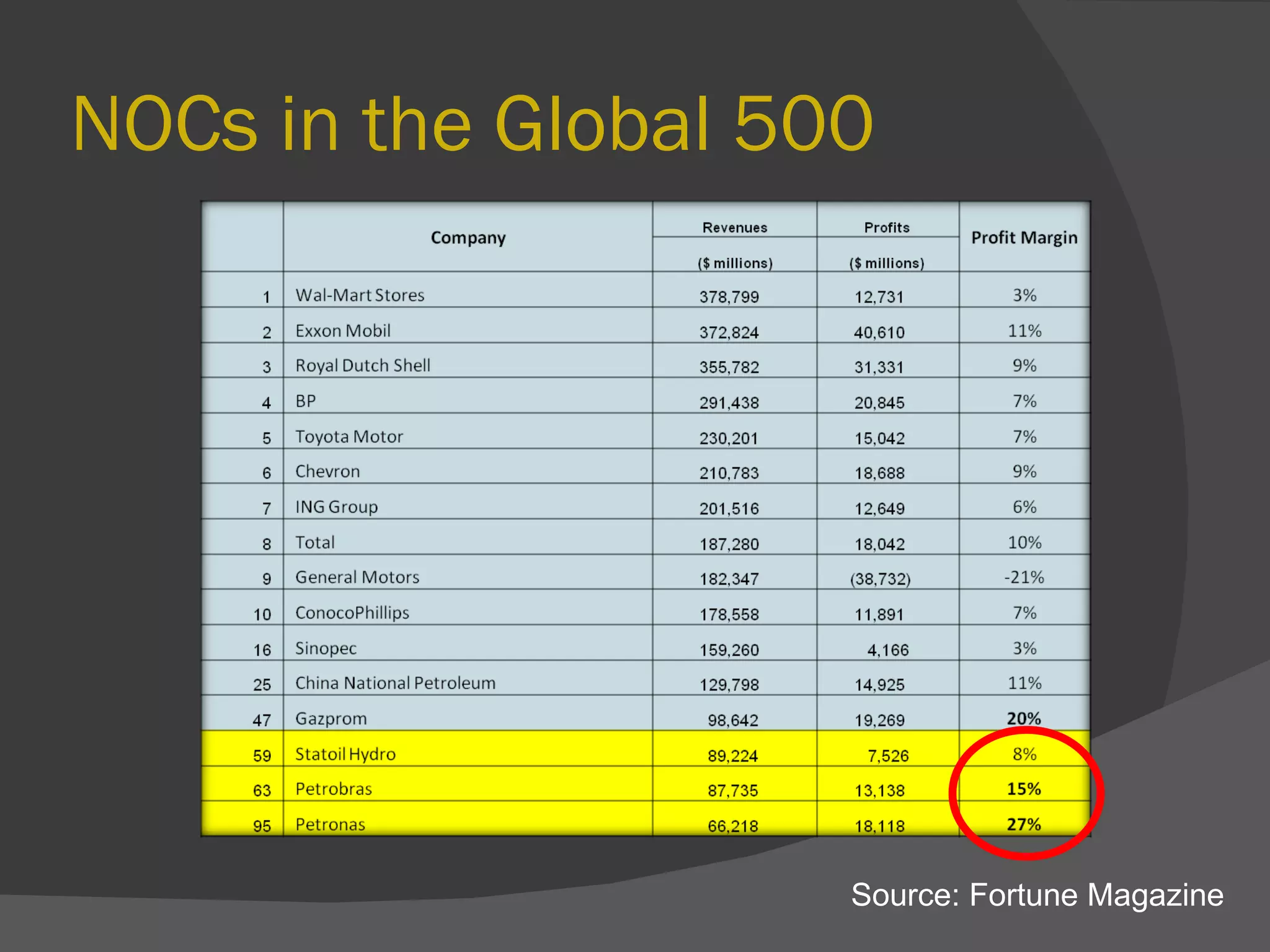
NOCs in the Global 500 Source: Fortune Magazine
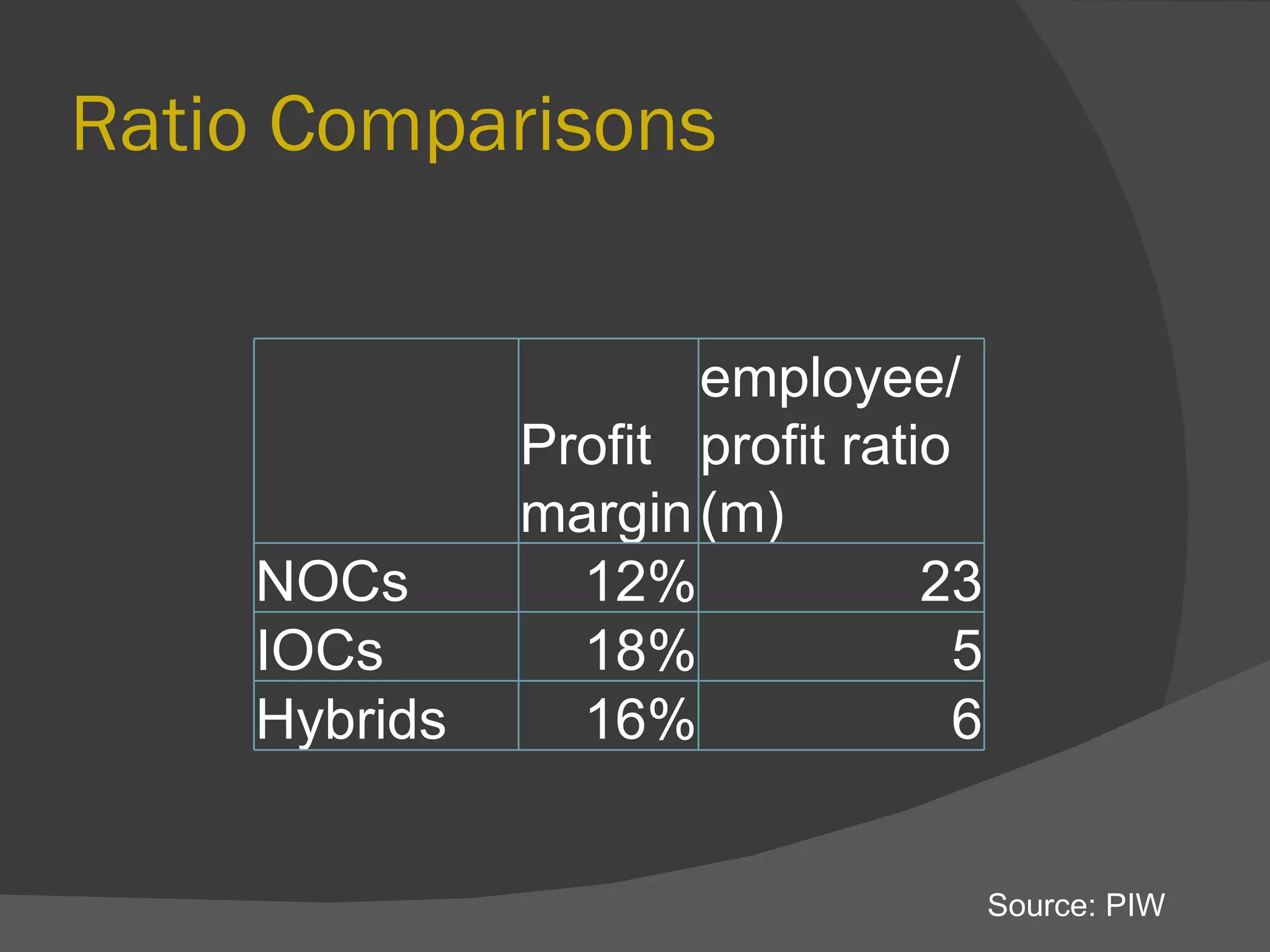
Ratio Comparisons Source: PIW Profit margin employee/profit ratio (m) NOCs 12% 23 IOCs 18% 5 Hybrids 16% 6
Why have a NOC? To reduce dependence on IOCs Diminish perception of being dominated by Western companies Control balance of payments and tax policies Acquire technology Enhance international prestige To have a “window” into the industry What were the IOCs up to? Data on the oil industry To ensure inexpensive and reliable supplies NOCs could alter allocation of supplies NOCs could gain preferential access to OPEC crude NOCs could supplement the IOCs’ production NOCs could use a “social” hurdle rate v. a “corporate” rate
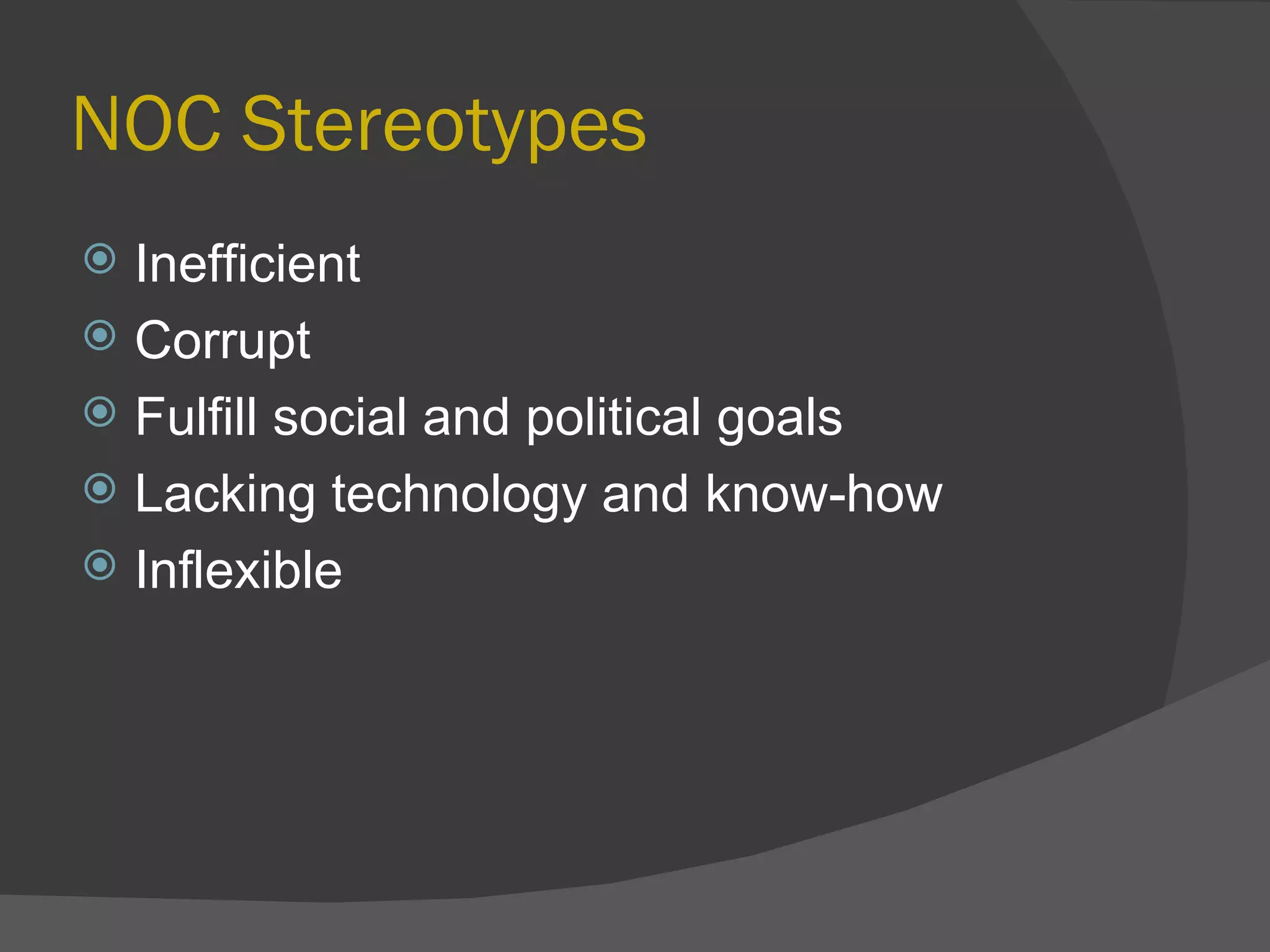
NOC Stereotypes Inefficient Corrupt Fulfill social and political goals  Lacking technology and know-how Inflexible
Types of National Oil Companies CNPC CNOOC Sinopec ONGC KOGAS KNOC Japex JOGMEC Petronas Pertamina Saudi Aramco Sonatrach ADNOC KPC Petrobras PDVSA Gazprom Rosneft Statoil CNOOC ONGC KOGAS KNOC INPEX Petronas Pertamina Sonatrach Petrobras Statoil commercializing competitive Petronas Petrobras Statoil International partial-privatization Petrobras Statoil Asia Middle East Latin America Europe Petronas is commercially competitive without being even partially private!
Drivers of Commercialization Technology Resources Source: PFC CNOOC Sinopec ONGC CNPC S. Aramco Gazprom/Rosneft National Asset Holders NNPC Finance and Security Seekers PEMEX Pertamina Petronas Statoil Petrobras Entrepreneurial NOCs LNOC Technology Seekers PDVSA KPC Ecopetrol EGPC Declining NOCs PTT Sonangol NIOC Sonatrach QP Market Seekers More adept Less adept Diminishing Production Expanding Production
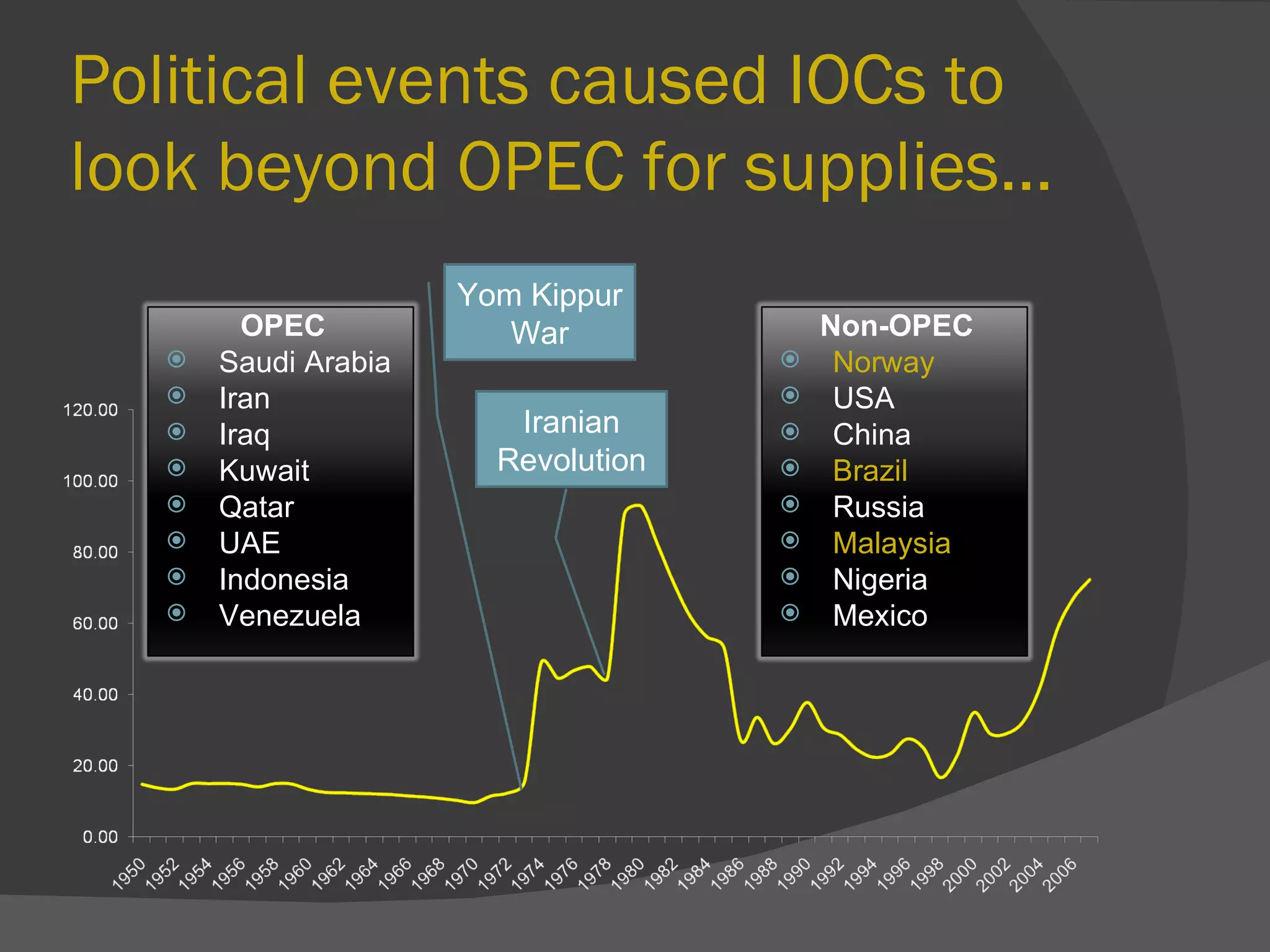
Political events caused IOCs to look beyond OPEC for supplies… Yom Kippur War Iranian Revolution Non-OPEC Norway USA China Brazil Russia Malaysia Nigeria Mexico OPEC Saudi Arabia Iran Iraq Kuwait Qatar UAE Indonesia Venezuela
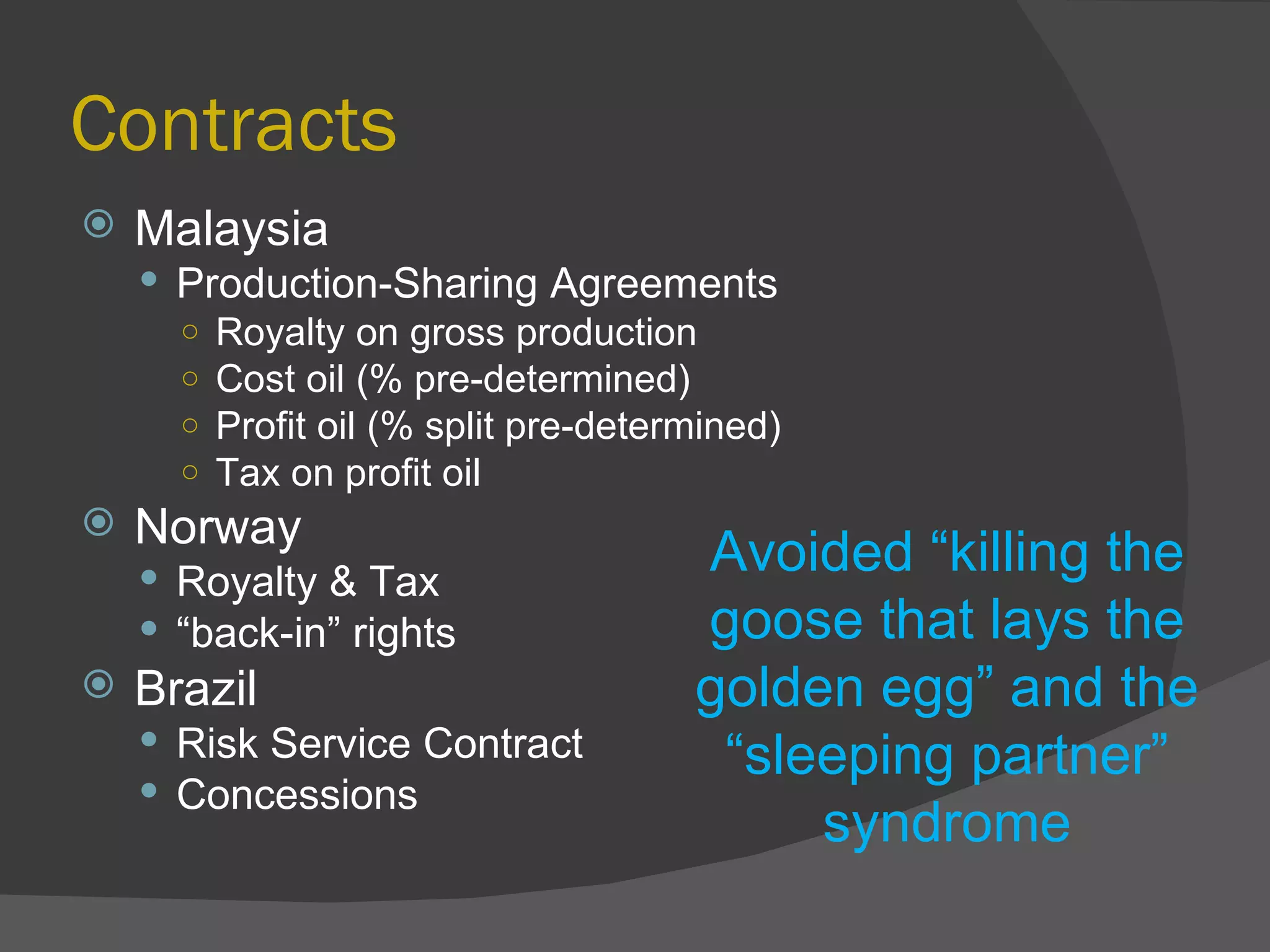
Contracts Malaysia Production-Sharing Agreements Royalty on gross production Cost oil (% pre-determined) Profit oil (% split pre-determined) Tax on profit oil Norway Royalty & Tax  “ back-in” rights Brazil Risk Service Contract Concessions Avoided “killing the goose that lays the golden egg” and the “sleeping partner” syndrome
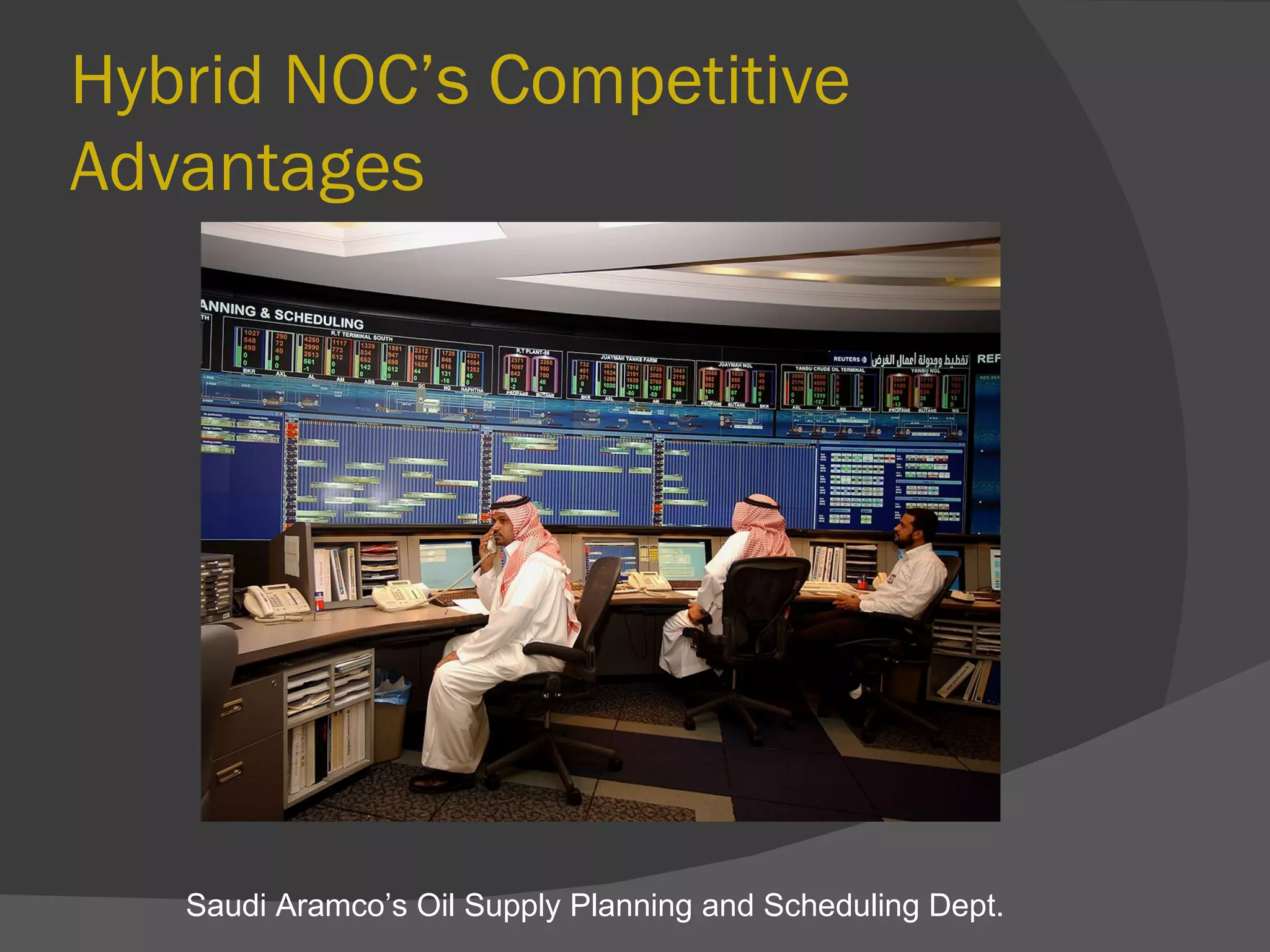
Hybrid NOC’s Competitive Advantages Saudi Aramco’s Oil Supply Planning and Scheduling Dept.
Petrobras: Deepwater Drilling Technology unbundling -> Advancement-> Partnerships Petrobras has held records for deep-water drilling more often than any other company since the 1970s. However, their new subsalt discovery in the Santos Basin (5-8 billion barrels), Petrobras would have to push the limits of the industries technology by drilling up to 10,000 ft to the sea floor, and an additional 16,000 feet below the floor.  Source: Petrobras … another 20,000 ft to go
Pre-Salt Challenge
Statoil: Subsea & IOR
Petronas: LNG & Shipping LNG carriers 27 Petroleum tankers 45 Chemical tankers 13
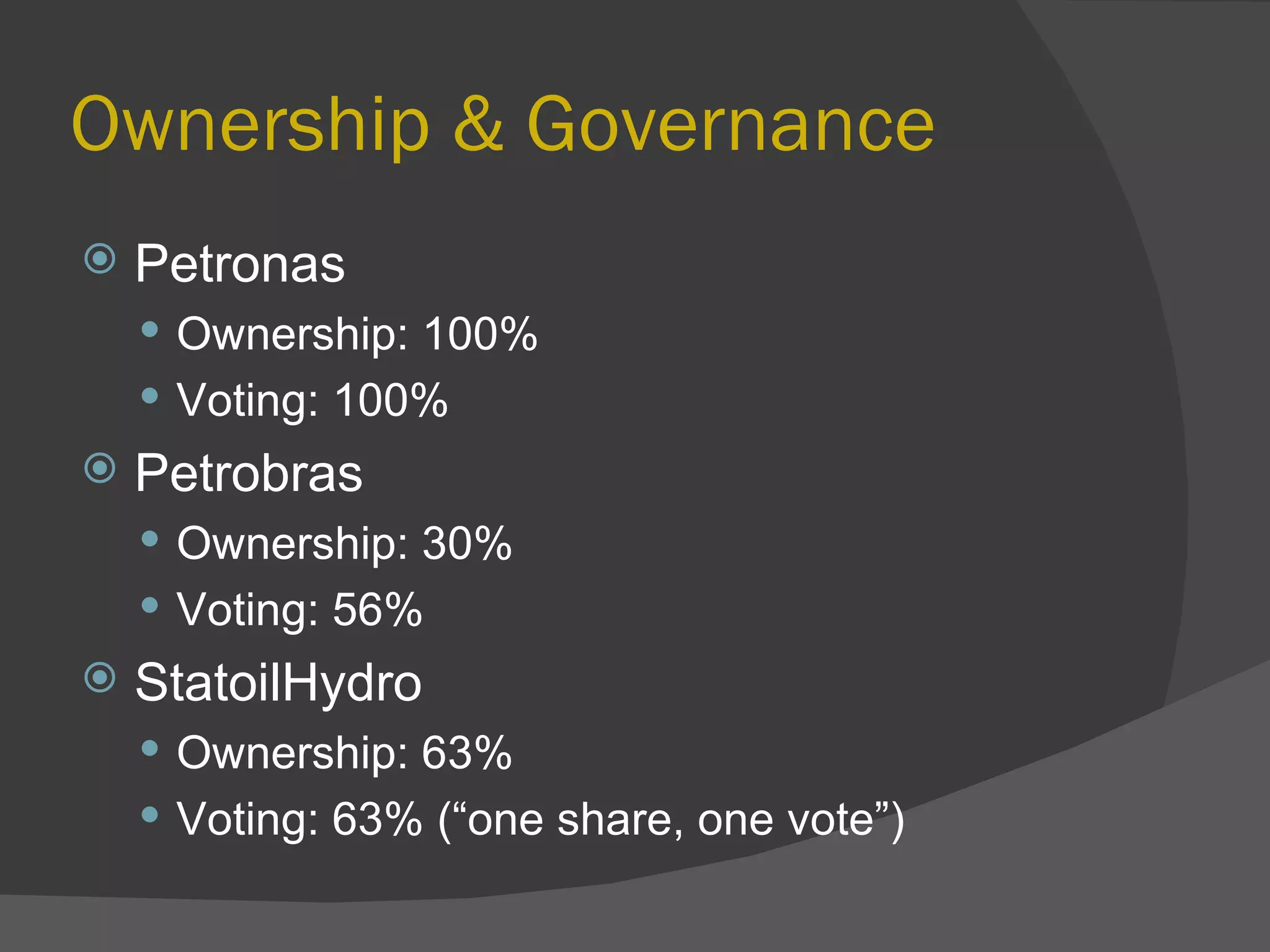
Ownership & Governance Petronas Ownership: 100% Voting: 100% Petrobras Ownership: 30% Voting: 56% StatoilHydro Ownership: 63% Voting: 63% (“one share, one vote”)
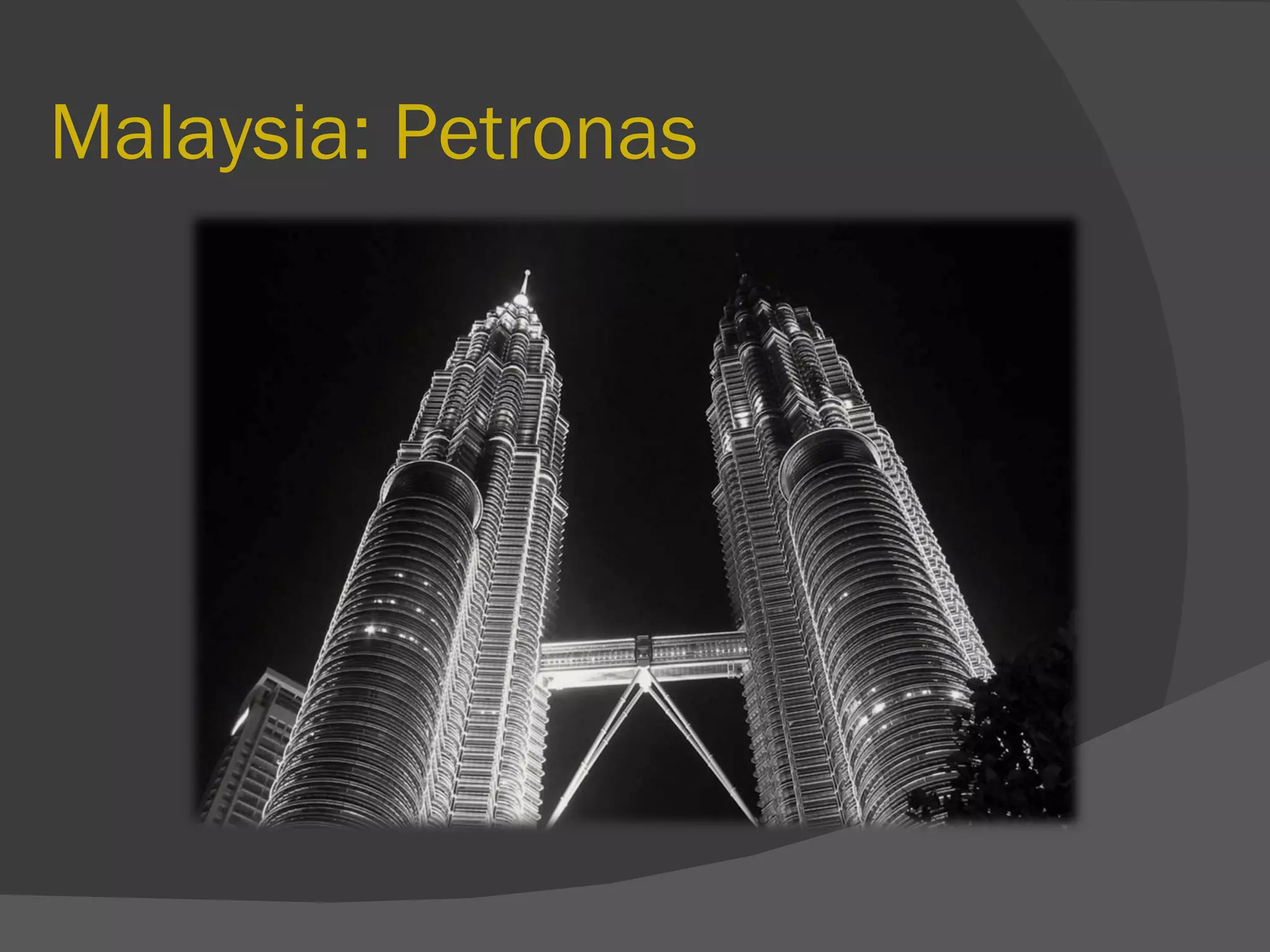
Malaysia: Petronas
Government Relations: Petronas Petroleum Product Pricing Downstream Regulators Subsidies Dividends Energy Policy Upstream Regulator Natural Gas Pricing PM is also Minister of Finance
Petronas: Important Events 1948 – Communists Insurgency 1969 – Race Riots 1970 – New Economic Policy (Bumiputra, affirmative action) 1974 – Petroleum Development Act (Petronas est.) 1981 – PM Mohammad Mahathir 2003 – PM Abdullah Badawi Oil
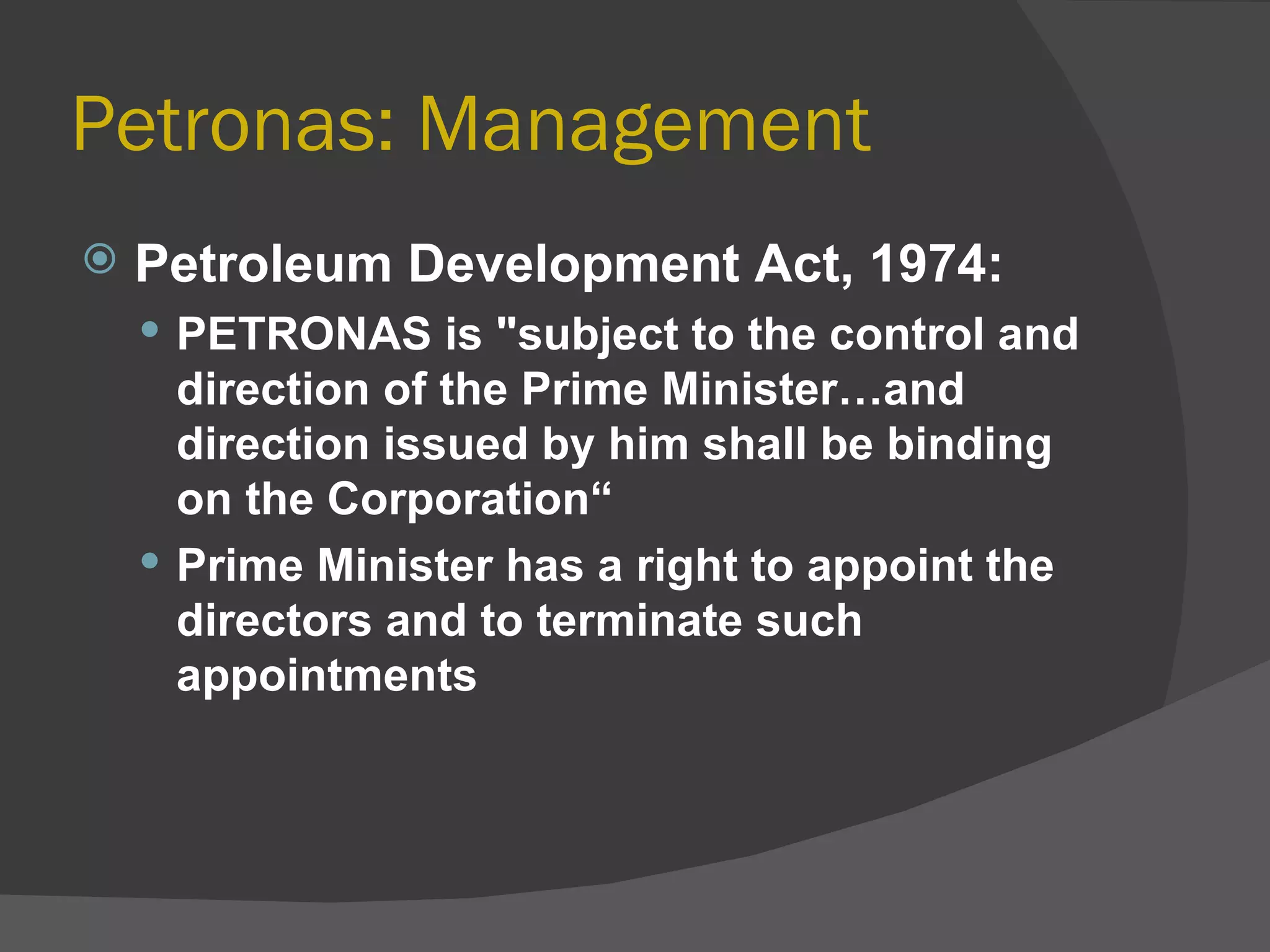
Petronas: Management Petroleum Development Act, 1974: PETRONAS is "subject to the control and direction of the Prime Minister…and direction issued by him shall be binding on the Corporation“ Prime Minister has a right to appoint the directors and to terminate such appointments
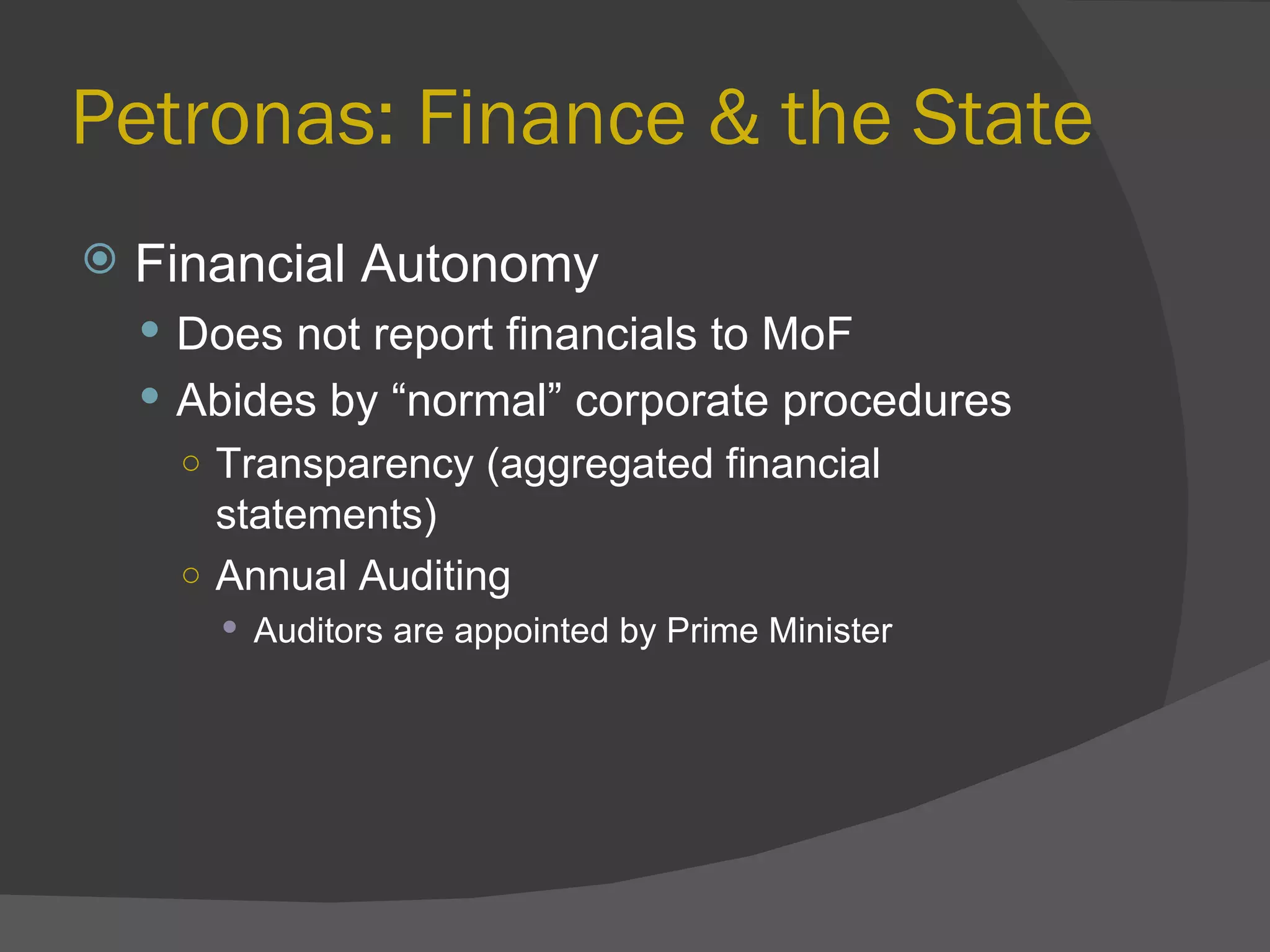
Petronas: Finance & the State Financial Autonomy Does not report financials to MoF Abides by “normal” corporate procedures Transparency (aggregated financial statements) Annual Auditing Auditors are appointed by Prime Minister
Petronas: Global Investments
Petronas as a leader Interests in 30+ countries 62 ventures  30 as operator 13 as joint operator  23 as active partner
Corruption & Misuse Investments/Involvement in Non-Oil & Gas Sector Twin Towers (Real Estate) Proton (Auto Manufacturer) Putrajaya Holdings (Property Development) Bumiputra (Bank) Geopolitics Iran Sudan Burma
Brazil: Petrobras
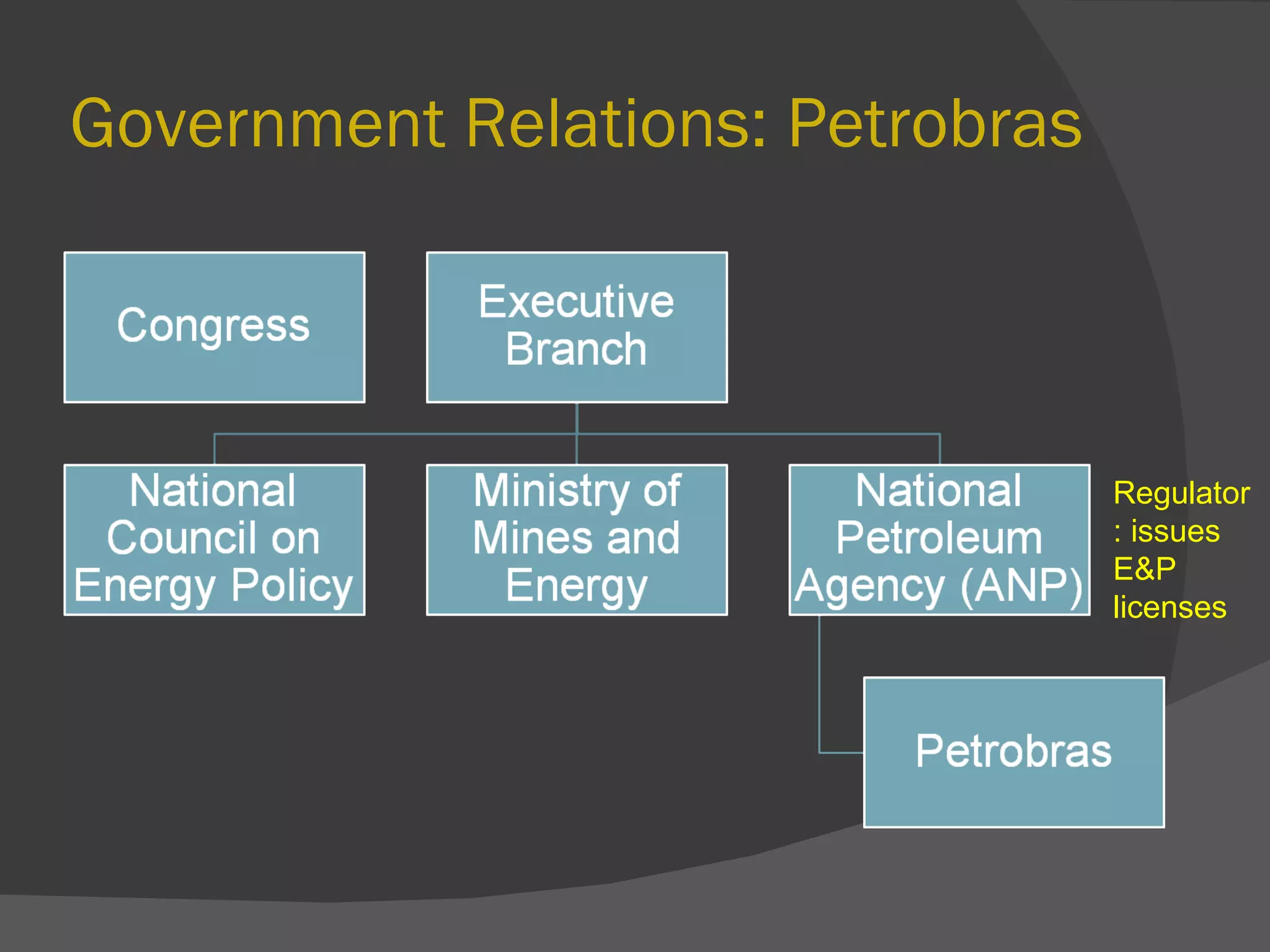
Government Relations: Petrobras Regulator: issues E&P licenses
Petrobras: Important Events 1934 – Constitution Subsoil exploitation rights granted only to Brazilian citizens or companies  1953 – Petrobras established 1990 – President Collor  Brazilian Privatization Program 1995 – President Cardoso Focused on “strategic” sector 1997 – Oil Law (constitutional amendment) Took away regulatory powers from Petrobras and gave them to National Petroleum Agency (ANP) Allowed private oil companies to bid on oil fields Petrobras as “just another oil company” 2000 – Petrobras Privatization (1 st  offering) Guarantee Fund for Workers’ Time of Service 2001 – Petrobras Privatization (2 nd  offering) 81% of shares purchased from abroad 2003 – President Lula Oil Gas
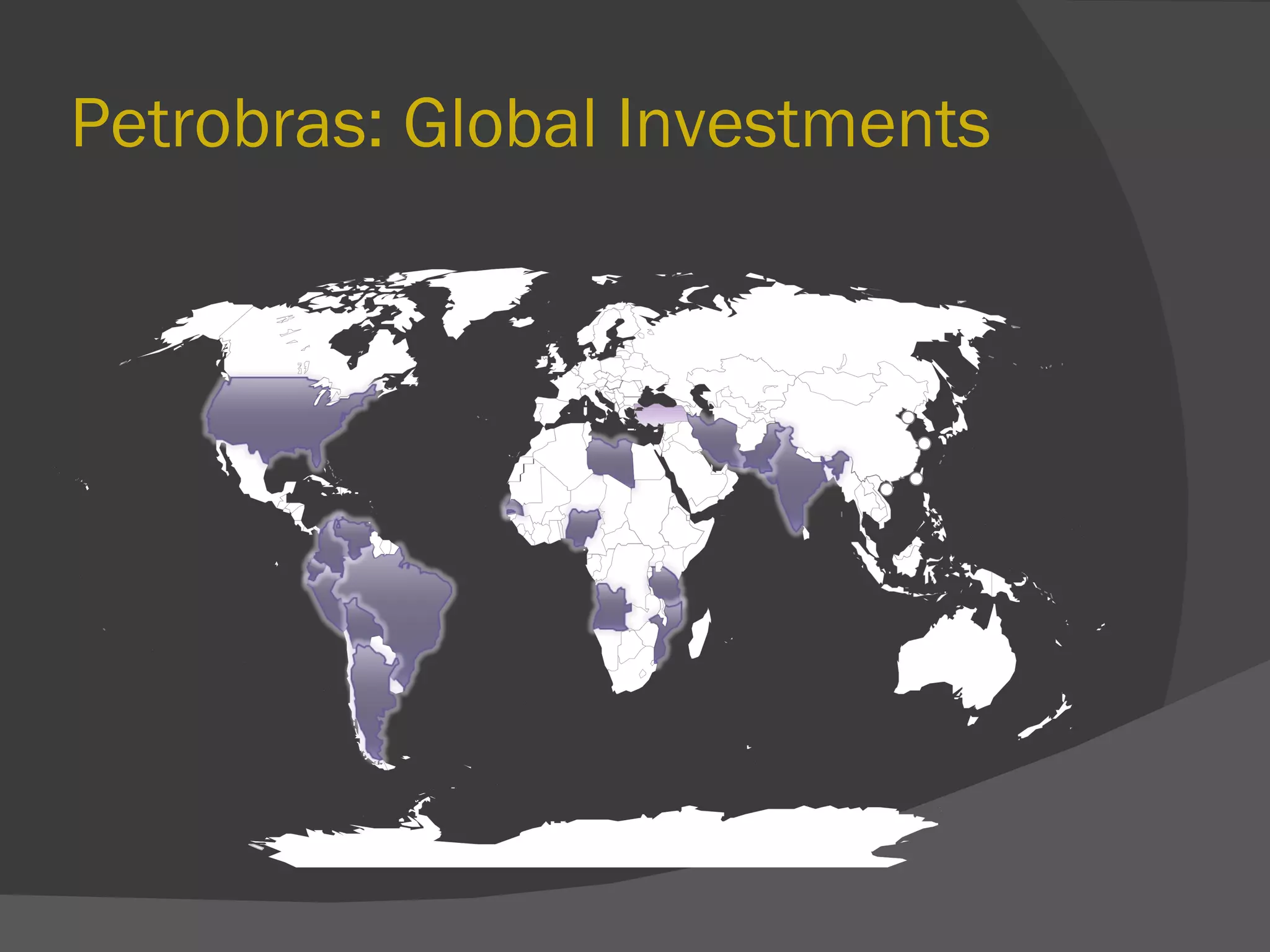
Petrobras: Global Investments
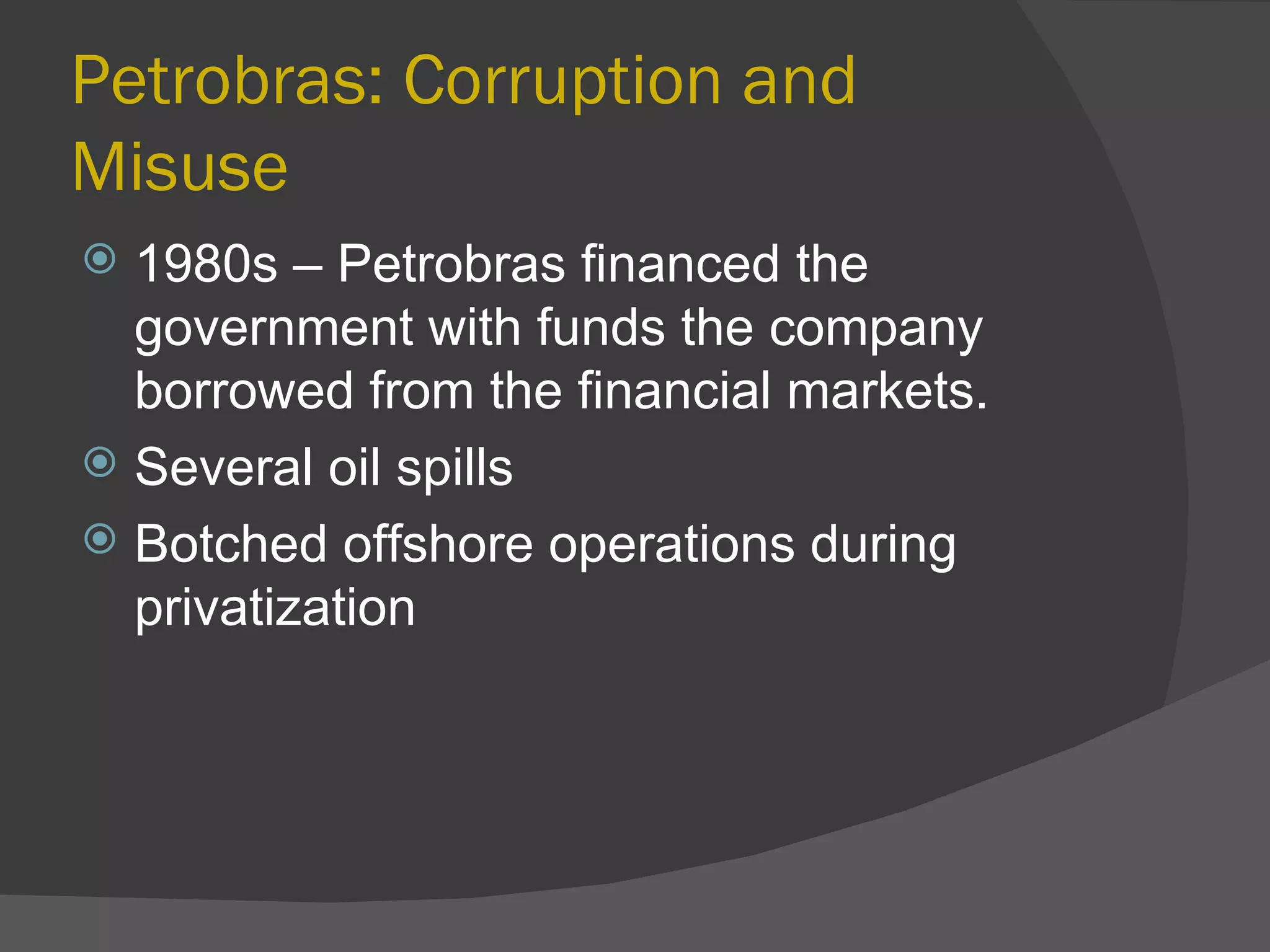
Petrobras: Corruption and Misuse 1980s – Petrobras financed the government with funds the company borrowed from the financial markets. Several oil spills Botched offshore operations during privatization
When technology outpaces skill…
Norway: Statoil
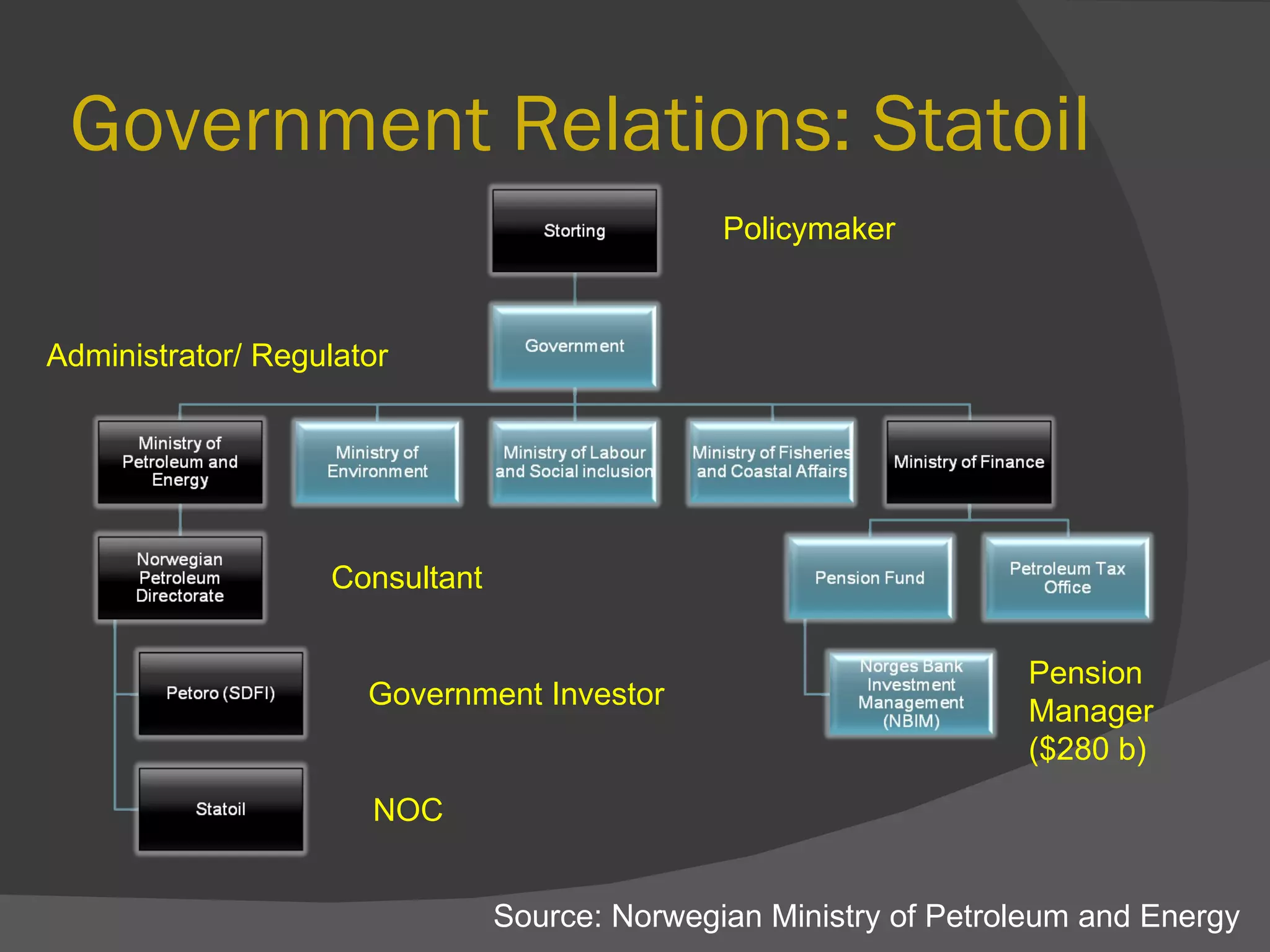
Government Relations: Statoil Source: Norwegian Ministry of Petroleum and Energy Consultant Government Investor NOC Pension Manager ($280 b) Policymaker Administrator/ Regulator
Statoil: Important Events 1971 – Statoil Established  Statoil as regulator (guaranteed 50% stake) Arve Johnsen as CEO 1985 – SDFI Established (NOC swap) Reserves reduced from 50% to12% Statoil no longer guaranteed “back in” rights Reduced Statoil’s importance 1987 – Arve Johnsen scandal (cost overruns) 1990 – BP Alliance  1999 – Aasgard field (cost overruns) 2001– Statoil goes public (70% state) State sells 15% of SDFI’s stakes as a sweetener Petoro established (replaced SDFI) 2006 – Statoil-Norsk Hydro merger (63% state) Oil Gas
Home Reserves & Commercialization Process Protection Competition Partial Privatization Internationalization Reserves Domestic Political  Power International Political  Power
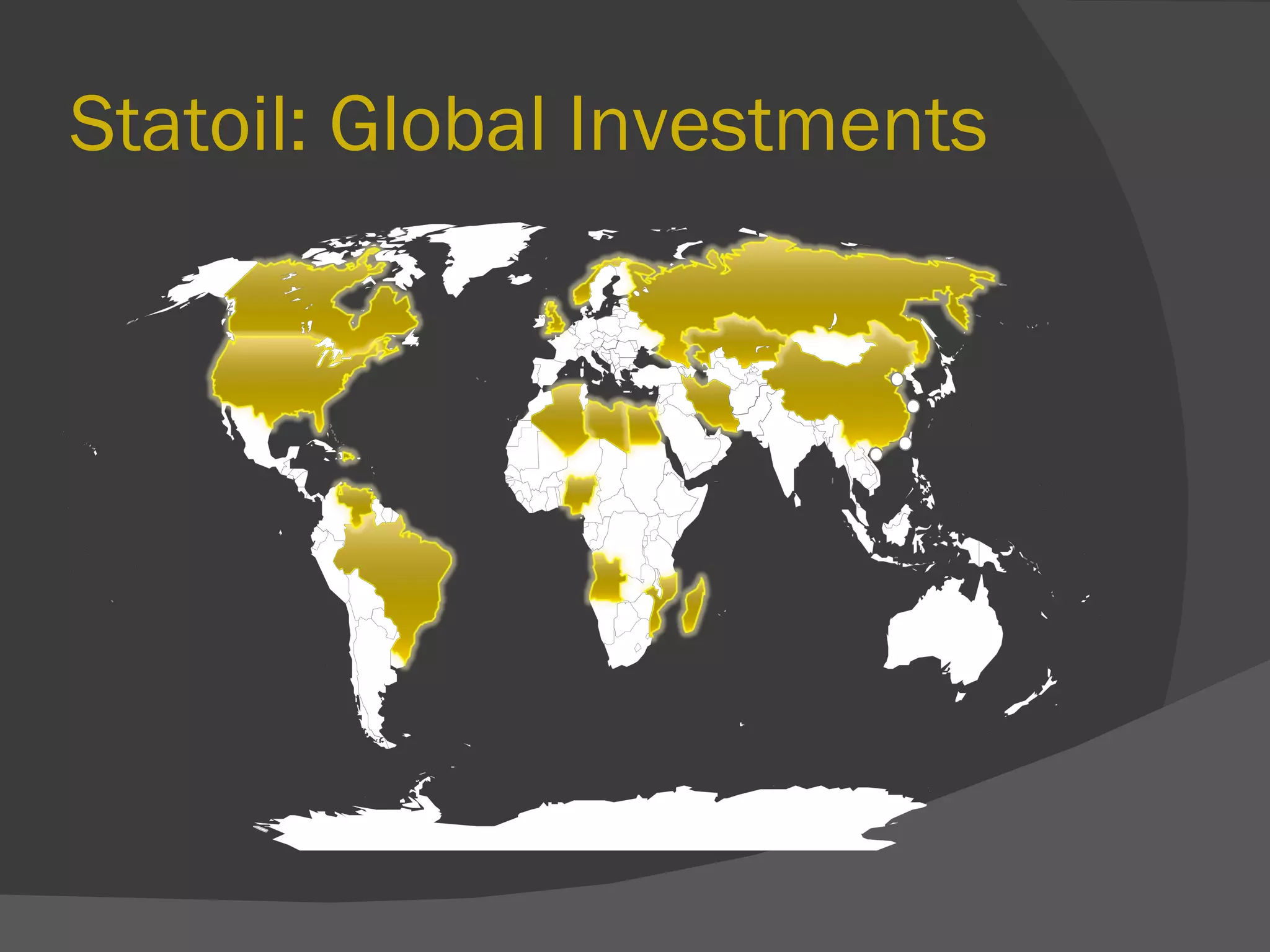
Statoil: Global Investments
Comparisons: Strengths-Weaknesses Strengths Weaknesses
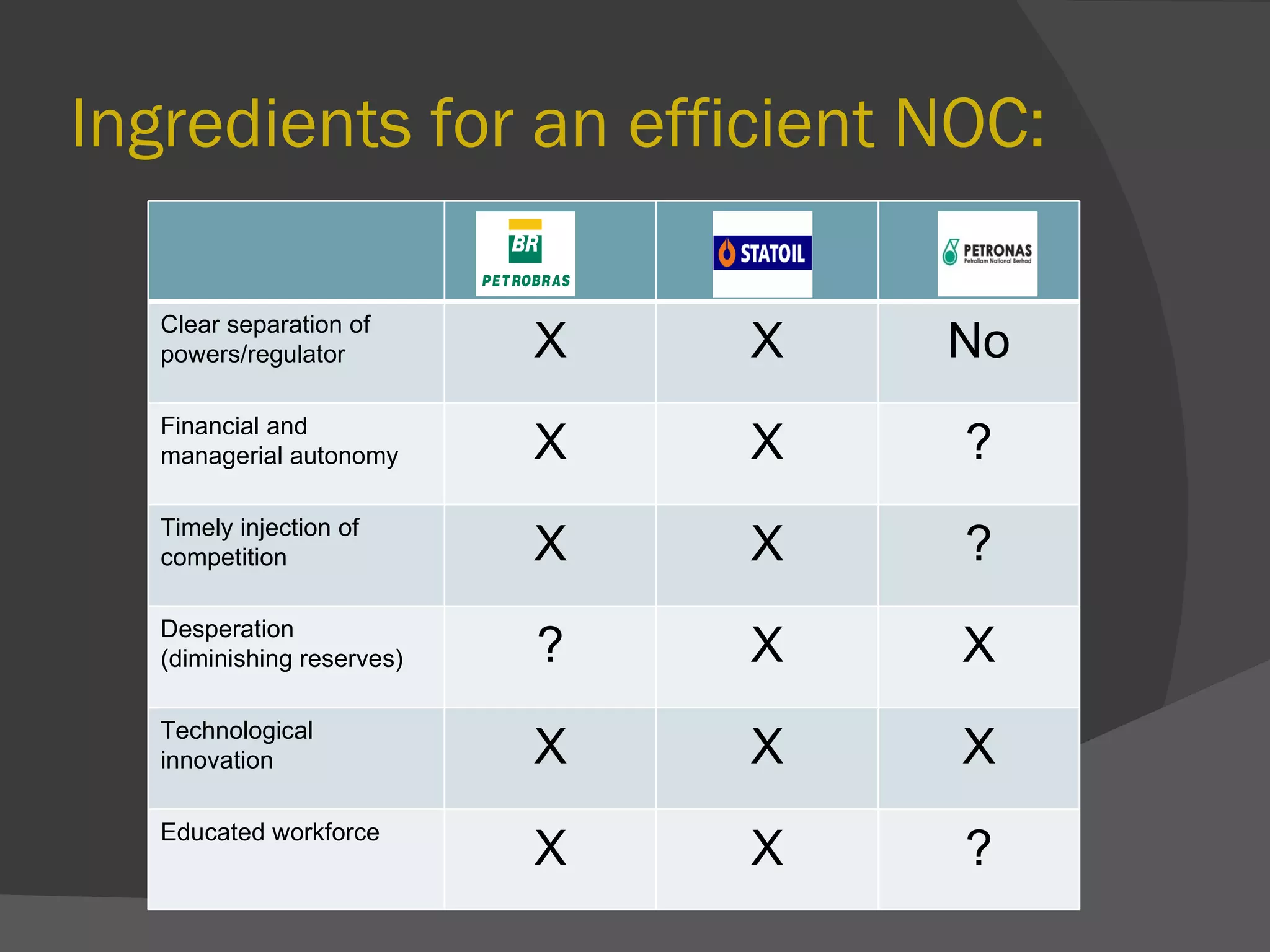
Ingredients for an efficient NOC: Clear separation of powers/regulator X X No Financial and managerial autonomy X X ? Timely injection of competition X X ? Desperation (diminishing reserves) ? X X Technological innovation X X X Educated workforce X X ?
Future Outlook State Market ?
Statoil How to differentiate itself from an IOC Rationale for NOC in question Role of Petoro? Petrobras Growing reserves and production  Growing nationalist sentiment in government  Petronas No plans for privatization (“best of both worlds”) Strains may come from subsidies Unskilled/young work force may strain int’l expansion Future Outlook
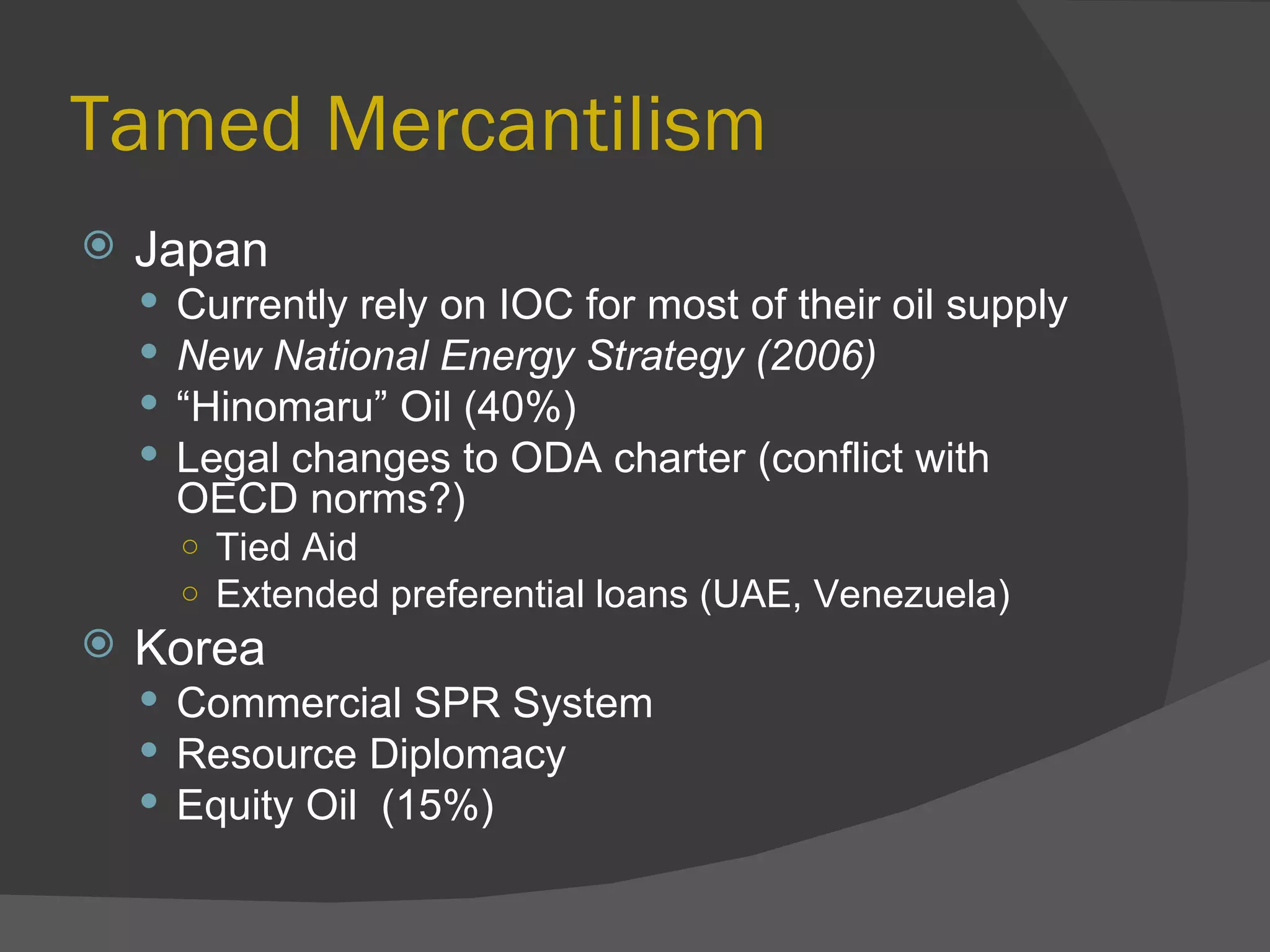
Tamed Mercantilism Japan Currently rely on IOC for most of their oil supply New National Energy Strategy (2006) “ Hinomaru” Oil (40%) Legal changes to ODA charter (conflict with OECD norms?) Tied Aid  Extended preferential loans (UAE, Venezuela) Korea Commercial SPR System Resource Diplomacy Equity Oil  (15%)
Thank you!
Who Are the NOCs? (cont.) Source: PwC Norway Azerbaijan China Mexico Brazil Malaysia India  Egypt Angola Oman Indonesia Libya Nigeria Venezuela Kuwait Iran Saudi Arabia Russia Algeria Qatar UAE Iraq Kazakhstan Uzbekistan Turkmenistan Under Development PSCs Available International NOCs Restricted Access Gas to Markets BOE Reserves BOE Production
Brazil is soon to become a net exporter of oil… Missing their production targets!
Oil Money: Malaysia Malaysia's federal government received 52 billion RM from petroleum taxes and royalties in 2006, five times more than it received from income taxes In 2006 the government spent about 27 billion RM on fuel subsidies, three times the amount it spent on education and health combined.

Hybrid NOCs

  • 1.
    The Way ofthe Hybrid NOC Michael T. Jones The Fletcher School EIB B234
  • 2.
    Presentation Outline Overviewof National Oil Companies The Hybrids Petronas Petrobras Statoil Future Outlook
  • 3.
    Times are aChangin’
  • 4.
    Oil Prices, Nationalizations,and Privatizations Government Takeovers Government Divestitures $137 b in divestitures $6 trillion to go!
  • 5.
    NOCs in theGlobal 500 Source: Fortune Magazine
  • 6.
    Ratio Comparisons Source:PIW Profit margin employee/profit ratio (m) NOCs 12% 23 IOCs 18% 5 Hybrids 16% 6
  • 7.
    Why have aNOC? To reduce dependence on IOCs Diminish perception of being dominated by Western companies Control balance of payments and tax policies Acquire technology Enhance international prestige To have a “window” into the industry What were the IOCs up to? Data on the oil industry To ensure inexpensive and reliable supplies NOCs could alter allocation of supplies NOCs could gain preferential access to OPEC crude NOCs could supplement the IOCs’ production NOCs could use a “social” hurdle rate v. a “corporate” rate
  • 8.
    NOC Stereotypes InefficientCorrupt Fulfill social and political goals Lacking technology and know-how Inflexible
  • 9.
    Types of NationalOil Companies CNPC CNOOC Sinopec ONGC KOGAS KNOC Japex JOGMEC Petronas Pertamina Saudi Aramco Sonatrach ADNOC KPC Petrobras PDVSA Gazprom Rosneft Statoil CNOOC ONGC KOGAS KNOC INPEX Petronas Pertamina Sonatrach Petrobras Statoil commercializing competitive Petronas Petrobras Statoil International partial-privatization Petrobras Statoil Asia Middle East Latin America Europe Petronas is commercially competitive without being even partially private!
  • 10.
    Drivers of CommercializationTechnology Resources Source: PFC CNOOC Sinopec ONGC CNPC S. Aramco Gazprom/Rosneft National Asset Holders NNPC Finance and Security Seekers PEMEX Pertamina Petronas Statoil Petrobras Entrepreneurial NOCs LNOC Technology Seekers PDVSA KPC Ecopetrol EGPC Declining NOCs PTT Sonangol NIOC Sonatrach QP Market Seekers More adept Less adept Diminishing Production Expanding Production
  • 11.
    Political events causedIOCs to look beyond OPEC for supplies… Yom Kippur War Iranian Revolution Non-OPEC Norway USA China Brazil Russia Malaysia Nigeria Mexico OPEC Saudi Arabia Iran Iraq Kuwait Qatar UAE Indonesia Venezuela
  • 12.
    Contracts Malaysia Production-SharingAgreements Royalty on gross production Cost oil (% pre-determined) Profit oil (% split pre-determined) Tax on profit oil Norway Royalty & Tax “ back-in” rights Brazil Risk Service Contract Concessions Avoided “killing the goose that lays the golden egg” and the “sleeping partner” syndrome
  • 13.
    Hybrid NOC’s CompetitiveAdvantages Saudi Aramco’s Oil Supply Planning and Scheduling Dept.
  • 14.
    Petrobras: Deepwater DrillingTechnology unbundling -> Advancement-> Partnerships Petrobras has held records for deep-water drilling more often than any other company since the 1970s. However, their new subsalt discovery in the Santos Basin (5-8 billion barrels), Petrobras would have to push the limits of the industries technology by drilling up to 10,000 ft to the sea floor, and an additional 16,000 feet below the floor. Source: Petrobras … another 20,000 ft to go
  • 15.
  • 16.
  • 17.
    Petronas: LNG &Shipping LNG carriers 27 Petroleum tankers 45 Chemical tankers 13
  • 18.
    Ownership & GovernancePetronas Ownership: 100% Voting: 100% Petrobras Ownership: 30% Voting: 56% StatoilHydro Ownership: 63% Voting: 63% (“one share, one vote”)
  • 19.
  • 20.
    Government Relations: PetronasPetroleum Product Pricing Downstream Regulators Subsidies Dividends Energy Policy Upstream Regulator Natural Gas Pricing PM is also Minister of Finance
  • 21.
    Petronas: Important Events1948 – Communists Insurgency 1969 – Race Riots 1970 – New Economic Policy (Bumiputra, affirmative action) 1974 – Petroleum Development Act (Petronas est.) 1981 – PM Mohammad Mahathir 2003 – PM Abdullah Badawi Oil
  • 22.
    Petronas: Management PetroleumDevelopment Act, 1974: PETRONAS is "subject to the control and direction of the Prime Minister…and direction issued by him shall be binding on the Corporation“ Prime Minister has a right to appoint the directors and to terminate such appointments
  • 23.
    Petronas: Finance &the State Financial Autonomy Does not report financials to MoF Abides by “normal” corporate procedures Transparency (aggregated financial statements) Annual Auditing Auditors are appointed by Prime Minister
  • 24.
  • 25.
    Petronas as aleader Interests in 30+ countries 62 ventures 30 as operator 13 as joint operator 23 as active partner
  • 26.
    Corruption & MisuseInvestments/Involvement in Non-Oil & Gas Sector Twin Towers (Real Estate) Proton (Auto Manufacturer) Putrajaya Holdings (Property Development) Bumiputra (Bank) Geopolitics Iran Sudan Burma
  • 27.
  • 28.
    Government Relations: PetrobrasRegulator: issues E&P licenses
  • 29.
    Petrobras: Important Events1934 – Constitution Subsoil exploitation rights granted only to Brazilian citizens or companies 1953 – Petrobras established 1990 – President Collor Brazilian Privatization Program 1995 – President Cardoso Focused on “strategic” sector 1997 – Oil Law (constitutional amendment) Took away regulatory powers from Petrobras and gave them to National Petroleum Agency (ANP) Allowed private oil companies to bid on oil fields Petrobras as “just another oil company” 2000 – Petrobras Privatization (1 st offering) Guarantee Fund for Workers’ Time of Service 2001 – Petrobras Privatization (2 nd offering) 81% of shares purchased from abroad 2003 – President Lula Oil Gas
  • 30.
  • 31.
    Petrobras: Corruption andMisuse 1980s – Petrobras financed the government with funds the company borrowed from the financial markets. Several oil spills Botched offshore operations during privatization
  • 32.
  • 33.
  • 34.
    Government Relations: StatoilSource: Norwegian Ministry of Petroleum and Energy Consultant Government Investor NOC Pension Manager ($280 b) Policymaker Administrator/ Regulator
  • 35.
    Statoil: Important Events1971 – Statoil Established Statoil as regulator (guaranteed 50% stake) Arve Johnsen as CEO 1985 – SDFI Established (NOC swap) Reserves reduced from 50% to12% Statoil no longer guaranteed “back in” rights Reduced Statoil’s importance 1987 – Arve Johnsen scandal (cost overruns) 1990 – BP Alliance 1999 – Aasgard field (cost overruns) 2001– Statoil goes public (70% state) State sells 15% of SDFI’s stakes as a sweetener Petoro established (replaced SDFI) 2006 – Statoil-Norsk Hydro merger (63% state) Oil Gas
  • 36.
    Home Reserves &Commercialization Process Protection Competition Partial Privatization Internationalization Reserves Domestic Political Power International Political Power
  • 37.
  • 38.
  • 39.
    Ingredients for anefficient NOC: Clear separation of powers/regulator X X No Financial and managerial autonomy X X ? Timely injection of competition X X ? Desperation (diminishing reserves) ? X X Technological innovation X X X Educated workforce X X ?
  • 40.
  • 41.
    Statoil How todifferentiate itself from an IOC Rationale for NOC in question Role of Petoro? Petrobras Growing reserves and production Growing nationalist sentiment in government Petronas No plans for privatization (“best of both worlds”) Strains may come from subsidies Unskilled/young work force may strain int’l expansion Future Outlook
  • 42.
    Tamed Mercantilism JapanCurrently rely on IOC for most of their oil supply New National Energy Strategy (2006) “ Hinomaru” Oil (40%) Legal changes to ODA charter (conflict with OECD norms?) Tied Aid Extended preferential loans (UAE, Venezuela) Korea Commercial SPR System Resource Diplomacy Equity Oil (15%)
  • 43.
  • 44.
    Who Are theNOCs? (cont.) Source: PwC Norway Azerbaijan China Mexico Brazil Malaysia India Egypt Angola Oman Indonesia Libya Nigeria Venezuela Kuwait Iran Saudi Arabia Russia Algeria Qatar UAE Iraq Kazakhstan Uzbekistan Turkmenistan Under Development PSCs Available International NOCs Restricted Access Gas to Markets BOE Reserves BOE Production
  • 45.
    Brazil is soonto become a net exporter of oil… Missing their production targets!
  • 46.
    Oil Money: MalaysiaMalaysia's federal government received 52 billion RM from petroleum taxes and royalties in 2006, five times more than it received from income taxes In 2006 the government spent about 27 billion RM on fuel subsidies, three times the amount it spent on education and health combined.