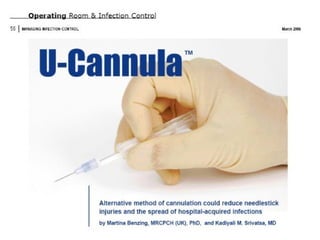
Major Threat To  Medical Profession and Humankind
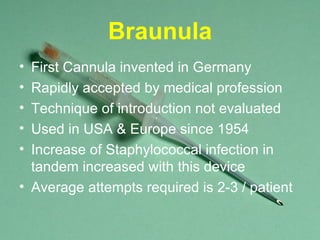
Braunula First Cannula invented in Germany Rapidly accepted by medical profession Technique of introduction not evaluated Used in USA & Europe since 1954 Increase of Staphylococcal infection in tandem increased with this device  Average attempts required is 2-3 / patient
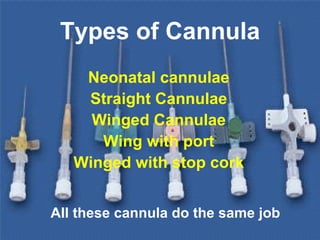
Types of Cannula Neonatal cannulae Straight Cannulae Winged Cannulae Wing with port Winged with stop cork All these cannula do the same job
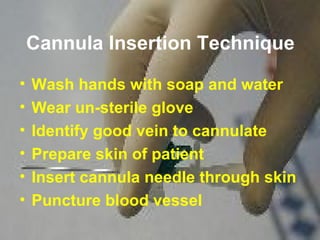
Cannula Insertion Technique Wash hands with soap and water Wear un-sterile glove Identify good vein to cannulate Prepare skin of patient Insert cannula needle through skin Puncture blood vessel
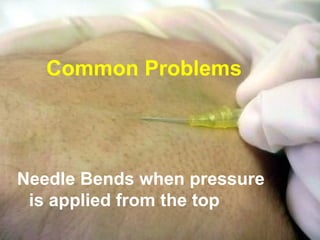
Common Problems Needle Bends when pressure is applied from the top
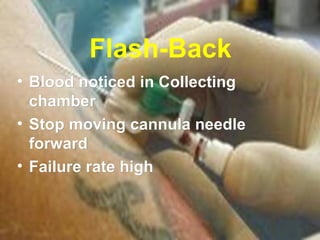
Flash-Back Blood noticed in Collecting chamber Stop moving cannula needle forward Failure rate high
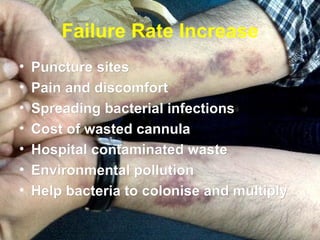
Failure Rate Increase Puncture sites Pain and discomfort Spreading bacterial infections Cost of wasted cannula Hospital contaminated waste Environmental pollution Help bacteria to colonise and multiply
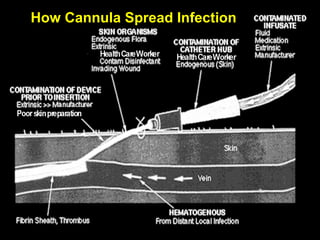
How Cannula Spread Infection
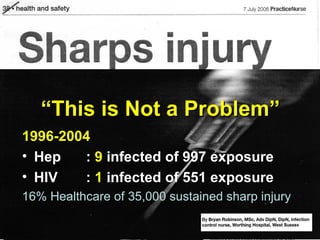
“ This is Not a Problem” 1996-2004   Hep :  9  infected of 997 exposure HIV :  1  infected of 551 exposure 16% Healthcare of 35,000 sustained sharp injury
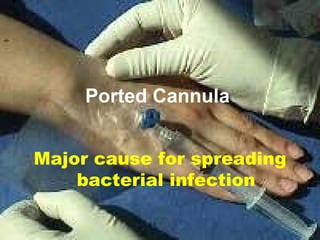
Ported Cannula Major cause for spreading bacterial infection
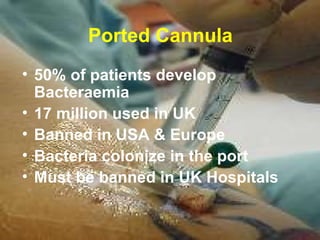
Ported Cannula 50% of patients develop Bacteraemia 17 million used in UK Banned in USA & Europe Bacteria colonize in the port Must be banned in UK Hospitals
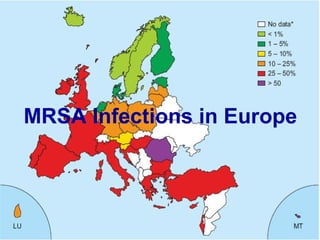
MRSA Infections in Europe
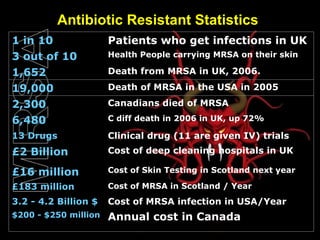
Antibiotic Resistant Statistics Annual cost in Canada $200 - $250 million Cost of MRSA infection in USA/Year 3.2 - 4.2 Billion $ Cost of MRSA in Scotland / Year £183 million Cost of Skin Testing in Scotland next year £16 million Cost of deep cleaning hospitals in UK £2 Billion Clinical drug (11 are given IV) trials 13 Drugs C diff death in 2006 in UK, up 72% 6,480 Canadians died of MRSA 2,300 Death of MRSA in the USA in 2005 19,000 Death from MRSA in UK, 2006. 1,652 Health People carrying MRSA on their skin 3 out of 10 Patients who get infections in UK 1 in 10
Bactrial Threat High Increased practical procedure Poor hand washing technique Antiseptic skin solution not effective Use of un-sterile gloves 48% Healthcare workers are carriers Rapidly adopting bacteria 17% Doctors have adequate knowledge Politicians ignoring this threat
 
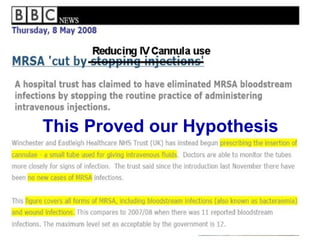
This Proved our Hypothesis
 
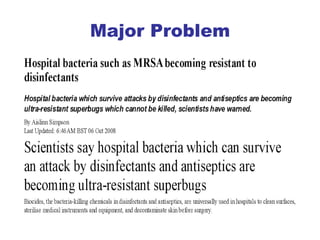
Major Problem
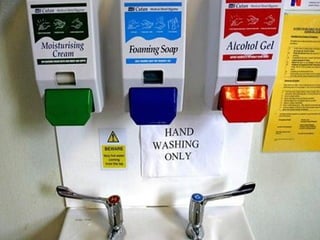
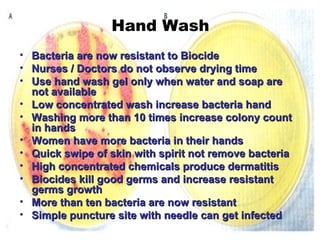
Hand Wash Bacteria are now resistant to Biocide Nurses / Doctors do not observe drying time Use hand wash gel only when water and soap are not available Low concentrated wash increase bacteria hand Washing more than 10 times increase colony count in hands Women have more bacteria in their hands Quick swipe of skin with spirit not remove bacteria High concentrated chemicals produce dermatitis Biocides kill good germs and increase resistant germs growth More than ten bacteria are now resistant Simple puncture site with needle can get infected
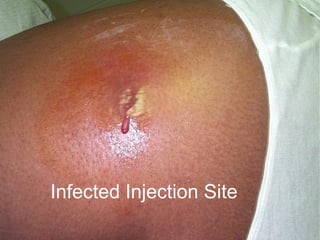
Infected Injection Site
Antibiotic Resistant Bacteria  Threatening Us Enterococcus faecium Staphylococcus aureus Klebsiella species Acinetobacter baumannii Pseudomonas aeruginosa Enterobacter species Streptococcus Pnemococcus Meningococcal Infections Gonococcus Tuberculosis
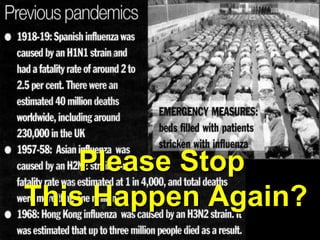
Please Stop  This Happen Again?
 

Cannula And Infection

  • 1.
    Major Threat To Medical Profession and Humankind
  • 2.
    Braunula First Cannulainvented in Germany Rapidly accepted by medical profession Technique of introduction not evaluated Used in USA & Europe since 1954 Increase of Staphylococcal infection in tandem increased with this device Average attempts required is 2-3 / patient
  • 3.
    Types of CannulaNeonatal cannulae Straight Cannulae Winged Cannulae Wing with port Winged with stop cork All these cannula do the same job
  • 4.
    Cannula Insertion TechniqueWash hands with soap and water Wear un-sterile glove Identify good vein to cannulate Prepare skin of patient Insert cannula needle through skin Puncture blood vessel
  • 5.
    Common Problems NeedleBends when pressure is applied from the top
  • 6.
    Flash-Back Blood noticedin Collecting chamber Stop moving cannula needle forward Failure rate high
  • 7.
    Failure Rate IncreasePuncture sites Pain and discomfort Spreading bacterial infections Cost of wasted cannula Hospital contaminated waste Environmental pollution Help bacteria to colonise and multiply
  • 8.
  • 9.
    “ This isNot a Problem” 1996-2004 Hep : 9 infected of 997 exposure HIV : 1 infected of 551 exposure 16% Healthcare of 35,000 sustained sharp injury
  • 10.
    Ported Cannula Majorcause for spreading bacterial infection
  • 11.
    Ported Cannula 50%of patients develop Bacteraemia 17 million used in UK Banned in USA & Europe Bacteria colonize in the port Must be banned in UK Hospitals
  • 12.
  • 13.
    Antibiotic Resistant StatisticsAnnual cost in Canada $200 - $250 million Cost of MRSA infection in USA/Year 3.2 - 4.2 Billion $ Cost of MRSA in Scotland / Year £183 million Cost of Skin Testing in Scotland next year £16 million Cost of deep cleaning hospitals in UK £2 Billion Clinical drug (11 are given IV) trials 13 Drugs C diff death in 2006 in UK, up 72% 6,480 Canadians died of MRSA 2,300 Death of MRSA in the USA in 2005 19,000 Death from MRSA in UK, 2006. 1,652 Health People carrying MRSA on their skin 3 out of 10 Patients who get infections in UK 1 in 10
  • 14.
    Bactrial Threat HighIncreased practical procedure Poor hand washing technique Antiseptic skin solution not effective Use of un-sterile gloves 48% Healthcare workers are carriers Rapidly adopting bacteria 17% Doctors have adequate knowledge Politicians ignoring this threat
  • 15.
  • 16.
    This Proved ourHypothesis
  • 17.
  • 18.
  • 19.
    Hand Wash Bacteriaare now resistant to Biocide Nurses / Doctors do not observe drying time Use hand wash gel only when water and soap are not available Low concentrated wash increase bacteria hand Washing more than 10 times increase colony count in hands Women have more bacteria in their hands Quick swipe of skin with spirit not remove bacteria High concentrated chemicals produce dermatitis Biocides kill good germs and increase resistant germs growth More than ten bacteria are now resistant Simple puncture site with needle can get infected
  • 20.
  • 21.
    Antibiotic Resistant Bacteria Threatening Us Enterococcus faecium Staphylococcus aureus Klebsiella species Acinetobacter baumannii Pseudomonas aeruginosa Enterobacter species Streptococcus Pnemococcus Meningococcal Infections Gonococcus Tuberculosis
  • 22.
    Please Stop This Happen Again?
  • 23.