By:
Dr. Waleed Foad
MSc.Public Health in Nutrition
Clinical Nutrition Specialist
European Society of Gastrointestinal Endoscopy (ESGE)
Member of the American Society of Nutrition
Email: wfoad@outlook.com
Hazard Analysis and Critical Control
Points (HACCP)
 System of control procedures to monitor food service
process
 Purchase  Serving
 Identifies “Critical Control Points” (CCP’s)
 Points in process where hazards may be introduced
 Reduce risk of food borne illness
Hazard Analysis of Critical Control
Points (HACCP)
 Purchasing (Discussed in Previous Lectures)
 Receiving (Discussed in Previous Lectures)
 Storing (Discussed in Previous Lectures)
 Preparing
 Cooking
 Hot-holding (Discussed in Previous Lectures)
 Cooling (Discussed in Previous Lectures)
 Reheating (Discussed in Previous Lectures)
 Serving (Next Lecture with Personal hygiene and
employee training )
Preparation
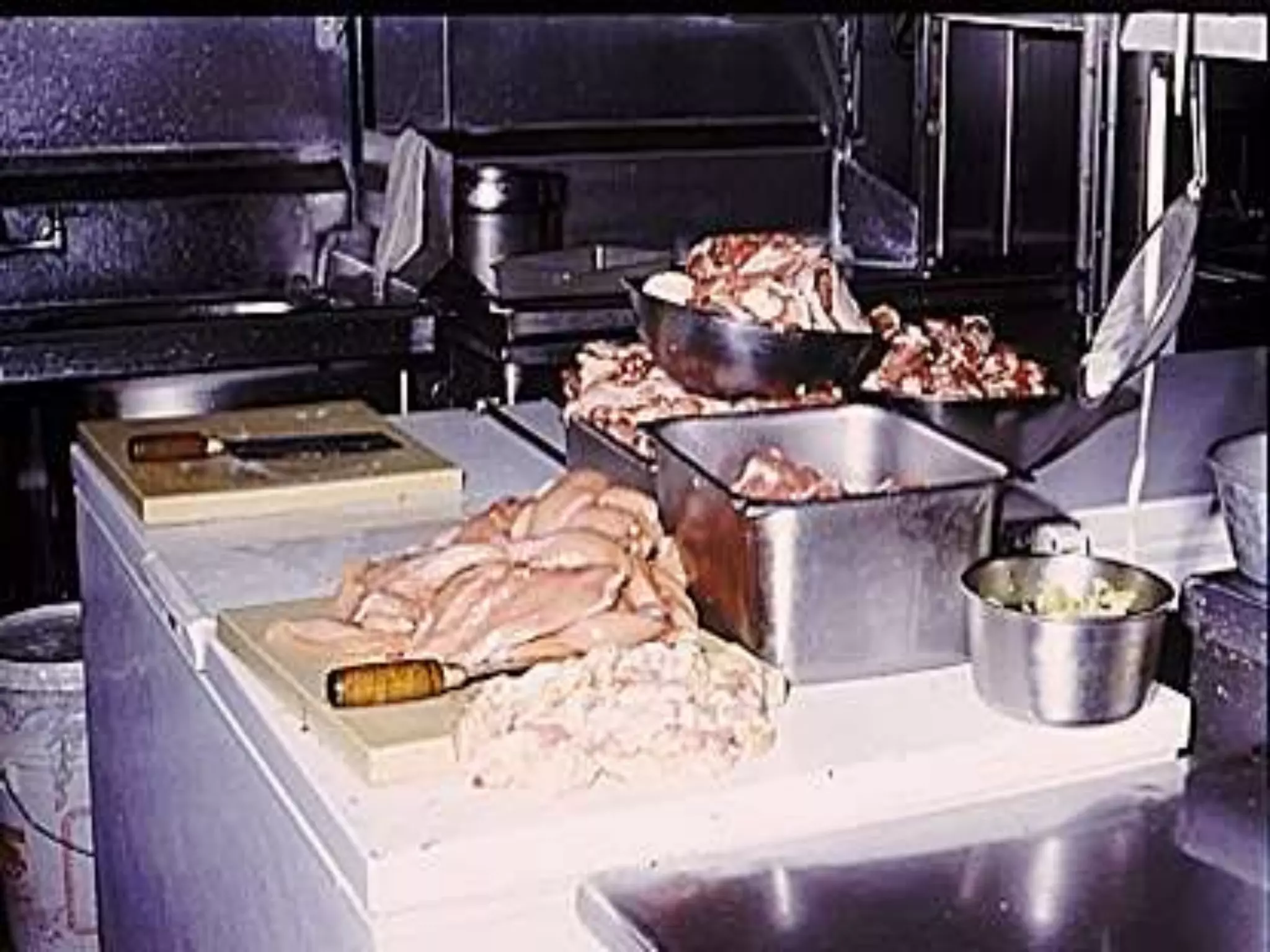
 Handle raw, high risk foods in separate area at separate
time
 Clean surfaces/equipment (e.g. cutting boards and knives)
immediately after contact with potentially hazardous food
and between uses.
Give Reason: It is important to clean chopping
boards/utensils after using them for raw meat.
Answer: To avoid cross-contamination.
Bacteria can transfer from the meat to the chopping
boards/utensils. If they are then used for ready-to-eat foods
without being washed, that bacteria can then transfer to food.
Preparation Cont.
 Hand washing prior to handling food
 Clean cereals are pulses and remove dirt, mud, stones….
 Wash fruits, vegetables. Wash with diluted Potassium
permanganate or Chlorine is advisable.
 Peeling, trimming and soaking is needed for some food
items.
 Thawing for frozen food should be completed before
cooking.
Rules for Thawing Food:
1. In a refrigerator below 4 ºC
 Never thaw on counter or non-refrigerated area
 In a pan on bottom shelf
2. Under Running water below 21 ºC
 for less than 2 hours
 While frozen food is still in its sealed package
3. In a thawing Cabinet at temperature between 10-15 ºC
4. In a microwave oven, only when it has to be cooked
immediately.
5. Some Semi-Cooked Frozen Food are cooked in their
frozen state and quickly thaw while cooking.
Cooking
 IMPORTANT: Normal Cooking Procedures Destroy
most pathogens, but not necessarily their spores or toxins.
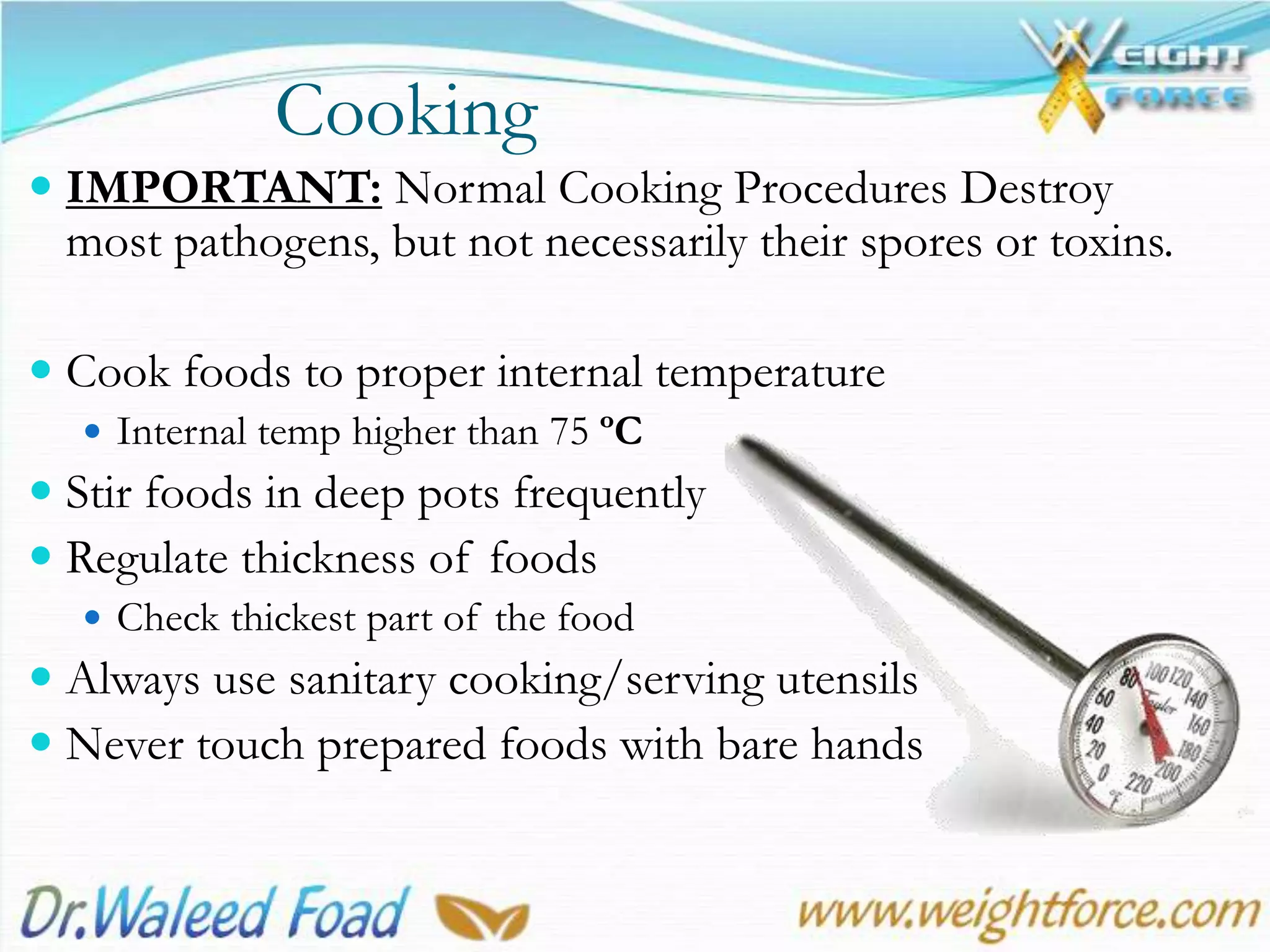
 Cook foods to proper internal temperature
 Internal temp higher than 75 ºC
 Stir foods in deep pots frequently
 Regulate thickness of foods
 Check thickest part of the food
 Always use sanitary cooking/serving utensils
 Never touch prepared foods with bare hands
Stuffed-Food Cooking
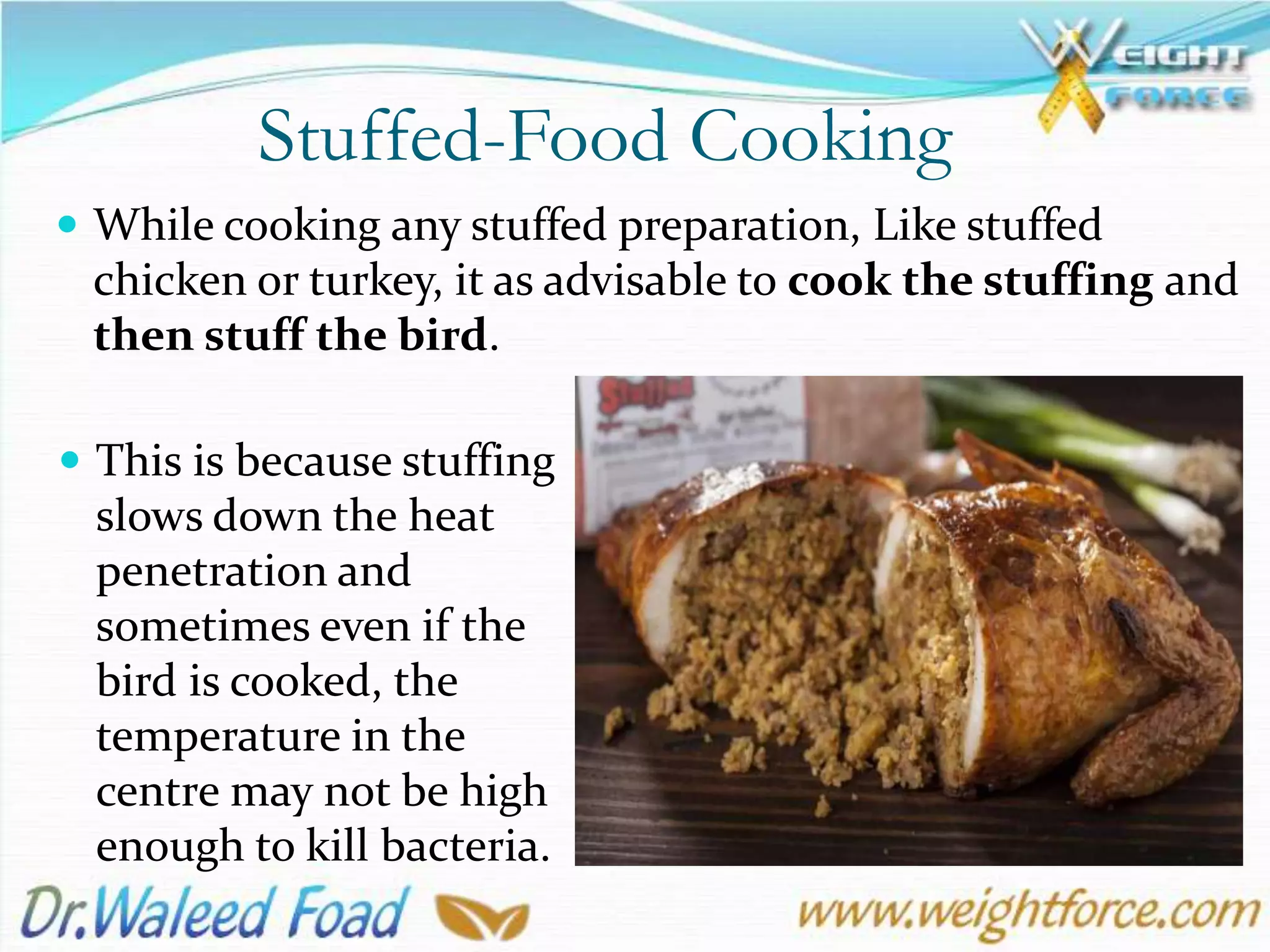
 While cooking any stuffed preparation, Like stuffed
chicken or turkey, it as advisable to cook the stuffing and
then stuff the bird.
 This is because stuffing
slows down the heat
penetration and
sometimes even if the
bird is cooked, the
temperature in the
centre may not be high
enough to kill bacteria.
Stuffed-Food Cooking
 Food poisoning is more likely to occur from stuffed
food, because:
1. More manipulation by
hands.
2. Heat transfer is slow,
letting bacteria in
temperature danger
zone for longer time.
3. Temperature at the
centre of food may not
be adequate, so the
staffing may not be
cooked to the desirable
stage.
Left-Over Food
Always remember when handling left-Over Food:
IF IN DOUBT, THROW IT OUT
Left –Over Food include:
1. Displayed but not Sold or Eaten during meal time.
2. Food Prepared but not used in cooking Functions.
3. Food Produced in quantities more than that required.
Left –Over Food Should be handled carefully, e.g.:
• Stored below 4 ºC until required.
• Discard left-over Food refrigerated for more than 3 days from
preparation date
• Should not be mixed with fresh food.
• Should be covered and stored in Specific separate areas.
• Reheated before serving only once, with very strict measures.
Reheating Left-Over Food
 Give Reason: It is better to avoid reheating Left-Over
Food.
Answer: To avoid the increased risk of food poisoning
due to bacterial growth at temperature danger zone.
 You should only reheat Left-over Food once.
The more times you cool and reheat food, the more
potential there is for food poisoning, bacteria might grow
and multiply because the food is cooled too slowly, and
might survive because the food isn’t reheated properly.
When you do reheat, make sure that food is reheated
thoroughly, so that it is steaming hot all the way through.
General Considerations
 Ill or infected workers not allowed to handle food
 Generally, Keep Perishable and frozen food out of
temperature danger zone (5°C to 60°C).
 For big or catered events, hold reference sample of all
foods served for 72 hours.
For Further Support:
Dr. Waleed Foad
Email: wfoad@outlook.com

9th lecture-Sanitary procedures while preparing and cooking food

  • 1.
    By: Dr. Waleed Foad MSc.PublicHealth in Nutrition Clinical Nutrition Specialist European Society of Gastrointestinal Endoscopy (ESGE) Member of the American Society of Nutrition Email: wfoad@outlook.com
  • 2.
    Hazard Analysis andCritical Control Points (HACCP)  System of control procedures to monitor food service process  Purchase  Serving  Identifies “Critical Control Points” (CCP’s)  Points in process where hazards may be introduced  Reduce risk of food borne illness
  • 3.
    Hazard Analysis ofCritical Control Points (HACCP)  Purchasing (Discussed in Previous Lectures)  Receiving (Discussed in Previous Lectures)  Storing (Discussed in Previous Lectures)  Preparing  Cooking  Hot-holding (Discussed in Previous Lectures)  Cooling (Discussed in Previous Lectures)  Reheating (Discussed in Previous Lectures)  Serving (Next Lecture with Personal hygiene and employee training )
  • 4.
    Preparation  Handle raw,high risk foods in separate area at separate time  Clean surfaces/equipment (e.g. cutting boards and knives) immediately after contact with potentially hazardous food and between uses. Give Reason: It is important to clean chopping boards/utensils after using them for raw meat. Answer: To avoid cross-contamination. Bacteria can transfer from the meat to the chopping boards/utensils. If they are then used for ready-to-eat foods without being washed, that bacteria can then transfer to food.
  • 6.
    Preparation Cont.  Handwashing prior to handling food  Clean cereals are pulses and remove dirt, mud, stones….  Wash fruits, vegetables. Wash with diluted Potassium permanganate or Chlorine is advisable.  Peeling, trimming and soaking is needed for some food items.  Thawing for frozen food should be completed before cooking.
  • 7.
    Rules for ThawingFood: 1. In a refrigerator below 4 ºC  Never thaw on counter or non-refrigerated area  In a pan on bottom shelf 2. Under Running water below 21 ºC  for less than 2 hours  While frozen food is still in its sealed package 3. In a thawing Cabinet at temperature between 10-15 ºC 4. In a microwave oven, only when it has to be cooked immediately. 5. Some Semi-Cooked Frozen Food are cooked in their frozen state and quickly thaw while cooking.
  • 8.
    Cooking  IMPORTANT: NormalCooking Procedures Destroy most pathogens, but not necessarily their spores or toxins.  Cook foods to proper internal temperature  Internal temp higher than 75 ºC  Stir foods in deep pots frequently  Regulate thickness of foods  Check thickest part of the food  Always use sanitary cooking/serving utensils  Never touch prepared foods with bare hands
  • 9.
    Stuffed-Food Cooking  Whilecooking any stuffed preparation, Like stuffed chicken or turkey, it as advisable to cook the stuffing and then stuff the bird.  This is because stuffing slows down the heat penetration and sometimes even if the bird is cooked, the temperature in the centre may not be high enough to kill bacteria.
  • 10.
    Stuffed-Food Cooking  Foodpoisoning is more likely to occur from stuffed food, because: 1. More manipulation by hands. 2. Heat transfer is slow, letting bacteria in temperature danger zone for longer time. 3. Temperature at the centre of food may not be adequate, so the staffing may not be cooked to the desirable stage.
  • 11.
    Left-Over Food Always rememberwhen handling left-Over Food: IF IN DOUBT, THROW IT OUT Left –Over Food include: 1. Displayed but not Sold or Eaten during meal time. 2. Food Prepared but not used in cooking Functions. 3. Food Produced in quantities more than that required. Left –Over Food Should be handled carefully, e.g.: • Stored below 4 ºC until required. • Discard left-over Food refrigerated for more than 3 days from preparation date • Should not be mixed with fresh food. • Should be covered and stored in Specific separate areas. • Reheated before serving only once, with very strict measures.
  • 12.
    Reheating Left-Over Food Give Reason: It is better to avoid reheating Left-Over Food. Answer: To avoid the increased risk of food poisoning due to bacterial growth at temperature danger zone.  You should only reheat Left-over Food once. The more times you cool and reheat food, the more potential there is for food poisoning, bacteria might grow and multiply because the food is cooled too slowly, and might survive because the food isn’t reheated properly. When you do reheat, make sure that food is reheated thoroughly, so that it is steaming hot all the way through.
  • 13.
    General Considerations  Illor infected workers not allowed to handle food  Generally, Keep Perishable and frozen food out of temperature danger zone (5°C to 60°C).  For big or catered events, hold reference sample of all foods served for 72 hours.
  • 14.
    For Further Support: Dr.Waleed Foad Email: wfoad@outlook.com