Cultivating Community Engagement, Expanding Cultural Competency and Defining Curriculum: The NOSM Aboriginal and Francophone Experience 
October 28, 2014 
Lee Rysdale, Practice Education, Research and Evaluation Lead, Health Sciences Unit 
Danielle Barbeau-Rodrigue, directrice/Director, Affaires francophones/Francophone Affairs 
Tina Armstrong, Director, Aboriginal Affairs
Faculty/Presenter Disclosure 
• 
Presenters: 
- 
Tina Armstrong 
- 
Danielle Barbeau-Rodrigue 
- 
Lee Rysdale 
• 
Relationships with commercial interests: None 
• 
Potential for conflict(s) of interest: None
Objectives 
• 
To discuss best practices needed to integrate cultural competency into health professional education and training. 
• 
To identify enablers and challenges in the implementation and evaluation of cultural competency in health education curriculum. 
• 
To discuss community engagement strategies that strengthen the social accountability preparation of cultural competent health professionals
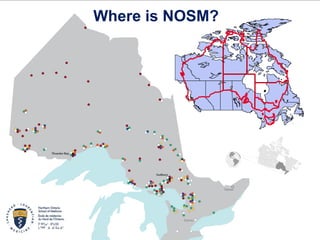
Where is NOSM?
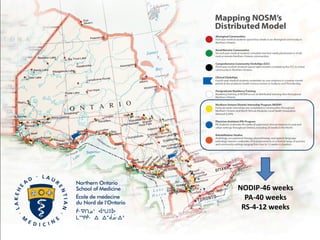
NODIP-46 weeks PA-40 weeks RS-4-12 weeks
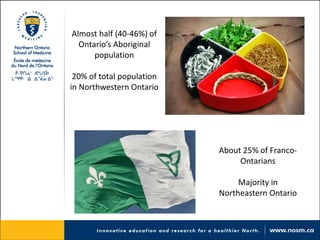
Almost half (40-46%) of Ontario’s Aboriginal population 
20% of total population in Northwestern Ontario 
About 25% of Franco- Ontarians Majority in Northeastern Ontario
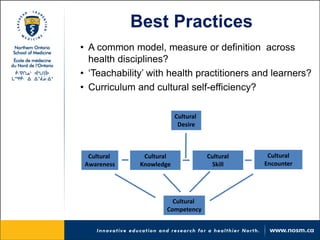
Cultural 
Desire 
Cultural Awareness 
Cultural Knowledge 
Cultural Skill 
Cultural Encounter 
Cultural Competency 
Best Practices 
• 
A common model, measure or definition across health disciplines? 
• 
‘Teachability’ with health practitioners and learners? 
• 
Curriculum and cultural self-efficiency?
Activities and Timelines 
Summer/Fall 2012 Winter/Spring 2013 
• 
Literature Review 
• 
Competency Assessment Framework & Indicators 
• 
Internal and External Key Informants 
• 
Minimum and Advanced Competencies 
• 
Environmental Scans 
• 
Draft Implementation Toolkits for Preceptors 
• 
Draft Competency Checklists for Learners 
• 
Ongoing Consultations and Feedback 
• 
Ongoing Scans, Checklist and Toolkit Revisions 
• 
Preceptor Readiness & PD Needs (2 REBs) 
• 
Targeted Implementation & Process Evaluation
Activities and Timelines 
Summer/Fall 2013 Winter/Spring 2014 Summer 2014 
• 
Preceptor Training 
• 
Aboriginal Workshop-Sudbury/Thunder Bay 
• 
Francophone Webinar Series 
• 
Targeted Implementation (NODIP) 
• 
Ongoing Scans, Checklist and Toolkit Revisions 
• 
Formatted and Launched Online (Feb 2014) http://www.nosm.ca/education/general.aspx?id=17879 http://www.nosm.ca/education/general.aspx?id=17825 
• 
Track web traffic-uptake and distribution 
• 
Checklist feedback online survey 
• 
DC ANN Gathering and Dietetic Educators 
• 
FACE Committee
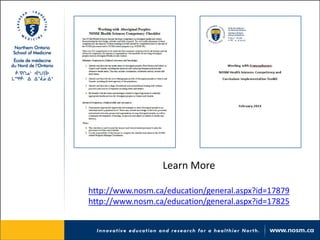
Learn More 
http://www.nosm.ca/education/general.aspx?id=17879 
http://www.nosm.ca/education/general.aspx?id=17825
Challenges 
– 
NOSM vs Health Sciences 
– 
Indicators and Evaluation 
• 
Education commitment and content 
• 
Clinician and learner performance 
– 
Environmental Scans 
• 
Ongoing, current 
– 
Draft Implementation Toolkits 
• 
Updates July 2013 and Feb 2014 
• 
Online version 
– 
Draft Competency Checklists 
• 
Pilots (9/12 completed) 
• 
Five updates/revisions 
• 
Online version 
Some links are broken 
It’s all right there for you 
Provides direction for the learner and develops minimum competency without having to go further and do one’s own research. 
Optional readings & videos should be required 
Way too much to expect in 6 weeks 
I loved the videos! 
Didn’t have enough actual experience
Challenges 
– 
Preceptor readiness and PD needs 
• 
Needs assessment (n=61 of 550) (2 REBs) 
– 
Preceptor training 
• 
Distance, diverse disciplines, appropriate format
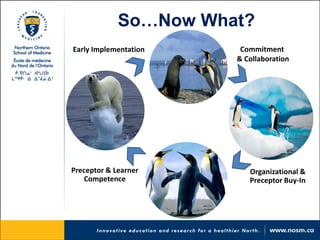
So…Now What? 
Early Implementation 
Organizational & Preceptor Buy-In 
Commitment & Collaboration 
Preceptor & Learner Competence
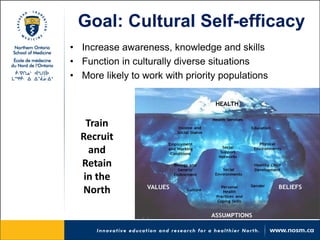
Goal: Cultural Self-efficacy 
• 
Increase awareness, knowledge and skills 
• 
Function in culturally diverse situations 
• 
More likely to work with priority populations 
Train Recruit and Retain in the North
Our Questions 
• 
What shapes cultural self-efficacy and practice setting decisions? 
– 
individual and/or organizational factors? 
• 
How do we assess cultural self-efficacy? 
• 
What types of educational experiences increase cultural self-efficacy (e.g. workshops, placements)? 
• 
Are there specific aspects of the learning experience that are more effective? 
• 
How do we assess the impact of specific experiences on cultural self-efficacy?
Your Questions
Further Information 
• 
NOSM Health Sciences Competency Checklists and Toolkits 
– 
Aboriginal http://www.nosm.ca/education/general.aspx?id=17879 
– 
Francophone http://www.nosm.ca/education/general.aspx?id=17825 
•Lee Rysdale lrysdale@nosm.ca 
•Tina Armstrong tarmstrong@nosm.ca 
•Danielle Barbeau Rodrigue dbarbeaurodrigue@nosm.ca

96 muster2014 rysdale

  • 1.
    Cultivating Community Engagement,Expanding Cultural Competency and Defining Curriculum: The NOSM Aboriginal and Francophone Experience October 28, 2014 Lee Rysdale, Practice Education, Research and Evaluation Lead, Health Sciences Unit Danielle Barbeau-Rodrigue, directrice/Director, Affaires francophones/Francophone Affairs Tina Armstrong, Director, Aboriginal Affairs
  • 2.
    Faculty/Presenter Disclosure • Presenters: - Tina Armstrong - Danielle Barbeau-Rodrigue - Lee Rysdale • Relationships with commercial interests: None • Potential for conflict(s) of interest: None
  • 3.
    Objectives • Todiscuss best practices needed to integrate cultural competency into health professional education and training. • To identify enablers and challenges in the implementation and evaluation of cultural competency in health education curriculum. • To discuss community engagement strategies that strengthen the social accountability preparation of cultural competent health professionals
  • 4.
  • 5.
    NODIP-46 weeks PA-40weeks RS-4-12 weeks
  • 6.
    Almost half (40-46%)of Ontario’s Aboriginal population 20% of total population in Northwestern Ontario About 25% of Franco- Ontarians Majority in Northeastern Ontario
  • 7.
    Cultural Desire CulturalAwareness Cultural Knowledge Cultural Skill Cultural Encounter Cultural Competency Best Practices • A common model, measure or definition across health disciplines? • ‘Teachability’ with health practitioners and learners? • Curriculum and cultural self-efficiency?
  • 8.
    Activities and Timelines Summer/Fall 2012 Winter/Spring 2013 • Literature Review • Competency Assessment Framework & Indicators • Internal and External Key Informants • Minimum and Advanced Competencies • Environmental Scans • Draft Implementation Toolkits for Preceptors • Draft Competency Checklists for Learners • Ongoing Consultations and Feedback • Ongoing Scans, Checklist and Toolkit Revisions • Preceptor Readiness & PD Needs (2 REBs) • Targeted Implementation & Process Evaluation
  • 9.
    Activities and Timelines Summer/Fall 2013 Winter/Spring 2014 Summer 2014 • Preceptor Training • Aboriginal Workshop-Sudbury/Thunder Bay • Francophone Webinar Series • Targeted Implementation (NODIP) • Ongoing Scans, Checklist and Toolkit Revisions • Formatted and Launched Online (Feb 2014) http://www.nosm.ca/education/general.aspx?id=17879 http://www.nosm.ca/education/general.aspx?id=17825 • Track web traffic-uptake and distribution • Checklist feedback online survey • DC ANN Gathering and Dietetic Educators • FACE Committee
  • 10.
    Learn More http://www.nosm.ca/education/general.aspx?id=17879 http://www.nosm.ca/education/general.aspx?id=17825
  • 11.
    Challenges – NOSMvs Health Sciences – Indicators and Evaluation • Education commitment and content • Clinician and learner performance – Environmental Scans • Ongoing, current – Draft Implementation Toolkits • Updates July 2013 and Feb 2014 • Online version – Draft Competency Checklists • Pilots (9/12 completed) • Five updates/revisions • Online version Some links are broken It’s all right there for you Provides direction for the learner and develops minimum competency without having to go further and do one’s own research. Optional readings & videos should be required Way too much to expect in 6 weeks I loved the videos! Didn’t have enough actual experience
  • 12.
    Challenges – Preceptorreadiness and PD needs • Needs assessment (n=61 of 550) (2 REBs) – Preceptor training • Distance, diverse disciplines, appropriate format
  • 13.
    So…Now What? EarlyImplementation Organizational & Preceptor Buy-In Commitment & Collaboration Preceptor & Learner Competence
  • 14.
    Goal: Cultural Self-efficacy • Increase awareness, knowledge and skills • Function in culturally diverse situations • More likely to work with priority populations Train Recruit and Retain in the North
  • 15.
    Our Questions • What shapes cultural self-efficacy and practice setting decisions? – individual and/or organizational factors? • How do we assess cultural self-efficacy? • What types of educational experiences increase cultural self-efficacy (e.g. workshops, placements)? • Are there specific aspects of the learning experience that are more effective? • How do we assess the impact of specific experiences on cultural self-efficacy?
  • 16.
  • 17.
    Further Information • NOSM Health Sciences Competency Checklists and Toolkits – Aboriginal http://www.nosm.ca/education/general.aspx?id=17879 – Francophone http://www.nosm.ca/education/general.aspx?id=17825 •Lee Rysdale lrysdale@nosm.ca •Tina Armstrong tarmstrong@nosm.ca •Danielle Barbeau Rodrigue dbarbeaurodrigue@nosm.ca