Today’s Topic
ā€œPEEDA Act, 2006ā€
By:
Muhammad Akram Bhatti
MA, LL.B, LL.M
Ex-PCS Officer/Advocate High Court
Cell # 0300-6803388
Disciplinary Laws (previous)
 Punjab Civil Servants (E & D) Rules, 1975
 Punjab Civil Servants (E & D) Rules, 1999
 Punjab Removal from Service (Special Powers)
Ordinance, 2000
PEEDA Act, 2006 (current)
The Punjab Employees Efficiency, Discipline
& Accountability Act, 2006 was passed by the
Punjab Assembly and made effective w.e.f
17th October, 2006
Salient Features of PEEDA 2006
 Employee
 ā€˜Corruption & inefficiency’ defined in Sec. 2(g) & (k)
 Change of minor/major penalties
 Role of Hearing Officer (Sec. 14)
 Charge sheet included in the Order of Inquiry
 Penalties after retirement
 Police & Judiciary excluded
Initiation of Inquiry
Suspension
In cases inquiry is dispensed with
Conviction or plea bargain
Procedure to be followed by the
Authority
 Where the inquiry necessary, procedure to be followed:
 Inform the accused, Opportunity of showing cause, determine
whether charge proved or not, time limit 90 days (otherwise the
accused may approach the Appellate authority), P. Hearing by itself
or through H. O., Exonerate or impose penalty.
 Precautions
 Charge of grave corruption –dismissal, in addition to recovery.
 Absence for more than 1 year – Removal or dismissal.
Procedure to be followed by the
EO/EC
 Examination of oral/documentary evidence
 Witness/cross-examination etc.
 Day to day hearing
 If the accused is hampering
Contd..
 If the accused is absent, except medical leave
 Submit findings (clear with recommendations)
 If not finalized within time, extension to be
sought from the Authority
 Recommendations not binding on Authority
Duties of D.R.
 Full assistance
 Production of record
 Cross-examination
 Rebuttal of defence
Responsibility of Hearing Officer
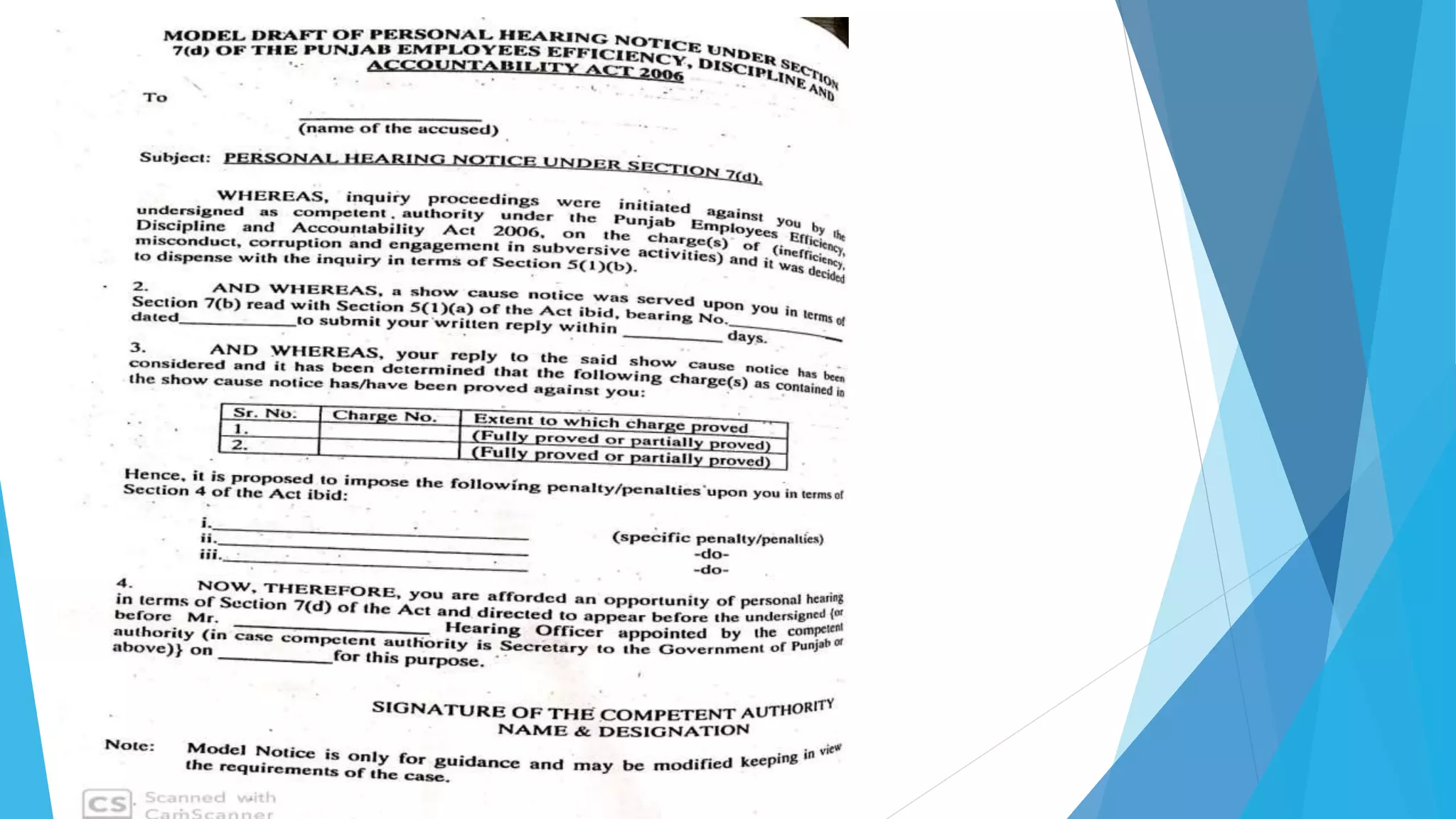
 Fix a date & time
 Summoning of accused and DR – along with record –
for P. Hearing
 After hearing, record his remarks & submit a report to
Authority
 Summary of the inquiry report
 Summary of defence offered
 Summary of the grounds of appeal/review
Action to be taken by the Authority
 Examine the report/case file
 Whether inquiry conducted as per the provisions of Act
 Charge proved or not. If not, he will exonerate
If proved:
 Inform the accused, proposing the penalty to be
imposed
 Opportunity of showing cause within 7 days (before the
Authority or H.O.)
 Indicate the date of personal hearing
Contd..
 Provide a copy of inquiry report
 Direction to D.R. to be present along with the relevant
record
 Impose the penalty or exonerate
Provided
 Charge or grave corruption: Dismissal, in addition to
recovery, if any
 Absence of more than one year – penalty of
compulsory retirement or dismissal
 If the inquiry was not conducted, as per law, remand or
order a de novo inquiry
Contd..
Precaution
 Commensurate with the gravity of charges
 Care should be taken while withholding the increments
 Penalty of ā€˜compulsory retirement’ if 10 years’ service
or more…
 For retired employees, the penalties should be as per
Sec. 4 (c) and Sec. 21
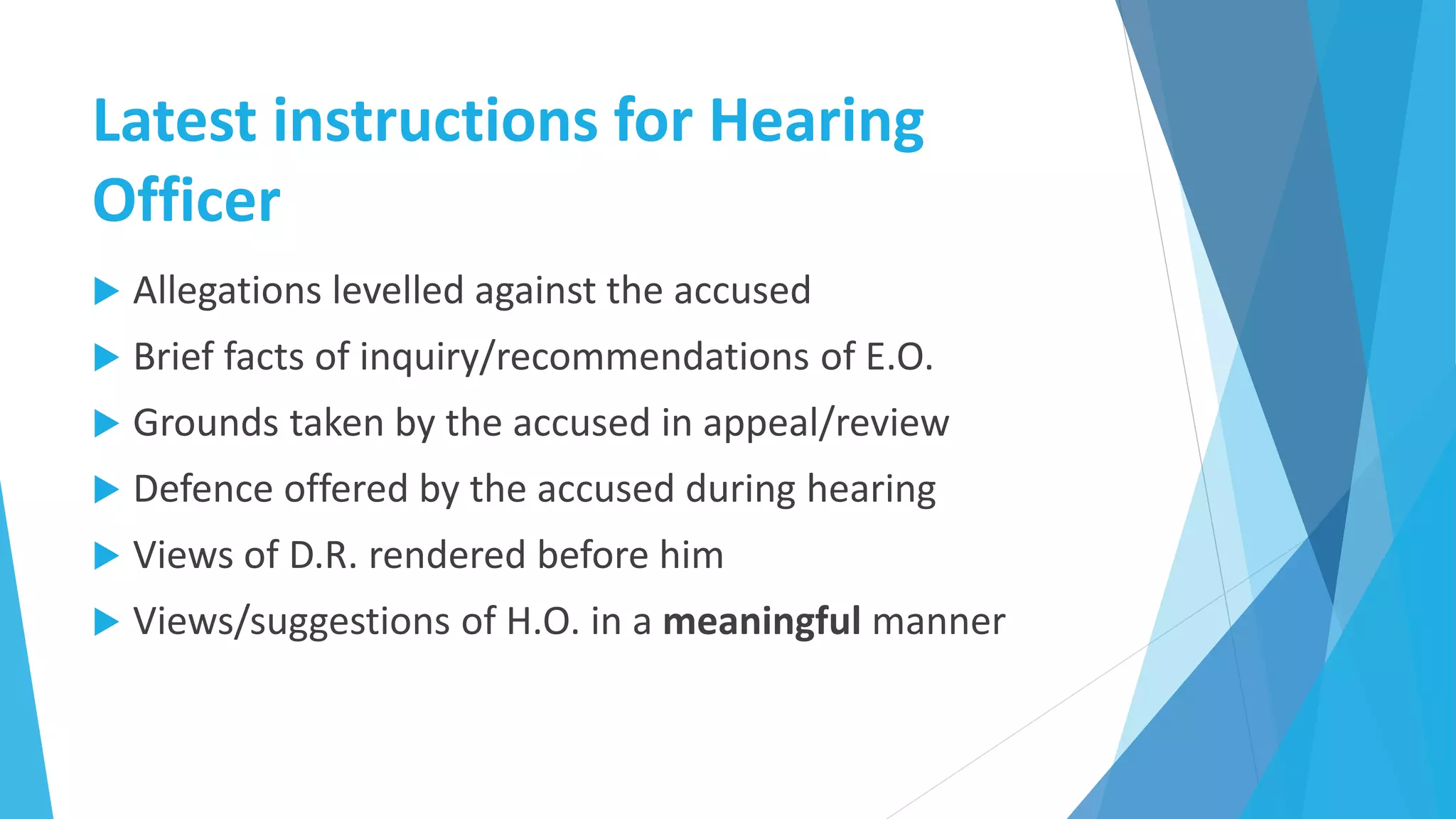
Latest instructions for Hearing
Officer
 Allegations levelled against the accused
 Brief facts of inquiry/recommendations of E.O.
 Grounds taken by the accused in appeal/review
 Defence offered by the accused during hearing
 Views of D.R. rendered before him
 Views/suggestions of H.O. in a meaningful manner
Departmental Appeal/Review
 Uphold the order of penalty or reject the appeal/review
 Set aside the order and exonerate
 Modify the orders – reduce or enhance the penalty
 Set aside the order and remand the case
Provided
 If the penalty to be enhance, it shall inform the accused
and give him a reasonable opportunity
 Hearing officer can also be appointed
Revisional Powers (Sec. 17)
The CM, CS or the Administrative Secretary or any other
Appellate Authority:
He can:
 Uphold the orders of the competent/appellate
authority
 Order the competent authority to hold a de novo
inquiry, or
 Impose or enhance a penalty
 No order prejudicial to the accused unless given a
reasonable opportunity of showing cause/p.hearing.
Appeal before the PST (Sec. 19)
An employee, aggrieved by an order u/s 16 or 17
may, within 90 days, prefer an appeal to the PST.
If the Appellate Authority or the CM does not pass
any final order within 60 days the aggrieved
employees may file an appeal to the PST (within
90 days).
9 peeda (slides)
9 peeda (slides)
9 peeda (slides)
9 peeda (slides)
9 peeda (slides)

9 peeda (slides)

  • 2.
    Today’s Topic ā€œPEEDA Act,2006ā€ By: Muhammad Akram Bhatti MA, LL.B, LL.M Ex-PCS Officer/Advocate High Court Cell # 0300-6803388
  • 3.
    Disciplinary Laws (previous) Punjab Civil Servants (E & D) Rules, 1975  Punjab Civil Servants (E & D) Rules, 1999  Punjab Removal from Service (Special Powers) Ordinance, 2000
  • 4.
    PEEDA Act, 2006(current) The Punjab Employees Efficiency, Discipline & Accountability Act, 2006 was passed by the Punjab Assembly and made effective w.e.f 17th October, 2006
  • 5.
    Salient Features ofPEEDA 2006  Employee  ā€˜Corruption & inefficiency’ defined in Sec. 2(g) & (k)  Change of minor/major penalties  Role of Hearing Officer (Sec. 14)  Charge sheet included in the Order of Inquiry  Penalties after retirement  Police & Judiciary excluded
  • 6.
    Initiation of Inquiry Suspension Incases inquiry is dispensed with Conviction or plea bargain
  • 7.
    Procedure to befollowed by the Authority  Where the inquiry necessary, procedure to be followed:  Inform the accused, Opportunity of showing cause, determine whether charge proved or not, time limit 90 days (otherwise the accused may approach the Appellate authority), P. Hearing by itself or through H. O., Exonerate or impose penalty.  Precautions  Charge of grave corruption –dismissal, in addition to recovery.  Absence for more than 1 year – Removal or dismissal.
  • 8.
    Procedure to befollowed by the EO/EC  Examination of oral/documentary evidence  Witness/cross-examination etc.  Day to day hearing  If the accused is hampering
  • 9.
    Contd..  If theaccused is absent, except medical leave  Submit findings (clear with recommendations)  If not finalized within time, extension to be sought from the Authority  Recommendations not binding on Authority
  • 10.
    Duties of D.R. Full assistance  Production of record  Cross-examination  Rebuttal of defence
  • 11.
    Responsibility of HearingOfficer  Fix a date & time  Summoning of accused and DR – along with record – for P. Hearing  After hearing, record his remarks & submit a report to Authority  Summary of the inquiry report  Summary of defence offered  Summary of the grounds of appeal/review
  • 12.
    Action to betaken by the Authority  Examine the report/case file  Whether inquiry conducted as per the provisions of Act  Charge proved or not. If not, he will exonerate If proved:  Inform the accused, proposing the penalty to be imposed  Opportunity of showing cause within 7 days (before the Authority or H.O.)  Indicate the date of personal hearing
  • 13.
    Contd..  Provide acopy of inquiry report  Direction to D.R. to be present along with the relevant record  Impose the penalty or exonerate Provided  Charge or grave corruption: Dismissal, in addition to recovery, if any  Absence of more than one year – penalty of compulsory retirement or dismissal  If the inquiry was not conducted, as per law, remand or order a de novo inquiry
  • 14.
    Contd.. Precaution  Commensurate withthe gravity of charges  Care should be taken while withholding the increments  Penalty of ā€˜compulsory retirement’ if 10 years’ service or more…  For retired employees, the penalties should be as per Sec. 4 (c) and Sec. 21
  • 15.
    Latest instructions forHearing Officer  Allegations levelled against the accused  Brief facts of inquiry/recommendations of E.O.  Grounds taken by the accused in appeal/review  Defence offered by the accused during hearing  Views of D.R. rendered before him  Views/suggestions of H.O. in a meaningful manner
  • 16.
    Departmental Appeal/Review  Upholdthe order of penalty or reject the appeal/review  Set aside the order and exonerate  Modify the orders – reduce or enhance the penalty  Set aside the order and remand the case Provided  If the penalty to be enhance, it shall inform the accused and give him a reasonable opportunity  Hearing officer can also be appointed
  • 17.
    Revisional Powers (Sec.17) The CM, CS or the Administrative Secretary or any other Appellate Authority: He can:  Uphold the orders of the competent/appellate authority  Order the competent authority to hold a de novo inquiry, or  Impose or enhance a penalty  No order prejudicial to the accused unless given a reasonable opportunity of showing cause/p.hearing.
  • 18.
    Appeal before thePST (Sec. 19) An employee, aggrieved by an order u/s 16 or 17 may, within 90 days, prefer an appeal to the PST. If the Appellate Authority or the CM does not pass any final order within 60 days the aggrieved employees may file an appeal to the PST (within 90 days).