8D Problem Solving Concepts with Lean Six Sigma
Are you trying to find an organized solution to persistent issues in your
company that you can't seem to shake off? Your answer is the 8D
Problem-Solving model. Rooted in the principles of Lean Six Sigma, the 8D
methodology offers a structured and systematic approach to identify,
analyze, and resolve complex problems. It is a very useful tool for
situations where anything goes wrong or requires change. It's a deliberate,
cooperative way to solve important issues to improve production
procedures. It accomplishes this through assisting with root cause
investigation, containment plan creation, and the application of remedial
solutions.
Let's understand it more thoroughly!
Let's understand it more thoroughly!"
Encouraging a deeper comprehension,
this phrase invites exploration and clarity,
urging a comprehensive examination of
the subject at hand.
8D Problem Solving: What Is It?
8D problem solving is a useful strategy for
dealing with challenging situations at the
workplace. The term "eight disciplines," or "8D,"
refers to a defined framework that project teams
can work within. Organizations can address
extremely difficult or crucial operational
challenges by implementing the analysis and
procedures it offers.
During World War II, the US military first
employed this variant. The "Team Oriented
Problem Solving" (TOPS) approach was its name,
and Ford Motors later made it well-known. The
car maker improved the procedure and
equipment, renaming it as the Eight Disciplines
(8D) of Problem Solving. 8D can be useful in
Kaizen continuous improvement efforts and
striving towards lean processes.
Understanding the 8D Problem Solving Methodology
Organizations utilize the 8D Problem Solving
methodology as a methodical strategy to
examine and resolve recurrent issues, flaws, or
departures from intended results. Each discipline
specializes in a particular area of quality
improvement and problem-solving, comprising
eight disciplines in total. These are the Eight
Disciplines:
D1: Establish the Team:
D2: Describe the Problem:
D3: Implement Interim Containment Actions:
D4: Identify Root Causes:
D5: Develop Permanent Corrective Actions:
D6: Verify Corrective Actions:
D7: Prevent Recurrence:
D1: Establish the Team:
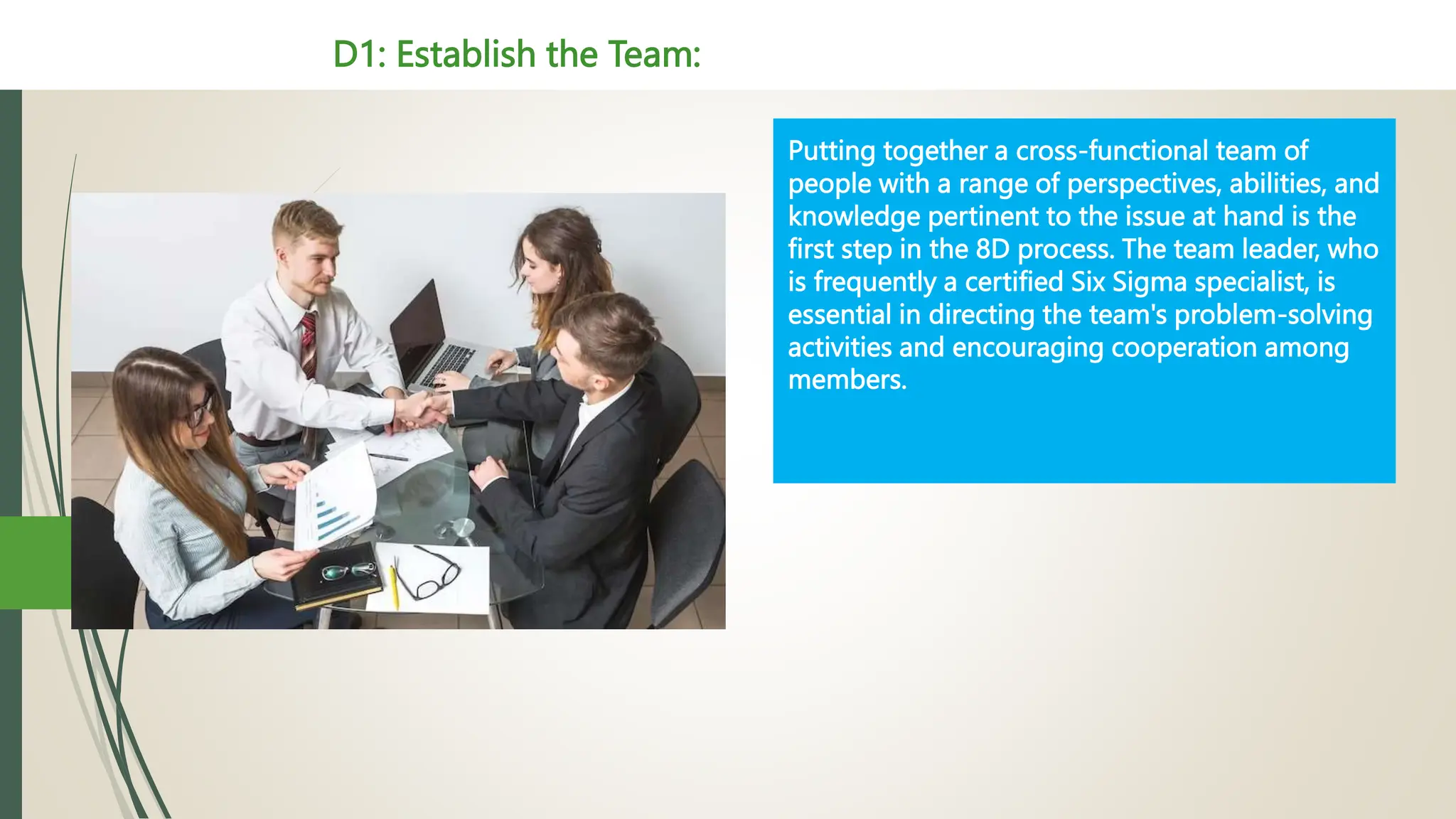
Putting together a cross-functional team of
people with a range of perspectives, abilities, and
knowledge pertinent to the issue at hand is the
first step in the 8D process. The team leader, who
is frequently a certified Six Sigma specialist, is
essential in directing the team's problem-solving
activities and encouraging cooperation among
members.
D2: Describe the Problem:
The next discipline is defining the issue or
departure from expected performance in detail
when the team is formed. In order to complete
this phase, you must collect pertinent data, carry
out a root cause analysis, and record the
problem's symptoms, extent, and effects on
stakeholders, procedures, and results.
D3: Implement Interim Containment Actions:
Interim containment measures are taken to
reduce the problem's immediate impact and stop
it from getting worse. These stopgap solutions
are intended to maintain order, prevent further
damage to consumers, processes, and resources,
and stop the spread of faults or problems.
D4: Identify Root Causes:
In this discipline, the team carries out a
comprehensive analysis to determine the
fundamental issues that are causing the issue.
Through data analysis and testing, techniques
including cause-and-effect diagrams, fishbone
diagrams, and 5 Whys analysis are frequently
used to prioritize root reasons, investigate
probable causes, and validate hypotheses.
D5: Develop Permanent Corrective Actions:
In order to address the root causes found, the
team develops and puts into effect long-term
corrective measures based on the results of the
root cause analysis. These steps are intended to
address the underlying causes of the issue, avoid
a recurrence, and enhance the overall
dependability and performance of the process.
D6: Verify Corrective Actions:
The team tests, monitors, and validates the
remedial actions after they are put into place to
ensure they are working. In this step, information
is gathered, KPIs are measured, and the effects of
the corrective measures on process efficiency
and customer satisfaction are evaluated.
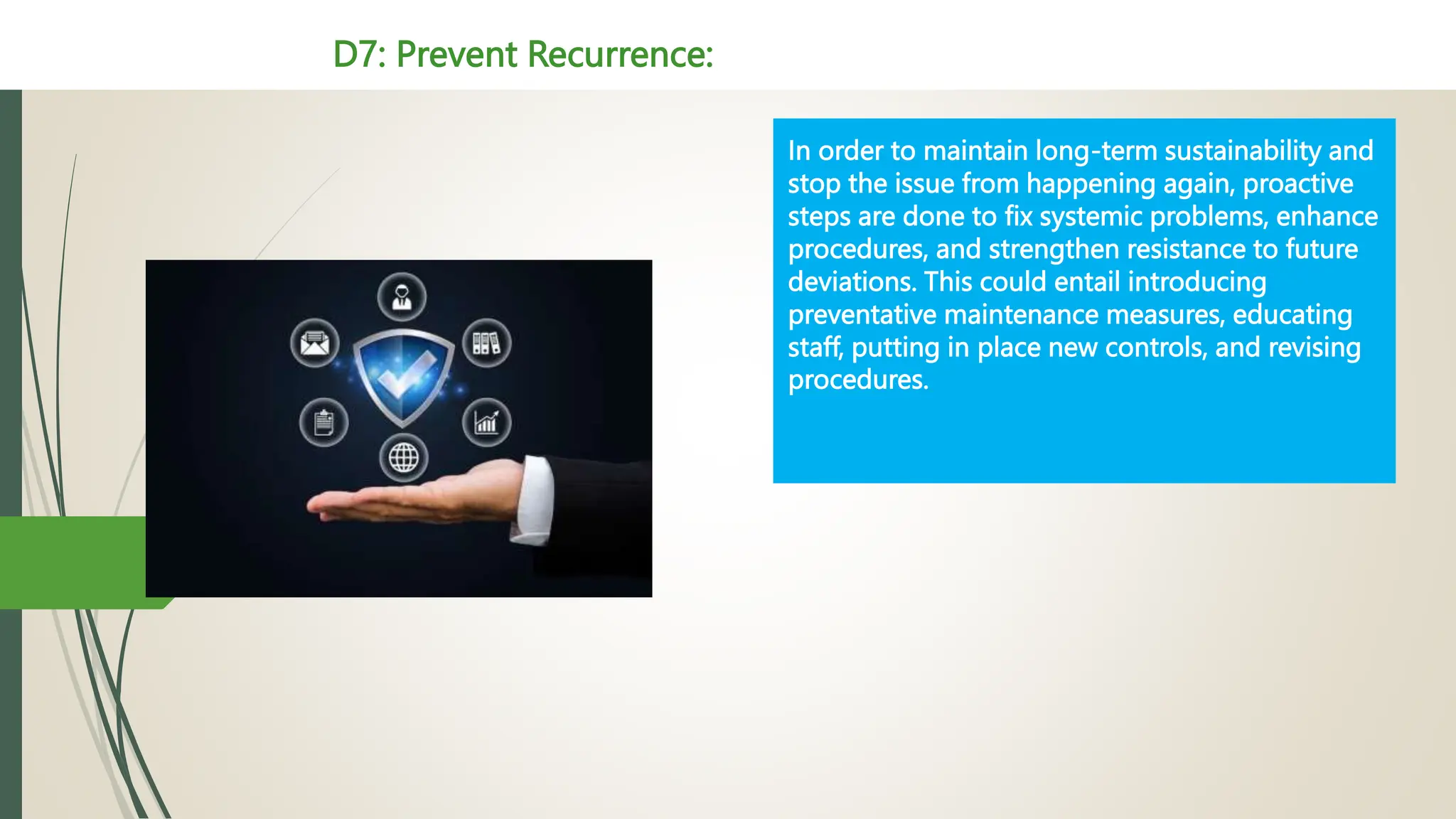
D7: Prevent Recurrence:
In order to maintain long-term sustainability and
stop the issue from happening again, proactive
steps are done to fix systemic problems, enhance
procedures, and strengthen resistance to future
deviations. This could entail introducing
preventative maintenance measures, educating
staff, putting in place new controls, and revising
procedures.
D8: Recognize Team Effort:
Honoring and applauding the work of the
problem-solving team is the last discipline in the
8D Problem Solving process. In an organization,
sharing lessons learned, recording best practices,
and recognizing the achievements of team
members fosters a culture of innovation and
continuous improvement.
Applications of the 8D Problem Solving Methodology:
The 8D Problem Solving methodology has broad
applications in a number of different sectors and
industries, such as the automotive, aerospace,
healthcare, and manufacturing industries.
Companies use the 8D process to handle
problems related to process deviations, customer
complaints, safety incidents, and other issues
that affect customer happiness, product quality,
and organizational performance.
By adopting the 8D Problem Solving methodology, organizations can:
• Improve product and service quality
• Enhance customer satisfaction and loyalty
• Reduce defects, waste, and rework
• Increase process efficiency and reliability
• Foster a culture of continuous improvement
and innovation
• Strengthen cross-functional collaboration and
problem-solving capabilities
• Drive cost savings and competitive advantage
in the marketplace
Integrating 8D Problem Solving Methodology with Lean Six Sigma
Here's how the 8D methodology can be
effectively integrated with Lean Six Sigma:
1. Define the Problem:
2. Establish a Cross-Functional Team:
3. Use Data-Driven Analysis:
4. Apply Root Cause Analysis:
5. Implement Corrective Actions:
6. Monitor and Control:
7. Continuous Improvement:
Define the Problem:
The Define phase of Lean Six Sigma
concentrates on precisely describing the
problem description and project objectives.
Similar to this, the 8D methodology's initial
step is to describe the problem, making sure
that everyone involved has an equal grasp of
the matter at hand.
Establish a Cross-Functional Team:
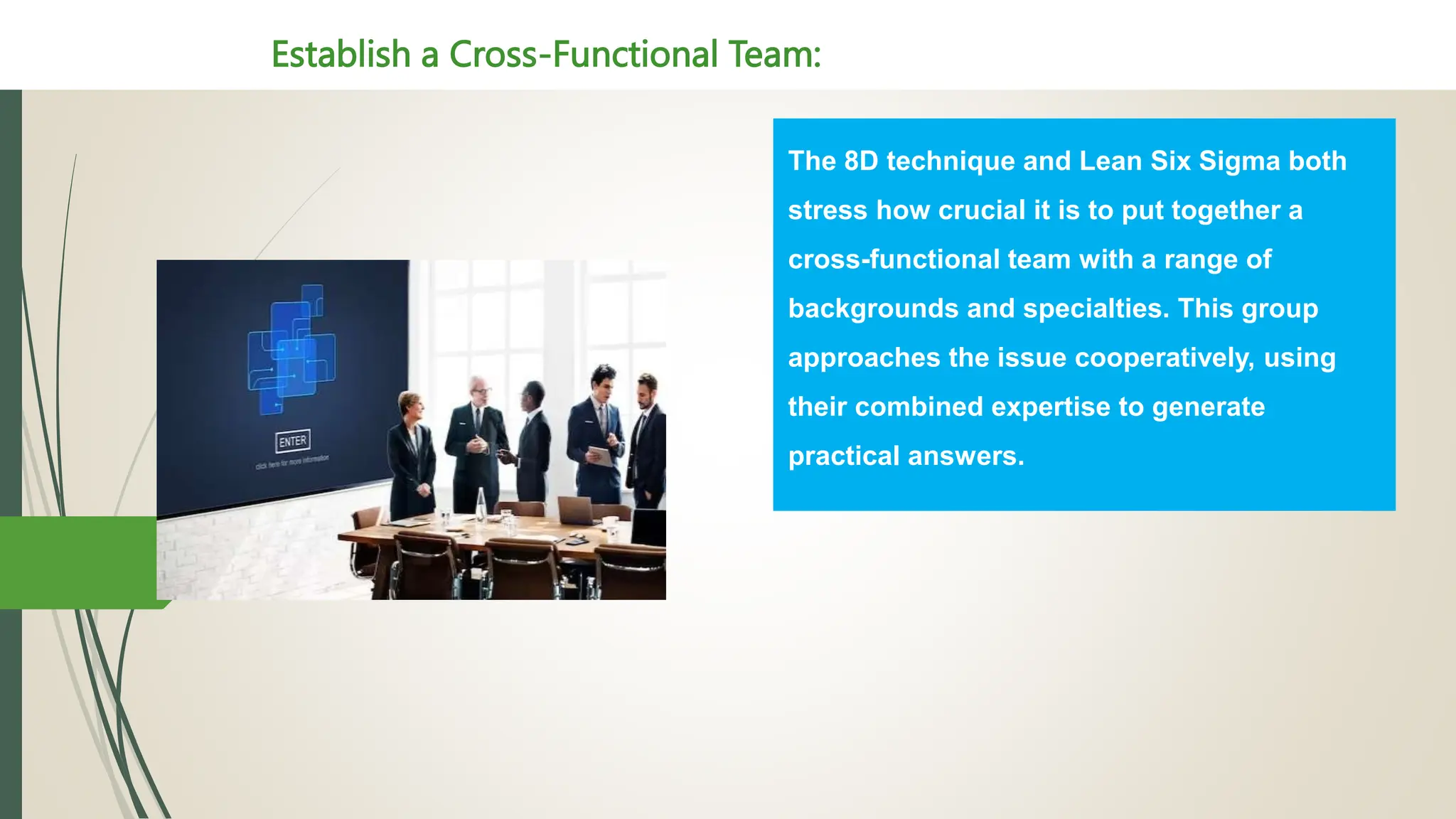
The 8D technique and Lean Six Sigma both
stress how crucial it is to put together a
cross-functional team with a range of
backgrounds and specialties. This group
approaches the issue cooperatively, using
their combined expertise to generate
practical answers.
Use Data-Driven Analysis:
Data-driven analysis is a key component of
Lean Six Sigma, which uses it to analyze
process performance and pinpoint the
sources of issues. In a similar vein, the 8D
methodology places a strong emphasis on
using data and statistical tools to examine
the issue and pinpoint its causes.
Apply Root Cause Analysis:
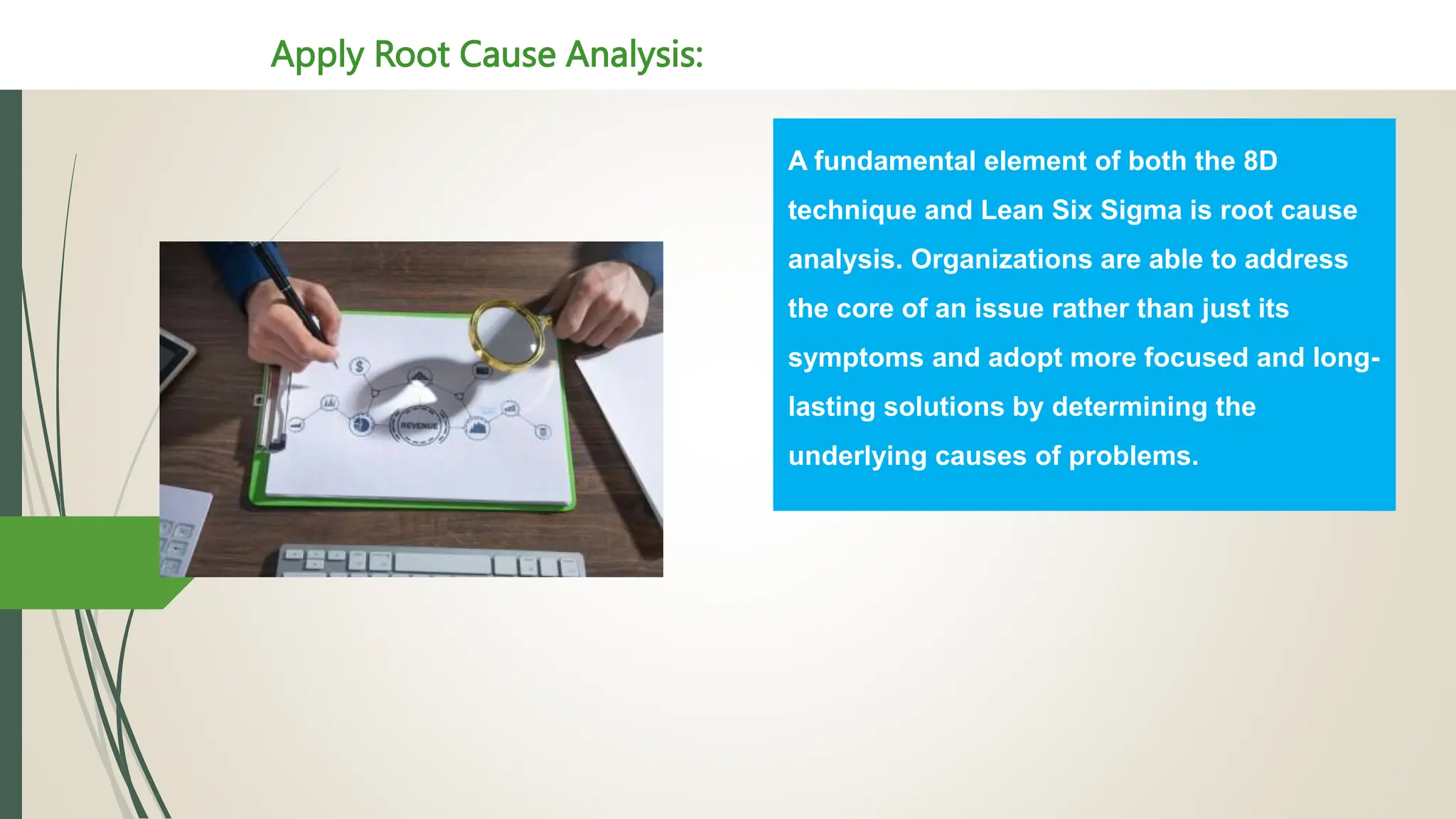
A fundamental element of both the 8D
technique and Lean Six Sigma is root cause
analysis. Organizations are able to address
the core of an issue rather than just its
symptoms and adopt more focused and long-
lasting solutions by determining the
underlying causes of problems.
Implement Corrective Actions:
Find the underlying reasons for the issue and
then put corrective measures in place to stop
it from happening again. Lean Six Sigma
offers an organized method for putting these
solutions into practice and making sure they
are long-lasting and successful.
Monitor and Control:
Measures are implemented to monitor
process performance and guarantee that
improvements are maintained throughout the
Control phase of Lean Six Sigma. In a similar
vein, the 8D technique incorporates
guidelines for keeping an eye on the success
of remedial efforts and putting preventative
measures in place to steer clear of problems
down the road.
Continuous Improvement:
Combining Lean Six Sigma and the 8D
technique fosters a culture of continuous
improvement, eliminating waste and
inefficiencies. This synergy provides
organizations with a robust framework to
address challenges, achieve operational
excellence, and enhance customer value
through streamlined problem-solving
processes.
Conclusion:
To sum up, the 8D Problem Solving methodology provides a methodical and
organized way to tackle intricate issues. It promotes ongoing development within
companies. Teams can improve quality, efficiency, and customer satisfaction by
implementing effective corrective actions, preventing recurrence of errors, and
rigorously identifying root causes by adhering to the Eight Disciplines framework. In
today's ever-changing business environment, organizations aim to pursue
operational excellence and competitive advantage for greater success. It makes
the 8D Problem Solving technique an essential skill to have.
Stepping into the world of project or quality management? MindCypress offers one
of the top lean six sigma certification courses to professionals and non-
professionals alike. The six sigma classes are based online with industry experts
as trainers; who understand the concepts of six sigma thoroughly.
Closing Slide & Resource:
Resource: https://www.mindcypress.com/blogs/project-
management/8d-problem-solving-concepts-with-lean-six-sigma

8D Problem Solving Concepts with Lean Six Sigma.pptx

  • 1.
    8D Problem SolvingConcepts with Lean Six Sigma Are you trying to find an organized solution to persistent issues in your company that you can't seem to shake off? Your answer is the 8D Problem-Solving model. Rooted in the principles of Lean Six Sigma, the 8D methodology offers a structured and systematic approach to identify, analyze, and resolve complex problems. It is a very useful tool for situations where anything goes wrong or requires change. It's a deliberate, cooperative way to solve important issues to improve production procedures. It accomplishes this through assisting with root cause investigation, containment plan creation, and the application of remedial solutions.
  • 2.
    Let's understand itmore thoroughly! Let's understand it more thoroughly!" Encouraging a deeper comprehension, this phrase invites exploration and clarity, urging a comprehensive examination of the subject at hand.
  • 3.
    8D Problem Solving:What Is It? 8D problem solving is a useful strategy for dealing with challenging situations at the workplace. The term "eight disciplines," or "8D," refers to a defined framework that project teams can work within. Organizations can address extremely difficult or crucial operational challenges by implementing the analysis and procedures it offers. During World War II, the US military first employed this variant. The "Team Oriented Problem Solving" (TOPS) approach was its name, and Ford Motors later made it well-known. The car maker improved the procedure and equipment, renaming it as the Eight Disciplines (8D) of Problem Solving. 8D can be useful in Kaizen continuous improvement efforts and striving towards lean processes.
  • 4.
    Understanding the 8DProblem Solving Methodology Organizations utilize the 8D Problem Solving methodology as a methodical strategy to examine and resolve recurrent issues, flaws, or departures from intended results. Each discipline specializes in a particular area of quality improvement and problem-solving, comprising eight disciplines in total. These are the Eight Disciplines: D1: Establish the Team: D2: Describe the Problem: D3: Implement Interim Containment Actions: D4: Identify Root Causes: D5: Develop Permanent Corrective Actions: D6: Verify Corrective Actions: D7: Prevent Recurrence:
  • 5.
    D1: Establish theTeam: Putting together a cross-functional team of people with a range of perspectives, abilities, and knowledge pertinent to the issue at hand is the first step in the 8D process. The team leader, who is frequently a certified Six Sigma specialist, is essential in directing the team's problem-solving activities and encouraging cooperation among members.
  • 6.
    D2: Describe theProblem: The next discipline is defining the issue or departure from expected performance in detail when the team is formed. In order to complete this phase, you must collect pertinent data, carry out a root cause analysis, and record the problem's symptoms, extent, and effects on stakeholders, procedures, and results.
  • 7.
    D3: Implement InterimContainment Actions: Interim containment measures are taken to reduce the problem's immediate impact and stop it from getting worse. These stopgap solutions are intended to maintain order, prevent further damage to consumers, processes, and resources, and stop the spread of faults or problems.
  • 8.
    D4: Identify RootCauses: In this discipline, the team carries out a comprehensive analysis to determine the fundamental issues that are causing the issue. Through data analysis and testing, techniques including cause-and-effect diagrams, fishbone diagrams, and 5 Whys analysis are frequently used to prioritize root reasons, investigate probable causes, and validate hypotheses.
  • 9.
    D5: Develop PermanentCorrective Actions: In order to address the root causes found, the team develops and puts into effect long-term corrective measures based on the results of the root cause analysis. These steps are intended to address the underlying causes of the issue, avoid a recurrence, and enhance the overall dependability and performance of the process.
  • 10.
    D6: Verify CorrectiveActions: The team tests, monitors, and validates the remedial actions after they are put into place to ensure they are working. In this step, information is gathered, KPIs are measured, and the effects of the corrective measures on process efficiency and customer satisfaction are evaluated.
  • 11.
    D7: Prevent Recurrence: Inorder to maintain long-term sustainability and stop the issue from happening again, proactive steps are done to fix systemic problems, enhance procedures, and strengthen resistance to future deviations. This could entail introducing preventative maintenance measures, educating staff, putting in place new controls, and revising procedures.
  • 12.
    D8: Recognize TeamEffort: Honoring and applauding the work of the problem-solving team is the last discipline in the 8D Problem Solving process. In an organization, sharing lessons learned, recording best practices, and recognizing the achievements of team members fosters a culture of innovation and continuous improvement.
  • 13.
    Applications of the8D Problem Solving Methodology: The 8D Problem Solving methodology has broad applications in a number of different sectors and industries, such as the automotive, aerospace, healthcare, and manufacturing industries. Companies use the 8D process to handle problems related to process deviations, customer complaints, safety incidents, and other issues that affect customer happiness, product quality, and organizational performance.
  • 14.
    By adopting the8D Problem Solving methodology, organizations can: • Improve product and service quality • Enhance customer satisfaction and loyalty • Reduce defects, waste, and rework • Increase process efficiency and reliability • Foster a culture of continuous improvement and innovation • Strengthen cross-functional collaboration and problem-solving capabilities • Drive cost savings and competitive advantage in the marketplace
  • 15.
    Integrating 8D ProblemSolving Methodology with Lean Six Sigma Here's how the 8D methodology can be effectively integrated with Lean Six Sigma: 1. Define the Problem: 2. Establish a Cross-Functional Team: 3. Use Data-Driven Analysis: 4. Apply Root Cause Analysis: 5. Implement Corrective Actions: 6. Monitor and Control: 7. Continuous Improvement:
  • 16.
    Define the Problem: TheDefine phase of Lean Six Sigma concentrates on precisely describing the problem description and project objectives. Similar to this, the 8D methodology's initial step is to describe the problem, making sure that everyone involved has an equal grasp of the matter at hand.
  • 17.
    Establish a Cross-FunctionalTeam: The 8D technique and Lean Six Sigma both stress how crucial it is to put together a cross-functional team with a range of backgrounds and specialties. This group approaches the issue cooperatively, using their combined expertise to generate practical answers.
  • 18.
    Use Data-Driven Analysis: Data-drivenanalysis is a key component of Lean Six Sigma, which uses it to analyze process performance and pinpoint the sources of issues. In a similar vein, the 8D methodology places a strong emphasis on using data and statistical tools to examine the issue and pinpoint its causes.
  • 19.
    Apply Root CauseAnalysis: A fundamental element of both the 8D technique and Lean Six Sigma is root cause analysis. Organizations are able to address the core of an issue rather than just its symptoms and adopt more focused and long- lasting solutions by determining the underlying causes of problems.
  • 20.
    Implement Corrective Actions: Findthe underlying reasons for the issue and then put corrective measures in place to stop it from happening again. Lean Six Sigma offers an organized method for putting these solutions into practice and making sure they are long-lasting and successful.
  • 21.
    Monitor and Control: Measuresare implemented to monitor process performance and guarantee that improvements are maintained throughout the Control phase of Lean Six Sigma. In a similar vein, the 8D technique incorporates guidelines for keeping an eye on the success of remedial efforts and putting preventative measures in place to steer clear of problems down the road.
  • 22.
    Continuous Improvement: Combining LeanSix Sigma and the 8D technique fosters a culture of continuous improvement, eliminating waste and inefficiencies. This synergy provides organizations with a robust framework to address challenges, achieve operational excellence, and enhance customer value through streamlined problem-solving processes.
  • 23.
    Conclusion: To sum up,the 8D Problem Solving methodology provides a methodical and organized way to tackle intricate issues. It promotes ongoing development within companies. Teams can improve quality, efficiency, and customer satisfaction by implementing effective corrective actions, preventing recurrence of errors, and rigorously identifying root causes by adhering to the Eight Disciplines framework. In today's ever-changing business environment, organizations aim to pursue operational excellence and competitive advantage for greater success. It makes the 8D Problem Solving technique an essential skill to have. Stepping into the world of project or quality management? MindCypress offers one of the top lean six sigma certification courses to professionals and non- professionals alike. The six sigma classes are based online with industry experts as trainers; who understand the concepts of six sigma thoroughly.
  • 24.
    Closing Slide &Resource: Resource: https://www.mindcypress.com/blogs/project- management/8d-problem-solving-concepts-with-lean-six-sigma