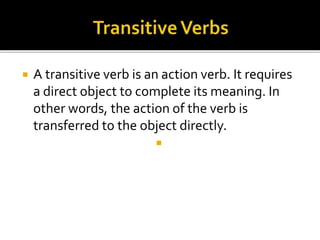
 A transitive verb is an action verb. It requires
a direct object to complete its meaning. In
other words, the action of the verb is
transferred to the object directly.

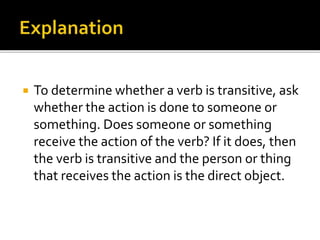
 To determine whether a verb is transitive, ask
whether the action is done to someone or
something. Does someone or something
receive the action of the verb? If it does, then
the verb is transitive and the person or thing
that receives the action is the direct object.
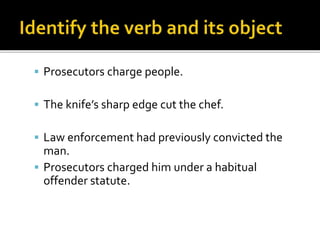
 Prosecutors charge people.
 The knife’s sharp edge cut the chef.
 Law enforcement had previously convicted the
man.
 Prosecutors charged him under a habitual
offender statute.
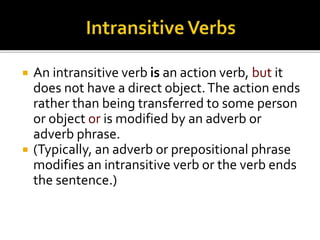
 An intransitive verb is an action verb, but it
does not have a direct object.The action ends
rather than being transferred to some person
or object or is modified by an adverb or
adverb phrase.
 (Typically, an adverb or prepositional phrase
modifies an intransitive verb or the verb ends
the sentence.)
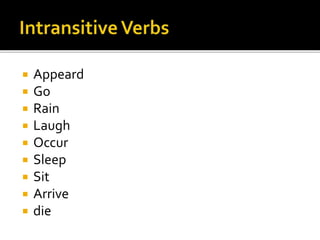
 Appeard
 Go
 Rain
 Laugh
 Occur
 Sleep
 Sit
 Arrive
 die
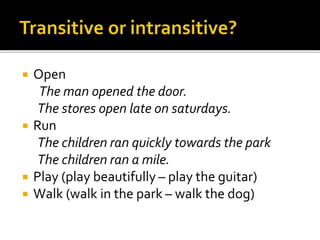
 Open
The man opened the door.
The stores open late on saturdays.
 Run
The children ran quickly towards the park
The children ran a mile.
 Play (play beautifully – play the guitar)
 Walk (walk in the park – walk the dog)
 A linking verb connects the subject with a
word that gives information about the
subject, such as a condition or relationship.
They do not show any action; but, they link
the subject with the rest of the sentence. For
example, in the sentence
 "They are a problem"
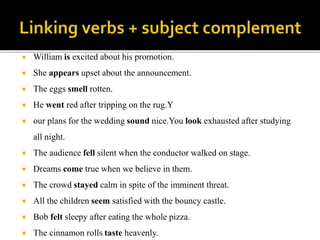
 William is excited about his promotion.
 She appears upset about the announcement.
 The eggs smell rotten.
 He went red after tripping on the rug.Y
 our plans for the wedding sound nice.You look exhausted after studying
all night.
 The audience fell silent when the conductor walked on stage.
 Dreams come true when we believe in them.
 The crowd stayed calm in spite of the imminent threat.
 All the children seem satisfied with the bouncy castle.
 Bob felt sleepy after eating the whole pizza.
 The cinnamon rolls taste heavenly.
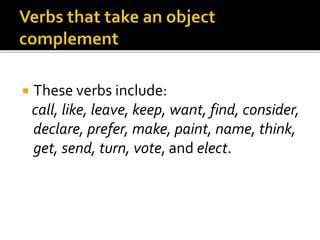
 These verbs include:
call, like, leave, keep, want, find, consider,
declare, prefer, make, paint, name, think,
get, send, turn, vote, and elect.
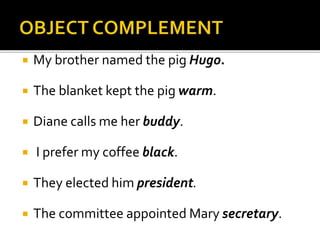
 My brother named the pig Hugo.
 The blanket kept the pig warm.
 Diane calls me her buddy.
 I prefer my coffee black.
 They elected him president.
 The committee appointed Mary secretary.

8 Transitive, Intransitive, and Linking Verbs.ppt

  • 2.
     A transitiveverb is an action verb. It requires a direct object to complete its meaning. In other words, the action of the verb is transferred to the object directly. 
  • 3.
     To determinewhether a verb is transitive, ask whether the action is done to someone or something. Does someone or something receive the action of the verb? If it does, then the verb is transitive and the person or thing that receives the action is the direct object.
  • 4.
     Prosecutors chargepeople.  The knife’s sharp edge cut the chef.  Law enforcement had previously convicted the man.  Prosecutors charged him under a habitual offender statute.
  • 5.
     An intransitiveverb is an action verb, but it does not have a direct object.The action ends rather than being transferred to some person or object or is modified by an adverb or adverb phrase.  (Typically, an adverb or prepositional phrase modifies an intransitive verb or the verb ends the sentence.)
  • 6.
     Appeard  Go Rain  Laugh  Occur  Sleep  Sit  Arrive  die
  • 7.
     Open The manopened the door. The stores open late on saturdays.  Run The children ran quickly towards the park The children ran a mile.  Play (play beautifully – play the guitar)  Walk (walk in the park – walk the dog)
  • 8.
     A linkingverb connects the subject with a word that gives information about the subject, such as a condition or relationship. They do not show any action; but, they link the subject with the rest of the sentence. For example, in the sentence  "They are a problem"
  • 9.
     William isexcited about his promotion.  She appears upset about the announcement.  The eggs smell rotten.  He went red after tripping on the rug.Y  our plans for the wedding sound nice.You look exhausted after studying all night.  The audience fell silent when the conductor walked on stage.  Dreams come true when we believe in them.  The crowd stayed calm in spite of the imminent threat.  All the children seem satisfied with the bouncy castle.  Bob felt sleepy after eating the whole pizza.  The cinnamon rolls taste heavenly.
  • 10.
     These verbsinclude: call, like, leave, keep, want, find, consider, declare, prefer, make, paint, name, think, get, send, turn, vote, and elect.
  • 11.
     My brothernamed the pig Hugo.  The blanket kept the pig warm.  Diane calls me her buddy.  I prefer my coffee black.  They elected him president.  The committee appointed Mary secretary.