



Feeling anxious at work?
8
Simple
Ways
to make sure you stay on top of
your game when the demons set
in..
Of course it’s natural for
pretty much everybody
to suffer from some level
of anxiety in their lives
from time to time, but
there are many people
who struggle to cope
with anxiety every day.
Statistics suggest that
about a
QUARTER OF PEOPLE
see their jobs as the
greatest cause of stress
in their lives and that
mental health issues are
one of the main causes
of absence from work.
The mental health
charity Mind state that
nearly 5 in 100 people
suffer from anxiety, so
there’s a strong chance
that even if you don’t
struggle with the issue, it
will affect someone you
know or work with.
HOW TO
SPOT
THE SIGNS
If you experience prolonged periods of intense
worry that seem disproportionate, tend to feel
nervous, fearful, restless or overloaded with
thoughts, it’s possible anxiety has started to
challenge your mental wellbeing. The physical
symptoms of anxiety can be alarming – nausea,
headaches, sweating, increased heart rate and
hot flushes leave you ill equipped to manage your
day. Panic attacks can be really frightening and
your sleep may be affected.
Anxiety at work is a really difficult experience. Even
if your main source of worry is your personal life,
when anxiety sets in it can spill over into your
working world and have a considerable impact.
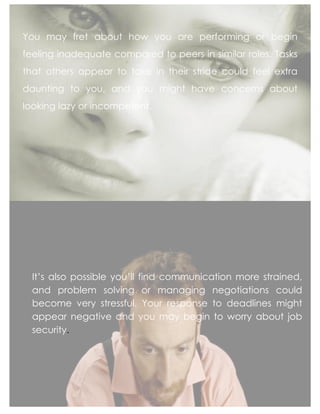
You may fret about how you are performing or begin
feeling inadequate compared to peers in similar roles. Tasks
that others appear to take in their stride could feel extra
daunting to you, and you might have concerns about
looking lazy or incompetent.
	
  
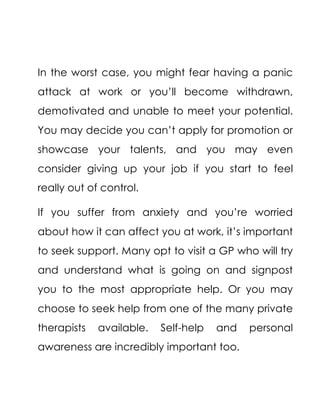
It’s also possible you’ll find communication more strained,
and problem solving or managing negotiations could
become very stressful. Your response to deadlines might
appear negative and you may begin to worry about job
security.	
  
In the worst case, you might fear having a panic
attack at work or you’ll become withdrawn,
demotivated and unable to meet your potential.
You may decide you can’t apply for promotion or
showcase your talents, and you may even
consider giving up your job if you start to feel
really out of control.
If you suffer from anxiety and you’re worried
about how it can affect you at work, it’s important
to seek support. Many opt to visit a GP who will try
and understand what is going on and signpost
you to the most appropriate help. Or you may
choose to seek help from one of the many private
therapists available. Self-help and personal
awareness are incredibly important too.
Here are 8
simple tips to
help you stay
on top of your
working life…
______________________________________________________
(1) Talk to your employer. Tell them you suffer from
anxiety and explain what this means for you. It might be
that you’re likely to feel pressured if asked to speak in
front of groups without preparation or you’ll be
particularly nervous about appraisals. Good
organisations know it’s not useful to stigmatise mental
health issues and will support you.
(2) Organise your working week. Take a realistic view
of the tasks you need to complete and the time you
need to get things done. Keep a diary and to-do lists so
that you know where you are with your schedule and
don’t feel snowed under.
______________________________________________________
(3) Implement clear boundaries around your workload
so that you don’t feel pressured to take on additional
tasks that are going to cause you extra stress. If there is
a need to do overtime or provide cover for colleagues
who are absent, talk to your employer about what
would be manageable for you and agree a clear work
plan.
(4) Be self aware about your communication. If you start
to feel the symptoms of anxiety presenting, be mindful
of how you’re interacting with colleagues or talking to
customers on the phone. If necessary, take time out for
a few minutes’ peace or relaxing breathing before
returning to the busy office environment. If you’ve been
open with your employer about your anxiety, then your
Manager and team will be aware of your needs when
things get difficult.
______________________________________________________
(5) Take the regular designated breaks during your
working day and use this time wisely. If deep breathing
or mindfulness techniques help you manage your
anxiety then find a quiet place to take stock of things.
Many organisations provide a ‘quiet room’ for staff
breaks, and if you’re not lucky enough to have access
to this kind of facility, ask if it is possible to use an empty
office for a few minutes.
______________________________________________________
(6) Get some fresh air by enjoying a lunchtime walk in
the park or at least get outdoors if you can. Your energy
for the rest of the day will be boosted by a little exercise
and being around trees and plants always helps.
______________________________________________________
(7) Don’t be tempted to use smoking, sugar-fixes or
caffeine boosts to get through the day. These choices
might seem to offer temporary relief if you’re feeling
challenged, but in the long term they are known to
exacerbate anxiety and other mental health issues.
Grab a fresh juice or smoothie, a chamomile or lemon
tea and choose snacks like fresh fruit or nuts to keep
your blood glucose stable.
______________________________________________________
(8) Engage in wellbeing activities. If your employer
offers wellbeing opportunities as part of your package,
lays on a lunchtime yoga session or arranges a
motivational talk be sure to attend. It can help to break
up your working day with something different. You’ll
have the opportunity to bond with colleagues and
participate in something enjoyable and rewarding that
will shift you out of your worries and limitations.
_____________________________________________________

8 simple ways to overcome anxiety at work

  • 1.
    Feeling anxious atwork? 8 Simple Ways to make sure you stay on top of your game when the demons set in..
  • 2.
    Of course it’snatural for pretty much everybody to suffer from some level of anxiety in their lives from time to time, but there are many people who struggle to cope with anxiety every day.
  • 3.
    Statistics suggest that abouta QUARTER OF PEOPLE see their jobs as the greatest cause of stress in their lives and that mental health issues are one of the main causes of absence from work.
  • 4.
    The mental health charityMind state that nearly 5 in 100 people suffer from anxiety, so there’s a strong chance that even if you don’t struggle with the issue, it will affect someone you know or work with.
  • 5.
  • 6.
    If you experienceprolonged periods of intense worry that seem disproportionate, tend to feel nervous, fearful, restless or overloaded with thoughts, it’s possible anxiety has started to challenge your mental wellbeing. The physical symptoms of anxiety can be alarming – nausea, headaches, sweating, increased heart rate and hot flushes leave you ill equipped to manage your day. Panic attacks can be really frightening and your sleep may be affected. Anxiety at work is a really difficult experience. Even if your main source of worry is your personal life, when anxiety sets in it can spill over into your working world and have a considerable impact.
  • 7.
    You may fretabout how you are performing or begin feeling inadequate compared to peers in similar roles. Tasks that others appear to take in their stride could feel extra daunting to you, and you might have concerns about looking lazy or incompetent.   It’s also possible you’ll find communication more strained, and problem solving or managing negotiations could become very stressful. Your response to deadlines might appear negative and you may begin to worry about job security.  
  • 8.
    In the worstcase, you might fear having a panic attack at work or you’ll become withdrawn, demotivated and unable to meet your potential. You may decide you can’t apply for promotion or showcase your talents, and you may even consider giving up your job if you start to feel really out of control. If you suffer from anxiety and you’re worried about how it can affect you at work, it’s important to seek support. Many opt to visit a GP who will try and understand what is going on and signpost you to the most appropriate help. Or you may choose to seek help from one of the many private therapists available. Self-help and personal awareness are incredibly important too.
  • 9.
    Here are 8 simpletips to help you stay on top of your working life…
  • 10.
    ______________________________________________________ (1) Talk toyour employer. Tell them you suffer from anxiety and explain what this means for you. It might be that you’re likely to feel pressured if asked to speak in front of groups without preparation or you’ll be particularly nervous about appraisals. Good organisations know it’s not useful to stigmatise mental health issues and will support you. (2) Organise your working week. Take a realistic view of the tasks you need to complete and the time you need to get things done. Keep a diary and to-do lists so that you know where you are with your schedule and don’t feel snowed under.
  • 11.
    ______________________________________________________ (3) Implement clearboundaries around your workload so that you don’t feel pressured to take on additional tasks that are going to cause you extra stress. If there is a need to do overtime or provide cover for colleagues who are absent, talk to your employer about what would be manageable for you and agree a clear work plan. (4) Be self aware about your communication. If you start to feel the symptoms of anxiety presenting, be mindful of how you’re interacting with colleagues or talking to customers on the phone. If necessary, take time out for a few minutes’ peace or relaxing breathing before returning to the busy office environment. If you’ve been open with your employer about your anxiety, then your Manager and team will be aware of your needs when things get difficult.
  • 12.
    ______________________________________________________ (5) Take theregular designated breaks during your working day and use this time wisely. If deep breathing or mindfulness techniques help you manage your anxiety then find a quiet place to take stock of things. Many organisations provide a ‘quiet room’ for staff breaks, and if you’re not lucky enough to have access to this kind of facility, ask if it is possible to use an empty office for a few minutes. ______________________________________________________ (6) Get some fresh air by enjoying a lunchtime walk in the park or at least get outdoors if you can. Your energy for the rest of the day will be boosted by a little exercise and being around trees and plants always helps.
  • 13.
    ______________________________________________________ (7) Don’t betempted to use smoking, sugar-fixes or caffeine boosts to get through the day. These choices might seem to offer temporary relief if you’re feeling challenged, but in the long term they are known to exacerbate anxiety and other mental health issues. Grab a fresh juice or smoothie, a chamomile or lemon tea and choose snacks like fresh fruit or nuts to keep your blood glucose stable. ______________________________________________________ (8) Engage in wellbeing activities. If your employer offers wellbeing opportunities as part of your package, lays on a lunchtime yoga session or arranges a motivational talk be sure to attend. It can help to break up your working day with something different. You’ll have the opportunity to bond with colleagues and participate in something enjoyable and rewarding that will shift you out of your worries and limitations. _____________________________________________________