8 Reasons to Adopt AgilePM
Armel Quirino, QRP International
Welcome!
Host / Moderator
Mark Constable
APMG International
mark.constable@apmg-international.com
Speaker
Armel Quirino
Trainer & Consultant
APMG International
armel.quirino@qrpinternational.com
Before we get started…
This session is being recorded.
The recording and slides will be
sent to you after the webinar.
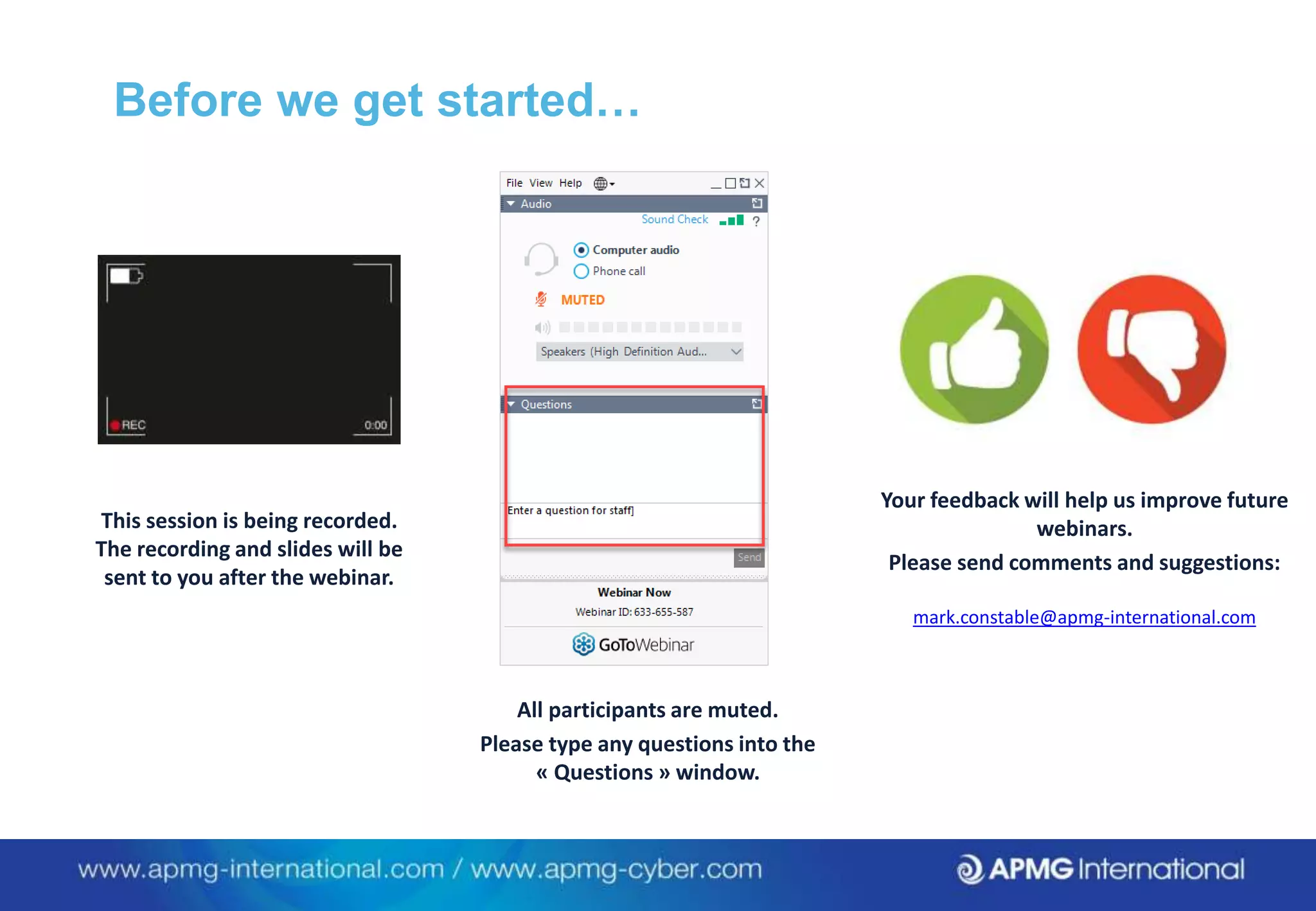
All participants are muted.
Please type any questions into the
« Questions » window.
Your feedback will help us improve future
webinars.
Please send comments and suggestions:
mark.constable@apmg-international.com
Armel Quirino
• Armel has a background of 15 years of experience in the IT field
at different.
• He worked for various companies in Europe and managed
international projects.
• With an entrepreneur mindset, applying the methods he
teaches, he is developing businesses, websites and publishing
articles to do so
• He is a translation reviewer for the coming French version of
AgilePM
• He has a strong academic background with a MSc in Project,
Programmes and Business Development from the French
Skema Business school.
• He is certified AgilePM, PRINCE2, PRINCE2 Agile, MSP, MoP, ITIL
(RCV), DevOps.
The AgilePM Expert
©2017 QRP International V1,2
Background: Traditional and Agile methods
What is AgilePM?
8 Reasons to adopt AgilePM
Training and certification
Questions & Answers
Agenda
POLL 1 - Why did
you enroll for this
AgilePM webinar?
Background:
Traditional andAgile
methods
©2017 QRP International V1,2
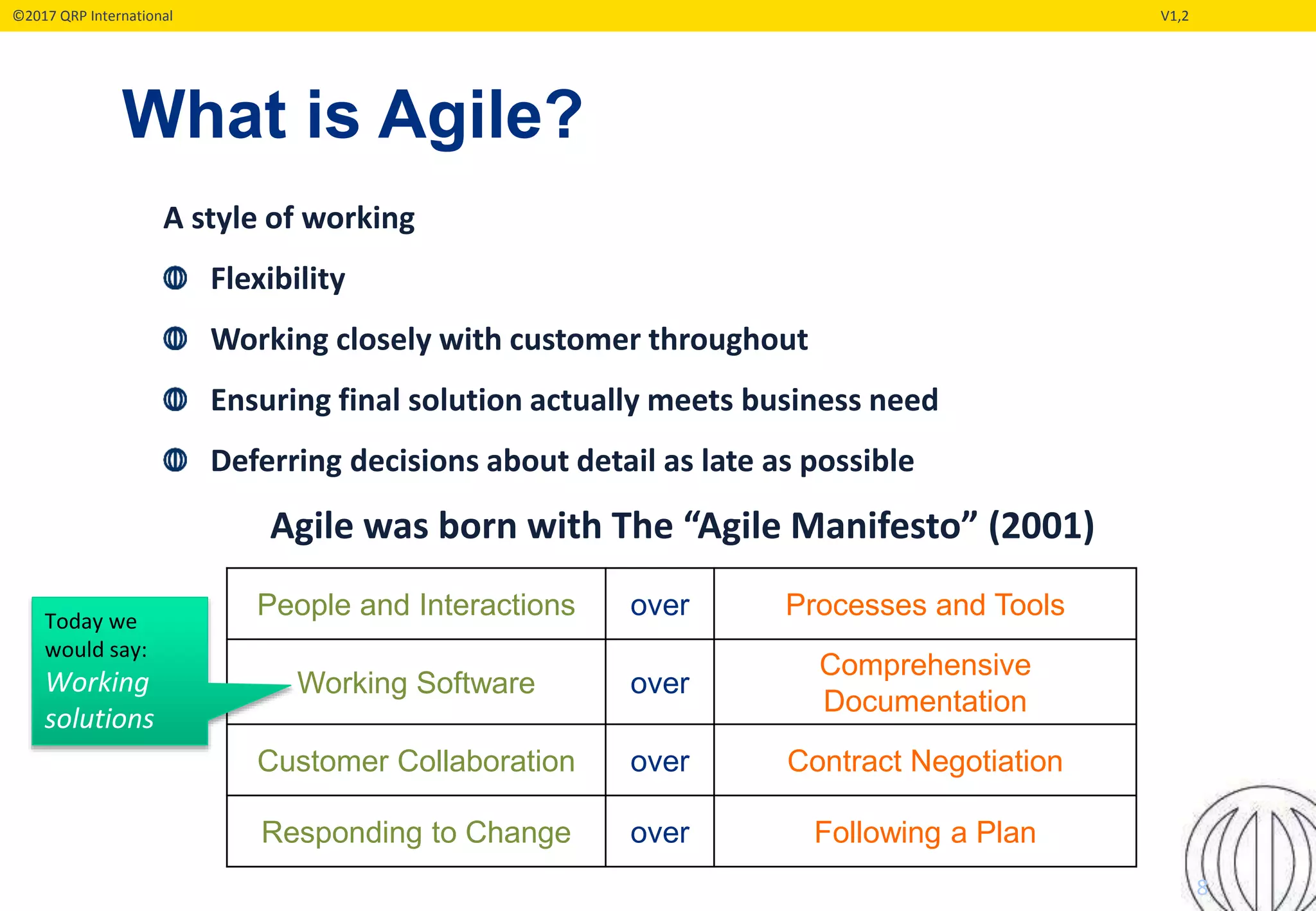
What is Agile?
8
A style of working
Flexibility
Working closely with customer throughout
Ensuring final solution actually meets business need
Deferring decisions about detail as late as possible
Agile was born with The “Agile Manifesto” (2001)
People and Interactions over Processes and Tools
Working Software over
Comprehensive
Documentation
Customer Collaboration over Contract Negotiation
Responding to Change over Following a Plan
Today we
would say:
Working
solutions
©2017 QRP International V1,2
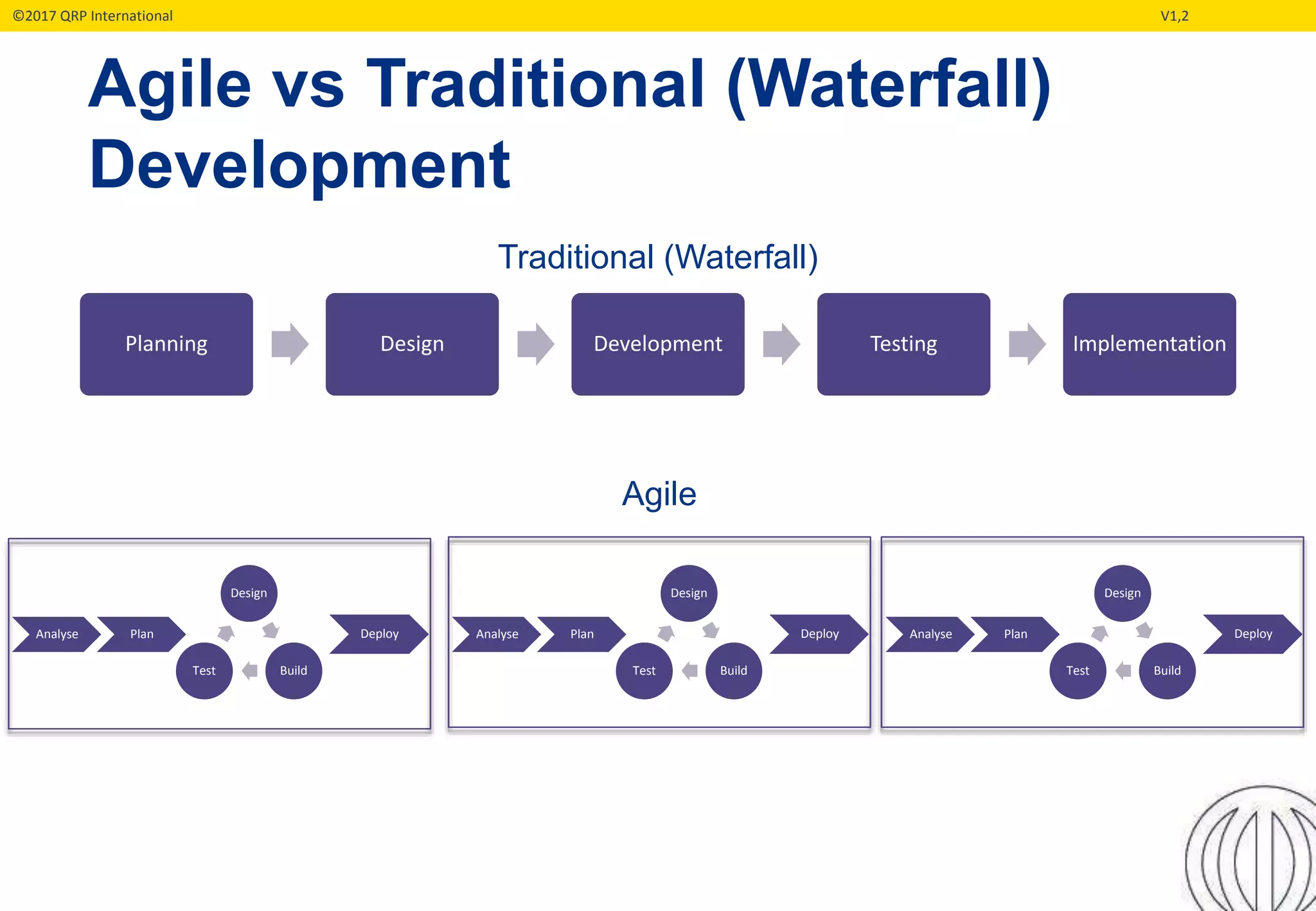
Agile vs Traditional (Waterfall)
Development
Planning Design Development Testing Implementation
Design
BuildTest
Analyse Plan Deploy
Design
BuildTest
Analyse Plan Deploy
Design
BuildTest
Analyse Plan Deploy
Traditional (Waterfall)
Agile
©2017 QRP International V1,2
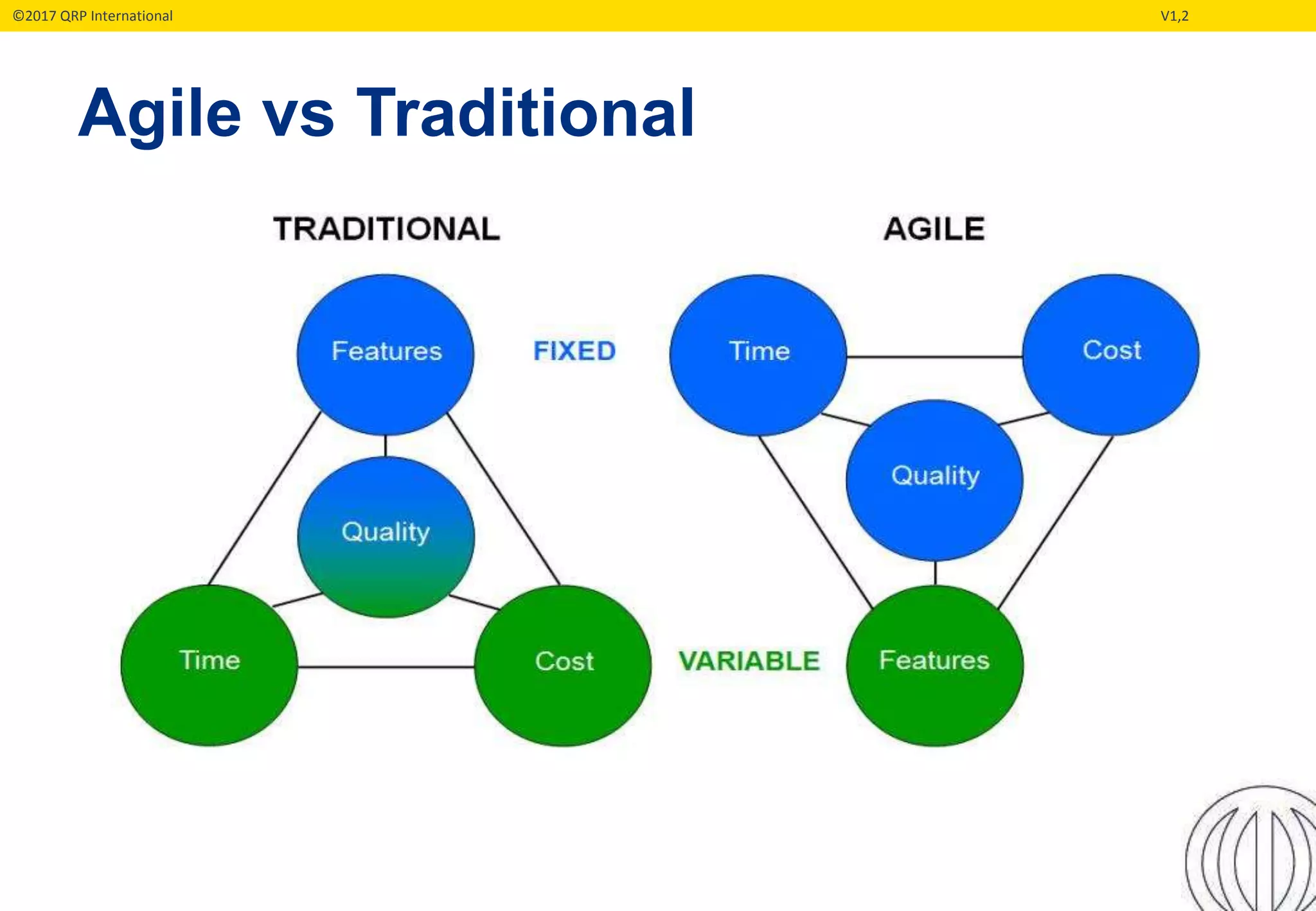
Agile vs Traditional
©2017 QRP International V1,2
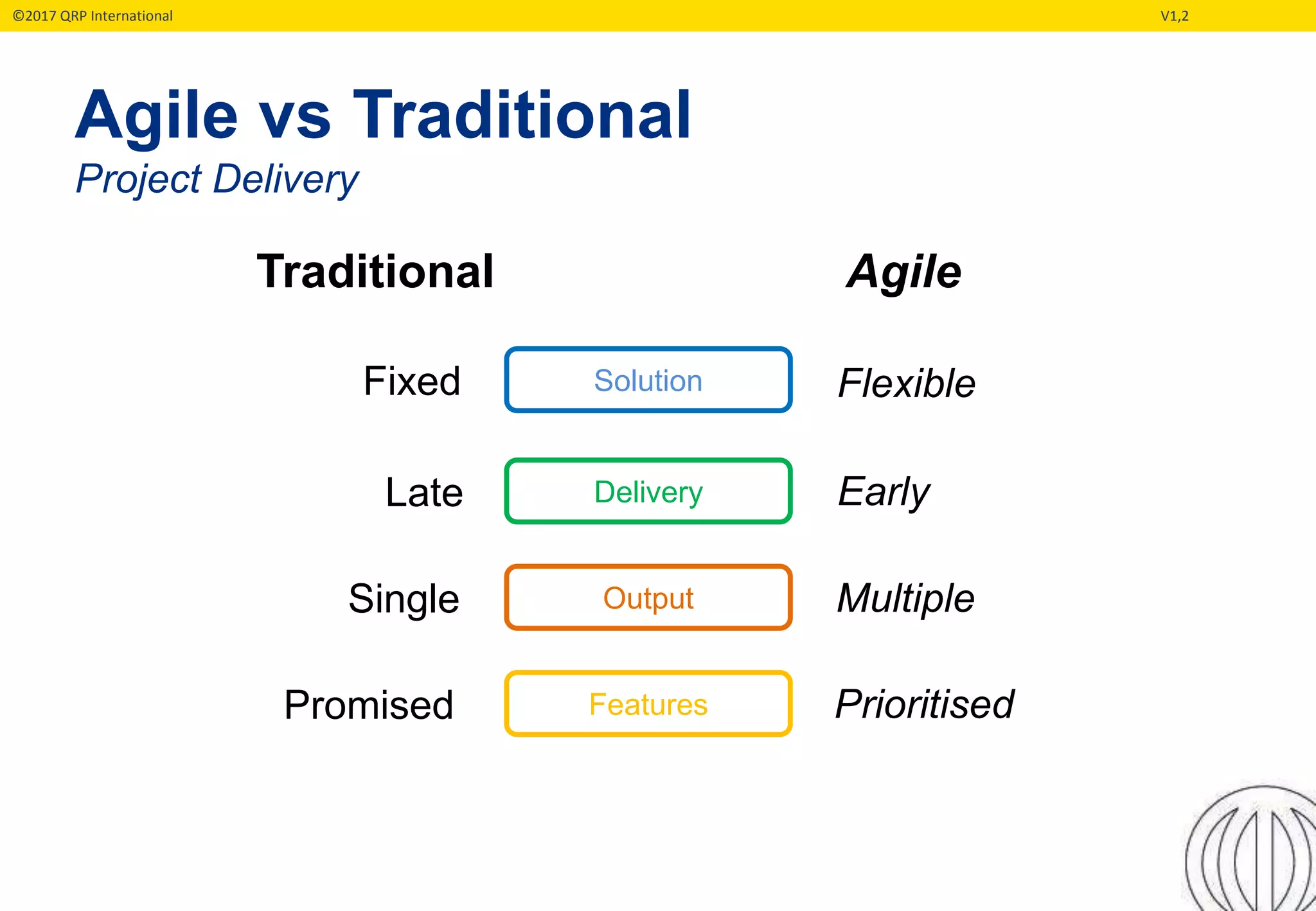
Agile vs Traditional
Project Delivery
Solution
Delivery
Output
Features
Fixed Flexible
Late Early
Single Multiple
Promised Prioritised
AgileTraditional
©2017 QRP International V1,2
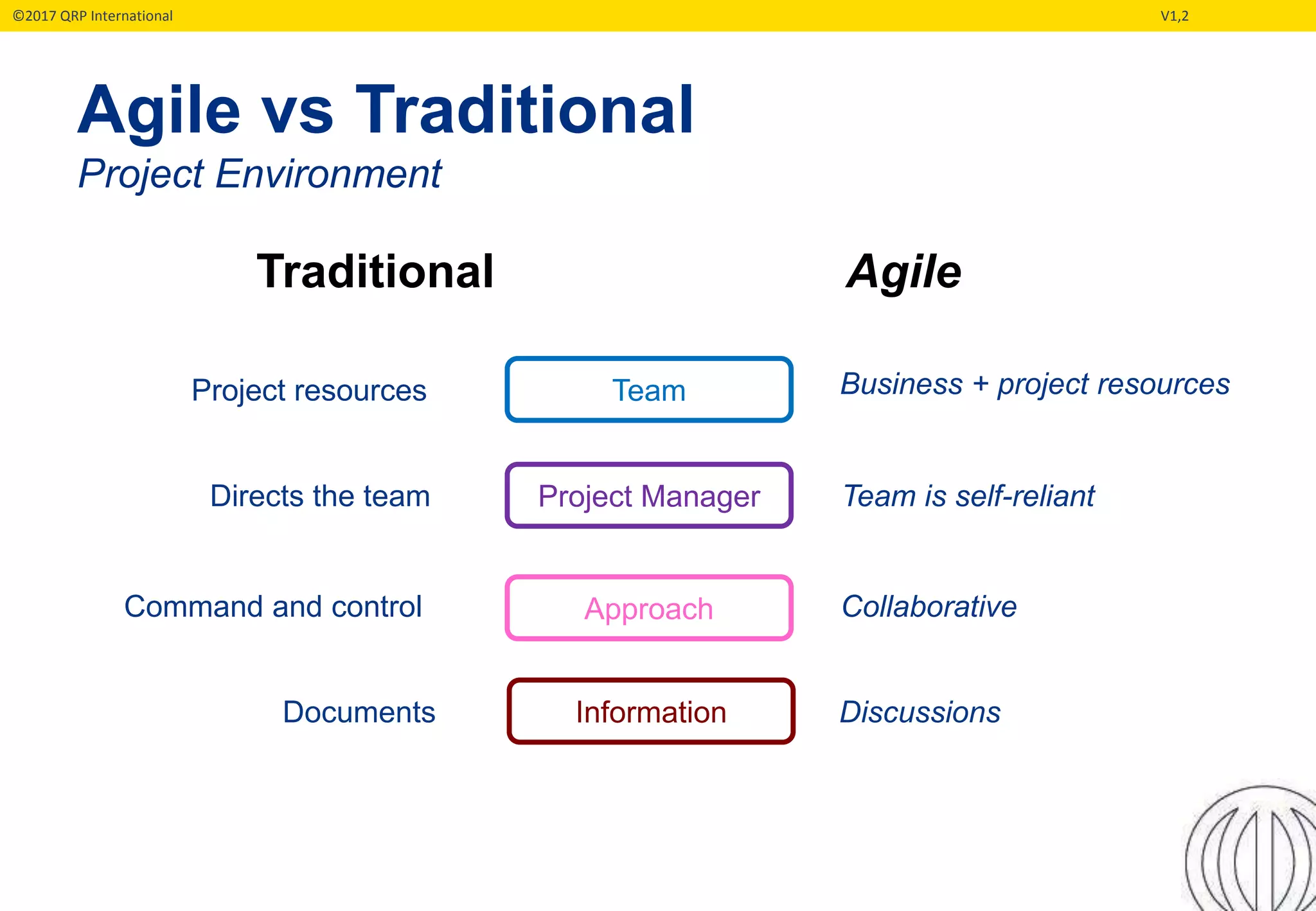
Agile vs Traditional
Project Environment
AgileTraditional
Project Manager
Approach
Directs the team Team is self-reliant
Command and control Collaborative
TeamProject resources Business + project resources
InformationDocuments Discussions
POLL 2 - Do you
have any of these
certifications?
What isAgilePM?
©2017 QRP International V1,2
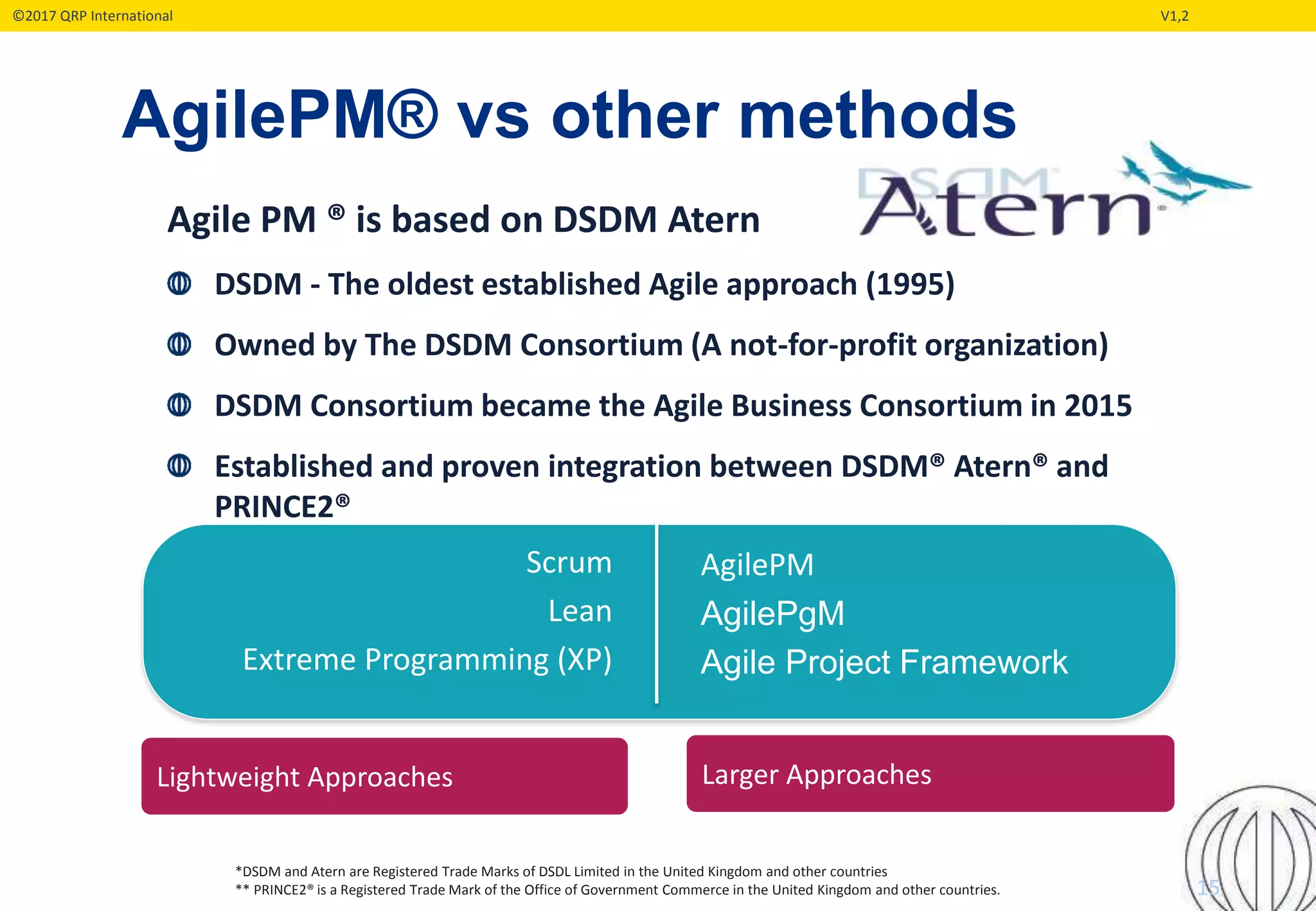
AgilePM® vs other methods
15
Agile PM ® is based on DSDM Atern
DSDM - The oldest established Agile approach (1995)
Owned by The DSDM Consortium (A not-for-profit organization)
DSDM Consortium became the Agile Business Consortium in 2015
Established and proven integration between DSDM® Atern® and
PRINCE2®
AgilePM
AgilePgM
Agile Project Framework
Scrum
Lean
Extreme Programming (XP)
*DSDM and Atern are Registered Trade Marks of DSDL Limited in the United Kingdom and other countries
** PRINCE2® is a Registered Trade Mark of the Office of Government Commerce in the United Kingdom and other countries.
Lightweight Approaches Larger Approaches
©2017 QRP International V1,2
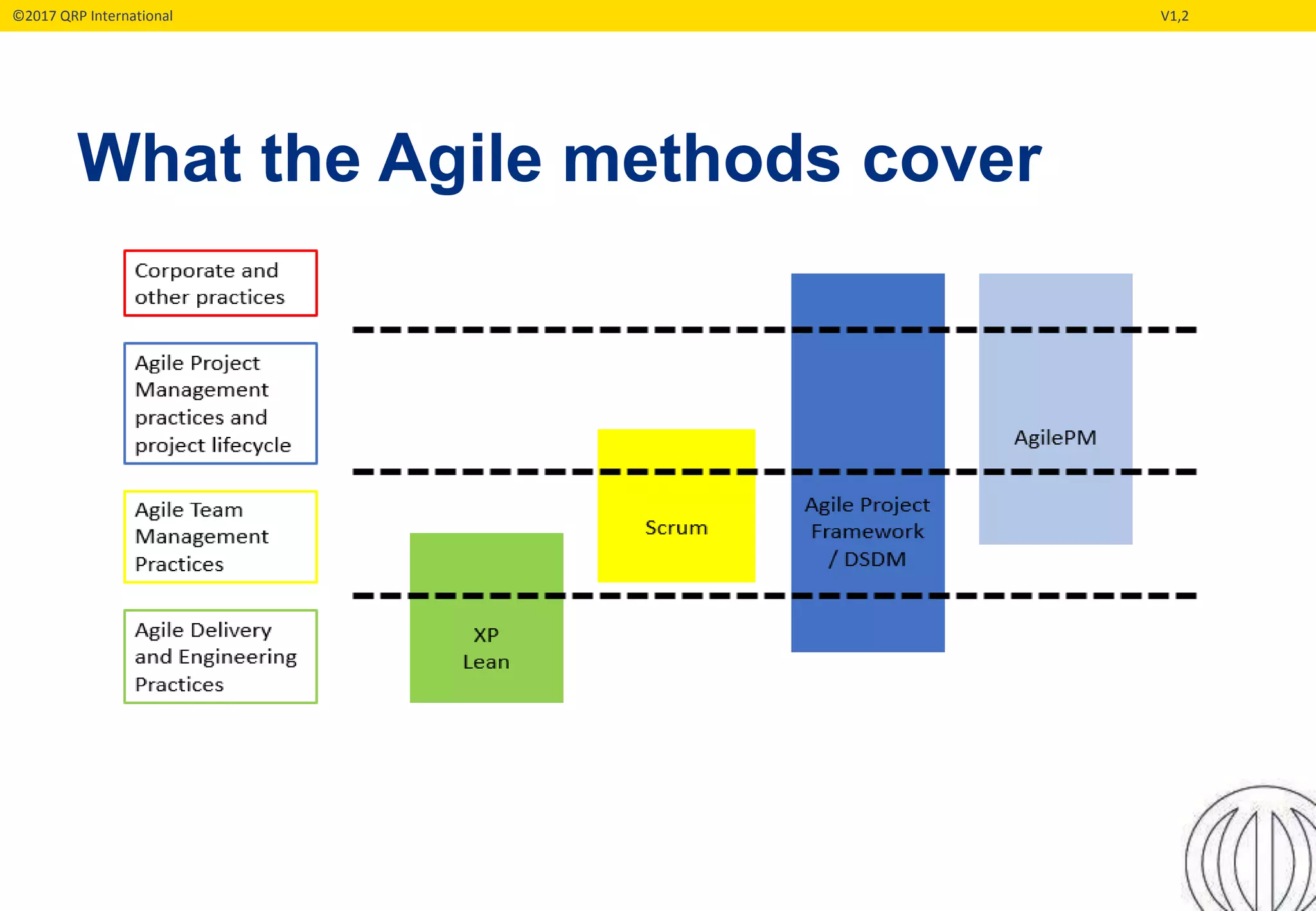
What the Agile methods cover
©2017 QRP International V1,2
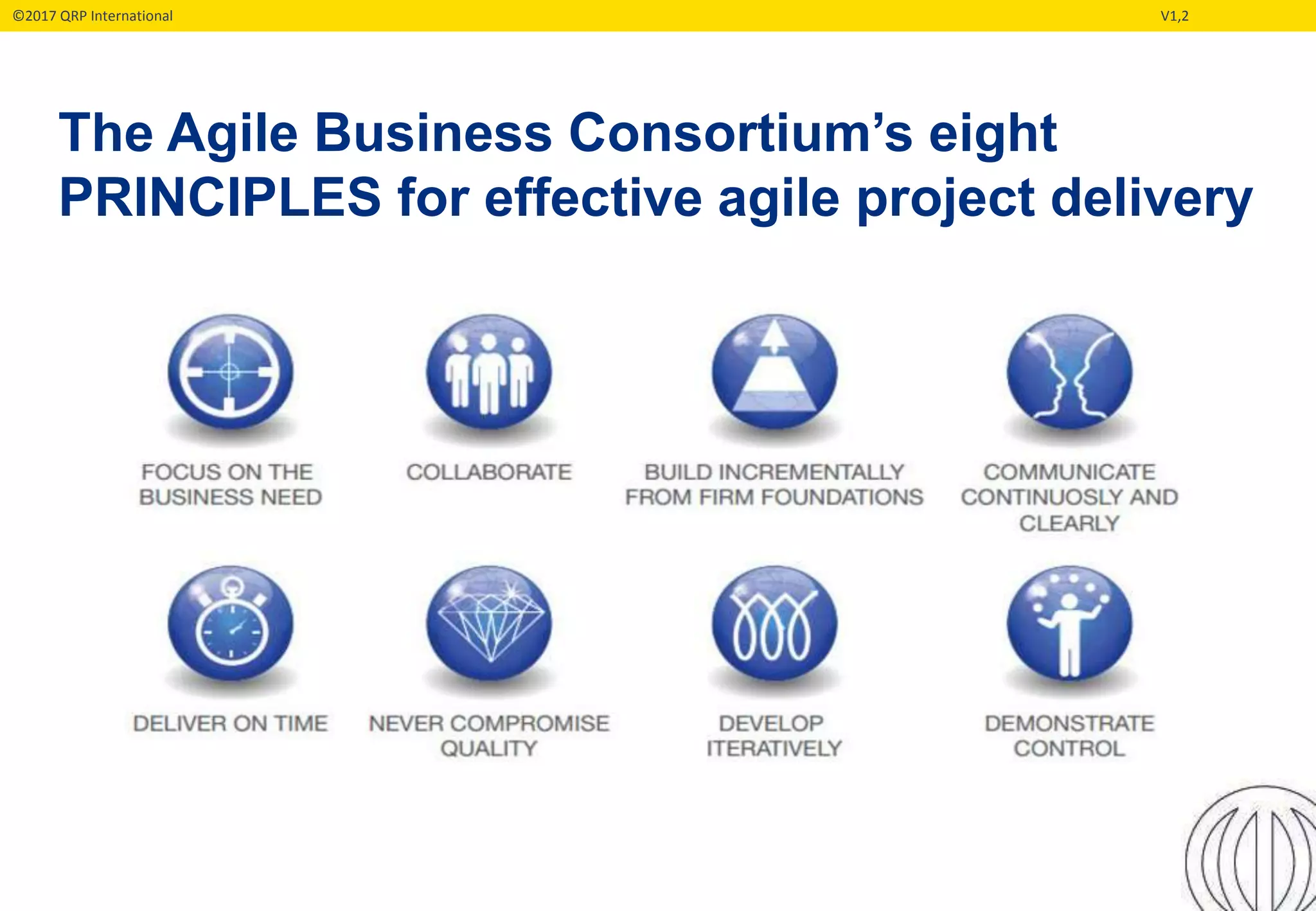
The Agile Business Consortium’s eight
PRINCIPLES for effective agile project delivery
©2017 QRP International V1,2
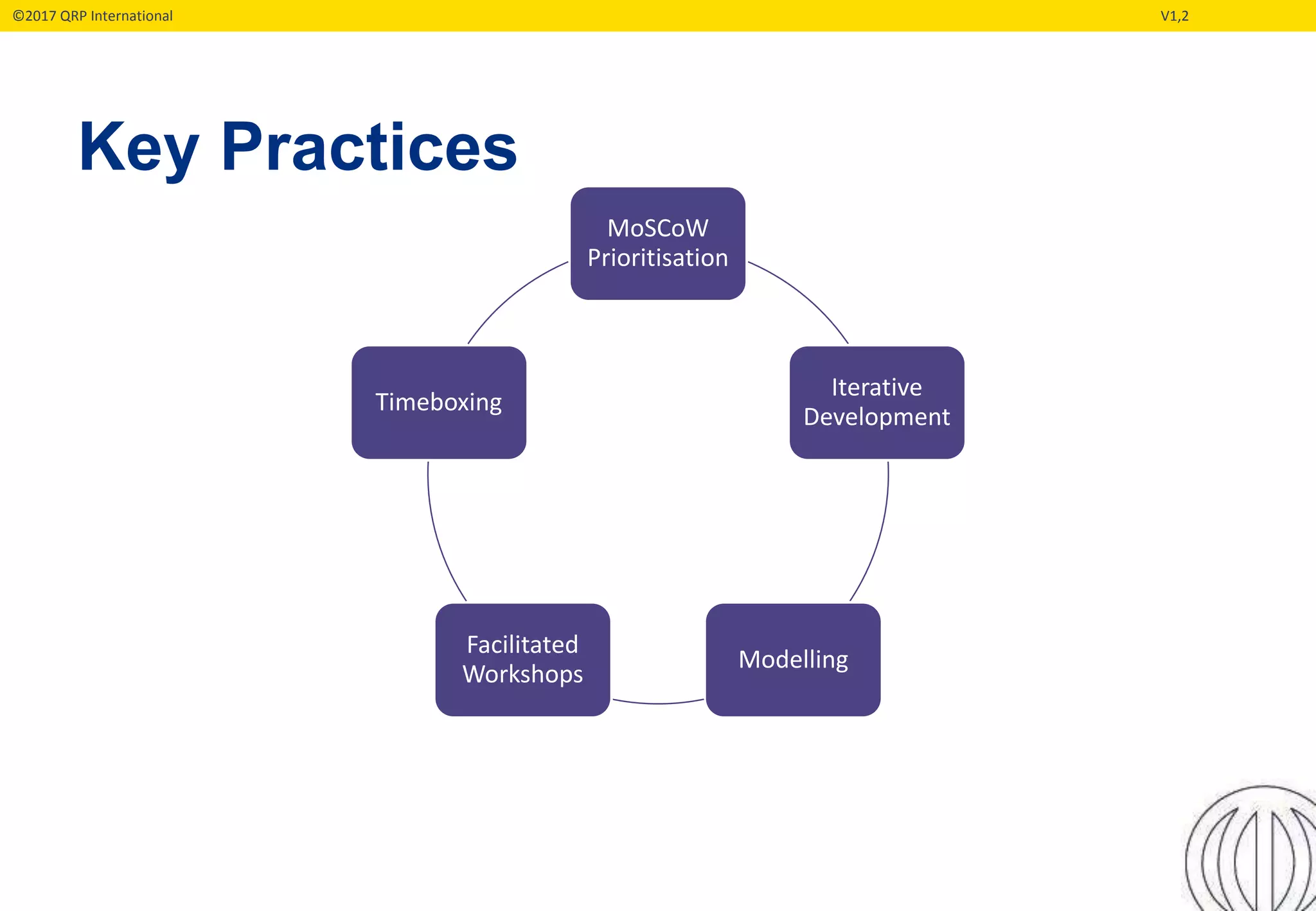
Key Practices
MoSCoW
Prioritisation
Iterative
Development
Modelling
Facilitated
Workshops
Timeboxing
©2017 QRP International V1,2
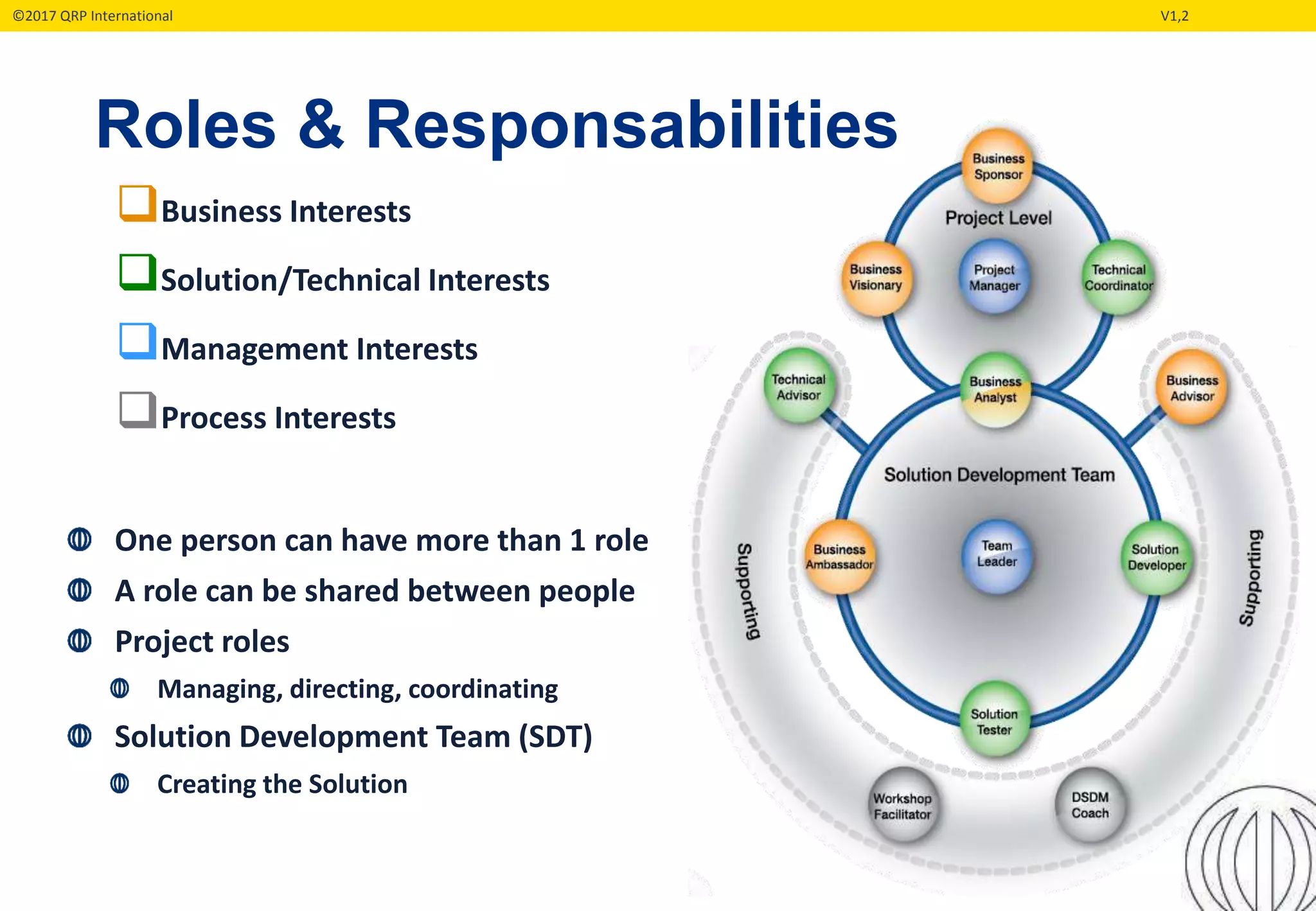
Roles & Responsabilities
One person can have more than 1 role
A role can be shared between people
Project roles
Managing, directing, coordinating
Solution Development Team (SDT)
Creating the Solution
Business Interests
Solution/Technical Interests
Management Interests
Process Interests
©2017 QRP International V1,2
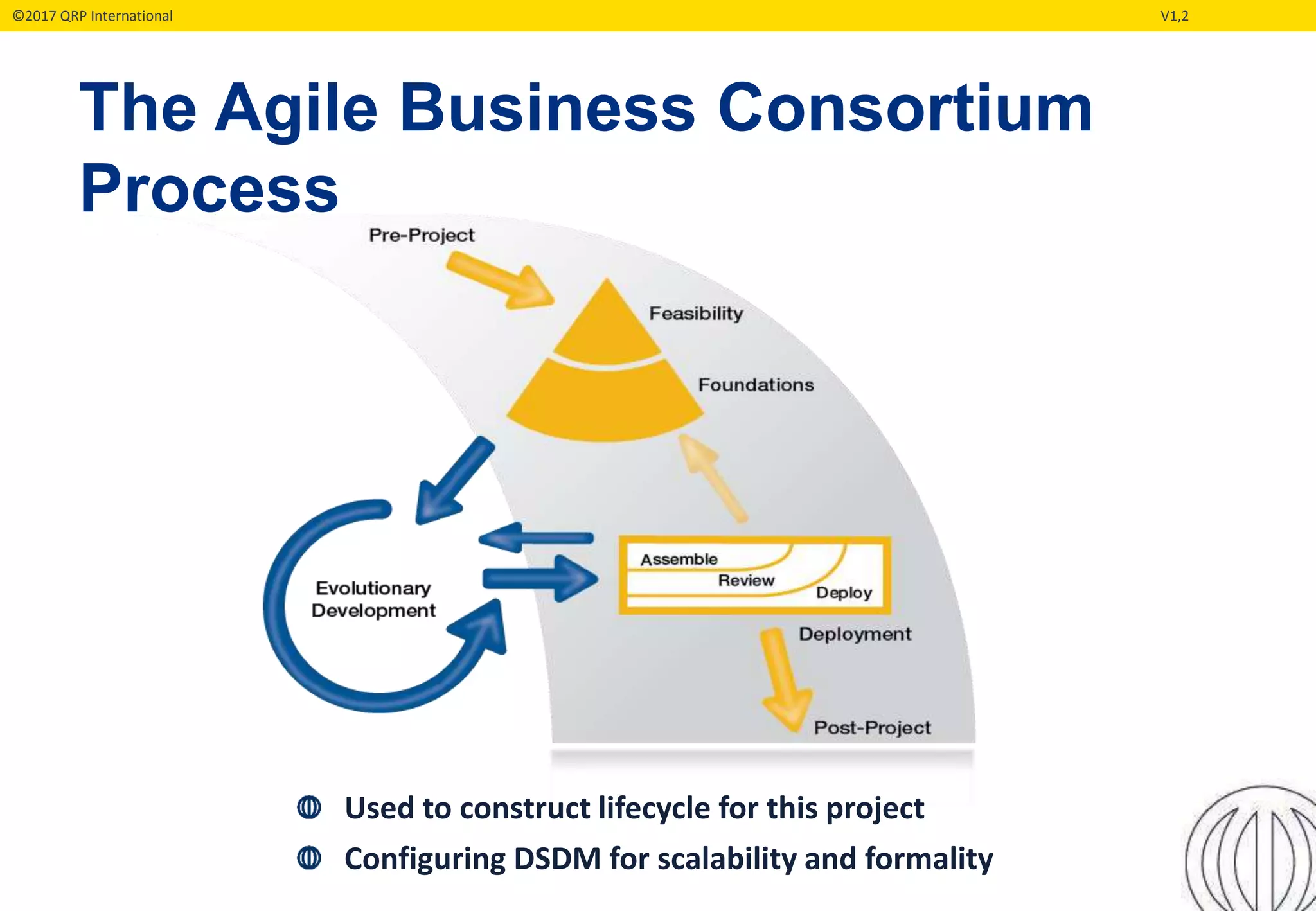
The Agile Business Consortium
Process
Used to construct lifecycle for this project
Configuring DSDM for scalability and formality
©2017 QRP International V1,2
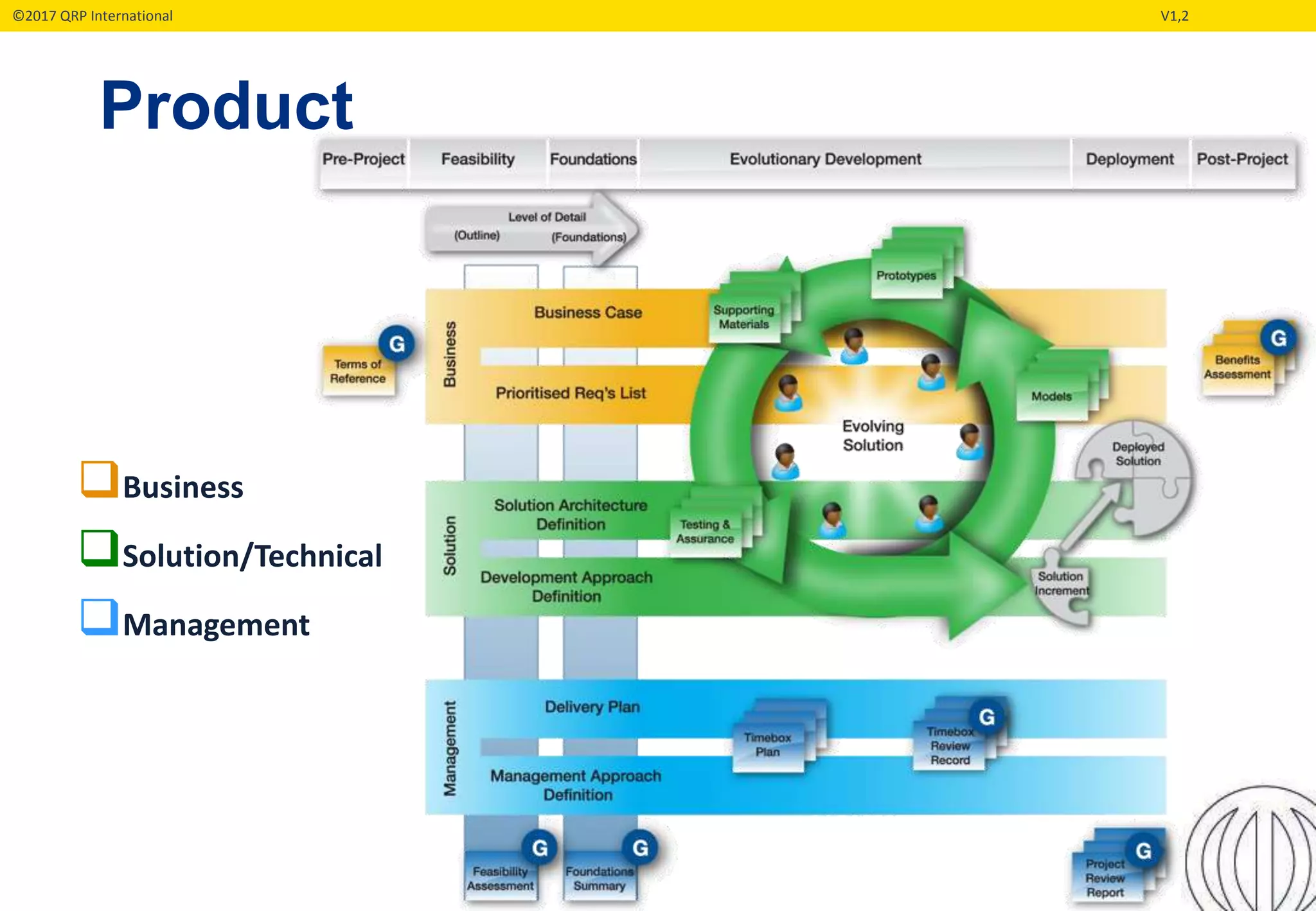
Product
Business
Solution/Technical
Management
POLL 3 - In your role,
or more in general in
your organization, is
"Agility" already in
use?
8 Reasons to adoptAgilePM
©2017 QRP International V1,2
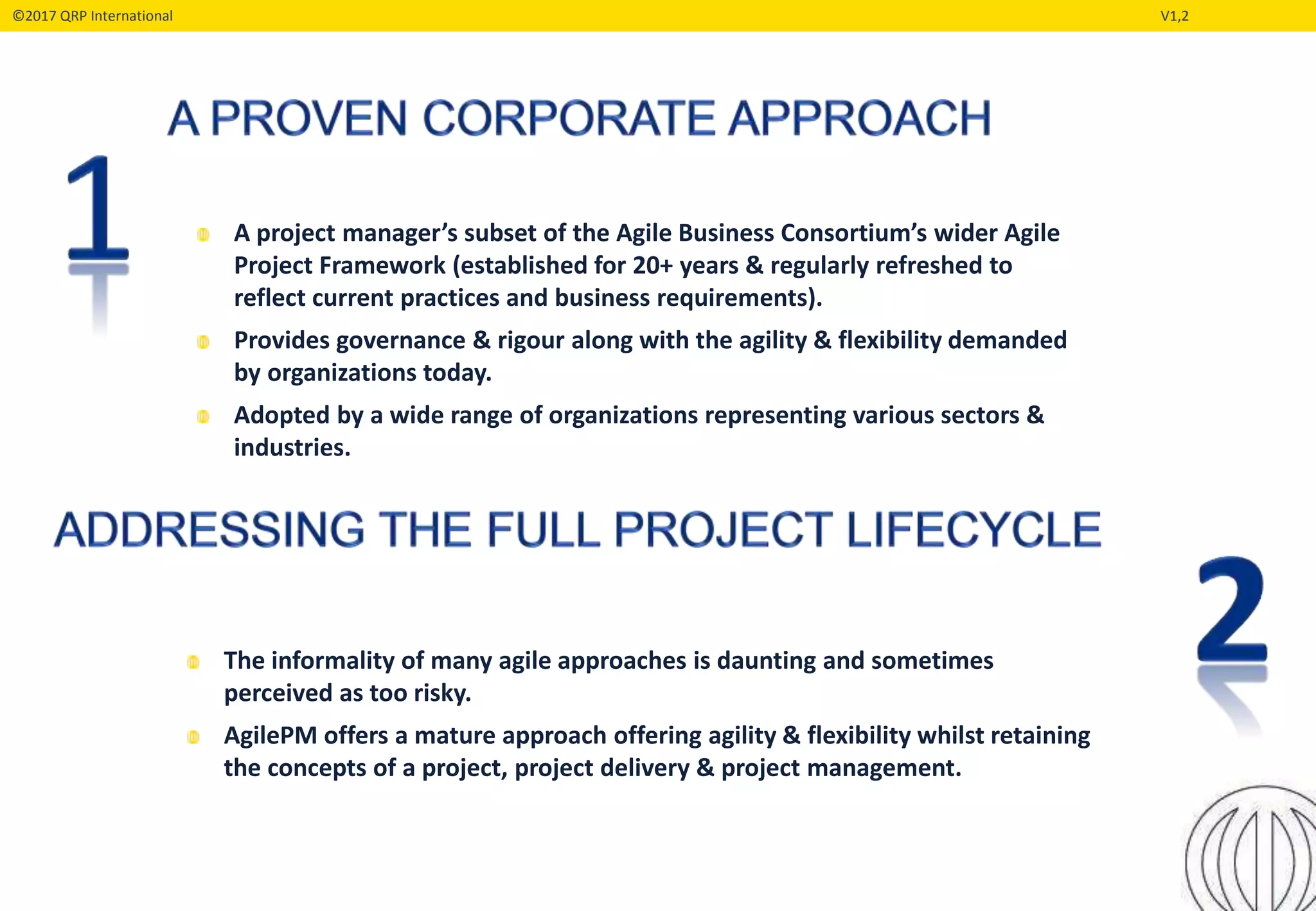
The informality of many agile approaches is daunting and sometimes
perceived as too risky.
AgilePM offers a mature approach offering agility & flexibility whilst retaining
the concepts of a project, project delivery & project management.
A project manager’s subset of the Agile Business Consortium’s wider Agile
Project Framework (established for 20+ years & regularly refreshed to
reflect current practices and business requirements).
Provides governance & rigour along with the agility & flexibility demanded
by organizations today.
Adopted by a wide range of organizations representing various sectors &
industries.
©2017 QRP International V1,2
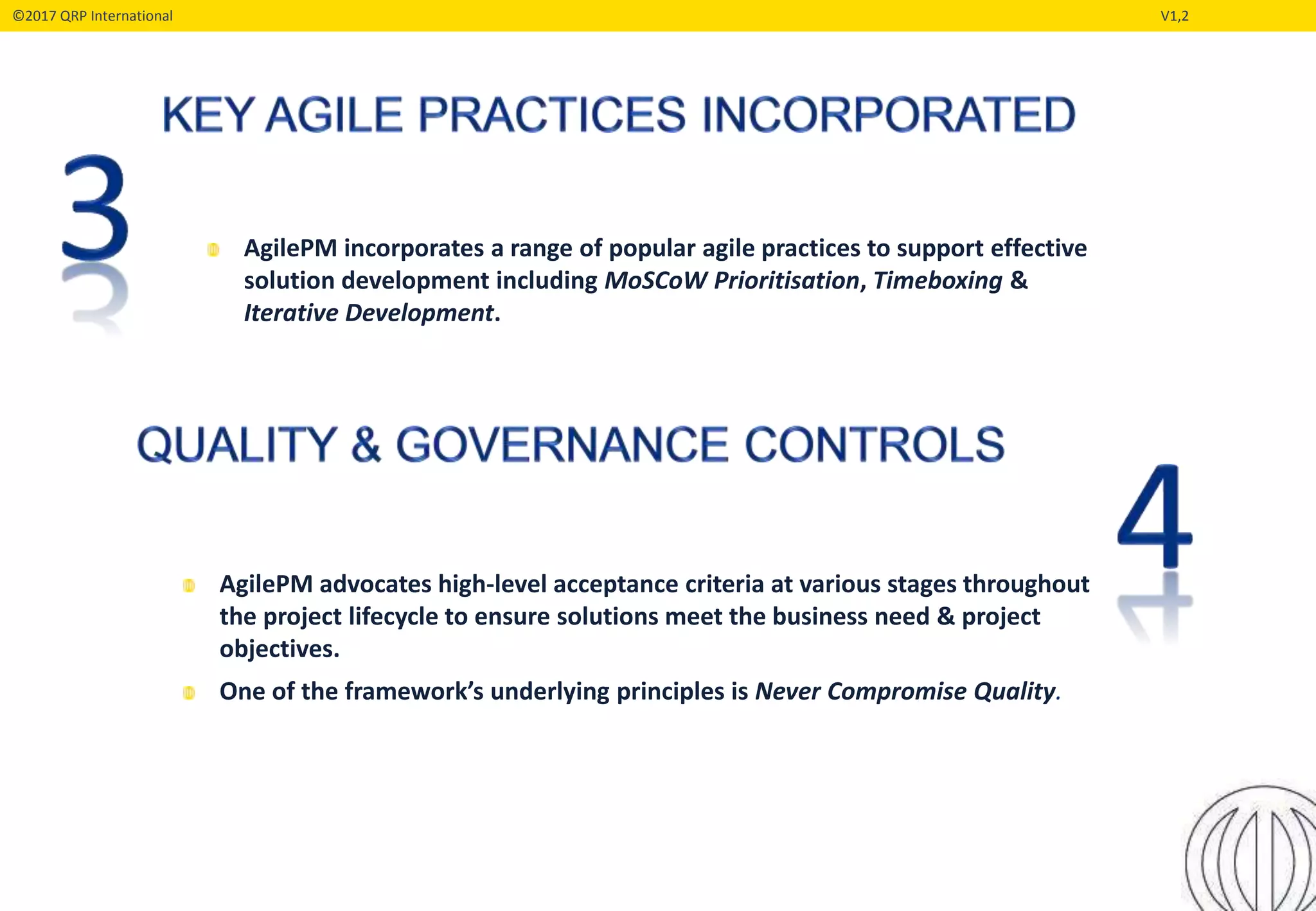
AgilePM incorporates a range of popular agile practices to support effective
solution development including MoSCoW Prioritisation, Timeboxing &
Iterative Development.
AgilePM advocates high-level acceptance criteria at various stages throughout
the project lifecycle to ensure solutions meet the business need & project
objectives.
One of the framework’s underlying principles is Never Compromise Quality.
©2017 QRP International V1,2
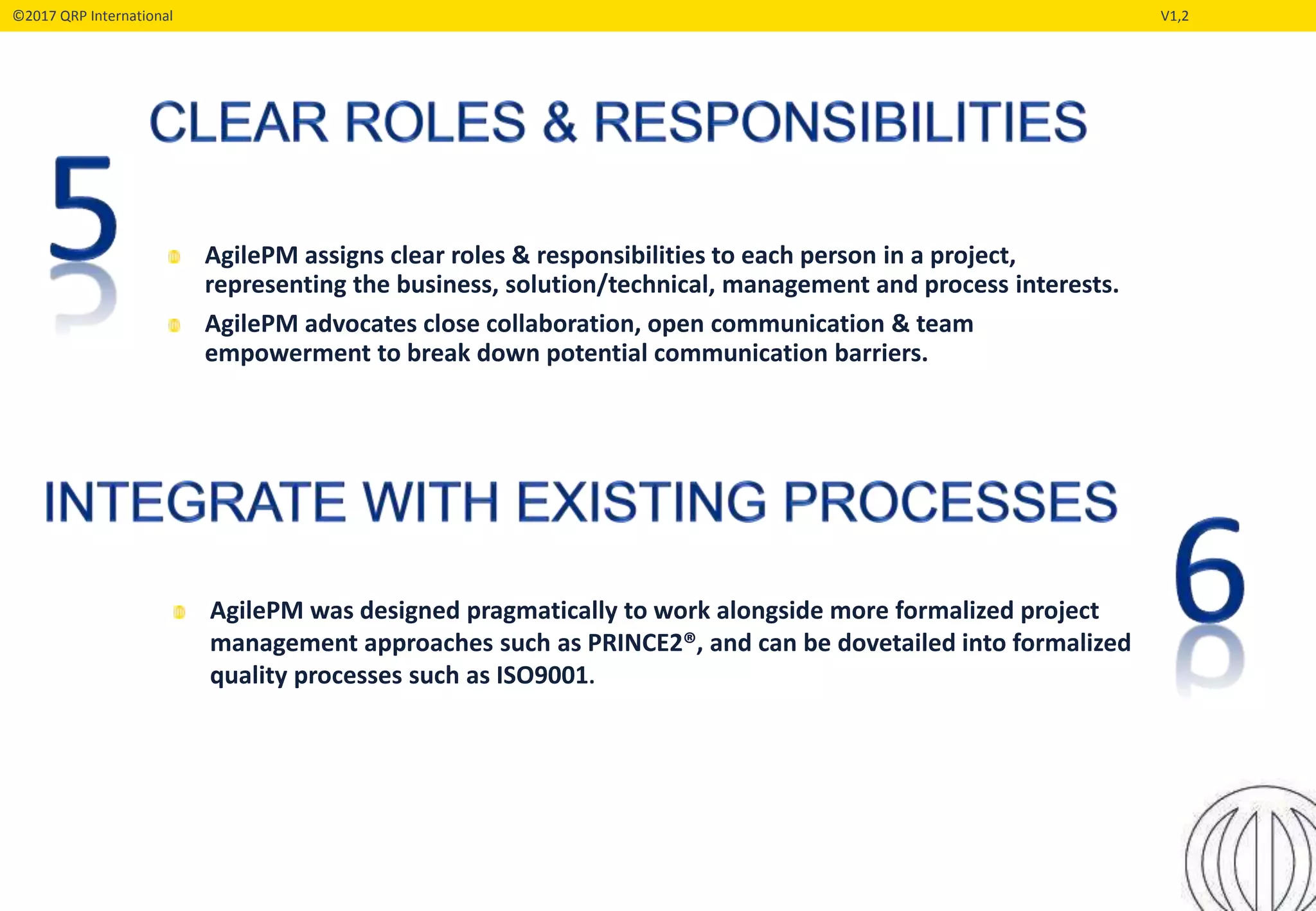
AgilePM assigns clear roles & responsibilities to each person in a project,
representing the business, solution/technical, management and process interests.
AgilePM advocates close collaboration, open communication & team
empowerment to break down potential communication barriers.
AgilePM was designed pragmatically to work alongside more formalized project
management approaches such as PRINCE2®, and can be dovetailed into formalized
quality processes such as ISO9001.
©2017 QRP International V1,2
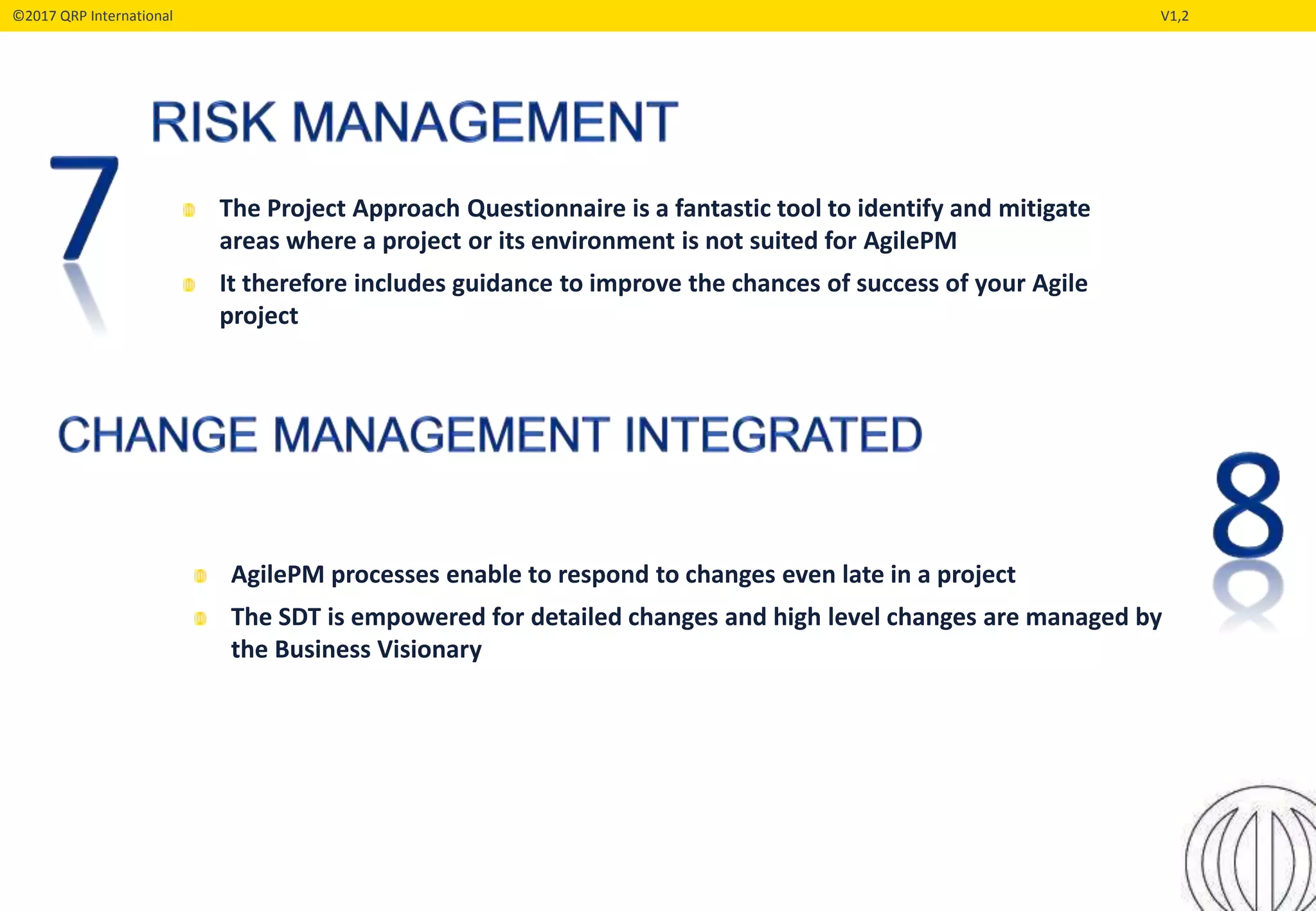
The Project Approach Questionnaire is a fantastic tool to identify and mitigate
areas where a project or its environment is not suited for AgilePM
It therefore includes guidance to improve the chances of success of your Agile
project
AgilePM processes enable to respond to changes even late in a project
The SDT is empowered for detailed changes and high level changes are managed by
the Business Visionary
Training & Certification
©2017 QRP International V1,2
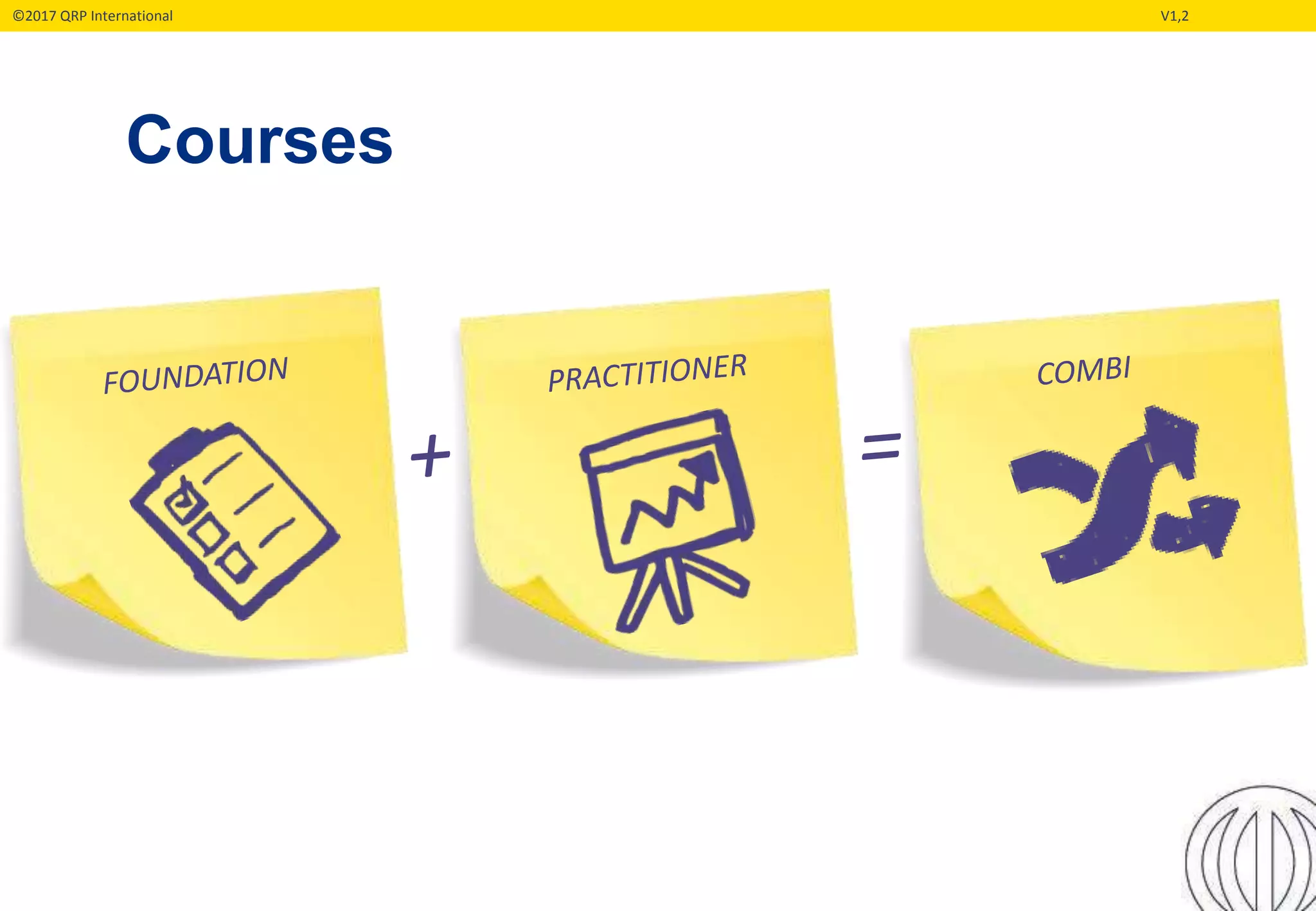
Courses
©2017 QRP International V1,2
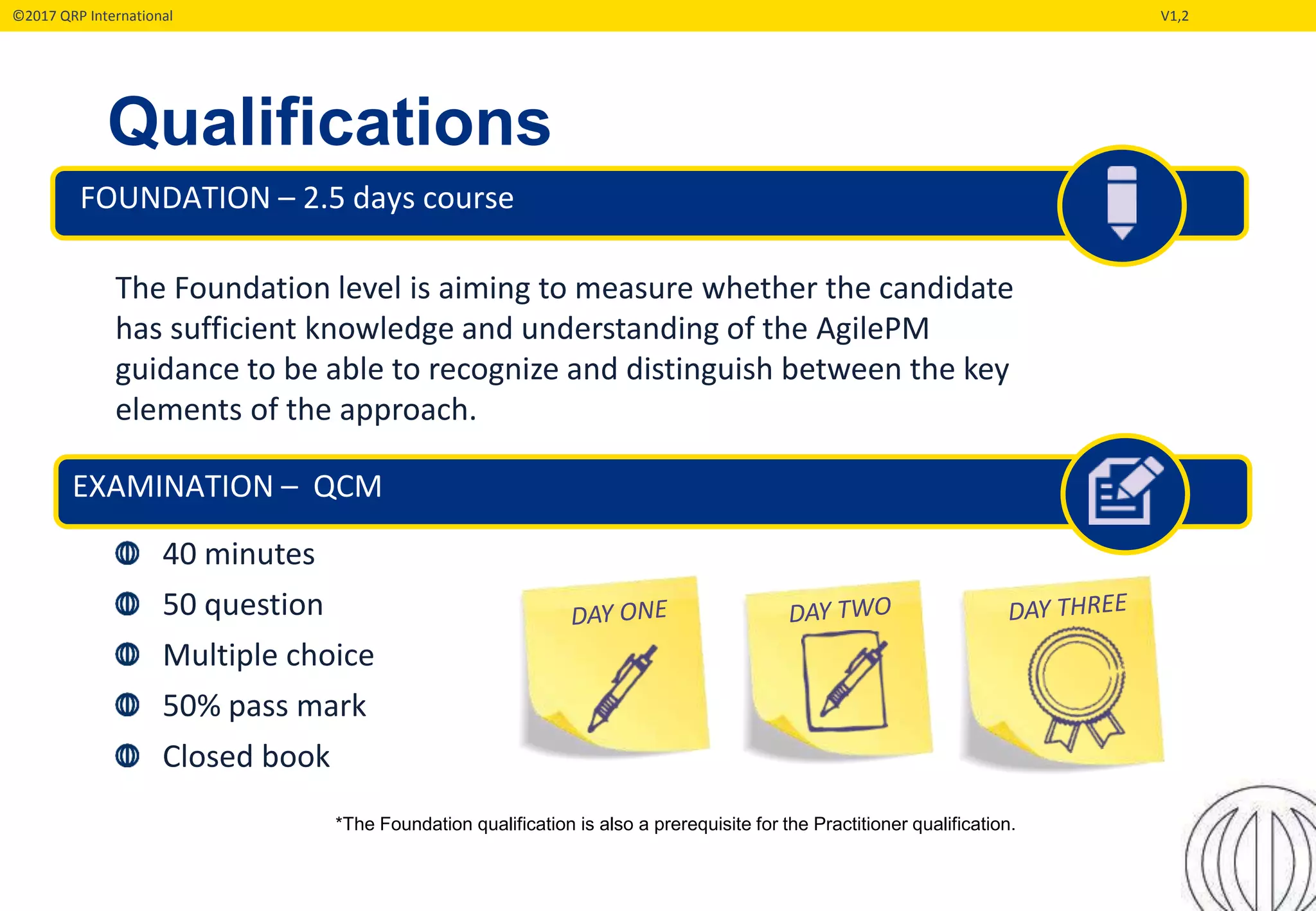
Qualifications
FOUNDATION – 2.5 days course
EXAMINATION – QCM
40 minutes
50 question
Multiple choice
50% pass mark
Closed book
The Foundation level is aiming to measure whether the candidate
has sufficient knowledge and understanding of the AgilePM
guidance to be able to recognize and distinguish between the key
elements of the approach.
*The Foundation qualification is also a prerequisite for the Practitioner qualification.
©2017 QRP International V1,2
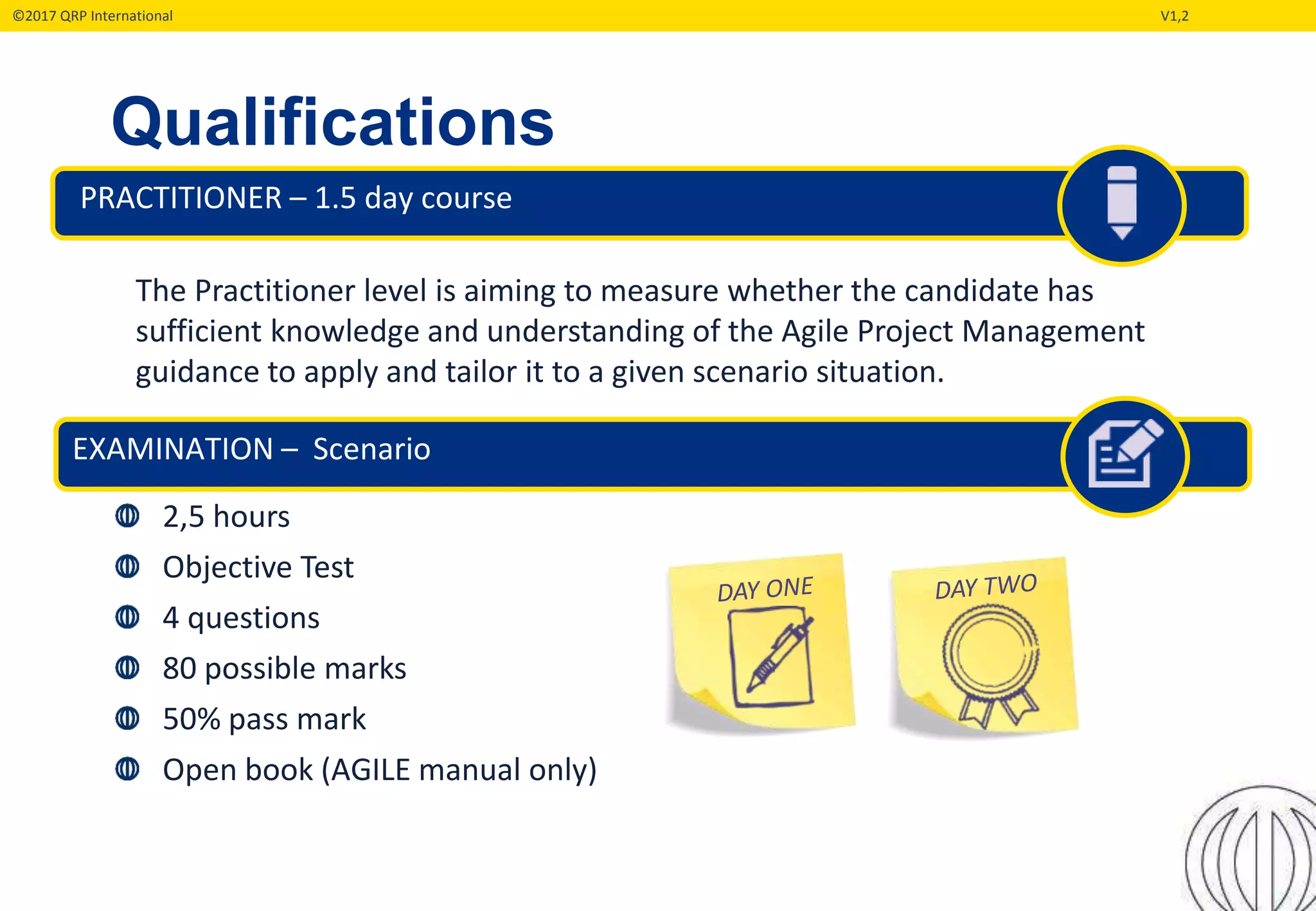
Qualifications
PRACTITIONER – 1.5 day course
EXAMINATION – Scenario
2,5 hours
Objective Test
4 questions
80 possible marks
50% pass mark
Open book (AGILE manual only)
The Practitioner level is aiming to measure whether the candidate has
sufficient knowledge and understanding of the Agile Project Management
guidance to apply and tailor it to a given scenario situation.
POLL 4 - After this
webinar, I'd like to
receive…
©2017 QRP International V1,2
6 reasons to choose QRP
33
Classroom | In-house | Elearning
Dedicated Qualified Trainers
+15 Years European Experience
Book & Material included
Online exams | Instant Results Free Case Study & Events
QRP International - Developing professionals to facilitate Change
POLL 5 - Based on
the info provided in
this webinar, which
method do you think
could be more in line
with your needs?
©2017 QRP International V1,2
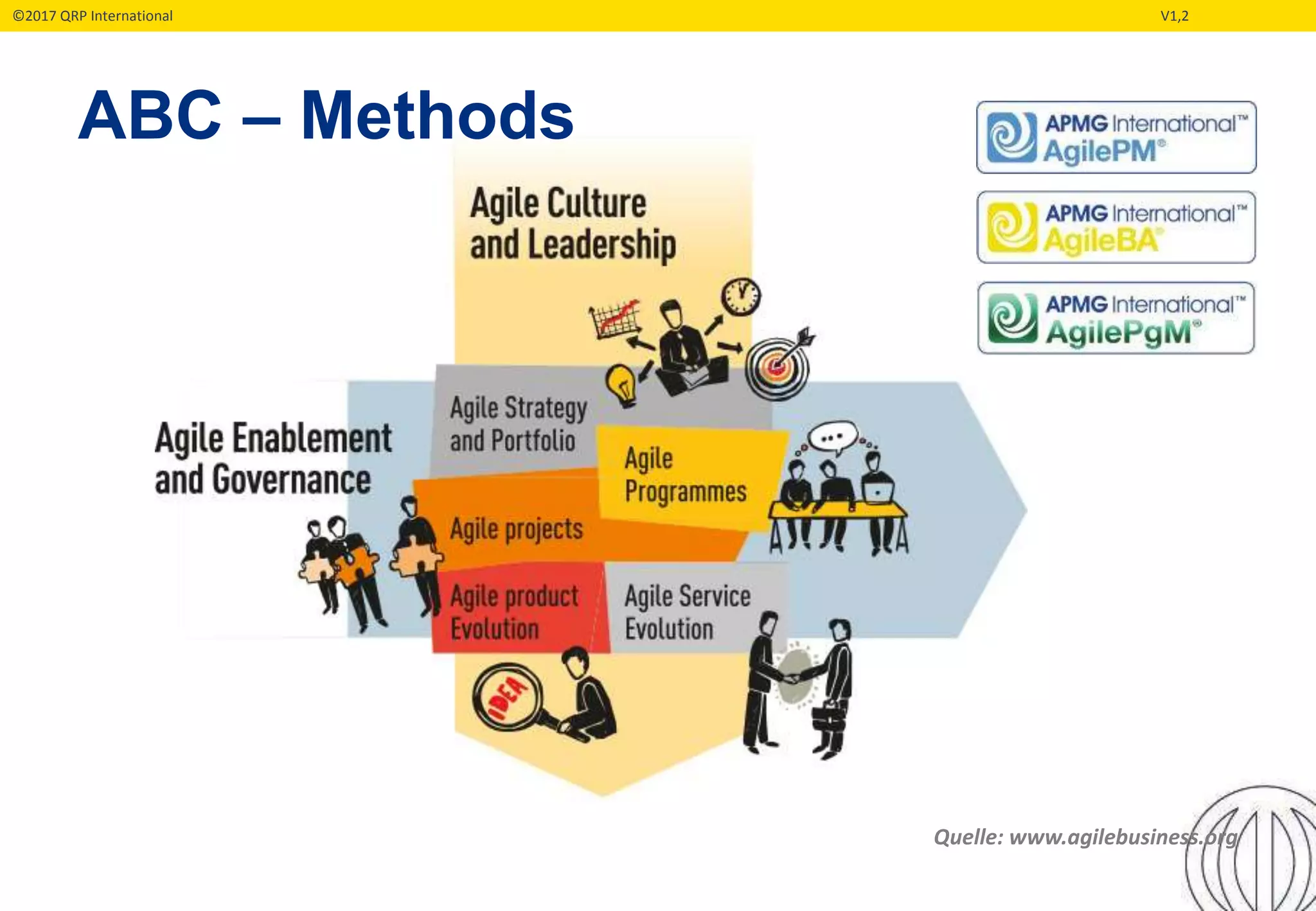
ABC – Methods
Quelle: www.agilebusiness.org
Do you want to know more…?
www.apmg-international.com
@APMG_Inter
+44 (0) 1494 452450
Mark.Constable@apmg-international.com
www.apmg-international.com/AgilePM
www.qrpinternational.com
@qrp_int
​+32 2 80 81 014
belgium@qrpinternational.com
www.agilebusiness.org
@Agile_Biz
+44 (0)1233 611162
info@agilebusiness.org

8 reasons to adopt AgilePM

  • 1.
    8 Reasons toAdopt AgilePM Armel Quirino, QRP International
  • 2.
    Welcome! Host / Moderator MarkConstable APMG International mark.constable@apmg-international.com Speaker Armel Quirino Trainer & Consultant APMG International armel.quirino@qrpinternational.com
  • 3.
    Before we getstarted… This session is being recorded. The recording and slides will be sent to you after the webinar. All participants are muted. Please type any questions into the « Questions » window. Your feedback will help us improve future webinars. Please send comments and suggestions: mark.constable@apmg-international.com
  • 4.
    Armel Quirino • Armelhas a background of 15 years of experience in the IT field at different. • He worked for various companies in Europe and managed international projects. • With an entrepreneur mindset, applying the methods he teaches, he is developing businesses, websites and publishing articles to do so • He is a translation reviewer for the coming French version of AgilePM • He has a strong academic background with a MSc in Project, Programmes and Business Development from the French Skema Business school. • He is certified AgilePM, PRINCE2, PRINCE2 Agile, MSP, MoP, ITIL (RCV), DevOps. The AgilePM Expert
  • 5.
    ©2017 QRP InternationalV1,2 Background: Traditional and Agile methods What is AgilePM? 8 Reasons to adopt AgilePM Training and certification Questions & Answers Agenda
  • 6.
    POLL 1 -Why did you enroll for this AgilePM webinar?
  • 7.
  • 8.
    ©2017 QRP InternationalV1,2 What is Agile? 8 A style of working Flexibility Working closely with customer throughout Ensuring final solution actually meets business need Deferring decisions about detail as late as possible Agile was born with The “Agile Manifesto” (2001) People and Interactions over Processes and Tools Working Software over Comprehensive Documentation Customer Collaboration over Contract Negotiation Responding to Change over Following a Plan Today we would say: Working solutions
  • 9.
    ©2017 QRP InternationalV1,2 Agile vs Traditional (Waterfall) Development Planning Design Development Testing Implementation Design BuildTest Analyse Plan Deploy Design BuildTest Analyse Plan Deploy Design BuildTest Analyse Plan Deploy Traditional (Waterfall) Agile
  • 10.
    ©2017 QRP InternationalV1,2 Agile vs Traditional
  • 11.
    ©2017 QRP InternationalV1,2 Agile vs Traditional Project Delivery Solution Delivery Output Features Fixed Flexible Late Early Single Multiple Promised Prioritised AgileTraditional
  • 12.
    ©2017 QRP InternationalV1,2 Agile vs Traditional Project Environment AgileTraditional Project Manager Approach Directs the team Team is self-reliant Command and control Collaborative TeamProject resources Business + project resources InformationDocuments Discussions
  • 13.
    POLL 2 -Do you have any of these certifications?
  • 14.
  • 15.
    ©2017 QRP InternationalV1,2 AgilePM® vs other methods 15 Agile PM ® is based on DSDM Atern DSDM - The oldest established Agile approach (1995) Owned by The DSDM Consortium (A not-for-profit organization) DSDM Consortium became the Agile Business Consortium in 2015 Established and proven integration between DSDM® Atern® and PRINCE2® AgilePM AgilePgM Agile Project Framework Scrum Lean Extreme Programming (XP) *DSDM and Atern are Registered Trade Marks of DSDL Limited in the United Kingdom and other countries ** PRINCE2® is a Registered Trade Mark of the Office of Government Commerce in the United Kingdom and other countries. Lightweight Approaches Larger Approaches
  • 16.
    ©2017 QRP InternationalV1,2 What the Agile methods cover
  • 17.
    ©2017 QRP InternationalV1,2 The Agile Business Consortium’s eight PRINCIPLES for effective agile project delivery
  • 18.
    ©2017 QRP InternationalV1,2 Key Practices MoSCoW Prioritisation Iterative Development Modelling Facilitated Workshops Timeboxing
  • 19.
    ©2017 QRP InternationalV1,2 Roles & Responsabilities One person can have more than 1 role A role can be shared between people Project roles Managing, directing, coordinating Solution Development Team (SDT) Creating the Solution Business Interests Solution/Technical Interests Management Interests Process Interests
  • 20.
    ©2017 QRP InternationalV1,2 The Agile Business Consortium Process Used to construct lifecycle for this project Configuring DSDM for scalability and formality
  • 21.
    ©2017 QRP InternationalV1,2 Product Business Solution/Technical Management
  • 22.
    POLL 3 -In your role, or more in general in your organization, is "Agility" already in use?
  • 23.
    8 Reasons toadoptAgilePM
  • 24.
    ©2017 QRP InternationalV1,2 The informality of many agile approaches is daunting and sometimes perceived as too risky. AgilePM offers a mature approach offering agility & flexibility whilst retaining the concepts of a project, project delivery & project management. A project manager’s subset of the Agile Business Consortium’s wider Agile Project Framework (established for 20+ years & regularly refreshed to reflect current practices and business requirements). Provides governance & rigour along with the agility & flexibility demanded by organizations today. Adopted by a wide range of organizations representing various sectors & industries.
  • 25.
    ©2017 QRP InternationalV1,2 AgilePM incorporates a range of popular agile practices to support effective solution development including MoSCoW Prioritisation, Timeboxing & Iterative Development. AgilePM advocates high-level acceptance criteria at various stages throughout the project lifecycle to ensure solutions meet the business need & project objectives. One of the framework’s underlying principles is Never Compromise Quality.
  • 26.
    ©2017 QRP InternationalV1,2 AgilePM assigns clear roles & responsibilities to each person in a project, representing the business, solution/technical, management and process interests. AgilePM advocates close collaboration, open communication & team empowerment to break down potential communication barriers. AgilePM was designed pragmatically to work alongside more formalized project management approaches such as PRINCE2®, and can be dovetailed into formalized quality processes such as ISO9001.
  • 27.
    ©2017 QRP InternationalV1,2 The Project Approach Questionnaire is a fantastic tool to identify and mitigate areas where a project or its environment is not suited for AgilePM It therefore includes guidance to improve the chances of success of your Agile project AgilePM processes enable to respond to changes even late in a project The SDT is empowered for detailed changes and high level changes are managed by the Business Visionary
  • 28.
  • 29.
  • 30.
    ©2017 QRP InternationalV1,2 Qualifications FOUNDATION – 2.5 days course EXAMINATION – QCM 40 minutes 50 question Multiple choice 50% pass mark Closed book The Foundation level is aiming to measure whether the candidate has sufficient knowledge and understanding of the AgilePM guidance to be able to recognize and distinguish between the key elements of the approach. *The Foundation qualification is also a prerequisite for the Practitioner qualification.
  • 31.
    ©2017 QRP InternationalV1,2 Qualifications PRACTITIONER – 1.5 day course EXAMINATION – Scenario 2,5 hours Objective Test 4 questions 80 possible marks 50% pass mark Open book (AGILE manual only) The Practitioner level is aiming to measure whether the candidate has sufficient knowledge and understanding of the Agile Project Management guidance to apply and tailor it to a given scenario situation.
  • 32.
    POLL 4 -After this webinar, I'd like to receive…
  • 33.
    ©2017 QRP InternationalV1,2 6 reasons to choose QRP 33 Classroom | In-house | Elearning Dedicated Qualified Trainers +15 Years European Experience Book & Material included Online exams | Instant Results Free Case Study & Events QRP International - Developing professionals to facilitate Change
  • 34.
    POLL 5 -Based on the info provided in this webinar, which method do you think could be more in line with your needs?
  • 35.
  • 36.
    ©2017 QRP InternationalV1,2 ABC – Methods Quelle: www.agilebusiness.org
  • 37.
    Do you wantto know more…? www.apmg-international.com @APMG_Inter +44 (0) 1494 452450 Mark.Constable@apmg-international.com www.apmg-international.com/AgilePM www.qrpinternational.com @qrp_int ​+32 2 80 81 014 belgium@qrpinternational.com www.agilebusiness.org @Agile_Biz +44 (0)1233 611162 info@agilebusiness.org

Editor's Notes

  • #10 “Why Agile?” White Paper https://apmg-international.com/product/agilepm
  • #18 Agile Business Consortium’s eight principles for effective agile project delivery.
  • #19 MoSCoW Prioritisation: The MoSCoW method is a prioritization technique used in management, business analysis, project management, and software development to reach a common understanding with stakeholders on the importance they place on the delivery of each requirement (Must Have / Should Have / Could Have / Won’t have this time). Iterative (and Incremental) Development: The basic idea is to develop solutions through repeated cycles (iterative) and in smaller portions at a time (incremental), allowing developers / project managers to take advantage of what was learned during development of earlier parts or versions of the solution/s. Each cycle of the process is intended to bring the part of the solution being worked on closer to completion and is always a collaborative process, typically involving two or more members of the development team. Timeboxing: A Timebox is a fixed period of time, at the end of which an objective has been met. The Timebox objective is usually completion of one or more deliverables making up a solution increment. At the end of a Timebox, progress and success is measured by completion of products (requirements or other deliverables) rather than completing a series of tasks. Modelling: Modelling is a technique in which visual representations of a problem or a solution are created. It’s designed to improve communications and prompt the right questions, helping to make elements of the solution visible as early as possible. Facilitated Workshops: Facilitated Workshops are a specialised type of meeting with clear objective deliverables, participants specifically chosen and empowered to deliver the required outcome, and an independent facilitator to enable effective achievement of the objective/s.
  • #25 See supporting white paper for further detail (available at https://apmg-international.com/product/agilepm).
  • #27 8 reasons in the white paper VS & on the PTT from APMG Risk management (Project Approach Questionnaire 17 domaines) and inclusion of change management missing
  • #30  To this end they need to show they understand Agile Project Management philosophy, principles, processes, people, products, techniques and guidance. This is a 2.5 days course, delivered as a classroom event and is designed for people who require a general level of Agile Project Management understanding. TARGET AUDIENCE Practising project managers Agile team members who wish to become Agile Project Managers
  • #31  FOUNDATION To this end they need to show they understand Agile Project Management philosophy, principles, processes, people, products, techniques and guidance. This is a 2.5 days course, delivered as a classroom event and is designed for people who require a general level of Agile Project Management understanding. TARGET AUDIENCE Practising project managers Agile team members who wish to become Agile Project Managers
  • #32 The scenario is designed to allow the candidate to demonstrate competence to begin working as an Agile Project Manager on a non-complex project. This is a 1.5 day course, delivered as a classroom event and is very detailed with a focus on scenarios. The Practitioner examination can be taken on the afternoon. TARGET AUDIENCE Practising project managers Agile team members who wish to become Agile Project Managers
  • #36 AgilePM is a joint initiative between APMG and the Agile Business Consortium (ABC). ABC developed the Handbook (based on their wider Agile Project Framework); APMG developed the syllabus & exams and accredit training organizations.
  • #37 In deutscher Sprache alsbaldigst!