8 QUEENS PROBLEM
USING BACK TRACKING
BACK TRACKING
• Backtracking is a general algorithm for finding all (or
some) solutions to some computational problem, that
incrementally builds candidates to the solutions, and
abandons each partial candidate ‘c’ ("backtracks") as soon
as it determines that ‘c’ cannot possibly be completed to a
valid solution.
• Backtracking is an important tool for solving constraint
satisfaction problems, such as crosswords, verbal
arithmetic, Sudoku, and many other puzzles.

WHAT IS 8 QUEEN PROBLEM?
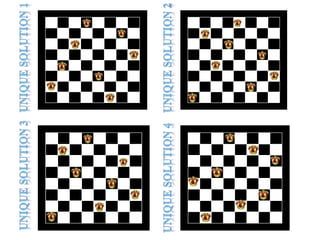
• The eight queens puzzle is the problem of placing
eight chess queens on an 8×8 chessboard so that no two
queens attack each other.
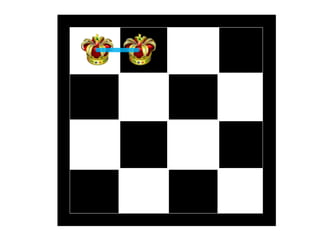
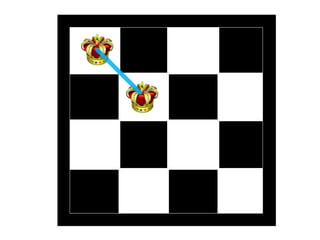
• Thus, a solution requires that no two queens share the
same row, column, or diagonal.
• The eight queens puzzle is an example of the more
general n-queens problem of placing n queens on
an n×n chessboard, where solutions exist for all natural
numbers n with the exception of 1, 2 and 3.
• The solution possibilities are discovered only up to 23
queen.
BACKTRACKING CONCEPT
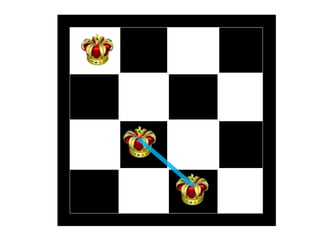
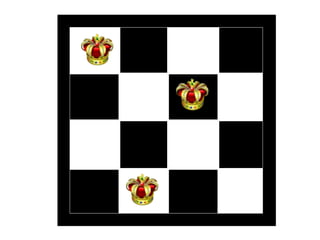
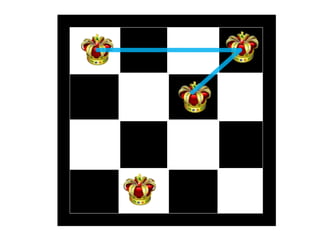
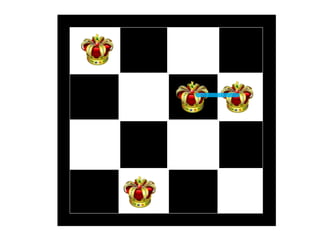
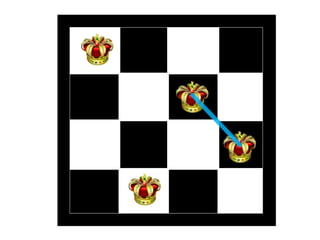
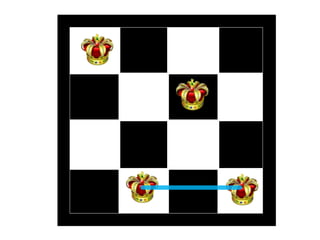
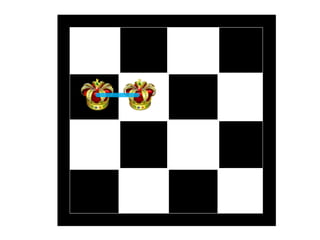
• Each recursive call attempts to place a queen in a
specific column.
• For a given call, the state of the board from previous
placements is known (i.e. where are the other queens?)
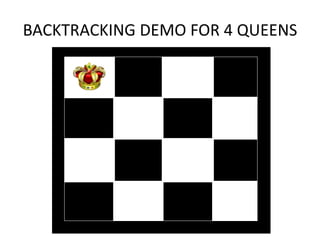
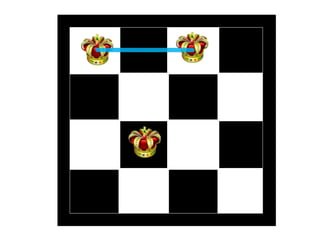
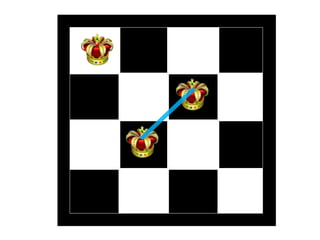
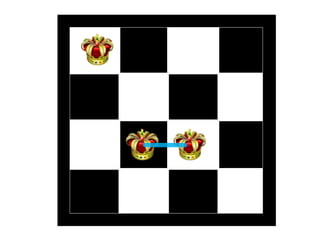
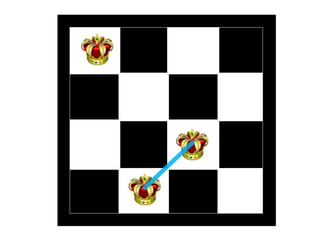
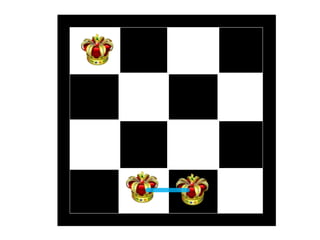
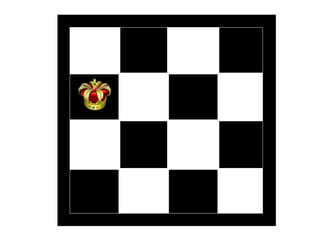
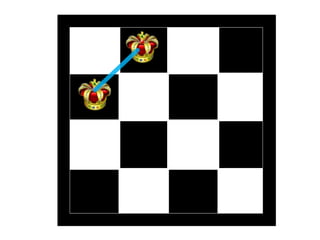
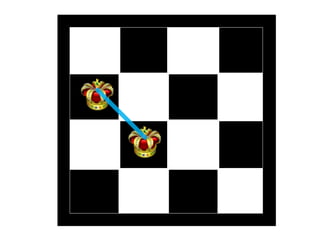
• Current step backtracking: If a placement within the
column does not lead to a solution, the queen is removed
and moved "down" the column
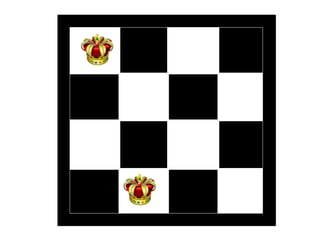
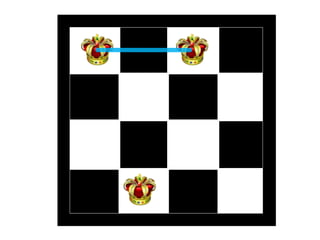
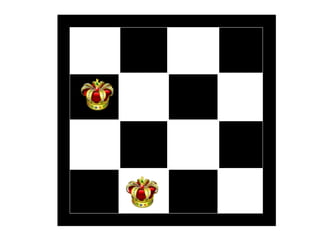
• Previous step backtracking: When all rows in a column
have been tried, the call terminates and backtracks to the
previous call (in the previous column)
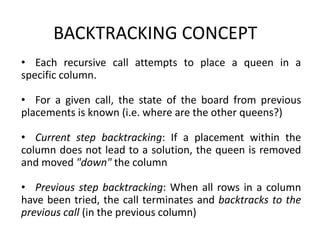
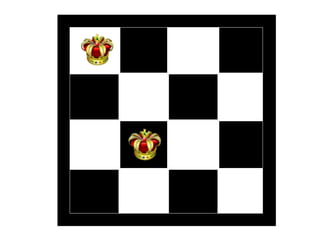
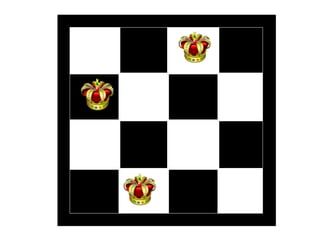
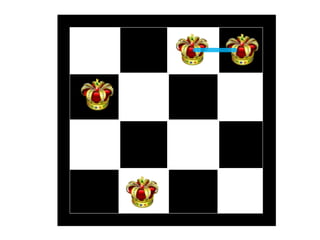
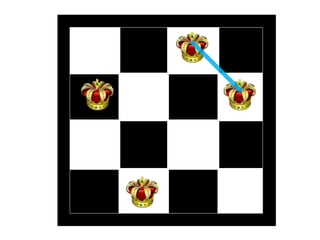
BACKTRACKING DEMO FOR 4 QUEENS
STEPS REVISITED - BACKTRACKING
1. Place the first queen in the left upper corner of the table.
2. Save the attacked positions.
3. Move to the next queen (which can only be placed to the next
line).
4. Search for a valid position. If there is one go to step 8.
5. There is not a valid position for the queen. Delete it (the x
coordinate is 0).
6. Move to the previous queen.
7. Go to step 4.
8. Place it to the first valid position.
9. Save the attacked positions.
10. If the queen processed is the last stop otherwise go to step 3.
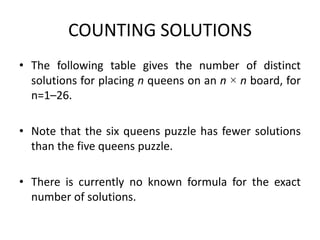
COUNTING SOLUTIONS
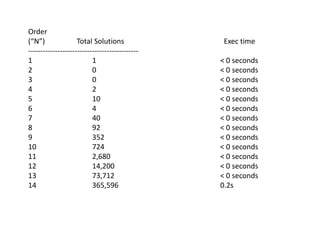
• The following table gives the number of distinct
solutions for placing n queens on an n × n board, for
n=1–26.
• Note that the six queens puzzle has fewer solutions
than the five queens puzzle.
• There is currently no known formula for the exact
number of solutions.
Order
(“N”) Total Solutions Exec time
---------------------------------------------
1 1 < 0 seconds
2 0 < 0 seconds
3 0 < 0 seconds
4 2 < 0 seconds
5 10 < 0 seconds
6 4 < 0 seconds
7 40 < 0 seconds
8 92 < 0 seconds
9 352 < 0 seconds
10 724 < 0 seconds
11 2,680 < 0 seconds
12 14,200 < 0 seconds
13 73,712 < 0 seconds
14 365,596 0.2s
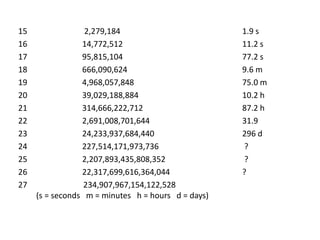
15 2,279,184 1.9 s
16 14,772,512 11.2 s
17 95,815,104 77.2 s
18 666,090,624 9.6 m
19 4,968,057,848 75.0 m
20 39,029,188,884 10.2 h
21 314,666,222,712 87.2 h
22 2,691,008,701,644 31.9
23 24,233,937,684,440 296 d
24 227,514,171,973,736 ?
25 2,207,893,435,808,352 ?
26 22,317,699,616,364,044 ?
27 234,907,967,154,122,528
(s = seconds m = minutes h = hours d = days)
THANK YOU

8 QUEENS PROBLEM.pptx

  • 1.
  • 2.
    BACK TRACKING • Backtrackingis a general algorithm for finding all (or some) solutions to some computational problem, that incrementally builds candidates to the solutions, and abandons each partial candidate ‘c’ ("backtracks") as soon as it determines that ‘c’ cannot possibly be completed to a valid solution. • Backtracking is an important tool for solving constraint satisfaction problems, such as crosswords, verbal arithmetic, Sudoku, and many other puzzles.
  • 3.
    WHAT IS 8QUEEN PROBLEM? • The eight queens puzzle is the problem of placing eight chess queens on an 8×8 chessboard so that no two queens attack each other. • Thus, a solution requires that no two queens share the same row, column, or diagonal. • The eight queens puzzle is an example of the more general n-queens problem of placing n queens on an n×n chessboard, where solutions exist for all natural numbers n with the exception of 1, 2 and 3. • The solution possibilities are discovered only up to 23 queen.
  • 4.
    BACKTRACKING CONCEPT • Eachrecursive call attempts to place a queen in a specific column. • For a given call, the state of the board from previous placements is known (i.e. where are the other queens?) • Current step backtracking: If a placement within the column does not lead to a solution, the queen is removed and moved "down" the column • Previous step backtracking: When all rows in a column have been tried, the call terminates and backtracks to the previous call (in the previous column)
  • 5.
  • 31.
    STEPS REVISITED -BACKTRACKING 1. Place the first queen in the left upper corner of the table. 2. Save the attacked positions. 3. Move to the next queen (which can only be placed to the next line). 4. Search for a valid position. If there is one go to step 8. 5. There is not a valid position for the queen. Delete it (the x coordinate is 0). 6. Move to the previous queen. 7. Go to step 4. 8. Place it to the first valid position. 9. Save the attacked positions. 10. If the queen processed is the last stop otherwise go to step 3.
  • 33.
    COUNTING SOLUTIONS • Thefollowing table gives the number of distinct solutions for placing n queens on an n × n board, for n=1–26. • Note that the six queens puzzle has fewer solutions than the five queens puzzle. • There is currently no known formula for the exact number of solutions.
  • 34.
    Order (“N”) Total SolutionsExec time --------------------------------------------- 1 1 < 0 seconds 2 0 < 0 seconds 3 0 < 0 seconds 4 2 < 0 seconds 5 10 < 0 seconds 6 4 < 0 seconds 7 40 < 0 seconds 8 92 < 0 seconds 9 352 < 0 seconds 10 724 < 0 seconds 11 2,680 < 0 seconds 12 14,200 < 0 seconds 13 73,712 < 0 seconds 14 365,596 0.2s
  • 35.
    15 2,279,184 1.9s 16 14,772,512 11.2 s 17 95,815,104 77.2 s 18 666,090,624 9.6 m 19 4,968,057,848 75.0 m 20 39,029,188,884 10.2 h 21 314,666,222,712 87.2 h 22 2,691,008,701,644 31.9 23 24,233,937,684,440 296 d 24 227,514,171,973,736 ? 25 2,207,893,435,808,352 ? 26 22,317,699,616,364,044 ? 27 234,907,967,154,122,528 (s = seconds m = minutes h = hours d = days)
  • 36.

Editor's Notes