7 VULNERABILITIES
IN YOUR WEB
APPLICATION THAT CAN
OPEN THE DOOR TO
SECURITY THREATS
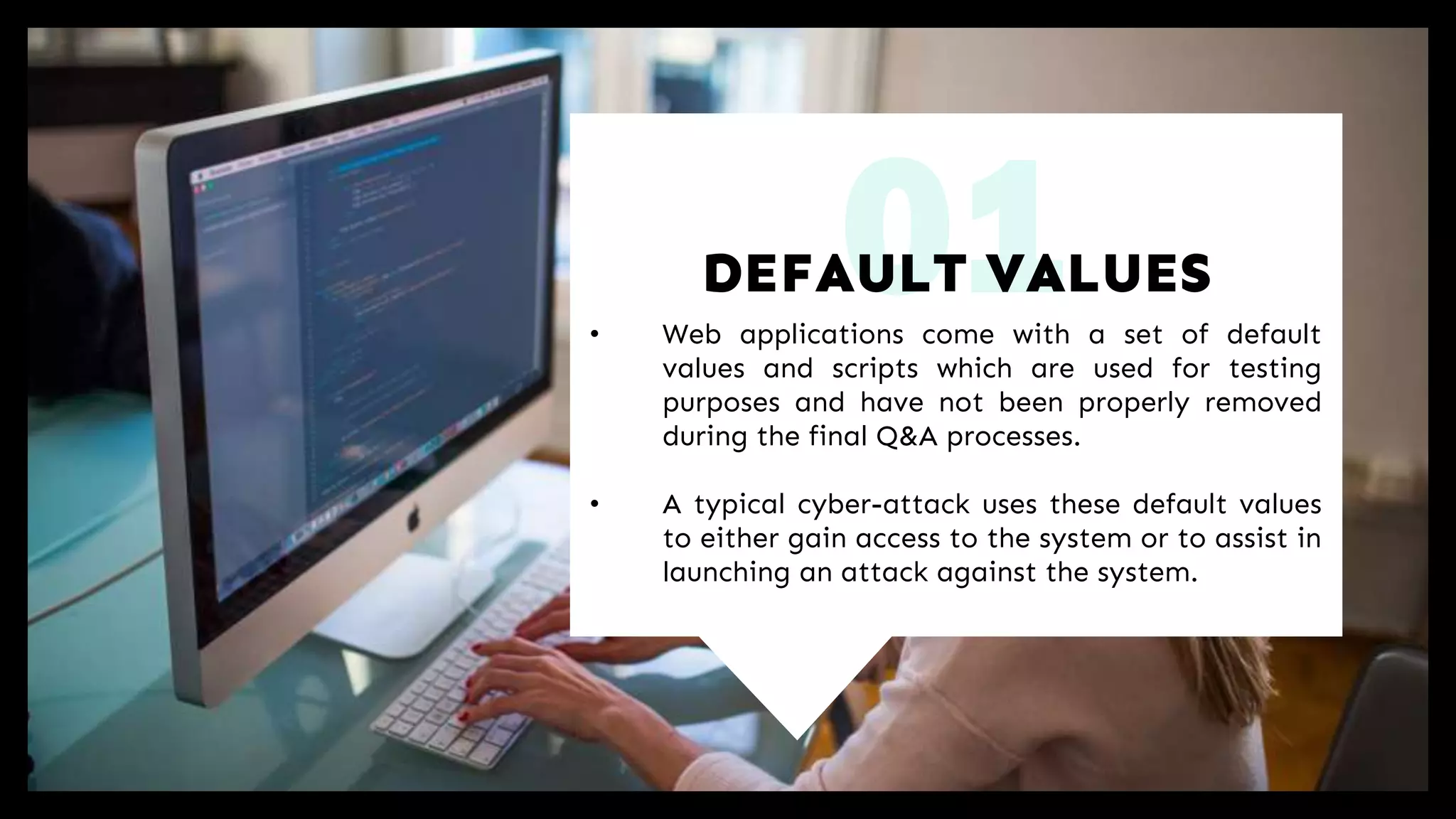
01• Web applications come with a set of default
values and scripts which are used for testing
purposes and have not been properly removed
during the final Q&A processes.
• A typical cyber-attack uses these default values
to either gain access to the system or to assist in
launching an attack against the system.
DEFAULT VALUES
02• Cross-Site Scripting is a way of writing content
into an HTML document by manipulation of
input variables.
• When a cyber actor manipulates a web
application content and adds additional
content, the actor can trick the web application
user that the content is real.
CROSS-SITE SCRIPTING
03
• As the web applications use user-input variables
and use them to query the database, and
developers sometimes do not sanitize the user’s
input adequately, it leaves the possibility for
SQL injection attacks.
SQL INJECTION ISSUES AND
DATABASE AUDITING
04• A brute force attack on a web application can
attempt to gain access to certain items using
enumeration.
• It is not only limited to usernames and
passwords. But can also be used to enumerate
files on the web application.
BRUTE FORCE
05
• Brute force can also lead to a Denial-of-Service,
not only in terms of performance but also in
terms of accessibility of the web application.
• The application layer needs a strategic approach
to limit traffic based on rules.
DISTRIBUTED
DENIAL-OF-SERVICE
06• Cyber actors take advantage of loopholes in the
access control.
• With session ID, once authorized, no further
permission is required to access the web
application.
ACCESS CONTROL
07• Among the core components of web
applications, the authentication module is the
most targeted system by cyber attackers.
• Authentication De-synchronization is the
security issue arises in the multi-level
authentication systems where the attackers have
the knowledge of at least one of the
authentication credentials of the user.
AUTHENTICATION
DE-SYNCHRONIZATION
MANY WEB APPLICATIONS
ARE DESIGNED FROM THE
GROUND UP WITHOUT
TAKING SECURITY
CONSIDERATIONS INTO
ACCOUNT.
PEOPLE WHO DESIGN THE
WEB APPLICATIONS ARE
OFTEN PROJECT MANAGERS,
DEVELOPERS AND
SOFTWARE ENGINEERS WHO
MAY NOT POSSESS THE
KNOWLEDGE TO COVER THE
SECURITY ASPECTS.
VULNERABILITY
ASSESSMENT AND
PENETRATION TESTING IS
THE TOP PRIORITY FOR
ORGANIZATIONS TO KEEP
THEIR WEB APPLICATIONS
AWAY FROM CYBER
THREATS.
THANKS!
REACHUS@INSPIRISYS.COM

7 Vulnerabilities In Your Web Application That Can Open The Door To Security Threats

  • 1.
    7 VULNERABILITIES IN YOURWEB APPLICATION THAT CAN OPEN THE DOOR TO SECURITY THREATS
  • 2.
    01• Web applicationscome with a set of default values and scripts which are used for testing purposes and have not been properly removed during the final Q&A processes. • A typical cyber-attack uses these default values to either gain access to the system or to assist in launching an attack against the system. DEFAULT VALUES
  • 3.
    02• Cross-Site Scriptingis a way of writing content into an HTML document by manipulation of input variables. • When a cyber actor manipulates a web application content and adds additional content, the actor can trick the web application user that the content is real. CROSS-SITE SCRIPTING
  • 4.
    03 • As theweb applications use user-input variables and use them to query the database, and developers sometimes do not sanitize the user’s input adequately, it leaves the possibility for SQL injection attacks. SQL INJECTION ISSUES AND DATABASE AUDITING
  • 5.
    04• A bruteforce attack on a web application can attempt to gain access to certain items using enumeration. • It is not only limited to usernames and passwords. But can also be used to enumerate files on the web application. BRUTE FORCE
  • 6.
    05 • Brute forcecan also lead to a Denial-of-Service, not only in terms of performance but also in terms of accessibility of the web application. • The application layer needs a strategic approach to limit traffic based on rules. DISTRIBUTED DENIAL-OF-SERVICE
  • 7.
    06• Cyber actorstake advantage of loopholes in the access control. • With session ID, once authorized, no further permission is required to access the web application. ACCESS CONTROL
  • 8.
    07• Among thecore components of web applications, the authentication module is the most targeted system by cyber attackers. • Authentication De-synchronization is the security issue arises in the multi-level authentication systems where the attackers have the knowledge of at least one of the authentication credentials of the user. AUTHENTICATION DE-SYNCHRONIZATION
  • 9.
    MANY WEB APPLICATIONS AREDESIGNED FROM THE GROUND UP WITHOUT TAKING SECURITY CONSIDERATIONS INTO ACCOUNT.
  • 10.
    PEOPLE WHO DESIGNTHE WEB APPLICATIONS ARE OFTEN PROJECT MANAGERS, DEVELOPERS AND SOFTWARE ENGINEERS WHO MAY NOT POSSESS THE KNOWLEDGE TO COVER THE SECURITY ASPECTS.
  • 11.
    VULNERABILITY ASSESSMENT AND PENETRATION TESTINGIS THE TOP PRIORITY FOR ORGANIZATIONS TO KEEP THEIR WEB APPLICATIONS AWAY FROM CYBER THREATS.
  • 12.