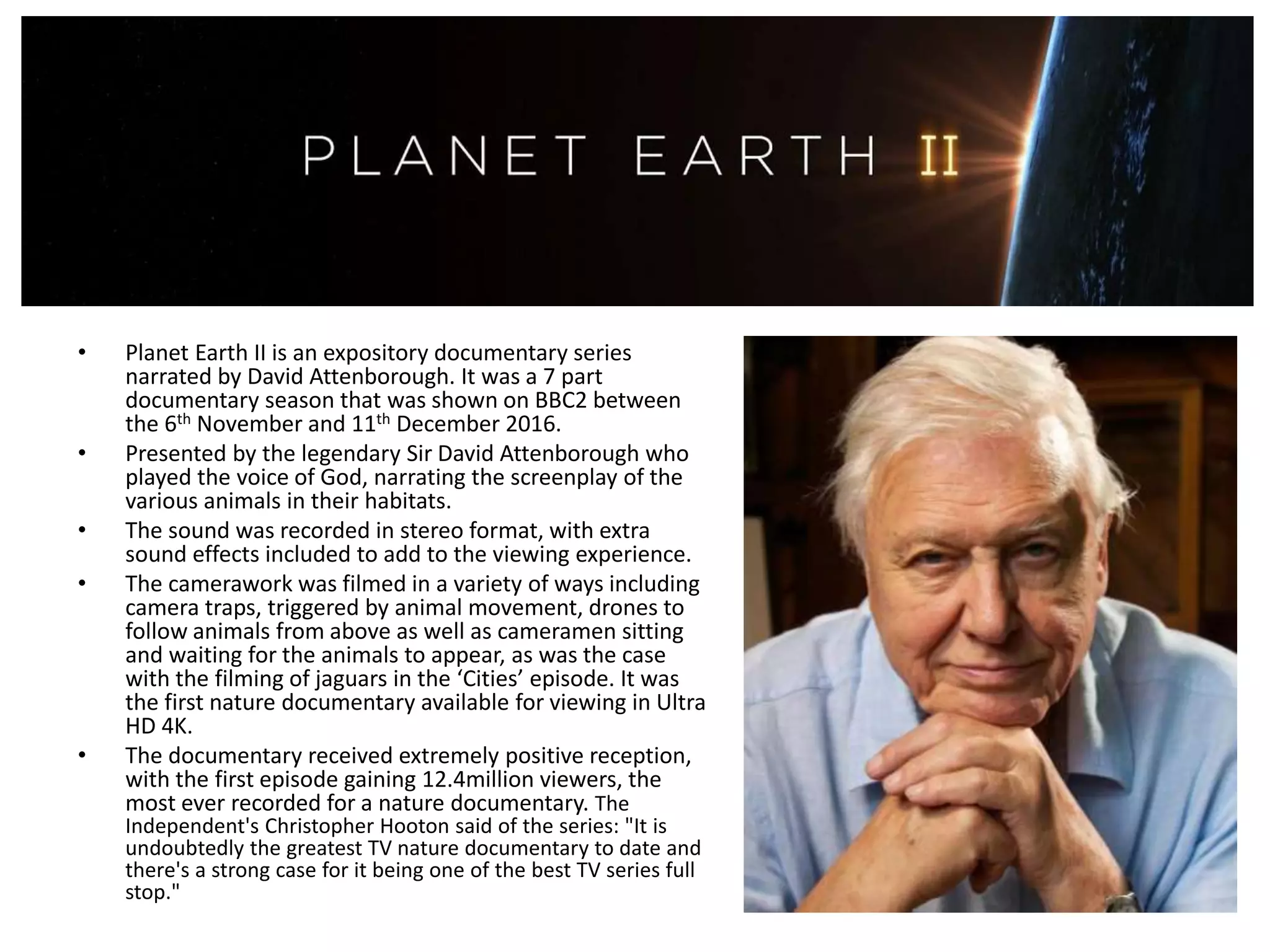
• Planet Earth II is an expository documentary series
narrated by David Attenborough. It was a 7 part
documentary season that was shown on BBC2 between
the 6th November and 11th December 2016.
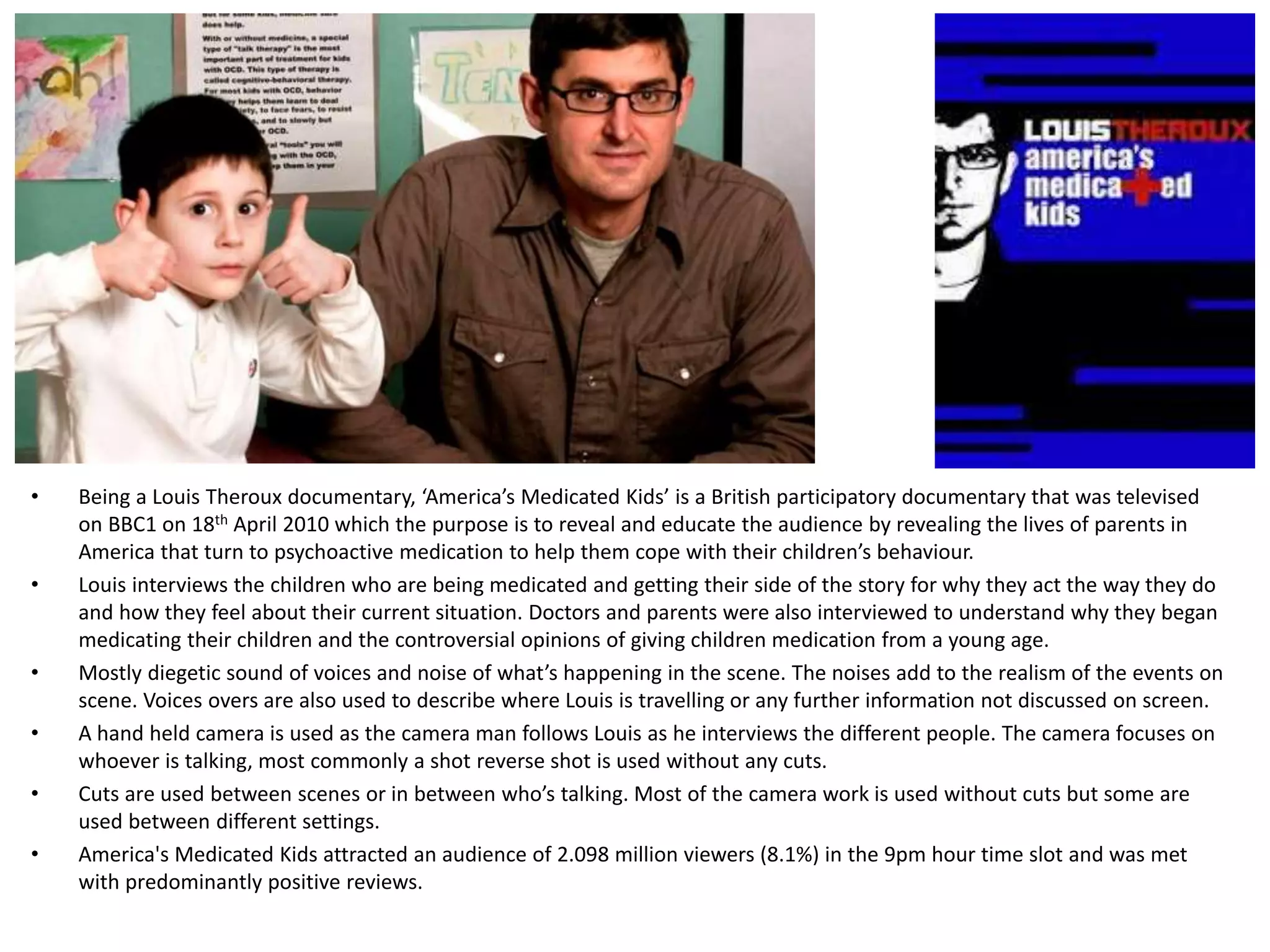
• Presented by the legendary Sir David Attenborough who
played the voice of God, narrating the screenplay of the
various animals in their habitats.
• The sound was recorded in stereo format, with extra
sound effects included to add to the viewing experience.
• The camerawork was filmed in a variety of ways including
camera traps, triggered by animal movement, drones to
follow animals from above as well as cameramen sitting
and waiting for the animals to appear, as was the case
with the filming of jaguars in the ‘Cities’ episode. It was
the first nature documentary available for viewing in Ultra
HD 4K.
• The documentary received extremely positive reception,
with the first episode gaining 12.4million viewers, the
most ever recorded for a nature documentary. The
Independent's Christopher Hooton said of the series: "It is
undoubtedly the greatest TV nature documentary to date and
there's a strong case for it being one of the best TV series full
stop."
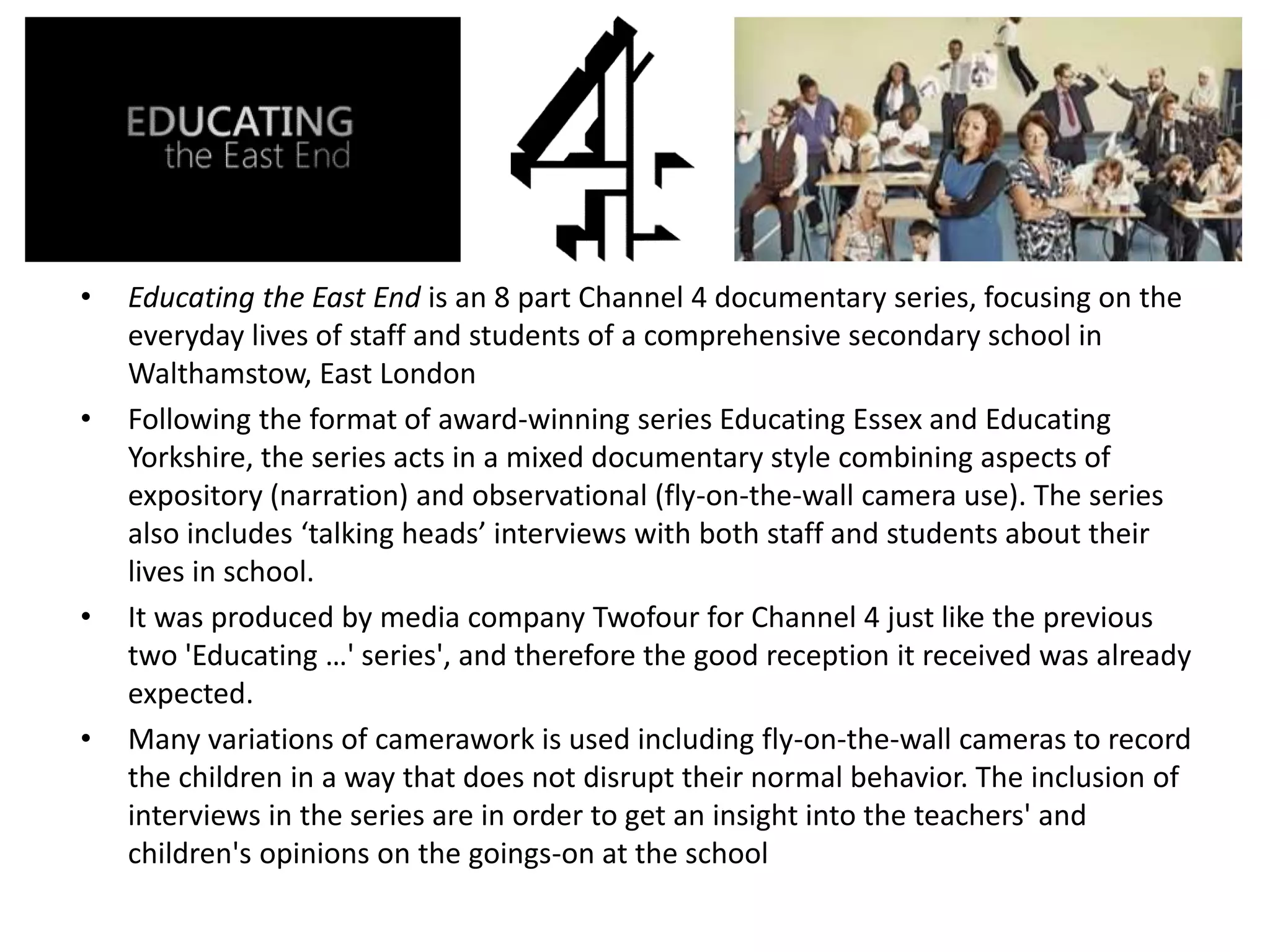
• Being a Louis Theroux documentary, ‘America’s Medicated Kids’ is a British participatory documentary that was televised
on BBC1 on 18th April 2010 which the purpose is to reveal and educate the audience by revealing the lives of parents in
America that turn to psychoactive medication to help them cope with their children’s behaviour.
• Louis interviews the children who are being medicated and getting their side of the story for why they act the way they do
and how they feel about their current situation. Doctors and parents were also interviewed to understand why they began
medicating their children and the controversial opinions of giving children medication from a young age.
• Mostly diegetic sound of voices and noise of what’s happening in the scene. The noises add to the realism of the events on
scene. Voices overs are also used to describe where Louis is travelling or any further information not discussed on screen.
• A hand held camera is used as the camera man follows Louis as he interviews the different people. The camera focuses on
whoever is talking, most commonly a shot reverse shot is used without any cuts.
• Cuts are used between scenes or in between who’s talking. Most of the camera work is used without cuts but some are
used between different settings.
• America's Medicated Kids attracted an audience of 2.098 million viewers (8.1%) in the 9pm hour time slot and was met
with predominantly positive reviews.
• Educating the East End is an 8 part Channel 4 documentary series, focusing on the
everyday lives of staff and students of a comprehensive secondary school in
Walthamstow, East London
• Following the format of award-winning series Educating Essex and Educating
Yorkshire, the series acts in a mixed documentary style combining aspects of
expository (narration) and observational (fly-on-the-wall camera use). The series
also includes ‘talking heads’ interviews with both staff and students about their
lives in school.
• It was produced by media company Twofour for Channel 4 just like the previous
two 'Educating …' series', and therefore the good reception it received was already
expected.
• Many variations of camerawork is used including fly-on-the-wall cameras to record
the children in a way that does not disrupt their normal behavior. The inclusion of
interviews in the series are in order to get an insight into the teachers' and
children's opinions on the goings-on at the school
Legally High
• Legally High is a documentary which explores the
world of legal drug use. It is a part of Channel Four’s
‘True Stories’ documentaries and was created by
award-winning director, Dan Reed.
• The documentary looks into drug dealing chemists
and how they invent new types of highs faster than
the Government can ban them. This is an expository
documentary with ‘voice-of-God’ narration to
establish and explain the observation and interviews
that go along with it.
• The narrator remains impartial, providing the
audience with the facts, however his sombre tone
along with the slow and eerie non-diegetic
soundtrack gives a darker atmosphere to the
documentary.
• The documentary received overall impressive
reviews, with a critical 3/5 starts from the daily
telegraph.
• The director, Dan Reed, is a four time BAFTA award
winning director who has produced and directed
many documentaries in the 21st century.
• Gypsy Kids is a three-part Channel 5 documentary series with the purpose
of following children who grow up knowing the freedom - and the conflict - that
comes with being part of the Gypsy and Traveller community.
• It is an expository documentary which is made obvious through the voice of
God narration by Joe Duttine. The narrator is never seen as the documentary
subjects are the only things filmed throughout the documentary.
• Close up shots dominate throughout as they are the best used during
interviews in order to capture emotion and understand the subjects being
filmed as if they are talking directly to the audience. There are also frequent
long shots to set the scene and show the audience how the children are living.
• Long cuts dominate as is common with expository style documentaries. This is
done to keep the focus on the documentary subjects.
• Produced and directed by Sean Casey, this documentary series got positive
reviews, receiving 8/10 on tvguide.co.uk. A new series is currently in production
which is programmed for showing in late 2017.
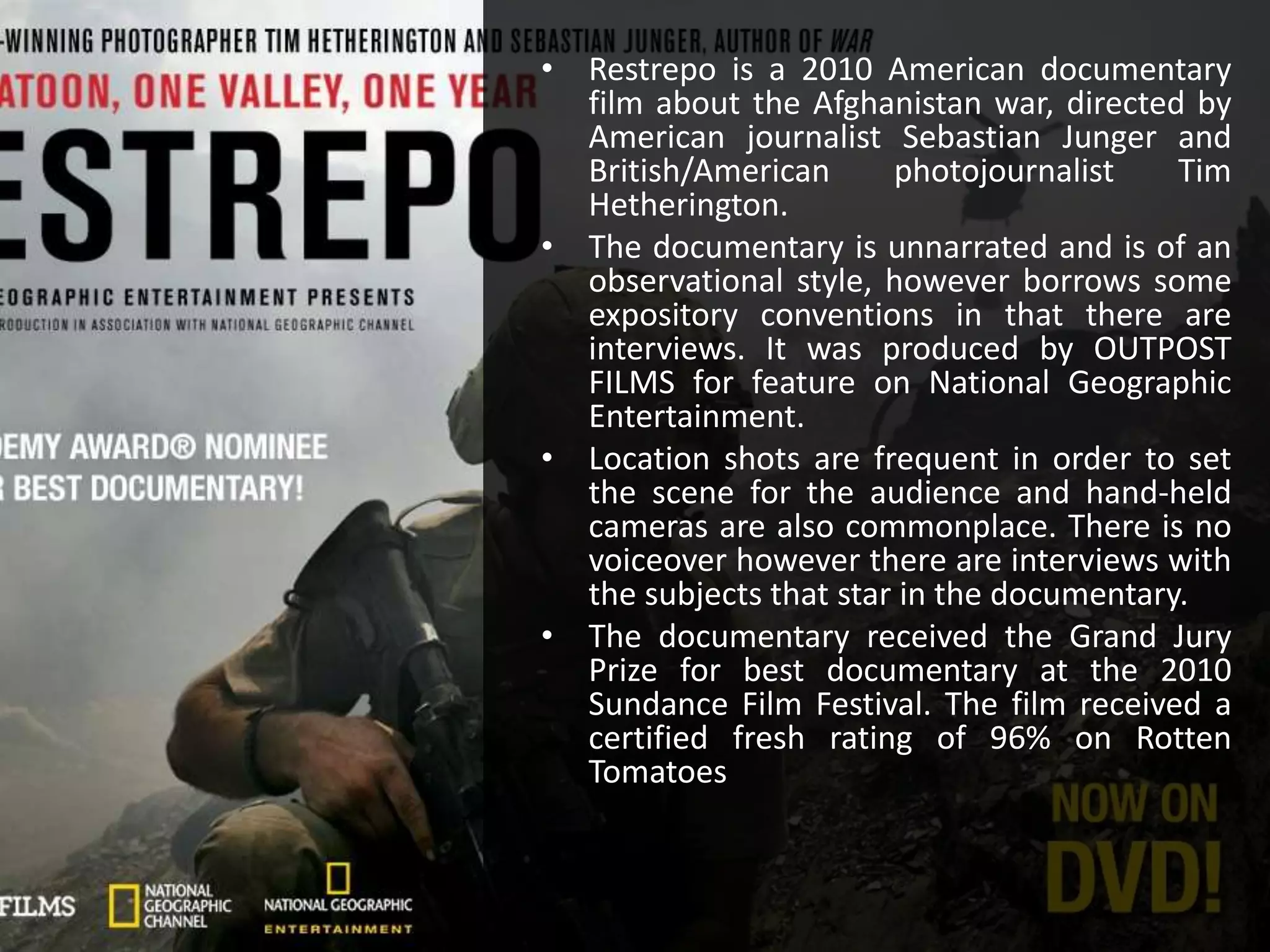
• Restrepo is a 2010 American documentary
film about the Afghanistan war, directed by
American journalist Sebastian Junger and
British/American photojournalist Tim
Hetherington.
• The documentary is unnarrated and is of an
observational style, however borrows some
expository conventions in that there are
interviews. It was produced by OUTPOST
FILMS for feature on National Geographic
Entertainment.
• Location shots are frequent in order to set
the scene for the audience and hand-held
cameras are also commonplace. There is no
voiceover however there are interviews with
the subjects that star in the documentary.
• The documentary received the Grand Jury
Prize for best documentary at the 2010
Sundance Film Festival. The film received a
certified fresh rating of 96% on Rotten
Tomatoes
Fahrenheit 9/11
• Fahrenheit 9/11 is a reflexive documentary film produced and
directed by world famous director and political commentator
Michael Moore. It's aim is to expose the reality of the 2003
invasion of Iraq by the US and how George W. Bush used 9/11
and little evidence to prematurely invade the middle east, and
more importantly, how the media manipulated the facts and
acted as "cheerleaders" for the conflict in order to get the
American population behind Bush.
• Michael Moore produced this documentary with a lot of usage
of stock footage in order to create a dramatic and emotional
response from the audience. The documentary was one of the
most controversial documentaries ever produced.
• The documentary received positive reception with 83% rating
on Rotten Tomatoes. It is also the highest grossing documentary
of all time, making a profit of almost $220million. It first
debuted at the 2004 Cannes Film festival and received the
Palme d'Or – the festival's highest award, as well as a 20 minute
standing ovation immediately after it’s showing.

7 Documentaries

  • 1.
    • Planet EarthII is an expository documentary series narrated by David Attenborough. It was a 7 part documentary season that was shown on BBC2 between the 6th November and 11th December 2016. • Presented by the legendary Sir David Attenborough who played the voice of God, narrating the screenplay of the various animals in their habitats. • The sound was recorded in stereo format, with extra sound effects included to add to the viewing experience. • The camerawork was filmed in a variety of ways including camera traps, triggered by animal movement, drones to follow animals from above as well as cameramen sitting and waiting for the animals to appear, as was the case with the filming of jaguars in the ‘Cities’ episode. It was the first nature documentary available for viewing in Ultra HD 4K. • The documentary received extremely positive reception, with the first episode gaining 12.4million viewers, the most ever recorded for a nature documentary. The Independent's Christopher Hooton said of the series: "It is undoubtedly the greatest TV nature documentary to date and there's a strong case for it being one of the best TV series full stop."
  • 2.
    • Being aLouis Theroux documentary, ‘America’s Medicated Kids’ is a British participatory documentary that was televised on BBC1 on 18th April 2010 which the purpose is to reveal and educate the audience by revealing the lives of parents in America that turn to psychoactive medication to help them cope with their children’s behaviour. • Louis interviews the children who are being medicated and getting their side of the story for why they act the way they do and how they feel about their current situation. Doctors and parents were also interviewed to understand why they began medicating their children and the controversial opinions of giving children medication from a young age. • Mostly diegetic sound of voices and noise of what’s happening in the scene. The noises add to the realism of the events on scene. Voices overs are also used to describe where Louis is travelling or any further information not discussed on screen. • A hand held camera is used as the camera man follows Louis as he interviews the different people. The camera focuses on whoever is talking, most commonly a shot reverse shot is used without any cuts. • Cuts are used between scenes or in between who’s talking. Most of the camera work is used without cuts but some are used between different settings. • America's Medicated Kids attracted an audience of 2.098 million viewers (8.1%) in the 9pm hour time slot and was met with predominantly positive reviews.
  • 3.
    • Educating theEast End is an 8 part Channel 4 documentary series, focusing on the everyday lives of staff and students of a comprehensive secondary school in Walthamstow, East London • Following the format of award-winning series Educating Essex and Educating Yorkshire, the series acts in a mixed documentary style combining aspects of expository (narration) and observational (fly-on-the-wall camera use). The series also includes ‘talking heads’ interviews with both staff and students about their lives in school. • It was produced by media company Twofour for Channel 4 just like the previous two 'Educating …' series', and therefore the good reception it received was already expected. • Many variations of camerawork is used including fly-on-the-wall cameras to record the children in a way that does not disrupt their normal behavior. The inclusion of interviews in the series are in order to get an insight into the teachers' and children's opinions on the goings-on at the school
  • 4.
    Legally High • LegallyHigh is a documentary which explores the world of legal drug use. It is a part of Channel Four’s ‘True Stories’ documentaries and was created by award-winning director, Dan Reed. • The documentary looks into drug dealing chemists and how they invent new types of highs faster than the Government can ban them. This is an expository documentary with ‘voice-of-God’ narration to establish and explain the observation and interviews that go along with it. • The narrator remains impartial, providing the audience with the facts, however his sombre tone along with the slow and eerie non-diegetic soundtrack gives a darker atmosphere to the documentary. • The documentary received overall impressive reviews, with a critical 3/5 starts from the daily telegraph. • The director, Dan Reed, is a four time BAFTA award winning director who has produced and directed many documentaries in the 21st century.
  • 5.
    • Gypsy Kidsis a three-part Channel 5 documentary series with the purpose of following children who grow up knowing the freedom - and the conflict - that comes with being part of the Gypsy and Traveller community. • It is an expository documentary which is made obvious through the voice of God narration by Joe Duttine. The narrator is never seen as the documentary subjects are the only things filmed throughout the documentary. • Close up shots dominate throughout as they are the best used during interviews in order to capture emotion and understand the subjects being filmed as if they are talking directly to the audience. There are also frequent long shots to set the scene and show the audience how the children are living. • Long cuts dominate as is common with expository style documentaries. This is done to keep the focus on the documentary subjects. • Produced and directed by Sean Casey, this documentary series got positive reviews, receiving 8/10 on tvguide.co.uk. A new series is currently in production which is programmed for showing in late 2017.
  • 6.
    • Restrepo isa 2010 American documentary film about the Afghanistan war, directed by American journalist Sebastian Junger and British/American photojournalist Tim Hetherington. • The documentary is unnarrated and is of an observational style, however borrows some expository conventions in that there are interviews. It was produced by OUTPOST FILMS for feature on National Geographic Entertainment. • Location shots are frequent in order to set the scene for the audience and hand-held cameras are also commonplace. There is no voiceover however there are interviews with the subjects that star in the documentary. • The documentary received the Grand Jury Prize for best documentary at the 2010 Sundance Film Festival. The film received a certified fresh rating of 96% on Rotten Tomatoes
  • 7.
    Fahrenheit 9/11 • Fahrenheit9/11 is a reflexive documentary film produced and directed by world famous director and political commentator Michael Moore. It's aim is to expose the reality of the 2003 invasion of Iraq by the US and how George W. Bush used 9/11 and little evidence to prematurely invade the middle east, and more importantly, how the media manipulated the facts and acted as "cheerleaders" for the conflict in order to get the American population behind Bush. • Michael Moore produced this documentary with a lot of usage of stock footage in order to create a dramatic and emotional response from the audience. The documentary was one of the most controversial documentaries ever produced. • The documentary received positive reception with 83% rating on Rotten Tomatoes. It is also the highest grossing documentary of all time, making a profit of almost $220million. It first debuted at the 2004 Cannes Film festival and received the Palme d'Or – the festival's highest award, as well as a 20 minute standing ovation immediately after it’s showing.