 In any giant installation of air-operated double-
diaphragm (AODD) pumps, a comparatively tiny
portion of pumps contribute to more than average
maintenance prices, usually because of
misapplication. Since the bulk of AODD pump
applications involve no over easy method fluid
transfer, several pumps are mobile and transferred
from one location to a different.
 An operator could attribute a “good” pump
installation to the pump, and not the installation. The
operator could transfer the “good” pump to a brand
new installation and shortly once, the “good” pump
becomes a major maintenance downside. Worse still,
the high maintenance could become routine, leading
to substantial prices, in relation to the pump.
 Since most AODD pump applications ar either easy
transfer or filter press feed, following a number of
necessary steps will avoid pricey mistakes.
 1. Piping
 System properties, like piping, will contribute considerably
to AODD pump application problems, particularly on the
suction side of the pump. Most diaphragm pumps have
dry elevate capability within the vary of fifteen to twenty
feet. One way to think of this is the literal lift capabilities
of the pump. Another way is to think about this
specification because the most resistance pipe loss that a
specific pump will handle. In different words, if a pump
features a dry elevate capability of fifteen feet, then it
cannot tolerate over half-dozen.5 pounds per square inch
(psi) of pipe loss when priming the pump with a particular
process fluid. Consider the consistence of standard latex
house paint, that is or so one,500 centipoise (cps). When
transferred through a 5-foot-long, 1-inch line at 20
gallons per minute (gpm), the frictional losses are around
34 psi, which is well beyond the capabilities of any AODD
pump. Increasing the inner diameter of the suction line to
one.5 inches reduces the pipe loss to 6 psi, well within the
capabilities of most AODD pumps. One of the best
supplier of Air Operated Double Diaphram pump is
AntliaEngineeringWorks
 2. Chemical Compatibility
 Although a straightforward step in AODD pump
specification, chemical compatibility is often
overlooked when moving pumps within a facility.
A common mistake is to assume that a more
expensive material affords better chemical
compatibility. Consider an 80 percent solution of
sodium hydroxide (NaOH). Commonly offered
compatibility charts list olefin propene diene
chemical compound (EPDM) rubber as A-rated
and therefore the costlier fluroelastomer (FKM) as
D-rated. Another example is isopropyl acetate. In
the case of this process fluid, the less expensive
polypropylene is often listed as A-rated, while
the more expensive polyvinylidene fluoride
(PVDF) is commonly listed as D-rated. The pump
manufacturer ought to give charts or tools to
help with this method.
 3. Temperature
 Two concerns should be taken into consideration
once considering temperature and AODD pumps:
temperature limits of the pump’s material of
construction and extra limitations because of method
fluids. AODD pump dealers can usually publish
temperature limitations of the pump’s numerous
materials of construction. These temperature limits
are solely based on mechanical stress, thus other
considerations must be taken into account when
deciding on the limitations of a particular pump
application. Certain method fluids will cut back the
utmost temperature limit even more. Consider an
application that seeks to transfer 10 to 75 percent of
sulfuric acid (H2SO4) with a polytetrafluoroethylene
(PTFE)-lined polypropylene pump. Common
compatibility tables list both PTFE and polypropylene
as A-rated for H2SO4 (in certain concentrations).
 4. Abrasives
 Abrasives will have a prejudicial result in several
pump applications. Several steps can be taken to
mitigate the effects of abrasion. First, a material’s
physical properties should be considered.
Thermoplastic elastomers have abrasive resistance
properties. In sensible applications, an abrasive
resistant elastomer that is B-rated for a particular
process fluid may outlast an elastomer that is A-
rated but has poor abrasive resistance. Second,
consider fluid velocity. The relationship between a
fluid’s velocity and the abrasive effect on a pump’s
material of construction is not linear. A small increase
in fluid velocity can have a disproportionate impact
on the abrasive wear of components. While pumping
abrasive liquids, transfer the liquid at the slowest
flow possible. In severe instances, consider
oversizing the pump so liquid moves slower.
 6. Torque
 Develop a preventative maintenance program
to torsion all external hardware to the
recommendations, notably once exploitation
plastic pumps.
 Follow the manufacturer’s recommendations
for frequency and technique.
 These items are often overlooked. Transfer
applications are simple, and the basics are
often ignored or assumed to play an
insignificant role. When in doubt, consult the
manufacturer, who should be able to offer
valuable advice for implementation. FOR
MORE INFORMATION visit us
ANTLIAENGINEERINGWORKS
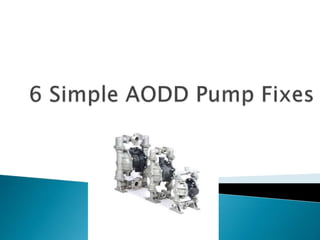
6 simple aodd pump fixes

6 simple aodd pump fixes

  • 2.
     In anygiant installation of air-operated double- diaphragm (AODD) pumps, a comparatively tiny portion of pumps contribute to more than average maintenance prices, usually because of misapplication. Since the bulk of AODD pump applications involve no over easy method fluid transfer, several pumps are mobile and transferred from one location to a different.  An operator could attribute a “good” pump installation to the pump, and not the installation. The operator could transfer the “good” pump to a brand new installation and shortly once, the “good” pump becomes a major maintenance downside. Worse still, the high maintenance could become routine, leading to substantial prices, in relation to the pump.  Since most AODD pump applications ar either easy transfer or filter press feed, following a number of necessary steps will avoid pricey mistakes.
  • 3.
     1. Piping System properties, like piping, will contribute considerably to AODD pump application problems, particularly on the suction side of the pump. Most diaphragm pumps have dry elevate capability within the vary of fifteen to twenty feet. One way to think of this is the literal lift capabilities of the pump. Another way is to think about this specification because the most resistance pipe loss that a specific pump will handle. In different words, if a pump features a dry elevate capability of fifteen feet, then it cannot tolerate over half-dozen.5 pounds per square inch (psi) of pipe loss when priming the pump with a particular process fluid. Consider the consistence of standard latex house paint, that is or so one,500 centipoise (cps). When transferred through a 5-foot-long, 1-inch line at 20 gallons per minute (gpm), the frictional losses are around 34 psi, which is well beyond the capabilities of any AODD pump. Increasing the inner diameter of the suction line to one.5 inches reduces the pipe loss to 6 psi, well within the capabilities of most AODD pumps. One of the best supplier of Air Operated Double Diaphram pump is AntliaEngineeringWorks
  • 4.
     2. ChemicalCompatibility  Although a straightforward step in AODD pump specification, chemical compatibility is often overlooked when moving pumps within a facility. A common mistake is to assume that a more expensive material affords better chemical compatibility. Consider an 80 percent solution of sodium hydroxide (NaOH). Commonly offered compatibility charts list olefin propene diene chemical compound (EPDM) rubber as A-rated and therefore the costlier fluroelastomer (FKM) as D-rated. Another example is isopropyl acetate. In the case of this process fluid, the less expensive polypropylene is often listed as A-rated, while the more expensive polyvinylidene fluoride (PVDF) is commonly listed as D-rated. The pump manufacturer ought to give charts or tools to help with this method.
  • 5.
     3. Temperature Two concerns should be taken into consideration once considering temperature and AODD pumps: temperature limits of the pump’s material of construction and extra limitations because of method fluids. AODD pump dealers can usually publish temperature limitations of the pump’s numerous materials of construction. These temperature limits are solely based on mechanical stress, thus other considerations must be taken into account when deciding on the limitations of a particular pump application. Certain method fluids will cut back the utmost temperature limit even more. Consider an application that seeks to transfer 10 to 75 percent of sulfuric acid (H2SO4) with a polytetrafluoroethylene (PTFE)-lined polypropylene pump. Common compatibility tables list both PTFE and polypropylene as A-rated for H2SO4 (in certain concentrations).
  • 6.
     4. Abrasives Abrasives will have a prejudicial result in several pump applications. Several steps can be taken to mitigate the effects of abrasion. First, a material’s physical properties should be considered. Thermoplastic elastomers have abrasive resistance properties. In sensible applications, an abrasive resistant elastomer that is B-rated for a particular process fluid may outlast an elastomer that is A- rated but has poor abrasive resistance. Second, consider fluid velocity. The relationship between a fluid’s velocity and the abrasive effect on a pump’s material of construction is not linear. A small increase in fluid velocity can have a disproportionate impact on the abrasive wear of components. While pumping abrasive liquids, transfer the liquid at the slowest flow possible. In severe instances, consider oversizing the pump so liquid moves slower.
  • 7.
     6. Torque Develop a preventative maintenance program to torsion all external hardware to the recommendations, notably once exploitation plastic pumps.  Follow the manufacturer’s recommendations for frequency and technique.  These items are often overlooked. Transfer applications are simple, and the basics are often ignored or assumed to play an insignificant role. When in doubt, consult the manufacturer, who should be able to offer valuable advice for implementation. FOR MORE INFORMATION visit us ANTLIAENGINEERINGWORKS