Date of Publication : 9-6-2013
HORTFLORA RESEARCH SPECTRUM ISSN : 2250-2823
Volume 2(2), April-June, 2013
Contents
1. GAP : Non monetary way to manage faba bean
diseases—A Review
Anil Kumar Singh and Vijai Kr. Umrao 93-102
2. Influence of positions of bearing and methods of
harvesting on the quality of fruits—A Review
Priyamvada Pandey, Rajesh Kumar, Ayushi Tamta and
D.S. Mishra
103-108
3. Status of dry matter at harvesting stage in commercially
grown grape varieties under tropical climatic condition
R.G. Somkuwar, Roshni R. Samarth, J. Satisha, S.D.
Ramteke and Prerna Itroutwar
109-115
4. Performance of planting material on growth and yield of
turmeric under guava orchard
D.K. Singh, S. Aswal, G. Aswani and M.K. Shivhare 116-120
5. Optimization of planting density in carnation S. Karthikeyan and M. Jawaharlal 121-125
6. Evaluation of the incidence of powdery mildew
(Sphaerotheca fuliginea) on bottle gourd
Sashiyangba and L. Daiho 126-129
7. Integrated management of powdery mildew of gerbera
under polyhouse condition in Arunachal Pradesh
Sunil Kumar, Krishna S. Tomar, R.C. Shakywar and
M. Pathak
130-134
8. Influence of microbial, organic and inorganic sources of
nutrients on growth parameters of strawberry
Rubee Lata, Deepa H. Dwivedi, R.B. Ram and
M.L. Meena
135-138
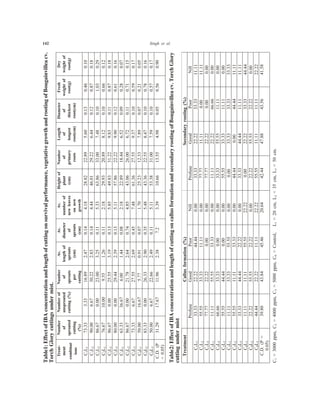
9. Multiplication of bougainvillea cv. Torch Glory through
shoot tip cutting under mist chamber
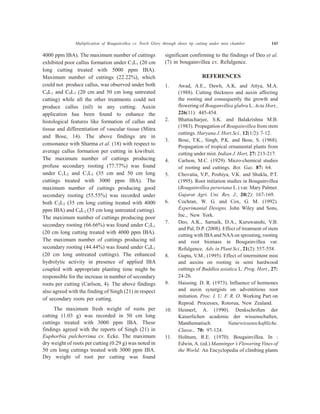
K.. K. Singh, Tejpal Singh and Y.K. Tomar 139-144
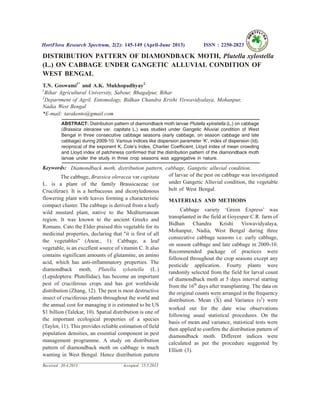
10. Distribution pattern of diamondback moth, Plutella
xylostella (L.) on cabbage under Gangetic alluvial
condition of West Bengal
T.N. Goswami and A.K. Mukhopadhyay 145-149
11. Effect of spacing and plant architecture on yield and
economics of capsicum under net house conditions
Pravina Satpute, S.G. Bharad and Snehal Korde 150-152
12. Effect of length of cutting and concentration of IBA on
rooting in shoot tip cutting of sawani (Lagerstroemia
indica L.) under mist condition
K.K. Singh, A. Kumar, Y.K. Tomar and Prabhat Kumar 153-157
13. Some physical and frictional properties of Phule Mosambi
and Kinnow
F.G. Sayyad, S.S. Chinchorkar, S.K. Patel and
B.K. Yaduvanshi
158-161
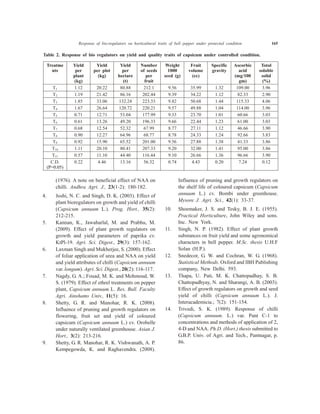
14. Response of bio-regulators on horticultural traits of bell
pepper under protected condition
R.N. Singh and Sidharth Shankar 162-165
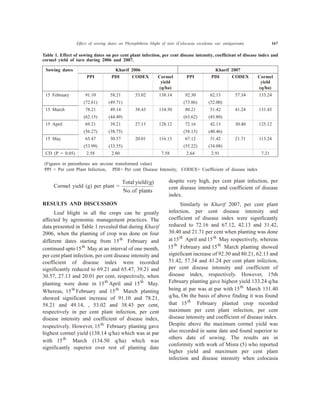
15. Effect of sowing dates on phytophthora blight of taro
(Colocasia esculenta var. antiquorum)
R.C. Shakywar, S.P. Pathak, Krishna S. Tomar and
M. Pathak
166-168
16. Bio-physical properties of the papaya ringspot virus
causing ringspot disease in papaya (Carica papaya L.)
S.K. Singh and Ramesh Singh 169-171
17. Effect of biofertilizers and presoaking treatments of
nitrate salts on yield and character association in corn (Zea
mays L.) yield
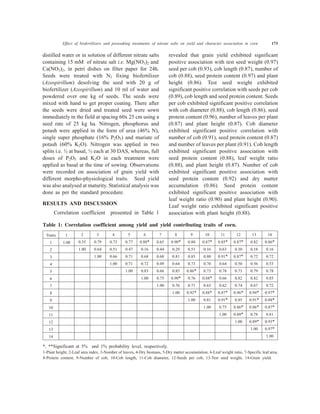
S.P. Tiwari, Arti Guhey and S.P. Mishra 172-174
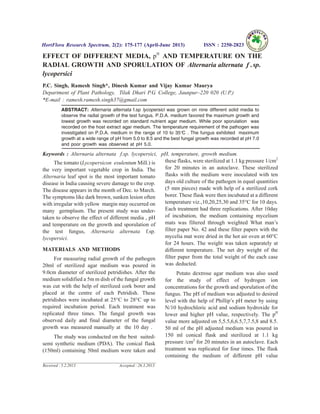
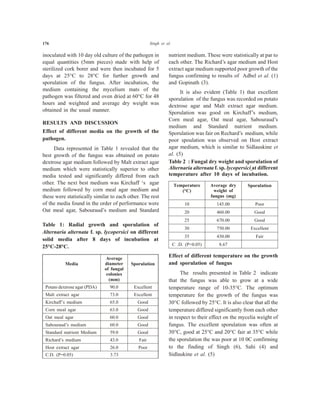
18. Effect of different media, pH
and temperature on the radial
growth and sporulation of Alternaria alternata f.sp.
lycopersici
P.C. Singh, Ramesh Singh, Dinesh Kumar and
Vijay Kumar Maurya
175-177
19. Effect of weedicide in minimization of weed menance in
Nagpur Mandarin orchard
J. Singh, P. Bhatnagar and Bhim Singh 178-179
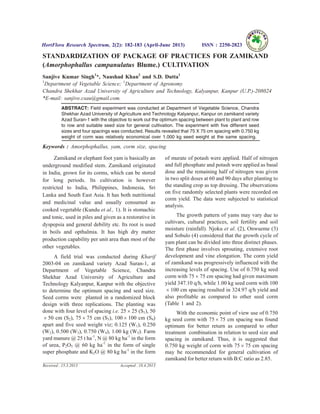
20. Impact of different fertigation levels on
morphophysiological traits and yield of cucumber under
greenhouse condition
S.P. Tiwari 180-181
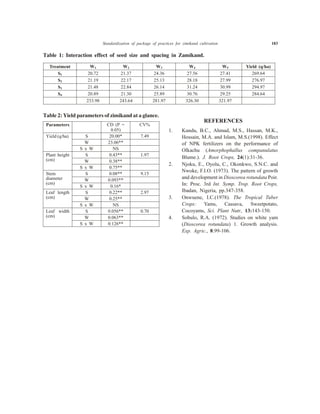
21. Standardization of package of practices for zamikand
(Amorphophallus campanulatus Blume.) cultivation
Sanjive Kumar Singh, Naushad Khan and S.D. Dutta 182-183
GAP: NON MONETARY WAY TO MANAGE FABA BEAN DISEASES—
A REVIEW
Anil Kumar Singh* and Vijai Kr. Umrao1
ICAR Research Complex for Eastern Region, Patna 800 014 Bihar
1
Department of Horticulture, CSSS (PG) College, Machhra, Meerut-250 106 (U.P.)
*E-mail: anil.icarpat@gmail.com
ABSTRACT: Faba bean (Vicia faba L.) is, among the oldest crops in the world, attacked by a
wide range of pathogens although each of these diseases is quite destructive, when two or more
interact on the same plant, their combined effect becomes greater. Good agronomic practices
are in general non monetary interventions, discussed here under suitable heads, which can be
easily adopted by the farmers to manage faba bean disease smartly. It is an efficient and
excellent tool for effective disease-pest management in general and especially for soil borne
pathogens and diseases like chocolate spot,ascochyta blight and rot etc.
Keywords: Crop diversification, disease management, faba bean, good agronomic practices.
Faba bean (Vicia faba L.) is among the oldest
crops in the world. Chinese used faba bean for food
almost 5,000 years ago, presently it is grown in 58
countries (Singh et al., 40). Probably one of the
best performing crops under global warming and
climate change scenario because of its unique
ability to excel under almost all type of climatic
conditions coupled with its wide adoptability to
range of soil environment (Rai et al., 31 and Singh
et al., 36). Being so incredible crop, serving human
society with potential; unfortunately in India it is
categorized as minor, unutilized, underutilized, less
utilized, and still not fully exploited crops (Singh et
al., 41 and Singh and Bhatt, 39). Faba bean is a
nitrogen-fixing plant, capable of fixing
atmospheric nitrogen, which results in increased
residual soil nitrogen for use by subsequent crops
and can be used as green manure having potential
of fixing free nitrogen (150-300 kg N/ ha). Faba
bean is seen as an agronomically viable alternative
to cereal grains (Singh et al., 38). It is good source
of lysine rich protein and good source of levadopa
(L-dopa), a precursor of dopamine, can be
potentially used as medicine for the treatment of
Parkinson’s disease. L-dopa is also a natriuretic
agent, which might help in controlling
hypertension. It is a common breakfast food in the
Middle East, Mediterranean region, China and
Ethiopia (Singh and Bhatt, 39). Numerous disease
causing agents, which prove a vital constraint in
realizing its potential production can be smartly
managed with help of good agronomic practices
(Singh et al., 37). Good agronomic practices are
discussed here under suitable heads, which can be
easily adopted by the farmers to manage faba bean
disease smartly.
Crop Diversification Good Agronomic Practice
Crop diversification is one of the major
components of diversification in agriculture. It is
frequently used term for diversification of cereal
cropping systems with non-cereals which include
oilseed, pulse, and forage crops etc (Hazra, 19 and
Singh et al., 41). Diversification of crop not only
improves variety of product, productivity and
economic sustainability but also improves
management of plant diseases. Monoculture and
monocropping are vulnerable to disease because of
their genetic uniformity (Hazra, 19, and Singh et
al., 37). It is often observed that after introduction
of a new variety with major resistance genes, the
affectivity of the resistance genes are lost due the
selection for corresponding virulence genes in the
disease-causing pathogen (Singh et al., 37).
Though the faba bean is attacked by a wide range of
pathogens, the most important faba bean diseases
are chocolate spot (Botrytis fabae), ascochyta
blight (Ascochyta fabae), rust (Uromyces viciae
fabae), broomrape (Orobanche crenata), and stem
HortFlora Research Spectrum, 2(2): 93-102 (April-June 2013) ISSN : 2250-2823
Received : 15.4.2013 Accepted : 20.5.2013
94 Singh and Umrao
nematode (Ditylenchus dipsaci). Although each of
these diseases is quite destructive, when two or more
interact on the same plant, their combined effect
becomes greater. Diversified crop production
systems are closely associated with the management
of major diseases of faba bean. Crop diversification
include management of host reactions such as
choosing right crops and selecting appropriate
cultivar; disruption of disease cycles through
efficient cropping system and appropriate crop
rotation, removal of weeds and volunteer crop plants,
field inspection, fallow, flooding, deep ploughing,
soil solarisation, which involves a combination of
physical and biological process, adjusting planting
dates, irrigation, fertilization, sanitation, tillage etc.
and modification of the micro environment within
the crop canopy using tillage manipulation and
optimum plant stand are one of them. Further, inputs
and their utilization play a key role in the sustainable
disease management. Seed treatment, source, dose,
time and method of seeding, plant nutrition, weed
management and, pre and post-harvest management,
and documentation can also be utilized to manage
plant diseases.
Good Agronomic Practices (GAP) can be
classified in to three categories i.e. (1) Practices,
which are usually applied for agricultural purposes
not connected with crop protection, such as
fertilization and irrigation. They may or may not
have a positive or a negative side-effect on disease
incidence, (2) Practices that are used solely for
disease management, such as sanitation and flooding,
and (3) Practices, which are used for both agricultural
purpose and for disease management, such as crop
rotation. Deep ploughing and flooding are used
before planting while irrigation and fertilization can
be applied several times during the crop season for
disease management (Singh et al., 41).
Faba bean are grown under rainfed conditions
during the winter and typically rotated with cereals,
cotton (Gosypium hirsutum L.) or sugar beet (Beta
vulgaris L.) in the coastal regions. In China faba bean
is autumn-sown after rice (Oryza sativa L.), or
intercropped with cotton or maize in southern and
Western provinces (Zhang et al., 51). However,
the duration of the faba bean pre-crop effect has
not been studied in great detail, since it can be
confounded by the subsequent crops. It is also
observed significant yield increases (12%) in the
second cereal following faba bean compared to N
fertilized continuous cereals. Intercropping of
faba bean with cereals may be an efficient
management tool to control weeds; particularly if
no appropriate herbicides are available, or where
herbicides cannot be used such as in organic
farming systems (Hauggaard-Nielsen et al., 17).
Growing the cereal with faba bean will ensure
earlier canopy closure and soil cover, which can
otherwise be difficult to obtain with a
spring-sown faba bean crop. The intercropped
cereal will also generally compete better than faba
bean with weeds for water and nutrients, and
weed development in a faba bean-cereal
intercrops tend to be markedly lower than with a
sole faba bean crop (Shalaby et al., 33). Similarly,
there is now evidence indicating a reduction in
incidence and severity of disease in faba bean and
its intercrop component when the crops are grown
together rather than separately (Hauggaard-
Nielsen et al., 17). However, until the appropriate
investigations on the build-up of pathogenic
inoculums within intercropping systems have
been undertaken, it is still probably prudent to
ensure that neither of the intercropped
components occur more frequently in a rotation
than is desirable for sole crops, since it has not
been determined to which degree a faba bean–
cereal intercrop is able to break disease cycles.
Intercropping with faba bean
The benefits of intercropping are of special
interest in cropping systems, where the farmer
wishes to grow both faba bean and the
intercropped species (e.g. maize, wheat) and
intends using the grain on farm. This is because
there are not yet sufficient markets for mixed
grain (e.g. faba bean and wheat) even though low
cost separation machinery for the grain is
available. The advantages of intercropping are
derived from the ‘‘competitive interference
principle’’ (Vandermeer, 47), in which the
interspecific competition between intercrop
component species will be less than the
intraspecific competition in sole crops. This is
based on different growth patterns, more efficient
interception of light and use of water and nutrients
over the growing season, due to different patterns
of water and nutrient uptake by the intercropped
species (Singh et al., 37 and Willey, 47).
Faba bean effects on subsequent crops:
Faba bean can improve the economic value of
a following crop by enhancing the yield and/or
increasing the protein concentration of the grain.
Increased concentrations of inorganic N in the soil
profile after faba bean cropping and increased N
uptake by subsequent crops can result from ‘‘spared
N’’ remaining in the soil as a result of a relatively
inefficient recovery of soil mineral N compared to
other crops (Turpin et al., 43), the release of N
mineralized from above and below ground
residues, and/or from the impact of the labile
legume N on the balance between gross
mineralization and immobilization processes
undertaken by the soil microbial biomass
(Rochester et al., 32). Few studies have attempted
to ascertain the relative importance of each of these
pathways of N supply. Evans et al. (4) used a
multiple regression method to deduce that the soil
mineral N remaining at harvest of a grain legume
can be of greater significance in determining the
residual N effect in wheat than the N in crop
residues. The impact of faba bean on the N
dynamics of following crops is well documented.
For example, the residual N benefit to a winter
wheat from a previous spring-sown faba bean was
found to represent a savings of 30 kg fertilizer N/ ha
compared to a wheat-wheat sequence. A Canadian
five cycle rotation-study comparing a faba bean-
barley-wheat and a barley-barley-wheat rotation
showed that faba bean enhanced the average yield
in the subsequent barley and wheat crops by 21 and
12%, respectively, which was equivalent to
providing the cereals with around 120 kg N/ ha of N
fertilizer (Singh and Kumar, 35 and Wright, 50).
Important diseases of faba bean and their
management through GAP:
Among the various constraints, the diseases
have always been the major limiting factor for faba
bean cultivation. Faba bean is attacked by more
than 100 pathogens (Hebblethwaite, 20). The most
important fungal, bacterial and viral diseases are:
chocolate spot (Botrytis fabae and B. cinerea), rust
(Uromyces viciaefabae), black root rot
(Thielaviopsis basicola), stem rots (Sclerotiniatri
foliorum, S. sclerotiorum), root rots and
damping-off (Rhizoctonia spp.), downy mildew
(Pernospora viciae), pre-emergence damping-off
(Pythium spp.), leaf and pod spots or blight
(Ascochyta fabae), foot rots (Fusarium spp.),
bacterial common blight, brown spot and halo
blight, likewise viral diseases bean yellow mosaic
virus, bean true mosaic virus and bean leaf roll
virus (Van Emden et al., 44). Among foliar
diseases, chocolate spot Botrytis fabae), ascochyta
blight (Ascochyta fabae), and rust
(Uromycesviciae-fabae) are the major diseases (Ali
et al., 1). Root rot (Fusarium solani) can also cause
considerable yield losses in faba bean. In this
presentation crop diversification and good
agronomic practices based disease management
strategies are discussed based upon host tolerance,
judicious use of fertilizers and adoption of
appropriate cultural practices to minimize losses
caused by these diseases.
Anthracnose disease
Anthracnose of faba bean is major disease of
this crop throughout the world but causes greater
losses in the temperate region than in the tropics.
The losses can approach 100% when badly
contaminated seed is planted under conditions
favourable for disease development. Management
strategies for this disease include use of healthy
seed, crop rotation, tillage methods and promotion
of resistant varieties. The plant debris should be
GAP : Non-monetary way to manage faba bean diseases—A Review 95
96 Singh and Umrao
either removed or deeply ploughed and buried
(Ntahimpera et al., 27).
Chocolate spot
Chocolate spot is the most important disease
caused by Botrytis fabae Sard, occurs almost
anywhere faba bean is grown. It causes an 5-20%
loss in faba bean production annually, but losses as
high as 50% have been reported under epiphytotic
conditions (Ibrahim et al., 23). Modified cultural
practices and fungicides provide partial crop
protection only, and therefore, effective disease
management should include resistance as a major
component. The use of low seeding rates (Ingram
and Hebblethwaite, 25) and the choice of the
planting date to avoid extended periods of wet
weather conditions (Hanounik and Hawtin, 10;
Wilson, 49), removal of infected and infested plant
debris from the field that may harbor hyphae or
sclerotia of B. fabae (Hanounik and Hawtin, 10;
Harrison, 14), rotating faba bean with non-host
crops such as cereals to reduce sclerotial population
and chances of primary infections (Harrison, 15),
use of clean, blemish-free seed and wide row
spacing can play an important role in reducing
disease severity. Fungicides may be useful only
when faba bean is grown early in the season to take
advantage of high prices. Hanounik and Hawtin
(10), Hanounik and Viha (13) and Hanounik and
Robertson (11) identified three faba bean lines viz;
BPL 1179, 710 and 1196 as durable sources of
resistance to B. fabae.
Sclerotinia stem rot
The fungal genus Sclerotinia cause
destructive disease of numerous pulses, vegetables
and flower crops. Sclerotinia stem rot occurs
worldwide and affect plants at all stages of growth,
including seedlings, mature plant and harvested
products. The pathogen have very wide host range
attacking more than 350 plant species belonging
more than 60 families. The damage caused in the
faba bean may vary depending upon the weather
condition, host susceptibility and nature of
infection. Seed must be free from sclerotia and seed
infection. Often sclerotia are carried with seed lot.
Removal of sclerotia from seed lot can be done by
flotation. Soil borne inoculum in the form of
sclerotia is most important source of initial
infection in the crop. Removal of sclerotia bearing
plant parts and their destruction by burning is
essential. Burning of the crop refuse in the field
after harvest destroys most sclerotia and those that
survive have less germinability. Burying the
sclerotia deep in soil by ploughing at least for 30
weeks ensures destruction of most of them. Deep
buried sclerotia fail to produce apothecia. Sharma
et al. (34) have reported control of stem rot by seed
treatment with mycelial preparation of
Trichoderma harzianum and field application of the
mycelial preparation at the rate of 200 g per sq
meter. Soil application and seed treatment with
Trichoderma harzianum and T. viride have given
encouraging result in managing white rot of pea.
Rust
It is one of the most widely distributed
diseases of faba bean around the world, but severe
in humid tropical and subtropical areas (Guyot, 7;
Hebblethwaite, 20). It has been reported from all
over West Asia and North Africa (Hawtin and
Stewart, 18). In general, rusty red pustules
surrounded by a light yellow halo, appears late in
the season and causes an estimated 20% loss in faba
bean production (Bekhit et al., 2; Mohamed, 26).
However, these losses could go up to 45% if severe
infections occur early in the season, can cause
almost total crop loss (Williams, 48). Cultural
practices such as appropriate crop rotation with
non-host crop, elimination and burning of crop
debris, suitable plant spacing, removal of weeds
and volunteer plants that help in reducing the
inoculum or avoiding the disease and future
infections. Field sanitation to destroy the crop
debris is very important for reducing losses from
faba bean rust. Removal of infected plant debris
(Prasad and Verma, 29), destruction of other host
species and rotating faba bean with non-host crops
(Conner and Bernier, 3) play an important role in
reducing chances of survival and primary infections
in the field. Use of clean, contaminant–free seed is
also recommended. Several rust-resistant faba bean
lines-BPL 1179, 261, 710, 8, 406, 417, and 484
have been reported. The faba bean lines L82009,
L82007, L82011 and L82010 have been rated as
resistant to both rust and chocolate spot (ICARDA,
24).
Ascochyta blight
Ascochyta blight (caused by fungus
Ascochyta fabae Speg.) is a major disease of faba
bean, also referred as leaf blight, widely distributed
throughout the world. Its severity varies
considerably from crop to crop and between
seasons. Yield losses of 10-30 per cent can occur in
seasons favourable for the disease. The disease can
cause significant crop losses and discolouration of
grains, which seriously reduces its market value.
Field sanitation to destroy crop debris is very
important for reducing losses from the disease.
Crop rotation, suitable spacing and proper
placement of seed help in avoiding the disease.
Pathogen is externally and internally seed-borne
and the only satisfactory preventive measure is to
use clean seed harvested from healthy crops. Faba
bean producers are advised not to use discoloured
seed, particularly seed with more than 25%
discolouration, as it may seriously reduce the grain
yield of their faba bean crops.
Pythium seed rot, root rot and damping off
These diseases affect seed, seedlings, and root
of faba bean. In this case, however, the greatest
damage is done to the seed and seedlings’ roots
during germination either before or after
emergence. Losses vary considerably with soil
moisture, temperature and other factors. In many
instance, poor germination of seeds or poor
emergence of seedlings is the result of damping off
infection in the pre-emergence stage. Older plants
are seldom killed when infected with damping off
pathogen, but they develop root and stem lesion and
root rots, their growth may be retarded considerably
and reduce yield considerably (Hagedorn and
Inglis, 8). The most effective measure against
Pythium rot, root rot and damping off are use of
chemical and/or biological seed protectants to keep
away the pre-emergence phase and to adopt
sanitary precautions in the nursery to check the
appearance of post-emergence damping off. Seed
treatment with fungicides provides good control of
pre-emergence damping off. The chemicals are
applied in dry or wet form to the seed and form a
protective layer around the seed coat keeping the
soilborne fungi away until the seedlings have
emerged. Certain cultural practices are also helpful
in reducing the amount of infection. Such practices
include providing good soil drainage and good air
circulation, planting when temperatures are
favourable for fast plant growth, thin sowing to
avoid overcrowding, light and frequent irrigation,
use of well decomposed manure, avoiding
application of excessive amounts of nitrate forms of
nitrogen fertilizers and practicing crop rotation.
Seedling blight
Rhizoctonia diseases occur throughout the
world. They cause serious diseases on many hosts
by affecting the roots, stems and other plant parts of
almost all vegetable, flowers and field crops.
Symptoms may vary fairly on the different crops,
with the stage of growth at which the plant becomes
infected and with the prevailing environmental
conditions. Control of Rhizoctonia diseases has
always been a challenge because of wide host range
and prolonged survival in soil and plant parts.
Considering the factors responsible for survival of
the pathogen and disease development, it must be
ensured that weed hosts are kept at the minimum
with in and around the faba bean field and proper
sanitation is maintained by removal of stubbles of a
badly affected crop. Wet, poorly drained areas
should be avoided or drained better. Disease-free
seeds should be planted on raised beds under
conditions that encourage fast growth of the
seedling. There should be wide spaces among
plants for good aeration of the soil surface and of
plants. When possible, as in greenhouses and seed
beds, the soil should be sterilized with steam or
treated with chemicals.
GAP : Non-monetary way to manage faba bean diseases—A Review 97
98 Singh and Umrao
Alternaria leaf spot
The fungus Alternaria tenuissima, A.
alternata frequently associated with diseased bean
leaves having the characteristic leaf spot
symptoms. Initially lesions were brown, water
soaked, circular to irregular in shape, also appeared
on stems, pods and other plant parts. These dark
brown leaf spots often have a zoned pattern of
concentric brown rings with dark margins, which
give the spots a target-like appearance. Older leaves
are usually attacked first, but the disease progresses
upward and make affected leaves turn yellowish,
become senescent and either dry up and droop or
fall off. In a later stage of the disease, the leaves
become blighted from the margin to the center and
most of the diseased plants defoliated completely
(Rahman et al., 30). Alternaria spots can be
distinguished from ascochyta blight as the spots
have a brown margin containing obvious concentric
rings but do not produce black fruiting bodies
(pycnidia) on a grey centre. Alternaria spp.
overwinter as mycelium or spores in infected plant
debris and in or on seeds. They have dark-coloured
mycelium and short, erect conidiophores that bear
single or branched chains of conidia which are
dark, long or pear shaped and multicellular, with
both transverse and longitudinal cross walls.
Conidia are detached easily and are carried by air
currents. The germinating spores penetrate
susceptible tissue directly or through wounds and
soon produce new conidia that are further spread by
wind, splashing rain, etc. Alternaria diseases are
controlled primarily through the use of disease-free
or treated seed, and chemical sprays with
appropriate fungicides. Adequate nitrogen fertilizer
generally reduces the rate of infection by
Alternaria. Crop rotation, removal and burning of
plant debris, if infected, and eradication of weed
hosts help to reduce the inoculum for subsequent
plantings of susceptible crops.
Cercospora leaf spot
This is a minor bean disease, caused by fungus
Cercospora zonata. It mainly affects leaves, but
may also affect stems and pods of faba bean.
Symptoms of this disease can be easily confused
with those of Ascochyta leaf spot (Ascochyta
fabae) or chocolate spot (Botrytis fabae). This has
been causing some confusion in accurate diagnosis
by many growers and consultants in recent years.
Cercospora, like Ascochyta, develops early in the
season during wet and cold conditions but is less
damaging. The fungus is favoured by high
temperatures and therefore is most destructive in
the summer months and in warmer climates. Spores
need water to germinate and penetrate and heavy
dews seem to be sufficient for infection. The
pathogen overseasons in or on the seed and as
minute black stromata in old infected leaves.
Cercospora diseases are controlled by using disease
free seed, crop rotations with hosts not affected by
the same Cercospora species; and by spraying the
plants, both in the seedbed and in the field, with
appropriate fungicides. The severity of Cercospora
leaf spot appears to be strongly linked to close faba
bean rotation. Foliar spray of chlorothalonil or
carbendazim applied for the management of major
diseases, it can also take care of Cercospora
infection and help to retain on lower leaves in the
canopy. It is anticipated that resistant cultivars will
be released within five years.
Common blight
It is a serious bacterial disease of faba bean,
reported to cause 10 to 45 per cent yield losses. The
disease seems to be more prevalent in relatively
warm weather conditions. This disease reduced the
quality of the pods and thereby lowering the market
value due to rough and blemishes skin (Fahy and
Persley, 5). The seed must be obtained from a
reliable source to minimize the danger from
seedborne inoculum. Proper crop rotation is one
way of avoiding soil borne inoculum of the
bacterium. Hence, a 2-3year crop rotation had been
found to afford considerable protection to the crop.
Sanitation practices aiming at reducing the
inoculum in a field by removing and burning
infected plants or branches. Deep ploughing of soil
to eliminate infested bean debris in the field found
useful (Webster et al., 46).
Bacterial brown spot
It is the most economically significant
bacterial disease of faba bean, occurs in all the bean
growing areas of the world. In severe infections the
spots may be so numerous that they destroy most of
the plant surface and the plant appears blighted or
the spots may enlarge and coalesce, thus producing
large areas of dead plant tissue and blighted plants
(Hirano and Upper, 21). A combination of control
measures is required to combat a bacterial disease.
Infestation of fields or infection of crops with
bacterial pathogens should be avoided by using
only healthy seeds. Crop rotation should be
practiced to check the build-up of pathogen. The
use of chemicals to control bacterial diseases has
been generally much less successful than the
chemical control of fungal diseases. Of the
chemicals used as foliar sprays, copper compounds
give the best results. However, even they seldom
give satisfactory control of the disease when
environmental conditions favour development and
spread of the pathogen. Bordeaux mixture, fixed
coppers, and cupric hydroxide are used most
frequently for the control of bacterial diseases like
brown spot, leaf spots and blights.
Halo blight
This disease is a serious disease in bean
producing regions of the world. It is worldwide in
occurrence, repeatedly cause important economic
yield losses (Fourie, 6). Several measures must be
integrated for successful halo blight control. Uses
of disease-free seed, Seed treatment with
streptocycline, crop rotation, deep ploughing
reduces the incidence of disease (Taylor and
Dudley, 42). Adjusting fertilizing and watering so
that the plants are not extremely succulent during
the period of infection may also reduce the
incidence of disease. Harvesting should be done
before pod lesion turn brown.
Yellow mosaic
Yellow mosaic is a potential and widely
occurring virus disease of faba bean crop. It is
probably co-extensive with the host in India. The
disease is of significant economic importance in
areas where it commonly occurs. There is total
yield loss if the plants are affected at early stage of
growth. Control of the disease through prevention
of vector population build up has also been
recommended. Control of plant viruses through
control of vectors is often not very effective due to
the fact that common insecticides do not cause
instant death of all individuals in the vector
population and even a very few surviving
population is capable of spreading the disease
rapidly.
Stem nematode
The stem nematode Ditylenchus dipsaci
(Kuhn) Filipjev is a destructive seed and soil-borne
pathogen of faba bean in many parts of the
temperate region (Hanounik and Sikora, 12;
Hanounik, 9; Hashim, 16; Hooper and Brown, 22).
Infested seeds play an important role in the survival
and dissemination (Hooper and Brown, 22) of the
nematode. This is probably why D. dipsaci has a
very wide geographical distribution (Hebbleth-
waite, 20). Losses due to D. dipsaci can be reduced
by long (2–3 years at least) rotations with resistant
crops, use of healthy seeds, destruction of wild
hosts and removal of infected plant debris after
harvest. The use of nematode-free seeds is
extremely important. Infested seeds can be
disinfested by treating them with hot water for 1
hour at 46°C, with a nematicide in a gas-tight
container, or with 0.5% formaldehyde (Powell, 28).
CONCLUSION
Faba bean is considered as an important
source of dietary protein for human and animal
nutrition. It also contributes to farmer’s income and
improves the soil fertility through biological
nitrogen fixation. Crop diversification in
combination with other agronomic management
GAP : Non-monetary way to manage faba bean diseases—A Review 99
100 Singh and Umrao
practices is capable of providing sustainable
disease management. Development and
dissemination of disease and pests management
strategies will help to achieve the goal of large scale
production of faba bean which is still an
underutilized crop in India.
REFERENCES
1. Ali, M., Joshi, P.K., Pandey, S., Asokan, M.,
Virmani, S.M., Kumar, R., and Kandpal, B.K.
(2000). Legumes in the Indo-Gangetic Plain of
India. (Johansen, C., et. al. Eds.). ICRISAT,
Patancheru-502 324, AP., India and Ithaca, New
York, USA: Cornell University. 35-70pp.
2. Bekhit, M.R., Rizk, Z., Mansour, K.,
Abdel-Moneim, A., Kamel, B. and Boshra, S.
(1970). Study of the effect of spraying with
some fungicides at different dates and different
intervals on the control of chocolate spot and
rust of field beans. Agr. Res. Rev. Cairo.
48:37-63.
3. Conner, R.L. and Bernier, C.C. (1981). Host
range of Uromycesviciaefabae. Phytopatho.,
72:687-689.
4. Evans, J., Fettell, N.A., Coventry, D.R.,
O’Connor, G.E., Walsgott, D.N., Mahoney, J.,
Armstrong, E.L., (1991). Wheat response after
temperate crop legumes in South-Eastern
Australia. Aust. J. Agric. Res. 42: 31–43.
5. Fahy, P. C. and Persley, G. J. (1983). Plant
Bacterial Diseases: A Diagnostic Guide.
Academic Press, New York.
6. Fourie, D. (2002). Distribution and severity of
bacterial diseases on dry beans (Phaseolus
vulgaris L.) in South Africa. J. Phytopathol.
150: 220–226.
7. Guyot, A.L. (1975). Les Ureudinées (ourouilles
des végétaux) III. Uromyces. Encycl. Mycol.,
29:505-554.
8. Hagedorn, D.A. and Inglis, D.A. (1986).
Handbook of Bean Diseases. Cooperative
Extension Publication, Univ. of Wisconsin-
Madison,USA. pp 28.
9. Hanounik, S.B. (1983). Effects of Aldicarb on
Ditylenchusdipsaciin Vicia faba. In:Proc. of the
10th International Congress of Plant Protection.
The Lavenham Press Limited, Lavenham,
Suffolk, U.K. 1194pp.
10. Hanounik, S.B. and Hawtin, G.C. (1982).
Screening for resistance to chocolate spot
caused by Botrytis fabae. In:Faba Bean
Improvement (Hawtin, G.C. and Webb, C.,
Eds.). MartinusNijhoff Publishers, The Hague,
The Netherlands. 243-250pp.
11. Hanounik, S.B. and Robertson, L.D. (1988).
New sources resistance in Vicia faba to
chocolate spot caused by Botrytis fabae. Plant
Disease, 72:596-698.
12. Hanounik, S.B. and Sikora, R.A. (1980). Report
of stem nematode (Ditylenchus dipsaci) on faba
bean in Syria. FABIS Newsletter, 2:49.
13. Hanounik, S.B. and Viha, N. (1986). Horizontal
and vertical resistance in Vicia faba to chocolate
spot caused by Botrytis fabae. Plant Disease,
70:770-773.
14. Harrison, J.G. (1979). Overwintering of Botrytis
fabae. Trans. Br. Mycol. Soc. 72:389-394.
15. Harrison, J.G. (1984). Effect of humidity on
infection of field bean leaves by Botrytis fabae
and germination of conidia. Trans. Br. Mycol.
Soc. 82:245-248.
16. Hashim, Z. (1979). The Stem Nematode
Eelworm, Ditylenchus dipsaci, on Broad Bean.
F.A.O. Plant Protection Bulletin, 2297.
17. Hauggaard-Nielsen, H., Jørnsgaard, B., Kinane,
J. and Jensen, E.S. (2008). Grain legume–cereal
intercropping: the practical application of
diversity, competition and facilitation in arable
and organic cropping systems. Renew. Agric.
Food Sys., 23: 3-12.
18. Hawtin, G.C. and Stewart, R. (1979). The
development and problems of faba bean (Vicia
faba) in West Asia and North Africa. Faba Bean
Improvement Services. FABIS Newsletter,
1:7-9.
19. Hazra, C.R. (2001). Crop diversification in
India. In: Crop diversification in the Asia-
Pacific Region. (Minas K. Papademetriou and
Frank J. Dent Eds.). Food and Agriculture
Organization of the United Nations.Regional
Office for Asia and the Pacific, Bangkok,
Thailand pp. 32-50.
20. Hebblethwaite, P.D. (1983). The Faba Bean.
Butterworths, London, U.K., 573 pp.
21. Hirano, S. S., and Upper, C. D. (1983). Ecology
and epidemiology of foliar bacterial plant
pathogens. Annu. Rev. Phytopathol., 21:
243–269.
22. Hooper, DJ. and Brown, G.J. (1975). Stem
nematode Ditylenchus dipsaci, on field beans.
Pages 183-84 In:Rothamsted Exp. Sta. Rept.
1974, Part 1.
23. Ibrahim, A.A., Nassib, A.M. and El-Sherbeeny,
M. (1979). Production and improvement of
grain legumes in Egypt. Pages 39-46 in Food
Legume Improvement and Development.
(Hawtin, G.C. and Chancellor, G.J., eds.).
ICARDA,DRC, Ottawa, Canada.
24. ICARDA (1987). Faba Bean Pathology
Progress Report 1986-1987. Food Legume
Improvement Program, ICARDA, Aleppo,
Syria.
25. Ingram, J. and Hebblethwaite, P.D. (1976).
Optimum economic seed rates in spring and
autumn sown field beans. Agric. Prog., 1: 1-32.
26. Mohamed, H.A.R. (1982). Major disease
problems of faba beans in Egypt. inFaba Bean
Improvement (Hawtin. G.C. and Webb, C.,
eds.). MaainusNijhoff Publishers, The Hague,
The Netherlands, Pp 213-225.
27. Ntahimpera, N., H.R. Dillard, A.C. Cobb and
R.C. Seem. (1997). Influence of tillage practices
on anthracnose development and distribution in
dry bean. Plant Dis., 81:71.
28. Powell, D.F. (1974). Fumigation of field beans
against D. dipsaci. Plant Pathol., 23: 110-113.
29. Prasad, R. and Verma, U.N. (1948). Studies on
lentil rust Uromycesfabae(Pers.) de Bary in
India. Indian Phytopath., 1:142-146.
30. Rahman, M.Z., Honda, Y., Islam, S.Z.,
Murogychi, N. and Arase, S. (2001). Leaf spot
disease of broad been caused by Alternaria-
tenuissima. J. Gen. Pl. Path., 68: 31-37.
31. Rai N., Asati, B.S., Patel, R.K., Patel, K.K. and
Yadav, D.S. (2005). Underutilized horticultural
crops in north Eastern region. ENVIS Bulletin:
Himalayan Ecology, 13: 19-31.
32. Rochester, I.J., Peoples, M.B., Hulugalle, N.R.,
Gault, R.R. and Constable, G.A. (2001). Using
legumes to enhance nitrogen fertility and
improve soil condition in cotton cropping
systems. Field Crops Res., 70: 27-41.
33. Shalaby, A.A. and Abd El Hamid, M.M. (2002).
Effect of application of some herbicides on
broomrape control in faba bean. Nile Valley
program for wild oats and other weeds control in
winter cereals and some other winter crops. 10th
Ann. Meet.22-24 Sept., Cairo, Egypt. pp.
147-200.
34. Sharma, S.K., Verma, B.R. and Sharma, B.K.
(1999). Biocontrol of Sclerotinia sclero tiorum
causing stem rot of chickpea. Indian Phytopath.,
52: 44.
35. Singh A K and Kumar Pravesh (2009). Nutrient
management in rainfed dryland agro eosystemin
the impending climate change scenario. Agricu.
Situation in India LXVI (5) : 265-270.
36. Singh, A.K., Bhat, B.P., Sundaram, P.K., Gupta,
A.K. and Singh, D. (2013). Planting geometry
to optimize growth and productivity faba bean
(Vicia faba L.) and soil fertility. J. Environ. Biol.
34 (1): 117-122.
37. Singh A.K., Bhatt, B.P. and Upadhayaya, A.
(2012a). Crop diversification (CD) and Good
Agronomic Practices (GAP): A proficient tool
for disease management in faba bean in the era
of climate change. National Symposium on
Microbial Consortium Approaches for Plant
Health Management, 30-31 October, 2012,
Akola (Maharashtra) Pp. 3-16.
38. Singh, A.K., Bhatt, B.P., Kumar, S. and
Sundaram, P.K. (2012b). Identification of faba
bean (Vicia faba L.) Lines suitable for rainfed
and irrigated situation. HortFlora Res.
Spectrum, 1(3): 278-280.
39. Singh, A.K. and Bhatt, B.P. (2012). Faba bean:
unique germplasm explored and identified.
HortFlora Res. Spectrum, 1(3): 267-269.
40. Singh, A.K., Chandra, N. Bharati, R.C. and
Dimree, S.K. (2010). Effect of seed size and
seeding depth on Fava bean (Vicia fava L.)
productivity. Envi. & Ecol., 28 (3A):1722-1527.
41. Singh, A.K. Singh, D. Singh, A.K. Gade, R.M.
and Sangle, U.R. (2012c). Good Agronomic
GAP : Non-monetary way to manage faba bean diseases—A Review 101
102 Singh and Umrao
Practices (GAP)—An efficient and eco-friendly
tool for sustainable management of plant
diseases under changing climate scenario. J.
Plant Disease Sci., 7 (1):1-8.
42. Taylor, J.D., Dudley, C.L. (1977). Seed
treatment for the control of halo blight of beans
(Pseudomonas syringae). Ann. Appl. Biol.,
85:223-232.
43. Turpin, J.E., Herridge, D.F. and Robertson, M.J.
(2002). Nitrogen fixation and soil nitrate
interactions in field-grown chickpea (Cicer
arietinum) and faba bean (Vicia faba). Aust. J.
Agric. Res., 53: 599–608.
44. Van Emden, H.F., Ball, S.L. and Rao, M.R.
(1988). Pest, disease and weed problems in pea,
lentil, faba bean and chickpea. p. 519-534. In:
R.J. Summerfield (ed.), World Crops: Cool
Season Food Legumes. Kluwer Academic
Publishers. Dordrecht, The Netherlands.
45. Vandermeer, J. (1989). The Ecology of
Intercropping. Cambridge University Press.
46. Webster, D. M., Atkin, J. D. and Cross, J. E.
(1983). Bacterial blights of snap beans and their
control. Plant Dis., 67: 935–940.
47. Willey, R.W. (1979). Intercropping—its
importance and research needs. Part 1.
Competition and yield advantages. Field Crop
Abstracts, 32: 1-10.
48. Williams, P.F. (1978). Growth of broad beans
infected by Botrytis fabae. J. Hort. Sci., 50:
415-424.
49. Wilson, A.R. (1937). The chocolate spot disease
of beans (Vicia faba L.) caused by Botrytis
cinerea Pers. M. Appl. Biol., 24: 258-288.
50. Wright, A.T. (1990). Yield effect of pulses on
subsequent cereal crops in the northern prairies.
Can. J. Plant Sci., 70: 1023–1032.
51. Zhang, F., Shen, J., Li, L. and Liu, X. (2004). An
overview of rhizosphere processes related with
plant nutrition in major cropping systems in
China. Plant Soil., 260: 89-99.
INFLUENCE OF POSITIONS OF BEARING AND METHODS OF
HARVESTING ON THE QUALITY OF FRUITS–A REVIEW
Priyamvada Pandey*, Rajesh Kumar, Ayushi Tamta and D.S.Mishra
Department of Horticulture,G.B.P.U.A. & Tech., Pantnagar
*Email: priyamvada75@gmail.com
ABSTRACT:India is blessed with varied climatic conditions and is thus the home of various
types of fruits. But most of the fruits are highly perishable and show a great decline in quality as
well as storage life soon after harvest. This decline is further aggravated if harvesting is not done
at the right time and by the correct method. Moreover position of bearing also plays a key role in
the quality of fruit. Fruit position on tree is found to influence the fruit size, maturity, skin colour,
flesh colour, mineral composition, TSS, acidity and fruit yield. Harvesting fruits with and without
pedicel in addition to affecting the storage life of fruits, also affects sugar content, acidity, fruit
firmness and colour retention. This review summarises effects of positions of bearing and
methods of harvesting on the overall quality of fruits.
Keywords: Position of bearing, harvesting method, fruit quality.
In fruits, physical and physiological changes
take place over a relatively shorter period of time
and exhibit a typical increase in respiration and
ethylene production during ripening. Ripening is
associated with a change of skin colour from green
to yellow. The colour of the flesh changes from
white to creamy white, yellowish pink or dark pink
or salmon red. Fruits have great morphological and
anatomical peculiarities. The position of fruit on
tree and the correct method of harvesting is a key
aspect for improving the quality of these highly
perishable commodities. The individual fruit if
timely harvested from appropriate position from the
tree canopy with better knowledge of their
harvesting method may reduce the physical loss of
weight (PLW) from the fruit and retained better
quality for longer time. The fruit bearing habit of
plants refer to position and type of wood on which
flower buds and subsequently fruits occur. It
indicates the position of flower bud with respect to
vegetative growth of plant after cessation of
juvenility. The flower bud may appear terminally
on the apex of shoot, laterally in the axils of leaves
or adventitiously from any point on stem. For fruit
bearing it is important to keep good light exposure
throughout the canopy otherwise shaded part fails
to form flower buds. Bearing trees should be
pruned regularly and lightly a little every year or at
least every alternate year. Old bearing trees usually
need more pruning than young vigorous trees that
have just come into bearing to increase the
favourable positions of fruit bearing on these trees.
In general, fruits from upper canopy of tree were
found to be of good quality but storage quality is
better of lower canopy fruits. The size and weight
of fruits harvested from lower and middle canopy
was higher than the fruits of upper position. Longer
shelf lives were observed in fruits with a small
stalk. The level of acidity was higher and total
sugars were lower in the fruits harvested with
pedicels.
Effect of fruit position on tree on maturity
and quality : Effect of fruit position on tree on fruit
maturity and quality was observed in apple
(Patterson et al., 22; Krishnaprakash et al., 19;
Baritt et al., 4; Zen, 37), Mineola fruit (Cohen 7),
and guava (Dhaliwal and Dhillon, 11). The ripening
pattern of ‘Delicious’ apples in relation to position
on the tree showed that the ethylene production of
‘Hi Early Red Delicious’ apples harvested from
primary, secondary and tertiary branches of 4
uniform trees of Malus domestica Borkh varied
considerably between and within branches
(Petterson et al., 22). Regression analysis revealed
a linear trend between primary branches from base
to apex of the tree. Fruits on terminal shoots mature
later. Fruits at the bottom of the tree mature earlier
HortFlora Research Spectrum, 2(2): 103-108 (April-June 2013) ISSN : 2250-2823
Received : 8.5.2013 Accepted : 22.5.2013
104 Pandey et al.
than those at the middle and top (Krishnaprakash, et
al., 19). A variation in maturation rate between full
coloured and less coloured, interior and exterior
fruits and small and large ones on the same bunch
and on separate stalks was also observed. In apple,
the fruits on the lower shoot had the largest fruit
weight among the 9 positions (Zen, 37). Upper inner
fruits had the lowest weight and volume but more
intensity of red colour. Trees with bearing spurs
provided with different solar exposure level ranging
from 5% to 95% of full sunlight gives better quality
fruits (Baritt et al., 4). As the exposure level of
canopy is reduced fruits length, width, weight,
soluble solids, total solids were reduced while fruit
firmness and total acidity were increased. In Mineola
fruit, maturity and taste characteristics measured
were better in large, heavy fruit harvested from the
upper, external southern side of the tree than in small,
light fruit harvested from the lower, internal and
northern side of the tree (Cohen, 7). Harvest and
storage fruit increased its juice content, while fruit
remaining on tree showed an increase in TSS and a
decrease in acid levels, resulting in increase in TSS:
acid ratio and improved taste. In guava cv. Sardar the
fruit size and weight and seeds number per fruit
increased with increasing canopy volume. The
highest number of fruits was recorded with 107.6 m3
canopy volume. Fruit acidity increased whereas total
soluble solid: acid ratio decreased with increasing
tree volume (Dhaliwal and Dhillon, 11).
Effect of the influence of shade within tree
position on fruit quality: In apple, the fruits from
the outer positions were larger with a higher
proportion of skin coloured red and develop core
flush than fruits from the inner and lower portions of
the trees. Shade reduced the core flush as well as
reducing fruit size and colour (Jackson et al., 15). In
Cox’s Orange Pippin apple fruit, the tree bottom
canopy with high shading reduced the fruit size, fruit
colour and quality. They have less dry matter and
starch per unit fresh weight. But there was no
evidence that the concentrations of N, P, K, Ca and
Mg differed in fruits of same size produced from
upper or bottom canopy. But smaller fruits had higher
concentrations of Ca, N and P than the larger one of
upper canopy fruits (Jackson et al., 16). There
was no difference between vertical fruit
distribution in trees in Slender Spindle and trellis
system. But the largest tress (interstem hedgerow
and pyramid hedgerow) produced twice as much
fruits in top half of the canopy as in the bottom
half (David, 8). In all cases the fruits from upper
canopy of tree are of good quality but storage
quality is better of lower canopy fruit. The upper
part of the tree canopy intercepted maximum
radiation than the middle and lower canopy parts
in guava trees cv. Sardar. The size and weight of
fruits harvested from the middle and lower layer
position of the tree were found significantly
higher than the fruits of upper position (Singh and
Dhaliwal, 25).
Effect of tree age and canopy position on
fruit quality: In guava, fruits from upper canopy
have higher TSS (11.85%) and total sugars
(7.50%). Vitamin C content was higher from
fruits obtained from middle and lower canopies.
Minerals were higher in middle and lower
canopies fruit rather than the upper canopy (Asrey
et al., 2). There is increase in canopy volume, fruit
number, yield and quality and dry matter content
with increasing cross trunk section whereas fruit
size decreased with decrease in trunk cross
section in guava cv. Allahabad Safeda (Dinesh et
al., 12).
Effect of tree canopy position on fruit
yield quality and mineral composition: Kinnow
fruits harvested from the inner side of tree were
heavier and contained more juice and less rag,
whereas outer fruits had higher acid, TSS,
reducing sugar and total sugar content and
ripened earlier. The yield of inner fruits was 2-3
times greater than that of outer fruits in both
weight and number (Jawanda et al., 17).
Physico-chemical characteristics also varied with
fruit size; medium sized fruits (6-8cms) had the
best overall quality. Grape fruit from sunlight
positions mature earlier than fruit from shaded
positions. So the fruits were more in the most
exposed canopy position with higher soluble
solids, yields and juice quality with respect to other
different canopy position (Syvertsen and Albrigo,
32). Large sized ‘Anna’ apples as well as those
borne on the tree exterior had significantly lower
chlorophyll concentrations and higher anthocynin
levels than small or interior fruits. A negative
correlation was found between fruit size and both
fruit firmness and acidity, while a positive
relationship was observed between fruit size and
TSS percentages or physiological weight loss.
Fruits from the exterior part of the tree showed
significantly firmness and acidity values and higher
TSS and weight loss percentages than those from
the interior. During storage, large and exterior fruits
seemed to lose their firmness and acidity at a much
higher rate than either small or interior fruits
(Ahmed et al., 1). In ‘Tai So’ Lychee, the fruits
from upper position were of lower visual quality,
due to high light and dark brown blemishes on the
skin, rather than the colour of the red portion of the
skin but the yield was higher in upper canopy
position (Jones and Sreenivas, 18). Fruits from the
lower canopy has lower Brix/acid ratio. Peach fruits
of cv. Hamas collected from different parts of the
canopy were analysed for total soluble solids and
dry matter content were highest in the fruits picked
from the upper/apical part of the canopy and lowest
in those from lower/outer parts (Morgas and
Szymczak, 21). The highest yield per tree was
obtained from open centre trees (714 trees/hectare),
but the highest total yield per hectare was from
pillar shaped trees (2857 trees/hectare). In guava
cv. Pant Prabhat fruits from lower tree canopy
mature earlier than rest of the canopy (Tamta et al.,
34). There was also a variation in chemical as well
as mineral composition between different canopy
positions on tree. Calcium and potassium were
higher in upper canopy positions than lower canopy
fruits (Tamta and Kumar, 33).
Relationship between the quality and fruit
position on tree: In Satsuma mandarins, colouring
on fruit at the lowest site was slower than with the
other sites during the first week, but there was no
difference in colour by the fourth week of storage
(Suzuki and I to, 31). Fruit sweetness for the lowest
side was markedly less than for other sites in the
first week of storage, but in the second week it was
lowest at the lower site and highest at the middle
site. However, the contents were very similar by the
third week of storage. In sweet orange, a higher
percentage of the fruits of young trees were
produced at the periphery. Yields were higher on
the half of the canopy facing south-west and
south-east than on facing north-west and north-east.
Fruits inside the canopy were smaller and paler and
had a softer rind and higher juice content, but it had
lower sugar content and more acid. Fruit produced
high on the tree was larger and darker and had a
higher TSS content (Dettori et al., 9). Eight
commercially grown cultivars of guava were
harvested at the colour-break stage during the
winter season. The fruits were stored for up to 12
days under ambient conditions (18+2°C and
80-85% RH). The fruits were assessed for ripeness,
firmness, physiological weight loss, TSS, titrable
acidity, vitamin C and Ca contents. The cultivars
Chittidar and Sardar were noted for good shelf life
(9 days) compared with a maximum of 6 days in
Allahabad Safeda. The cultivars Sardar, Chittidar,
Karela and Apple colour were noted for high Ca
content relatively good pulp firmness for upto 9
days (Tandon and Chadha, 35). Postharvest
changes in mango cv. Nam Dok Mai fruits from
different parts of the tree were followed after
collection at 3 stages of maturity (14, 15 or 16
weeks after full bloom). Regardless of maturity
stage at harvest there were no statistically
significant differences in the quality of ripened
fruits between upper and lower parts of the tree
(Subhadrabandhu et al., 30). However, general
quality appeared slightly better in the fruits from
the upper part of the canopy; these fruits had a
deeper-yellow pulp, higher contents of TSS and
reducing sugars and had a higher TSS: titrable acids
ratio but lower moisture content, ascorbic acids,
flesh firmness, titrable acidity and total
non-structural carbohydrates than fruits from the
lower canopy of the tree. In cv. Midnight Valencia
of orange each tree was divided into 6 fruit zones,
comprising 3 vertical positions (upper, middle and
Influence of positions of bearing and methods of harvesting on quality of fruits 105
106 Pandey et al.
lower) and 2 horizontal positions (inner and outer).
The fruit colour was best in the upper zone but there
was no significant difference between that of fruits
in the inner and outer zones or between the middle
and lower zones (De-Vries and Bester, 10). The
percentage brix was highest in the upper and outer
zones. Fruit sugar content was higher in both upper
zones and the middle outer zone.
Biochemical changes during storage of
fruits: The guavas were picked at 5 day intervals
from 20th
November to 25th
December. TSS, sugars,
ascorbic acids and starch contents were calculated
and were average but the specific gravity decreased
gradually and its optimum value was observed in
2nd
week of December (Tripathi and Gangwar, 36).
The ascorbic acid contents of the fruit increased
steadily to maximum. Among guava cvs. Gunees
gave the largest fruit (220.9g), White Flesh has
highest acidity (0.45%) and Lucknow-49 and Behat
Coconut had the highest content of soluble sugar
and ascorbic acid respectively (Tandon and
Chadha, 35). Guava fruits exhibit climacteric
patterns of respiratory behaviour and ethylene
evolution. The time to attain the climacteric
changes was generally not related to fruit maturity
at harvest, but rates of production of CO2 and
ethylene were higher at maturity level (Brown and
Wills, 5). In Kinnow mandarin irrespective of fruit
position on the tree its weight was positively
correlated with TSS content. Among different
maturity indices, TSS showed positive correlation
with reducing and non-reducing sugars. Peel (%)
was negatively correlated with juice (%) and fruit
shape index. Peel (%) and TSS showed a very high
positive correlation but with only in fruits on west
side of trees (Singh et al., 26). Guava cv.
Lucknow-49 fruit graded according to their specific
gravity (1<, 1-2 or >1), were packed in 200 gauge,
ventilated polythene bags and stored under ambient
condition upto 12 days. Weight loss, firmness,
titrable acidity, vitamin C, TSS and reducing sugar
content were assessed at 3 days interval. Fruits with
higher specific gravity can be stored for longer
period than with lower specific gravity fruits
(Balkrishnan et al., 3). In Clementine, fruit position
also affected juice pH, peel thickness and seed
number. In guava cv. Sardar physiological loss in
weight reaches a maximum at 12 days of storage
and the decay process started on day 4 reaching a
maximum of 58.58% on day 16. TSS, total sugar,
sucrose, pectin, acidity and ascorbic acid contents
in fruits increased gradually during maturation and
reached maximum on day 8 of storage and declined
thereafter. However, starch, protein, amino acids,
total phenols, chlorophyll a and b and mineral
composition of fruits started declining from
maturation onwards and were lowest on day 16 of
storage (Ramchandra, 24).
Storage quality: In guava fruits, the acidity
decreased at room temperature while at low
temperature, it increased gradually in the initial
stages and then decreased (Srivastava et al., 29).
The extent of acidity decline varied with cultivars
being maximum in Lucknow-49 and minimum in
Allahabad Safeda (Chundawat et al., 6). Acidity
increased upto 4 days of storage at room
temperature and then decreased (Gupta et al., 13).
Similar trends were also reported in grapes cultivar
Perlette (Kumar, 20). This increase in acidity was
probably due to water loss from the fruits during
storage (Hifney and Abdel, 14). Maximum titerable
acidity content (0.35%) was found with specific
gravity <1.0 in 3 days after storage (Balkrishnan et
al., 3).
Peduncle effect on fruit quality: In guava cv.
Allahabad Safeda fruits kept in natural posture i.e.
pedicel end vertically upward showed the lowest
physiological loss in weight, ethylene and CO2
evolution rates, the highest soluble solids and
ascorbic acid concentration and were the lowest to
ripen during storage (Siqqiqui and Gupta, 28). In
mango, the pedicellate fruits showed less infection
than non-pedicellate fruits upon ripening during the
storage period (Singh and Tandon, 27). Longer
shelf life was observed in mango fruits with a small
stalk. Pear fruits with pedicel retained very
attractive yellow colour, glossy appearance, no
shrinkage, and moderately loose texture with good
taste at the 10th
day of storage (Prakash et al., 23).
REFERENCES
1. Ahmed A.M., Nawar A.A and Etman M.M.
(1996). Effect of fruit size and fruit position
within tree canopy on quality and storability of
Anna apples. Indian J. Hort. Sci., 41 (1):
271-284.
2. Asrey, R., Pal R.K., Sagar, V.R. and Patel V.B.
(2007). Impact of tree age and canopy position
on fruit quality of guava. Acta Hort.,
735:259-261.
3. Balakrishnan K., Singaravels M., Palaniswamy
V., Arumugam R. and Thandapani V. (1994).
Biochemical changes of stored guava fruits.
South Indian Hort., 42(4):271-273.
4. Baritt B.H., Curt R. and Drake S. R. (1987).
Canopy position and light effects on spur, leaf
and fruit characteristics of Delicious apple.
Hort. Sci., 22(3): 402-405.
5. Brown B.I. and Wills R.B.H.(1983). Post
harvest changes in guava fruits of different
maturity. Scientia Hort., 19:237-243.
6. Chundawat B.S., Gupta O.P., and Singh H.K.
(1976). Investigation on physico-chemical
quality of summer and rainy season guava
(Psidium guajava L.) fruits. Haryana J. Hortic.
Sci., 5:130-134.
7. Cohen. E.(1988). The chemical composition
and sensory flavour quality of ‘Mineolei
tangerines’. Effect on fruit size within tree
position. J. Hort. Sci., 8:141-146.
8. David C. F. (1989). Influence of orchard
management systems on spur quality, light, and
fruit within canopy of ‘Golden Delicious’ apple
trees. J. Amer. Soc.Hort. Sci., 114(6): 869-875.
9. Dettori S., Pala M. and Deidda P. (1982). The
distribution of fruit on the sweet orange tree and
its relationship to mechanized harvesting.
Punjab Hort. J., 65 (1): 35-58.
10. De-Vries and Bester R.P.J.(1996). Relationship
between ripeness of midnight Valencia’s and
fruit position on the tree. Hort. Sci., 6(3): 26-27.
11. Dhaliwal G.S., and Dhillon S.K. (2003). Effects
of tree size on physico-chemical characteristics
of fruits of guava cv. Sardar. Indian J. Hort. Sci.,
60 (4): 312-317.
12. Dinesh K., Pandey V. and Anjaneyulu K.
(2008). Relationship of cross sectional area with
fruit yield, quality and leaf nutrient status in
‘Allahabad Safeda’guava (Psidium guajava L.).
Indian J. Hort. Sci., 78 (4): 337-339.
13. Gupta O.P., Singh B.P. and Gupta A.K. (1979).
Studies on the shelf life of different guava
cultivars. J. Res. Haryana Agri Univ.,
9:247-250.
14. Hifney H.A.A. and Abdel-Ali R.S. (1977).
Physical and chemical changes in Thompson
Seedless grapes under storage conditions. Amer.
J. Enology and Viticult., 16: 27-31.
15. Jackson J.E., Perring M.A., Sharples R.O. and
Palmer J.W. (1971). The influence of shade and
within tree position on apple fruit size, colour
and storage quality. J. Hort. Sci., 46:277-287.
16. Jackson J.E., Perring M.A., Sharples R.O. and
Palmer J.W.(1977). Effects on shade on growth
and cropping of apple trees. Effects on fruit
growth, chemical composition and quality at
harvest and after storage. J. Hort. Sci.,
52:267-282.
17. Jawanda, J.S., Arora, J.S and Sharma,
J.N.(1973). Fruit quality and maturity studies of
Kinnow mandarin at Abohar. Punjab Hort. J.,
13(1): 3-12.
18. Jones N.P. and Sreenivas M.N. (1998). Effect of
fruit canopy position on yield and quality of ‘Tai
so’ lychee. Indian J. Hort., 36: 131-137.
19. Krishnaprakash, M.S., Arvindprasad B.,
Krishnaprasad C.A, Narasimham P.,
Anathakrishna S.M., Dhanraj S. and
Govindrajan V.S. (1983). Effects of apple
position on the tree on maturity and quality. J.
Hort Sci., 58(1): 31-36.
20. Kumar R. (1982). Studies on storage in grapes
(Vitis vinifera L.). Ph.D., Thesis Chaudhary
Charan Singh Haryana Agriculture University,
Hissar, Haryana,111p.
21. Morgas, H. and Szymczak J.A.(2007). Fruit
quality of peach (Prunus persica L.) in relation
to fruit position with tree canopy. South African
J. Plant and Soil, 15: 5-15.
22. Patterson, R.B., Pandey, R.K., and Jacob
J.(1977). Ripening pattern of ‘Delicious’ apple
Influence of positions of bearing and methods of harvesting on quality of fruits 107
108 Pandey et al.
in relation to position on tree. South Indian
Hort., 47:498-502
23. Prakash S., Nautiyal M.C. and Kumar A.
(1996). Response of pedicellate fruits on
post-harvest behaviour of pear. Indian J. Hort.
Sci., 53:27-31.
24. Ramchandra (1995). Indian J. Hill Farming,
8:16-21.
25. Singh, A. and Dhaliwal, G.S. (2007). Solar
radiation interception and its effect on physical
characteristics of fruits of guava cv. Sardar. Acta
Hort. 753:297-302.
26. Singh O.S., Brar W.S. and Chohan G.S. (1985).
Relationship of position of fruits on the tree with
different maturity indices of Kinnow mandarin.
Indian J. Hort. Sci., 42(3):229-236.
27. Singh, B.P. and Tandon D.K.(1993). Effect of
methods of harvesting on storage behaviour of
mango. Indian J. Hort. Sci., 50:5-9.
28. Siddiqui S. and Gupta O.P. (1997). Effect of
individual fruit on shelf life of guava cv.
Allahabad Safeda. Haryana J. Hortic. Sci.,
26(1,2): 102-104.
29. Srivastava H.C., Kapoor N.S., Dalal V.B.,
Subramanyam H.S., Danza S.D. and Rao K.S.
(1962). Storage behaviour of guava under
modified atmosphere. Food Sci., 11: 244-248.
30. Subhadrabandhu S., Ketsa S. and Pota S.
(1992). Effect of fruit position in the tree canopy
on postharvest changes and quality of ‘Nam
Dok Mai’ mangoes. Acta Hort., 14:455-462.
31. Suzuki, T. and Ito, K. (1973). The relationship
between the quality of Satsuma mandarins and
their fruiting position on the tree and time of
picking. Indian J. Hort. Sci., 48 (6): 91-92.
32. Syvertsen J.P. and Albrigo L.G. (1980). Effects
of grapefruit tree canopy position on
microclimate, yield and juice quality. J. Amer.
Soc. Hort. Sci., 105(3): 454-459.
33. Tamta, A. and Kumar, R. (2011). Bearing
position and methods of harvesting affects the
quality of guava fruit cv. Pant Prabhat. Prog.
Hort., 43(1): 140-144.
34. Tamta, A., Kumar, R., Mishra D.S. and Kumar,
P. (2012). Biochemical changes in guava fruit
during storage as affected by different methods
of harvesting from different position of tree,
HortFlora Res. Spectrum, 1(2): 145-148.
35. Tandon, D.K. and Chadha, K.L. (1983).
Physico-chemical characteristics of some guava
varieties. Prog. Hort., 15:42-44.
36. Tripathi R.S. and Gangwar B.M. (1971).
Biochemical changes as indices of maturity in
guava (Psidium guajava L.). Prog. Hort.,
3:17-23.
37. Zen, H.S. (1999). Position on the tree affects
fruit quality of apples. J. Applied Hort., 1 (1):
15-18.
STATUS OF DRY MATTER AT HARVESTING STAGE IN COMMER-
CIALLY GROWN GRAPE VARIETIES UNDER TROPICAL CLIMATIC
CONDITION
R.G. Somkuwar*, Roshni R. Samarth, J. Satisha, S.D. Ramteke and Prerna Itroutwar
National Research Centre for Grapes, P.O. Box No. 03, Manjri Farm Post, Pune 412307
* E-mail:rgsgrapes@gmail.com
ABSTRACT: The experiment was conducted at NRC for Grapes, Pune during year
2007-08.Four commercially cultivated grape varieties viz. Thompson Seedless, Tas-A-Ganesh,
Flame Seedless and Sharad Seedless were analyzed for dry matter content during harvesting
stage of the crop. Dry matter partitioning in different parts of vines were observed. Highly
significant differences were observed among varieties, various vine parts and their
combinations. Among the varieties, maximum dry matter content was recorded in Sharad
Seedless (42.87%) followed by Tas-A-Ganesh (42.29%) and among the various parts of the
vine, it was found maximum in cordon (54.84%) followed by trunk (54.39%). When dry matter
content was measured in particular variety in specific part of the vine, maximum dry matter was
recorded in the trunk of Sharad Seedless variety. Roots are the source of nutrient absorption by
the vine. Root health found to be positively correlated with the health of the plant and
productivity. In the present experiment, highest dry matter content of the roots was observed in
the Sharad Seedless with the mean value of 47.72%. Also the dry matter content of the
harvestable organ (bunches) was found maximum in Sharad Seedless (25.73%) as compared to
other variety.
Keywords: Dry matter, cordon, trunk, petiole, bunches, harvesting stage, grape.
Grape is grown under a variety of soil and
climatic conditions in India. Grape (Vitis vinifera
L.) is one of the major important fruit crops of the
country grown on an area of 111,000 ha with an
annual production of 1,235,000 tonnes (Anon., 1).
In India, 74.5 per cent of produced grape is
available for table purpose, nearly 22.5 per cent is
dried for raisin production, 1.5 per cent for wine
making and 0.5 per cent is used for juice making.
Farming for desired flavour, quality and economic
sustainability is an ultimate goal of viticulturists.
This should be achieved through best management
practices for a vineyard site. For as long as grapes
have been grown, it has been known that the best
grapes come from those vineyards where vegetative
growth and crop yield are in balance (Dry et al. 8).
Vine balance was defined by Gladstones (12) by
stating, “balance is achieved when vegetative
vigour and fruit load are in equilibrium and
consistent with high fruit quality.”
The dry matter partitioning is the end result of
the flow of assimilates from the source organ via a
transport path to the sink organ (Marcelis, 23). The
term dry matter partitioning may be defined as for
instance, the distribution of dry matter between the
organs of a plant or as a distribution between
different processes (Marcelis, 23).
Any environmental factors or cultural
practices that alter the demand-supply relationship
of crop load, water, nutrient and pest and diseases
will likely affect the vine reserve status (Cheng and
Xia, 4). Although, there is a considerable
information on the operations of individual
processes in plants such as photosynthesis, sugar
metabolism, translocation and cell expansion, the
control which actually regulate the partitioning of
dry matter at the crop level are still only poorly
understood (Wardlaw, 31). However, there has been
recently some progress in quantifying and
modeling dry matter partitioning in fruits
(Wermelinger et al., 32; Grossman and DeJong,
14). Besides genotypes, developmental stages of
plant in many growth conditions and internal
regulation by plants may also affect dry matter
partitioning (Marcelis, 23). Palmer (27) suggested
HortFlora Research Spectrum, 2(2): 109-115 (April-June 2013) ISSN : 2250-2823
Received : 9.4.2013 Accepted : 05.5.2013
110 Somkuwar et al.
that for a regular perennial production pattern of
apple fruits, the fraction of assimilates partitioned
into the fruits should not exceeds 60-65%.
More productivity is generally comes from
healthy vines. This can be measured in terms of dry
matter production. In the present investigation, dry
matter status was measured from source to the sink
(harvestable organ-bunches) at harvesting stage.
MATERIALS AND METHODS
The trial was conducted at the farm of National
Research Centre for Grapes, Pune during 2007-
2008. The grape rootstock Dog Ridge was planted
during March, 2001 and the grafting of table grape
varieties (Thompson Seedless, Tas-A-Ganesh, Flame
Seedless and Sharad Seedless) was done during
October, 2001. The vines were planted at the spacing
of 3.0 m between the rows and 1.83 m between the
vines, totalling the density of 1800 vines per hectare.
The vines were trained to flat roof gable system of
training with four cordons (H shape) developed
horizontally. The vines were trained on a horizontally
divided canopy trellis with vertical shoot positioning.
The height of cordon from the ground surface was
1.20 m and was separated by 0.60 m wide cross arms.
The distance from the fruiting wire to the top of
foliage support wire was 0.60 m.
The experimental site is situated in Mid-West
Maharashtra at an altitude of 559 m above sea level;
it lies on 18.32 °N latitude and 73.51 °E longitudes.
The climate in this region is mild to slightly dry.
Since the region falls under tropical condition,
double pruning and single cropping is followed.
Hence, the vines were pruned twice in a year (once
after the harvest of crop i.e., back pruning and second
for fruits i.e., forward pruning). The trial was laid out
in factorial Randomized Block Design. The land in
the experimental plot was uniform and levelled.
During the season, all the recommended cultural
operations like fertilizers, irrigation and plant
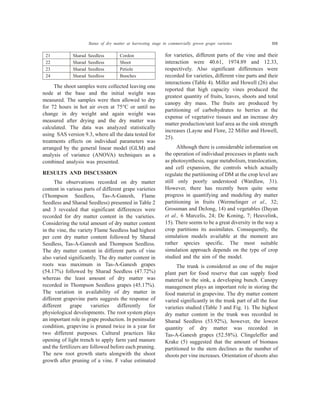
protection, etc. were given to the vine. The vines
were irrigated with drip irrigation system having 2
drippers/vine of 8-litre capacity. A light trench of 0.6
m × 1.2 m trench was opened at a depth of 10 cm
twice in a year to apply well rotten farmyard
manure and single super phosphate and the trench
were closed back. At the time of harvest, the vines
under each variety were uprooted and the samples
were brought to the laboratory. The observations
on fresh weight of different parts of vine (roots,
trunk, cordons, shoot, petiole and bunches) were
recorded. The samples were then kept in the oven
for about 3 days at 50°C to record the
observations on dry weight. The data on fresh
weight and dry weight of individual vine parts
were recorded and the dry matter was calculated.
The varieties used under the study were 1.
Thompson Seedless, 2. Tas-A-Ganesh, 3. Flame
Seedless, and 4. Sharad Seedless. These varieties
were studied for dry matter content in various
parts of the vines, such as : Root, Trunk, Cordon,
Shoot, Petiole, and Bunches. There were total 24
treatment combinations for dry matter estimation
(Table 1).
Table 1 : Treatment combination for present
study.
Treatment Treatment combination
Variety Vine part
1 Thompson Seedless Root
2 Thompson Seedless Trunk
3 Thompson Seedless Cordon
4 Thompson Seedless Shoot
5 Thompson Seedless Petiole
6 Thompson Seedless Bunches
7 Tas-A-Ganesh Root
8 Tas-A-Ganesh Trunk
9 Tas-A-Ganesh Cordon
10 Tas-A-Ganesh Shoot
11 Tas-A-Ganesh Petiole
12 Tas-A-Ganesh Bunches
13 Flame Seedless Root
14 Flame Seedless Trunk
15 Flame Seedless Cordon
16 Flame Seedless Shoot
17 Flame Seedless Petiole
18 Flame Seedless Bunches
19 Sharad Seedless Root
20 Sharad Seedless Trunk
21 Sharad Seedless Cordon
22 Sharad Seedless Shoot
23 Sharad Seedless Petiole
24 Sharad Seedless Bunches
The shoot samples were collected leaving one
node at the base and the initial weight was
measured. The samples were then allowed to dry
for 72 hours in hot air oven at 75°C or until no
change in dry weight and again weight was
measured after drying and the dry matter was
calculated. The data was analyzed statistically
using SAS version 9.3, where all the data tested for
treatments effects on individual parameters was
arranged by the general linear model (GLM) and
analysis of variance (ANOVA) techniques as a
combined analysis was presented.
RESULTS AND DISCUSSION
The observations recorded on dry matter
content in various parts of different grape varieties
(Thompson Seedless, Tas-A-Ganesh, Flame
Seedless and Sharad Seedless) presented in Table 2
and 3 revealed that significant differences were
recorded for dry matter content in the varieties.
Considering the total amount of dry matter content
in the vine, the variety Flame Seedless had highest
per cent dry matter content followed by Sharad
Seedless, Tas-A-Ganesh and Thompson Seedless.
The dry matter content in different parts of vine
also varied significantly. The dry matter content in
roots was maximum in Tas-A-Ganesh grapes
(54.17%) followed by Sharad Seedless (47.72%)
whereas the least amount of dry matter was
recorded in Thompson Seedless grapes (45.17%).
The variation in availability of dry matter in
different grapevine parts suggests the response of
different grape varieties differently for
physiological developments. The root system plays
an important role in grape production. In peninsular
condition, grapevine is pruned twice in a year for
two different purposes. Cultural practices like
opening of light trench to apply farm yard manure
and the fertilizers are followed before each pruning.
The new root growth starts alongwith the shoot
growth after pruning of a vine. F value estimated
for varieties, different parts of the vine and their
interaction were 40.61, 1974.89 and 12.33,
respectively. Also significant differences were
recorded for varieties, different vine parts and their
interactions (Table 4). Miller and Howell (26) also
reported that high capacity vines produced the
greatest quantity of fruits, leaves, shoots and total
canopy dry mass. The fruits are produced by
partitioning of carbohydrates to berries at the
expense of vegetative tissues and an increase dry
matter production/unit leaf area as the sink strength
increases (Layne and Flore, 22 Miller and Howell,
25).
Although there is considerable information on
the operation of individual processes in plants such
as photosynthesis, sugar metabolism, translocation,
and cell expansion, the controls which actually
regulate the partitioning of DM at the crop level are
still only poorly understood (Wardlaw, 31).
However, there has recently been quite some
progress in quantifying and modeling dry matter
partitioning in fruits (Wermelinger et al., 32;
Grossman and DeJong, 14) and vegetables (Dayan
et al., 6 Marcelis, 24; De Koning, 7; Heuvelink,
15). There seems to be a great diversity in the way a
crop partitions its assimilates. Consequently, the
simulation models available at the moment are
rather species specific. The most suitable
simulation approach depends on the type of crop
studied and the aim of the model.
The trunk is considered as one of the major
plant part for food reserve that can supply food
material to the sink, a developing bunch. Canopy
management plays an important role in storing the
food material in grapevine. The dry matter content
varied significantly in the trunk part of all the four
varieties studied (Table 3 and Fig. 1). The highest
dry matter content in the trunk was recorded in
Sharad Seedless (53.92%), however, the lowest
quantity of dry matter was recorded in
Tas-A-Ganesh grapes (52.58%). Clingeleffer and
Krake (5) suggested that the amount of biomass
partitioned to the stem declines as the number of
shoots per vine increases. Orientation of shoots also
Status of dry matter at harvesting stage in commercially grown grape varieties 111
112 Somkuwar et al.
decides the availability of biomass (Kliewer et. al.,
18).
Primary and secondary cordons combine
together supply food material to the developing
shoots that ultimately offer the fruit bud
differentiation. Basically, a cordon becomes the
primary source of food material to the canes.
Higher amount of dry matter was recorded in the
cordons of Tas-A-Ganesh vines (55.68%) as
compared to the lowest in cordons of Flame
Seedless (53.64%). In crop growth models, the dry
matter partitioning among plant organs is often
described as only a function of the developmental
stage of the crop (Penning de Vries and van Laar,
29).
The dry matter partitioning between root and
shoot has been described as a functional
equilibrium between root activity (water or nutrient
uptake) and shoot activity (photosynthesis); i.e. the
ratio of root-to-shoot weight is proportional to the
ratio of shoot-to-root specific activity (Brouwer, 2).
Although in this way the ratio between shoot and
root dry weight can often be estimated fairly well in
vegetative plants, the mechanism underlying this
equilibrium is quite complicated and not well
understood (Brouwer, 3; Lambers, 19; Farrar, 11).
Furthermore, this equilibrium can only be applied
to shoot:root ratios and not easily to ratios between
other plant organs, because of the absence of
functional interdependence. Dry matter partitioning
is the end result of a co-ordinated set of transport
and metabolic processes governing the flow of
assimilates from source organs via a transport path
to the sink organs. The activities of these processes
are not static, but may change both diurnally and
during plant development (Patrick, 28). Assimilates
are produced by photosynthesis in the source
organs (mainly leaves). The assimilates can be
stored or transported from the source to the
different sink organs via vascular connections
(phloem). The translocation rate of assimilates in
the phloem is often considered to be driven by
gradients in solute concentration or in water or
turgor potential between the source and the sink
ends of the phloem (Ho, 16; Wolswinkel, 33; Lang
Table 2: Dry matter content in different parts of grape varieties.
Vine parts Varieties
Thompson Seedless Tas-A-Ganesh Flame Seedless Sharad Seedless
Roots 45.17e
(5.00)* 54.17ab
(4.00) 46.27de
(5.00) 47.72de
(5.51)
Trunk 53.90ab
(5.00) 52.58bc
(5.00) 53.92ab
(3.00) 57.15a
(5.00)
Cordon 54.66ab
(4.00) 55.68ab
(5.00) 53.64ab
(3.00) 55.38ab
(4.00)
Shoot 40.17f
(3.00) 45.88e
(4.51) 39.30f
(4.00) 49.69cd
(5.00)
Petiole 20.25j
(3.00) 20.48ij
(2.00) 19.35j
(2.00) 21.54ijh
(1.00)
Bunches 24.42gh
(4.00) 24.98gh
(4.00) 23.97igh
(3.00) 25.73g
(4.00)
* The values in brackets are standard deviations.
Table 3: Mean dry matter content comparison in
different varieties and parts.
Mean dry matter
content among varieties
Mean dry matter
content among different
parts
39.76b
48.33b
42.29a
54.39a
39.41b
54.84a
42.87a
43.76c
20.41e
24.78d
LSD 0.78 0.96
Table 4: ANOVA for four grape varieties, parts
of vine and their combinations.
Mean
Square
F Value Pr > F
Variety 55.25 40.61 <.0001
Parts 2686.86 1974.89 <.0001
Variety*parts 16.77 12.33 <.0001
and Thorpe, 21; Patrick, 28; Lang and During, 20).
Utilization and compartmentation of the assimilates
in the sink are important to maintain these
gradients. The control of dry matter partitioning
may be at the source, at the sink and/or at the
transport path. However, several authors have
found indications that dry matter partitioning
among sink organs is primarily regulated by the
sinks themselves (Gifford and Evans, 13; Farrar,
10; Ho, 17; Verkleij and Challa, 30).
The considerable amount of dry matter varied
significantly in the shoots of different varieties.
Higher dry matter was recorded in the canes of
Sharad Seedless (49.69%) as compared to the
lowest in the canes of Flame Seedless variety
(39.30%). This indicates the availability of dry
matter for developing bunch varies with the
variety.
Petiole is considered as an indicator for
nutrient requirement of a vine. In grape vineyard,
generally after 45th
day during both pruning, the
petiole of 5th
leaf is harvested to study the nutrient
status of a vine. The dry matter content in the
petiole indicates the vine storage. Significant
differences were recorded for dry matter content in
the petiole. The petiole of Sharad Seedless had
higher dry matter (21.54%) than the lowest in
Flame Seedless (19.35%). Higher dry matter also
recorded in bunches of Sharad Seedless grapevine
(25.75%) and was followed by Tas-A-Ganesh
(24.98%), however, the lowest dry matter content
was recorded in Flame Seedless (23.97%).Edson
and Howell (9) considered the interaction of the
yield components: total yield, clusters per vine and
berries per vine and how these reproductive
components might influence the source: sink
relationship.
Status of dry matter at harvesting stage in commercially grown grape varieties 113
Figure 1 : Dry matter distribution among various combinations of grape varieties and parts of the vine.
114 Somkuwar et al.
REFERENCES
1. Anonymous (2012). Grapes. In: Indian
Horticulture Database 2011. Eds.: Kumar, B.;
Mistry, N. C.; Singh, B. and Gandhi, C.P.,
National Horticulture Board, Gurgaon, India. pp
68-75.
2. Brouwer R. (1963). Some aspects of the
equilibrium between overground and
underground plant parts. Mededelingen IBS,
213 : 31-39.
3. Brouwer R. (1983). Functional equilibrium:
sense or nonsense? Netherlands Agric. Sci., 31,
335-348.
4. Cheng, L. and Xia, G. (2004).Growth and
fruiting of young ‘Concord’ grapevine in
relation to reserve nitrogen and carbohydrate.J.
Amer. Soc. Hort. Sci., 129(5): 660-666.
5. Clingeleffer, P. R. and Krake, L. R.
(1992).Response of Cabernet Franc grapevines
to minimal pruning and virus infection. Am. J.
Enol. Vitic., 43: 31-37.
6. Dayan, E., Van Keulen, H., Jones, J.W., Zipori,
I., Shmuel, D., Challa, H., (1993).
Development, calibration and validation of a
greenhouse tomato growth model: II. Field
calibration and validation. Agric. Syst., 43 :
165–183.
7. De Koning, A.N.M.(1994). Development and
dry matter distribution in tomato: a quantitative
approach. Dissertation. Wageningen Agric.
Univ., Wageningen, 240 pp.
8. Dry, P.R., P.G. Iland, and R. Ristic. (2004) What
is Vine Balance? Proceedings from the 12th
Australian Wine Industry Technical
Conference. Melbourne, Victoria 68-74.
9. Edson, C. E. and Howell, G. S. (1993). A
comparison of vine architecture system at
different crop loads. Leaf photosynthesis, vine
yield and dry matter partitioning. Vitic. Enol.
Sci., 48: 90-95.
10. Farrar, J.F. (1988). Temperature and the
partitioning and translocation of carbon. In:
Long SP, Woodward FI, eds. Plants and
temperature. Symposium of the Society of
Experimental Biology 42. Cambridge:
Company of Biologists, 203-235.
11. Farrar, J.F. (1992). The whole plant: carbon
partitioning during development. In: Pollock Cl,
Farrar IF, Gordon Al, eds. Carbon partitioning
within and between organisms. Oxford: BIOS
Scientific Publishers, 163-179.
12. Gladstones, J. (1992). Viticulture and
Environment. Winetitles. Adelaide, South
Australia.
13. Gifford, R.M., and Evans, L.T. (1981).
Photosynthesis, carbon partitioning and yield.
Annual Rev. Plant Physiol., 32: 485-509.
14. Grossman, Y. L. and DeJong, T. M. (1994).
PEACH: a simulation model of reproductive
and vegetative growth in peach trees. Tree
Physiol., 14: 329-345.
15. Heuvelink, E. (1996). Dry matter partitioning in
tomato: validation of a dynamic simulation
model. Ann. Bot., 77: 71–80.
16. Ho, L.C. (1979). Regulation of assimilate
translocation between leaves and fruits in the
tomato. Ann. Bot. 43: 437-448.
17. Ho, L.C. (1988). Metabolism and
compartmentation of imported sugars in sink
organs in relation to sink strength. Ann. Revi.
Plant Physiol. Plant Molec. Biol. 39 : 355-378.
18. Kliewer, W. M., Bowen, P. and Benz, M. (1989).
Influence of shoot orientation on growth and
yield development in Cabernet Sauvignon.
Amer. J. Enol. Vitic., 49: 259-264.
19. Lambers, H. (1983). The functional
equilibrium, nibbling on the edges of a
paradigm. Netherlands Agric. Sci., 31: 305-311.
20. Lang, A. and During, H. (1991). Partitioning
control by water potential gradient: evidence for
compartmentation breakdown in grape berries.
J. Exper. Bot., 42: 1117-1122.
21. Lang, A. and Thorpe, M.R. (1986). Water
potential, translocation and assimilate
partitioning. J. Experi. Bot., 37: 495-503.
22. Layne, D. R. and Flore, J. A. (1995). End
product inhibition of photosynthesis in Prunus
cerasus L. in response to whole plant
source-sink manipulation. J. Amer. Soc. Hortic.
Sci., 120(4): 583-99.
23. Marcelis, L. F. M. (1996). Sink strength as a
determinant and dry matter partitioning in the
whole plant. P. Exp. Bot., 47: 1281-1291.
24. Marcelis, L.F.M., (1994). A simulation model
for dry matter partitioning in cucumber. Ann.
Bot., 74: 43–52.
25. Miller, D.P. and Howell, G.S. (1996). Influence
of shoot number and crop load on potted
Chambourcin grapevines. I.: Morphology and
dry matter partitioning. Amer. Enol. and Viticu.
47: 380-88.
26. Miller, D. P. and Howell, G.S. (1998). Influence
of vine capacity and crop load on canopy
development, morphology and dry matter
partitioning in Concord grapevines. Amer. J.
Enol. Viticul., 49(2): 183-90.
27. Palmer, J. W. (1986). Light interception and dry
matter production by apple orchards. In: Lakso,
A. N. Lenz, F. (Eds.). The regulation of
photosynthesis in fruit trees.Symp. NY State
Argic. Exp. Sta. Geneva, NY, USA, pp. 24-27.
28. Patrick, J.W. (1988). Assimilate partitioning in
relation to crop productivity. Hort. Sci., 23:
33-40.
29. Penning de Vries, F. W. T. and van Laar, H. H.
(1982). Simulation of growth processes and the
model BACROS. Simulation of Plant growth
and Crop Production. Pudoc, Wageningen, pp.
114-135.
30. Verkleij F.N and Challa, H. (1988). Diurnal
export and carbon economy in an expanding
source leaf of cucumber at contrasting source
and sink temperature. Physiologia Plantarum,
74: 284-93.
31. Wardlaw, I. F. (1990).The control of carbon
partitioning in plants. New Phytol., 116:
341-381.
32. Wermelinger, B., Baumgartner, J. and Gutierrez,
A.P. (1991). A demographic model of
assimilation and allocation of carbon and
nitrogen of grapevines. Ecol. Model, 53: 1-26.
33. Wolswinkel, P. (1985). Phloem unloading and
turgor-sensitive transport: factors involved in
sink control of assimilate partitioning.
Physiologia Plantarum, 65: 331-9.
Status of dry matter at harvesting stage in commercially grown grape varieties 115
PERFORMANCE OF PLANTING MATERIAL ON GROWTH AND YIELD
OF TURMERIC UNDER GUAVA ORCHARD
D.K. Singh*, S. Aswal, G. Aswani and M. K. Shivhare
Krishi Vigyan Kendra, Anta, Baran, Rajasthan-325202
Maharana Pratap University of Agriculture & Technology, Udaipur
*E-mail :dksingh.KVK@gmail.com
Abstract: The present investigation was conducted to find out the effect of different planting
materials i.e. mother rhizome, primary finger, secondary finger and tertiary fingers on plant
growth, yield and yield contributing characters along with economics of turmeric cv. Erode
Selection-1. All the intercropping systems showed significant enhancement in the height of the
tree varying from 1.25 to 3.40 over the sole tree. Among the different intercrops, better growth of
the guava tree was observed where mother rhizome turmeric was grown as intercrop followed by
primary, secondary and tertiary fingers treatments. Plant height and number of tillers per plant
were enhanced in mother rhizome of turmeric (96.68 cm and 4.03, respectively) under shade of
guava plant which results maximum survival percentage (98.45%) and its growth and
performance was better than other planting materials. The highest number of fingers per plant
(13.64), finger length (9.06), finger weight (36.14) and yield (389.47g/plant and 235.41q/ha) were
recorded when turmeric were grown under juvenile guava tree which was significantly higher
than all other planting materials. All the turmeric planting materials grown under shade of juvenile
guava orchards were found most desirable in terms of vegetative growth, yield, gross return, net
return and benefit cost ratio than sole crop.
Keywords: Turmeric, finger, intercrop, guava orchard, economics.
Turmeric (Curcurma longa L.) is one of the
important spice crops which can be grown
successfully under shade of orchards (Singh, 9). It
is used as a spice, food preservative, pickles,
colouring agent, and in cosmetic and medicine.
Turmeric possesses a thick underground stem
rhizome with short blunt fingers (Fig.1). The
primary round shape tuber at the base of the aerial
stem is known as mother rhizome, which bears
primary fingers, secondary finger and further gives
rise to tertiary fingers, thus as a whole dense clump
is formed (Rao et al., 8). Guava is a popular fruit
tree established in Haroti region of Rajasthan. In
established orchards monoculture is practiced by
the farmers due to shading effect on intercrop.
Some shade loving plants like turmeric (Curcurma
longa L.), ginger (Zingiber officinalis) and
colocassia (Colocasia esculenta) etc. can be grown
in successfully as an intercrop in orchards (Haque,
et. al., 5). Turmeric, being a sterile triploid, is
vegetative propagated by mother rhizome, primary
fingers, secondary finger and tertiary fingers. The
variable size of planting material significantly
influenced the seedling vigour, early growth, yield
and seed requirement of turmeric (Singh et. al., 10);
Dhatt et al., 4; Meenakshi et al., 6). Therefore,
present investigation was planned to standardize
the planting material for use as seed of turmeric
variety under the shade of guava orchards.
MATERIALS AND METHODS
The experiment was conducted at Krishi
Vigyan Kendra, Anta, in a randomized block design
with three replications for two consecutive years,
i.e. 2009 and 2010. Four types of planting materials
i.e. mother rhizome, primary finger, secondary
finger and tertiary fingers of turmeric cv. Erode
Selection-1were planted separately in open
condition as well as under the periphery of 8 years
guava variety L-49 on ridges spaced 45 cm apart
with plant to plant distance of 20 cm in last week of
June. The different planting materials i.e. mother
rhizome, primary finger, secondary finger and
tertiary fingers of turmeric having a size of
4.5-5.0cm, 6-7cm, 4.5-5.0 and below 3.0 cm,
HortFlora Research Spectrum, 2(2): 116-120 (April-June 2013) ISSN : 2250-2823
Received : 23.4.2013 Accepted : 20.5.2013
Performance of planting material on growth and yield of turmeric under guava orchard 117
respectively are depicted in Figure1. Recommended
cultural operations and plant protection measures
were followed to raise a healthy crop. The
observations were recorded for plant height (cm),
number of tillers/plant, number of leaves per plant,,
leaf length (cm), leaf width (cm), yield per plant(g),
yield per hectare (q), length, girth and weight of
mother rhizome, primary, secondary and tertiary
fingers. Ten plants selected randomly and
morphological and yield contributing characters
were recorded for statistical analysis. Economics was
done for each treatment on hectare basis taking into
account the market value of each crop to find out the
maximum rate of return to investment. For this
purpose, cost of ploughing, seed, fertilization,
irrigation, human labour were considered in
calculation.The data was analyzed as per statistical
procedure given by Panse and Sukhatme (7).
RESULTS AND DISCUSSION
Growth attributes like plant height, plant
periphery and trunk thickness of guava trees
increased significantly with tree age and their
percentage increase over the year 2008 was 7.76,
5.18 and 3.23%, respectively (Table 1). Irrespective
of the year, all the intercropping systems showed
significant enhancement in the height of the tree
varying from 1.25 to 3.40 over the sole tree. Among
the different intercrops, better growth of the guava
tree was observed where mother rhizome turmeric
was grown as intercrop followed by primary,
secondary and tertiary fingers treatments. Similar
trend was also recorded with respect to plant
periphery and trunk thickness. On the other hand, the
increase in plant periphery due to intercropping did
not show any significant difference. Better growth of
guava plants in association with intercrops may be
attributed to the improved aeration from frequent soil
working and to the better response of inputs applied
to the intercrops than in sole plantation, where the
inter spaces were left uncultivated and did not
receive any additional inputs like, manures,
fertilizers and irrigation etc. Maximum tree growth in
association with mother rhizome treatment was due
to coverage of orchards soil to better growth of
turmeric plant than other treatments. As black
cotton soils are having hard pan below soil
surface, low in nitrogen, even a minimal
application of inputs and cultural operations helps
in better growth and development of plants.
Positive influence of intercrops on growth and
vigour of trees has been also reported in guava
and mango (Mangifera indica L.) in past studies
in other places (Awasti et al., 1 and Awasti and
Saroj, 2).
The results of the experiment were indicated
that vegetative and vegetative contributing
characters of different planting materials
significantly influence the growth of plants (Table
2). The plant height, number of tillers per plant
and number of leaves per plants, number of roots,
length of roots and survival percentage were
significantly influenced by different type of
planting material of turmeric but leaf size were
not found significant (Fig.2). Intercropping of
different type of turmeric under shade of guava
orchards performed better than sole crop. Plant
height and number of tillers per plant of different
type of planting material were enhanced in
intercrop and highest plant height and number of
tillers per plant was recorded in mother rhizome
of turmeric (96.68) and (4.03) under shade of
guava plant. Plant height of ginger was gradually
increased in intercrop of guava than sole cropping
might be due partial shading. Similar increase of
plant height of ginger in intercropping of mango
was reported by Chaudhary et al., (3). Number of
leaves per plant was highest in mother rhizome of
turmeric in intercrop (16.16) as well as in sole
crop (14.34) in comparison of primary finger,
secondary finger and tertiary fingers respectively
of turmeric cv. Erode Selection-1. The highest
number of roots (13.11) and length of root
(10.45cm) was obtained in mother turmeric
grown in guava intercrop. Leaf size was largest in
turmeric in both condition i.e. in sole and
intercrop of mother rhizome. The leaves of
tertiary fingers were smallest (29.24cm ´ 7.14cm)
and its overall growth was found poor in sole as
well as in intercropping system. Haque et al. (5)
118 Singh et al.
also reported that the vegetative growths of ginger,
turmeric and mukhi kachu were performing well
under the juvenile orchards of mango. The survival
percentage of plants generated from mother
rhizomes were maximum (98.45%) in
intercropping of guava than sole crop (98.45%) and
its growth and performance was better than other
planting materials. Better growth of mother
rhizome of turmeric was due to the presence of
maximum food materials stored at initial stage.
The yield and yield contributing performance
of different planting materials of turmeric under
shade of guava as well as sole crop was presented in
Table 3 clearly indicated that the yield of all the
planting materials were performing better in shade
of guava tree. The yield of turmeric in open
conditions was reduced in comparison of intercrop
due to the less number of fingers per plant, weight
of finger, finger size and poor growth and
development. Turmeric leaves becomes white in
open condition and is very sensitive to sun light.
Similar to turmeric the ginger plants produced
moderate plant height and higher yield under partial
shade than open sunshine (Singh, 9). The highest
number of fingers per plant (13.64), finger length
(9.06), finger weight (36.14) and yield
(389.47g/plant and 235.41q/ha) were recorded
when turmeric were grown under juvenile guava
tree which was significantly higher than all other
planting materials.
The economic performance of different
planting material of turmeric in sole and under
shade of guava orchards has been presented in
Table 3. Cultivation of turmeric in juvenile guava
orchards was more beneficial than other crops.
Yield of turmeric was reduced in second year in the
guava orchard in all the planting material treatment
due to the emergence of maximum shoots and
branches of guava orchards. The highest cost
benefit ratio (5.97) was obtained from mother
turmeric rhizome crop grown under guava plant
followed by primary finger (4.86), secondary finger
(4.77) and tertiary finger (4.56), respectively. Total
variable cost of all the planting material was similar
to each other due the application of same
intercultural operations. The wholesale prices of
turmeric and guava fruit were Rs. 15/kg and Rs.
7/kg, respectively in local market.
The present study concluded that planting
materials exhibited significant differences on plant
growth, rhizome size, yield and net return of
turmeric. Mother rhizome and primary fingers are
significantly better planting material than
secondary and tertiary fingers in terms of plant
growth, yield and rhizome size. Therefore, mother
rhizome or primary fingers can be used as planting
material for raising turmeric crop. Since, primary
fingers possesses better storage, more tolerance to
wet soil and lower seed requirement (Rao et al., 8)
therefore, use of primary fingers as seed material
will be immense benefit to the growers without
Performance of planting material on growth and yield of turmeric under guava orchard 119
Table 1: Response of different turmeric planting materials on vegetative growth of guava cv. L-49.
Treatment Plant height
(m)
Mean
Plant Periphery
(m)
Mean
Trunk thickness
(cm)
Mean
2009 2010 2009 2010 2009 2010
Guava (sole) 7.34 7.59 7.46 13.81 13.97 13.89 45.43 45.69 45.56
Guava + Mother rhizome 7.99 8.09 8.04 14.52 14.71 14.61 46.78 46.91 46.84
Guava + Primary finger 7.92 7.98 7.95 14.17 14.23 14.20 46.72 46.82 46.77
Guava + Secondary finger 7.84 7.91 7.87 13.94 13.99 13.96 46.61 46.73 46.67
Guava + Tertiary finger 7.76 7.81 7.78 13.87 13.91 13.89 46.59 46.58 46.58
Mean 7.77 7.876 7.82 14.06 14.16 14.11 46.43 46.55 46.49
CD (P = 0.05) 0.63 0.74 0.59 NS 0.94 0.93 1.01 1.06 1.03
Table 2: Effect of planting materials on growth characteristics of turmeric planted in sole and under shade
of guava plant (pooled over year).
Planting
material
(Rhizome)
Plant
height
(cm)
No.of
tiller/
plant
No. of
leaves/
plant
Leaves size (cm) Root parameter Survival
(%)length width No of root/
plant
Length
Mother (sole) 91.54 3.72 14.34 42.42 10.43 11.43 9.31 98.45
Primary (sole) 87.18 3.01 14.31 41.78 10.43 9.87 8.93 94.78
Secondary (sole) 68.12 2.14 13.11 37.33 9.23 7.98 4.21 94.11
Tertiary (sole) 42.73 2.01 8.70 29.24 7.14 4.21 2.4 89.12
Mother + JGT 96.68 4.03 16.16 51.36 12.11 13.11 10.45 98.45
Primary + JGT 92.78 3.68 16.63 51.35 12.10 10.24 9.45 95.47
Secondary + JGT 72.62 2.72 14.32 44.57 9.96 7.89 5.81 95.56
Tertiary +JGT 45.84 2.17 9.74 31.43 8.18 5.76 2.68 91.10
CD (P = 0.05) 7.84 2.14 7.01 NS NS 8.25 7.98 6.74
Table 3: Effect of planting materials on yield and yield attributes of turmeric planted in sole and under
shade of guava plant (pooled over year).
Planting material
(Rhizome)
No.of
fingers/plant
Length of
finger (cm)
Weight of
fingers (g)
Yield/plant (g) Yield/ha (q)
Mother (sole) 12.45 8.96 34.56 384.12 234.13
Primary (sole) 10.13 8.41 32.15 319.13 232.17
Secondary (sole) 8.14 7.83 28.34 289.73 228.78
Tertiary (sole) 4.79 4.21 21.04 192.24 221.22
Mother + JGT 13.64 9.06 36.14 389.47 235.41
Primary + JGT 11.25 8.82 33.24 326.35 232.89
Secondary + JGT 9.16 8.13 29.13 296.93 229.16
Tertiary +JGT 5.14 4.57 22.41 197.14 221.94
CD (P = 0.05) 6.25 5.62 7.34 9.47 3.96
120 Singh et al.
reduction in yield. The result showed that all the
turmeric planting materials grown under shade of
juvenile guava orchards were found most desirable
in terms of vegetative growth, yield, gross return,
net return and benefit cost ratio than sole crop. This
gave a positive indication of the prospects of using
the space under the juvenile guava tree as
commercial proposition. So, our farmers should be
motivated to grow turmeric intercropped with guava
at juvenile age level in Haroti region of Rajasthan.
REFERENCES
1. Awasti, O.P., Singh, I.S. and More, T.A. (2009).
Performance of intercrops during establishment
phase of guava orchards. Indian J.Agric Sci.,
79(8): 587-591.
2. Awasti, O.P. and Saroj, P.L.(2004). Economic
analysis of mango multistrata intercropping.
Trop. Sci., 44(1):43-47.
3. Chaudhary, A.K., Firoz, Z.A. and Haque,
A.F.M.E.(1998). Performance of ginger-
legumes intercropping at different spacings of
ginger in hilly region. Bangladesh J. Agril. Res.,
23(1): 135-142.
4. Dhatt. A.S., Sidhu, A.S. and Garg, N. (2008).
Effect of planting material on plqant growth,
yield and rhizome size of turmeric. Indian J.
Hort., 65(2):193-195.
5. Haque, M.E., Roy, A.K. and Sikdar, B. (2004).
Performance of ginger, turmeric and mukhi
kachu under shade of mango orchard. The Hort.
J., 17(2): 101-107.
6. Meenakshi, N.., Sulikeri, G.S. and Hegde, R.V.
(2001). Effect of planting material and P& K
nutrition on yield and quality of turmeric.
Karnataka J. Agric. Sci., 14:197-98.
7. Panse, V.G. and Sukhatme, P.V. (1985).
Statistical Methods for Agricultural Workers.
Indian Council of Agriculture Research, New
Delhi.
8. Rao, A.M., Jagdeeshwar, R. and Sivaraman, K.
(2007). Turmeric. In: Advances in Spices
Research: History and Achievements of Spices
Research in India since Independence (Eds.,
Ravindran, P.N., Babu, K.N. Shiva, K.N. and
Kallupurackal, J.A.). Agrobios Publishers,
Jodhpur. Pp. 433-91.
9. Singh, D.K. (2001). Performance of turmeric
under guava orchards and its effects on fruit
quality. National Symp. on Farming System
Research in New Millennium. held during
15-17 Oct. 2001 at P.D.F.S.R., Modipuram,
Meerut, pp.331.
10. Singh, J., Malik, Y.S., Nehra, B.K. and Pratap,
P.S. (2000). Effect of size of seed rhizomes and
plant spacing on growth and yield of turmeric
(Curcuma Longa L.). Haryana J. Hortic. Sci.,
29: 258-60.
Table 4: Economic performances of sole and intercrop of different planting material of turmeric in sole and
under shade of guava orchards.
Planting material
(Rhizome)
Yield (q/ha) Mean
yield
(q /ha)
Yield of
guava
(q/ha)
Total
Income
(Rs)
TVC
(Rs)
Net
Income
(Rs)
BCR
2009 2010
Mother (sole) 232.58 235.68 234.13 - 289000 60000 229000 4.81
Primary (sole) 231.33 233.01 232.17 - 286000 60000 226000 4.76
Secondary (sole) 227.47 230.09 228.78 - 280000 60000 220000 4.66
Tertiary (sole) 221.01 221.43 221.22 - 268000 60000 208000 4.46
Mother + JGT 233.81 237.41 235.41 89.78 358500 60000 298500 5.97
Primary + JGT 231.94 233.84 232.89 89.58 292000 60000 232000 4.86
Secondary + JGT 228.47 229.85 229.16 89.78 286500 60000 226500 4.77
Tertiary +JGT 221.41 222.47 221.94 89.80 274000 60000 214000 4.56
Whole sale price of turmeric (Rs.15/kg) and guava (Rs.7/kg) in market.
OPTIMIZATION OF PLANTING DENSITY IN CARNATION
S. Karthikeyan* and M. Jawaharlal
Department of Floriculture & Landscaping, Horticultural College & Research Institute,
Tamil Nadu Agricultural University, Coimbatore-641 003, Tamil Nadu, India.
*E-mail: hortikarthik@gmail.com
ABSTRACT: The experiment on optimization of plant density inside a greenhouse for growing
carnation is a very important area for present day production and productivity. The results of the
study on optimization of planting density in carnation led to the inference that planting density in
treatment T4 (check) (15 X 15 cm with 36 plants/m2
) proved better in terms of flower quality
parameters namely early flower bud appearance, bud opening, longest duration of flowering,
chlorophyll content and more number of flowers per plant due to congenial microclimate between
the plants for the plant growth and flowering. Though the percentage of ‘A’ grade quality flowers
were higher in treatment T3 (20 X 20 cm with 20 plants per m2
), the number of plants and flower
yield per sq. m. in this treatment was very less. Hence, treatment T4 (check) with 15 X 15 cm
spacing may convincingly be followed for obtaining more number of flowers per plant and per
unit area and value in terms of economic success of the crop.
Keywords : Carnation, spacing, low volume, high value, green house, flowering duration.
Carnation (Dianthus caryophyllus L.) is one
of the most important cut flower crops holding a
major share in the cut flower market. Optimum
plant spacing for the greenhouse grown crops is an
important factor which needs to be optimized
owing to the increasing cost of planting materials
and inputs. The effective utilization of available
space inside the greenhouse will produce better
outcome compared to open field crops. Carnation
growers adopt different spacing levels depending
on availability of space inside the greenhouse and
their convenience. The carnation grower should
have a systematic idea to take up planting in a right
time to harvest maximum number of quality
flowers for the supply during the peak demanding
period. This requires a proper decision regarding
planting time and plant density.
Optimum spacing enables proper utilization of
solar energy, avoids competition in the uptake of
nutrients caused by the collision of root system,
facilitates proper intercultural operations etc. So it
is imperative to maintain the optimum plant density
to achieve more yield and better quality. This study
was taken up to optimize the planting density inside
the greenhouse for carnation with the objective of
increasing the yield and quality of flowers.
MATERIALS AND METHODS
The present study was carried out at M/s.
Elkhill Agrotech, Ooty, a leading carnation unit and
one of the consortium partners in the National
Agricultural Innovation Project with the
Department of Floriculture & Landscaping, Tamil
Nadu Agricultural University, Coimbatore. The
experiment was carried out inside green house in a
randomized block design with four treatments viz.
T1: 15 ´ 12.5 cm (42 plants /m2
), T2: 20 ´ 15 cm (30
plants /m2
), T3: 20 ´ 20 cm (20 plants/m2
) and T4:
15 ´ 15 cm* (36 plants/m2
) as check* which were
grown in five replications. Aspacing of 15 ´ 15 cm
is adopted by the growers for commercial
cultivation. In this study, this spacing was
maintained as the check and was compared with
three other spacing treatments as detailed above.
The observations on growth parameters viz., plant
height (cm), number of leaves per plant, number of
laterals per plant and inter nodal length (cm) were
recorded at monthly intervals for three flushes of
the crop. Yield parameters viz., days taken for
flower bud appearance and flower bud opening,
duration of flowering (days), number of flowers per
plant, flower yield/m2
and quality parameters
namely length of flower stalk (cm), bud length
(cm), bud circumference (cm), number of quality
HortFlora Research Spectrum, 2(2): 121-125 (April-June 2013) ISSN : 2250-2823
Received : 18.4.2013 Accepted : 05.5.2013
122 Karthikeyan and Jawaharlal
grade flowers/m2
, calyx splitting (%), vase life (days)
and physiological parameters viz., leaf area (cm2
),
and chlorophyll content (mg/g) were observed for the
three flushes of flowering.
RESULTS AND DISCUSSION
The present experiment was taken up to have a
scientific database pertaining to impacts of the
different levels of planting density adopted in
carnation cultivation and to optimize the most ideal
planting density.
Growth Parameters:
Growth and development of plants were highly
influenced by the imposed levels of planting density.
The quantitative characters viz., plant height, number
of leaves and laterals per plant and internodal length
showed marked differences among the treatments.
The planting density of treatment T3 (20 ´ 20 cm
with 20 plants per m2
) produced significantly taller
plants with 77.30 cm, 75.80 cm and 68.20 cm and
more number of leaves with 210.50, 212.12, 204.20
and maximum internodal length of 8.40 cm, 6.80 cm
6.70 cm during the first, second and third flush of
flowering in comparison with higher density of
plants in treatment T1 (15 ´ 12.5 cm having 42 plants
per m2
). The number of laterals per plant was higher
in treatment T4 (check) (15 ´ 15 cm) having 36
plants/m2
with 6.20, 7.80 and 6.00. The number of
plants per m2
in treatment T1 (15 ´ 12.5 cm) was 2.1
times more than that the treatment T3 (20 X 20 cm)
which might have ultimately resulted in lesser
growth of plants due to higher plant-to- plant
competition. The increase in growth characters in T3
(20 ´ 20 cm with 20 plants per m2
) might be due to
the availability of more space facilitating improved
aeration, and better penetration of light which in turn
might have increased photosynthetic activity and
translocation of assimilates to growing parts
resulting in better availability of nutrients. This is in
confirmation with the findings of Schroder (11) in
carnation, Mukhopadhyay and Yadav (6) in
gladiolus, Belgaonkar et al. (3) in annual
chrysanthemum, Kool (5) in rose, and Ram et al.,
(10) and Singh and Sangama (16) in China aster.
Flower Yield and Quality Parameters
The optimum plant spacing in treatment T4
(check) (15 ´ 15 cm) might have added in
shortening the vegetative phase, leading to
earliness of flower bud appearance (145.33,
166.33, 168.67 days during I, II and III rd
flush of
flowering, respectively) and flower bud opening
(189.33, 198.00, 214.67 days) and longest of the
duration of flowering (83.00, 91.33, 112.33 days)
in contrast to the treatment T1 (15 ´ 12.5 cm).
This can be explained in terms of fact that
flowering is significantly influenced by the
amount of light penetrating into the canopy of the
plant, and the level of aeration. Further, improved
aeration and light penetration also reduces
incidence of pests and diseases. These
observations are in concurrence with the findings
reported by Singatkar et al. (14) in gaillardia and
Bhattacharya et al. (4) in rose. The number of
quality flowers per plant was the highest in
treatment T4 (15 ´ 15 cm) with 6.20, 7.80 and
6.00 which is attributable to the optimum
moisture, nutrients and sunlight available for the
growth and development of plants in this
treatment.
The production of flowers per m2
was
significantly more in treatment T1 (15 ´ 12.5 cm)
having 42 plants per m2
with 243.60, 277.20 and
216.30 and it was drastically low in T3 (20 ´ 20
cm) with 120.00, 150.00 and 117.60 flowers per
m2
during first, second and third flush of
flowering, respectively (Fig.1). The high density
of plants in T1 (15 ´ 12.5 cm) produces a two fold
increase in flower yield during the three flushes of
flowering. However, in terms of quality of
flowers, T3 proved superior to all other
treatments. The treatment T3 produced 94.50 per
cent, 4.00 per cent and 2.00 per cent of ‘A’, ‘B’
and ‘C’ grade flowers, respectively whereas T1
(15 ´ 12.5 cm) produced with 89.30 per cent,
5.80 per cent and 4.90 per cent of ‘A’, ‘B’ and ‘C’
grade flowers, respectively. Thus it was evident
that though treatment T1 produced more number
of flowers per m2
, the proportion of ‘A’ grade
flowers was less and it might be due to high
competition between plants for space, light, water
and nutrients. This observation is in confirmation
with the findings of Oydvin (7) in carnation.
Improvement in quality of floral characters
viz., bud length (4.40, 4.20 and 4.00 cm) and bud
circumference (7.90, 7.50 and 6.30 cm) in T4
(check) (15 ´ 15 cm) might be due to the optimum
plant spacing which in turn might have resulted in
better utilization of the available resources
facilitating a favourable source - sink relationship.
Such observations are in accordance with the
results of Pessala (9) in rose and Singh and Sangma
(16) in China aster.
The length of the flower stalk was maximum
in treatment T3 (20 ´ 20 cm) with 73.80 66.10 and
62.00 cm which might be due to the fact that the
plant height and internodal length was maximum in
this treatment. This is in corroboration with the
findings of Pandey and Mishra (8) in gladiolus.
The girth of flower stalk (1.60, 1.52 and 1.44
cm) was the highest in treatment T3 (20 ´ 20 cm)
and this is attributable to the competition-free
environment. Lesser girth noticed in treatment T1
(15 ´ 12.5 cm) 1.12, 1.05 and 0.88 cm might be due
to higher density of plants. Normally the flower
stalk becomes lean and lanky due to more number
of plants in an unit area. This is in confirmation
with the findings of Singh and Chetan (15) in
gladiolus.
Higher densities of planting per m2
were
associated with the incidence of calyx splitting. The
occurrence was more in treatment T1 (15 ´ 12.5 cm)
and low in T4 (check) (15 ´ 15 cm) during the three
flowering flushes. This might be due to the
imbalance and competition for nutrients among the
plants in the unit area. A similar trend in calyx split
incidence as observed by Seager (12) and Arora
and John (1) in carnation.
Observation on the keeping quality of flowers
after harvest showed that the treatment T3 (20 ´ 20
cm) with 7.67, 7.00, 6.27 days was superior and
treatment T1 (15 ´ 12.5 cm) had lowest vase life of
5.00, 6.00 and 5.00 days during the first, second
and third flush of flowering, respectively. Similar
results have been reported earlier by Arora and
John (1) in carnation.
Physiological Parameters
Leaf area of the plant was found maximum in
treatment T3 (20 ´ 20 cm) with 18.60, 18.30 and
17.50 cm2
(Fig.2) and it is due to the fact that the
plants enjoyed more spacing and hence grew
vigorously without much competition for nutrients.
These results are in accordance with the findings of
Shiraj and Maurya (13) in gladiolus.
The chlorophyll contents are mainly
influenced by the amount of light intensities
received by the plants. The treatment T4 (check) (15
´ 15 cm) with 0.75, 0.35 and 1.18 mg/g during first
flush and 0.70, 0.30 and 1.05 mg/g during second
flush and 0.68, 0.28 and 0.96 mg/g during third
flush of flowering, respectively which has optimum
Optimization of planting density in carnation 123
124 Karthikeyan and Jawaharlal
.noitidnocesuohneergrednunoitanracfo)mc(thgiehtnalpnoytisnedgnitnalpfotceffE:1elbaT
taerT
tnem
s
gnitnalpretfasyaD
IhsulFIIhsulFIIIhsulF
030609021051081
tA
vrah
tse
181(
–
)042
072003033063093024
tA
vrah
tse
124(
-
)084
015045075006036066
tA
vrah
tse
166(
027–
)
T100.800.4169.0203.0327.1542.6607.9622.2205.0325.3461.2560.6564.2600.9600.2265.5304.5474.6504.9503.2609.46
T286.868.5123.2263.1384.3527.6605.1700.2200.3302.5482.5584.8506.4605.1751.6206.7300.6405.6501.8502.3605.56
T347.0124.8128.3227.2384.9521.4703.7721.5215.4325.6446.9567.4640.9608.5704.9205.0469.3505.7505.4603.7602.86
T4
)kcehc(
69.917.6117.1208.0320.5560.9601.4788.2243.3362.5467.8546.0684.7601.3700.6200.8323.7402.4506.0608.4604.76
naeM53.952.6102.2203.1339.4540.9651.3760.3248.2331.5464.6599.9509.5606.2798.5229.7371.8471.6556.0604.4605.66
.D.C
=P(
)50.0
331.0991.0821.0311.0653.0583.0253.0251.0381.0231.0663.0493.0313.0123.0423.0812.0624.0051.0792.0532.0561.0
.noitidnocesuohneergrednunoitanracfo)mc(ecnerefmucricdnahtgneldubrewolfnoytisnedgnitnalpfotceffE:2elbaT
stnemtaerTIhsulFIIhsulFIIIhsulF
dubrewolF
)mc(htgnel
dubrewolF
)mc(ecnerefmucric
htgneldubrewolF
)mc(
dubrewolF
)mc(ecnerefmucric
htgneldubrewolF
)mc(
dubrewolF
)mc(ecnerefmucric
T100.305.609.208.559.207.5
T206.306.706.306.658.300.6
T308.357.700.402.758.301.6
T4)kcehc(04.409.702.405.700.403.6
naeM07.344.786.387.666.330.6
)50.0=P(.D.C060.0860.0060.0970.0350.0420.0
spacing level utilized the received light intensity
effectively for the photosynthesis and further
enhanced the healthy growth of plants, early
flowering, better quality stalks and yield. This is in
confirmation with the report of Attridge (2)
according to which such an adaptive mechanism is
commonly observed in plants to maintain the
photosynthetic efficiency.
ACKNOWLEDGEMENT
The authors acknowledge the National
Agricultural Innovation Project component - II of
the Indian Council of Agricultural Research, New
Delhi for the financial assistance provided to take
up the research trial.
REFERENCES
1. Arora, J. S. and John. A. Q. (1978). Effect of
different levels of nitrogen, their time of
application and plant density on the growth and
flowering of carnation cv. Marguerite Scarlet.
Indian J. Hort., 35 (3): 254 -260.
2. Attridge, T.H. (1990). Light and Plant
Responses. Edward Arnold, A division of
Hodde and Stoughtton Ltd., p. 82-101.
3. Belgaonkar, D.V., Bist M.A. and Wakde.
M.B.(1996). Effect of levels of nitrogen and
phosphorus with different spacing on growth
and yield of annual chrysanthemum. J. Soils and
Crops, 6 (2): 154 -158.
4. Bhattacharya, J., Sable A.S. and Gaikwad.
A.M. (2001). Effect of planting density on
growth and yield of rose cv. Gladiator. J. Orna.
Hort., 4 (2): 126 - 127.
5. Kool, M.T.N, (1997). Importance of plant
architecture and plant density for rose crop
performance. J. Hort. Sci., 72 (2): 195-203.
6. Mukhopadhyay, T.P and Yadav. L. P. (1984).
Effect of corm size and spacing on growth,
flowering and crop production in gladiolus.
Haryana J. Hort. Sci., 13 (3-4): 95 – 98.
7. Oydvin, J. (1966). Studies on the different
spacing for carnation. Gartnerurbet, 56 (3): 23
– 25.
8. Pandey and Mishra. A. (2005). Effect of corm
size and spacing on growth, flowering and corm
production in gladiolus cv. White Prosperity.
Prog. Hort., 37 (20): 353 -357.
9. Pessala, T. (1977). The effect of plant material
and plant density on flowering in the Baccara
rose variety. Ann. Agric. Fenniae, 16 (1): 72 -79.
10. Ram, M., Pal, V., Singh, M.K. and Kumar, M.
(2012). Response of different spacing and
salicylic acid levels growth and flowering of
gladiolus (Gladiolus grandiflora L.) HortFlora
Res. Spectrum, 1 (3) : 270-273.
11. Schroder, U. (1974). A trial to determine the
optimal spacing for miniature carnations.
Erwerbsgartner, 28 (37): 1394-95.
12. Seager, J. C. R. (1969). Effect of spacing and
stopping of flower production in the perpetual
flowering carnation. Irish J. Agri. Res., 8 (2):
261 - 270
13. Shiraj, A. and Mayura, K. R. (2005). Effect of
spacing and corm size on growth, flowering and
corm production in gladiolus. Indian J. Hort.,
62 (1): 94 - 96.
14. Singatkar, S.S., Swant, R.B., Ranpise S. A. and
Wavhal. K. N.(1995). Effects of different levels
of N, P and K on growth and flower production
of gaillardia. J. Maharashtra Agric. Univ., 20
(3): 392 - 394.
15. Singh, A.K. and Chetan, S. 2004. Effect of
spacing and zinc on growth and lowering in
gladiolus cv. Sylvia. Prog. Hort., 36 (1): 94 -98.
16. Singh, K.P. and Sangama. (2001). Response of
China aster to spacing. J. Orna. Hort., 4 (1):
61-62.
Optimization of planting density in carnation 125
EVALUATION OF THE INCIDENCE OF POWDERY MILDEW
(Sphaerotheca fuliginea) ON BOTTLE GOURD
Sashiyangba* and L.Daiho
Department of Plant Pathology, School of Agricultural Sciences and Rural Development,
Medziphema-797106, Nagaland, India
*E-mail: Sashiyangba@yahoo.co.in
ABSTRACT: Powdery mildew caused by Sphaerotheca fuliginea on local cultivars of bottle
gourd was found greatly influenced by the natural epiphytotic condition both from the farmers’
fields and experimental plot at Research and Demonstration Farm Ruzaphema, Nagaland
(India). The maximum intensity ranges from 51.45 – 86.90 per cent in local cultivar at 95DAP
during the peak month of June 2005 with average temperature (29.25 ºC), dew point (27.4 ºC),
relative humidity (84.7 %) and rainfall (3.78 mm), respectively. Disease intensity and per cent
plant infection were non significantly correlated with the relative humidity, rainfall, temperature
and humidity at (P =0.05).However, per cent of infection and disease intensity was found
significant and positively correlated with dew point in both the fields. Due to genetically adopted
factors with the host cultivars significant difference on the yield records from both the fields
ranged between 20.18 - 24.55 t/ha under Nagaland condition and can be used for future
breeding programme for developing resistant variety.
Keywords: Bottle gourd, Sphaerotheca fuliginea, screening, correlation.
Powdery mildew is a serious disease caused
by a fungus Sphaerotheca fuliginea. Which occurs
more commonly in almost all the cucurbits growing
areas of the world (Ballantyne, 1).Bottle gourd
(Lagenaria siceraria (Molina) standl.), commonly
known as “Lao”, is an important vegetable grown
almost in all parts of Nagaland. Fruits are
traditionally used in general tonic, diuretic,
aphrodisiac antidote to certain poisons and
bronchial disorders-especially syrup prepared from
the tender fruits (Sivarajan and Balchandran, 12;
Nadkarni, 8; Duke, 2). This disease expressed its
symptoms initially a powdery gray or white coating
appeared superficially on the plant parts and spread
rapidly over a wide area causing premature killing
of the foliage and subsequently results in poor
quality of fruits and unfit for processing. Under
favourable environmental conditions the powdery
mildew disease cause significant destruction and
ultimately yield losses exceeding 30 per cent in the
crop (Tisserat, 11). They are generally favoured by
relatively dry atmospheric conditions, moderate
temperature, reduced light and luxurious plant
growth (Yarwood, 13). The combination of climatic
factors i.e. air temperature, humidity, sunlight,
wind and rain fall play a vital role for
dissemination and germination of conidia, mycelia
growth and sporulation. In view of the wide
prevalence and continuous occurrence of this
disease, a study was taken up to examine the
naturally occurring virulent strains of powdery
mildew with the influence of weather parameter
and its effect on yield under Nagaland condition.
MATERIALS AND METHODS
Screening for disease resistance of seven local
bottle gourd cultivars (Table 1) was done both in
the farmers’ field and experimental plot during the
year 2005 under natural epiphytic condition of
Nagaland. A survey was conducted in farmers’field
by random sampling, mostly in the main production
areas of four districts viz. Mon, Mokokchung,
Kohima and Dimapur in the state of Nagaland
(India) and the experimental plot at Research and
Demonstration Farm Ruzaphema, Nagaland
situated at 25º44’N and 93º48’E with an average
altitude of 309 m above the mean sea level. Seeds
were planted in pit at 2 m apart at a distance of 2.5
m in the first week of March during 2005 with plot
size of 6m x 3m (18 sqm.) following randomized
complete block design (RCBD) replicated thrice
under rainfed condition of Nagaland.
Recommended package of practices of bottle gourd
was adopted for maintaining growth and vigour of
the plant. Influence of weather parameters (relative
HortFlora Research Spectrum, 2(2): 126-129 (April-June 2013) ISSN : 2250-2823
Received : 27.4.2013 Accepted : 15.5.2013
Evaluation of the incidence of powdery mildew (Sphaerotheca fuliginea) on bottle gourd 127
humidity, temperature, dew point and rainfall) of the
development and spread of powdery mildew disease
was recorded at 45, 70, 95 and 120 days after
planting. Observations were made on the basis of 10
randomly selected leaves per plant from each cultivar
using 0 -5 visual disease rating scale according to
Lebeda (6), where 0 = No symptom –Immune (I); 1 =
1-20% infection – Resistant (R); 2 = 21-40 % area
infected – moderately resistant (MR); 3 = 41-60%
area infected – moderately susceptible (MS); 4 =
61-80% area infected – susceptible (S); 5 = > 80 %
area infected – Highly susceptible (HS). Marketable
fresh fruit yield was calculated on plot basis and
converted into tone per hectare.
All the data were statistically analyzed by
standard analysis of variance technique for
randomized complete block design (RCBD) as
suggested by Gomez and Gomez (3). Wherever
treatment differences were found significant based
on results of F-test, critical differences were
calculated at 5% level of probability.
RESULTS AND DISCUSSION
Disease development on host cultivars
Incidence of powdery mildew under natural
epiphytotic condition (Table 1) and weather
parameters (Fig.1) revealed that the initial symptom
appeared at 45 days after planting during the month
of April and gradually raises along with the growth
stage of the crop till the peak of period 95 DAP (in
the month of June) with maximum disease intensity
recorded in all the cultivars viz. Mesü (i) with 86.90
per cent followed by Mepfü (k) 82.26 per cent,
Maikok (m) 81.48 per cent, Aüm (k) 61.39 per cent,
Aüm (m) 60.78 per cent, Lao (d) 60.21 per cent and
Mepfu (r) 51.45 per cent with the corresponding
figures of an average mean temperature of 29.25 ºC,
average dew point (27.4 ºC ) relative humidity (84.7
%) and rainfall (3.78 mm), respectively. Thereafter,
the disease intensity declined slowly towards the
maturity of the crop 120 DAP (in the month of July)
with minimum disease intensity recorded in cultivar
Mepfü (r) 51.44 per cent followed by Lao (d) 58.04
per cent , Aüm (k) 58.46 per cent , Aüm (m) 59.23 per
cent, Maikok (m) 81.83 per cent , Mepfü (k) 81.86
per cent with the corresponding figures of average
temperature (28.7 ºC), average dew point (27.1 ºC )
relative humidity 86.4 (%) and rainfall (5.46 mm),
respectively Thus, it is clear from the present
investigation that the pathogen was greatly
influenced by the favourable environmental
condition in all the stage of the different host
cultivars.
The results obtained with respect to
powdery mildew incidence and intensity is in
agreement with the findings of Schnathorst (10)
and Molot and Lecoq (7). Jahn et al. (5) had also
reported that different races have the potential to
attack several powdery mildew tolerant or
resistant cucurbit crops if specific environmental
conditions are favourable for fungal infection and
spread.
Disease reaction on bottle gourd cultivars
Collected bottle gourd cultivars and their
disease reactions (Table 2) revealed that among
seven local cultivars screened, none of the host
cultivars were immune or completely resistant to
powdery mildew disease. However, cultivar
Mepfü (r) with 45.23-46.87 per cent infection was
found moderately susceptible to the disease
signifying high yielding genotype. Susceptible
reaction to disease incidence ranging from
58.22-59.33 per cent infection was Lao (I);
followed by Aüm (m) with 59.73-60.39 per cent
infection, Aüm (k) with 59.07-60.18 per cent
infection, Mepfü (k) with 71.24-72.07 per cent
infection and Maikok (t) with 71.06-71.61 per
cent infection. Highest infestation was recorded
in cultivar Mesü with 74.03-74.63 per cent. This
might be due to genetically adopted factors with
the host cultivars.
CORRELATION STUDIES
The perusal of correlation studies (Table 3)
revealed that weather parameter has significant
effect on disease development. It is evident that
the weather parameter at dew point (r = 0.956)
exhibited significant and high positive correlation
with the disease severity. Per cent plant infection
and disease intensity were negative but none
significantly correlated with relative humidity (r =
-0.374) whereas temperature (r = 0.875), and
rainfall (r = 0.517) with disease intensity was
found to be non significant. Jarvis et al. (4) has
reported that due to intensive dews on leaf
surface, the severity of the disease was enhanced.
128 Sashiyangba and Daiho
Table 1: Reaction of different host cultivars of bottle gourd to powdery mildew disease.
Cultivars Disease intensity (%) Disease reactions
Mepfü (k) –V1 71.24 – 72.07 Susceptible
Maikok (m) –V2 71.06 – 71.61 Susceptible
Mepfü (r) –V3 45.23 – 46.87 Moderately susceptible
Lao (d) –V4 58.22 – 59.33 Susceptible
Mesü (i) –V5 74.03 – 74.63 Susceptible
Aüm (k) –V6 59.07 – 60.18 Susceptible
Aüm (m) –V7 59.73 – 60.39 Susceptible
Table 2: Evaluation of disease incidence on host cultivars of bottle gourd at farmer’s field and experimental plot.
Cultivars Natural disease incidence on the growth stage of the cultivars
45 DAP* Mean 70 DAP* Mean 95 DAP* Mean 120 DAP*
Farm
ers
field
Expt.
Plot
Farm
ers
field
Expt.
Plot
Farm
ers
field
Expt.
Plot
Farm
ers
field
Expt.
Plot
Mean
Mepfu (k) 61.02 61.17 61.10 61.34 62.00 61.67 81.21 83.31 82.26 81.39 81.83 81.86
Maikok (m) 60.22 61.14 60.68 62.02 62.05 62.04 81.07 81.89 81.48 80.92 81.34 81.83
Mepfü (r) 34.95 35.39 35.17 45.76 46.56 46.16 51.02 51.88 51.45 49.19 53.68 51.44
Lao (d) 57.50 58.10 57.80 58.64 59.45 59.05 59.24 61.18 60.21 57.50 58.58 58.04
Mesu (i) 62.31 63.15 62.73 64.91 65.54 65.23 86.69 87.11 86.90 82.21 82.72 82.47
Aüm (k) 58.28 58.97 58.63 59.72 60.28 60.00 59.99 62.80 61.39 58.28 58.64 58.46
Aüm (m) 58.88 59.25 59.06 60.14 62.25 61.20 60.54 61.01 60.78 59.37 59.08 59.23
CD(P=0.05) 6.29 4.08 6.24 6.31 7.96 6.32 6.13 5.29
DAP = Days after planting, Expt. = Experimental plot, *Average of three replication.
Table 3: Correlation coefficient of weather parameters with disease intensity during 2005.
Weather
parameters
N Mean Std. Dev Sum Minimum Maximum Correlation
Coefficient
Relative humidity 5 90.14 4.38 450.70 84.70 94.80 -0.374
Average dew point 5 24.50 3.23 122.50 19.40 27.40 0.956*
Total rain fall 5 3.19 1.44 15.96 1.99 5.46 0.517 NS
Temperature 5 25.53 3.56 127.65 20.65 29.50 0.875 NS
Disease 5 50.25 28.64 251.27 0.00 69.21
NS-Non significant, *Significant at P = 0.05
Fig. 1 : Effect of environmental factors on powdery mildew development of bottle guard.
The present results also corroborate the findings of
Lebeda (6). Thus, it clearly indicates that total dew
point favoured the disease development in both the
field.
YIELD POTENTIAL
Powdery mildew disease had a profound
influence with reduced yield of marketable fruit
(Figure 2). It is evident that the local cultivars
exhibited significant difference on the yield of
marketable fruit. This might be due to genetically
adopted factors with the host cultivars. Highest
yield recorded both from the farmers field and
experimental plot was cultivar Mepfü with 24.55
t/ha with moderately susceptible reaction followed
by Lao 23.15 t/ha, Aüm(m) 22.54 t/ha, Aüm 22.40
t/ha, Maikok (t) 21.76 t/ha, and Mepfü 21.34 t/ha.
Lowest yield was recorded in cultivar Mesü with
20.18 t/ha. These results of present study have
confirmed the reports of Protologue (9) as in both
field had a similar yield which can be used in future
breeding programme.
REFERENCES
1. Ballantyne, B. (1975). Powdery mildew of
cucurbitaceae: Identity, distribution, host range
and sources of resistance, Proc. Linnean Soc.
New South Wales, 99:100-120.
2. Duke, J.A. (1992). Hand book of Biologically
Active Phytochemicals and their Activities.
CRC Press, Boca Rato. FL.
3. Gomez, K.A. and Gomez. A.A. (1984).
Statistical Procedures for Agricultural
Research. New York: John Wiley and Sons.
4. Jarvis,W., Gubler, W.G. and Grove, G.G. (2002).
Epidemiology of powdery mildew in
agricultural ecosystems. In Belanger R, WR
Bushnell, AJ Dik, TLW Carver, ed, The
powdery mildews. A comprehensive Treatise.
The American Phytopathological Society, St.
Paul, Minnesota, pp.169-199.
5. Jhan, M., Munger, H.M. and Mccreight, J.D.
(2002). Breeding cucurbit crops for powdery
mildew resistance. In Belenger R, WR
Bushnell, AJ Dik, TLW Carver,ed, The powdery
mildews. A comprehensive Treatise. The
American Phytopathological Society, St. Paul,
Minnesota, pp. 239-248
6. Lebeda, A. (1984). Screening of wild Cucumis
species for resistant to Cucumber powdery
mildew (Erysiphe cichoracearum and
Sphaerotheca fuliginea) Sci. Hortic., 24:
241-249.
7. Molot, P.M. and Lecoq, H. (1986). Powdery
mildew of cucurbits. I. Bibliographic data.
Preliminary studies. Agronomie, 6:335-362.
8. Nadkarni, K.M. (1992). Indian Materia Medica.
1st Edn. Popular Prakashan, Bombay, India.
9. Protologue (1930). Publ. Field Columbian Mus;
Bot. Ser. 3: 435.
10. Schnathorst, W.C. (1965). Environmental
relationship in the powdery mildew. Annu. Rev.
Phytopathol., 3: 343-346.
11. Tisserat, N. (2006). Powdery mildew of
Pumpkin. Extension Bulletin, Department of
Plant Pathology, Kansas.
12. Sivarajan, V.V. and Balchandran, I. (1996).
Ayurvedic Drugs and Their Plant Source 1st
Edn., Oxford and IBH publication Company
Pvt. Ltd., New Delhi. ISBN:81-204-0824-4
13. Yarwood, C.E. (1957). Powdery mildew.
Botanical Rec., 23:235-312.
Evaluation on the incidence of powdery mildew (Sphaerotheca fuliginea) on bottle gourd 129
Fig. 2: Influence of powdery mildew on marketable fruit yield of bottle gourd.
INTEGRATED MANAGEMENT OF POWDERY MILDEW OF GERBERA
UNDER POLYHOUSE CONDITION IN ARUNACHAL PRADESH
Sunil Kumar, Krishna S. Tomar, R.C. Shakywar* and M. Pathak
College of Horticulture and Forestry, Central Agricultural University, Pasighat-791102 (A.P.)
*E-mail: rcshakywar@gmail.com
ABSTRACT: Powdery mildew caused by the fungus Erysiphe cichoracearum DC. is a common
disease of gerbera grown in Indian conditions. Fungicidal and varietal trial was conducted at
Instructional farm, Department of Floriculture, College of Horticulture and Forestry, Central
Agricultural University, Pasighat, during April 2011 to March 2012. In fungicidal disease
management, least disease severity (5.23%) was observed in spray of wettable sulphur @
2.5g/l of water followed by Carbendazim @ 2g/ l of water foliar spray (7.23 %). Whereas, the
unprotected treatment showed highest disease severity (65.30 %). The highest number of
flowers m-2
/ year (195.00) and number of suckers / plant / year (6.60) were also recorded in
wettable sulphur @ 2.5g/l of water foliar spray. Powdery mildew symptoms were first observed
on the leaves of the varieties viz. Pia, Rionegro and Tecala on 30th
day after planting. In
Manizales, Teresa and Galileo powdery mildew incidence was started only after 38 days of
planting. On the other varieties Figaro, Marinila and Palmira powdery mildew incidence was
started only after 68 days of planting. Palmira variety showed resistance to powdery mildew with
per cent disease index of 9.27% at the end of 160 days after planting followed by Figaro and
Marinila with PDI of 9.73% and 10.23%, respectively. Variety Teresa showed moderately
resistant reaction (24.57 %) against powdery mildew infection. Varieties Pia and Tecala were
highly susceptible to powdery mildew throughout the experiment which showed per cent disease
index of 65.30% and 54.27%, respectively. Other varieties like as Galileo (34.73%), Manizales
(46.93%) and Rionegro (49.67%) showed susceptible reaction to powdery mildew infection.
Keywords: Disease, gerbera, fungicides, powdery mildew, screening, variety.
Gerbera (Gerbera jamesonii Bolus ex. Hooker
F.), belongs to the family Asteraceae, is a popular
flower throughout the world. Many people enjoy by
growing this flower in gardens or large containers
(Tjia et al., 14). It has demand as cut flower and
also as an ornamental potted plant gaining
importance in the world market and has a very good
export potential because of its graceful appearance,
hardiness and ability to withstand during
transportation and long shelf life (Latha and
Suresh, 9). The tremendous variability in gerbera
with reference to flower colour, shape and size
makes it more useful for cut flowers, bouquet and
decoration in marriage and landscaping in
gardening (Aswath and Survay, 2). Apart from
domestic consumption it has got export potential
also. Claims have been made that from 30-70 % of
the potential lasting quality of cut flowers is
determined at harvest (Halevy and Mayak, 5). In
India, gerbera is mainly grown in North Eastern
States, Karnataka and Maharashtra (Aswath and
Rao, 1). Gerbera is susceptible to a variety of pests
and diseases. Powdery mildew is one of the most
destructive fungal diseases of gerbera causing
significant economic losses under poly house
conditions. It is caused by two fungal species viz.
Erysiphe cichoracearum DC and Podosphaera
fusca (Fr.) S. Blumer. They are the obligate parasite
(they live always living matter) and can affect all
parts of the plants. Powdery mildew is easy to
identify since to noticeable white spots or powder
like appearance or white patches appear on the
upper and lower surfaces of the leaves or flowers.
These spots are enlarge to form a white, powder
like mat, which can spread to stems and flowers
also (Moyer and Peres, 11). This disease reduced
plant growth and lesser flower quality which
contribute to economic losses. Severely infected
leaves turn pale yellow or brown and the plants
eventually die. Some environmental conditions like
high relative humidity (80-95%), moderate
HortFlora Research Spectrum, 2(2): 130-134 (April-June 2013) ISSN : 2250-2823
Received : 6.4.2013 Accepted : 04.5.2013
Integrated management of powdery mildew of gerbera under polyhouse condition in Arunachal Pradesh 131
temperature (20-28 °C) and low light intensities or
shade are most congenial for powdery mildew
development. Unfortunately poly house usually
provide all these conditions the varieties will react
specifically (Daughtrey et al., 3). However,
information on the effectiveness of these products in
managing powdery mildew in ornamentals, and more
specifically on gerbera, is limited. Consequently, the
objective of this study was to evaluate the efficacy of
fungicides and varietal response for the management
of powdery mildew in gerbera grown under
polyhouse conditions in Pasighat, Arunachal
Pradesh.
MATERIALS AND METHODS
Field experiments (under polyhouse condition)
were conducted at Instructional farm, Department of
Floriculture, College of Horticulture and Forestry,
Central Agricultural University, Pasighat, Arunachal
Pradesh during April 2011 to March 2012 season
following recommended as per package and practices
of gerbera gardening. Fungicidal experiment was
conducted in a completely randomized design with
eight treatments. Variety Pia (highly susceptible) was
planted in the raised beds with a spacing of 30 x 30
cm under polyhouse condition. Among the 1-8
treatments, first treatment was used as foliar spray of
wettable sulphur @ 1.0g/l of water of beginning of
disease initiation, each, wettable sulphur @ 1.5g/l,
2.0g/l and 2.5g/l of water, carbendazim @ 0.5g/l,
0.1g/l, 1.5g/l and carbendazim @ 2.0g/l of water at
fortnightly intervals. Treatment nine was unprotected
control (alone water spray). The effectiveness of the
treatments was worked out by comparing their effect
on disease severity. Disease severity ratings were
analyzed fortnightly by analysis of variance
(ANOVA) with mean separation by Fisher’s
Protected LSD (P=0.01), (P = 0.05) and (CV %).
Disease ratings were used to calculate the severity as
mention scale in varietal evaluation. For resistance
evaluation, nine varieties of tissue culture derived
gerbera viz. Figaro, Galileo, Manizales, Marinila,
Palmira, Pia, Rionegro, Tecala and Teresa were
planted in the raised beds with a spacing of 30 x 30
cm under polyhouse condition. The plants were
provided with all the inputs as per package and
practices for gerbera cultivation. This experiment
was laid out in completely randomized design and
replicated thrice with 20 plants for each
replication. Powdery mildew was developed from
the natural inoculums. In an earlier study for the
evaluation of bio-fungicides for the management
of powdery mildew of gerbera, the experiment
was conducted using natural epiphytotic
condition (Moyer and Peres, 11). Observations of
powdery mildew were recorded at 40 days
interval upto 5 months (Approximate160 days) of
planting and 10 plants per replication were
selected randomly for disease assessment.
Disease severity was recorded on the upper leaf
surfaces at the earlier growth stages and at the
later stages on the lower leaves also and rated on a
0 to 6 scale (Standard disease severity scale) as 0
= No powdery growth, 1= 1-20% of the leaf area
with powdery growth, 2 = 21- 40% of the leaf area
with powdery growth, 3 = 41- 60% of the leaf area
with powdery growth, 4 = 61- 80% of the leaf area
with powdery growth, 5 = 81- 99% of the leaf area
with powdery growth and 6 = 100 % of the leaf
area with powdery growth (Moyer and Peres, 11).
Using the standard disease score chart, the per
cent disease index (PDI) was worked out
according to the FAO (4) formula.
Per cent disease index (PDI)
=
Sum of total numerical rating
Total number of observations ´
´
Maxi. grade
100
From the PDI calculated, the reaction of the
varieties were categorized as 0% PDI = Immune
to powdery mildew, 5% PDI = Highly Resistant
(HR), 5-10% = Resistant (R), 11-25% =
Moderately Resistant (MR), 25-50% =
Susceptible (S) and 51-100% = Highly
Susceptible (HS).
RESULTS AND DISCUSSION
The results obtained during the course of
experimentation (Table 1) clearly showed that all
132 Kumar et al.
the treatments reduced disease severity of powdery
mildew of gerbera were significantly superior over
control. Among fungicidal disease management,
least disease severity (5.23 %), was observed in
wettable sulphur @ 2.5g/l of water foliar spray at
fortnightly intervals (all treatments) against
powdery mildew disease severity, it was found
significantly superior over all the tested treatments
against powdery mildew of gerbera followed by
Carbendazim @ 2g/ l of water foliar spray (7.23 %),
whereas, the unprotected treatment showed highest
disease severity (65.30 %), during course of the
investigation. The highest number of flowers m-2
/
year (195.00) and number of suckers / plant / year
(6.60) were also recorded in wettable sulphur @
2.5g/l of water foliar spray. The result was found
significantly superior over all the tested treatments
followed by Carbendazim @ 2g/l of water foliar
spray and wettable sulphur @ 2.0g/l of water foliar
spray number of flowers m-2
/year (190.60 and
178.00) and number of suckers / plant / year (6.40
and 4.60), respectively. However, rest of the
treatments were also recorded least amount of
powdery mildew disease severity and greatest
number of flowers m-2
/ year and number of suckers
/ plant / year as compared to untreated control
(alone water spray). Among the fungicides
evaluated for gerbera powdery mildew, wettable
sulphur @ 2.5g/l of water foliar spray was the most
effective. Nine varieties of gerbera were screened
against powdery mildew under polyhouse
condition. Powdery mildew symptoms were first
observed on the leaves of the varieties viz. Pia,
Rionegro and Tecala on 30 days after planting. In
varieties Manizales, Teresa and Galileo powdery
mildew incidence started only after 38 days of
planting. On the other varieties Figaro, Marinila
and Palmira powdery mildew incidence started
only after 68 days of planting. Palmira variety
showed resistance to powdery mildew with per cent
disease index of 9.27% at the end of 160 days after
planting followed by Figaro and Marinila with PDI
of 9.73% and 10.23%, respectively. Variety Teresa
showed moderately resistant reaction (24.57%)
against powdery mildew infection. Varieties Pia
and Tecala were highly susceptible to powdery
mildew throughout the experiment which showed
per cent disease index of 65.30% and 54.27%,
respectively. Other varieties like Galileo (34.73%),
Manizales (46.93%) and Rionegro (49.67%) were
susceptible reaction to powdery mildew infection.
These findings showed closely supported by earlier
workers in screening for disease resistance in
grapevine genotypes to powdery mildew infection
(Jamadar et al., 6) and in gerbera to powdery
mildew (Kumar et al., 8). The overcome economic
losses due to disease and avoid repeated application
of fungicides, development of resistant variety is
the best method for disease management.
Evaluation procedure in the green house could be
used as a rapid assay to screen plants for resistance
(Scholten et al., 13). Screening could be important
in the development and evaluation of new resistant
cultivar if incorporated into breeding programmes
(Kozik, 7). Though, the study to powdery mildew
resistant screening methodology for gerbera under
polyhouse condition has been established and few
resistant varieties of gerbera against powdery
mildew were indentified. Those varieties may be
utilized for future breeding programme to evolve
powdery mildew disease resistant gerbera varieties.
All varieties performed as expected, Palmira,
Figaro and Marinila were the resistant, Galileo,
Manizales and Rionegro susceptible, and Pia and
Tecala were highly susceptible. Disease symptoms
appeared almost a month after transplanting and the
powdery mildew epidemic developed slowly
thereafter. During the first six weeks of the
experiment, the relative humidity was below 80%
and since powdery mildew develops best at a high
humidity (80% to 90%) (Daughtrey et al., 3), the
low relative humidity was probably a constraint to a
faster epidemic development. This adverse
microclimatic condition (low humidity) was
probably useful for the plant cells that were already
infected by the powdery mildew fungi in that they
reduced the speed of infection process giving the
plant more time to transport material to the
infection site and stop penetration by formation of
papillae (Menzies et al., 10). Our study is the first
Integrated management of powdery mildew of gerbera under polyhouse condition in Arunachal Pradesh 133
evaluation of two fungicides at different
concentration for the management of powdery
mildew of gerbera under polyhouse conditions. In
addition, it significantly reduced powdery
mildew severity in gerbera. Alternative products
such as Cease, Milstop, Kaligreen, Biophos and
electrolyzed oxidizing water were previously
reported for control of powdery mildew of
gerberas in other states including Georgia,
Hawaii, and Michigan (Mueller et al., 12; Uchida
and Kadooka, 15). In conclusion, the fungicides
tested at different concentration when applied prior to
disease infection may reduce powdery mildew
significantly compared to no treatment. As a
consequence, these fungicides can be used as part of
an integrated approach for disease management
programme of powdery mildew in gerbera.
REFERENCES
1. Aswath, C. and Manjunath, T. Rao (2006).
Breeding of gerbera (Gerbera jamesonii Bolus ex.
Table1: Effect of fungicides against powdery mildew disease of gerbera during April 2011 to
March 2012.
Treatments Disease Severity Number of flowers
m-2
/ year
Number of suckers
/plant / year
Wettable sulphur (1.0g/l water) 22.00 *(27.97) 123.20 3.20
Wettable sulphur (1.5g /l water) 14.33 (22.22) 156.00 3.80
Wettable sulphur (2.0g/l water) 10.67 (19.09) 178.60 4.60
Wettable sulphur (2.5g/l water) 5.23 (13.18) 195.00 6.60
Carbendazim (0.5g/l water) 20.00 (26.56) 125.20 3.00
Carbendazim (1.0g/l water) 15.33 (23.03) 153.00 3.60
Carbendazim (1.5g/l water) 12.67 (20.88) 172.00 4.40
Carbendazim (2.0g/l water) 7.23 (15.56) 190.60 6.40
Control (alone water spray) 65.30 (53.91) 102.00 2.60
CD (P=0.01) 0.91 4.62 0.74
CD (P=0.05) 0.67 3.35 0.54
CV (%) 1.99 1.25 7.33
*Figures in parentheses are arc sine transformed value.
Table 2: Varietal response of gerbera against powdery mildew disease during April 2011 to
March 2012.
Varieties Per cent disease index* Disease
reaction
Number of
flowers m 2-
/ year
Number of
suckers /
plant/year
40 DAP 80 DAP 120 DAP 160 DAP
Figaro 0.0 3.93 6.53 9.73 R 143.00 3.80
Galileo 16.67 24.90 28.57 34.73 S 189.00 5.80
Manizales 12.50 16.90 31.33 46.93 S 137.20 3.20
Marinila 0.0 2.93 7.23 10.27 R 106.60 4.00
Palmira 0.0 1.57 6.50 9.27 R 190.00 5.40
Pia 23.77 33.27 55.00 65.30 HS 102.00 4.20
Rionegro 21.33 29.30 36.70 49.67 S 180.00 5.30
Tecala 19.33 31.00 44.93 54.27 HS 178.00 5.00
Teresa 10.33 15.67 20.77 24.57 MR 125.00 4.00
*
Mean of three replications; DAP = Days after Planting
134 Kumar et al.
Hooker F.) lines suitable for open field
cultivation. J. Orna. Hort., 9(4): 243-247.
2. Aswath, C. and Survay, Nazneen (2004). An
improved method for in vitro propagation of
gerbera. J. Orna. Hort., 7(2): 141-146.
3. Daughtrey, M., Wick R.L. and Peterson, J.L.
(1995). Compendium of flowering potted plant
diseases. APS Press, St. Paul, MN.
4. FAO (1967). Crop losses due to diseases and
pest. Rome: Food and Agricultural
Organization.
5. Halevy, A.H. and Mayak, S. (1981). Sensecense
and post harvest physiology of cut flowers-Part
II. Horti. Revi., 3: 59-143.
6. Jamadar, M.M., Jawadagi, R.S. and Patil, D.R.
(2007). Nursery screening of grapevine
genotypes to powdery mildew infection. J.
Asian Hort., 4: 69-70.
7. Kozik, E.V. (1999). Evaluation of two
techniques for screening tomatoes for resistance
to Fusarium crown and root rot. Vege. Crop Res.
Bull., 50: 5-12.
8. Kumar, S., Tomar, K.S. and Shakywar, R.C.
(2012). Response of gerbera varieties against
powdery mildew disease under polyhouse
condition. HortFlora Res. Spectrum, 1(3) :
286-288.
9. Latha, T.K.S. and Suresh, J. (2010). Varietal
screening of gerbera for their response to
powdery mildew disease. J. Orna. Hort., 13 (2):
157-159.
10. Menzies, J., Bowen, P., Ehret D., and Glass,
D.M. (1992). Foliar application of potassium
silicate reduces severity of powdery mildew on
cucumber, muskmelon, and zucchini squash. J.
Amer. Soc. Hort. Sci., 117(6):902–905.
11. Moyer, C. and Peres, N.A. (2008). Evaluation
of bio-fungicides for control of powdery
mildew of gerbera daisy. Proc. of Florida State
Hortic. Soc., 121: 389-394.
12. Mueller, D.S., Hung, Y.C., Oetting, R.D., Van
Iersel, M.W. and Buck, J.W. (2003). Evaluation
of electrolyzed oxidizing water for management
of powdery mildew on gerbera daisy. Plant Dis.,
87:965–969.
13. Scholten, O.E., Panella, L.W., Bock, T.S.M.,
and De Lange, W. (2001). Agreen house test for
screening sugarbeet (Beta vulgaris) for
resistance to Rhizoctonia solani. European J.
Plant Pathol., 107: 161-166.
14. Tjia, B., Black, R.J. and Park-Brown, S. (2008).
Gerberas for Florida. CIR527. Gainesville:
University of Florida Institute of Food and
Agricultural Sciences. http://edis.ifas.ufl.edu /
mg 034.
15. Uchida, J.Y and Kadooka, C.Y. (2001). Control
of powdery mildew on gerbera in Hawaii. Joint
Mtg. of Amer. Phytopathol. Soc., Mycol. Soc. of
Amer., and Soc. of Nematologists, Salt Lake
City, Utah, 25–29 Aug. 2001.
INFLUENCE OF MICROBIAL, ORGANIC AND INORGANIC SOURCES
OF NUTRIENTS ON GROWTH PARAMETERS OF STRAWBERRY
Rubee Lata*, Deepa H. Dwivedi, R.B. Ram and M.L. Meena
Department of Applied Plant Science (Horticulture),
Babasaheb Bhimrao Ambedkar University, Vidya Vihar, Rae Bareli Road, Lucknow –226 025
*E-mail: rubyhort@gmail.com
ABSTRACT: An experiment was conducted to study the influence of microbial sources of
nutrients along with organic and inorganic sources on the vegetative growth parameters of
strawberry cv. Chandler. The data observed at different days after transplanting (30, 45, 60, 75,
90 and 105 days) clearly indicate that the application of integrated sources of nutrients
significantly affect the vegetative growth of the plant. The maximum growth in terms of height of
the plant (5.83 cm, 8.31 cm, 12.61 cm, 14.83 cm, 17.44 cm and 19.25 cm), number of leaves per
plant (5.81, 10.27, 13.66, 16.86, 18.04 and 18.80), length of leaves (6.34cm, 6.96cm, 7.32 cm,
8.00 cm 8.32 cm and 8.80 cm) and width of leaves (5.16cm, 6.58cm, 7.86 cm, 8.93 cm, 10.20 cm
and 10.94cm) were recorded in the treatment T12 - Azotobactor (50%) + Azospirillum (50%) +
NPK (50%) + FYM at 30, 45, 60, 75, 90 and 105 DAT respectively in each respective parameters
which was statistically significant over control (T1) where recommended dose of fertilizer was
applied.
Keywords : Strawberry, integrated nutrient management, Azotobactor, Azospirillum, vegetative growth.
Strawberry (Fragaria ´ ananassa Duch.) has
attained a premier position in the world fruit market
as fresh fruit as well as in the processing industries
(Sharma and Sharma, 4). Initially grown in
temperate zone of the country but its cultivation has
now become possible in the sub-tropical zones as
well with the introduction of day neutral cultivar
viz., Chandler (Asrey and Singh, 1). Among the
various factors which contribute towards the
growth and yield of strawberry, nutrition is the
important aspect of crop production (Umar et al.,
8). Integrated nutrient management includes the use
of inorganic, organic and microbial sources of
nutrients which ensure balanced nutrient proportion
by enhancing nutrient response efficiency and
maximizing crop productivity of desired quality. It
also helps in minimizing the existing gap between
the nutrient removal through continuous use of
chemical fertilizers and supply through slow
release of fertilizers. It is well reported that the
extensive use of chemical fertilizers adversely
affect the soil health and results in decreased crop
productivity and quality (Macit et al., 2). Thus, in
this experiment an attempt has been made to assess
the influence of microbial sources of nutrients
along with organic and inorganic on the vegetative
growth parameters of strawberry cv. Chandler
under sub-tropical conditions of Lucknow.
MATERIALS AND METHODS
The present study was conducted at the
Horticultural Research Farm of Department of
Applied Plant Science (Horticulture), Babasaheb
Bhimrao Ambedkar University, Lucknow (U.P.)
during 2009-10 and 2010 – 11. Runners of
strawberry cv. Chandler and biofertilizers
(Azotobactor and Azospirillum) were procured
from Dr. Y.S. Parmar University of Horticulture and
Forestry, Nauni, (Solan), H.P. and Pant Bio Lab,
Pantnagar (Uttarakhand), respectively. The
strawberry runners of uniform size were
transplanted on ridges at a spacing of 15 x 30 cm in
first week of November during both the year of
experimentation. Strawberry was fertilized with
recommended (100%) and half of the
recommended doses (50%) of integrated sources of
nutrients viz., NPK @ 90, 75 and 60 Kg/ha, FYM
@ 50 tonnes/ha and biofertilizers (Azotobactor and
Azospirillum) @ 50ml in 20 litres of water
according to the treatment combination. The
design of the experiment was Randomized Block
HortFlora Research Spectrum, 2(2): 135-138 (April-June 2013) ISSN : 2250-2823
Received : 27.2.2013 Accepted : 30.3.2013
136 Lata et al.
Design with three replications and twelve treatment
combinations viz., T1 – Control (recommended doze
of NPK), T2 - Azotobactor (100%), T3 - Azospirillum
(100%), T4 - FYM, T5 - Azotobactor (50%) +
Azospirillum (50%), T6 - Azotobactor (100%) + NPK
(50%), T7 - Azospirillum (100%) + NPK (50%), T8 -
Azotobactor (50%) + Azospirillum (50%) + NPK
(50%), T9 - Azotobactor (100%) + FYM, T10 -
Azospirillum (100%) + FYM, T11 - Azotobactor
(50%) + Azospirillum (50%) + FYM, T12 -
Azotobactor (50%) + Azospirillum (50%) + NPK
(50%) + FYM. The required quantity of farm yard
manure (FYM) as per treatment combination was
applied at the time of land preparation. Urea was
applied in two split doses before planting and
flowering stages while the full dose of phosphorus
and potash was given before planting. Azotobactor,
Azospirillum and Azotobactor + Azospirillum
solution were made by dissolving 50ml in 20 litres of
water. The roots of the strawberry runners were
thoroughly dipped in the solution for about 30 min.
and then planting were done. Yellow polythene of
200 gauge was used as mulch material (Singh and
Dwivedi, 6). Other cultural practices like weeding,
hoeing, irrigation, insect pest and disease
management were done as and when required.
Observations on vegetative growth parameters
were recorded at 15 days interval whereas numbers
of runners per plant was recorded one month after
final harvesting of the fruits. The data recorded on
different vegetative parameters during both the years
of investigation were analysed statistically.
RESULTS AND DISCUSSION
The data regarding the different growth
parameters (Table 1 and 2) observed at different days
after transplanting clearly indicate that the
application of integrated sources of nutrients
significantly affect the vegetative growth of the
plant. The data also showed a continuous fast
increase in vegetative growth upto 60 DAT and after
that the vegetative growth increased slowly as the
reproductive phase of the plant starts. The maximum
height of the plant (5.83 cm, 8.31 cm, 12.61 cm,
14.83 cm, 17.44 and 19.25 cm), number of leaves per
plant (5.81, 10.27, 13.66, 16.86, 18.04 and 18.80),
length of leaves (6.34 cm, 6.96 cm, 7.32 cm,
8.00cm 8.32 cm and 8.80 cm) and width of leaves
(5.16 cm, 6.58 cm, 7.86 cm, 8.93cm, 10.20 cm
and 10.94 cm) were recorded in the treatment T12
- Azotobactor (50%) + Azospirillum (50%) +
NPK (50%) + FYM at 30, 45, 60, 75, 90 and 105
DAT, respectively which was statistically
significant over control (T1) while the minimum
height of the plant (3.09cm, 4.92cm, 7.34cm, 8.70
cm, 10.67 cm and 11.75 cm), number of leaves
per plant (3.60, 6.32, 9.65, 12.38, 14.29 and
15.61), leaf length (4.05 cm, 5.67 cm, 6.16 cm,
6.73 cm, 7.09cm and 7.53 cm) and leaf width
(4.10 cm, 5.30 cm, 6.21 cm, 7.63 cm, 8.33 cm and
9.02 cm) were recorded in treatment T4 – FYM
only at 30, 45, 60, 75, 90 and 105 DAT,
respectively. The maximum leaf area 30.45 cm2
was recorded in the treatment T12 -
Azotobactor–50%) + Azospirillum–50%) + NPK
50%) + FYM followed by 28.08cm2
in treatment
T8 (Azotobactor–50%) + Azospirillum–50%) +
NPK (50%) while the minimum (16.97cm2
) was
recorded in treatment T4 with recommended dose
of FYM. The increase in these vegetative growth
parameters may be due to integrated nutrient
management i.e. inorganic, organic and biological
(Azotobacter and Azospirillum) sources of
nutrients. The addition, biofertilizers might have
helped in N-fixation and its quick release for
plants absorption. The increase in the plant height
and number of leaves might be due to the
production of more chlorophyll content with
inoculation of nitrogen fixers. The other reason
for increased vegetative growth may be due to the
production of plant growth regulators by
biofertilizers in the rhizosphere which are
absorbed by the roots. Better development of root
system and the possibly synthesis of plant growth
hormones like IAA, GA and cytokinins and direct
influence of biofertilizers might have caused
increased in plant’s vegetative growth parameters.
These results are in conformity to that of Yadav et
al. (9) in strawberry. Higher number of leaves,
leaf length, leaf width and leaf area may be due to
Influence of integrated nutrient management on strawberry 137mc(aerafaeldnatnalp/sevaelforebmun,)mc(thgiehtnalpnotnemeganamtneirtundetargetnifotceffE:1elbaT2
reldnahC.vcyrrebwartsfo)
)sraey2foataddeloop(
-taerT
stnem
)mc(thgieHtnalPtnalp/sevaelforebmuNfaeL
aerA
mc(2
)
03
TAD
54
TAD
06
TAD
57
TAD
09
TAD
501
TAD
03
TAD
54
TAD
06
TAD
57
TAD
09
TAD
501
TAD
T178.384.580.869.932.2194.3182.452.782.0161.3103.4157.5182.81
T263.452.688.889.0188.2150.4147.473.819.1133.5155.6172.7127.22
T359.339.617.901.2166.3148.3128.302.731.1118.3140.5131.6186.91
T490.329.443.707.876.0157.1106.323.656.983.2192.4116.5179.61
T508.492.780.0147.2161.4107.5151.539.882.3130.5113.6163.7100.62
T689.475.759.906.2159.3171.5193.590.866.2189.4134.6153.7103.52
T714.458.657.985.1193.3197.4181.518.825.2100.4122.6175.7147.42
T858.429.762.2121.4162.6123.8136.500.913.3182.5134.7115.8180.82
T979.348.637.965.1183.3196.4109.444.871.2134.4152.6114.7193.42
T0177.490.775.956.1111.3145.4127.475.849.1111.5189.5131.7141.32
T1175.518.753.1134.3140.5181.7182.549.989.3187.5194.7133.8118.62
T2138.513.816.2138.4144.7152.9118.572.0166.3168.6140.8108.8154.03
DC
)50.0=P(
742.0014.0795.0777.0060.1181.1790.0790.0310.0310.0310.0310.0633.1
gnitnalpsnarTretfAsyaD–TAD*
.vcyrrebwartsfotnalp/srennurforebmundna)mc(htdiwfael,)mc(htgnelfaelnotnemeganamtneirtundetargetnifotceffE:2elbaT
)sraey2foataddeloop(reldnahC
-taerT
stnem
)mc(htgneLfaeL)mc(htdiWfaeLrebmuN
fo
srennuR
tnalP/
03
TAD
54
TAD
06
TAD
57
TAD
09
TAD
501
TAD
03
TAD
54
TAD
06
TAD
57
TAD
09
TAD
501
TAD
T111.496.573.608.663.707.751.414.524.686.734.822.945.4
T235.511.675.631.745.709.762.425.536.660.857.835.913.5
T395.467.586.689.683.766.781.414.531.792.840.993.948.4
T450.476.561.637.690.735.701.403.512.636.733.820.960.4
T542.504.610.705.786.779.704.419.546.642.803.949.939.5
T665.501.659.635.707.700.814.438.565.632.832.978.995.5
T772.511.678.645.757.750.833.457.520.727.884.947.954.5
T822.656.651.786.779.765.870.524.657.728.856.993.0191.6
T955.580.677.674.756.700.853.437.510.747.835.966.983.5
T0135.560.656.652.725.778.772.445.526.601.828.836.994.5
T1116.516.660.756.759.754.889.490.615.708.856.913.0115.7
T2143.669.623.700.823.808.861.585.668.739.802.0149.0100.7
DC
)50.0=P(
851.0022.0722.0642.0552.0362.0121.0042.0941.0581.0971.0122.0166.0
*gnitnalpsnarTretfAsyaD–TAD
138 Lata et al.
the cell division caused by cytokinins (Singh and
Singh, 5).
The maximum (7.00) number of runners/ plant
(Table 2) was recorded in the treatment T12 -
Azotobactor (50%) + Azospirillum (50%) + NPK
(50%) + FYM which was statistically significant
over control (T1) while the minimum (4.06) was
recorded in treatment-T4. Increased number of
runners per plant might be due to the increased
growth of plant in the form of height, number of
leaves and leaf area, which accumulated more
photosynthates and thereby increased runners per
plant. The results are in conformity with Nazir et al.
(3), Singh et al. (7) and Umar et al. (8) where they
observed that the integrated nutrient management
was better than the single application of nutrients.
According to the vegetative growth results
obtained in this study, it is concluded that the
combined application of nutrients from different
sources was better than their alone application.
Treatment (T12) - Azotobactor (50%) +
Azospirillum (50%) + NPK (50%) + FYM
performed better than other treatments in respect of
plant growth which was followed by the treatment
T8 (Azotobactor (50%) + Azospirillum (50%) +
NPK (50%) and thus, these combination of
treatments are beneficial for strawberry growth
under subtropical conditions of Lucknow.
REFERENCES
1. Asrey, R. and Singh, R. (2004). Evaluation of
strawberry varieties under semi-arid irrigated
region of Punjab. Indian J. Hort., 61(2):
122-124.
2. Macit, I., Koc A., Guler, S. and Deligoz, I.
(2007). Yield, quality and nutritional status of
organically and conventionally grown
strawberry cultivars. Asian J. Pl. Sci., 6 (7):
1131-1136.
3. Nazir N., Singh S.R., Aroosa K., Masarat J. and
Shabeena M. (2006). Yield and growth of
strawberry cultivar ‘Sena Sengana’ as
influenced by integrated organic nutrient
management system. Env. Eco., 243 (3):
651-654.
4. Sharma, V.P. and Sharma, R.R. (2003). The
Strawberry. Indian Council of Agricultural
Research, New Delhi, pp. 166.
5. Singh, A. and Singh, J.N. (2009). Effect of
biofertilizers and bioregulators on growth, yield
and nutrient status of strawberry cv. Sweet
Charlie. Indian J. Hort., 66(2): 220-224.
6. Singh, N. and Dwivedi, H. (2011). Studies on
the different mulches on vegetative growth of
strawberry (Fragaria x ananassa Duch.) cv.
Chandler. Prog. Hort., 43(1): 134-136.
7. Singh, S.R., Zargar, M.Y., Singh, U. and Ishaq,
M. (2010). Influence of bio-inoculants and
inorganic fertilizers on yield, nutrient balance,
microbial dynamics and quality of strawberry
(Fragaria x ananassa) under rainfed conditions
of Kashmir valley. Indian. J. Agri. Sci., 80(4):
275-281.
8. Umar I., Wali, V.K., Kher, R. and Sharma, A.
(2008). Impact of Integrated nutrient
management on strawberry yield and soil
nutrient status. Appl. Biol. Res., 10: 22-25.
9. Yadav, S.K., Khokhar, U.U. and Yadav, R.P.
(2010). Integrated nutrient management for
strawberry cultivation. Indian J. Hort., 67 (4):
445-49.
MULTIPLICATION OF BOUGAINVILLEA CV. TORCH GLORY
THROUGH SHOOT TIP CUTTING UNDER MIST CHAMBER
K.K. Singh*, Tejpal Singh and Y.K. Tomar
Department of Horticulture, Chauras Campus, HNB Garhwal Central University, Srinagar (Garhwal)
246174, Uttarakhand, India
*E-mail: forekrishna@gmail.com
ABSTRACT: The experiment was conducted under mist chamber at Horticulture Research
Centre, HNB Garhwal University, Chauras Campus Srinagar (Garhwal), Uttarakhand. The
different length stem cuttings (20, 35 and 50 cm) of Bougainvillea cv. Torch Glory treated with
IBA solutions at 3000, 4000 and 5000 mg L-1
by quick dip method were planted carefully in the
root trainers. Among all the treatments, maximum number of sprouted cuttings (90.0%) and
maximum number of sprouts per cutting (30.22) were observed under C1L2 (35 cm long cuttings
treated with 3000 ppm IBA) treatment, maximum length of sprout per cutting (3.25 cm) and
maximum height of plant (63.86 cm) was found under C1L3 (50 cm long cuttings treated with
3000 ppm IBA), maximum diameter of sprouts per cutting (0.74 cm) was recorded under C3L1
(35 cm long cuttings treated with 5000 ppm IBA). Number of leaves on new growth (7.48) was
found maximum under C3L3 (50 cm long cutting treated with 5000 ppm IBA), length of longest
root (9.90 cm) was maximum under C2L3 treatment (50 cm long cutting treated with 4000 ppm
IBA), profuse callus formation (77.77%) was found in C1L1 treatment (50 cm long cutting treated
with 3000 ppm IBA) and secondary rooting (77.77%) was found better under C1L2 and C1L3 (35
cm and 50 cm long cuttings treated with 3000 ppm IBA) treatments.
Keywords: Stem cutting, IBA, bougainvillea, rooting percentage, mist chamber.
Bougainvillea, a native of South America, was
discovered in 18th
century by the French botanist
Commerson, at Rio de Janeiro, Brazil, who named
it after Lois Antoine de Bougainvillea, the French
navigator with whom he went on a voyage round
the world during 1766-1769. Now it has dominated
in Indian gardens from northern hilly region to
southern parts of the country and from east to west
in short span of time due to its floriferous nature,
recurrent blooming and least incidence of insect
and diseases (Stoltz and Andersen, 23).
Bougainvillea, belonging to the family
Nyctaginaceae, has ten species (Heimerl, 10) but
only three species, i.e; B. spectabilis, B. glabra and
B. peruviana are of floricultural importance.
Holttum (11), in his comprehensive account of
Bougainvilleas, has described four species, which
have arisen as a result of bud sports, or as seeding
variation as a result of chance crossing in nature.
The flowers of Bougainvillea are self incompatible
and in the ordinary course of events seed is rarely
produced (Awad et al., 1).
Bougainvillea is a versatile plant and rich in
its varietal wealth which can be used in different
ways like bush, standard shrub, climber, hedge, pot
plant, bonsai, and ground cover for sloppy lands
and to make the garden colorful for most part of the
year. It is known for wide adaptability to various
soils and climatic conditions and therefore, needs
very little care for growing (Simon, 20).
Bougainvillea grows well in around the cities in the
plains, while few species like B. glabra grow at
higher altitude from 650 to 1500 m above the sea
level and even up to 2000 m. It is grown
successfully in the Nilgiri hills in south India.
Bougainvillea is generally propagated by cutting.
However, the success in propagation by cutting is
very limited in most of the varieties (Mishra and
Singh, 13).
Apical cutting had better rooting and survival
percentage as compared to basal or middle cuttings.
Bougainvillea cultivation has very bright scope in
the lower valleys of hills showing sub tropical
climate. To promote Torch Glory growing in hill
HortFlora Research Spectrum, 2(2): 139-144 (April-June 2013) ISSN : 2250-2823
Received : 27.12.2012 Revised : 16.2.2013 Accepted : 25.2.2013
140 Singh et al.
region, it is essential to multiplying it through
suitable method of propagates in at right time.
MATERIALS AND METHODS
The experiment was conducted under mist
chamber at Horticulture Research Centre, Chauras
Campus, Srinagar, Garhwal. Geographically
Srinagar valley is spread between latitude 30° 12’ 0”
to 30° 13’4” North and longitude 78° 0’45” to 78° 0’
50” East. The valley is about 6 km long and 1 to 1.2
km wide located on both side of famous Alaknanda
river at an elevation 540 m above MSL and about 132
km from Haridwar in Himalayan region. The valley
shows a semi-arid and sub-tropical climate. Except
during rainy season rest of months are usually dry
with exception occasional showers during winter or
early spring. The average minimum and maximum
temperature, relative humidity and rainfall vary from
7.65°C to 36.5°C, 39.24% and 2.50 to 235.24 mm,
respectively.
Softwood cuttings of Bougainvillea cv. Torch
Glory were collected from 4 to 5 year old plants and
20 cm, 35 cm and 50 cm long stem cuttings with
apical portion were used for experiment. For
preparing the rooting media, sandy soil and farm yard
manure (FYM) in ratio of 1:1 by v/v were mixed
thoroughly, cleaned for stones and grasses, then the
mixture was filled in root trainers. The basal ends of
the cuttings were dipped in dilute solutions (3000
ppm, 4000 ppm and 5000 ppm) of indole-3-butyric
acid by quick dip method for 10 seconds before
planting them in the rooting medium. The treated
cuttings were planted carefully in the root trainers.
After the treatment, the cuttings were immediately
planted in 10x5 cm size of root trainer and inserted
7.5 cm in the rooting media, twenty root trainers were
fitted in one frame. The size of frame was 30x24 cm.
The experiment was replicated thrice with 10
cuttings in each treatment and a total of 360 cuttings
were tested. Experiment was conducted in the mist
house which had the arrangement for intermittent
misting to 60 seconds at every 30 minutes interval
between 8 am and 8 pm. The data recorded were
subjected to statistical analysis for least significant
difference (RBD) as described by Cochran and
Cox (6).
RESULTS AND DISCUSSION
The rooting response of Bougainvillea
cuttings treated with different concentrations of
IBA (Table 1 and 2) revealed that maximum
number of sprouted cuttings (90.0%) was
observed under C1L2 (35 cm long cuttings treated
with 3000 ppm IBA) treatment confirming to
findings of Deo et al. (7) who reported the
highest number of sprouted cuttings under 3000
ppm concentration of IBA in bougainvillea cv.
Refulgence. 35 cm length of cuttings containing
more food stuff than 20 cm long cuttings gave the
higher sprouting percentage in combination with
3000 ppm concentration of IBA while 50 cm long
cuttings could not perform better in combination
with 3000 ppm concentration of IBA. IBA
concentrations could not show best result in case
of unsprouted cuttings, while 50 cm and 35 cm
long cuttings showed good results due to the
presence of large reserved food material with
large diameter of cuttings and minimum loss of
minerals, nutrients and reserved food with large
diameter of cuttings in comparision of 20 cm long
cuttings. Haising (9) postulated that lack of
sprouting of cutting was mainly due to lack of
root initiation in response to applied auxin.
The maximum length of sprout per cutting
(3.25 cm) was found under C1L3 (50 cm long
cuttings treated with 3000 ppm IBA). The present
findings are similar to the findings of Rahman et
al. (17) in olive var. Cortiana and Iqbal et al. (12)
in apple cuttings with respect to average length of
sprouts per cutting. 50 cm length of cutting had a
maximum diameter in lower portion which
determines the availability to reserve food
material than 20 cm and 35 cm long cuttings and
it generate maximum length of sprout in
combination of 3000 ppm concentration of IBA.
The maximum average diameter of sprouts per
cutting (0.74 cm) was recorded in 35 cm long
cuttings treated with 5000 ppm IBA which is in
line of findings of Niaz and Muhammad (16)
with respect to average diameter of sprout per
cutting in Bougainvillea glabra var. Variegata. 35
cm length of cuttings produced maximum diameter
of sprouts in combination of 5000 ppm
concentration of IBA, which occurred due to
sprouting behaviour of stem cutting which varies
with the age, genotype and physiological status of
mother plants which may also be one of the reasons
for good performance of the medium sized cuttings.
The maximum number of sprouts per cutting
(30.22) was observed with 35 cm long cuttings
treated with 3000 ppm IBA. The better number of
sprouts per cutting with optimum time and IBA
treatments might be ascribed due to better root
growth which augmented absorption and
translocation of nutrients from soil which take
active part in various plant metabolic processes.
The findings of present study are similar to the
findings of Iqbal et al. (12) in apple cuttings, Singh
(21) in Euphorbia pulcherrima cv. Eckes and Deo
and Pal (7) in respect of average number of sprouts
per cutting in bougainvillea cv. Refulgence.
Medium size cuttings produced more number of
sprouts which may be due to sufficient food
material and hormones for induction of root and
shoot.
The maximum number of leaves on new
growth (7.48) was found under C3L3 (50 cm long
cuttings treated with 5000 ppm IBA). It might be
due to wood maturity of cuttings which probably
reserve high starch and sugar. The appropriate
planting time, application of IBA as well as genetic
makeup of genotype may have played some role in
augmenting the number of leaves per cutting (Singh
and Singh, 22). Siddique and Hussain (19) reported
similar results in respect to average number of
leaves per cutting in Ficus hawaii. 50 cm length of
cuttings pre-exits more number of buds and reserve
food stuff than the 35 cm and 20 cm long cuttings,
which produce more number of leaves on new
growth in combination of 5000 ppm concentration
of IBA. The maximum height (63.86 cm) of plant
was found under C1L3 (50 cm long cutting treated
with 3000 ppm IBA) treatment. As the maximum
shoot growth was associated with the same
treatment in this experiment which may be the
possible reason for maximum plant height. The
maximum number of primary roots (33.00) was
found in 50 cm long cutting treated with 3000 ppm
IBA, confirming to findings of Bhattacharjee and
Balakrishna (2) and Bose et al. (3) who reported
that cutting of bougainvillea and other ornamental
shrub species produced large number of roots,
weight of fresh and dry root when treated with IBA
at 3000-6000 ppm. The enhanced hydrolytic
activity in presence of applied IBA coupled with
appropriate planting time might be responsible for
the increased percentage of rooted cuttings. High
carbohydrate and low nitrogen have been reported
to favour root formation (Carlson, 4). The above
findings also agree with the finding of Mukharjee et
al. (15) in 15 cm long tip cuttings of Bougainvillea
gardenia, hibiscus, nyctanthes and ixora. The
maximum average length of longest root (9.90 cm)
was found under C2L3 (50 cm long cutting treated
with 4000 ppm IBA) treatment. Which is similar
with the finding of Chovatia et al. (5) in B.
peruviana cv. Mary Palmar cutting, Gupta (8) in
Buddlea asiatica cutting and Niaz and Nabi (16)
with respect to average length of roots per cutting
in bougainvillea cv. Variegata. The maximum
average diameter of longest root (0.13 cm) was
found in 20 cm long cutting treated with 3000 ppm
IBA. Diameter of longest root was found
significant. The present findings are similar to
finding of Singh (21) with respect to average
diameter of longest root per cutting in Euphorbia
pulcherrima cv. Eckes.
The maximum number of cuttings producing
profuse callus formation (77.77%) was found in
C1L1 (50 cm long cutting treated with 3000 ppm)
treatment (Table 2). The performance of terminal
cutting with respect to percentage of rooting,
number of primary roots, percentage of secondary
rooting, and callus production was significantly
superior over sub terminal cutting (Singh and
Singh, 22). The maximum number of cutting
(55.55%) showed good callus formation which was
found under C2L1 (20 cm long cutting treated with
Multiplication of bougainvillea cv. Torch Glory through shoot tip cutting under mist chamber 141
142 Singh et al.
.vcaellivniaguoBfognitoordnahtworgevitategev,ecnamrofreplavivrusnognittucfohtgneldnanoitartnecnocABIfotceffE:1elbaT
.tsimrednusgnittucyrolGhcroT
-taerT
tnem
tanibmoc
snoi
rebmuN
fo
detuorps
gnittuc
)%(
forebmuN
detuorpsnu
)%(gnittuc
rebmuN
fo
stuorps
rep
gnittuc
.vA
fohtgnel
stuorps
)mc(
.vA
retemaid
fo
stuorps
)mc(
.vA
forebmun
sevaelwen
wenno
htworg
fothgieH
tnalp
)mc(
rebmuN
fo
yramirp
stoor
htgneL
fo
tsegnol
)mc(toor
retemaiD
fo
tsekciht
)mc(toor
hserF
fothgiew
)g(toor
yrD
fothgiew
)g(toor
C1L133.3733.398.6174.241.081.428.8298.2206.531.064.001.0
C1L200.0976.622.0338.241.044.410.6422.9244.621.078.081.0
C1L376.6800.000.3252.311.033.568.3600.3384.701.030.192.0
C2L176.6700.0155.962.111.081.239.9298.0221.801.066.021.0
C2L276.6800.055.5291.331.058.538.9422.1338.911.078.081.0
C2L300.0800.044.9293.231.011.568.7522.2209.921.016.061.0
C3L133.3676.6300.644.180.081.298.2244.8125.690.082.070.0
C3L276.6800.087.1246.247.058.460.3400.6227.611.017.051.0
C3L333.3776.655.7296.254.084.763.1655.7273.901.095.071.0
C0L100.0576.6177.519.070.007.132.5233.2198.770.012.050.0
C0L233.3800.033.6209.253.084.563.3455.2274.801.087.061.0
C0L300.0576.666.2294.211.011.583.3500.1395.701.075.071.0
P(.D.C
)50.0=
92.1376.7169.1183.22.793.366.0155.3189.450.065.009.0
yrolGhcroT.vcaellivniaguoBfognitooryradnocesdnanoitamrofsullacnognittucfohtgneldnanoitartnecnocABIfotceffE:2elbaT
tsimrednugnittuc
tnemtaerT)%(noitamrofsullaC)%(gnitooryradnoceS
esuforPdooGrooPlliNesuforPdooGrooPlliN
C1L133.3322.2244.4400.033.3322.2233.3311.11
C1L255.5533.3311.1100.077.7711.1100.011.11
C1L377.7722.2200.000.077.7722.2200.000.0
C2L111.1155.5533.3300.011.1122.2266.6600.0
C2L266.6633.3300.000.033.3355.5511.1100.0
C2L355.5544.4400.000.055.5533.3311.1100.0
C3L111.1133.3355.5500.000.033.3333.3333.33
C3L255.5511.1133.3300.044.4400.044.4411.11
C3L333.3344.4422.2200.033.3344.4411.1111.11
C0L111.1111.1155.5522.2200.022.2233.3344.44
C0L222.2255.5522.2200.022.2255.5522.2200.0
C0L344.4422.2211.1122.2255.5511.1111.1122.22
=P(.D.C
)50.0
08.9348.3464.5446.0244.2488.7465.3485.14
C1C,mpp0003=2C,mpp0004=3C,mpp0005=0L,lortnoC=1L,mc02=2L,mc53=3.mc05=
4000 ppm IBA). The maximum number of cuttings
exhibited poor callus formation under C3L1 (20 cm
long cutting treated with 5000 ppm IBA).
Maximum number of cuttings (22.22%), which
could not produce callus, was observed under both
C0L1 and C0L3 (20 cm and 50 cm long untreated
cutting) while all the other treatments could not
produce callus (nil) in any cutting. Auxin
application has been found to enhance the
histological features like formation of callus and
tissue and differentiation of vascular tissue (Mitra
and Bose, 14). The above findings are in
consonance with Sharma et al. (18) with respect to
average callus formation per cutting in kiwifruit.
The maximum number of cuttings producing
profuse secondary rooting (77.77%) was found
under C1L2 and C1L3 (35 cm and 50 cm long
cuttings treated with 3000 ppm IBA). The
maximum number of cuttings producing good
secondary rooting (55.55%) was recorded under
both C2L2 (35 cm long cutting treated with 4000
ppm IBA) and C0L2 (35 cm long untreated cutting).
The maximum number of cuttings producing poor
secondary rooting (66.66%) was found under C2L1
(20 cm long cutting treated with 4000 ppm IBA).
The maximum number of cuttings producing nil
secondary rooting (44.44%) was found under C0L1
(20 cm long untreated cuttings). The enhanced
hydrolytic activity in presence of applied IBA
coupled with appropriate planting time might be
responsible for the increase in number of secondary
roots per cutting (Carlson, 4). The above findings
also agreed with the finding of Singh (21) in respect
of secondary roots per cutting.
The maximum fresh weight of roots per
cutting (1.03 g) was recorded in 50 cm long
cuttings treated with 3000 ppm IBA. These
findings agreed with the reports of Singh (21) in
Euphorbia pulcherrima cv. Ecke. The maximum
dry weight of roots per cutting (0.29 g) was noted in
50 cm long cuttings treated with 3000 ppm IBA.
Dry weight of root per cutting was found
significant confirming to the findings of Deo et al.
(7) in bougainvillea cv. Refulgence.
REFERENCES
1. Awad, A.E., Dawh, A.K. and Attya, M.A.
(1988). Cutting thickness and auxin affecting
the rooting and consequently the growth and
flowering of Bouganvillea glabra L. Acta Hort.,
226(11): 445-454.
2. Bhattacharjee, S.K. and Balakrishna M.B.
(1983). Propagation of Bougainvillea from stem
cuttings. Haryana J. Hort.Sci., 12(1/2): 7-12.
3. Bose, T.K., Singh, P.K. and Bose, S. (1968).
Propagation of tropical ornamental plants from
cutting under mist. Indian J. Hort, 27: 213-217.
4. Carlson, M.C. (1929). Micro-chemical studies
of rooting and cuttings. Bot. Gaz. 87: 64.
5. Chovatia, V.P., Poshiya, V.K. and Shukla, P.T.
(1995). Root initiation studies in Bougainvillea
(Bougainvillea peruviana L.) var. Mary Palmer.
Gujarat Agri. Uni. Res. J., 20(2): 167-169.
6. Cochran, W. G. and Cox, G. M. (1992).
Experimantal Designs. John Wiley and Sons,
Inc., New York.
7. Deo, A.K., Sarnaik, D.A., Kuruwanshi, V.B.
and Pal, D.P. (2008). Effect of treatment of stem
cutting with IBAand NAAon sprouting, rooting
and root biomass in Bougainvillea var.
Refulgence. Adv. in Plant Sci., 21(2): 557-558.
8. Gupta, V.M., (1995). Effect of intermittent mist
and auxins on rooting in semi hardwood
cuttings of Buddlea asiatica L. Prog. Hort., 27:
24-26.
9. Haissing. D. R. (1973). Influence of hormones
and auxin synergists on adventitious root
initiation. Proc. I. U. F. R. O. Working Part on
Reprod. Processes, Rotorua, New Zealand.
10. Heimerl, A. (1990). Denkschriften der
Kaiserlichen academic der wissenschaften,
Manthematisch Naturwissenschaftliche.
Classe., 70: 97-124.
11. Holttum, R.E. (1970). Bougainvillea. In :
Edwin, A. (ed.) Manninger’s Flowering Vines of
the World: An Encyclopedia of climbing plants
Multiplication of Bougainvillea cv. Torch Glory through shoot tip cutting under mist chamber 143
144 Singh et al.
Hearthside Press Inc. Publ. New York.
Pp.233-245.
12. Iqbal, M., Subhan, F., Ghafoor, A., Waseem, K.
and Jilani, M. S. (1999). Effect of different
concentration of Indole butyric Acid (IBA) on
root initation and plant survival of apple
cuttings. J. Bio. Sci., 2(4): 1314-1316.
13. Mishra, H.P. and Singh K.P. (1984). Varietal
difference in rooting of Bougainvillea by stem
cuttings. South Indian Hort., 32: 113-114.
14. Mitra, G.C. and Bose, N. (1954). Rooting and
histological responses of detached leaves to
Indolebutyric acid with special reference to
Boerhavia diffusa Linn. Phytomorpho, 7:370.
15. Mukherjee, TP., Roy, T. and Bose, T. K. (1976).
Standardization of propagation from cuttings
under mist. II. Effect of rooting media on root
formation in cutting of ornamental plants. J. P.
Hort., 1693(40): 153-156.
16. Niaz, A. and Nabi, M. I. G. (2002). Influence of
various concentrations of indole butyric acid
(IBA) on different type of Bougainvillea glabra
var. Variegata cuttings. Sarhad J. Agri., 18(3):
263-270.
17. Rahman, N., Awan, A. A., Nabi, G. and Ali, Z.
(2002). Root initiation in hard-wood cutting of
olive cv. Coratina using different concentration
of IBA. Asian J. Plant Sci., 1(5): 563-564.
18. Sharma, A. K., Ahmad, M. F., Khan, A. A., Das,
B. and Singh, S. R. (2004). Response of
physiological age and IBA concentrations to
rooting in stem cutting of kiwi fruit varieties.
Envir. & Ecol, 22(4): 864-866.
19. Siddiqui, M.I., and Hussain S.A. (2007). Effect
of indol butyric acid and type of cutting on root
initiation of Ficus hawaii. Sarhad J. Agric., 23
(4): 275-282.
20. Simon, Eric. (2005). “Brightem Up with
Bougainvillea”. Basic Flori, 15:27-31.
21. Singh, A.K. (2001). Effect of auxins on rooting
and survival of jasmine (Jasminum sambac Ait.)
stem cuttings. Prog. Hort., 33(2):174-177.
22. Singh, A.K. and Singh V.S. (2002). Influence of
wood maturity and auxins on the regeneration of
Bougainvillea cuttings. Prog. Hort.,
34(2):196-199.
23. Stoltz, L.P. and Andersen, R.G. (1988). Rooting
of single node cutting of roses. Acta Hort.,
227:230-235.
DISTRIBUTION PATTERN OF DIAMONDBACK MOTH, Plutella xylostella
(L.) ON CABBAGE UNDER GANGETIC ALLUVIAL CONDITION OF
WEST BENGAL
T.N. Goswami1*
and A.K. Mukhopadhyay2
1
Bihar Agricultural University, Sabour, Bhagalpur, Bihar
2
Department of Agril. Entomology, Bidhan Chandra Krishi Viswavidyalaya, Mohanpur,
Nadia West Bengal
*E-mail: tarakento@gmail.com
ABSTRACT: Distribution pattern of diamondback moth larvae Plutella xylostella (L.) on cabbage
(Brassica oleracea var. capitata L.) was studied under Gangetic Alluvial condition of West
Bengal in three consecutive cabbage seasons (early cabbage, on season cabbage and late
cabbage) during 2009-10. Various indices like dispersion parameter ‘K’, index of dispersion (Id),
reciprocal of the exponent K, Cole’s Index, Charlier Coefficient, Lloyd index of mean crowding
and Lloyd index of patchiness confirmed that the distribution pattern of the diamondback moth
larvae under the study in three crop seasons was aggregative in nature.
Keywords: Diamondback moth, distribution pattern, cabbage, Gangetic alluvial condition.
The cabbage, Brassica oleracea var capitata
L. is a plant of the family Brassicaceae (or
Cruciferae). It is a herbaceous and dicotyledonous
flowering plant with leaves forming a characteristic
compact cluster. The cabbage is derived from a leafy
wild mustard plant, native to the Mediterranean
region. It was known to the ancient Greeks and
Romans. Cato the Elder praised this vegetable for its
medicinal properties, declaring that "it is first of all
the vegetables" (Anon., 1). Cabbage, a leaf
vegetable, is an excellent source of vitamin C. It also
contains significant amounts of glutamine, an amino
acid, which has anti-inflammatory properties. The
diamondback moth, Plutella xylostella (L.)
(Lepidoptera: Plutellidae), has become an important
pest of cruciferous crops and has got worldwide
distribution (Zhang, 12). The pest is most destructive
insect of cruciferous plants throughout the world and
the annual cost for managing it is estimated to be US
$1 billion (Talekar, 10). Spatial distribution is one of
the important ecological properties of a species
(Taylor, 11). This provides reliable estimation of field
population densities, an essential component in pest
management programme. A study on distribution
pattern of diamondback moth on cabbage is much
wanting in West Bengal. Hence distribution pattern
of larvae of the pest on cabbage was investigated
under Gangetic Alluvial condition, the vegetable
belt of West Bengal.
MATERIALS AND METHODS
Cabbage variety ‘Green Express’ was
transplanted in the field at Goyespur C.R. farm of
Bidhan Chandra Krishi Viswavidyalaya,
Mohanpur, Nadia, West Bengal during three
consecutive cabbage seasons i.e. early cabbage,
on season cabbage and late cabbage in 2009-10.
Recommended package of practices were
followed throughout the crop seasons except any
pesticide application. Fourty plants were
randomly selected from the field for larval count
of diamondback moth at 5 days interval starting
from the 16th
days after transplanting. The data on
the original counts were arranged in the frequency
distribution. Mean (X) and Variance (s2
) were
worked out for the date wise observations
following usual statistical procedures. On the
basis of mean and variance, statistical tests were
then applied to confirm the distribution pattern of
diamondback moth. Different indices were
calculated as per the procedure suggested by
Elliott (3).
HortFlora Research Spectrum, 2(2): 145-149 (April-June 2013) ISSN : 2250-2823
Received : 30.4.2013 Accepted : 15.5.2013
146 Goswami and Mukhopadhyay
(a) Dispersion parameter (K)
K
x
s x
=
-
-2
2
The value of ‘K’ below eight indicates
negative binomial aggregated distribution
(Southwood, 9).
(b) Index of dispersion (variance-mean ratio)
I S Xd = 2
/
This index of dispersion often departs from
unity. A value of zero for the index implies
maximum regularity and a value greater than one
for the aggregative distribution.
(c) Reciprocal of the exponent ‘K’
It was worked out to know the clumping
bahaviour of individuals in the population.
Calculated value of exponent K < 8 and its
reciprocal 1/k > 0 with positive sign indicates
contagious nature of distribution.
(d) Cole’s index of dispersion
It was worked out by using the formula
I
x
x
c =
S
S
2
2
( )
If the value of Cole’s index Ic is greater than
the value of maximum regularity, 1/n, (n = no of
samples) then it indicates the aggregative nature of
dispersion.
(e) Charlier Coefficient
= 100 ´ - ´( ) /S X X2
1
If the value of Charlier Coefficient is
significantly more than zero then it refers to the
contagious nature of population.
(f) Lloyd index (5) of mean crowding ( )x :
This index was developed by Lloyd in the year
1967. The index is calculated by the formula :
x x
s
x
= +
æ
è
çç
ö
ø
÷÷ -
é
ë
ê
ù
û
ú
2
1
(g) Lloyd index (5) of patchiness:
It is the ratio of mean crowding to mean
density (mean population). It is a suitable measure
of patchiness of a population. If the ratio (Lloyd
index of patchiness) is greater than one then it
indicates the contagious nature of distribution.
RESULTS AND DISCUSSION
The values of mean larval population at 5 days
interval and the various indices recorded during
study are illustrated in the Tables 1 to 3. The count
of the diamondback moth larvae were taken from
the 15th day after transplanting till it was found on
the crop.
The values of dispersion parameter (K) – an
index of aggregation were less than eight in all the
dates of observations. Reciprocal of the exponent K
values were more than zero with positive signs for
all the dates of observations in all the three
experiments. These indicated the clumping
bahaviour of individuals in a population. The
findings are in accordance with the statement of
Southwood (9) who reported that if K value is <8 it
indicates aggregative nature of dispersion.
In all the three crop seasons variance to mean
ratio or the index of dispersion (Id) was more than
one which suggested that the larval population of
diamondback moth were aggregative nature
distribution.
In all the observations of the experiments, the
values of the Cole’s Index (Ic) were more than the
values of maximum regularity (1/n). This was
another confirmation of the clumping nature of
distribution of DBM. The observations also
exposed that the Charlier coefficients were
significantly more than zero which referred to the
contagious nature of DBM larvae.
Lloyd patchiness index ranged between
1.142-2.756, 1.211-3.937 and 1.174-1.686 in the
early cabbage, on season cabbage and late cabbage
respectively (Table 1, 2 and 3). The values were
greater than one which again established that the
distribution pattern of the larvae of diamondback
Distribution pattern of diamondback moth on cabbage under gangetic alluvial condition 147
,htomkcabdnomaidfonrettapnoitubirtsiD:1elbaT,alletsolyx.P5gnirudegabbacylraenoht
9ot9002,rebotcOht
.9002,rebmevoN
foetaD
gnikat
noitavresbo
porC
ega
)syaD(
fo.oN
selpmas
naeM
X
ecnairaV
S2
noisrepsiD
retemaraP
K
X
Sx
=
-
2
2
foxednI
-repsiD
nois
IdS=2
/`X
lacorpiceR
)K/I(=Kfo
-ixaM
mum
-lugeR
ytira
)n/1(
s’eloC
xednI
IC=
Sx2
(/Sx)2
reilrahC
tneiciffeoC
001´
SX2
-
´/1X
dyolL
foxedni
naem
gnidworc
=xx+
s([2
/x])-1
dyolL
ssenihctap
xedni
90/01/505104574.0178.0075.0438.1657.1520.0911.0705.231903.1657.2
90/01/010204578.0489.0620.7521.1241.0520.0650.0727.73000.1241.1
90/01/515204053.1009.2671.1841.2058.0520.0460.0122.29894.2058.1
90/01/020304058.1779.3906.1051.2126.0520.0350.0238.87000.3126.1
90/01/525304057.1639.3104.1942.2417.0520.0650.0484.48999.2417.1
90/01/030404005.1333.3722.1222.2518.0520.0160.0762.09227.2518.1
90/11/405404524.1016.2417.1138.1385.0520.0650.0973.67652.2385.1
90/11/900504009.0624.1145.1485.1946.0520.0860.0755.08484.1946.1
,htomkcabdnomaidfonrettapnoitubirtsiD:2elbaTalletsolyx.P32gnirudegabbacno,dr
81ot9002,rebmevoNht
no(9002,rebmeceD
)egabbacnosaes
foetaD
gnikat
noitavresbo
porC
ega
)syaD(
fooN
selpmas
naeM
`X
ecnairaV
S2
-repsiD
nois
retemaraP
K
X
Sx
=
-
2
2
foxednI
-repsiD
nois
IdS=2
/`X
lacorpiceR
fo
)K/I(=K
mumixaM
ytiralugeR
)n/1(
s’eloC
xednI
IC=
Sx2
(/Sx)2
reilrahC
eiciffeoC
tn
001´
SX2
-
´/1X
dyolL
foxedni
naem
gnidworc
=xx+
s([2
/x])-1
dyolL
ssenihctap
xedni
90/11/325104524.0217.0926.0676.1095.1520.01121.0290.621101.1095.2
90/11/820204528.0969.0047.4471.1112.0520.07950.0139.54999.0112.1
90/21/305204520.1652.1355.4522.1022.0520.01450.0768.64052.1022.1
90/21/800304057.0019.0015.3412.1582.0520.04460.0673.35469.0582.1
90/21/315304006.0957.0562.2562.1244.0520.04670.0354.66568.0244.1
90/21/810404523.0536.0043.0559.1739.2520.06171.0783.171082.1739.3
148 Goswami and Mukhopadhyay
moth was aggregative distribution. The study
further indicated that aggregation was species
characteristic, as it did not alter even in different
cabbage seasons.
Distribution pattern of diamondback moth on
cabbage have been studied by various scientists in
different parts of India but it is reported by the
present author for the first time from West Bengal.
Rai et al. (7) studied the spatial distribution of
diamondback moth on cabbage and cauliflower at
Panipat (Haryana), Jaunpur (Uttar Pradesh) Ranchi
(Jharkhand) and Delhi during 1988-89 and they
found the aggregative pattern of distribution of the
pest on both the crops which corroborates the
finding by the present author. Reddy et al. (8)
reported spatial distribution of DBM larvae on
cabbage at Hyderabad during 1994-95. They
calculated several indices like variance-mean ratio,
Coles Index, K of negative binomial and Lloyds
Index of mean crowding which showed aggregative
nature of distribution of diamondback moth. The
value of these indices in present study also
supported the same distribution pattern as reported
by Reddy et al. (8) and Mishra et. al. (6). The
findings of the present study also corroborated the
distribution pattern as reported by Koteswara Rao
and Lal (4) who also reported spatial distribution
pattern of DBM larvae on cabbage under Delhi
condition.
REFERENCES
1. Anonymous (2005). Cabbage: Cabbage History,
Cabbage Facts & Recipes. USDA Nutrient
Database. Available from
http://www.nal.usda.gov/2005/fnic/food.
2. Cole, L.C. (1946). A theory for analyzing
contagiously distributed populations. Ecology,
27 : 329-341.
3. Elliott, J.M. (1977). Some methods for
statistical analysis of benthic invertebrates.
Fresh water biological association. Scientific
Publication- 25, P. 156 .
4. Koteswara Rao, S.R. and Lal, O.P. (1999).
Distribution pattern of diamondback moth
,htomkcabdnomaidfonrettapnoitubirtsiD:3elbaTalletsolyx.P82gnirudegabbacetalno,ht
2ot0102,yraurbeFdn
0102,lirpA
foetaD
gnikat
-avresbo
noit
egaporC
)syaD(
fooN
selpmas
naeM
`X
-iraV
ecna
S2
-repsiD
nois
-araP
retem
K
X
Sx
=
-
2
2
foxednI
-repsiD
nois
IdS=2
/`X
-orpiceR
lac
fo
)K/I(=K
mumixaM
-lugeR
ytira
)n/1(
s’eloC
xednI
IC=
Sx2
(/Sx)2
reilrahC
neiciffeoC
t
001´
SX2
-
´/1X
dyolL
foxedni
naem
gnidworc
=xx+
s([2
/x])-1
dyolL
ssenihctap
xedni
01/20/825104051.1328.1569.1585.1905.0520.06850.0043.17537.1905.1
01/30/400204527.1046.3455.1011.2446.0520.08450.0032.08538.2446.1
01/30/905204059.1316.2737.5043.1471.0520.07140.0157.14092.2471.1
01/30/310304577.2046.6299.1393.2205.0520.00640.0948.07861.4205.1
01/30/815304003.3776.01674.1532.3776.0520.09840.0503.28535.5776.1
01/30/320404007.3780.31854.1735.3686.0520.03840.0708.28732.6686.1
01/30/825404057.5442.02182.2125.3834.0520.09930.0902.66172.8834.1
01/40/200504005.4967.61056.1627.3606.0520.02540.0938.77062.7606.1
Plutella xylostella L. on cabbage under Delhi
condition. J. Entomol. Res., 23 : (3), 261-265.
5. Lloyd, M. (1967). Mean crowding. J. Anim.
Ecol., 36: 1-30.
6. Mishra, J., Singh, S., Tripathi, A. and Chaube,
M.N. (2012). Population dynamics of oriental
fruit fly, Bactrocera dorsolis (Hendel) in
relation to abiotic factors. HortFlora Res.
Spectrum, 1(2) : 187-189.
7. Rai, S., Srivastava, K.M., Saxena, J.D. and
Sinha, S.R. (1992). Distribution pattern of
diamondback moth (Plutella xylostella) L. on
cabbage and cauliflower. Indian J. Ento., 54(3) :
262-265.
8. Reddy, C.N., Singh, T.V.K., Reddy, D.D.R. and
Goud, T.R. (1996). Distribution pattern of
diamondback moth (Plutella xylostella) on
cabbage at Hyderabad. Indian J. Entom., 58 (4) :
306-309.
9. Southwood, T.R.E. (1978). The sampling
programme and the measurement and
description of dispersion. In: Ecological
Methods. The English language book society
and Chapman & Hall University Printing
House, Cambridge, Great Britain. pp.7-69.
10. Talekar, N.T. (1992). Management of
diamondback moth and other crucifer pests: In:
Proceedings of the Second International
Workshop. Shanhua, Taiwan: Asian Vegetable
Research and Development Center. P. 603.
11. Taylor, L.R. (1984). Assessing and interpreting
the spatial distribution of insect population.
Annual Rev. Entom., 29 : 321-327.
12. Zhang, B.C. (1994). Index of Economically
Important Lepidoptera. University Press,
Cambridge. P.404
Distribution pattern of diamondback moth on cabbage under gangetic alluvial condition 149
EFFECT OF SPACING AND PLANT ARCHITECTURE ON YIELD AND
ECONOMICS OF CAPSICUM UNDER NET HOUSE CONDITIONS
Pravina Satpute*, S.G.Bharad and Snehal Korde
Department of Horticulture, Dr. PanjabraoDeshmukhKrishiVidyapeeth, Akola 444 104 India
*E-mail:- pravina_hort@yahoo.co.in
ABSTRACT: The experiment was conducted at Main Garden of Department of Horticulture, Dr.
PDKV, Akola to study the effect of spacing and plant architecture on yield and economics of
capsicum under nethouse condition.The experiment was laid out in Split Plot Design with four
replications in aluminated net house. There were three levels of plant spacing and three levels of
pruning together making nine treatment combinations.The treatments included three levels of
plant spacing S1 =45 x 30 cm, S2 =45 x 45 cm and S3 = 45 x 60 cm, and three levels of plant
architecture P1 - pruned for four stem, P2 -pruned for two stem and P3 –unpruned. The results of
present investigation indicate that yield per hectare was highest at in closer spacing (S1) and four
stem pruning (P1). While, the wider spacing treatment (S3) and unpruned (P3) recorded minimum
values in these respect. The treatment combination S1P1 (45 x 30 cm spacing along with the four
stem pruning) have recorded the maximum values regarding yield per hectare. However, the
cost; benefit ratio was found to be highest in plant spaced at 45cm x 45cm with four stem pruning
(S2P1) and it was followed by S1P1 and S2P2.
Keywords: Capsicum, pruning, spacing, net house condition, yield.
Sweet pepper is one of the most popular and
high value vegetable crops grown for its immature
fruits throughout the world. It occupies a place of
pride among vegetables in Indian cuisine because
of its delicacy and pleasant flavours coupled with
the content of ascorbic acid and other vitamins and
minerals. Sweet pepper comes in many different
attractive colours including green, red and yellow.
It may be eaten cooked or raw, sliced in salads. Its
fruits are important constituents of many recipes.
Its consumption is increasing all over the world
with the increase in the fast food industries.
In India, with increase in population and
improvement in dietary habits people realize the
importance of vegetables in their diet as vegetable
have high nutritive value, which are vital for body.
Also in present scenario the area under cultivable
land decreasing day by day due to rapid
urbanization, industrialization and shrinking land
holdings. Cultivation of vegetables under net-house
can play a major role in improving quality,
advancing maturity as well as increasing fruiting
span and productivity.
Cultural practices such as plant density and
pruning in capsicum under net house conditions
may help to improve its production.One way of
doing this is only to increase the yield but also to
obtain higher return per hectare. At present, not
much information on economic feasibility of
adopting different spacing and pruning practices in
sweet pepper.Hence, the present investigation was
taken up to study the effect of spacing and plant
architecture on yield and economics of capsicum
under net house conditions.
MATERIALS AND METHODS
The experiment was conducted at Main
Garden of Department of Horticulture, Dr. PDKV,
Akola during 2008-09 and 2009-10.The
experiment was laid out in Split Plot Design with
four replications in aluminated net house. There
were three levels of plant spacing and three levels
of pruning together making nine treatment
combinations.The treatments included three levels
of plant spacing S1 - 45 x 30 cm, S2-45 x 45 cm and
S3-45 x 60 cm and three levels of plant architecture
P1-pruned for four stem, P2-pruned for two stem
and P3-unpruned.
The seeds of variety ‘Indra’ were sown in
plastic cups and covered with fine soil. The cups
HortFlora Research Spectrum, 2(2): 150-152 (April-June 2013) ISSN : 2250-2823
Received : 24.4.2013 Accepted : 15.5.2013
Effect of spacing and plant architecture on yield and economics of capsicum under net house conditions 151
were irrigated regularly with the help of watering-can
till the seeds germinated. Irrigation was given at an
interval of 2-4 days during first fortnight and
thereafter at weekly interval. After preparation of
raised beds of 3m x 1m size and application of basal
dose of fertilizers, five week old seedlings of uniform
height from the nursery beds were transplanted at a
spacing mentioned in the treatments in main plots.
The seedlings were dipped in the solution of
Monocrotophos 1 ml + 2 g Copper Oxychloride + 2 g
Redomil/ lit, just before transplanting. The seedlings
were irrigated immediately after transplanting.
Pruning was done by sharp knife to cut out unwanted
axillary buds and branches depending on the
treatment whether two stem and four stem. Before
and after every treatment was pruned, the knife was
washed with Bavistin solution. Pruning was carried
at seven days interval from twenty days after
transplanting.
Observation on vegetative growth and
flowering parameters were recorded at 30 days after
sowing.The parameters on yield and quality of
capsicum were also studied. Information on costs of
seed, plastic cups for seed sowing,nylon wire for
pruning and rate of capsicum fruits per tonne were
recorded for the purpose of working out economics.
The cost of cultivation,gross income, net profit and
cost benefit ratio were calculated.
RESULTS AND DISCUSSION
Yield of capsicum per hectare was found to be
significantly influenced by different spacing
treatments during both the years of experimentation.
The data of 2008-09 trial indicate that the closer
spacing treatment (S1) recorded significantly
maximum yield per hectare (72.18 t ha-1
). However,
significantly least effective treatment was (S3)
recording 56.10 t ha-1
yield of capsicum.The data in
Table 1 for the year 2009-10 revealed that,
significantly superior results in respect of yield per
hectare (76.64 t ha-1
) were exhibited due to the closer
spacing (S1). However, the wider spacing treatment
(S3) exhibited inferior results in respect of yield per
hectare recording 57.93 t ha-1
yield of capsicum.The
pooled data exhibited significantly maximum yield
per hectare (74.41 t ha-1
) in the closer spacing
(S1). However, significantly minimum yield per
hectare (56.97 t ha-1
) was noted in S3. Yield per
hectare was maximum at the closest spacing of 45
x 30 cm due to higher population maintained per
unit area. Similar results were reported by Sharma
and Peshin (3), and Chaudhary et al. (2) in sweet
pepper.
The data pertaining to yield per hectare
during the first year 2008-09 envisaged that P1 to
be most effective treatment recording maximum
yield of 80.68 t ha-1
and was significantly superior
over other treatments, while, treatment P3
receiving unpruned, recorded minimum yield per
hectare (48.08 t ha-1
). Similar trend was observed
during the second year of experimentation where
maximum yield (84.49 t ha-1
) was recorded in four
stem pruning which was followed by 73.97 t ha-1
yield in treatment P2. Both the pruning treatments
were significantly superior over treatment P3
recording minimum yield per hectare (50.81 t
ha-1
).The yield of capsicum per hectare was
significantly maximum under the treatment P1
recording 82.59 t ha-1
in pooled results. However,
it was minimum with unpruned treatment, P3
(49.45 t ha-1
).
Maximum yield per hectare recorded in
pruned plants might be due to the fact that the
pruned plants produced more number of flowers
and fruits and thereby increased total fruit yield
per plant and per meter square. These results are
similar with the findings of Shetty and Manohar,
(4) in capsicum.
Interaction effect of spacing and plant
architecture had shown significant influence on
yield of capsicum per hectare during both the
years of experimentation.The treatment
combination S1P1 recorded significantly
maximum yield per hectare (90.88, 96.78 and
93.83 t ha-1
) during 2008-09, 2009-10 and for
pooled results, respectively. However,
significantly minimum yield per hectare was
noted in the treatment combination S3P3 during
152 Satpute et al.
the year 2008-09 (43.3 t ha-1
), 2009-10 (43.59 t
ha-1
) and in pooled results (43.44 t ha-1
).
The results (Table 2) show that with increased
density of planting the cost of cultivation also
increased mainly due to the increased cost of
planting material and cost benefit ratio decreased
The treatment combination S2P1 produced
87.19 t/ha yield and gave the Rs.16,97,200 net
profit with highest cost benefit ratio (1:3.5)
followed by the treatment combination of closer
spacing with four stem pruning (S1P1) and medium
spaced plant with two stem pruning (S2P2).
However, the lower cost benefit ratio was observed
under the treatment having wider spacing and
unpruned plant (S3P3). The above results are in
agreement with Dhillon et al. (1) and Zende (5) in
capsicum.
REFERENCES
1. Dhillon T.S., Singh, Daljeet and Cheema, D.S.
(2008). Grow vegetables in net house, free from
pesticide residue. Prog. Farming. pp 7-8.
2. Chaudhary A.S., Sachan S.K.and Singh, R.L.
(2007). Effect of spacing, nitrogen and
phosphorus on growth and yield of capsicum
hybrid. Intern. J. Agric. Sci., 3 (1) p. 12-14
3. Sharma, S.K. and Peshin S.N. (1994). Influence
of nitrogen nutrition and spacing on plant
growth, fruit and seed yield of sweet pepper.
Indian J. Hort. Sci., 51 (1) : 100-105.
4. Shetty, G.R. and Manohar, R.K. (2008).
Influence of pruning and growth regulators on
flowering, fruit set and yield of coloured
capsicum cv. Orobelle under naturally ventilate
of greenhouse. Crop Res., 35 (1 and 2) :61-64.
5. Zende, Mohan (2008). Investigation on
production techniques in capsicum under
protected cultivation. M.Sc. Thesis submitted to
College of Agri, Dharwad.
Table 1. Effect of spacing and plant architecture on capsicum yield per hectare.
Treat.
Yield per hectare (t)
First Year (2008-09) Second Year (2009-10) Pooled
P1 P2 P3 Mean P1 P2 P3 Mean P1 P2 P3 Mean
S1 90.88 72.15 53.50 72.18 96.78 77.28 55.86 76.64 93.83 74.71 54.68 74.41
S2 85.17 74.29 47.44 68.97 89.21 81.87 53.0 74.69 87.19 78.08 50.22 71.83
S3 66 58.73 43.3 56.10 67.48 62.71 43.59 57.93 66.74 60.72 43.44 56.97
Mean 80.68 68.39 48.08 84.49 73.97 50.81 82.59 71.18 49.45
Interaction effect (S x P)
S P S ´ P S P S ´ P S P S ´ P
C.D.
(P = 0.05)
1.24 2.49 3.71 1.37 1.78 2.66 1.29 1.56 2.71
Table2: Yield, cost and returns from capsicum under different spacing and plant architecture.
Treatments Cost of
cultivation (Rs.)
Yield ha-1
(tonnes)
Gross income
(Rs.)
Net profit
(Rs.)
C : B ratio
S1P1 5,53,850 93.83 23,45,750 17,91,900 1:3.2
S1P2 5,35,850 74.71 18,67,750 13,31,900 1:2.4
S1P3 5,17,850 54.68 13,67,000 8,49,150 1:1.6
S2P1 4,82,550 87.19 21,79,750 16,97,200 1:3.5
S2P2 4,69,950 78.08 19,52,000 14,82,000 1:3.1
S2P3 4,57,350 50.22 12,55,500 7,98,150 1:1.7
S3P1 4,43,550 66.74 16,68,500 12,24,950 1:2.7
S3P2 4,34,550 60.72 15,18,000 10,83,450 1:2.4
S3P3 4,25,550 43.44 10,86,000 6,60,450 1:1.5
Plastic cups for seed sowing @ 60 Rs. / 100 cups; Seed cost @ 550 Rs. for 10 g; Nylon wire for pruning 60 Rs./kg; Capsicum
costs @ 2500 Rs. / ton.
EFFECT OF LENGTH OF CUTTING AND CONCENTRATION OF IBA
ON ROOTING IN SHOOT TIP CUTTING OF SAWANI (Lagerstroemia
indica L.) UNDER MIST CONDITION
K.K. Singh*, A. Kumar, Y.K. Tomar and Prabhat Kumar
Department of Horticulture, Chauras Campus, HNB Garhwal Central University, Srinagar (Garhwal)
246 174, Uttarakhand, India
*E-mail : forekrishna@gmail.com
ABSTRACT: The experiment was conducted under mist chamber at Horticulture Research
Centre, HNB Garhwal University, Chauras Campus Srinagar (Garhwal). The different length
stem cuttings (20, 35 and 50 cm) of Lagerstroemia indica L. were treated with IBA solutions at
500, 1000 and 1500 ppm by quick dip method. Treated cuttings were planted carefully in the root
trainers. Among all the treatments, the maximum number of sprouted cuttings (10.00) was found
under 20 cm long cutting treated with 1000 ppm and 1500 ppm IBA and 35 cm long cutting
treated with 1500 ppm, respectively, maximum height of plant (67.33 cm) was found in 50 cm
long cutting treated with1500 ppm IBA, the highest number of sprouts per cutting (14.00) was
found under 50 cm long cutting treated with 1500 ppm IBA. The maximum length of sprout
(28.33 cm) was found in 50 cm long cutting treated with 1500 ppm IBA, maximum average
diameter of sprout (3.10 cm) was found in 50 cm long cutting treated with 1500 ppm IBA,
maximum number of leaves on new growth (106.00) and maximum number of primary roots
(36.66) was found in 50 cm long cutting treated with 1500 ppm IBA, maximum average length of
longest root (12.50 cm) was found under 20 cm long cutting treated with 500 ppm IBA and
maximum average diameter of longest root (1.53 cm) was found in 35 cm long cutting treated
with 1500 ppm IBA.
Keywords: Stem cutting, IBA, Lagerstroemia indica L., rooting percentage, mist chamber.
In the world the Lagerstroemia indica L. is
most often found as a multi-stemmed large shrub,
but two hundred years of cultivation has resulted in
a huge number of cultivars of widely varying
characteristics. Today it is possible to find crape
myrtles to fill every landscape need, from tidy
street trees to dense barrier hedges all the way down
to fast-growing dwarf types of less than two feet
which can go from seed to bloom in a season.
Lagerstroemia indica L. is a beautiful,
eye-catching flowering shrub or tree that will bring
stunning late summer colour to a sunny shrub
border. It can look wonderful as a large solitary
shrub or tree surrounded by lawn or groundcovers,
which highlights not only the plant's brightly
coloured flowers but also the pretty bark of its trunk
and branches.
Flowers born in summer and autumn in
panicles of crinkled flowers with a crepe-like
texture. Colours vary from deep purple to red to
white, with almost every shade in between.
Although no blue-flowered varieties exist, it is
toward the blue end of the spectrum that the flowers
trend, with no sight of orange or yellow except in
stamens and pistils. Crape myrtles can be
propagated from seeds as well as from softwood
cuttings taken in summer or hardwood cuttings
taken in late fall. For softwood cuttings a rooting
hormone might be used. By and large, however,
relatively few home gardeners propagate
Lagerstroemia indica L. themselves since it can be
easily and relatively cheaply brought in most
places. Crape myrtle can be propagated easily
through several methods. The most commonly used
methods of propagation are hardwood and
softwood cuttings.
MATERIALS AND METHODS
The experiment was conducted under mist
chamber at Horticulture Research Centre, Chauras
HortFlora Research Spectrum, 2(2): 153-157 (April-June 2013) ISSN : 2250-2823
Received : 30.12.2012 Revised : 9.4.2013 Accepted : 18.4.2013
154 Singh et al.
Campus, Srinagar The Srinagar valley shows a
semi-arid and sub-tropical climate. Except during
rainy season rest of months are usually dry with
exception occasional showers during winter or early
spring. The average minimum and maximum
temperature, relative humidity and rainfall vary from
7.42°C to 35.3°C, 42.24% and 2.50 to 235.24 mm.
respectively. Softwood cuttings of Lagerstroemia
indica L. were collected from 4 to 6 year old plants
and 20 cm, 35 cm and 50 cm long stem cuttings with
apical portion were collected. For preparing the
rooting media, sandy soil and farm yard manure
(FYM) in ratio of 1:1 by v/v were mixed thoroughly,
cleaned for stones and grasses, then the mixture was
filled in root trainers. The basal ends of the cuttings
were dipped in dilute solutions, 500 ppm, 1000 ppm
and 1500 ppm, of indole-3-butyric acid (IBA) by
quick dip method for 10 seconds before planting
them in the rooting medium. The treated cuttings
were planted carefully in the root trainers. After the
treatment, the cuttings were immediately planted in
10x5 cm size of root trainer and inserted 7.5 cm in the
rooting media. Twenty root trainers were fitted in one
frame. The size of frame was 30x24 cm. The
experiment was replicated thrice with 10 cuttings in
each treatment and a total of 360 cuttings were tested.
Experiment was conducted in the mist house which
had the arrangement for intermittent misting to 60
seconds at every 30 minutes interval between 8 am
and 8 pm. The data recorded were subjected to
statistical analysis for least significant difference
(RBD) as described by Cochran and Cox (3).
RESULTS AND DISCUSSION
A perusal of Table1 shows that the effect of
different concentrations of IBA significantly affected
the various growth characters of leafy cuttings in
Lagerstroemia indica. The maximum number of
sprouted cuttings (10.00) was found under C2L1,
C3L1 and C3L2 treatments (20 cm long cutting treated
with 1000 ppm and 1500 ppm IBA and 35 cm long
cutting treated with 1500 ppm) followed by C1L1 and
C1L2 treatment (20 cm and 35 cm long cutting treated
with 500 ppm IBA). These finding also agree with
the findings of Panwar et al. (8) in respect to average
number of sprouted cutting in bougainvillea. The
maximum number of unsprouted cuttings (5.33)
was found under C0L3 treatments (50 cm long
cutting treated with control) followed by C0L2 (20
cm long cutting treated with control). The
minimum number of unsprouted cutting (0.00)
was found under C2L1, C3L1 and C3L2 (20 cm long
cutting treated with 1000 ppm and 1500 ppm, and
35 cm long cutting treated with 1500 ppm IBA
treatments). Results are in consonance with
Haising (5) who postulates that lack of sprouting
of cutting was mainly due to lack of root initiation
in response to applied auxin. The maximum
height of plant (67.33 cm) was found in 50 cm
long cutting treated with1500 ppm IBA followed
by 50 cm long cutting treated with 500 ppm IBA.
These findings are similar to the findings of
Panwar et al. (9) in bougainvillea cv. Alok. A 50
cm length of cutting produced maximum length of
longest roots and secondary root was also found
maximum under the 50 cm length of cutting, so
those maximum number of roots observed higher
amount of nutrients in combination of 1500 ppm
concentration of IBA, while 35 cm and 20 cm
long cutting may not perform better in
combination with 1500 ppm concentration of
IBA.
The highest number of sprouts per cutting
(14.00) was found under C3L3 (50 cm long cutting
treated with 1500 ppm IBA) treatment. Better
sprouting in IBA treated cutting may have been
due to the loss of apical dominance resulting in
lower auxin in apical portion then basal portion of
cuttings. Carbohydrate reserves in the cuttings are
also responsible for the maximum sprouting.
Hormones have been shown to regulate different
aspects of plant growth and development
including cell division, cell elongation and
differentiation. The similar result was also
reported by Singh (12) in Jasminum sambac. The
maximum length of sprout (28.33 cm) was found
in 50 cm long cutting treated with 1500 ppm IBA
followed by 35 cm long cutting treated with1500
ppm. These findings are similar to the findings of
Panwar et al. (10) in bougainvillea. A 50 cm
Effect of length of cutting and concentration of IBA on rooting in shoot tip cutting of sawani 155
fognitoordnahtworgevitategev,ecnamrofreplavivrusnognittucfohtgneldnasnoitartnecnocABIfotceffE:1elbaTaimeortsregaL
acidni.tsimrednusgnittuc.L
stnemtaerT-tnecreP
foega
detuorps
sgnittuc
rebmuN
fo
-uorpsnu
det
sgnittuc
rebmuN
fo
stuorps
rep
gnittuc
.vA
htgneL
fo
stuorps
)mc(
.vA
retemaiD
fo
stuorps
)mc(
.vA
rebmuN
wenfo
nosevael
wen
htworg
fothgieH
tnalp
)mc(
rebmuN
fo
yramirp
stoor
htgneL
fo
tsegnol
)mc(toor
retemaiD
fo
tsegnol
)mc(toor
hserF
fothgiew
)g(toor
yrD
fothgiew
)g(toor
C1L1766.9333.0333.5333.61006.2000.93664.82666.71005.21331.1083.0820.0
C1L2766.9333.0666.4336.41336.2000.63666.24333.52331.11001.1825.0811.0
C1L3000.8000.2333.11332.91666.2666.57665.85000.43667.01331.1863.0031.0
C2L100.01000.0666.4660.61663.2666.73666.82666.22666.9000.1772.0350.0
C2L2000.9000.1333.8666.91668.2666.75666.05666.71005.11662.1452.0820.0
C2L3000.8000.2000.9666.51008.2333.85666.75000.12666.9002.1812.0320.0
C3L100.01000.0666.5008.12337.2666.36333.33333.52662.11000.1592.0111.0
C3L200.01000.0666.11667.62008.2000.29666.74000.03338.01335.1285.0561.0
C3L3000.9000.1000.41333.82001.3000.601333.76666.63335.11002.1214.0741.0
C0L1000.7000.3333.5338.61007.1333.44666.32666.8666.9000.1690.0050.0
C0L2000.5333.4000.5000.41664.2333.53338.04000.01333.21000.1912.0750.0
C0L3000.4333.5000.21666.61666.2666.16332.45666.11333.01335.0221.0140.0
.D.C
)50.0=P(
545.0844.5057.4792.6084.0671.53404.6185.21663.2153.0652.0190.0
C1C,mpp005=2C,mpp0001=3C,mpp0051=0L,lortnoC=1L,mc02=2L,mc53=3mc05=
156 Singh et al.
length of cutting produced maximum length of
longest roots and secondary root was also found
maximum under the 50 cm length of cutting. The
maximum average diameter of sprout (3.10 cm)
was found in 50 cm long cutting treated with 1500
ppm IBA. The maximum number of leaves per
cutting on new growth (106.00) was found under 50
cm long cutting treated with 1500 ppm IBA
followed by 35 cm long cutting treated with 1500
ppm IBA. Mahros (6) has reported similar findings
in respect to average number of leaves per cutting
in Bougainvillea glabra cv. Variegata. 50 cm long
cutting produced strong and more numbers of
sprouts per cutting so this cutting reported in
maximum number of leaves on new growth in
combination of 1500 ppm concentration of IBA. It
might be due to wood maturity of cutting which
probably reserve high starch and sugar.
The maximum number of primary roots
(36.66) was found in 50 cm long cutting treated
with 1500 ppm IBA followed by C1L3 (50 cm long
cutting treated with 500 ppm IBA). The enhanced
hydrolytic activity in presence of applied IBA
coupled with appropriate planting time might be
responsible for the increased percentage of rooted
cuttings. High carbohydrate and low nitrogen have
been reported to favour root formation (Carlson, 2).
The present findings are similar to the reports of
Bijalwan and Thakur (1) who reported that highest
number of primary roots with 1500 ppm
concentration of IBA in Jatropha curcas L. The
maximum average length of longest root (12.50
cm) was found under 20 cm long cutting treated
with 500 ppm IBA followed by C0L3 treatment (50
cm long cutting treated with control). Auxin
application has been found to enhance the
histological features like formation of callus and
tissue and differentiation of vascular tissue (Mitra
and Bose, 7).
The maximum average diameter of longest
root (1.53 cm) was found in 35 cm long cutting
treated with1500 ppm IBA followed by 35 cm long
cutting treated with 1000 ppm IBA. The maximum
fresh weight of roots per cutting (0.58 g) was found
under 35 cm long cutting treated with 1500 ppm
IBA followed by 35 cm long cutting treated with
500 ppm IBA. Application of IBA at right time
proved beneficial to the cutting of Bougainvillea
peruviana (Singh, 11). The maximum dry weight of
root per cutting (0.16 g) was found in C3L2
treatment (35 cm long cutting treated with 1500
ppm IBA) confirming to the findings of Singh et al.
(13) and Deo et al. (4) in respect to average dry
weight of root per cutting in Bougainvillea.
CONCLUSION
Among various treatments, 1500 ppm IBAand
50 cm length of cutting shows the best performance
in number of sprouts, length of sprout, diameter of
sprouts, plant height, number of primary roots,
diameter of longest root and dry weight of roots.
Hence, it is suggested that 50 cm long cuttings
treated with 1500 ppm IBA gives the overall best
performance under mist to produce the healthy
plant of Lagerstroemia indica L. within a short
period of time and is recommended for commercial
vegetative propagation.
REFERENCES
1. Bijalwan, A. and Thakur, T. (2010). Effect of
IBA and age of cuttings on rooting behaviour of
Jatropha curcas L. in different seasons in
western Himalaya, India. African J. Plant Sci.
4(10):387–390.
2. Carlson, M.C., (1929). Micro-chemical studies
of rooting and cuttings. Bot. Gaz., 87: 64.
3. Cochran, W. G., and Cox, G. M. (1992).
Experimantal Designs. John Wiley and Sons,
Inc., New York.
4. Deo, A.K., Sarnaik, D.A., Kuruwanshi, V.B.
and Pal, D.P. (2008). Effect of treatment of stem
cutting with IBAand NAAon sprouting, rooting
and root biomass in Bougainvillea var.
Refulgence. Adv. Plant Sci., 21(2): 557-558.
5. Hairsing. D. R. (1973). Influence of hormones
and auxin synergists on adventitious root
initiation. Proc. I. U. F. R. O. Working Part on
Reprod. Processes, Rotorua, New Zealand.
6. Mahros, O.M. (2002). Rootability and growth
of some types of Bougainvilleas cutting under
IBA stimulation. Assiut J. Agri. Sci.,
31(1):19-37.
7. Mitra, G.C. and Bose, N. (1954). Rooting and
histological responses of detached leaves to b-
Indolebutyric acid with special reference to
Boerhavia diffusa Linn. Phytomorphol., 7:370.
8. Panwar, R.D., Gupta, A.K., Saini, R.S. and
Sharma, J.R. (2001). Effect of auxin on the
rooting of cutting in Bougainvillea var. Mary
Palmer. Haryana J. Hortic. Sci., 30(3-4):
215-216.
9. Panwar, R.D., Gupta, A.K., Sharma, J.R. and
Rakesh (1994). Effect of growth regulators on
rooting in Bougainvillea var. Alok. Int. J.Trop.
Agri., 12:255-61.
10. Panwar, R.D., Gupta, A.K., Yamdagni, R., and
Saini, R.S. (1999). Effect of growth regulators
on the rooting of cutting of Bougainvillea cv.
Thimma, Haryana Agri. Uni. J. Res., 29 (1/2):
11-17.
11. Singh, A. K. (2001a). Effect of wood type and
root promoting chemical on rooting of
Bougainvillea peruviana L. Adv. Hort. Forestry,
8:179-184.
12. Singh, A.K. (2001b). Effect of auxins on
rooting and survival of jasmine (Jasminum
sambac Ait.) stem cuttings. Prog. Hort.,
33(2):174-177.
13. Singh, A.K., Singh. R., Millat, A.K. Singh, Y.P.
and Jauhari, S. (2003). Effect of plant growth
regulators in long survival, rooting and growth
characters in long pepper (Piper longum L.).
Prog. Hort., 35(2):208-211.
Effect of length of cutting and concentration of IBA on rooting in shoot tip cutting of sawani 157
SOME PHYSICAL AND FRICTIONAL PROPERTIES OF PHULE
MOSAMBI AND KINNOW
F.G. Sayyad*, S.S. Chinchorkar, S.K. Patel1
and B.K. Yaduvanshi
Division of Agricultural Process Engineering, PAE, AAU, Gujarat
1
KVK (AAU), Dahod, Gujarat
*E–mail: faridsayyal786@yahoo.co.in
ABSTRACT: Citrus is of high importance in agriculture now days and a substantial source of
income for the producing countries. Physical and frictional properties of fruits as well as oranges
are important for design of post harvest handling and processing machineries. The present work
was undertaken to determine the spatial dimensions, equivalent diameter, sphericity, weight,
volume, specific gravity and coefficient of friction of Phule Mosambi and Kinnow or Tangerine
(Citrus reticulata). The average equivalent diameter, sphericity, weight, volume and specific
gravity for Phule Mosambi was 65.68 mm, 0.96, 165.14 g, 170.31 cm3
and 1000.5 kg/m3
and that
of Kinnow fruits was 66.44 mm, 0.95, 156.71 g, 146.97 cm3
and 1086 kg/m3
. The average
coefficient of friction over plywood, aluminium and mild steel was 039, 0.43 and 0.45,
respectively for Phule Mosambi and in case of Kinnow it was 0.36, 0.41 and 0.42, respectively.
Keywords: Physical properties, frictional properties, Kinnow, Phule Mosambi.
Physical properties of fruits are important for
design of various post harvest handling and
processing machines. Generally fruits are graded
on the basis of size, shape, colour, weight and
mechanical damage. The knowledge about physical
properties of fruits is very important for packaging
and transportation of high value produce such as
orange. The most commonly used packaging type
in the transportation and export of fruits is the
telescopic, multi layer tray carton. In this packaging
each layer of fruit has to support some of the weight
of the carton and the cartons above in a pallet. Any
oversized fruits in a tray will receive more pressure
and any undersized fruit will not carry their share of
the weight thereby causing bruising of fruit in the
tray. The frictional properties of fruits are important
for specific design problems of fruit handling
machines where there is relative movement of fruits
and machine. The coefficient of friction of fruits
with respect to material in contact has significant
effect on the skin injury caused to the fruits by
machine while handling and transportation.
The physical properties such as major,
intermediate, and minor dimensions, unit mass,
volume, sphericity, and density of different
varieties of orange were determined and reported
by Flood et al. (1) and Miller (3). There is very
limited data available on physical and frictional
properties of Kinnow and Phule Mosambis. The
objective of this paper is to determine the spatial
dimensions, equivalent diameter, sphericity,
weight, volume and specific gravity of Kinnow and
Phule Mosambi fruits.
MATERIALS AND METHODS
Fresh 100 fruits each of Phule Mosambi and
Kinnow, selected randomly and physical and
frictional properties, were determined. The fruits
were classified as grade I (³ 200g), grade II
(150-200 g), grade III (100-150 g) and grade IV (£
100 g) and comparative analysis of physical
properties was carried out for both the varieties.
Weight of the fruit
Individual orange and Kinnow fruits were
weighed on digital electronic top pan balance of
make Osaw Industries Ltd. (500 g capacity) having
least count of 0.01g.
Spatial dimensions
The spatial dimensions of the orange fruits
such as length of major axis (X), length of
intermediate axis (Y) and length of minor axis (Z)
HortFlora Research Spectrum, 2(2): 158-161 (April-June 2013) ISSN : 2250-2823
Received : 12.3.2013 Accepted : 18.4.2013
Physical and frictional properties of Phule Mosambi and Kinnow 159
were determined using digital vernier caliper of
Mititoyo Digimatic Caliper and with least count of
0.01mm.
Equivalent diameter (De)
The equivalent diameter of orange fruits was
calculated by the geometric mean of the three
dimensions viz. length of major axis (X), length of
intermediate axis (Y) and length of minor axis (Z).
The equivalent diameter was calculated using the
following expression.
De = (X×Y×Z)1/3
Sphericity
The geometric foundation of the concept of
sphericity rests upon the isometric property of a
sphere. It is defined as the ratio of diameter of a
sphere having same volume as that of the particle and
the diameter of the smallest circumscribing circle
(Mohsenin, 4). It can also be defined as the ratio of
geometric mean diameter to the major diameter of
fruits. The sphericity of Phule Mosambi and Kinnow
was determined considering the geometric mean
diameter or equivalent diameter of fruit as per
following formula.
Sphericity =
(Equivalent Diameter)
(Longest Intrercept)
S
De
X
=
( )
( )
/1 3
Where, S is sphericity, De is equivalent
diameter and X is longest intercept
Volume of the fruit
The volume of fruit was determined by water
displacement method by using platform scale.
Specific gravity
Specific gravity of the orange fruits was
determined by the following formula.
Specific gravity =
(Weight in air Specific gravity of water)
Weight of d
´
( isplaced water)
The weight of the fruit was determined by
weighing on the scale in air, thereafter, fruit is
forced in to the water with the help of a rod. The
later reading of the scale while material is
submerged minus the weight of container and
water is the actual weight of the displaced water.
Then volume was determined by given formula.
Co-efficient of friction
The co-efficient of friction between fruits is
equal to the tangent of the angle of internal
friction for that material. Coefficient of friction is
also given by the tangent of the angle of the
inclined surface upon which the friction force
tangential to the surface and the component of the
weight normal to the surface are acting.
The inclined plate apparatus having various
surface types like plywood, aluminum and mild
steel was used for determining the coefficient of
friction of orange fruits. The angle (q) made by
inclined surface plate was measured directly and
the average coefficient of friction was determined
as follows.
Coefficient of friction (µ) = tan q
RESULTS AND DISCUSSION
The average weight of Phule Mosambis and
Kinnow (Table 1) was 165.14g (± 52.18) and
154.86 g (± 38.8), respectively. Weight of Phule
mosambi ranged from 68.31 g to 267 g and that of
kinnow ranged from 86.04 g to 267g. The average
weight of fruits in different weight grades is given
in Table1. Orange fruits have higher average
weight in all the weight grades than Kinnow.
The mean equivalent diameter of Phule
Mosambi and Kinnow (Table 1) was found to be
65.68 mm (± 9.33) and 66.44 mm (± 5.20)
respectively. The results of mean equivalent
diameter were found to be closer to values
reported by Miller (3) for different varieties of
orange which were Dancy tangerine (59.76mm)
160 Sayyad et al.
and Hamlin orange (62.71 mm). The mean
equivalent diameter for Phule Mosambi was found
out to be greater than that of Kinnow fruits for the
weight grade I, II and III. For weight grade IV mean
equivalent diameter was greater for Kinnow fruits
than Phule Mosambis. The results are in consoname
with Flood et al. (1) and Jha et al. (2).
The average sphericity (Table 2) of Phule
Mosambis fruits was 0.96 (± 2.16) which ranged
from 0.91to 0.99 and that for Kinnow was found
out to be 0.95 (± 1.15 %) which varied from 0.93 to
0.97. There was not much variation of per cent
sphericity among the Kinnow and orange fruits for
different weight grades. Jha et al. (2) also reported
same trends in mango.
The average volume (Table 2) of Phule
Mosambi fruits was 170.31 cm3
(± 75.65) which
ranged from 58.5 cm3
to 359 cm3
and that of
Kinnow fruits was found to be 146.97 cm3
(±
42.48) which ranged from 65 cm3
to 242 cm3
. The
average volume of weight grade IV and III were
found to be closer for Kinnow and Phule Mosambis
but for higher weight grades II and I average
volume values were greater for Phule mosambi.
The three classes of oranges were signifi-
cantly different from each other regarding their
physical properties. Orange mass was determined
through a polynomial function of third degree
involving the average diameter of the orange. The
function was evaluated with a determination
coefficient of 0.991 (Sharifi et al., 6).
The average specific gravity (Table 2) of
Phule Mosambi and Kinnow fruit was found to be
1000.5 kg/m3
(± 139.68) and 1086 kg/m3
(±
129.09), respectively. The specific gravity ranged
from 767kg/m3 to 1278 kg/m3
and 971 kg/m3
to
1393 kg/m3
for Phule Mosambi and Kinnow,
respectively. Owing to higher weight and lower
volume specific gravity of Kinnow fruits was
greater than that of Phule Mosambis for all weight
grades.
The average coefficient of friction (Table 3)
Table 1: Average weight (g) and equivalent diameter of different grades of Phule mosambi and
Kinnow.
Grade Weight (g) Equivalent Dia. (mm) Equivalent Dia. (mm)
Phule Mosambi Kinnow Phule Mosambi Kinnow
Grade IV 79.84 92.21 52.2 56.89
Grade III 142.34 127.93 63.89 63.76
Grade II 195.71 171.96 69.45 68.87
Grade I 242.65 234.74 77.19 76.25
Mean 165.14
(68.31-267)
156.71
(86.04-267)
65.68
(49.47- 81.78)
66.44
(55.48 – 81.93)
Table 2: Sphericity, Volume and Specific gravity of different grades of Phule mosambi and Kinnow.
Grade Sphericity of
Phule
Mosambi
Sphericity of
Kinnow
Volume of
Phule
Mosambi
(cm3
)
Volume of
Kinnow
(cm3
)
Specific gravity
of Phule
Mosambi
(kg/m3
)
Specific
gravity of
Kinnow
(kg/m3
)
Grade IV 0.96 0.97 74.82 76.17 1067.094 1210.582
Grade III 0.98 0.95 129.65 121.47 1097.879 1053.182
Grade II 0.94 0.95 199.83 167.78 979.3825 1024.914
Grade I 0.94 0.94 276.94 222.50 876.1826 1055.011
Mean 0.96
(0.91-0.99)
0.95
(0.93-0.97)
170.31
(58.5-359)
146.97
(65-242)
1000.5
(767-1278)
1086.00
(971 -1393)
for Phule Mosambi was 0.39 (± 0.04), 0.43 (± 0.05)
and 0.45 (± 0.04) for plywood, aluminium and mild
steel respectively with standard deviation as shown
in parenthesis. The average values of coefficient of
friction for Kinnow fruits was 0.36 (± 0.04), 0.41 (±
0.05) and 0.42 (± 0.05) for plywood, aluminium
and mild steel respectively with standard deviation
as shown in parenthesis. There was significant
difference in coefficient of friction for different
surfaces which was in agreement with the findings
of Schaper and Yaeger (5).
Table 3 : Average coefficient of friction for
Kinnow and Phule mosambis.
Coefficient of
friction for
Phule
Mosambi
Coefficient of
friction for
Kinnow
Plywood 0.39 0.36
Aluminium 0.43 0.41
Mild Steel 0.45 0.42
CONCLUSIONS
· Average equivalent diameter, sphericity,
weight, volume and specific gravity for
Phule Mosambis were 65.68 mm, 0.96,
165.14 g, 170.31 cm3
and 1000.5 kg/m3
.
· Average equivalent diameter, sphericity,
weight, volume and specific gravity for
kinnow fruits was 66.44 mm, 0.95, 156.71
g, 146.97 cm3
and 1086 kg/m3
.
· In case of Phule Mosambi the average co-
efficient of friction over plywood,
aluminium and mild steel was 039, 0.43
and 0.45, respectively.
· In case of Kinnow fruits the average coef-
ficient of friction over plywood,
aluminium and mild steel was 0.36, 0.41
and 0.42, respectively.
REFERENCES
1. Flood, S.J., Burks, T.F. and Teixeira, A.A.
(2006). Physical properties of oranges in
response to applied gripping forces for robotic
harvesting. An ASABE Annual International
Meeting Presentation Oregon Convention
Center Portland, Oregon. Paper No.061142.
9-12.
2. Jha, S.N., Kingsly, A.R.P. and Chopra, S.
(2006). Physical and mechanical properties of
mango during growth and storage for
determination of maturity. J. Food Engg., 72(1):
73-76.
3. Miller, W.M. (1987). Physical properties data
for post harvest handling of Florida citrus. App.
Engg. Agri. 3(1):123-128.
4. Mohsenin, N.N. (1966). Physical Properties of
Animal and Plant Material, pp.891, Golden and
Breach Pub.
5. Schaper, L.A. and Yaeger E.C. (1992).
Coefficients of friction of Irish potatoes. Trans.
of ASAE, 35(5): 1647-1651.
6. Sharifi, M., Rafiee, S., Keyhani, A., Jafari, A.
and Akaram, A. (2007). Some physical
properties of orange (var. Tompson). Int.
Agrophysics, 21: 391-397.
Physical and frictional properties of Phule Mosambi and Kinnow 161
RESPONSE OF BIO-REGULATORS ON HORTICULTURAL TRAITS OF
BELL PEPPER UNDER PROTECTED CONDITION
R.N. Singh* and Sidharth Shankar1
Department of Horticulture, Chauras Campus, HNB Garhwal University, Srinagar (Garhwal) 246
174, Uttarakhand, India.
1
Deptt. of Horticulture, C.S. Azad University of Agri. & Tech., Kanpur-2
*E-mail:r.n.singhhnb@gmail.com
ABSTRACT: The investigation on responses of bio-regulators on horticultural traits of bell
pepper cv. California Wonder under protected condition was undertaken at Horticultural
Research Centre of H.N.B. Garhwal University, Srinagar (Garhwal). The results revealed that
the bio-regulators spray had significant influence on growth, yield and quality. Spraying of NAA
at 50 ppm significantly increased the plant height, number of secondary branches, leaf area,
days taken to first flower, days taken to 50 per cent flower, number of flowers/plant, number of
fruits/plant, fruit set per cent, days taken to fruit set, days taken to first picking, duration of
marketable fruit, fruit breadth, fruit weight, yield/plant, yield/plot, yield/hectare, number of
seeds/fruit, 1000 seed weight, specific gravity, TSS while fruit length increased in IAA at 100
ppm. This experiment shows that bio-regulator especially NAA at 50 ppm is very helpful for
enhancing the total production of capsicum under protected condition.
Keywords: NAA, bioregulators, bell pepper, growth, yield, protected conditions.
Bell pepper (Capsicum annuum var. annuum
L.) also called as capsicum, belonging to the family
Solanaceae, is one of the most popular and highly
valued vegetable crop grown in tropical and
sub-tropical parts of the world. It is believed to be
the native of tropical South America (Sheomaker
and Tesky, 10). Growing of capsicum under
controlled condition has been reported to give high
productivity of good quality produce in developing
countries. Hence, there is a need for evaluating the
performance of capsicum under controlled
condition for getting higher productivity of
excellent quality under Indian condition. Bio-
regulators play an important role in growth and
development of any crop including capsicum. Since
not much information of sweet pepper with respect
to varying levels of bio-regulators, there is an
imminent need to assess the optimum levels of
bio-regulators for its cultivation in controlled
condition. Therefore, this experiment was carried
out to study the effect of bio-regulators on growth,
yield and quality parameters of capsicum cultivars
under protected condition in Garhwal region.
MATERIALS AND METHODS
The investigation was carried out using
capsicum cultivar California Wonder under
protected condition at HNB Garhwal University,
(Garhwal), Uttarakhand during 2011. Field
experiments were conducted during January 2011
to June 2011 and a plot size of 3 x 2 m2
was
followed. Layout was prepared by using
randomized block design with three replications
and treatment details were : IAA 100 ppm (T1),
IAA 200 ppm (T2), NAA 50 ppm (T3), NAA 100
ppm (T4), 2,4-D 5 ppm (T5), 2,4-D at 10 ppm (T6),
GA3 25 ppm (T7), GA3 at 50 ppm (T8), GA3
25+NAA 50 ppm (T9), GA3 50+NAA 100 ppm
(T10) and control (T11). 40 days old seedlings were
transplanted on March 2nd
2011 at the spacing of 45
x 45 cm and the recommended dose of N: P: K at
100: 80: 80 kg was applied. The quantity of
fertilizers was calculated to the area of plot and the
half N, entire P and K, was applied as basal dose
and the remaining N, was applied as top dressing.
Freshly prepared aqueous solution of IAA, NAA, 2,
4-D and GA3 was sprayed two times on flower
cluster of plant. First and second spraying were
HortFlora Research Spectrum, 2(2): 162-165 (April-June 2013) ISSN : 2250-2823
Received : 10.2.2013 Accepted : 25.3.2013
Response of bio-regulators on horticultural traits of bell pepper under protected condition 163
done at flower initiation and 20 days later from the
first spray, respectively. Observations on growth,
yield and quality were recorded and mean value was
subjected to statistical analysis (Snedecor and
Cochran, 12).
RESULTS AND DISCUSSION
The results of the growth characters (Table 1)
indicated that the different treatments have
significant influence on growth characters. The
maximum plant height and was found in treatment
NAA at 50 ppm (T3) maximum number of secondary
branches per plant (13.33). These results are similar
to the findings of Thapa et al. (13) and Balraj et al.
(1) in chilli. The maximum leaf area (13.41 cm2
) was
observed under treatment NAA @ 50 ppm (T3).
While the number of primary branches per plant
showed non-significant response and observed
maximum under treatment NAA at 50 ppm (T3).
These results are similar to the findings of Joshi and
Singh (4) and Thapa et al. (13) in chilli.
In respect to the yield and quality parameters in
(Table 2), the minimum number of days taken to first
flower (41.10) and the maximum number of flowers
per plant (63.11) was found in treatment NAA at 50
ppm (T3). These results are similar to the findings of
Jayananadam and Bavaji (3) and Laxman and
Mukharjee (6) in chilli. The maximum number of
fruits per plant (35.44) and The minimum number of
days taken to 50 per cent flowering (51 days) was
found in treatment NAAat 50 ppm (T3). These results
are similar to the findings of Shetty et al. (9) and
Gutam et al. (2). The maximum fruit set per cent
(57.69%) was found in treatment NAA at 50 ppm
(T3) and minimum days taken to fruit ( 8.44 day) set
was found in treatment NAA at 50 ppm (T3)
confirming the findings of Shetty and Manohar (8).
The minimum number of days taken to first picking
was observed in NAA at 50 ppm (T3) 58.66 days.
These results are confirmed the findings of Singh
(11).
The maximum duration of marketable fruits
(28.99 days) was found in treatment NAA at 50 ppm
(T3). The maximum weight of fruit (52.53 g) was also
found in treatment NAAat 50 ppm (T3). These results
are similar to the findings of Singh (11) in bell
pepper and Trivedi (14) in chilli respectively. The
maximum yield per plant (1.85 kg) was recorded
in treatment NAA at 50 ppm (T3) confirming to
results to the findings of Kannan et al. (5). The
maximum yield per plot (33.06 kg) was found in
NAA at 50 ppm (T3). The maximum yield per
hectare (132.44 t) was also found in treatment
NAA at 50 ppm (T3). The maximum number of
seeds per fruit (223.33) was found in treatment
NAA at 50 ppm (T3). These results are similar to
the findings of Gutam et al. (2). The maximum
weight of 1000 seed (9.82 g) was found in
treatment NAA at 50 ppm (T3). The maximum
fruit length 6.96 cm was found in treatment NAA
at 50 ppm (T3). The maximum fruit breadth (6.30
cm ) was found in treatment IAA at 100 ppm (T1)
in. The experimental results supported the
findings of Trivedi (14) in chilli. The maximum
specific gravity (1.44) was found in treatment
NAA at 50 ppm (T3). The maximum ascorbic acid
(115.33 mg/100 g) was found in treatment NAAat
50 ppm (T3). These results are similar to the
findings of Gutam et al. (2) in bell pepper. The
maximum total soluble solids (4.06%) was found
in treatment NAA at 50 ppm (T3). These results
are similar to the findings of Nagdy et al. (7) in
chilli. While the fruit volume showed
non-significant values but observed maximum
under treatment NAA at 50 ppm (T3). These
results are similar to the findings of Shetty et al.
(9).
REFERENCES
1. Balraj, R., Kurdikeri, M. B. and Revanappa.
(2002). Effect of growth regulators on growth
and yield of chilli (Capsicum annuum) at
different pickings. Indian J. Hort., 59(1):
84-88.
2. Gutam, Sridhar, Koti, R.V., Chetti, M. B. and
Hiremath, S. M. (2009). Effect of naphthalene
acetic acid and mepiquat chloride on
physiological components of yield in bell
pepper (Capsicum annuum L.). J. Agri. Res.
47(1): 53-62.
3. Jayananandam, V. D. S. and Bavaji, J.N.
164 Singh and Shankar
.noitidnocdellortnocrednumucispacfostiartlarutlucitrohevitatitnauqnosrotalugeroibfoesnopseR.1elbaT
emtaerT
stn
tnalP
thgieh
)mc(
.oN
fo
-mirp
yra
cnarb
seh
rep
tnalp
fo.oN
-dnoces
yra
sehcnarb
rep
tnalp
faeL
aera
mc(2
)
syaD
nekat
ot
tsrif
rewolf
syaD
nekat
05ot
rep
tnec
rewolf
fo.oN
srewolf
tnalprep
fo.oN
stiurf
rep
tnalp
-tiurf
tes
rep
tnec
syaD
nekat
ot
-tiurf
tes
syaD
nekat
ot
tsrif
-kcip
gni
-aruD
fonoit
ekram
elbat
stiurf
tiurF
htgnel
)mc(
tiurF
htdaerb
)mc(
tiurF
thgiew
)g(
T133.8933.566.0156.2166.1433.1533.9477.4284.9488.822.9501.7260.806.418.74
T288.6907.433.0155.1178.1400.2577.1533.4253.9433.966.0688.8202.532.572.94
T383.41133.633.3118.3101.1400.1511.3644.5396.7544.866.8599.8269.603.635.25
T450.30100.633.2144.2176.1466.1599.6588.2302.6555.801.9555.8258.671.657.15
T550.8800.500.0132.666.2466.2566.6477.2287.8401.0101.7633.8144.462.407.82
T611.6733.400.906.755.2466.4544.5401.2277.8466.966.7677.4153.441.421.72
T783.6866.366.605.0144.3566.3699.5488.2277.9499.901.2788.8157.516.476.33
T844.10133.466.828.0166.3533.4601.7455.3259.9455.955.4711.0234.512.502.33
T933.8900.566.775.811.6466.6588.6444.3200.0544.977.1755.7109.528.405.33
T0122.7966.333.879.755.5400.5522.6433.4278.1588.966.9622.9189.512.503.54
T1149.6865.300.607.566.3433.2666.2455.0299.7444.0199.7622.9160.630.554.83
.D.C
)50.0=P(
71.9108.173.229.397.248.797.210.261.336.050.338.221.164.8120.8
(1976). A note on beneficial effect of NAA on
chilli. Andhra Agri. J., 23(1-2): 180-182.
4. Joshi, N. C. and Singh, D. K. (2003). Effect of
plant bioregulators on growth and yield of chilli
(Capsicum annuum L.). Prog. Hort., 35(2):
212-215.
5. Kannan, K., Jawaharlal, M. and Prabhu, M.
(2009). Effect of plant growth regulators on
growth and yield parameters of paprika cv.
KtPl-19. Agri. Sci. Digest., 29(3): 157-162.
6. Laxman Singh and Mukherjee, S. (2000). Effect
of foliar application of urea and NAA on yield
and yield attributes of chilli (Capsicum annuum
var. longum). Agri. Sci. Digest., 20(2): 116-117.
7. Nagdy, G. A.; Fouad, M. K. and Mohmoud, W.
S. (1979). Effect of ethrel treatments on pepper
plant, Capsicum annuum L. Res. Bull. Faculty
Agri. Ainshams Univ., 11(5): 16.
8. Shetty, G. R. and Manohar, R. K. (2008).
Influence of pruning and growth regulators on
flowering, fruit set and yield of coloured
capsicum (Capsicum annuum L.) cv. Orobelle
under naturally ventilated greenhouse. Asian J.
Hort., 3(2): 213-216.
9. Shetty, G. R. Manohar, R. K. Vishwanath, A. P.
Kempegowda, K. and Raghavendra. (2008).
Influence of pruning and growth regulators on
the shelf life of coloured capsicum (Capsicum
annuum L.) cv. Bombi under greenhouse.
Mysore J. Agri. Sci., 42(1): 33-37.
10. Shoemaker, J. S. and Tesky, B. J. E. (1955).
Practical Horticulture, John Wiley and sons.
Inc. New York.
11. Singh, N. P. (1982). Effect of plant growth
substances on fruit yield and some agronomical
characters in bell pepper. M.Sc. thesis U.H.F
Solan (H.P.).
12. Snedecor, G. W. and Cochran, W. G. (1968).
Statistical Methods. Oxford and IBH Publishing
company, New Delhi. 593.
13. Thapa, U. Pati, M. K. Chattopadhay, S. B.
Chattopadhyay, N. and Sharangi, A. B. (2003).
Effect of growth regulators on growth and seed
yield of chilli (Capsicum annuum L.). J.
Interacademicia.; 7(2): 151-154.
14. Trivedi, S. K. (1989). Response of chilli
(Capsicum annuum. L.) var. Pant C-1 to
concentrations and methods of application of 2,
4-D and NAA. Ph.D. (Hort.) thesis submitted to
G.B.P. Univ. of Agri. and Tech., Pantnagar, p.
86.
Response of bio-regulators on horticultural traits of bell pepper under protected condition 165
Table 2. Response of bio regulators on yield and quality traits of capsicum under controlled condition.
Treatme
nts
Yield
per
plant
(kg)
Yield
per plot
(kg)
Yield
per
hectare
(t)
Number
of seeds
per
fruit
Weight
1000
seed (g)
Fruit
volume
(cc)
Specific
gravity
Ascorbic
acid
(mg/100
gm)
Total
soluble
solid
(%)
T1 1.12 20.22 80.88 212.1 9.56 35.99 1.32 109.00 3.96
T2 1.19 21.42 86.16 202.44 9.39 34.22 1.12 82.33 2.90
T3 1.85 33.06 132.24 223.33 9.82 50.68 1.44 115.33 4.06
T4 1.67 26.64 120.72 220.21 9.57 49.88 1.04 114.00 3.96
T5 0.71 12.71 53.04 177.99 9.33 23.70 1.01 60.66 3.03
T6 0.61 13.26 49.20 196.33 9.66 22.44 1.23 61.00 3.03
T7 0.68 12.54 52.32 67.99 8.77 27.11 1.12 46.66 3.90
T8 0.90 12.27 64.96 68.77 8.78 24.33 1.24 92.66 3.83
T9 0.92 15.90 65.52 201.00 9.56 27.88 1.38 41.33 3.86
T10 1.11 20.10 80.41 207.33 9.20 32.00 1.41 95.00 3.86
T11 0.57 11.10 44.40 116.44 9.10 26.66 1.36 96.66 3.90
C.D.
(P=0.05)
0.22 4.46 13.16 56.32 0.74 4.43 0.20 7.24 0.12
EFFECT OF SOWING DATES ON PHYTOPHTHORA BLIGHT OF TARO
(Colocasia esculenta var. antiquorum)
R.C. Shakywar*, S.P. Pathak1
, Krishna S. Tomar and M. Pathak
College of Horticulture & Forestry, Central Agricultural University, Pasighat–791 102 (A.P.)
1
Narendra Dev University of Agriculture and Technology, Kumarganj-224 229, Faizabad (U.P.)
*E-mail: rcshakywar@gmail.com
ABSTRACT: The present investigation was carried out to evaluate the effect of date of sowing
on per cent plant infection, per cent disease intensity, coefficient of disease index and yield
attributes of taro (Colocasia esculenta var. antiquorum). The crop sown during 15th February
gave highest cormel yield, despite maximum per cent plant infection, per cent disease intensity
and coefficient of disease index in comparison to crop sown at 15th March, 15th April and 15th
May during the Kharif 2006 and 2007 cropping season, respectively.
Keywords: Taro, Phytophthora colocasiae, sowing dates, blight
Leaf blight of taro is caused by a destructive
fungus Phytophthora colocasiae Racib which is
highly host-specific and widely distributed disease
on a large number of crops. Taro is also known as
colocasia (Colocasia esculenta L.), “Arvi”,
“Ghuiya” in Hindi. The disease infected all parts of
the plants (stem, leaves, petioles etc.) and caused
high cormel yield losses upto the tune of 70%
(Jackson and Gollifer, 4; Shakywar et. al., 7).
Management of the disease with some fungicides
has been reported from different part of the country
(Aggarwal, 1; Bergquist, 2; and Das, 3), but till date
no information is available on the management of
the disease through agronomic practices. In north
east zone of Uttar Pradesh, taro crop is planted from
15th
March to 15th
April and sometimes upto the
end of May. Therefore, the present investigation
was undertaken to find out a suitable time of
sowing along with its impact on the per cent plant
infection, per cent disease intensity, coefficient of
disease index and cormel yield.
MATERIALS AND METHODS
The present investigations were carried out at
Main Experiment Station, Vegetable Science,
NDUA&T, Kumarganj, Faizabad, Uttar Pradesh,
during Kharif season of 2006 and 2007 using
highly susceptible variety Narendra Arvi-2 in plot
size of 3.6 x 3.0 m and spacing of 60 x 30 cm with
three replications. The sowing of crop was done at
four different dates starting from February 15th to
May15th
at an interval of one month. The crop was
regularly observed for the first appearance of the
disease. The various parameters of disease viz. per
cent plant infection, per cent disease intensity,
coefficient of disease index and cormel yield (q/ha)
were also recorded after maximum expression of
the disease symptoms. All the observations were
taken at weekly intervals and 10 plants were
randomly selected from each plot by using 0-5
disease rating scale (Prasad, 6). The per cent plant
infection, per cent disease intensity, coefficient of
disease index and cormel yield (g/plant) were also
calculated by following formulas.
Per cent plant infection =
Infected plants
Total plants
´100
PDI (Per cent disease intensity) =
Sum of numerical rating
Total no. of plants observed Maximum rating´
´ 100
CODEX =
PPI PDI´
100
CODEX=Coefficient of disease index
PPI = Per cent plant infection
PDI = Per cent disease intensity
HortFlora Research Spectrum, 2(2): 166-168 (April-June 2013) ISSN : 2250-2823
Received : 06.4.2013 Accepted : 05.5.2013
Effect of sowing dates on Phytophthora blight of taro (Colocasia esculenta var. antiquorum) 167
Cormel yield (g) per plant =
Total yield(g)
No.of plants
RESULTS AND DISCUSSION
Leaf blight in all the crops can be greatly
affected by agronomic management practices. The
data presented in Table 1 revealed that during Kharif
2006, when the planting of crop was done on four
different dates starting from 15th
February and
continued upto15th
May at an interval of one month,
per cent plant infection, per cent disease intensity and
coefficient of disease index were recorded
significantly reduced to 69.21 and 65.47, 39.21 and
30.57, 27.13 and 20.01 per cent, respectively, when
planting were done in 15th
April and 15th
May.
Whereas, 15th
February and 15th
March planting
showed significant increase of 91.10 and 78.21,
58.21 and 49.14, , 53.02 and 38.43 per cent,
respectively in per cent plant infection, per cent
disease intensity and coefficient of disease index,
respectively. However, 15th
February planting gave
highest cormel yield (138.14 q/ha) which was at par
with 15th
March (134.50 q/ha) which was
significantly superior over rest of planting date
despite very high, per cent plant infection, per
cent disease intensity and coefficient of disease
index.
Similarly in Kharif 2007, per cent plant
infection, per cent disease intensity and
coefficient of disease index were significantly
reduced to 72.16 and 67.12, 42.13 and 31.42,
30.40 and 21.71 per cent when planting was done
at15th
April and15th
May respectively, whereas
15th
February and 15th
March planting showed
significant increase of 92.30 and 80.21, 62.13 and
51.42, 57.34 and 41.24 per cent plant infection,
per cent disease intensity and coefficient of
disease index, respectively. However, 15th
February planting gave highest yield 133.24 q/ha
being at par was at par with 15th
March 131.40
q/ha, On the basis of above finding it was found
that 15th
February planted crop recorded
maximum per cent plant infection, per cent
disease intensity and coefficient of disease index.
Despite above the maximum cormel yield was
also recorded in same date and found superior to
others date of sowing. The results are in
conformity with work of Misra (5) who reported
higher yield and maximum per cent plant
infection and disease intensity when colocasia
Table 1. Effect of sowing dates on per cent plant infection, per cent disease intensity, coefficient of disease index and
cormel yield of taro during 2006 and 2007.
Sowing dates Kharif 2006 Kharif 2007
PPI PDI CODEX Cormel
yield
(q/ha)
PPI PDI CODEX Cormel
yield
(q/ha)
15 February 91.10
(72.61)
58.21
(49.71)
53.02 138.14 92.30
(73.86)
62.13
(52.00)
57.34 133.24
15 March 78.21
(62.15)
49.14
(44.49)
38.43 134.50 80.21
(63.62)
51.42
(45.80)
41.24 131.43
15 April 69.21
(56.27)
39.21
(38.75)
27.13 128.12 72.16
(58.13)
42.13
(40.46)
30.40 125.12
15 May 65.47
(53.99)
30.57
(33.55)
20.01 116.13 67.12
(55.22)
31.42
(34.08)
21.71 113.24
CD (P = 0.05) 2.58 2.80 7.58 2.64 2.91 7.21
(Figures in parentheses are arcsine transformed value)
PPI = Per cent Plant Infection, PDI= Per cent Disease Intensity, CODEX= Coefficient of disease index
168 Shakywar et al.
crop was sown on1st
May and15th
May. Similarly,
Sharma (8) also reported that early sowing of pea
crop in the month of October escaped the damage
of powdery mildew and maximum yield was also
obtained. Likewise, Sharma (9) also reported that
early sowing of methi in the last quarter of October
escaped powdery mildew disease and recorded
maximum yield.
REFERENCES
1. Aggarwal, A. (1986). Study on Phytophthora
colocasiae with special reference to its
physiology and control. Ph.D. Thesis submitted
to Kurukshetra University, Kurukshetra,
INDIA.
2. Bergquist, R.R. (1972). Efficacy of fungicides
for control of Phytophthora leaf blight of taro.
Ann. Bot. 36: 281-287.
3. Das, S.R. (1997). Field efficacy of fungicides
for the control of leaf blight disease of taro.
Indian J. Mycol. Pl. Pathol. 27(3): 337-338.
4. Jackson, G.V.H. and Gollifer, D.E. (1975).
Diseases and pests problem of taro Colocasia
esculenta (L.) Schott in the British Solomon
Islands. PANS, 22:45-53.
5. Misra, R.S. (1996). A note on zoosporogenesis
in Phytophthora colocasiae. Indian Phytopath.
49(1):80-82.
6. Prasad, S.M. (1982). National survey for
diseases of tropical tuber crops. Regional Centre
of Central Tuber Crop Research Institute,
Bhubaneswar, INDIA. pp 49.
7. Shakywar R.C., Pathak, S.P., Pathak, M. and
Singh, A.K. (2012). Evaluation of
Taro(Colocasia esculanta var. antiquorum)
genotypes against leat blight (Phytophthora
colocasie) under eastern Uttar Pradesh
conditions. HortFlora Res. Spectrum, 1(2) :
184-186.
8. Sharma, AK (1992). Effect of sowing dates on
powdery mildew of Pea. Indian J Mycol Pl
Pathol. 22:291-293.
9. Sharma, Sushil (2001). Effect of sowing dates
on powdery mildew of Fenugreek (Methi).
Indian J. Mycol. Pl. Pathol., 29:144-14
BIO-PHYSICAL PROPERTIES OF THE PAPAYA RINGSPOT VIRUS
CAUSING RINGSPOT DISEASE IN PAPAYA (Carica papaya L.)
S.K. Singh* and Ramesh Singh
Department of Plant Pathology, T. D. Post Graduate College, Jaunpur-222 002 (U.P.).
*E-mail: sushilappatho@gmail.com
ABSTRACT: Papaya ring spot virus (PRSV), a member of Potyviridae, is one of the devastating
virus of the papaya and causes yield loss more than 90 per cent. It has proved as major
constraint for successful cultivation of this crop in the tropical and sub tropical countries. The
virus contains ribonucleic acid (RNA) with filamentous particle. The dilution end point of papaya
ringspot virus was recorded between 1 x 10⁻³
to 1 x 10⁻⁴
thermal inactivation point between
50–55°C and longevity in vitro between 8 to 10 hrs.
Keywords: Papaya ringspot virus (PRSV), dilution end point (DIP); thermal inactivation point
(TIP); longevity in vitro (LIV)
Papaya (Carica papaya L.) is one of the most
important fruit crops grown, in India. Papaya ring
spot virus (PRSV) is one of the devastating virus
and major constraint in the successful cultivation of
this crop in the tropical and sub tropical countries.
The virus was reported to cause about 70% yield
loss in tropical and subtropical regions with over
90% disease incidence (Singh et al., 8; Singh, 6.
This disease was first described by Lindner et al.
(3) and viral nature was described and named the
papaya ringspot virus by Jensen (1). Papaya ring
spot virus disease has been reported by various
workers in different names viz., papaya distortion
ringspot virus, papaya mosaic virus, papaya leaf
reduction virus and watermelon mosaic virus-1
(WMV-1). PRSV has two major types (Type-P and
Type-W) which are serologically indistinguishable.
Type P isolate infects papaya and several members
of melon family and occurs in tropical and sub
tropical areas of the world, including India
(Purcifull et al., 4; Singh, 7). Whereas, type W
isolates have been reported in cucurbits in many
areas of the world. Incidence of PRSV in India is as
high as 99 per cent (Verma, 9). In Uttar Pradesh,
PRSV is one of the devastating virus of the papaya
and causes significant damage. Ninety per cent
PRSV disease was recorded in Eastern Uttar
Pradesh (Khurana, 2; Singh et al., 8). PRSV is
transmitted in a non persistent manner by several
species of aphids. Myzus persicae Sulzer and Aphis
gossipii are the most efficient vector of the virus
and is responsible for the spread of the disease in
nature. The virus is also transmitted by Cuscuta
reflexa Roxb. and mechanically. Therefore, study
was undertaken to find out the biophysical
properties of the virus.
MATERIALS AND METHODS
Bio-Physical properties i.e., thermal
inactivation point (TIP), dilution end point (DEP)
and longevity in vitro (LIV) of papaya ringspot
virus of papaya were studied
Thermal inactivation point (TIP)
Young infected leaves of papaya with typical
symptoms were collected and ground in a mortar in
0.1M phosphate buffer (pH, 7.0) of 1:1 ratio (w/v).
The slurry was squeezed through muslin cloth. Sap
was centrifuged at 3000 rpm for five minutes and
supernatant was collected. The supernatant was
distributed in thin walled test tubes by pouring 2 ml
of sap in each tube with the help of a pipette,
without touching the sides of the tubes. The
samples were heated at 30, 35, 40, 45, 50, 55, 60,
65, 70, 75 and 80°C temperatures in water bath.
The water bath was filled with water until the level
was at least 3 cm above the level of the sap in the
test tube. One test tube was placed in the rack of
water bath when water temperature was reaches at
HortFlora Research Spectrum, 2(2): 169-171 (April-June 2013) ISSN : 2250-2823
Received : 24.4.2013 Accepted : 17.5.2013
170 Singh and Singh
30°C (lowest). A thermometer was placed in water
bath close to test tube at same level. The temperature
in each case was maintained for 10 minutes. Test tube
was removed from water bath after 10 minutes and
cooled in running water. After heating the water bath
to the next temperature treated a second tube in the
same manner. When all test tubes were treated at
specified temperatures, the leaves of Chenopodium
amaranticolor were inoculated with each sample
separately, including one untreated control, kept at
ambient temperature (20±°C). Regular observations
were recorded for the appearance of symptoms in
different treatments.
Dilution End Point (DEP)
The inoculum (sap) was prepared as earlier and
two ml sap was pipetted to each test tube and the
tubes were closed with aluminium foil. Dilutions
were made in a series like undiluted, 10-1
, 10-2
, 10-3
,
10-4
, 10-5
, 10-6
and 10-7
. Eight test tubes were placed
in a row in a test tube stand. Second of these test
tubes were filled with 9 ml water with help of a
pipette. One ml sap was transferred in the second test
tube to make dilution 10-1
. Sap was mixed thoroughly
with water in test tube and 1 ml of this dilution (10-1
)
was transferred to the third test tube to be make the
dilution (10-2
). This procedure was repeated till 10-7
.
The leaves of Chenopodium amaranticolor were
inoculated with sap at different dilutions to test
infectivity. There were five replicates for each
dilution level. Symptoms were observed after 10-15
days and data were recorded for each treatment
separately.
Longevity in vitro (LIV)
Longevity in vitro is a time expressed in days,
weeks, hours for which the virus in crude juice kept
at room temperature remains infective. It is usual to
store the crude juice in closed tubes and to lost a
sample on test plants at a series of intervals. The
inoculum was prepared as earlier and two ml sap was
pipetted to each test tube and the tubes were closed
with a stopper or aluminium foil. Tubes were stored
at room temperature for 2, 4, 6, 8, 10, 12, 14, 16 and
18 hrs. After the specified duration of storage the
samples were inoculated on the leaves of
Chenopodium amaranticolor. Regular
observations were made for the appearance of
symptoms and data were recorded from each plant
separately.
RESULTS AND DISCUSSION
Thermal inactivation point
It is clear from the observations and data
presented in Table 1 that the virus was found
active at a temperature up to 50°C but it was
inactivated at 55°C which indicated that the virus
was inactivated between 50 and 55°C as the sap
treated at 55°C for ten minutes could not produce
any lesion on Chenopodium amaranticolor
plants. The loss of infectivity of virus is increased
at above 40°C.
Table 1: Thermal inactivation point of papaya
ringspot virus.
Temperature
(°C)
Average no. of local lesion on
Chenopodium amaranticolor
leaves
30 30.65
35 26.50
40 23.45
45 15.45
50 6.40
55 No lesions
60 No lesions
65 No lesions
70 No lesions
75 No lesions
80 No lesions
Dilution end point
Data presented in Table 2 indicated that the
virus remained infective in sap extracted from
diseased leaves of papaya at 1: 1000 dilution but
not at 1: 10000 dilution, which indicated the
dilution end point between 1: 1000 and 1: 10000.
Table 2: Dilution end point of papaya ringspot
virus.
Dilution
(Concentration)
Average no. of local lesion
on Chenopodium
amaranticolor leaves
1:1 26.65
1:10 16.70
1:100 9.05
1:1000 3.10
1:10000 No lesions
1:100000 No lesions
1:1000000 No lesions
1:10000000 No lesions
Longevity in vitro
A perusal of the data presented in Table 3
reveals that virus was infectious up to 8 hrs of
storage at room temperature and it was inactivated
after 10 hrs of storage. The longevity of virus was
recorded between 8 and 10 hrs at room temperature.
Table 3: Longevity in vitro of papaya ringspot
virus.
Duration (hrs.) Average no. of local
lesion on Chenopodium
amaranticolor leaves
0 32.25
2 25.50
4 20.25
6 11.65
8 6.70
10 No lesions
12 No lesions
14 No lesions
16 No lesions
18 No lesions
Dilution end point of papaya ringspot virus
was recorded between 1 x 10⁻³
to 1 x 10⁻⁴
, thermal
inactivation point between 50–55°C and longevity
in vitro between 8 to 10 hrs. Similar results were
reported by Singh (6); Sharma et al. (5) and Wu et
al. (10).
REFERENCES
1. Jensen, D.D. (1947). A new virus disease of
papaya. Univ. Hawaii Agric. Exp. Sta. Biennial
Report, pp. 67.
2. Khurana, S.M.P. (1970). Effect of virus diseases
on the latex and sugar contents of papaya fruits.
Hortic. Sci., 45: 295- 297.
3. Lindner, R.C.; Jensen, D.D. and Ikeda, W.
(1945). Ringspot: new papaya plunderer.
Hawaii Farm and Home, 8: 10-14.
4. Purcifull, D., Edwardson, J., Hiebert, E. and
Gonsalves, D. (1984). Papaya ringspot virus,
CMI-AAB. Descr. Plant Viruses, 292: 8.
5. Sharma, N. K., Awasthi, L. P. and Singh, S. K.
(2010). Biophysical properties of the
watermelon mosaic virus-1 in watermelon. J.
Phytol., 2(9): 21-24.
6. Singh, S. (2007). Studies on survey and
diagnosis of viral diseases of papaya (Carica
papaya L.) and their management through
antiviral agents of plant origin. Ph. D. Thesis, N.
D. University of Agriculture & Tech, Faizabad.
7. Singh, S.J. (2003). Virus and phytoplasma
disease of papaya, passion fruit and pineapple.
Kalyani Publishers Ludhiana, pp. 147.
8. Singh, Vimla; Rao, G.P. and Shukla, K.
(2005).Response of commercially important
papaya cultivars to papaya ringspot virus in
eastern U.P. conditions. Indian Phytopath., 58
(2): 212-216.
9. Verma, A.K. (1996). Viral and Mycoplasmal
Diseases of papaya (Carica papaya L.). Disease
scenario in crop plants. Vol. 1-Fruits and
Vegetables (eds.) Agnihotri, V.P.; Om Prakash,
Ram Kishun and A.K. Mishra. International
Books and Periodical Supply Service, New
Delhi. pp 156- 175.
10. Wu, F.C.; Peng, X.X. and Xu, S.H. (1983).
Preliminary studies on identification,
purification and properties of Papaw ringspot
virus in South China. Acta Phytopathol. Sinica,
13 (3): 21-28.
Bio-physical properties of the papaya ringspot virus causing ringspot disease in papaya 171
EFFECT OF BIOFERTILIZERS AND PRESOAKING TREATMENTS OF
NITRATE SALTS ON YIELD AND CHARACTER ASSOCIATION IN
CORN (Zea mays L.) YIELD
S.P. Tiwari*, Arti Guhey* and S.P. Mishra¹
Department of Crop Physiology, I.G.K.V.Raipur (C.G.) India
¹Department of Crop Sciences, M.G.C.G.V.V, Chitrakoot (M.P.) India
*E mail: shashiprakash30@gmail.com; arti_guhey@rediffmail.com
ABSTRACT: Experiment was conducted at Precision Farming Development Centre IGKV,
Raipur during kharif 2008-09 and 2009-10 in split plot design comprising of three varieties
(Deshi, hybrid and composite) of corn as a main plot while biofertilizers and nitrate salts
combination in sub plot treatments. Observations were taken at specific growth phases of the
crop which clearly indicated superiority of association of grain yield with different yield
contributing morpho-physiological traits of corn.
Keywords: Azospirillum, biofertilizers, nitrate salts, correlation coefficient.
Maize or corn is the world’s most widely
grown cereal. It is cultivated at latitudes ranging
from the equator to approximately 50° North and
South, at altitudes ranging from sea level to more
than 3,000-metre elevation. Of the 140 million
hectares of maize grown globally, approximately 96
million hectares are in the developing world.
Although, 68 per cent of global maize area is in the
developing world, only 46 per cent of the world’s
maize production of 600 million tons (Anon., 1) is
grown there. Low average yields in the developing
world are responsible for the wide gap between the
global share of area and share of production.
At present, the area covered by maize crop in
India is about 8.0-8.2 m ha (Anon., 1). Giving
allowance to different growing situations in India,
it could, however, be safe to expect national
average yields to reach around 3 t ha-1
. Diversified
uses of maize for starch industry, corn oil
production, baby corns, popcorns etc., would
further provide the much-needed impetus to the
growth of maize. Virtually every part of the maize
plant has economic value, including the grain, the
leaves, the stalks, the tassels and in some cases,
even the roots.
Many the several plant microbes association is
natures one. The high efficiency of nitrogen
fixation combined with low energy requirements
easy establishment on plant roots and tolerance of
high soil temperature exhibited by Azotobactor and
Azospirillum seem to make them ideally suited as
microbial inoculants far cereal crops under tropical
condition results of the preliminary field trials on
crops like rice, wheat, barley, sorghum, maize,
millets are quite encouraging (Saikia et al., 5). The
higher yield potentiality of maize cannot be
manifested up to the breme due to several biotic and
abiotic factors among which poor nutritional
management is the prime one. The soaking of seed
with various nitrate salts prior to sowing of maize,
mustards and okra has shown a positive impact on
their germination as well as on vegetative growth
(Bose et al. 2; Bose and Mishra, 3; Bose and
Pandey, 4).
MATERIALS AND METHODS
The experiment was conducted in research
field of Precision Farming Development Centre,
Indira Gandhi Krishi Vishwavidyalya, Raipur
(C.G.) India during kharif season of 2009-10.
Experiment was comprised of three levels of corn
varieties viz. hybrid, Composite and deshi. The
design adopted for experiment was spilt-plot with
three replications. Bold and healthy seeds of corn
(Hybrid, Composite and Deshi) were surface
sterilized with 0.1% of HgCl2 for five minutes.
These were washed thoroughly and soaked either in
HortFlora Research Spectrum, 2(2): 172-174 (April-June 2013) ISSN : 2250-2823
Received : 8.3.2013 Accepted : 3.4.2013
Effect of biofertilizers and presoaking treatments of nitrate salts on yield and character association in corn 173
distilled water or in solution of different nitrate salts
containing 15 mM of nitrate salt i.e. Mg(NO3)2 and
Ca(NO3)2, in petri dishes on filter paper for 24h.
Seeds were treated with N2 fixing biofertilizer
(Azospirillum) desolving the seed with 20 g of
biofertilizer (Azospirillum) and 10 ml of water and
powdered over one kg of seeds. The seeds were
mixed with hand to get proper coating. There after
the seeds were dried and treated seed were sown
immediately in the field at spacing 60x 25 cm using a
seed rate of 25 kg ha. Nitrogen, phosphorus and
potash were applied in the form of urea (46% N),
single super phosphate (16% P2O5) and muriate of
potash (60% K2O). Nitrogen was applied in two
splits i.e. ½ at basal, ½ each at 30 DAS, whereas, full
doses of P2O5 and K2O in each treatment were
applied as basal at the time of sowing. Observations
were recorded on association of grain yield with
different morpho-physiological traits. Seed yield
was also analysed at maturity. Statistical analysis was
done as per the standard procedure.
RESULTS AND DISCUSSION
Correlation coefficient presented in Table 1
revealed that grain yield exhibited significant
positive association with test seed weight (0.97)
seed per cob (0.93), cob length (0.87), number of
cob (0.88), seed protein content (0.97) and plant
height (0.86). Test seed weight exhibited
significant positive correlation with seeds per cob
(0.89), cob length and seed protein content. Seeds
per cob exhibited significant positive correlation
with cob diameter (0.88), cob length (0.86), seed
protein content (0.96), number of leaves per plant
(0.87) and plant height (0.87). Cob diameter
exhibited significant positive correlation with
number of cob (0.91), seed protein content (0.87)
and number of leaves per plant (0.91). Cob length
exhibited significant positive association with
seed protein content (0.88), leaf weight ratio
(0.88), and plant height (0.87). Number of cob
exhibited significant positive association with
seed protein content (0.92) and dry matter
accumulation (0.86). Seed protein content
exhibited significant positive association with
leaf weight ratio (0.90) and plant height (0.90).
Leaf weight ratio exhibited significant positive
association with plant height (0.88).
Table 1: Correlation coefficient among yield and yield contributing traits of corn.
Traits 1 2 3 4 5 6 7 8 9 10 11 12 13 14
1 1.00 0.35 0.79 0.73 0.77 0.88* 0.65 0.90* 0.80 0.87* 0.85* 0.87* 0.82 0.86*
2 1.00 0.64 0.51 0.47 0.16 0.44 0.29 0.51 0.16 0.63 0.30 0.18 0.16
3 1.00 0.66 0.71 0.68 0.68 0.81 0.85 0.80 0.91* 0.87* 0.72 0.72
4 1.00 0.71 0.72 0.49 0.64 0.73 0.70 0.64 0.50 0.56 0.53
5 1.00 0.83 0.66 0.85 0.86* 0.73 0.78 0.73 0.79 0.78
6 1.00 0.75 0.90* 0.76 0.88* 0.66 0.82 0.82 0.85
7 1.00 0.76 0.71 0.63 0.62 0.74 0.67 0.72
8 1.00 0.92* 0.88* 0.87* 0.96* 0.94* 0.97*
9 1.00 0.81 0.91* 0.85 0.91* 0.88*
10 1.00 0.75 0.86* 0.86* 0.87*
11 1.00 0.88* 0.78 0.81
12 1.00 0.89* 0.93*
13 1.00 0.97*
14 1.00
*, **Significant at 5% and 1% probability level, respectively.
1-Plant height, 2-Leaf area index, 3-Number of leaves, 4-Dry biomass, 5-Dry matter accumulation, 6-Leaf weight ratio, 7-Specific leaf area,
8-Protein content, 9-Number of cob, 10-Cob length, 11-Cob diameter, 12-Seeds per cob, 13-Test seed weight, 14-Grain yield.
REFERENCES
1. Anonymous (2009). Maize: Area and
Distribution, Production guidelines. FICCI
Agribusiness Information Centre, New Delhi.
India.
2. Bose, B., Srivastava, H.S. and Mathur, S.N.
(1982). Effect of some nitrogenous salts on
nitrogen transfer and protease activity in
germinating Zeamays L. Seeds Biol. Plantarum,
24: 89-95.
3. Bose, Bandana and Mishra, T. (1992). Response
of wheat seeds to presoaking seed treatment
with Mg (NO3)2. Ann. Agric. Res., 13: 132-136.
4. Bose, Bandana and Pandey, P. (2003). Effect of
nitrate presoaking of okra (Abelmoschus
esculentus L.) seeds on growth and nitrate
assimilation of seedling. Physiol. Mol. Biol.
Plants, 9(2): 287-290.
5. Saikia, S.P., Jain, V. and Shrivastava, G.C.
(2003). Effect of Azospirillum and
Azorhizobium on maize yield. Indian J. Plant
Physiol., (Special issue) : 539-544.
174 Tiwari et al.
EFFECT OF DIFFERENT MEDIA, pH
AND TEMPERATURE ON THE
RADIAL GROWTH AND SPORULATION OF Alternaria alternata f sp. .
lycopersici
P.C. Singh, Ramesh Singh*, Dinesh Kumar and Vijay Kumar Maurya
Department of Plant Pathology, Tilak Dhari P.G. College, Jaunpur–220 020 (U.P.)
*E-mail : ramesh.ramesh.singh37@gmail.com
ABSTRACT: Alternaria alternata f.sp lycopersici was grown on nine different solid media to
observe the radial growth of the test fungus. P.D.A. medium favored the maximum growth and
lowest growth was recorded on standard nutrient agar medium. While poor sporulation was
recorded on the host extract agar medium. The temperature requirement of the pathogen was
investigated on P.D.A. medium in the range of 10 to 35°C . The fungus exhibited maximum
growth at a wide range of pH from 5.0 to 8.5 and the best fungal growth was recorded at pH 7.0
and poor growth was observed at pH 5.0.
Keywords : Alternaria alternata f.sp. lycopersici, pH, temperature, growth medium.
The tomato (Lycopersicon esulentum Mill.) is
the very important vegetable crop in India. The
Alternaria leaf spot is the most important tomato
disease in India causing severe damage to the crop.
The disease appears in the month of Dec. to March.
The symptoms like dark brown, sunken lesion often
with irregular with yellow margin may occurred on
many germplasm. The present study was under-
taken to observe the effect of different media , pH
and temperature on the growth and sporulation of
the test fungus, Alternaria alternata f.sp.
lycopersici.
MATERIALS AND METHODS
For measuring radial growth of the pathogen
20ml of sterilized agar medium was poured in
9.0cm diameter of sterilized petridishes. After the
medium solidified a 5m m dish of the fungal growth
was cut with the help of sterilized cork borer and
placed at the centre of each Petridish. These
petridishes were incubated at 25°C to 28°C up to
required incubation period. Each treatment was
replicated three times. The fungal growth was
observed daily and final diameter of the fungal
growth was measured manually at the 10 day .
The study was conducted on the best suited-
semi synthetic medium (PDA). The conical flask
(150ml) containing 50ml medium were taken and
these flasks, were sterilized at 1.1 kg pressure 1/cm2
for 20 minutes in an autoclave. These sterilized
flasks with the medium were inoculated with ten
days old culture of the pathogen in equal quantities
(5 mm pieces) made with help of a sterilized cork
borer. These flask were then incubated at a different
temperature viz.,10,20,25,30 and 35°C for 10 days.
Each treatment had three replications. After 10day
of incubation, the medium containing mycelium
mats was filtered through weighted What man’s
filter paper No. 42 and these filter papers with the
mycelia mat were dried in the hot air oven at 60°C
for 24 hours. The weight was taken separately at
different temperature. The net dry weight of the
filter paper from the total weight of the each case
was deducted.
Potato dextrose agar medium was also used
for the study of effect of hydrogen ion
concentrations for the growth and sporulation of the
fungus. The pH of medium was adjusted to desired
level with the help of Phillip’s pH meter by using
N/10 hydrochloric acid and sodium hydroxide for
lower and higher pH value, respectively. The pH
value more adjusted on 5,5.5,6,6.5,7,7.5,8 and 8.5.
50 ml of the pH adjusted medium was poured in
150 ml conical flask and sterilized at 1.1 kg
pressure /cm2
for 20 minutes in an autoclave. Each
treatment was replicated for four times. The flask
containing the medium of different pH value
HortFlora Research Spectrum, 2(2): 175-177 (April-June 2013) ISSN : 2250-2823
Received : 5.2.2013 Accepted : 26.3.2013
176 Singh et al.
inoculated with 10 day old culture of the pathogen in
equal quantities (5mm pieces) made with help of
sterilized cork borer and were then incubated for 5
days at 25°C to 28°C for further growth and
sporulation of the fungus. After incubation, the
medium containing the mycelium mats of the
pathogen was filtered and oven dried at 60°C for 48
hours and weighted and average dry weight was
obtained in the usual manner.
RESULTS AND DISCUSSION
Effect of different media on the growth of the
pathogen.
Data represented in Table 1 revealed that the
best growth of the fungus was obtained on potato
dextrose agar medium followed by Malt extract agar
medium which were statistically superior to other
media tested and significantly differed from each
other. The next best medium was Kirchaff ‘s agar
medium followed by corn meal agar medium and
these were statistically similar to each other. The rest
of the media found in the order of performance were
Oat meal agar, Sabouraud’s medium and Standard
nutrient medium. These were statistically at par to
each other. The Richard’s agar medium and Host
extract agar medium supported poor growth of the
fungus confirming to results of Adbel et al. (1)
and Gopinath (3).
It is also evident (Table 1) that excellent
sporulation of the fungus was recorded on potato
dextrose agar and Malt extract agar medium.
Sporulation was good on Kirchaff’s medium,
Corn meal agar, Oat meal agar, Sabouraud’s
medium and Standard nutrient medium.
Sporulation was fair on Rechard’s medium, while
poor spoulation was observed on Host extract
agar medium, which is similar to Sidlauskine et
al. (5)
Table 2 : Fungal dry weight and sporulation of
Alternaria alternata f. sp. lycopersici at different
temperature after 10 days of incubation.
Temperature
(°C)
Average dry
weight of
fungus (mg)
Sporulation
10 145.00 Poor
20 460.00 Good
25 670.00 Good
30 750.00 Excellent
35 430.00 Fair
C .D. (P=0.05) 8.67
Effect of different temperature on the growth
and sporulation of fungus
The results presented in Table 2 indicate
that the fungus was able to grow at a wide
temperature range of 10-35°C. The optimum
temperature for the growth of the fungus was
30°C followed by 25°C. It is also clear that all the
temperature differed significantly from each other
in respect to their effect on the mycelia weight of
fungus. The excellent sporulation was often at
30°C, good at 25°C and 20°C fair at 35°C while
the sporulation the was poor at 10 0C confirming
to the finding of Singh (6), Sahi (4) and
Sidlaukine et al. (5)
Table 1: Radial growth and sporulation of
Alternaria alternata f. sp. lycopersici on different
solid media after 8 days of incubation at
25°C-28°C.
Media
Average
diameter
of fungal
colonies
(mm)
Sporulation
Potato dextrose agar (PDA) 90.0 Excellent
Malt extract agar 73.0 Excellent
Kirchaff’s medium 65.0 Good
Corn meal agar 63.0 Good
Oat meal agar 60.0 Good
Sabouraud’s medium 60.0 Good
Standard nutrient Medium 59.0 Good
Richard’s medium 43.0 Fair
Host extract agar 26.0 Poor
C.D. (P=0.05) 3.73
Effect of different hydrogen ion concentration on
the growth and sporulation of the fungus.
The data presented in the Table 3 revealed
that the maximum fungal growth occurred at pH 7.0
followed by pH 7.5 and 8.0. The optimum pH range
for fungal growth was from 7.0 to 7.5 There was
also significant reduction in fungal dry weight at
pH lower than 7.0 and higher than 7.5
Comparatively higher fungal growth was recorded
at pH level of 7.0 as compared to other pH levels.
The lowest fungal growth was noticed at pH 5.0 the
There was significant difference in the growth of
fungus at different Hydrogen ion concentration
except in pH 5.5 and 8.5. The best growth of fungus
was recorded at pH 7.0 followed by 7.5 and 6.5
which is similar to results of Turhan (7) and Auba et
al. (2) Excellent sporulation occurred at pH 7.0.
There was good sporulation at pH 6.0 , 6.5 and 7.5
and it was fair at pH
5.5 and 8.0 while poor at pH
5.0and 8.5.
Table 3: Effect of pH levels on the radial growth
dry weight and sporulation of Alternaria
alternata f.sp lycopersici on PDA medium after 5
days of incubation at 25-28°C.
pH level Radial
growth of
the colony
(mm)
Av. Fungal
dry weight
Sporulation
5.0 16.30 420.00 Poor
5.5 19.6 504.00 Fair
6.0 21.8 576.00 Good
6.0 24.00 699.00 Good
7.0 28.0 732.00 Excellent
7.5 25.5 700.17 Good
8.0 24.8 545.58 Fair
8.5 24.3 491.0 Poor
C.D.
(P=0.05)
4.15 14.26
REFERENCES
1. Abdel, Mallek, A. K., Hemida, S. K., and
Bagy, M. M. K. (1995). Studies on fungi
associated with tomato fruits and effectiveness
of some commercial fungicides against three
pathogens. Mycopathologia, 130 (20) : 109 -
116.
2. Auba, M., Chiong and Perz, L. M. (1993).
Effect of foliar nutrients, fungicides,
temperature and metalions on pectat elyase and
endopolygalacturonase from Alternaria
alternata found in association with sooty mould
on citrus trees. Fitopatolotia, 28 (1) : 38 – 44 .
3. Gopinath, Hait (2002). Physiological studies on
Alternaria alternata pathogenic to Solanum
hasianum. J. Mycopathol. Res., 40 (2):207-209.
4. Sahi H.P.S. (1990). Epidemiology and
management of Alternaria leaf spot of tomato in
Himanchal Pradesh. Ph.D. Thesis Dr. Y.S.
Parmar Uni. Horti. and Forestry., Solan H.P.
5. Sidlauskine, A.; Rasinkiene, A. and Surviliene,
E. (2003). Influence of environmental condition
upon the development Alternaria genus fungi
In-Vitro. Sodininkyste Darzininkyste, 22 (2) :
160-166.
6. Singh, R.S. (1987). Diseases of Vegetable crops.
Oxford and I. B. H. Pub. Co., New Delhi.
7. Turhan, G. (1993). Mycoparasitism of
Alternaria alternata by an additional eight fungi
indicating the existence of further unknow
candidates for biological control. J.
Phytopathology., 138 (4) : 283-292
Effect of different media, pH and temperature on growth and sporulation of Alternaria alternata 177
EFFECT OF WEEDICIDE IN MINIMIZATION OF WEED MENANCE IN
NAGPUR MANADARIN ORCHARD
J. Singh*, P. Bhatnagar and Bhim Singh
College of Horticulture & Forestry (MPUAT), Jhalrapatan, Jhalawar - 326023 (Raj.)
*Email: jsingh rau2s@rediffmail.com.
ABSTRACT: During Kharif season weed poses serious threats in mandarin orchards and
sometimes the infestation of weed flora is so high that it creates great challenge in maintaining
the plant growing and surviving properly. To counter weed problem, weedicides have proven its
worth. Labour availability getting problematic day by day, option of weed control rests with the
view of weedicide with such an idea an experiment was conducted with a view to assess the
efficacy of weedicide in countering weed growth in newly grown mandarin orchard. The orchard
was having heavy infestation of Echinocola cholena, Celosia sp, Cassia tora, Comelina
communis, C. benghalensis, Abelmoschus muschatus, Euphorbia xeniculata, Parthenium
hysterophorus, etc. From the experiment it appeared that Isoproturon 75% WP@ 2% was found
most efficacious out of 2, 4-D , Oxyflourfen, Glyphosate and Imazethapyr used to control weeds
in mandarin orchard.
Keywords: Mandarin orchard, weed flora, weedicide.
Flora which grows on undesirable place is
termed as weed. It can also be defined as unwanted
plant in the field (Singh, 5). Weeds are ubiquitous
andreduce the crop yields and indirectly they
elevate cost of farm production through energy
spent in controlling them (Prasad and Kumar, 4).
Weed interferes with agriculture operations. It
competes with main crop for space, light, nutrients,
moisture and more so harbours pests and diseases
(Singh, 5). It is truly said agriculture is a
controversy with weeds. The mandarin orchards get
infested with monocot and dicot weeds especially
during Kharif season which competes with the
main crop for water, nutrient and space. The
orchard was having heavy infestation of
Echinocola cholena, Celosia sp, Cassia tora,
Comelina communis, C. benghalensis, Euphorbia
xeniculata, Parthenium hysterophones etc. In
monsoon season incessant rainfall may make
physical weeding infeasible. Weedicides can be
used to ensure freedom to crops from weeds under
such a condition. Cultivation has been the major
method of weed control in mandarin orchard but it
has many drawbacks as it damages feeder roots.
Frequent tillage destroys the structure of the surface
soil, thus lowering the water holding capacity and
permeability of the soil too (Bal, 1). Due to these
limitations, use of chemical weedicides for
controlling weeds in citrus orchard is geuning
importance all over the world. Use of chemical
weedicides is not only advantageous to the growers
but also economical (Bose and Mitra, 2). Keeping
these things in view, the present investigation was
carried out so as it find out effective weed control in
mandarin orchard.
The present experiment was conducted during
rainy season of 20 10 at the Nagpur Mandarin
(Citrus reticulata Blanco) orchard at the College of
Horticulture and Forestry (MPUAT), Jhalarpatan.
The treatments (Table 1) commenced of 1% 2, 4-D,
38 EC; 2% 2, 4-D 38 EC + 1 % Oxyflourfen 23.5
EC + 1 % Glyphosate 71 % SG + 2% Glyphosate
71 % SG + 1 % Isoproturon 75% WP + 2%
Isoproturon 75% WP + 1 % Imazethapyr 10% SL +
2% Imazethapyr 10% SL. The observation on
number of weeds per 10 cm2
area after spraying/
efficacy ofweedicide in countering weed growth in
newly grown Mandarin orchard were recorded
during rainy season.
From the experiment it appeared that
Isoproturon 75% WP @ 2% was most effective out
of 2, 4-D, oxyflourfen, Glyphosate and Imaze-
thapyr (Concentration 1 %, 2%) used to control
weeds in mandarin orchard (Table 2). Under
HortFlora Research Spectrum, 2(2): 178-179 (April-June 2013) ISSN : 2250-2823
Received : 25.4.2013 Accepted : 16.5.2013
Effect of weedicide in minimization of weed menance in Nagpur manadarin orchard 179
Isoproturon, no weed population was noted after
spray. Irrespective of kind of weed flora, the weed
population in the orchard varied from 45-50 /10 cm2
before spraying. It was noted to 0- 20 11/10 cm2
after
spraying over other weedicides might be due to its
better absorption and translocation and also due to
susceptibility of weed flora to it. The affectivity a
herbicides accounted to absorption trans locates and
selectivity has been used (Panda, 3).
REFERENCES
1. Bal, J. S. (2006). Fruit Growing. Kalyani
Publishes, Rajinder Nagar, Ludhiana, p. 193.
2. Bose, T.K. and Mitra S. K. (1999). Tropical
Horticulture. Naya Prokash Calcutta, p. 219.
3. Panda, S.C. (2005). Agronomy. Agrobios,
Jodhpur, pp. 688-691.
4. Prasad, S. and Kumar, U. (2005). Principle af
Horticulture. Agrobios (India) Jodhpur, pp.
412-419.
5. Singh, J. (2008). Basic Horticulture, Kalyani
Publishers, Rajinder Nagar, Ludhiana,
pp.I77-189.
Table 1: Detail about concentration of weedicide
used for spray.
Chemical
Name
Commercial
Formulation
Trade Name
2,4-D 38 % EC Kilharb
Oxyflourfen 23.5 % EC Life Gold
Glyphosate 71% SG Decar Excel Mera
Isoproturon 75% WP Wonder
Imazethapyr 10%, SL Pursuit
Table 2: Effect of weedicides on control of weed.
Treatments No. of
weeds /10
cm2
before
spraying
No. of
weeds/l0
cm2
after
spraying
Marking
1% 2,4-D 48 20 2.0
2% 2, 4 -D 50 18 2.5
1 % Oxytlourfen 47 12 5.0
1% Glyphosate 46 1 8.0
2% Glyphosate 48 1 7.0
1 % Isoproturon 45 4 6.0
2% Isoproturon 48 0 9.0
1 % 1m azethapyr 50 18 4.0
2% Imazethapyr 47 4 3.0
CD 07.58 3.50 3.12
Plate 1 : Common Kharif weed flora in mandarin
Research Note :
IMPACT OF DIFFERENT FERTIGATION LEVELS ON MORPHO-
PHYSIOLOGICAL TRAITS AND YIELD OF CUCUMBER UNDER
GREENHOUSE CONDITION
S.P. Tiwari
Precision Farming Development Centre, Indira Gandhi Krishi Vishwavidyalaya, Raipur (C.G.)
*E-mail: shashiprakash30@gmail.com
ABSTRACT: The experiment was carried out at Precision Farming Development Centre
(PFDC) Deptt. of Horticulture, Indira Gandhi Krishi Vishwavidyalaya, Raipur (C.G.) during Kharif
2012. Experiment was conducted in RBD comprising of five treatments viz. 60%,
80%,100%,120% and control fertigation (water soluble fertilizers) levels under the greenhouse
condition. Observations were taken on vine length, vine girth, chlorophyll content, days to first
flowering, days to first fruiting, fruit length, fruit, diameter, fruit weight and fruit yield. Results
revealed that most of the parameters studied showed maximum values with fertilization with
100% RDF.
Keywords: Fertigation, greenhouse, chlorophyll content,cucumber, yield.
Cucumber (Cucumi sativas) is most important
horticultural crop of our country being cultivated in
all over India. It have more nutritive value so
cucumber is apart of human diet. Fertigation allows
nutrient placement directly into root zone around
the plants through a dripper network with the help
of emitters near the consumptive use of plants
during critical periods of nutrient requirement.
Thereby, losses of water and nutrient can be
minimized substantially as fertigation is
economically feasible, socially and environ-
mentally acceptable. Fertigation of NPK (water
soluble) nutrient along with optimum quantity of
micro nutrients are required for improving
vegetative and reproductive characteristics
leading to higher yield. The micronutrients play
key role enhancing the growth and metabolic
activities at specific growth stages. In view of
above facts a study on the impact of water soluble
fertilizers on morphological, physiological and
parameters and yield of cucumber was carried out.
The experiment was conducted under green
house at Precision Farming Development Centre
Indira Gandhi Krishi Vishwavidyalya, Raipur
(C.G.) during Kharif season of 2012. Experiment
was comprised of five levels of fertigation (water
soluble fertilizers) viz. 60%, 80%, 100%, 120% and
control. The design adopted for experiment was
randomized block design with four replications
using the spacing between row to row and plant to
plant 90 ´ 60 cm. Observations were recorded on
five randomly selected plants in each plot with
different characters i.e., vine length, vine girth,
chlorophyll content, days to first flowering, days to
first fruiting, fruit length, fruit diameter, fruit
weight, and yield. Data were statistically analysed
as per the standard procedure.
The results (Table 1) revealed that the
treatments were significantly different in the
greenhouse condition. Treatment T5 (120% RDF)
exhibited maximum vine length under the
greenhouse condition whereas the minimum vine
length was recorded in control. It might be due to
the optimum availability of moisture which
facilitated for production of better root biomass
resulting better nutrient uptake from the soil. Vine
girth was noticed maximum in T4 (100% RDF)
followed by T5. This might be due to greater CO2
concentration and improved soil temperature
enhancing the vegetative growth of plants. The
maximum chlorophyll content was recorded with
100% RDF (T4) under the greenhouse condition
whereas the minimum chlorophyll content was
noticed in control (T1). The increase in chlorophyll
HortFlora Research Spectrum, 2(2): 180-181 (April-June 2013) ISSN : 2250-2823
Received : 18.3.2013 Accepted : 17.4.2013
of cucumber might be due to the presence of Mg
which is an essential element and constituent of
chlorophyll and plays a key role in chlorophyll
formation under the polyhouse (Singh et al., 4).
Treatment T4 exhibited minimum days to first
flowering and fist fruiting under the greenhouse
condition. where as the maximum days to first
flowering and first fruiting were found in Treatment
T1. The temperature plays a key role in flower
growth, development and fruit set in cucumber.
Fertigation under the greenhouse affect the
temperature of micro climate around the plants. The
greater influence of temperature and increased
photosynthesis might have influenced to the
initiation of first flowering, number of flowers per
plant due to different levels of fertigation. Results are
corroborated with the findings of Locher et al. (2)
and Hartz et al. (1) in sweet pepper. Treatment T4
(100% RDF) exhibited maximum fruit yield per
hectare under the greenhouse condition whereas the
minimum fruit yield per hectare was recorded in T1
(control). The results are directly correlated with fruit
yield per plant or per plot. Results are in close
conformity with the finding of Ombodi et al. (3)
in sweet pepper.
REFERENCES
1. Hartz, T. K., Lestrange, M. and May, D. M.
(1993). Nitrogen requirements of drip-
irrigated peppers. Hortic. Sci., 28(11):
1097-1099.
2. Locher, J., Ombodi, A., Kassai, T., Tornyai, T.
and Dimeny, J. (2003). Effects of black plastic
mulch and raised bed on soil temperature and
yield of sweet pepper. Intern. J. Hortic. Sci.,
9(3/4): 107-110.
3. Ombodi, A., Horel, J. and Kassai, T. (2008).
Evaluation of water use efficiency in intensive
sweet pepper field cultivation. Cereal Res.
Communic., 36(5): 1455-1458.
4. Singh, R. V., Chauhan, H. S. and Tafera, A.
(2007). Wetting front advance for varying
rates of discharge from a trickle source. J. Irri.
Drain., Eng., 100:125-128.
Impact of fertigation levels on cucumber under green house conditions 181
Table 1: Effect of different fertigation levels on morpho-physiological traits and yield of cucumber
under greenhouse condition.
Treatments
Vine
length
(cm)
Vine
thickness
(cm)
Chloro-
phyll
content
Days to
first
flowering
Days to
first
fruiting
Fruit
length
(cm)
Fruit
weight
(g)
Yield
q/ha
T1-Control 153 1.15 35.65 48 54 13 120 2.34
T2-60% RDF 180 1.44 42.59 46 52 16 150 3.97
T3-80% RDF 192 2.49 54.19 41 47 18 180 4.48
T4-100% RDF 201 2.97 55.28 35 41 22 250 4.89
T5-120% RDF 256 2.85 53.65 39 46 20 235 4.72
C.D. (P=0.05) 3.79 2.99 3.58 6.41 6.75 6.48 4.53 6.57
STANDARDIZATION OF PACKAGE OF PRACTICES FOR ZAMIKAND
(Amorphophallus campanulatus Blume.) CULTIVATION
Sanjive Kumar Singh1
*, Naushad Khan2
and S.D. Dutta1
1
Department of Vegetable Science; 1
Department of Agronomy
Chandra Shekhar Azad University of Agriculture and Technology, Kalyanpur, Kanpur (U.P.)-208024
*E-mail: sanjive.csau@gmail.com.
ABSTRACT: Field experiment was conducted at Department of Vegetable Science, Chandra
Shekhar Azad University of Agriculture and Technology Kalyanpur, Kanpur on zamikand variety
Azad Suran-1 with the objective to work out the optimum spacing between plant to plant and row
to row and suitable seed size for general cultivation. The experiment with five different seed
sizes and four spacings was conducted. Results revealed that 75 X 75 cm spacing with 0.750 kg
weight of corm was relatively economical over 1.000 kg seed weight at the same spacing.
Keywords : Amorphophallus, yam, corm size, spacing.
Zamikand or elephant foot yam is basically an
underground modified stem. Zamikand originated
in India, grown for its corms, which can be stored
for long periods. Its cultivation is however
restricted to India, Philippines, Indonesia, Sri
Lanka and South East Asia. It has both nutritional
and medicinal value and usually consumed as
cooked vegetable (Kundu et al., 1). It is stomachic
and tonic, used in piles and given as a restorative in
dyspepsia and general debility etc. Its root is used
in boils and opthalmia. It has high dry matter
production capability per unit area than most of the
other vegetables.
A field trial was conducted during Kharif
2003-04 on zamikand variety Azad Suran-1, at
Department of Vegetable Science, Chandra
Shekhar Azad University of Agriculture and
Technology Kalyanpur, Kanpur with the objective
to determine the optimum spacing and seed size.
Seed corms were planted in a randomized block
design with three replications. The planting was
done with four level of spacing i.e. 25 ´ 25 (S1), 50
´ 50 cm (S2), 75 ´ 75 cm (S3), 100 ´ 100 cm (S4)
apart and five seed weight viz; 0.125 (W1), 0.250
(W2), 0.500 (W3), 0.750 (W4), 1.00 kg (W5). Farm
yard manure @ 25 t ha-1
, N @ 80 kg ha-1
in the form
of urea, P2O5 @ 60 kg ha-1
in the form of single
super phosphate and K2O @ 80 kg ha-1
in the form
of murate of potash were applied. Half of nitrogen
and full phosphate and potash were applied as basal
dose and the remaining half of nitrogen was given
in two split doses at 60 and 90 days after planting to
the standing crop as top dressing. The observations
on five randomly selected plants were recorded on
corm yield. The data were subjected to statistical
analysis.
The growth pattern of yams may vary due to
cultivars, cultural practices, soil fertility and soil
moisture (rainfall). Njoku et al. (2), Onwueme (3)
and Sobulo (4) considered that the growth cycle of
yam plant can be divided into three distinct phases.
The first phase involves sprouting, extensive root
development and vine elongation. The corm yield
of zamikand was progressively influenced with the
increasing levels of spacing. Use of 0.750 kg seed
corm with 75 ´ 75 cm spacing had given maximum
yield 347.10 q/h, while 1.00 kg seed corm with 100
´ 100 cm spacing resulted in 324.97 q/h yield and
also profitable as compared to other seed corm
(Table 1 and 2).
With the economic point of view use of 0.750
kg seed corm with 75 ´ 75 cm spacing was found
optimum for better return as compared to other
treatment combination in relation to seed size and
spacing in zamikand. Thus, it is suggested that
0.750 kg weight of corm with 75 ´ 75 cm spacing
may be recommended for general cultivation of
zamikand for better return with B:C ratio as 2.85.
HortFlora Research Spectrum, 2(2): 182-183 (April-June 2013) ISSN : 2250-2823
Received : 15.3.2013 Accepted : 18.4.2013
Standardization of package of practices for zimikand cultivation 183
REFERENCES
1. Kundu, B.C., Ahmad, M.S., Hassan, M.K.,
Hossain, M.A. and Islam, M.S.(1998). Effect
of NPK fertilizers on the performance of
Olkachu (Amorphophallus companulatus
Blume.). J. Root Crops, 24(1):31-36.
2. Njoku, E., Oyolu, C., Okonkwo, S.N.C. and
Nwoke, F.I.O. (1973). The pattern of growth
and development in Dioscorea rotundata Poir.
In: Proc. 3rd Int. Symp. Trop. Root Crops,
Ibadan, Nigeria, pp.347-358.
3. Onwuene, I.C.(1978). The Tropical Tuber
Crops: Yams, Cassava, Sweetpotato,
Cocoyams, Sci. Plant Nutr., 13:143-150.
4. Sobulo, R.A. (1972). Studies on white yam
(Dioscorea rotundata) 1. Growth analysis.
Exp. Agric., 8:99-106.
Table 1: Interaction effect of seed size and spacing in Zamikand.
Treatment W1 W2 W3 W4 W5 Yield (q/ha)
S1 20.72 21.37 24.36 27.56 27.41 269.64
S2 21.19 22.17 25.13 28.18 27.99 276.97
S3 21.48 22.84 26.14 31.24 30.99 294.97
S4 20.89 21.30 25.89 30.76 29.25 284.64
233.98 243.64 281.97 326.30 321.97
Table 2: Yield parameters of zimikand at a glance.
Parameters CD (P =
0.05)
CV%
Yield (q/ha) S 20.00* 7.49
W 23.06**
S x W NS
Plant height
(cm)
S 0.43** 1.97
W 0.38**
S x W 0.75**
Stem
diameter
(cm)
S 0.08** 9.15
W 0.093**
S x W 0.16*
Leaf length
(cm)
S 0.22** 2.97
W 0.25**
S x W NS
Leaf width
(cm)
S 0.056** 0.70
W 0.063**
S x W 0.126**
LIST OF REVIEWERS
1. Dr. Dinesh Kumar
Sr. Scientist
Research Extn. Centre
CTR&TI, Katghora, Korba, Chhattisgarh
2. Dr. Rajesh Kumar Shukla
Asstt. Professor
Deptt. of Horticulture, College of Agriculture,
GBPUA&T, Pantnagar-263145
3. Dr. Sunil Kumar
Asstt. Prof.(Floriculture)
College of Hort. & Forestry
Central Agric. University
Pasighat-791 102, Arunachal Pradesh,
4. Dr. Parm Pal Singh Gill
Horticulturist
Deptt. of Fruit Science,
Punjab Agric. University,
Ludhiana-141004 (Punjab)
5. Dr. Manoj Kumar Singh
Asstt. Professor
Deptt. of Genetics & Plant Breeding,
T.D. (P.G.) College, Jaunpur-222 002 (UP)
6. Dr. Rachna Arora
Asstt. Professor (Hort)
Deptt. of Horticulture, KVK, Langroya,
Distt.- SBS Nagar, Punjab
7. Dr. Gopal Singh
Asstt. Professor
Deptt. of Plant Pathology
S.V.P.U.A.&T., Modipuram, Meerut
8. Dr. Satya Prakash
PC/Assoc. Dir. (Hort)
Krishi Vigyan Kendra, Baghra, M. Nagar
9. Dr. Vijay Bahadur Singh
Asstt. Professor
Deptt. of Horticulture
SHIATS (Formerly-AAI), Naini
Allahabad-211007 (U.P.)
10. Dr. Manish Srivastava
Sr. Scientist
Div. of Fruits & Hortic. Tech.,
IARI, Pusa, New Delhi-110-012
11. Dr. Desh Pal Singh
Programme Coordinator
Krishi Vigyan Kendra (KVK)
Tandh Vijaisi, Neoria, Pilibhit (UP)
12. Dr. Manoj Kumar Pandey
SMS (Pl. Protection)
Krishi Vigyan Kendra (IIVR)Malhana
PO-Bankata Mishra (Majhauli Raj)
Deoria-274506
13. Dr. Sukhjit Kaur Jawandha
Asstt. Horticulturist
Deptt. of Fruit Science, Punjab Agric. Univ.,
Ludhiana-141004 (Punjab)
14. Dr. Jitendra Kr. Tiwari
Asstt. Director (Hort)
National Hort. Res. Dev. Foundation (NHRDF),
132, UIT Scheme,
Near Sant Tukaram Community Hall,
Kunhadi, Kota (Raj.)
15. Dr. Virendra Pal
SMS/Asstt. Professor
KVK, Hastinapur, Meerut
The support provided by above reviewers and all the members of Editorial Board (2012) by the way of peer
review of the papers published in ‘HortFlora Research Spectrum’ Vol. 1 (1-4), 2012 is duly acknowledged
and appreciated. We look forward to their continued assistance.
(Dr. V.K.Umrao)
Chief Editor, HRS
Secretary, BAAS
6. HortFlora Full PDF Vol. 2(2)-Apr-Jun2013

6. HortFlora Full PDF Vol. 2(2)-Apr-Jun2013

  • 3.
  • 4.
    HORTFLORA RESEARCH SPECTRUMISSN : 2250-2823 Volume 2(2), April-June, 2013 Contents 1. GAP : Non monetary way to manage faba bean diseases—A Review Anil Kumar Singh and Vijai Kr. Umrao 93-102 2. Influence of positions of bearing and methods of harvesting on the quality of fruits—A Review Priyamvada Pandey, Rajesh Kumar, Ayushi Tamta and D.S. Mishra 103-108 3. Status of dry matter at harvesting stage in commercially grown grape varieties under tropical climatic condition R.G. Somkuwar, Roshni R. Samarth, J. Satisha, S.D. Ramteke and Prerna Itroutwar 109-115 4. Performance of planting material on growth and yield of turmeric under guava orchard D.K. Singh, S. Aswal, G. Aswani and M.K. Shivhare 116-120 5. Optimization of planting density in carnation S. Karthikeyan and M. Jawaharlal 121-125 6. Evaluation of the incidence of powdery mildew (Sphaerotheca fuliginea) on bottle gourd Sashiyangba and L. Daiho 126-129 7. Integrated management of powdery mildew of gerbera under polyhouse condition in Arunachal Pradesh Sunil Kumar, Krishna S. Tomar, R.C. Shakywar and M. Pathak 130-134 8. Influence of microbial, organic and inorganic sources of nutrients on growth parameters of strawberry Rubee Lata, Deepa H. Dwivedi, R.B. Ram and M.L. Meena 135-138 9. Multiplication of bougainvillea cv. Torch Glory through shoot tip cutting under mist chamber K.. K. Singh, Tejpal Singh and Y.K. Tomar 139-144 10. Distribution pattern of diamondback moth, Plutella xylostella (L.) on cabbage under Gangetic alluvial condition of West Bengal T.N. Goswami and A.K. Mukhopadhyay 145-149 11. Effect of spacing and plant architecture on yield and economics of capsicum under net house conditions Pravina Satpute, S.G. Bharad and Snehal Korde 150-152 12. Effect of length of cutting and concentration of IBA on rooting in shoot tip cutting of sawani (Lagerstroemia indica L.) under mist condition K.K. Singh, A. Kumar, Y.K. Tomar and Prabhat Kumar 153-157 13. Some physical and frictional properties of Phule Mosambi and Kinnow F.G. Sayyad, S.S. Chinchorkar, S.K. Patel and B.K. Yaduvanshi 158-161 14. Response of bio-regulators on horticultural traits of bell pepper under protected condition R.N. Singh and Sidharth Shankar 162-165 15. Effect of sowing dates on phytophthora blight of taro (Colocasia esculenta var. antiquorum) R.C. Shakywar, S.P. Pathak, Krishna S. Tomar and M. Pathak 166-168 16. Bio-physical properties of the papaya ringspot virus causing ringspot disease in papaya (Carica papaya L.) S.K. Singh and Ramesh Singh 169-171 17. Effect of biofertilizers and presoaking treatments of nitrate salts on yield and character association in corn (Zea mays L.) yield S.P. Tiwari, Arti Guhey and S.P. Mishra 172-174 18. Effect of different media, pH and temperature on the radial growth and sporulation of Alternaria alternata f.sp. lycopersici P.C. Singh, Ramesh Singh, Dinesh Kumar and Vijay Kumar Maurya 175-177 19. Effect of weedicide in minimization of weed menance in Nagpur Mandarin orchard J. Singh, P. Bhatnagar and Bhim Singh 178-179 20. Impact of different fertigation levels on morphophysiological traits and yield of cucumber under greenhouse condition S.P. Tiwari 180-181 21. Standardization of package of practices for zamikand (Amorphophallus campanulatus Blume.) cultivation Sanjive Kumar Singh, Naushad Khan and S.D. Dutta 182-183
  • 5.
    GAP: NON MONETARYWAY TO MANAGE FABA BEAN DISEASES— A REVIEW Anil Kumar Singh* and Vijai Kr. Umrao1 ICAR Research Complex for Eastern Region, Patna 800 014 Bihar 1 Department of Horticulture, CSSS (PG) College, Machhra, Meerut-250 106 (U.P.) *E-mail: anil.icarpat@gmail.com ABSTRACT: Faba bean (Vicia faba L.) is, among the oldest crops in the world, attacked by a wide range of pathogens although each of these diseases is quite destructive, when two or more interact on the same plant, their combined effect becomes greater. Good agronomic practices are in general non monetary interventions, discussed here under suitable heads, which can be easily adopted by the farmers to manage faba bean disease smartly. It is an efficient and excellent tool for effective disease-pest management in general and especially for soil borne pathogens and diseases like chocolate spot,ascochyta blight and rot etc. Keywords: Crop diversification, disease management, faba bean, good agronomic practices. Faba bean (Vicia faba L.) is among the oldest crops in the world. Chinese used faba bean for food almost 5,000 years ago, presently it is grown in 58 countries (Singh et al., 40). Probably one of the best performing crops under global warming and climate change scenario because of its unique ability to excel under almost all type of climatic conditions coupled with its wide adoptability to range of soil environment (Rai et al., 31 and Singh et al., 36). Being so incredible crop, serving human society with potential; unfortunately in India it is categorized as minor, unutilized, underutilized, less utilized, and still not fully exploited crops (Singh et al., 41 and Singh and Bhatt, 39). Faba bean is a nitrogen-fixing plant, capable of fixing atmospheric nitrogen, which results in increased residual soil nitrogen for use by subsequent crops and can be used as green manure having potential of fixing free nitrogen (150-300 kg N/ ha). Faba bean is seen as an agronomically viable alternative to cereal grains (Singh et al., 38). It is good source of lysine rich protein and good source of levadopa (L-dopa), a precursor of dopamine, can be potentially used as medicine for the treatment of Parkinson’s disease. L-dopa is also a natriuretic agent, which might help in controlling hypertension. It is a common breakfast food in the Middle East, Mediterranean region, China and Ethiopia (Singh and Bhatt, 39). Numerous disease causing agents, which prove a vital constraint in realizing its potential production can be smartly managed with help of good agronomic practices (Singh et al., 37). Good agronomic practices are discussed here under suitable heads, which can be easily adopted by the farmers to manage faba bean disease smartly. Crop Diversification Good Agronomic Practice Crop diversification is one of the major components of diversification in agriculture. It is frequently used term for diversification of cereal cropping systems with non-cereals which include oilseed, pulse, and forage crops etc (Hazra, 19 and Singh et al., 41). Diversification of crop not only improves variety of product, productivity and economic sustainability but also improves management of plant diseases. Monoculture and monocropping are vulnerable to disease because of their genetic uniformity (Hazra, 19, and Singh et al., 37). It is often observed that after introduction of a new variety with major resistance genes, the affectivity of the resistance genes are lost due the selection for corresponding virulence genes in the disease-causing pathogen (Singh et al., 37). Though the faba bean is attacked by a wide range of pathogens, the most important faba bean diseases are chocolate spot (Botrytis fabae), ascochyta blight (Ascochyta fabae), rust (Uromyces viciae fabae), broomrape (Orobanche crenata), and stem HortFlora Research Spectrum, 2(2): 93-102 (April-June 2013) ISSN : 2250-2823 Received : 15.4.2013 Accepted : 20.5.2013
  • 6.
    94 Singh andUmrao nematode (Ditylenchus dipsaci). Although each of these diseases is quite destructive, when two or more interact on the same plant, their combined effect becomes greater. Diversified crop production systems are closely associated with the management of major diseases of faba bean. Crop diversification include management of host reactions such as choosing right crops and selecting appropriate cultivar; disruption of disease cycles through efficient cropping system and appropriate crop rotation, removal of weeds and volunteer crop plants, field inspection, fallow, flooding, deep ploughing, soil solarisation, which involves a combination of physical and biological process, adjusting planting dates, irrigation, fertilization, sanitation, tillage etc. and modification of the micro environment within the crop canopy using tillage manipulation and optimum plant stand are one of them. Further, inputs and their utilization play a key role in the sustainable disease management. Seed treatment, source, dose, time and method of seeding, plant nutrition, weed management and, pre and post-harvest management, and documentation can also be utilized to manage plant diseases. Good Agronomic Practices (GAP) can be classified in to three categories i.e. (1) Practices, which are usually applied for agricultural purposes not connected with crop protection, such as fertilization and irrigation. They may or may not have a positive or a negative side-effect on disease incidence, (2) Practices that are used solely for disease management, such as sanitation and flooding, and (3) Practices, which are used for both agricultural purpose and for disease management, such as crop rotation. Deep ploughing and flooding are used before planting while irrigation and fertilization can be applied several times during the crop season for disease management (Singh et al., 41). Faba bean are grown under rainfed conditions during the winter and typically rotated with cereals, cotton (Gosypium hirsutum L.) or sugar beet (Beta vulgaris L.) in the coastal regions. In China faba bean is autumn-sown after rice (Oryza sativa L.), or intercropped with cotton or maize in southern and Western provinces (Zhang et al., 51). However, the duration of the faba bean pre-crop effect has not been studied in great detail, since it can be confounded by the subsequent crops. It is also observed significant yield increases (12%) in the second cereal following faba bean compared to N fertilized continuous cereals. Intercropping of faba bean with cereals may be an efficient management tool to control weeds; particularly if no appropriate herbicides are available, or where herbicides cannot be used such as in organic farming systems (Hauggaard-Nielsen et al., 17). Growing the cereal with faba bean will ensure earlier canopy closure and soil cover, which can otherwise be difficult to obtain with a spring-sown faba bean crop. The intercropped cereal will also generally compete better than faba bean with weeds for water and nutrients, and weed development in a faba bean-cereal intercrops tend to be markedly lower than with a sole faba bean crop (Shalaby et al., 33). Similarly, there is now evidence indicating a reduction in incidence and severity of disease in faba bean and its intercrop component when the crops are grown together rather than separately (Hauggaard- Nielsen et al., 17). However, until the appropriate investigations on the build-up of pathogenic inoculums within intercropping systems have been undertaken, it is still probably prudent to ensure that neither of the intercropped components occur more frequently in a rotation than is desirable for sole crops, since it has not been determined to which degree a faba bean– cereal intercrop is able to break disease cycles. Intercropping with faba bean The benefits of intercropping are of special interest in cropping systems, where the farmer wishes to grow both faba bean and the intercropped species (e.g. maize, wheat) and intends using the grain on farm. This is because there are not yet sufficient markets for mixed grain (e.g. faba bean and wheat) even though low cost separation machinery for the grain is available. The advantages of intercropping are
  • 7.
    derived from the‘‘competitive interference principle’’ (Vandermeer, 47), in which the interspecific competition between intercrop component species will be less than the intraspecific competition in sole crops. This is based on different growth patterns, more efficient interception of light and use of water and nutrients over the growing season, due to different patterns of water and nutrient uptake by the intercropped species (Singh et al., 37 and Willey, 47). Faba bean effects on subsequent crops: Faba bean can improve the economic value of a following crop by enhancing the yield and/or increasing the protein concentration of the grain. Increased concentrations of inorganic N in the soil profile after faba bean cropping and increased N uptake by subsequent crops can result from ‘‘spared N’’ remaining in the soil as a result of a relatively inefficient recovery of soil mineral N compared to other crops (Turpin et al., 43), the release of N mineralized from above and below ground residues, and/or from the impact of the labile legume N on the balance between gross mineralization and immobilization processes undertaken by the soil microbial biomass (Rochester et al., 32). Few studies have attempted to ascertain the relative importance of each of these pathways of N supply. Evans et al. (4) used a multiple regression method to deduce that the soil mineral N remaining at harvest of a grain legume can be of greater significance in determining the residual N effect in wheat than the N in crop residues. The impact of faba bean on the N dynamics of following crops is well documented. For example, the residual N benefit to a winter wheat from a previous spring-sown faba bean was found to represent a savings of 30 kg fertilizer N/ ha compared to a wheat-wheat sequence. A Canadian five cycle rotation-study comparing a faba bean- barley-wheat and a barley-barley-wheat rotation showed that faba bean enhanced the average yield in the subsequent barley and wheat crops by 21 and 12%, respectively, which was equivalent to providing the cereals with around 120 kg N/ ha of N fertilizer (Singh and Kumar, 35 and Wright, 50). Important diseases of faba bean and their management through GAP: Among the various constraints, the diseases have always been the major limiting factor for faba bean cultivation. Faba bean is attacked by more than 100 pathogens (Hebblethwaite, 20). The most important fungal, bacterial and viral diseases are: chocolate spot (Botrytis fabae and B. cinerea), rust (Uromyces viciaefabae), black root rot (Thielaviopsis basicola), stem rots (Sclerotiniatri foliorum, S. sclerotiorum), root rots and damping-off (Rhizoctonia spp.), downy mildew (Pernospora viciae), pre-emergence damping-off (Pythium spp.), leaf and pod spots or blight (Ascochyta fabae), foot rots (Fusarium spp.), bacterial common blight, brown spot and halo blight, likewise viral diseases bean yellow mosaic virus, bean true mosaic virus and bean leaf roll virus (Van Emden et al., 44). Among foliar diseases, chocolate spot Botrytis fabae), ascochyta blight (Ascochyta fabae), and rust (Uromycesviciae-fabae) are the major diseases (Ali et al., 1). Root rot (Fusarium solani) can also cause considerable yield losses in faba bean. In this presentation crop diversification and good agronomic practices based disease management strategies are discussed based upon host tolerance, judicious use of fertilizers and adoption of appropriate cultural practices to minimize losses caused by these diseases. Anthracnose disease Anthracnose of faba bean is major disease of this crop throughout the world but causes greater losses in the temperate region than in the tropics. The losses can approach 100% when badly contaminated seed is planted under conditions favourable for disease development. Management strategies for this disease include use of healthy seed, crop rotation, tillage methods and promotion of resistant varieties. The plant debris should be GAP : Non-monetary way to manage faba bean diseases—A Review 95
  • 8.
    96 Singh andUmrao either removed or deeply ploughed and buried (Ntahimpera et al., 27). Chocolate spot Chocolate spot is the most important disease caused by Botrytis fabae Sard, occurs almost anywhere faba bean is grown. It causes an 5-20% loss in faba bean production annually, but losses as high as 50% have been reported under epiphytotic conditions (Ibrahim et al., 23). Modified cultural practices and fungicides provide partial crop protection only, and therefore, effective disease management should include resistance as a major component. The use of low seeding rates (Ingram and Hebblethwaite, 25) and the choice of the planting date to avoid extended periods of wet weather conditions (Hanounik and Hawtin, 10; Wilson, 49), removal of infected and infested plant debris from the field that may harbor hyphae or sclerotia of B. fabae (Hanounik and Hawtin, 10; Harrison, 14), rotating faba bean with non-host crops such as cereals to reduce sclerotial population and chances of primary infections (Harrison, 15), use of clean, blemish-free seed and wide row spacing can play an important role in reducing disease severity. Fungicides may be useful only when faba bean is grown early in the season to take advantage of high prices. Hanounik and Hawtin (10), Hanounik and Viha (13) and Hanounik and Robertson (11) identified three faba bean lines viz; BPL 1179, 710 and 1196 as durable sources of resistance to B. fabae. Sclerotinia stem rot The fungal genus Sclerotinia cause destructive disease of numerous pulses, vegetables and flower crops. Sclerotinia stem rot occurs worldwide and affect plants at all stages of growth, including seedlings, mature plant and harvested products. The pathogen have very wide host range attacking more than 350 plant species belonging more than 60 families. The damage caused in the faba bean may vary depending upon the weather condition, host susceptibility and nature of infection. Seed must be free from sclerotia and seed infection. Often sclerotia are carried with seed lot. Removal of sclerotia from seed lot can be done by flotation. Soil borne inoculum in the form of sclerotia is most important source of initial infection in the crop. Removal of sclerotia bearing plant parts and their destruction by burning is essential. Burning of the crop refuse in the field after harvest destroys most sclerotia and those that survive have less germinability. Burying the sclerotia deep in soil by ploughing at least for 30 weeks ensures destruction of most of them. Deep buried sclerotia fail to produce apothecia. Sharma et al. (34) have reported control of stem rot by seed treatment with mycelial preparation of Trichoderma harzianum and field application of the mycelial preparation at the rate of 200 g per sq meter. Soil application and seed treatment with Trichoderma harzianum and T. viride have given encouraging result in managing white rot of pea. Rust It is one of the most widely distributed diseases of faba bean around the world, but severe in humid tropical and subtropical areas (Guyot, 7; Hebblethwaite, 20). It has been reported from all over West Asia and North Africa (Hawtin and Stewart, 18). In general, rusty red pustules surrounded by a light yellow halo, appears late in the season and causes an estimated 20% loss in faba bean production (Bekhit et al., 2; Mohamed, 26). However, these losses could go up to 45% if severe infections occur early in the season, can cause almost total crop loss (Williams, 48). Cultural practices such as appropriate crop rotation with non-host crop, elimination and burning of crop debris, suitable plant spacing, removal of weeds and volunteer plants that help in reducing the inoculum or avoiding the disease and future infections. Field sanitation to destroy the crop debris is very important for reducing losses from faba bean rust. Removal of infected plant debris (Prasad and Verma, 29), destruction of other host species and rotating faba bean with non-host crops (Conner and Bernier, 3) play an important role in reducing chances of survival and primary infections
  • 9.
    in the field.Use of clean, contaminant–free seed is also recommended. Several rust-resistant faba bean lines-BPL 1179, 261, 710, 8, 406, 417, and 484 have been reported. The faba bean lines L82009, L82007, L82011 and L82010 have been rated as resistant to both rust and chocolate spot (ICARDA, 24). Ascochyta blight Ascochyta blight (caused by fungus Ascochyta fabae Speg.) is a major disease of faba bean, also referred as leaf blight, widely distributed throughout the world. Its severity varies considerably from crop to crop and between seasons. Yield losses of 10-30 per cent can occur in seasons favourable for the disease. The disease can cause significant crop losses and discolouration of grains, which seriously reduces its market value. Field sanitation to destroy crop debris is very important for reducing losses from the disease. Crop rotation, suitable spacing and proper placement of seed help in avoiding the disease. Pathogen is externally and internally seed-borne and the only satisfactory preventive measure is to use clean seed harvested from healthy crops. Faba bean producers are advised not to use discoloured seed, particularly seed with more than 25% discolouration, as it may seriously reduce the grain yield of their faba bean crops. Pythium seed rot, root rot and damping off These diseases affect seed, seedlings, and root of faba bean. In this case, however, the greatest damage is done to the seed and seedlings’ roots during germination either before or after emergence. Losses vary considerably with soil moisture, temperature and other factors. In many instance, poor germination of seeds or poor emergence of seedlings is the result of damping off infection in the pre-emergence stage. Older plants are seldom killed when infected with damping off pathogen, but they develop root and stem lesion and root rots, their growth may be retarded considerably and reduce yield considerably (Hagedorn and Inglis, 8). The most effective measure against Pythium rot, root rot and damping off are use of chemical and/or biological seed protectants to keep away the pre-emergence phase and to adopt sanitary precautions in the nursery to check the appearance of post-emergence damping off. Seed treatment with fungicides provides good control of pre-emergence damping off. The chemicals are applied in dry or wet form to the seed and form a protective layer around the seed coat keeping the soilborne fungi away until the seedlings have emerged. Certain cultural practices are also helpful in reducing the amount of infection. Such practices include providing good soil drainage and good air circulation, planting when temperatures are favourable for fast plant growth, thin sowing to avoid overcrowding, light and frequent irrigation, use of well decomposed manure, avoiding application of excessive amounts of nitrate forms of nitrogen fertilizers and practicing crop rotation. Seedling blight Rhizoctonia diseases occur throughout the world. They cause serious diseases on many hosts by affecting the roots, stems and other plant parts of almost all vegetable, flowers and field crops. Symptoms may vary fairly on the different crops, with the stage of growth at which the plant becomes infected and with the prevailing environmental conditions. Control of Rhizoctonia diseases has always been a challenge because of wide host range and prolonged survival in soil and plant parts. Considering the factors responsible for survival of the pathogen and disease development, it must be ensured that weed hosts are kept at the minimum with in and around the faba bean field and proper sanitation is maintained by removal of stubbles of a badly affected crop. Wet, poorly drained areas should be avoided or drained better. Disease-free seeds should be planted on raised beds under conditions that encourage fast growth of the seedling. There should be wide spaces among plants for good aeration of the soil surface and of plants. When possible, as in greenhouses and seed beds, the soil should be sterilized with steam or treated with chemicals. GAP : Non-monetary way to manage faba bean diseases—A Review 97
  • 10.
    98 Singh andUmrao Alternaria leaf spot The fungus Alternaria tenuissima, A. alternata frequently associated with diseased bean leaves having the characteristic leaf spot symptoms. Initially lesions were brown, water soaked, circular to irregular in shape, also appeared on stems, pods and other plant parts. These dark brown leaf spots often have a zoned pattern of concentric brown rings with dark margins, which give the spots a target-like appearance. Older leaves are usually attacked first, but the disease progresses upward and make affected leaves turn yellowish, become senescent and either dry up and droop or fall off. In a later stage of the disease, the leaves become blighted from the margin to the center and most of the diseased plants defoliated completely (Rahman et al., 30). Alternaria spots can be distinguished from ascochyta blight as the spots have a brown margin containing obvious concentric rings but do not produce black fruiting bodies (pycnidia) on a grey centre. Alternaria spp. overwinter as mycelium or spores in infected plant debris and in or on seeds. They have dark-coloured mycelium and short, erect conidiophores that bear single or branched chains of conidia which are dark, long or pear shaped and multicellular, with both transverse and longitudinal cross walls. Conidia are detached easily and are carried by air currents. The germinating spores penetrate susceptible tissue directly or through wounds and soon produce new conidia that are further spread by wind, splashing rain, etc. Alternaria diseases are controlled primarily through the use of disease-free or treated seed, and chemical sprays with appropriate fungicides. Adequate nitrogen fertilizer generally reduces the rate of infection by Alternaria. Crop rotation, removal and burning of plant debris, if infected, and eradication of weed hosts help to reduce the inoculum for subsequent plantings of susceptible crops. Cercospora leaf spot This is a minor bean disease, caused by fungus Cercospora zonata. It mainly affects leaves, but may also affect stems and pods of faba bean. Symptoms of this disease can be easily confused with those of Ascochyta leaf spot (Ascochyta fabae) or chocolate spot (Botrytis fabae). This has been causing some confusion in accurate diagnosis by many growers and consultants in recent years. Cercospora, like Ascochyta, develops early in the season during wet and cold conditions but is less damaging. The fungus is favoured by high temperatures and therefore is most destructive in the summer months and in warmer climates. Spores need water to germinate and penetrate and heavy dews seem to be sufficient for infection. The pathogen overseasons in or on the seed and as minute black stromata in old infected leaves. Cercospora diseases are controlled by using disease free seed, crop rotations with hosts not affected by the same Cercospora species; and by spraying the plants, both in the seedbed and in the field, with appropriate fungicides. The severity of Cercospora leaf spot appears to be strongly linked to close faba bean rotation. Foliar spray of chlorothalonil or carbendazim applied for the management of major diseases, it can also take care of Cercospora infection and help to retain on lower leaves in the canopy. It is anticipated that resistant cultivars will be released within five years. Common blight It is a serious bacterial disease of faba bean, reported to cause 10 to 45 per cent yield losses. The disease seems to be more prevalent in relatively warm weather conditions. This disease reduced the quality of the pods and thereby lowering the market value due to rough and blemishes skin (Fahy and Persley, 5). The seed must be obtained from a reliable source to minimize the danger from seedborne inoculum. Proper crop rotation is one way of avoiding soil borne inoculum of the bacterium. Hence, a 2-3year crop rotation had been found to afford considerable protection to the crop. Sanitation practices aiming at reducing the inoculum in a field by removing and burning infected plants or branches. Deep ploughing of soil
  • 11.
    to eliminate infestedbean debris in the field found useful (Webster et al., 46). Bacterial brown spot It is the most economically significant bacterial disease of faba bean, occurs in all the bean growing areas of the world. In severe infections the spots may be so numerous that they destroy most of the plant surface and the plant appears blighted or the spots may enlarge and coalesce, thus producing large areas of dead plant tissue and blighted plants (Hirano and Upper, 21). A combination of control measures is required to combat a bacterial disease. Infestation of fields or infection of crops with bacterial pathogens should be avoided by using only healthy seeds. Crop rotation should be practiced to check the build-up of pathogen. The use of chemicals to control bacterial diseases has been generally much less successful than the chemical control of fungal diseases. Of the chemicals used as foliar sprays, copper compounds give the best results. However, even they seldom give satisfactory control of the disease when environmental conditions favour development and spread of the pathogen. Bordeaux mixture, fixed coppers, and cupric hydroxide are used most frequently for the control of bacterial diseases like brown spot, leaf spots and blights. Halo blight This disease is a serious disease in bean producing regions of the world. It is worldwide in occurrence, repeatedly cause important economic yield losses (Fourie, 6). Several measures must be integrated for successful halo blight control. Uses of disease-free seed, Seed treatment with streptocycline, crop rotation, deep ploughing reduces the incidence of disease (Taylor and Dudley, 42). Adjusting fertilizing and watering so that the plants are not extremely succulent during the period of infection may also reduce the incidence of disease. Harvesting should be done before pod lesion turn brown. Yellow mosaic Yellow mosaic is a potential and widely occurring virus disease of faba bean crop. It is probably co-extensive with the host in India. The disease is of significant economic importance in areas where it commonly occurs. There is total yield loss if the plants are affected at early stage of growth. Control of the disease through prevention of vector population build up has also been recommended. Control of plant viruses through control of vectors is often not very effective due to the fact that common insecticides do not cause instant death of all individuals in the vector population and even a very few surviving population is capable of spreading the disease rapidly. Stem nematode The stem nematode Ditylenchus dipsaci (Kuhn) Filipjev is a destructive seed and soil-borne pathogen of faba bean in many parts of the temperate region (Hanounik and Sikora, 12; Hanounik, 9; Hashim, 16; Hooper and Brown, 22). Infested seeds play an important role in the survival and dissemination (Hooper and Brown, 22) of the nematode. This is probably why D. dipsaci has a very wide geographical distribution (Hebbleth- waite, 20). Losses due to D. dipsaci can be reduced by long (2–3 years at least) rotations with resistant crops, use of healthy seeds, destruction of wild hosts and removal of infected plant debris after harvest. The use of nematode-free seeds is extremely important. Infested seeds can be disinfested by treating them with hot water for 1 hour at 46°C, with a nematicide in a gas-tight container, or with 0.5% formaldehyde (Powell, 28). CONCLUSION Faba bean is considered as an important source of dietary protein for human and animal nutrition. It also contributes to farmer’s income and improves the soil fertility through biological nitrogen fixation. Crop diversification in combination with other agronomic management GAP : Non-monetary way to manage faba bean diseases—A Review 99
  • 12.
    100 Singh andUmrao practices is capable of providing sustainable disease management. Development and dissemination of disease and pests management strategies will help to achieve the goal of large scale production of faba bean which is still an underutilized crop in India. REFERENCES 1. Ali, M., Joshi, P.K., Pandey, S., Asokan, M., Virmani, S.M., Kumar, R., and Kandpal, B.K. (2000). Legumes in the Indo-Gangetic Plain of India. (Johansen, C., et. al. Eds.). ICRISAT, Patancheru-502 324, AP., India and Ithaca, New York, USA: Cornell University. 35-70pp. 2. Bekhit, M.R., Rizk, Z., Mansour, K., Abdel-Moneim, A., Kamel, B. and Boshra, S. (1970). Study of the effect of spraying with some fungicides at different dates and different intervals on the control of chocolate spot and rust of field beans. Agr. Res. Rev. Cairo. 48:37-63. 3. Conner, R.L. and Bernier, C.C. (1981). Host range of Uromycesviciaefabae. Phytopatho., 72:687-689. 4. Evans, J., Fettell, N.A., Coventry, D.R., O’Connor, G.E., Walsgott, D.N., Mahoney, J., Armstrong, E.L., (1991). Wheat response after temperate crop legumes in South-Eastern Australia. Aust. J. Agric. Res. 42: 31–43. 5. Fahy, P. C. and Persley, G. J. (1983). Plant Bacterial Diseases: A Diagnostic Guide. Academic Press, New York. 6. Fourie, D. (2002). Distribution and severity of bacterial diseases on dry beans (Phaseolus vulgaris L.) in South Africa. J. Phytopathol. 150: 220–226. 7. Guyot, A.L. (1975). Les Ureudinées (ourouilles des végétaux) III. Uromyces. Encycl. Mycol., 29:505-554. 8. Hagedorn, D.A. and Inglis, D.A. (1986). Handbook of Bean Diseases. Cooperative Extension Publication, Univ. of Wisconsin- Madison,USA. pp 28. 9. Hanounik, S.B. (1983). Effects of Aldicarb on Ditylenchusdipsaciin Vicia faba. In:Proc. of the 10th International Congress of Plant Protection. The Lavenham Press Limited, Lavenham, Suffolk, U.K. 1194pp. 10. Hanounik, S.B. and Hawtin, G.C. (1982). Screening for resistance to chocolate spot caused by Botrytis fabae. In:Faba Bean Improvement (Hawtin, G.C. and Webb, C., Eds.). MartinusNijhoff Publishers, The Hague, The Netherlands. 243-250pp. 11. Hanounik, S.B. and Robertson, L.D. (1988). New sources resistance in Vicia faba to chocolate spot caused by Botrytis fabae. Plant Disease, 72:596-698. 12. Hanounik, S.B. and Sikora, R.A. (1980). Report of stem nematode (Ditylenchus dipsaci) on faba bean in Syria. FABIS Newsletter, 2:49. 13. Hanounik, S.B. and Viha, N. (1986). Horizontal and vertical resistance in Vicia faba to chocolate spot caused by Botrytis fabae. Plant Disease, 70:770-773. 14. Harrison, J.G. (1979). Overwintering of Botrytis fabae. Trans. Br. Mycol. Soc. 72:389-394. 15. Harrison, J.G. (1984). Effect of humidity on infection of field bean leaves by Botrytis fabae and germination of conidia. Trans. Br. Mycol. Soc. 82:245-248. 16. Hashim, Z. (1979). The Stem Nematode Eelworm, Ditylenchus dipsaci, on Broad Bean. F.A.O. Plant Protection Bulletin, 2297. 17. Hauggaard-Nielsen, H., Jørnsgaard, B., Kinane, J. and Jensen, E.S. (2008). Grain legume–cereal intercropping: the practical application of diversity, competition and facilitation in arable and organic cropping systems. Renew. Agric. Food Sys., 23: 3-12. 18. Hawtin, G.C. and Stewart, R. (1979). The development and problems of faba bean (Vicia faba) in West Asia and North Africa. Faba Bean Improvement Services. FABIS Newsletter, 1:7-9. 19. Hazra, C.R. (2001). Crop diversification in India. In: Crop diversification in the Asia- Pacific Region. (Minas K. Papademetriou and Frank J. Dent Eds.). Food and Agriculture Organization of the United Nations.Regional Office for Asia and the Pacific, Bangkok, Thailand pp. 32-50.
  • 13.
    20. Hebblethwaite, P.D.(1983). The Faba Bean. Butterworths, London, U.K., 573 pp. 21. Hirano, S. S., and Upper, C. D. (1983). Ecology and epidemiology of foliar bacterial plant pathogens. Annu. Rev. Phytopathol., 21: 243–269. 22. Hooper, DJ. and Brown, G.J. (1975). Stem nematode Ditylenchus dipsaci, on field beans. Pages 183-84 In:Rothamsted Exp. Sta. Rept. 1974, Part 1. 23. Ibrahim, A.A., Nassib, A.M. and El-Sherbeeny, M. (1979). Production and improvement of grain legumes in Egypt. Pages 39-46 in Food Legume Improvement and Development. (Hawtin, G.C. and Chancellor, G.J., eds.). ICARDA,DRC, Ottawa, Canada. 24. ICARDA (1987). Faba Bean Pathology Progress Report 1986-1987. Food Legume Improvement Program, ICARDA, Aleppo, Syria. 25. Ingram, J. and Hebblethwaite, P.D. (1976). Optimum economic seed rates in spring and autumn sown field beans. Agric. Prog., 1: 1-32. 26. Mohamed, H.A.R. (1982). Major disease problems of faba beans in Egypt. inFaba Bean Improvement (Hawtin. G.C. and Webb, C., eds.). MaainusNijhoff Publishers, The Hague, The Netherlands, Pp 213-225. 27. Ntahimpera, N., H.R. Dillard, A.C. Cobb and R.C. Seem. (1997). Influence of tillage practices on anthracnose development and distribution in dry bean. Plant Dis., 81:71. 28. Powell, D.F. (1974). Fumigation of field beans against D. dipsaci. Plant Pathol., 23: 110-113. 29. Prasad, R. and Verma, U.N. (1948). Studies on lentil rust Uromycesfabae(Pers.) de Bary in India. Indian Phytopath., 1:142-146. 30. Rahman, M.Z., Honda, Y., Islam, S.Z., Murogychi, N. and Arase, S. (2001). Leaf spot disease of broad been caused by Alternaria- tenuissima. J. Gen. Pl. Path., 68: 31-37. 31. Rai N., Asati, B.S., Patel, R.K., Patel, K.K. and Yadav, D.S. (2005). Underutilized horticultural crops in north Eastern region. ENVIS Bulletin: Himalayan Ecology, 13: 19-31. 32. Rochester, I.J., Peoples, M.B., Hulugalle, N.R., Gault, R.R. and Constable, G.A. (2001). Using legumes to enhance nitrogen fertility and improve soil condition in cotton cropping systems. Field Crops Res., 70: 27-41. 33. Shalaby, A.A. and Abd El Hamid, M.M. (2002). Effect of application of some herbicides on broomrape control in faba bean. Nile Valley program for wild oats and other weeds control in winter cereals and some other winter crops. 10th Ann. Meet.22-24 Sept., Cairo, Egypt. pp. 147-200. 34. Sharma, S.K., Verma, B.R. and Sharma, B.K. (1999). Biocontrol of Sclerotinia sclero tiorum causing stem rot of chickpea. Indian Phytopath., 52: 44. 35. Singh A K and Kumar Pravesh (2009). Nutrient management in rainfed dryland agro eosystemin the impending climate change scenario. Agricu. Situation in India LXVI (5) : 265-270. 36. Singh, A.K., Bhat, B.P., Sundaram, P.K., Gupta, A.K. and Singh, D. (2013). Planting geometry to optimize growth and productivity faba bean (Vicia faba L.) and soil fertility. J. Environ. Biol. 34 (1): 117-122. 37. Singh A.K., Bhatt, B.P. and Upadhayaya, A. (2012a). Crop diversification (CD) and Good Agronomic Practices (GAP): A proficient tool for disease management in faba bean in the era of climate change. National Symposium on Microbial Consortium Approaches for Plant Health Management, 30-31 October, 2012, Akola (Maharashtra) Pp. 3-16. 38. Singh, A.K., Bhatt, B.P., Kumar, S. and Sundaram, P.K. (2012b). Identification of faba bean (Vicia faba L.) Lines suitable for rainfed and irrigated situation. HortFlora Res. Spectrum, 1(3): 278-280. 39. Singh, A.K. and Bhatt, B.P. (2012). Faba bean: unique germplasm explored and identified. HortFlora Res. Spectrum, 1(3): 267-269. 40. Singh, A.K., Chandra, N. Bharati, R.C. and Dimree, S.K. (2010). Effect of seed size and seeding depth on Fava bean (Vicia fava L.) productivity. Envi. & Ecol., 28 (3A):1722-1527. 41. Singh, A.K. Singh, D. Singh, A.K. Gade, R.M. and Sangle, U.R. (2012c). Good Agronomic GAP : Non-monetary way to manage faba bean diseases—A Review 101
  • 14.
    102 Singh andUmrao Practices (GAP)—An efficient and eco-friendly tool for sustainable management of plant diseases under changing climate scenario. J. Plant Disease Sci., 7 (1):1-8. 42. Taylor, J.D., Dudley, C.L. (1977). Seed treatment for the control of halo blight of beans (Pseudomonas syringae). Ann. Appl. Biol., 85:223-232. 43. Turpin, J.E., Herridge, D.F. and Robertson, M.J. (2002). Nitrogen fixation and soil nitrate interactions in field-grown chickpea (Cicer arietinum) and faba bean (Vicia faba). Aust. J. Agric. Res., 53: 599–608. 44. Van Emden, H.F., Ball, S.L. and Rao, M.R. (1988). Pest, disease and weed problems in pea, lentil, faba bean and chickpea. p. 519-534. In: R.J. Summerfield (ed.), World Crops: Cool Season Food Legumes. Kluwer Academic Publishers. Dordrecht, The Netherlands. 45. Vandermeer, J. (1989). The Ecology of Intercropping. Cambridge University Press. 46. Webster, D. M., Atkin, J. D. and Cross, J. E. (1983). Bacterial blights of snap beans and their control. Plant Dis., 67: 935–940. 47. Willey, R.W. (1979). Intercropping—its importance and research needs. Part 1. Competition and yield advantages. Field Crop Abstracts, 32: 1-10. 48. Williams, P.F. (1978). Growth of broad beans infected by Botrytis fabae. J. Hort. Sci., 50: 415-424. 49. Wilson, A.R. (1937). The chocolate spot disease of beans (Vicia faba L.) caused by Botrytis cinerea Pers. M. Appl. Biol., 24: 258-288. 50. Wright, A.T. (1990). Yield effect of pulses on subsequent cereal crops in the northern prairies. Can. J. Plant Sci., 70: 1023–1032. 51. Zhang, F., Shen, J., Li, L. and Liu, X. (2004). An overview of rhizosphere processes related with plant nutrition in major cropping systems in China. Plant Soil., 260: 89-99.
  • 15.
    INFLUENCE OF POSITIONSOF BEARING AND METHODS OF HARVESTING ON THE QUALITY OF FRUITS–A REVIEW Priyamvada Pandey*, Rajesh Kumar, Ayushi Tamta and D.S.Mishra Department of Horticulture,G.B.P.U.A. & Tech., Pantnagar *Email: priyamvada75@gmail.com ABSTRACT:India is blessed with varied climatic conditions and is thus the home of various types of fruits. But most of the fruits are highly perishable and show a great decline in quality as well as storage life soon after harvest. This decline is further aggravated if harvesting is not done at the right time and by the correct method. Moreover position of bearing also plays a key role in the quality of fruit. Fruit position on tree is found to influence the fruit size, maturity, skin colour, flesh colour, mineral composition, TSS, acidity and fruit yield. Harvesting fruits with and without pedicel in addition to affecting the storage life of fruits, also affects sugar content, acidity, fruit firmness and colour retention. This review summarises effects of positions of bearing and methods of harvesting on the overall quality of fruits. Keywords: Position of bearing, harvesting method, fruit quality. In fruits, physical and physiological changes take place over a relatively shorter period of time and exhibit a typical increase in respiration and ethylene production during ripening. Ripening is associated with a change of skin colour from green to yellow. The colour of the flesh changes from white to creamy white, yellowish pink or dark pink or salmon red. Fruits have great morphological and anatomical peculiarities. The position of fruit on tree and the correct method of harvesting is a key aspect for improving the quality of these highly perishable commodities. The individual fruit if timely harvested from appropriate position from the tree canopy with better knowledge of their harvesting method may reduce the physical loss of weight (PLW) from the fruit and retained better quality for longer time. The fruit bearing habit of plants refer to position and type of wood on which flower buds and subsequently fruits occur. It indicates the position of flower bud with respect to vegetative growth of plant after cessation of juvenility. The flower bud may appear terminally on the apex of shoot, laterally in the axils of leaves or adventitiously from any point on stem. For fruit bearing it is important to keep good light exposure throughout the canopy otherwise shaded part fails to form flower buds. Bearing trees should be pruned regularly and lightly a little every year or at least every alternate year. Old bearing trees usually need more pruning than young vigorous trees that have just come into bearing to increase the favourable positions of fruit bearing on these trees. In general, fruits from upper canopy of tree were found to be of good quality but storage quality is better of lower canopy fruits. The size and weight of fruits harvested from lower and middle canopy was higher than the fruits of upper position. Longer shelf lives were observed in fruits with a small stalk. The level of acidity was higher and total sugars were lower in the fruits harvested with pedicels. Effect of fruit position on tree on maturity and quality : Effect of fruit position on tree on fruit maturity and quality was observed in apple (Patterson et al., 22; Krishnaprakash et al., 19; Baritt et al., 4; Zen, 37), Mineola fruit (Cohen 7), and guava (Dhaliwal and Dhillon, 11). The ripening pattern of ‘Delicious’ apples in relation to position on the tree showed that the ethylene production of ‘Hi Early Red Delicious’ apples harvested from primary, secondary and tertiary branches of 4 uniform trees of Malus domestica Borkh varied considerably between and within branches (Petterson et al., 22). Regression analysis revealed a linear trend between primary branches from base to apex of the tree. Fruits on terminal shoots mature later. Fruits at the bottom of the tree mature earlier HortFlora Research Spectrum, 2(2): 103-108 (April-June 2013) ISSN : 2250-2823 Received : 8.5.2013 Accepted : 22.5.2013
  • 16.
    104 Pandey etal. than those at the middle and top (Krishnaprakash, et al., 19). A variation in maturation rate between full coloured and less coloured, interior and exterior fruits and small and large ones on the same bunch and on separate stalks was also observed. In apple, the fruits on the lower shoot had the largest fruit weight among the 9 positions (Zen, 37). Upper inner fruits had the lowest weight and volume but more intensity of red colour. Trees with bearing spurs provided with different solar exposure level ranging from 5% to 95% of full sunlight gives better quality fruits (Baritt et al., 4). As the exposure level of canopy is reduced fruits length, width, weight, soluble solids, total solids were reduced while fruit firmness and total acidity were increased. In Mineola fruit, maturity and taste characteristics measured were better in large, heavy fruit harvested from the upper, external southern side of the tree than in small, light fruit harvested from the lower, internal and northern side of the tree (Cohen, 7). Harvest and storage fruit increased its juice content, while fruit remaining on tree showed an increase in TSS and a decrease in acid levels, resulting in increase in TSS: acid ratio and improved taste. In guava cv. Sardar the fruit size and weight and seeds number per fruit increased with increasing canopy volume. The highest number of fruits was recorded with 107.6 m3 canopy volume. Fruit acidity increased whereas total soluble solid: acid ratio decreased with increasing tree volume (Dhaliwal and Dhillon, 11). Effect of the influence of shade within tree position on fruit quality: In apple, the fruits from the outer positions were larger with a higher proportion of skin coloured red and develop core flush than fruits from the inner and lower portions of the trees. Shade reduced the core flush as well as reducing fruit size and colour (Jackson et al., 15). In Cox’s Orange Pippin apple fruit, the tree bottom canopy with high shading reduced the fruit size, fruit colour and quality. They have less dry matter and starch per unit fresh weight. But there was no evidence that the concentrations of N, P, K, Ca and Mg differed in fruits of same size produced from upper or bottom canopy. But smaller fruits had higher concentrations of Ca, N and P than the larger one of upper canopy fruits (Jackson et al., 16). There was no difference between vertical fruit distribution in trees in Slender Spindle and trellis system. But the largest tress (interstem hedgerow and pyramid hedgerow) produced twice as much fruits in top half of the canopy as in the bottom half (David, 8). In all cases the fruits from upper canopy of tree are of good quality but storage quality is better of lower canopy fruit. The upper part of the tree canopy intercepted maximum radiation than the middle and lower canopy parts in guava trees cv. Sardar. The size and weight of fruits harvested from the middle and lower layer position of the tree were found significantly higher than the fruits of upper position (Singh and Dhaliwal, 25). Effect of tree age and canopy position on fruit quality: In guava, fruits from upper canopy have higher TSS (11.85%) and total sugars (7.50%). Vitamin C content was higher from fruits obtained from middle and lower canopies. Minerals were higher in middle and lower canopies fruit rather than the upper canopy (Asrey et al., 2). There is increase in canopy volume, fruit number, yield and quality and dry matter content with increasing cross trunk section whereas fruit size decreased with decrease in trunk cross section in guava cv. Allahabad Safeda (Dinesh et al., 12). Effect of tree canopy position on fruit yield quality and mineral composition: Kinnow fruits harvested from the inner side of tree were heavier and contained more juice and less rag, whereas outer fruits had higher acid, TSS, reducing sugar and total sugar content and ripened earlier. The yield of inner fruits was 2-3 times greater than that of outer fruits in both weight and number (Jawanda et al., 17). Physico-chemical characteristics also varied with fruit size; medium sized fruits (6-8cms) had the best overall quality. Grape fruit from sunlight positions mature earlier than fruit from shaded positions. So the fruits were more in the most exposed canopy position with higher soluble
  • 17.
    solids, yields andjuice quality with respect to other different canopy position (Syvertsen and Albrigo, 32). Large sized ‘Anna’ apples as well as those borne on the tree exterior had significantly lower chlorophyll concentrations and higher anthocynin levels than small or interior fruits. A negative correlation was found between fruit size and both fruit firmness and acidity, while a positive relationship was observed between fruit size and TSS percentages or physiological weight loss. Fruits from the exterior part of the tree showed significantly firmness and acidity values and higher TSS and weight loss percentages than those from the interior. During storage, large and exterior fruits seemed to lose their firmness and acidity at a much higher rate than either small or interior fruits (Ahmed et al., 1). In ‘Tai So’ Lychee, the fruits from upper position were of lower visual quality, due to high light and dark brown blemishes on the skin, rather than the colour of the red portion of the skin but the yield was higher in upper canopy position (Jones and Sreenivas, 18). Fruits from the lower canopy has lower Brix/acid ratio. Peach fruits of cv. Hamas collected from different parts of the canopy were analysed for total soluble solids and dry matter content were highest in the fruits picked from the upper/apical part of the canopy and lowest in those from lower/outer parts (Morgas and Szymczak, 21). The highest yield per tree was obtained from open centre trees (714 trees/hectare), but the highest total yield per hectare was from pillar shaped trees (2857 trees/hectare). In guava cv. Pant Prabhat fruits from lower tree canopy mature earlier than rest of the canopy (Tamta et al., 34). There was also a variation in chemical as well as mineral composition between different canopy positions on tree. Calcium and potassium were higher in upper canopy positions than lower canopy fruits (Tamta and Kumar, 33). Relationship between the quality and fruit position on tree: In Satsuma mandarins, colouring on fruit at the lowest site was slower than with the other sites during the first week, but there was no difference in colour by the fourth week of storage (Suzuki and I to, 31). Fruit sweetness for the lowest side was markedly less than for other sites in the first week of storage, but in the second week it was lowest at the lower site and highest at the middle site. However, the contents were very similar by the third week of storage. In sweet orange, a higher percentage of the fruits of young trees were produced at the periphery. Yields were higher on the half of the canopy facing south-west and south-east than on facing north-west and north-east. Fruits inside the canopy were smaller and paler and had a softer rind and higher juice content, but it had lower sugar content and more acid. Fruit produced high on the tree was larger and darker and had a higher TSS content (Dettori et al., 9). Eight commercially grown cultivars of guava were harvested at the colour-break stage during the winter season. The fruits were stored for up to 12 days under ambient conditions (18+2°C and 80-85% RH). The fruits were assessed for ripeness, firmness, physiological weight loss, TSS, titrable acidity, vitamin C and Ca contents. The cultivars Chittidar and Sardar were noted for good shelf life (9 days) compared with a maximum of 6 days in Allahabad Safeda. The cultivars Sardar, Chittidar, Karela and Apple colour were noted for high Ca content relatively good pulp firmness for upto 9 days (Tandon and Chadha, 35). Postharvest changes in mango cv. Nam Dok Mai fruits from different parts of the tree were followed after collection at 3 stages of maturity (14, 15 or 16 weeks after full bloom). Regardless of maturity stage at harvest there were no statistically significant differences in the quality of ripened fruits between upper and lower parts of the tree (Subhadrabandhu et al., 30). However, general quality appeared slightly better in the fruits from the upper part of the canopy; these fruits had a deeper-yellow pulp, higher contents of TSS and reducing sugars and had a higher TSS: titrable acids ratio but lower moisture content, ascorbic acids, flesh firmness, titrable acidity and total non-structural carbohydrates than fruits from the lower canopy of the tree. In cv. Midnight Valencia of orange each tree was divided into 6 fruit zones, comprising 3 vertical positions (upper, middle and Influence of positions of bearing and methods of harvesting on quality of fruits 105
  • 18.
    106 Pandey etal. lower) and 2 horizontal positions (inner and outer). The fruit colour was best in the upper zone but there was no significant difference between that of fruits in the inner and outer zones or between the middle and lower zones (De-Vries and Bester, 10). The percentage brix was highest in the upper and outer zones. Fruit sugar content was higher in both upper zones and the middle outer zone. Biochemical changes during storage of fruits: The guavas were picked at 5 day intervals from 20th November to 25th December. TSS, sugars, ascorbic acids and starch contents were calculated and were average but the specific gravity decreased gradually and its optimum value was observed in 2nd week of December (Tripathi and Gangwar, 36). The ascorbic acid contents of the fruit increased steadily to maximum. Among guava cvs. Gunees gave the largest fruit (220.9g), White Flesh has highest acidity (0.45%) and Lucknow-49 and Behat Coconut had the highest content of soluble sugar and ascorbic acid respectively (Tandon and Chadha, 35). Guava fruits exhibit climacteric patterns of respiratory behaviour and ethylene evolution. The time to attain the climacteric changes was generally not related to fruit maturity at harvest, but rates of production of CO2 and ethylene were higher at maturity level (Brown and Wills, 5). In Kinnow mandarin irrespective of fruit position on the tree its weight was positively correlated with TSS content. Among different maturity indices, TSS showed positive correlation with reducing and non-reducing sugars. Peel (%) was negatively correlated with juice (%) and fruit shape index. Peel (%) and TSS showed a very high positive correlation but with only in fruits on west side of trees (Singh et al., 26). Guava cv. Lucknow-49 fruit graded according to their specific gravity (1<, 1-2 or >1), were packed in 200 gauge, ventilated polythene bags and stored under ambient condition upto 12 days. Weight loss, firmness, titrable acidity, vitamin C, TSS and reducing sugar content were assessed at 3 days interval. Fruits with higher specific gravity can be stored for longer period than with lower specific gravity fruits (Balkrishnan et al., 3). In Clementine, fruit position also affected juice pH, peel thickness and seed number. In guava cv. Sardar physiological loss in weight reaches a maximum at 12 days of storage and the decay process started on day 4 reaching a maximum of 58.58% on day 16. TSS, total sugar, sucrose, pectin, acidity and ascorbic acid contents in fruits increased gradually during maturation and reached maximum on day 8 of storage and declined thereafter. However, starch, protein, amino acids, total phenols, chlorophyll a and b and mineral composition of fruits started declining from maturation onwards and were lowest on day 16 of storage (Ramchandra, 24). Storage quality: In guava fruits, the acidity decreased at room temperature while at low temperature, it increased gradually in the initial stages and then decreased (Srivastava et al., 29). The extent of acidity decline varied with cultivars being maximum in Lucknow-49 and minimum in Allahabad Safeda (Chundawat et al., 6). Acidity increased upto 4 days of storage at room temperature and then decreased (Gupta et al., 13). Similar trends were also reported in grapes cultivar Perlette (Kumar, 20). This increase in acidity was probably due to water loss from the fruits during storage (Hifney and Abdel, 14). Maximum titerable acidity content (0.35%) was found with specific gravity <1.0 in 3 days after storage (Balkrishnan et al., 3). Peduncle effect on fruit quality: In guava cv. Allahabad Safeda fruits kept in natural posture i.e. pedicel end vertically upward showed the lowest physiological loss in weight, ethylene and CO2 evolution rates, the highest soluble solids and ascorbic acid concentration and were the lowest to ripen during storage (Siqqiqui and Gupta, 28). In mango, the pedicellate fruits showed less infection than non-pedicellate fruits upon ripening during the storage period (Singh and Tandon, 27). Longer shelf life was observed in mango fruits with a small stalk. Pear fruits with pedicel retained very attractive yellow colour, glossy appearance, no shrinkage, and moderately loose texture with good taste at the 10th day of storage (Prakash et al., 23).
  • 19.
    REFERENCES 1. Ahmed A.M.,Nawar A.A and Etman M.M. (1996). Effect of fruit size and fruit position within tree canopy on quality and storability of Anna apples. Indian J. Hort. Sci., 41 (1): 271-284. 2. Asrey, R., Pal R.K., Sagar, V.R. and Patel V.B. (2007). Impact of tree age and canopy position on fruit quality of guava. Acta Hort., 735:259-261. 3. Balakrishnan K., Singaravels M., Palaniswamy V., Arumugam R. and Thandapani V. (1994). Biochemical changes of stored guava fruits. South Indian Hort., 42(4):271-273. 4. Baritt B.H., Curt R. and Drake S. R. (1987). Canopy position and light effects on spur, leaf and fruit characteristics of Delicious apple. Hort. Sci., 22(3): 402-405. 5. Brown B.I. and Wills R.B.H.(1983). Post harvest changes in guava fruits of different maturity. Scientia Hort., 19:237-243. 6. Chundawat B.S., Gupta O.P., and Singh H.K. (1976). Investigation on physico-chemical quality of summer and rainy season guava (Psidium guajava L.) fruits. Haryana J. Hortic. Sci., 5:130-134. 7. Cohen. E.(1988). The chemical composition and sensory flavour quality of ‘Mineolei tangerines’. Effect on fruit size within tree position. J. Hort. Sci., 8:141-146. 8. David C. F. (1989). Influence of orchard management systems on spur quality, light, and fruit within canopy of ‘Golden Delicious’ apple trees. J. Amer. Soc.Hort. Sci., 114(6): 869-875. 9. Dettori S., Pala M. and Deidda P. (1982). The distribution of fruit on the sweet orange tree and its relationship to mechanized harvesting. Punjab Hort. J., 65 (1): 35-58. 10. De-Vries and Bester R.P.J.(1996). Relationship between ripeness of midnight Valencia’s and fruit position on the tree. Hort. Sci., 6(3): 26-27. 11. Dhaliwal G.S., and Dhillon S.K. (2003). Effects of tree size on physico-chemical characteristics of fruits of guava cv. Sardar. Indian J. Hort. Sci., 60 (4): 312-317. 12. Dinesh K., Pandey V. and Anjaneyulu K. (2008). Relationship of cross sectional area with fruit yield, quality and leaf nutrient status in ‘Allahabad Safeda’guava (Psidium guajava L.). Indian J. Hort. Sci., 78 (4): 337-339. 13. Gupta O.P., Singh B.P. and Gupta A.K. (1979). Studies on the shelf life of different guava cultivars. J. Res. Haryana Agri Univ., 9:247-250. 14. Hifney H.A.A. and Abdel-Ali R.S. (1977). Physical and chemical changes in Thompson Seedless grapes under storage conditions. Amer. J. Enology and Viticult., 16: 27-31. 15. Jackson J.E., Perring M.A., Sharples R.O. and Palmer J.W. (1971). The influence of shade and within tree position on apple fruit size, colour and storage quality. J. Hort. Sci., 46:277-287. 16. Jackson J.E., Perring M.A., Sharples R.O. and Palmer J.W.(1977). Effects on shade on growth and cropping of apple trees. Effects on fruit growth, chemical composition and quality at harvest and after storage. J. Hort. Sci., 52:267-282. 17. Jawanda, J.S., Arora, J.S and Sharma, J.N.(1973). Fruit quality and maturity studies of Kinnow mandarin at Abohar. Punjab Hort. J., 13(1): 3-12. 18. Jones N.P. and Sreenivas M.N. (1998). Effect of fruit canopy position on yield and quality of ‘Tai so’ lychee. Indian J. Hort., 36: 131-137. 19. Krishnaprakash, M.S., Arvindprasad B., Krishnaprasad C.A, Narasimham P., Anathakrishna S.M., Dhanraj S. and Govindrajan V.S. (1983). Effects of apple position on the tree on maturity and quality. J. Hort Sci., 58(1): 31-36. 20. Kumar R. (1982). Studies on storage in grapes (Vitis vinifera L.). Ph.D., Thesis Chaudhary Charan Singh Haryana Agriculture University, Hissar, Haryana,111p. 21. Morgas, H. and Szymczak J.A.(2007). Fruit quality of peach (Prunus persica L.) in relation to fruit position with tree canopy. South African J. Plant and Soil, 15: 5-15. 22. Patterson, R.B., Pandey, R.K., and Jacob J.(1977). Ripening pattern of ‘Delicious’ apple Influence of positions of bearing and methods of harvesting on quality of fruits 107
  • 20.
    108 Pandey etal. in relation to position on tree. South Indian Hort., 47:498-502 23. Prakash S., Nautiyal M.C. and Kumar A. (1996). Response of pedicellate fruits on post-harvest behaviour of pear. Indian J. Hort. Sci., 53:27-31. 24. Ramchandra (1995). Indian J. Hill Farming, 8:16-21. 25. Singh, A. and Dhaliwal, G.S. (2007). Solar radiation interception and its effect on physical characteristics of fruits of guava cv. Sardar. Acta Hort. 753:297-302. 26. Singh O.S., Brar W.S. and Chohan G.S. (1985). Relationship of position of fruits on the tree with different maturity indices of Kinnow mandarin. Indian J. Hort. Sci., 42(3):229-236. 27. Singh, B.P. and Tandon D.K.(1993). Effect of methods of harvesting on storage behaviour of mango. Indian J. Hort. Sci., 50:5-9. 28. Siddiqui S. and Gupta O.P. (1997). Effect of individual fruit on shelf life of guava cv. Allahabad Safeda. Haryana J. Hortic. Sci., 26(1,2): 102-104. 29. Srivastava H.C., Kapoor N.S., Dalal V.B., Subramanyam H.S., Danza S.D. and Rao K.S. (1962). Storage behaviour of guava under modified atmosphere. Food Sci., 11: 244-248. 30. Subhadrabandhu S., Ketsa S. and Pota S. (1992). Effect of fruit position in the tree canopy on postharvest changes and quality of ‘Nam Dok Mai’ mangoes. Acta Hort., 14:455-462. 31. Suzuki, T. and Ito, K. (1973). The relationship between the quality of Satsuma mandarins and their fruiting position on the tree and time of picking. Indian J. Hort. Sci., 48 (6): 91-92. 32. Syvertsen J.P. and Albrigo L.G. (1980). Effects of grapefruit tree canopy position on microclimate, yield and juice quality. J. Amer. Soc. Hort. Sci., 105(3): 454-459. 33. Tamta, A. and Kumar, R. (2011). Bearing position and methods of harvesting affects the quality of guava fruit cv. Pant Prabhat. Prog. Hort., 43(1): 140-144. 34. Tamta, A., Kumar, R., Mishra D.S. and Kumar, P. (2012). Biochemical changes in guava fruit during storage as affected by different methods of harvesting from different position of tree, HortFlora Res. Spectrum, 1(2): 145-148. 35. Tandon, D.K. and Chadha, K.L. (1983). Physico-chemical characteristics of some guava varieties. Prog. Hort., 15:42-44. 36. Tripathi R.S. and Gangwar B.M. (1971). Biochemical changes as indices of maturity in guava (Psidium guajava L.). Prog. Hort., 3:17-23. 37. Zen, H.S. (1999). Position on the tree affects fruit quality of apples. J. Applied Hort., 1 (1): 15-18.
  • 21.
    STATUS OF DRYMATTER AT HARVESTING STAGE IN COMMER- CIALLY GROWN GRAPE VARIETIES UNDER TROPICAL CLIMATIC CONDITION R.G. Somkuwar*, Roshni R. Samarth, J. Satisha, S.D. Ramteke and Prerna Itroutwar National Research Centre for Grapes, P.O. Box No. 03, Manjri Farm Post, Pune 412307 * E-mail:rgsgrapes@gmail.com ABSTRACT: The experiment was conducted at NRC for Grapes, Pune during year 2007-08.Four commercially cultivated grape varieties viz. Thompson Seedless, Tas-A-Ganesh, Flame Seedless and Sharad Seedless were analyzed for dry matter content during harvesting stage of the crop. Dry matter partitioning in different parts of vines were observed. Highly significant differences were observed among varieties, various vine parts and their combinations. Among the varieties, maximum dry matter content was recorded in Sharad Seedless (42.87%) followed by Tas-A-Ganesh (42.29%) and among the various parts of the vine, it was found maximum in cordon (54.84%) followed by trunk (54.39%). When dry matter content was measured in particular variety in specific part of the vine, maximum dry matter was recorded in the trunk of Sharad Seedless variety. Roots are the source of nutrient absorption by the vine. Root health found to be positively correlated with the health of the plant and productivity. In the present experiment, highest dry matter content of the roots was observed in the Sharad Seedless with the mean value of 47.72%. Also the dry matter content of the harvestable organ (bunches) was found maximum in Sharad Seedless (25.73%) as compared to other variety. Keywords: Dry matter, cordon, trunk, petiole, bunches, harvesting stage, grape. Grape is grown under a variety of soil and climatic conditions in India. Grape (Vitis vinifera L.) is one of the major important fruit crops of the country grown on an area of 111,000 ha with an annual production of 1,235,000 tonnes (Anon., 1). In India, 74.5 per cent of produced grape is available for table purpose, nearly 22.5 per cent is dried for raisin production, 1.5 per cent for wine making and 0.5 per cent is used for juice making. Farming for desired flavour, quality and economic sustainability is an ultimate goal of viticulturists. This should be achieved through best management practices for a vineyard site. For as long as grapes have been grown, it has been known that the best grapes come from those vineyards where vegetative growth and crop yield are in balance (Dry et al. 8). Vine balance was defined by Gladstones (12) by stating, “balance is achieved when vegetative vigour and fruit load are in equilibrium and consistent with high fruit quality.” The dry matter partitioning is the end result of the flow of assimilates from the source organ via a transport path to the sink organ (Marcelis, 23). The term dry matter partitioning may be defined as for instance, the distribution of dry matter between the organs of a plant or as a distribution between different processes (Marcelis, 23). Any environmental factors or cultural practices that alter the demand-supply relationship of crop load, water, nutrient and pest and diseases will likely affect the vine reserve status (Cheng and Xia, 4). Although, there is a considerable information on the operations of individual processes in plants such as photosynthesis, sugar metabolism, translocation and cell expansion, the control which actually regulate the partitioning of dry matter at the crop level are still only poorly understood (Wardlaw, 31). However, there has been recently some progress in quantifying and modeling dry matter partitioning in fruits (Wermelinger et al., 32; Grossman and DeJong, 14). Besides genotypes, developmental stages of plant in many growth conditions and internal regulation by plants may also affect dry matter partitioning (Marcelis, 23). Palmer (27) suggested HortFlora Research Spectrum, 2(2): 109-115 (April-June 2013) ISSN : 2250-2823 Received : 9.4.2013 Accepted : 05.5.2013
  • 22.
    110 Somkuwar etal. that for a regular perennial production pattern of apple fruits, the fraction of assimilates partitioned into the fruits should not exceeds 60-65%. More productivity is generally comes from healthy vines. This can be measured in terms of dry matter production. In the present investigation, dry matter status was measured from source to the sink (harvestable organ-bunches) at harvesting stage. MATERIALS AND METHODS The trial was conducted at the farm of National Research Centre for Grapes, Pune during 2007- 2008. The grape rootstock Dog Ridge was planted during March, 2001 and the grafting of table grape varieties (Thompson Seedless, Tas-A-Ganesh, Flame Seedless and Sharad Seedless) was done during October, 2001. The vines were planted at the spacing of 3.0 m between the rows and 1.83 m between the vines, totalling the density of 1800 vines per hectare. The vines were trained to flat roof gable system of training with four cordons (H shape) developed horizontally. The vines were trained on a horizontally divided canopy trellis with vertical shoot positioning. The height of cordon from the ground surface was 1.20 m and was separated by 0.60 m wide cross arms. The distance from the fruiting wire to the top of foliage support wire was 0.60 m. The experimental site is situated in Mid-West Maharashtra at an altitude of 559 m above sea level; it lies on 18.32 °N latitude and 73.51 °E longitudes. The climate in this region is mild to slightly dry. Since the region falls under tropical condition, double pruning and single cropping is followed. Hence, the vines were pruned twice in a year (once after the harvest of crop i.e., back pruning and second for fruits i.e., forward pruning). The trial was laid out in factorial Randomized Block Design. The land in the experimental plot was uniform and levelled. During the season, all the recommended cultural operations like fertilizers, irrigation and plant protection, etc. were given to the vine. The vines were irrigated with drip irrigation system having 2 drippers/vine of 8-litre capacity. A light trench of 0.6 m × 1.2 m trench was opened at a depth of 10 cm twice in a year to apply well rotten farmyard manure and single super phosphate and the trench were closed back. At the time of harvest, the vines under each variety were uprooted and the samples were brought to the laboratory. The observations on fresh weight of different parts of vine (roots, trunk, cordons, shoot, petiole and bunches) were recorded. The samples were then kept in the oven for about 3 days at 50°C to record the observations on dry weight. The data on fresh weight and dry weight of individual vine parts were recorded and the dry matter was calculated. The varieties used under the study were 1. Thompson Seedless, 2. Tas-A-Ganesh, 3. Flame Seedless, and 4. Sharad Seedless. These varieties were studied for dry matter content in various parts of the vines, such as : Root, Trunk, Cordon, Shoot, Petiole, and Bunches. There were total 24 treatment combinations for dry matter estimation (Table 1). Table 1 : Treatment combination for present study. Treatment Treatment combination Variety Vine part 1 Thompson Seedless Root 2 Thompson Seedless Trunk 3 Thompson Seedless Cordon 4 Thompson Seedless Shoot 5 Thompson Seedless Petiole 6 Thompson Seedless Bunches 7 Tas-A-Ganesh Root 8 Tas-A-Ganesh Trunk 9 Tas-A-Ganesh Cordon 10 Tas-A-Ganesh Shoot 11 Tas-A-Ganesh Petiole 12 Tas-A-Ganesh Bunches 13 Flame Seedless Root 14 Flame Seedless Trunk 15 Flame Seedless Cordon 16 Flame Seedless Shoot 17 Flame Seedless Petiole 18 Flame Seedless Bunches 19 Sharad Seedless Root 20 Sharad Seedless Trunk
  • 23.
    21 Sharad SeedlessCordon 22 Sharad Seedless Shoot 23 Sharad Seedless Petiole 24 Sharad Seedless Bunches The shoot samples were collected leaving one node at the base and the initial weight was measured. The samples were then allowed to dry for 72 hours in hot air oven at 75°C or until no change in dry weight and again weight was measured after drying and the dry matter was calculated. The data was analyzed statistically using SAS version 9.3, where all the data tested for treatments effects on individual parameters was arranged by the general linear model (GLM) and analysis of variance (ANOVA) techniques as a combined analysis was presented. RESULTS AND DISCUSSION The observations recorded on dry matter content in various parts of different grape varieties (Thompson Seedless, Tas-A-Ganesh, Flame Seedless and Sharad Seedless) presented in Table 2 and 3 revealed that significant differences were recorded for dry matter content in the varieties. Considering the total amount of dry matter content in the vine, the variety Flame Seedless had highest per cent dry matter content followed by Sharad Seedless, Tas-A-Ganesh and Thompson Seedless. The dry matter content in different parts of vine also varied significantly. The dry matter content in roots was maximum in Tas-A-Ganesh grapes (54.17%) followed by Sharad Seedless (47.72%) whereas the least amount of dry matter was recorded in Thompson Seedless grapes (45.17%). The variation in availability of dry matter in different grapevine parts suggests the response of different grape varieties differently for physiological developments. The root system plays an important role in grape production. In peninsular condition, grapevine is pruned twice in a year for two different purposes. Cultural practices like opening of light trench to apply farm yard manure and the fertilizers are followed before each pruning. The new root growth starts alongwith the shoot growth after pruning of a vine. F value estimated for varieties, different parts of the vine and their interaction were 40.61, 1974.89 and 12.33, respectively. Also significant differences were recorded for varieties, different vine parts and their interactions (Table 4). Miller and Howell (26) also reported that high capacity vines produced the greatest quantity of fruits, leaves, shoots and total canopy dry mass. The fruits are produced by partitioning of carbohydrates to berries at the expense of vegetative tissues and an increase dry matter production/unit leaf area as the sink strength increases (Layne and Flore, 22 Miller and Howell, 25). Although there is considerable information on the operation of individual processes in plants such as photosynthesis, sugar metabolism, translocation, and cell expansion, the controls which actually regulate the partitioning of DM at the crop level are still only poorly understood (Wardlaw, 31). However, there has recently been quite some progress in quantifying and modeling dry matter partitioning in fruits (Wermelinger et al., 32; Grossman and DeJong, 14) and vegetables (Dayan et al., 6 Marcelis, 24; De Koning, 7; Heuvelink, 15). There seems to be a great diversity in the way a crop partitions its assimilates. Consequently, the simulation models available at the moment are rather species specific. The most suitable simulation approach depends on the type of crop studied and the aim of the model. The trunk is considered as one of the major plant part for food reserve that can supply food material to the sink, a developing bunch. Canopy management plays an important role in storing the food material in grapevine. The dry matter content varied significantly in the trunk part of all the four varieties studied (Table 3 and Fig. 1). The highest dry matter content in the trunk was recorded in Sharad Seedless (53.92%), however, the lowest quantity of dry matter was recorded in Tas-A-Ganesh grapes (52.58%). Clingeleffer and Krake (5) suggested that the amount of biomass partitioned to the stem declines as the number of shoots per vine increases. Orientation of shoots also Status of dry matter at harvesting stage in commercially grown grape varieties 111
  • 24.
    112 Somkuwar etal. decides the availability of biomass (Kliewer et. al., 18). Primary and secondary cordons combine together supply food material to the developing shoots that ultimately offer the fruit bud differentiation. Basically, a cordon becomes the primary source of food material to the canes. Higher amount of dry matter was recorded in the cordons of Tas-A-Ganesh vines (55.68%) as compared to the lowest in cordons of Flame Seedless (53.64%). In crop growth models, the dry matter partitioning among plant organs is often described as only a function of the developmental stage of the crop (Penning de Vries and van Laar, 29). The dry matter partitioning between root and shoot has been described as a functional equilibrium between root activity (water or nutrient uptake) and shoot activity (photosynthesis); i.e. the ratio of root-to-shoot weight is proportional to the ratio of shoot-to-root specific activity (Brouwer, 2). Although in this way the ratio between shoot and root dry weight can often be estimated fairly well in vegetative plants, the mechanism underlying this equilibrium is quite complicated and not well understood (Brouwer, 3; Lambers, 19; Farrar, 11). Furthermore, this equilibrium can only be applied to shoot:root ratios and not easily to ratios between other plant organs, because of the absence of functional interdependence. Dry matter partitioning is the end result of a co-ordinated set of transport and metabolic processes governing the flow of assimilates from source organs via a transport path to the sink organs. The activities of these processes are not static, but may change both diurnally and during plant development (Patrick, 28). Assimilates are produced by photosynthesis in the source organs (mainly leaves). The assimilates can be stored or transported from the source to the different sink organs via vascular connections (phloem). The translocation rate of assimilates in the phloem is often considered to be driven by gradients in solute concentration or in water or turgor potential between the source and the sink ends of the phloem (Ho, 16; Wolswinkel, 33; Lang Table 2: Dry matter content in different parts of grape varieties. Vine parts Varieties Thompson Seedless Tas-A-Ganesh Flame Seedless Sharad Seedless Roots 45.17e (5.00)* 54.17ab (4.00) 46.27de (5.00) 47.72de (5.51) Trunk 53.90ab (5.00) 52.58bc (5.00) 53.92ab (3.00) 57.15a (5.00) Cordon 54.66ab (4.00) 55.68ab (5.00) 53.64ab (3.00) 55.38ab (4.00) Shoot 40.17f (3.00) 45.88e (4.51) 39.30f (4.00) 49.69cd (5.00) Petiole 20.25j (3.00) 20.48ij (2.00) 19.35j (2.00) 21.54ijh (1.00) Bunches 24.42gh (4.00) 24.98gh (4.00) 23.97igh (3.00) 25.73g (4.00) * The values in brackets are standard deviations. Table 3: Mean dry matter content comparison in different varieties and parts. Mean dry matter content among varieties Mean dry matter content among different parts 39.76b 48.33b 42.29a 54.39a 39.41b 54.84a 42.87a 43.76c 20.41e 24.78d LSD 0.78 0.96 Table 4: ANOVA for four grape varieties, parts of vine and their combinations. Mean Square F Value Pr > F Variety 55.25 40.61 <.0001 Parts 2686.86 1974.89 <.0001 Variety*parts 16.77 12.33 <.0001
  • 25.
    and Thorpe, 21;Patrick, 28; Lang and During, 20). Utilization and compartmentation of the assimilates in the sink are important to maintain these gradients. The control of dry matter partitioning may be at the source, at the sink and/or at the transport path. However, several authors have found indications that dry matter partitioning among sink organs is primarily regulated by the sinks themselves (Gifford and Evans, 13; Farrar, 10; Ho, 17; Verkleij and Challa, 30). The considerable amount of dry matter varied significantly in the shoots of different varieties. Higher dry matter was recorded in the canes of Sharad Seedless (49.69%) as compared to the lowest in the canes of Flame Seedless variety (39.30%). This indicates the availability of dry matter for developing bunch varies with the variety. Petiole is considered as an indicator for nutrient requirement of a vine. In grape vineyard, generally after 45th day during both pruning, the petiole of 5th leaf is harvested to study the nutrient status of a vine. The dry matter content in the petiole indicates the vine storage. Significant differences were recorded for dry matter content in the petiole. The petiole of Sharad Seedless had higher dry matter (21.54%) than the lowest in Flame Seedless (19.35%). Higher dry matter also recorded in bunches of Sharad Seedless grapevine (25.75%) and was followed by Tas-A-Ganesh (24.98%), however, the lowest dry matter content was recorded in Flame Seedless (23.97%).Edson and Howell (9) considered the interaction of the yield components: total yield, clusters per vine and berries per vine and how these reproductive components might influence the source: sink relationship. Status of dry matter at harvesting stage in commercially grown grape varieties 113 Figure 1 : Dry matter distribution among various combinations of grape varieties and parts of the vine.
  • 26.
    114 Somkuwar etal. REFERENCES 1. Anonymous (2012). Grapes. In: Indian Horticulture Database 2011. Eds.: Kumar, B.; Mistry, N. C.; Singh, B. and Gandhi, C.P., National Horticulture Board, Gurgaon, India. pp 68-75. 2. Brouwer R. (1963). Some aspects of the equilibrium between overground and underground plant parts. Mededelingen IBS, 213 : 31-39. 3. Brouwer R. (1983). Functional equilibrium: sense or nonsense? Netherlands Agric. Sci., 31, 335-348. 4. Cheng, L. and Xia, G. (2004).Growth and fruiting of young ‘Concord’ grapevine in relation to reserve nitrogen and carbohydrate.J. Amer. Soc. Hort. Sci., 129(5): 660-666. 5. Clingeleffer, P. R. and Krake, L. R. (1992).Response of Cabernet Franc grapevines to minimal pruning and virus infection. Am. J. Enol. Vitic., 43: 31-37. 6. Dayan, E., Van Keulen, H., Jones, J.W., Zipori, I., Shmuel, D., Challa, H., (1993). Development, calibration and validation of a greenhouse tomato growth model: II. Field calibration and validation. Agric. Syst., 43 : 165–183. 7. De Koning, A.N.M.(1994). Development and dry matter distribution in tomato: a quantitative approach. Dissertation. Wageningen Agric. Univ., Wageningen, 240 pp. 8. Dry, P.R., P.G. Iland, and R. Ristic. (2004) What is Vine Balance? Proceedings from the 12th Australian Wine Industry Technical Conference. Melbourne, Victoria 68-74. 9. Edson, C. E. and Howell, G. S. (1993). A comparison of vine architecture system at different crop loads. Leaf photosynthesis, vine yield and dry matter partitioning. Vitic. Enol. Sci., 48: 90-95. 10. Farrar, J.F. (1988). Temperature and the partitioning and translocation of carbon. In: Long SP, Woodward FI, eds. Plants and temperature. Symposium of the Society of Experimental Biology 42. Cambridge: Company of Biologists, 203-235. 11. Farrar, J.F. (1992). The whole plant: carbon partitioning during development. In: Pollock Cl, Farrar IF, Gordon Al, eds. Carbon partitioning within and between organisms. Oxford: BIOS Scientific Publishers, 163-179. 12. Gladstones, J. (1992). Viticulture and Environment. Winetitles. Adelaide, South Australia. 13. Gifford, R.M., and Evans, L.T. (1981). Photosynthesis, carbon partitioning and yield. Annual Rev. Plant Physiol., 32: 485-509. 14. Grossman, Y. L. and DeJong, T. M. (1994). PEACH: a simulation model of reproductive and vegetative growth in peach trees. Tree Physiol., 14: 329-345. 15. Heuvelink, E. (1996). Dry matter partitioning in tomato: validation of a dynamic simulation model. Ann. Bot., 77: 71–80. 16. Ho, L.C. (1979). Regulation of assimilate translocation between leaves and fruits in the tomato. Ann. Bot. 43: 437-448. 17. Ho, L.C. (1988). Metabolism and compartmentation of imported sugars in sink organs in relation to sink strength. Ann. Revi. Plant Physiol. Plant Molec. Biol. 39 : 355-378. 18. Kliewer, W. M., Bowen, P. and Benz, M. (1989). Influence of shoot orientation on growth and yield development in Cabernet Sauvignon. Amer. J. Enol. Vitic., 49: 259-264. 19. Lambers, H. (1983). The functional equilibrium, nibbling on the edges of a paradigm. Netherlands Agric. Sci., 31: 305-311. 20. Lang, A. and During, H. (1991). Partitioning control by water potential gradient: evidence for compartmentation breakdown in grape berries. J. Exper. Bot., 42: 1117-1122. 21. Lang, A. and Thorpe, M.R. (1986). Water potential, translocation and assimilate partitioning. J. Experi. Bot., 37: 495-503. 22. Layne, D. R. and Flore, J. A. (1995). End product inhibition of photosynthesis in Prunus cerasus L. in response to whole plant source-sink manipulation. J. Amer. Soc. Hortic. Sci., 120(4): 583-99.
  • 27.
    23. Marcelis, L.F. M. (1996). Sink strength as a determinant and dry matter partitioning in the whole plant. P. Exp. Bot., 47: 1281-1291. 24. Marcelis, L.F.M., (1994). A simulation model for dry matter partitioning in cucumber. Ann. Bot., 74: 43–52. 25. Miller, D.P. and Howell, G.S. (1996). Influence of shoot number and crop load on potted Chambourcin grapevines. I.: Morphology and dry matter partitioning. Amer. Enol. and Viticu. 47: 380-88. 26. Miller, D. P. and Howell, G.S. (1998). Influence of vine capacity and crop load on canopy development, morphology and dry matter partitioning in Concord grapevines. Amer. J. Enol. Viticul., 49(2): 183-90. 27. Palmer, J. W. (1986). Light interception and dry matter production by apple orchards. In: Lakso, A. N. Lenz, F. (Eds.). The regulation of photosynthesis in fruit trees.Symp. NY State Argic. Exp. Sta. Geneva, NY, USA, pp. 24-27. 28. Patrick, J.W. (1988). Assimilate partitioning in relation to crop productivity. Hort. Sci., 23: 33-40. 29. Penning de Vries, F. W. T. and van Laar, H. H. (1982). Simulation of growth processes and the model BACROS. Simulation of Plant growth and Crop Production. Pudoc, Wageningen, pp. 114-135. 30. Verkleij F.N and Challa, H. (1988). Diurnal export and carbon economy in an expanding source leaf of cucumber at contrasting source and sink temperature. Physiologia Plantarum, 74: 284-93. 31. Wardlaw, I. F. (1990).The control of carbon partitioning in plants. New Phytol., 116: 341-381. 32. Wermelinger, B., Baumgartner, J. and Gutierrez, A.P. (1991). A demographic model of assimilation and allocation of carbon and nitrogen of grapevines. Ecol. Model, 53: 1-26. 33. Wolswinkel, P. (1985). Phloem unloading and turgor-sensitive transport: factors involved in sink control of assimilate partitioning. Physiologia Plantarum, 65: 331-9. Status of dry matter at harvesting stage in commercially grown grape varieties 115
  • 28.
    PERFORMANCE OF PLANTINGMATERIAL ON GROWTH AND YIELD OF TURMERIC UNDER GUAVA ORCHARD D.K. Singh*, S. Aswal, G. Aswani and M. K. Shivhare Krishi Vigyan Kendra, Anta, Baran, Rajasthan-325202 Maharana Pratap University of Agriculture & Technology, Udaipur *E-mail :dksingh.KVK@gmail.com Abstract: The present investigation was conducted to find out the effect of different planting materials i.e. mother rhizome, primary finger, secondary finger and tertiary fingers on plant growth, yield and yield contributing characters along with economics of turmeric cv. Erode Selection-1. All the intercropping systems showed significant enhancement in the height of the tree varying from 1.25 to 3.40 over the sole tree. Among the different intercrops, better growth of the guava tree was observed where mother rhizome turmeric was grown as intercrop followed by primary, secondary and tertiary fingers treatments. Plant height and number of tillers per plant were enhanced in mother rhizome of turmeric (96.68 cm and 4.03, respectively) under shade of guava plant which results maximum survival percentage (98.45%) and its growth and performance was better than other planting materials. The highest number of fingers per plant (13.64), finger length (9.06), finger weight (36.14) and yield (389.47g/plant and 235.41q/ha) were recorded when turmeric were grown under juvenile guava tree which was significantly higher than all other planting materials. All the turmeric planting materials grown under shade of juvenile guava orchards were found most desirable in terms of vegetative growth, yield, gross return, net return and benefit cost ratio than sole crop. Keywords: Turmeric, finger, intercrop, guava orchard, economics. Turmeric (Curcurma longa L.) is one of the important spice crops which can be grown successfully under shade of orchards (Singh, 9). It is used as a spice, food preservative, pickles, colouring agent, and in cosmetic and medicine. Turmeric possesses a thick underground stem rhizome with short blunt fingers (Fig.1). The primary round shape tuber at the base of the aerial stem is known as mother rhizome, which bears primary fingers, secondary finger and further gives rise to tertiary fingers, thus as a whole dense clump is formed (Rao et al., 8). Guava is a popular fruit tree established in Haroti region of Rajasthan. In established orchards monoculture is practiced by the farmers due to shading effect on intercrop. Some shade loving plants like turmeric (Curcurma longa L.), ginger (Zingiber officinalis) and colocassia (Colocasia esculenta) etc. can be grown in successfully as an intercrop in orchards (Haque, et. al., 5). Turmeric, being a sterile triploid, is vegetative propagated by mother rhizome, primary fingers, secondary finger and tertiary fingers. The variable size of planting material significantly influenced the seedling vigour, early growth, yield and seed requirement of turmeric (Singh et. al., 10); Dhatt et al., 4; Meenakshi et al., 6). Therefore, present investigation was planned to standardize the planting material for use as seed of turmeric variety under the shade of guava orchards. MATERIALS AND METHODS The experiment was conducted at Krishi Vigyan Kendra, Anta, in a randomized block design with three replications for two consecutive years, i.e. 2009 and 2010. Four types of planting materials i.e. mother rhizome, primary finger, secondary finger and tertiary fingers of turmeric cv. Erode Selection-1were planted separately in open condition as well as under the periphery of 8 years guava variety L-49 on ridges spaced 45 cm apart with plant to plant distance of 20 cm in last week of June. The different planting materials i.e. mother rhizome, primary finger, secondary finger and tertiary fingers of turmeric having a size of 4.5-5.0cm, 6-7cm, 4.5-5.0 and below 3.0 cm, HortFlora Research Spectrum, 2(2): 116-120 (April-June 2013) ISSN : 2250-2823 Received : 23.4.2013 Accepted : 20.5.2013
  • 29.
    Performance of plantingmaterial on growth and yield of turmeric under guava orchard 117 respectively are depicted in Figure1. Recommended cultural operations and plant protection measures were followed to raise a healthy crop. The observations were recorded for plant height (cm), number of tillers/plant, number of leaves per plant,, leaf length (cm), leaf width (cm), yield per plant(g), yield per hectare (q), length, girth and weight of mother rhizome, primary, secondary and tertiary fingers. Ten plants selected randomly and morphological and yield contributing characters were recorded for statistical analysis. Economics was done for each treatment on hectare basis taking into account the market value of each crop to find out the maximum rate of return to investment. For this purpose, cost of ploughing, seed, fertilization, irrigation, human labour were considered in calculation.The data was analyzed as per statistical procedure given by Panse and Sukhatme (7). RESULTS AND DISCUSSION Growth attributes like plant height, plant periphery and trunk thickness of guava trees increased significantly with tree age and their percentage increase over the year 2008 was 7.76, 5.18 and 3.23%, respectively (Table 1). Irrespective of the year, all the intercropping systems showed significant enhancement in the height of the tree varying from 1.25 to 3.40 over the sole tree. Among the different intercrops, better growth of the guava tree was observed where mother rhizome turmeric was grown as intercrop followed by primary, secondary and tertiary fingers treatments. Similar trend was also recorded with respect to plant periphery and trunk thickness. On the other hand, the increase in plant periphery due to intercropping did not show any significant difference. Better growth of guava plants in association with intercrops may be attributed to the improved aeration from frequent soil working and to the better response of inputs applied to the intercrops than in sole plantation, where the inter spaces were left uncultivated and did not receive any additional inputs like, manures, fertilizers and irrigation etc. Maximum tree growth in association with mother rhizome treatment was due to coverage of orchards soil to better growth of turmeric plant than other treatments. As black cotton soils are having hard pan below soil surface, low in nitrogen, even a minimal application of inputs and cultural operations helps in better growth and development of plants. Positive influence of intercrops on growth and vigour of trees has been also reported in guava and mango (Mangifera indica L.) in past studies in other places (Awasti et al., 1 and Awasti and Saroj, 2). The results of the experiment were indicated that vegetative and vegetative contributing characters of different planting materials significantly influence the growth of plants (Table 2). The plant height, number of tillers per plant and number of leaves per plants, number of roots, length of roots and survival percentage were significantly influenced by different type of planting material of turmeric but leaf size were not found significant (Fig.2). Intercropping of different type of turmeric under shade of guava orchards performed better than sole crop. Plant height and number of tillers per plant of different type of planting material were enhanced in intercrop and highest plant height and number of tillers per plant was recorded in mother rhizome of turmeric (96.68) and (4.03) under shade of guava plant. Plant height of ginger was gradually increased in intercrop of guava than sole cropping might be due partial shading. Similar increase of plant height of ginger in intercropping of mango was reported by Chaudhary et al., (3). Number of leaves per plant was highest in mother rhizome of turmeric in intercrop (16.16) as well as in sole crop (14.34) in comparison of primary finger, secondary finger and tertiary fingers respectively of turmeric cv. Erode Selection-1. The highest number of roots (13.11) and length of root (10.45cm) was obtained in mother turmeric grown in guava intercrop. Leaf size was largest in turmeric in both condition i.e. in sole and intercrop of mother rhizome. The leaves of tertiary fingers were smallest (29.24cm ´ 7.14cm) and its overall growth was found poor in sole as well as in intercropping system. Haque et al. (5)
  • 30.
    118 Singh etal. also reported that the vegetative growths of ginger, turmeric and mukhi kachu were performing well under the juvenile orchards of mango. The survival percentage of plants generated from mother rhizomes were maximum (98.45%) in intercropping of guava than sole crop (98.45%) and its growth and performance was better than other planting materials. Better growth of mother rhizome of turmeric was due to the presence of maximum food materials stored at initial stage. The yield and yield contributing performance of different planting materials of turmeric under shade of guava as well as sole crop was presented in Table 3 clearly indicated that the yield of all the planting materials were performing better in shade of guava tree. The yield of turmeric in open conditions was reduced in comparison of intercrop due to the less number of fingers per plant, weight of finger, finger size and poor growth and development. Turmeric leaves becomes white in open condition and is very sensitive to sun light. Similar to turmeric the ginger plants produced moderate plant height and higher yield under partial shade than open sunshine (Singh, 9). The highest number of fingers per plant (13.64), finger length (9.06), finger weight (36.14) and yield (389.47g/plant and 235.41q/ha) were recorded when turmeric were grown under juvenile guava tree which was significantly higher than all other planting materials. The economic performance of different planting material of turmeric in sole and under shade of guava orchards has been presented in Table 3. Cultivation of turmeric in juvenile guava orchards was more beneficial than other crops. Yield of turmeric was reduced in second year in the guava orchard in all the planting material treatment due to the emergence of maximum shoots and branches of guava orchards. The highest cost benefit ratio (5.97) was obtained from mother turmeric rhizome crop grown under guava plant followed by primary finger (4.86), secondary finger (4.77) and tertiary finger (4.56), respectively. Total variable cost of all the planting material was similar to each other due the application of same intercultural operations. The wholesale prices of turmeric and guava fruit were Rs. 15/kg and Rs. 7/kg, respectively in local market. The present study concluded that planting materials exhibited significant differences on plant growth, rhizome size, yield and net return of turmeric. Mother rhizome and primary fingers are significantly better planting material than secondary and tertiary fingers in terms of plant growth, yield and rhizome size. Therefore, mother rhizome or primary fingers can be used as planting material for raising turmeric crop. Since, primary fingers possesses better storage, more tolerance to wet soil and lower seed requirement (Rao et al., 8) therefore, use of primary fingers as seed material will be immense benefit to the growers without
  • 31.
    Performance of plantingmaterial on growth and yield of turmeric under guava orchard 119 Table 1: Response of different turmeric planting materials on vegetative growth of guava cv. L-49. Treatment Plant height (m) Mean Plant Periphery (m) Mean Trunk thickness (cm) Mean 2009 2010 2009 2010 2009 2010 Guava (sole) 7.34 7.59 7.46 13.81 13.97 13.89 45.43 45.69 45.56 Guava + Mother rhizome 7.99 8.09 8.04 14.52 14.71 14.61 46.78 46.91 46.84 Guava + Primary finger 7.92 7.98 7.95 14.17 14.23 14.20 46.72 46.82 46.77 Guava + Secondary finger 7.84 7.91 7.87 13.94 13.99 13.96 46.61 46.73 46.67 Guava + Tertiary finger 7.76 7.81 7.78 13.87 13.91 13.89 46.59 46.58 46.58 Mean 7.77 7.876 7.82 14.06 14.16 14.11 46.43 46.55 46.49 CD (P = 0.05) 0.63 0.74 0.59 NS 0.94 0.93 1.01 1.06 1.03 Table 2: Effect of planting materials on growth characteristics of turmeric planted in sole and under shade of guava plant (pooled over year). Planting material (Rhizome) Plant height (cm) No.of tiller/ plant No. of leaves/ plant Leaves size (cm) Root parameter Survival (%)length width No of root/ plant Length Mother (sole) 91.54 3.72 14.34 42.42 10.43 11.43 9.31 98.45 Primary (sole) 87.18 3.01 14.31 41.78 10.43 9.87 8.93 94.78 Secondary (sole) 68.12 2.14 13.11 37.33 9.23 7.98 4.21 94.11 Tertiary (sole) 42.73 2.01 8.70 29.24 7.14 4.21 2.4 89.12 Mother + JGT 96.68 4.03 16.16 51.36 12.11 13.11 10.45 98.45 Primary + JGT 92.78 3.68 16.63 51.35 12.10 10.24 9.45 95.47 Secondary + JGT 72.62 2.72 14.32 44.57 9.96 7.89 5.81 95.56 Tertiary +JGT 45.84 2.17 9.74 31.43 8.18 5.76 2.68 91.10 CD (P = 0.05) 7.84 2.14 7.01 NS NS 8.25 7.98 6.74 Table 3: Effect of planting materials on yield and yield attributes of turmeric planted in sole and under shade of guava plant (pooled over year). Planting material (Rhizome) No.of fingers/plant Length of finger (cm) Weight of fingers (g) Yield/plant (g) Yield/ha (q) Mother (sole) 12.45 8.96 34.56 384.12 234.13 Primary (sole) 10.13 8.41 32.15 319.13 232.17 Secondary (sole) 8.14 7.83 28.34 289.73 228.78 Tertiary (sole) 4.79 4.21 21.04 192.24 221.22 Mother + JGT 13.64 9.06 36.14 389.47 235.41 Primary + JGT 11.25 8.82 33.24 326.35 232.89 Secondary + JGT 9.16 8.13 29.13 296.93 229.16 Tertiary +JGT 5.14 4.57 22.41 197.14 221.94 CD (P = 0.05) 6.25 5.62 7.34 9.47 3.96
  • 32.
    120 Singh etal. reduction in yield. The result showed that all the turmeric planting materials grown under shade of juvenile guava orchards were found most desirable in terms of vegetative growth, yield, gross return, net return and benefit cost ratio than sole crop. This gave a positive indication of the prospects of using the space under the juvenile guava tree as commercial proposition. So, our farmers should be motivated to grow turmeric intercropped with guava at juvenile age level in Haroti region of Rajasthan. REFERENCES 1. Awasti, O.P., Singh, I.S. and More, T.A. (2009). Performance of intercrops during establishment phase of guava orchards. Indian J.Agric Sci., 79(8): 587-591. 2. Awasti, O.P. and Saroj, P.L.(2004). Economic analysis of mango multistrata intercropping. Trop. Sci., 44(1):43-47. 3. Chaudhary, A.K., Firoz, Z.A. and Haque, A.F.M.E.(1998). Performance of ginger- legumes intercropping at different spacings of ginger in hilly region. Bangladesh J. Agril. Res., 23(1): 135-142. 4. Dhatt. A.S., Sidhu, A.S. and Garg, N. (2008). Effect of planting material on plqant growth, yield and rhizome size of turmeric. Indian J. Hort., 65(2):193-195. 5. Haque, M.E., Roy, A.K. and Sikdar, B. (2004). Performance of ginger, turmeric and mukhi kachu under shade of mango orchard. The Hort. J., 17(2): 101-107. 6. Meenakshi, N.., Sulikeri, G.S. and Hegde, R.V. (2001). Effect of planting material and P& K nutrition on yield and quality of turmeric. Karnataka J. Agric. Sci., 14:197-98. 7. Panse, V.G. and Sukhatme, P.V. (1985). Statistical Methods for Agricultural Workers. Indian Council of Agriculture Research, New Delhi. 8. Rao, A.M., Jagdeeshwar, R. and Sivaraman, K. (2007). Turmeric. In: Advances in Spices Research: History and Achievements of Spices Research in India since Independence (Eds., Ravindran, P.N., Babu, K.N. Shiva, K.N. and Kallupurackal, J.A.). Agrobios Publishers, Jodhpur. Pp. 433-91. 9. Singh, D.K. (2001). Performance of turmeric under guava orchards and its effects on fruit quality. National Symp. on Farming System Research in New Millennium. held during 15-17 Oct. 2001 at P.D.F.S.R., Modipuram, Meerut, pp.331. 10. Singh, J., Malik, Y.S., Nehra, B.K. and Pratap, P.S. (2000). Effect of size of seed rhizomes and plant spacing on growth and yield of turmeric (Curcuma Longa L.). Haryana J. Hortic. Sci., 29: 258-60. Table 4: Economic performances of sole and intercrop of different planting material of turmeric in sole and under shade of guava orchards. Planting material (Rhizome) Yield (q/ha) Mean yield (q /ha) Yield of guava (q/ha) Total Income (Rs) TVC (Rs) Net Income (Rs) BCR 2009 2010 Mother (sole) 232.58 235.68 234.13 - 289000 60000 229000 4.81 Primary (sole) 231.33 233.01 232.17 - 286000 60000 226000 4.76 Secondary (sole) 227.47 230.09 228.78 - 280000 60000 220000 4.66 Tertiary (sole) 221.01 221.43 221.22 - 268000 60000 208000 4.46 Mother + JGT 233.81 237.41 235.41 89.78 358500 60000 298500 5.97 Primary + JGT 231.94 233.84 232.89 89.58 292000 60000 232000 4.86 Secondary + JGT 228.47 229.85 229.16 89.78 286500 60000 226500 4.77 Tertiary +JGT 221.41 222.47 221.94 89.80 274000 60000 214000 4.56 Whole sale price of turmeric (Rs.15/kg) and guava (Rs.7/kg) in market.
  • 33.
    OPTIMIZATION OF PLANTINGDENSITY IN CARNATION S. Karthikeyan* and M. Jawaharlal Department of Floriculture & Landscaping, Horticultural College & Research Institute, Tamil Nadu Agricultural University, Coimbatore-641 003, Tamil Nadu, India. *E-mail: hortikarthik@gmail.com ABSTRACT: The experiment on optimization of plant density inside a greenhouse for growing carnation is a very important area for present day production and productivity. The results of the study on optimization of planting density in carnation led to the inference that planting density in treatment T4 (check) (15 X 15 cm with 36 plants/m2 ) proved better in terms of flower quality parameters namely early flower bud appearance, bud opening, longest duration of flowering, chlorophyll content and more number of flowers per plant due to congenial microclimate between the plants for the plant growth and flowering. Though the percentage of ‘A’ grade quality flowers were higher in treatment T3 (20 X 20 cm with 20 plants per m2 ), the number of plants and flower yield per sq. m. in this treatment was very less. Hence, treatment T4 (check) with 15 X 15 cm spacing may convincingly be followed for obtaining more number of flowers per plant and per unit area and value in terms of economic success of the crop. Keywords : Carnation, spacing, low volume, high value, green house, flowering duration. Carnation (Dianthus caryophyllus L.) is one of the most important cut flower crops holding a major share in the cut flower market. Optimum plant spacing for the greenhouse grown crops is an important factor which needs to be optimized owing to the increasing cost of planting materials and inputs. The effective utilization of available space inside the greenhouse will produce better outcome compared to open field crops. Carnation growers adopt different spacing levels depending on availability of space inside the greenhouse and their convenience. The carnation grower should have a systematic idea to take up planting in a right time to harvest maximum number of quality flowers for the supply during the peak demanding period. This requires a proper decision regarding planting time and plant density. Optimum spacing enables proper utilization of solar energy, avoids competition in the uptake of nutrients caused by the collision of root system, facilitates proper intercultural operations etc. So it is imperative to maintain the optimum plant density to achieve more yield and better quality. This study was taken up to optimize the planting density inside the greenhouse for carnation with the objective of increasing the yield and quality of flowers. MATERIALS AND METHODS The present study was carried out at M/s. Elkhill Agrotech, Ooty, a leading carnation unit and one of the consortium partners in the National Agricultural Innovation Project with the Department of Floriculture & Landscaping, Tamil Nadu Agricultural University, Coimbatore. The experiment was carried out inside green house in a randomized block design with four treatments viz. T1: 15 ´ 12.5 cm (42 plants /m2 ), T2: 20 ´ 15 cm (30 plants /m2 ), T3: 20 ´ 20 cm (20 plants/m2 ) and T4: 15 ´ 15 cm* (36 plants/m2 ) as check* which were grown in five replications. Aspacing of 15 ´ 15 cm is adopted by the growers for commercial cultivation. In this study, this spacing was maintained as the check and was compared with three other spacing treatments as detailed above. The observations on growth parameters viz., plant height (cm), number of leaves per plant, number of laterals per plant and inter nodal length (cm) were recorded at monthly intervals for three flushes of the crop. Yield parameters viz., days taken for flower bud appearance and flower bud opening, duration of flowering (days), number of flowers per plant, flower yield/m2 and quality parameters namely length of flower stalk (cm), bud length (cm), bud circumference (cm), number of quality HortFlora Research Spectrum, 2(2): 121-125 (April-June 2013) ISSN : 2250-2823 Received : 18.4.2013 Accepted : 05.5.2013
  • 34.
    122 Karthikeyan andJawaharlal grade flowers/m2 , calyx splitting (%), vase life (days) and physiological parameters viz., leaf area (cm2 ), and chlorophyll content (mg/g) were observed for the three flushes of flowering. RESULTS AND DISCUSSION The present experiment was taken up to have a scientific database pertaining to impacts of the different levels of planting density adopted in carnation cultivation and to optimize the most ideal planting density. Growth Parameters: Growth and development of plants were highly influenced by the imposed levels of planting density. The quantitative characters viz., plant height, number of leaves and laterals per plant and internodal length showed marked differences among the treatments. The planting density of treatment T3 (20 ´ 20 cm with 20 plants per m2 ) produced significantly taller plants with 77.30 cm, 75.80 cm and 68.20 cm and more number of leaves with 210.50, 212.12, 204.20 and maximum internodal length of 8.40 cm, 6.80 cm 6.70 cm during the first, second and third flush of flowering in comparison with higher density of plants in treatment T1 (15 ´ 12.5 cm having 42 plants per m2 ). The number of laterals per plant was higher in treatment T4 (check) (15 ´ 15 cm) having 36 plants/m2 with 6.20, 7.80 and 6.00. The number of plants per m2 in treatment T1 (15 ´ 12.5 cm) was 2.1 times more than that the treatment T3 (20 X 20 cm) which might have ultimately resulted in lesser growth of plants due to higher plant-to- plant competition. The increase in growth characters in T3 (20 ´ 20 cm with 20 plants per m2 ) might be due to the availability of more space facilitating improved aeration, and better penetration of light which in turn might have increased photosynthetic activity and translocation of assimilates to growing parts resulting in better availability of nutrients. This is in confirmation with the findings of Schroder (11) in carnation, Mukhopadhyay and Yadav (6) in gladiolus, Belgaonkar et al. (3) in annual chrysanthemum, Kool (5) in rose, and Ram et al., (10) and Singh and Sangama (16) in China aster. Flower Yield and Quality Parameters The optimum plant spacing in treatment T4 (check) (15 ´ 15 cm) might have added in shortening the vegetative phase, leading to earliness of flower bud appearance (145.33, 166.33, 168.67 days during I, II and III rd flush of flowering, respectively) and flower bud opening (189.33, 198.00, 214.67 days) and longest of the duration of flowering (83.00, 91.33, 112.33 days) in contrast to the treatment T1 (15 ´ 12.5 cm). This can be explained in terms of fact that flowering is significantly influenced by the amount of light penetrating into the canopy of the plant, and the level of aeration. Further, improved aeration and light penetration also reduces incidence of pests and diseases. These observations are in concurrence with the findings reported by Singatkar et al. (14) in gaillardia and Bhattacharya et al. (4) in rose. The number of quality flowers per plant was the highest in treatment T4 (15 ´ 15 cm) with 6.20, 7.80 and 6.00 which is attributable to the optimum moisture, nutrients and sunlight available for the growth and development of plants in this treatment. The production of flowers per m2 was significantly more in treatment T1 (15 ´ 12.5 cm) having 42 plants per m2 with 243.60, 277.20 and 216.30 and it was drastically low in T3 (20 ´ 20 cm) with 120.00, 150.00 and 117.60 flowers per m2 during first, second and third flush of flowering, respectively (Fig.1). The high density of plants in T1 (15 ´ 12.5 cm) produces a two fold increase in flower yield during the three flushes of flowering. However, in terms of quality of flowers, T3 proved superior to all other treatments. The treatment T3 produced 94.50 per cent, 4.00 per cent and 2.00 per cent of ‘A’, ‘B’ and ‘C’ grade flowers, respectively whereas T1 (15 ´ 12.5 cm) produced with 89.30 per cent, 5.80 per cent and 4.90 per cent of ‘A’, ‘B’ and ‘C’ grade flowers, respectively. Thus it was evident that though treatment T1 produced more number of flowers per m2 , the proportion of ‘A’ grade
  • 35.
    flowers was lessand it might be due to high competition between plants for space, light, water and nutrients. This observation is in confirmation with the findings of Oydvin (7) in carnation. Improvement in quality of floral characters viz., bud length (4.40, 4.20 and 4.00 cm) and bud circumference (7.90, 7.50 and 6.30 cm) in T4 (check) (15 ´ 15 cm) might be due to the optimum plant spacing which in turn might have resulted in better utilization of the available resources facilitating a favourable source - sink relationship. Such observations are in accordance with the results of Pessala (9) in rose and Singh and Sangma (16) in China aster. The length of the flower stalk was maximum in treatment T3 (20 ´ 20 cm) with 73.80 66.10 and 62.00 cm which might be due to the fact that the plant height and internodal length was maximum in this treatment. This is in corroboration with the findings of Pandey and Mishra (8) in gladiolus. The girth of flower stalk (1.60, 1.52 and 1.44 cm) was the highest in treatment T3 (20 ´ 20 cm) and this is attributable to the competition-free environment. Lesser girth noticed in treatment T1 (15 ´ 12.5 cm) 1.12, 1.05 and 0.88 cm might be due to higher density of plants. Normally the flower stalk becomes lean and lanky due to more number of plants in an unit area. This is in confirmation with the findings of Singh and Chetan (15) in gladiolus. Higher densities of planting per m2 were associated with the incidence of calyx splitting. The occurrence was more in treatment T1 (15 ´ 12.5 cm) and low in T4 (check) (15 ´ 15 cm) during the three flowering flushes. This might be due to the imbalance and competition for nutrients among the plants in the unit area. A similar trend in calyx split incidence as observed by Seager (12) and Arora and John (1) in carnation. Observation on the keeping quality of flowers after harvest showed that the treatment T3 (20 ´ 20 cm) with 7.67, 7.00, 6.27 days was superior and treatment T1 (15 ´ 12.5 cm) had lowest vase life of 5.00, 6.00 and 5.00 days during the first, second and third flush of flowering, respectively. Similar results have been reported earlier by Arora and John (1) in carnation. Physiological Parameters Leaf area of the plant was found maximum in treatment T3 (20 ´ 20 cm) with 18.60, 18.30 and 17.50 cm2 (Fig.2) and it is due to the fact that the plants enjoyed more spacing and hence grew vigorously without much competition for nutrients. These results are in accordance with the findings of Shiraj and Maurya (13) in gladiolus. The chlorophyll contents are mainly influenced by the amount of light intensities received by the plants. The treatment T4 (check) (15 ´ 15 cm) with 0.75, 0.35 and 1.18 mg/g during first flush and 0.70, 0.30 and 1.05 mg/g during second flush and 0.68, 0.28 and 0.96 mg/g during third flush of flowering, respectively which has optimum Optimization of planting density in carnation 123
  • 36.
    124 Karthikeyan andJawaharlal .noitidnocesuohneergrednunoitanracfo)mc(thgiehtnalpnoytisnedgnitnalpfotceffE:1elbaT taerT tnem s gnitnalpretfasyaD IhsulFIIhsulFIIIhsulF 030609021051081 tA vrah tse 181( – )042 072003033063093024 tA vrah tse 124( - )084 015045075006036066 tA vrah tse 166( 027– ) T100.800.4169.0203.0327.1542.6607.9622.2205.0325.3461.2560.6564.2600.9600.2265.5304.5474.6504.9503.2609.46 T286.868.5123.2263.1384.3527.6605.1700.2200.3302.5482.5584.8506.4605.1751.6206.7300.6405.6501.8502.3605.56 T347.0124.8128.3227.2384.9521.4703.7721.5215.4325.6446.9567.4640.9608.5704.9205.0469.3505.7505.4603.7602.86 T4 )kcehc( 69.917.6117.1208.0320.5560.9601.4788.2243.3362.5467.8546.0684.7601.3700.6200.8323.7402.4506.0608.4604.76 naeM53.952.6102.2203.1339.4540.9651.3760.3248.2331.5464.6599.9509.5606.2798.5229.7371.8471.6556.0604.4605.66 .D.C =P( )50.0 331.0991.0821.0311.0653.0583.0253.0251.0381.0231.0663.0493.0313.0123.0423.0812.0624.0051.0792.0532.0561.0 .noitidnocesuohneergrednunoitanracfo)mc(ecnerefmucricdnahtgneldubrewolfnoytisnedgnitnalpfotceffE:2elbaT stnemtaerTIhsulFIIhsulFIIIhsulF dubrewolF )mc(htgnel dubrewolF )mc(ecnerefmucric htgneldubrewolF )mc( dubrewolF )mc(ecnerefmucric htgneldubrewolF )mc( dubrewolF )mc(ecnerefmucric T100.305.609.208.559.207.5 T206.306.706.306.658.300.6 T308.357.700.402.758.301.6 T4)kcehc(04.409.702.405.700.403.6 naeM07.344.786.387.666.330.6 )50.0=P(.D.C060.0860.0060.0970.0350.0420.0
  • 37.
    spacing level utilizedthe received light intensity effectively for the photosynthesis and further enhanced the healthy growth of plants, early flowering, better quality stalks and yield. This is in confirmation with the report of Attridge (2) according to which such an adaptive mechanism is commonly observed in plants to maintain the photosynthetic efficiency. ACKNOWLEDGEMENT The authors acknowledge the National Agricultural Innovation Project component - II of the Indian Council of Agricultural Research, New Delhi for the financial assistance provided to take up the research trial. REFERENCES 1. Arora, J. S. and John. A. Q. (1978). Effect of different levels of nitrogen, their time of application and plant density on the growth and flowering of carnation cv. Marguerite Scarlet. Indian J. Hort., 35 (3): 254 -260. 2. Attridge, T.H. (1990). Light and Plant Responses. Edward Arnold, A division of Hodde and Stoughtton Ltd., p. 82-101. 3. Belgaonkar, D.V., Bist M.A. and Wakde. M.B.(1996). Effect of levels of nitrogen and phosphorus with different spacing on growth and yield of annual chrysanthemum. J. Soils and Crops, 6 (2): 154 -158. 4. Bhattacharya, J., Sable A.S. and Gaikwad. A.M. (2001). Effect of planting density on growth and yield of rose cv. Gladiator. J. Orna. Hort., 4 (2): 126 - 127. 5. Kool, M.T.N, (1997). Importance of plant architecture and plant density for rose crop performance. J. Hort. Sci., 72 (2): 195-203. 6. Mukhopadhyay, T.P and Yadav. L. P. (1984). Effect of corm size and spacing on growth, flowering and crop production in gladiolus. Haryana J. Hort. Sci., 13 (3-4): 95 – 98. 7. Oydvin, J. (1966). Studies on the different spacing for carnation. Gartnerurbet, 56 (3): 23 – 25. 8. Pandey and Mishra. A. (2005). Effect of corm size and spacing on growth, flowering and corm production in gladiolus cv. White Prosperity. Prog. Hort., 37 (20): 353 -357. 9. Pessala, T. (1977). The effect of plant material and plant density on flowering in the Baccara rose variety. Ann. Agric. Fenniae, 16 (1): 72 -79. 10. Ram, M., Pal, V., Singh, M.K. and Kumar, M. (2012). Response of different spacing and salicylic acid levels growth and flowering of gladiolus (Gladiolus grandiflora L.) HortFlora Res. Spectrum, 1 (3) : 270-273. 11. Schroder, U. (1974). A trial to determine the optimal spacing for miniature carnations. Erwerbsgartner, 28 (37): 1394-95. 12. Seager, J. C. R. (1969). Effect of spacing and stopping of flower production in the perpetual flowering carnation. Irish J. Agri. Res., 8 (2): 261 - 270 13. Shiraj, A. and Mayura, K. R. (2005). Effect of spacing and corm size on growth, flowering and corm production in gladiolus. Indian J. Hort., 62 (1): 94 - 96. 14. Singatkar, S.S., Swant, R.B., Ranpise S. A. and Wavhal. K. N.(1995). Effects of different levels of N, P and K on growth and flower production of gaillardia. J. Maharashtra Agric. Univ., 20 (3): 392 - 394. 15. Singh, A.K. and Chetan, S. 2004. Effect of spacing and zinc on growth and lowering in gladiolus cv. Sylvia. Prog. Hort., 36 (1): 94 -98. 16. Singh, K.P. and Sangama. (2001). Response of China aster to spacing. J. Orna. Hort., 4 (1): 61-62. Optimization of planting density in carnation 125
  • 38.
    EVALUATION OF THEINCIDENCE OF POWDERY MILDEW (Sphaerotheca fuliginea) ON BOTTLE GOURD Sashiyangba* and L.Daiho Department of Plant Pathology, School of Agricultural Sciences and Rural Development, Medziphema-797106, Nagaland, India *E-mail: Sashiyangba@yahoo.co.in ABSTRACT: Powdery mildew caused by Sphaerotheca fuliginea on local cultivars of bottle gourd was found greatly influenced by the natural epiphytotic condition both from the farmers’ fields and experimental plot at Research and Demonstration Farm Ruzaphema, Nagaland (India). The maximum intensity ranges from 51.45 – 86.90 per cent in local cultivar at 95DAP during the peak month of June 2005 with average temperature (29.25 ºC), dew point (27.4 ºC), relative humidity (84.7 %) and rainfall (3.78 mm), respectively. Disease intensity and per cent plant infection were non significantly correlated with the relative humidity, rainfall, temperature and humidity at (P =0.05).However, per cent of infection and disease intensity was found significant and positively correlated with dew point in both the fields. Due to genetically adopted factors with the host cultivars significant difference on the yield records from both the fields ranged between 20.18 - 24.55 t/ha under Nagaland condition and can be used for future breeding programme for developing resistant variety. Keywords: Bottle gourd, Sphaerotheca fuliginea, screening, correlation. Powdery mildew is a serious disease caused by a fungus Sphaerotheca fuliginea. Which occurs more commonly in almost all the cucurbits growing areas of the world (Ballantyne, 1).Bottle gourd (Lagenaria siceraria (Molina) standl.), commonly known as “Lao”, is an important vegetable grown almost in all parts of Nagaland. Fruits are traditionally used in general tonic, diuretic, aphrodisiac antidote to certain poisons and bronchial disorders-especially syrup prepared from the tender fruits (Sivarajan and Balchandran, 12; Nadkarni, 8; Duke, 2). This disease expressed its symptoms initially a powdery gray or white coating appeared superficially on the plant parts and spread rapidly over a wide area causing premature killing of the foliage and subsequently results in poor quality of fruits and unfit for processing. Under favourable environmental conditions the powdery mildew disease cause significant destruction and ultimately yield losses exceeding 30 per cent in the crop (Tisserat, 11). They are generally favoured by relatively dry atmospheric conditions, moderate temperature, reduced light and luxurious plant growth (Yarwood, 13). The combination of climatic factors i.e. air temperature, humidity, sunlight, wind and rain fall play a vital role for dissemination and germination of conidia, mycelia growth and sporulation. In view of the wide prevalence and continuous occurrence of this disease, a study was taken up to examine the naturally occurring virulent strains of powdery mildew with the influence of weather parameter and its effect on yield under Nagaland condition. MATERIALS AND METHODS Screening for disease resistance of seven local bottle gourd cultivars (Table 1) was done both in the farmers’ field and experimental plot during the year 2005 under natural epiphytic condition of Nagaland. A survey was conducted in farmers’field by random sampling, mostly in the main production areas of four districts viz. Mon, Mokokchung, Kohima and Dimapur in the state of Nagaland (India) and the experimental plot at Research and Demonstration Farm Ruzaphema, Nagaland situated at 25º44’N and 93º48’E with an average altitude of 309 m above the mean sea level. Seeds were planted in pit at 2 m apart at a distance of 2.5 m in the first week of March during 2005 with plot size of 6m x 3m (18 sqm.) following randomized complete block design (RCBD) replicated thrice under rainfed condition of Nagaland. Recommended package of practices of bottle gourd was adopted for maintaining growth and vigour of the plant. Influence of weather parameters (relative HortFlora Research Spectrum, 2(2): 126-129 (April-June 2013) ISSN : 2250-2823 Received : 27.4.2013 Accepted : 15.5.2013
  • 39.
    Evaluation of theincidence of powdery mildew (Sphaerotheca fuliginea) on bottle gourd 127 humidity, temperature, dew point and rainfall) of the development and spread of powdery mildew disease was recorded at 45, 70, 95 and 120 days after planting. Observations were made on the basis of 10 randomly selected leaves per plant from each cultivar using 0 -5 visual disease rating scale according to Lebeda (6), where 0 = No symptom –Immune (I); 1 = 1-20% infection – Resistant (R); 2 = 21-40 % area infected – moderately resistant (MR); 3 = 41-60% area infected – moderately susceptible (MS); 4 = 61-80% area infected – susceptible (S); 5 = > 80 % area infected – Highly susceptible (HS). Marketable fresh fruit yield was calculated on plot basis and converted into tone per hectare. All the data were statistically analyzed by standard analysis of variance technique for randomized complete block design (RCBD) as suggested by Gomez and Gomez (3). Wherever treatment differences were found significant based on results of F-test, critical differences were calculated at 5% level of probability. RESULTS AND DISCUSSION Disease development on host cultivars Incidence of powdery mildew under natural epiphytotic condition (Table 1) and weather parameters (Fig.1) revealed that the initial symptom appeared at 45 days after planting during the month of April and gradually raises along with the growth stage of the crop till the peak of period 95 DAP (in the month of June) with maximum disease intensity recorded in all the cultivars viz. Mesü (i) with 86.90 per cent followed by Mepfü (k) 82.26 per cent, Maikok (m) 81.48 per cent, Aüm (k) 61.39 per cent, Aüm (m) 60.78 per cent, Lao (d) 60.21 per cent and Mepfu (r) 51.45 per cent with the corresponding figures of an average mean temperature of 29.25 ºC, average dew point (27.4 ºC ) relative humidity (84.7 %) and rainfall (3.78 mm), respectively. Thereafter, the disease intensity declined slowly towards the maturity of the crop 120 DAP (in the month of July) with minimum disease intensity recorded in cultivar Mepfü (r) 51.44 per cent followed by Lao (d) 58.04 per cent , Aüm (k) 58.46 per cent , Aüm (m) 59.23 per cent, Maikok (m) 81.83 per cent , Mepfü (k) 81.86 per cent with the corresponding figures of average temperature (28.7 ºC), average dew point (27.1 ºC ) relative humidity 86.4 (%) and rainfall (5.46 mm), respectively Thus, it is clear from the present investigation that the pathogen was greatly influenced by the favourable environmental condition in all the stage of the different host cultivars. The results obtained with respect to powdery mildew incidence and intensity is in agreement with the findings of Schnathorst (10) and Molot and Lecoq (7). Jahn et al. (5) had also reported that different races have the potential to attack several powdery mildew tolerant or resistant cucurbit crops if specific environmental conditions are favourable for fungal infection and spread. Disease reaction on bottle gourd cultivars Collected bottle gourd cultivars and their disease reactions (Table 2) revealed that among seven local cultivars screened, none of the host cultivars were immune or completely resistant to powdery mildew disease. However, cultivar Mepfü (r) with 45.23-46.87 per cent infection was found moderately susceptible to the disease signifying high yielding genotype. Susceptible reaction to disease incidence ranging from 58.22-59.33 per cent infection was Lao (I); followed by Aüm (m) with 59.73-60.39 per cent infection, Aüm (k) with 59.07-60.18 per cent infection, Mepfü (k) with 71.24-72.07 per cent infection and Maikok (t) with 71.06-71.61 per cent infection. Highest infestation was recorded in cultivar Mesü with 74.03-74.63 per cent. This might be due to genetically adopted factors with the host cultivars. CORRELATION STUDIES The perusal of correlation studies (Table 3) revealed that weather parameter has significant effect on disease development. It is evident that the weather parameter at dew point (r = 0.956) exhibited significant and high positive correlation with the disease severity. Per cent plant infection and disease intensity were negative but none significantly correlated with relative humidity (r = -0.374) whereas temperature (r = 0.875), and rainfall (r = 0.517) with disease intensity was found to be non significant. Jarvis et al. (4) has reported that due to intensive dews on leaf surface, the severity of the disease was enhanced.
  • 40.
    128 Sashiyangba andDaiho Table 1: Reaction of different host cultivars of bottle gourd to powdery mildew disease. Cultivars Disease intensity (%) Disease reactions Mepfü (k) –V1 71.24 – 72.07 Susceptible Maikok (m) –V2 71.06 – 71.61 Susceptible Mepfü (r) –V3 45.23 – 46.87 Moderately susceptible Lao (d) –V4 58.22 – 59.33 Susceptible Mesü (i) –V5 74.03 – 74.63 Susceptible Aüm (k) –V6 59.07 – 60.18 Susceptible Aüm (m) –V7 59.73 – 60.39 Susceptible Table 2: Evaluation of disease incidence on host cultivars of bottle gourd at farmer’s field and experimental plot. Cultivars Natural disease incidence on the growth stage of the cultivars 45 DAP* Mean 70 DAP* Mean 95 DAP* Mean 120 DAP* Farm ers field Expt. Plot Farm ers field Expt. Plot Farm ers field Expt. Plot Farm ers field Expt. Plot Mean Mepfu (k) 61.02 61.17 61.10 61.34 62.00 61.67 81.21 83.31 82.26 81.39 81.83 81.86 Maikok (m) 60.22 61.14 60.68 62.02 62.05 62.04 81.07 81.89 81.48 80.92 81.34 81.83 Mepfü (r) 34.95 35.39 35.17 45.76 46.56 46.16 51.02 51.88 51.45 49.19 53.68 51.44 Lao (d) 57.50 58.10 57.80 58.64 59.45 59.05 59.24 61.18 60.21 57.50 58.58 58.04 Mesu (i) 62.31 63.15 62.73 64.91 65.54 65.23 86.69 87.11 86.90 82.21 82.72 82.47 Aüm (k) 58.28 58.97 58.63 59.72 60.28 60.00 59.99 62.80 61.39 58.28 58.64 58.46 Aüm (m) 58.88 59.25 59.06 60.14 62.25 61.20 60.54 61.01 60.78 59.37 59.08 59.23 CD(P=0.05) 6.29 4.08 6.24 6.31 7.96 6.32 6.13 5.29 DAP = Days after planting, Expt. = Experimental plot, *Average of three replication. Table 3: Correlation coefficient of weather parameters with disease intensity during 2005. Weather parameters N Mean Std. Dev Sum Minimum Maximum Correlation Coefficient Relative humidity 5 90.14 4.38 450.70 84.70 94.80 -0.374 Average dew point 5 24.50 3.23 122.50 19.40 27.40 0.956* Total rain fall 5 3.19 1.44 15.96 1.99 5.46 0.517 NS Temperature 5 25.53 3.56 127.65 20.65 29.50 0.875 NS Disease 5 50.25 28.64 251.27 0.00 69.21 NS-Non significant, *Significant at P = 0.05 Fig. 1 : Effect of environmental factors on powdery mildew development of bottle guard.
  • 41.
    The present resultsalso corroborate the findings of Lebeda (6). Thus, it clearly indicates that total dew point favoured the disease development in both the field. YIELD POTENTIAL Powdery mildew disease had a profound influence with reduced yield of marketable fruit (Figure 2). It is evident that the local cultivars exhibited significant difference on the yield of marketable fruit. This might be due to genetically adopted factors with the host cultivars. Highest yield recorded both from the farmers field and experimental plot was cultivar Mepfü with 24.55 t/ha with moderately susceptible reaction followed by Lao 23.15 t/ha, Aüm(m) 22.54 t/ha, Aüm 22.40 t/ha, Maikok (t) 21.76 t/ha, and Mepfü 21.34 t/ha. Lowest yield was recorded in cultivar Mesü with 20.18 t/ha. These results of present study have confirmed the reports of Protologue (9) as in both field had a similar yield which can be used in future breeding programme. REFERENCES 1. Ballantyne, B. (1975). Powdery mildew of cucurbitaceae: Identity, distribution, host range and sources of resistance, Proc. Linnean Soc. New South Wales, 99:100-120. 2. Duke, J.A. (1992). Hand book of Biologically Active Phytochemicals and their Activities. CRC Press, Boca Rato. FL. 3. Gomez, K.A. and Gomez. A.A. (1984). Statistical Procedures for Agricultural Research. New York: John Wiley and Sons. 4. Jarvis,W., Gubler, W.G. and Grove, G.G. (2002). Epidemiology of powdery mildew in agricultural ecosystems. In Belanger R, WR Bushnell, AJ Dik, TLW Carver, ed, The powdery mildews. A comprehensive Treatise. The American Phytopathological Society, St. Paul, Minnesota, pp.169-199. 5. Jhan, M., Munger, H.M. and Mccreight, J.D. (2002). Breeding cucurbit crops for powdery mildew resistance. In Belenger R, WR Bushnell, AJ Dik, TLW Carver,ed, The powdery mildews. A comprehensive Treatise. The American Phytopathological Society, St. Paul, Minnesota, pp. 239-248 6. Lebeda, A. (1984). Screening of wild Cucumis species for resistant to Cucumber powdery mildew (Erysiphe cichoracearum and Sphaerotheca fuliginea) Sci. Hortic., 24: 241-249. 7. Molot, P.M. and Lecoq, H. (1986). Powdery mildew of cucurbits. I. Bibliographic data. Preliminary studies. Agronomie, 6:335-362. 8. Nadkarni, K.M. (1992). Indian Materia Medica. 1st Edn. Popular Prakashan, Bombay, India. 9. Protologue (1930). Publ. Field Columbian Mus; Bot. Ser. 3: 435. 10. Schnathorst, W.C. (1965). Environmental relationship in the powdery mildew. Annu. Rev. Phytopathol., 3: 343-346. 11. Tisserat, N. (2006). Powdery mildew of Pumpkin. Extension Bulletin, Department of Plant Pathology, Kansas. 12. Sivarajan, V.V. and Balchandran, I. (1996). Ayurvedic Drugs and Their Plant Source 1st Edn., Oxford and IBH publication Company Pvt. Ltd., New Delhi. ISBN:81-204-0824-4 13. Yarwood, C.E. (1957). Powdery mildew. Botanical Rec., 23:235-312. Evaluation on the incidence of powdery mildew (Sphaerotheca fuliginea) on bottle gourd 129 Fig. 2: Influence of powdery mildew on marketable fruit yield of bottle gourd.
  • 42.
    INTEGRATED MANAGEMENT OFPOWDERY MILDEW OF GERBERA UNDER POLYHOUSE CONDITION IN ARUNACHAL PRADESH Sunil Kumar, Krishna S. Tomar, R.C. Shakywar* and M. Pathak College of Horticulture and Forestry, Central Agricultural University, Pasighat-791102 (A.P.) *E-mail: rcshakywar@gmail.com ABSTRACT: Powdery mildew caused by the fungus Erysiphe cichoracearum DC. is a common disease of gerbera grown in Indian conditions. Fungicidal and varietal trial was conducted at Instructional farm, Department of Floriculture, College of Horticulture and Forestry, Central Agricultural University, Pasighat, during April 2011 to March 2012. In fungicidal disease management, least disease severity (5.23%) was observed in spray of wettable sulphur @ 2.5g/l of water followed by Carbendazim @ 2g/ l of water foliar spray (7.23 %). Whereas, the unprotected treatment showed highest disease severity (65.30 %). The highest number of flowers m-2 / year (195.00) and number of suckers / plant / year (6.60) were also recorded in wettable sulphur @ 2.5g/l of water foliar spray. Powdery mildew symptoms were first observed on the leaves of the varieties viz. Pia, Rionegro and Tecala on 30th day after planting. In Manizales, Teresa and Galileo powdery mildew incidence was started only after 38 days of planting. On the other varieties Figaro, Marinila and Palmira powdery mildew incidence was started only after 68 days of planting. Palmira variety showed resistance to powdery mildew with per cent disease index of 9.27% at the end of 160 days after planting followed by Figaro and Marinila with PDI of 9.73% and 10.23%, respectively. Variety Teresa showed moderately resistant reaction (24.57 %) against powdery mildew infection. Varieties Pia and Tecala were highly susceptible to powdery mildew throughout the experiment which showed per cent disease index of 65.30% and 54.27%, respectively. Other varieties like as Galileo (34.73%), Manizales (46.93%) and Rionegro (49.67%) showed susceptible reaction to powdery mildew infection. Keywords: Disease, gerbera, fungicides, powdery mildew, screening, variety. Gerbera (Gerbera jamesonii Bolus ex. Hooker F.), belongs to the family Asteraceae, is a popular flower throughout the world. Many people enjoy by growing this flower in gardens or large containers (Tjia et al., 14). It has demand as cut flower and also as an ornamental potted plant gaining importance in the world market and has a very good export potential because of its graceful appearance, hardiness and ability to withstand during transportation and long shelf life (Latha and Suresh, 9). The tremendous variability in gerbera with reference to flower colour, shape and size makes it more useful for cut flowers, bouquet and decoration in marriage and landscaping in gardening (Aswath and Survay, 2). Apart from domestic consumption it has got export potential also. Claims have been made that from 30-70 % of the potential lasting quality of cut flowers is determined at harvest (Halevy and Mayak, 5). In India, gerbera is mainly grown in North Eastern States, Karnataka and Maharashtra (Aswath and Rao, 1). Gerbera is susceptible to a variety of pests and diseases. Powdery mildew is one of the most destructive fungal diseases of gerbera causing significant economic losses under poly house conditions. It is caused by two fungal species viz. Erysiphe cichoracearum DC and Podosphaera fusca (Fr.) S. Blumer. They are the obligate parasite (they live always living matter) and can affect all parts of the plants. Powdery mildew is easy to identify since to noticeable white spots or powder like appearance or white patches appear on the upper and lower surfaces of the leaves or flowers. These spots are enlarge to form a white, powder like mat, which can spread to stems and flowers also (Moyer and Peres, 11). This disease reduced plant growth and lesser flower quality which contribute to economic losses. Severely infected leaves turn pale yellow or brown and the plants eventually die. Some environmental conditions like high relative humidity (80-95%), moderate HortFlora Research Spectrum, 2(2): 130-134 (April-June 2013) ISSN : 2250-2823 Received : 6.4.2013 Accepted : 04.5.2013
  • 43.
    Integrated management ofpowdery mildew of gerbera under polyhouse condition in Arunachal Pradesh 131 temperature (20-28 °C) and low light intensities or shade are most congenial for powdery mildew development. Unfortunately poly house usually provide all these conditions the varieties will react specifically (Daughtrey et al., 3). However, information on the effectiveness of these products in managing powdery mildew in ornamentals, and more specifically on gerbera, is limited. Consequently, the objective of this study was to evaluate the efficacy of fungicides and varietal response for the management of powdery mildew in gerbera grown under polyhouse conditions in Pasighat, Arunachal Pradesh. MATERIALS AND METHODS Field experiments (under polyhouse condition) were conducted at Instructional farm, Department of Floriculture, College of Horticulture and Forestry, Central Agricultural University, Pasighat, Arunachal Pradesh during April 2011 to March 2012 season following recommended as per package and practices of gerbera gardening. Fungicidal experiment was conducted in a completely randomized design with eight treatments. Variety Pia (highly susceptible) was planted in the raised beds with a spacing of 30 x 30 cm under polyhouse condition. Among the 1-8 treatments, first treatment was used as foliar spray of wettable sulphur @ 1.0g/l of water of beginning of disease initiation, each, wettable sulphur @ 1.5g/l, 2.0g/l and 2.5g/l of water, carbendazim @ 0.5g/l, 0.1g/l, 1.5g/l and carbendazim @ 2.0g/l of water at fortnightly intervals. Treatment nine was unprotected control (alone water spray). The effectiveness of the treatments was worked out by comparing their effect on disease severity. Disease severity ratings were analyzed fortnightly by analysis of variance (ANOVA) with mean separation by Fisher’s Protected LSD (P=0.01), (P = 0.05) and (CV %). Disease ratings were used to calculate the severity as mention scale in varietal evaluation. For resistance evaluation, nine varieties of tissue culture derived gerbera viz. Figaro, Galileo, Manizales, Marinila, Palmira, Pia, Rionegro, Tecala and Teresa were planted in the raised beds with a spacing of 30 x 30 cm under polyhouse condition. The plants were provided with all the inputs as per package and practices for gerbera cultivation. This experiment was laid out in completely randomized design and replicated thrice with 20 plants for each replication. Powdery mildew was developed from the natural inoculums. In an earlier study for the evaluation of bio-fungicides for the management of powdery mildew of gerbera, the experiment was conducted using natural epiphytotic condition (Moyer and Peres, 11). Observations of powdery mildew were recorded at 40 days interval upto 5 months (Approximate160 days) of planting and 10 plants per replication were selected randomly for disease assessment. Disease severity was recorded on the upper leaf surfaces at the earlier growth stages and at the later stages on the lower leaves also and rated on a 0 to 6 scale (Standard disease severity scale) as 0 = No powdery growth, 1= 1-20% of the leaf area with powdery growth, 2 = 21- 40% of the leaf area with powdery growth, 3 = 41- 60% of the leaf area with powdery growth, 4 = 61- 80% of the leaf area with powdery growth, 5 = 81- 99% of the leaf area with powdery growth and 6 = 100 % of the leaf area with powdery growth (Moyer and Peres, 11). Using the standard disease score chart, the per cent disease index (PDI) was worked out according to the FAO (4) formula. Per cent disease index (PDI) = Sum of total numerical rating Total number of observations ´ ´ Maxi. grade 100 From the PDI calculated, the reaction of the varieties were categorized as 0% PDI = Immune to powdery mildew, 5% PDI = Highly Resistant (HR), 5-10% = Resistant (R), 11-25% = Moderately Resistant (MR), 25-50% = Susceptible (S) and 51-100% = Highly Susceptible (HS). RESULTS AND DISCUSSION The results obtained during the course of experimentation (Table 1) clearly showed that all
  • 44.
    132 Kumar etal. the treatments reduced disease severity of powdery mildew of gerbera were significantly superior over control. Among fungicidal disease management, least disease severity (5.23 %), was observed in wettable sulphur @ 2.5g/l of water foliar spray at fortnightly intervals (all treatments) against powdery mildew disease severity, it was found significantly superior over all the tested treatments against powdery mildew of gerbera followed by Carbendazim @ 2g/ l of water foliar spray (7.23 %), whereas, the unprotected treatment showed highest disease severity (65.30 %), during course of the investigation. The highest number of flowers m-2 / year (195.00) and number of suckers / plant / year (6.60) were also recorded in wettable sulphur @ 2.5g/l of water foliar spray. The result was found significantly superior over all the tested treatments followed by Carbendazim @ 2g/l of water foliar spray and wettable sulphur @ 2.0g/l of water foliar spray number of flowers m-2 /year (190.60 and 178.00) and number of suckers / plant / year (6.40 and 4.60), respectively. However, rest of the treatments were also recorded least amount of powdery mildew disease severity and greatest number of flowers m-2 / year and number of suckers / plant / year as compared to untreated control (alone water spray). Among the fungicides evaluated for gerbera powdery mildew, wettable sulphur @ 2.5g/l of water foliar spray was the most effective. Nine varieties of gerbera were screened against powdery mildew under polyhouse condition. Powdery mildew symptoms were first observed on the leaves of the varieties viz. Pia, Rionegro and Tecala on 30 days after planting. In varieties Manizales, Teresa and Galileo powdery mildew incidence started only after 38 days of planting. On the other varieties Figaro, Marinila and Palmira powdery mildew incidence started only after 68 days of planting. Palmira variety showed resistance to powdery mildew with per cent disease index of 9.27% at the end of 160 days after planting followed by Figaro and Marinila with PDI of 9.73% and 10.23%, respectively. Variety Teresa showed moderately resistant reaction (24.57%) against powdery mildew infection. Varieties Pia and Tecala were highly susceptible to powdery mildew throughout the experiment which showed per cent disease index of 65.30% and 54.27%, respectively. Other varieties like Galileo (34.73%), Manizales (46.93%) and Rionegro (49.67%) were susceptible reaction to powdery mildew infection. These findings showed closely supported by earlier workers in screening for disease resistance in grapevine genotypes to powdery mildew infection (Jamadar et al., 6) and in gerbera to powdery mildew (Kumar et al., 8). The overcome economic losses due to disease and avoid repeated application of fungicides, development of resistant variety is the best method for disease management. Evaluation procedure in the green house could be used as a rapid assay to screen plants for resistance (Scholten et al., 13). Screening could be important in the development and evaluation of new resistant cultivar if incorporated into breeding programmes (Kozik, 7). Though, the study to powdery mildew resistant screening methodology for gerbera under polyhouse condition has been established and few resistant varieties of gerbera against powdery mildew were indentified. Those varieties may be utilized for future breeding programme to evolve powdery mildew disease resistant gerbera varieties. All varieties performed as expected, Palmira, Figaro and Marinila were the resistant, Galileo, Manizales and Rionegro susceptible, and Pia and Tecala were highly susceptible. Disease symptoms appeared almost a month after transplanting and the powdery mildew epidemic developed slowly thereafter. During the first six weeks of the experiment, the relative humidity was below 80% and since powdery mildew develops best at a high humidity (80% to 90%) (Daughtrey et al., 3), the low relative humidity was probably a constraint to a faster epidemic development. This adverse microclimatic condition (low humidity) was probably useful for the plant cells that were already infected by the powdery mildew fungi in that they reduced the speed of infection process giving the plant more time to transport material to the infection site and stop penetration by formation of papillae (Menzies et al., 10). Our study is the first
  • 45.
    Integrated management ofpowdery mildew of gerbera under polyhouse condition in Arunachal Pradesh 133 evaluation of two fungicides at different concentration for the management of powdery mildew of gerbera under polyhouse conditions. In addition, it significantly reduced powdery mildew severity in gerbera. Alternative products such as Cease, Milstop, Kaligreen, Biophos and electrolyzed oxidizing water were previously reported for control of powdery mildew of gerberas in other states including Georgia, Hawaii, and Michigan (Mueller et al., 12; Uchida and Kadooka, 15). In conclusion, the fungicides tested at different concentration when applied prior to disease infection may reduce powdery mildew significantly compared to no treatment. As a consequence, these fungicides can be used as part of an integrated approach for disease management programme of powdery mildew in gerbera. REFERENCES 1. Aswath, C. and Manjunath, T. Rao (2006). Breeding of gerbera (Gerbera jamesonii Bolus ex. Table1: Effect of fungicides against powdery mildew disease of gerbera during April 2011 to March 2012. Treatments Disease Severity Number of flowers m-2 / year Number of suckers /plant / year Wettable sulphur (1.0g/l water) 22.00 *(27.97) 123.20 3.20 Wettable sulphur (1.5g /l water) 14.33 (22.22) 156.00 3.80 Wettable sulphur (2.0g/l water) 10.67 (19.09) 178.60 4.60 Wettable sulphur (2.5g/l water) 5.23 (13.18) 195.00 6.60 Carbendazim (0.5g/l water) 20.00 (26.56) 125.20 3.00 Carbendazim (1.0g/l water) 15.33 (23.03) 153.00 3.60 Carbendazim (1.5g/l water) 12.67 (20.88) 172.00 4.40 Carbendazim (2.0g/l water) 7.23 (15.56) 190.60 6.40 Control (alone water spray) 65.30 (53.91) 102.00 2.60 CD (P=0.01) 0.91 4.62 0.74 CD (P=0.05) 0.67 3.35 0.54 CV (%) 1.99 1.25 7.33 *Figures in parentheses are arc sine transformed value. Table 2: Varietal response of gerbera against powdery mildew disease during April 2011 to March 2012. Varieties Per cent disease index* Disease reaction Number of flowers m 2- / year Number of suckers / plant/year 40 DAP 80 DAP 120 DAP 160 DAP Figaro 0.0 3.93 6.53 9.73 R 143.00 3.80 Galileo 16.67 24.90 28.57 34.73 S 189.00 5.80 Manizales 12.50 16.90 31.33 46.93 S 137.20 3.20 Marinila 0.0 2.93 7.23 10.27 R 106.60 4.00 Palmira 0.0 1.57 6.50 9.27 R 190.00 5.40 Pia 23.77 33.27 55.00 65.30 HS 102.00 4.20 Rionegro 21.33 29.30 36.70 49.67 S 180.00 5.30 Tecala 19.33 31.00 44.93 54.27 HS 178.00 5.00 Teresa 10.33 15.67 20.77 24.57 MR 125.00 4.00 * Mean of three replications; DAP = Days after Planting
  • 46.
    134 Kumar etal. Hooker F.) lines suitable for open field cultivation. J. Orna. Hort., 9(4): 243-247. 2. Aswath, C. and Survay, Nazneen (2004). An improved method for in vitro propagation of gerbera. J. Orna. Hort., 7(2): 141-146. 3. Daughtrey, M., Wick R.L. and Peterson, J.L. (1995). Compendium of flowering potted plant diseases. APS Press, St. Paul, MN. 4. FAO (1967). Crop losses due to diseases and pest. Rome: Food and Agricultural Organization. 5. Halevy, A.H. and Mayak, S. (1981). Sensecense and post harvest physiology of cut flowers-Part II. Horti. Revi., 3: 59-143. 6. Jamadar, M.M., Jawadagi, R.S. and Patil, D.R. (2007). Nursery screening of grapevine genotypes to powdery mildew infection. J. Asian Hort., 4: 69-70. 7. Kozik, E.V. (1999). Evaluation of two techniques for screening tomatoes for resistance to Fusarium crown and root rot. Vege. Crop Res. Bull., 50: 5-12. 8. Kumar, S., Tomar, K.S. and Shakywar, R.C. (2012). Response of gerbera varieties against powdery mildew disease under polyhouse condition. HortFlora Res. Spectrum, 1(3) : 286-288. 9. Latha, T.K.S. and Suresh, J. (2010). Varietal screening of gerbera for their response to powdery mildew disease. J. Orna. Hort., 13 (2): 157-159. 10. Menzies, J., Bowen, P., Ehret D., and Glass, D.M. (1992). Foliar application of potassium silicate reduces severity of powdery mildew on cucumber, muskmelon, and zucchini squash. J. Amer. Soc. Hort. Sci., 117(6):902–905. 11. Moyer, C. and Peres, N.A. (2008). Evaluation of bio-fungicides for control of powdery mildew of gerbera daisy. Proc. of Florida State Hortic. Soc., 121: 389-394. 12. Mueller, D.S., Hung, Y.C., Oetting, R.D., Van Iersel, M.W. and Buck, J.W. (2003). Evaluation of electrolyzed oxidizing water for management of powdery mildew on gerbera daisy. Plant Dis., 87:965–969. 13. Scholten, O.E., Panella, L.W., Bock, T.S.M., and De Lange, W. (2001). Agreen house test for screening sugarbeet (Beta vulgaris) for resistance to Rhizoctonia solani. European J. Plant Pathol., 107: 161-166. 14. Tjia, B., Black, R.J. and Park-Brown, S. (2008). Gerberas for Florida. CIR527. Gainesville: University of Florida Institute of Food and Agricultural Sciences. http://edis.ifas.ufl.edu / mg 034. 15. Uchida, J.Y and Kadooka, C.Y. (2001). Control of powdery mildew on gerbera in Hawaii. Joint Mtg. of Amer. Phytopathol. Soc., Mycol. Soc. of Amer., and Soc. of Nematologists, Salt Lake City, Utah, 25–29 Aug. 2001.
  • 47.
    INFLUENCE OF MICROBIAL,ORGANIC AND INORGANIC SOURCES OF NUTRIENTS ON GROWTH PARAMETERS OF STRAWBERRY Rubee Lata*, Deepa H. Dwivedi, R.B. Ram and M.L. Meena Department of Applied Plant Science (Horticulture), Babasaheb Bhimrao Ambedkar University, Vidya Vihar, Rae Bareli Road, Lucknow –226 025 *E-mail: rubyhort@gmail.com ABSTRACT: An experiment was conducted to study the influence of microbial sources of nutrients along with organic and inorganic sources on the vegetative growth parameters of strawberry cv. Chandler. The data observed at different days after transplanting (30, 45, 60, 75, 90 and 105 days) clearly indicate that the application of integrated sources of nutrients significantly affect the vegetative growth of the plant. The maximum growth in terms of height of the plant (5.83 cm, 8.31 cm, 12.61 cm, 14.83 cm, 17.44 cm and 19.25 cm), number of leaves per plant (5.81, 10.27, 13.66, 16.86, 18.04 and 18.80), length of leaves (6.34cm, 6.96cm, 7.32 cm, 8.00 cm 8.32 cm and 8.80 cm) and width of leaves (5.16cm, 6.58cm, 7.86 cm, 8.93 cm, 10.20 cm and 10.94cm) were recorded in the treatment T12 - Azotobactor (50%) + Azospirillum (50%) + NPK (50%) + FYM at 30, 45, 60, 75, 90 and 105 DAT respectively in each respective parameters which was statistically significant over control (T1) where recommended dose of fertilizer was applied. Keywords : Strawberry, integrated nutrient management, Azotobactor, Azospirillum, vegetative growth. Strawberry (Fragaria ´ ananassa Duch.) has attained a premier position in the world fruit market as fresh fruit as well as in the processing industries (Sharma and Sharma, 4). Initially grown in temperate zone of the country but its cultivation has now become possible in the sub-tropical zones as well with the introduction of day neutral cultivar viz., Chandler (Asrey and Singh, 1). Among the various factors which contribute towards the growth and yield of strawberry, nutrition is the important aspect of crop production (Umar et al., 8). Integrated nutrient management includes the use of inorganic, organic and microbial sources of nutrients which ensure balanced nutrient proportion by enhancing nutrient response efficiency and maximizing crop productivity of desired quality. It also helps in minimizing the existing gap between the nutrient removal through continuous use of chemical fertilizers and supply through slow release of fertilizers. It is well reported that the extensive use of chemical fertilizers adversely affect the soil health and results in decreased crop productivity and quality (Macit et al., 2). Thus, in this experiment an attempt has been made to assess the influence of microbial sources of nutrients along with organic and inorganic on the vegetative growth parameters of strawberry cv. Chandler under sub-tropical conditions of Lucknow. MATERIALS AND METHODS The present study was conducted at the Horticultural Research Farm of Department of Applied Plant Science (Horticulture), Babasaheb Bhimrao Ambedkar University, Lucknow (U.P.) during 2009-10 and 2010 – 11. Runners of strawberry cv. Chandler and biofertilizers (Azotobactor and Azospirillum) were procured from Dr. Y.S. Parmar University of Horticulture and Forestry, Nauni, (Solan), H.P. and Pant Bio Lab, Pantnagar (Uttarakhand), respectively. The strawberry runners of uniform size were transplanted on ridges at a spacing of 15 x 30 cm in first week of November during both the year of experimentation. Strawberry was fertilized with recommended (100%) and half of the recommended doses (50%) of integrated sources of nutrients viz., NPK @ 90, 75 and 60 Kg/ha, FYM @ 50 tonnes/ha and biofertilizers (Azotobactor and Azospirillum) @ 50ml in 20 litres of water according to the treatment combination. The design of the experiment was Randomized Block HortFlora Research Spectrum, 2(2): 135-138 (April-June 2013) ISSN : 2250-2823 Received : 27.2.2013 Accepted : 30.3.2013
  • 48.
    136 Lata etal. Design with three replications and twelve treatment combinations viz., T1 – Control (recommended doze of NPK), T2 - Azotobactor (100%), T3 - Azospirillum (100%), T4 - FYM, T5 - Azotobactor (50%) + Azospirillum (50%), T6 - Azotobactor (100%) + NPK (50%), T7 - Azospirillum (100%) + NPK (50%), T8 - Azotobactor (50%) + Azospirillum (50%) + NPK (50%), T9 - Azotobactor (100%) + FYM, T10 - Azospirillum (100%) + FYM, T11 - Azotobactor (50%) + Azospirillum (50%) + FYM, T12 - Azotobactor (50%) + Azospirillum (50%) + NPK (50%) + FYM. The required quantity of farm yard manure (FYM) as per treatment combination was applied at the time of land preparation. Urea was applied in two split doses before planting and flowering stages while the full dose of phosphorus and potash was given before planting. Azotobactor, Azospirillum and Azotobactor + Azospirillum solution were made by dissolving 50ml in 20 litres of water. The roots of the strawberry runners were thoroughly dipped in the solution for about 30 min. and then planting were done. Yellow polythene of 200 gauge was used as mulch material (Singh and Dwivedi, 6). Other cultural practices like weeding, hoeing, irrigation, insect pest and disease management were done as and when required. Observations on vegetative growth parameters were recorded at 15 days interval whereas numbers of runners per plant was recorded one month after final harvesting of the fruits. The data recorded on different vegetative parameters during both the years of investigation were analysed statistically. RESULTS AND DISCUSSION The data regarding the different growth parameters (Table 1 and 2) observed at different days after transplanting clearly indicate that the application of integrated sources of nutrients significantly affect the vegetative growth of the plant. The data also showed a continuous fast increase in vegetative growth upto 60 DAT and after that the vegetative growth increased slowly as the reproductive phase of the plant starts. The maximum height of the plant (5.83 cm, 8.31 cm, 12.61 cm, 14.83 cm, 17.44 and 19.25 cm), number of leaves per plant (5.81, 10.27, 13.66, 16.86, 18.04 and 18.80), length of leaves (6.34 cm, 6.96 cm, 7.32 cm, 8.00cm 8.32 cm and 8.80 cm) and width of leaves (5.16 cm, 6.58 cm, 7.86 cm, 8.93cm, 10.20 cm and 10.94 cm) were recorded in the treatment T12 - Azotobactor (50%) + Azospirillum (50%) + NPK (50%) + FYM at 30, 45, 60, 75, 90 and 105 DAT, respectively which was statistically significant over control (T1) while the minimum height of the plant (3.09cm, 4.92cm, 7.34cm, 8.70 cm, 10.67 cm and 11.75 cm), number of leaves per plant (3.60, 6.32, 9.65, 12.38, 14.29 and 15.61), leaf length (4.05 cm, 5.67 cm, 6.16 cm, 6.73 cm, 7.09cm and 7.53 cm) and leaf width (4.10 cm, 5.30 cm, 6.21 cm, 7.63 cm, 8.33 cm and 9.02 cm) were recorded in treatment T4 – FYM only at 30, 45, 60, 75, 90 and 105 DAT, respectively. The maximum leaf area 30.45 cm2 was recorded in the treatment T12 - Azotobactor–50%) + Azospirillum–50%) + NPK 50%) + FYM followed by 28.08cm2 in treatment T8 (Azotobactor–50%) + Azospirillum–50%) + NPK (50%) while the minimum (16.97cm2 ) was recorded in treatment T4 with recommended dose of FYM. The increase in these vegetative growth parameters may be due to integrated nutrient management i.e. inorganic, organic and biological (Azotobacter and Azospirillum) sources of nutrients. The addition, biofertilizers might have helped in N-fixation and its quick release for plants absorption. The increase in the plant height and number of leaves might be due to the production of more chlorophyll content with inoculation of nitrogen fixers. The other reason for increased vegetative growth may be due to the production of plant growth regulators by biofertilizers in the rhizosphere which are absorbed by the roots. Better development of root system and the possibly synthesis of plant growth hormones like IAA, GA and cytokinins and direct influence of biofertilizers might have caused increased in plant’s vegetative growth parameters. These results are in conformity to that of Yadav et al. (9) in strawberry. Higher number of leaves, leaf length, leaf width and leaf area may be due to
  • 49.
    Influence of integratednutrient management on strawberry 137mc(aerafaeldnatnalp/sevaelforebmun,)mc(thgiehtnalpnotnemeganamtneirtundetargetnifotceffE:1elbaT2 reldnahC.vcyrrebwartsfo) )sraey2foataddeloop( -taerT stnem )mc(thgieHtnalPtnalp/sevaelforebmuNfaeL aerA mc(2 ) 03 TAD 54 TAD 06 TAD 57 TAD 09 TAD 501 TAD 03 TAD 54 TAD 06 TAD 57 TAD 09 TAD 501 TAD T178.384.580.869.932.2194.3182.452.782.0161.3103.4157.5182.81 T263.452.688.889.0188.2150.4147.473.819.1133.5155.6172.7127.22 T359.339.617.901.2166.3148.3128.302.731.1118.3140.5131.6186.91 T490.329.443.707.876.0157.1106.323.656.983.2192.4116.5179.61 T508.492.780.0147.2161.4107.5151.539.882.3130.5113.6163.7100.62 T689.475.759.906.2159.3171.5193.590.866.2189.4134.6153.7103.52 T714.458.657.985.1193.3197.4181.518.825.2100.4122.6175.7147.42 T858.429.762.2121.4162.6123.8136.500.913.3182.5134.7115.8180.82 T979.348.637.965.1183.3196.4109.444.871.2134.4152.6114.7193.42 T0177.490.775.956.1111.3145.4127.475.849.1111.5189.5131.7141.32 T1175.518.753.1134.3140.5181.7182.549.989.3187.5194.7133.8118.62 T2138.513.816.2138.4144.7152.9118.572.0166.3168.6140.8108.8154.03 DC )50.0=P( 742.0014.0795.0777.0060.1181.1790.0790.0310.0310.0310.0310.0633.1 gnitnalpsnarTretfAsyaD–TAD* .vcyrrebwartsfotnalp/srennurforebmundna)mc(htdiwfael,)mc(htgnelfaelnotnemeganamtneirtundetargetnifotceffE:2elbaT )sraey2foataddeloop(reldnahC -taerT stnem )mc(htgneLfaeL)mc(htdiWfaeLrebmuN fo srennuR tnalP/ 03 TAD 54 TAD 06 TAD 57 TAD 09 TAD 501 TAD 03 TAD 54 TAD 06 TAD 57 TAD 09 TAD 501 TAD T111.496.573.608.663.707.751.414.524.686.734.822.945.4 T235.511.675.631.745.709.762.425.536.660.857.835.913.5 T395.467.586.689.683.766.781.414.531.792.840.993.948.4 T450.476.561.637.690.735.701.403.512.636.733.820.960.4 T542.504.610.705.786.779.704.419.546.642.803.949.939.5 T665.501.659.635.707.700.814.438.565.632.832.978.995.5 T772.511.678.645.757.750.833.457.520.727.884.947.954.5 T822.656.651.786.779.765.870.524.657.728.856.993.0191.6 T955.580.677.674.756.700.853.437.510.747.835.966.983.5 T0135.560.656.652.725.778.772.445.526.601.828.836.994.5 T1116.516.660.756.759.754.889.490.615.708.856.913.0115.7 T2143.669.623.700.823.808.861.585.668.739.802.0149.0100.7 DC )50.0=P( 851.0022.0722.0642.0552.0362.0121.0042.0941.0581.0971.0122.0166.0 *gnitnalpsnarTretfAsyaD–TAD
  • 50.
    138 Lata etal. the cell division caused by cytokinins (Singh and Singh, 5). The maximum (7.00) number of runners/ plant (Table 2) was recorded in the treatment T12 - Azotobactor (50%) + Azospirillum (50%) + NPK (50%) + FYM which was statistically significant over control (T1) while the minimum (4.06) was recorded in treatment-T4. Increased number of runners per plant might be due to the increased growth of plant in the form of height, number of leaves and leaf area, which accumulated more photosynthates and thereby increased runners per plant. The results are in conformity with Nazir et al. (3), Singh et al. (7) and Umar et al. (8) where they observed that the integrated nutrient management was better than the single application of nutrients. According to the vegetative growth results obtained in this study, it is concluded that the combined application of nutrients from different sources was better than their alone application. Treatment (T12) - Azotobactor (50%) + Azospirillum (50%) + NPK (50%) + FYM performed better than other treatments in respect of plant growth which was followed by the treatment T8 (Azotobactor (50%) + Azospirillum (50%) + NPK (50%) and thus, these combination of treatments are beneficial for strawberry growth under subtropical conditions of Lucknow. REFERENCES 1. Asrey, R. and Singh, R. (2004). Evaluation of strawberry varieties under semi-arid irrigated region of Punjab. Indian J. Hort., 61(2): 122-124. 2. Macit, I., Koc A., Guler, S. and Deligoz, I. (2007). Yield, quality and nutritional status of organically and conventionally grown strawberry cultivars. Asian J. Pl. Sci., 6 (7): 1131-1136. 3. Nazir N., Singh S.R., Aroosa K., Masarat J. and Shabeena M. (2006). Yield and growth of strawberry cultivar ‘Sena Sengana’ as influenced by integrated organic nutrient management system. Env. Eco., 243 (3): 651-654. 4. Sharma, V.P. and Sharma, R.R. (2003). The Strawberry. Indian Council of Agricultural Research, New Delhi, pp. 166. 5. Singh, A. and Singh, J.N. (2009). Effect of biofertilizers and bioregulators on growth, yield and nutrient status of strawberry cv. Sweet Charlie. Indian J. Hort., 66(2): 220-224. 6. Singh, N. and Dwivedi, H. (2011). Studies on the different mulches on vegetative growth of strawberry (Fragaria x ananassa Duch.) cv. Chandler. Prog. Hort., 43(1): 134-136. 7. Singh, S.R., Zargar, M.Y., Singh, U. and Ishaq, M. (2010). Influence of bio-inoculants and inorganic fertilizers on yield, nutrient balance, microbial dynamics and quality of strawberry (Fragaria x ananassa) under rainfed conditions of Kashmir valley. Indian. J. Agri. Sci., 80(4): 275-281. 8. Umar I., Wali, V.K., Kher, R. and Sharma, A. (2008). Impact of Integrated nutrient management on strawberry yield and soil nutrient status. Appl. Biol. Res., 10: 22-25. 9. Yadav, S.K., Khokhar, U.U. and Yadav, R.P. (2010). Integrated nutrient management for strawberry cultivation. Indian J. Hort., 67 (4): 445-49.
  • 51.
    MULTIPLICATION OF BOUGAINVILLEACV. TORCH GLORY THROUGH SHOOT TIP CUTTING UNDER MIST CHAMBER K.K. Singh*, Tejpal Singh and Y.K. Tomar Department of Horticulture, Chauras Campus, HNB Garhwal Central University, Srinagar (Garhwal) 246174, Uttarakhand, India *E-mail: forekrishna@gmail.com ABSTRACT: The experiment was conducted under mist chamber at Horticulture Research Centre, HNB Garhwal University, Chauras Campus Srinagar (Garhwal), Uttarakhand. The different length stem cuttings (20, 35 and 50 cm) of Bougainvillea cv. Torch Glory treated with IBA solutions at 3000, 4000 and 5000 mg L-1 by quick dip method were planted carefully in the root trainers. Among all the treatments, maximum number of sprouted cuttings (90.0%) and maximum number of sprouts per cutting (30.22) were observed under C1L2 (35 cm long cuttings treated with 3000 ppm IBA) treatment, maximum length of sprout per cutting (3.25 cm) and maximum height of plant (63.86 cm) was found under C1L3 (50 cm long cuttings treated with 3000 ppm IBA), maximum diameter of sprouts per cutting (0.74 cm) was recorded under C3L1 (35 cm long cuttings treated with 5000 ppm IBA). Number of leaves on new growth (7.48) was found maximum under C3L3 (50 cm long cutting treated with 5000 ppm IBA), length of longest root (9.90 cm) was maximum under C2L3 treatment (50 cm long cutting treated with 4000 ppm IBA), profuse callus formation (77.77%) was found in C1L1 treatment (50 cm long cutting treated with 3000 ppm IBA) and secondary rooting (77.77%) was found better under C1L2 and C1L3 (35 cm and 50 cm long cuttings treated with 3000 ppm IBA) treatments. Keywords: Stem cutting, IBA, bougainvillea, rooting percentage, mist chamber. Bougainvillea, a native of South America, was discovered in 18th century by the French botanist Commerson, at Rio de Janeiro, Brazil, who named it after Lois Antoine de Bougainvillea, the French navigator with whom he went on a voyage round the world during 1766-1769. Now it has dominated in Indian gardens from northern hilly region to southern parts of the country and from east to west in short span of time due to its floriferous nature, recurrent blooming and least incidence of insect and diseases (Stoltz and Andersen, 23). Bougainvillea, belonging to the family Nyctaginaceae, has ten species (Heimerl, 10) but only three species, i.e; B. spectabilis, B. glabra and B. peruviana are of floricultural importance. Holttum (11), in his comprehensive account of Bougainvilleas, has described four species, which have arisen as a result of bud sports, or as seeding variation as a result of chance crossing in nature. The flowers of Bougainvillea are self incompatible and in the ordinary course of events seed is rarely produced (Awad et al., 1). Bougainvillea is a versatile plant and rich in its varietal wealth which can be used in different ways like bush, standard shrub, climber, hedge, pot plant, bonsai, and ground cover for sloppy lands and to make the garden colorful for most part of the year. It is known for wide adaptability to various soils and climatic conditions and therefore, needs very little care for growing (Simon, 20). Bougainvillea grows well in around the cities in the plains, while few species like B. glabra grow at higher altitude from 650 to 1500 m above the sea level and even up to 2000 m. It is grown successfully in the Nilgiri hills in south India. Bougainvillea is generally propagated by cutting. However, the success in propagation by cutting is very limited in most of the varieties (Mishra and Singh, 13). Apical cutting had better rooting and survival percentage as compared to basal or middle cuttings. Bougainvillea cultivation has very bright scope in the lower valleys of hills showing sub tropical climate. To promote Torch Glory growing in hill HortFlora Research Spectrum, 2(2): 139-144 (April-June 2013) ISSN : 2250-2823 Received : 27.12.2012 Revised : 16.2.2013 Accepted : 25.2.2013
  • 52.
    140 Singh etal. region, it is essential to multiplying it through suitable method of propagates in at right time. MATERIALS AND METHODS The experiment was conducted under mist chamber at Horticulture Research Centre, Chauras Campus, Srinagar, Garhwal. Geographically Srinagar valley is spread between latitude 30° 12’ 0” to 30° 13’4” North and longitude 78° 0’45” to 78° 0’ 50” East. The valley is about 6 km long and 1 to 1.2 km wide located on both side of famous Alaknanda river at an elevation 540 m above MSL and about 132 km from Haridwar in Himalayan region. The valley shows a semi-arid and sub-tropical climate. Except during rainy season rest of months are usually dry with exception occasional showers during winter or early spring. The average minimum and maximum temperature, relative humidity and rainfall vary from 7.65°C to 36.5°C, 39.24% and 2.50 to 235.24 mm, respectively. Softwood cuttings of Bougainvillea cv. Torch Glory were collected from 4 to 5 year old plants and 20 cm, 35 cm and 50 cm long stem cuttings with apical portion were used for experiment. For preparing the rooting media, sandy soil and farm yard manure (FYM) in ratio of 1:1 by v/v were mixed thoroughly, cleaned for stones and grasses, then the mixture was filled in root trainers. The basal ends of the cuttings were dipped in dilute solutions (3000 ppm, 4000 ppm and 5000 ppm) of indole-3-butyric acid by quick dip method for 10 seconds before planting them in the rooting medium. The treated cuttings were planted carefully in the root trainers. After the treatment, the cuttings were immediately planted in 10x5 cm size of root trainer and inserted 7.5 cm in the rooting media, twenty root trainers were fitted in one frame. The size of frame was 30x24 cm. The experiment was replicated thrice with 10 cuttings in each treatment and a total of 360 cuttings were tested. Experiment was conducted in the mist house which had the arrangement for intermittent misting to 60 seconds at every 30 minutes interval between 8 am and 8 pm. The data recorded were subjected to statistical analysis for least significant difference (RBD) as described by Cochran and Cox (6). RESULTS AND DISCUSSION The rooting response of Bougainvillea cuttings treated with different concentrations of IBA (Table 1 and 2) revealed that maximum number of sprouted cuttings (90.0%) was observed under C1L2 (35 cm long cuttings treated with 3000 ppm IBA) treatment confirming to findings of Deo et al. (7) who reported the highest number of sprouted cuttings under 3000 ppm concentration of IBA in bougainvillea cv. Refulgence. 35 cm length of cuttings containing more food stuff than 20 cm long cuttings gave the higher sprouting percentage in combination with 3000 ppm concentration of IBA while 50 cm long cuttings could not perform better in combination with 3000 ppm concentration of IBA. IBA concentrations could not show best result in case of unsprouted cuttings, while 50 cm and 35 cm long cuttings showed good results due to the presence of large reserved food material with large diameter of cuttings and minimum loss of minerals, nutrients and reserved food with large diameter of cuttings in comparision of 20 cm long cuttings. Haising (9) postulated that lack of sprouting of cutting was mainly due to lack of root initiation in response to applied auxin. The maximum length of sprout per cutting (3.25 cm) was found under C1L3 (50 cm long cuttings treated with 3000 ppm IBA). The present findings are similar to the findings of Rahman et al. (17) in olive var. Cortiana and Iqbal et al. (12) in apple cuttings with respect to average length of sprouts per cutting. 50 cm length of cutting had a maximum diameter in lower portion which determines the availability to reserve food material than 20 cm and 35 cm long cuttings and it generate maximum length of sprout in combination of 3000 ppm concentration of IBA. The maximum average diameter of sprouts per cutting (0.74 cm) was recorded in 35 cm long cuttings treated with 5000 ppm IBA which is in line of findings of Niaz and Muhammad (16)
  • 53.
    with respect toaverage diameter of sprout per cutting in Bougainvillea glabra var. Variegata. 35 cm length of cuttings produced maximum diameter of sprouts in combination of 5000 ppm concentration of IBA, which occurred due to sprouting behaviour of stem cutting which varies with the age, genotype and physiological status of mother plants which may also be one of the reasons for good performance of the medium sized cuttings. The maximum number of sprouts per cutting (30.22) was observed with 35 cm long cuttings treated with 3000 ppm IBA. The better number of sprouts per cutting with optimum time and IBA treatments might be ascribed due to better root growth which augmented absorption and translocation of nutrients from soil which take active part in various plant metabolic processes. The findings of present study are similar to the findings of Iqbal et al. (12) in apple cuttings, Singh (21) in Euphorbia pulcherrima cv. Eckes and Deo and Pal (7) in respect of average number of sprouts per cutting in bougainvillea cv. Refulgence. Medium size cuttings produced more number of sprouts which may be due to sufficient food material and hormones for induction of root and shoot. The maximum number of leaves on new growth (7.48) was found under C3L3 (50 cm long cuttings treated with 5000 ppm IBA). It might be due to wood maturity of cuttings which probably reserve high starch and sugar. The appropriate planting time, application of IBA as well as genetic makeup of genotype may have played some role in augmenting the number of leaves per cutting (Singh and Singh, 22). Siddique and Hussain (19) reported similar results in respect to average number of leaves per cutting in Ficus hawaii. 50 cm length of cuttings pre-exits more number of buds and reserve food stuff than the 35 cm and 20 cm long cuttings, which produce more number of leaves on new growth in combination of 5000 ppm concentration of IBA. The maximum height (63.86 cm) of plant was found under C1L3 (50 cm long cutting treated with 3000 ppm IBA) treatment. As the maximum shoot growth was associated with the same treatment in this experiment which may be the possible reason for maximum plant height. The maximum number of primary roots (33.00) was found in 50 cm long cutting treated with 3000 ppm IBA, confirming to findings of Bhattacharjee and Balakrishna (2) and Bose et al. (3) who reported that cutting of bougainvillea and other ornamental shrub species produced large number of roots, weight of fresh and dry root when treated with IBA at 3000-6000 ppm. The enhanced hydrolytic activity in presence of applied IBA coupled with appropriate planting time might be responsible for the increased percentage of rooted cuttings. High carbohydrate and low nitrogen have been reported to favour root formation (Carlson, 4). The above findings also agree with the finding of Mukharjee et al. (15) in 15 cm long tip cuttings of Bougainvillea gardenia, hibiscus, nyctanthes and ixora. The maximum average length of longest root (9.90 cm) was found under C2L3 (50 cm long cutting treated with 4000 ppm IBA) treatment. Which is similar with the finding of Chovatia et al. (5) in B. peruviana cv. Mary Palmar cutting, Gupta (8) in Buddlea asiatica cutting and Niaz and Nabi (16) with respect to average length of roots per cutting in bougainvillea cv. Variegata. The maximum average diameter of longest root (0.13 cm) was found in 20 cm long cutting treated with 3000 ppm IBA. Diameter of longest root was found significant. The present findings are similar to finding of Singh (21) with respect to average diameter of longest root per cutting in Euphorbia pulcherrima cv. Eckes. The maximum number of cuttings producing profuse callus formation (77.77%) was found in C1L1 (50 cm long cutting treated with 3000 ppm) treatment (Table 2). The performance of terminal cutting with respect to percentage of rooting, number of primary roots, percentage of secondary rooting, and callus production was significantly superior over sub terminal cutting (Singh and Singh, 22). The maximum number of cutting (55.55%) showed good callus formation which was found under C2L1 (20 cm long cutting treated with Multiplication of bougainvillea cv. Torch Glory through shoot tip cutting under mist chamber 141
  • 54.
    142 Singh etal. .vcaellivniaguoBfognitoordnahtworgevitategev,ecnamrofreplavivrusnognittucfohtgneldnanoitartnecnocABIfotceffE:1elbaT .tsimrednusgnittucyrolGhcroT -taerT tnem tanibmoc snoi rebmuN fo detuorps gnittuc )%( forebmuN detuorpsnu )%(gnittuc rebmuN fo stuorps rep gnittuc .vA fohtgnel stuorps )mc( .vA retemaid fo stuorps )mc( .vA forebmun sevaelwen wenno htworg fothgieH tnalp )mc( rebmuN fo yramirp stoor htgneL fo tsegnol )mc(toor retemaiD fo tsekciht )mc(toor hserF fothgiew )g(toor yrD fothgiew )g(toor C1L133.3733.398.6174.241.081.428.8298.2206.531.064.001.0 C1L200.0976.622.0338.241.044.410.6422.9244.621.078.081.0 C1L376.6800.000.3252.311.033.568.3600.3384.701.030.192.0 C2L176.6700.0155.962.111.081.239.9298.0221.801.066.021.0 C2L276.6800.055.5291.331.058.538.9422.1338.911.078.081.0 C2L300.0800.044.9293.231.011.568.7522.2209.921.016.061.0 C3L133.3676.6300.644.180.081.298.2244.8125.690.082.070.0 C3L276.6800.087.1246.247.058.460.3400.6227.611.017.051.0 C3L333.3776.655.7296.254.084.763.1655.7273.901.095.071.0 C0L100.0576.6177.519.070.007.132.5233.2198.770.012.050.0 C0L233.3800.033.6209.253.084.563.3455.2274.801.087.061.0 C0L300.0576.666.2294.211.011.583.3500.1395.701.075.071.0 P(.D.C )50.0= 92.1376.7169.1183.22.793.366.0155.3189.450.065.009.0 yrolGhcroT.vcaellivniaguoBfognitooryradnocesdnanoitamrofsullacnognittucfohtgneldnanoitartnecnocABIfotceffE:2elbaT tsimrednugnittuc tnemtaerT)%(noitamrofsullaC)%(gnitooryradnoceS esuforPdooGrooPlliNesuforPdooGrooPlliN C1L133.3322.2244.4400.033.3322.2233.3311.11 C1L255.5533.3311.1100.077.7711.1100.011.11 C1L377.7722.2200.000.077.7722.2200.000.0 C2L111.1155.5533.3300.011.1122.2266.6600.0 C2L266.6633.3300.000.033.3355.5511.1100.0 C2L355.5544.4400.000.055.5533.3311.1100.0 C3L111.1133.3355.5500.000.033.3333.3333.33 C3L255.5511.1133.3300.044.4400.044.4411.11 C3L333.3344.4422.2200.033.3344.4411.1111.11 C0L111.1111.1155.5522.2200.022.2233.3344.44 C0L222.2255.5522.2200.022.2255.5522.2200.0 C0L344.4422.2211.1122.2255.5511.1111.1122.22 =P(.D.C )50.0 08.9348.3464.5446.0244.2488.7465.3485.14 C1C,mpp0003=2C,mpp0004=3C,mpp0005=0L,lortnoC=1L,mc02=2L,mc53=3.mc05=
  • 55.
    4000 ppm IBA).The maximum number of cuttings exhibited poor callus formation under C3L1 (20 cm long cutting treated with 5000 ppm IBA). Maximum number of cuttings (22.22%), which could not produce callus, was observed under both C0L1 and C0L3 (20 cm and 50 cm long untreated cutting) while all the other treatments could not produce callus (nil) in any cutting. Auxin application has been found to enhance the histological features like formation of callus and tissue and differentiation of vascular tissue (Mitra and Bose, 14). The above findings are in consonance with Sharma et al. (18) with respect to average callus formation per cutting in kiwifruit. The maximum number of cuttings producing profuse secondary rooting (77.77%) was found under C1L2 and C1L3 (35 cm and 50 cm long cuttings treated with 3000 ppm IBA). The maximum number of cuttings producing good secondary rooting (55.55%) was recorded under both C2L2 (35 cm long cutting treated with 4000 ppm IBA) and C0L2 (35 cm long untreated cutting). The maximum number of cuttings producing poor secondary rooting (66.66%) was found under C2L1 (20 cm long cutting treated with 4000 ppm IBA). The maximum number of cuttings producing nil secondary rooting (44.44%) was found under C0L1 (20 cm long untreated cuttings). The enhanced hydrolytic activity in presence of applied IBA coupled with appropriate planting time might be responsible for the increase in number of secondary roots per cutting (Carlson, 4). The above findings also agreed with the finding of Singh (21) in respect of secondary roots per cutting. The maximum fresh weight of roots per cutting (1.03 g) was recorded in 50 cm long cuttings treated with 3000 ppm IBA. These findings agreed with the reports of Singh (21) in Euphorbia pulcherrima cv. Ecke. The maximum dry weight of roots per cutting (0.29 g) was noted in 50 cm long cuttings treated with 3000 ppm IBA. Dry weight of root per cutting was found significant confirming to the findings of Deo et al. (7) in bougainvillea cv. Refulgence. REFERENCES 1. Awad, A.E., Dawh, A.K. and Attya, M.A. (1988). Cutting thickness and auxin affecting the rooting and consequently the growth and flowering of Bouganvillea glabra L. Acta Hort., 226(11): 445-454. 2. Bhattacharjee, S.K. and Balakrishna M.B. (1983). Propagation of Bougainvillea from stem cuttings. Haryana J. Hort.Sci., 12(1/2): 7-12. 3. Bose, T.K., Singh, P.K. and Bose, S. (1968). Propagation of tropical ornamental plants from cutting under mist. Indian J. Hort, 27: 213-217. 4. Carlson, M.C. (1929). Micro-chemical studies of rooting and cuttings. Bot. Gaz. 87: 64. 5. Chovatia, V.P., Poshiya, V.K. and Shukla, P.T. (1995). Root initiation studies in Bougainvillea (Bougainvillea peruviana L.) var. Mary Palmer. Gujarat Agri. Uni. Res. J., 20(2): 167-169. 6. Cochran, W. G. and Cox, G. M. (1992). Experimantal Designs. John Wiley and Sons, Inc., New York. 7. Deo, A.K., Sarnaik, D.A., Kuruwanshi, V.B. and Pal, D.P. (2008). Effect of treatment of stem cutting with IBAand NAAon sprouting, rooting and root biomass in Bougainvillea var. Refulgence. Adv. in Plant Sci., 21(2): 557-558. 8. Gupta, V.M., (1995). Effect of intermittent mist and auxins on rooting in semi hardwood cuttings of Buddlea asiatica L. Prog. Hort., 27: 24-26. 9. Haissing. D. R. (1973). Influence of hormones and auxin synergists on adventitious root initiation. Proc. I. U. F. R. O. Working Part on Reprod. Processes, Rotorua, New Zealand. 10. Heimerl, A. (1990). Denkschriften der Kaiserlichen academic der wissenschaften, Manthematisch Naturwissenschaftliche. Classe., 70: 97-124. 11. Holttum, R.E. (1970). Bougainvillea. In : Edwin, A. (ed.) Manninger’s Flowering Vines of the World: An Encyclopedia of climbing plants Multiplication of Bougainvillea cv. Torch Glory through shoot tip cutting under mist chamber 143
  • 56.
    144 Singh etal. Hearthside Press Inc. Publ. New York. Pp.233-245. 12. Iqbal, M., Subhan, F., Ghafoor, A., Waseem, K. and Jilani, M. S. (1999). Effect of different concentration of Indole butyric Acid (IBA) on root initation and plant survival of apple cuttings. J. Bio. Sci., 2(4): 1314-1316. 13. Mishra, H.P. and Singh K.P. (1984). Varietal difference in rooting of Bougainvillea by stem cuttings. South Indian Hort., 32: 113-114. 14. Mitra, G.C. and Bose, N. (1954). Rooting and histological responses of detached leaves to Indolebutyric acid with special reference to Boerhavia diffusa Linn. Phytomorpho, 7:370. 15. Mukherjee, TP., Roy, T. and Bose, T. K. (1976). Standardization of propagation from cuttings under mist. II. Effect of rooting media on root formation in cutting of ornamental plants. J. P. Hort., 1693(40): 153-156. 16. Niaz, A. and Nabi, M. I. G. (2002). Influence of various concentrations of indole butyric acid (IBA) on different type of Bougainvillea glabra var. Variegata cuttings. Sarhad J. Agri., 18(3): 263-270. 17. Rahman, N., Awan, A. A., Nabi, G. and Ali, Z. (2002). Root initiation in hard-wood cutting of olive cv. Coratina using different concentration of IBA. Asian J. Plant Sci., 1(5): 563-564. 18. Sharma, A. K., Ahmad, M. F., Khan, A. A., Das, B. and Singh, S. R. (2004). Response of physiological age and IBA concentrations to rooting in stem cutting of kiwi fruit varieties. Envir. & Ecol, 22(4): 864-866. 19. Siddiqui, M.I., and Hussain S.A. (2007). Effect of indol butyric acid and type of cutting on root initiation of Ficus hawaii. Sarhad J. Agric., 23 (4): 275-282. 20. Simon, Eric. (2005). “Brightem Up with Bougainvillea”. Basic Flori, 15:27-31. 21. Singh, A.K. (2001). Effect of auxins on rooting and survival of jasmine (Jasminum sambac Ait.) stem cuttings. Prog. Hort., 33(2):174-177. 22. Singh, A.K. and Singh V.S. (2002). Influence of wood maturity and auxins on the regeneration of Bougainvillea cuttings. Prog. Hort., 34(2):196-199. 23. Stoltz, L.P. and Andersen, R.G. (1988). Rooting of single node cutting of roses. Acta Hort., 227:230-235.
  • 57.
    DISTRIBUTION PATTERN OFDIAMONDBACK MOTH, Plutella xylostella (L.) ON CABBAGE UNDER GANGETIC ALLUVIAL CONDITION OF WEST BENGAL T.N. Goswami1* and A.K. Mukhopadhyay2 1 Bihar Agricultural University, Sabour, Bhagalpur, Bihar 2 Department of Agril. Entomology, Bidhan Chandra Krishi Viswavidyalaya, Mohanpur, Nadia West Bengal *E-mail: tarakento@gmail.com ABSTRACT: Distribution pattern of diamondback moth larvae Plutella xylostella (L.) on cabbage (Brassica oleracea var. capitata L.) was studied under Gangetic Alluvial condition of West Bengal in three consecutive cabbage seasons (early cabbage, on season cabbage and late cabbage) during 2009-10. Various indices like dispersion parameter ‘K’, index of dispersion (Id), reciprocal of the exponent K, Cole’s Index, Charlier Coefficient, Lloyd index of mean crowding and Lloyd index of patchiness confirmed that the distribution pattern of the diamondback moth larvae under the study in three crop seasons was aggregative in nature. Keywords: Diamondback moth, distribution pattern, cabbage, Gangetic alluvial condition. The cabbage, Brassica oleracea var capitata L. is a plant of the family Brassicaceae (or Cruciferae). It is a herbaceous and dicotyledonous flowering plant with leaves forming a characteristic compact cluster. The cabbage is derived from a leafy wild mustard plant, native to the Mediterranean region. It was known to the ancient Greeks and Romans. Cato the Elder praised this vegetable for its medicinal properties, declaring that "it is first of all the vegetables" (Anon., 1). Cabbage, a leaf vegetable, is an excellent source of vitamin C. It also contains significant amounts of glutamine, an amino acid, which has anti-inflammatory properties. The diamondback moth, Plutella xylostella (L.) (Lepidoptera: Plutellidae), has become an important pest of cruciferous crops and has got worldwide distribution (Zhang, 12). The pest is most destructive insect of cruciferous plants throughout the world and the annual cost for managing it is estimated to be US $1 billion (Talekar, 10). Spatial distribution is one of the important ecological properties of a species (Taylor, 11). This provides reliable estimation of field population densities, an essential component in pest management programme. A study on distribution pattern of diamondback moth on cabbage is much wanting in West Bengal. Hence distribution pattern of larvae of the pest on cabbage was investigated under Gangetic Alluvial condition, the vegetable belt of West Bengal. MATERIALS AND METHODS Cabbage variety ‘Green Express’ was transplanted in the field at Goyespur C.R. farm of Bidhan Chandra Krishi Viswavidyalaya, Mohanpur, Nadia, West Bengal during three consecutive cabbage seasons i.e. early cabbage, on season cabbage and late cabbage in 2009-10. Recommended package of practices were followed throughout the crop seasons except any pesticide application. Fourty plants were randomly selected from the field for larval count of diamondback moth at 5 days interval starting from the 16th days after transplanting. The data on the original counts were arranged in the frequency distribution. Mean (X) and Variance (s2 ) were worked out for the date wise observations following usual statistical procedures. On the basis of mean and variance, statistical tests were then applied to confirm the distribution pattern of diamondback moth. Different indices were calculated as per the procedure suggested by Elliott (3). HortFlora Research Spectrum, 2(2): 145-149 (April-June 2013) ISSN : 2250-2823 Received : 30.4.2013 Accepted : 15.5.2013
  • 58.
    146 Goswami andMukhopadhyay (a) Dispersion parameter (K) K x s x = - -2 2 The value of ‘K’ below eight indicates negative binomial aggregated distribution (Southwood, 9). (b) Index of dispersion (variance-mean ratio) I S Xd = 2 / This index of dispersion often departs from unity. A value of zero for the index implies maximum regularity and a value greater than one for the aggregative distribution. (c) Reciprocal of the exponent ‘K’ It was worked out to know the clumping bahaviour of individuals in the population. Calculated value of exponent K < 8 and its reciprocal 1/k > 0 with positive sign indicates contagious nature of distribution. (d) Cole’s index of dispersion It was worked out by using the formula I x x c = S S 2 2 ( ) If the value of Cole’s index Ic is greater than the value of maximum regularity, 1/n, (n = no of samples) then it indicates the aggregative nature of dispersion. (e) Charlier Coefficient = 100 ´ - ´( ) /S X X2 1 If the value of Charlier Coefficient is significantly more than zero then it refers to the contagious nature of population. (f) Lloyd index (5) of mean crowding ( )x : This index was developed by Lloyd in the year 1967. The index is calculated by the formula : x x s x = + æ è çç ö ø ÷÷ - é ë ê ù û ú 2 1 (g) Lloyd index (5) of patchiness: It is the ratio of mean crowding to mean density (mean population). It is a suitable measure of patchiness of a population. If the ratio (Lloyd index of patchiness) is greater than one then it indicates the contagious nature of distribution. RESULTS AND DISCUSSION The values of mean larval population at 5 days interval and the various indices recorded during study are illustrated in the Tables 1 to 3. The count of the diamondback moth larvae were taken from the 15th day after transplanting till it was found on the crop. The values of dispersion parameter (K) – an index of aggregation were less than eight in all the dates of observations. Reciprocal of the exponent K values were more than zero with positive signs for all the dates of observations in all the three experiments. These indicated the clumping bahaviour of individuals in a population. The findings are in accordance with the statement of Southwood (9) who reported that if K value is <8 it indicates aggregative nature of dispersion. In all the three crop seasons variance to mean ratio or the index of dispersion (Id) was more than one which suggested that the larval population of diamondback moth were aggregative nature distribution. In all the observations of the experiments, the values of the Cole’s Index (Ic) were more than the values of maximum regularity (1/n). This was another confirmation of the clumping nature of distribution of DBM. The observations also exposed that the Charlier coefficients were significantly more than zero which referred to the contagious nature of DBM larvae. Lloyd patchiness index ranged between 1.142-2.756, 1.211-3.937 and 1.174-1.686 in the early cabbage, on season cabbage and late cabbage respectively (Table 1, 2 and 3). The values were greater than one which again established that the distribution pattern of the larvae of diamondback
  • 59.
    Distribution pattern ofdiamondback moth on cabbage under gangetic alluvial condition 147 ,htomkcabdnomaidfonrettapnoitubirtsiD:1elbaT,alletsolyx.P5gnirudegabbacylraenoht 9ot9002,rebotcOht .9002,rebmevoN foetaD gnikat noitavresbo porC ega )syaD( fo.oN selpmas naeM X ecnairaV S2 noisrepsiD retemaraP K X Sx = - 2 2 foxednI -repsiD nois IdS=2 /`X lacorpiceR )K/I(=Kfo -ixaM mum -lugeR ytira )n/1( s’eloC xednI IC= Sx2 (/Sx)2 reilrahC tneiciffeoC 001´ SX2 - ´/1X dyolL foxedni naem gnidworc =xx+ s([2 /x])-1 dyolL ssenihctap xedni 90/01/505104574.0178.0075.0438.1657.1520.0911.0705.231903.1657.2 90/01/010204578.0489.0620.7521.1241.0520.0650.0727.73000.1241.1 90/01/515204053.1009.2671.1841.2058.0520.0460.0122.29894.2058.1 90/01/020304058.1779.3906.1051.2126.0520.0350.0238.87000.3126.1 90/01/525304057.1639.3104.1942.2417.0520.0650.0484.48999.2417.1 90/01/030404005.1333.3722.1222.2518.0520.0160.0762.09227.2518.1 90/11/405404524.1016.2417.1138.1385.0520.0650.0973.67652.2385.1 90/11/900504009.0624.1145.1485.1946.0520.0860.0755.08484.1946.1 ,htomkcabdnomaidfonrettapnoitubirtsiD:2elbaTalletsolyx.P32gnirudegabbacno,dr 81ot9002,rebmevoNht no(9002,rebmeceD )egabbacnosaes foetaD gnikat noitavresbo porC ega )syaD( fooN selpmas naeM `X ecnairaV S2 -repsiD nois retemaraP K X Sx = - 2 2 foxednI -repsiD nois IdS=2 /`X lacorpiceR fo )K/I(=K mumixaM ytiralugeR )n/1( s’eloC xednI IC= Sx2 (/Sx)2 reilrahC eiciffeoC tn 001´ SX2 - ´/1X dyolL foxedni naem gnidworc =xx+ s([2 /x])-1 dyolL ssenihctap xedni 90/11/325104524.0217.0926.0676.1095.1520.01121.0290.621101.1095.2 90/11/820204528.0969.0047.4471.1112.0520.07950.0139.54999.0112.1 90/21/305204520.1652.1355.4522.1022.0520.01450.0768.64052.1022.1 90/21/800304057.0019.0015.3412.1582.0520.04460.0673.35469.0582.1 90/21/315304006.0957.0562.2562.1244.0520.04670.0354.66568.0244.1 90/21/810404523.0536.0043.0559.1739.2520.06171.0783.171082.1739.3
  • 60.
    148 Goswami andMukhopadhyay moth was aggregative distribution. The study further indicated that aggregation was species characteristic, as it did not alter even in different cabbage seasons. Distribution pattern of diamondback moth on cabbage have been studied by various scientists in different parts of India but it is reported by the present author for the first time from West Bengal. Rai et al. (7) studied the spatial distribution of diamondback moth on cabbage and cauliflower at Panipat (Haryana), Jaunpur (Uttar Pradesh) Ranchi (Jharkhand) and Delhi during 1988-89 and they found the aggregative pattern of distribution of the pest on both the crops which corroborates the finding by the present author. Reddy et al. (8) reported spatial distribution of DBM larvae on cabbage at Hyderabad during 1994-95. They calculated several indices like variance-mean ratio, Coles Index, K of negative binomial and Lloyds Index of mean crowding which showed aggregative nature of distribution of diamondback moth. The value of these indices in present study also supported the same distribution pattern as reported by Reddy et al. (8) and Mishra et. al. (6). The findings of the present study also corroborated the distribution pattern as reported by Koteswara Rao and Lal (4) who also reported spatial distribution pattern of DBM larvae on cabbage under Delhi condition. REFERENCES 1. Anonymous (2005). Cabbage: Cabbage History, Cabbage Facts & Recipes. USDA Nutrient Database. Available from http://www.nal.usda.gov/2005/fnic/food. 2. Cole, L.C. (1946). A theory for analyzing contagiously distributed populations. Ecology, 27 : 329-341. 3. Elliott, J.M. (1977). Some methods for statistical analysis of benthic invertebrates. Fresh water biological association. Scientific Publication- 25, P. 156 . 4. Koteswara Rao, S.R. and Lal, O.P. (1999). Distribution pattern of diamondback moth ,htomkcabdnomaidfonrettapnoitubirtsiD:3elbaTalletsolyx.P82gnirudegabbacetalno,ht 2ot0102,yraurbeFdn 0102,lirpA foetaD gnikat -avresbo noit egaporC )syaD( fooN selpmas naeM `X -iraV ecna S2 -repsiD nois -araP retem K X Sx = - 2 2 foxednI -repsiD nois IdS=2 /`X -orpiceR lac fo )K/I(=K mumixaM -lugeR ytira )n/1( s’eloC xednI IC= Sx2 (/Sx)2 reilrahC neiciffeoC t 001´ SX2 - ´/1X dyolL foxedni naem gnidworc =xx+ s([2 /x])-1 dyolL ssenihctap xedni 01/20/825104051.1328.1569.1585.1905.0520.06850.0043.17537.1905.1 01/30/400204527.1046.3455.1011.2446.0520.08450.0032.08538.2446.1 01/30/905204059.1316.2737.5043.1471.0520.07140.0157.14092.2471.1 01/30/310304577.2046.6299.1393.2205.0520.00640.0948.07861.4205.1 01/30/815304003.3776.01674.1532.3776.0520.09840.0503.28535.5776.1 01/30/320404007.3780.31854.1735.3686.0520.03840.0708.28732.6686.1 01/30/825404057.5442.02182.2125.3834.0520.09930.0902.66172.8834.1 01/40/200504005.4967.61056.1627.3606.0520.02540.0938.77062.7606.1
  • 61.
    Plutella xylostella L.on cabbage under Delhi condition. J. Entomol. Res., 23 : (3), 261-265. 5. Lloyd, M. (1967). Mean crowding. J. Anim. Ecol., 36: 1-30. 6. Mishra, J., Singh, S., Tripathi, A. and Chaube, M.N. (2012). Population dynamics of oriental fruit fly, Bactrocera dorsolis (Hendel) in relation to abiotic factors. HortFlora Res. Spectrum, 1(2) : 187-189. 7. Rai, S., Srivastava, K.M., Saxena, J.D. and Sinha, S.R. (1992). Distribution pattern of diamondback moth (Plutella xylostella) L. on cabbage and cauliflower. Indian J. Ento., 54(3) : 262-265. 8. Reddy, C.N., Singh, T.V.K., Reddy, D.D.R. and Goud, T.R. (1996). Distribution pattern of diamondback moth (Plutella xylostella) on cabbage at Hyderabad. Indian J. Entom., 58 (4) : 306-309. 9. Southwood, T.R.E. (1978). The sampling programme and the measurement and description of dispersion. In: Ecological Methods. The English language book society and Chapman & Hall University Printing House, Cambridge, Great Britain. pp.7-69. 10. Talekar, N.T. (1992). Management of diamondback moth and other crucifer pests: In: Proceedings of the Second International Workshop. Shanhua, Taiwan: Asian Vegetable Research and Development Center. P. 603. 11. Taylor, L.R. (1984). Assessing and interpreting the spatial distribution of insect population. Annual Rev. Entom., 29 : 321-327. 12. Zhang, B.C. (1994). Index of Economically Important Lepidoptera. University Press, Cambridge. P.404 Distribution pattern of diamondback moth on cabbage under gangetic alluvial condition 149
  • 62.
    EFFECT OF SPACINGAND PLANT ARCHITECTURE ON YIELD AND ECONOMICS OF CAPSICUM UNDER NET HOUSE CONDITIONS Pravina Satpute*, S.G.Bharad and Snehal Korde Department of Horticulture, Dr. PanjabraoDeshmukhKrishiVidyapeeth, Akola 444 104 India *E-mail:- pravina_hort@yahoo.co.in ABSTRACT: The experiment was conducted at Main Garden of Department of Horticulture, Dr. PDKV, Akola to study the effect of spacing and plant architecture on yield and economics of capsicum under nethouse condition.The experiment was laid out in Split Plot Design with four replications in aluminated net house. There were three levels of plant spacing and three levels of pruning together making nine treatment combinations.The treatments included three levels of plant spacing S1 =45 x 30 cm, S2 =45 x 45 cm and S3 = 45 x 60 cm, and three levels of plant architecture P1 - pruned for four stem, P2 -pruned for two stem and P3 –unpruned. The results of present investigation indicate that yield per hectare was highest at in closer spacing (S1) and four stem pruning (P1). While, the wider spacing treatment (S3) and unpruned (P3) recorded minimum values in these respect. The treatment combination S1P1 (45 x 30 cm spacing along with the four stem pruning) have recorded the maximum values regarding yield per hectare. However, the cost; benefit ratio was found to be highest in plant spaced at 45cm x 45cm with four stem pruning (S2P1) and it was followed by S1P1 and S2P2. Keywords: Capsicum, pruning, spacing, net house condition, yield. Sweet pepper is one of the most popular and high value vegetable crops grown for its immature fruits throughout the world. It occupies a place of pride among vegetables in Indian cuisine because of its delicacy and pleasant flavours coupled with the content of ascorbic acid and other vitamins and minerals. Sweet pepper comes in many different attractive colours including green, red and yellow. It may be eaten cooked or raw, sliced in salads. Its fruits are important constituents of many recipes. Its consumption is increasing all over the world with the increase in the fast food industries. In India, with increase in population and improvement in dietary habits people realize the importance of vegetables in their diet as vegetable have high nutritive value, which are vital for body. Also in present scenario the area under cultivable land decreasing day by day due to rapid urbanization, industrialization and shrinking land holdings. Cultivation of vegetables under net-house can play a major role in improving quality, advancing maturity as well as increasing fruiting span and productivity. Cultural practices such as plant density and pruning in capsicum under net house conditions may help to improve its production.One way of doing this is only to increase the yield but also to obtain higher return per hectare. At present, not much information on economic feasibility of adopting different spacing and pruning practices in sweet pepper.Hence, the present investigation was taken up to study the effect of spacing and plant architecture on yield and economics of capsicum under net house conditions. MATERIALS AND METHODS The experiment was conducted at Main Garden of Department of Horticulture, Dr. PDKV, Akola during 2008-09 and 2009-10.The experiment was laid out in Split Plot Design with four replications in aluminated net house. There were three levels of plant spacing and three levels of pruning together making nine treatment combinations.The treatments included three levels of plant spacing S1 - 45 x 30 cm, S2-45 x 45 cm and S3-45 x 60 cm and three levels of plant architecture P1-pruned for four stem, P2-pruned for two stem and P3-unpruned. The seeds of variety ‘Indra’ were sown in plastic cups and covered with fine soil. The cups HortFlora Research Spectrum, 2(2): 150-152 (April-June 2013) ISSN : 2250-2823 Received : 24.4.2013 Accepted : 15.5.2013
  • 63.
    Effect of spacingand plant architecture on yield and economics of capsicum under net house conditions 151 were irrigated regularly with the help of watering-can till the seeds germinated. Irrigation was given at an interval of 2-4 days during first fortnight and thereafter at weekly interval. After preparation of raised beds of 3m x 1m size and application of basal dose of fertilizers, five week old seedlings of uniform height from the nursery beds were transplanted at a spacing mentioned in the treatments in main plots. The seedlings were dipped in the solution of Monocrotophos 1 ml + 2 g Copper Oxychloride + 2 g Redomil/ lit, just before transplanting. The seedlings were irrigated immediately after transplanting. Pruning was done by sharp knife to cut out unwanted axillary buds and branches depending on the treatment whether two stem and four stem. Before and after every treatment was pruned, the knife was washed with Bavistin solution. Pruning was carried at seven days interval from twenty days after transplanting. Observation on vegetative growth and flowering parameters were recorded at 30 days after sowing.The parameters on yield and quality of capsicum were also studied. Information on costs of seed, plastic cups for seed sowing,nylon wire for pruning and rate of capsicum fruits per tonne were recorded for the purpose of working out economics. The cost of cultivation,gross income, net profit and cost benefit ratio were calculated. RESULTS AND DISCUSSION Yield of capsicum per hectare was found to be significantly influenced by different spacing treatments during both the years of experimentation. The data of 2008-09 trial indicate that the closer spacing treatment (S1) recorded significantly maximum yield per hectare (72.18 t ha-1 ). However, significantly least effective treatment was (S3) recording 56.10 t ha-1 yield of capsicum.The data in Table 1 for the year 2009-10 revealed that, significantly superior results in respect of yield per hectare (76.64 t ha-1 ) were exhibited due to the closer spacing (S1). However, the wider spacing treatment (S3) exhibited inferior results in respect of yield per hectare recording 57.93 t ha-1 yield of capsicum.The pooled data exhibited significantly maximum yield per hectare (74.41 t ha-1 ) in the closer spacing (S1). However, significantly minimum yield per hectare (56.97 t ha-1 ) was noted in S3. Yield per hectare was maximum at the closest spacing of 45 x 30 cm due to higher population maintained per unit area. Similar results were reported by Sharma and Peshin (3), and Chaudhary et al. (2) in sweet pepper. The data pertaining to yield per hectare during the first year 2008-09 envisaged that P1 to be most effective treatment recording maximum yield of 80.68 t ha-1 and was significantly superior over other treatments, while, treatment P3 receiving unpruned, recorded minimum yield per hectare (48.08 t ha-1 ). Similar trend was observed during the second year of experimentation where maximum yield (84.49 t ha-1 ) was recorded in four stem pruning which was followed by 73.97 t ha-1 yield in treatment P2. Both the pruning treatments were significantly superior over treatment P3 recording minimum yield per hectare (50.81 t ha-1 ).The yield of capsicum per hectare was significantly maximum under the treatment P1 recording 82.59 t ha-1 in pooled results. However, it was minimum with unpruned treatment, P3 (49.45 t ha-1 ). Maximum yield per hectare recorded in pruned plants might be due to the fact that the pruned plants produced more number of flowers and fruits and thereby increased total fruit yield per plant and per meter square. These results are similar with the findings of Shetty and Manohar, (4) in capsicum. Interaction effect of spacing and plant architecture had shown significant influence on yield of capsicum per hectare during both the years of experimentation.The treatment combination S1P1 recorded significantly maximum yield per hectare (90.88, 96.78 and 93.83 t ha-1 ) during 2008-09, 2009-10 and for pooled results, respectively. However, significantly minimum yield per hectare was noted in the treatment combination S3P3 during
  • 64.
    152 Satpute etal. the year 2008-09 (43.3 t ha-1 ), 2009-10 (43.59 t ha-1 ) and in pooled results (43.44 t ha-1 ). The results (Table 2) show that with increased density of planting the cost of cultivation also increased mainly due to the increased cost of planting material and cost benefit ratio decreased The treatment combination S2P1 produced 87.19 t/ha yield and gave the Rs.16,97,200 net profit with highest cost benefit ratio (1:3.5) followed by the treatment combination of closer spacing with four stem pruning (S1P1) and medium spaced plant with two stem pruning (S2P2). However, the lower cost benefit ratio was observed under the treatment having wider spacing and unpruned plant (S3P3). The above results are in agreement with Dhillon et al. (1) and Zende (5) in capsicum. REFERENCES 1. Dhillon T.S., Singh, Daljeet and Cheema, D.S. (2008). Grow vegetables in net house, free from pesticide residue. Prog. Farming. pp 7-8. 2. Chaudhary A.S., Sachan S.K.and Singh, R.L. (2007). Effect of spacing, nitrogen and phosphorus on growth and yield of capsicum hybrid. Intern. J. Agric. Sci., 3 (1) p. 12-14 3. Sharma, S.K. and Peshin S.N. (1994). Influence of nitrogen nutrition and spacing on plant growth, fruit and seed yield of sweet pepper. Indian J. Hort. Sci., 51 (1) : 100-105. 4. Shetty, G.R. and Manohar, R.K. (2008). Influence of pruning and growth regulators on flowering, fruit set and yield of coloured capsicum cv. Orobelle under naturally ventilate of greenhouse. Crop Res., 35 (1 and 2) :61-64. 5. Zende, Mohan (2008). Investigation on production techniques in capsicum under protected cultivation. M.Sc. Thesis submitted to College of Agri, Dharwad. Table 1. Effect of spacing and plant architecture on capsicum yield per hectare. Treat. Yield per hectare (t) First Year (2008-09) Second Year (2009-10) Pooled P1 P2 P3 Mean P1 P2 P3 Mean P1 P2 P3 Mean S1 90.88 72.15 53.50 72.18 96.78 77.28 55.86 76.64 93.83 74.71 54.68 74.41 S2 85.17 74.29 47.44 68.97 89.21 81.87 53.0 74.69 87.19 78.08 50.22 71.83 S3 66 58.73 43.3 56.10 67.48 62.71 43.59 57.93 66.74 60.72 43.44 56.97 Mean 80.68 68.39 48.08 84.49 73.97 50.81 82.59 71.18 49.45 Interaction effect (S x P) S P S ´ P S P S ´ P S P S ´ P C.D. (P = 0.05) 1.24 2.49 3.71 1.37 1.78 2.66 1.29 1.56 2.71 Table2: Yield, cost and returns from capsicum under different spacing and plant architecture. Treatments Cost of cultivation (Rs.) Yield ha-1 (tonnes) Gross income (Rs.) Net profit (Rs.) C : B ratio S1P1 5,53,850 93.83 23,45,750 17,91,900 1:3.2 S1P2 5,35,850 74.71 18,67,750 13,31,900 1:2.4 S1P3 5,17,850 54.68 13,67,000 8,49,150 1:1.6 S2P1 4,82,550 87.19 21,79,750 16,97,200 1:3.5 S2P2 4,69,950 78.08 19,52,000 14,82,000 1:3.1 S2P3 4,57,350 50.22 12,55,500 7,98,150 1:1.7 S3P1 4,43,550 66.74 16,68,500 12,24,950 1:2.7 S3P2 4,34,550 60.72 15,18,000 10,83,450 1:2.4 S3P3 4,25,550 43.44 10,86,000 6,60,450 1:1.5 Plastic cups for seed sowing @ 60 Rs. / 100 cups; Seed cost @ 550 Rs. for 10 g; Nylon wire for pruning 60 Rs./kg; Capsicum costs @ 2500 Rs. / ton.
  • 65.
    EFFECT OF LENGTHOF CUTTING AND CONCENTRATION OF IBA ON ROOTING IN SHOOT TIP CUTTING OF SAWANI (Lagerstroemia indica L.) UNDER MIST CONDITION K.K. Singh*, A. Kumar, Y.K. Tomar and Prabhat Kumar Department of Horticulture, Chauras Campus, HNB Garhwal Central University, Srinagar (Garhwal) 246 174, Uttarakhand, India *E-mail : forekrishna@gmail.com ABSTRACT: The experiment was conducted under mist chamber at Horticulture Research Centre, HNB Garhwal University, Chauras Campus Srinagar (Garhwal). The different length stem cuttings (20, 35 and 50 cm) of Lagerstroemia indica L. were treated with IBA solutions at 500, 1000 and 1500 ppm by quick dip method. Treated cuttings were planted carefully in the root trainers. Among all the treatments, the maximum number of sprouted cuttings (10.00) was found under 20 cm long cutting treated with 1000 ppm and 1500 ppm IBA and 35 cm long cutting treated with 1500 ppm, respectively, maximum height of plant (67.33 cm) was found in 50 cm long cutting treated with1500 ppm IBA, the highest number of sprouts per cutting (14.00) was found under 50 cm long cutting treated with 1500 ppm IBA. The maximum length of sprout (28.33 cm) was found in 50 cm long cutting treated with 1500 ppm IBA, maximum average diameter of sprout (3.10 cm) was found in 50 cm long cutting treated with 1500 ppm IBA, maximum number of leaves on new growth (106.00) and maximum number of primary roots (36.66) was found in 50 cm long cutting treated with 1500 ppm IBA, maximum average length of longest root (12.50 cm) was found under 20 cm long cutting treated with 500 ppm IBA and maximum average diameter of longest root (1.53 cm) was found in 35 cm long cutting treated with 1500 ppm IBA. Keywords: Stem cutting, IBA, Lagerstroemia indica L., rooting percentage, mist chamber. In the world the Lagerstroemia indica L. is most often found as a multi-stemmed large shrub, but two hundred years of cultivation has resulted in a huge number of cultivars of widely varying characteristics. Today it is possible to find crape myrtles to fill every landscape need, from tidy street trees to dense barrier hedges all the way down to fast-growing dwarf types of less than two feet which can go from seed to bloom in a season. Lagerstroemia indica L. is a beautiful, eye-catching flowering shrub or tree that will bring stunning late summer colour to a sunny shrub border. It can look wonderful as a large solitary shrub or tree surrounded by lawn or groundcovers, which highlights not only the plant's brightly coloured flowers but also the pretty bark of its trunk and branches. Flowers born in summer and autumn in panicles of crinkled flowers with a crepe-like texture. Colours vary from deep purple to red to white, with almost every shade in between. Although no blue-flowered varieties exist, it is toward the blue end of the spectrum that the flowers trend, with no sight of orange or yellow except in stamens and pistils. Crape myrtles can be propagated from seeds as well as from softwood cuttings taken in summer or hardwood cuttings taken in late fall. For softwood cuttings a rooting hormone might be used. By and large, however, relatively few home gardeners propagate Lagerstroemia indica L. themselves since it can be easily and relatively cheaply brought in most places. Crape myrtle can be propagated easily through several methods. The most commonly used methods of propagation are hardwood and softwood cuttings. MATERIALS AND METHODS The experiment was conducted under mist chamber at Horticulture Research Centre, Chauras HortFlora Research Spectrum, 2(2): 153-157 (April-June 2013) ISSN : 2250-2823 Received : 30.12.2012 Revised : 9.4.2013 Accepted : 18.4.2013
  • 66.
    154 Singh etal. Campus, Srinagar The Srinagar valley shows a semi-arid and sub-tropical climate. Except during rainy season rest of months are usually dry with exception occasional showers during winter or early spring. The average minimum and maximum temperature, relative humidity and rainfall vary from 7.42°C to 35.3°C, 42.24% and 2.50 to 235.24 mm. respectively. Softwood cuttings of Lagerstroemia indica L. were collected from 4 to 6 year old plants and 20 cm, 35 cm and 50 cm long stem cuttings with apical portion were collected. For preparing the rooting media, sandy soil and farm yard manure (FYM) in ratio of 1:1 by v/v were mixed thoroughly, cleaned for stones and grasses, then the mixture was filled in root trainers. The basal ends of the cuttings were dipped in dilute solutions, 500 ppm, 1000 ppm and 1500 ppm, of indole-3-butyric acid (IBA) by quick dip method for 10 seconds before planting them in the rooting medium. The treated cuttings were planted carefully in the root trainers. After the treatment, the cuttings were immediately planted in 10x5 cm size of root trainer and inserted 7.5 cm in the rooting media. Twenty root trainers were fitted in one frame. The size of frame was 30x24 cm. The experiment was replicated thrice with 10 cuttings in each treatment and a total of 360 cuttings were tested. Experiment was conducted in the mist house which had the arrangement for intermittent misting to 60 seconds at every 30 minutes interval between 8 am and 8 pm. The data recorded were subjected to statistical analysis for least significant difference (RBD) as described by Cochran and Cox (3). RESULTS AND DISCUSSION A perusal of Table1 shows that the effect of different concentrations of IBA significantly affected the various growth characters of leafy cuttings in Lagerstroemia indica. The maximum number of sprouted cuttings (10.00) was found under C2L1, C3L1 and C3L2 treatments (20 cm long cutting treated with 1000 ppm and 1500 ppm IBA and 35 cm long cutting treated with 1500 ppm) followed by C1L1 and C1L2 treatment (20 cm and 35 cm long cutting treated with 500 ppm IBA). These finding also agree with the findings of Panwar et al. (8) in respect to average number of sprouted cutting in bougainvillea. The maximum number of unsprouted cuttings (5.33) was found under C0L3 treatments (50 cm long cutting treated with control) followed by C0L2 (20 cm long cutting treated with control). The minimum number of unsprouted cutting (0.00) was found under C2L1, C3L1 and C3L2 (20 cm long cutting treated with 1000 ppm and 1500 ppm, and 35 cm long cutting treated with 1500 ppm IBA treatments). Results are in consonance with Haising (5) who postulates that lack of sprouting of cutting was mainly due to lack of root initiation in response to applied auxin. The maximum height of plant (67.33 cm) was found in 50 cm long cutting treated with1500 ppm IBA followed by 50 cm long cutting treated with 500 ppm IBA. These findings are similar to the findings of Panwar et al. (9) in bougainvillea cv. Alok. A 50 cm length of cutting produced maximum length of longest roots and secondary root was also found maximum under the 50 cm length of cutting, so those maximum number of roots observed higher amount of nutrients in combination of 1500 ppm concentration of IBA, while 35 cm and 20 cm long cutting may not perform better in combination with 1500 ppm concentration of IBA. The highest number of sprouts per cutting (14.00) was found under C3L3 (50 cm long cutting treated with 1500 ppm IBA) treatment. Better sprouting in IBA treated cutting may have been due to the loss of apical dominance resulting in lower auxin in apical portion then basal portion of cuttings. Carbohydrate reserves in the cuttings are also responsible for the maximum sprouting. Hormones have been shown to regulate different aspects of plant growth and development including cell division, cell elongation and differentiation. The similar result was also reported by Singh (12) in Jasminum sambac. The maximum length of sprout (28.33 cm) was found in 50 cm long cutting treated with 1500 ppm IBA followed by 35 cm long cutting treated with1500 ppm. These findings are similar to the findings of Panwar et al. (10) in bougainvillea. A 50 cm
  • 67.
    Effect of lengthof cutting and concentration of IBA on rooting in shoot tip cutting of sawani 155 fognitoordnahtworgevitategev,ecnamrofreplavivrusnognittucfohtgneldnasnoitartnecnocABIfotceffE:1elbaTaimeortsregaL acidni.tsimrednusgnittuc.L stnemtaerT-tnecreP foega detuorps sgnittuc rebmuN fo -uorpsnu det sgnittuc rebmuN fo stuorps rep gnittuc .vA htgneL fo stuorps )mc( .vA retemaiD fo stuorps )mc( .vA rebmuN wenfo nosevael wen htworg fothgieH tnalp )mc( rebmuN fo yramirp stoor htgneL fo tsegnol )mc(toor retemaiD fo tsegnol )mc(toor hserF fothgiew )g(toor yrD fothgiew )g(toor C1L1766.9333.0333.5333.61006.2000.93664.82666.71005.21331.1083.0820.0 C1L2766.9333.0666.4336.41336.2000.63666.24333.52331.11001.1825.0811.0 C1L3000.8000.2333.11332.91666.2666.57665.85000.43667.01331.1863.0031.0 C2L100.01000.0666.4660.61663.2666.73666.82666.22666.9000.1772.0350.0 C2L2000.9000.1333.8666.91668.2666.75666.05666.71005.11662.1452.0820.0 C2L3000.8000.2000.9666.51008.2333.85666.75000.12666.9002.1812.0320.0 C3L100.01000.0666.5008.12337.2666.36333.33333.52662.11000.1592.0111.0 C3L200.01000.0666.11667.62008.2000.29666.74000.03338.01335.1285.0561.0 C3L3000.9000.1000.41333.82001.3000.601333.76666.63335.11002.1214.0741.0 C0L1000.7000.3333.5338.61007.1333.44666.32666.8666.9000.1690.0050.0 C0L2000.5333.4000.5000.41664.2333.53338.04000.01333.21000.1912.0750.0 C0L3000.4333.5000.21666.61666.2666.16332.45666.11333.01335.0221.0140.0 .D.C )50.0=P( 545.0844.5057.4792.6084.0671.53404.6185.21663.2153.0652.0190.0 C1C,mpp005=2C,mpp0001=3C,mpp0051=0L,lortnoC=1L,mc02=2L,mc53=3mc05=
  • 68.
    156 Singh etal. length of cutting produced maximum length of longest roots and secondary root was also found maximum under the 50 cm length of cutting. The maximum average diameter of sprout (3.10 cm) was found in 50 cm long cutting treated with 1500 ppm IBA. The maximum number of leaves per cutting on new growth (106.00) was found under 50 cm long cutting treated with 1500 ppm IBA followed by 35 cm long cutting treated with 1500 ppm IBA. Mahros (6) has reported similar findings in respect to average number of leaves per cutting in Bougainvillea glabra cv. Variegata. 50 cm long cutting produced strong and more numbers of sprouts per cutting so this cutting reported in maximum number of leaves on new growth in combination of 1500 ppm concentration of IBA. It might be due to wood maturity of cutting which probably reserve high starch and sugar. The maximum number of primary roots (36.66) was found in 50 cm long cutting treated with 1500 ppm IBA followed by C1L3 (50 cm long cutting treated with 500 ppm IBA). The enhanced hydrolytic activity in presence of applied IBA coupled with appropriate planting time might be responsible for the increased percentage of rooted cuttings. High carbohydrate and low nitrogen have been reported to favour root formation (Carlson, 2). The present findings are similar to the reports of Bijalwan and Thakur (1) who reported that highest number of primary roots with 1500 ppm concentration of IBA in Jatropha curcas L. The maximum average length of longest root (12.50 cm) was found under 20 cm long cutting treated with 500 ppm IBA followed by C0L3 treatment (50 cm long cutting treated with control). Auxin application has been found to enhance the histological features like formation of callus and tissue and differentiation of vascular tissue (Mitra and Bose, 7). The maximum average diameter of longest root (1.53 cm) was found in 35 cm long cutting treated with1500 ppm IBA followed by 35 cm long cutting treated with 1000 ppm IBA. The maximum fresh weight of roots per cutting (0.58 g) was found under 35 cm long cutting treated with 1500 ppm IBA followed by 35 cm long cutting treated with 500 ppm IBA. Application of IBA at right time proved beneficial to the cutting of Bougainvillea peruviana (Singh, 11). The maximum dry weight of root per cutting (0.16 g) was found in C3L2 treatment (35 cm long cutting treated with 1500 ppm IBA) confirming to the findings of Singh et al. (13) and Deo et al. (4) in respect to average dry weight of root per cutting in Bougainvillea. CONCLUSION Among various treatments, 1500 ppm IBAand 50 cm length of cutting shows the best performance in number of sprouts, length of sprout, diameter of sprouts, plant height, number of primary roots, diameter of longest root and dry weight of roots. Hence, it is suggested that 50 cm long cuttings treated with 1500 ppm IBA gives the overall best performance under mist to produce the healthy plant of Lagerstroemia indica L. within a short period of time and is recommended for commercial vegetative propagation. REFERENCES 1. Bijalwan, A. and Thakur, T. (2010). Effect of IBA and age of cuttings on rooting behaviour of Jatropha curcas L. in different seasons in western Himalaya, India. African J. Plant Sci. 4(10):387–390. 2. Carlson, M.C., (1929). Micro-chemical studies of rooting and cuttings. Bot. Gaz., 87: 64. 3. Cochran, W. G., and Cox, G. M. (1992). Experimantal Designs. John Wiley and Sons, Inc., New York. 4. Deo, A.K., Sarnaik, D.A., Kuruwanshi, V.B. and Pal, D.P. (2008). Effect of treatment of stem cutting with IBAand NAAon sprouting, rooting and root biomass in Bougainvillea var. Refulgence. Adv. Plant Sci., 21(2): 557-558. 5. Hairsing. D. R. (1973). Influence of hormones and auxin synergists on adventitious root initiation. Proc. I. U. F. R. O. Working Part on Reprod. Processes, Rotorua, New Zealand. 6. Mahros, O.M. (2002). Rootability and growth
  • 69.
    of some typesof Bougainvilleas cutting under IBA stimulation. Assiut J. Agri. Sci., 31(1):19-37. 7. Mitra, G.C. and Bose, N. (1954). Rooting and histological responses of detached leaves to b- Indolebutyric acid with special reference to Boerhavia diffusa Linn. Phytomorphol., 7:370. 8. Panwar, R.D., Gupta, A.K., Saini, R.S. and Sharma, J.R. (2001). Effect of auxin on the rooting of cutting in Bougainvillea var. Mary Palmer. Haryana J. Hortic. Sci., 30(3-4): 215-216. 9. Panwar, R.D., Gupta, A.K., Sharma, J.R. and Rakesh (1994). Effect of growth regulators on rooting in Bougainvillea var. Alok. Int. J.Trop. Agri., 12:255-61. 10. Panwar, R.D., Gupta, A.K., Yamdagni, R., and Saini, R.S. (1999). Effect of growth regulators on the rooting of cutting of Bougainvillea cv. Thimma, Haryana Agri. Uni. J. Res., 29 (1/2): 11-17. 11. Singh, A. K. (2001a). Effect of wood type and root promoting chemical on rooting of Bougainvillea peruviana L. Adv. Hort. Forestry, 8:179-184. 12. Singh, A.K. (2001b). Effect of auxins on rooting and survival of jasmine (Jasminum sambac Ait.) stem cuttings. Prog. Hort., 33(2):174-177. 13. Singh, A.K., Singh. R., Millat, A.K. Singh, Y.P. and Jauhari, S. (2003). Effect of plant growth regulators in long survival, rooting and growth characters in long pepper (Piper longum L.). Prog. Hort., 35(2):208-211. Effect of length of cutting and concentration of IBA on rooting in shoot tip cutting of sawani 157
  • 70.
    SOME PHYSICAL ANDFRICTIONAL PROPERTIES OF PHULE MOSAMBI AND KINNOW F.G. Sayyad*, S.S. Chinchorkar, S.K. Patel1 and B.K. Yaduvanshi Division of Agricultural Process Engineering, PAE, AAU, Gujarat 1 KVK (AAU), Dahod, Gujarat *E–mail: faridsayyal786@yahoo.co.in ABSTRACT: Citrus is of high importance in agriculture now days and a substantial source of income for the producing countries. Physical and frictional properties of fruits as well as oranges are important for design of post harvest handling and processing machineries. The present work was undertaken to determine the spatial dimensions, equivalent diameter, sphericity, weight, volume, specific gravity and coefficient of friction of Phule Mosambi and Kinnow or Tangerine (Citrus reticulata). The average equivalent diameter, sphericity, weight, volume and specific gravity for Phule Mosambi was 65.68 mm, 0.96, 165.14 g, 170.31 cm3 and 1000.5 kg/m3 and that of Kinnow fruits was 66.44 mm, 0.95, 156.71 g, 146.97 cm3 and 1086 kg/m3 . The average coefficient of friction over plywood, aluminium and mild steel was 039, 0.43 and 0.45, respectively for Phule Mosambi and in case of Kinnow it was 0.36, 0.41 and 0.42, respectively. Keywords: Physical properties, frictional properties, Kinnow, Phule Mosambi. Physical properties of fruits are important for design of various post harvest handling and processing machines. Generally fruits are graded on the basis of size, shape, colour, weight and mechanical damage. The knowledge about physical properties of fruits is very important for packaging and transportation of high value produce such as orange. The most commonly used packaging type in the transportation and export of fruits is the telescopic, multi layer tray carton. In this packaging each layer of fruit has to support some of the weight of the carton and the cartons above in a pallet. Any oversized fruits in a tray will receive more pressure and any undersized fruit will not carry their share of the weight thereby causing bruising of fruit in the tray. The frictional properties of fruits are important for specific design problems of fruit handling machines where there is relative movement of fruits and machine. The coefficient of friction of fruits with respect to material in contact has significant effect on the skin injury caused to the fruits by machine while handling and transportation. The physical properties such as major, intermediate, and minor dimensions, unit mass, volume, sphericity, and density of different varieties of orange were determined and reported by Flood et al. (1) and Miller (3). There is very limited data available on physical and frictional properties of Kinnow and Phule Mosambis. The objective of this paper is to determine the spatial dimensions, equivalent diameter, sphericity, weight, volume and specific gravity of Kinnow and Phule Mosambi fruits. MATERIALS AND METHODS Fresh 100 fruits each of Phule Mosambi and Kinnow, selected randomly and physical and frictional properties, were determined. The fruits were classified as grade I (³ 200g), grade II (150-200 g), grade III (100-150 g) and grade IV (£ 100 g) and comparative analysis of physical properties was carried out for both the varieties. Weight of the fruit Individual orange and Kinnow fruits were weighed on digital electronic top pan balance of make Osaw Industries Ltd. (500 g capacity) having least count of 0.01g. Spatial dimensions The spatial dimensions of the orange fruits such as length of major axis (X), length of intermediate axis (Y) and length of minor axis (Z) HortFlora Research Spectrum, 2(2): 158-161 (April-June 2013) ISSN : 2250-2823 Received : 12.3.2013 Accepted : 18.4.2013
  • 71.
    Physical and frictionalproperties of Phule Mosambi and Kinnow 159 were determined using digital vernier caliper of Mititoyo Digimatic Caliper and with least count of 0.01mm. Equivalent diameter (De) The equivalent diameter of orange fruits was calculated by the geometric mean of the three dimensions viz. length of major axis (X), length of intermediate axis (Y) and length of minor axis (Z). The equivalent diameter was calculated using the following expression. De = (X×Y×Z)1/3 Sphericity The geometric foundation of the concept of sphericity rests upon the isometric property of a sphere. It is defined as the ratio of diameter of a sphere having same volume as that of the particle and the diameter of the smallest circumscribing circle (Mohsenin, 4). It can also be defined as the ratio of geometric mean diameter to the major diameter of fruits. The sphericity of Phule Mosambi and Kinnow was determined considering the geometric mean diameter or equivalent diameter of fruit as per following formula. Sphericity = (Equivalent Diameter) (Longest Intrercept) S De X = ( ) ( ) /1 3 Where, S is sphericity, De is equivalent diameter and X is longest intercept Volume of the fruit The volume of fruit was determined by water displacement method by using platform scale. Specific gravity Specific gravity of the orange fruits was determined by the following formula. Specific gravity = (Weight in air Specific gravity of water) Weight of d ´ ( isplaced water) The weight of the fruit was determined by weighing on the scale in air, thereafter, fruit is forced in to the water with the help of a rod. The later reading of the scale while material is submerged minus the weight of container and water is the actual weight of the displaced water. Then volume was determined by given formula. Co-efficient of friction The co-efficient of friction between fruits is equal to the tangent of the angle of internal friction for that material. Coefficient of friction is also given by the tangent of the angle of the inclined surface upon which the friction force tangential to the surface and the component of the weight normal to the surface are acting. The inclined plate apparatus having various surface types like plywood, aluminum and mild steel was used for determining the coefficient of friction of orange fruits. The angle (q) made by inclined surface plate was measured directly and the average coefficient of friction was determined as follows. Coefficient of friction (µ) = tan q RESULTS AND DISCUSSION The average weight of Phule Mosambis and Kinnow (Table 1) was 165.14g (± 52.18) and 154.86 g (± 38.8), respectively. Weight of Phule mosambi ranged from 68.31 g to 267 g and that of kinnow ranged from 86.04 g to 267g. The average weight of fruits in different weight grades is given in Table1. Orange fruits have higher average weight in all the weight grades than Kinnow. The mean equivalent diameter of Phule Mosambi and Kinnow (Table 1) was found to be 65.68 mm (± 9.33) and 66.44 mm (± 5.20) respectively. The results of mean equivalent diameter were found to be closer to values reported by Miller (3) for different varieties of orange which were Dancy tangerine (59.76mm)
  • 72.
    160 Sayyad etal. and Hamlin orange (62.71 mm). The mean equivalent diameter for Phule Mosambi was found out to be greater than that of Kinnow fruits for the weight grade I, II and III. For weight grade IV mean equivalent diameter was greater for Kinnow fruits than Phule Mosambis. The results are in consoname with Flood et al. (1) and Jha et al. (2). The average sphericity (Table 2) of Phule Mosambis fruits was 0.96 (± 2.16) which ranged from 0.91to 0.99 and that for Kinnow was found out to be 0.95 (± 1.15 %) which varied from 0.93 to 0.97. There was not much variation of per cent sphericity among the Kinnow and orange fruits for different weight grades. Jha et al. (2) also reported same trends in mango. The average volume (Table 2) of Phule Mosambi fruits was 170.31 cm3 (± 75.65) which ranged from 58.5 cm3 to 359 cm3 and that of Kinnow fruits was found to be 146.97 cm3 (± 42.48) which ranged from 65 cm3 to 242 cm3 . The average volume of weight grade IV and III were found to be closer for Kinnow and Phule Mosambis but for higher weight grades II and I average volume values were greater for Phule mosambi. The three classes of oranges were signifi- cantly different from each other regarding their physical properties. Orange mass was determined through a polynomial function of third degree involving the average diameter of the orange. The function was evaluated with a determination coefficient of 0.991 (Sharifi et al., 6). The average specific gravity (Table 2) of Phule Mosambi and Kinnow fruit was found to be 1000.5 kg/m3 (± 139.68) and 1086 kg/m3 (± 129.09), respectively. The specific gravity ranged from 767kg/m3 to 1278 kg/m3 and 971 kg/m3 to 1393 kg/m3 for Phule Mosambi and Kinnow, respectively. Owing to higher weight and lower volume specific gravity of Kinnow fruits was greater than that of Phule Mosambis for all weight grades. The average coefficient of friction (Table 3) Table 1: Average weight (g) and equivalent diameter of different grades of Phule mosambi and Kinnow. Grade Weight (g) Equivalent Dia. (mm) Equivalent Dia. (mm) Phule Mosambi Kinnow Phule Mosambi Kinnow Grade IV 79.84 92.21 52.2 56.89 Grade III 142.34 127.93 63.89 63.76 Grade II 195.71 171.96 69.45 68.87 Grade I 242.65 234.74 77.19 76.25 Mean 165.14 (68.31-267) 156.71 (86.04-267) 65.68 (49.47- 81.78) 66.44 (55.48 – 81.93) Table 2: Sphericity, Volume and Specific gravity of different grades of Phule mosambi and Kinnow. Grade Sphericity of Phule Mosambi Sphericity of Kinnow Volume of Phule Mosambi (cm3 ) Volume of Kinnow (cm3 ) Specific gravity of Phule Mosambi (kg/m3 ) Specific gravity of Kinnow (kg/m3 ) Grade IV 0.96 0.97 74.82 76.17 1067.094 1210.582 Grade III 0.98 0.95 129.65 121.47 1097.879 1053.182 Grade II 0.94 0.95 199.83 167.78 979.3825 1024.914 Grade I 0.94 0.94 276.94 222.50 876.1826 1055.011 Mean 0.96 (0.91-0.99) 0.95 (0.93-0.97) 170.31 (58.5-359) 146.97 (65-242) 1000.5 (767-1278) 1086.00 (971 -1393)
  • 73.
    for Phule Mosambiwas 0.39 (± 0.04), 0.43 (± 0.05) and 0.45 (± 0.04) for plywood, aluminium and mild steel respectively with standard deviation as shown in parenthesis. The average values of coefficient of friction for Kinnow fruits was 0.36 (± 0.04), 0.41 (± 0.05) and 0.42 (± 0.05) for plywood, aluminium and mild steel respectively with standard deviation as shown in parenthesis. There was significant difference in coefficient of friction for different surfaces which was in agreement with the findings of Schaper and Yaeger (5). Table 3 : Average coefficient of friction for Kinnow and Phule mosambis. Coefficient of friction for Phule Mosambi Coefficient of friction for Kinnow Plywood 0.39 0.36 Aluminium 0.43 0.41 Mild Steel 0.45 0.42 CONCLUSIONS · Average equivalent diameter, sphericity, weight, volume and specific gravity for Phule Mosambis were 65.68 mm, 0.96, 165.14 g, 170.31 cm3 and 1000.5 kg/m3 . · Average equivalent diameter, sphericity, weight, volume and specific gravity for kinnow fruits was 66.44 mm, 0.95, 156.71 g, 146.97 cm3 and 1086 kg/m3 . · In case of Phule Mosambi the average co- efficient of friction over plywood, aluminium and mild steel was 039, 0.43 and 0.45, respectively. · In case of Kinnow fruits the average coef- ficient of friction over plywood, aluminium and mild steel was 0.36, 0.41 and 0.42, respectively. REFERENCES 1. Flood, S.J., Burks, T.F. and Teixeira, A.A. (2006). Physical properties of oranges in response to applied gripping forces for robotic harvesting. An ASABE Annual International Meeting Presentation Oregon Convention Center Portland, Oregon. Paper No.061142. 9-12. 2. Jha, S.N., Kingsly, A.R.P. and Chopra, S. (2006). Physical and mechanical properties of mango during growth and storage for determination of maturity. J. Food Engg., 72(1): 73-76. 3. Miller, W.M. (1987). Physical properties data for post harvest handling of Florida citrus. App. Engg. Agri. 3(1):123-128. 4. Mohsenin, N.N. (1966). Physical Properties of Animal and Plant Material, pp.891, Golden and Breach Pub. 5. Schaper, L.A. and Yaeger E.C. (1992). Coefficients of friction of Irish potatoes. Trans. of ASAE, 35(5): 1647-1651. 6. Sharifi, M., Rafiee, S., Keyhani, A., Jafari, A. and Akaram, A. (2007). Some physical properties of orange (var. Tompson). Int. Agrophysics, 21: 391-397. Physical and frictional properties of Phule Mosambi and Kinnow 161
  • 74.
    RESPONSE OF BIO-REGULATORSON HORTICULTURAL TRAITS OF BELL PEPPER UNDER PROTECTED CONDITION R.N. Singh* and Sidharth Shankar1 Department of Horticulture, Chauras Campus, HNB Garhwal University, Srinagar (Garhwal) 246 174, Uttarakhand, India. 1 Deptt. of Horticulture, C.S. Azad University of Agri. & Tech., Kanpur-2 *E-mail:r.n.singhhnb@gmail.com ABSTRACT: The investigation on responses of bio-regulators on horticultural traits of bell pepper cv. California Wonder under protected condition was undertaken at Horticultural Research Centre of H.N.B. Garhwal University, Srinagar (Garhwal). The results revealed that the bio-regulators spray had significant influence on growth, yield and quality. Spraying of NAA at 50 ppm significantly increased the plant height, number of secondary branches, leaf area, days taken to first flower, days taken to 50 per cent flower, number of flowers/plant, number of fruits/plant, fruit set per cent, days taken to fruit set, days taken to first picking, duration of marketable fruit, fruit breadth, fruit weight, yield/plant, yield/plot, yield/hectare, number of seeds/fruit, 1000 seed weight, specific gravity, TSS while fruit length increased in IAA at 100 ppm. This experiment shows that bio-regulator especially NAA at 50 ppm is very helpful for enhancing the total production of capsicum under protected condition. Keywords: NAA, bioregulators, bell pepper, growth, yield, protected conditions. Bell pepper (Capsicum annuum var. annuum L.) also called as capsicum, belonging to the family Solanaceae, is one of the most popular and highly valued vegetable crop grown in tropical and sub-tropical parts of the world. It is believed to be the native of tropical South America (Sheomaker and Tesky, 10). Growing of capsicum under controlled condition has been reported to give high productivity of good quality produce in developing countries. Hence, there is a need for evaluating the performance of capsicum under controlled condition for getting higher productivity of excellent quality under Indian condition. Bio- regulators play an important role in growth and development of any crop including capsicum. Since not much information of sweet pepper with respect to varying levels of bio-regulators, there is an imminent need to assess the optimum levels of bio-regulators for its cultivation in controlled condition. Therefore, this experiment was carried out to study the effect of bio-regulators on growth, yield and quality parameters of capsicum cultivars under protected condition in Garhwal region. MATERIALS AND METHODS The investigation was carried out using capsicum cultivar California Wonder under protected condition at HNB Garhwal University, (Garhwal), Uttarakhand during 2011. Field experiments were conducted during January 2011 to June 2011 and a plot size of 3 x 2 m2 was followed. Layout was prepared by using randomized block design with three replications and treatment details were : IAA 100 ppm (T1), IAA 200 ppm (T2), NAA 50 ppm (T3), NAA 100 ppm (T4), 2,4-D 5 ppm (T5), 2,4-D at 10 ppm (T6), GA3 25 ppm (T7), GA3 at 50 ppm (T8), GA3 25+NAA 50 ppm (T9), GA3 50+NAA 100 ppm (T10) and control (T11). 40 days old seedlings were transplanted on March 2nd 2011 at the spacing of 45 x 45 cm and the recommended dose of N: P: K at 100: 80: 80 kg was applied. The quantity of fertilizers was calculated to the area of plot and the half N, entire P and K, was applied as basal dose and the remaining N, was applied as top dressing. Freshly prepared aqueous solution of IAA, NAA, 2, 4-D and GA3 was sprayed two times on flower cluster of plant. First and second spraying were HortFlora Research Spectrum, 2(2): 162-165 (April-June 2013) ISSN : 2250-2823 Received : 10.2.2013 Accepted : 25.3.2013
  • 75.
    Response of bio-regulatorson horticultural traits of bell pepper under protected condition 163 done at flower initiation and 20 days later from the first spray, respectively. Observations on growth, yield and quality were recorded and mean value was subjected to statistical analysis (Snedecor and Cochran, 12). RESULTS AND DISCUSSION The results of the growth characters (Table 1) indicated that the different treatments have significant influence on growth characters. The maximum plant height and was found in treatment NAA at 50 ppm (T3) maximum number of secondary branches per plant (13.33). These results are similar to the findings of Thapa et al. (13) and Balraj et al. (1) in chilli. The maximum leaf area (13.41 cm2 ) was observed under treatment NAA @ 50 ppm (T3). While the number of primary branches per plant showed non-significant response and observed maximum under treatment NAA at 50 ppm (T3). These results are similar to the findings of Joshi and Singh (4) and Thapa et al. (13) in chilli. In respect to the yield and quality parameters in (Table 2), the minimum number of days taken to first flower (41.10) and the maximum number of flowers per plant (63.11) was found in treatment NAA at 50 ppm (T3). These results are similar to the findings of Jayananadam and Bavaji (3) and Laxman and Mukharjee (6) in chilli. The maximum number of fruits per plant (35.44) and The minimum number of days taken to 50 per cent flowering (51 days) was found in treatment NAAat 50 ppm (T3). These results are similar to the findings of Shetty et al. (9) and Gutam et al. (2). The maximum fruit set per cent (57.69%) was found in treatment NAA at 50 ppm (T3) and minimum days taken to fruit ( 8.44 day) set was found in treatment NAA at 50 ppm (T3) confirming the findings of Shetty and Manohar (8). The minimum number of days taken to first picking was observed in NAA at 50 ppm (T3) 58.66 days. These results are confirmed the findings of Singh (11). The maximum duration of marketable fruits (28.99 days) was found in treatment NAA at 50 ppm (T3). The maximum weight of fruit (52.53 g) was also found in treatment NAAat 50 ppm (T3). These results are similar to the findings of Singh (11) in bell pepper and Trivedi (14) in chilli respectively. The maximum yield per plant (1.85 kg) was recorded in treatment NAA at 50 ppm (T3) confirming to results to the findings of Kannan et al. (5). The maximum yield per plot (33.06 kg) was found in NAA at 50 ppm (T3). The maximum yield per hectare (132.44 t) was also found in treatment NAA at 50 ppm (T3). The maximum number of seeds per fruit (223.33) was found in treatment NAA at 50 ppm (T3). These results are similar to the findings of Gutam et al. (2). The maximum weight of 1000 seed (9.82 g) was found in treatment NAA at 50 ppm (T3). The maximum fruit length 6.96 cm was found in treatment NAA at 50 ppm (T3). The maximum fruit breadth (6.30 cm ) was found in treatment IAA at 100 ppm (T1) in. The experimental results supported the findings of Trivedi (14) in chilli. The maximum specific gravity (1.44) was found in treatment NAA at 50 ppm (T3). The maximum ascorbic acid (115.33 mg/100 g) was found in treatment NAAat 50 ppm (T3). These results are similar to the findings of Gutam et al. (2) in bell pepper. The maximum total soluble solids (4.06%) was found in treatment NAA at 50 ppm (T3). These results are similar to the findings of Nagdy et al. (7) in chilli. While the fruit volume showed non-significant values but observed maximum under treatment NAA at 50 ppm (T3). These results are similar to the findings of Shetty et al. (9). REFERENCES 1. Balraj, R., Kurdikeri, M. B. and Revanappa. (2002). Effect of growth regulators on growth and yield of chilli (Capsicum annuum) at different pickings. Indian J. Hort., 59(1): 84-88. 2. Gutam, Sridhar, Koti, R.V., Chetti, M. B. and Hiremath, S. M. (2009). Effect of naphthalene acetic acid and mepiquat chloride on physiological components of yield in bell pepper (Capsicum annuum L.). J. Agri. Res. 47(1): 53-62. 3. Jayananandam, V. D. S. and Bavaji, J.N.
  • 76.
    164 Singh andShankar .noitidnocdellortnocrednumucispacfostiartlarutlucitrohevitatitnauqnosrotalugeroibfoesnopseR.1elbaT emtaerT stn tnalP thgieh )mc( .oN fo -mirp yra cnarb seh rep tnalp fo.oN -dnoces yra sehcnarb rep tnalp faeL aera mc(2 ) syaD nekat ot tsrif rewolf syaD nekat 05ot rep tnec rewolf fo.oN srewolf tnalprep fo.oN stiurf rep tnalp -tiurf tes rep tnec syaD nekat ot -tiurf tes syaD nekat ot tsrif -kcip gni -aruD fonoit ekram elbat stiurf tiurF htgnel )mc( tiurF htdaerb )mc( tiurF thgiew )g( T133.8933.566.0156.2166.1433.1533.9477.4284.9488.822.9501.7260.806.418.74 T288.6907.433.0155.1178.1400.2577.1533.4253.9433.966.0688.8202.532.572.94 T383.41133.633.3118.3101.1400.1511.3644.5396.7544.866.8599.8269.603.635.25 T450.30100.633.2144.2176.1466.1599.6588.2302.6555.801.9555.8258.671.657.15 T550.8800.500.0132.666.2466.2566.6477.2287.8401.0101.7633.8144.462.407.82 T611.6733.400.906.755.2466.4544.5401.2277.8466.966.7677.4153.441.421.72 T783.6866.366.605.0144.3566.3699.5488.2277.9499.901.2788.8157.516.476.33 T844.10133.466.828.0166.3533.4601.7455.3259.9455.955.4711.0234.512.502.33 T933.8900.566.775.811.6466.6588.6444.3200.0544.977.1755.7109.528.405.33 T0122.7966.333.879.755.5400.5522.6433.4278.1588.966.9622.9189.512.503.54 T1149.6865.300.607.566.3433.2666.2455.0299.7444.0199.7622.9160.630.554.83 .D.C )50.0=P( 71.9108.173.229.397.248.797.210.261.336.050.338.221.164.8120.8
  • 77.
    (1976). A noteon beneficial effect of NAA on chilli. Andhra Agri. J., 23(1-2): 180-182. 4. Joshi, N. C. and Singh, D. K. (2003). Effect of plant bioregulators on growth and yield of chilli (Capsicum annuum L.). Prog. Hort., 35(2): 212-215. 5. Kannan, K., Jawaharlal, M. and Prabhu, M. (2009). Effect of plant growth regulators on growth and yield parameters of paprika cv. KtPl-19. Agri. Sci. Digest., 29(3): 157-162. 6. Laxman Singh and Mukherjee, S. (2000). Effect of foliar application of urea and NAA on yield and yield attributes of chilli (Capsicum annuum var. longum). Agri. Sci. Digest., 20(2): 116-117. 7. Nagdy, G. A.; Fouad, M. K. and Mohmoud, W. S. (1979). Effect of ethrel treatments on pepper plant, Capsicum annuum L. Res. Bull. Faculty Agri. Ainshams Univ., 11(5): 16. 8. Shetty, G. R. and Manohar, R. K. (2008). Influence of pruning and growth regulators on flowering, fruit set and yield of coloured capsicum (Capsicum annuum L.) cv. Orobelle under naturally ventilated greenhouse. Asian J. Hort., 3(2): 213-216. 9. Shetty, G. R. Manohar, R. K. Vishwanath, A. P. Kempegowda, K. and Raghavendra. (2008). Influence of pruning and growth regulators on the shelf life of coloured capsicum (Capsicum annuum L.) cv. Bombi under greenhouse. Mysore J. Agri. Sci., 42(1): 33-37. 10. Shoemaker, J. S. and Tesky, B. J. E. (1955). Practical Horticulture, John Wiley and sons. Inc. New York. 11. Singh, N. P. (1982). Effect of plant growth substances on fruit yield and some agronomical characters in bell pepper. M.Sc. thesis U.H.F Solan (H.P.). 12. Snedecor, G. W. and Cochran, W. G. (1968). Statistical Methods. Oxford and IBH Publishing company, New Delhi. 593. 13. Thapa, U. Pati, M. K. Chattopadhay, S. B. Chattopadhyay, N. and Sharangi, A. B. (2003). Effect of growth regulators on growth and seed yield of chilli (Capsicum annuum L.). J. Interacademicia.; 7(2): 151-154. 14. Trivedi, S. K. (1989). Response of chilli (Capsicum annuum. L.) var. Pant C-1 to concentrations and methods of application of 2, 4-D and NAA. Ph.D. (Hort.) thesis submitted to G.B.P. Univ. of Agri. and Tech., Pantnagar, p. 86. Response of bio-regulators on horticultural traits of bell pepper under protected condition 165 Table 2. Response of bio regulators on yield and quality traits of capsicum under controlled condition. Treatme nts Yield per plant (kg) Yield per plot (kg) Yield per hectare (t) Number of seeds per fruit Weight 1000 seed (g) Fruit volume (cc) Specific gravity Ascorbic acid (mg/100 gm) Total soluble solid (%) T1 1.12 20.22 80.88 212.1 9.56 35.99 1.32 109.00 3.96 T2 1.19 21.42 86.16 202.44 9.39 34.22 1.12 82.33 2.90 T3 1.85 33.06 132.24 223.33 9.82 50.68 1.44 115.33 4.06 T4 1.67 26.64 120.72 220.21 9.57 49.88 1.04 114.00 3.96 T5 0.71 12.71 53.04 177.99 9.33 23.70 1.01 60.66 3.03 T6 0.61 13.26 49.20 196.33 9.66 22.44 1.23 61.00 3.03 T7 0.68 12.54 52.32 67.99 8.77 27.11 1.12 46.66 3.90 T8 0.90 12.27 64.96 68.77 8.78 24.33 1.24 92.66 3.83 T9 0.92 15.90 65.52 201.00 9.56 27.88 1.38 41.33 3.86 T10 1.11 20.10 80.41 207.33 9.20 32.00 1.41 95.00 3.86 T11 0.57 11.10 44.40 116.44 9.10 26.66 1.36 96.66 3.90 C.D. (P=0.05) 0.22 4.46 13.16 56.32 0.74 4.43 0.20 7.24 0.12
  • 78.
    EFFECT OF SOWINGDATES ON PHYTOPHTHORA BLIGHT OF TARO (Colocasia esculenta var. antiquorum) R.C. Shakywar*, S.P. Pathak1 , Krishna S. Tomar and M. Pathak College of Horticulture & Forestry, Central Agricultural University, Pasighat–791 102 (A.P.) 1 Narendra Dev University of Agriculture and Technology, Kumarganj-224 229, Faizabad (U.P.) *E-mail: rcshakywar@gmail.com ABSTRACT: The present investigation was carried out to evaluate the effect of date of sowing on per cent plant infection, per cent disease intensity, coefficient of disease index and yield attributes of taro (Colocasia esculenta var. antiquorum). The crop sown during 15th February gave highest cormel yield, despite maximum per cent plant infection, per cent disease intensity and coefficient of disease index in comparison to crop sown at 15th March, 15th April and 15th May during the Kharif 2006 and 2007 cropping season, respectively. Keywords: Taro, Phytophthora colocasiae, sowing dates, blight Leaf blight of taro is caused by a destructive fungus Phytophthora colocasiae Racib which is highly host-specific and widely distributed disease on a large number of crops. Taro is also known as colocasia (Colocasia esculenta L.), “Arvi”, “Ghuiya” in Hindi. The disease infected all parts of the plants (stem, leaves, petioles etc.) and caused high cormel yield losses upto the tune of 70% (Jackson and Gollifer, 4; Shakywar et. al., 7). Management of the disease with some fungicides has been reported from different part of the country (Aggarwal, 1; Bergquist, 2; and Das, 3), but till date no information is available on the management of the disease through agronomic practices. In north east zone of Uttar Pradesh, taro crop is planted from 15th March to 15th April and sometimes upto the end of May. Therefore, the present investigation was undertaken to find out a suitable time of sowing along with its impact on the per cent plant infection, per cent disease intensity, coefficient of disease index and cormel yield. MATERIALS AND METHODS The present investigations were carried out at Main Experiment Station, Vegetable Science, NDUA&T, Kumarganj, Faizabad, Uttar Pradesh, during Kharif season of 2006 and 2007 using highly susceptible variety Narendra Arvi-2 in plot size of 3.6 x 3.0 m and spacing of 60 x 30 cm with three replications. The sowing of crop was done at four different dates starting from February 15th to May15th at an interval of one month. The crop was regularly observed for the first appearance of the disease. The various parameters of disease viz. per cent plant infection, per cent disease intensity, coefficient of disease index and cormel yield (q/ha) were also recorded after maximum expression of the disease symptoms. All the observations were taken at weekly intervals and 10 plants were randomly selected from each plot by using 0-5 disease rating scale (Prasad, 6). The per cent plant infection, per cent disease intensity, coefficient of disease index and cormel yield (g/plant) were also calculated by following formulas. Per cent plant infection = Infected plants Total plants ´100 PDI (Per cent disease intensity) = Sum of numerical rating Total no. of plants observed Maximum rating´ ´ 100 CODEX = PPI PDI´ 100 CODEX=Coefficient of disease index PPI = Per cent plant infection PDI = Per cent disease intensity HortFlora Research Spectrum, 2(2): 166-168 (April-June 2013) ISSN : 2250-2823 Received : 06.4.2013 Accepted : 05.5.2013
  • 79.
    Effect of sowingdates on Phytophthora blight of taro (Colocasia esculenta var. antiquorum) 167 Cormel yield (g) per plant = Total yield(g) No.of plants RESULTS AND DISCUSSION Leaf blight in all the crops can be greatly affected by agronomic management practices. The data presented in Table 1 revealed that during Kharif 2006, when the planting of crop was done on four different dates starting from 15th February and continued upto15th May at an interval of one month, per cent plant infection, per cent disease intensity and coefficient of disease index were recorded significantly reduced to 69.21 and 65.47, 39.21 and 30.57, 27.13 and 20.01 per cent, respectively, when planting were done in 15th April and 15th May. Whereas, 15th February and 15th March planting showed significant increase of 91.10 and 78.21, 58.21 and 49.14, , 53.02 and 38.43 per cent, respectively in per cent plant infection, per cent disease intensity and coefficient of disease index, respectively. However, 15th February planting gave highest cormel yield (138.14 q/ha) which was at par with 15th March (134.50 q/ha) which was significantly superior over rest of planting date despite very high, per cent plant infection, per cent disease intensity and coefficient of disease index. Similarly in Kharif 2007, per cent plant infection, per cent disease intensity and coefficient of disease index were significantly reduced to 72.16 and 67.12, 42.13 and 31.42, 30.40 and 21.71 per cent when planting was done at15th April and15th May respectively, whereas 15th February and 15th March planting showed significant increase of 92.30 and 80.21, 62.13 and 51.42, 57.34 and 41.24 per cent plant infection, per cent disease intensity and coefficient of disease index, respectively. However, 15th February planting gave highest yield 133.24 q/ha being at par was at par with 15th March 131.40 q/ha, On the basis of above finding it was found that 15th February planted crop recorded maximum per cent plant infection, per cent disease intensity and coefficient of disease index. Despite above the maximum cormel yield was also recorded in same date and found superior to others date of sowing. The results are in conformity with work of Misra (5) who reported higher yield and maximum per cent plant infection and disease intensity when colocasia Table 1. Effect of sowing dates on per cent plant infection, per cent disease intensity, coefficient of disease index and cormel yield of taro during 2006 and 2007. Sowing dates Kharif 2006 Kharif 2007 PPI PDI CODEX Cormel yield (q/ha) PPI PDI CODEX Cormel yield (q/ha) 15 February 91.10 (72.61) 58.21 (49.71) 53.02 138.14 92.30 (73.86) 62.13 (52.00) 57.34 133.24 15 March 78.21 (62.15) 49.14 (44.49) 38.43 134.50 80.21 (63.62) 51.42 (45.80) 41.24 131.43 15 April 69.21 (56.27) 39.21 (38.75) 27.13 128.12 72.16 (58.13) 42.13 (40.46) 30.40 125.12 15 May 65.47 (53.99) 30.57 (33.55) 20.01 116.13 67.12 (55.22) 31.42 (34.08) 21.71 113.24 CD (P = 0.05) 2.58 2.80 7.58 2.64 2.91 7.21 (Figures in parentheses are arcsine transformed value) PPI = Per cent Plant Infection, PDI= Per cent Disease Intensity, CODEX= Coefficient of disease index
  • 80.
    168 Shakywar etal. crop was sown on1st May and15th May. Similarly, Sharma (8) also reported that early sowing of pea crop in the month of October escaped the damage of powdery mildew and maximum yield was also obtained. Likewise, Sharma (9) also reported that early sowing of methi in the last quarter of October escaped powdery mildew disease and recorded maximum yield. REFERENCES 1. Aggarwal, A. (1986). Study on Phytophthora colocasiae with special reference to its physiology and control. Ph.D. Thesis submitted to Kurukshetra University, Kurukshetra, INDIA. 2. Bergquist, R.R. (1972). Efficacy of fungicides for control of Phytophthora leaf blight of taro. Ann. Bot. 36: 281-287. 3. Das, S.R. (1997). Field efficacy of fungicides for the control of leaf blight disease of taro. Indian J. Mycol. Pl. Pathol. 27(3): 337-338. 4. Jackson, G.V.H. and Gollifer, D.E. (1975). Diseases and pests problem of taro Colocasia esculenta (L.) Schott in the British Solomon Islands. PANS, 22:45-53. 5. Misra, R.S. (1996). A note on zoosporogenesis in Phytophthora colocasiae. Indian Phytopath. 49(1):80-82. 6. Prasad, S.M. (1982). National survey for diseases of tropical tuber crops. Regional Centre of Central Tuber Crop Research Institute, Bhubaneswar, INDIA. pp 49. 7. Shakywar R.C., Pathak, S.P., Pathak, M. and Singh, A.K. (2012). Evaluation of Taro(Colocasia esculanta var. antiquorum) genotypes against leat blight (Phytophthora colocasie) under eastern Uttar Pradesh conditions. HortFlora Res. Spectrum, 1(2) : 184-186. 8. Sharma, AK (1992). Effect of sowing dates on powdery mildew of Pea. Indian J Mycol Pl Pathol. 22:291-293. 9. Sharma, Sushil (2001). Effect of sowing dates on powdery mildew of Fenugreek (Methi). Indian J. Mycol. Pl. Pathol., 29:144-14
  • 81.
    BIO-PHYSICAL PROPERTIES OFTHE PAPAYA RINGSPOT VIRUS CAUSING RINGSPOT DISEASE IN PAPAYA (Carica papaya L.) S.K. Singh* and Ramesh Singh Department of Plant Pathology, T. D. Post Graduate College, Jaunpur-222 002 (U.P.). *E-mail: sushilappatho@gmail.com ABSTRACT: Papaya ring spot virus (PRSV), a member of Potyviridae, is one of the devastating virus of the papaya and causes yield loss more than 90 per cent. It has proved as major constraint for successful cultivation of this crop in the tropical and sub tropical countries. The virus contains ribonucleic acid (RNA) with filamentous particle. The dilution end point of papaya ringspot virus was recorded between 1 x 10⁻³ to 1 x 10⁻⁴ thermal inactivation point between 50–55°C and longevity in vitro between 8 to 10 hrs. Keywords: Papaya ringspot virus (PRSV), dilution end point (DIP); thermal inactivation point (TIP); longevity in vitro (LIV) Papaya (Carica papaya L.) is one of the most important fruit crops grown, in India. Papaya ring spot virus (PRSV) is one of the devastating virus and major constraint in the successful cultivation of this crop in the tropical and sub tropical countries. The virus was reported to cause about 70% yield loss in tropical and subtropical regions with over 90% disease incidence (Singh et al., 8; Singh, 6. This disease was first described by Lindner et al. (3) and viral nature was described and named the papaya ringspot virus by Jensen (1). Papaya ring spot virus disease has been reported by various workers in different names viz., papaya distortion ringspot virus, papaya mosaic virus, papaya leaf reduction virus and watermelon mosaic virus-1 (WMV-1). PRSV has two major types (Type-P and Type-W) which are serologically indistinguishable. Type P isolate infects papaya and several members of melon family and occurs in tropical and sub tropical areas of the world, including India (Purcifull et al., 4; Singh, 7). Whereas, type W isolates have been reported in cucurbits in many areas of the world. Incidence of PRSV in India is as high as 99 per cent (Verma, 9). In Uttar Pradesh, PRSV is one of the devastating virus of the papaya and causes significant damage. Ninety per cent PRSV disease was recorded in Eastern Uttar Pradesh (Khurana, 2; Singh et al., 8). PRSV is transmitted in a non persistent manner by several species of aphids. Myzus persicae Sulzer and Aphis gossipii are the most efficient vector of the virus and is responsible for the spread of the disease in nature. The virus is also transmitted by Cuscuta reflexa Roxb. and mechanically. Therefore, study was undertaken to find out the biophysical properties of the virus. MATERIALS AND METHODS Bio-Physical properties i.e., thermal inactivation point (TIP), dilution end point (DEP) and longevity in vitro (LIV) of papaya ringspot virus of papaya were studied Thermal inactivation point (TIP) Young infected leaves of papaya with typical symptoms were collected and ground in a mortar in 0.1M phosphate buffer (pH, 7.0) of 1:1 ratio (w/v). The slurry was squeezed through muslin cloth. Sap was centrifuged at 3000 rpm for five minutes and supernatant was collected. The supernatant was distributed in thin walled test tubes by pouring 2 ml of sap in each tube with the help of a pipette, without touching the sides of the tubes. The samples were heated at 30, 35, 40, 45, 50, 55, 60, 65, 70, 75 and 80°C temperatures in water bath. The water bath was filled with water until the level was at least 3 cm above the level of the sap in the test tube. One test tube was placed in the rack of water bath when water temperature was reaches at HortFlora Research Spectrum, 2(2): 169-171 (April-June 2013) ISSN : 2250-2823 Received : 24.4.2013 Accepted : 17.5.2013
  • 82.
    170 Singh andSingh 30°C (lowest). A thermometer was placed in water bath close to test tube at same level. The temperature in each case was maintained for 10 minutes. Test tube was removed from water bath after 10 minutes and cooled in running water. After heating the water bath to the next temperature treated a second tube in the same manner. When all test tubes were treated at specified temperatures, the leaves of Chenopodium amaranticolor were inoculated with each sample separately, including one untreated control, kept at ambient temperature (20±°C). Regular observations were recorded for the appearance of symptoms in different treatments. Dilution End Point (DEP) The inoculum (sap) was prepared as earlier and two ml sap was pipetted to each test tube and the tubes were closed with aluminium foil. Dilutions were made in a series like undiluted, 10-1 , 10-2 , 10-3 , 10-4 , 10-5 , 10-6 and 10-7 . Eight test tubes were placed in a row in a test tube stand. Second of these test tubes were filled with 9 ml water with help of a pipette. One ml sap was transferred in the second test tube to make dilution 10-1 . Sap was mixed thoroughly with water in test tube and 1 ml of this dilution (10-1 ) was transferred to the third test tube to be make the dilution (10-2 ). This procedure was repeated till 10-7 . The leaves of Chenopodium amaranticolor were inoculated with sap at different dilutions to test infectivity. There were five replicates for each dilution level. Symptoms were observed after 10-15 days and data were recorded for each treatment separately. Longevity in vitro (LIV) Longevity in vitro is a time expressed in days, weeks, hours for which the virus in crude juice kept at room temperature remains infective. It is usual to store the crude juice in closed tubes and to lost a sample on test plants at a series of intervals. The inoculum was prepared as earlier and two ml sap was pipetted to each test tube and the tubes were closed with a stopper or aluminium foil. Tubes were stored at room temperature for 2, 4, 6, 8, 10, 12, 14, 16 and 18 hrs. After the specified duration of storage the samples were inoculated on the leaves of Chenopodium amaranticolor. Regular observations were made for the appearance of symptoms and data were recorded from each plant separately. RESULTS AND DISCUSSION Thermal inactivation point It is clear from the observations and data presented in Table 1 that the virus was found active at a temperature up to 50°C but it was inactivated at 55°C which indicated that the virus was inactivated between 50 and 55°C as the sap treated at 55°C for ten minutes could not produce any lesion on Chenopodium amaranticolor plants. The loss of infectivity of virus is increased at above 40°C. Table 1: Thermal inactivation point of papaya ringspot virus. Temperature (°C) Average no. of local lesion on Chenopodium amaranticolor leaves 30 30.65 35 26.50 40 23.45 45 15.45 50 6.40 55 No lesions 60 No lesions 65 No lesions 70 No lesions 75 No lesions 80 No lesions Dilution end point Data presented in Table 2 indicated that the virus remained infective in sap extracted from diseased leaves of papaya at 1: 1000 dilution but not at 1: 10000 dilution, which indicated the dilution end point between 1: 1000 and 1: 10000.
  • 83.
    Table 2: Dilutionend point of papaya ringspot virus. Dilution (Concentration) Average no. of local lesion on Chenopodium amaranticolor leaves 1:1 26.65 1:10 16.70 1:100 9.05 1:1000 3.10 1:10000 No lesions 1:100000 No lesions 1:1000000 No lesions 1:10000000 No lesions Longevity in vitro A perusal of the data presented in Table 3 reveals that virus was infectious up to 8 hrs of storage at room temperature and it was inactivated after 10 hrs of storage. The longevity of virus was recorded between 8 and 10 hrs at room temperature. Table 3: Longevity in vitro of papaya ringspot virus. Duration (hrs.) Average no. of local lesion on Chenopodium amaranticolor leaves 0 32.25 2 25.50 4 20.25 6 11.65 8 6.70 10 No lesions 12 No lesions 14 No lesions 16 No lesions 18 No lesions Dilution end point of papaya ringspot virus was recorded between 1 x 10⁻³ to 1 x 10⁻⁴ , thermal inactivation point between 50–55°C and longevity in vitro between 8 to 10 hrs. Similar results were reported by Singh (6); Sharma et al. (5) and Wu et al. (10). REFERENCES 1. Jensen, D.D. (1947). A new virus disease of papaya. Univ. Hawaii Agric. Exp. Sta. Biennial Report, pp. 67. 2. Khurana, S.M.P. (1970). Effect of virus diseases on the latex and sugar contents of papaya fruits. Hortic. Sci., 45: 295- 297. 3. Lindner, R.C.; Jensen, D.D. and Ikeda, W. (1945). Ringspot: new papaya plunderer. Hawaii Farm and Home, 8: 10-14. 4. Purcifull, D., Edwardson, J., Hiebert, E. and Gonsalves, D. (1984). Papaya ringspot virus, CMI-AAB. Descr. Plant Viruses, 292: 8. 5. Sharma, N. K., Awasthi, L. P. and Singh, S. K. (2010). Biophysical properties of the watermelon mosaic virus-1 in watermelon. J. Phytol., 2(9): 21-24. 6. Singh, S. (2007). Studies on survey and diagnosis of viral diseases of papaya (Carica papaya L.) and their management through antiviral agents of plant origin. Ph. D. Thesis, N. D. University of Agriculture & Tech, Faizabad. 7. Singh, S.J. (2003). Virus and phytoplasma disease of papaya, passion fruit and pineapple. Kalyani Publishers Ludhiana, pp. 147. 8. Singh, Vimla; Rao, G.P. and Shukla, K. (2005).Response of commercially important papaya cultivars to papaya ringspot virus in eastern U.P. conditions. Indian Phytopath., 58 (2): 212-216. 9. Verma, A.K. (1996). Viral and Mycoplasmal Diseases of papaya (Carica papaya L.). Disease scenario in crop plants. Vol. 1-Fruits and Vegetables (eds.) Agnihotri, V.P.; Om Prakash, Ram Kishun and A.K. Mishra. International Books and Periodical Supply Service, New Delhi. pp 156- 175. 10. Wu, F.C.; Peng, X.X. and Xu, S.H. (1983). Preliminary studies on identification, purification and properties of Papaw ringspot virus in South China. Acta Phytopathol. Sinica, 13 (3): 21-28. Bio-physical properties of the papaya ringspot virus causing ringspot disease in papaya 171
  • 84.
    EFFECT OF BIOFERTILIZERSAND PRESOAKING TREATMENTS OF NITRATE SALTS ON YIELD AND CHARACTER ASSOCIATION IN CORN (Zea mays L.) YIELD S.P. Tiwari*, Arti Guhey* and S.P. Mishra¹ Department of Crop Physiology, I.G.K.V.Raipur (C.G.) India ¹Department of Crop Sciences, M.G.C.G.V.V, Chitrakoot (M.P.) India *E mail: shashiprakash30@gmail.com; arti_guhey@rediffmail.com ABSTRACT: Experiment was conducted at Precision Farming Development Centre IGKV, Raipur during kharif 2008-09 and 2009-10 in split plot design comprising of three varieties (Deshi, hybrid and composite) of corn as a main plot while biofertilizers and nitrate salts combination in sub plot treatments. Observations were taken at specific growth phases of the crop which clearly indicated superiority of association of grain yield with different yield contributing morpho-physiological traits of corn. Keywords: Azospirillum, biofertilizers, nitrate salts, correlation coefficient. Maize or corn is the world’s most widely grown cereal. It is cultivated at latitudes ranging from the equator to approximately 50° North and South, at altitudes ranging from sea level to more than 3,000-metre elevation. Of the 140 million hectares of maize grown globally, approximately 96 million hectares are in the developing world. Although, 68 per cent of global maize area is in the developing world, only 46 per cent of the world’s maize production of 600 million tons (Anon., 1) is grown there. Low average yields in the developing world are responsible for the wide gap between the global share of area and share of production. At present, the area covered by maize crop in India is about 8.0-8.2 m ha (Anon., 1). Giving allowance to different growing situations in India, it could, however, be safe to expect national average yields to reach around 3 t ha-1 . Diversified uses of maize for starch industry, corn oil production, baby corns, popcorns etc., would further provide the much-needed impetus to the growth of maize. Virtually every part of the maize plant has economic value, including the grain, the leaves, the stalks, the tassels and in some cases, even the roots. Many the several plant microbes association is natures one. The high efficiency of nitrogen fixation combined with low energy requirements easy establishment on plant roots and tolerance of high soil temperature exhibited by Azotobactor and Azospirillum seem to make them ideally suited as microbial inoculants far cereal crops under tropical condition results of the preliminary field trials on crops like rice, wheat, barley, sorghum, maize, millets are quite encouraging (Saikia et al., 5). The higher yield potentiality of maize cannot be manifested up to the breme due to several biotic and abiotic factors among which poor nutritional management is the prime one. The soaking of seed with various nitrate salts prior to sowing of maize, mustards and okra has shown a positive impact on their germination as well as on vegetative growth (Bose et al. 2; Bose and Mishra, 3; Bose and Pandey, 4). MATERIALS AND METHODS The experiment was conducted in research field of Precision Farming Development Centre, Indira Gandhi Krishi Vishwavidyalya, Raipur (C.G.) India during kharif season of 2009-10. Experiment was comprised of three levels of corn varieties viz. hybrid, Composite and deshi. The design adopted for experiment was spilt-plot with three replications. Bold and healthy seeds of corn (Hybrid, Composite and Deshi) were surface sterilized with 0.1% of HgCl2 for five minutes. These were washed thoroughly and soaked either in HortFlora Research Spectrum, 2(2): 172-174 (April-June 2013) ISSN : 2250-2823 Received : 8.3.2013 Accepted : 3.4.2013
  • 85.
    Effect of biofertilizersand presoaking treatments of nitrate salts on yield and character association in corn 173 distilled water or in solution of different nitrate salts containing 15 mM of nitrate salt i.e. Mg(NO3)2 and Ca(NO3)2, in petri dishes on filter paper for 24h. Seeds were treated with N2 fixing biofertilizer (Azospirillum) desolving the seed with 20 g of biofertilizer (Azospirillum) and 10 ml of water and powdered over one kg of seeds. The seeds were mixed with hand to get proper coating. There after the seeds were dried and treated seed were sown immediately in the field at spacing 60x 25 cm using a seed rate of 25 kg ha. Nitrogen, phosphorus and potash were applied in the form of urea (46% N), single super phosphate (16% P2O5) and muriate of potash (60% K2O). Nitrogen was applied in two splits i.e. ½ at basal, ½ each at 30 DAS, whereas, full doses of P2O5 and K2O in each treatment were applied as basal at the time of sowing. Observations were recorded on association of grain yield with different morpho-physiological traits. Seed yield was also analysed at maturity. Statistical analysis was done as per the standard procedure. RESULTS AND DISCUSSION Correlation coefficient presented in Table 1 revealed that grain yield exhibited significant positive association with test seed weight (0.97) seed per cob (0.93), cob length (0.87), number of cob (0.88), seed protein content (0.97) and plant height (0.86). Test seed weight exhibited significant positive correlation with seeds per cob (0.89), cob length and seed protein content. Seeds per cob exhibited significant positive correlation with cob diameter (0.88), cob length (0.86), seed protein content (0.96), number of leaves per plant (0.87) and plant height (0.87). Cob diameter exhibited significant positive correlation with number of cob (0.91), seed protein content (0.87) and number of leaves per plant (0.91). Cob length exhibited significant positive association with seed protein content (0.88), leaf weight ratio (0.88), and plant height (0.87). Number of cob exhibited significant positive association with seed protein content (0.92) and dry matter accumulation (0.86). Seed protein content exhibited significant positive association with leaf weight ratio (0.90) and plant height (0.90). Leaf weight ratio exhibited significant positive association with plant height (0.88). Table 1: Correlation coefficient among yield and yield contributing traits of corn. Traits 1 2 3 4 5 6 7 8 9 10 11 12 13 14 1 1.00 0.35 0.79 0.73 0.77 0.88* 0.65 0.90* 0.80 0.87* 0.85* 0.87* 0.82 0.86* 2 1.00 0.64 0.51 0.47 0.16 0.44 0.29 0.51 0.16 0.63 0.30 0.18 0.16 3 1.00 0.66 0.71 0.68 0.68 0.81 0.85 0.80 0.91* 0.87* 0.72 0.72 4 1.00 0.71 0.72 0.49 0.64 0.73 0.70 0.64 0.50 0.56 0.53 5 1.00 0.83 0.66 0.85 0.86* 0.73 0.78 0.73 0.79 0.78 6 1.00 0.75 0.90* 0.76 0.88* 0.66 0.82 0.82 0.85 7 1.00 0.76 0.71 0.63 0.62 0.74 0.67 0.72 8 1.00 0.92* 0.88* 0.87* 0.96* 0.94* 0.97* 9 1.00 0.81 0.91* 0.85 0.91* 0.88* 10 1.00 0.75 0.86* 0.86* 0.87* 11 1.00 0.88* 0.78 0.81 12 1.00 0.89* 0.93* 13 1.00 0.97* 14 1.00 *, **Significant at 5% and 1% probability level, respectively. 1-Plant height, 2-Leaf area index, 3-Number of leaves, 4-Dry biomass, 5-Dry matter accumulation, 6-Leaf weight ratio, 7-Specific leaf area, 8-Protein content, 9-Number of cob, 10-Cob length, 11-Cob diameter, 12-Seeds per cob, 13-Test seed weight, 14-Grain yield.
  • 86.
    REFERENCES 1. Anonymous (2009).Maize: Area and Distribution, Production guidelines. FICCI Agribusiness Information Centre, New Delhi. India. 2. Bose, B., Srivastava, H.S. and Mathur, S.N. (1982). Effect of some nitrogenous salts on nitrogen transfer and protease activity in germinating Zeamays L. Seeds Biol. Plantarum, 24: 89-95. 3. Bose, Bandana and Mishra, T. (1992). Response of wheat seeds to presoaking seed treatment with Mg (NO3)2. Ann. Agric. Res., 13: 132-136. 4. Bose, Bandana and Pandey, P. (2003). Effect of nitrate presoaking of okra (Abelmoschus esculentus L.) seeds on growth and nitrate assimilation of seedling. Physiol. Mol. Biol. Plants, 9(2): 287-290. 5. Saikia, S.P., Jain, V. and Shrivastava, G.C. (2003). Effect of Azospirillum and Azorhizobium on maize yield. Indian J. Plant Physiol., (Special issue) : 539-544. 174 Tiwari et al.
  • 87.
    EFFECT OF DIFFERENTMEDIA, pH AND TEMPERATURE ON THE RADIAL GROWTH AND SPORULATION OF Alternaria alternata f sp. . lycopersici P.C. Singh, Ramesh Singh*, Dinesh Kumar and Vijay Kumar Maurya Department of Plant Pathology, Tilak Dhari P.G. College, Jaunpur–220 020 (U.P.) *E-mail : ramesh.ramesh.singh37@gmail.com ABSTRACT: Alternaria alternata f.sp lycopersici was grown on nine different solid media to observe the radial growth of the test fungus. P.D.A. medium favored the maximum growth and lowest growth was recorded on standard nutrient agar medium. While poor sporulation was recorded on the host extract agar medium. The temperature requirement of the pathogen was investigated on P.D.A. medium in the range of 10 to 35°C . The fungus exhibited maximum growth at a wide range of pH from 5.0 to 8.5 and the best fungal growth was recorded at pH 7.0 and poor growth was observed at pH 5.0. Keywords : Alternaria alternata f.sp. lycopersici, pH, temperature, growth medium. The tomato (Lycopersicon esulentum Mill.) is the very important vegetable crop in India. The Alternaria leaf spot is the most important tomato disease in India causing severe damage to the crop. The disease appears in the month of Dec. to March. The symptoms like dark brown, sunken lesion often with irregular with yellow margin may occurred on many germplasm. The present study was under- taken to observe the effect of different media , pH and temperature on the growth and sporulation of the test fungus, Alternaria alternata f.sp. lycopersici. MATERIALS AND METHODS For measuring radial growth of the pathogen 20ml of sterilized agar medium was poured in 9.0cm diameter of sterilized petridishes. After the medium solidified a 5m m dish of the fungal growth was cut with the help of sterilized cork borer and placed at the centre of each Petridish. These petridishes were incubated at 25°C to 28°C up to required incubation period. Each treatment was replicated three times. The fungal growth was observed daily and final diameter of the fungal growth was measured manually at the 10 day . The study was conducted on the best suited- semi synthetic medium (PDA). The conical flask (150ml) containing 50ml medium were taken and these flasks, were sterilized at 1.1 kg pressure 1/cm2 for 20 minutes in an autoclave. These sterilized flasks with the medium were inoculated with ten days old culture of the pathogen in equal quantities (5 mm pieces) made with help of a sterilized cork borer. These flask were then incubated at a different temperature viz.,10,20,25,30 and 35°C for 10 days. Each treatment had three replications. After 10day of incubation, the medium containing mycelium mats was filtered through weighted What man’s filter paper No. 42 and these filter papers with the mycelia mat were dried in the hot air oven at 60°C for 24 hours. The weight was taken separately at different temperature. The net dry weight of the filter paper from the total weight of the each case was deducted. Potato dextrose agar medium was also used for the study of effect of hydrogen ion concentrations for the growth and sporulation of the fungus. The pH of medium was adjusted to desired level with the help of Phillip’s pH meter by using N/10 hydrochloric acid and sodium hydroxide for lower and higher pH value, respectively. The pH value more adjusted on 5,5.5,6,6.5,7,7.5,8 and 8.5. 50 ml of the pH adjusted medium was poured in 150 ml conical flask and sterilized at 1.1 kg pressure /cm2 for 20 minutes in an autoclave. Each treatment was replicated for four times. The flask containing the medium of different pH value HortFlora Research Spectrum, 2(2): 175-177 (April-June 2013) ISSN : 2250-2823 Received : 5.2.2013 Accepted : 26.3.2013
  • 88.
    176 Singh etal. inoculated with 10 day old culture of the pathogen in equal quantities (5mm pieces) made with help of sterilized cork borer and were then incubated for 5 days at 25°C to 28°C for further growth and sporulation of the fungus. After incubation, the medium containing the mycelium mats of the pathogen was filtered and oven dried at 60°C for 48 hours and weighted and average dry weight was obtained in the usual manner. RESULTS AND DISCUSSION Effect of different media on the growth of the pathogen. Data represented in Table 1 revealed that the best growth of the fungus was obtained on potato dextrose agar medium followed by Malt extract agar medium which were statistically superior to other media tested and significantly differed from each other. The next best medium was Kirchaff ‘s agar medium followed by corn meal agar medium and these were statistically similar to each other. The rest of the media found in the order of performance were Oat meal agar, Sabouraud’s medium and Standard nutrient medium. These were statistically at par to each other. The Richard’s agar medium and Host extract agar medium supported poor growth of the fungus confirming to results of Adbel et al. (1) and Gopinath (3). It is also evident (Table 1) that excellent sporulation of the fungus was recorded on potato dextrose agar and Malt extract agar medium. Sporulation was good on Kirchaff’s medium, Corn meal agar, Oat meal agar, Sabouraud’s medium and Standard nutrient medium. Sporulation was fair on Rechard’s medium, while poor spoulation was observed on Host extract agar medium, which is similar to Sidlauskine et al. (5) Table 2 : Fungal dry weight and sporulation of Alternaria alternata f. sp. lycopersici at different temperature after 10 days of incubation. Temperature (°C) Average dry weight of fungus (mg) Sporulation 10 145.00 Poor 20 460.00 Good 25 670.00 Good 30 750.00 Excellent 35 430.00 Fair C .D. (P=0.05) 8.67 Effect of different temperature on the growth and sporulation of fungus The results presented in Table 2 indicate that the fungus was able to grow at a wide temperature range of 10-35°C. The optimum temperature for the growth of the fungus was 30°C followed by 25°C. It is also clear that all the temperature differed significantly from each other in respect to their effect on the mycelia weight of fungus. The excellent sporulation was often at 30°C, good at 25°C and 20°C fair at 35°C while the sporulation the was poor at 10 0C confirming to the finding of Singh (6), Sahi (4) and Sidlaukine et al. (5) Table 1: Radial growth and sporulation of Alternaria alternata f. sp. lycopersici on different solid media after 8 days of incubation at 25°C-28°C. Media Average diameter of fungal colonies (mm) Sporulation Potato dextrose agar (PDA) 90.0 Excellent Malt extract agar 73.0 Excellent Kirchaff’s medium 65.0 Good Corn meal agar 63.0 Good Oat meal agar 60.0 Good Sabouraud’s medium 60.0 Good Standard nutrient Medium 59.0 Good Richard’s medium 43.0 Fair Host extract agar 26.0 Poor C.D. (P=0.05) 3.73
  • 89.
    Effect of differenthydrogen ion concentration on the growth and sporulation of the fungus. The data presented in the Table 3 revealed that the maximum fungal growth occurred at pH 7.0 followed by pH 7.5 and 8.0. The optimum pH range for fungal growth was from 7.0 to 7.5 There was also significant reduction in fungal dry weight at pH lower than 7.0 and higher than 7.5 Comparatively higher fungal growth was recorded at pH level of 7.0 as compared to other pH levels. The lowest fungal growth was noticed at pH 5.0 the There was significant difference in the growth of fungus at different Hydrogen ion concentration except in pH 5.5 and 8.5. The best growth of fungus was recorded at pH 7.0 followed by 7.5 and 6.5 which is similar to results of Turhan (7) and Auba et al. (2) Excellent sporulation occurred at pH 7.0. There was good sporulation at pH 6.0 , 6.5 and 7.5 and it was fair at pH 5.5 and 8.0 while poor at pH 5.0and 8.5. Table 3: Effect of pH levels on the radial growth dry weight and sporulation of Alternaria alternata f.sp lycopersici on PDA medium after 5 days of incubation at 25-28°C. pH level Radial growth of the colony (mm) Av. Fungal dry weight Sporulation 5.0 16.30 420.00 Poor 5.5 19.6 504.00 Fair 6.0 21.8 576.00 Good 6.0 24.00 699.00 Good 7.0 28.0 732.00 Excellent 7.5 25.5 700.17 Good 8.0 24.8 545.58 Fair 8.5 24.3 491.0 Poor C.D. (P=0.05) 4.15 14.26 REFERENCES 1. Abdel, Mallek, A. K., Hemida, S. K., and Bagy, M. M. K. (1995). Studies on fungi associated with tomato fruits and effectiveness of some commercial fungicides against three pathogens. Mycopathologia, 130 (20) : 109 - 116. 2. Auba, M., Chiong and Perz, L. M. (1993). Effect of foliar nutrients, fungicides, temperature and metalions on pectat elyase and endopolygalacturonase from Alternaria alternata found in association with sooty mould on citrus trees. Fitopatolotia, 28 (1) : 38 – 44 . 3. Gopinath, Hait (2002). Physiological studies on Alternaria alternata pathogenic to Solanum hasianum. J. Mycopathol. Res., 40 (2):207-209. 4. Sahi H.P.S. (1990). Epidemiology and management of Alternaria leaf spot of tomato in Himanchal Pradesh. Ph.D. Thesis Dr. Y.S. Parmar Uni. Horti. and Forestry., Solan H.P. 5. Sidlauskine, A.; Rasinkiene, A. and Surviliene, E. (2003). Influence of environmental condition upon the development Alternaria genus fungi In-Vitro. Sodininkyste Darzininkyste, 22 (2) : 160-166. 6. Singh, R.S. (1987). Diseases of Vegetable crops. Oxford and I. B. H. Pub. Co., New Delhi. 7. Turhan, G. (1993). Mycoparasitism of Alternaria alternata by an additional eight fungi indicating the existence of further unknow candidates for biological control. J. Phytopathology., 138 (4) : 283-292 Effect of different media, pH and temperature on growth and sporulation of Alternaria alternata 177
  • 90.
    EFFECT OF WEEDICIDEIN MINIMIZATION OF WEED MENANCE IN NAGPUR MANADARIN ORCHARD J. Singh*, P. Bhatnagar and Bhim Singh College of Horticulture & Forestry (MPUAT), Jhalrapatan, Jhalawar - 326023 (Raj.) *Email: jsingh rau2s@rediffmail.com. ABSTRACT: During Kharif season weed poses serious threats in mandarin orchards and sometimes the infestation of weed flora is so high that it creates great challenge in maintaining the plant growing and surviving properly. To counter weed problem, weedicides have proven its worth. Labour availability getting problematic day by day, option of weed control rests with the view of weedicide with such an idea an experiment was conducted with a view to assess the efficacy of weedicide in countering weed growth in newly grown mandarin orchard. The orchard was having heavy infestation of Echinocola cholena, Celosia sp, Cassia tora, Comelina communis, C. benghalensis, Abelmoschus muschatus, Euphorbia xeniculata, Parthenium hysterophorus, etc. From the experiment it appeared that Isoproturon 75% WP@ 2% was found most efficacious out of 2, 4-D , Oxyflourfen, Glyphosate and Imazethapyr used to control weeds in mandarin orchard. Keywords: Mandarin orchard, weed flora, weedicide. Flora which grows on undesirable place is termed as weed. It can also be defined as unwanted plant in the field (Singh, 5). Weeds are ubiquitous andreduce the crop yields and indirectly they elevate cost of farm production through energy spent in controlling them (Prasad and Kumar, 4). Weed interferes with agriculture operations. It competes with main crop for space, light, nutrients, moisture and more so harbours pests and diseases (Singh, 5). It is truly said agriculture is a controversy with weeds. The mandarin orchards get infested with monocot and dicot weeds especially during Kharif season which competes with the main crop for water, nutrient and space. The orchard was having heavy infestation of Echinocola cholena, Celosia sp, Cassia tora, Comelina communis, C. benghalensis, Euphorbia xeniculata, Parthenium hysterophones etc. In monsoon season incessant rainfall may make physical weeding infeasible. Weedicides can be used to ensure freedom to crops from weeds under such a condition. Cultivation has been the major method of weed control in mandarin orchard but it has many drawbacks as it damages feeder roots. Frequent tillage destroys the structure of the surface soil, thus lowering the water holding capacity and permeability of the soil too (Bal, 1). Due to these limitations, use of chemical weedicides for controlling weeds in citrus orchard is geuning importance all over the world. Use of chemical weedicides is not only advantageous to the growers but also economical (Bose and Mitra, 2). Keeping these things in view, the present investigation was carried out so as it find out effective weed control in mandarin orchard. The present experiment was conducted during rainy season of 20 10 at the Nagpur Mandarin (Citrus reticulata Blanco) orchard at the College of Horticulture and Forestry (MPUAT), Jhalarpatan. The treatments (Table 1) commenced of 1% 2, 4-D, 38 EC; 2% 2, 4-D 38 EC + 1 % Oxyflourfen 23.5 EC + 1 % Glyphosate 71 % SG + 2% Glyphosate 71 % SG + 1 % Isoproturon 75% WP + 2% Isoproturon 75% WP + 1 % Imazethapyr 10% SL + 2% Imazethapyr 10% SL. The observation on number of weeds per 10 cm2 area after spraying/ efficacy ofweedicide in countering weed growth in newly grown Mandarin orchard were recorded during rainy season. From the experiment it appeared that Isoproturon 75% WP @ 2% was most effective out of 2, 4-D, oxyflourfen, Glyphosate and Imaze- thapyr (Concentration 1 %, 2%) used to control weeds in mandarin orchard (Table 2). Under HortFlora Research Spectrum, 2(2): 178-179 (April-June 2013) ISSN : 2250-2823 Received : 25.4.2013 Accepted : 16.5.2013
  • 91.
    Effect of weedicidein minimization of weed menance in Nagpur manadarin orchard 179 Isoproturon, no weed population was noted after spray. Irrespective of kind of weed flora, the weed population in the orchard varied from 45-50 /10 cm2 before spraying. It was noted to 0- 20 11/10 cm2 after spraying over other weedicides might be due to its better absorption and translocation and also due to susceptibility of weed flora to it. The affectivity a herbicides accounted to absorption trans locates and selectivity has been used (Panda, 3). REFERENCES 1. Bal, J. S. (2006). Fruit Growing. Kalyani Publishes, Rajinder Nagar, Ludhiana, p. 193. 2. Bose, T.K. and Mitra S. K. (1999). Tropical Horticulture. Naya Prokash Calcutta, p. 219. 3. Panda, S.C. (2005). Agronomy. Agrobios, Jodhpur, pp. 688-691. 4. Prasad, S. and Kumar, U. (2005). Principle af Horticulture. Agrobios (India) Jodhpur, pp. 412-419. 5. Singh, J. (2008). Basic Horticulture, Kalyani Publishers, Rajinder Nagar, Ludhiana, pp.I77-189. Table 1: Detail about concentration of weedicide used for spray. Chemical Name Commercial Formulation Trade Name 2,4-D 38 % EC Kilharb Oxyflourfen 23.5 % EC Life Gold Glyphosate 71% SG Decar Excel Mera Isoproturon 75% WP Wonder Imazethapyr 10%, SL Pursuit Table 2: Effect of weedicides on control of weed. Treatments No. of weeds /10 cm2 before spraying No. of weeds/l0 cm2 after spraying Marking 1% 2,4-D 48 20 2.0 2% 2, 4 -D 50 18 2.5 1 % Oxytlourfen 47 12 5.0 1% Glyphosate 46 1 8.0 2% Glyphosate 48 1 7.0 1 % Isoproturon 45 4 6.0 2% Isoproturon 48 0 9.0 1 % 1m azethapyr 50 18 4.0 2% Imazethapyr 47 4 3.0 CD 07.58 3.50 3.12 Plate 1 : Common Kharif weed flora in mandarin
  • 92.
    Research Note : IMPACTOF DIFFERENT FERTIGATION LEVELS ON MORPHO- PHYSIOLOGICAL TRAITS AND YIELD OF CUCUMBER UNDER GREENHOUSE CONDITION S.P. Tiwari Precision Farming Development Centre, Indira Gandhi Krishi Vishwavidyalaya, Raipur (C.G.) *E-mail: shashiprakash30@gmail.com ABSTRACT: The experiment was carried out at Precision Farming Development Centre (PFDC) Deptt. of Horticulture, Indira Gandhi Krishi Vishwavidyalaya, Raipur (C.G.) during Kharif 2012. Experiment was conducted in RBD comprising of five treatments viz. 60%, 80%,100%,120% and control fertigation (water soluble fertilizers) levels under the greenhouse condition. Observations were taken on vine length, vine girth, chlorophyll content, days to first flowering, days to first fruiting, fruit length, fruit, diameter, fruit weight and fruit yield. Results revealed that most of the parameters studied showed maximum values with fertilization with 100% RDF. Keywords: Fertigation, greenhouse, chlorophyll content,cucumber, yield. Cucumber (Cucumi sativas) is most important horticultural crop of our country being cultivated in all over India. It have more nutritive value so cucumber is apart of human diet. Fertigation allows nutrient placement directly into root zone around the plants through a dripper network with the help of emitters near the consumptive use of plants during critical periods of nutrient requirement. Thereby, losses of water and nutrient can be minimized substantially as fertigation is economically feasible, socially and environ- mentally acceptable. Fertigation of NPK (water soluble) nutrient along with optimum quantity of micro nutrients are required for improving vegetative and reproductive characteristics leading to higher yield. The micronutrients play key role enhancing the growth and metabolic activities at specific growth stages. In view of above facts a study on the impact of water soluble fertilizers on morphological, physiological and parameters and yield of cucumber was carried out. The experiment was conducted under green house at Precision Farming Development Centre Indira Gandhi Krishi Vishwavidyalya, Raipur (C.G.) during Kharif season of 2012. Experiment was comprised of five levels of fertigation (water soluble fertilizers) viz. 60%, 80%, 100%, 120% and control. The design adopted for experiment was randomized block design with four replications using the spacing between row to row and plant to plant 90 ´ 60 cm. Observations were recorded on five randomly selected plants in each plot with different characters i.e., vine length, vine girth, chlorophyll content, days to first flowering, days to first fruiting, fruit length, fruit diameter, fruit weight, and yield. Data were statistically analysed as per the standard procedure. The results (Table 1) revealed that the treatments were significantly different in the greenhouse condition. Treatment T5 (120% RDF) exhibited maximum vine length under the greenhouse condition whereas the minimum vine length was recorded in control. It might be due to the optimum availability of moisture which facilitated for production of better root biomass resulting better nutrient uptake from the soil. Vine girth was noticed maximum in T4 (100% RDF) followed by T5. This might be due to greater CO2 concentration and improved soil temperature enhancing the vegetative growth of plants. The maximum chlorophyll content was recorded with 100% RDF (T4) under the greenhouse condition whereas the minimum chlorophyll content was noticed in control (T1). The increase in chlorophyll HortFlora Research Spectrum, 2(2): 180-181 (April-June 2013) ISSN : 2250-2823 Received : 18.3.2013 Accepted : 17.4.2013
  • 93.
    of cucumber mightbe due to the presence of Mg which is an essential element and constituent of chlorophyll and plays a key role in chlorophyll formation under the polyhouse (Singh et al., 4). Treatment T4 exhibited minimum days to first flowering and fist fruiting under the greenhouse condition. where as the maximum days to first flowering and first fruiting were found in Treatment T1. The temperature plays a key role in flower growth, development and fruit set in cucumber. Fertigation under the greenhouse affect the temperature of micro climate around the plants. The greater influence of temperature and increased photosynthesis might have influenced to the initiation of first flowering, number of flowers per plant due to different levels of fertigation. Results are corroborated with the findings of Locher et al. (2) and Hartz et al. (1) in sweet pepper. Treatment T4 (100% RDF) exhibited maximum fruit yield per hectare under the greenhouse condition whereas the minimum fruit yield per hectare was recorded in T1 (control). The results are directly correlated with fruit yield per plant or per plot. Results are in close conformity with the finding of Ombodi et al. (3) in sweet pepper. REFERENCES 1. Hartz, T. K., Lestrange, M. and May, D. M. (1993). Nitrogen requirements of drip- irrigated peppers. Hortic. Sci., 28(11): 1097-1099. 2. Locher, J., Ombodi, A., Kassai, T., Tornyai, T. and Dimeny, J. (2003). Effects of black plastic mulch and raised bed on soil temperature and yield of sweet pepper. Intern. J. Hortic. Sci., 9(3/4): 107-110. 3. Ombodi, A., Horel, J. and Kassai, T. (2008). Evaluation of water use efficiency in intensive sweet pepper field cultivation. Cereal Res. Communic., 36(5): 1455-1458. 4. Singh, R. V., Chauhan, H. S. and Tafera, A. (2007). Wetting front advance for varying rates of discharge from a trickle source. J. Irri. Drain., Eng., 100:125-128. Impact of fertigation levels on cucumber under green house conditions 181 Table 1: Effect of different fertigation levels on morpho-physiological traits and yield of cucumber under greenhouse condition. Treatments Vine length (cm) Vine thickness (cm) Chloro- phyll content Days to first flowering Days to first fruiting Fruit length (cm) Fruit weight (g) Yield q/ha T1-Control 153 1.15 35.65 48 54 13 120 2.34 T2-60% RDF 180 1.44 42.59 46 52 16 150 3.97 T3-80% RDF 192 2.49 54.19 41 47 18 180 4.48 T4-100% RDF 201 2.97 55.28 35 41 22 250 4.89 T5-120% RDF 256 2.85 53.65 39 46 20 235 4.72 C.D. (P=0.05) 3.79 2.99 3.58 6.41 6.75 6.48 4.53 6.57
  • 94.
    STANDARDIZATION OF PACKAGEOF PRACTICES FOR ZAMIKAND (Amorphophallus campanulatus Blume.) CULTIVATION Sanjive Kumar Singh1 *, Naushad Khan2 and S.D. Dutta1 1 Department of Vegetable Science; 1 Department of Agronomy Chandra Shekhar Azad University of Agriculture and Technology, Kalyanpur, Kanpur (U.P.)-208024 *E-mail: sanjive.csau@gmail.com. ABSTRACT: Field experiment was conducted at Department of Vegetable Science, Chandra Shekhar Azad University of Agriculture and Technology Kalyanpur, Kanpur on zamikand variety Azad Suran-1 with the objective to work out the optimum spacing between plant to plant and row to row and suitable seed size for general cultivation. The experiment with five different seed sizes and four spacings was conducted. Results revealed that 75 X 75 cm spacing with 0.750 kg weight of corm was relatively economical over 1.000 kg seed weight at the same spacing. Keywords : Amorphophallus, yam, corm size, spacing. Zamikand or elephant foot yam is basically an underground modified stem. Zamikand originated in India, grown for its corms, which can be stored for long periods. Its cultivation is however restricted to India, Philippines, Indonesia, Sri Lanka and South East Asia. It has both nutritional and medicinal value and usually consumed as cooked vegetable (Kundu et al., 1). It is stomachic and tonic, used in piles and given as a restorative in dyspepsia and general debility etc. Its root is used in boils and opthalmia. It has high dry matter production capability per unit area than most of the other vegetables. A field trial was conducted during Kharif 2003-04 on zamikand variety Azad Suran-1, at Department of Vegetable Science, Chandra Shekhar Azad University of Agriculture and Technology Kalyanpur, Kanpur with the objective to determine the optimum spacing and seed size. Seed corms were planted in a randomized block design with three replications. The planting was done with four level of spacing i.e. 25 ´ 25 (S1), 50 ´ 50 cm (S2), 75 ´ 75 cm (S3), 100 ´ 100 cm (S4) apart and five seed weight viz; 0.125 (W1), 0.250 (W2), 0.500 (W3), 0.750 (W4), 1.00 kg (W5). Farm yard manure @ 25 t ha-1 , N @ 80 kg ha-1 in the form of urea, P2O5 @ 60 kg ha-1 in the form of single super phosphate and K2O @ 80 kg ha-1 in the form of murate of potash were applied. Half of nitrogen and full phosphate and potash were applied as basal dose and the remaining half of nitrogen was given in two split doses at 60 and 90 days after planting to the standing crop as top dressing. The observations on five randomly selected plants were recorded on corm yield. The data were subjected to statistical analysis. The growth pattern of yams may vary due to cultivars, cultural practices, soil fertility and soil moisture (rainfall). Njoku et al. (2), Onwueme (3) and Sobulo (4) considered that the growth cycle of yam plant can be divided into three distinct phases. The first phase involves sprouting, extensive root development and vine elongation. The corm yield of zamikand was progressively influenced with the increasing levels of spacing. Use of 0.750 kg seed corm with 75 ´ 75 cm spacing had given maximum yield 347.10 q/h, while 1.00 kg seed corm with 100 ´ 100 cm spacing resulted in 324.97 q/h yield and also profitable as compared to other seed corm (Table 1 and 2). With the economic point of view use of 0.750 kg seed corm with 75 ´ 75 cm spacing was found optimum for better return as compared to other treatment combination in relation to seed size and spacing in zamikand. Thus, it is suggested that 0.750 kg weight of corm with 75 ´ 75 cm spacing may be recommended for general cultivation of zamikand for better return with B:C ratio as 2.85. HortFlora Research Spectrum, 2(2): 182-183 (April-June 2013) ISSN : 2250-2823 Received : 15.3.2013 Accepted : 18.4.2013
  • 95.
    Standardization of packageof practices for zimikand cultivation 183 REFERENCES 1. Kundu, B.C., Ahmad, M.S., Hassan, M.K., Hossain, M.A. and Islam, M.S.(1998). Effect of NPK fertilizers on the performance of Olkachu (Amorphophallus companulatus Blume.). J. Root Crops, 24(1):31-36. 2. Njoku, E., Oyolu, C., Okonkwo, S.N.C. and Nwoke, F.I.O. (1973). The pattern of growth and development in Dioscorea rotundata Poir. In: Proc. 3rd Int. Symp. Trop. Root Crops, Ibadan, Nigeria, pp.347-358. 3. Onwuene, I.C.(1978). The Tropical Tuber Crops: Yams, Cassava, Sweetpotato, Cocoyams, Sci. Plant Nutr., 13:143-150. 4. Sobulo, R.A. (1972). Studies on white yam (Dioscorea rotundata) 1. Growth analysis. Exp. Agric., 8:99-106. Table 1: Interaction effect of seed size and spacing in Zamikand. Treatment W1 W2 W3 W4 W5 Yield (q/ha) S1 20.72 21.37 24.36 27.56 27.41 269.64 S2 21.19 22.17 25.13 28.18 27.99 276.97 S3 21.48 22.84 26.14 31.24 30.99 294.97 S4 20.89 21.30 25.89 30.76 29.25 284.64 233.98 243.64 281.97 326.30 321.97 Table 2: Yield parameters of zimikand at a glance. Parameters CD (P = 0.05) CV% Yield (q/ha) S 20.00* 7.49 W 23.06** S x W NS Plant height (cm) S 0.43** 1.97 W 0.38** S x W 0.75** Stem diameter (cm) S 0.08** 9.15 W 0.093** S x W 0.16* Leaf length (cm) S 0.22** 2.97 W 0.25** S x W NS Leaf width (cm) S 0.056** 0.70 W 0.063** S x W 0.126**
  • 96.
    LIST OF REVIEWERS 1.Dr. Dinesh Kumar Sr. Scientist Research Extn. Centre CTR&TI, Katghora, Korba, Chhattisgarh 2. Dr. Rajesh Kumar Shukla Asstt. Professor Deptt. of Horticulture, College of Agriculture, GBPUA&T, Pantnagar-263145 3. Dr. Sunil Kumar Asstt. Prof.(Floriculture) College of Hort. & Forestry Central Agric. University Pasighat-791 102, Arunachal Pradesh, 4. Dr. Parm Pal Singh Gill Horticulturist Deptt. of Fruit Science, Punjab Agric. University, Ludhiana-141004 (Punjab) 5. Dr. Manoj Kumar Singh Asstt. Professor Deptt. of Genetics & Plant Breeding, T.D. (P.G.) College, Jaunpur-222 002 (UP) 6. Dr. Rachna Arora Asstt. Professor (Hort) Deptt. of Horticulture, KVK, Langroya, Distt.- SBS Nagar, Punjab 7. Dr. Gopal Singh Asstt. Professor Deptt. of Plant Pathology S.V.P.U.A.&T., Modipuram, Meerut 8. Dr. Satya Prakash PC/Assoc. Dir. (Hort) Krishi Vigyan Kendra, Baghra, M. Nagar 9. Dr. Vijay Bahadur Singh Asstt. Professor Deptt. of Horticulture SHIATS (Formerly-AAI), Naini Allahabad-211007 (U.P.) 10. Dr. Manish Srivastava Sr. Scientist Div. of Fruits & Hortic. Tech., IARI, Pusa, New Delhi-110-012 11. Dr. Desh Pal Singh Programme Coordinator Krishi Vigyan Kendra (KVK) Tandh Vijaisi, Neoria, Pilibhit (UP) 12. Dr. Manoj Kumar Pandey SMS (Pl. Protection) Krishi Vigyan Kendra (IIVR)Malhana PO-Bankata Mishra (Majhauli Raj) Deoria-274506 13. Dr. Sukhjit Kaur Jawandha Asstt. Horticulturist Deptt. of Fruit Science, Punjab Agric. Univ., Ludhiana-141004 (Punjab) 14. Dr. Jitendra Kr. Tiwari Asstt. Director (Hort) National Hort. Res. Dev. Foundation (NHRDF), 132, UIT Scheme, Near Sant Tukaram Community Hall, Kunhadi, Kota (Raj.) 15. Dr. Virendra Pal SMS/Asstt. Professor KVK, Hastinapur, Meerut The support provided by above reviewers and all the members of Editorial Board (2012) by the way of peer review of the papers published in ‘HortFlora Research Spectrum’ Vol. 1 (1-4), 2012 is duly acknowledged and appreciated. We look forward to their continued assistance. (Dr. V.K.Umrao) Chief Editor, HRS Secretary, BAAS