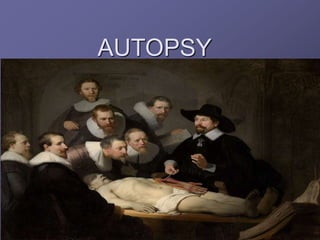
AUTOPSY
It means to see for oneself.
(Auto= Self Opis=View)
-Clinical autopsy.
-Medico-legal autopsy.
AUTOPSY
Medico-legal autopsy or post
mortem examination is a special
type of scientific examination of
dead body carried out under the
laws of the state for the
protection of its citizens and to
assist the identification and
prosecution of the guilty.
OBJECTS/ AIMS
Cause of death.
Manner of death.
Time since death.
To establish identity,
To retain relevant organs and
tissue as evidence.
Infants-Live birth and viability.
Rules for Medico-Legal
Autopsy
Authorization.
Identification.
Visit of scene of crime.
History of the case.
Verification of the injuries noted by
the police.
Examination.
Notes.
Preservation of viscera and other
tissue.
List of artifacts.
Contents of the Autopsy
report
The preamble
-Authority.
-Time of arrival of body.
-Date and place of
examination.
-Name,Age and Sex.
- Body identified by.
The body of the report
- External and internal
examination.
- WoundsInjuries-
nature,direction,situation
and sizes.
- Conclusions.
External
examination
Condition of the body
Marks of identification.
Eyes.
State of natural
orifices,ears,nostrils,mouth,anus,
urethra and vagina.
Injuries-nature,position and
measurements.
State of limbs.
Genitals and breasts.
Thorax
Walls, ribs and cartilages.
Pleura and diaphragm
Larynx,trachea and bronchi.
Lungs with weight.pericardium.
Heart,cavities,valves and
coronary vessels.
Large vessels(Aorta)
Poisoning cases
Smell of the body and viscera.
Postmortem staining and its
colour.
If froth present,its nature.
Colour of sclera, lips and nails.
Mouth and surroundings.
Injuries.
Details of G.I tract examination.
Description of stomach and
contents.
Viscera to be collected for
Chemical
Examination
Stomach with contents.
Upper part of small intestine.
- 30cms with contents.
500gms of liver and half of
each kidney.
5-10ml of blood.30ml of urine.
HangingLigature
strangulation cases
Description of ligature material.
Description of the ligatures mark.
Marks of salivary dribble.
Condition of eyes and pupils.
Colour of lips and nails.position of
tongue.
Distribution of postmortem
staining.
Presence of injuries on the body.
Examination of neck sutures.
Injury to cervical spine and cord.
Examination of internal organs.
Preservation of viscera in cases of
suspicion of poisoning.
Burn cases
Smell from the body, kerosene
other inflammable agents.
Nature of burns.
- Antemortem
- Postmortem.
Extent and degree of burns.
Age of burns.
Injuries other than burns.
Colour of postmortem staining.
Examination of air passages for
the presence of soot particles.
Evidence of
-Poisoning.
- Pregnancy,abortion,sexual
assaults.
Negative Autopsy
When gross and microscopic
examination and other
investigations fail to reveal a
cause of death,the autopsy is
considered to be negative.
- Men.
- Material.
-Method.
Men
Lack of experience.
Lack of training.
Material
Inadequate microscopic
examination.
Insufficient laboratory
examination.
Lack of toxicological analysis.
Method
Inadequate history.
Lapses in external
examination.
Inadequate or improper
internal examination.
Obscure Autopsy
Which do not reveal the cause for
death in which there are
trivial,equivocal or obscure
findings or no positive findings.
Causes
Natural diseases.
-Death by emotion or work stress.
-Death due to functional failure-
epilepsy, paroxysmal fibrillation.
Biochemical disturbances
Uraemia,diabetes,potassium
deficiency.
Anoxic anaemia.
Endocrine dysfunction
Adrenal insufficiency.
Thyrotoxicosis or Myxoedema.
Concealed trauma
Concussion.
Blunt injury to heart.
Reflex vagal inhibition.
Poisoning
Narcotic poisoning.
Anesthetic over dosage.
Neurotoxic or Cytotoxic poisons.
Plant poisoning.
Miscellaneous
Allergy.
Drug idiosyncrasy.
Artifacts
May be defined as a change in
the natural state of the body that
is likely to be misinterpreted at
autopsy.
-Before death.
-At the moment of death.
-After death.
-During autopsy.
Before death
Therapeutic artifacts.
Surgical artifacts.
At the moment of
death
Agonal artifacts.
Resuscitation artifacts
After death
Artifacts due to the handling of
the body.
Artifacts related to rigor mortis.
Artifacts related to postmortem
lividity.
Artifacts due to animal bite.
Artifacts due to chemicals.
Artifacts due to refrigeration.
Embalming artifacts.
Artifacts during
autopsy
Air in blood vessels.
Skull fractures.
Visceral damage.
Extravasation of blood.
Fracture of hyoid bone.

6. autopsy

  • 1.
    AUTOPSY It means tosee for oneself. (Auto= Self Opis=View) -Clinical autopsy. -Medico-legal autopsy.
  • 2.
  • 3.
    Medico-legal autopsy orpost mortem examination is a special type of scientific examination of dead body carried out under the laws of the state for the protection of its citizens and to assist the identification and prosecution of the guilty.
  • 4.
    OBJECTS/ AIMS Cause ofdeath. Manner of death. Time since death. To establish identity, To retain relevant organs and tissue as evidence. Infants-Live birth and viability.
  • 5.
    Rules for Medico-Legal Autopsy Authorization. Identification. Visitof scene of crime. History of the case. Verification of the injuries noted by the police. Examination. Notes. Preservation of viscera and other tissue. List of artifacts.
  • 6.
    Contents of theAutopsy report The preamble -Authority. -Time of arrival of body. -Date and place of examination. -Name,Age and Sex. - Body identified by.
  • 7.
    The body ofthe report - External and internal examination. - WoundsInjuries- nature,direction,situation and sizes. - Conclusions.
  • 8.
    External examination Condition of thebody Marks of identification. Eyes. State of natural orifices,ears,nostrils,mouth,anus, urethra and vagina. Injuries-nature,position and measurements. State of limbs. Genitals and breasts.
  • 9.
    Thorax Walls, ribs andcartilages. Pleura and diaphragm Larynx,trachea and bronchi. Lungs with weight.pericardium. Heart,cavities,valves and coronary vessels. Large vessels(Aorta)
  • 10.
    Poisoning cases Smell ofthe body and viscera. Postmortem staining and its colour. If froth present,its nature. Colour of sclera, lips and nails. Mouth and surroundings. Injuries. Details of G.I tract examination. Description of stomach and contents.
  • 11.
    Viscera to becollected for Chemical Examination Stomach with contents. Upper part of small intestine. - 30cms with contents. 500gms of liver and half of each kidney. 5-10ml of blood.30ml of urine.
  • 12.
    HangingLigature strangulation cases Description ofligature material. Description of the ligatures mark. Marks of salivary dribble. Condition of eyes and pupils. Colour of lips and nails.position of tongue. Distribution of postmortem staining. Presence of injuries on the body.
  • 13.
    Examination of necksutures. Injury to cervical spine and cord. Examination of internal organs. Preservation of viscera in cases of suspicion of poisoning.
  • 14.
    Burn cases Smell fromthe body, kerosene other inflammable agents. Nature of burns. - Antemortem - Postmortem. Extent and degree of burns. Age of burns. Injuries other than burns.
  • 15.
    Colour of postmortemstaining. Examination of air passages for the presence of soot particles. Evidence of -Poisoning. - Pregnancy,abortion,sexual assaults.
  • 16.
    Negative Autopsy When grossand microscopic examination and other investigations fail to reveal a cause of death,the autopsy is considered to be negative. - Men. - Material. -Method.
  • 17.
    Men Lack of experience. Lackof training. Material Inadequate microscopic examination. Insufficient laboratory examination. Lack of toxicological analysis.
  • 18.
    Method Inadequate history. Lapses inexternal examination. Inadequate or improper internal examination.
  • 19.
    Obscure Autopsy Which donot reveal the cause for death in which there are trivial,equivocal or obscure findings or no positive findings. Causes Natural diseases. -Death by emotion or work stress. -Death due to functional failure- epilepsy, paroxysmal fibrillation.
  • 20.
    Biochemical disturbances Uraemia,diabetes,potassium deficiency. Anoxic anaemia. Endocrinedysfunction Adrenal insufficiency. Thyrotoxicosis or Myxoedema. Concealed trauma Concussion. Blunt injury to heart. Reflex vagal inhibition.
  • 21.
    Poisoning Narcotic poisoning. Anesthetic overdosage. Neurotoxic or Cytotoxic poisons. Plant poisoning. Miscellaneous Allergy. Drug idiosyncrasy.
  • 22.
    Artifacts May be definedas a change in the natural state of the body that is likely to be misinterpreted at autopsy. -Before death. -At the moment of death. -After death. -During autopsy.
  • 23.
    Before death Therapeutic artifacts. Surgicalartifacts. At the moment of death Agonal artifacts. Resuscitation artifacts
  • 24.
    After death Artifacts dueto the handling of the body. Artifacts related to rigor mortis. Artifacts related to postmortem lividity. Artifacts due to animal bite. Artifacts due to chemicals. Artifacts due to refrigeration. Embalming artifacts.
  • 25.
    Artifacts during autopsy Air inblood vessels. Skull fractures. Visceral damage. Extravasation of blood. Fracture of hyoid bone.

Editor's Notes

  • #7 preliminary
  • #11 bubbles
  • #16 Soot forms during incomplete combustion from precursor molecules such as acetylene.
  • #20 Trivial:  little value or importance., open to more than one interpretation; ambiguous.
  • #22 a mode of behaviour or way of thought peculiar to an individual. abnormal
  • #24 agonal breathing is a distinct abnormal pattern of breathing and brainstem reflex characterized by gasping,