Problem of Practice: A Work in Progress Dan Bruner
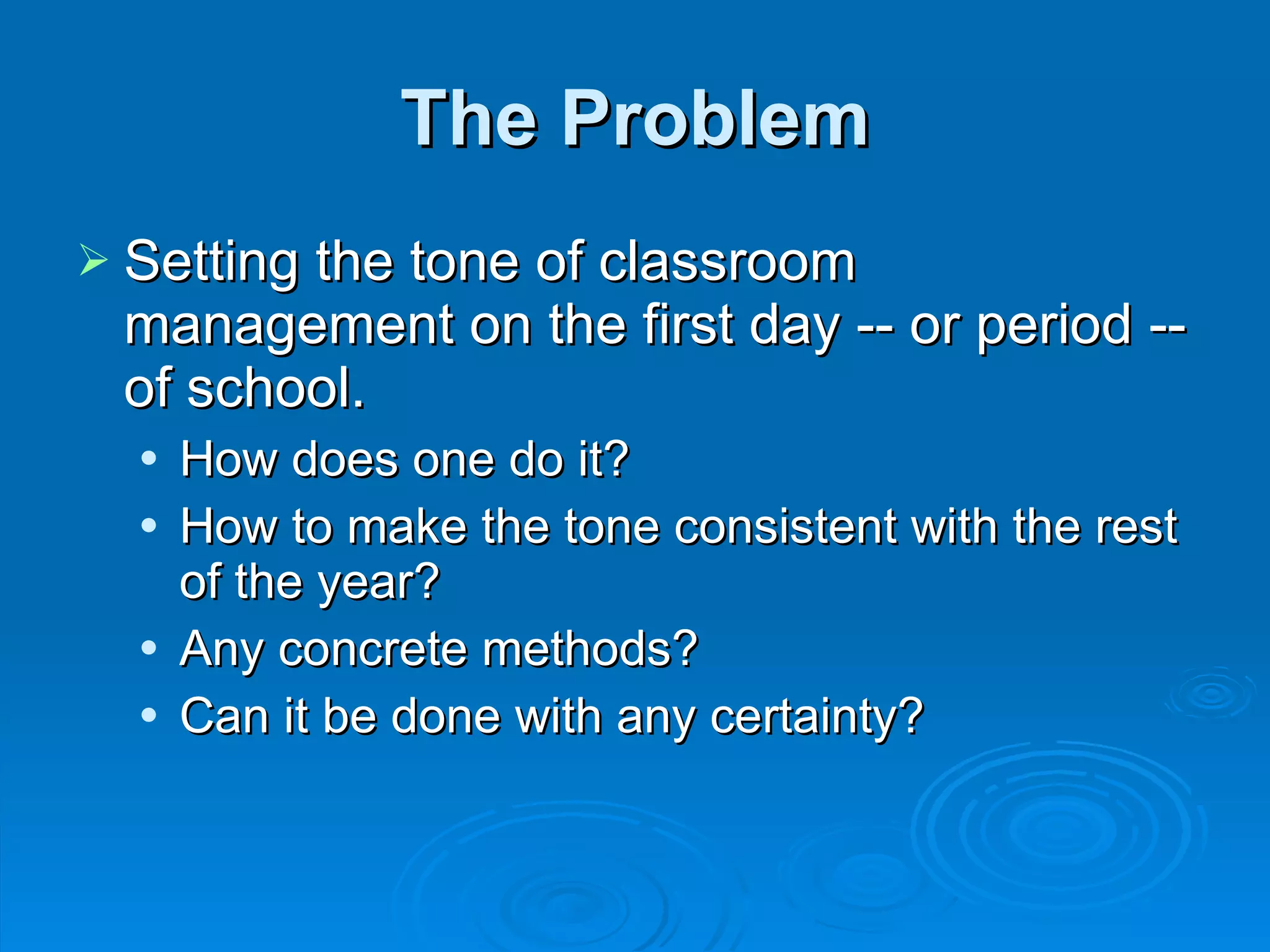
The Problem Setting the tone of classroom management on the first day -- or period -- of school. How does one do it? How to make the tone consistent with the rest of the year? Any concrete methods? Can it be done with any certainty?
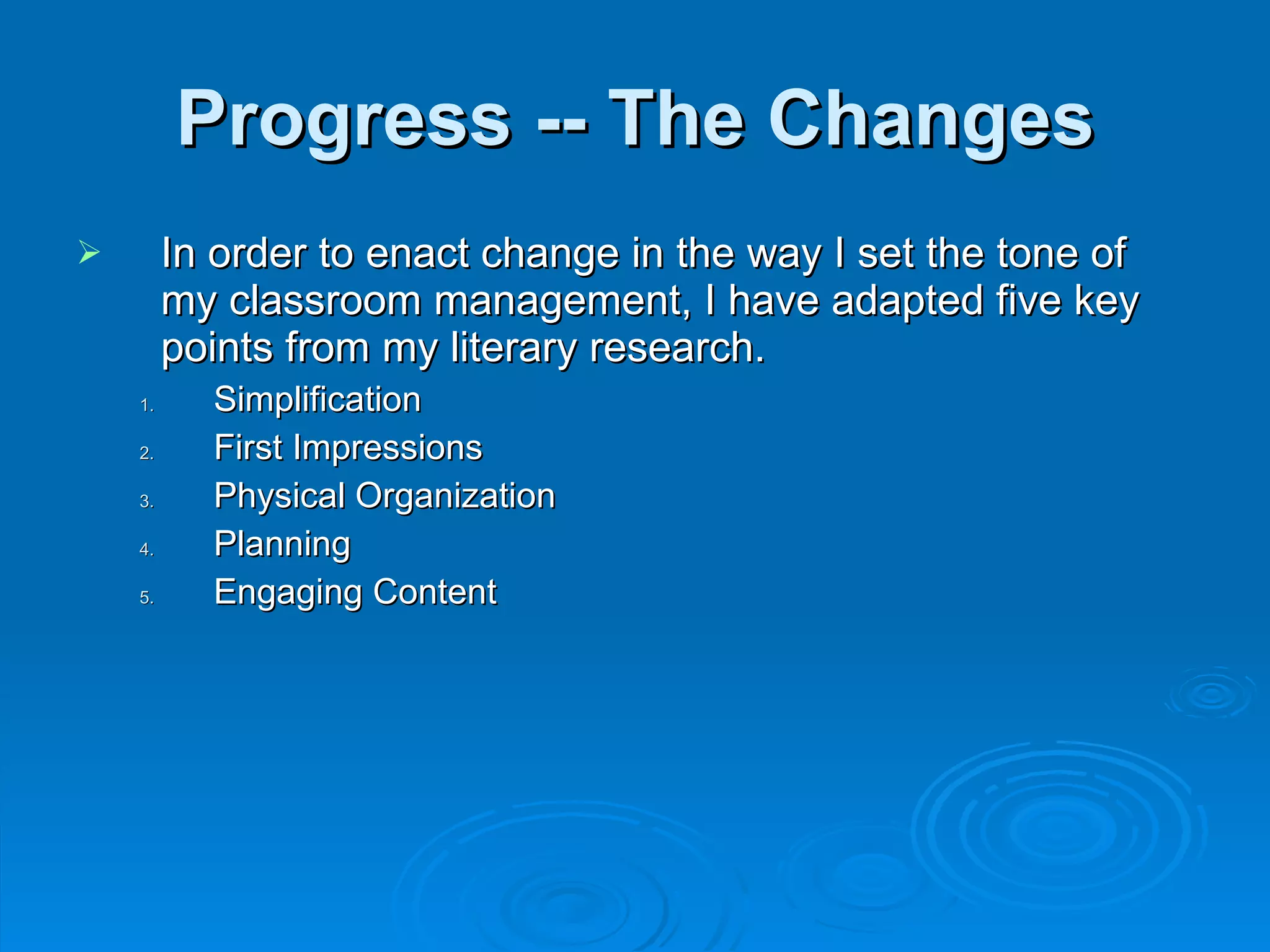
Progress -- The Changes In order to enact change in the way I set the tone of my classroom management, I have adapted five key points from my literary research. Simplification First Impressions Physical Organization Planning Engaging Content
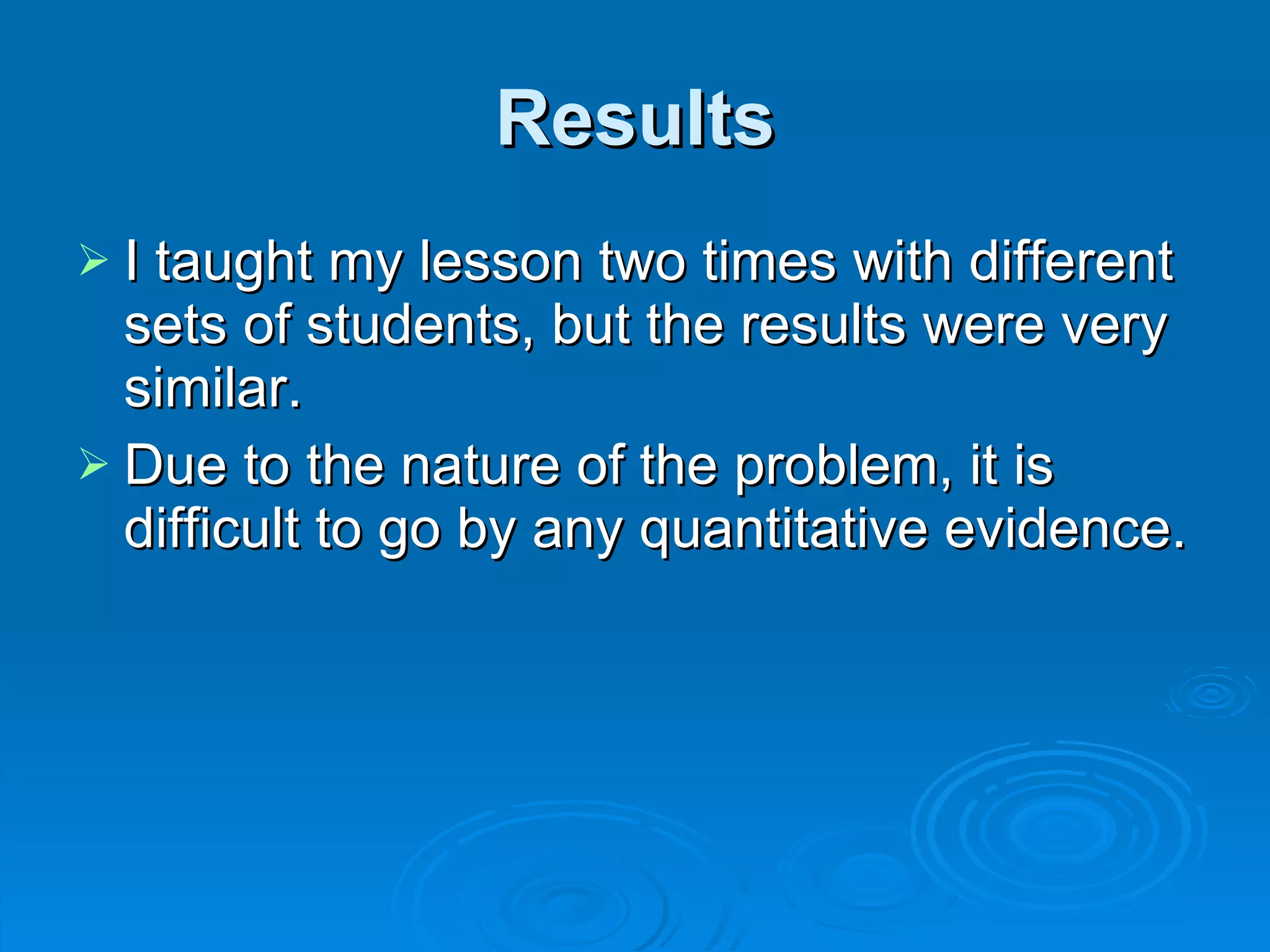
Results I taught my lesson two times with different sets of students, but the results were very similar. Due to the nature of the problem, it is difficult to go by any quantitative evidence.
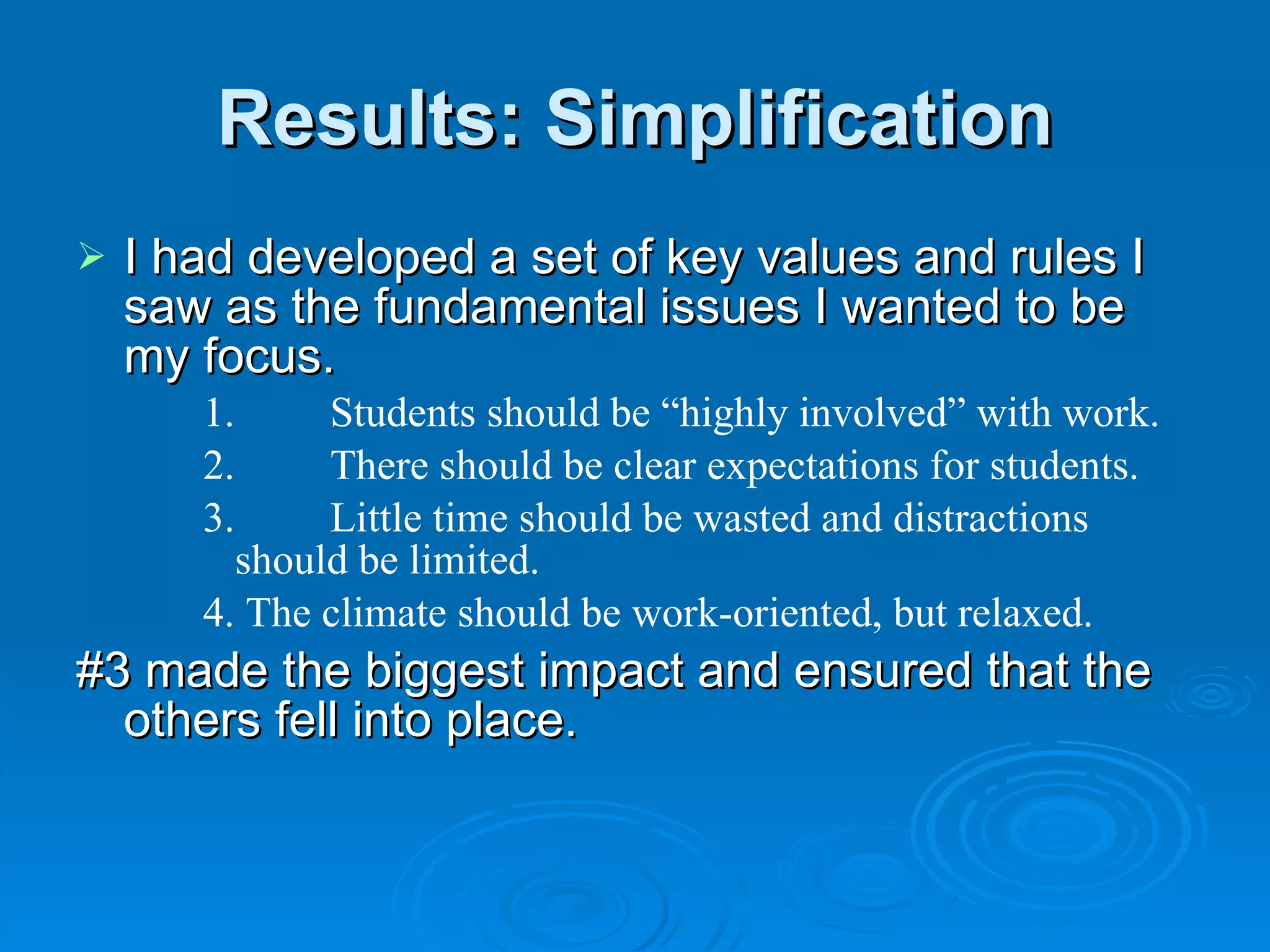
Results: Simplification I had developed a set of key values and rules I saw as the fundamental issues I wanted to be my focus. 1. Students should be ā€œhighly involvedā€ with work. 2. There should be clear expectations for students. 3. Little time should be wasted and distractions should be limited. 4. The climate should be work-oriented, but relaxed. #3 made the biggest impact and ensured that the others fell into place.
Results: First Impressions Although important to consider, it becomes difficult to make any immediate changes.  A new group of students often forces a teacher into old habits.  Did not help me in that it did not create a concrete change.
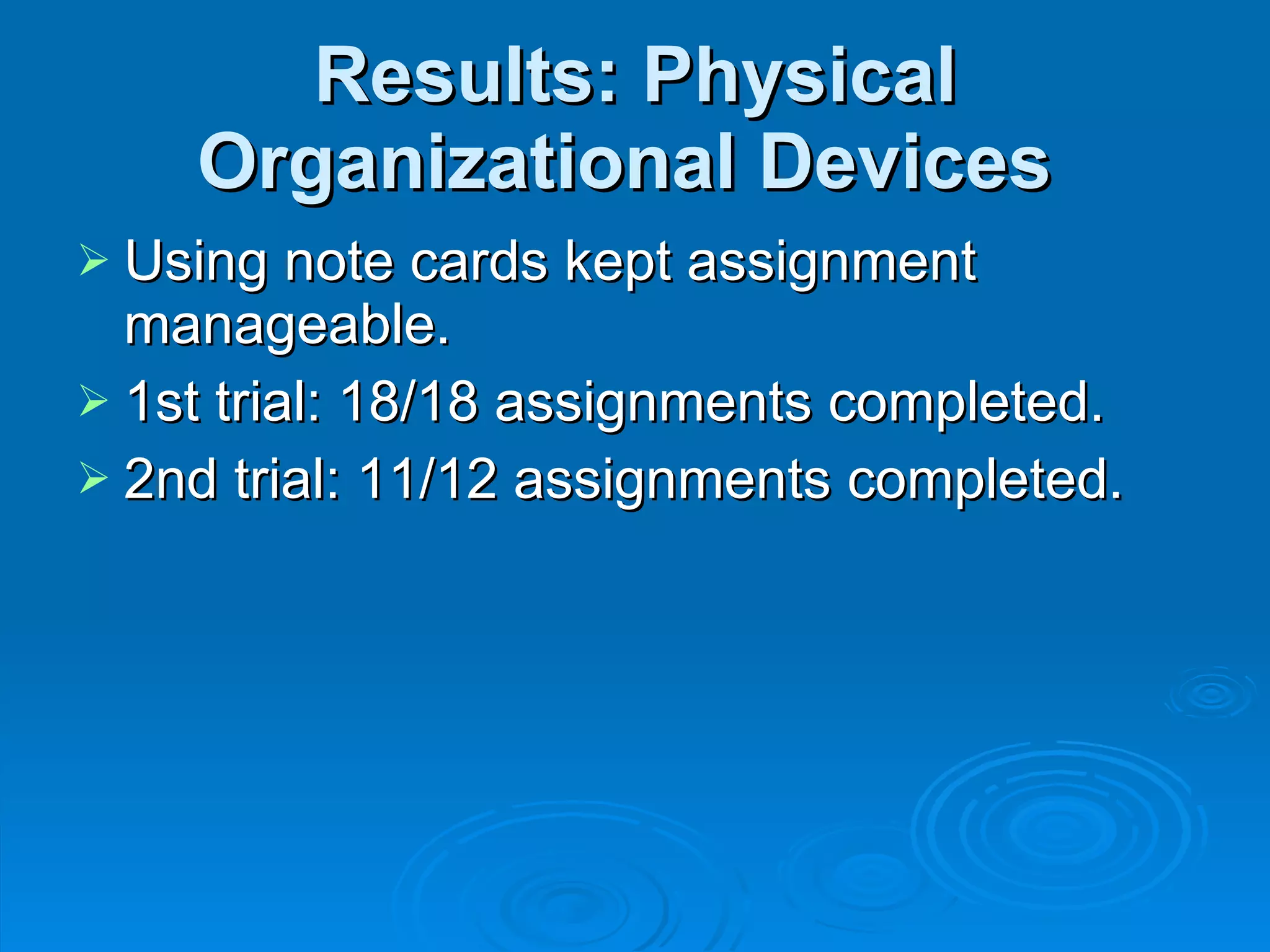
Results: Physical Organizational Devices  Using note cards kept assignment manageable. 1st trial: 18/18 assignments completed. 2nd trial: 11/12 assignments completed.
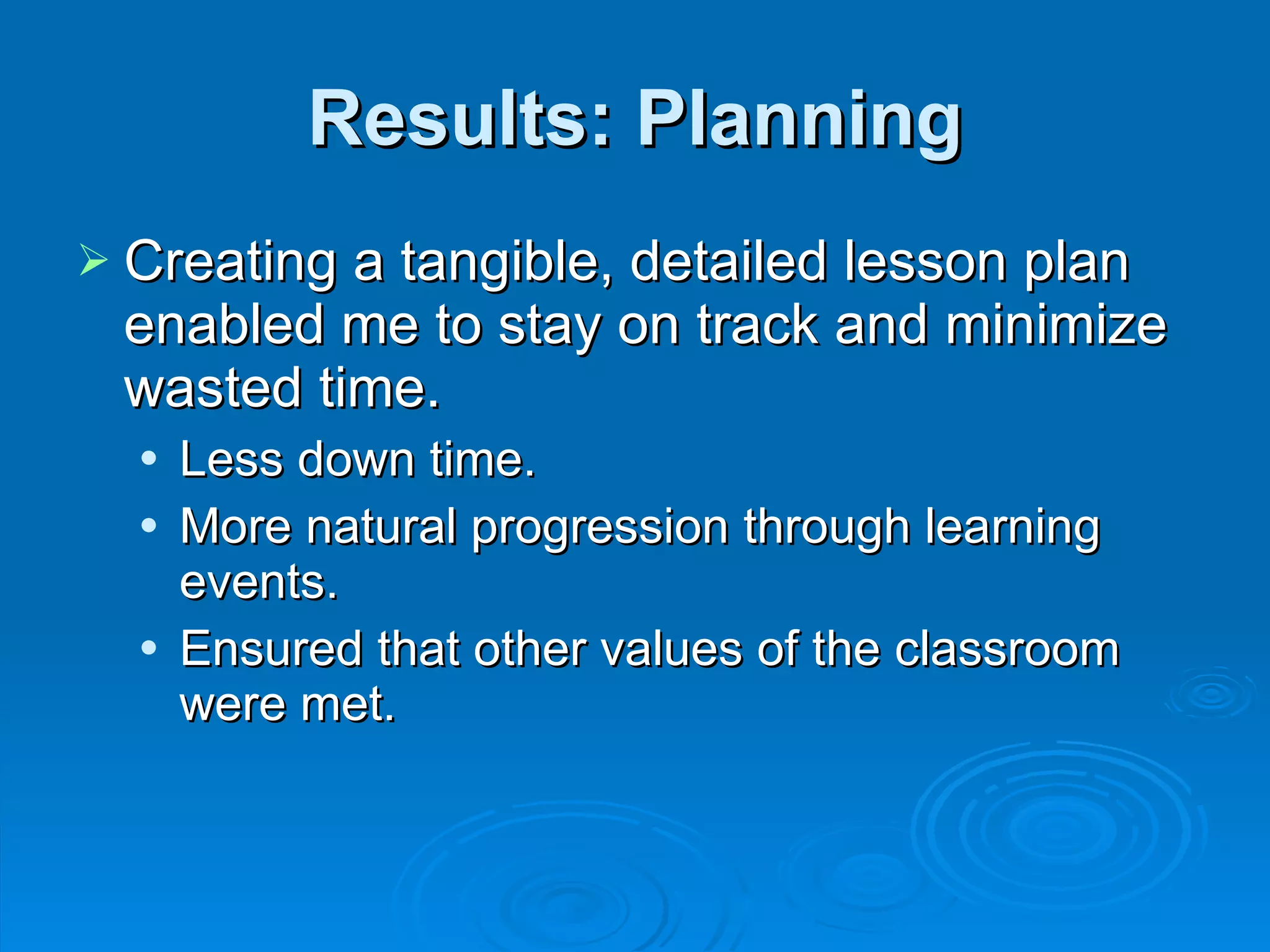
Results: Planning Creating a tangible, detailed lesson plan enabled me to stay on track and minimize wasted time. Less down time. More natural progression through learning events. Ensured that other values of the classroom were met.
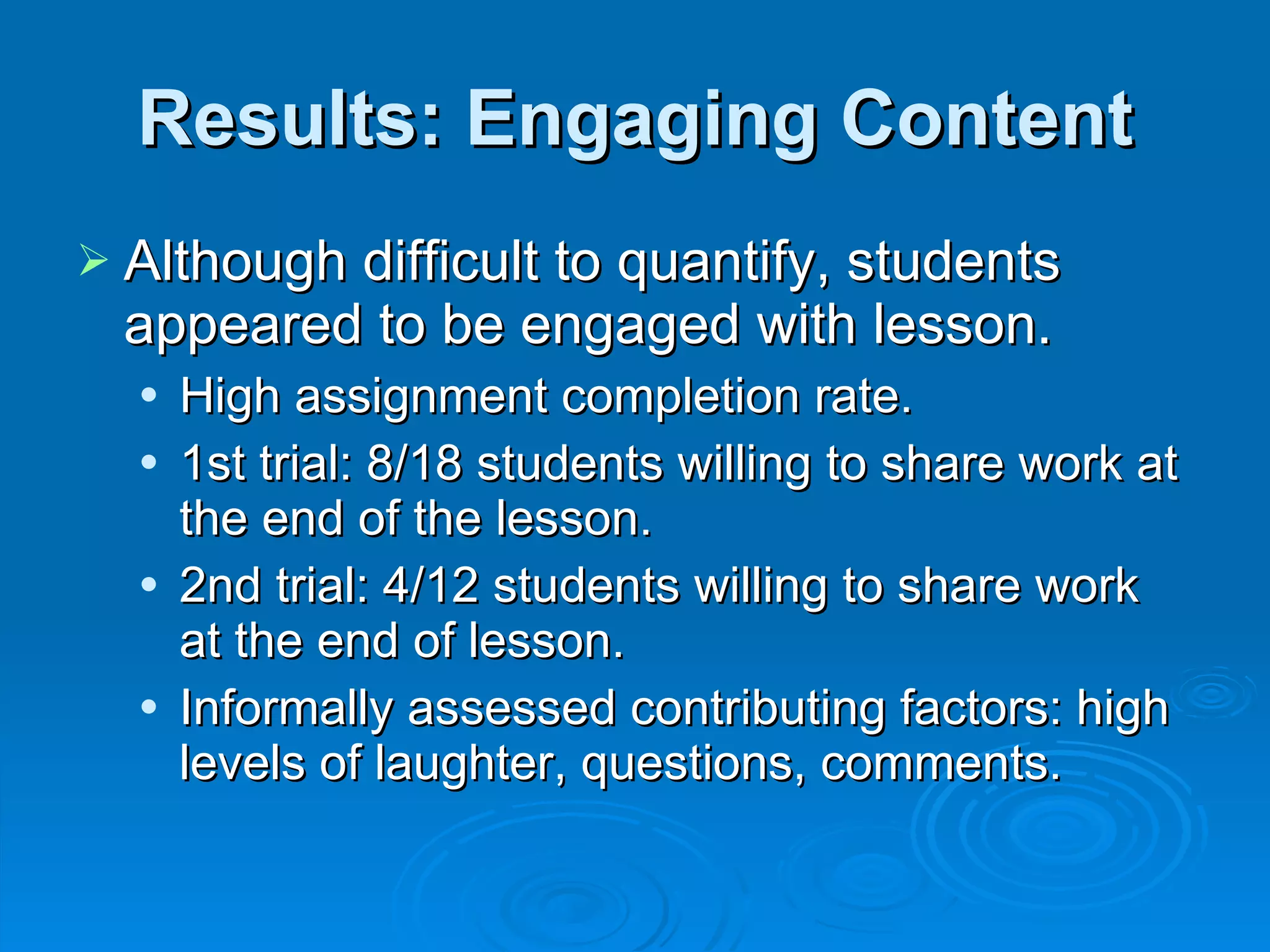
Results: Engaging Content Although difficult to quantify, students appeared to be engaged with lesson. High assignment completion rate. 1st trial: 8/18 students willing to share work at the end of the lesson. 2nd trial: 4/12 students willing to share work at the end of lesson. Informally assessed contributing factors: high levels of laughter, questions, comments.
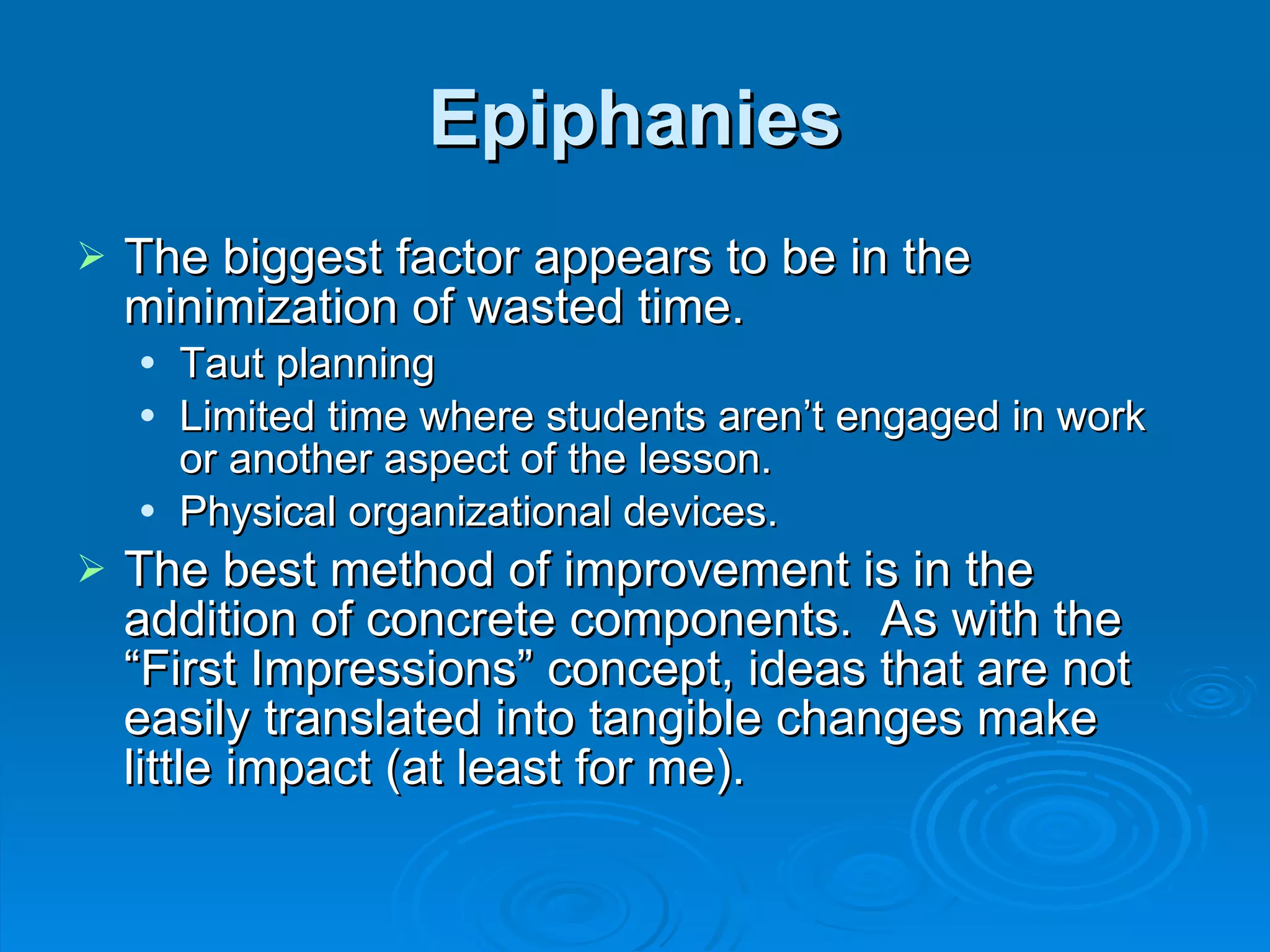
Epiphanies The biggest factor appears to be in the minimization of wasted time. Taut planning Limited time where students aren’t engaged in work or another aspect of the lesson. Physical organizational devices. The best method of improvement is in the addition of concrete components.  As with the ā€œFirst Impressionsā€ concept, ideas that are not easily translated into tangible changes make little impact (at least for me).
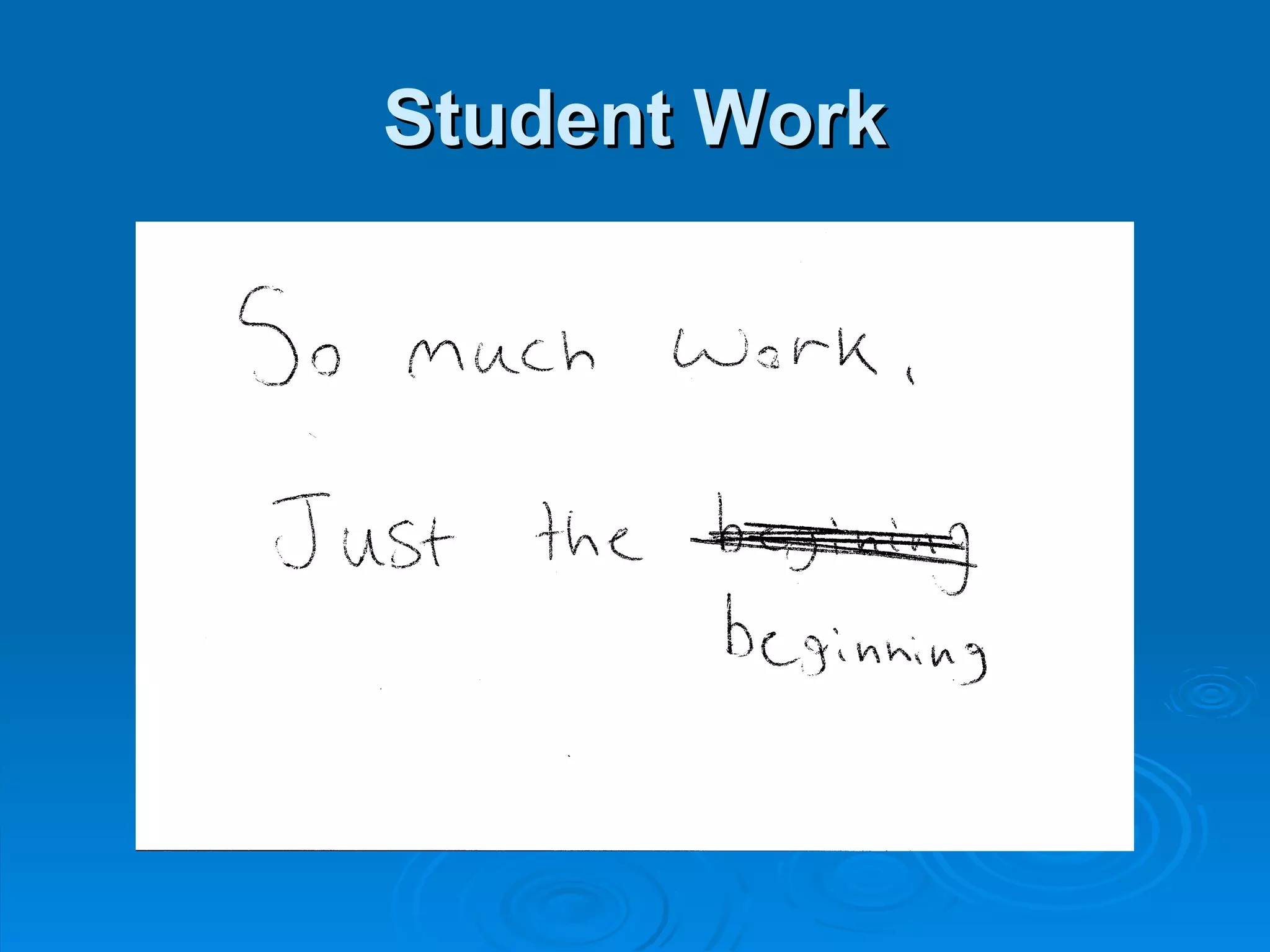
Student Work
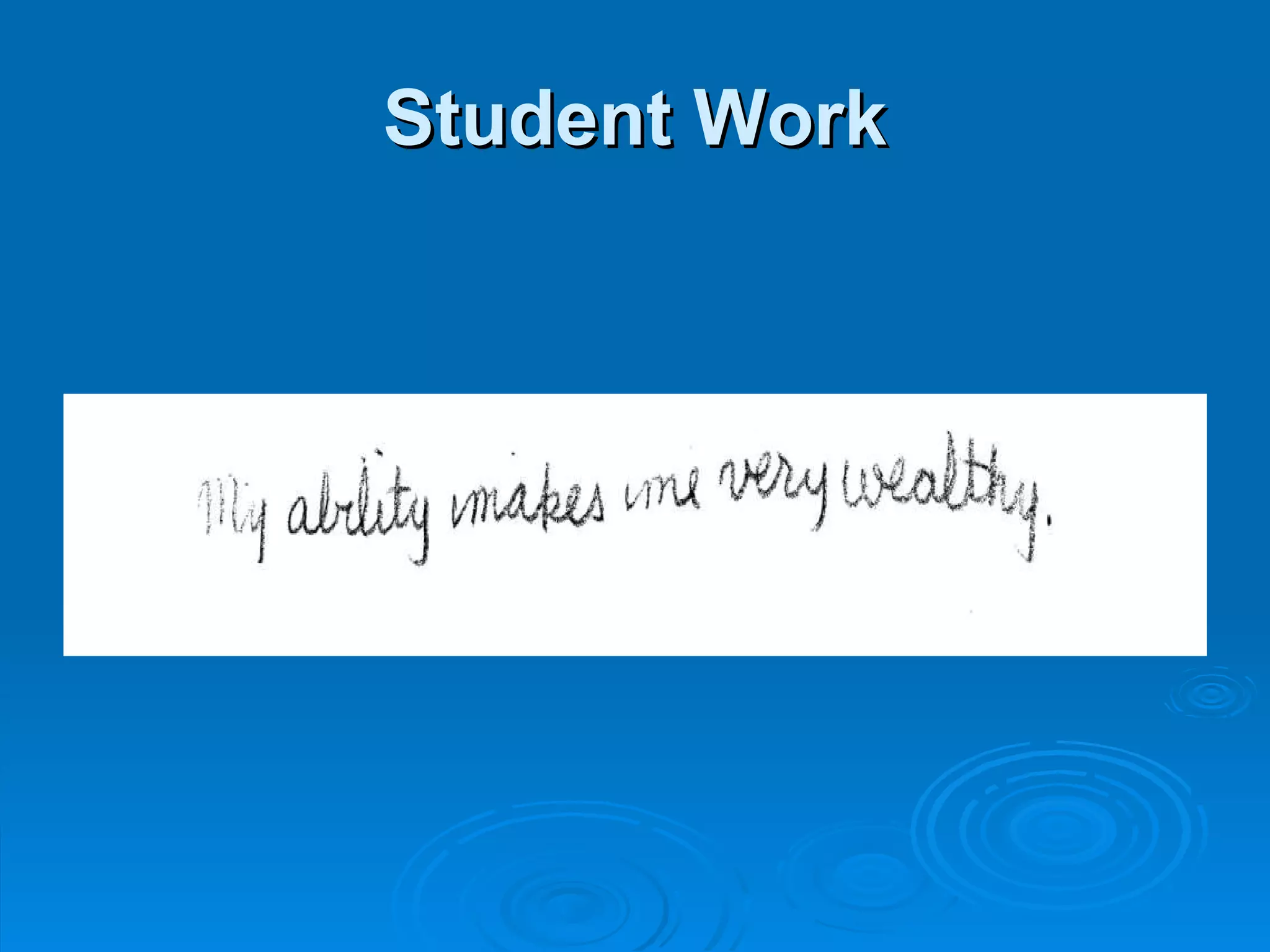
Student Work
Student Work

569B Action Research

  • 1.
    Problem of Practice:A Work in Progress Dan Bruner
  • 2.
    The Problem Settingthe tone of classroom management on the first day -- or period -- of school. How does one do it? How to make the tone consistent with the rest of the year? Any concrete methods? Can it be done with any certainty?
  • 3.
    Progress -- TheChanges In order to enact change in the way I set the tone of my classroom management, I have adapted five key points from my literary research. Simplification First Impressions Physical Organization Planning Engaging Content
  • 4.
    Results I taughtmy lesson two times with different sets of students, but the results were very similar. Due to the nature of the problem, it is difficult to go by any quantitative evidence.
  • 5.
    Results: Simplification Ihad developed a set of key values and rules I saw as the fundamental issues I wanted to be my focus. 1. Students should be ā€œhighly involvedā€ with work. 2. There should be clear expectations for students. 3. Little time should be wasted and distractions should be limited. 4. The climate should be work-oriented, but relaxed. #3 made the biggest impact and ensured that the others fell into place.
  • 6.
    Results: First ImpressionsAlthough important to consider, it becomes difficult to make any immediate changes. A new group of students often forces a teacher into old habits. Did not help me in that it did not create a concrete change.
  • 7.
    Results: Physical OrganizationalDevices Using note cards kept assignment manageable. 1st trial: 18/18 assignments completed. 2nd trial: 11/12 assignments completed.
  • 8.
    Results: Planning Creatinga tangible, detailed lesson plan enabled me to stay on track and minimize wasted time. Less down time. More natural progression through learning events. Ensured that other values of the classroom were met.
  • 9.
    Results: Engaging ContentAlthough difficult to quantify, students appeared to be engaged with lesson. High assignment completion rate. 1st trial: 8/18 students willing to share work at the end of the lesson. 2nd trial: 4/12 students willing to share work at the end of lesson. Informally assessed contributing factors: high levels of laughter, questions, comments.
  • 10.
    Epiphanies The biggestfactor appears to be in the minimization of wasted time. Taut planning Limited time where students aren’t engaged in work or another aspect of the lesson. Physical organizational devices. The best method of improvement is in the addition of concrete components. As with the ā€œFirst Impressionsā€ concept, ideas that are not easily translated into tangible changes make little impact (at least for me).
  • 11.
  • 12.
  • 13.