Task 2:
Use Data to Monitor and Adjust Your
Classroom Management and Discipline Plan
Once or twice a month, use observation
tools to collect data that can help you
adjust your management plan.
Tools
 Periodically use some simple data
collections tools to consider:
 Which aspects of your classroom
management plan are working?
 Do you need to make adjustments?
 Does your management plan need
revisions?
Example Tools:
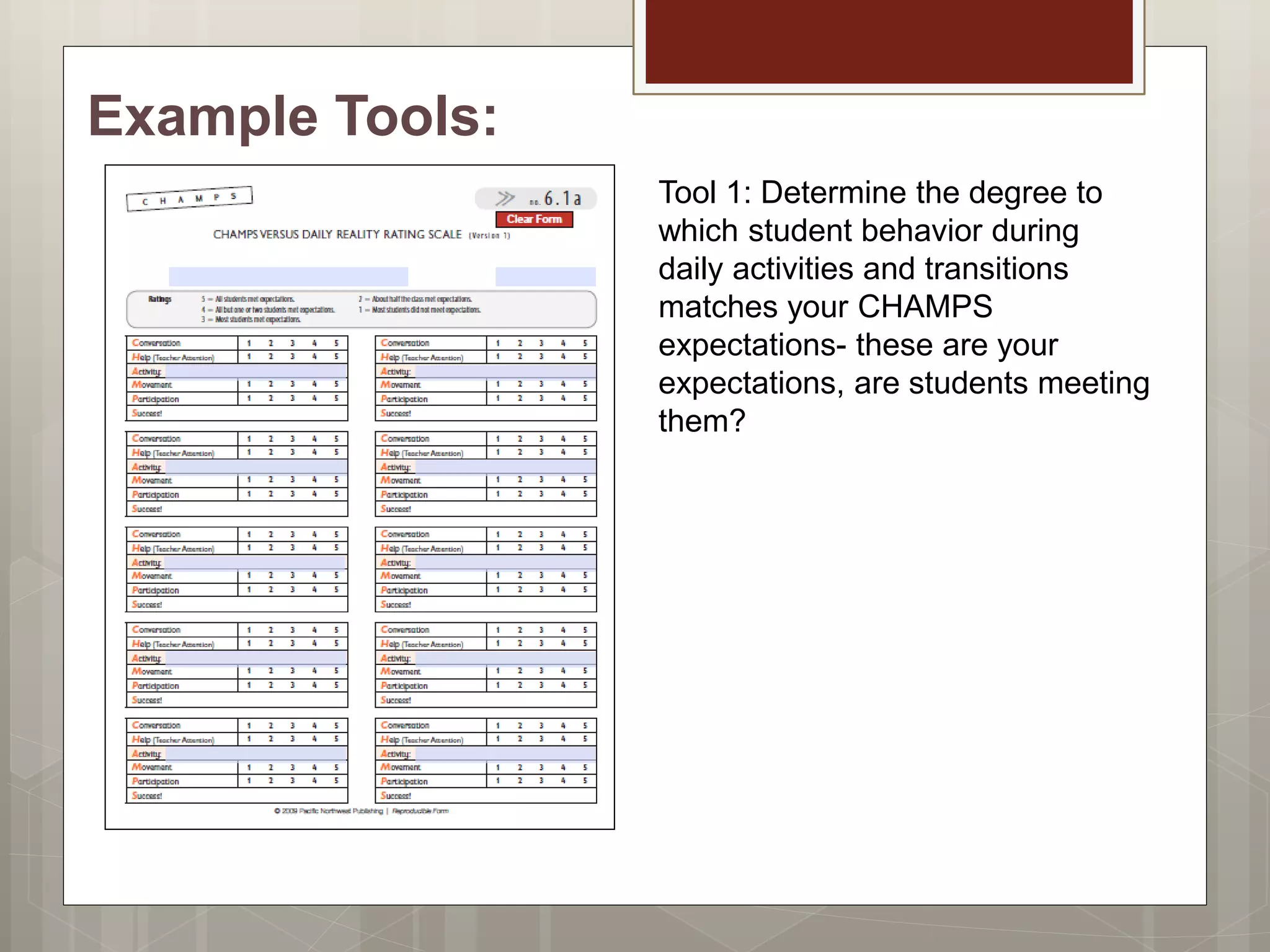
Tool 1: Determine the degree to
which student behavior during
daily activities and transitions
matches your CHAMPS
expectations- these are your
expectations, are students meeting
them?
Example Tools:
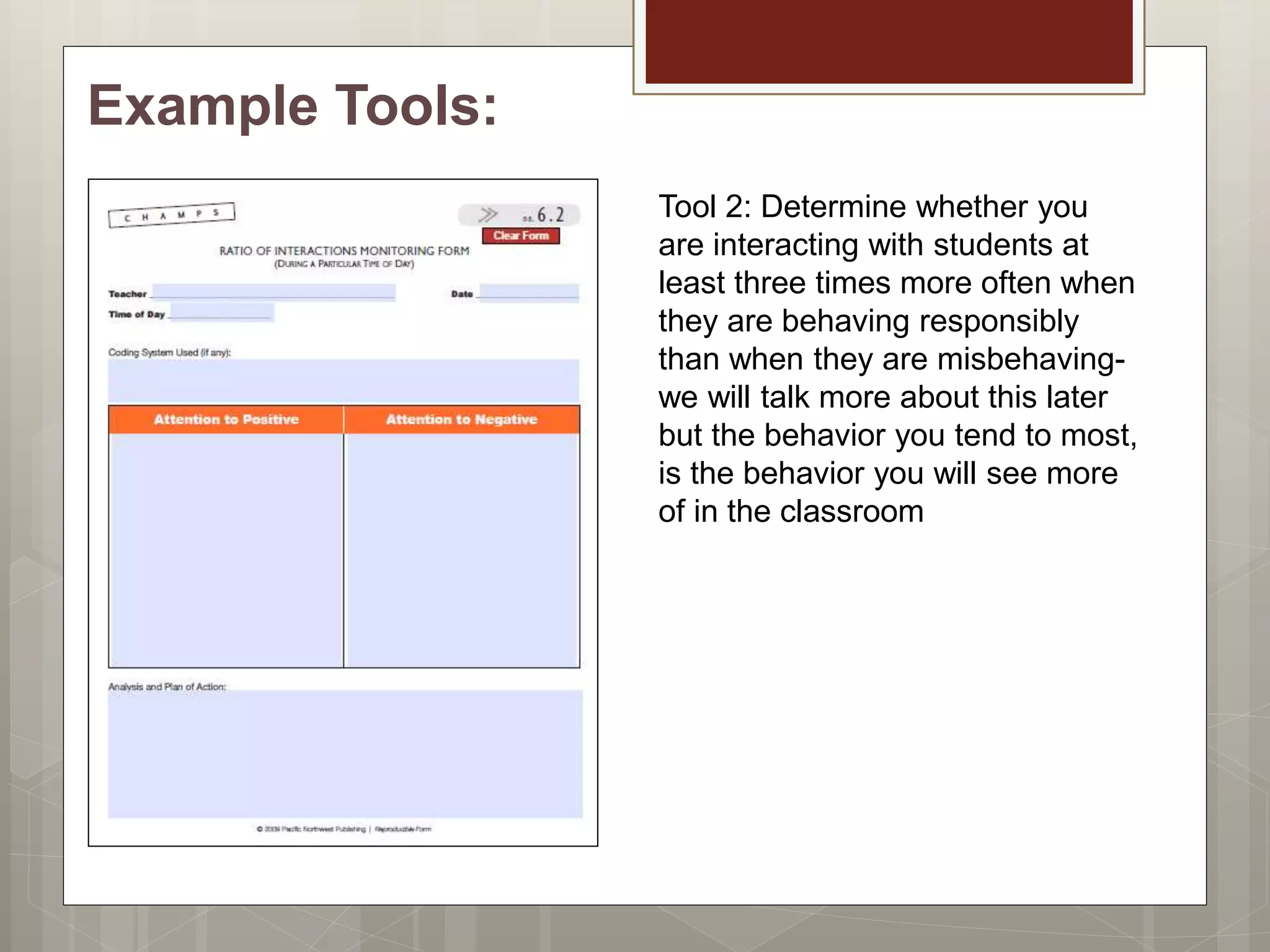
Tool 2: Determine whether you
are interacting with students at
least three times more often when
they are behaving responsibly
than when they are misbehaving-
we will talk more about this later
but the behavior you tend to most,
is the behavior you will see more
of in the classroom
Example Tools:
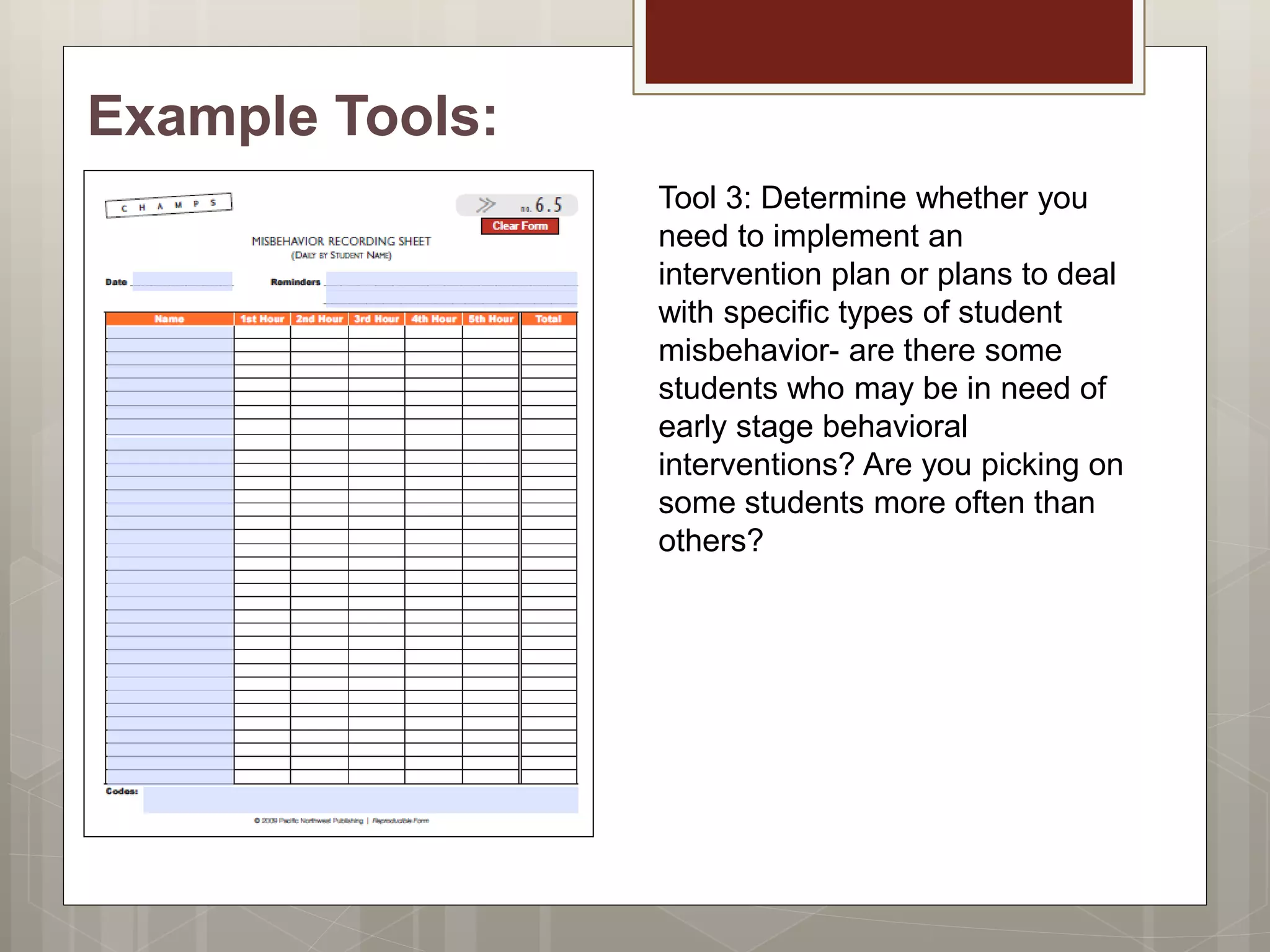
Tool 3: Determine whether you
need to implement an
intervention plan or plans to deal
with specific types of student
misbehavior- are there some
students who may be in need of
early stage behavioral
interventions? Are you picking on
some students more often than
others?
Example Tools:
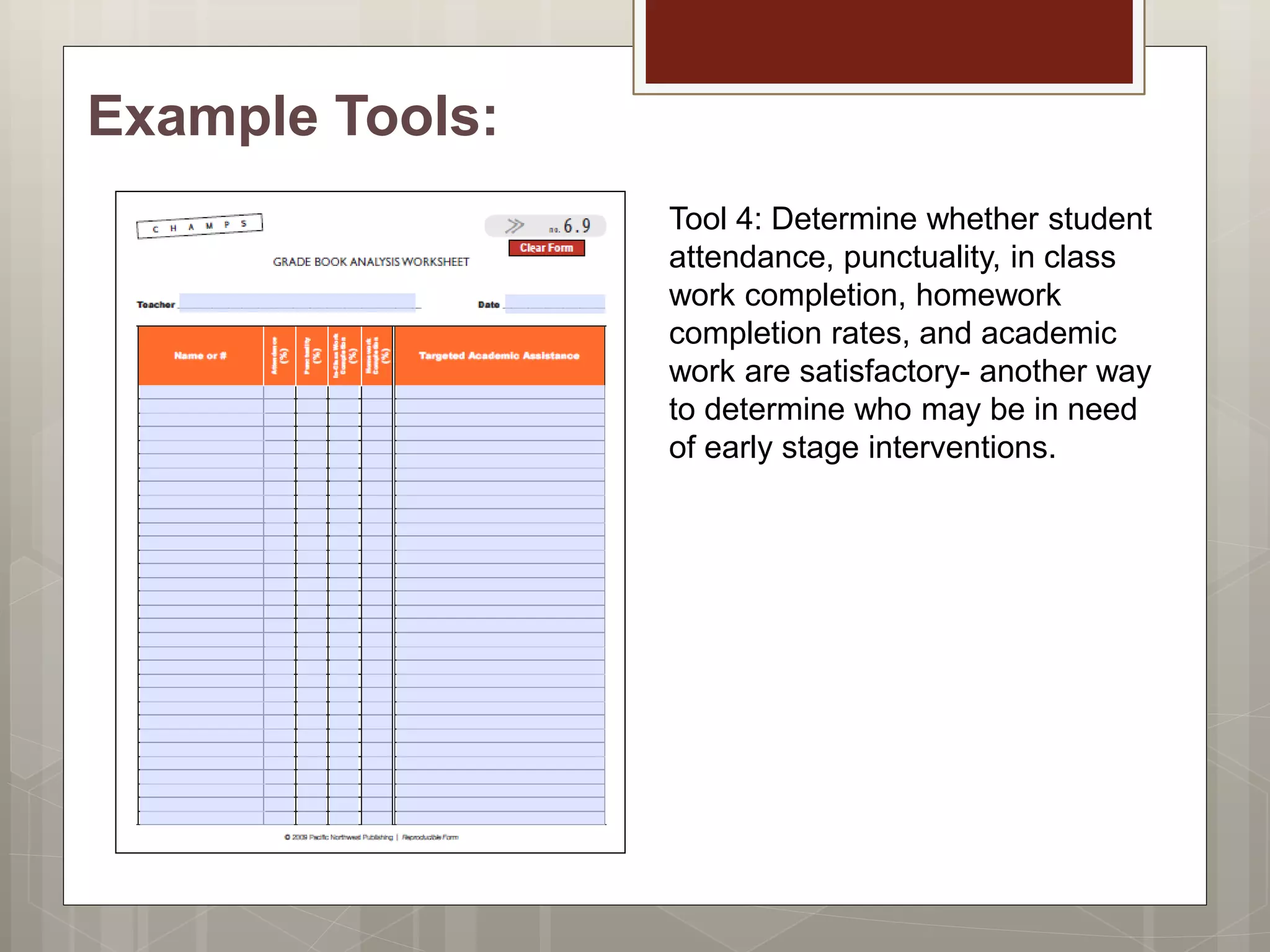
Tool 4: Determine whether student
attendance, punctuality, in class
work completion, homework
completion rates, and academic
work are satisfactory- another way
to determine who may be in need
of early stage interventions.
Example Tools:
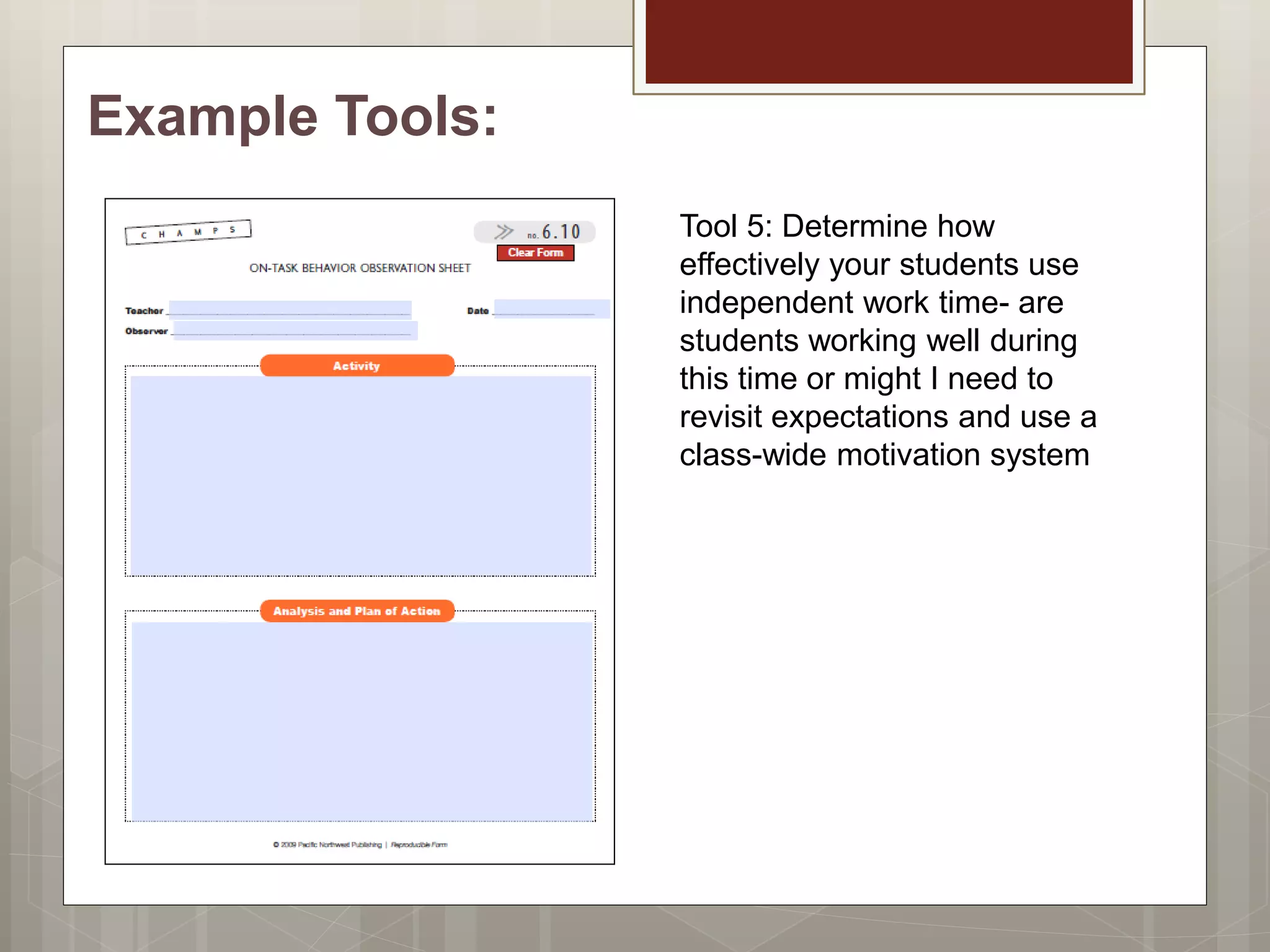
Tool 5: Determine how
effectively your students use
independent work time- are
students working well during
this time or might I need to
revisit expectations and use a
class-wide motivation system
Example Tools:
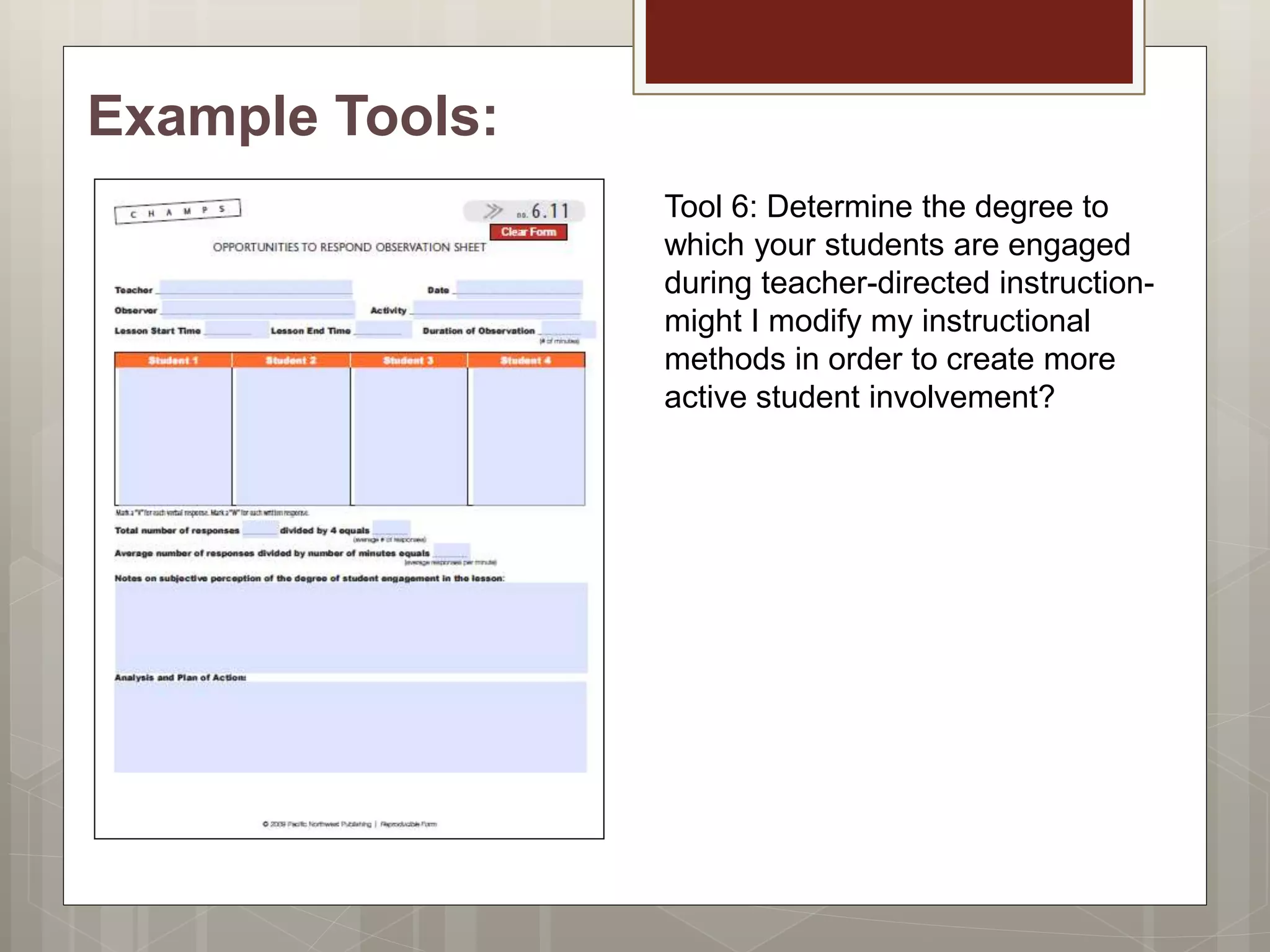
Tool 6: Determine the degree to
which your students are engaged
during teacher-directed instruction-
might I modify my instructional
methods in order to create more
active student involvement?
Example Tools:
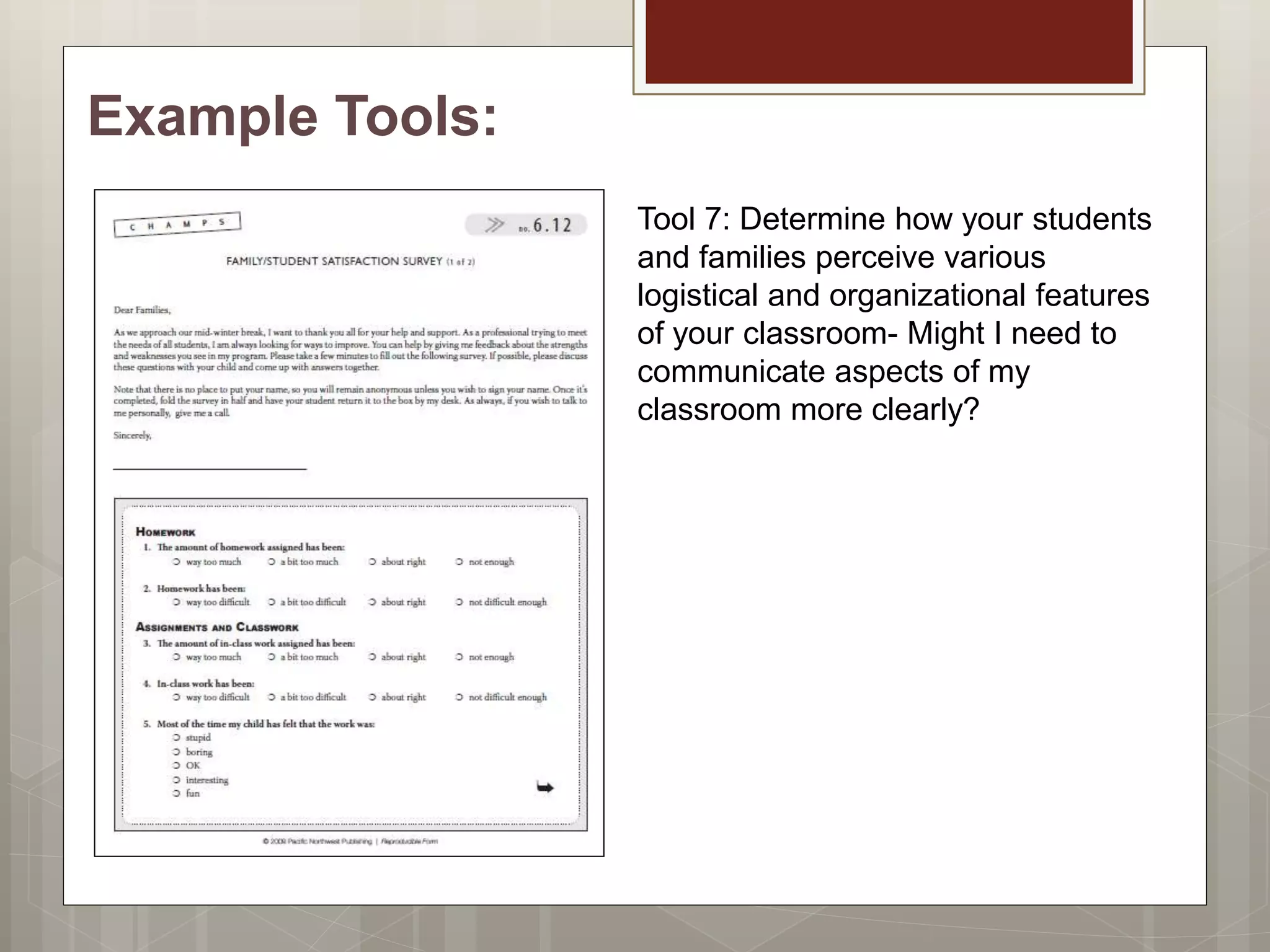
Tool 7: Determine how your students
and families perceive various
logistical and organizational features
of your classroom- Might I need to
communicate aspects of my
classroom more clearly?

Chapter 6 Task 2: Use Data to Monitor and Adjust Your Management and discipline plan

  • 1.
    Task 2: Use Datato Monitor and Adjust Your Classroom Management and Discipline Plan Once or twice a month, use observation tools to collect data that can help you adjust your management plan.
  • 2.
    Tools  Periodically usesome simple data collections tools to consider:  Which aspects of your classroom management plan are working?  Do you need to make adjustments?  Does your management plan need revisions?
  • 3.
    Example Tools: Tool 1:Determine the degree to which student behavior during daily activities and transitions matches your CHAMPS expectations- these are your expectations, are students meeting them?
  • 4.
    Example Tools: Tool 2:Determine whether you are interacting with students at least three times more often when they are behaving responsibly than when they are misbehaving- we will talk more about this later but the behavior you tend to most, is the behavior you will see more of in the classroom
  • 5.
    Example Tools: Tool 3:Determine whether you need to implement an intervention plan or plans to deal with specific types of student misbehavior- are there some students who may be in need of early stage behavioral interventions? Are you picking on some students more often than others?
  • 6.
    Example Tools: Tool 4:Determine whether student attendance, punctuality, in class work completion, homework completion rates, and academic work are satisfactory- another way to determine who may be in need of early stage interventions.
  • 7.
    Example Tools: Tool 5:Determine how effectively your students use independent work time- are students working well during this time or might I need to revisit expectations and use a class-wide motivation system
  • 8.
    Example Tools: Tool 6:Determine the degree to which your students are engaged during teacher-directed instruction- might I modify my instructional methods in order to create more active student involvement?
  • 9.
    Example Tools: Tool 7:Determine how your students and families perceive various logistical and organizational features of your classroom- Might I need to communicate aspects of my classroom more clearly?

Editor's Notes

  • #2 The importance of observing students by circulating and scanning was identified in the very early research on how effective teachers mange the classroom. Effective teachers have both “with-it-ness” and “in-touch-ness” (being there and being aware, mentally).
  • #3 The importance of observing students by circulating and scanning was identified in the very early research on how effective teachers mange the classroom. Effective teachers have both “with-it-ness” and “in-touch-ness” (being there and being aware, mentally).
  • #4 Tool 1: Determine the degree to which student behavior during daily activities and transitions matches your CHAMPS expectations- these are your expectations, are students meeting them? Tool 2: Determine whether you are interacting with students at least three times more often when they are behaving responsibly than when they are misbehaving- we will talk more about this later but the behavior you tend to most, is the behavior you will see more of in the classroom Tool 3: Determine whether you need to implement an intervention plan or plans to deal with specific types of student misbehavior- are there some students who may be in need of early stage behavioral interventions? Are you picking on some students more often than others? Tool 4: Determine whether student attendance, punctuality, in class work completion, homework completion rates, and academic work are satisfactory- another way to determine who may be in need of early stage interventions. Tool 5: Determine how effectively your students use independent work time- are students working well during this time or might I need to revisit expectations and use a class-wide motivation system Tool 6: Determine the degree to which your students are engaged during teacher-directed instruction- might I modify my instructional methods in order to create more active student involvement? Tool 7: Determine how your students and families perceive various logistical and organizational features of your classroom- Might I need to communicate aspects of my classroom more clearly? Allow 3 minutes for the activity
  • #5 Tool 1: Determine the degree to which student behavior during daily activities and transitions matches your CHAMPS expectations- these are your expectations, are students meeting them? Tool 2: Determine whether you are interacting with students at least three times more often when they are behaving responsibly than when they are misbehaving- we will talk more about this later but the behavior you tend to most, is the behavior you will see more of in the classroom Tool 3: Determine whether you need to implement an intervention plan or plans to deal with specific types of student misbehavior- are there some students who may be in need of early stage behavioral interventions? Are you picking on some students more often than others? Tool 4: Determine whether student attendance, punctuality, in class work completion, homework completion rates, and academic work are satisfactory- another way to determine who may be in need of early stage interventions. Tool 5: Determine how effectively your students use independent work time- are students working well during this time or might I need to revisit expectations and use a class-wide motivation system Tool 6: Determine the degree to which your students are engaged during teacher-directed instruction- might I modify my instructional methods in order to create more active student involvement? Tool 7: Determine how your students and families perceive various logistical and organizational features of your classroom- Might I need to communicate aspects of my classroom more clearly? Allow 3 minutes for the activity
  • #6 Tool 1: Determine the degree to which student behavior during daily activities and transitions matches your CHAMPS expectations- these are your expectations, are students meeting them? Tool 2: Determine whether you are interacting with students at least three times more often when they are behaving responsibly than when they are misbehaving- we will talk more about this later but the behavior you tend to most, is the behavior you will see more of in the classroom Tool 3: Determine whether you need to implement an intervention plan or plans to deal with specific types of student misbehavior- are there some students who may be in need of early stage behavioral interventions? Are you picking on some students more often than others? Tool 4: Determine whether student attendance, punctuality, in class work completion, homework completion rates, and academic work are satisfactory- another way to determine who may be in need of early stage interventions. Tool 5: Determine how effectively your students use independent work time- are students working well during this time or might I need to revisit expectations and use a class-wide motivation system Tool 6: Determine the degree to which your students are engaged during teacher-directed instruction- might I modify my instructional methods in order to create more active student involvement? Tool 7: Determine how your students and families perceive various logistical and organizational features of your classroom- Might I need to communicate aspects of my classroom more clearly? Allow 3 minutes for the activity
  • #7 Tool 1: Determine the degree to which student behavior during daily activities and transitions matches your CHAMPS expectations- these are your expectations, are students meeting them? Tool 2: Determine whether you are interacting with students at least three times more often when they are behaving responsibly than when they are misbehaving- we will talk more about this later but the behavior you tend to most, is the behavior you will see more of in the classroom Tool 3: Determine whether you need to implement an intervention plan or plans to deal with specific types of student misbehavior- are there some students who may be in need of early stage behavioral interventions? Are you picking on some students more often than others? Tool 4: Determine whether student attendance, punctuality, in class work completion, homework completion rates, and academic work are satisfactory- another way to determine who may be in need of early stage interventions. Tool 5: Determine how effectively your students use independent work time- are students working well during this time or might I need to revisit expectations and use a class-wide motivation system Tool 6: Determine the degree to which your students are engaged during teacher-directed instruction- might I modify my instructional methods in order to create more active student involvement? Tool 7: Determine how your students and families perceive various logistical and organizational features of your classroom- Might I need to communicate aspects of my classroom more clearly? Allow 3 minutes for the activity
  • #8 Tool 1: Determine the degree to which student behavior during daily activities and transitions matches your CHAMPS expectations- these are your expectations, are students meeting them? Tool 2: Determine whether you are interacting with students at least three times more often when they are behaving responsibly than when they are misbehaving- we will talk more about this later but the behavior you tend to most, is the behavior you will see more of in the classroom Tool 3: Determine whether you need to implement an intervention plan or plans to deal with specific types of student misbehavior- are there some students who may be in need of early stage behavioral interventions? Are you picking on some students more often than others? Tool 4: Determine whether student attendance, punctuality, in class work completion, homework completion rates, and academic work are satisfactory- another way to determine who may be in need of early stage interventions. Tool 5: Determine how effectively your students use independent work time- are students working well during this time or might I need to revisit expectations and use a class-wide motivation system Tool 6: Determine the degree to which your students are engaged during teacher-directed instruction- might I modify my instructional methods in order to create more active student involvement? Tool 7: Determine how your students and families perceive various logistical and organizational features of your classroom- Might I need to communicate aspects of my classroom more clearly? Allow 3 minutes for the activity
  • #9  Tool 6: Determine the degree to which your students are engaged during teacher-directed instruction- might I modify my instructional methods in order to create more active student involvement? Tool 7: Determine how your students and families perceive various logistical and organizational features of your classroom- Might I need to communicate aspects of my classroom more clearly? Allow 3 minutes for the activity
  • #10 Tool 1: Determine the degree to which student behavior during daily activities and transitions matches your CHAMPS expectations- these are your expectations, are students meeting them? Tool 2: Determine whether you are interacting with students at least three times more often when they are behaving responsibly than when they are misbehaving- we will talk more about this later but the behavior you tend to most, is the behavior you will see more of in the classroom Tool 3: Determine whether you need to implement an intervention plan or plans to deal with specific types of student misbehavior- are there some students who may be in need of early stage behavioral interventions? Are you picking on some students more often than others? Tool 4: Determine whether student attendance, punctuality, in class work completion, homework completion rates, and academic work are satisfactory- another way to determine who may be in need of early stage interventions. Tool 5: Determine how effectively your students use independent work time- are students working well during this time or might I need to revisit expectations and use a class-wide motivation system Tool 6: Determine the degree to which your students are engaged during teacher-directed instruction- might I modify my instructional methods in order to create more active student involvement? Tool 7: Determine how your students and families perceive various logistical and organizational features of your classroom- Might I need to communicate aspects of my classroom more clearly? Allow 3 minutes for the activity