
Download to read offline
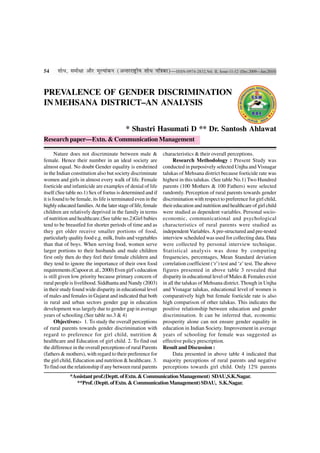
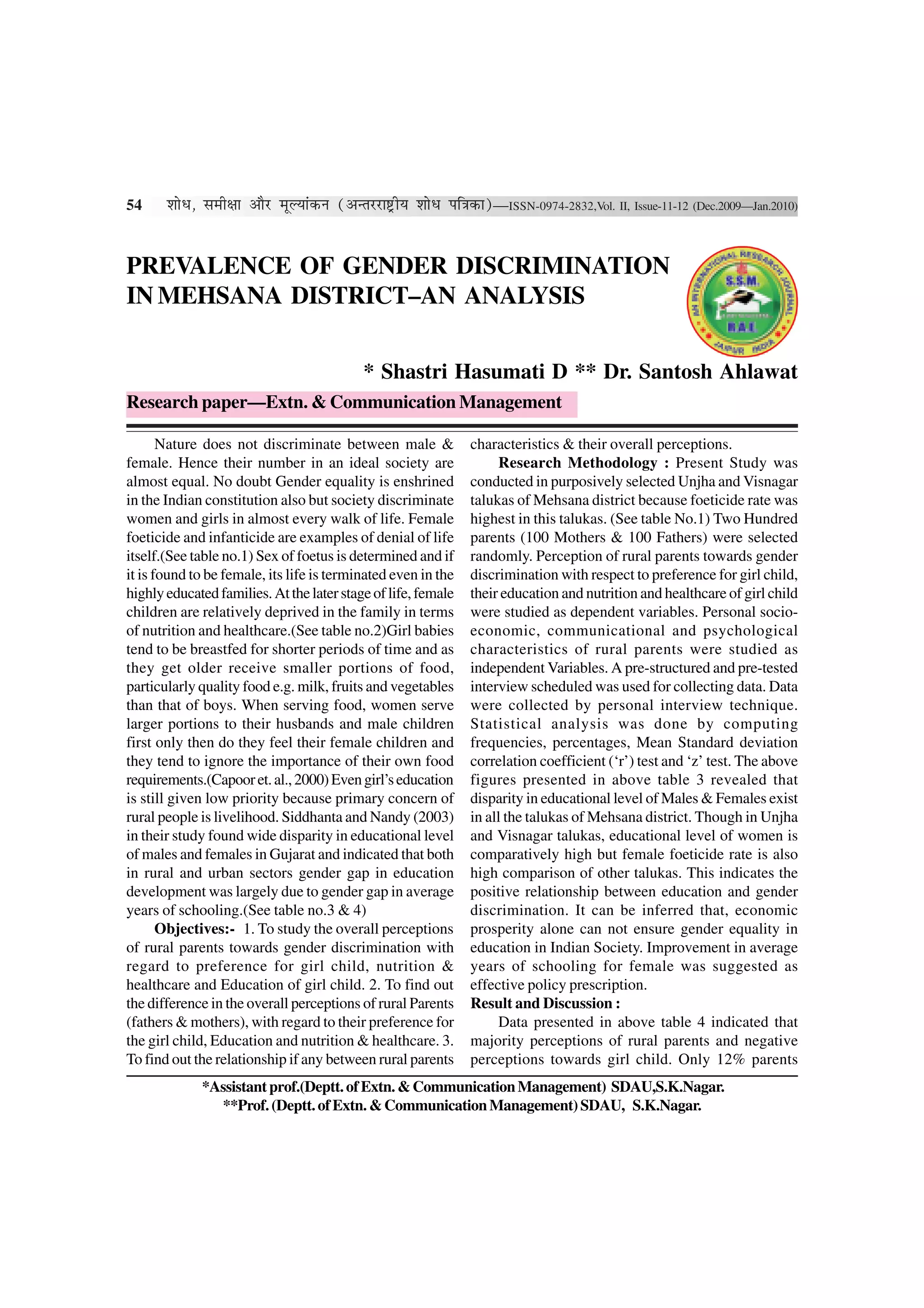
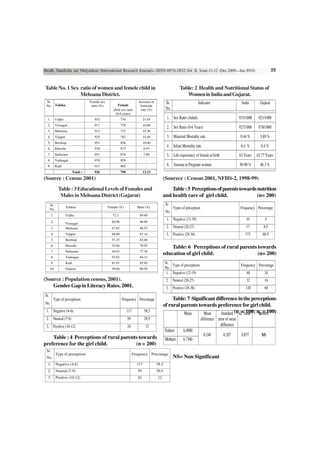
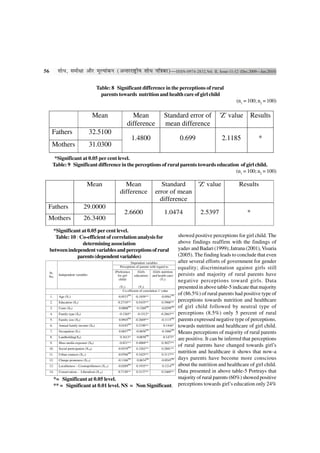
This document analyzes gender discrimination in Mehsana district, Gujarat, India. It finds: 1) Female foeticide and lower sex ratios for girls are evidence of gender discrimination. The female foeticide rate is highest in Unjha and Visnagar talukas of Mehsana district. 2) Rural parents, especially fathers, have more negative perceptions about girls regarding preference, education, nutrition, and healthcare compared to mothers. 3) Educational attainment is lower for females compared to males across all talukas in Mehsana district. Higher female education is correlated with lower gender discrimination. 4) Most rural parents have positive perceptions about nutrition and healthcare for girls but negative


