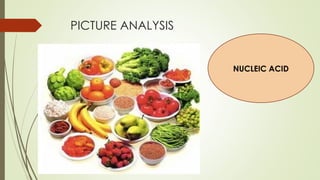
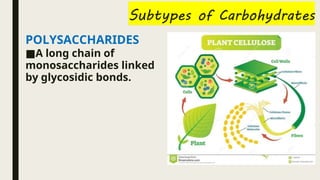
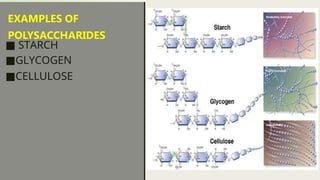
BIOMOLECULES
Objectives:
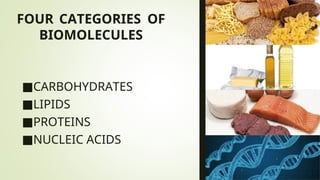
1.Recognize the majorcategories of
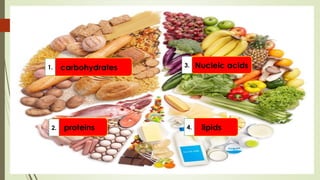
biomolecules such as carbohydrates,
lipids, proteins and nucleic acids;
2.Differentiate the biomolecules from
each other in terms of their structure and
function.
What are
BIOMOLECULES?
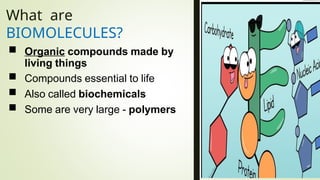
Organiccompounds made by
living things
Compounds essential to life
Also called biochemicals
Some are very large - polymers
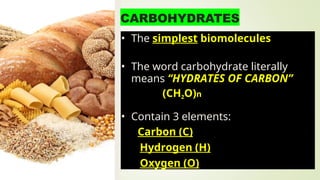
• The simplestbiomolecules
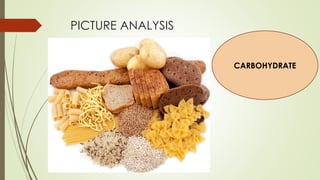
• The word carbohydrate literally
means “HYDRATES OF CARBON”
(CH2O)n
• Contain 3 elements:
Carbon (C)
Hydrogen (H)
Oxygen (O)
14.
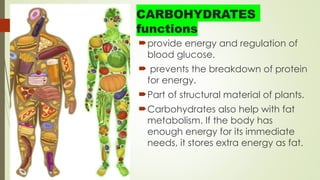
provide energy andregulation of
blood glucose.
prevents the breakdown of protein
for energy.
Part of structural material of plants.
Carbohydrates also help with fat
metabolism. If the body has
enough energy for its immediate
needs, it stores extra energy as fat.
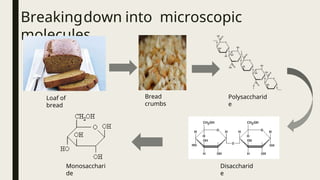
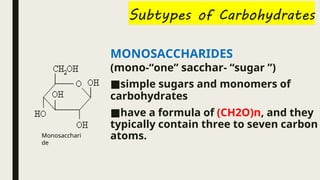
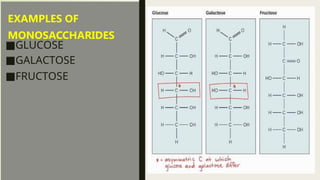
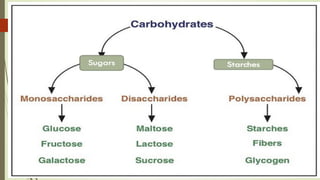
MONOSACCHARIDES
(mono-“one” sacchar- “sugar”)
■simple sugars and monomers of
carbohydrates
■have a formula of (CH2O)n, and they
typically contain three to seven carbon
atoms.
Monosacchari
de
ACTIVITY 2. Carbohydrates
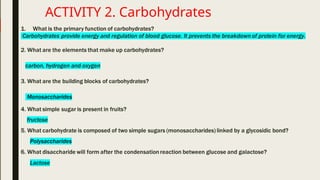
1.What is the primary function of
carbohydrates?
2. What are the elements that make up
carbohydrates?
1. What are the building blocks of
carbohydrates?
2. What simple sugar is present in fruits?
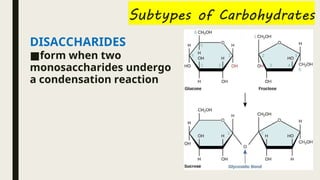
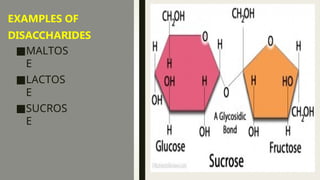
3. What carbohydrate is composed of two
simple sugars (monosaccharides) linked by
a glycosidic bond?
4. What disaccharide will form after the
23.
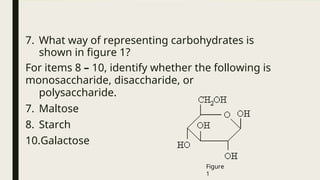
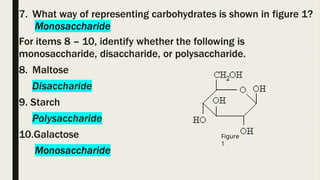
7. What wayof representing carbohydrates is
shown in figure 1?
For items 8 – 10, identify whether the following is
monosaccharide, disaccharide, or
polysaccharide.
7. Maltose
8. Starch
10.Galactose
Figure
1
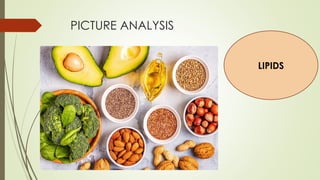
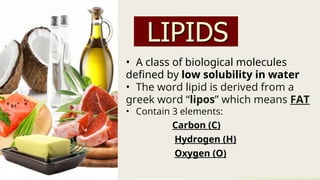
• A classof biological molecules
defined by low solubility in water
• The word lipid is derived from a
greek word “lipos” which means FAT
• Contain 3 elements:
Carbon (C)
Hydrogen (H)
Oxygen (O)
28.
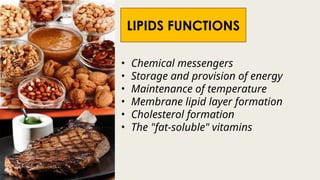
• Chemical messengers
•Storage and provision of energy
• Maintenance of temperature
• Membrane lipid layer formation
• Cholesterol formation
• The "fat-soluble" vitamins
LIPIDS FUNCTIONS
Fats and
Oils
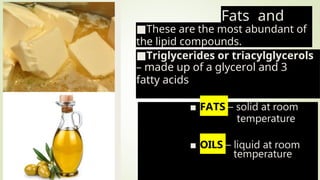
■These arethe most abundant of
the lipid compounds.
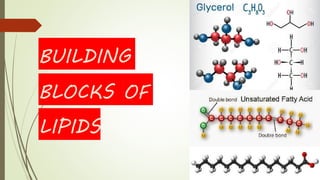
■Triglycerides or triacylglycerols
– made up of a glycerol and 3
fatty acids
32.
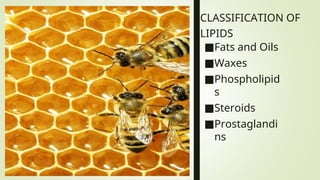
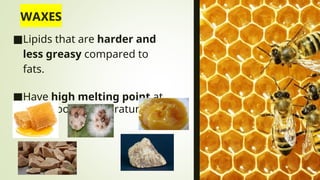
■Lipids that areharder and
less greasy compared to
fats.
■Have high melting point at
solid at room temperature.
33.
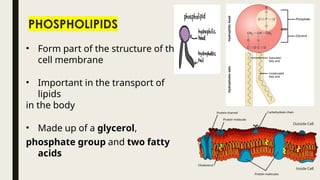
• Form partof the structure of the
cell membrane
• Important in the transport of
lipids
in the body
• Made up of a glycerol,
phosphate group and two fatty
acids
34.
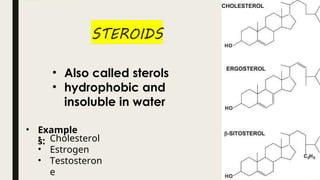
• Also calledsterols
• hydrophobic and
insoluble in water
• Example
s:
• Cholesterol
• Estrogen
• Testosteron
e
35.
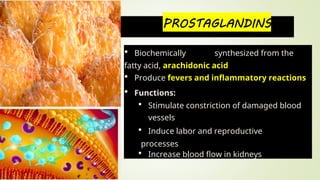
Biochemically synthesizedfrom the
fatty acid, arachidonic acid
Produce fevers and inflammatory reactions
Functions:
Stimulate constriction of damaged blood
vessels
Induce labor and reproductive
processes
Increase blood flow in kidneys
FATS
OILS
36.
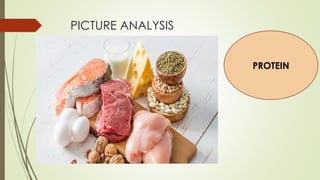
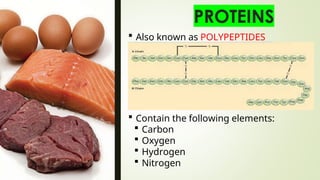
Also knownas POLYPEPTIDES
Contain the following elements:
Carbon
Oxygen
Hydrogen
Nitrogen
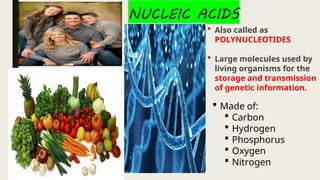
Also calledas
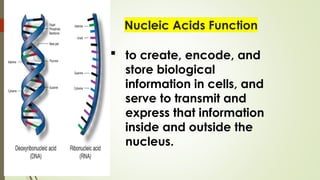
POLYNUCLEOTIDES
Large molecules used by
living organisms for the
storage and transmission
of genetic information.
Made of:
Carbon
Hydrogen
Phosphorus
Oxygen
Nitrogen
to create,encode, and
store biological
information in cells, and
serve to transmit and
express that information
inside and outside the
nucleus.
41.
What will happenif we take too much
or too little supply of glucose?
42.
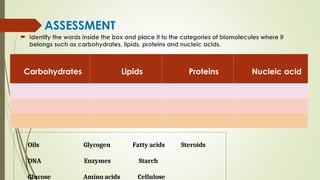
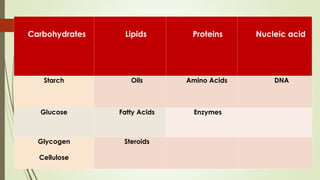
ASSESSMENT
Identify thewords inside the box and place it to the categories of biomolecules where it
belongs such as carbohydrates, lipids, proteins and nucleic acids.
Carbohydrates Lipids Proteins Nucleic acid
Oils Glycogen Fatty acids Steroids
DNA Enzymes Starch
Glucose Amino acids Cellulose
List the foodthat you will going to eat when you
at home and identify it whether it contains
carbohydrates, lipids and proteins. Send your
answers online via messenger or email.