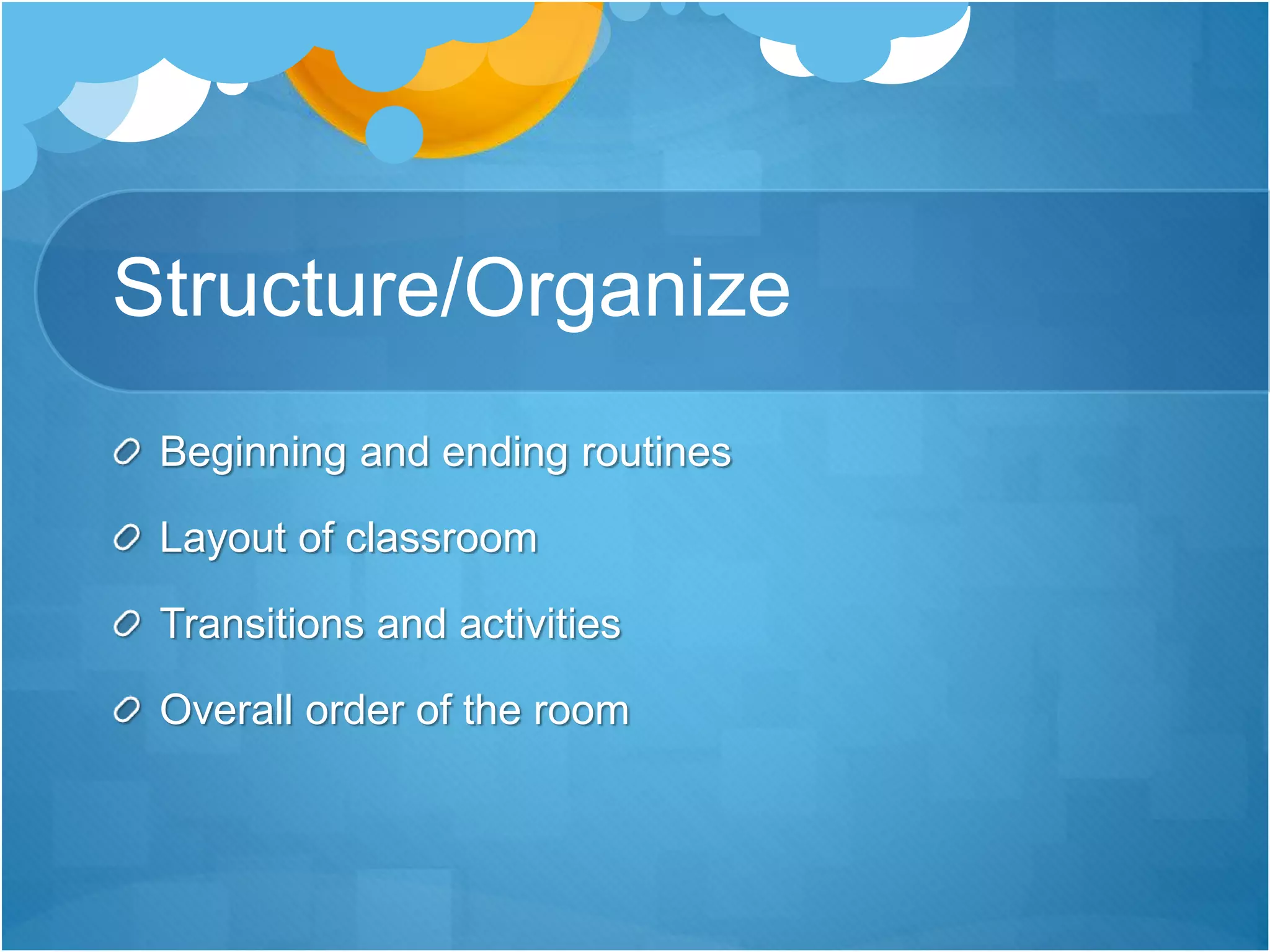
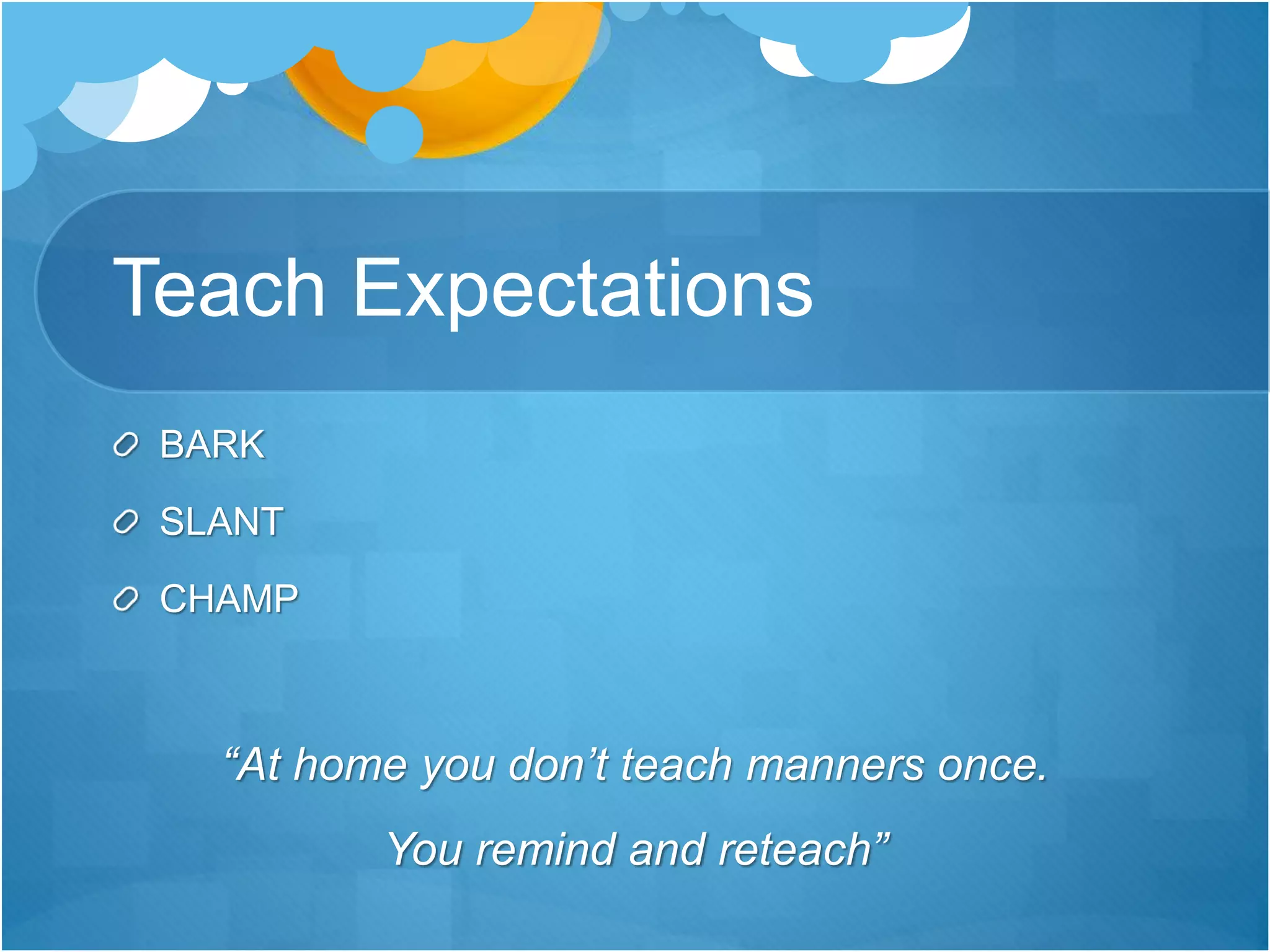
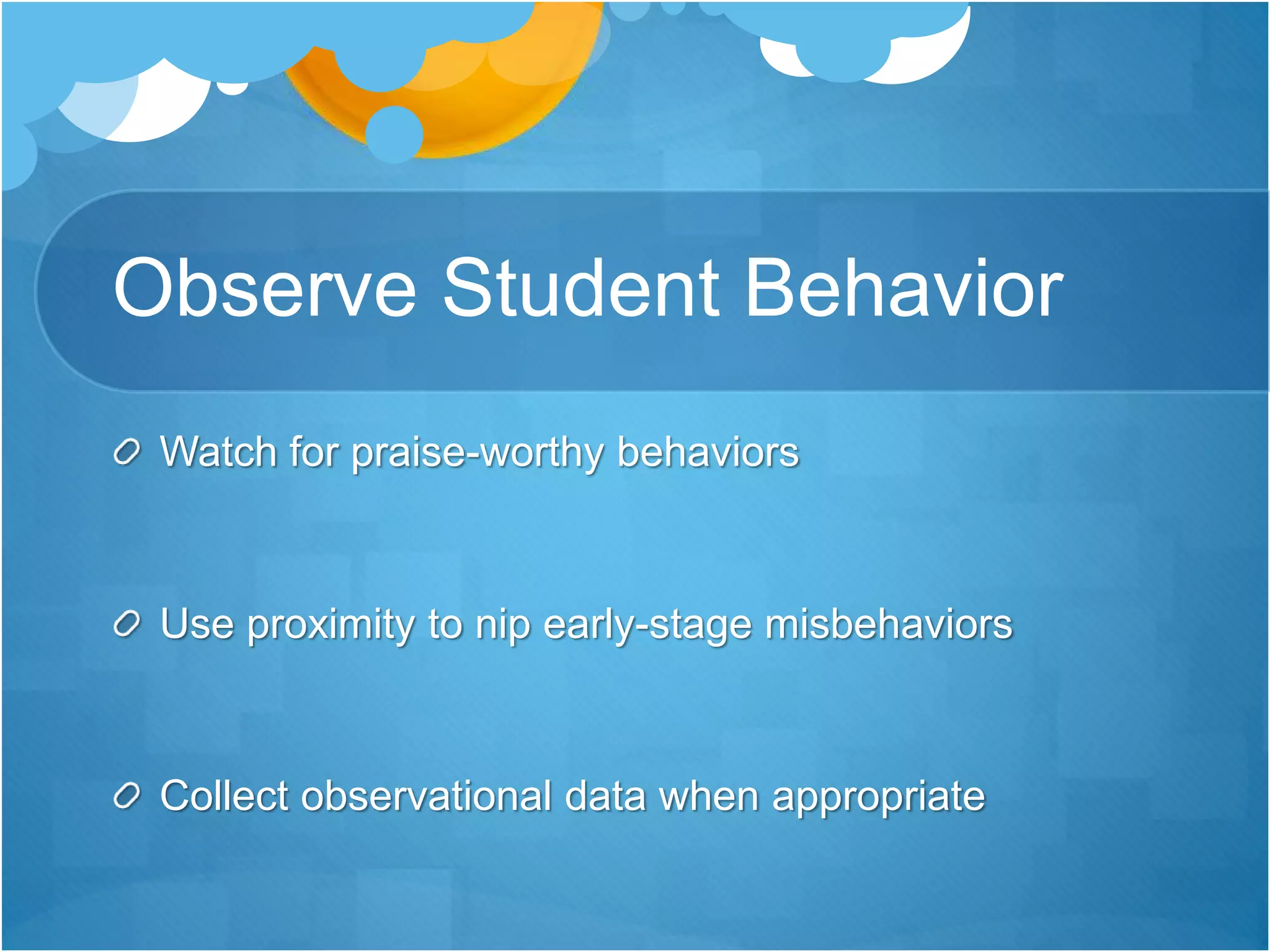
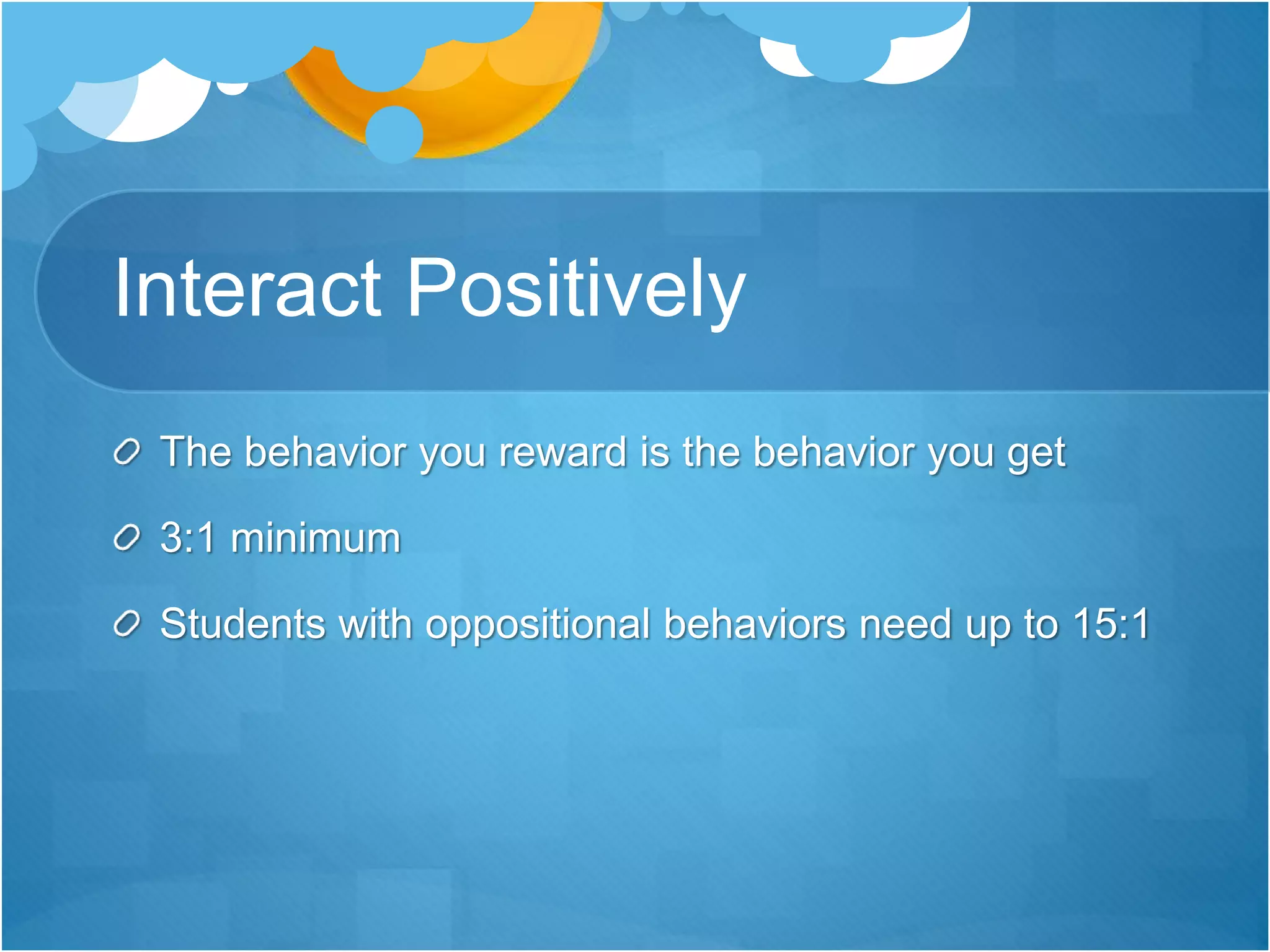
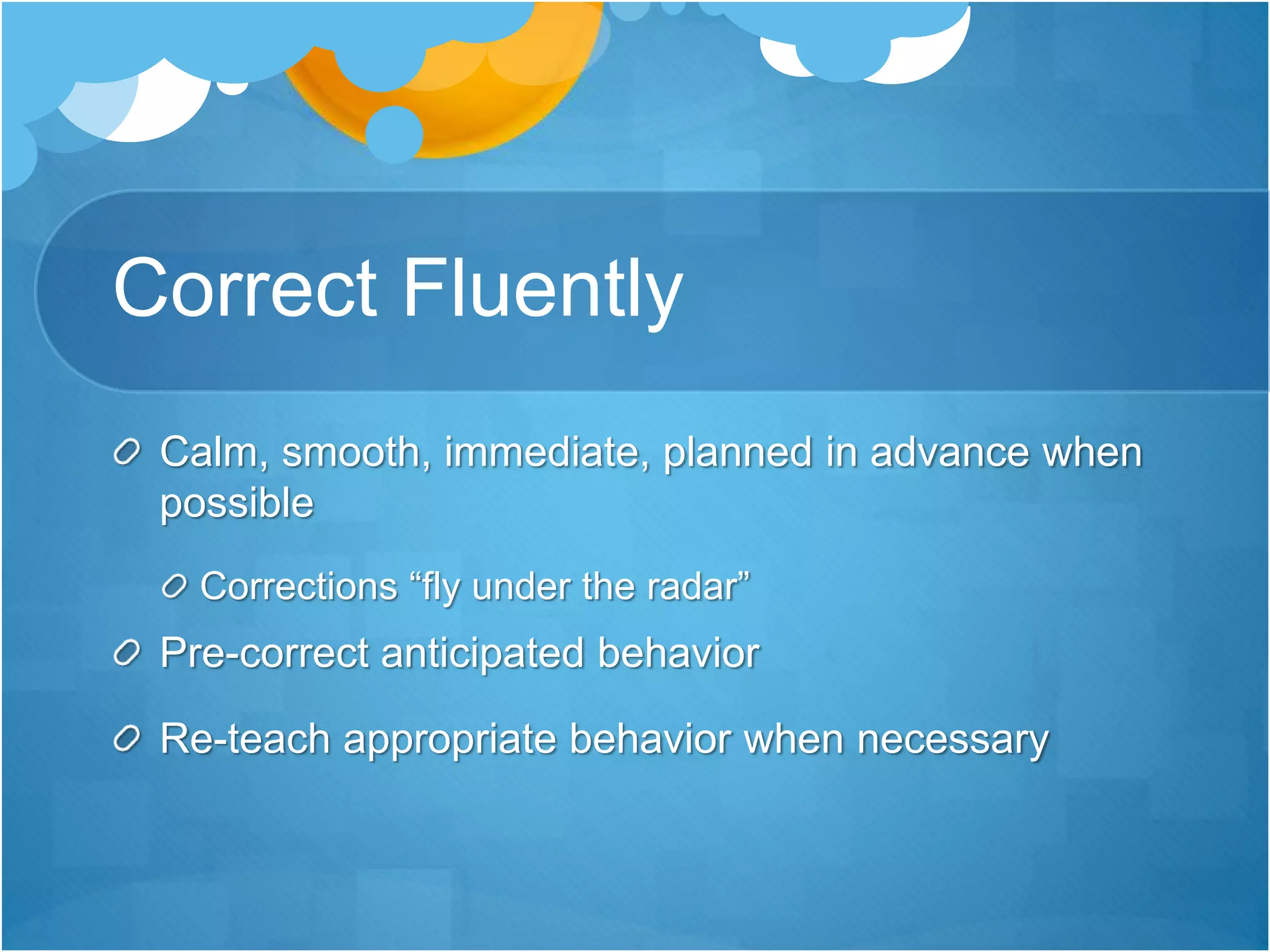
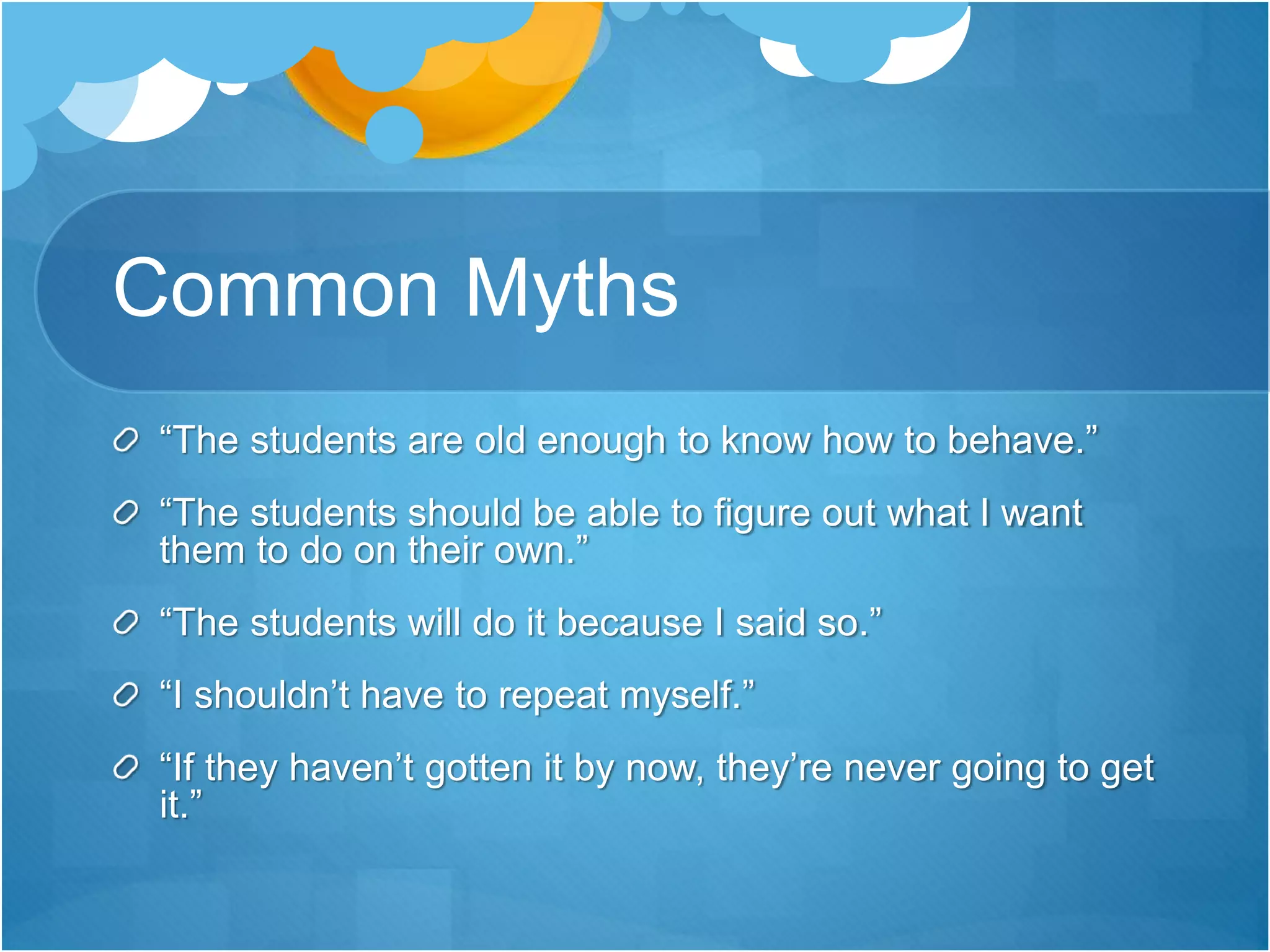
Teachers should structure their classroom with clear routines and expectations to promote positive student behavior. These include beginning and ending routines, classroom layout, and transition activities. Expectations like BARK, SLANT, and CHAMP should be taught to students and consistently retaught and reinforced. Teachers should observe students to praise good behaviors, redirect early misbehaviors, and collect data. Positive interactions with a ratio of at least 3:1 praise to corrections will encourage appropriate behavior, while students with oppositional behaviors may need an even higher ratio. Corrections should be calm, consistent, and pre-planned, and reteaching the behavior is sometimes necessary. Common myths that do not support good behavior management are that students should already know


![Coded Agents – with UiPath SDK + LangGraph [Virtual Hands-on Workshop]](https://cdn.slidesharecdn.com/ss_thumbnails/codedagentsdeck-251215155422-5497c599-thumbnail.jpg?width=640&height=640&fit=bounds)


