Nouns: gender
Nouns are the names of things, whether objects,
people, or places. Nouns in Arabic, both human and
non-human, are either masculine or feminine.
Usually, if a (singular) noun ends in a ta marbuuTa
(‫ةة‬‫ة‬‫ـ‬, pronounced -a), it is feminine, and if it doesn't
end in a ta marbuuTa, it's masculine.
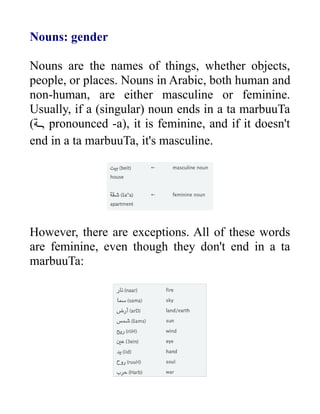
However, there are exceptions. All of these words
are feminine, even though they don't end in a ta
marbuuTa:
Nouns that can refer to both men and women (like
job titles) can be made feminine with the addition
of the suffix ‫ـة‬ (-a).
Nouns: number
Dual nouns
In Arabic, if you're talking about two things, you
need to use the dual form of the noun. Just add the
suffix ‫ةي‬‫ة‬‫ة‬‫ة‬‫ـ‬ (-ein) to the masculine singular form of
the noun.
Note: If the singular form ends in a taa marbuuTa (
‫ةة‬‫ـ‬, -a), you need to "untie it" — change it to a ‫ت‬ —
before adding the ‫ةي‬‫ة‬‫ة‬‫ة‬‫ة‬‫ـ‬ suffix. Take the word ‫ةملة‬‫ة‬‫ة‬‫ة‬‫ة‬‫ج‬
("sentence") as an example:
Note: While you can use the ‫ةي‬‫ـ‬ suffix to talk about
two people, usually it's better to say "‫ةني‬‫ت‬‫ا‬ (itnein) +
[plural noun]":
If you want to talk about a pair of things, like socks
or shoes, you should use the singular form of the
noun, and it'll be understood that you're talking
about a pair. If you want to talk about one item out
of a pair, say ‫ةن‬‫ة‬‫ة‬‫ة‬‫ة‬‫ة‬‫ة‬‫م‬ ‫ةردة‬‫ة‬‫ة‬‫ة‬‫ة‬‫ف‬ (farda min), literally "an
individual from."
‫جديدة‬ ‫جزمة‬ ‫اشتري‬ ‫لزم‬ (laazim ašteri gazma gdiida)
I need to buy a new pair of shoes. - Note that
although "gazma" technically means "shoe," it's
understood that you mean a pair of shoes.
‫شرابي‬ ‫ةن‬‫ة‬‫م‬ ‫فردة‬ ‫ةية‬‫ة‬‫ق‬‫ل‬ ‫ةش‬‫ة‬‫م‬ ‫ةا‬‫ة‬‫ن‬‫أ‬ (ana miš la'ya farda min
šaraabi)
I can't find one of my socks. - Again, note that
"šaraabi" technically means just "my sock," but it's
understood to mean a pair.
Broken plurals
Most Arabic nouns have broken (irregular) plurals.
A few examples:
With these nouns, you simply have to memorize
their plural forms until you internalize the broken
plural patterns. Eventually, once you've memorized
enough broken plurals, you'll start being able to
predict the plural forms of new nouns.
Regular masculine plural
There are some nouns that have regular (sound)
plurals. Almost all masculine nouns that have
regular plurals fall under the category of job titles
etc. that can refer to either men or a mixed group of
men and women. To make one of these nouns
plural, you simply add the suffix ‫ـي‬ (-iin).
Note: In Arabic, plural human nouns that take the
masculine form can refer to either a group of all
men, or a group of men and women. So a group of
‫ةي‬‫ة‬‫س‬‫ةهند‬‫ة‬‫م‬ could be a bunch of male engineers, or a
mixed group of male and female engineers.
Regular feminine plurals
To make a feminine noun (that doesn't have a
broken plural form) plural, you drop the taa
marbuuTa and add the suffix ‫ةات‬‫ة‬‫ة‬‫ة‬‫ة‬‫ة‬‫ة‬‫ة‬‫ة‬‫ـ‬ (-aat). Many
foreign loanwords, even some that are masculine,
take this plural form (see ‫جاكيتة‬ and ‫.)كومبيوتر‬
Note: If you want to talk about a group of all
women, you take the masculine singular form of
the noun and, again, add the ‫ـات‬ suffix.

5 theory

  • 1.
    Nouns: gender Nouns arethe names of things, whether objects, people, or places. Nouns in Arabic, both human and non-human, are either masculine or feminine. Usually, if a (singular) noun ends in a ta marbuuTa (‫ةة‬‫ة‬‫ـ‬, pronounced -a), it is feminine, and if it doesn't end in a ta marbuuTa, it's masculine. However, there are exceptions. All of these words are feminine, even though they don't end in a ta marbuuTa:
  • 2.
    Nouns that canrefer to both men and women (like job titles) can be made feminine with the addition of the suffix ‫ـة‬ (-a). Nouns: number Dual nouns In Arabic, if you're talking about two things, you need to use the dual form of the noun. Just add the suffix ‫ةي‬‫ة‬‫ة‬‫ة‬‫ـ‬ (-ein) to the masculine singular form of the noun. Note: If the singular form ends in a taa marbuuTa ( ‫ةة‬‫ـ‬, -a), you need to "untie it" — change it to a ‫ت‬ —
  • 3.
    before adding the‫ةي‬‫ة‬‫ة‬‫ة‬‫ة‬‫ـ‬ suffix. Take the word ‫ةملة‬‫ة‬‫ة‬‫ة‬‫ة‬‫ج‬ ("sentence") as an example: Note: While you can use the ‫ةي‬‫ـ‬ suffix to talk about two people, usually it's better to say "‫ةني‬‫ت‬‫ا‬ (itnein) + [plural noun]": If you want to talk about a pair of things, like socks or shoes, you should use the singular form of the noun, and it'll be understood that you're talking about a pair. If you want to talk about one item out of a pair, say ‫ةن‬‫ة‬‫ة‬‫ة‬‫ة‬‫ة‬‫ة‬‫م‬ ‫ةردة‬‫ة‬‫ة‬‫ة‬‫ة‬‫ف‬ (farda min), literally "an individual from." ‫جديدة‬ ‫جزمة‬ ‫اشتري‬ ‫لزم‬ (laazim ašteri gazma gdiida) I need to buy a new pair of shoes. - Note that although "gazma" technically means "shoe," it's understood that you mean a pair of shoes.
  • 4.
    ‫شرابي‬ ‫ةن‬‫ة‬‫م‬ ‫فردة‬‫ةية‬‫ة‬‫ق‬‫ل‬ ‫ةش‬‫ة‬‫م‬ ‫ةا‬‫ة‬‫ن‬‫أ‬ (ana miš la'ya farda min šaraabi) I can't find one of my socks. - Again, note that "šaraabi" technically means just "my sock," but it's understood to mean a pair. Broken plurals Most Arabic nouns have broken (irregular) plurals. A few examples: With these nouns, you simply have to memorize their plural forms until you internalize the broken plural patterns. Eventually, once you've memorized enough broken plurals, you'll start being able to predict the plural forms of new nouns.
  • 5.
    Regular masculine plural Thereare some nouns that have regular (sound) plurals. Almost all masculine nouns that have regular plurals fall under the category of job titles etc. that can refer to either men or a mixed group of men and women. To make one of these nouns plural, you simply add the suffix ‫ـي‬ (-iin). Note: In Arabic, plural human nouns that take the masculine form can refer to either a group of all men, or a group of men and women. So a group of ‫ةي‬‫ة‬‫س‬‫ةهند‬‫ة‬‫م‬ could be a bunch of male engineers, or a mixed group of male and female engineers. Regular feminine plurals To make a feminine noun (that doesn't have a broken plural form) plural, you drop the taa
  • 6.
    marbuuTa and addthe suffix ‫ةات‬‫ة‬‫ة‬‫ة‬‫ة‬‫ة‬‫ة‬‫ة‬‫ة‬‫ـ‬ (-aat). Many foreign loanwords, even some that are masculine, take this plural form (see ‫جاكيتة‬ and ‫.)كومبيوتر‬ Note: If you want to talk about a group of all women, you take the masculine singular form of the noun and, again, add the ‫ـات‬ suffix.