CARACTERISTICAS

COLEGIO DE POSTGRADUADOS-HF-FIT613
Pucciniomycotina
Pucciniomycetes

¡¡¡¡NO BASIDIOCARPO !!!!
!!!! NO FIBULAS!!!!
!!!! CINCO ESPORAS¡¡¡¡¡
COLEGIO DE POSTGRADUADOS-HF-FIT613
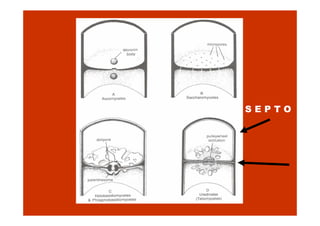
SEPTO
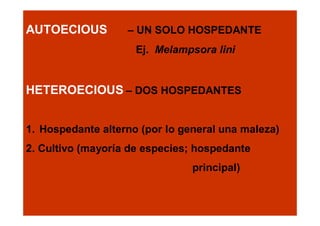
AUTOECIOUS

– UN SOLO HOSPEDANTE
Ej. Melampsora lini

HETEROECIOUS – DOS HOSPEDANTES
1. Hospedante alterno (por lo general una maleza)
2. Cultivo (mayoría de especies; hospedante
principal)
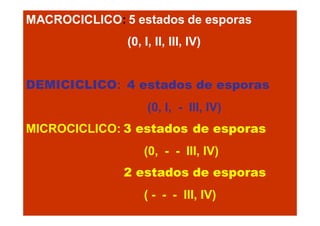
MACROCICLICO: 5 estados de esporas
(0, I, II, III, IV)
DEMICICLICO: 4 estados de esporas
(0, I, - III, IV)
MICROCICLICO: 3 estados de esporas
(0, - - III, IV)
2 estados de esporas
( - - - III, IV)
S
I
N
T
O
M
A
S
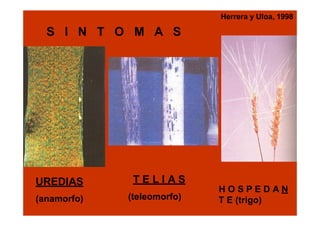
Herrera y Uloa, 1998

S I N T O M A S

UREDIAS
(anamorfo)

TELIAS
(teleomorfo)

HOSPEDAN
T E (trigo)
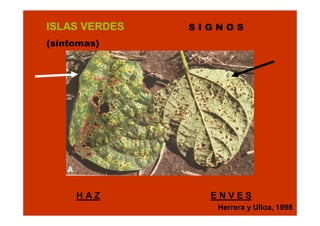
ISLAS VERDES

SIGNOS

(síntomas)

HAZ

ENVES
Herrera y Ulloa, 1998
+ ESTADOS DE ESPORAS
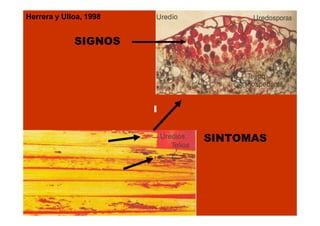
Herrera y Ulloa, 1998

SIGNOS

I

SINTOMAS
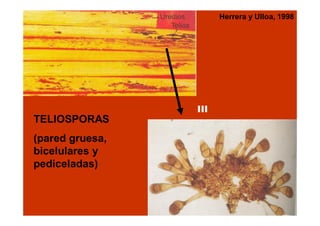
Herrera y Ulloa, 1998

III

TELIOSPORAS
(pared gruesa,
bicelulares y
pediceladas)
Herrera y Ulloa, 1998

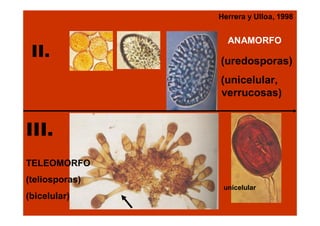
II.

ANAMORFO

(uredosporas)
(unicelular,
verrucosas)

III.
TELEOMORFO
(teliosporas)
unicelular

(bicelular)
Herrera y Ulloa, 1998

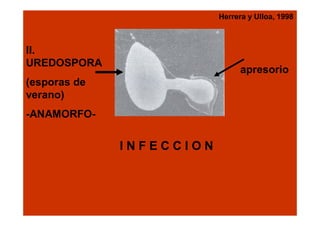
II.
UREDOSPORA

apresorio

(esporas de
verano)
-ANAMORFO-

INFECCION
Herrera y Ulloa, 1998

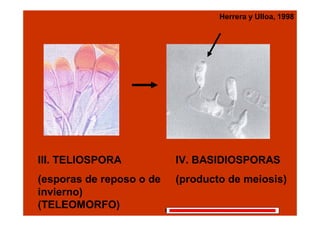
III. TELIOSPORA

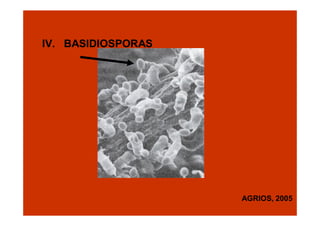
IV. BASIDIOSPORAS

(esporas de reposo o de
invierno)
(TELEOMORFO)

(producto de meiosis)
COLEGIO DE POSTGRADUADOS-HF-FIT613
-----------------------------------------------------------------------------------
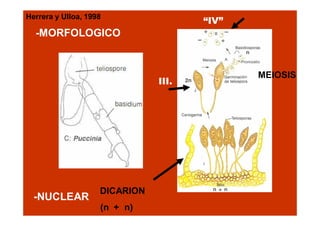
“IV”

Herrera y Ulloa, 1998

-MORFOLOGICO

III.

-NUCLEAR

DICARION
(n + n)

MEIOSIS
Herrera y Ulloa, 1998

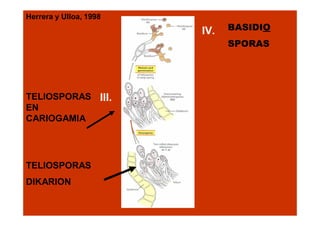
IV.

BASIDIO
SPORAS

TELIOSPORAS III.
EN
CARIOGAMIA

TELIOSPORAS
DIKARION
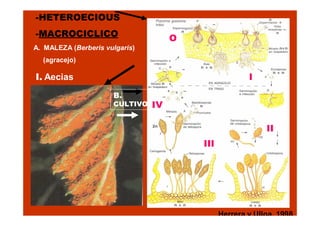
-HETEROECIOUS
-MACROCICLICO

O

A. MALEZA (Berberis vulgaris)
(agracejo)

I. Aecias

I
B.

CULTIVO

IV
II
III

Herrera y Ulloa, 1998
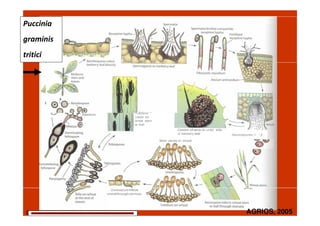
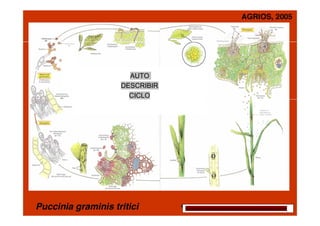
Puccinia graminis
·nía
graminis

Spermatia fertilize compat;ble
receptive hypha
Fertilized
. receptive hypha

aEJo
--

/

¡9'"

tritici

.....-l / Bas1diospores infect

. ('J!!:J

barberry leaf directly

t
.
®

•
Dikaryotic mycelium

berry
' . } stem and

r!
J :1

Spermagonia on barberry leaf

rrn....,.--.----;-- ,...,
,-

Basidiospore


o·

'

Tt:liddnd
uredia on
wheat stem
or leaf

Basidium


Clusters of aecia on under side
of barberry leaf
More uredia on wheat

Uredospore infects
wheat through stomata

--------------------------------------------------------------------------------

Aeciospores;:/

•)
-Basidiospore
(n)

8=---- +Basid iospore
(n)

AUTO
DESCRIBIR
CICLO
Dispersal of
aeciospores to
o o wheat i n spring

xxxxxxxxxxxxxxxxxxxxxxxxxxxxxxxxxxxxxxxxxxxxxxxxxxxxxxxx
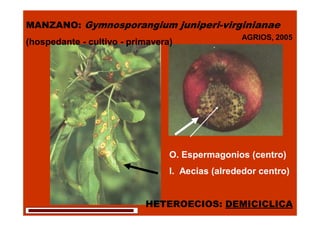
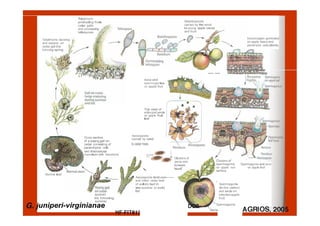
MANZANO: Gymnosporangium juniperi-virginianae
(hospedante - cultivo - primavera)

AGRIOS, 2005

O. Espermagonios (centro)
I. Aecias (alrededor centro)

COLEGIO DE POSTGRADUADOS-HF-FIT613
xxxxxxxxxxxxxxxxxxxxxxxxxxxxxxxxxxxxxxxxxxxxxxxxxxxxxxxxxx
xx

HETEROECIOS: DEMICICLICA
AGRIOS, 2005

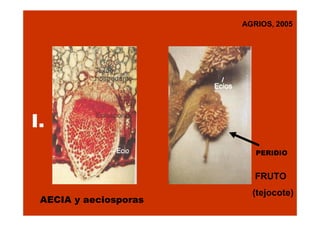
I.
PERIDIO

FRUTO
AECIA y aeciosporas

(tejocote)
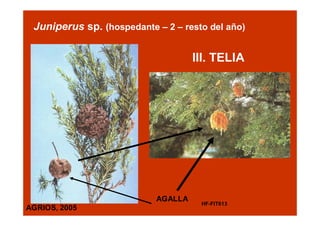
Juniperus sp. (hospedante – 2 – resto del año)

III. TELIA

AGALLA
AGRIOS, 2005

HF-FIT613
IV. BASIDIOSPORAS

AGRIOS, 2005
Telial horn
protruding from
cedar galls
and producing
teliospores

Basidiospores
carried by the wind
to young apple leaves
and fruit
Basidiospore germinales
on apple tissue and
penetrates cells directly

Telial horns develop
and expand on
cedar gall the
followi g spring
n

-Aecia and
spermogonia
on apple fruit
fruit

Top view of
enlarged aecia
on apple fruit
leaf

Cross section
of a young gall on
cedar consisting of
paranchyma cells
and intercellular
mycelium with haustoria

Aeciospores
carried by wind

to cedar trees


Clusters of
aecia on
lower
leaf

spermagonia
on upper leaf
surface

Normal leaf
Aeciospores land on---and infect cedar leaf
of axillary bud in
late summer or early
fall
appears
the following
summer

uniperi-virginianae

Spermagonia
(in the center)
and aecia on
infected apple
fruit
Spermagonia

Spermagonia and aecia
on apple leaf
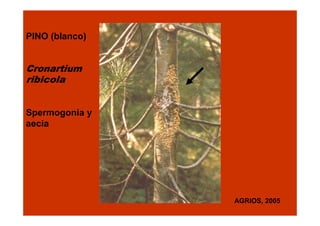
PINO (blanco)

Cronartium
ribicola
Spermogonia y
aecia

AGRIOS, 2005
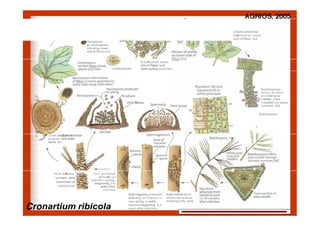
Uredia and telial
collumns on lower
side of Ribes leaf

Aeciospore
(or uredospore)
infecting lower
slde of Ribes leaf


Uredospores

l!redium on lower
side of Ribes leaf
(late spring,summer)

Basidiospores
carried by wind
to white pine
i
needles a few
hundred feet away
(summer,fall)

tissue

Basidiospore

H

l,

Cross section of
branch
aecia (A)

Aecia blisters
on stem and
branches of
white pine

'ele(

Aecia produced
annually on
branch in spring
beginning 3-6
years after
infection
Spermagonia produced

nartium ribicola

Early infection of

anrnually on branch in
late spring or early

white pine branch
showing puffy bark

summer beginning 2-4
years after infection.

xxxxxxxxxxxxxxxxxxxxxxxxxxxxxxxxxxxxxxxxxxxxxxxxxxxxxxxxxx
xx
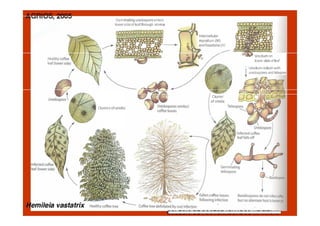
Hemileia vastatrix

CAFÉ (no se conoce hospedante alterno)
AGRIOS, 2005
Germínating uredospore enters
lower sí de of leaf through stoma
lntercellular
mycelíum (M)
and haustoria (H)
Uredíum on
lower side of leaf

j
Cluster
of uredia
Clusters of uredia

Uredium-telium with
uredospores and teliospores
¡ SISTEMATICA, BIOLOGIA, FITOPATOLOGIA,
EPIDEMIOLOGIA, CUARENTENADOS, CONTROL !
COLEGIO DE POSTGRADUADOS-HF-FIT613

5 b 2-3-presentacion-cap-iii

  • 1.
  • 2.
    Pucciniomycotina Pucciniomycetes ¡¡¡¡NO BASIDIOCARPO !!!! !!!!NO FIBULAS!!!! !!!! CINCO ESPORAS¡¡¡¡¡ COLEGIO DE POSTGRADUADOS-HF-FIT613
  • 3.
  • 5.
    AUTOECIOUS – UN SOLOHOSPEDANTE Ej. Melampsora lini HETEROECIOUS – DOS HOSPEDANTES 1. Hospedante alterno (por lo general una maleza) 2. Cultivo (mayoría de especies; hospedante principal)
  • 7.
    MACROCICLICO: 5 estadosde esporas (0, I, II, III, IV) DEMICICLICO: 4 estados de esporas (0, I, - III, IV) MICROCICLICO: 3 estados de esporas (0, - - III, IV) 2 estados de esporas ( - - - III, IV)
  • 8.
  • 9.
    Herrera y Uloa,1998 S I N T O M A S UREDIAS (anamorfo) TELIAS (teleomorfo) HOSPEDAN T E (trigo)
  • 10.
  • 11.
    + ESTADOS DEESPORAS
  • 12.
    Herrera y Ulloa,1998 SIGNOS I SINTOMAS
  • 13.
    Herrera y Ulloa,1998 III TELIOSPORAS (pared gruesa, bicelulares y pediceladas)
  • 14.
    Herrera y Ulloa,1998 II. ANAMORFO (uredosporas) (unicelular, verrucosas) III. TELEOMORFO (teliosporas) unicelular (bicelular)
  • 15.
    Herrera y Ulloa,1998 II. UREDOSPORA apresorio (esporas de verano) -ANAMORFO- INFECCION
  • 16.
    Herrera y Ulloa,1998 III. TELIOSPORA IV. BASIDIOSPORAS (esporas de reposo o de invierno) (TELEOMORFO) (producto de meiosis) COLEGIO DE POSTGRADUADOS-HF-FIT613 -----------------------------------------------------------------------------------
  • 17.
    “IV” Herrera y Ulloa,1998 -MORFOLOGICO III. -NUCLEAR DICARION (n + n) MEIOSIS
  • 18.
    Herrera y Ulloa,1998 IV. BASIDIO SPORAS TELIOSPORAS III. EN CARIOGAMIA TELIOSPORAS DIKARION
  • 20.
    -HETEROECIOUS -MACROCICLICO O A. MALEZA (Berberisvulgaris) (agracejo) I. Aecias I B. CULTIVO IV II III Herrera y Ulloa, 1998
  • 21.
    Puccinia graminis ·nía graminis Spermatia fertilizecompat;ble receptive hypha Fertilized . receptive hypha aEJo -- / ¡9'" tritici .....-l / Bas1diospores infect . ('J!!:J barberry leaf directly t . ® • Dikaryotic mycelium berry ' . } stem and r! J :1 Spermagonia on barberry leaf rrn....,.--.----;-- ,..., ,- Basidiospore o· ' Tt:liddnd uredia on wheat stem or leaf Basidium Clusters of aecia on under side of barberry leaf More uredia on wheat Uredospore infects wheat through stomata -------------------------------------------------------------------------------- Aeciospores;:/ •)
  • 22.
    -Basidiospore (n) 8=---- +Basid iospore (n) AUTO DESCRIBIR CICLO Dispersalof aeciospores to o o wheat i n spring xxxxxxxxxxxxxxxxxxxxxxxxxxxxxxxxxxxxxxxxxxxxxxxxxxxxxxxx
  • 23.
    MANZANO: Gymnosporangium juniperi-virginianae (hospedante- cultivo - primavera) AGRIOS, 2005 O. Espermagonios (centro) I. Aecias (alrededor centro) COLEGIO DE POSTGRADUADOS-HF-FIT613 xxxxxxxxxxxxxxxxxxxxxxxxxxxxxxxxxxxxxxxxxxxxxxxxxxxxxxxxxx xx HETEROECIOS: DEMICICLICA
  • 24.
  • 25.
    Juniperus sp. (hospedante– 2 – resto del año) III. TELIA AGALLA AGRIOS, 2005 HF-FIT613
  • 26.
  • 27.
    Telial horn protruding from cedargalls and producing teliospores Basidiospores carried by the wind to young apple leaves and fruit Basidiospore germinales on apple tissue and penetrates cells directly Telial horns develop and expand on cedar gall the followi g spring n -Aecia and spermogonia on apple fruit fruit Top view of enlarged aecia on apple fruit leaf Cross section of a young gall on cedar consisting of paranchyma cells and intercellular mycelium with haustoria Aeciospores carried by wind to cedar trees Clusters of aecia on lower leaf spermagonia on upper leaf surface Normal leaf Aeciospores land on---and infect cedar leaf of axillary bud in late summer or early fall appears the following summer uniperi-virginianae Spermagonia (in the center) and aecia on infected apple fruit Spermagonia Spermagonia and aecia on apple leaf
  • 28.
  • 29.
    Uredia and telial collumnson lower side of Ribes leaf Aeciospore (or uredospore) infecting lower slde of Ribes leaf Uredospores l!redium on lower side of Ribes leaf (late spring,summer) Basidiospores carried by wind to white pine i needles a few hundred feet away (summer,fall) tissue Basidiospore H l, Cross section of branch aecia (A) Aecia blisters on stem and branches of white pine 'ele( Aecia produced annually on branch in spring beginning 3-6 years after infection Spermagonia produced nartium ribicola Early infection of anrnually on branch in late spring or early white pine branch showing puffy bark summer beginning 2-4 years after infection. xxxxxxxxxxxxxxxxxxxxxxxxxxxxxxxxxxxxxxxxxxxxxxxxxxxxxxxxxx xx

  • 30.
    Hemileia vastatrix CAFÉ (nose conoce hospedante alterno) AGRIOS, 2005
  • 31.
    Germínating uredospore enters lowersí de of leaf through stoma lntercellular mycelíum (M) and haustoria (H) Uredíum on lower side of leaf j Cluster of uredia Clusters of uredia Uredium-telium with uredospores and teliospores
  • 32.
    ¡ SISTEMATICA, BIOLOGIA,FITOPATOLOGIA, EPIDEMIOLOGIA, CUARENTENADOS, CONTROL ! COLEGIO DE POSTGRADUADOS-HF-FIT613