FUNDAMENTALS OF
COMPUTING TECHNOLOGY
DEPARTMENT OF PHARMACY
Outline
Fundamentals of Computing technology
• Components of a Computer
• Software VS Hardware
• Types of Computing devices
• Elements of Information System
• Memory
DEPARTMENT OF PHARMACY
What Is a Computer?
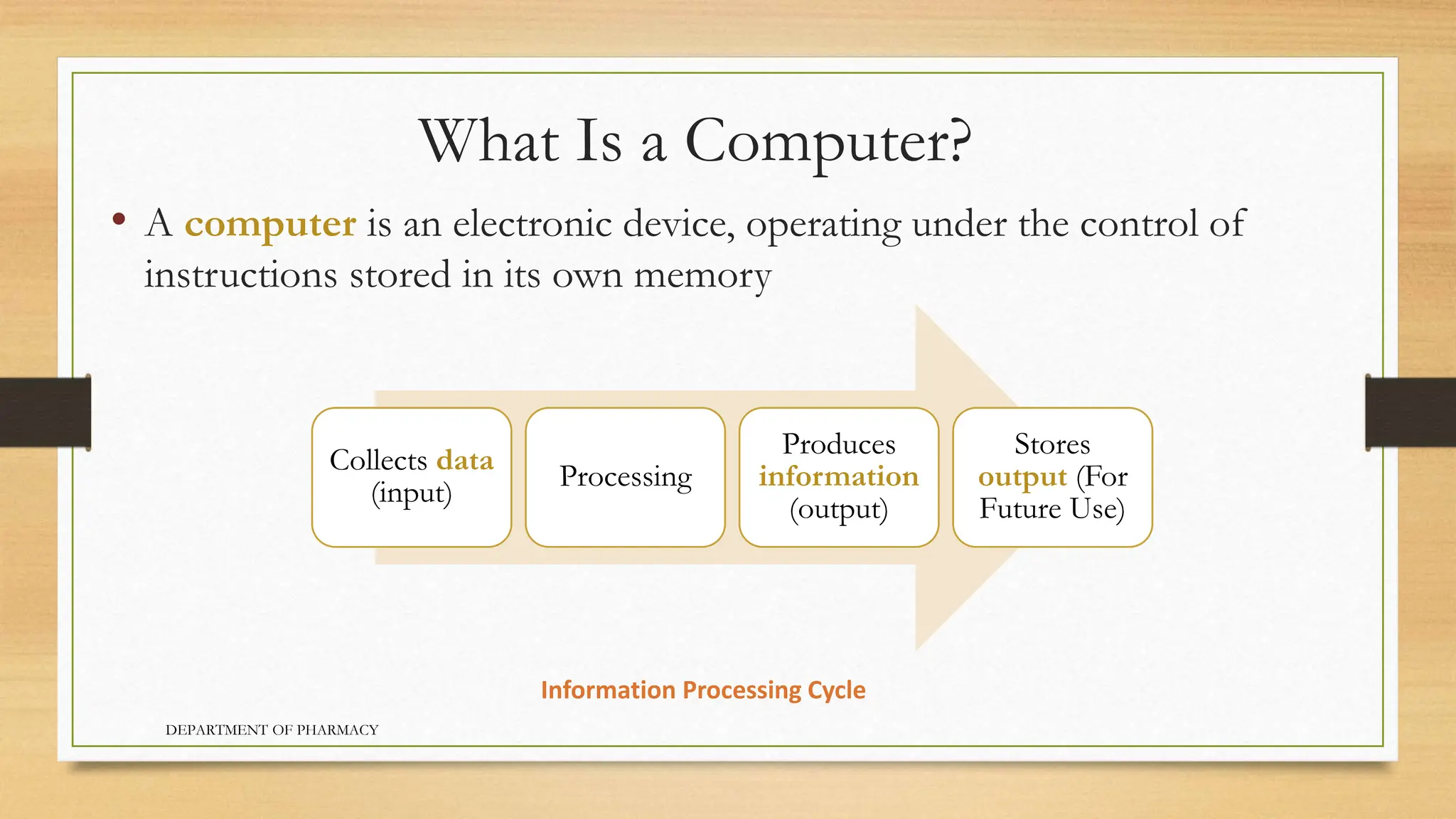
• A computer is an electronic device, operating under the control of
instructions stored in its own memory
Collects data
(input)
Processing
Produces
information
(output)
Stores
output (For
Future Use)
Information Processing Cycle
DEPARTMENT OF PHARMACY
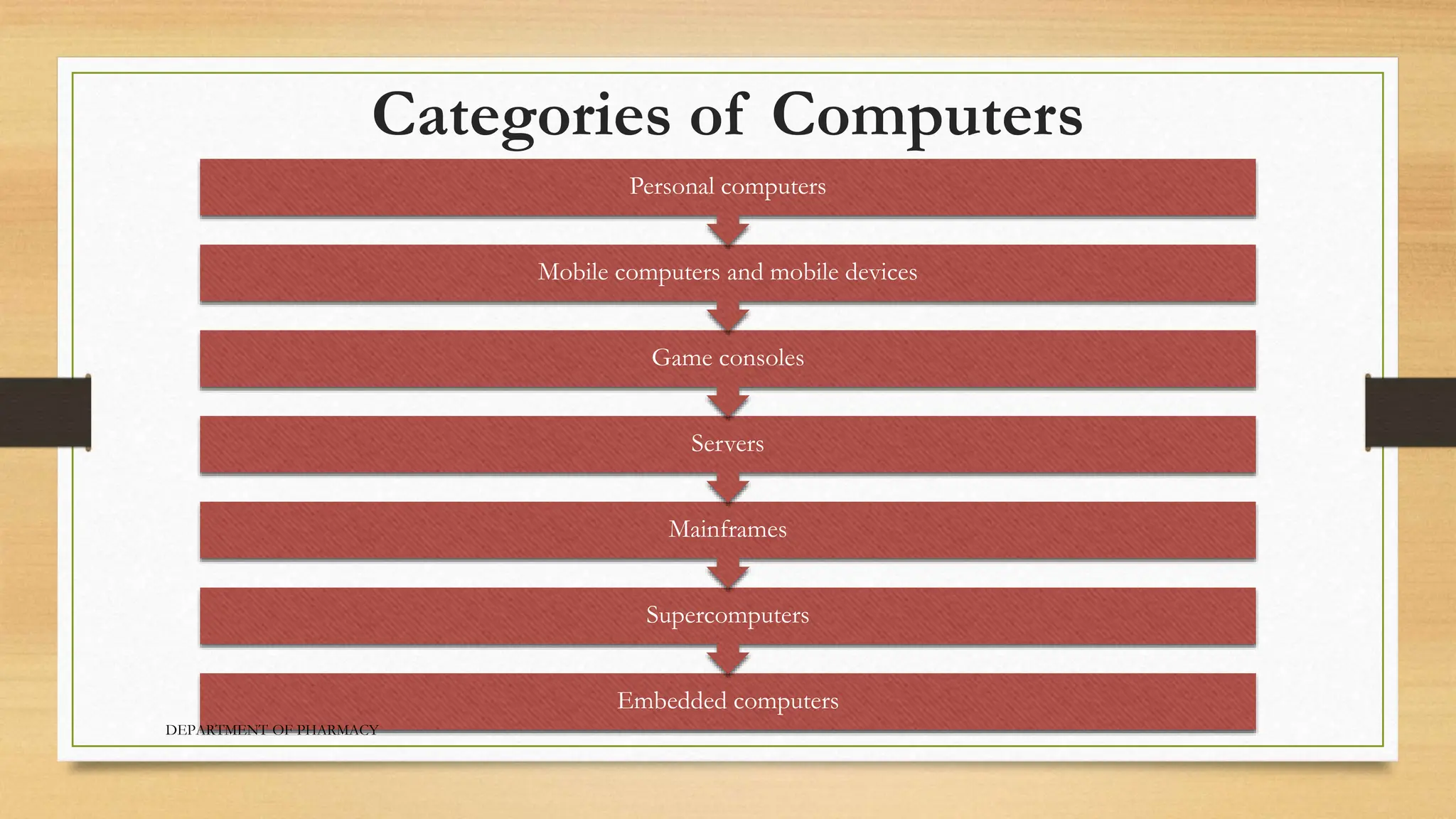
Categories of Computers
Embedded computers
Supercomputers
Mainframes
Servers
Game consoles
Mobile computers and mobile devices
Personal computers
DEPARTMENT OF PHARMACY
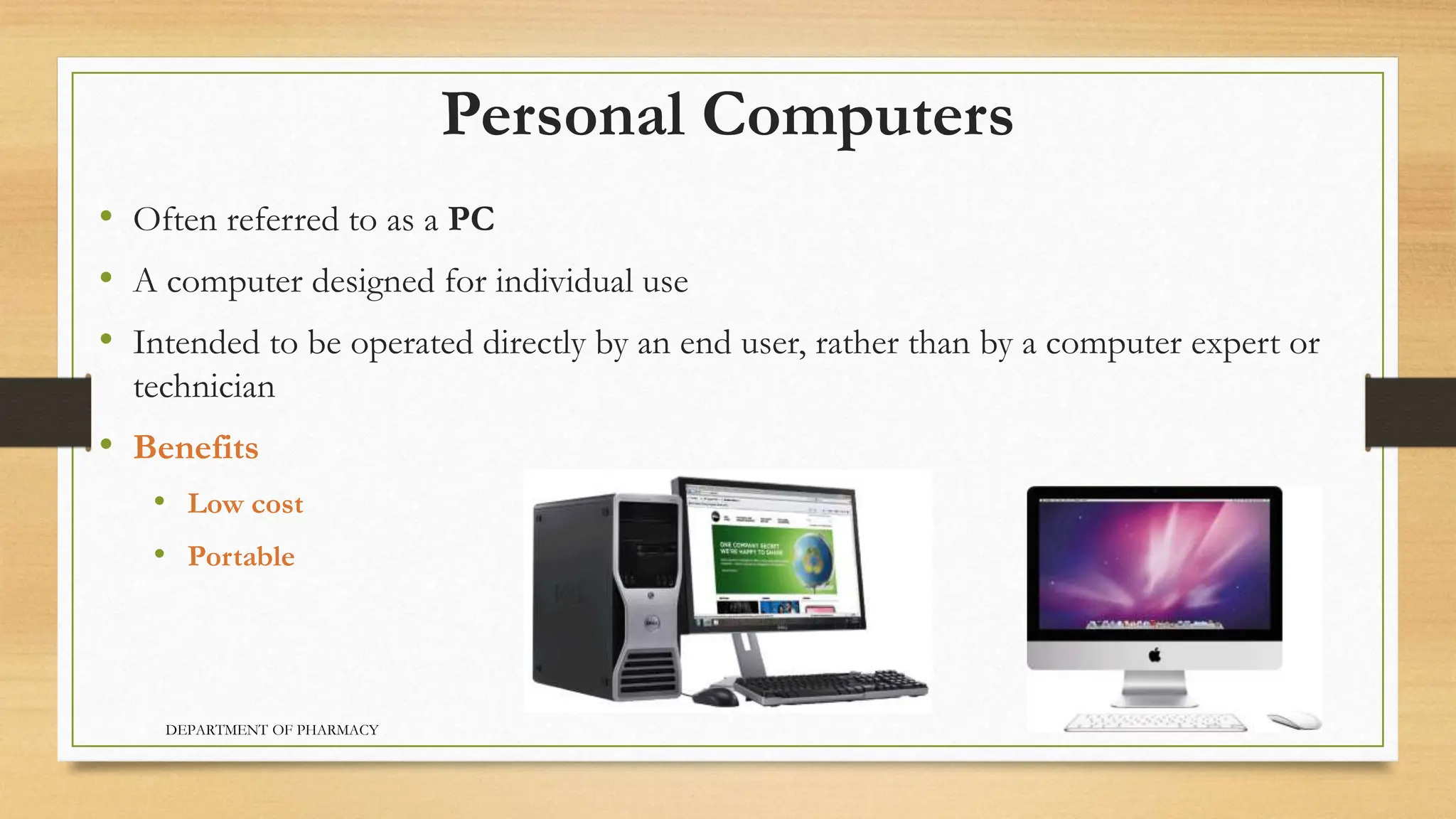
Personal Computers
• Often referred to as a PC
• A computer designed for individual use
• Intended to be operated directly by an end user, rather than by a computer expert or
technician
• Benefits
• Low cost
• Portable
DEPARTMENT OF PHARMACY
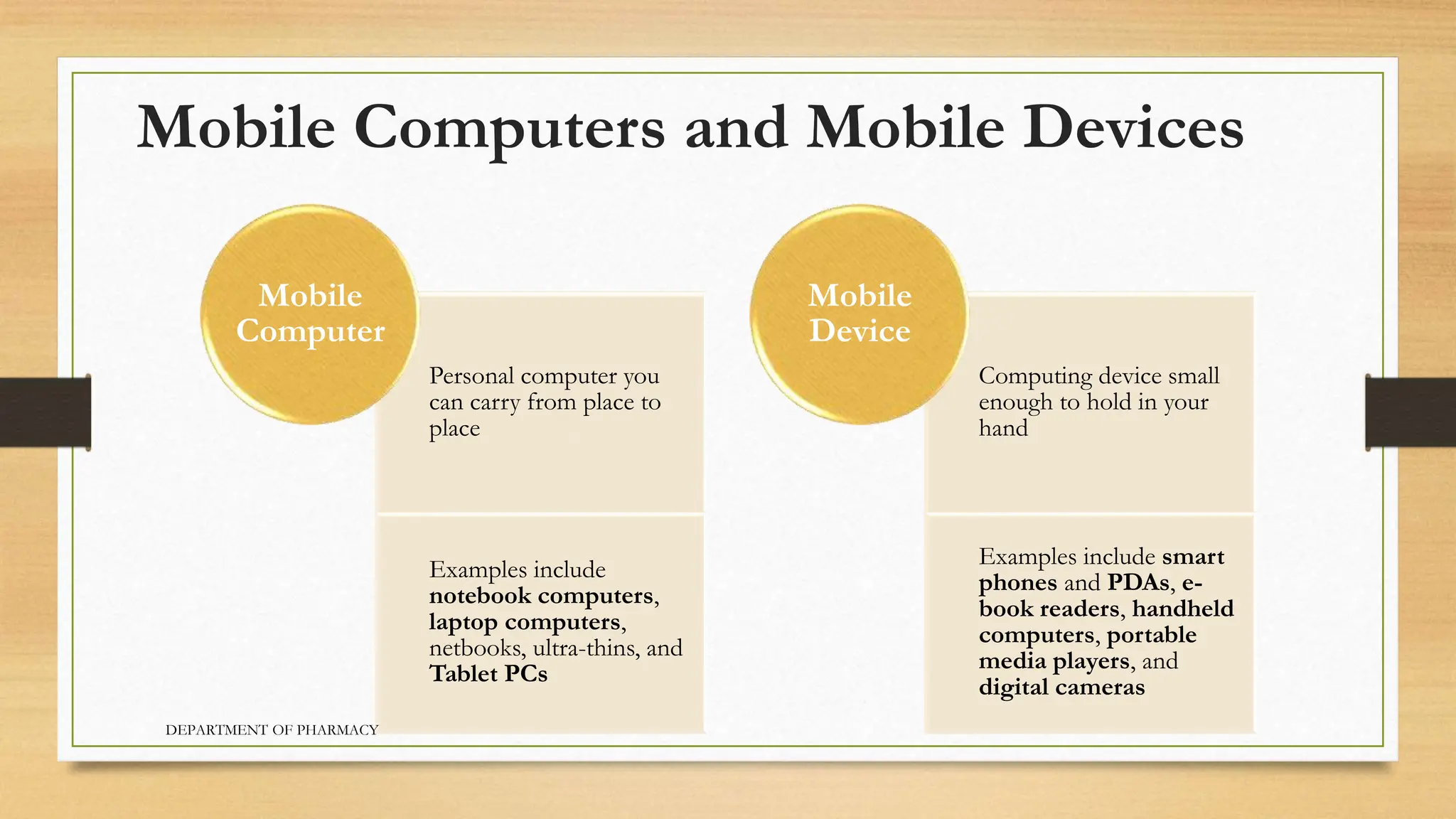
Mobile Computers and Mobile Devices
Personal computer you
can carry from place to
place
Examples include
notebook computers,
laptop computers,
netbooks, ultra-thins, and
Tablet PCs
Mobile
Computer
Computing device small
enough to hold in your
hand
Examples include smart
phones and PDAs, e-
book readers, handheld
computers, portable
media players, and
digital cameras
Mobile
Device
DEPARTMENT OF PHARMACY
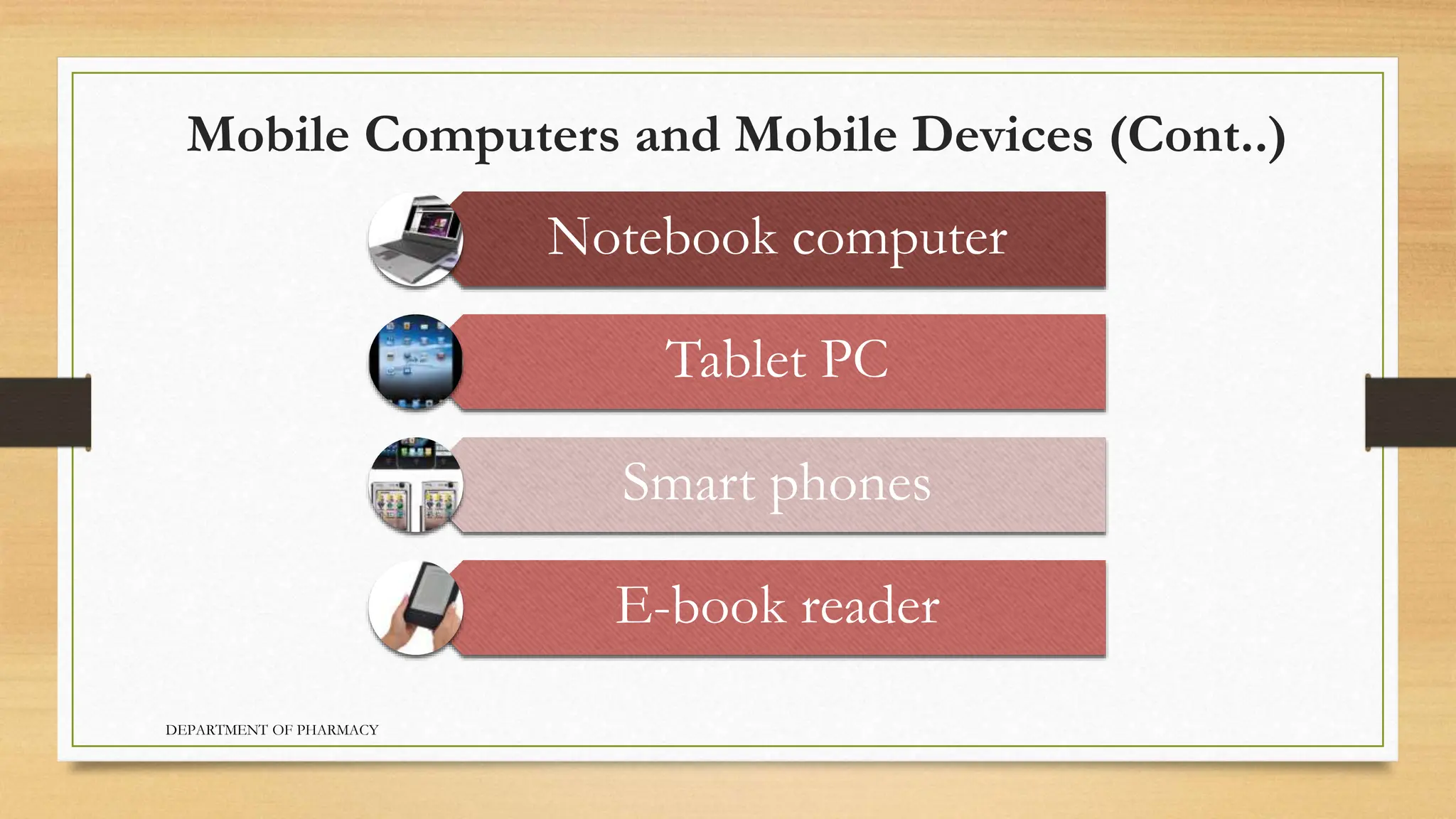
Mobile Computers and Mobile Devices (Cont..)
Notebook computer
Tablet PC
Smart phones
E-book reader
DEPARTMENT OF PHARMACY
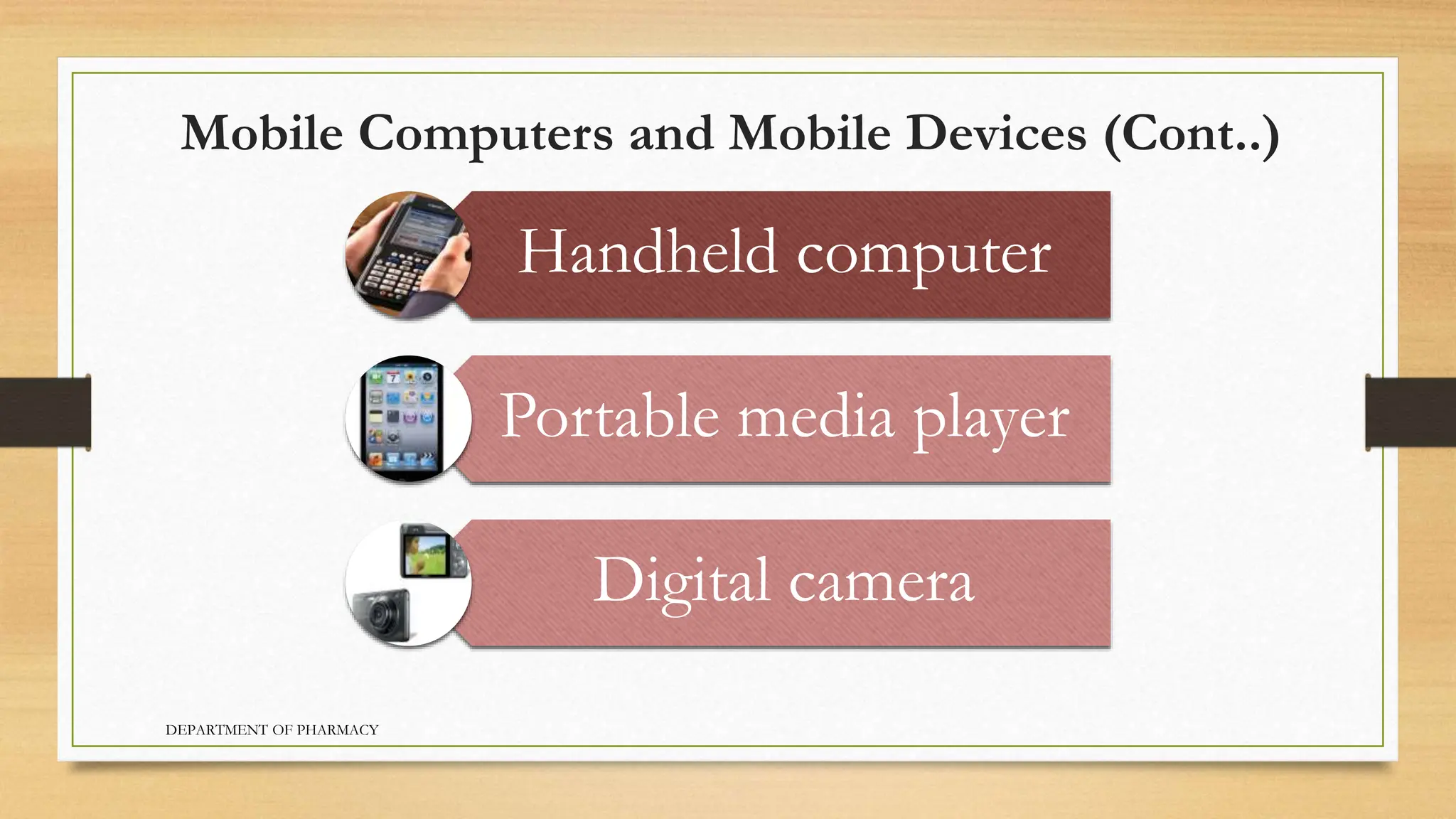
Mobile Computers and Mobile Devices (Cont..)
Handheld computer
Portable media player
Digital camera
DEPARTMENT OF PHARMACY
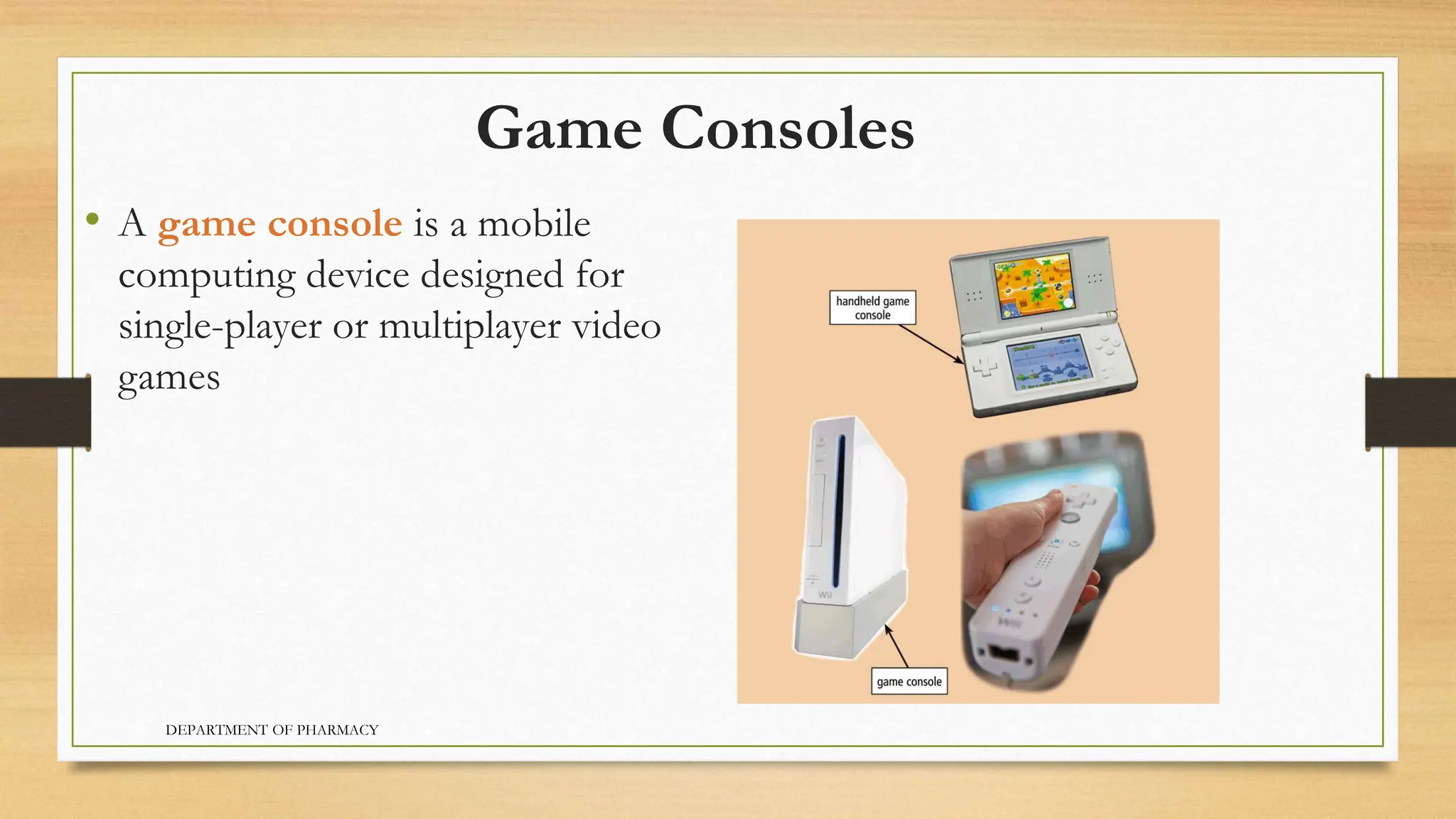
Game Consoles
• A game console is a mobile
computing device designed for
single-player or multiplayer video
games
DEPARTMENT OF PHARMACY
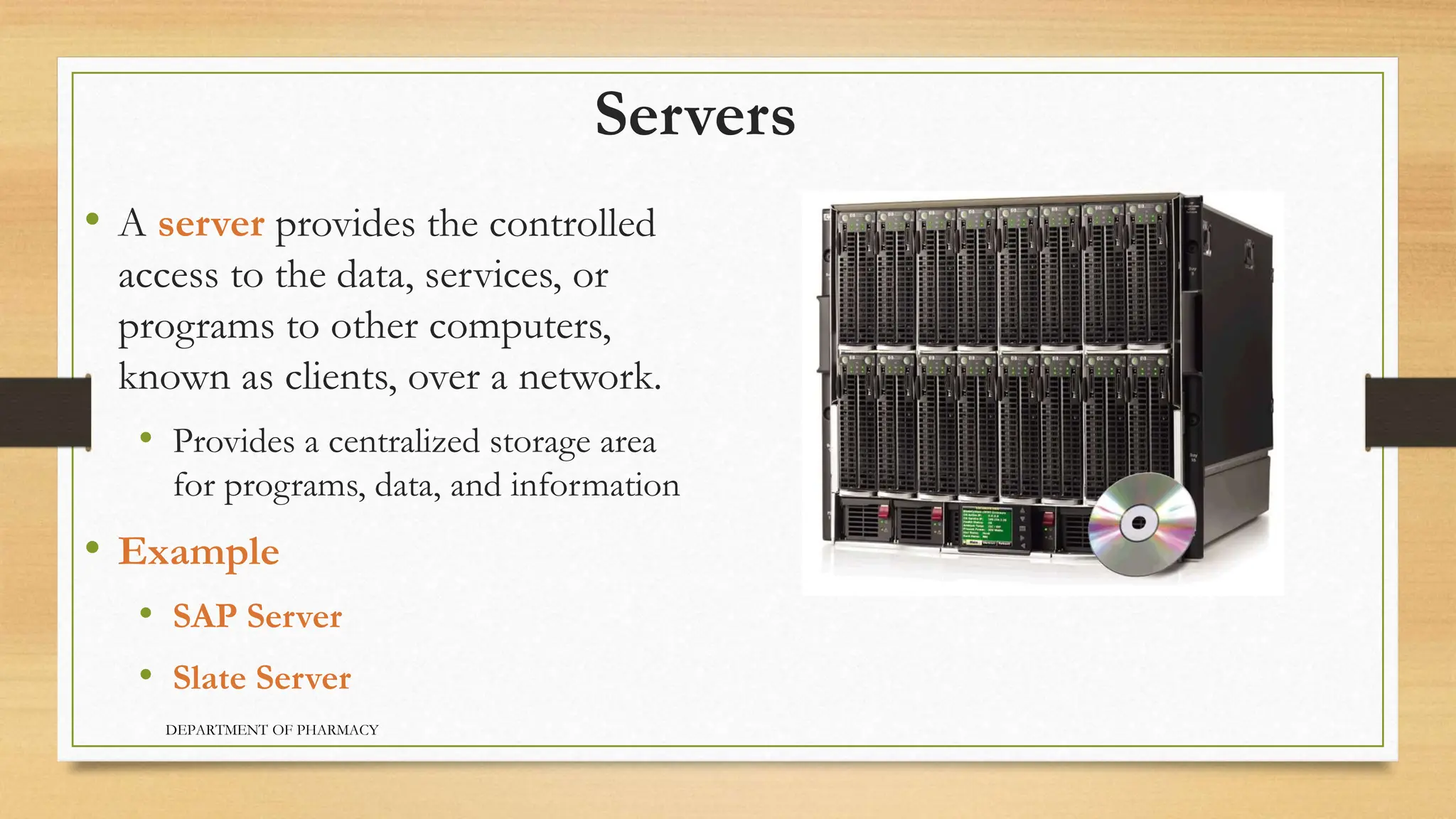
Servers
• A server provides the controlled
access to the data, services, or
programs to other computers,
known as clients, over a network.
• Provides a centralized storage area
for programs, data, and information
• Example
• SAP Server
• Slate Server
DEPARTMENT OF PHARMACY
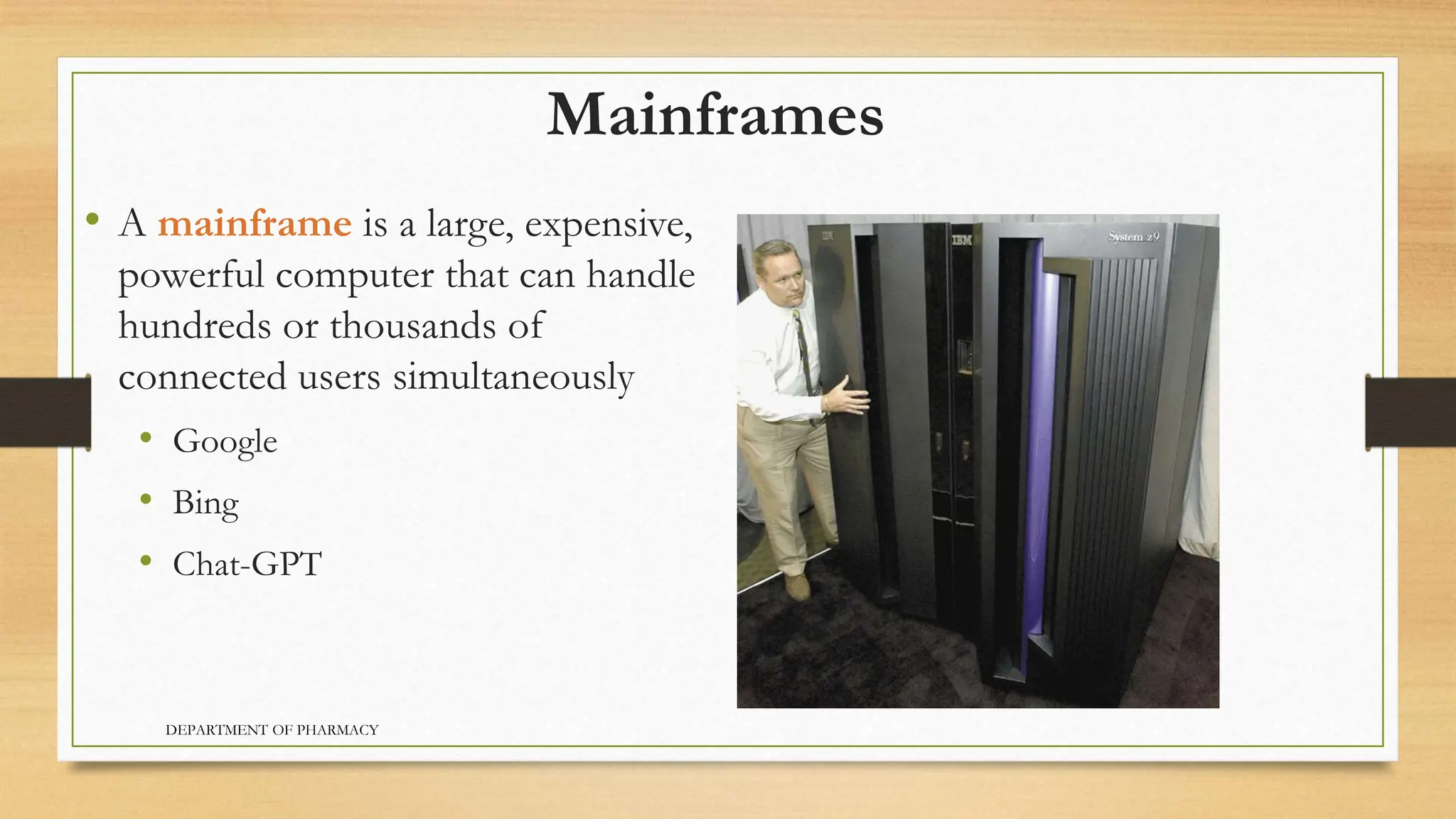
Mainframes
• A mainframe is a large, expensive,
powerful computer that can handle
hundreds or thousands of
connected users simultaneously
• Google
• Bing
• Chat-GPT
DEPARTMENT OF PHARMACY
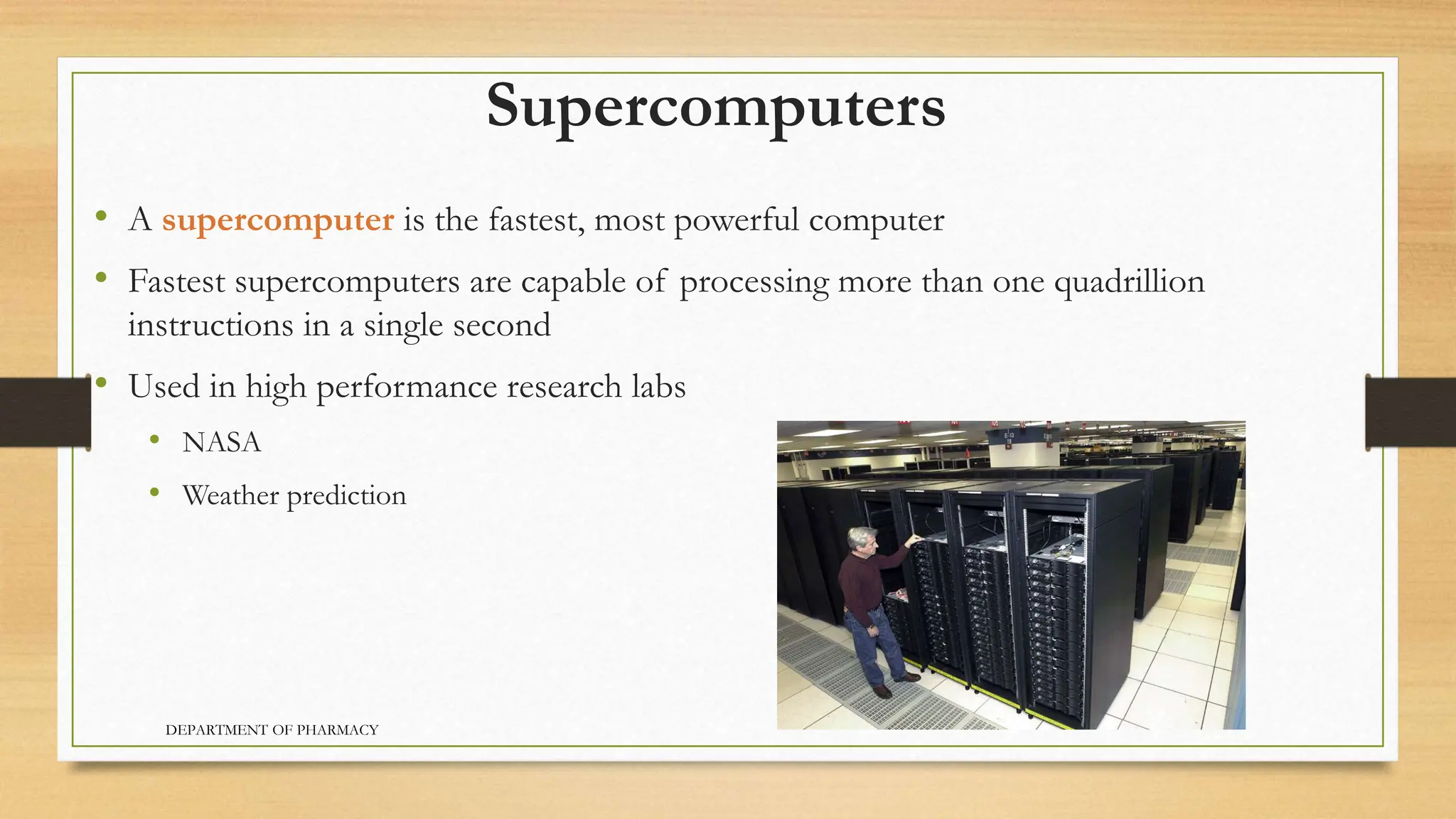
Supercomputers
• A supercomputer is the fastest, most powerful computer
• Fastest supercomputers are capable of processing more than one quadrillion
instructions in a single second
• Used in high performance research labs
• NASA
• Weather prediction
DEPARTMENT OF PHARMACY
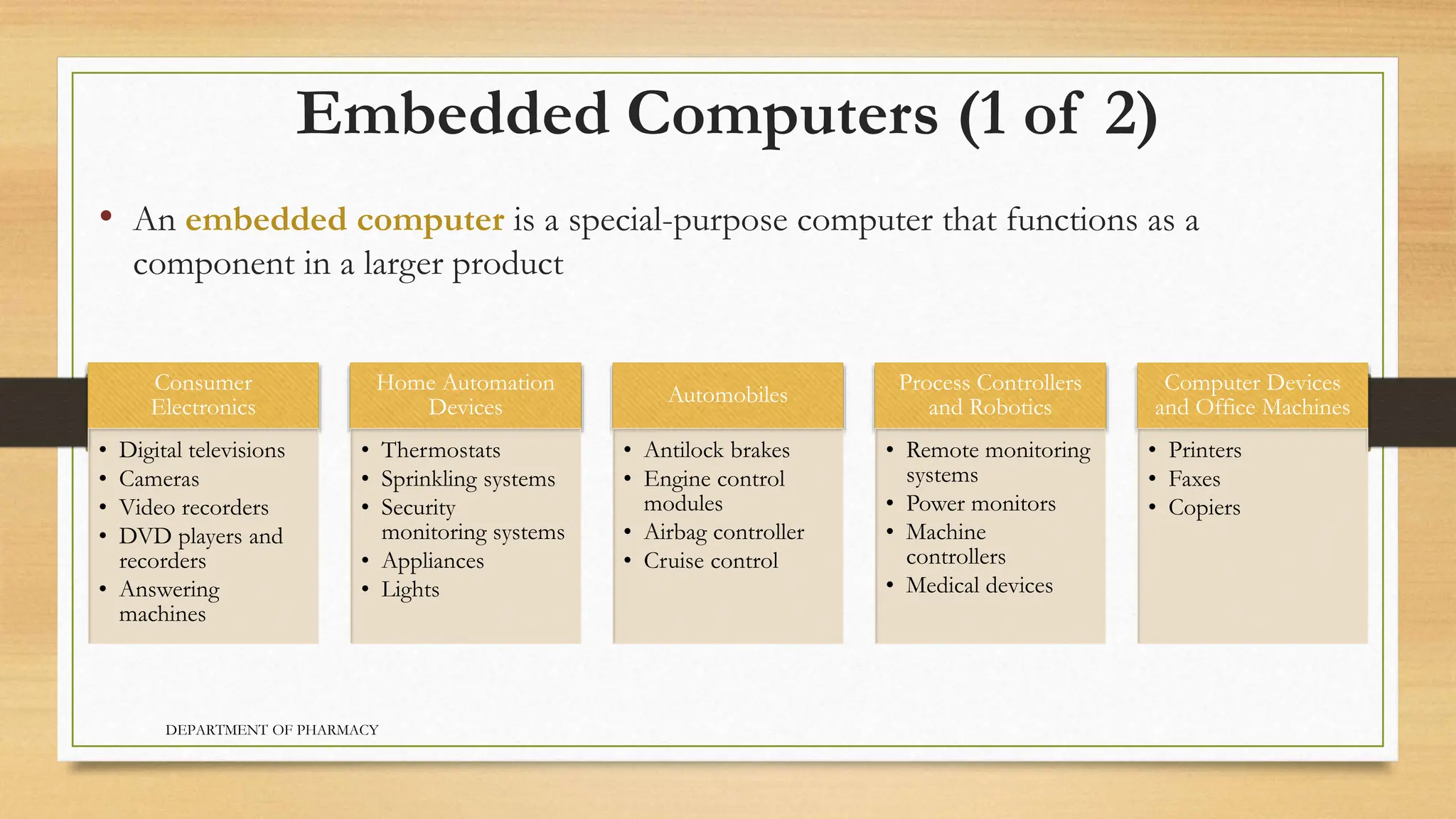
Embedded Computers (1 of 2)
• An embedded computer is a special-purpose computer that functions as a
component in a larger product
Consumer
Electronics
• Digital televisions
• Cameras
• Video recorders
• DVD players and
recorders
• Answering
machines
Home Automation
Devices
• Thermostats
• Sprinkling systems
• Security
monitoring systems
• Appliances
• Lights
Automobiles
• Antilock brakes
• Engine control
modules
• Airbag controller
• Cruise control
Process Controllers
and Robotics
• Remote monitoring
systems
• Power monitors
• Machine
controllers
• Medical devices
Computer Devices
and Office Machines
• Printers
• Faxes
• Copiers
DEPARTMENT OF PHARMACY
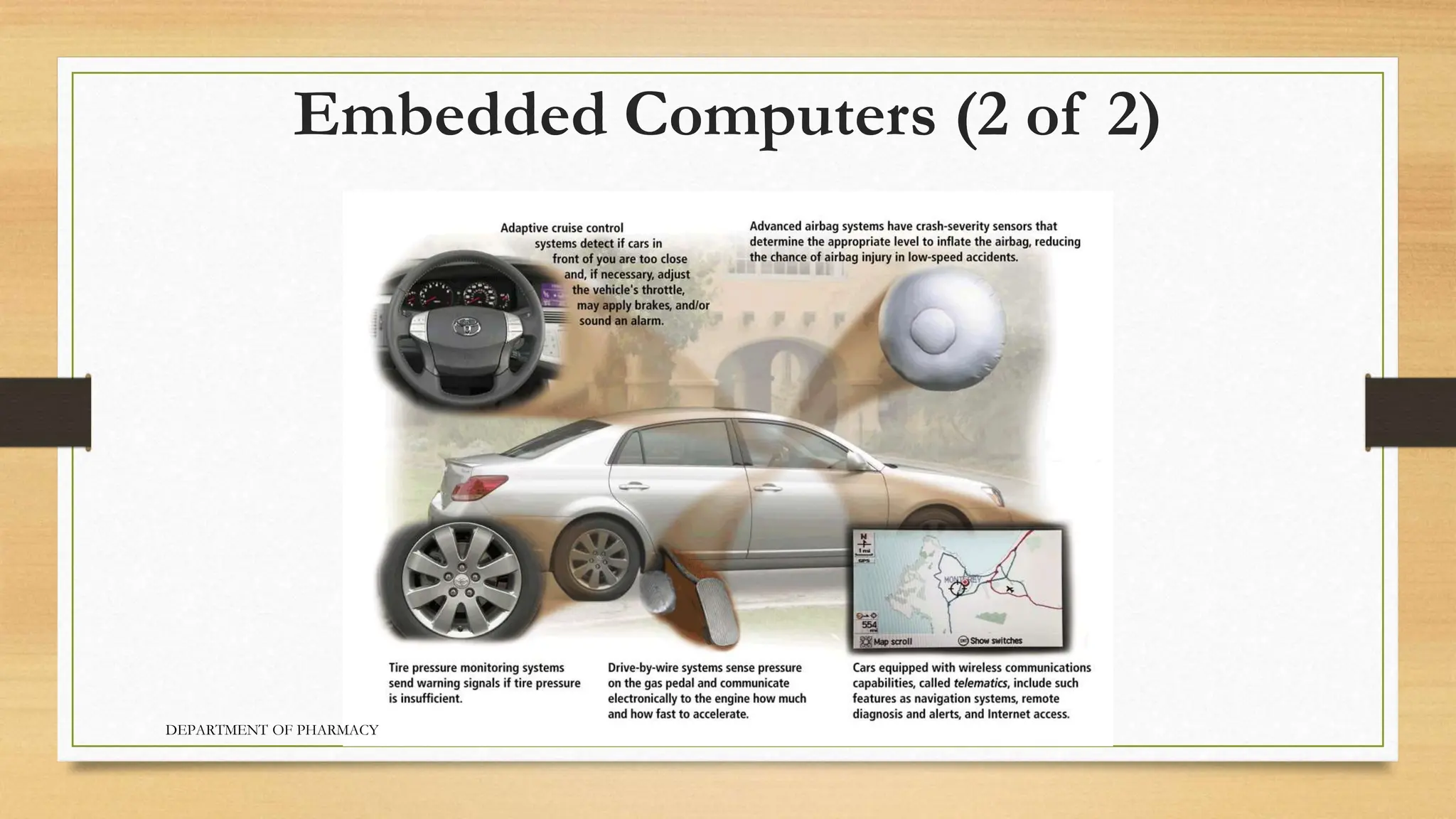
Embedded Computers (2 of 2)
DEPARTMENT OF PHARMACY
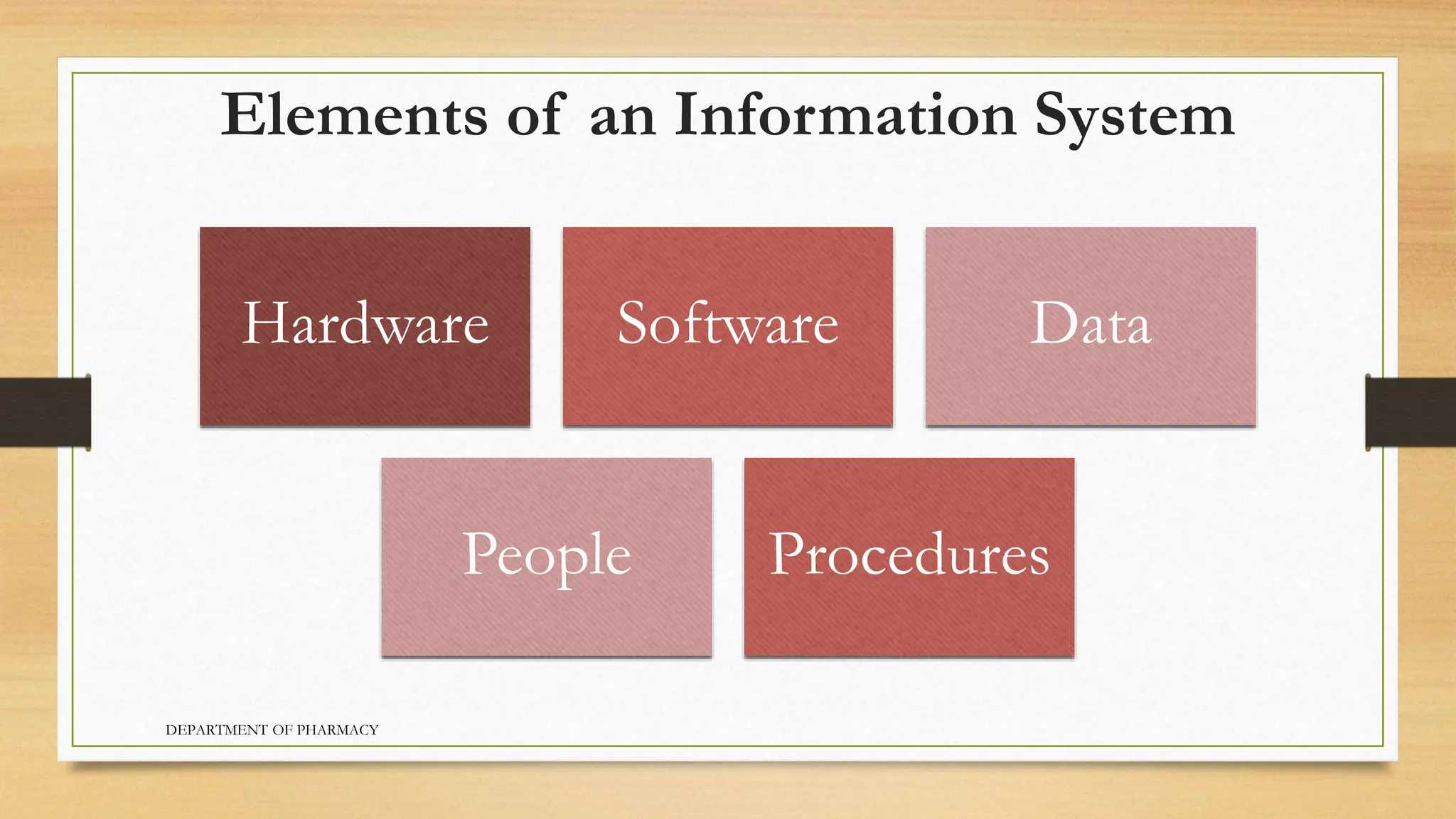
Elements of an Information System
Hardware Software Data
People Procedures
DEPARTMENT OF PHARMACY
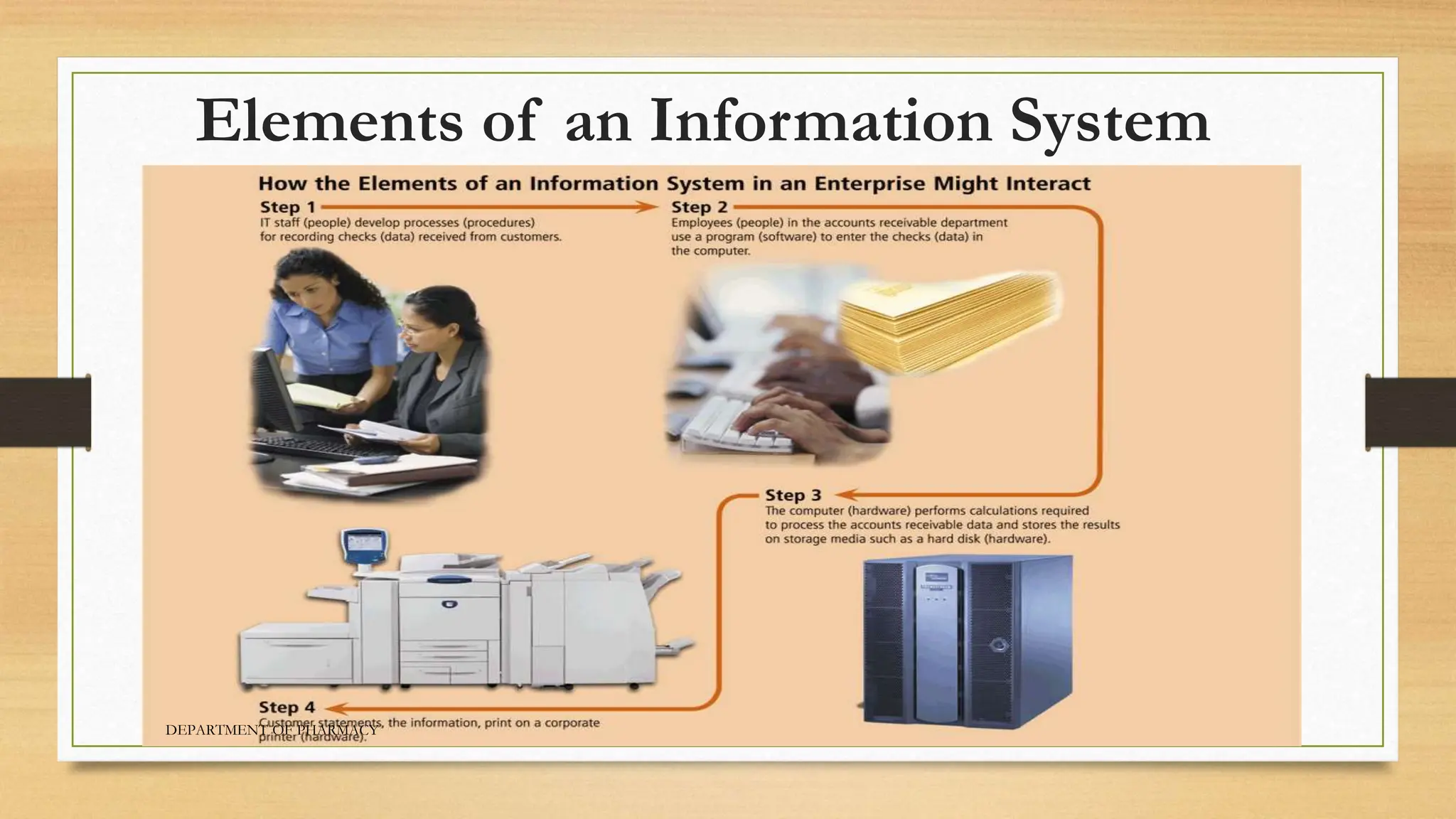
Elements of an Information System
DEPARTMENT OF PHARMACY
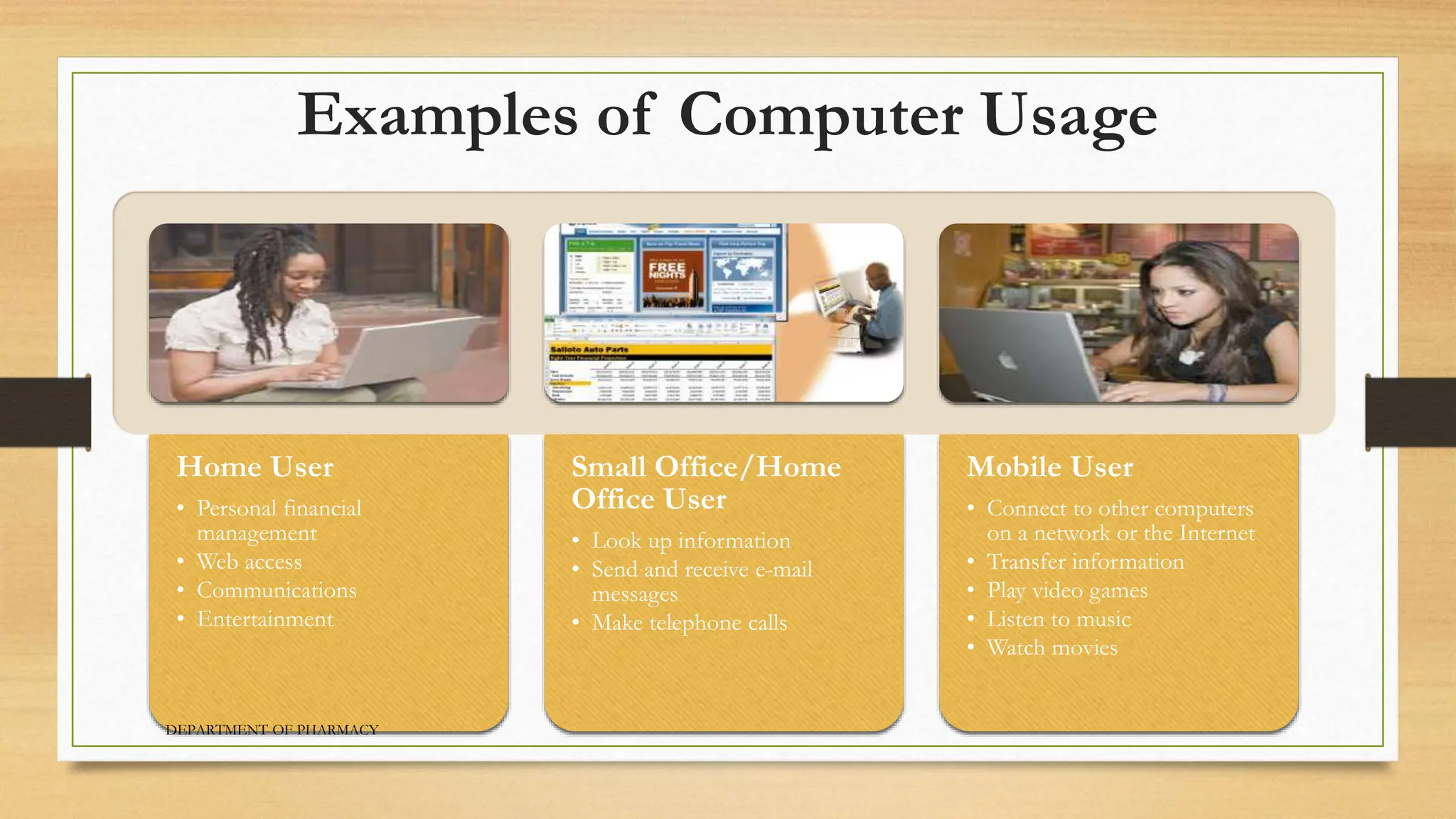
Examples of Computer Usage
Home User
• Personal financial
management
• Web access
• Communications
• Entertainment
Small Office/Home
Office User
• Look up information
• Send and receive e-mail
messages
• Make telephone calls
Mobile User
• Connect to other computers
on a network or the Internet
• Transfer information
• Play video games
• Listen to music
• Watch movies
DEPARTMENT OF PHARMACY
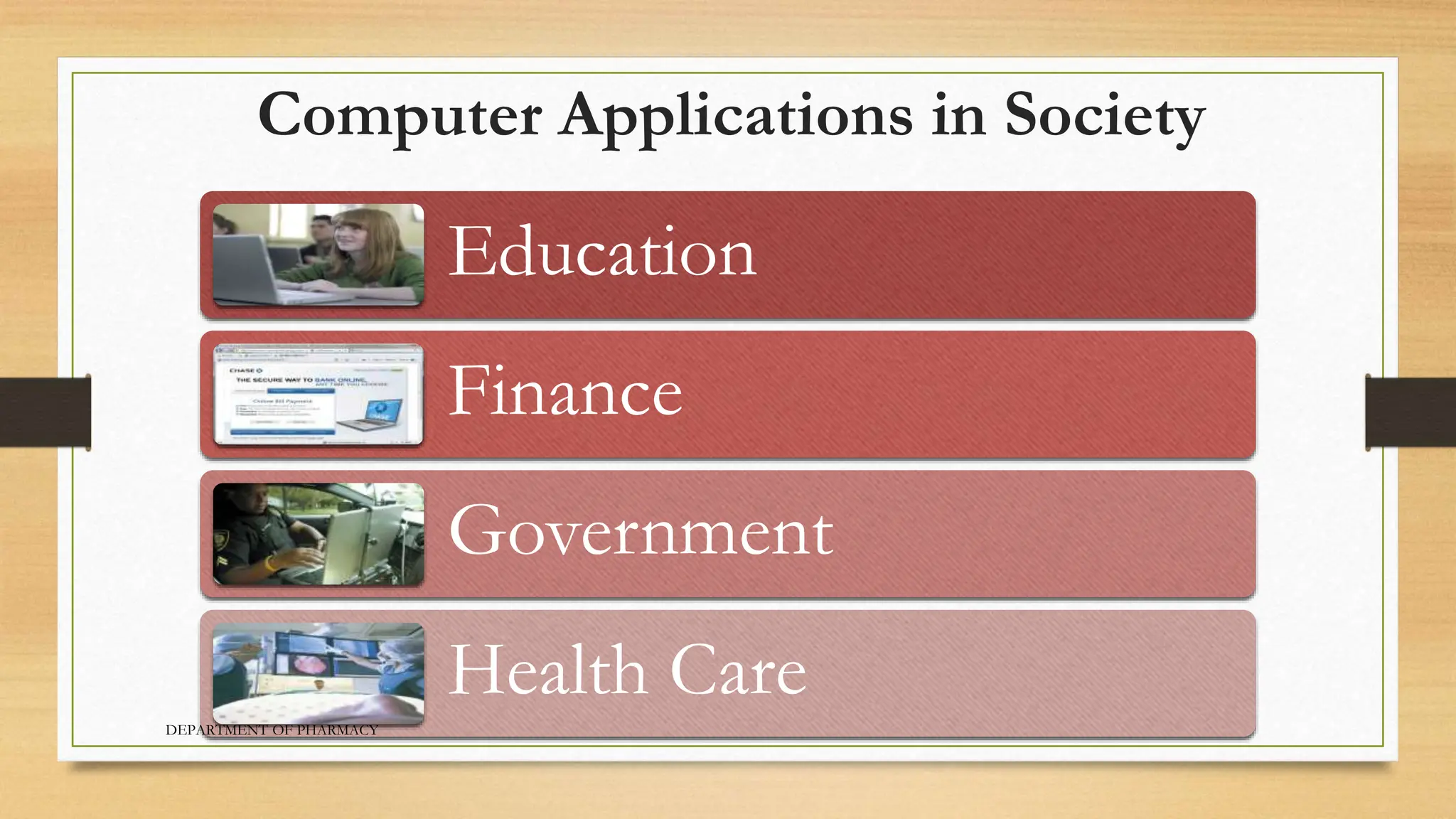
Computer Applications in Society
Education
Finance
Government
Health Care
DEPARTMENT OF PHARMACY
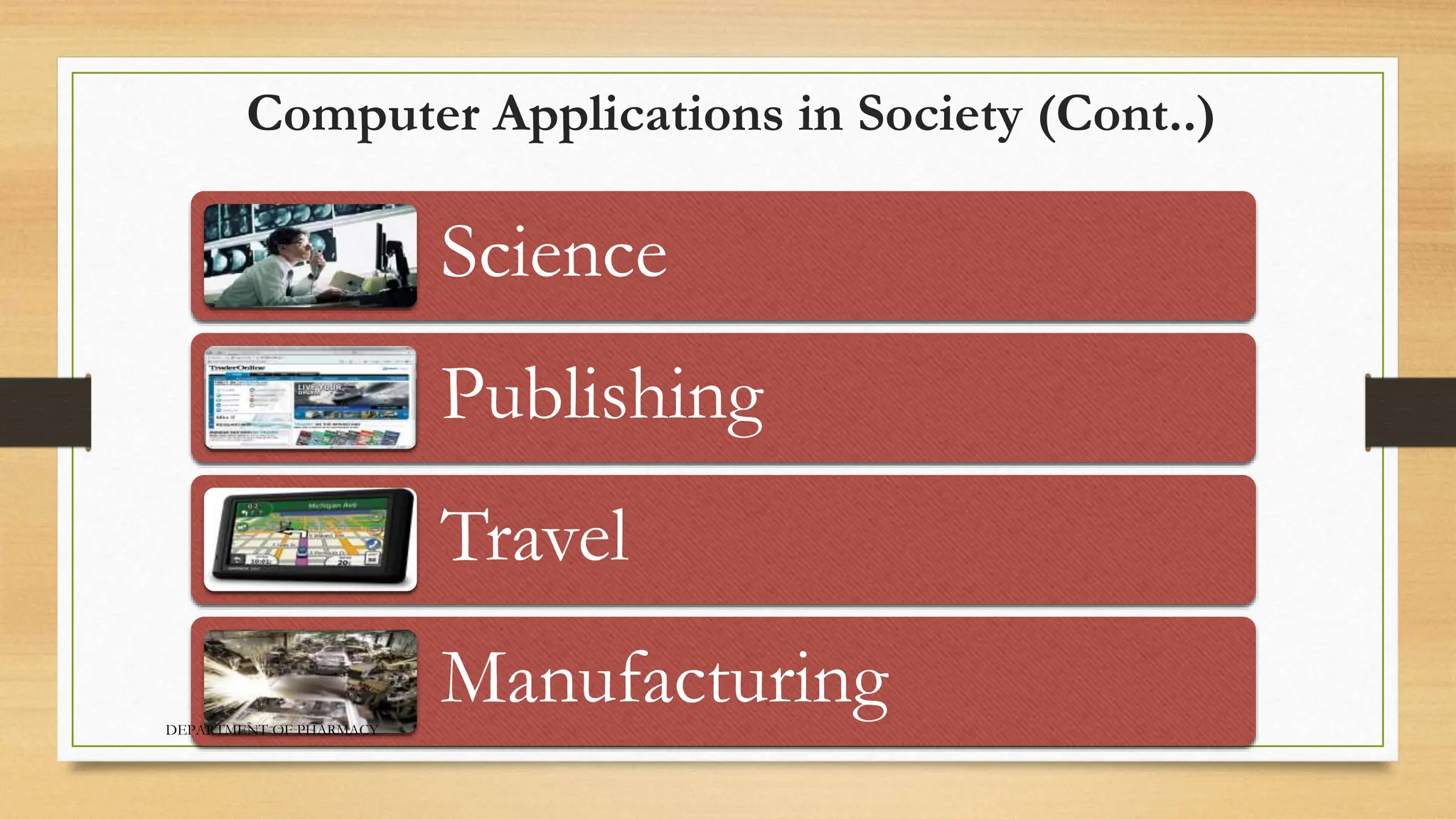
Computer Applications in Society (Cont..)
Science
Publishing
Travel
Manufacturing
DEPARTMENT OF PHARMACY
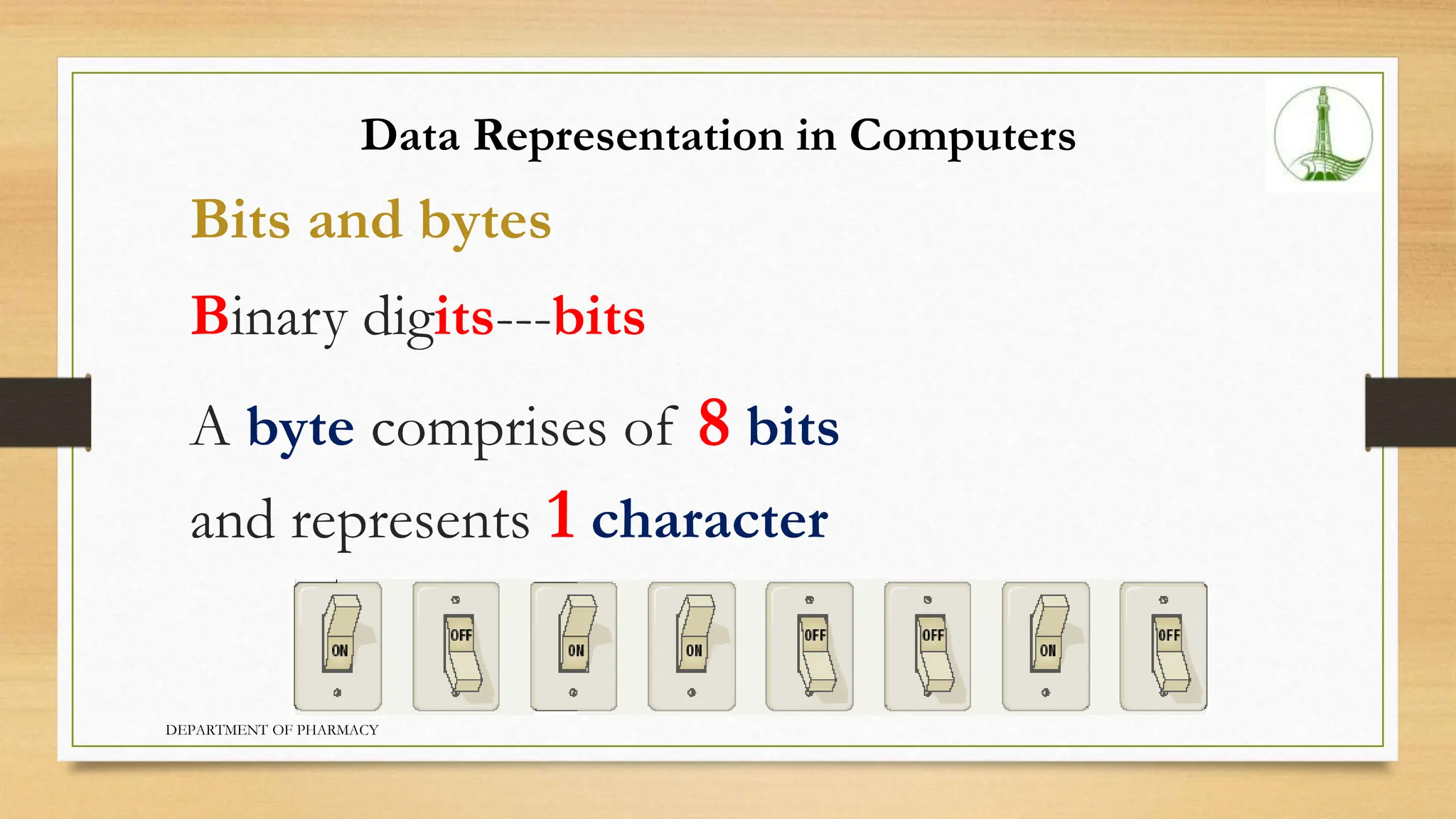
Bits and bytes
Binary digits---bits
A byte comprises of 8 bits
and represents 1 character
Data Representation in Computers
DEPARTMENT OF PHARMACY
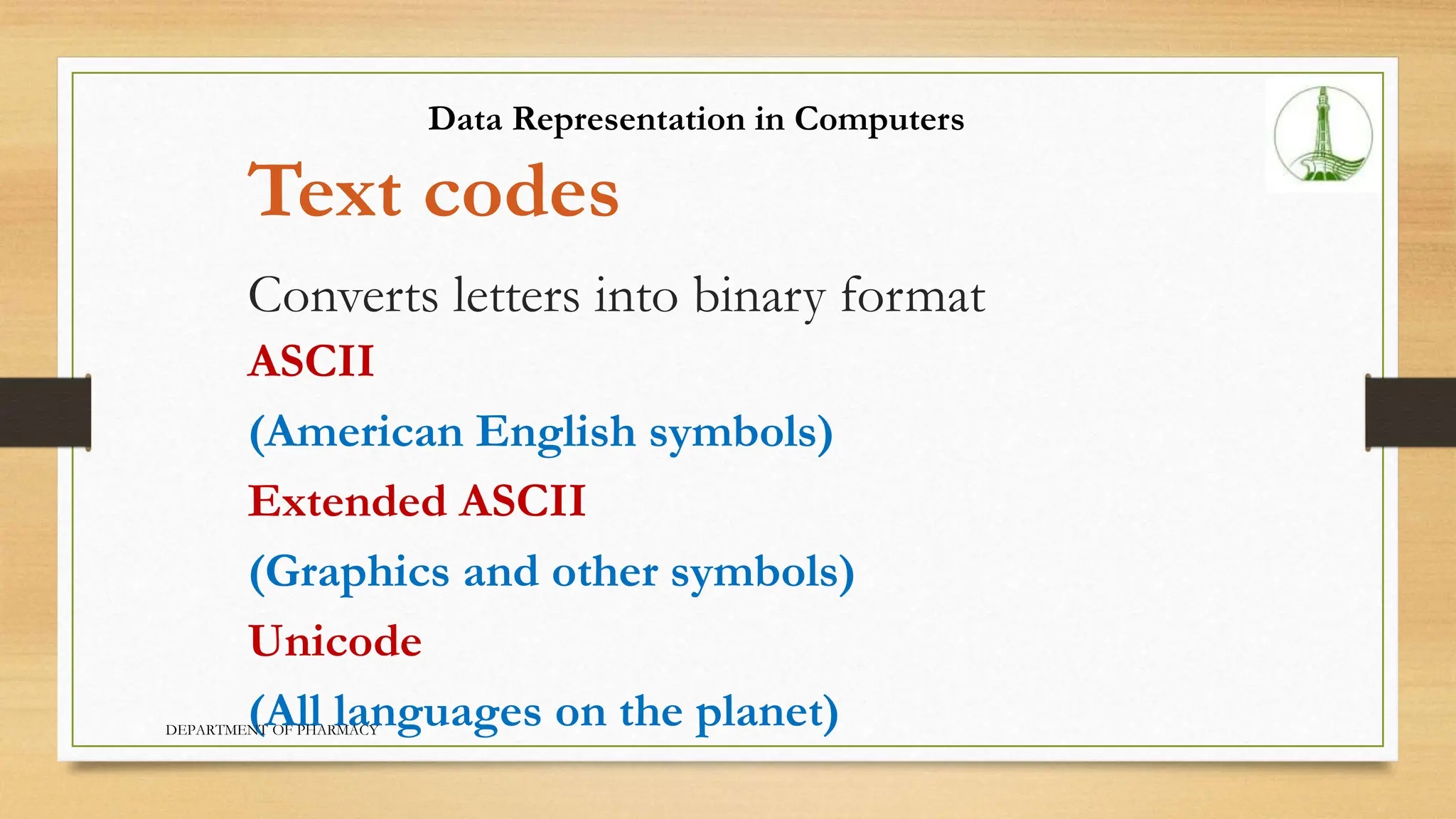
Text codes
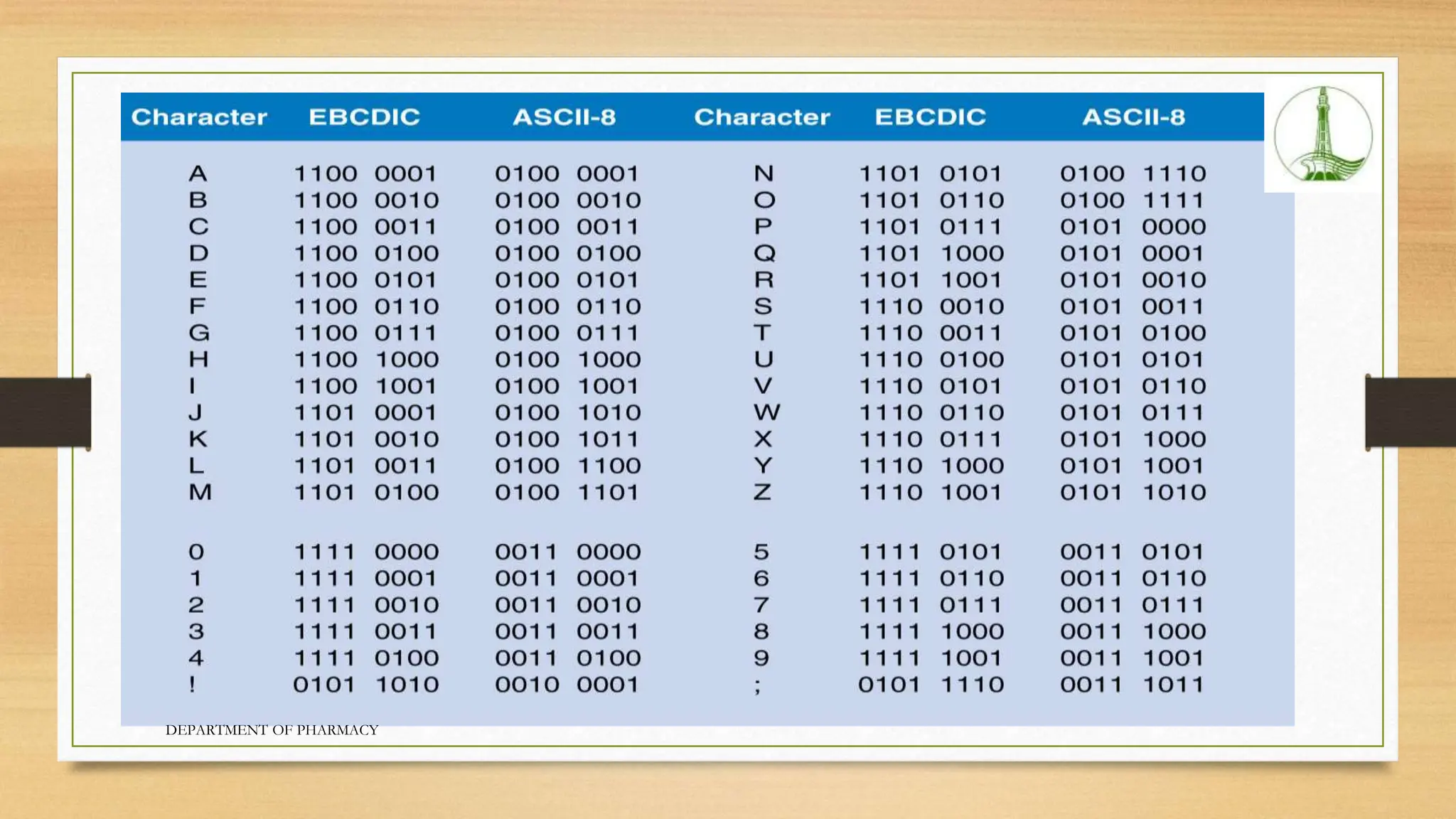
Converts letters into binary format
ASCII
(American English symbols)
Extended ASCII
(Graphics and other symbols)
Unicode
(All languages on the planet)
Data Representation in Computers
DEPARTMENT OF PHARMACY
Data Representation
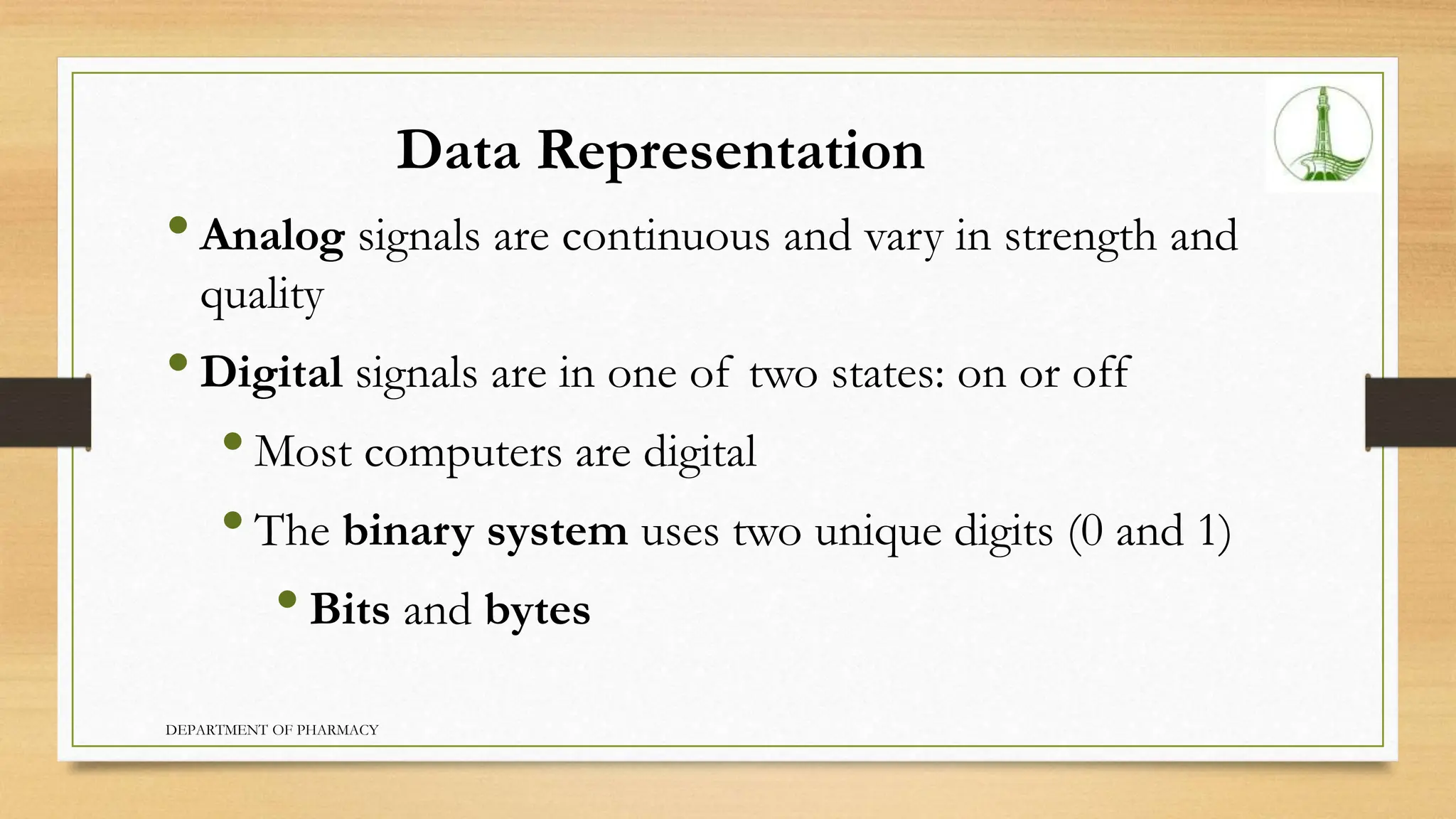
•Analog signals are continuous and vary in strength and
quality
•Digital signals are in one of two states: on or off
•Most computers are digital
•The binary system uses two unique digits (0 and 1)
•Bits and bytes
DEPARTMENT OF PHARMACY
Data Representation
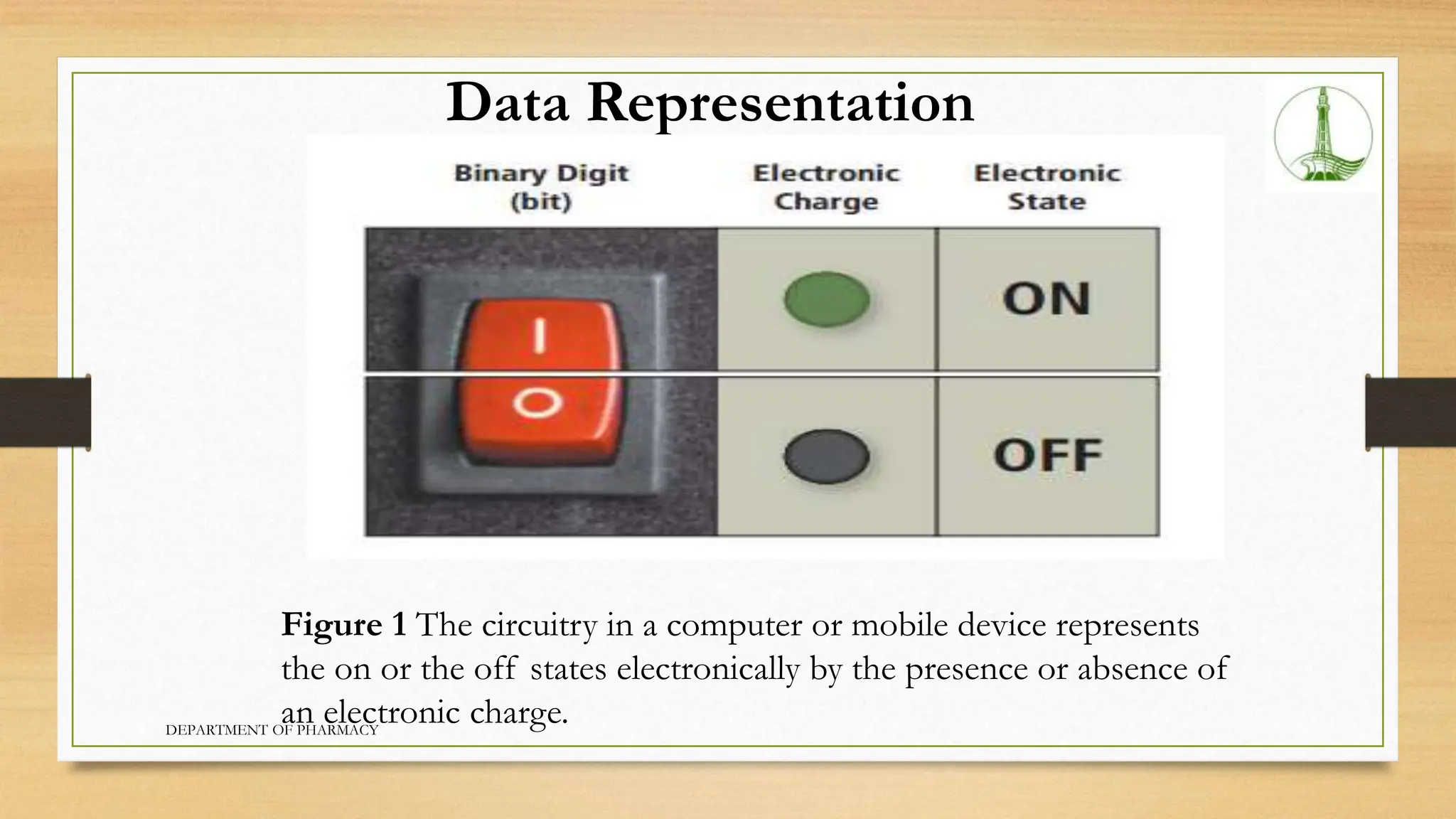
Figure 1 The circuitry in a computer or mobile device represents
the on or the off states electronically by the presence or absence of
an electronic charge.
DEPARTMENT OF PHARMACY
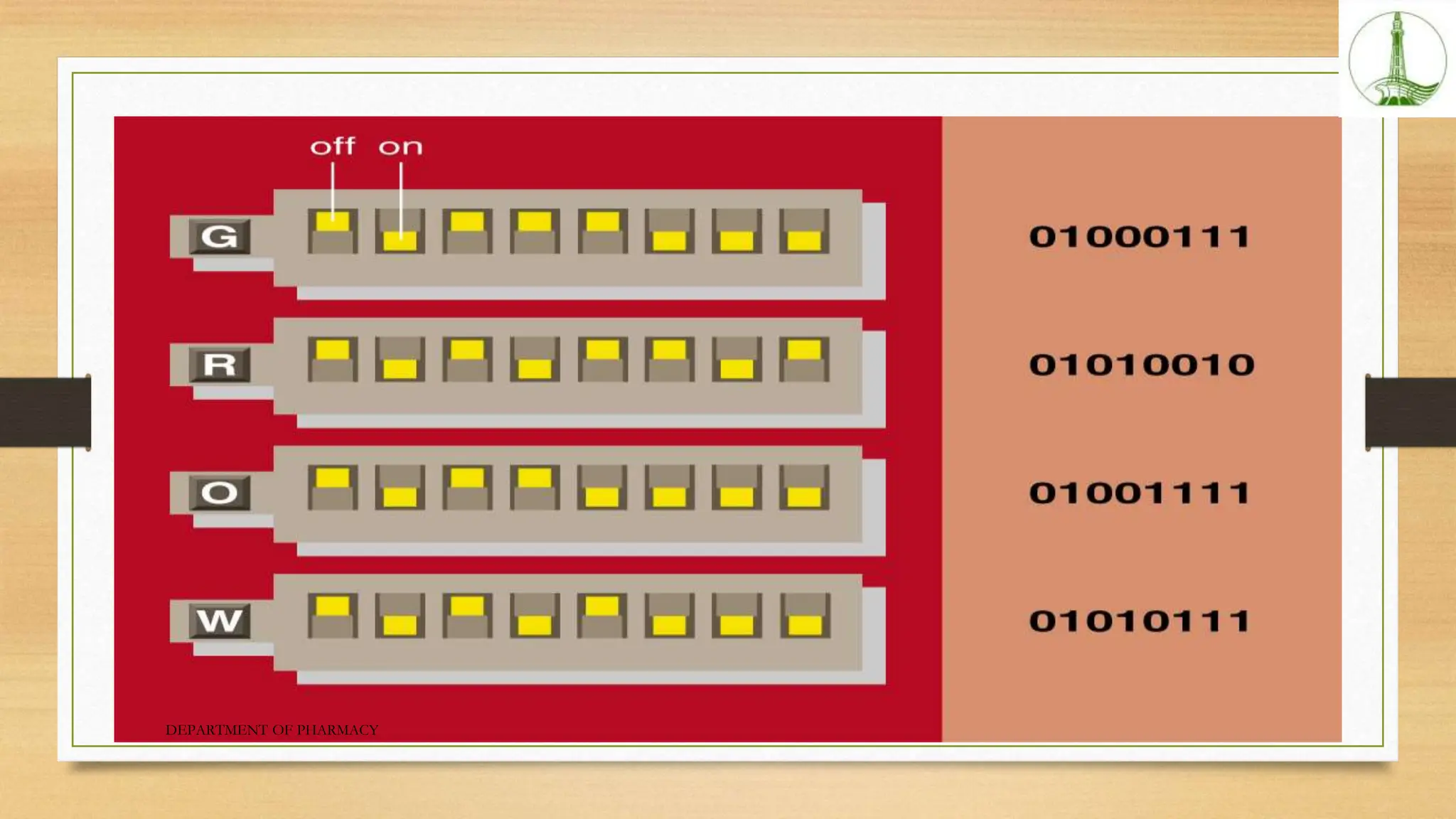
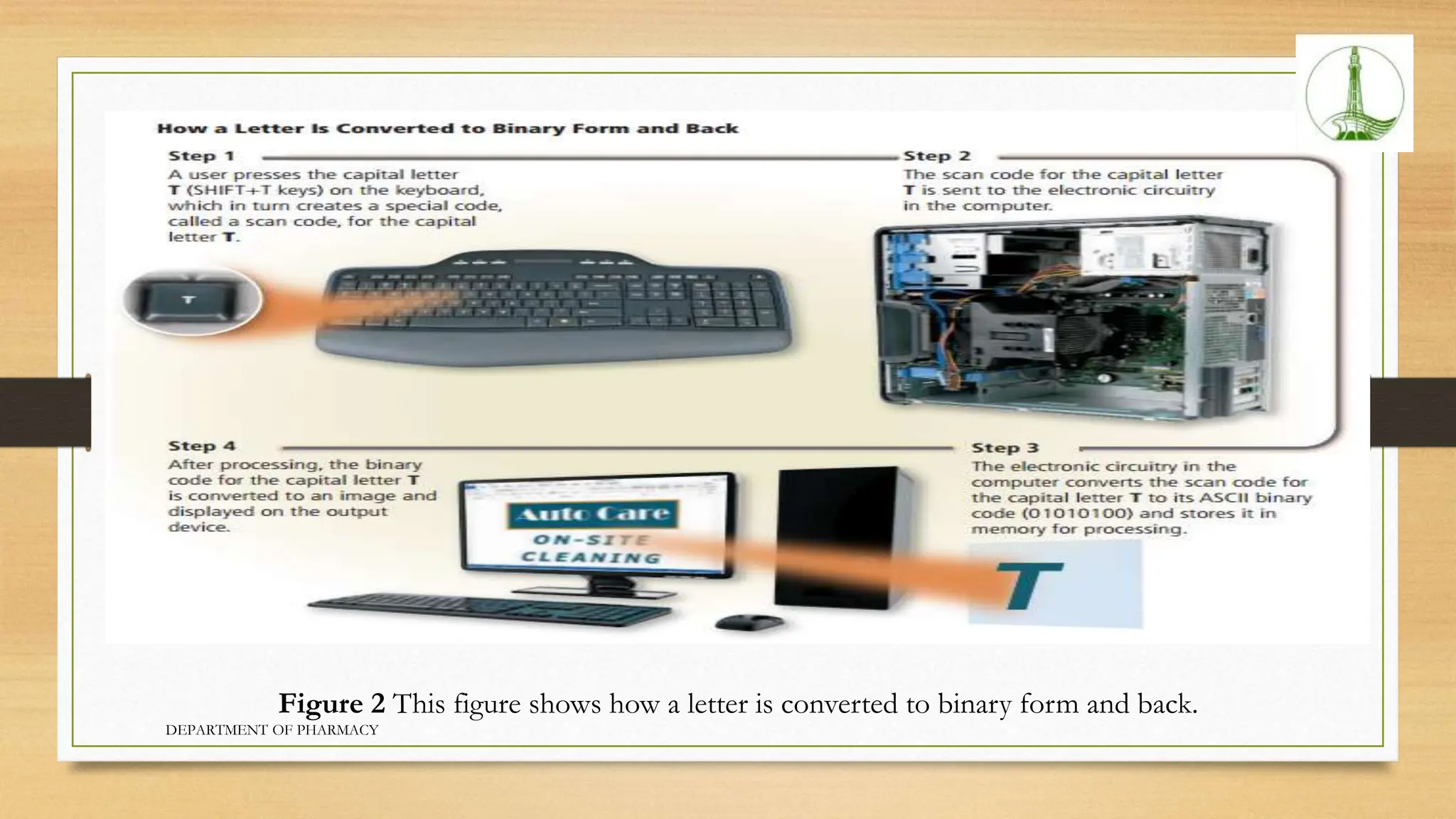
Figure 2 This figure shows how a letter is converted to binary form and back.
DEPARTMENT OF PHARMACY

3_Types of Computers and Data Representation.pptx

  • 1.
  • 2.
    Outline Fundamentals of Computingtechnology • Components of a Computer • Software VS Hardware • Types of Computing devices • Elements of Information System • Memory DEPARTMENT OF PHARMACY
  • 3.
    What Is aComputer? • A computer is an electronic device, operating under the control of instructions stored in its own memory Collects data (input) Processing Produces information (output) Stores output (For Future Use) Information Processing Cycle DEPARTMENT OF PHARMACY
  • 4.
    Categories of Computers Embeddedcomputers Supercomputers Mainframes Servers Game consoles Mobile computers and mobile devices Personal computers DEPARTMENT OF PHARMACY
  • 5.
    Personal Computers • Oftenreferred to as a PC • A computer designed for individual use • Intended to be operated directly by an end user, rather than by a computer expert or technician • Benefits • Low cost • Portable DEPARTMENT OF PHARMACY
  • 6.
    Mobile Computers andMobile Devices Personal computer you can carry from place to place Examples include notebook computers, laptop computers, netbooks, ultra-thins, and Tablet PCs Mobile Computer Computing device small enough to hold in your hand Examples include smart phones and PDAs, e- book readers, handheld computers, portable media players, and digital cameras Mobile Device DEPARTMENT OF PHARMACY
  • 7.
    Mobile Computers andMobile Devices (Cont..) Notebook computer Tablet PC Smart phones E-book reader DEPARTMENT OF PHARMACY
  • 8.
    Mobile Computers andMobile Devices (Cont..) Handheld computer Portable media player Digital camera DEPARTMENT OF PHARMACY
  • 9.
    Game Consoles • Agame console is a mobile computing device designed for single-player or multiplayer video games DEPARTMENT OF PHARMACY
  • 10.
    Servers • A serverprovides the controlled access to the data, services, or programs to other computers, known as clients, over a network. • Provides a centralized storage area for programs, data, and information • Example • SAP Server • Slate Server DEPARTMENT OF PHARMACY
  • 11.
    Mainframes • A mainframeis a large, expensive, powerful computer that can handle hundreds or thousands of connected users simultaneously • Google • Bing • Chat-GPT DEPARTMENT OF PHARMACY
  • 12.
    Supercomputers • A supercomputeris the fastest, most powerful computer • Fastest supercomputers are capable of processing more than one quadrillion instructions in a single second • Used in high performance research labs • NASA • Weather prediction DEPARTMENT OF PHARMACY
  • 13.
    Embedded Computers (1of 2) • An embedded computer is a special-purpose computer that functions as a component in a larger product Consumer Electronics • Digital televisions • Cameras • Video recorders • DVD players and recorders • Answering machines Home Automation Devices • Thermostats • Sprinkling systems • Security monitoring systems • Appliances • Lights Automobiles • Antilock brakes • Engine control modules • Airbag controller • Cruise control Process Controllers and Robotics • Remote monitoring systems • Power monitors • Machine controllers • Medical devices Computer Devices and Office Machines • Printers • Faxes • Copiers DEPARTMENT OF PHARMACY
  • 14.
    Embedded Computers (2of 2) DEPARTMENT OF PHARMACY
  • 15.
    Elements of anInformation System Hardware Software Data People Procedures DEPARTMENT OF PHARMACY
  • 16.
    Elements of anInformation System DEPARTMENT OF PHARMACY
  • 17.
    Examples of ComputerUsage Home User • Personal financial management • Web access • Communications • Entertainment Small Office/Home Office User • Look up information • Send and receive e-mail messages • Make telephone calls Mobile User • Connect to other computers on a network or the Internet • Transfer information • Play video games • Listen to music • Watch movies DEPARTMENT OF PHARMACY
  • 18.
    Computer Applications inSociety Education Finance Government Health Care DEPARTMENT OF PHARMACY
  • 19.
    Computer Applications inSociety (Cont..) Science Publishing Travel Manufacturing DEPARTMENT OF PHARMACY
  • 20.
    Bits and bytes Binarydigits---bits A byte comprises of 8 bits and represents 1 character Data Representation in Computers DEPARTMENT OF PHARMACY
  • 21.
  • 22.
    Text codes Converts lettersinto binary format ASCII (American English symbols) Extended ASCII (Graphics and other symbols) Unicode (All languages on the planet) Data Representation in Computers DEPARTMENT OF PHARMACY
  • 23.
  • 24.
    Data Representation •Analog signalsare continuous and vary in strength and quality •Digital signals are in one of two states: on or off •Most computers are digital •The binary system uses two unique digits (0 and 1) •Bits and bytes DEPARTMENT OF PHARMACY
  • 25.
    Data Representation Figure 1The circuitry in a computer or mobile device represents the on or the off states electronically by the presence or absence of an electronic charge. DEPARTMENT OF PHARMACY
  • 26.
    Figure 2 Thisfigure shows how a letter is converted to binary form and back. DEPARTMENT OF PHARMACY