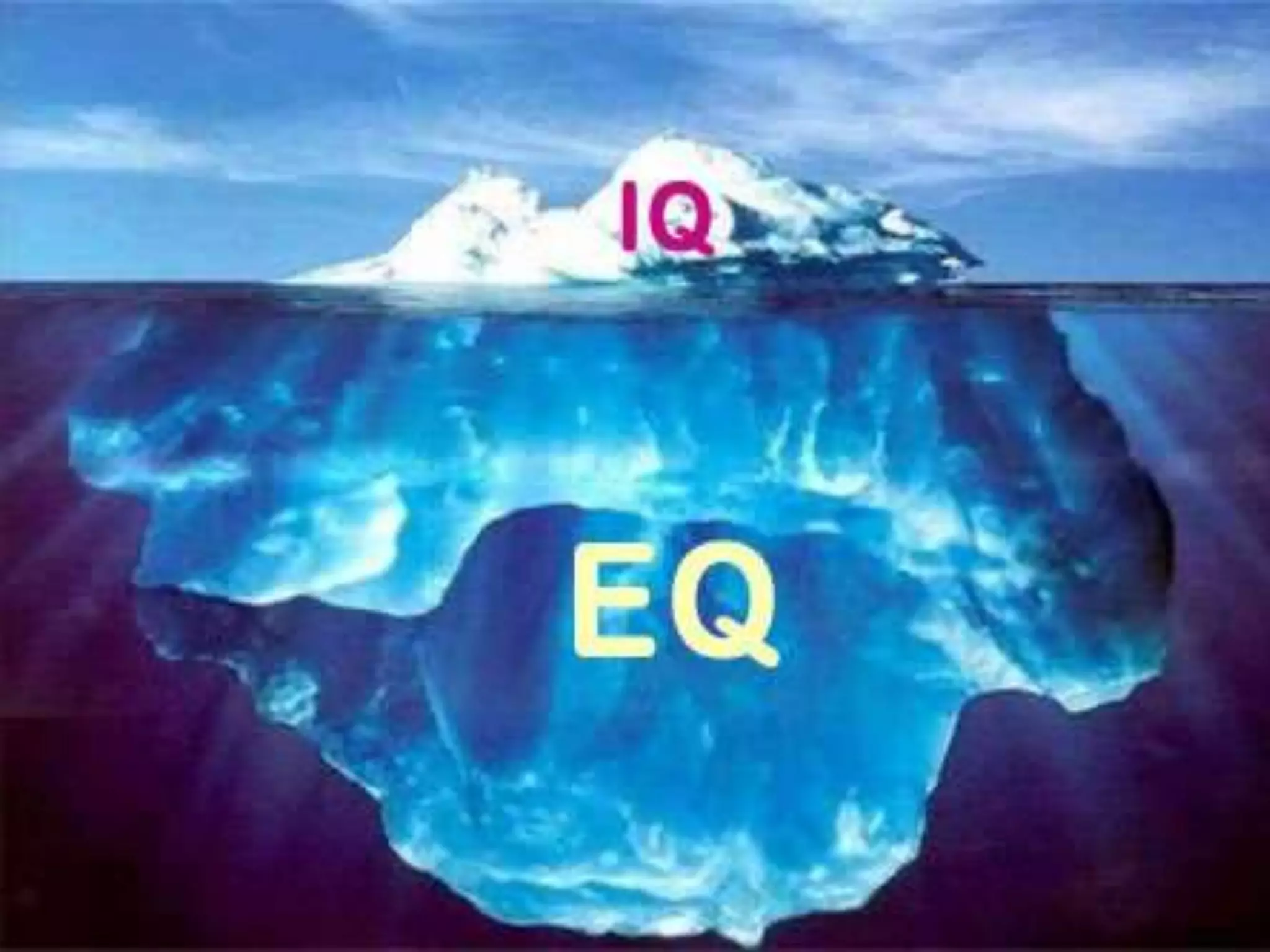
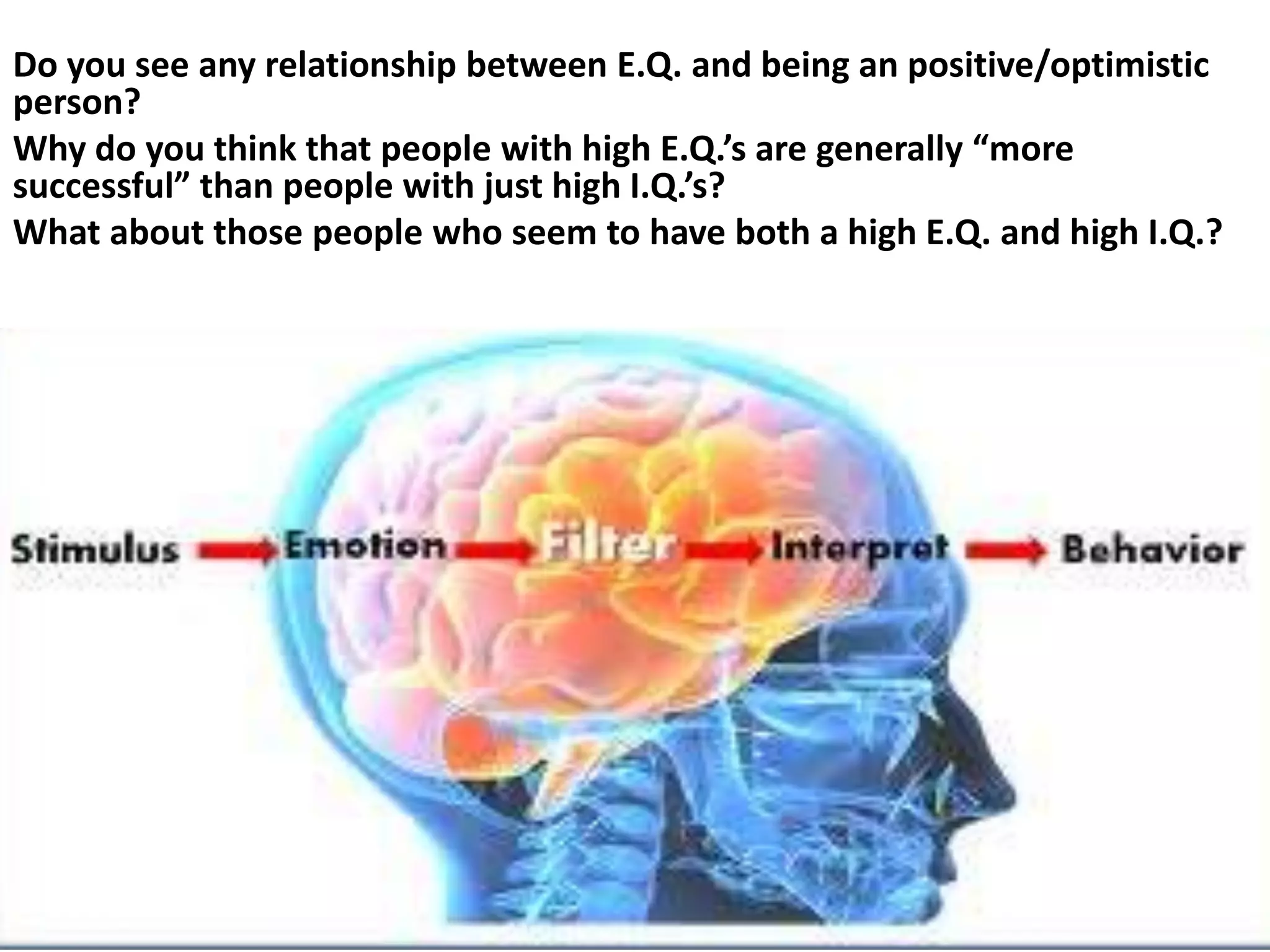
Do you see any relationship between E.Q. and being an positive/optimistic
person?
Why do you think that people with high E.Q.’s are generally “more
successful” than people with just high I.Q.’s?
What about those people who seem to have both a high E.Q. and high I.Q.?
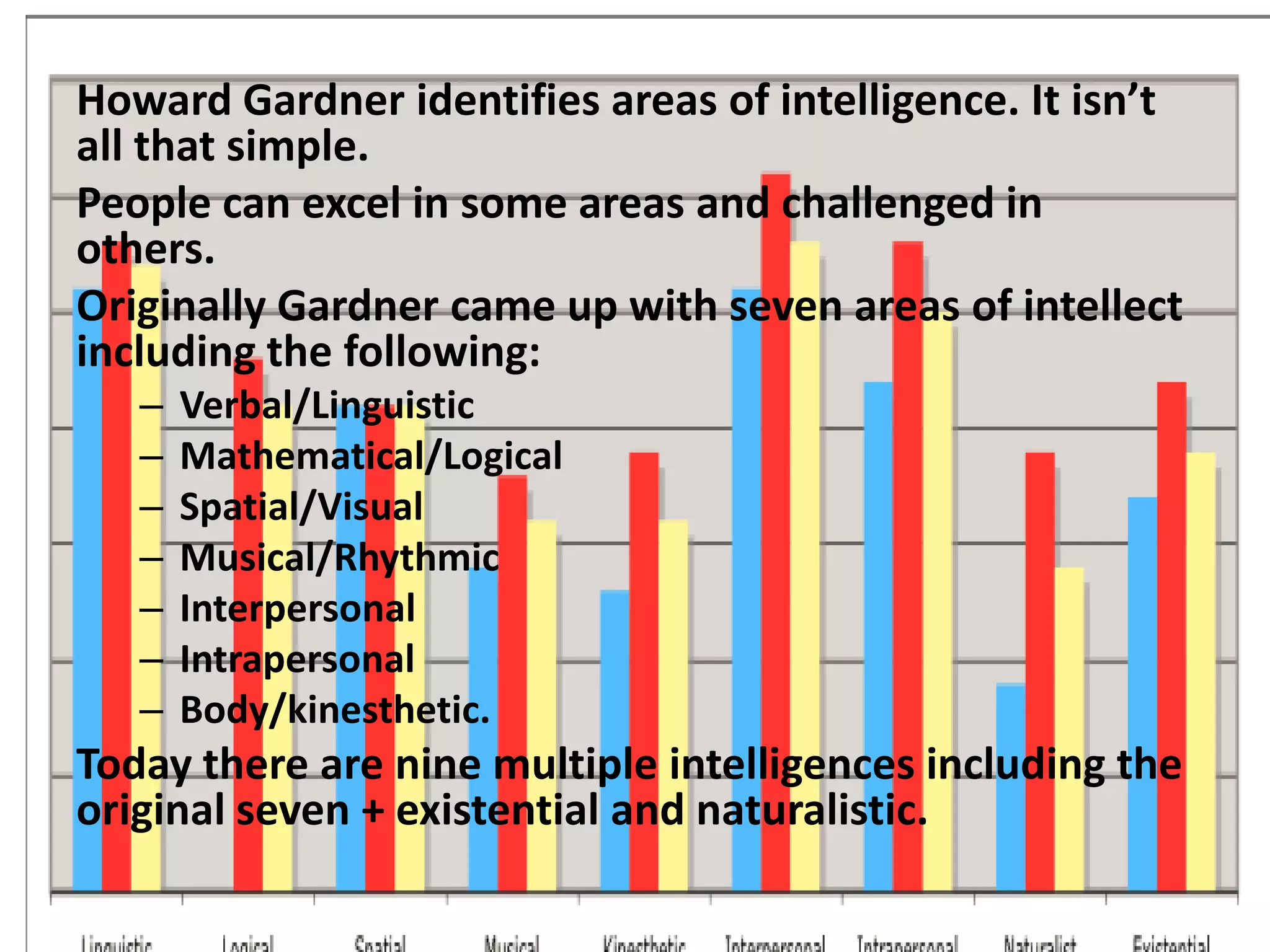
Howard Gardner identifies areas of intelligence. It isn’t
all that simple.
People can excel in some areas and challenged in
others.
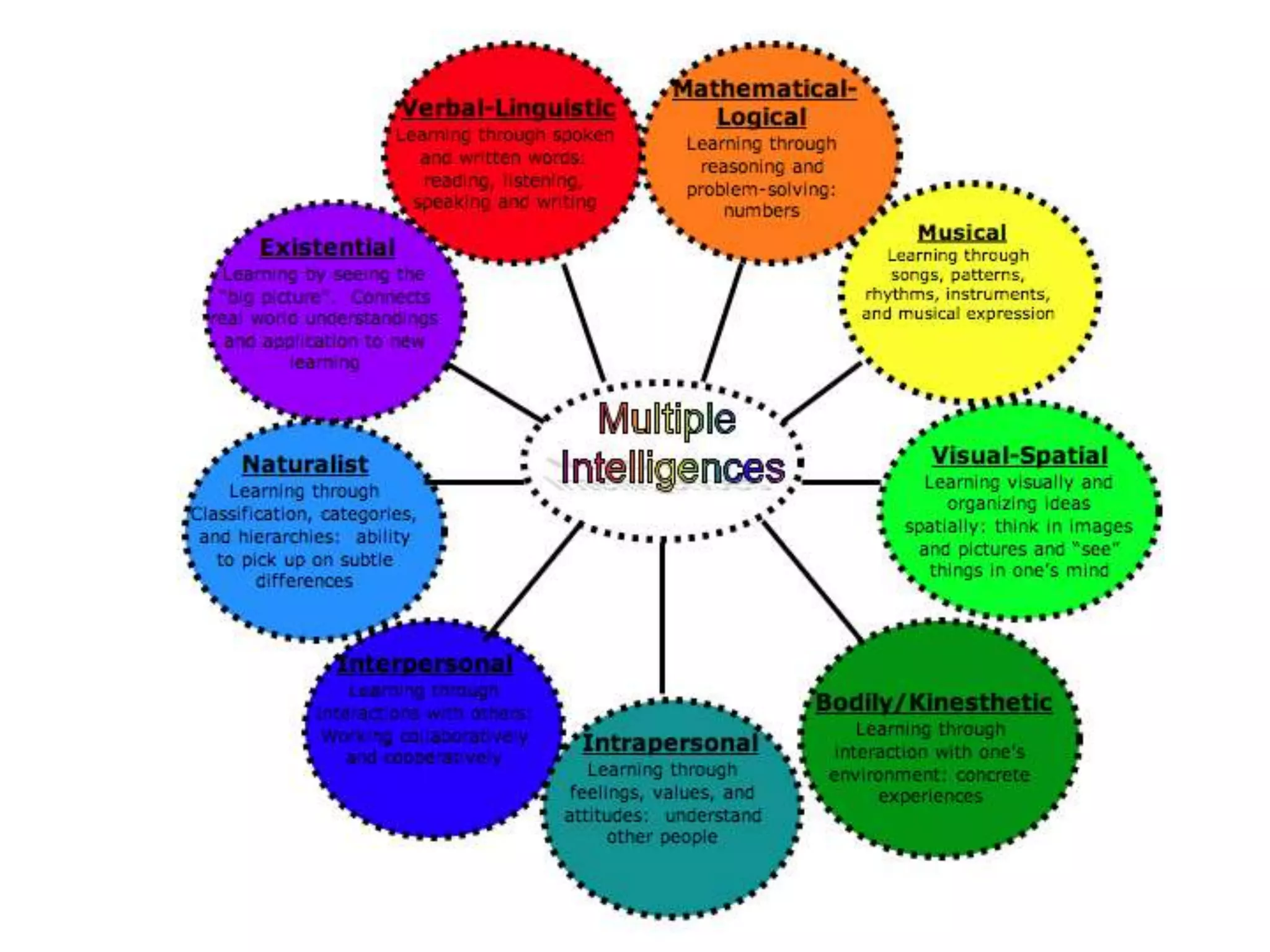
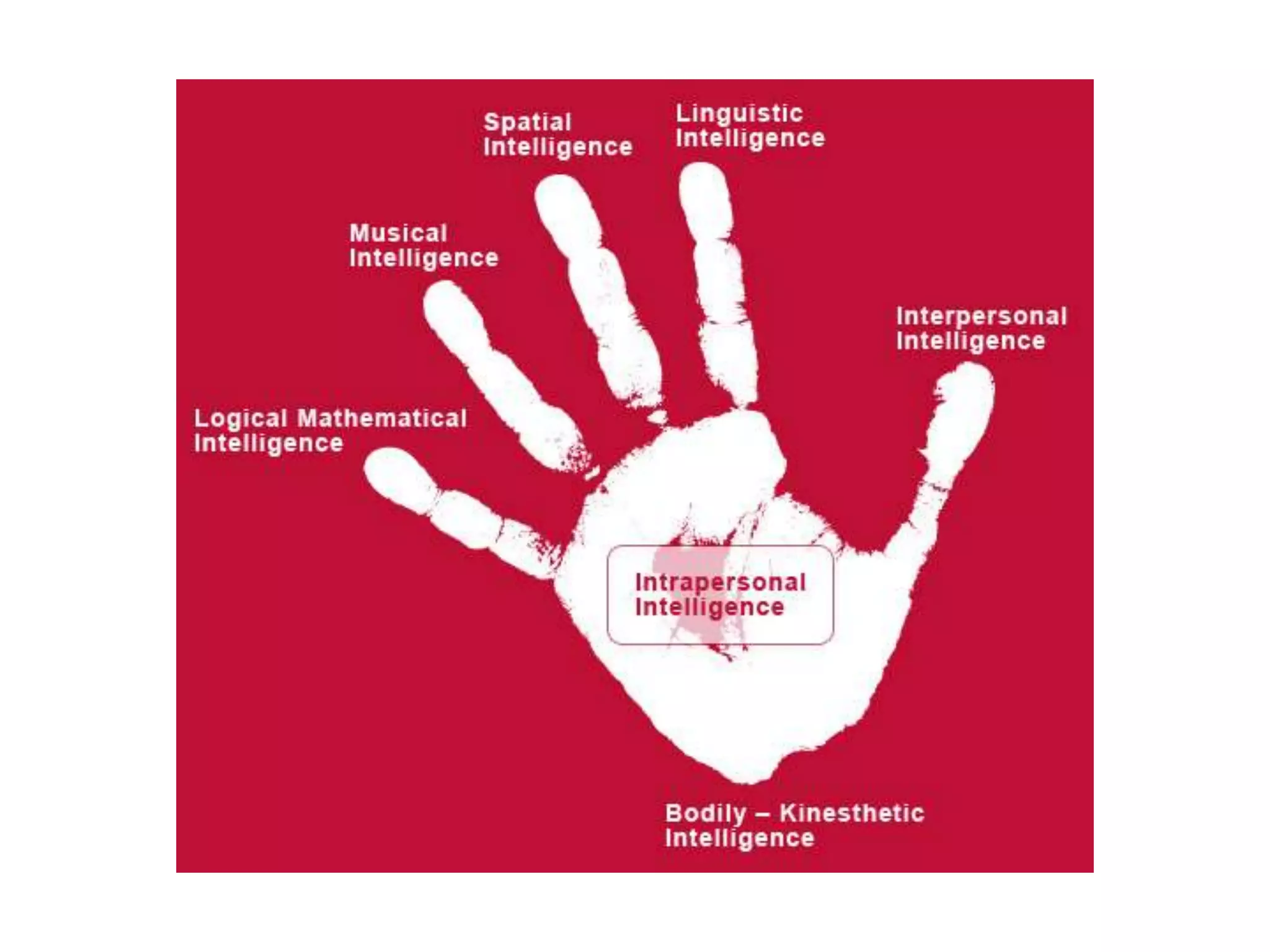
Originally Gardner came up with seven areas of intellect
including the following:
   –   Verbal/Linguistic
   –   Mathematical/Logical
   –   Spatial/Visual
   –   Musical/Rhythmic
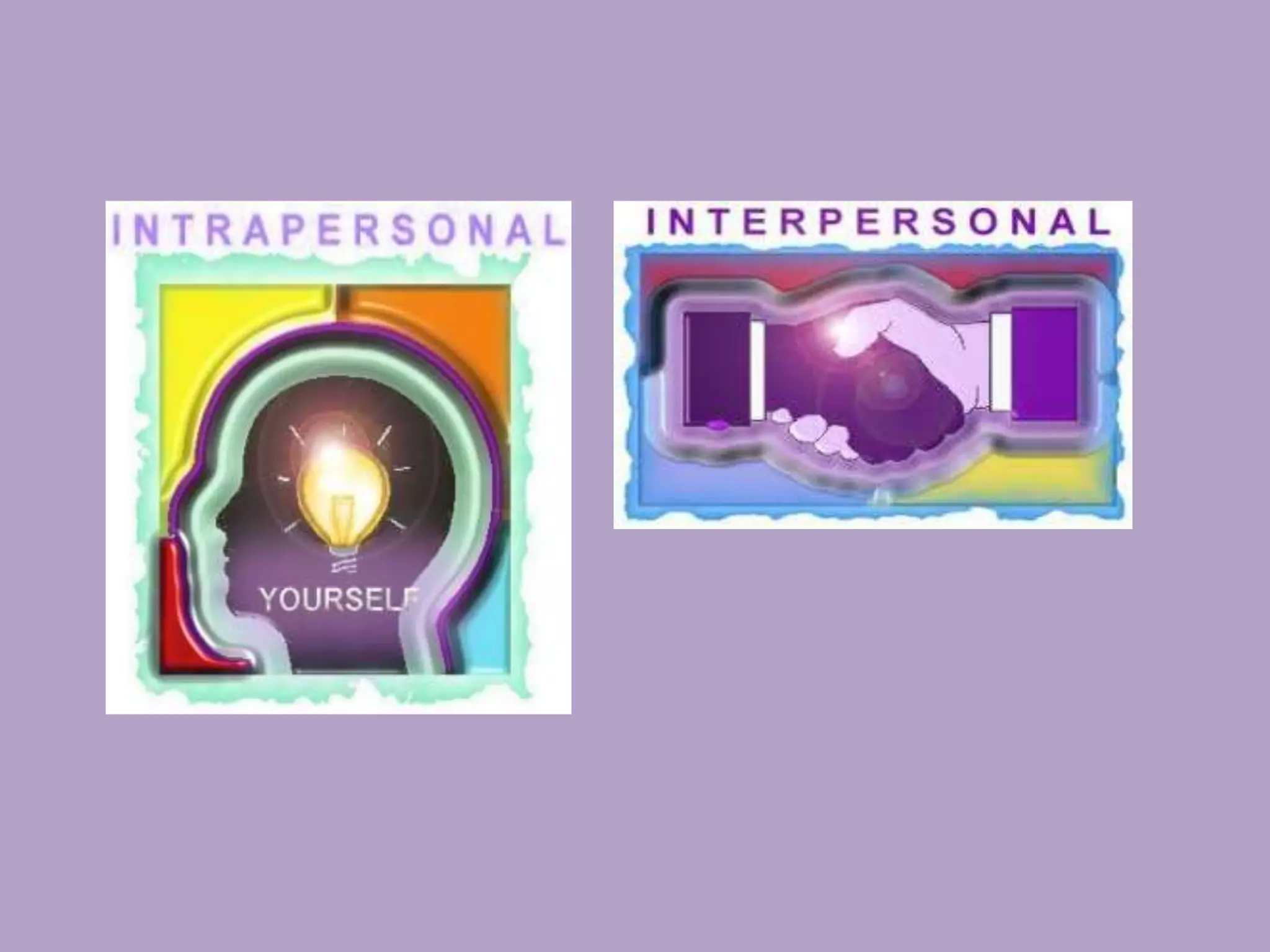
   –   Interpersonal
   –   Intrapersonal
   –   Body/kinesthetic.
Today there are nine multiple intelligences including the
original seven + existential and naturalistic.
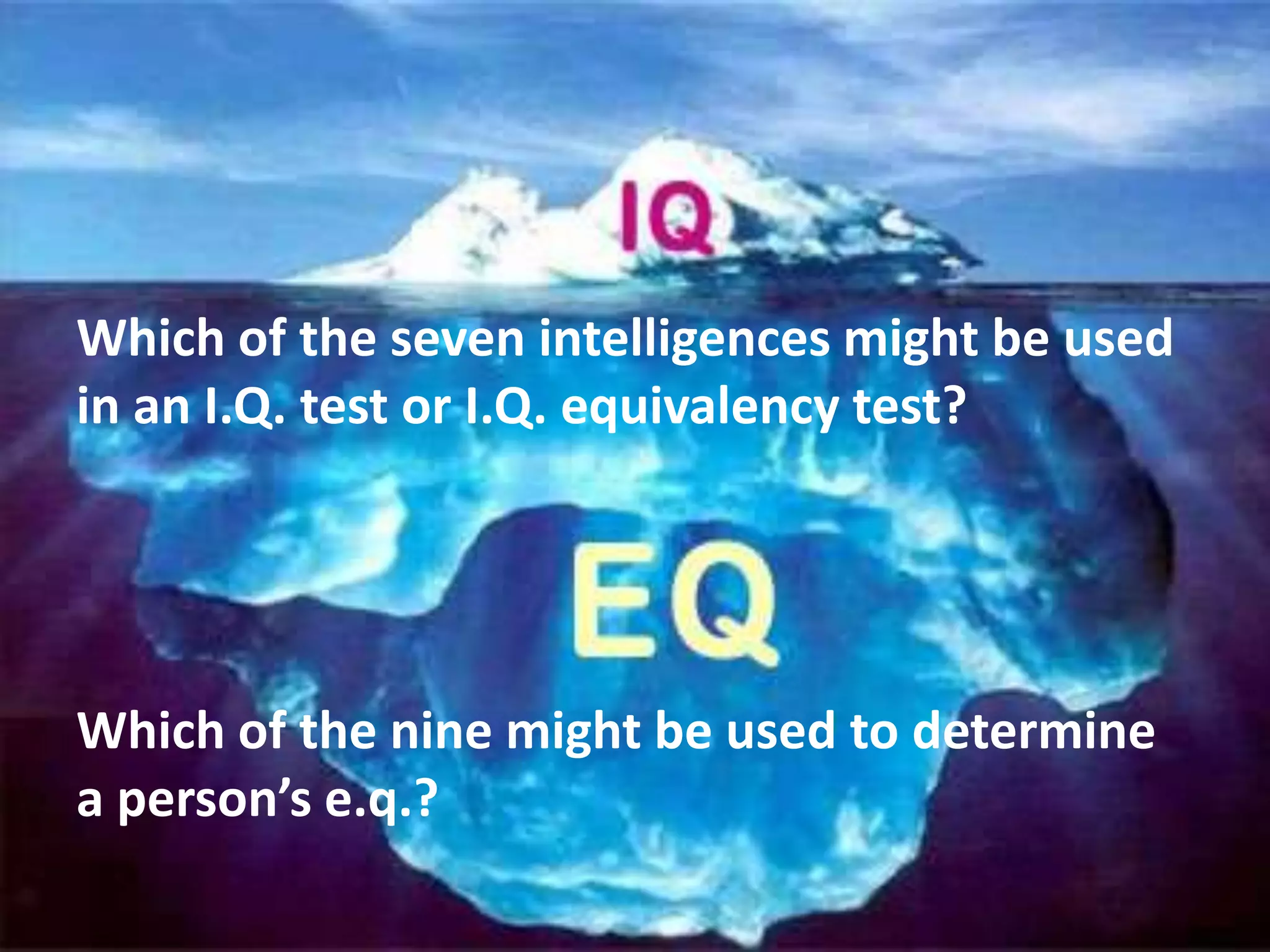
Which of the seven intelligences might be used
in an I.Q. test or I.Q. equivalency test?


Which of the nine might be used to determine
a person’s e.q.?
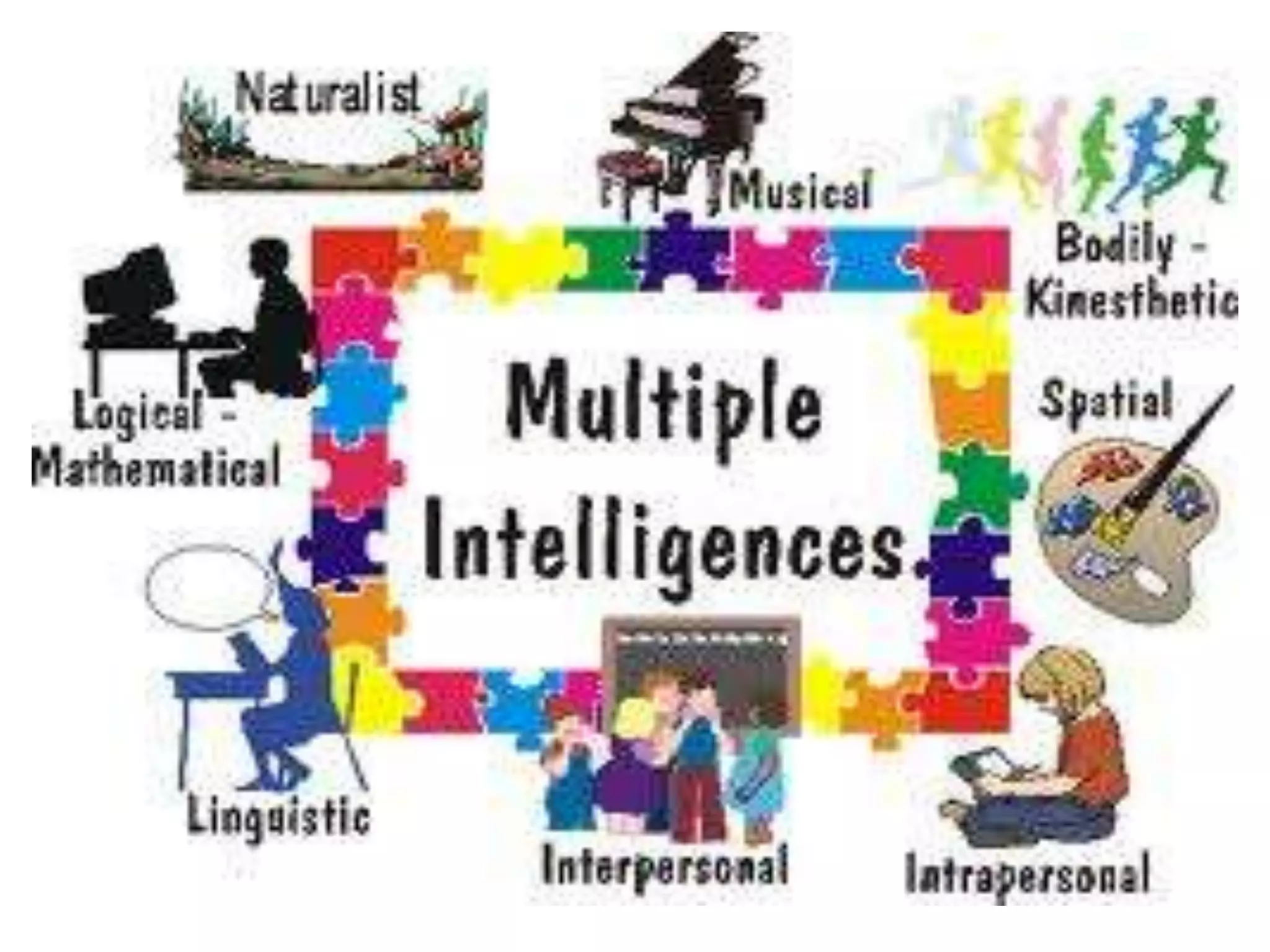
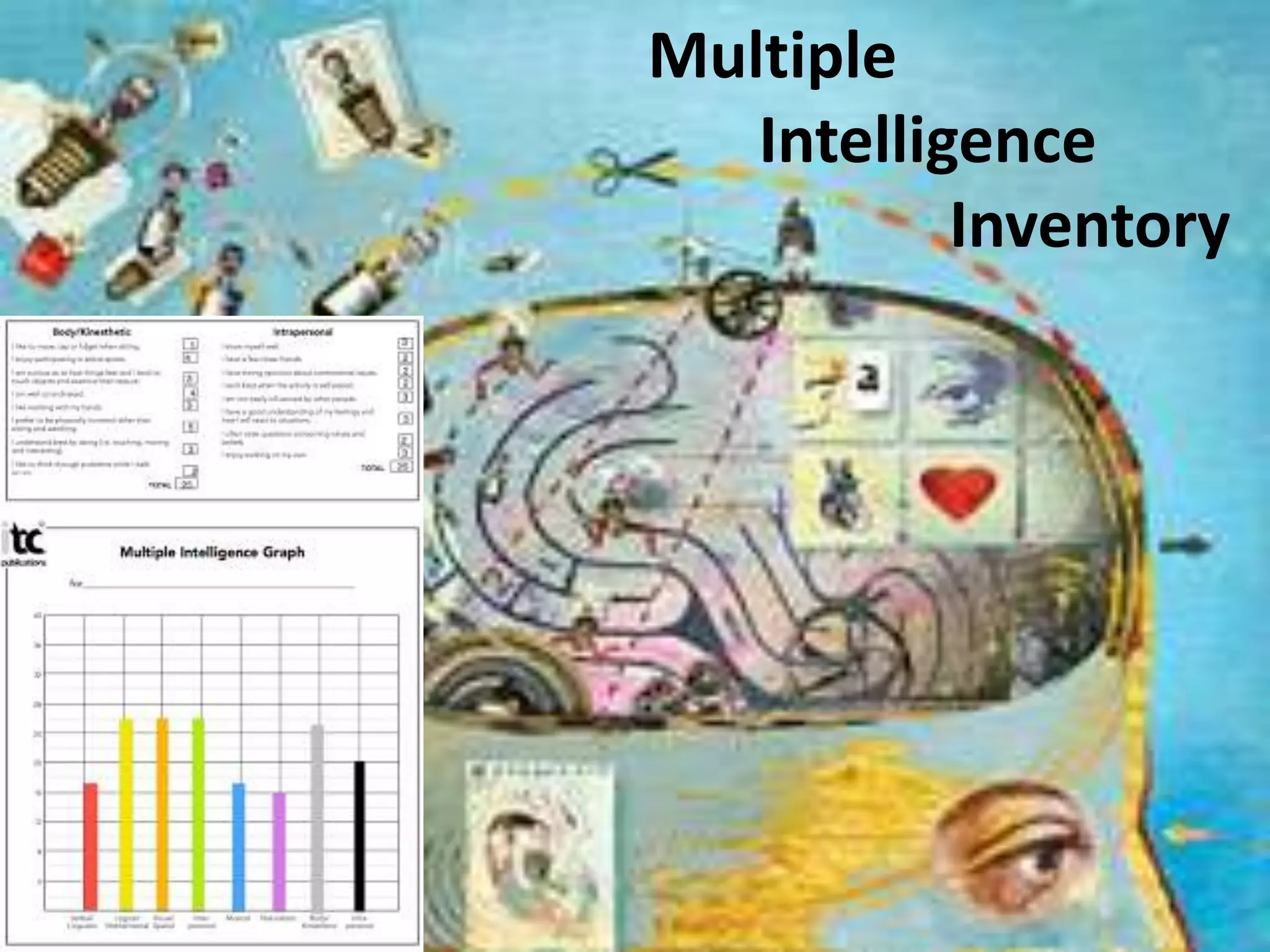
Multiple
   Intelligence
           Inventory
Place the profile in your
journal.
Write an analysis of the
profile in the forum
discussing why you
believe you got the score
you did for each of the
intelligences.
Make sure to address all
of the intelligences with
some discussion.
Review your M.I.
profile.
Note the score and
look at your
response.
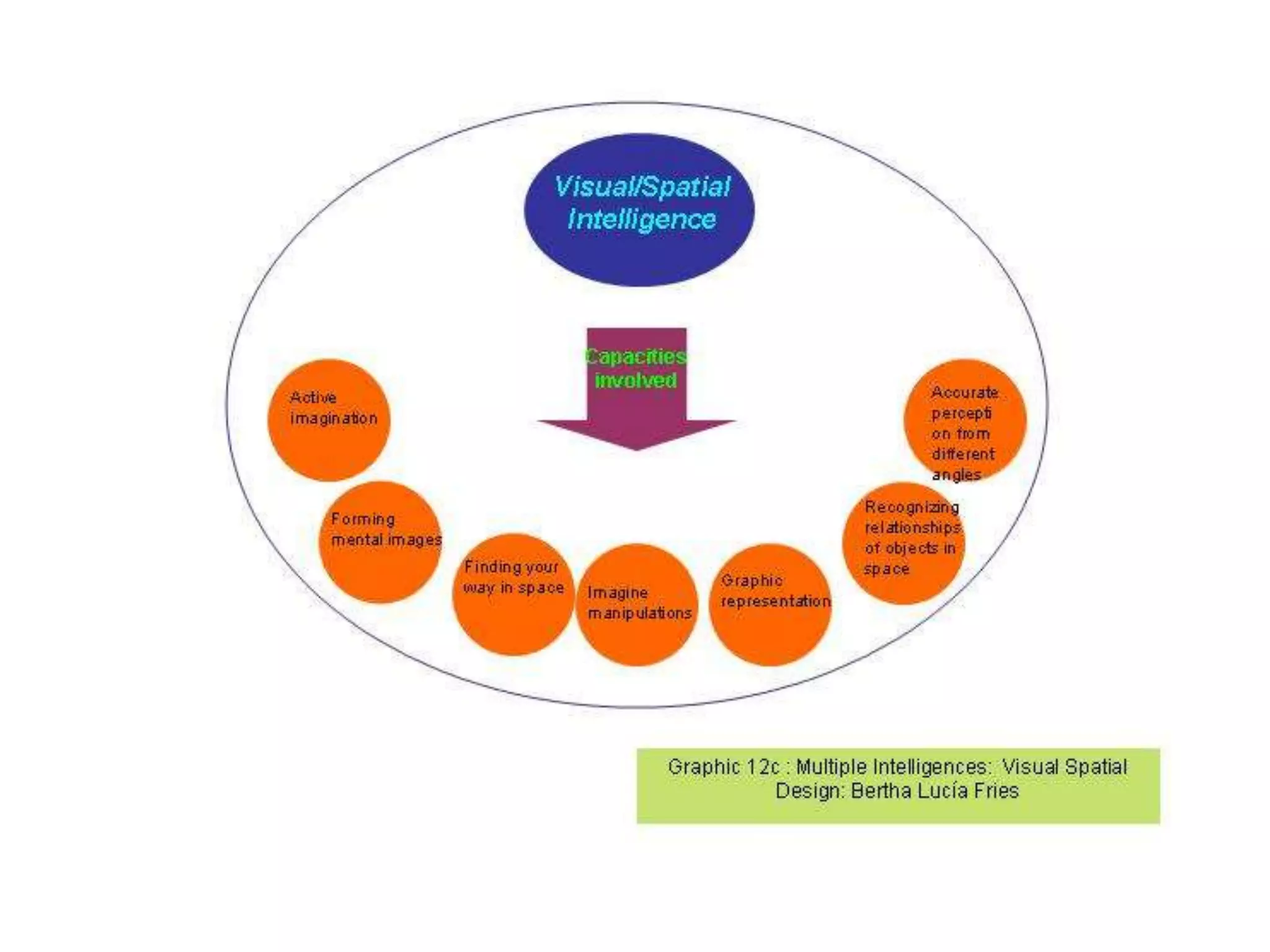
Spatial/Visual
Intelligence is really
a collection of
abilities and skills
that deal with the
ability to form
mental images and
manipulate them.
Reminder of Inventory Questions:
  – I often see clear images when I close my eyes.
  – I’m sensitive to color.
  – I frequently use a camera or “device” to record what I
    see around me.
  – I enjoy doing jigsaw puzzles, mazes, or other visual
    puzzles.
  – I have vivid dreams
  – I can find my way around unfamiliar territory.
  – I like to draw or doodle.
  – Geometry was easier for me than algebra.
  – I can see things from a bird’s eye view.
  – I like looking at reading material and text that is heavily
    illustrated.
3.2 2013 brain studies

3.2 2013 brain studies

  • 2.
    Do you seeany relationship between E.Q. and being an positive/optimistic person? Why do you think that people with high E.Q.’s are generally “more successful” than people with just high I.Q.’s? What about those people who seem to have both a high E.Q. and high I.Q.?
  • 7.
    Howard Gardner identifiesareas of intelligence. It isn’t all that simple. People can excel in some areas and challenged in others. Originally Gardner came up with seven areas of intellect including the following: – Verbal/Linguistic – Mathematical/Logical – Spatial/Visual – Musical/Rhythmic – Interpersonal – Intrapersonal – Body/kinesthetic. Today there are nine multiple intelligences including the original seven + existential and naturalistic.
  • 8.
    Which of theseven intelligences might be used in an I.Q. test or I.Q. equivalency test? Which of the nine might be used to determine a person’s e.q.?
  • 11.
    Multiple Intelligence Inventory
  • 12.
    Place the profilein your journal. Write an analysis of the profile in the forum discussing why you believe you got the score you did for each of the intelligences. Make sure to address all of the intelligences with some discussion.
  • 13.
    Review your M.I. profile. Notethe score and look at your response. Spatial/Visual Intelligence is really a collection of abilities and skills that deal with the ability to form mental images and manipulate them.
  • 16.
    Reminder of InventoryQuestions: – I often see clear images when I close my eyes. – I’m sensitive to color. – I frequently use a camera or “device” to record what I see around me. – I enjoy doing jigsaw puzzles, mazes, or other visual puzzles. – I have vivid dreams – I can find my way around unfamiliar territory. – I like to draw or doodle. – Geometry was easier for me than algebra. – I can see things from a bird’s eye view. – I like looking at reading material and text that is heavily illustrated.

Editor's Notes

  • #2 Emotional Intelligence
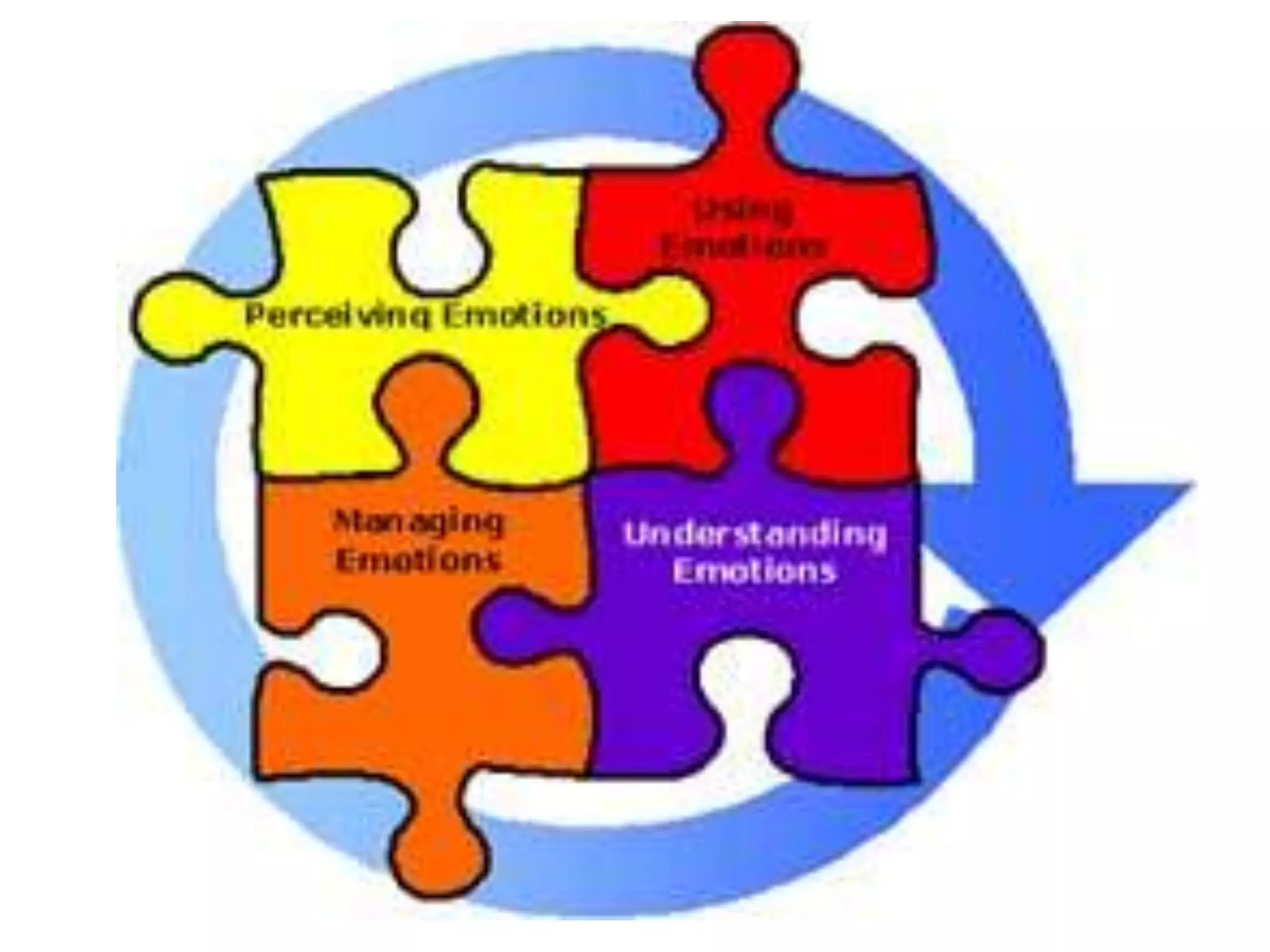
  • #3 What is E.Q. ?What are some of the fundamental factors that determine E.Q.?
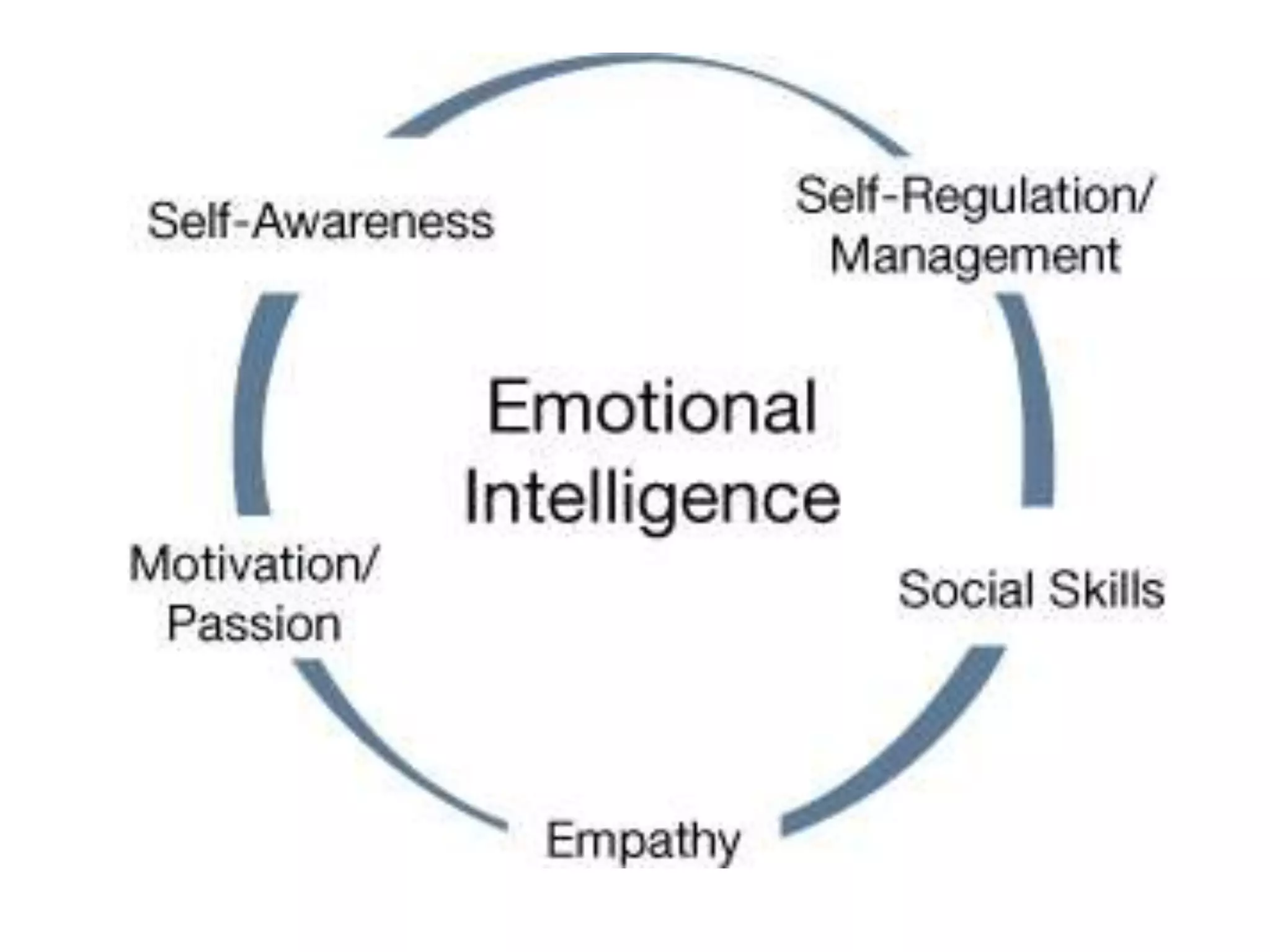
  • #4 Fundamentals of Emotional Intelligence Self-awareness: Knowing what you feel and using your gut sense to make decisions you can live with happily.Management of Feelings: controlling impulses, soothing your anxiety, having anger that is appropriate.Motivation: zeal persistence and optimism in the face of setbacks.Empathy: reading and responding to unspoken feelings. Social skills: handling emotional reactions in others, interacting smoothly, managing relationships effectively.
  • #5 Take the E.Q. Quiz and read the article: New Thinking on Smarts in your book.
  • #8 Multiple Intelligence
  • #9 Emotional IntelligenceLogical Mathematical, verbal/linguistic, visual/spatial.
  • #10 How will you distinguish between inter- and intra- personal intelligence?
  • #11 Intrapersonal intelligence may be the gateway.
  • #12 See handout. Take M.I. inventory.There are ten responses, consider each as it either applies to you or not.4-6 responses is considered average.Once you have completed the inventory, make a bar graph of your results. See attached graph. If you are “sensitive to color” you may want to make a colorful bar graph Have fun learning more about yourself.
  • #13 Put your profile in your journal, it is a required element!
  • #14 Multiple Intelligence Case Study:Spatial/Visual Intelligence
  • #15 This intelligence deals with the sense of sight and being able to visualize an object and create internal mental images/pictures such as…
  • #17 Factors effecting your Spatial/Visual imagery intelligence
  • #18 So how do we measure our abilities in these areas?Not just one test.We will look at visual spatial intelligence and demonstrate how we can get some idea as to our ability in this intelligence.