LOGO
Gear
Terminology
Prepared by Prof. Divyesh B. Patel
Mechanical Engg. Dept
L.E. College, Morbi-2
+919925282644
divyesh21dragon@gmail.com
Outline
 History & Introduction
 Classification of gears
 Terminology
 Law of Gearing
 Characteristics of involute and cycloidal
action
Overview
 Gear is an important power transmitting
element.
 The power may be transmitted from one
shaft to another by means of matting gears
with high transmission efficiency.
 It’s calculations depends on certain factors,
some basic terminologies are discussed in
this presentation.
Classification of gears
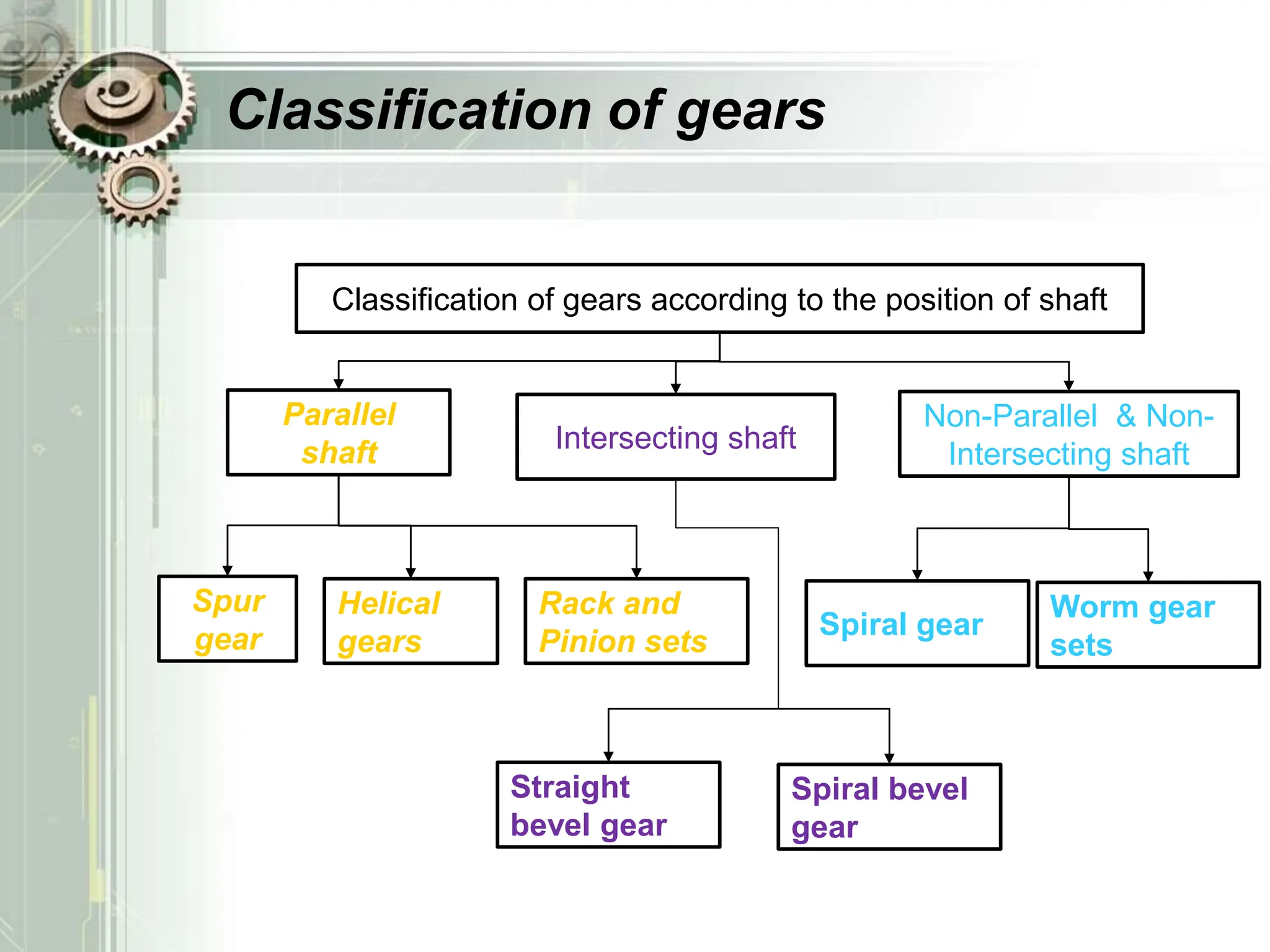
Classification of gears according to the position of shaft
Parallel
shaft Intersecting shaft
Non-Parallel & Non-
Intersecting shaft
Spur
gear
Rack and
Pinion sets
Helical
gears
Spiral gear
Worm gear
sets
Straight
bevel gear
Spiral bevel
gear
Types of Gears
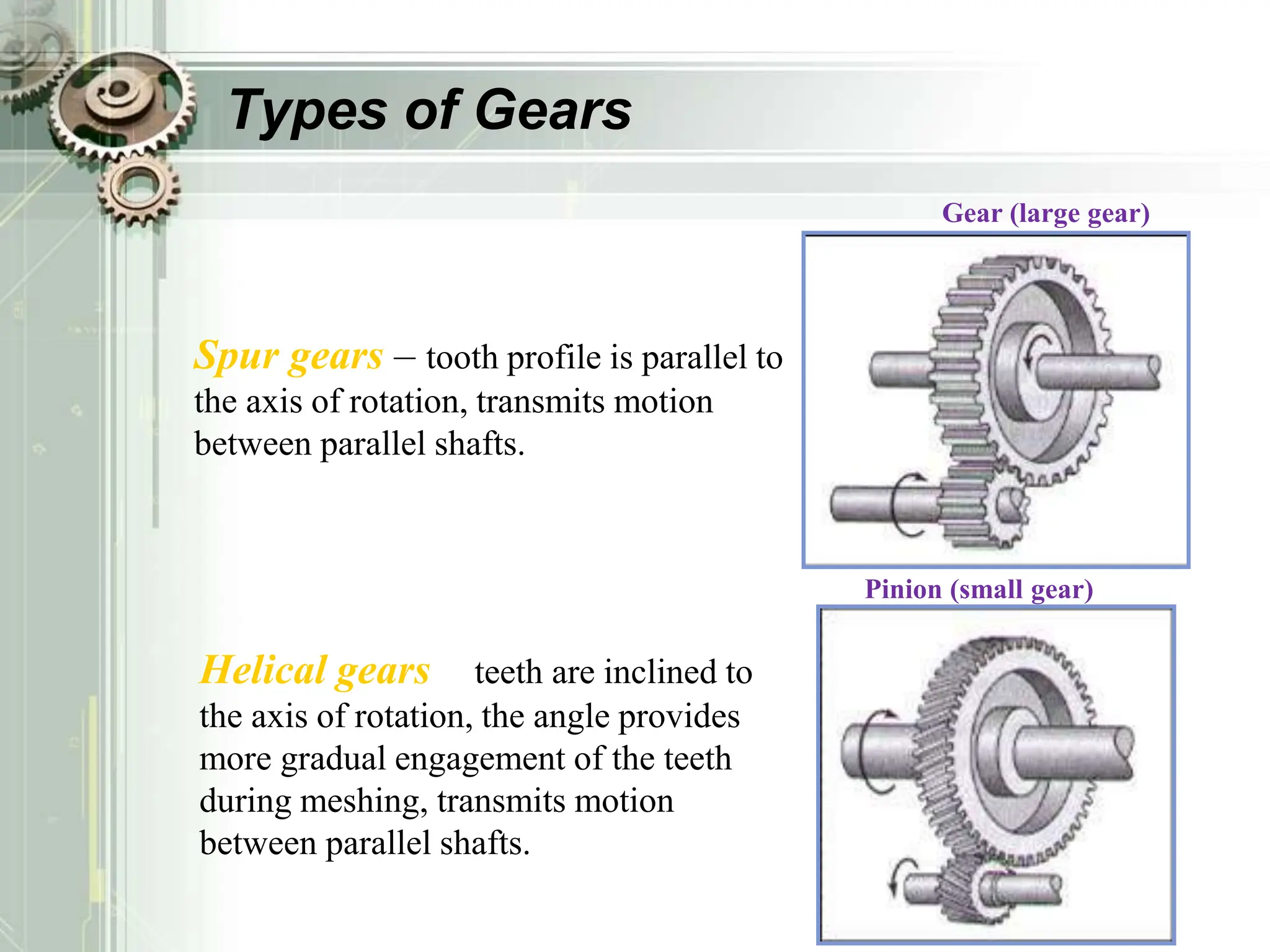
Spur gears – tooth profile is parallel to
the axis of rotation, transmits motion
between parallel shafts.
Pinion (small gear)
Gear (large gear)
– teeth are inclined to
the axis of rotation, the angle provides
more gradual engagement of the teeth
during meshing, transmits motion
between parallel shafts.
Helical gears
Types of Gears
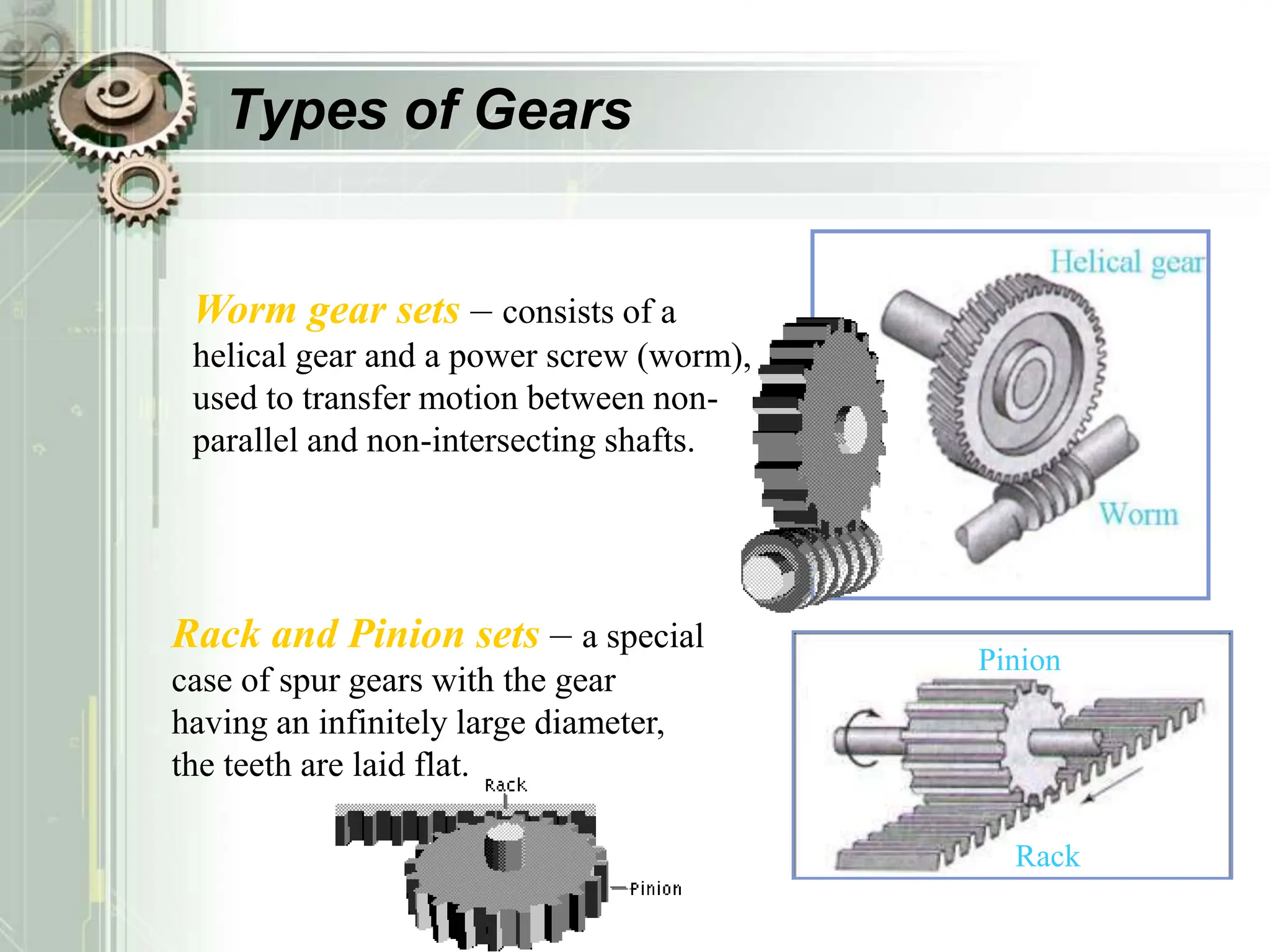
Worm gear sets – consists of a
helical gear and a power screw (worm),
used to transfer motion between non-
parallel and non-intersecting shafts.
Rack and Pinion sets – a special
case of spur gears with the gear
having an infinitely large diameter,
the teeth are laid flat.
Rack
Pinion
Types of Gears
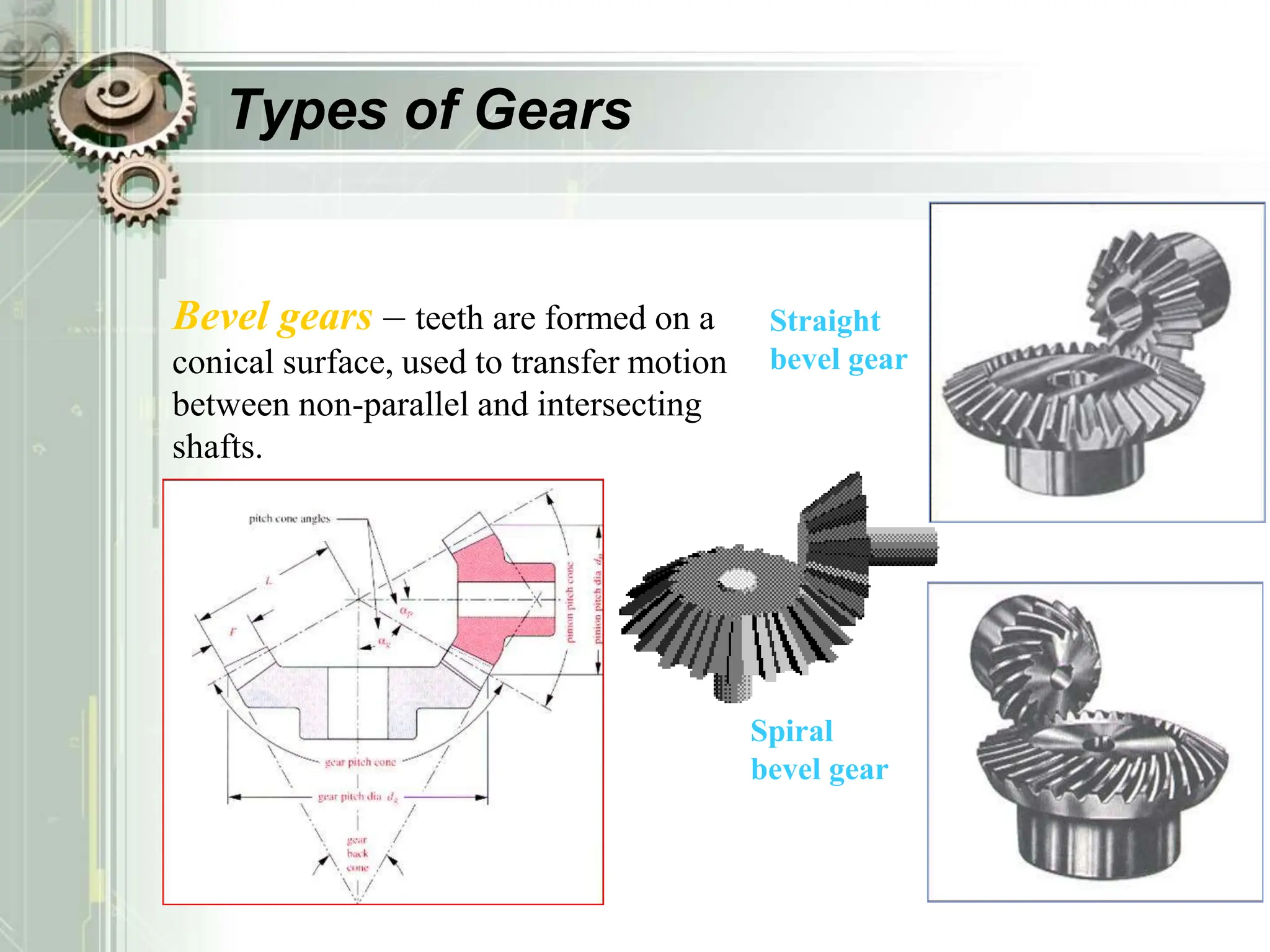
Bevel gears – teeth are formed on a
conical surface, used to transfer motion
between non-parallel and intersecting
shafts.
Straight
bevel gear
Spiral
bevel gear
Types of Gears
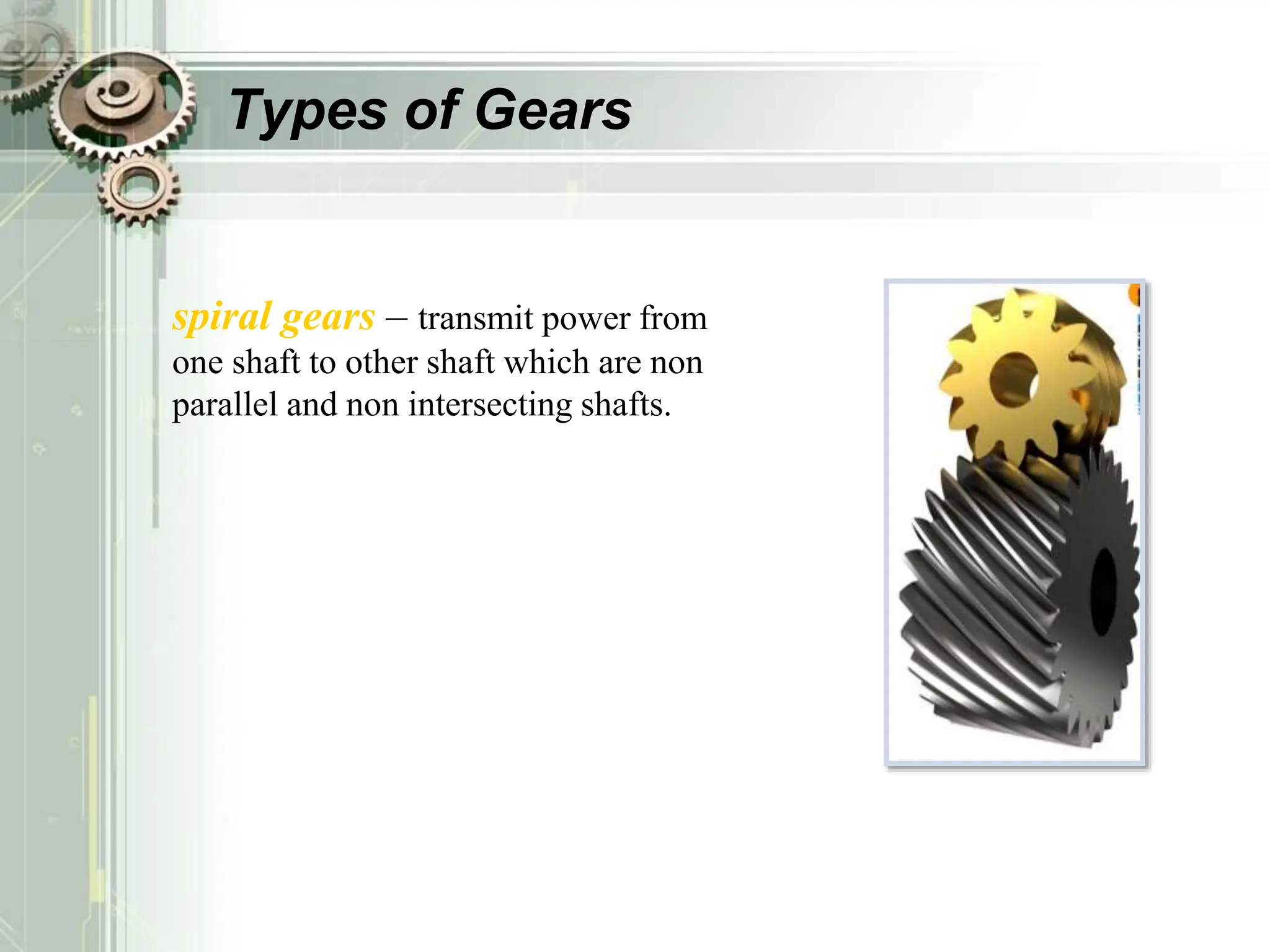
spiral gears – transmit power from
one shaft to other shaft which are non
parallel and non intersecting shafts.
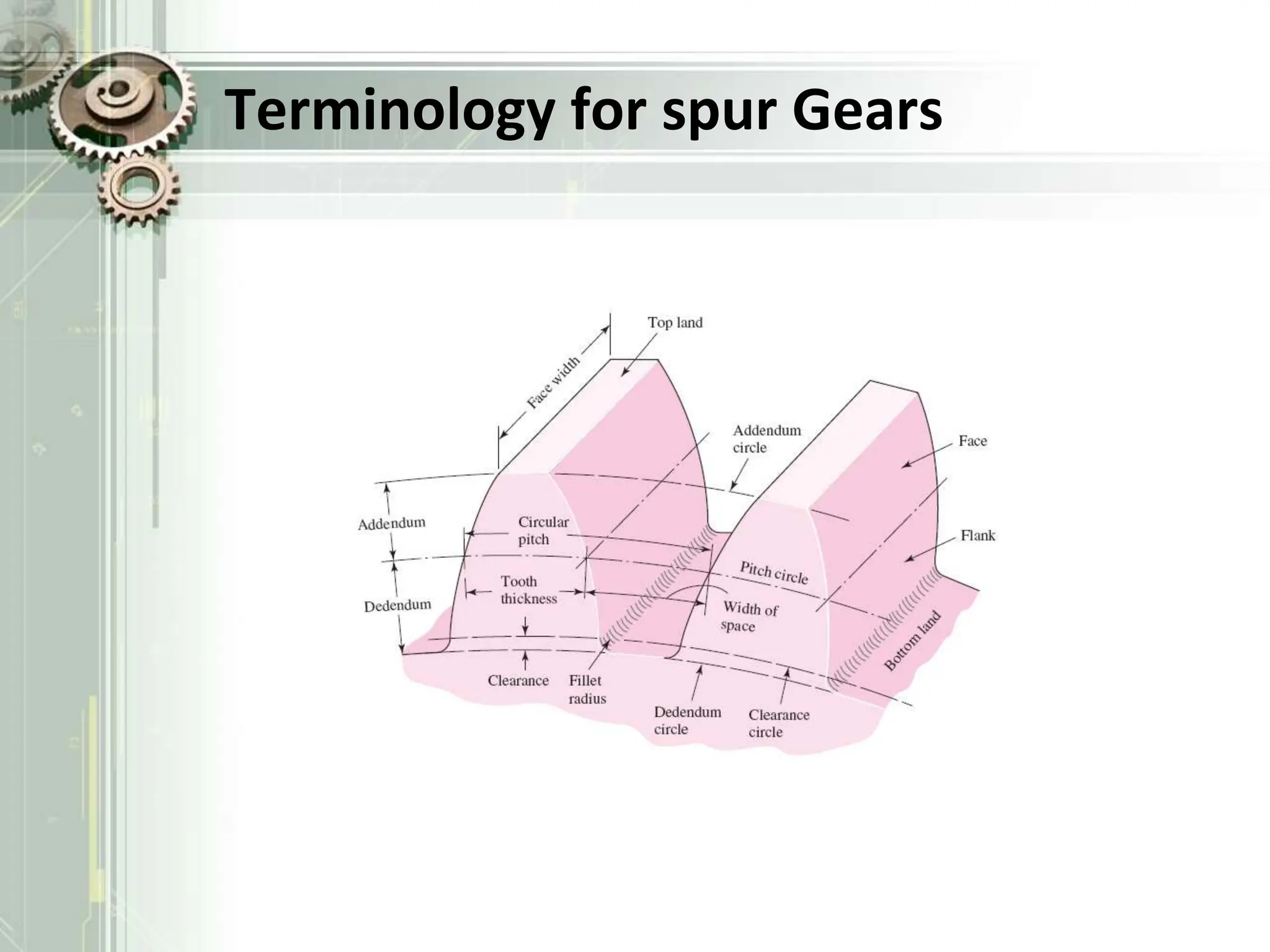
Terminology for spur Gears
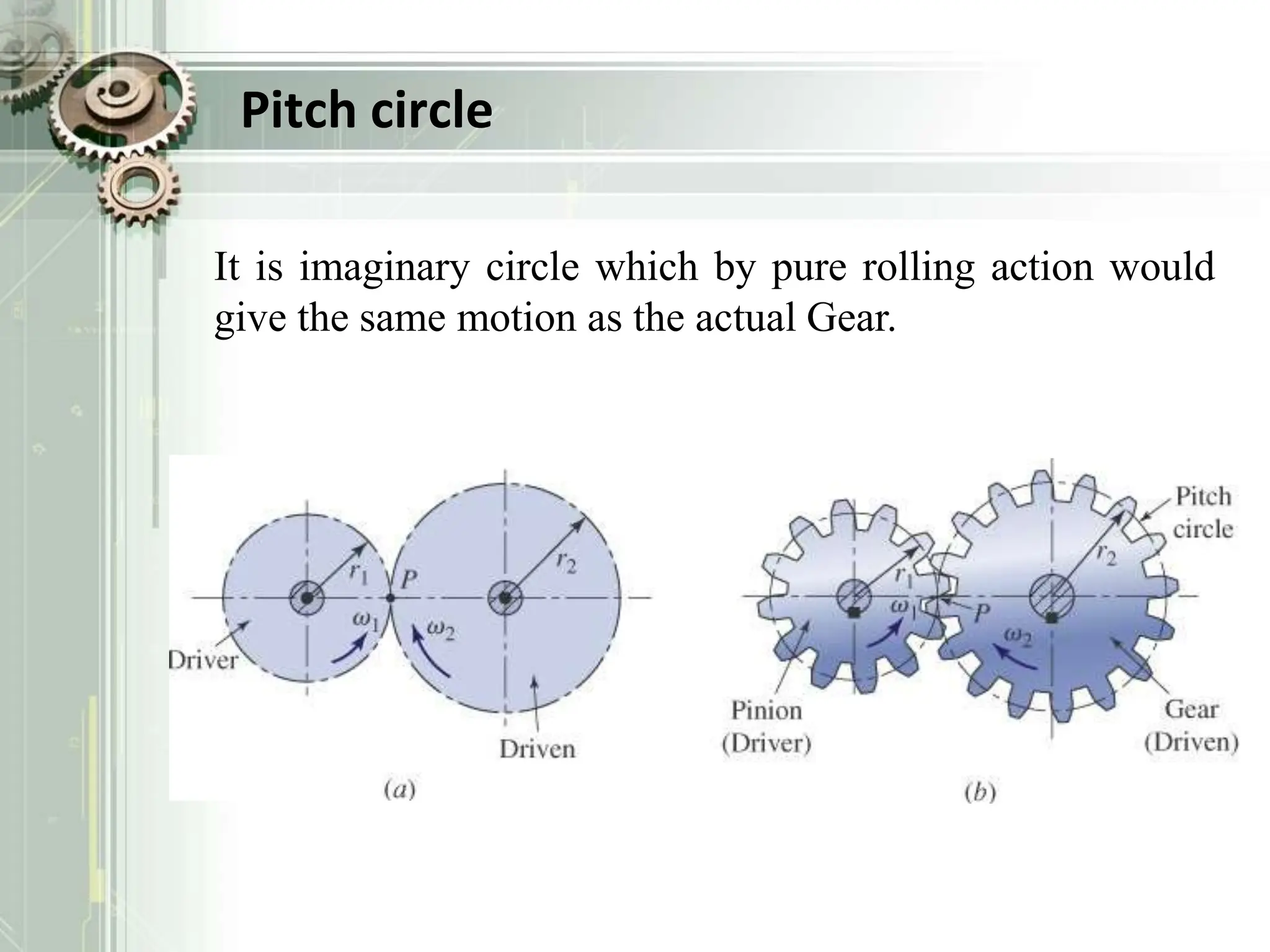
Pitch circle
It is imaginary circle which by pure rolling action would
give the same motion as the actual Gear.
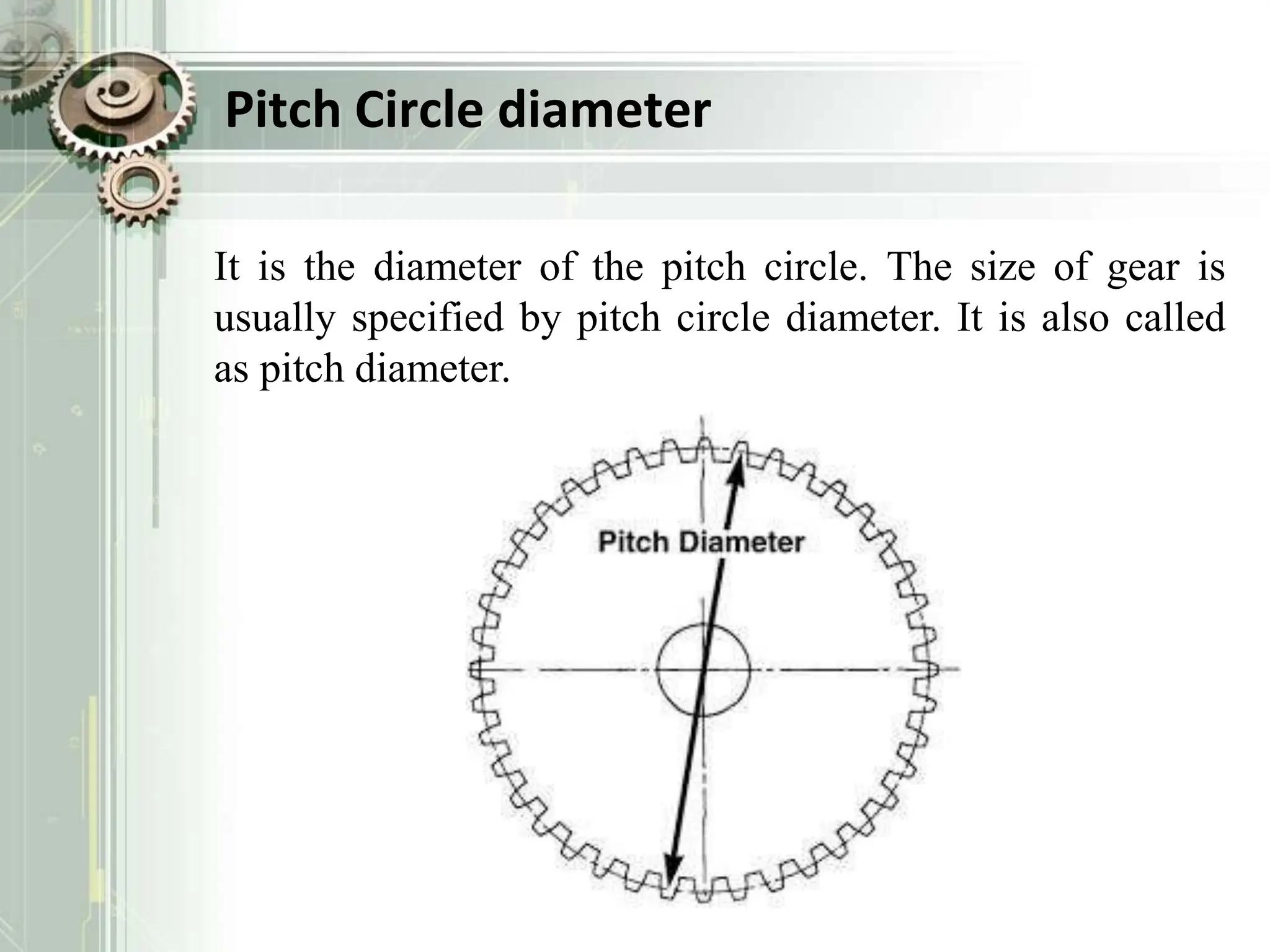
Pitch Circle diameter
It is the diameter of the pitch circle. The size of gear is
usually specified by pitch circle diameter. It is also called
as pitch diameter.
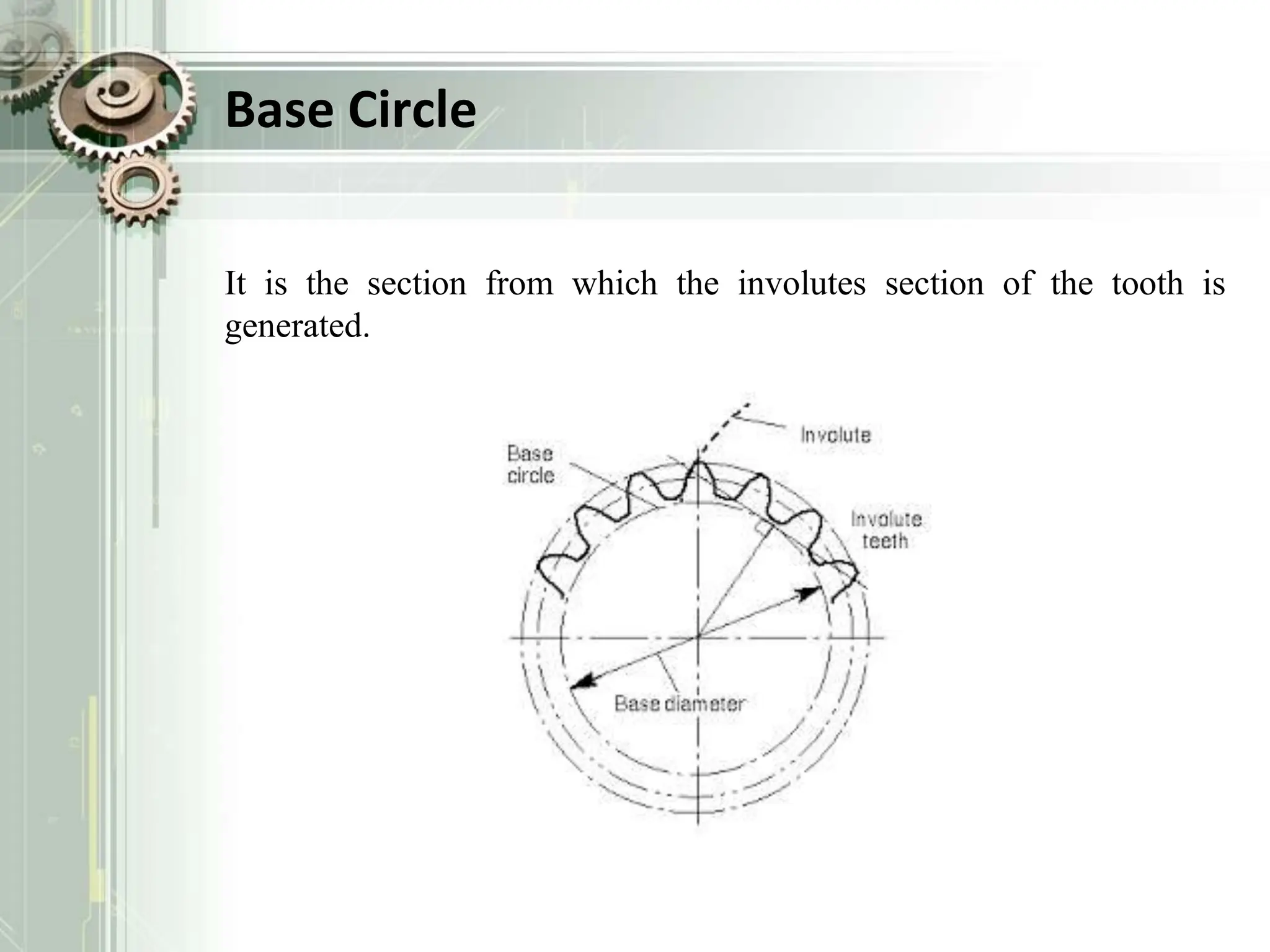
Base Circle
It is the section from which the involutes section of the tooth is
generated.
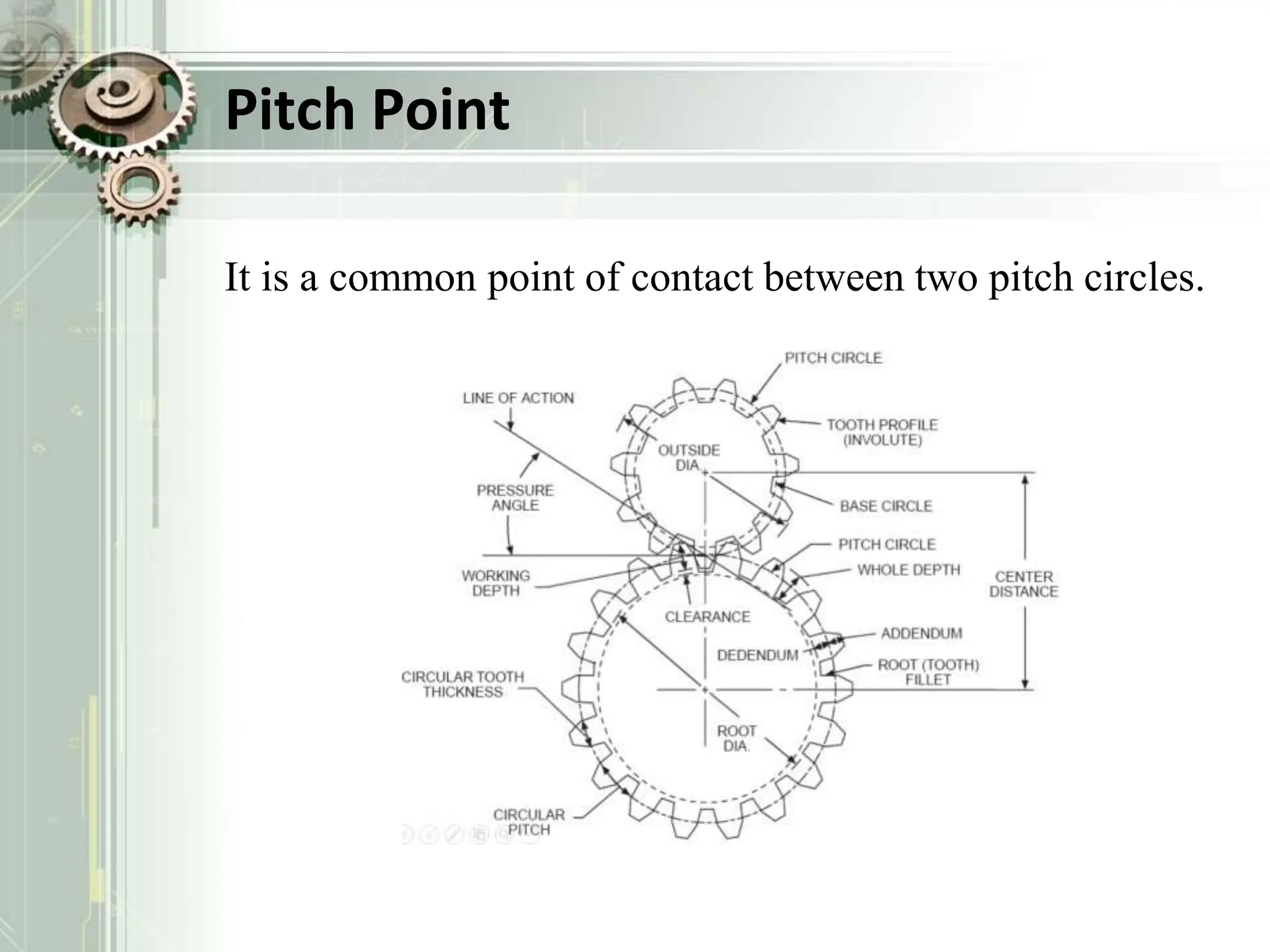
Pitch Point
It is a common point of contact between two pitch circles.
Pitch surface
It is the surface of the rolling discs which the
meshing gears have replaced at the pitch circle.
www.themegallery.com
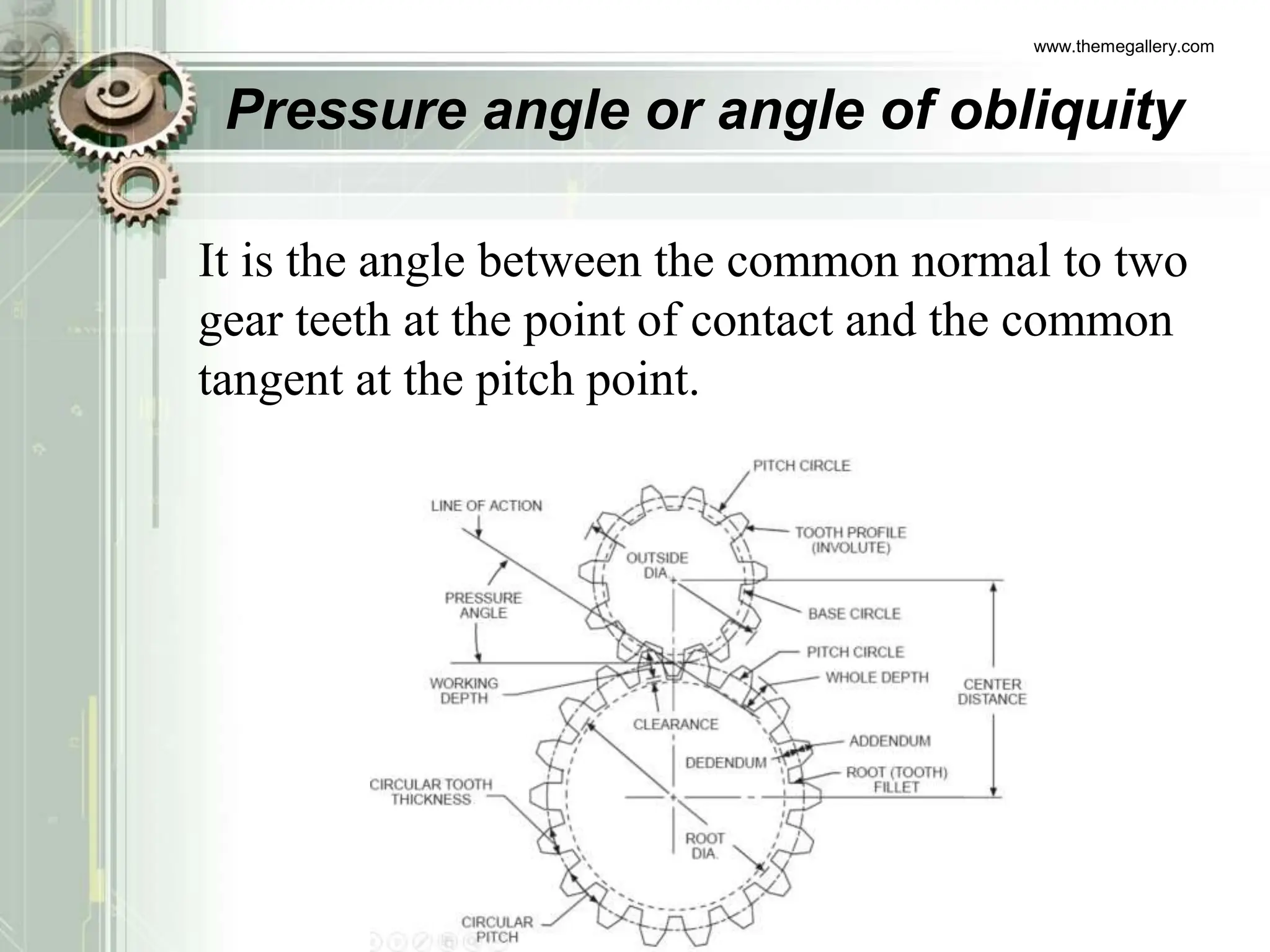
Pressure angle or angle of obliquity
It is the angle between the common normal to two
gear teeth at the point of contact and the common
tangent at the pitch point.
www.themegallery.com
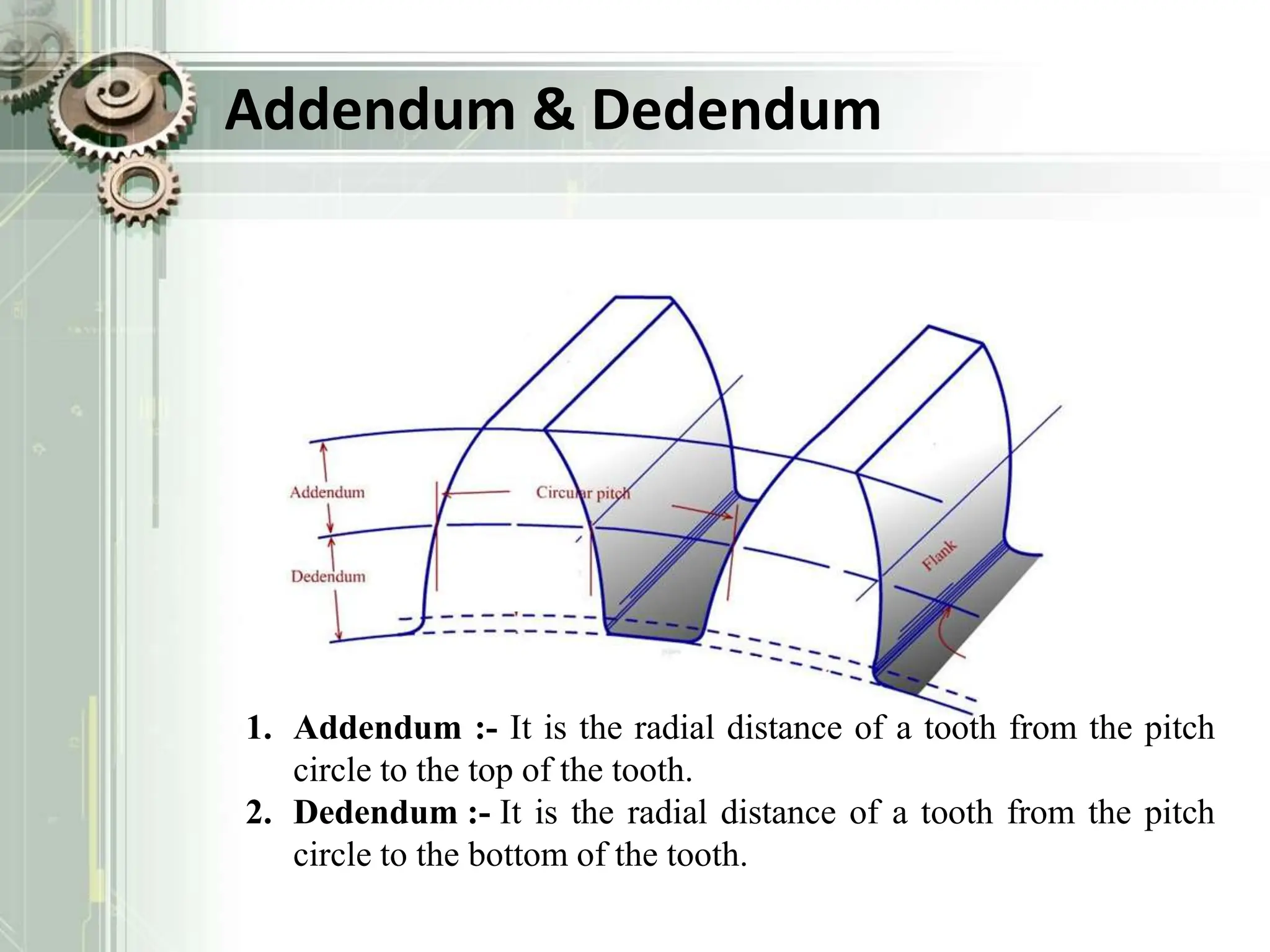
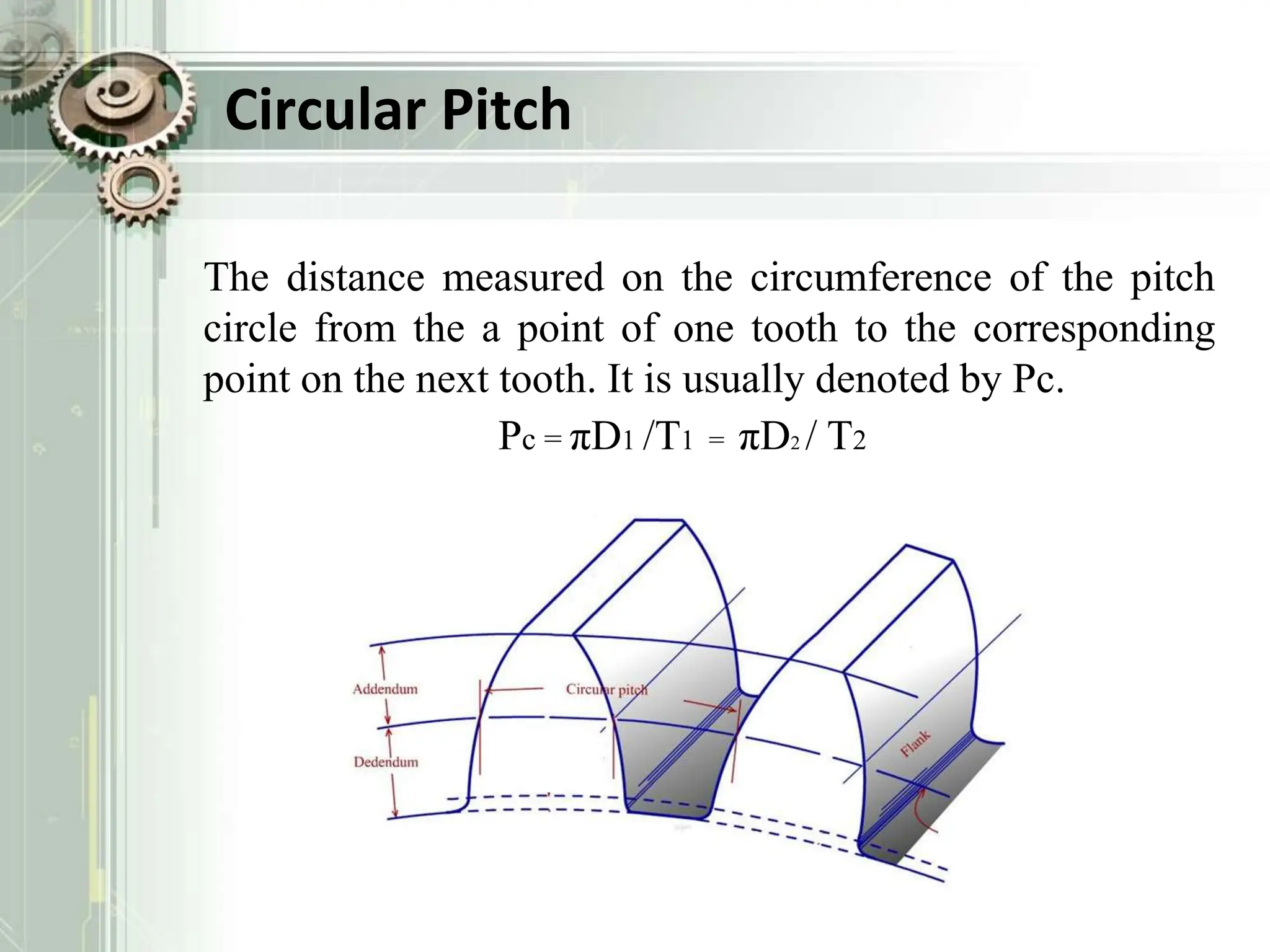
Addendum & Dedendum
1. Addendum :- It is the radial distance of a tooth from the pitch
circle to the top of the tooth.
2. Dedendum :- It is the radial distance of a tooth from the pitch
circle to the bottom of the tooth.
www.themegallery.com
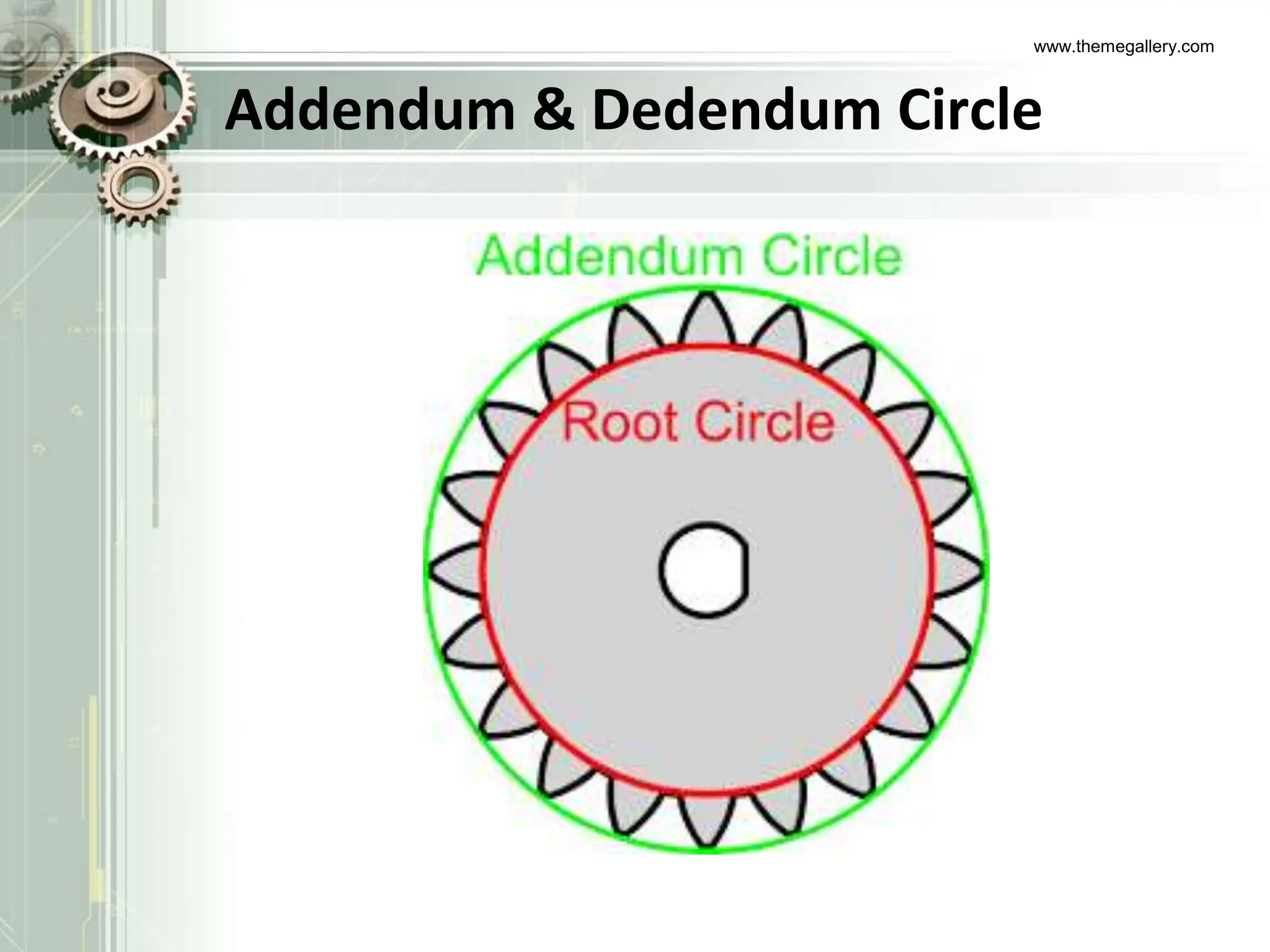
Addendum & Dedendum Circle
Circular Pitch
The distance measured on the circumference of the pitch
circle from the a point of one tooth to the corresponding
point on the next tooth. It is usually denoted by Pc.
Pc = πD1 /T1 = πD2 / T2
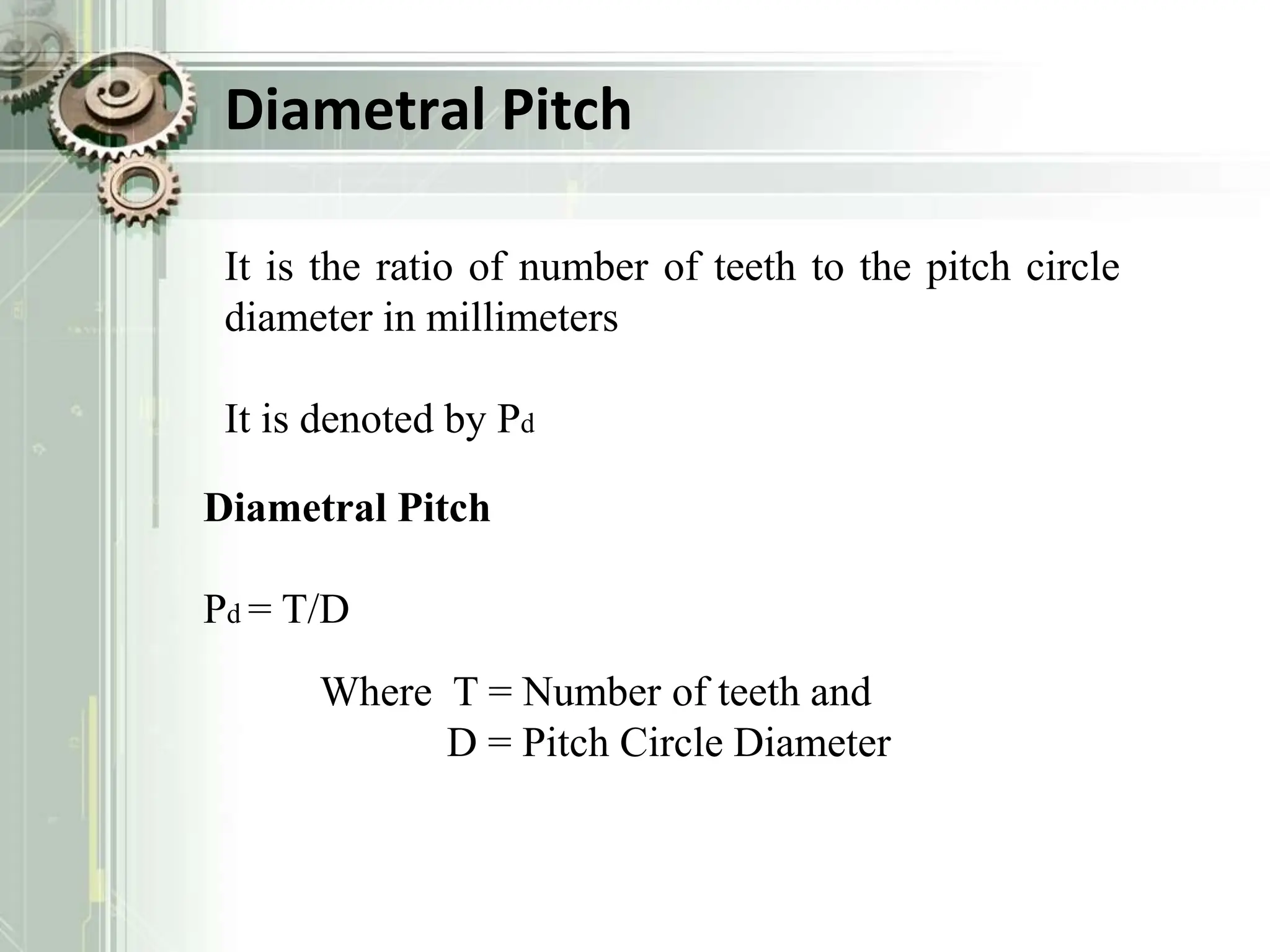
Diametral Pitch
It is the ratio of number of teeth to the pitch circle
diameter in millimeters
It is denoted by Pd
Diametral Pitch
Pd = T/D
Where T = Number of teeth and
D = Pitch Circle Diameter
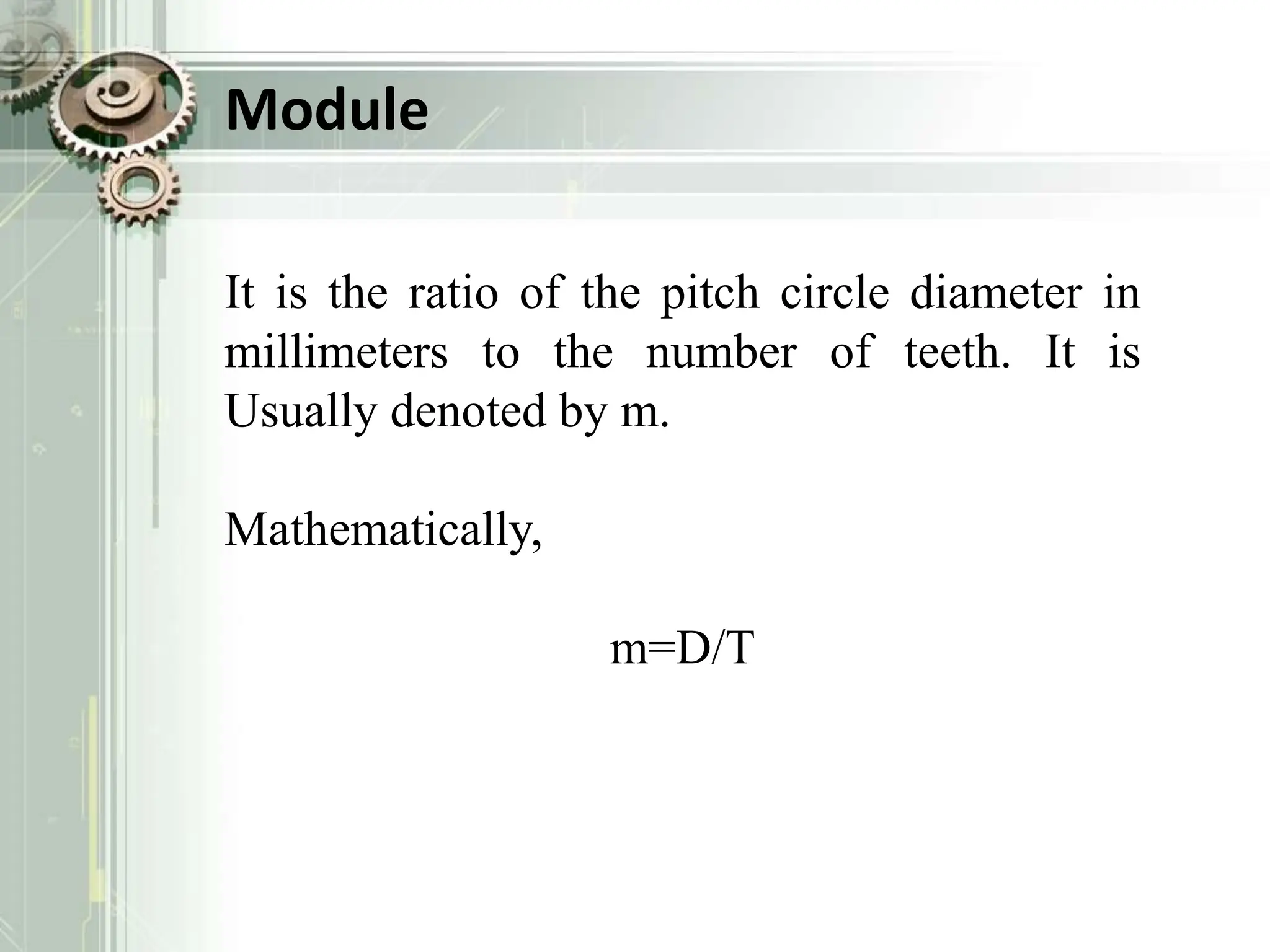
Module
It is the ratio of the pitch circle diameter in
millimeters to the number of teeth. It is
Usually denoted by m.
Mathematically,
m=D/T
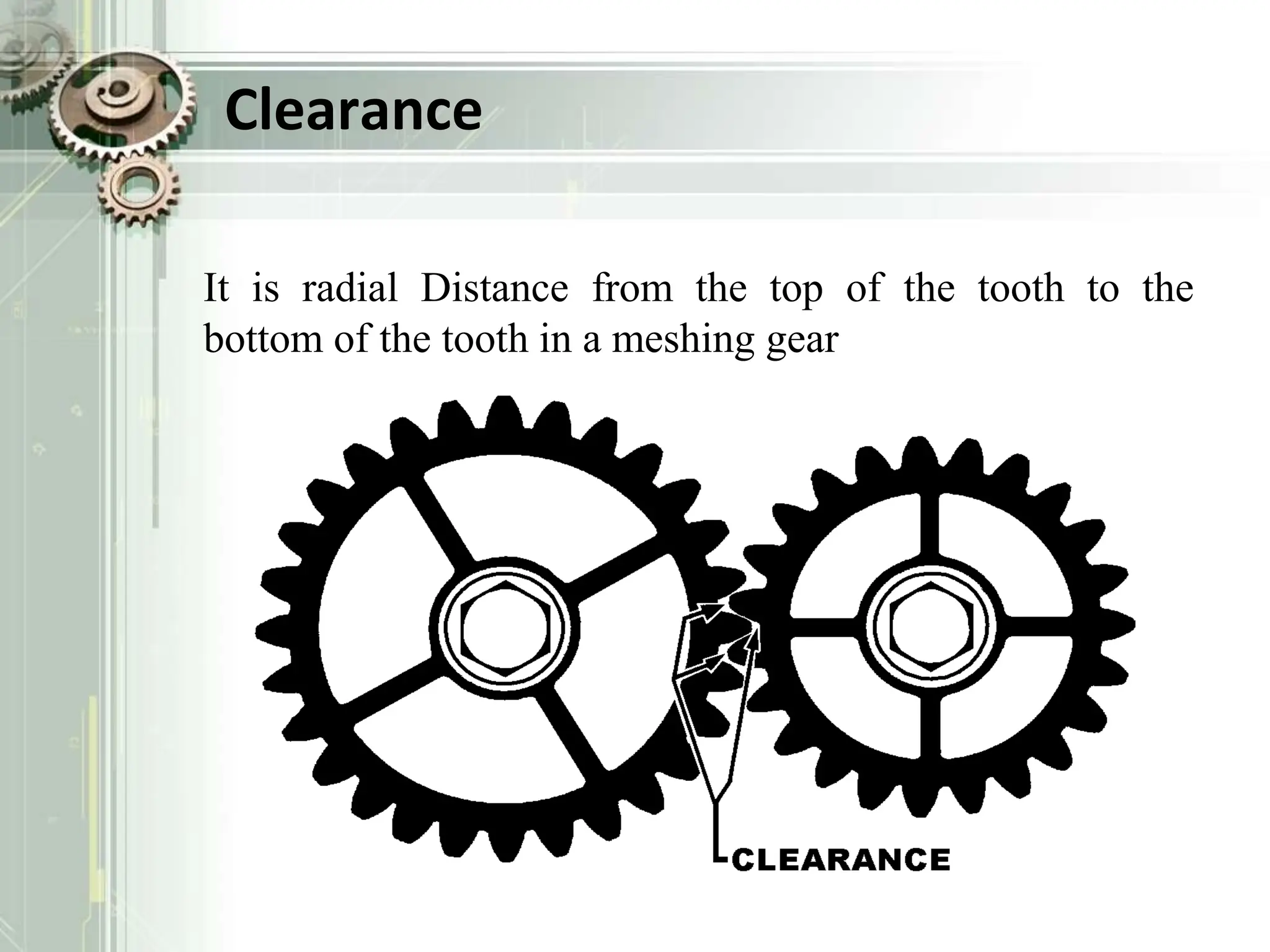
Clearance
It is radial Distance from the top of the tooth to the
bottom of the tooth in a meshing gear
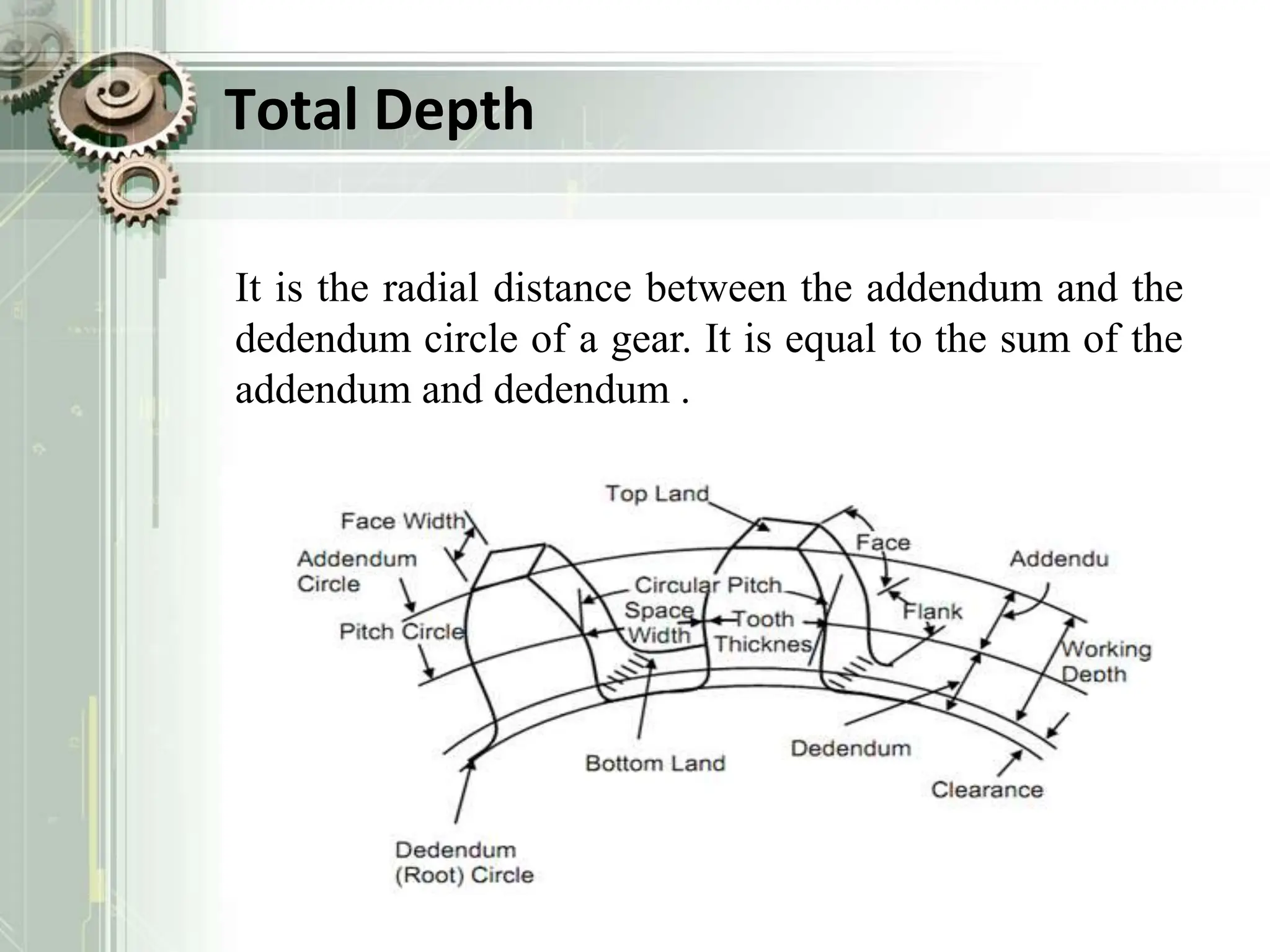
Total Depth
It is the radial distance between the addendum and the
dedendum circle of a gear. It is equal to the sum of the
addendum and dedendum .
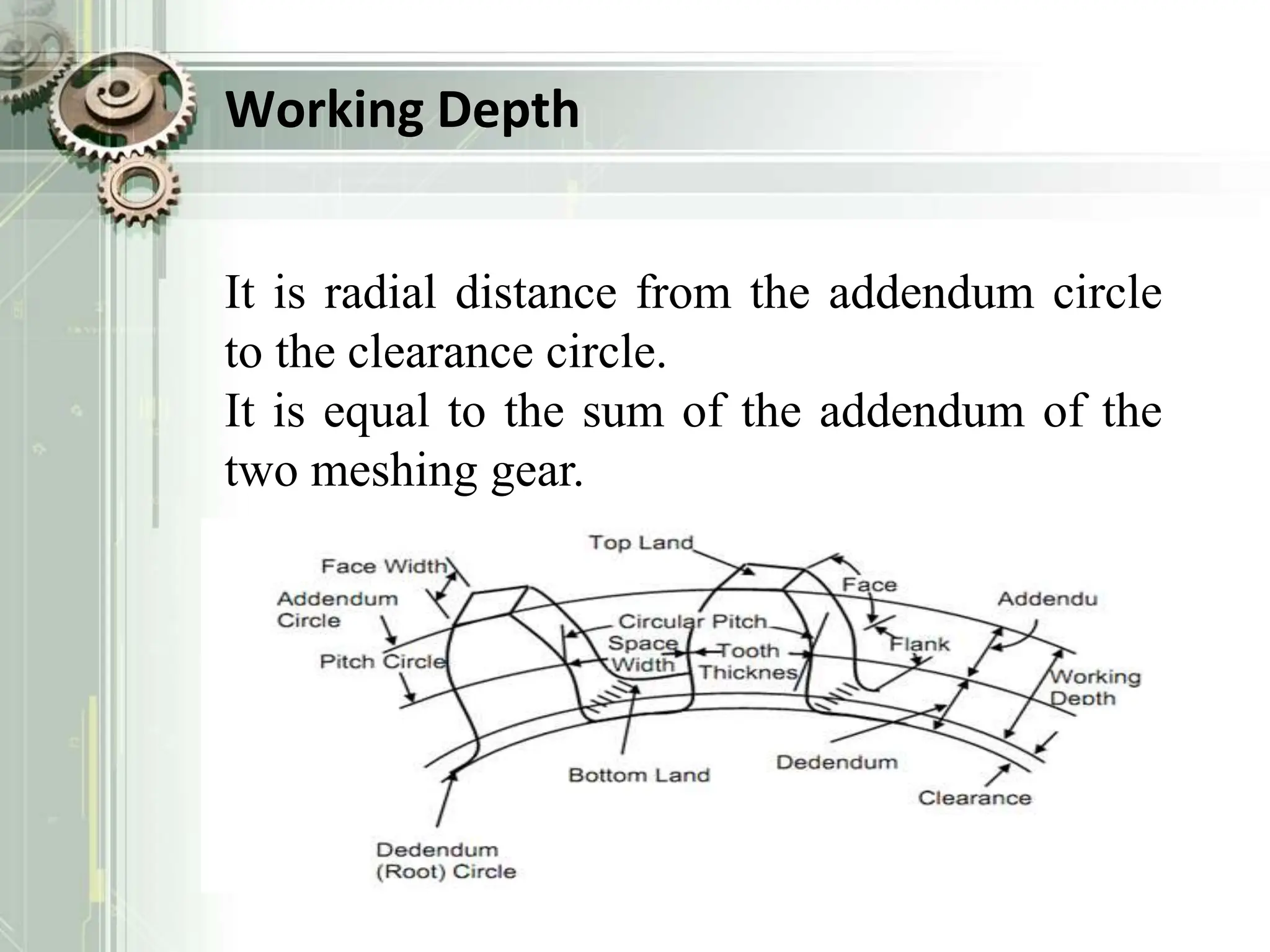
Working Depth
It is radial distance from the addendum circle
to the clearance circle.
It is equal to the sum of the addendum of the
two meshing gear.
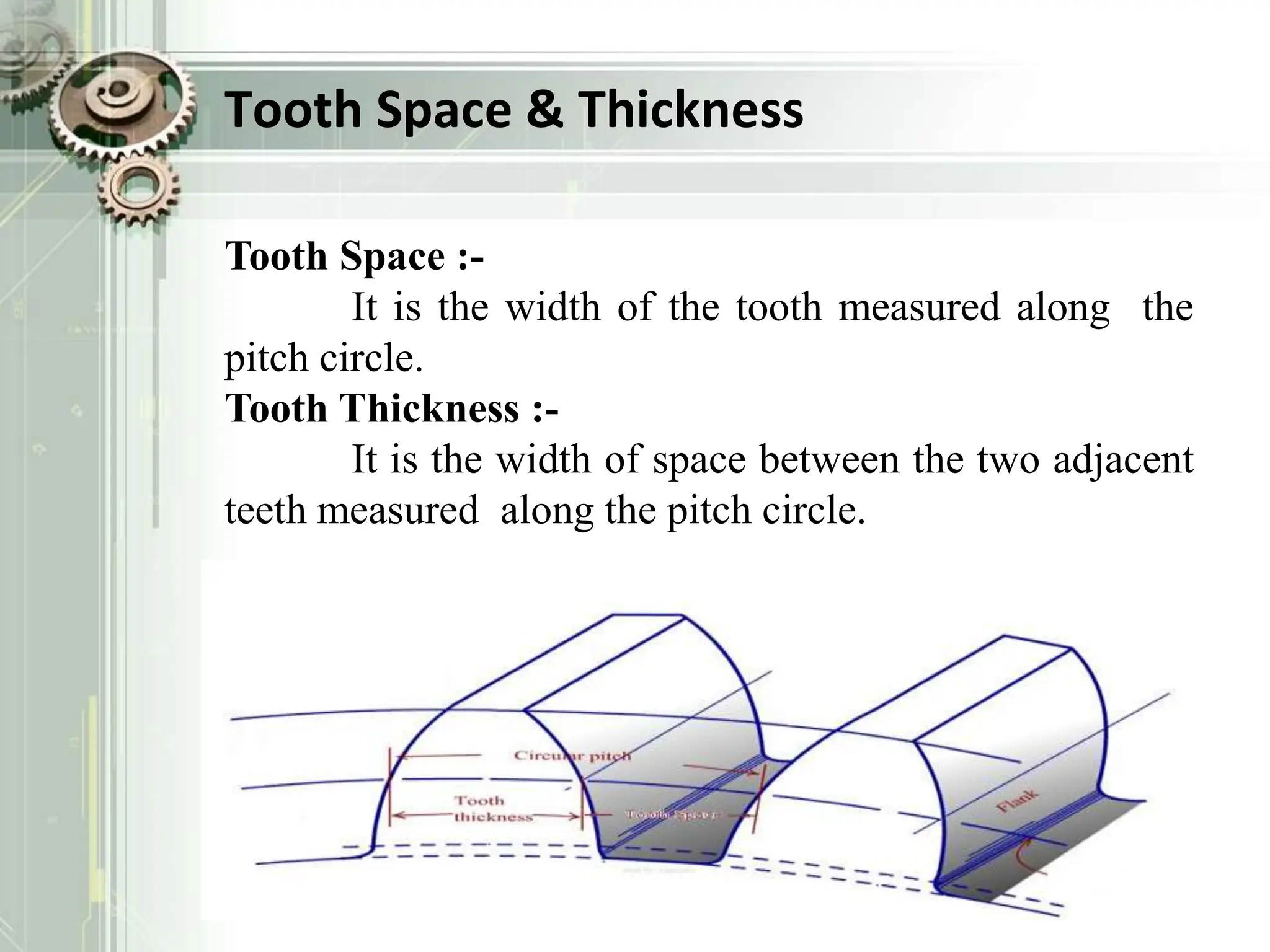
Tooth Space & Thickness
Tooth Space :-
It is the width of the tooth measured along the
pitch circle.
Tooth Thickness :-
It is the width of space between the two adjacent
teeth measured along the pitch circle.
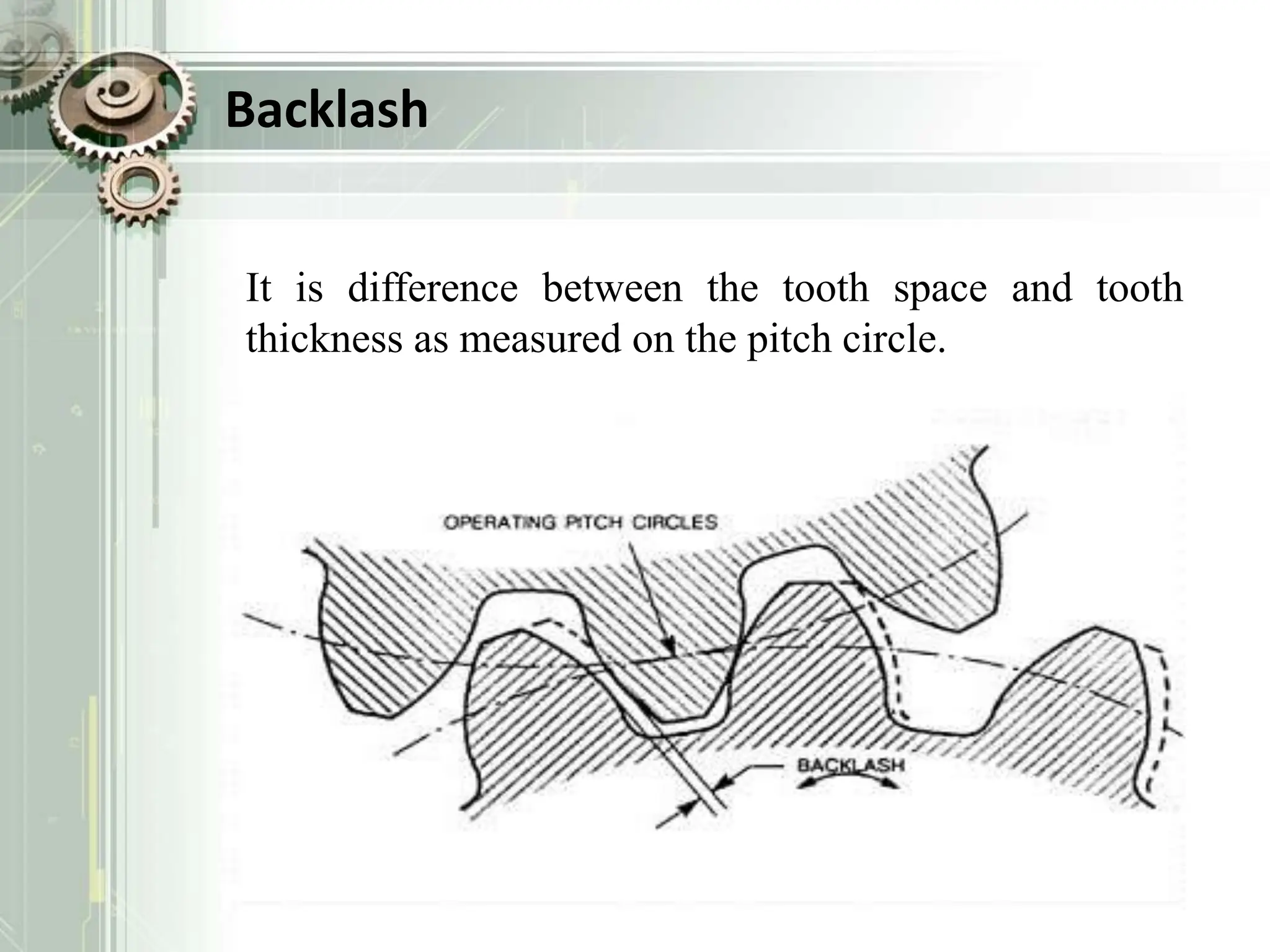
Backlash
It is difference between the tooth space and tooth
thickness as measured on the pitch circle.
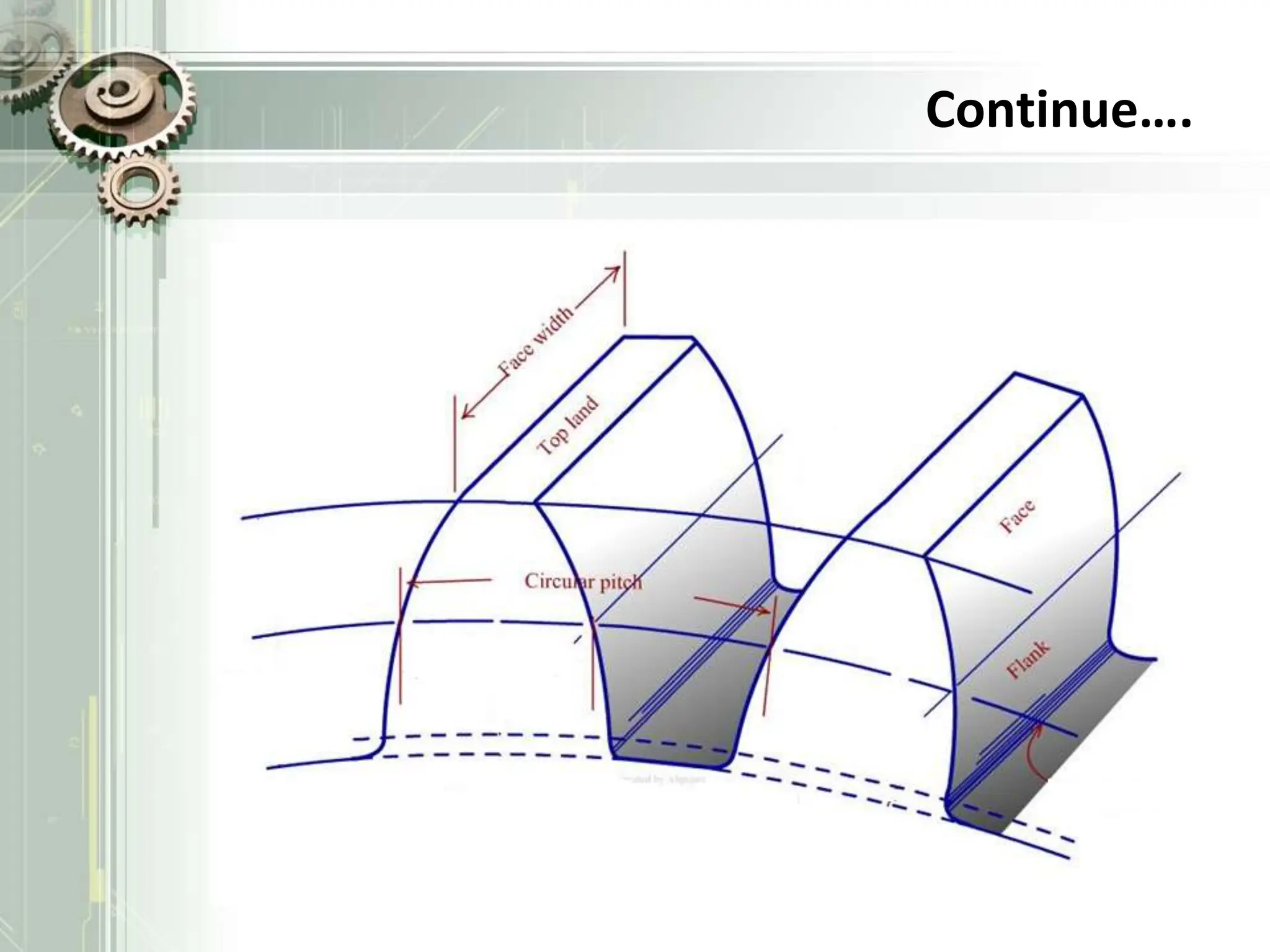
Face of tooth :-
It is the surface of the tooth above pitch surface.
Top Land :-
It is the surface of the top of the tooth.
Flank of the tooth :-
It is the surface of the tooth below the pitch surface.
Face width :-
It is the width of the gear tooth measured to parallel to its
axis.
Continue….
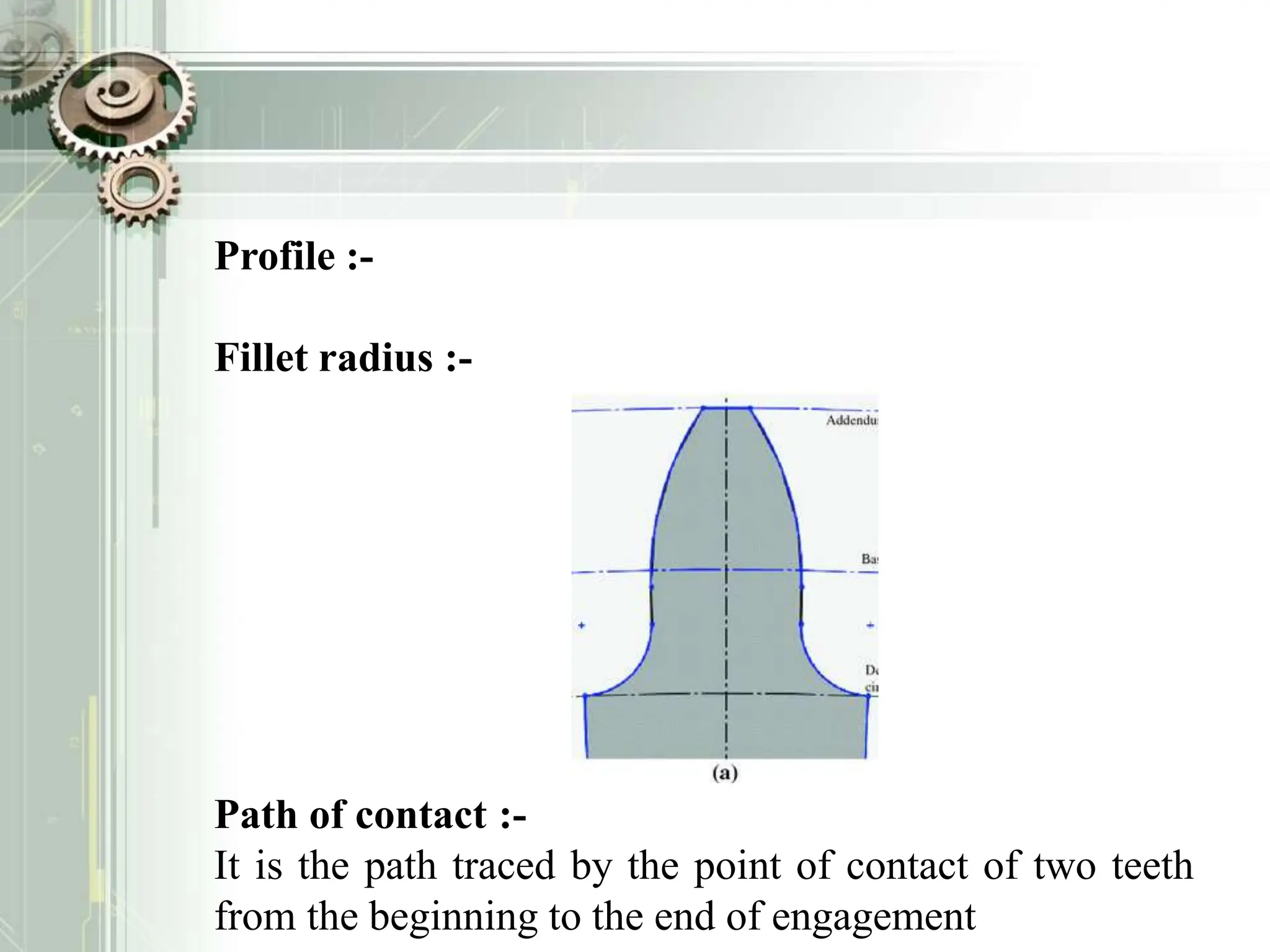
Profile :-
Fillet radius :-
Path of contact :-
It is the path traced by the point of contact of two teeth
from the beginning to the end of engagement
LOGO

3131906_07_Gears_and_Gear_Trains__Lect_1_948.ppt

  • 1.
    LOGO Gear Terminology Prepared by Prof.Divyesh B. Patel Mechanical Engg. Dept L.E. College, Morbi-2 +919925282644 divyesh21dragon@gmail.com
  • 2.
    Outline  History &Introduction  Classification of gears  Terminology  Law of Gearing  Characteristics of involute and cycloidal action
  • 3.
    Overview  Gear isan important power transmitting element.  The power may be transmitted from one shaft to another by means of matting gears with high transmission efficiency.  It’s calculations depends on certain factors, some basic terminologies are discussed in this presentation.
  • 4.
    Classification of gears Classificationof gears according to the position of shaft Parallel shaft Intersecting shaft Non-Parallel & Non- Intersecting shaft Spur gear Rack and Pinion sets Helical gears Spiral gear Worm gear sets Straight bevel gear Spiral bevel gear
  • 5.
    Types of Gears Spurgears – tooth profile is parallel to the axis of rotation, transmits motion between parallel shafts. Pinion (small gear) Gear (large gear) – teeth are inclined to the axis of rotation, the angle provides more gradual engagement of the teeth during meshing, transmits motion between parallel shafts. Helical gears
  • 6.
    Types of Gears Wormgear sets – consists of a helical gear and a power screw (worm), used to transfer motion between non- parallel and non-intersecting shafts. Rack and Pinion sets – a special case of spur gears with the gear having an infinitely large diameter, the teeth are laid flat. Rack Pinion
  • 7.
    Types of Gears Bevelgears – teeth are formed on a conical surface, used to transfer motion between non-parallel and intersecting shafts. Straight bevel gear Spiral bevel gear
  • 8.
    Types of Gears spiralgears – transmit power from one shaft to other shaft which are non parallel and non intersecting shafts.
  • 9.
  • 10.
    Pitch circle It isimaginary circle which by pure rolling action would give the same motion as the actual Gear.
  • 11.
    Pitch Circle diameter Itis the diameter of the pitch circle. The size of gear is usually specified by pitch circle diameter. It is also called as pitch diameter.
  • 12.
    Base Circle It isthe section from which the involutes section of the tooth is generated.
  • 13.
    Pitch Point It isa common point of contact between two pitch circles.
  • 14.
    Pitch surface It isthe surface of the rolling discs which the meshing gears have replaced at the pitch circle. www.themegallery.com
  • 15.
    Pressure angle orangle of obliquity It is the angle between the common normal to two gear teeth at the point of contact and the common tangent at the pitch point. www.themegallery.com
  • 16.
    Addendum & Dedendum 1.Addendum :- It is the radial distance of a tooth from the pitch circle to the top of the tooth. 2. Dedendum :- It is the radial distance of a tooth from the pitch circle to the bottom of the tooth.
  • 17.
  • 18.
    Circular Pitch The distancemeasured on the circumference of the pitch circle from the a point of one tooth to the corresponding point on the next tooth. It is usually denoted by Pc. Pc = πD1 /T1 = πD2 / T2
  • 19.
    Diametral Pitch It isthe ratio of number of teeth to the pitch circle diameter in millimeters It is denoted by Pd Diametral Pitch Pd = T/D Where T = Number of teeth and D = Pitch Circle Diameter
  • 20.
    Module It is theratio of the pitch circle diameter in millimeters to the number of teeth. It is Usually denoted by m. Mathematically, m=D/T
  • 21.
    Clearance It is radialDistance from the top of the tooth to the bottom of the tooth in a meshing gear
  • 22.
    Total Depth It isthe radial distance between the addendum and the dedendum circle of a gear. It is equal to the sum of the addendum and dedendum .
  • 23.
    Working Depth It isradial distance from the addendum circle to the clearance circle. It is equal to the sum of the addendum of the two meshing gear.
  • 24.
    Tooth Space &Thickness Tooth Space :- It is the width of the tooth measured along the pitch circle. Tooth Thickness :- It is the width of space between the two adjacent teeth measured along the pitch circle.
  • 25.
    Backlash It is differencebetween the tooth space and tooth thickness as measured on the pitch circle.
  • 26.
    Face of tooth:- It is the surface of the tooth above pitch surface. Top Land :- It is the surface of the top of the tooth. Flank of the tooth :- It is the surface of the tooth below the pitch surface. Face width :- It is the width of the gear tooth measured to parallel to its axis.
  • 27.
  • 28.
    Profile :- Fillet radius:- Path of contact :- It is the path traced by the point of contact of two teeth from the beginning to the end of engagement
  • 29.