Caregiving Impact
 Employer Perspective

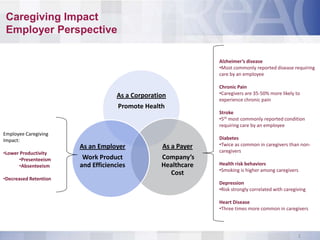
                                                               Alzheimer’s disease
                                                               •Most commonly reported disease requiring
                                                               care by an employee

                                                               Chronic Pain
                                    As a Corporation           •Caregivers are 35-50% more likely to
                                                               experience chronic pain
                                    Promote Health
                                                               Stroke
                                                               •5th most commonly reported condition
                                                               requiring care by an employee
Employee Caregiving
Impact:                                                        Diabetes
                       As an Employer             As a Payer   •Twice as common in caregivers than non-
•Lower Productivity                                            caregivers
      •Presenteeism     Work Product              Company’s
      •Absenteeism     and Efficiencies           Healthcare   Health risk behaviors
                                                               •Smoking is higher among caregivers
                                                    Cost
•Decreased Retention
                                                               Depression
                                                               •Risk strongly correlated with caregiving

                                                               Heart Disease
                                                               •Three times more common in caregivers


                                                                                                    1
Caregiving Impact
         Additional Perspective

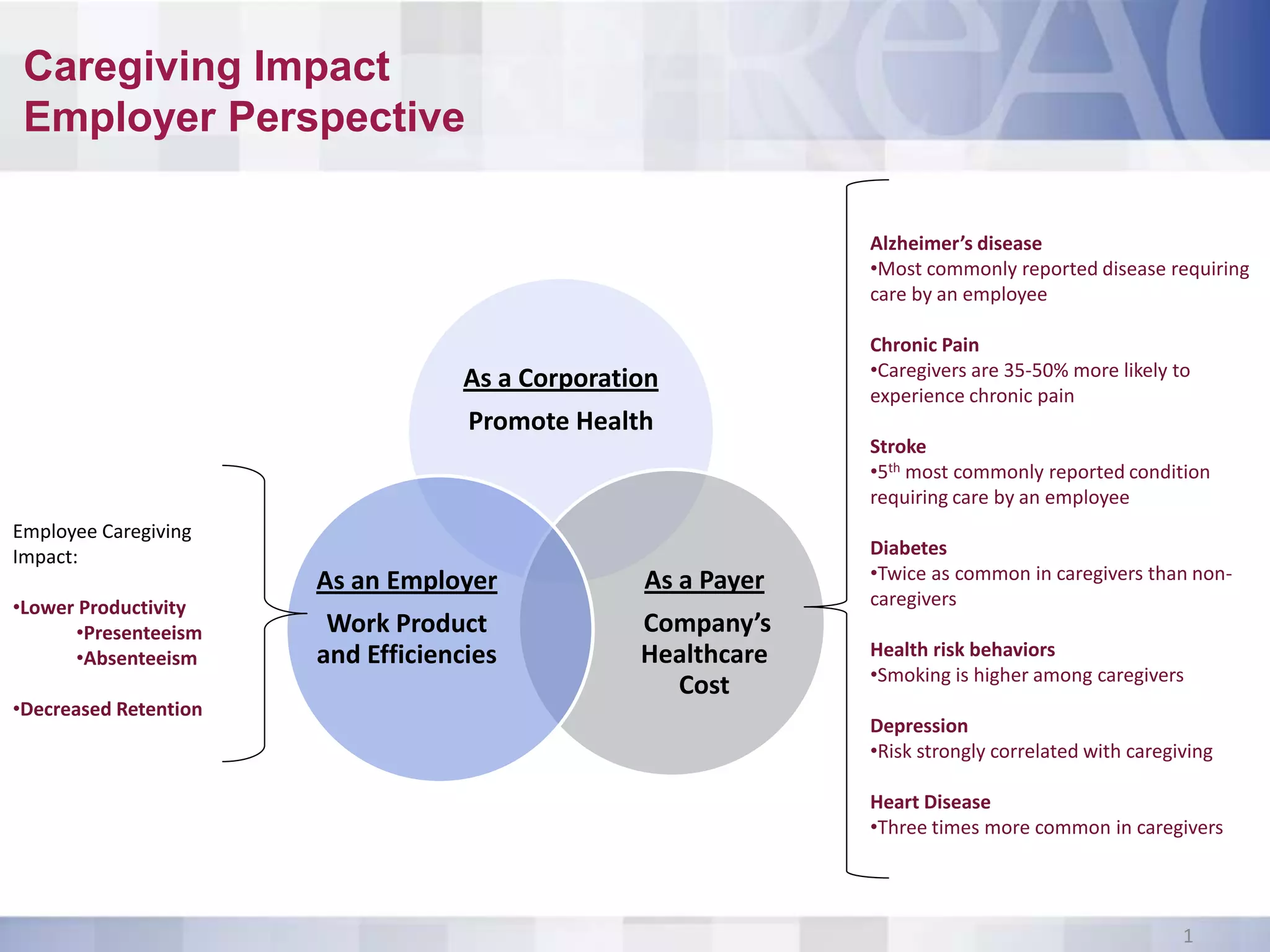
         Every year, employers assume $13.4 billion in increased health care costs for caregiving
                                             employees

 Lost productivity to U.S. business for caregiving employees is estimated at $17.1 to $33.6 billion
                                              annually

           Cost of replacing experienced workers can range from 50-150% of their annual salary

                                               “Aging will make it hard for governments to deal with mounting financial pressures. It may
                                               be time to rethink our policies towards work.”
                                                                                                       – Jean-Philippe Cotis, Chief Economist, OECD


 My Administration's Middle Class Task Force, led by Vice President Joe Biden, has made supporting family caregivers a
 priority, and we are working to assist caregivers as they juggle work, family, and financial responsibilities.
                                                        – President Obama, Proclamation for National Family Caregivers Month, 2010


Source:
•Mature Market News, “The MetLife Study of Working Caregivers and Employer Health Care Costs” 2010..
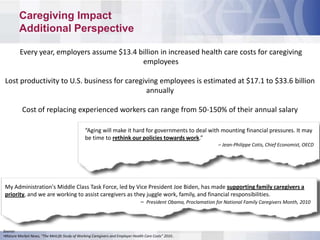
ReACT is an employer-focused coalition dedicated to addressing the challenges faced by
     employee caregivers and reducing the impact on the companies that employ them.


 ReACT seeks to create a business environment where the unique challenges of caregiving for
adults with chronic diseases are understood and recognized by employers to ensure caregivers
feel supported and have the resources they need to better meet their personal responsibilities
                       for caregiving and their professional demands.


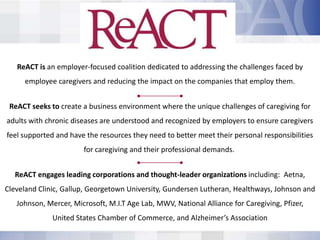
  ReACT engages leading corporations and thought-leader organizations including: Aetna,
Cleveland Clinic, Gallup, Georgetown University, Gundersen Lutheran, Healthways, Johnson and
   Johnson, Mercer, Microsoft, M.I.T Age Lab, MWV, National Alliance for Caregiving, Pfizer,
              United States Chamber of Commerce, and Alzheimer’s Association
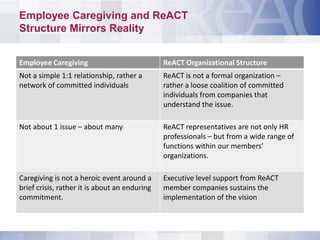
Employee Caregiving and ReACT
Structure Mirrors Reality


Employee Caregiving                            ReACT Organizational Structure
Not a simple 1:1 relationship, rather a        ReACT is not a formal organization –
network of committed individuals               rather a loose coalition of committed
                                               individuals from companies that
                                               understand the issue.

Not about 1 issue – about many                 ReACT representatives are not only HR
                                               professionals – but from a wide range of
                                               functions within our members’
                                               organizations.

Caregiving is not a heroic event around a      Executive level support from ReACT
brief crisis, rather it is about an enduring   member companies sustains the
commitment.                                    implementation of the vision
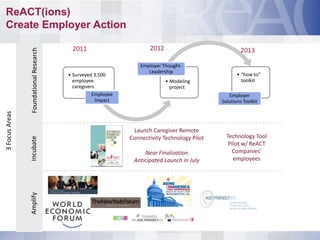
ReACT(ions)
Create Employer Action

                                         2011                        2012                             2013
                Foundational Research


                                                                  Employer Thought-
                                                                     Leadership
                                        • Surveyed 3,500                                             • “how to”
                                          employee                          • Modeling                 toolkit
                                          caregivers                          project
                                                   Employee                                      Employer
                                                     Impact                                   Solutions Toolkit
3 Focus Areas


                                                               Launch Caregiver Remote
                                                              Connectivity Technology Pilot     Technology Tool
                Incubate


                                                                                                 Pilot w/ ReACT
                                                                   Near Finalization               Companies’
                                                               Anticipated Launch in July          employees
                Amplify
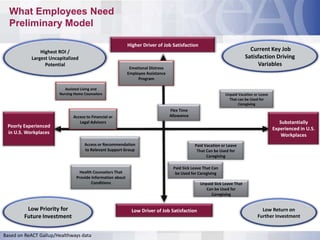
What Employees Need
  Preliminary Model

                                                            Higher Driver of Job Satisfaction
               Highest ROI /                                                                                                Current Key Job
           Largest Uncapitalized                                                                                          Satisfaction Driving
                 Potential                                                                                                     Variables
                                                             Emotional Distress
                                                            Employee Assistance
                                                                 Program

                          Assisted Living and
                       Nursing Home Counselors                                                                Unpaid Vacation or Leave
                                                                                                                That can be Used for
                                                                                                                     Caregiving
                                                                                  Flex Time
                              Access to Financial or                              Allowance
                                 Legal Advisors                                                                                             Substantially
 Poorly Experienced
                                                                                                                                         Experienced in U.S.
 in U.S. Workplaces
                                                                                                                                             Workplaces
                                    Access or Recommendation                                  Paid Vacation or Leave
                                    to Relevant Support Group                                  That Can be Used for
                                                                                                    Caregiving

                                                                                   Paid Sick Leave That Can
                                  Health Counselors That                            be Used for Caregiving
                                Provide Information about
                                        Conditions                                               Unpaid Sick Leave That
                                                                                                    Can be Used for
                                                                                                      Caregiving


         Low Priority for                                     Low Driver of Job Satisfaction                                      Low Return on
        Future Investment                                                                                                       Further Investment


Based on ReACT Gallup/Healthways data

3 watters, jack

  • 1.
    Caregiving Impact EmployerPerspective Alzheimer’s disease •Most commonly reported disease requiring care by an employee Chronic Pain As a Corporation •Caregivers are 35-50% more likely to experience chronic pain Promote Health Stroke •5th most commonly reported condition requiring care by an employee Employee Caregiving Impact: Diabetes As an Employer As a Payer •Twice as common in caregivers than non- •Lower Productivity caregivers •Presenteeism Work Product Company’s •Absenteeism and Efficiencies Healthcare Health risk behaviors •Smoking is higher among caregivers Cost •Decreased Retention Depression •Risk strongly correlated with caregiving Heart Disease •Three times more common in caregivers 1
  • 2.
    Caregiving Impact Additional Perspective Every year, employers assume $13.4 billion in increased health care costs for caregiving employees Lost productivity to U.S. business for caregiving employees is estimated at $17.1 to $33.6 billion annually Cost of replacing experienced workers can range from 50-150% of their annual salary “Aging will make it hard for governments to deal with mounting financial pressures. It may be time to rethink our policies towards work.” – Jean-Philippe Cotis, Chief Economist, OECD My Administration's Middle Class Task Force, led by Vice President Joe Biden, has made supporting family caregivers a priority, and we are working to assist caregivers as they juggle work, family, and financial responsibilities. – President Obama, Proclamation for National Family Caregivers Month, 2010 Source: •Mature Market News, “The MetLife Study of Working Caregivers and Employer Health Care Costs” 2010..
  • 3.
    ReACT is anemployer-focused coalition dedicated to addressing the challenges faced by employee caregivers and reducing the impact on the companies that employ them. ReACT seeks to create a business environment where the unique challenges of caregiving for adults with chronic diseases are understood and recognized by employers to ensure caregivers feel supported and have the resources they need to better meet their personal responsibilities for caregiving and their professional demands. ReACT engages leading corporations and thought-leader organizations including: Aetna, Cleveland Clinic, Gallup, Georgetown University, Gundersen Lutheran, Healthways, Johnson and Johnson, Mercer, Microsoft, M.I.T Age Lab, MWV, National Alliance for Caregiving, Pfizer, United States Chamber of Commerce, and Alzheimer’s Association
  • 4.
    Employee Caregiving andReACT Structure Mirrors Reality Employee Caregiving ReACT Organizational Structure Not a simple 1:1 relationship, rather a ReACT is not a formal organization – network of committed individuals rather a loose coalition of committed individuals from companies that understand the issue. Not about 1 issue – about many ReACT representatives are not only HR professionals – but from a wide range of functions within our members’ organizations. Caregiving is not a heroic event around a Executive level support from ReACT brief crisis, rather it is about an enduring member companies sustains the commitment. implementation of the vision
  • 5.
    ReACT(ions) Create Employer Action 2011 2012 2013 Foundational Research Employer Thought- Leadership • Surveyed 3,500 • “how to” employee • Modeling toolkit caregivers project Employee Employer Impact Solutions Toolkit 3 Focus Areas Launch Caregiver Remote Connectivity Technology Pilot Technology Tool Incubate Pilot w/ ReACT Near Finalization Companies’ Anticipated Launch in July employees Amplify
  • 6.
    What Employees Need Preliminary Model Higher Driver of Job Satisfaction Highest ROI / Current Key Job Largest Uncapitalized Satisfaction Driving Potential Variables Emotional Distress Employee Assistance Program Assisted Living and Nursing Home Counselors Unpaid Vacation or Leave That can be Used for Caregiving Flex Time Access to Financial or Allowance Legal Advisors Substantially Poorly Experienced Experienced in U.S. in U.S. Workplaces Workplaces Access or Recommendation Paid Vacation or Leave to Relevant Support Group That Can be Used for Caregiving Paid Sick Leave That Can Health Counselors That be Used for Caregiving Provide Information about Conditions Unpaid Sick Leave That Can be Used for Caregiving Low Priority for Low Driver of Job Satisfaction Low Return on Future Investment Further Investment Based on ReACT Gallup/Healthways data