Coromatic Academy
Open Compute Project, Critical Facilities Operations Framework
Process: Lifecycle & Financial Management
Rev 2020-07-29
Information classification: Public
Contents
• Process overview
• Lessons learned / customer experiences
• Final notes
LIFECYCLE & FINANCIAL MANAGEMENT
OCP Critical Facilities Operations Framework
Site Operations
Integration
Terms &
Conditions
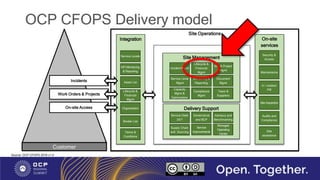
OCP CFOPS Delivery model
Incidents
Work Orders & Projects
On-site Access
Service Levels
Organization
KPI Monitoring
& Reporting
Lifecycle &
Financial
Mgmt
On-site
services
Security &
Access
Maintenance
In / outdoor
FM
Site
assistance
Site Inspection
Audits and
Compliance
Site Management
Delivery Support
Service Level
Mgmt
Lifecycle &
Financial
Mgmt
WO & Project
Mgmt
Monitoring &
Reporting
Governance
and BCP
Advisory and
Benchmarking
Supply Chain
and Sourcing
Service Desk
24/7
Incident Mgmt
Team &
Suppliers
Capacity
Mgmt &
Optimization
Document
Mgmt
Compliance
Mgmt
Service
Improvements
Asset List
Border List
Customer
Managed
Operating
Center
Source: OCP CFOPS 2019 v1.4
Lifecycle and Financial Management
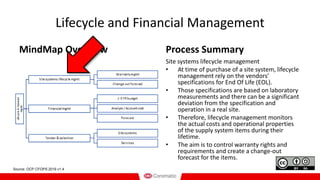
MindMap Overview Process Summary
Site systems lifecycle management
• At time of purchase of a site system, lifecycle
management rely on the vendors’
specifications for End Of Life (EOL).
• Those specifications are based on laboratory
measurements and there can be a significant
deviation from the specification and
operation in a real site.
• Therefore, lifecycle management monitors
the actual costs and operational properties
of the supply system items during their
lifetime.
• The aim is to control warranty rights and
requirements and create a change-out
forecast for the items.
Source: OCP CFOPS 2019 v1.4
Lessons learned / Customer experiences
“When outsourcing the inhouse Site Management Function, one key
need for the Site Owner was to improve warranty management.
There was a frustration that OPEX was higher than planned due to
vendors charging for replacement components earlier than expected.
The root-cause turned out to be issues in another Site Management
process: Document Management.
The earlier inhouse function did not have control over the Asset Lists,
e.g. commissioning dates for site systems, vendors’ specifications for
End Of Life, or a repository for vendor warranties or compliance
certificates…”
Lifecycle and Financial Management
MindMap Overview Process Summary
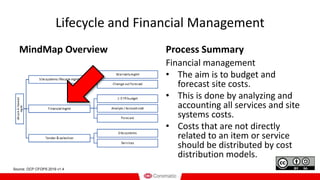
Financial management
• The aim is to budget and
forecast site costs.
• This is done by analyzing and
accounting all services and site
systems costs.
• Costs that are not directly
related to an item or service
should be distributed by cost
distribution models.
Source: OCP CFOPS 2019 v1.4
Lessons learned / Customer experiences
“The Site management function had made three-year forecasts and calendar-
year budgets for a portfolio of multiple sites in several cities for many years.
The costs were split by site system and vendor categories, e.g. power
distribution or security services. These costs were shared among the sites.
The sites were sold to a new owner who had a different Cost Distribution
Model: no costs were to be shared between the sites. These should be broken
down and related to each site system for each site (e.g. planned preventive
maintenance works for UPS 1 on site A).
After some rework, the Cost Distribution Model was re-established with 80%
being split by site system category and site (e.g. Maintenance to the Power
Distribution of Site A) and 20% was considered shared costs (e.g. Site
Management for portfolio of sites)...”
Lifecycle and Financial Management
MindMap Overview Process Summary
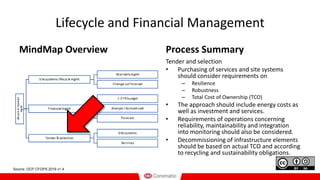
Tender and selection
• Purchasing of services and site systems
should consider requirements on
– Resilience
– Robustness
– Total Cost of Ownership (TCO)
• The approach should include energy costs as
well as investment and services.
• Requirements of operations concerning
reliability, maintainability and integration
into monitoring should also be considered.
• Decommissioning of infrastructure elements
should be based on actual TCO and according
to recycling and sustainability obligations.
Source: OCP CFOPS 2019 v1.4
Lessons learned / Customer experiences
“A Critical Facility-as-a-Service has been contracted for a 10+
year period. The Customer pays a fixed quarterly fee to cover
all Site Operations, its required materials and any asset risks.
To ensure opportunities to improve margins are considered,
the Site Management function continuously considers
challenging suppliers with more cost-efficient options.
A joint project with the corporate Supply Chain Manager
resulted in an annual reduction of costs for technical cleaning
with 12 percent…”
Final notes
• Change out forecast should not be confused
with vendor End-of-Life
• Cost Distribution Models should be clarified
• Selecting service providers and site systems
should consider more than price
Questions?
coromatic.com
3. Process: ocp cfops lifecycle and financial mgmt

3. Process: ocp cfops lifecycle and financial mgmt

  • 1.
    Coromatic Academy Open ComputeProject, Critical Facilities Operations Framework Process: Lifecycle & Financial Management Rev 2020-07-29 Information classification: Public
  • 2.
    Contents • Process overview •Lessons learned / customer experiences • Final notes
  • 3.
    LIFECYCLE & FINANCIALMANAGEMENT OCP Critical Facilities Operations Framework
  • 4.
    Site Operations Integration Terms & Conditions OCPCFOPS Delivery model Incidents Work Orders & Projects On-site Access Service Levels Organization KPI Monitoring & Reporting Lifecycle & Financial Mgmt On-site services Security & Access Maintenance In / outdoor FM Site assistance Site Inspection Audits and Compliance Site Management Delivery Support Service Level Mgmt Lifecycle & Financial Mgmt WO & Project Mgmt Monitoring & Reporting Governance and BCP Advisory and Benchmarking Supply Chain and Sourcing Service Desk 24/7 Incident Mgmt Team & Suppliers Capacity Mgmt & Optimization Document Mgmt Compliance Mgmt Service Improvements Asset List Border List Customer Managed Operating Center Source: OCP CFOPS 2019 v1.4
  • 5.
    Lifecycle and FinancialManagement MindMap Overview Process Summary Site systems lifecycle management • At time of purchase of a site system, lifecycle management rely on the vendors’ specifications for End Of Life (EOL). • Those specifications are based on laboratory measurements and there can be a significant deviation from the specification and operation in a real site. • Therefore, lifecycle management monitors the actual costs and operational properties of the supply system items during their lifetime. • The aim is to control warranty rights and requirements and create a change-out forecast for the items. Source: OCP CFOPS 2019 v1.4
  • 6.
    Lessons learned /Customer experiences “When outsourcing the inhouse Site Management Function, one key need for the Site Owner was to improve warranty management. There was a frustration that OPEX was higher than planned due to vendors charging for replacement components earlier than expected. The root-cause turned out to be issues in another Site Management process: Document Management. The earlier inhouse function did not have control over the Asset Lists, e.g. commissioning dates for site systems, vendors’ specifications for End Of Life, or a repository for vendor warranties or compliance certificates…”
  • 7.
    Lifecycle and FinancialManagement MindMap Overview Process Summary Financial management • The aim is to budget and forecast site costs. • This is done by analyzing and accounting all services and site systems costs. • Costs that are not directly related to an item or service should be distributed by cost distribution models. Source: OCP CFOPS 2019 v1.4
  • 8.
    Lessons learned /Customer experiences “The Site management function had made three-year forecasts and calendar- year budgets for a portfolio of multiple sites in several cities for many years. The costs were split by site system and vendor categories, e.g. power distribution or security services. These costs were shared among the sites. The sites were sold to a new owner who had a different Cost Distribution Model: no costs were to be shared between the sites. These should be broken down and related to each site system for each site (e.g. planned preventive maintenance works for UPS 1 on site A). After some rework, the Cost Distribution Model was re-established with 80% being split by site system category and site (e.g. Maintenance to the Power Distribution of Site A) and 20% was considered shared costs (e.g. Site Management for portfolio of sites)...”
  • 9.
    Lifecycle and FinancialManagement MindMap Overview Process Summary Tender and selection • Purchasing of services and site systems should consider requirements on – Resilience – Robustness – Total Cost of Ownership (TCO) • The approach should include energy costs as well as investment and services. • Requirements of operations concerning reliability, maintainability and integration into monitoring should also be considered. • Decommissioning of infrastructure elements should be based on actual TCO and according to recycling and sustainability obligations. Source: OCP CFOPS 2019 v1.4
  • 10.
    Lessons learned /Customer experiences “A Critical Facility-as-a-Service has been contracted for a 10+ year period. The Customer pays a fixed quarterly fee to cover all Site Operations, its required materials and any asset risks. To ensure opportunities to improve margins are considered, the Site Management function continuously considers challenging suppliers with more cost-efficient options. A joint project with the corporate Supply Chain Manager resulted in an annual reduction of costs for technical cleaning with 12 percent…”
  • 11.
    Final notes • Changeout forecast should not be confused with vendor End-of-Life • Cost Distribution Models should be clarified • Selecting service providers and site systems should consider more than price
  • 12.

Editor's Notes

  • #14 Clear market leader in turnkey data centers and other critical facilities Highly skilled and experienced workforce operating out of 20 locations Unrivalled experience as a full-service provider of turnkey critical facilities solutions Proven international delivery capabilities Strong Nordic customer base across a wide range of industries