Editorial Slides
VP Watch, April 8, 2003, Volume 3, Issue 13
Aspirin, Statin, or Flu Vaccine?
The Most Cost-Effective Therapy
–Several groups have reported beneficial
effect of influenza vaccination on sudden
cardiac death 1
, recurrent myocardial
infarction 2
, brain infarction 3
, and MACE
after PTCA 4
.
–Considering the tremendous impact of
cardiovascular disease on modern society
and the widespread annual epidemics of
influenza, this subject deserves special
attention with regard to public
cardiovascular health.
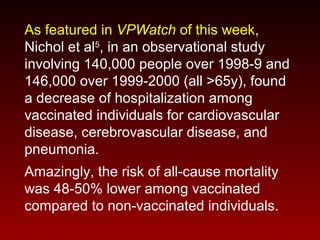
As featured in VPWatch of this week,
Nichol et al5
, in an observational study
involving 140,000 people over 1998-9 and
146,000 over 1999-2000 (all >65y), found
a decrease of hospitalization among
vaccinated individuals for cardiovascular
disease, cerebrovascular disease, and
pneumonia.
Amazingly, the risk of all-cause mortality
was 48-50% lower among vaccinated
compared to non-vaccinated individuals.
• No other therapy in
cardiovascular medicine has ever
been demonstrated to achieve
results as those described by
Nichol’s et al.
A cost-effective analysis may
further illustrate the public health
effect of this therapy.
Statin; the Magic Pill
• Statin has become the magic
therapy for primary and secondary
prevention of cardiovascular
events.
• Based on the Heart Protection
Ptudy8
, Hamilton-Craig9
, analyzed
the number of patients needed to
be treated in order to prevent one
cardiovascular event.
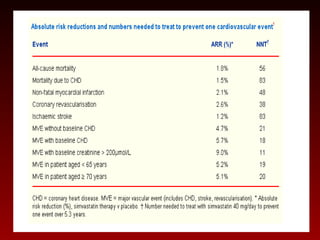
• As the table makes it clear, the absolute
increase in risk is dependent on the
baseline characteristics of the
population and the vascular event that
is prevented.
• The sicker the population and the
greater number of events to be
prevented, the smaller is the number of
patients needed to be treated to prevent
that outcome.
• According to Hamilton-Craig9
48
patients need to be treated by
statin to avoid one myocardial
infarction in this high risk
population/5year.
• In other words, each year 10
million people need to be treated
by statin to save 50,000 lives.
• At a cost of about
$1,000/patient/year, the
approximate price for
preventing a non-fatal
myocardial infarction with
statin is:
$1,000x48x5 = $240,000 /year
• Meyers reported that flu vaccine
results in 6-12% absolute risk
reduction in vascular events in the
high risk population.
• Meyers 6
has estimated that it
requires 23 to 45 persons to be
vaccinated to prevent one
cardiovascular or
cerebrovascular event.
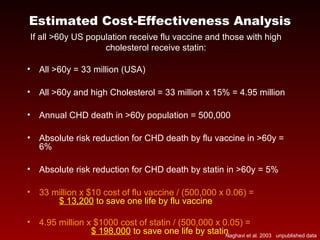
Estimated Cost-Effectiveness Analysis
• All >60y = 33 million (USA)
• All >60y and high Cholesterol = 33 million x 15% = 4.95 million
• Annual CHD death in >60y population = 500,000
• Absolute risk reduction for CHD death by flu vaccine in >60y =
6%
• Absolute risk reduction for CHD death by statin in >60y = 5%
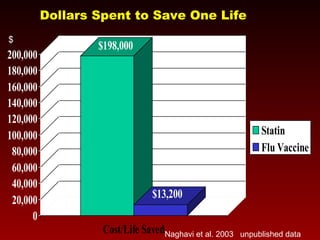
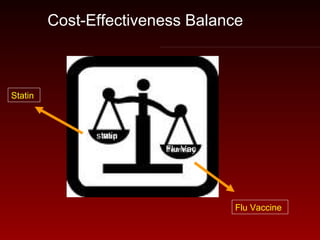
• 33 million x $10 cost of flu vaccine / (500,000 x 0.06) =
$ 13,200 to save one life by flu vaccine
• 4.95 million x $1000 cost of statin / (500,000 x 0.05) =
$ 198,000 to save one life by statin
If all >60y US population receive flu vaccine and those with high
cholesterol receive statin:
Naghavi et al. 2003 unpublished data
$198,000
$13,200
0
20,000
40,000
60,000
80,000
100,000
120,000
140,000
160,000
180,000
200,000
Cost/Life Saved
Statin
Flu Vaccine
$
Dollars Spent to Save One Life
Naghavi et al. 2003 unpublished data
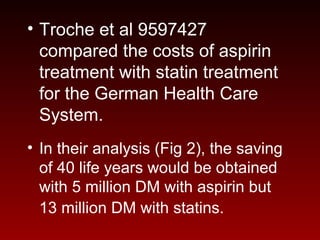
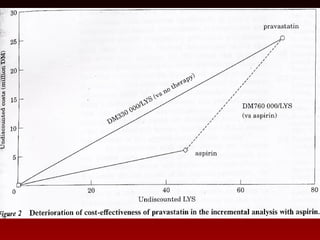
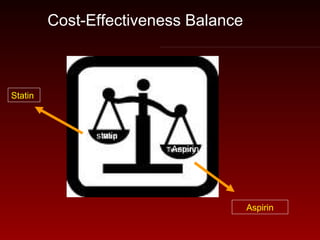
• Troche et al 9597427
compared the costs of aspirin
treatment with statin treatment
for the German Health Care
System.
• In their analysis (Fig 2), the saving
of 40 life years would be obtained
with 5 million DM with aspirin but
13 million DM with statins.
.
statin
Aspirin
Aspirin
Statin
Cost-Effectiveness Balance
.
statin
Flu Vac
Flu Vaccine
Statin
Cost-Effectiveness Balance
Conclusion:
• Data continues to accumulate regarding the
beneficial effect of influenza vaccination on
cardiovascular morbidity/mortality and total
mortality.
• The low cost of the vaccine (~ $10/year)
makes influenza vaccination a highly cost-
effective add on to the arsenal of available
therapies for reduction of CVD mortality and
morbidity to a great degree at population
level.
• Knowing the massive
population effect of influenza
infection, clinical trials are
urgently needed to evaluate
the effects of influenza
vaccination on vulnerable
patients across different age
groups.
Conclusion:
Questions / Hypotheses
1. What is (are) the mechanism(s) for the
detrimental effect of influenza infection
on the cardiovascular system?
2. Are newer medications for influenza
infection beneficial on the
cardiovascular system considering
that often the cardiovascular
complication occurs 1-2 weeks after
the respiratory symptoms have begun
to subside?
3. Could influenza vaccination slow down
the progression of atherosclerosis in a
significant number of individuals?
4. The age-adjusted mortality for
cardiovascular disease has been
declining since the late 1960’s. Could
influenza vaccination have been a
significant player in this trend?
Questions / Hypotheses
We have little data concerning all these
important questions. Recently Naghavi
et al 7
showed striking pro-inflammatory
and pro-thrombotic effects of influenza
infection on aged apoE null mice.
Whether similar effect accounts for the
increased morbidity/mortality in humans
is still unknown.
Flu Vaccine Under-Utilized
• Although influenza vaccination has been
available for 3 decades, as late as 1989
the vaccination rate among the elderly
was only 33%.
• It has increased up to 52% with the
findings of the Medicare Demonstrations
Project in 1993 and has reached around
63-66% in the present time.
References:
• 1. Influenza vaccination and the risk of primary cardiac arrest.
• 2.
Association of influenza vaccination and reduced risk of recurrent myocardial infarction.
• 3.
Association between influenza vaccination and reduced risk of brain infarction.
• 4. Influenza vaccine pilot study in acute coronary syndromes and planned
percutaneous
coronary interventions: the FLU Vaccination Acute Coronary Syndromes (FLUVACS) Stud
• 5.
Influenza vaccination and reduction in hospitalizations for cardiac disease and stroke amo
• 6.
Myocardial infarction, stroke, and sudden cardiac death may be prevented by influenza va
• 7. Influenza infection exerts prominent inflammatory and thrombotic
effects on the atherosclerotic plaques of apolipoprotein E-deficient mice.
• 8. MRC/BHF Heart Protection Study of cholesterol lowering with simvastatin
in 20,536 high-risk individuals: a randomised placebo-controlled trial.
• 9.
The Heart Protection Study: implications for clinical practice. The benefits of
statin therapy do not come without financial cost.

249 the most cost effective therapy

  • 1.
    Editorial Slides VP Watch,April 8, 2003, Volume 3, Issue 13 Aspirin, Statin, or Flu Vaccine? The Most Cost-Effective Therapy
  • 2.
    –Several groups havereported beneficial effect of influenza vaccination on sudden cardiac death 1 , recurrent myocardial infarction 2 , brain infarction 3 , and MACE after PTCA 4 . –Considering the tremendous impact of cardiovascular disease on modern society and the widespread annual epidemics of influenza, this subject deserves special attention with regard to public cardiovascular health.
  • 3.
    As featured inVPWatch of this week, Nichol et al5 , in an observational study involving 140,000 people over 1998-9 and 146,000 over 1999-2000 (all >65y), found a decrease of hospitalization among vaccinated individuals for cardiovascular disease, cerebrovascular disease, and pneumonia. Amazingly, the risk of all-cause mortality was 48-50% lower among vaccinated compared to non-vaccinated individuals.
  • 4.
    • No othertherapy in cardiovascular medicine has ever been demonstrated to achieve results as those described by Nichol’s et al. A cost-effective analysis may further illustrate the public health effect of this therapy.
  • 5.
    Statin; the MagicPill • Statin has become the magic therapy for primary and secondary prevention of cardiovascular events. • Based on the Heart Protection Ptudy8 , Hamilton-Craig9 , analyzed the number of patients needed to be treated in order to prevent one cardiovascular event.
  • 7.
    • As thetable makes it clear, the absolute increase in risk is dependent on the baseline characteristics of the population and the vascular event that is prevented. • The sicker the population and the greater number of events to be prevented, the smaller is the number of patients needed to be treated to prevent that outcome.
  • 8.
    • According toHamilton-Craig9 48 patients need to be treated by statin to avoid one myocardial infarction in this high risk population/5year. • In other words, each year 10 million people need to be treated by statin to save 50,000 lives.
  • 9.
    • At acost of about $1,000/patient/year, the approximate price for preventing a non-fatal myocardial infarction with statin is: $1,000x48x5 = $240,000 /year
  • 10.
    • Meyers reportedthat flu vaccine results in 6-12% absolute risk reduction in vascular events in the high risk population. • Meyers 6 has estimated that it requires 23 to 45 persons to be vaccinated to prevent one cardiovascular or cerebrovascular event.
  • 11.
    Estimated Cost-Effectiveness Analysis •All >60y = 33 million (USA) • All >60y and high Cholesterol = 33 million x 15% = 4.95 million • Annual CHD death in >60y population = 500,000 • Absolute risk reduction for CHD death by flu vaccine in >60y = 6% • Absolute risk reduction for CHD death by statin in >60y = 5% • 33 million x $10 cost of flu vaccine / (500,000 x 0.06) = $ 13,200 to save one life by flu vaccine • 4.95 million x $1000 cost of statin / (500,000 x 0.05) = $ 198,000 to save one life by statin If all >60y US population receive flu vaccine and those with high cholesterol receive statin: Naghavi et al. 2003 unpublished data
  • 12.
  • 13.
    • Troche etal 9597427 compared the costs of aspirin treatment with statin treatment for the German Health Care System. • In their analysis (Fig 2), the saving of 40 life years would be obtained with 5 million DM with aspirin but 13 million DM with statins.
  • 15.
  • 16.
  • 17.
    Conclusion: • Data continuesto accumulate regarding the beneficial effect of influenza vaccination on cardiovascular morbidity/mortality and total mortality. • The low cost of the vaccine (~ $10/year) makes influenza vaccination a highly cost- effective add on to the arsenal of available therapies for reduction of CVD mortality and morbidity to a great degree at population level.
  • 18.
    • Knowing themassive population effect of influenza infection, clinical trials are urgently needed to evaluate the effects of influenza vaccination on vulnerable patients across different age groups. Conclusion:
  • 19.
    Questions / Hypotheses 1.What is (are) the mechanism(s) for the detrimental effect of influenza infection on the cardiovascular system? 2. Are newer medications for influenza infection beneficial on the cardiovascular system considering that often the cardiovascular complication occurs 1-2 weeks after the respiratory symptoms have begun to subside?
  • 20.
    3. Could influenzavaccination slow down the progression of atherosclerosis in a significant number of individuals? 4. The age-adjusted mortality for cardiovascular disease has been declining since the late 1960’s. Could influenza vaccination have been a significant player in this trend? Questions / Hypotheses
  • 21.
    Questions / Hypotheses Wehave little data concerning all these important questions. Recently Naghavi et al 7 showed striking pro-inflammatory and pro-thrombotic effects of influenza infection on aged apoE null mice. Whether similar effect accounts for the increased morbidity/mortality in humans is still unknown.
  • 22.
    Flu Vaccine Under-Utilized •Although influenza vaccination has been available for 3 decades, as late as 1989 the vaccination rate among the elderly was only 33%. • It has increased up to 52% with the findings of the Medicare Demonstrations Project in 1993 and has reached around 63-66% in the present time.
  • 23.
    References: • 1. Influenzavaccination and the risk of primary cardiac arrest. • 2. Association of influenza vaccination and reduced risk of recurrent myocardial infarction. • 3. Association between influenza vaccination and reduced risk of brain infarction. • 4. Influenza vaccine pilot study in acute coronary syndromes and planned percutaneous coronary interventions: the FLU Vaccination Acute Coronary Syndromes (FLUVACS) Stud • 5. Influenza vaccination and reduction in hospitalizations for cardiac disease and stroke amo • 6. Myocardial infarction, stroke, and sudden cardiac death may be prevented by influenza va • 7. Influenza infection exerts prominent inflammatory and thrombotic effects on the atherosclerotic plaques of apolipoprotein E-deficient mice. • 8. MRC/BHF Heart Protection Study of cholesterol lowering with simvastatin in 20,536 high-risk individuals: a randomised placebo-controlled trial. • 9. The Heart Protection Study: implications for clinical practice. The benefits of statin therapy do not come without financial cost.