
SPECTRAL CORRECTIONS FOR
PV PERFORMANCE MODELLING
Fotis Mavromatakis – T.E.I. of Crete
Frank Vignola – University of Oregon
4th PV Performance Modelling and Monitoring Workshop – Cologne, Germany
October 2015
INTRODUCTION
• Overview
• Spectral responsivity of PV modules
• Changing spectral distribution over the day
• Effects of spectral changes on module performance
• DNI
• DfHI
• GHI
• Utility of understanding the influence of changing spectral irradiance
• Next steps
OVERVIEW
• Energy of the photon (wavelength) affects the performance of solar cells
• Modeling and testing efforts by King et. al. in the late 1990’s showed that PV
module performance is dependent upon
• Incident irradiance
• Module Temperature
• Angle of Incidence
• Air Mass Effect/Spectral Correction
• This presentation is on the effects of the systematic changes in the spectral
distribution over the day and the affect on module performance estimates.
• Goal is to better understand and refine PV module performance
estimates
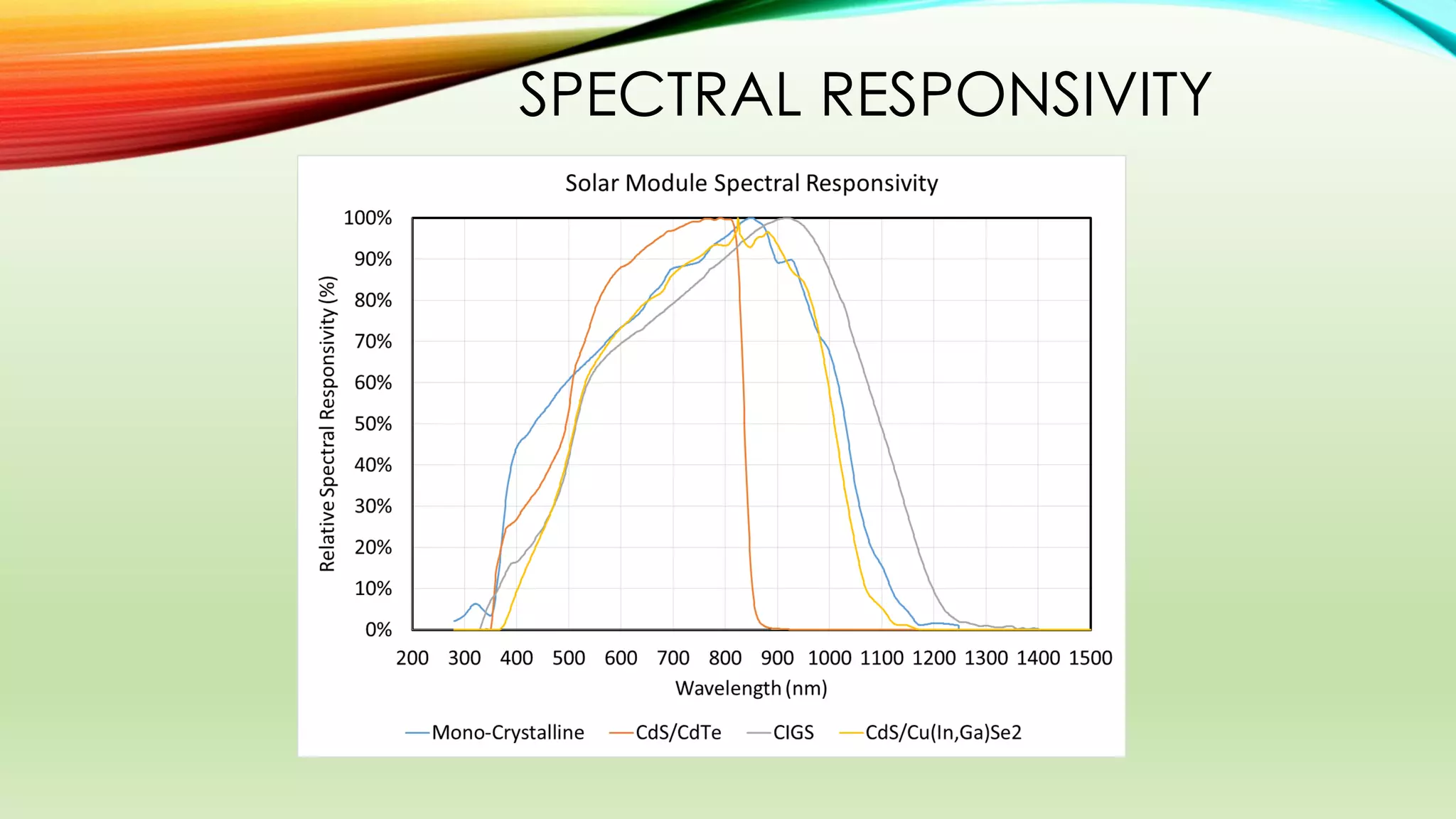
SPECTRAL RESPONSIVITY
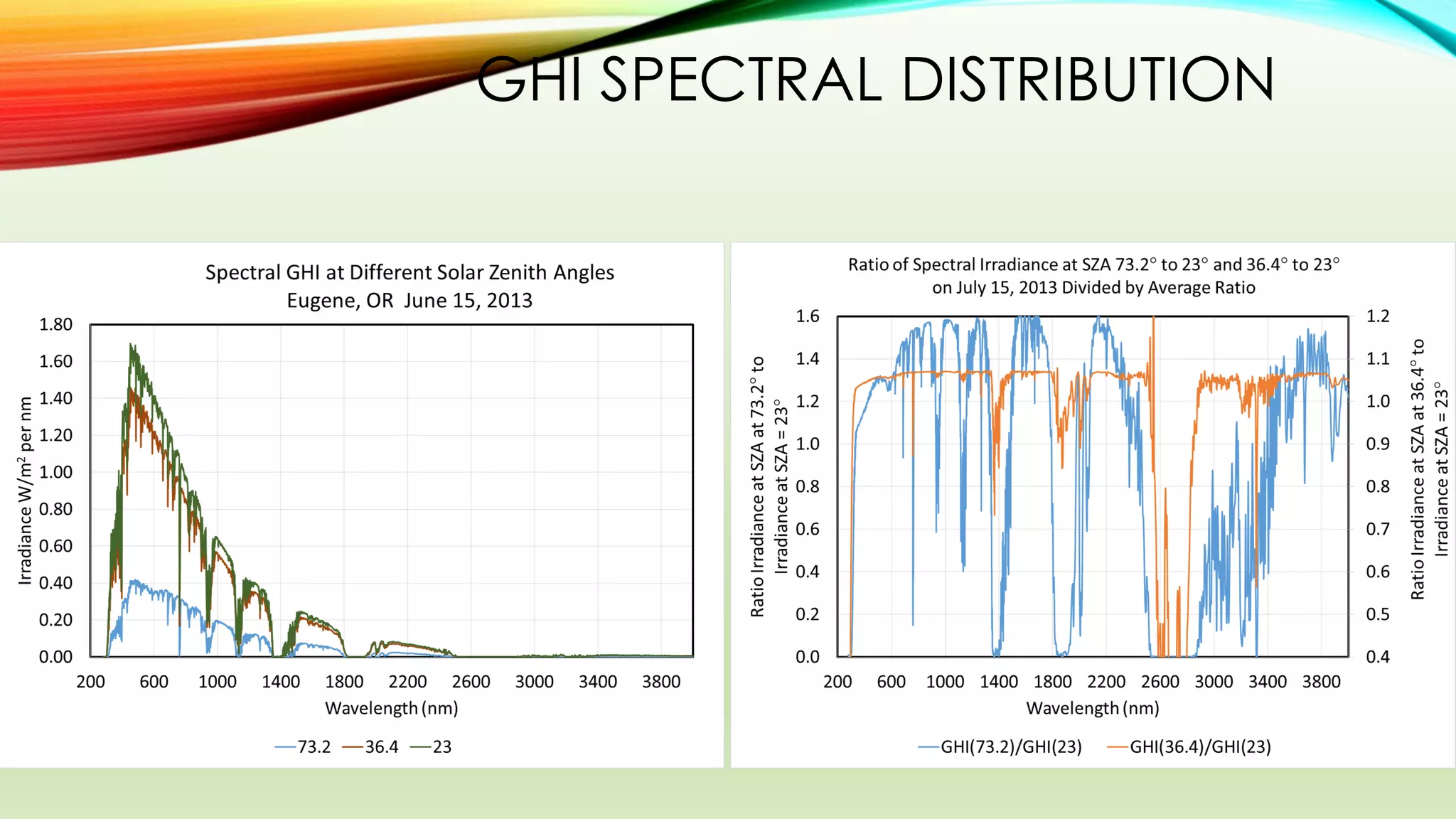
GHI SPECTRAL DISTRIBUTION
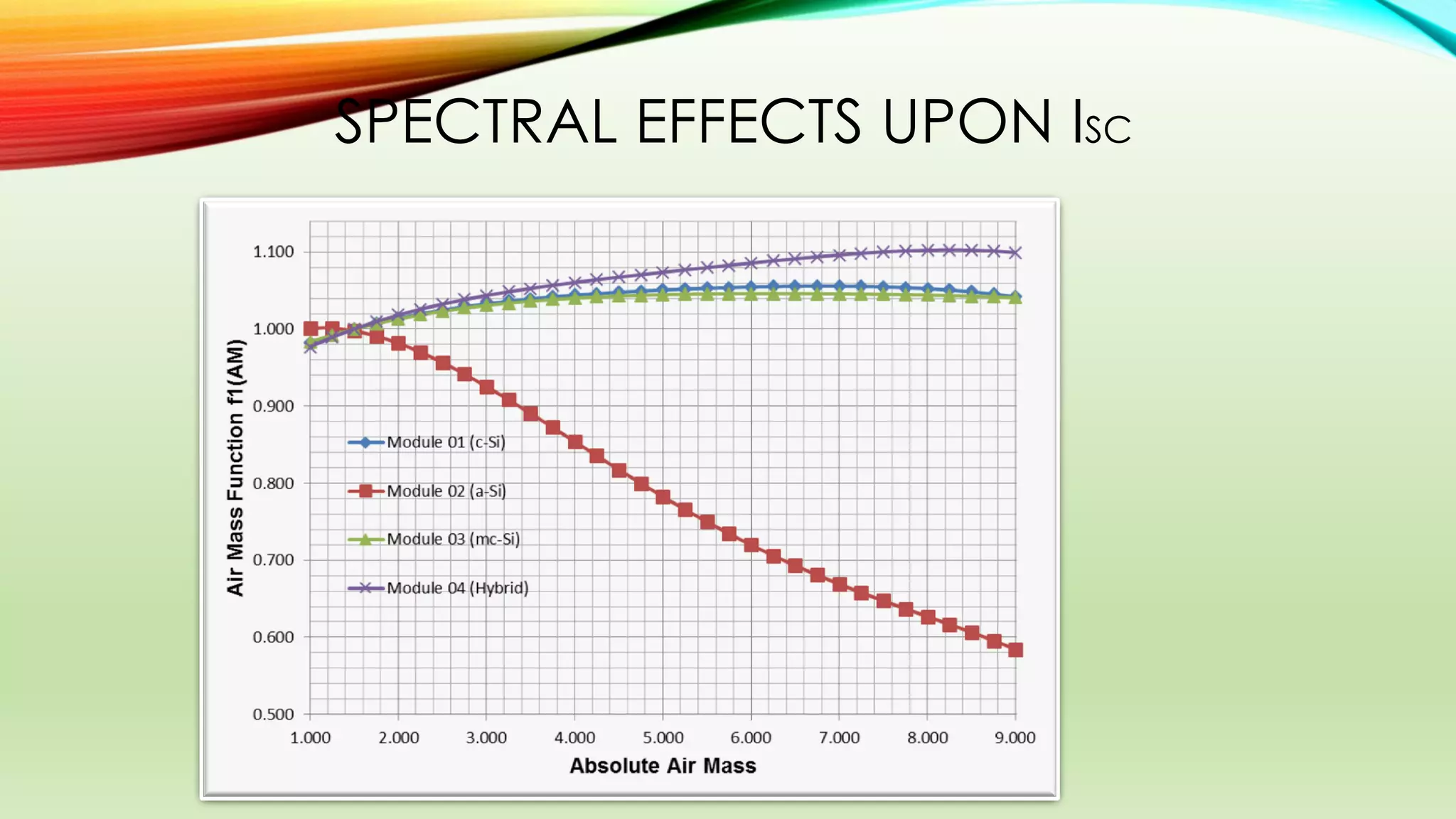
SPECTRAL EFFECTS UPON ISC
CALCULATING AVERAGE PV
MODULE RESPONSE
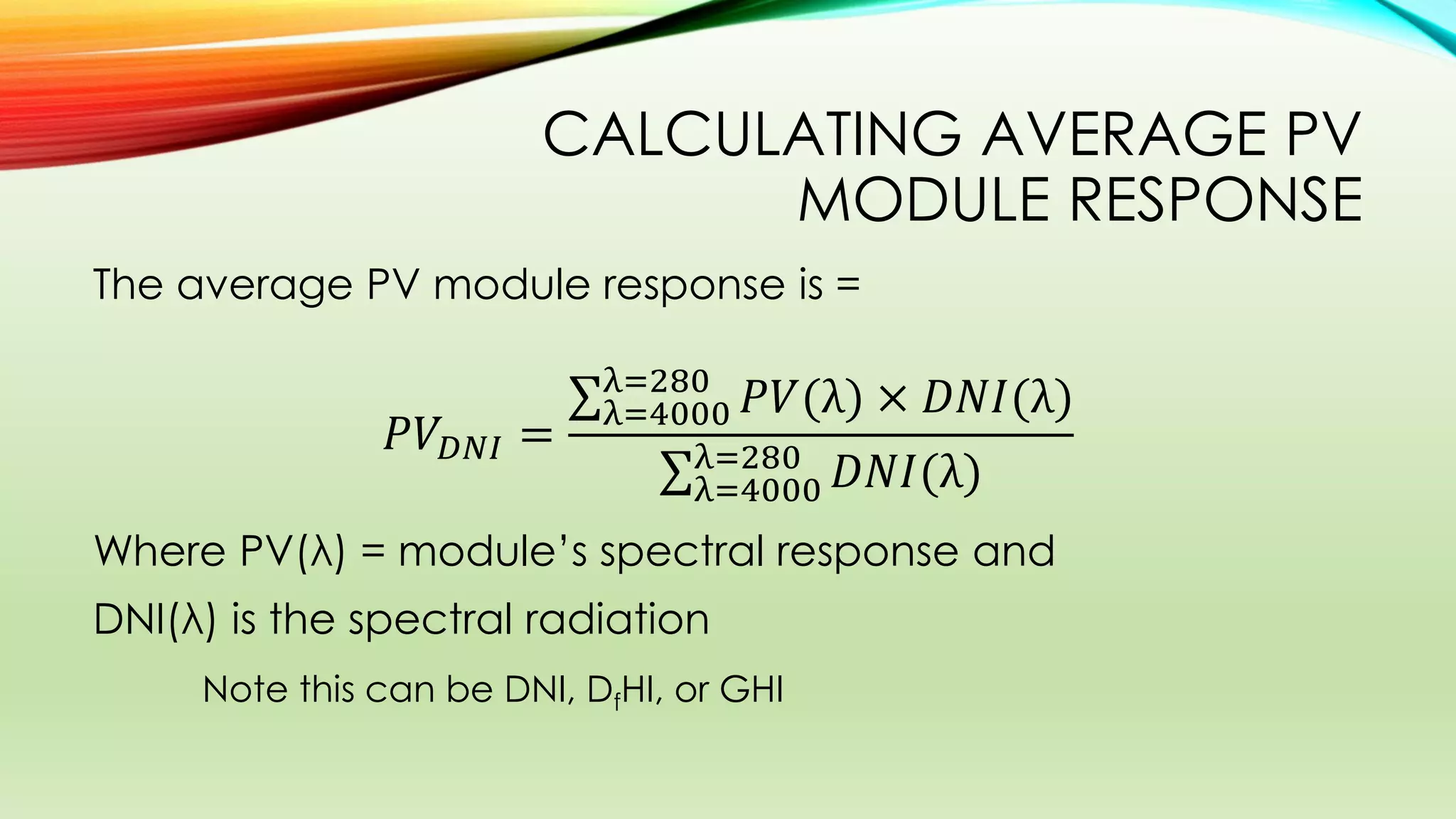
The average PV module response is =
𝑃𝑉𝐷𝑁𝐼 =
𝑃𝑉(λ) × 𝐷𝑁𝐼(λ)λ=280
λ=4000
𝐷𝑁𝐼(λ)λ=280
λ=4000
Where PV(λ) = module’s spectral response and
DNI(λ) is the spectral radiation
Note this can be DNI, DfHI, or GHI
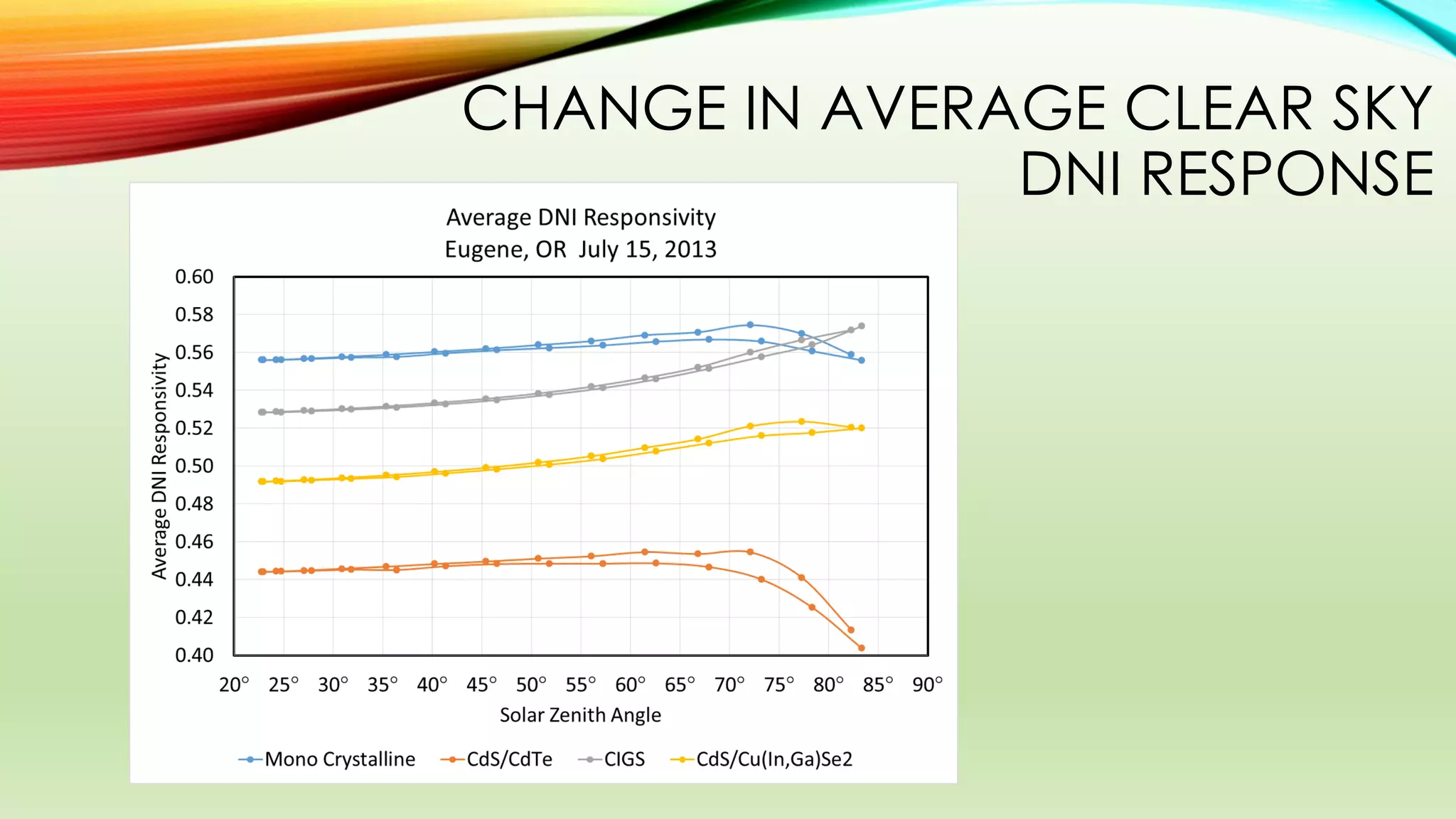
CHANGE IN AVERAGE CLEAR SKY
DNI RESPONSE
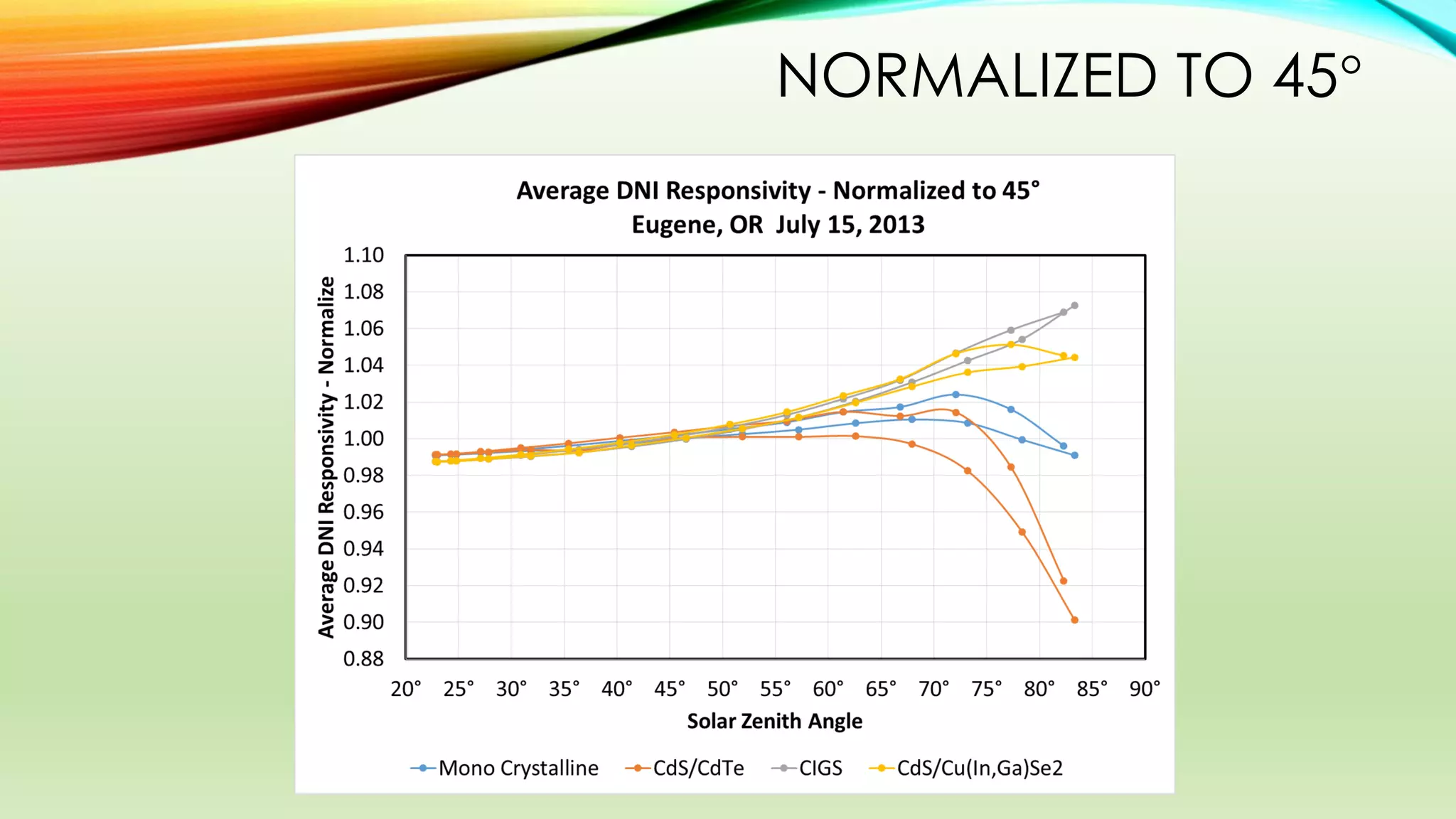
NORMALIZED TO 45
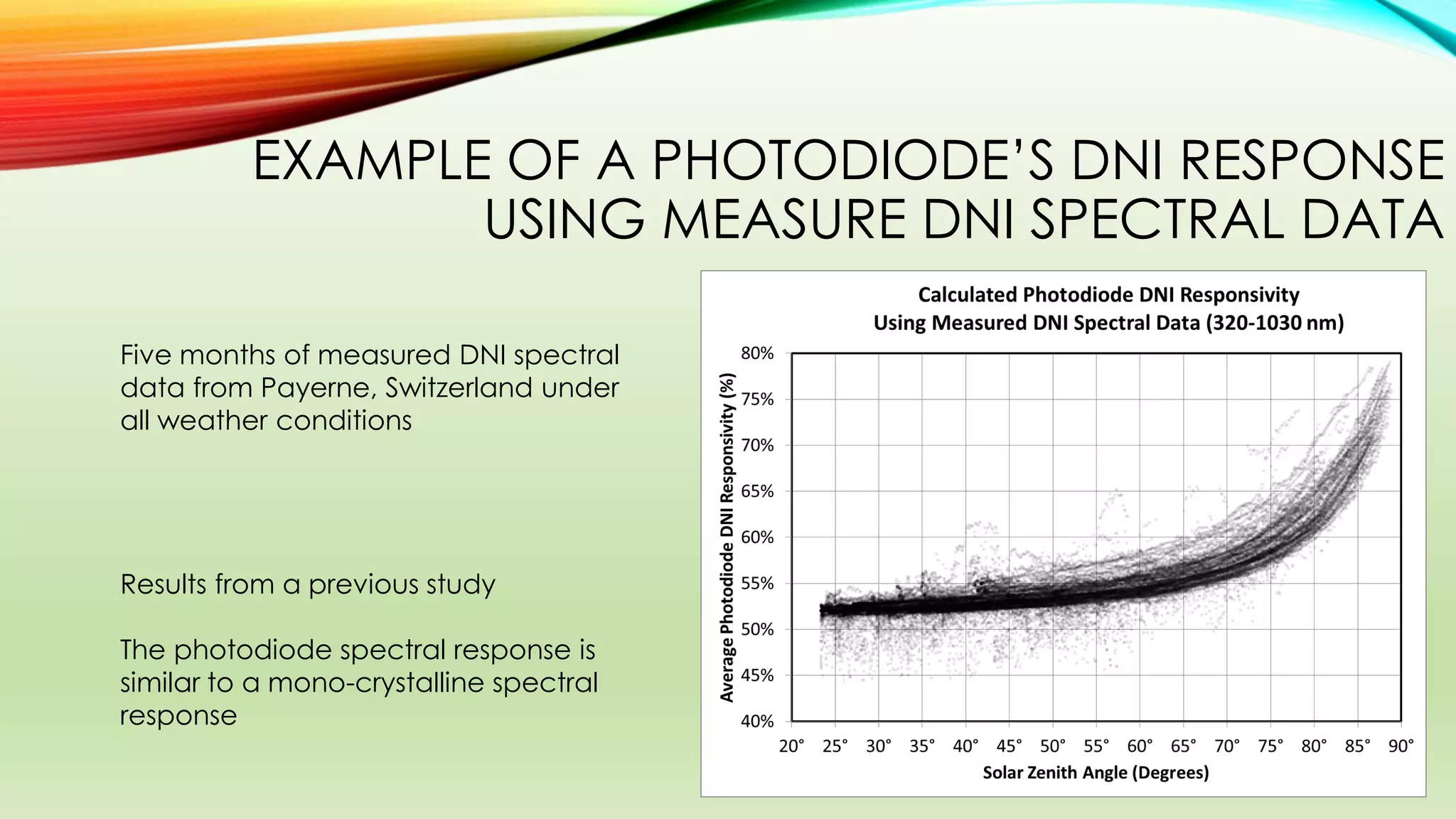
EXAMPLE OF A PHOTODIODE’S DNI RESPONSE
USING MEASURE DNI SPECTRAL DATA
Five months of measured DNI spectral
data from Payerne, Switzerland under
all weather conditions
Results from a previous study
The photodiode spectral response is
similar to a mono-crystalline spectral
response
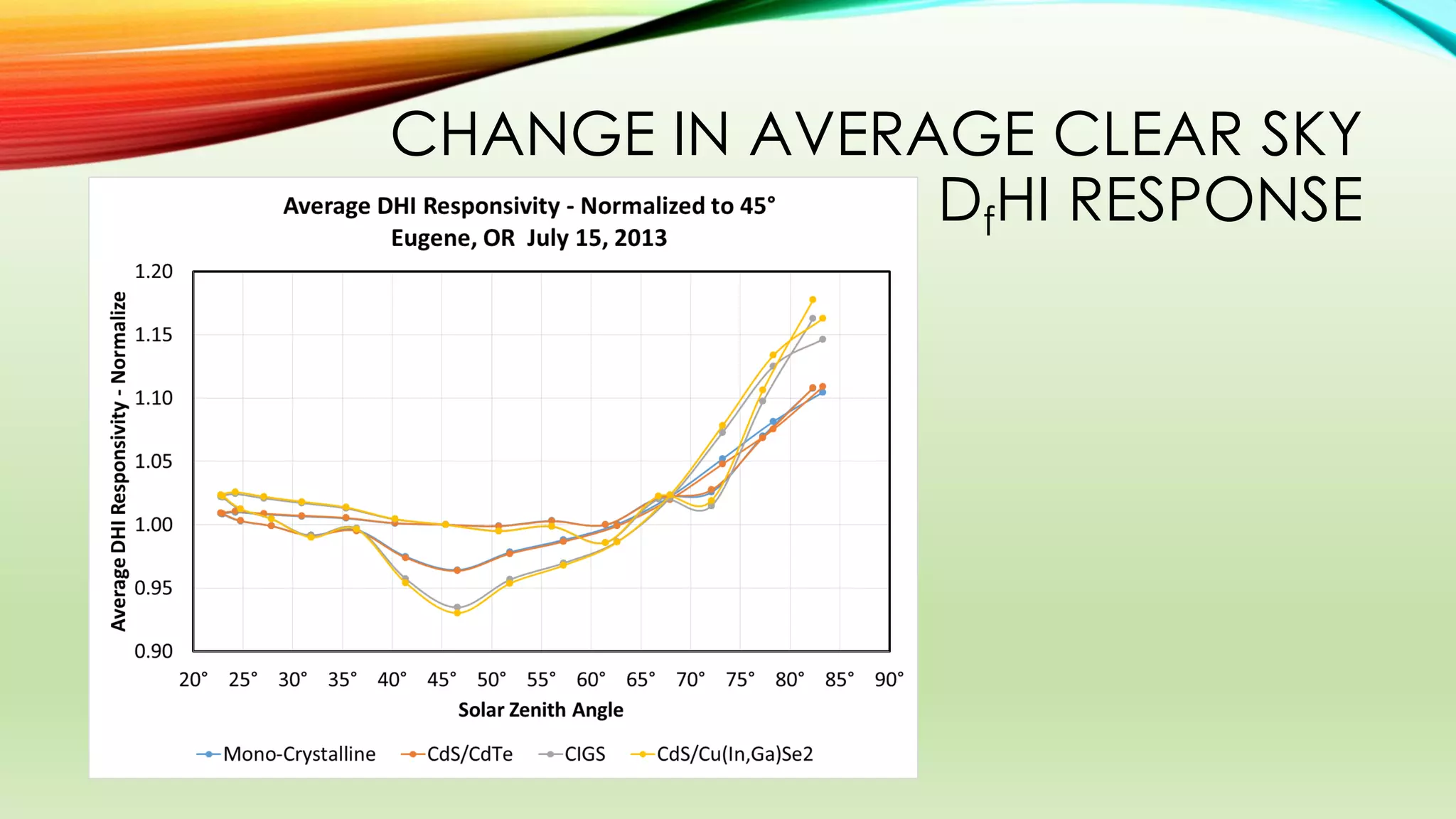
CHANGE IN AVERAGE CLEAR SKY
DfHI RESPONSE
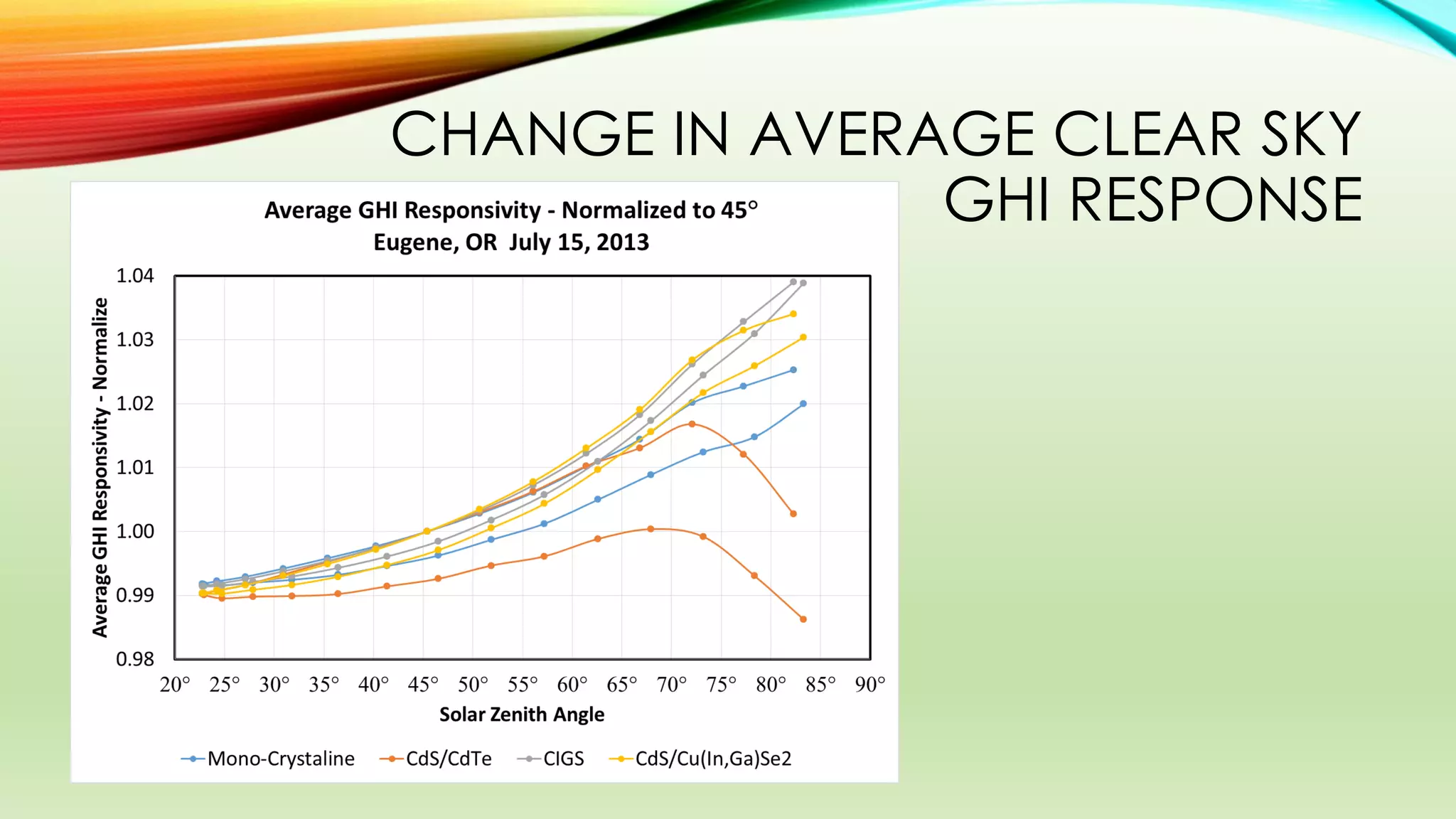
CHANGE IN AVERAGE CLEAR SKY
GHI RESPONSE
SPECTRAL DEPENDENCE OF THE
“AIR MASS” EFFECT
• The “Air Mass” effect is caused by the changing spectral distribution of the
incident solar radiation
• The different DNI and DfHI spectral compositions lead to different air mass
effects
• Each solar cell technology reacts differently to the changing spectral
distributions in the incident solar radiation
• The largest effects are in the early morning and late afternoons when the
sunlight traverses the largest air masses
• Changes in atmospheric conditions can affect the magnitude of the air
mass effect
• With SZA less than 45, the solar technologies examined have similar DNI air
mass effects
VALUE OF USING THE SPECTRAL
MODEL TO DETERMINE THE
AIR MASS EFFECT
• Using spectral models and data on the PV module spectral response
enables an estimate of the modules change in responsivity over the day
• This methodology enables estimates of PV module performance in location
(sites) with different atmospheric compositions
• Performance of different solar cell technologies can be compared at a
given site by just changing the module’s spectral responsivity in the modeling
process
• Improved estimates of PV module performance can be obtained if the
atmospheric conditions at a site can be specified
• The effect of various atmospheric conditions on the performance of PV
modules can be studied
FUTURE EFFORTS
• Determine the air mass effect for DfHI and GHI components under all
weather conditions
• Evaluate the variability of the spectral model performance estimates
• Integrate spectral model in with other PV model components

24 mavromatakis vignola_spectral_corrections_for_pv_performance_modelling

  • 1.
    SPECTRAL CORRECTIONS FOR PVPERFORMANCE MODELLING Fotis Mavromatakis – T.E.I. of Crete Frank Vignola – University of Oregon 4th PV Performance Modelling and Monitoring Workshop – Cologne, Germany October 2015
  • 2.
    INTRODUCTION • Overview • Spectralresponsivity of PV modules • Changing spectral distribution over the day • Effects of spectral changes on module performance • DNI • DfHI • GHI • Utility of understanding the influence of changing spectral irradiance • Next steps
  • 3.
    OVERVIEW • Energy ofthe photon (wavelength) affects the performance of solar cells • Modeling and testing efforts by King et. al. in the late 1990’s showed that PV module performance is dependent upon • Incident irradiance • Module Temperature • Angle of Incidence • Air Mass Effect/Spectral Correction • This presentation is on the effects of the systematic changes in the spectral distribution over the day and the affect on module performance estimates. • Goal is to better understand and refine PV module performance estimates
  • 4.
  • 5.
  • 6.
  • 7.
    CALCULATING AVERAGE PV MODULERESPONSE The average PV module response is = 𝑃𝑉𝐷𝑁𝐼 = 𝑃𝑉(λ) × 𝐷𝑁𝐼(λ)λ=280 λ=4000 𝐷𝑁𝐼(λ)λ=280 λ=4000 Where PV(λ) = module’s spectral response and DNI(λ) is the spectral radiation Note this can be DNI, DfHI, or GHI
  • 8.
    CHANGE IN AVERAGECLEAR SKY DNI RESPONSE
  • 9.
  • 10.
    EXAMPLE OF APHOTODIODE’S DNI RESPONSE USING MEASURE DNI SPECTRAL DATA Five months of measured DNI spectral data from Payerne, Switzerland under all weather conditions Results from a previous study The photodiode spectral response is similar to a mono-crystalline spectral response
  • 11.
    CHANGE IN AVERAGECLEAR SKY DfHI RESPONSE
  • 12.
    CHANGE IN AVERAGECLEAR SKY GHI RESPONSE
  • 13.
    SPECTRAL DEPENDENCE OFTHE “AIR MASS” EFFECT • The “Air Mass” effect is caused by the changing spectral distribution of the incident solar radiation • The different DNI and DfHI spectral compositions lead to different air mass effects • Each solar cell technology reacts differently to the changing spectral distributions in the incident solar radiation • The largest effects are in the early morning and late afternoons when the sunlight traverses the largest air masses • Changes in atmospheric conditions can affect the magnitude of the air mass effect • With SZA less than 45, the solar technologies examined have similar DNI air mass effects
  • 14.
    VALUE OF USINGTHE SPECTRAL MODEL TO DETERMINE THE AIR MASS EFFECT • Using spectral models and data on the PV module spectral response enables an estimate of the modules change in responsivity over the day • This methodology enables estimates of PV module performance in location (sites) with different atmospheric compositions • Performance of different solar cell technologies can be compared at a given site by just changing the module’s spectral responsivity in the modeling process • Improved estimates of PV module performance can be obtained if the atmospheric conditions at a site can be specified • The effect of various atmospheric conditions on the performance of PV modules can be studied
  • 15.
    FUTURE EFFORTS • Determinethe air mass effect for DfHI and GHI components under all weather conditions • Evaluate the variability of the spectral model performance estimates • Integrate spectral model in with other PV model components