
Visual Imagination
Composition, as previously stated, is the
conscious selection of visual elements,
employed in design, through the use of some
guiding principles, for the purpose of achieving a
pleasing or desired result.
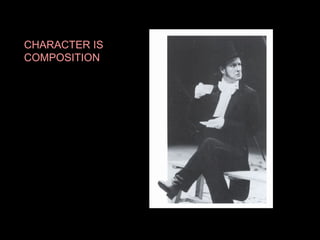
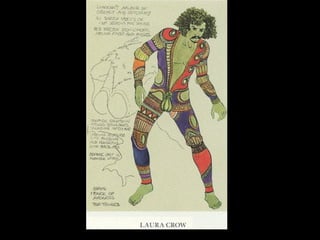
CHARACTER IS
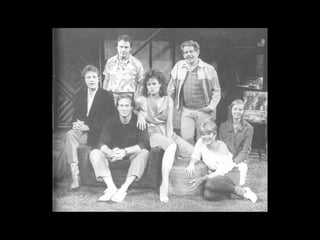
COMPOSITION
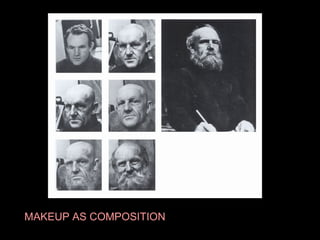
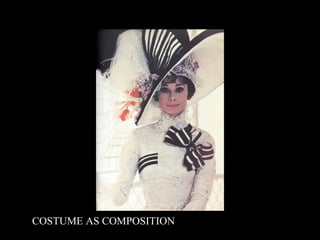
MAKEUP AS COMPOSITION
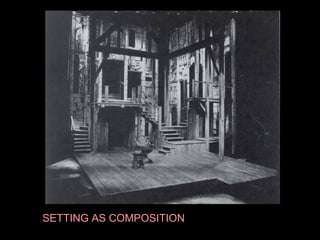
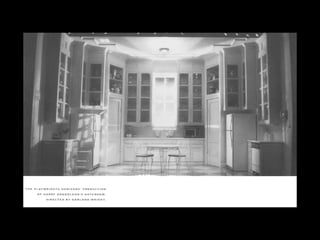
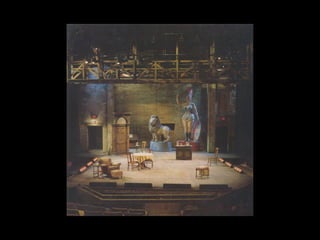
SETTING AS COMPOSITION
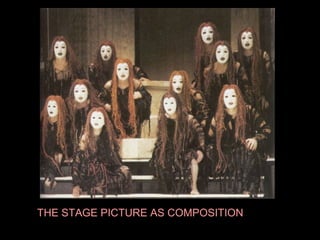
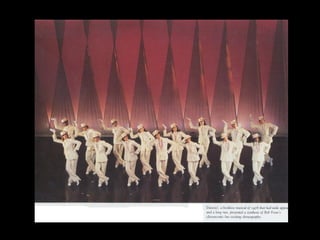
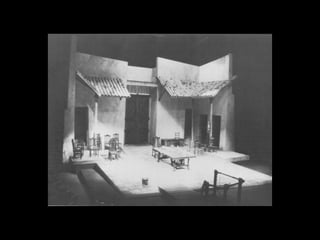
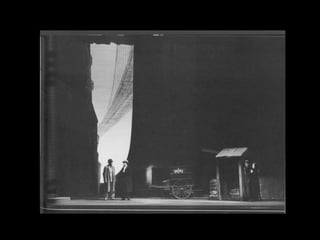
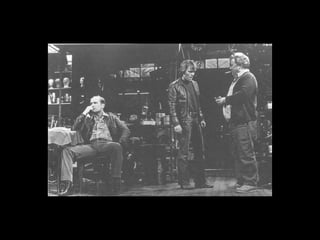
THE STAGE PICTURE AS COMPOSITION
As suggested in the earlier lecture, the moment
we open our eyes and focus on something, our
mind automatically perceives a composition
within our visual field.
We emphasize the object or objects we focus
on, while unconsciously subordinating and
balancing all other visual elements, so as to
avoid competition, clutter and confusion.
We determine the order in which to “engage “ the
things we are seeing thus providing continuity to
our composition.
EMPHASIS, BALANCE AND CONTINUITY
THE 3 ELEMENTS OF COMPOSITION.
BALANCE: THE EQUILIBRIUM OF OPPOSING OR
INTERACTING FORCES OR VISUAL WEIGHT
WITHIN A VISUAL FIELD OR COMPOSITION.
THERE ARE TWO CATEGORIES OF BALANCE
A. FORMAL SYMMETRY
B. INFORMAL SYMMETRY
SYMMETRY MEANS EQUAL PROPORTION
THERE ARE 4 TYPES OF FORMAL SYMMETRY
1. TRUE SYMMETRY
2. VIRTUAL SYMMETRY
3. RADIAL SYMMETRY
4. CRYSTALOGRAPHIC SYMMETRY
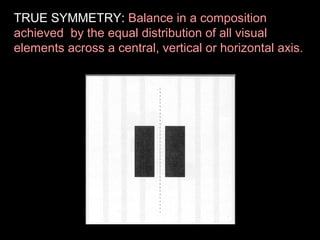
TRUE SYMMETRY: Balance in a composition
achieved by the equal distribution of all visual
elements across a central, vertical or horizontal axis.
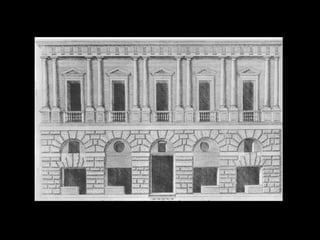
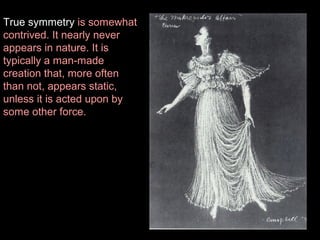
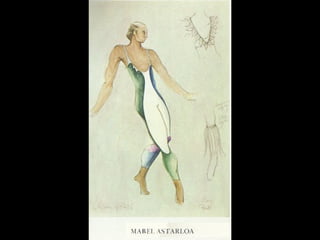
True symmetry is somewhat
contrived. It nearly never
appears in nature. It is
typically a man-made
creation that, more often
than not, appears static,
unless it is acted upon by
some other force.
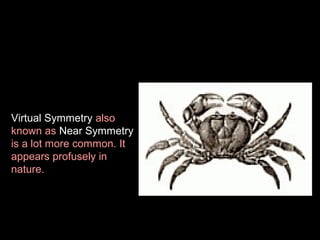
Virtual Symmetry also
known as Near Symmetry
is a lot more common. It
appears profusely in
nature.
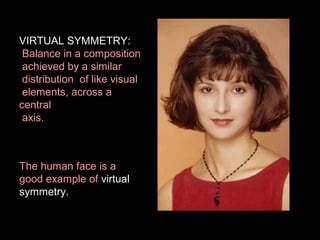
VIRTUAL SYMMETRY:
Balance in a composition
achieved by a similar
distribution of like visual
elements, across a
central
axis.

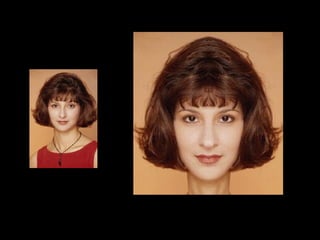
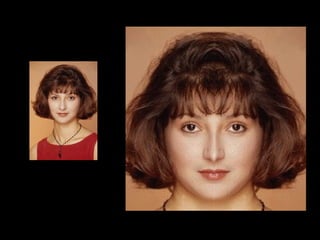
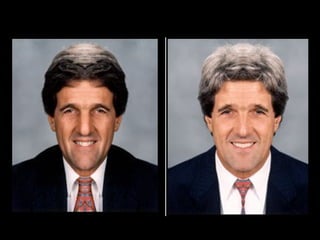
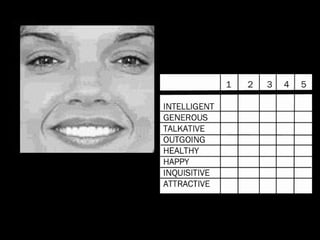
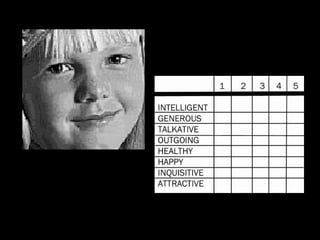
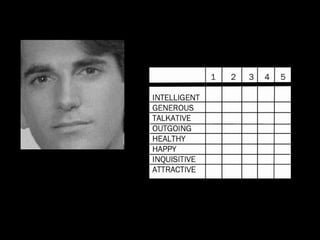
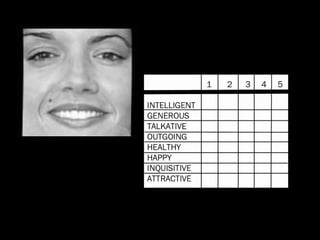
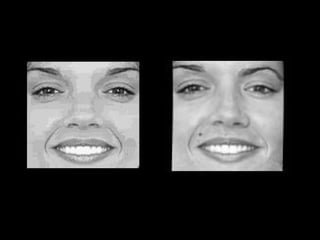
The human face is a
good example of virtual
symmetry.
CLASSICAL BEAUTY REFERS TO NEAR PERFECT
SYMMETRY IN PHYSICAL APPEARANCE WHILE
CONFORMING TO PROPORTIONAL STANDARDS

LETS DO A LITTLE TEST!
TAKE A LOOK AT THE FOLLOWING PICTURES OF
FACES AND RATE EACH ONE FOR POSITIVE
CHARACTERISTICS ON A SCALE FROM 1 TO 5
1 BEING LOW AND 5 BEING HIGH
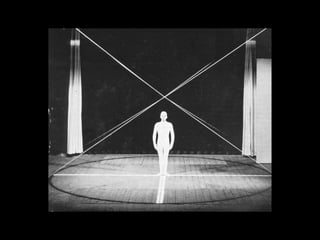
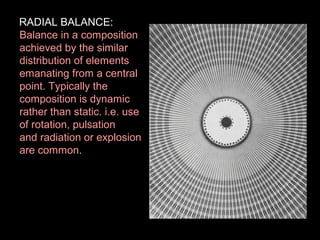
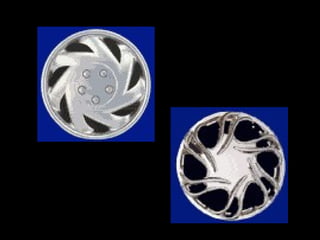
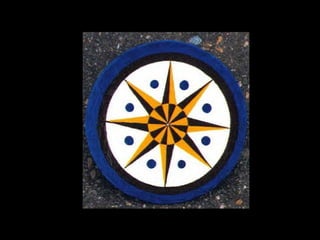
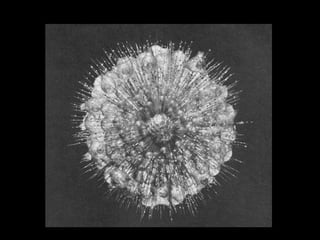
RADIAL BALANCE:
Balance in a composition
achieved by the similar
distribution of elements
emanating from a central
point. Typically the
composition is dynamic
rather than static. i.e. use
of rotation, pulsation
and radiation or explosion
are common.
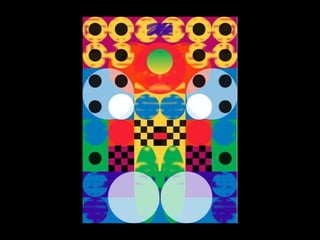
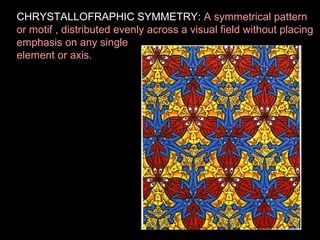
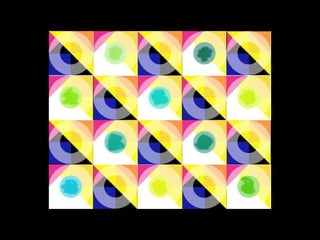
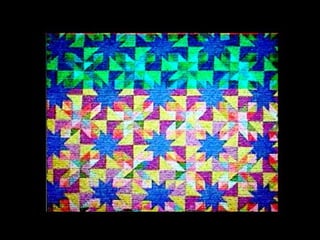
CHRYSTALLOFRAPHIC SYMMETRY: A symmetrical pattern
or motif , distributed evenly across a visual field without placing
emphasis on any single
element or axis.
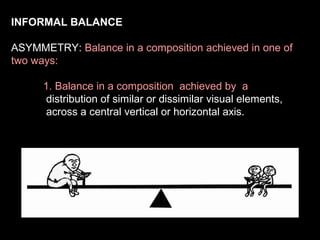
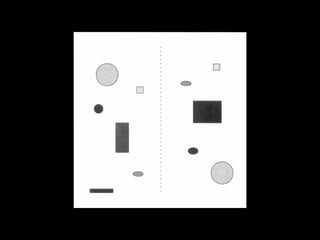
INFORMAL BALANCE
ASYMMETRY: Balance in a composition achieved in one of
two ways:
1. Balance in a composition achieved by a
distribution of similar or dissimilar visual elements,
across a central vertical or horizontal axis.
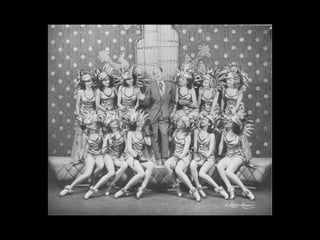
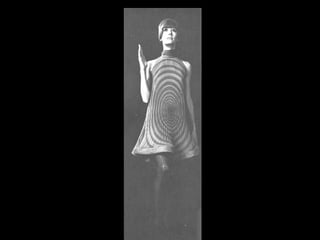
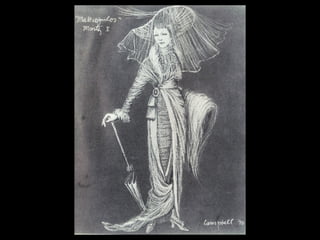
COSTUME AS COMPOSITION
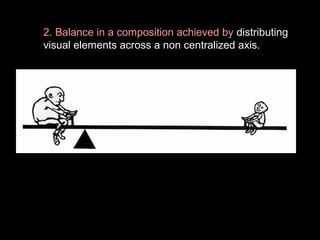
2. Balance in a composition achieved by distributing
visual elements across a non centralized axis.
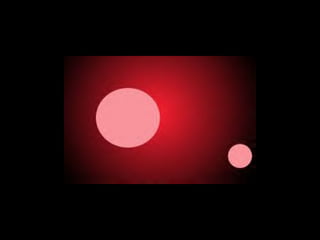
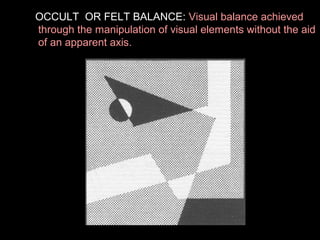
OCCULT OR FELT BALANCE: Visual balance achieved
through the manipulation of visual elements without the aid
of an apparent axis.
23   balance
23   balance
23   balance

23 balance

  • 1.
  • 2.
    Composition, as previouslystated, is the conscious selection of visual elements, employed in design, through the use of some guiding principles, for the purpose of achieving a pleasing or desired result.
  • 3.
  • 4.
  • 5.
  • 6.
    THE STAGE PICTUREAS COMPOSITION
  • 7.
    As suggested inthe earlier lecture, the moment we open our eyes and focus on something, our mind automatically perceives a composition within our visual field. We emphasize the object or objects we focus on, while unconsciously subordinating and balancing all other visual elements, so as to avoid competition, clutter and confusion. We determine the order in which to “engage “ the things we are seeing thus providing continuity to our composition. EMPHASIS, BALANCE AND CONTINUITY THE 3 ELEMENTS OF COMPOSITION.
  • 8.
    BALANCE: THE EQUILIBRIUMOF OPPOSING OR INTERACTING FORCES OR VISUAL WEIGHT WITHIN A VISUAL FIELD OR COMPOSITION. THERE ARE TWO CATEGORIES OF BALANCE A. FORMAL SYMMETRY B. INFORMAL SYMMETRY SYMMETRY MEANS EQUAL PROPORTION THERE ARE 4 TYPES OF FORMAL SYMMETRY 1. TRUE SYMMETRY 2. VIRTUAL SYMMETRY 3. RADIAL SYMMETRY 4. CRYSTALOGRAPHIC SYMMETRY
  • 9.
    TRUE SYMMETRY: Balancein a composition achieved by the equal distribution of all visual elements across a central, vertical or horizontal axis.
  • 13.
    True symmetry issomewhat contrived. It nearly never appears in nature. It is typically a man-made creation that, more often than not, appears static, unless it is acted upon by some other force.
  • 15.
    Virtual Symmetry also knownas Near Symmetry is a lot more common. It appears profusely in nature.
  • 16.
    VIRTUAL SYMMETRY: Balance ina composition achieved by a similar distribution of like visual elements, across a central axis. The human face is a good example of virtual symmetry.
  • 20.
    CLASSICAL BEAUTY REFERSTO NEAR PERFECT SYMMETRY IN PHYSICAL APPEARANCE WHILE CONFORMING TO PROPORTIONAL STANDARDS LETS DO A LITTLE TEST! TAKE A LOOK AT THE FOLLOWING PICTURES OF FACES AND RATE EACH ONE FOR POSITIVE CHARACTERISTICS ON A SCALE FROM 1 TO 5 1 BEING LOW AND 5 BEING HIGH
  • 30.
    RADIAL BALANCE: Balance ina composition achieved by the similar distribution of elements emanating from a central point. Typically the composition is dynamic rather than static. i.e. use of rotation, pulsation and radiation or explosion are common.
  • 36.
    CHRYSTALLOFRAPHIC SYMMETRY: Asymmetrical pattern or motif , distributed evenly across a visual field without placing emphasis on any single element or axis.
  • 39.
    INFORMAL BALANCE ASYMMETRY: Balancein a composition achieved in one of two ways: 1. Balance in a composition achieved by a distribution of similar or dissimilar visual elements, across a central vertical or horizontal axis.
  • 42.
  • 47.
    2. Balance ina composition achieved by distributing visual elements across a non centralized axis.
  • 50.
    OCCULT OR FELTBALANCE: Visual balance achieved through the manipulation of visual elements without the aid of an apparent axis.

Editor's Notes