Drilling and Completions
Spectrum of
Spectrum of
D&C activity
D&C activity
DRILLING & COMPLETIONS
BASICS
Main Components of a Drilling Rig
All drilling rigs have the following basic systems
•Hoisting
•Rotating
•Circulating & Solids Control
•Power
•Blowout Prevention
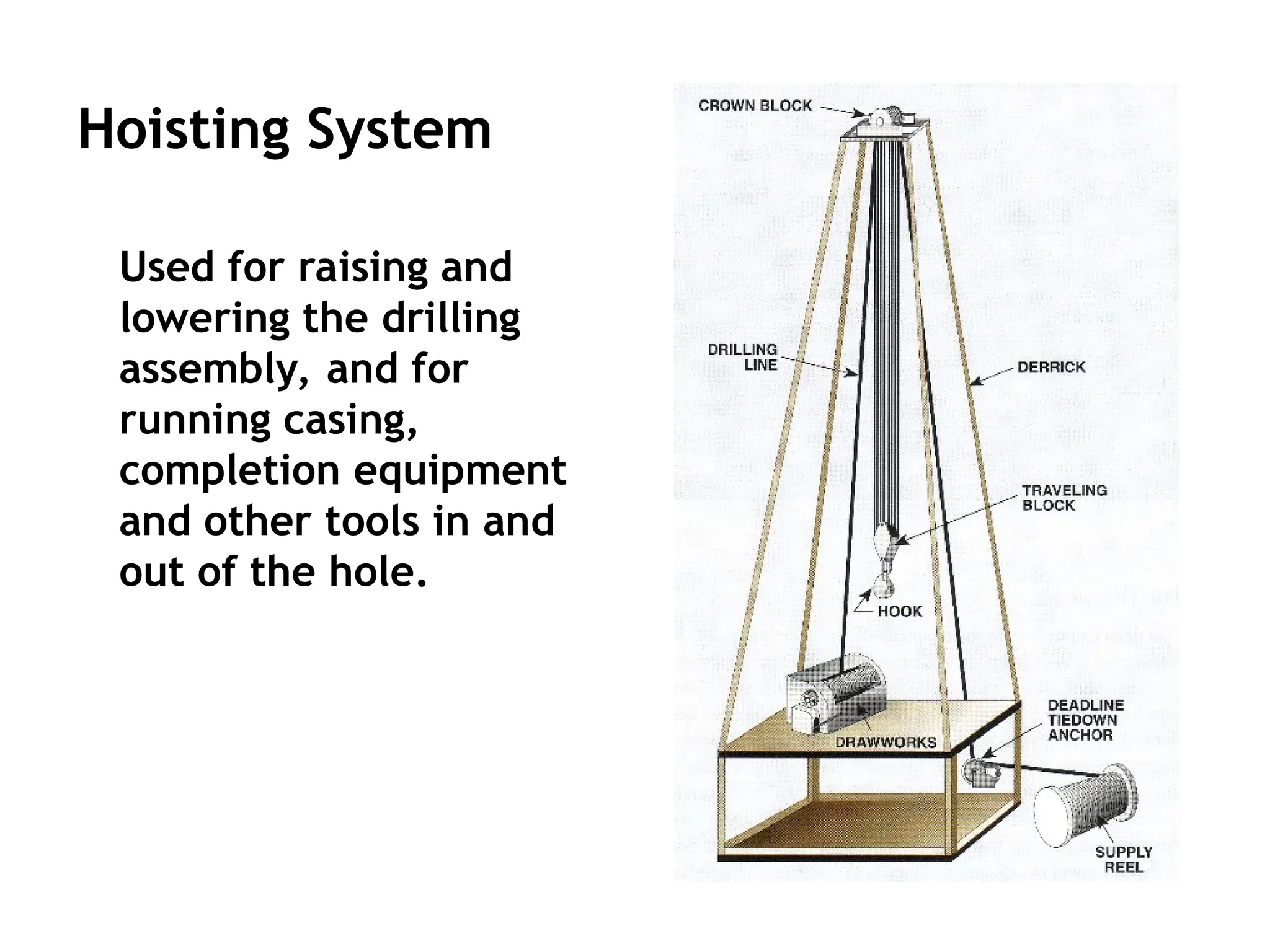
Hoisting System
Used for raising and
lowering the drilling
assembly, and for
running casing,
completion equipment
and other tools in and
out of the hole.
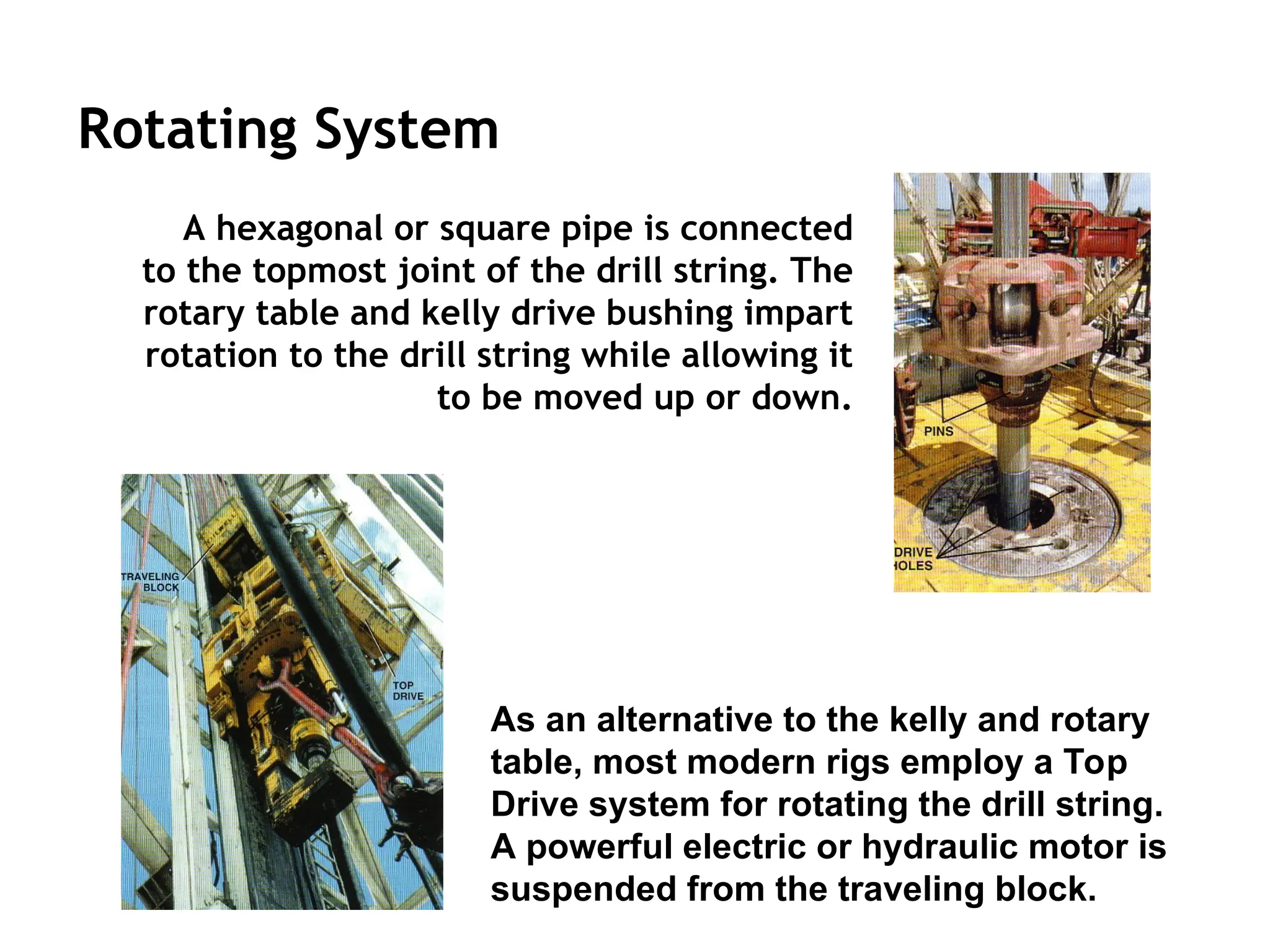
Rotating System
A hexagonal or square pipe is connected
to the topmost joint of the drill string. The
rotary table and kelly drive bushing impart
rotation to the drill string while allowing it
to be moved up or down.
As an alternative to the kelly and rotary
table, most modern rigs employ a Top
Drive system for rotating the drill string.
A powerful electric or hydraulic motor is
suspended from the traveling block.
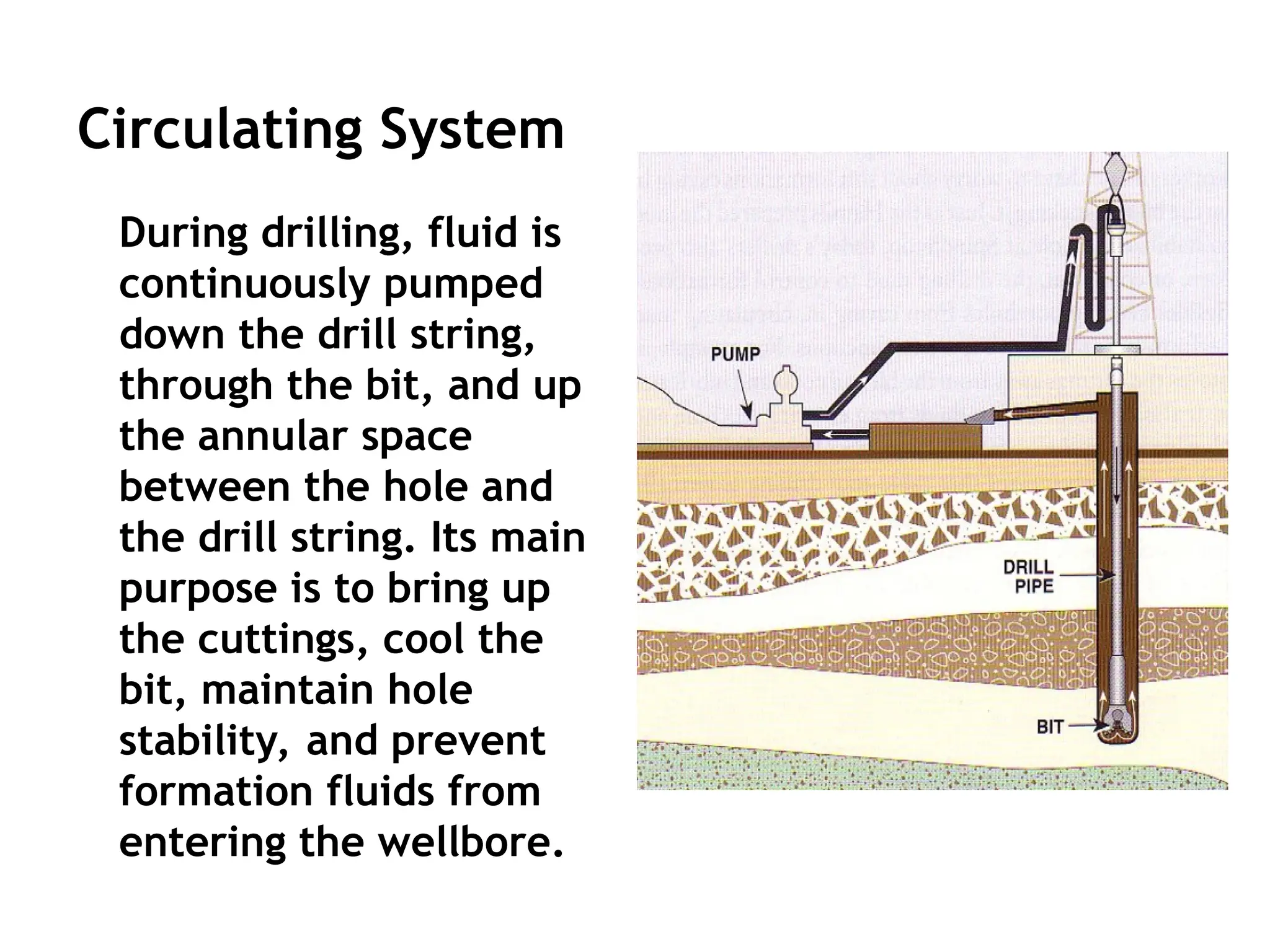
Circulating System
During drilling, fluid is
continuously pumped
down the drill string,
through the bit, and up
the annular space
between the hole and
the drill string. Its main
purpose is to bring up
the cuttings, cool the
bit, maintain hole
stability, and prevent
formation fluids from
entering the wellbore.
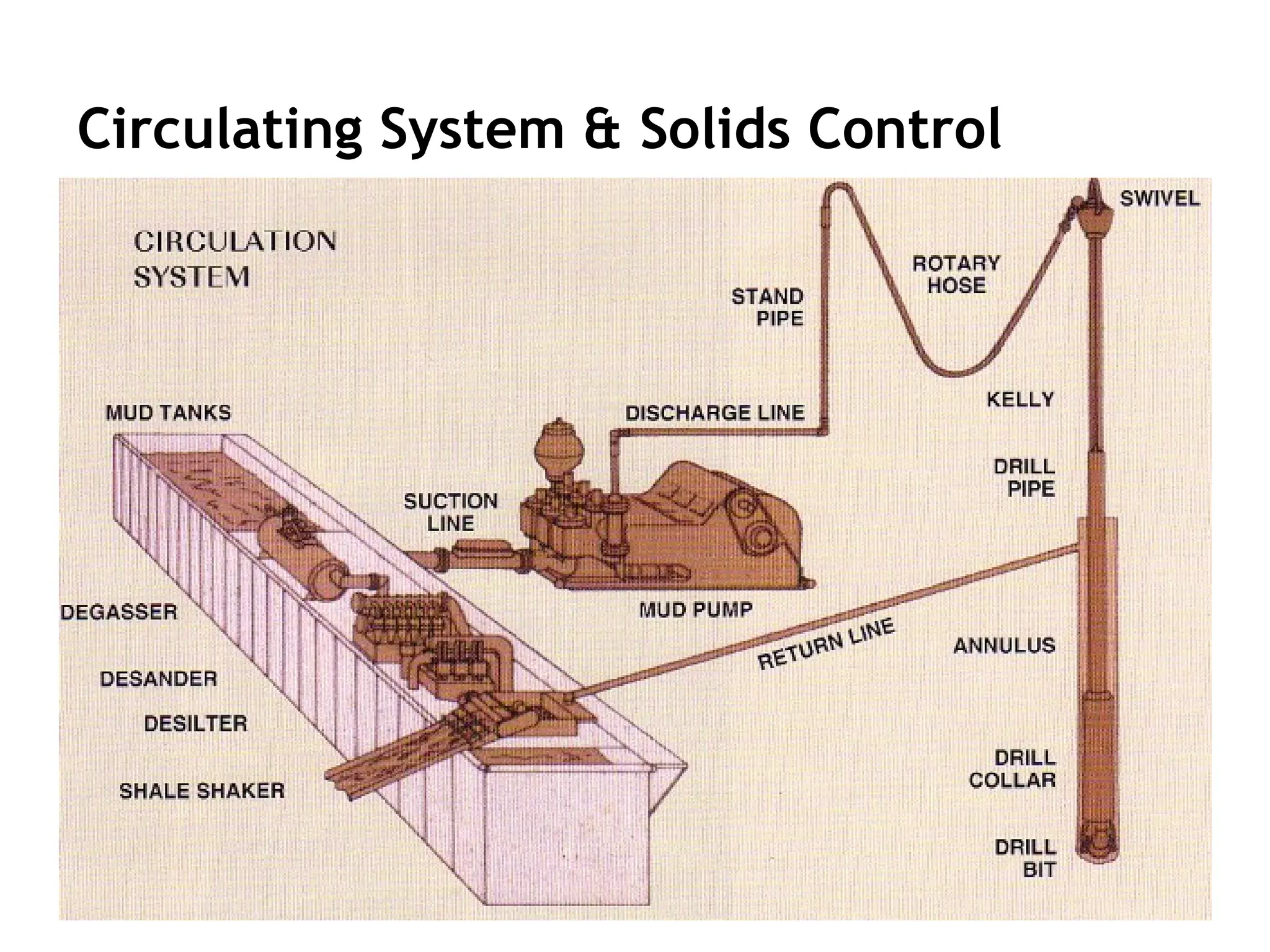
Circulating System & Solids Control
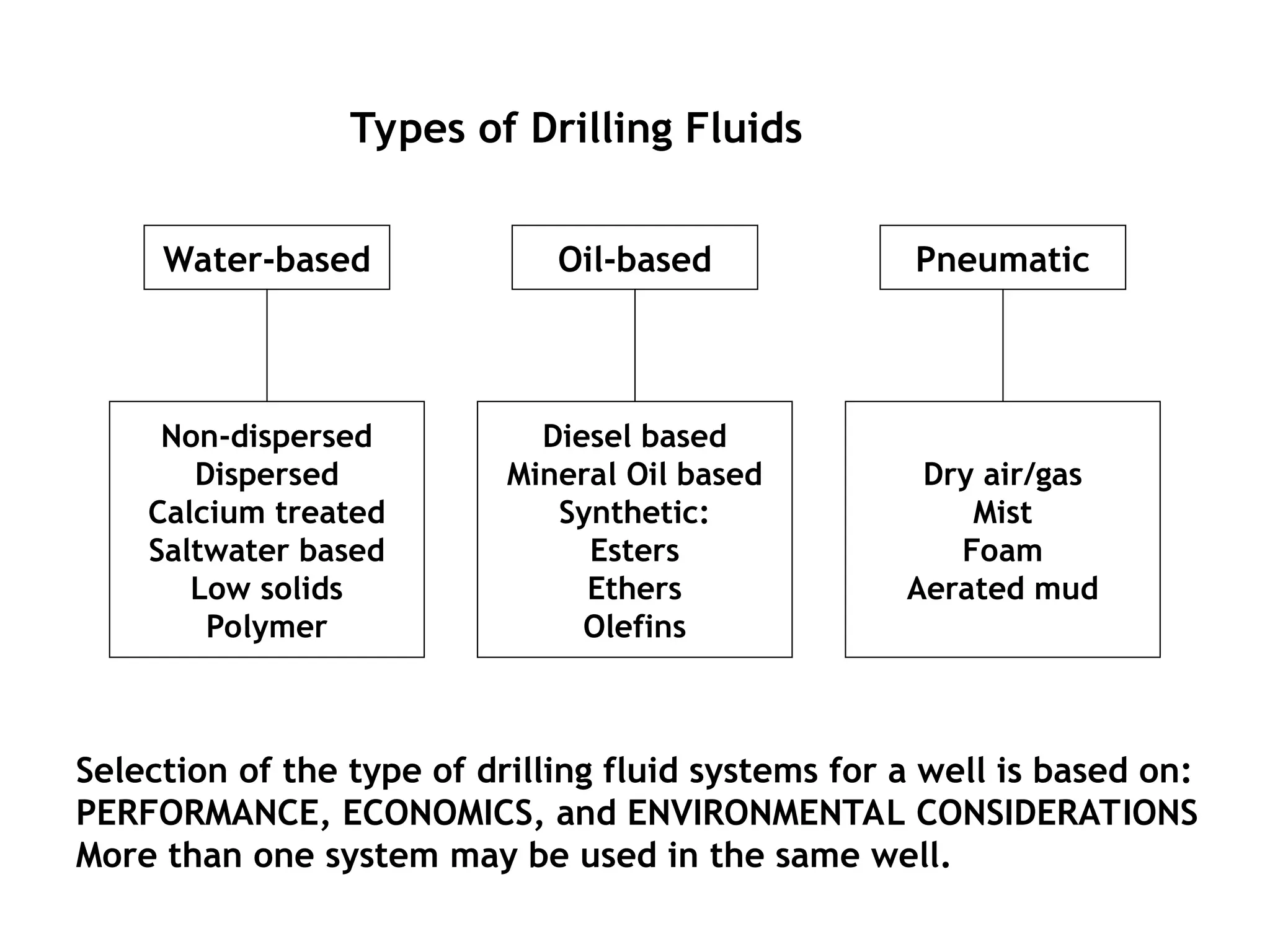
Types of Drilling Fluids
Non-dispersed
Dispersed
Calcium treated
Saltwater based
Low solids
Polymer
Water-based Pneumatic
Oil-based
Diesel based
Mineral Oil based
Synthetic:
Esters
Ethers
Olefins
Dry air/gas
Mist
Foam
Aerated mud
Selection of the type of drilling fluid systems for a well is based on:
PERFORMANCE, ECONOMICS, and ENVIRONMENTAL CONSIDERATIONS
More than one system may be used in the same well.
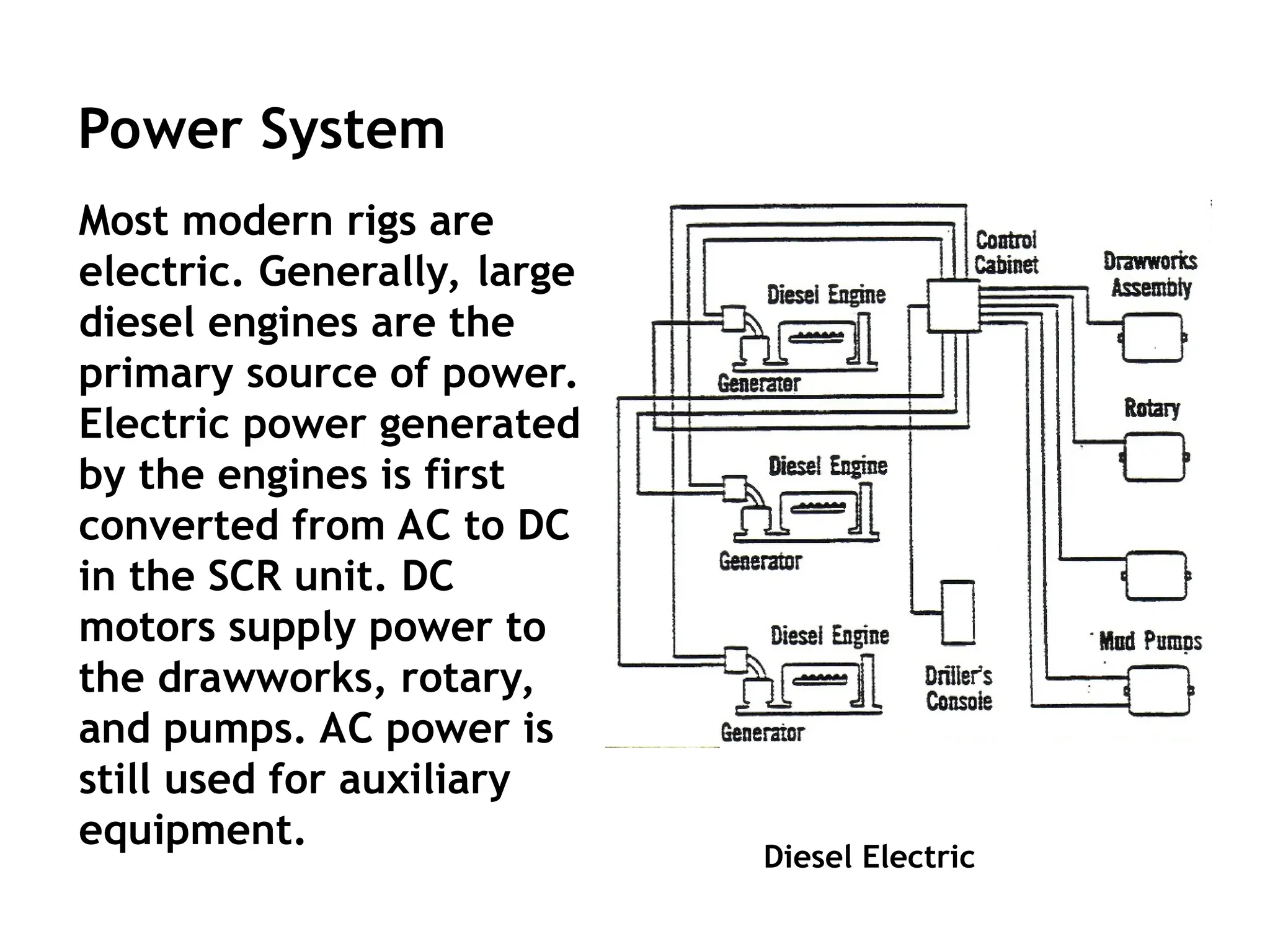
Diesel Electric
Power System
Most modern rigs are
electric. Generally, large
diesel engines are the
primary source of power.
Electric power generated
by the engines is first
converted from AC to DC
in the SCR unit. DC
motors supply power to
the drawworks, rotary,
and pumps. AC power is
still used for auxiliary
equipment.
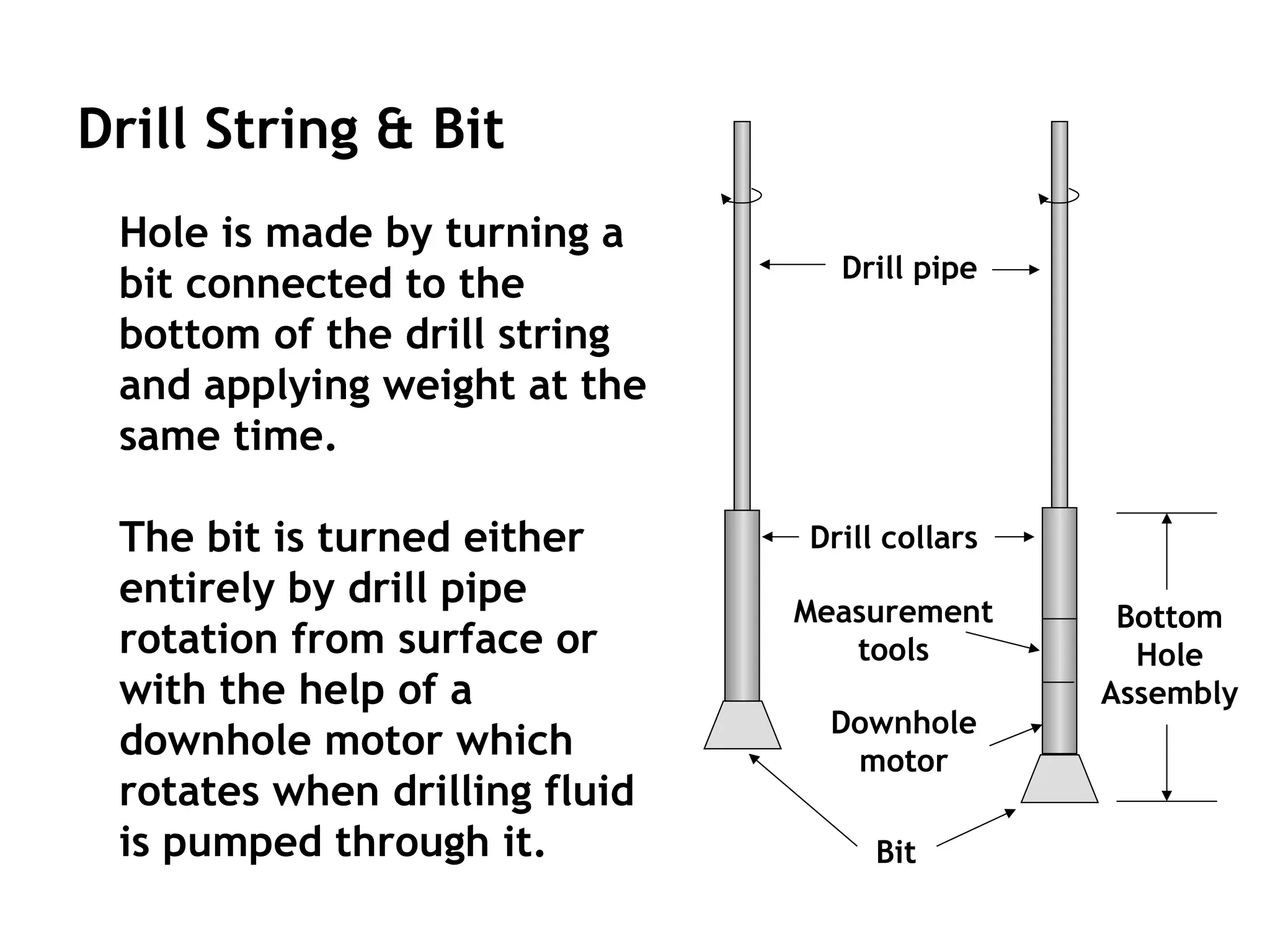
Drill String & Bit
Hole is made by turning a
bit connected to the
bottom of the drill string
and applying weight at the
same time.
The bit is turned either
entirely by drill pipe
rotation from surface or
with the help of a
downhole motor which
rotates when drilling fluid
is pumped through it.
Drill pipe
Drill collars
Measurement
tools
Downhole
motor
Bottom
Hole
Assembly
Bit
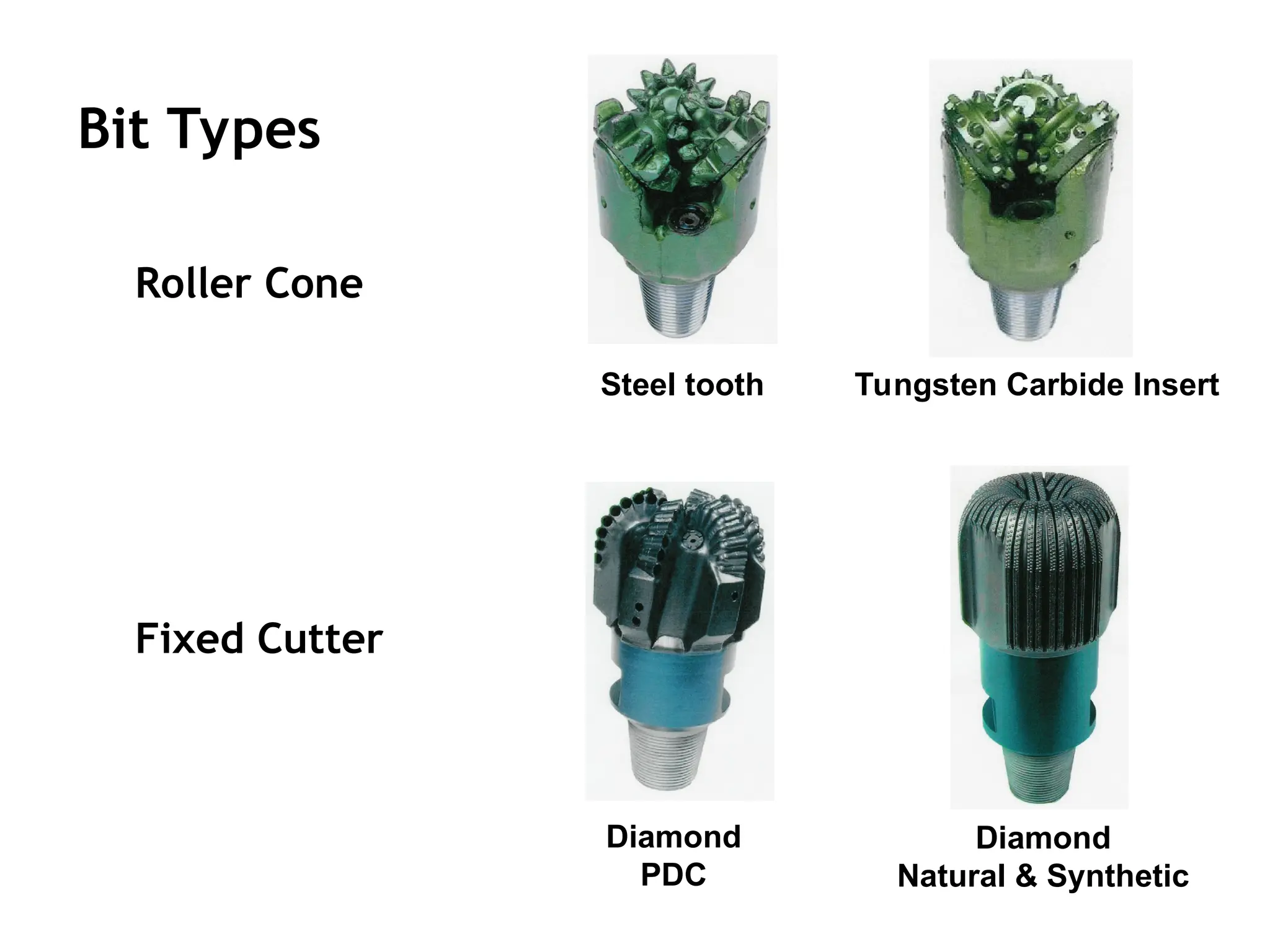
Bit Types
Roller Cone
Fixed Cutter
Steel tooth
Diamond
Natural & Synthetic
Diamond
PDC
Tungsten Carbide Insert
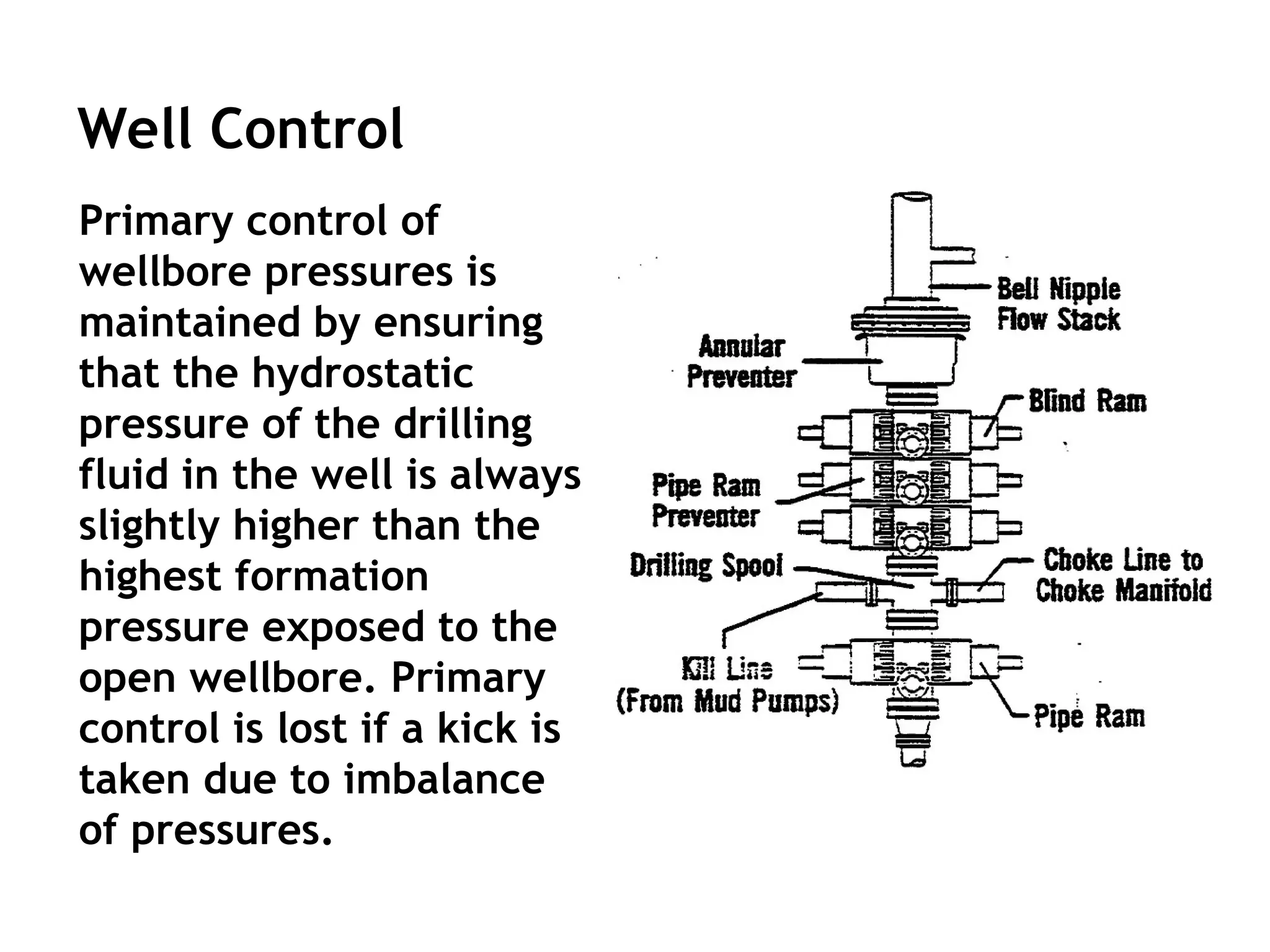
Well Control
Primary control of
wellbore pressures is
maintained by ensuring
that the hydrostatic
pressure of the drilling
fluid in the well is always
slightly higher than the
highest formation
pressure exposed to the
open wellbore. Primary
control is lost if a kick is
taken due to imbalance
of pressures.
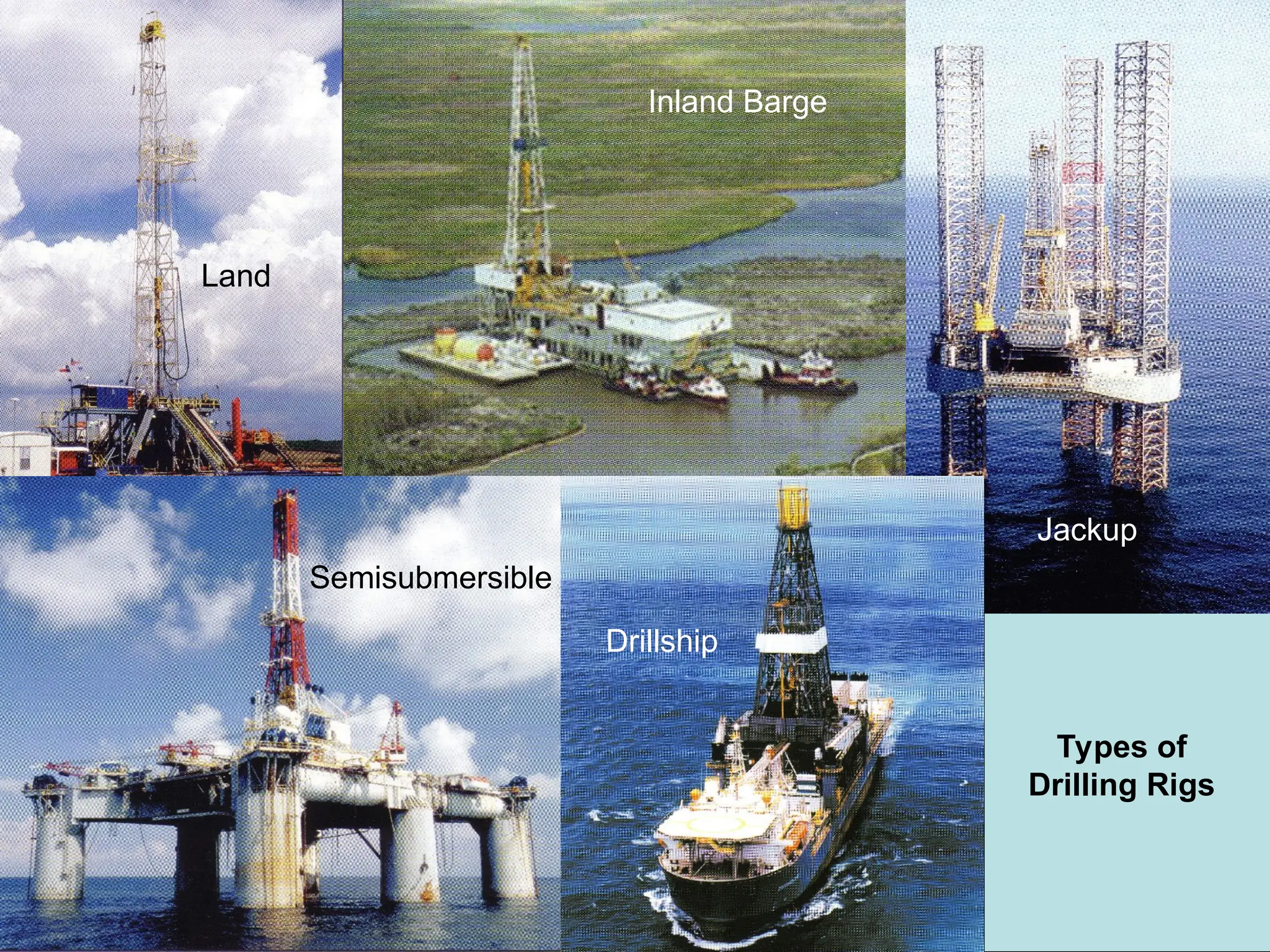
RIG TYPES
Inland Barge
Semisubmersible
Land
Jackup
Drillship
Types of
Drilling Rigs
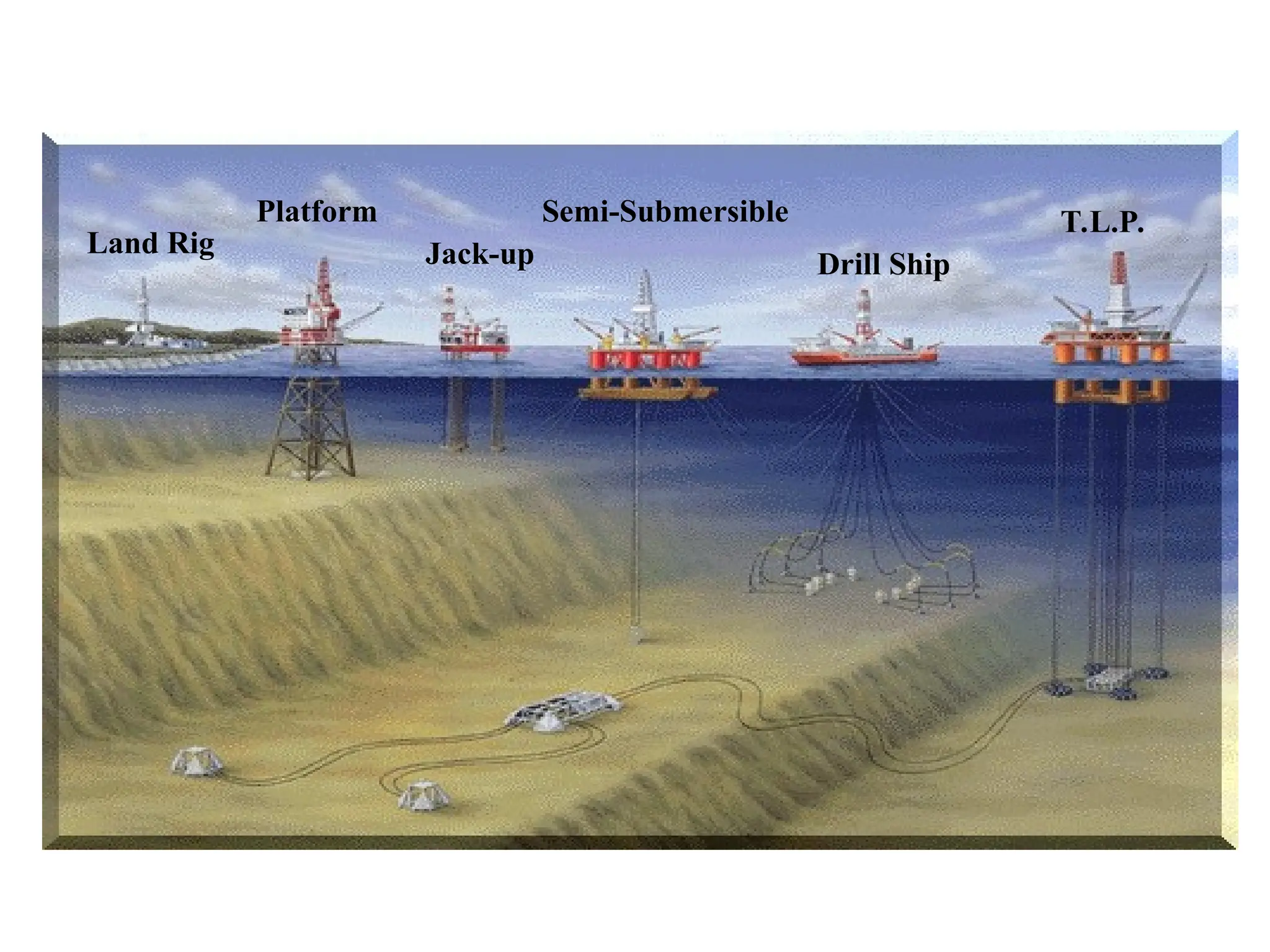
Land Rig
Platform
Jack-up
Semi-Submersible
Drill Ship
T.L.P.
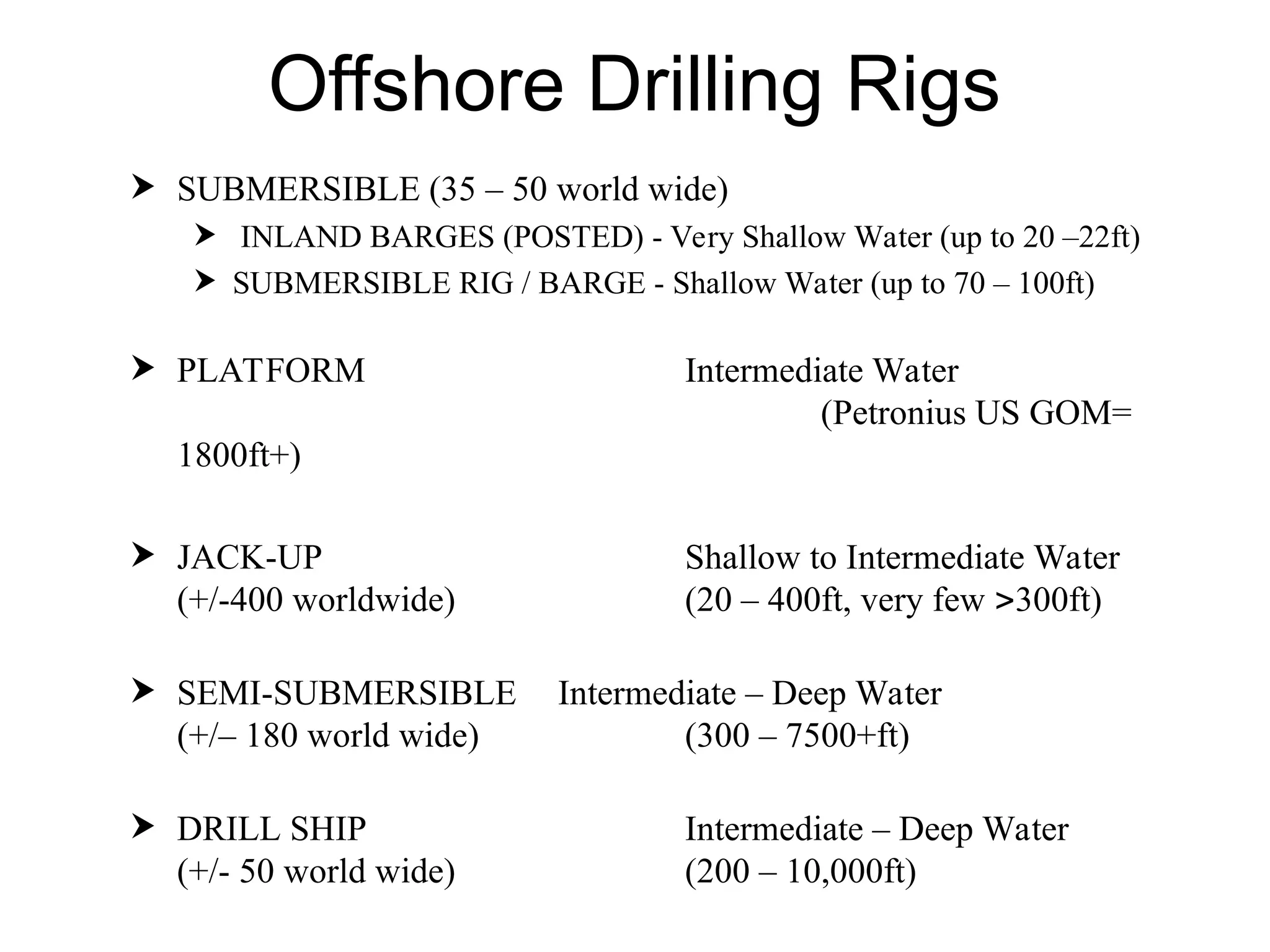
Offshore Drilling Rigs
 SUBMERSIBLE (35 – 50 world wide)
 INLAND BARGES (POSTED) - Very Shallow Water (up to 20 –22ft)
 SUBMERSIBLE RIG / BARGE - Shallow Water (up to 70 – 100ft)
 PLATFORM Intermediate Water
(Petronius US GOM=
1800ft+)
 JACK-UP Shallow to Intermediate Water
(+/-400 worldwide) (20 – 400ft, very few 300ft)
 SEMI-SUBMERSIBLE Intermediate – Deep Water
(+/– 180 world wide) (300 – 7500+ft)
 DRILL SHIP Intermediate – Deep Water
(+/- 50 world wide) (200 – 10,000ft)
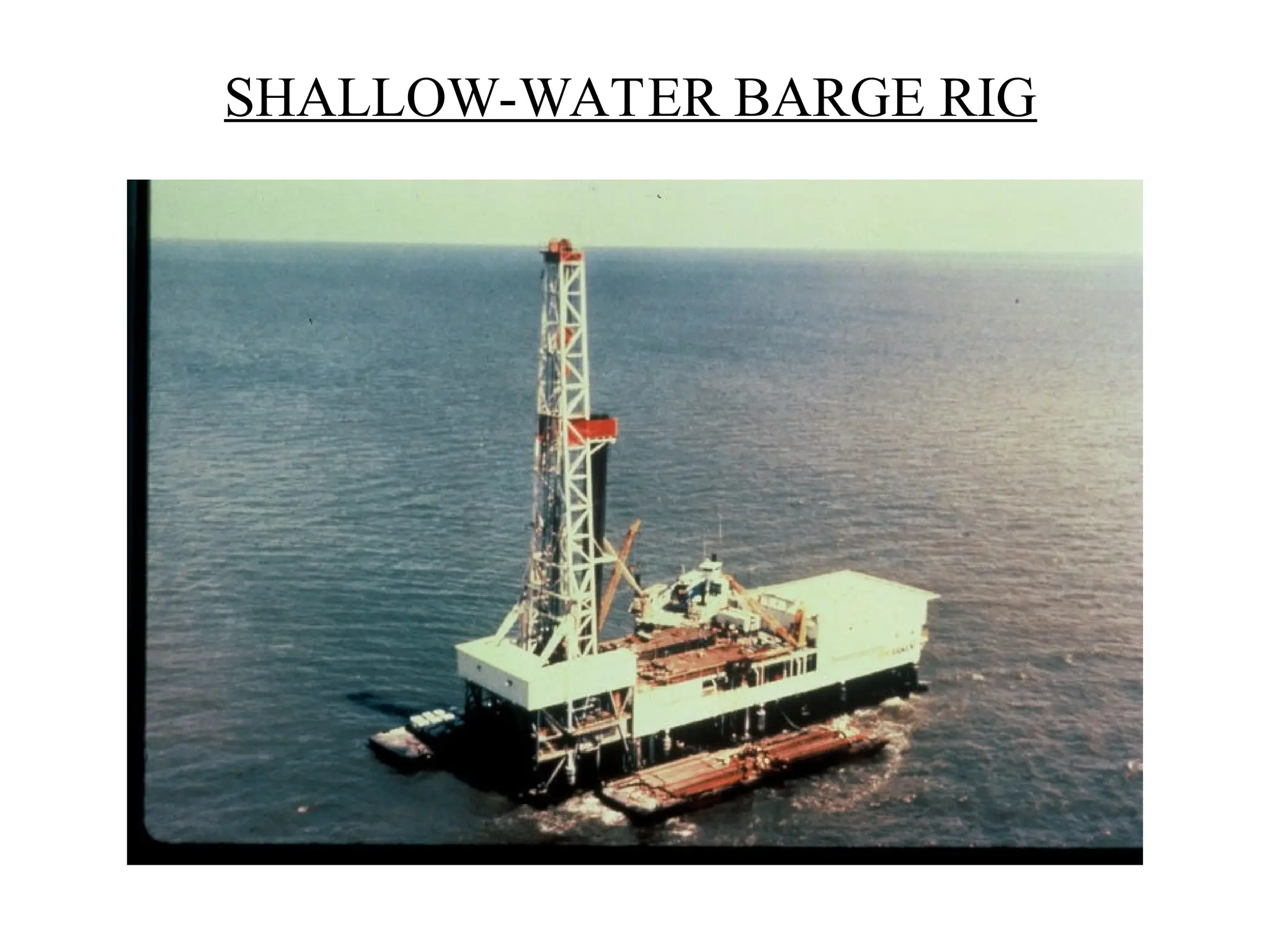
SHALLOW-WATER BARGE RIG
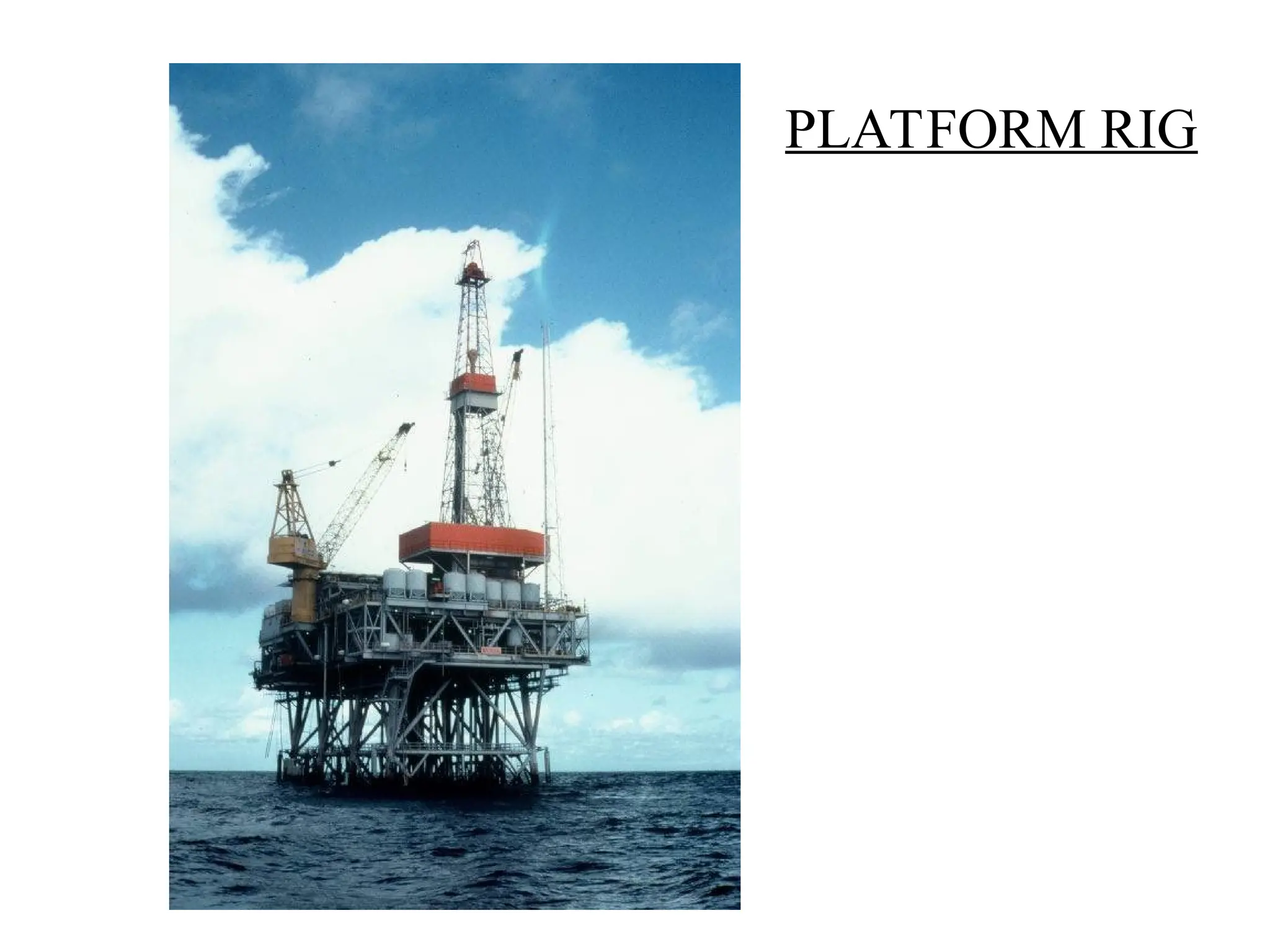
PLATFORM RIG
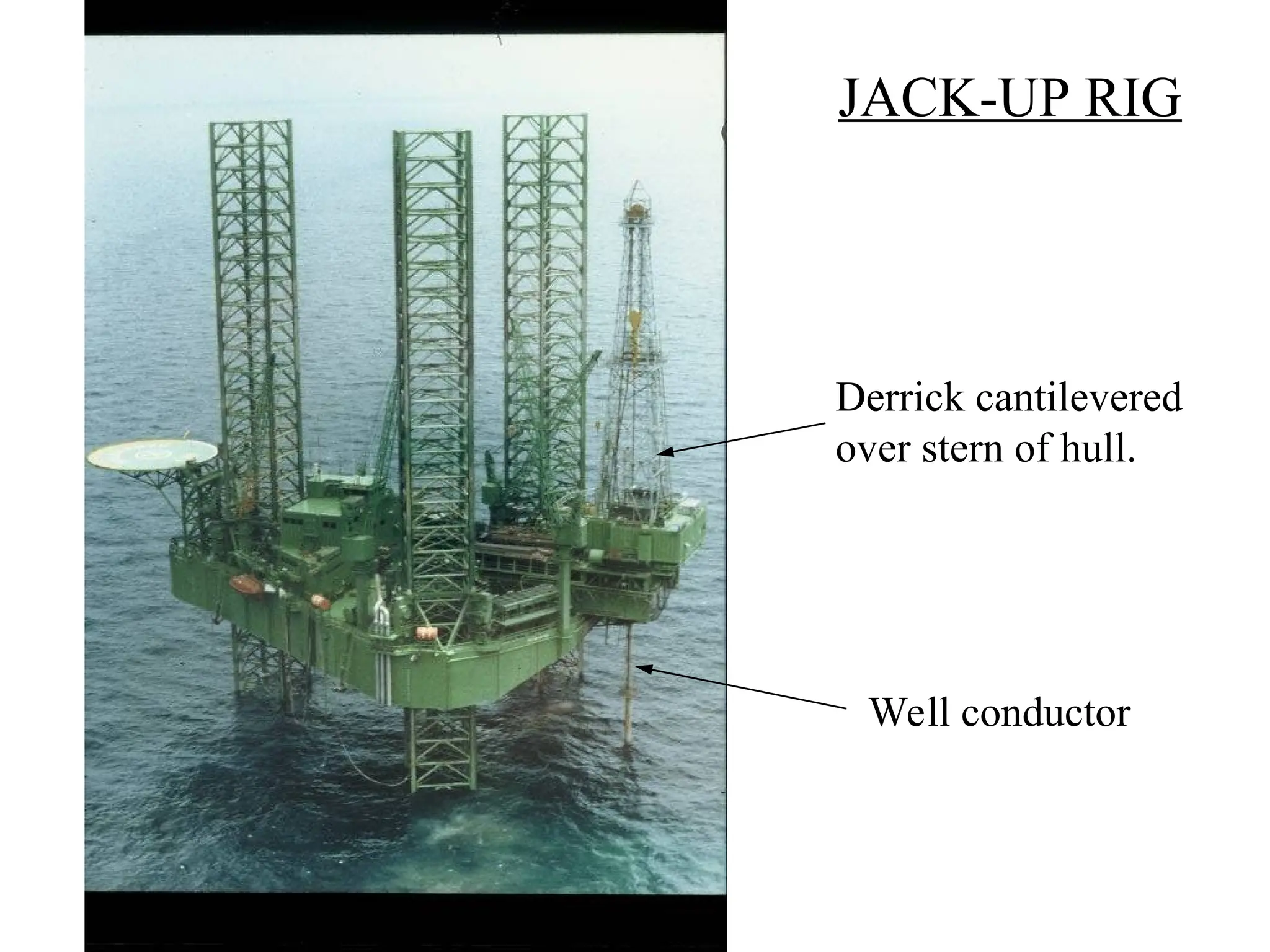
JACK-UP RIG
Derrick cantilevered
over stern of hull.
Well conductor
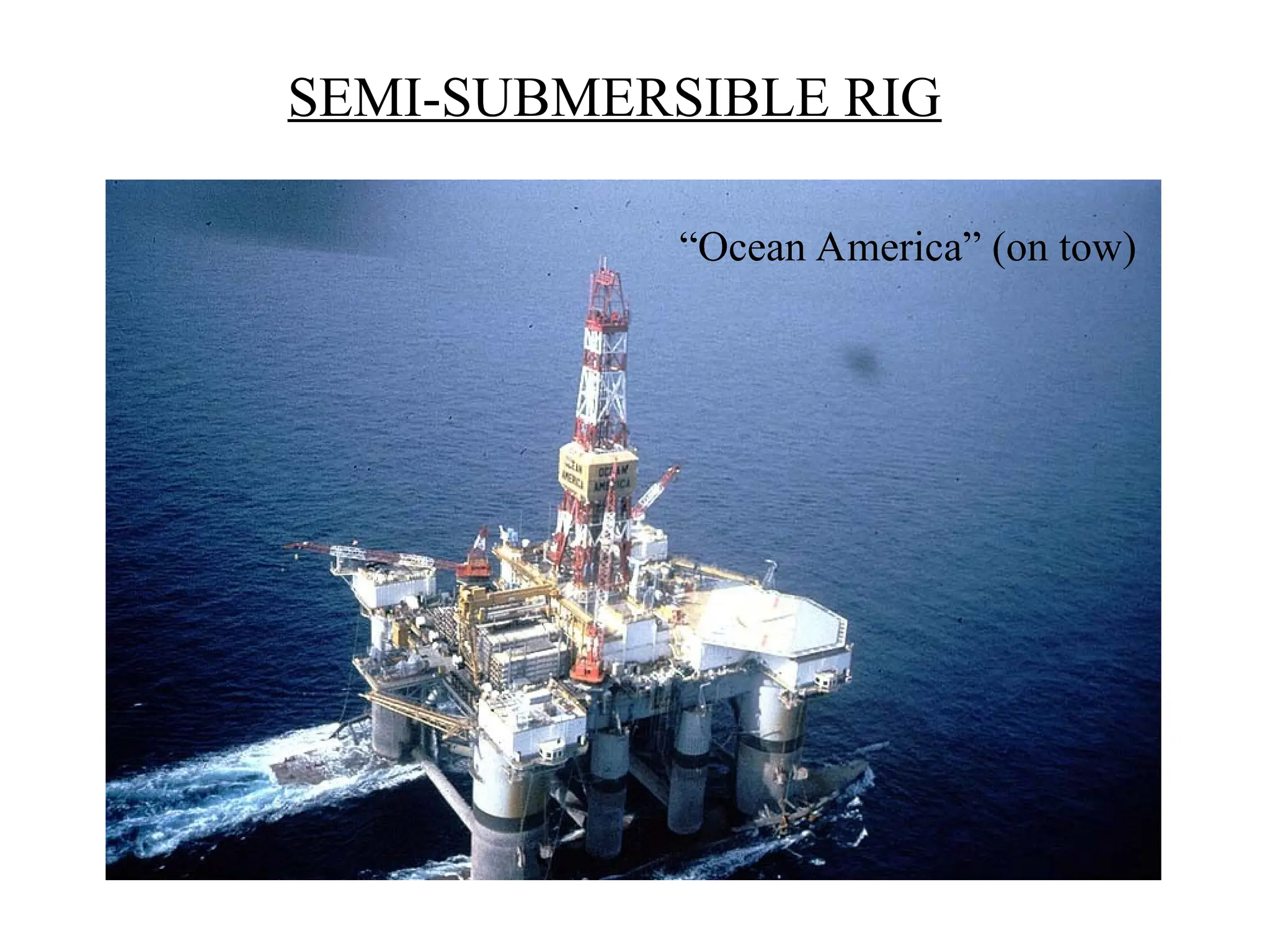
SEMI-SUBMERSIBLE RIG
“Ocean America” (on tow)
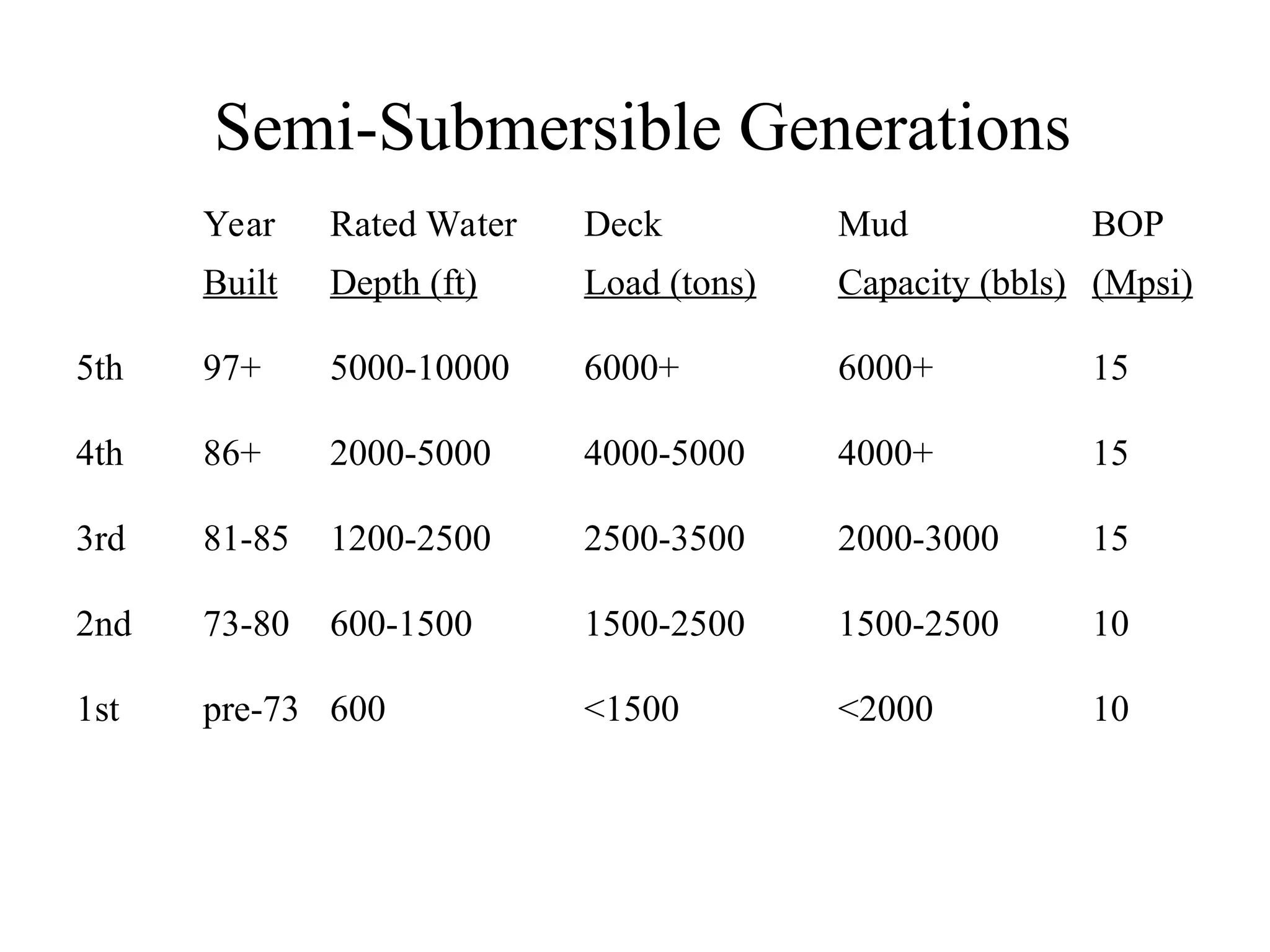
Year Rated Water Deck Mud BOP
Built Depth (ft) Load (tons) Capacity (bbls) (Mpsi)
5th 97+ 5000-10000 6000+ 6000+ 15
4th 86+ 2000-5000 4000-5000 4000+ 15
3rd 81-85 1200-2500 2500-3500 2000-3000 15
2nd 73-80 600-1500 1500-2500 1500-2500 10
1st pre-73 600 <1500 <2000 10
Semi-Submersible Generations
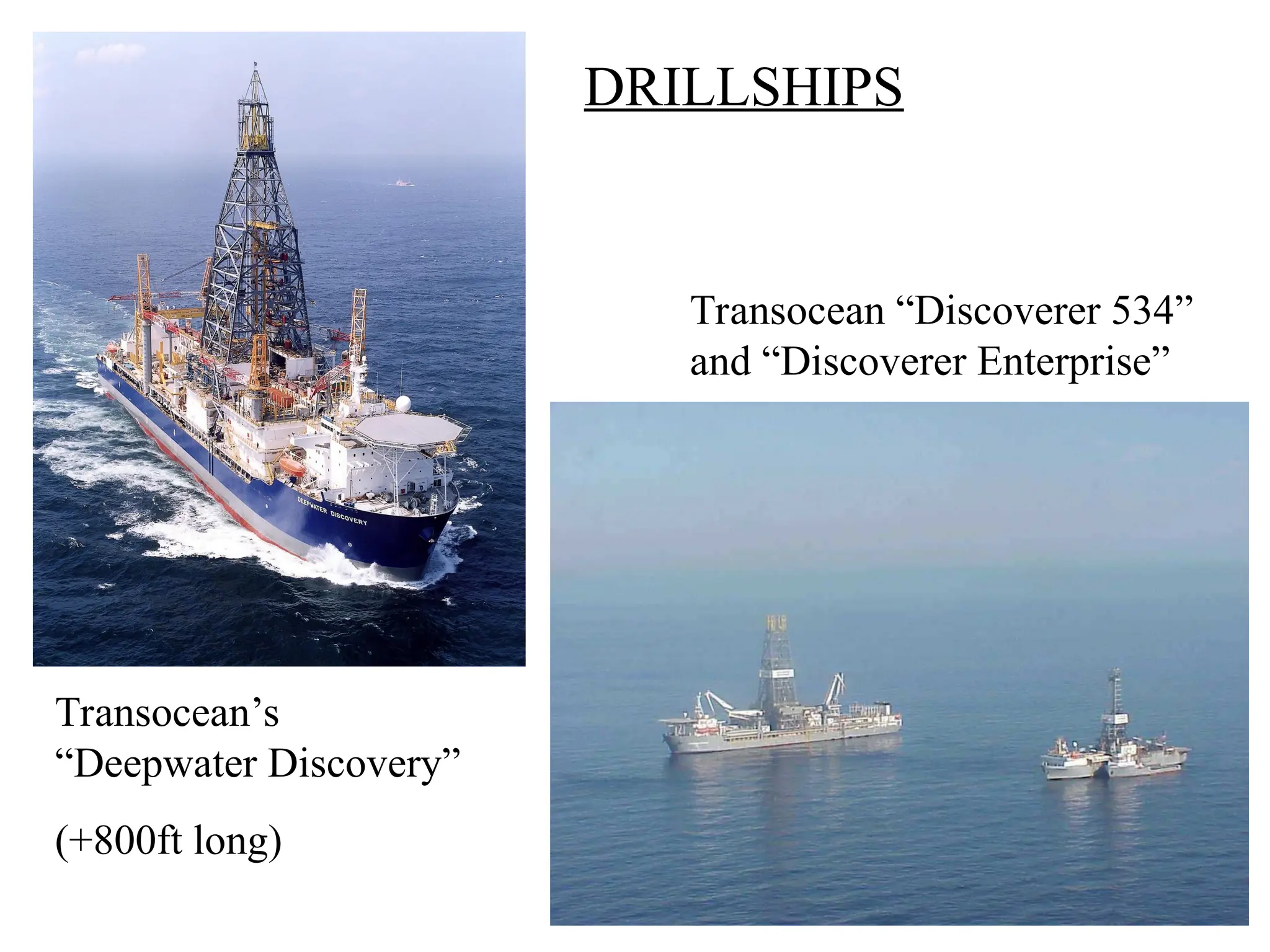
Transocean “Discoverer 534”
and “Discoverer Enterprise”
Transocean’s
“Deepwater Discovery”
(+800ft long)
DRILLSHIPS
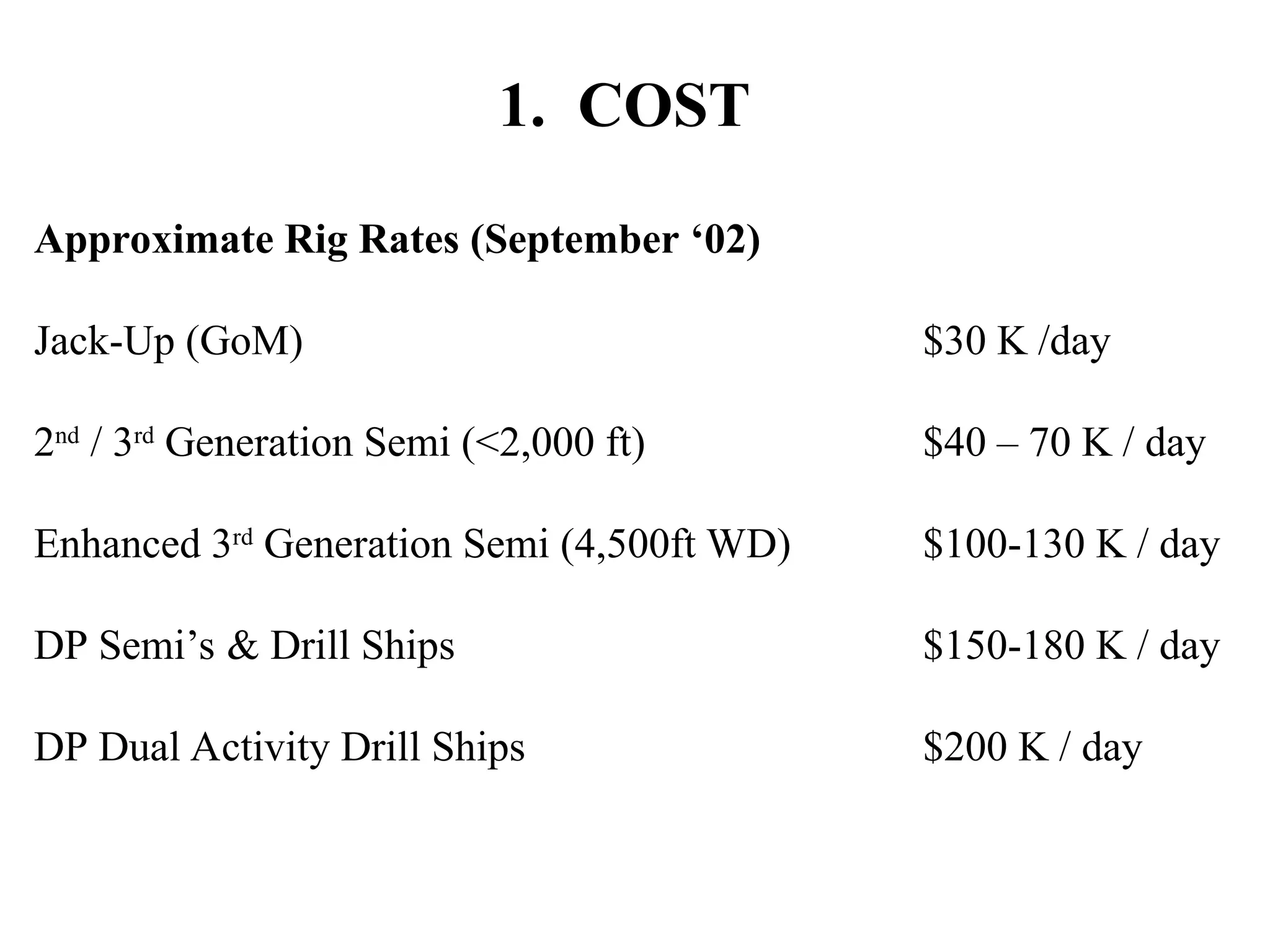
1. COST
Approximate Rig Rates (September ‘02)
Jack-Up (GoM) $30 K /day
2nd
/ 3rd
Generation Semi (<2,000 ft) $40 – 70 K / day
Enhanced 3rd
Generation Semi (4,500ft WD) $100-130 K / day
DP Semi’s & Drill Ships $150-180 K / day
DP Dual Activity Drill Ships $200 K / day
WELL CONSTRUCTION &
EVALUATION
Well Construction and Well Types
By Objective
• Exploration
•P&A or keeper
• Delineation
•Size of reservoir
• Appraisal
•Reservoir
characteristics
• Development
•Reservoir drainage
• Injection
•Pressure
maintenance
0 ft Rig Datum - RKB
Mud Wt (ppg)
D
ep
th
(feet)
PP FG
Mud Wt (ppg)
D
ep
th
(feet)
PP FG
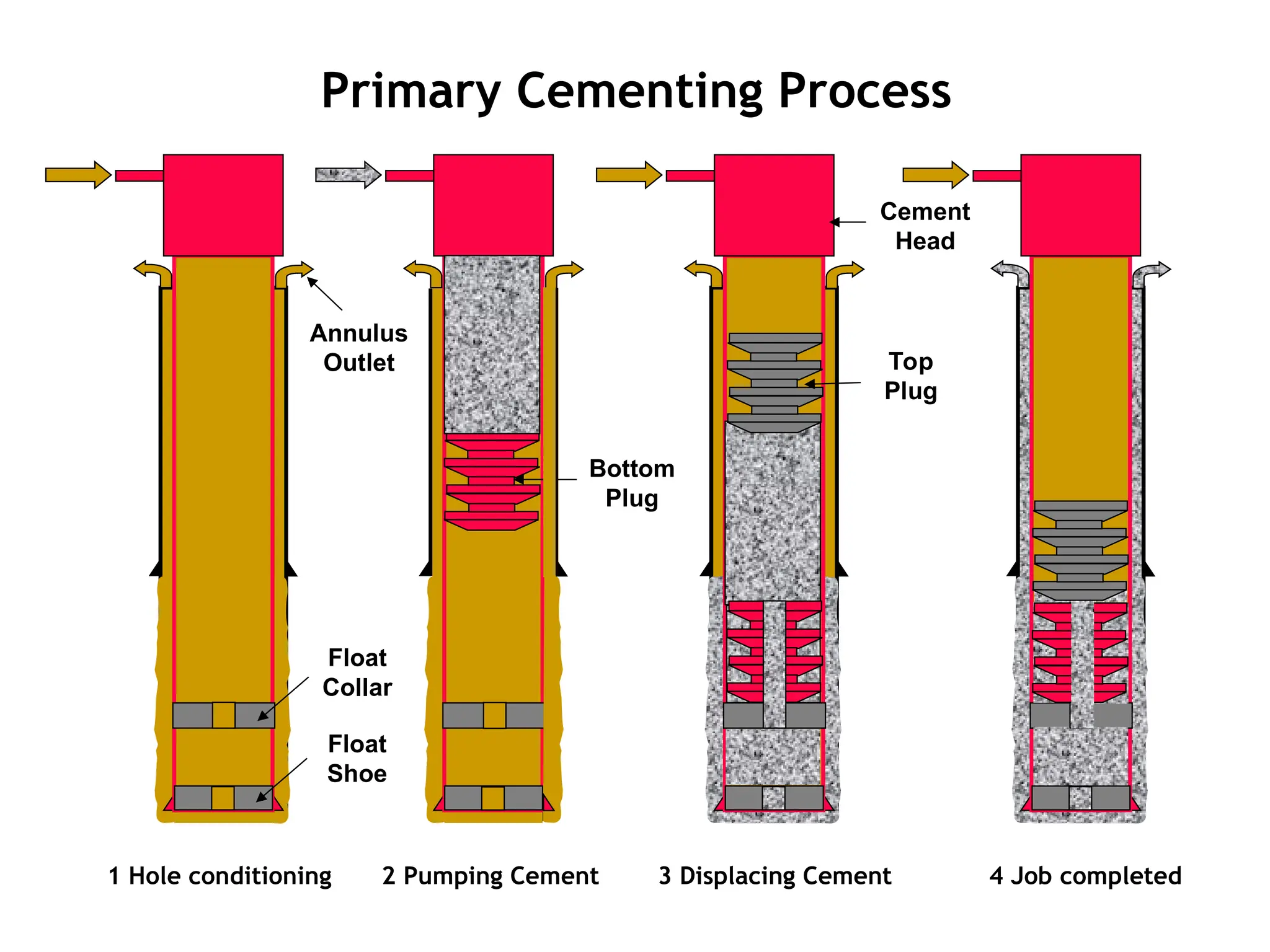
Primary Cementing Process
3 Displacing Cement 4 Job completed
2 Pumping Cement
Bottom
Plug
Top
Plug
Cement
Head
1 Hole conditioning
Float
Shoe
Float
Collar
Annulus
Outlet
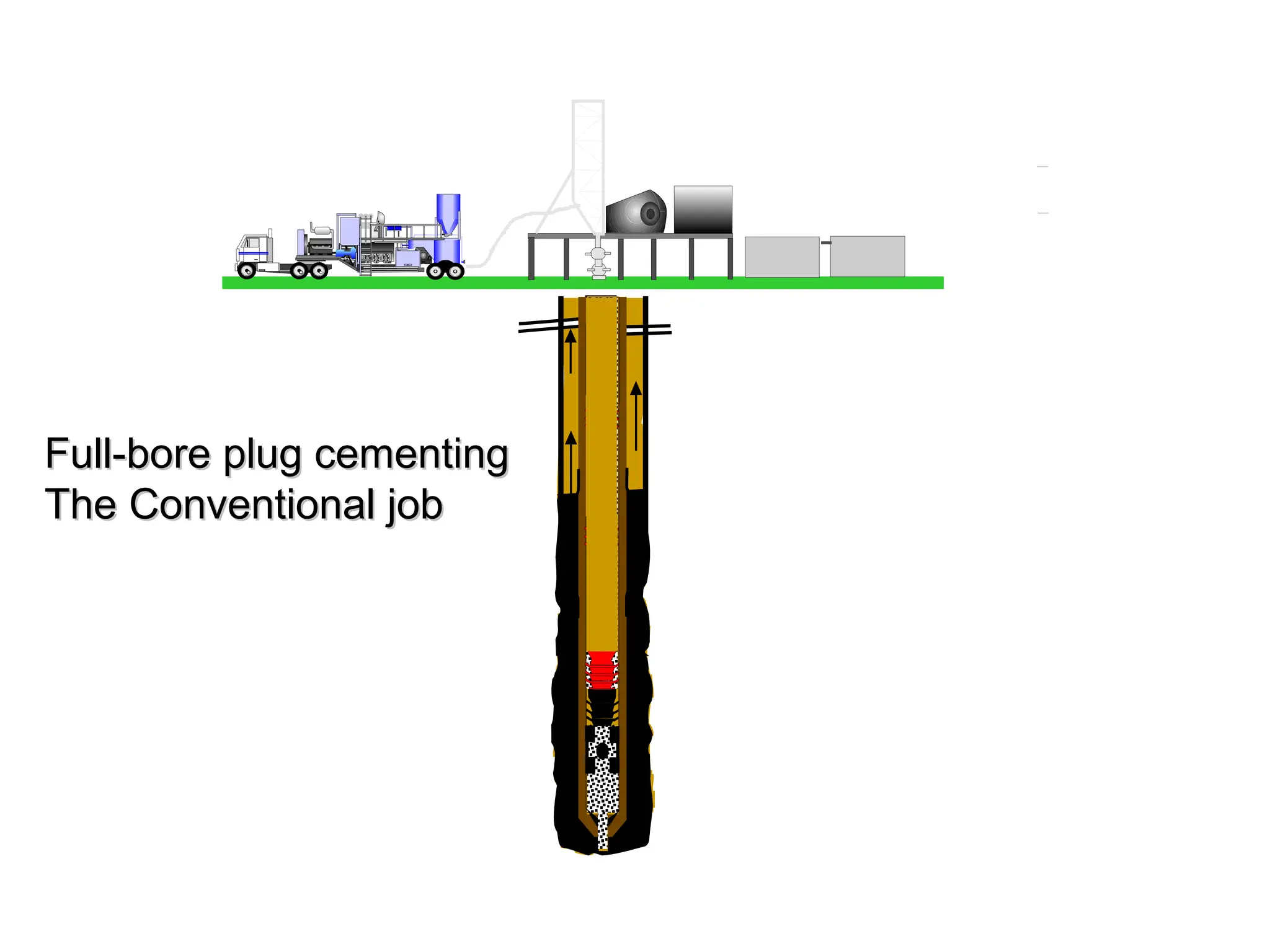
Full-bore plug cementing
The Conventional job
Directional Drilling - Why?
• On Land:
– Surface constraint due to
land owner, natural
event, etc.
– Relief well in blowout
situation
– Horizontal
• Offshore:
– Save Cost on Platform
– Relief well in blowout situation
– Horizontal
– Extended Reach
– Multi-Lateral
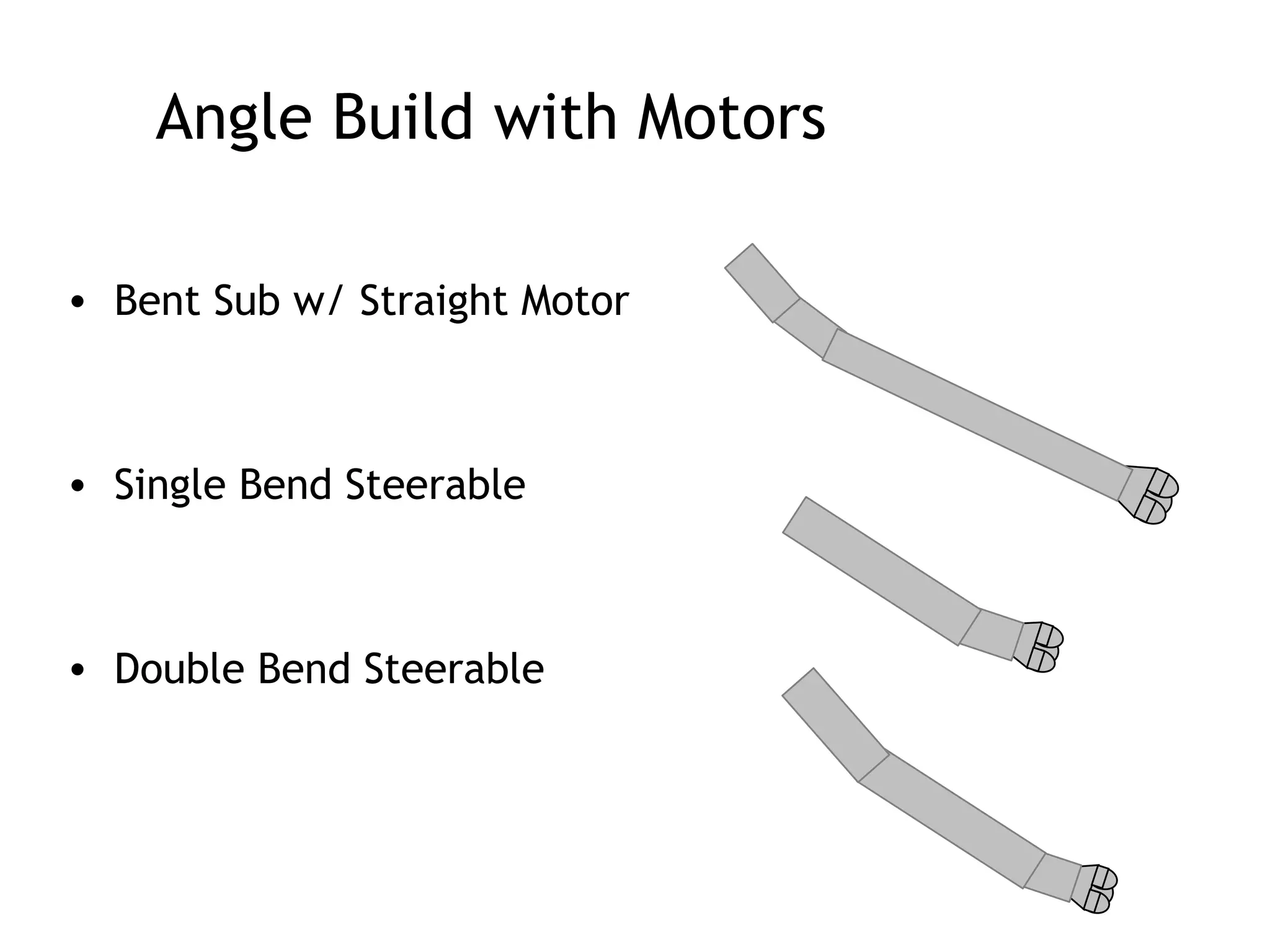
Angle Build with Motors
• Bent Sub w/ Straight Motor
• Single Bend Steerable
• Double Bend Steerable
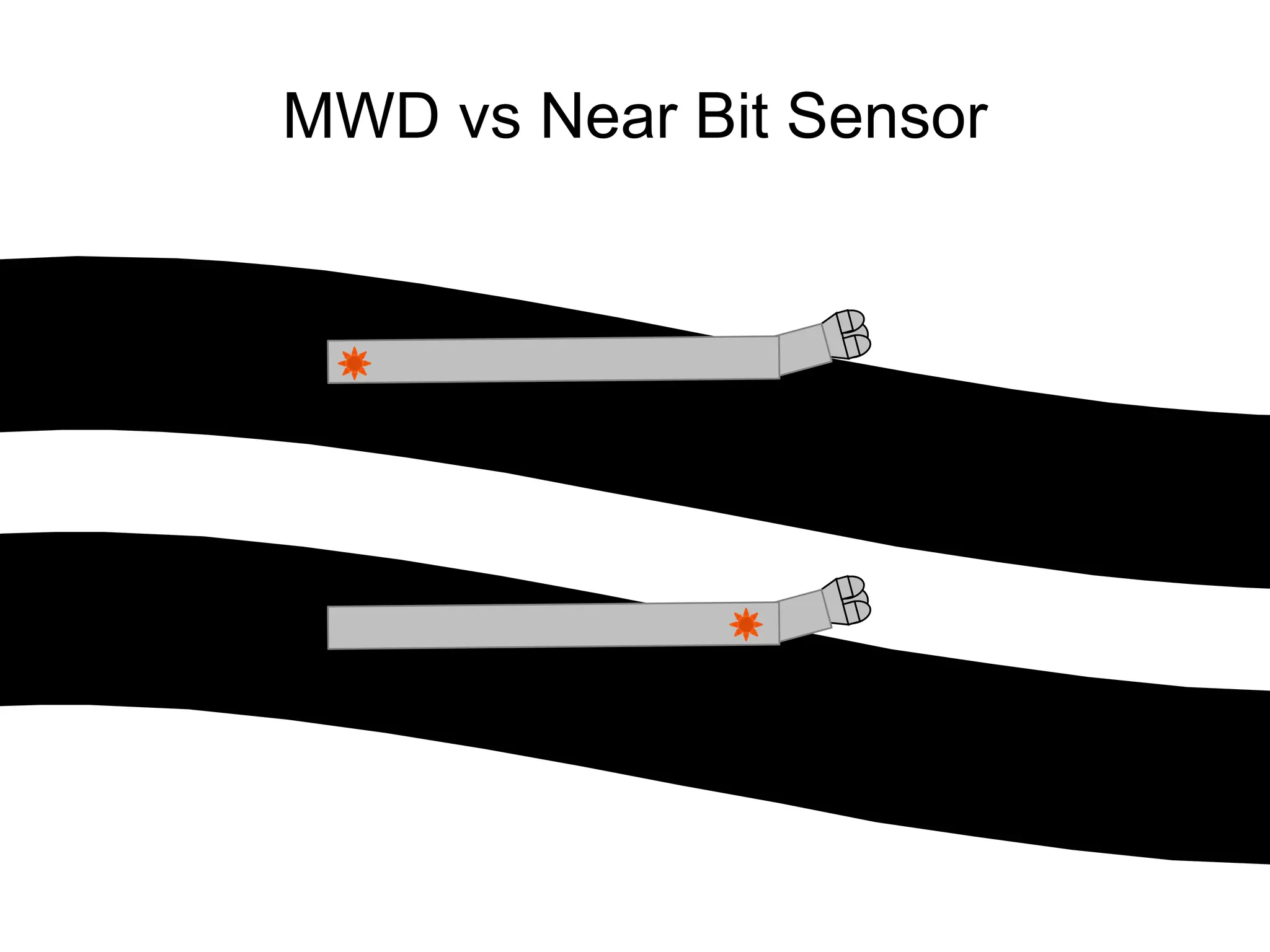
MWD vs Near Bit Sensor
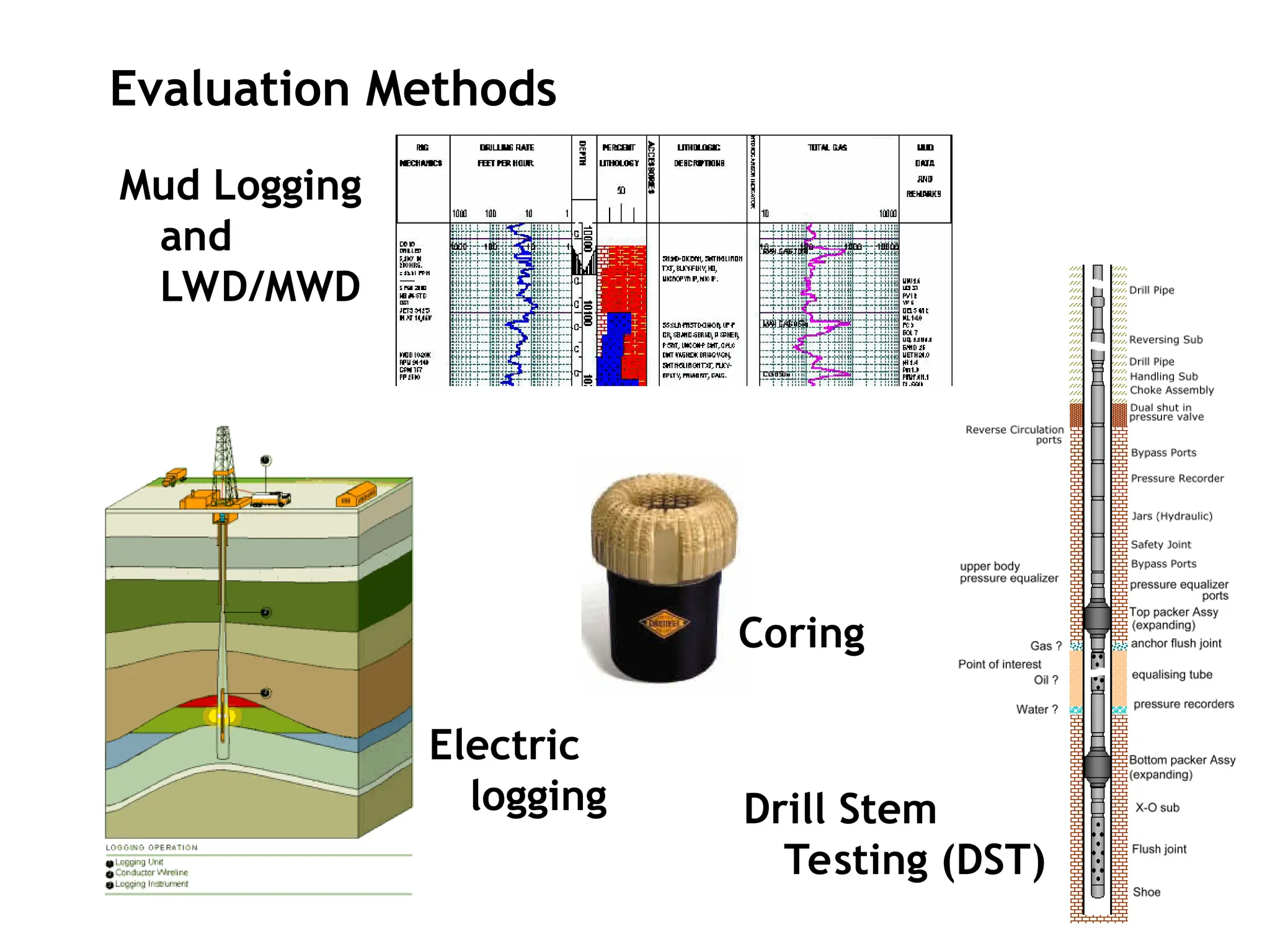
Evaluation Methods
Mud Logging
and
LWD/MWD
Electric
logging
Coring
Drill Stem
Testing (DST)
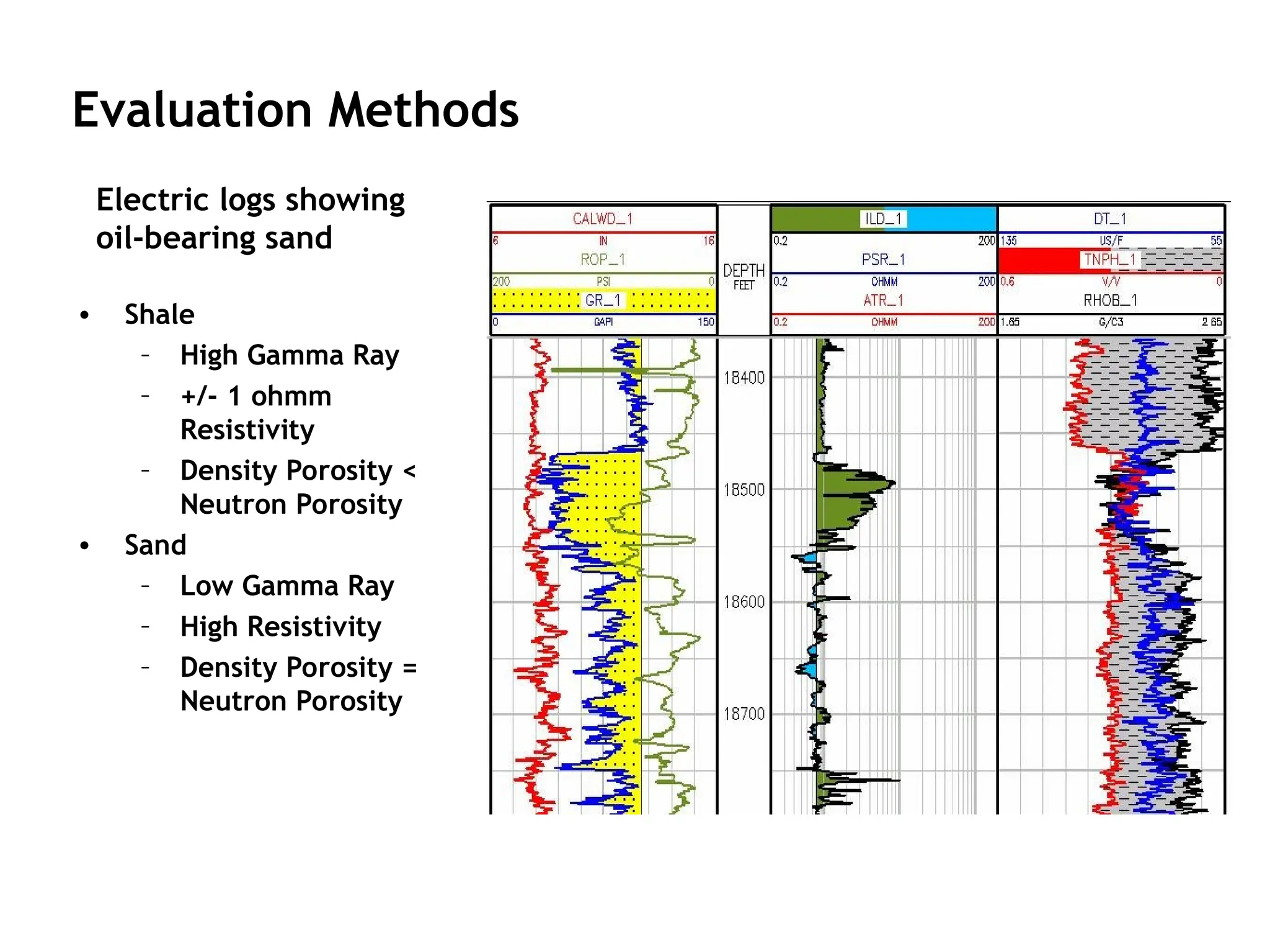
• Shale
– High Gamma Ray
– +/- 1 ohmm
Resistivity
– Density Porosity <
Neutron Porosity
• Sand
– Low Gamma Ray
– High Resistivity
– Density Porosity =
Neutron Porosity
Evaluation Methods
Electric logs showing
oil-bearing sand
Basic Completion
Equipment Terminology
Tubing hanger
Tubing spool
Surface Controlled
Subsurface Safety
Valve (SCSSV)
Gas lift valves
Production casing
Production packer
No Go Nipple
Re-entry guide
Blast joint
Seal bore extension
Seal assembly
Production tubing
Flow coupling
Landing Nipple
Circulating sleeve
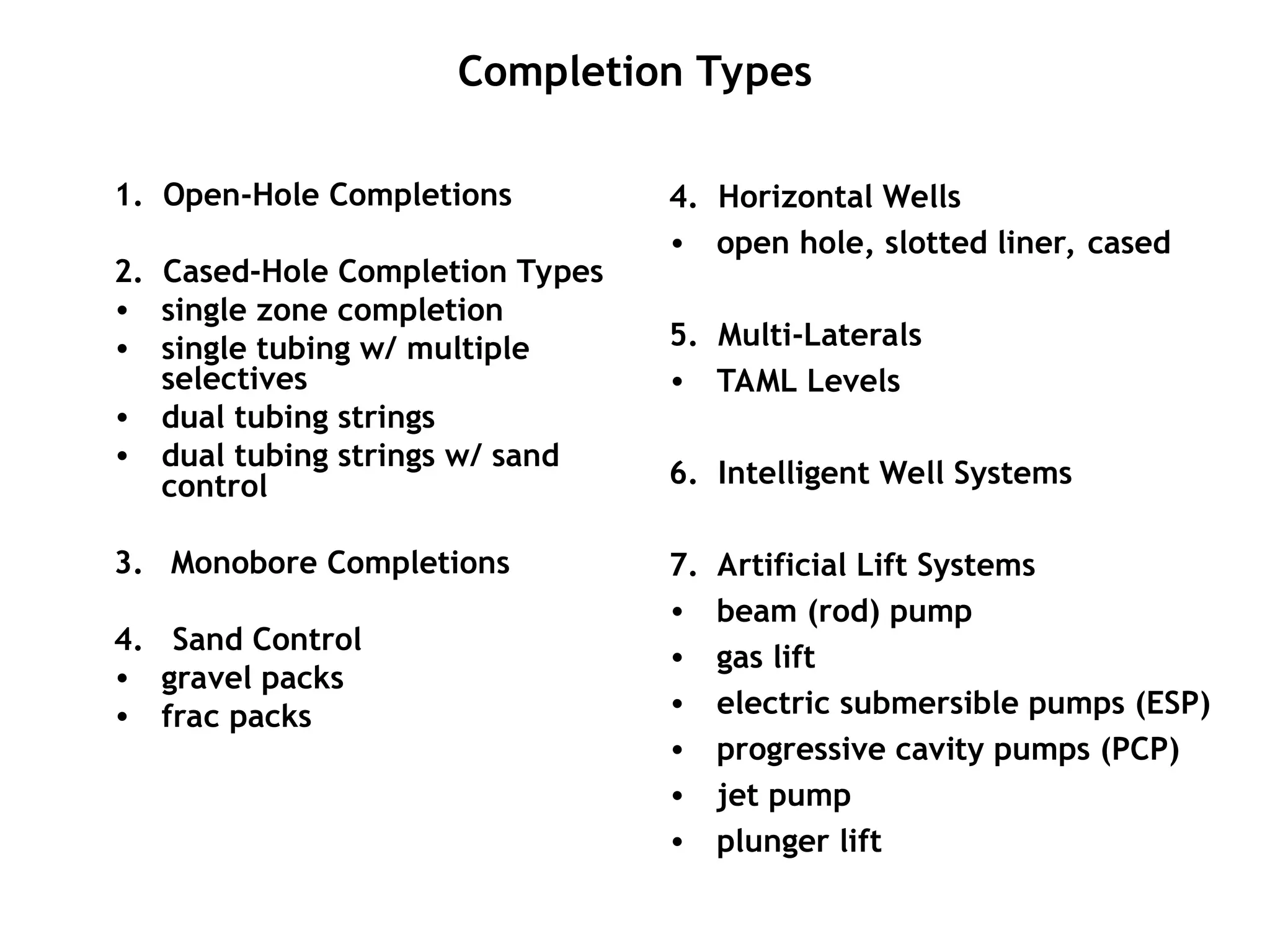
Completion Types
1. Open-Hole Completions
2. Cased-Hole Completion Types
• single zone completion
• single tubing w/ multiple
selectives
• dual tubing strings
• dual tubing strings w/ sand
control
3. Monobore Completions
4. Sand Control
• gravel packs
• frac packs
4. Horizontal Wells
• open hole, slotted liner, cased
5. Multi-Laterals
• TAML Levels
6. Intelligent Well Systems
7. Artificial Lift Systems
• beam (rod) pump
• gas lift
• electric submersible pumps (ESP)
• progressive cavity pumps (PCP)
• jet pump
• plunger lift
Hydraulic Fracturing
Damaged
Area
Damaged
Area
Borehole
Gravel Pack
Horizontal Wells
A “horizontal well” or high angle well describes a well drilled
at an angle greater than 70º relative to vertical.
• Can connect natural fractures in carbonates.
• Prevent water/gas coning by reducing pressure draw down.
• Improves sweep efficiency through infill drilling, horizontal
injection for waterflood or EOR.
• Can enhance property value by increasing recovery in tight
gas reservoirs or thin sands or low permeability reservoirs.
• Location constraints limiting numerous wells.
Horizontal Open-Hole Gravel Pack
Packer
Sand
Control Screen
Sized gravel
Casing Shoe
Unconsolidated Sandstone Reservoir
Underlying Water
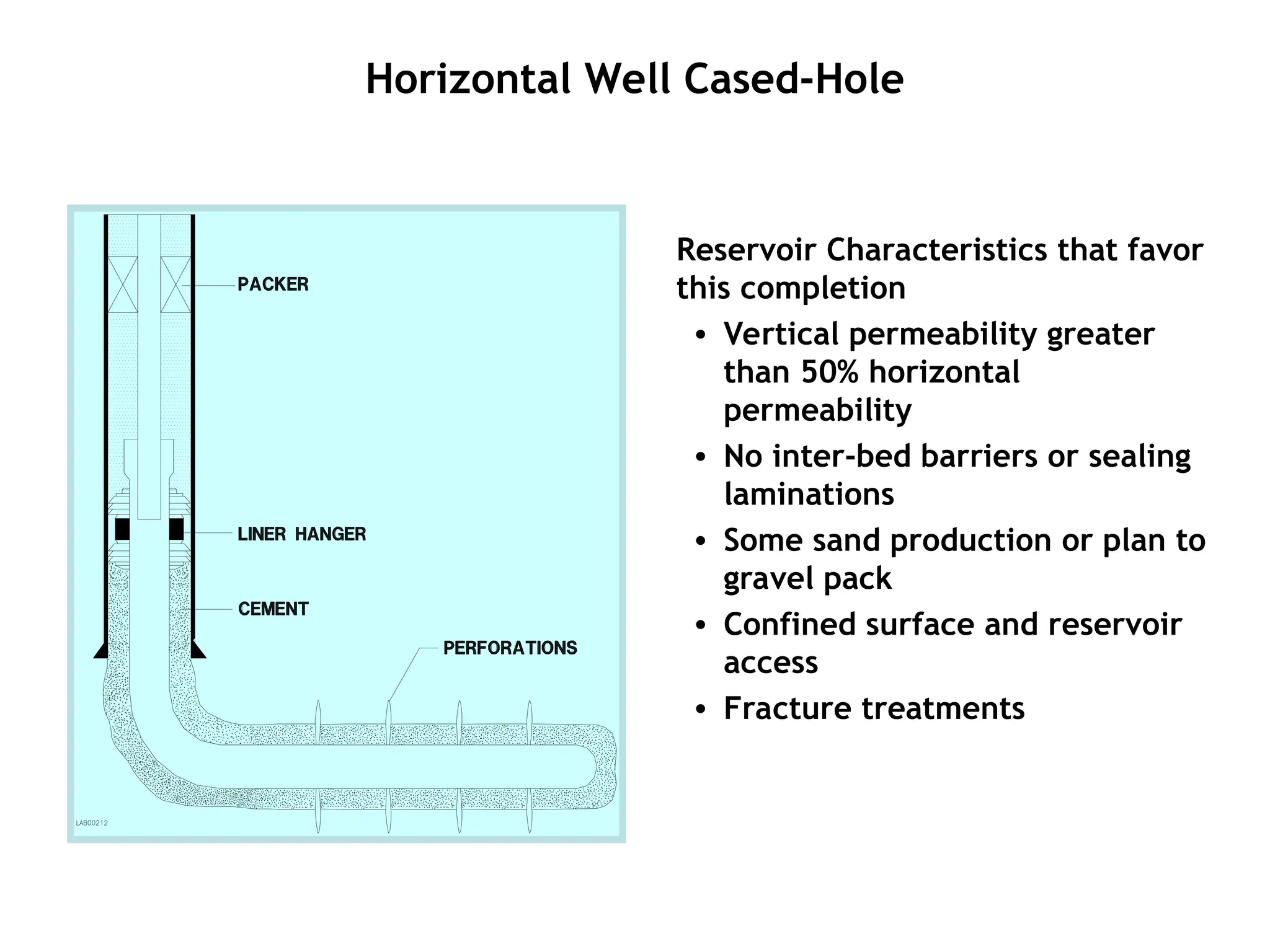
Horizontal Well Cased-Hole
Reservoir Characteristics that favor
this completion
• Vertical permeability greater
than 50% horizontal
permeability
• No inter-bed barriers or sealing
laminations
• Some sand production or plan to
gravel pack
• Confined surface and reservoir
access
• Fracture treatments
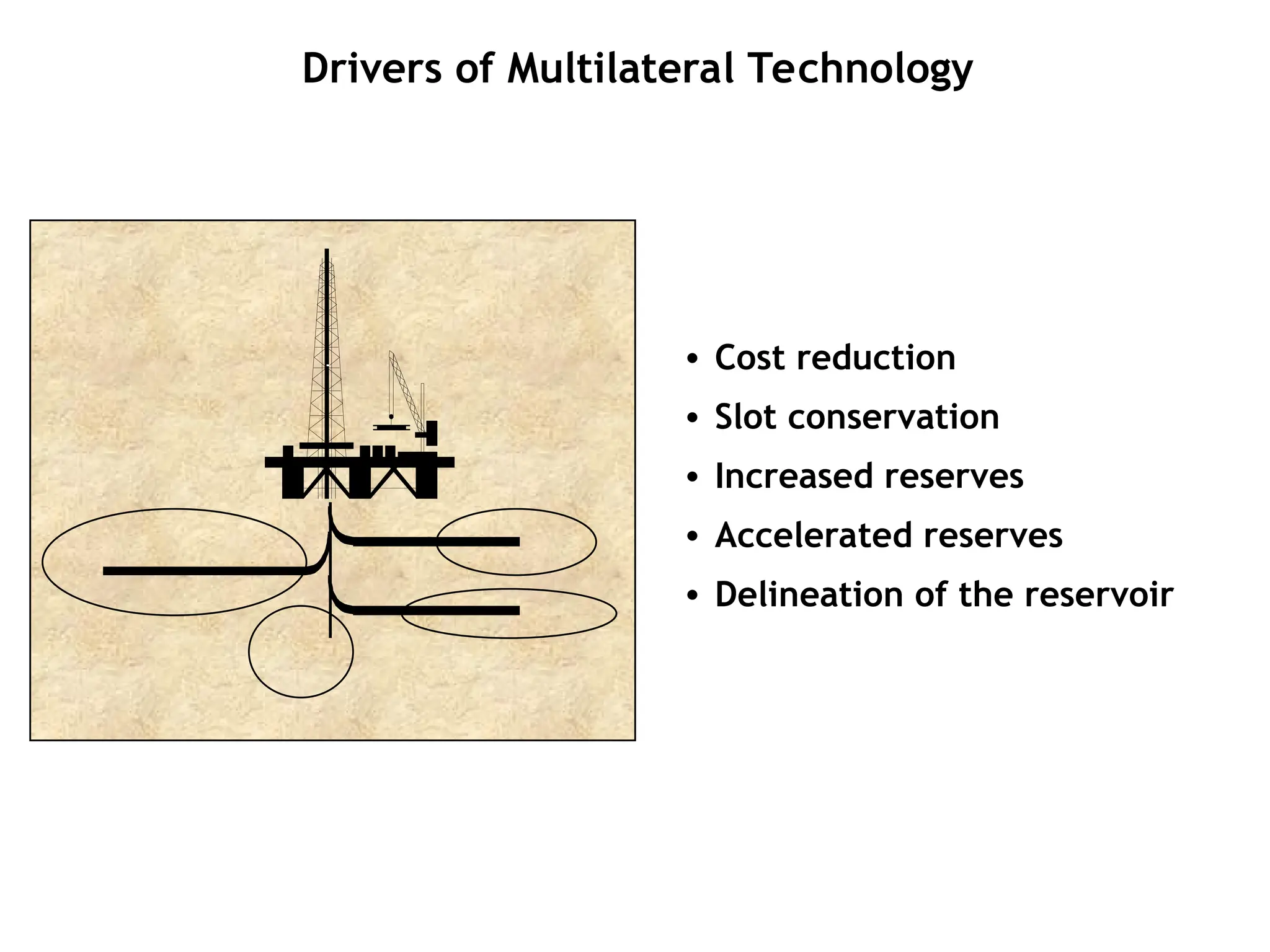
Drivers of Multilateral Technology
• Cost reduction
• Slot conservation
• Increased reserves
• Accelerated reserves
• Delineation of the reservoir
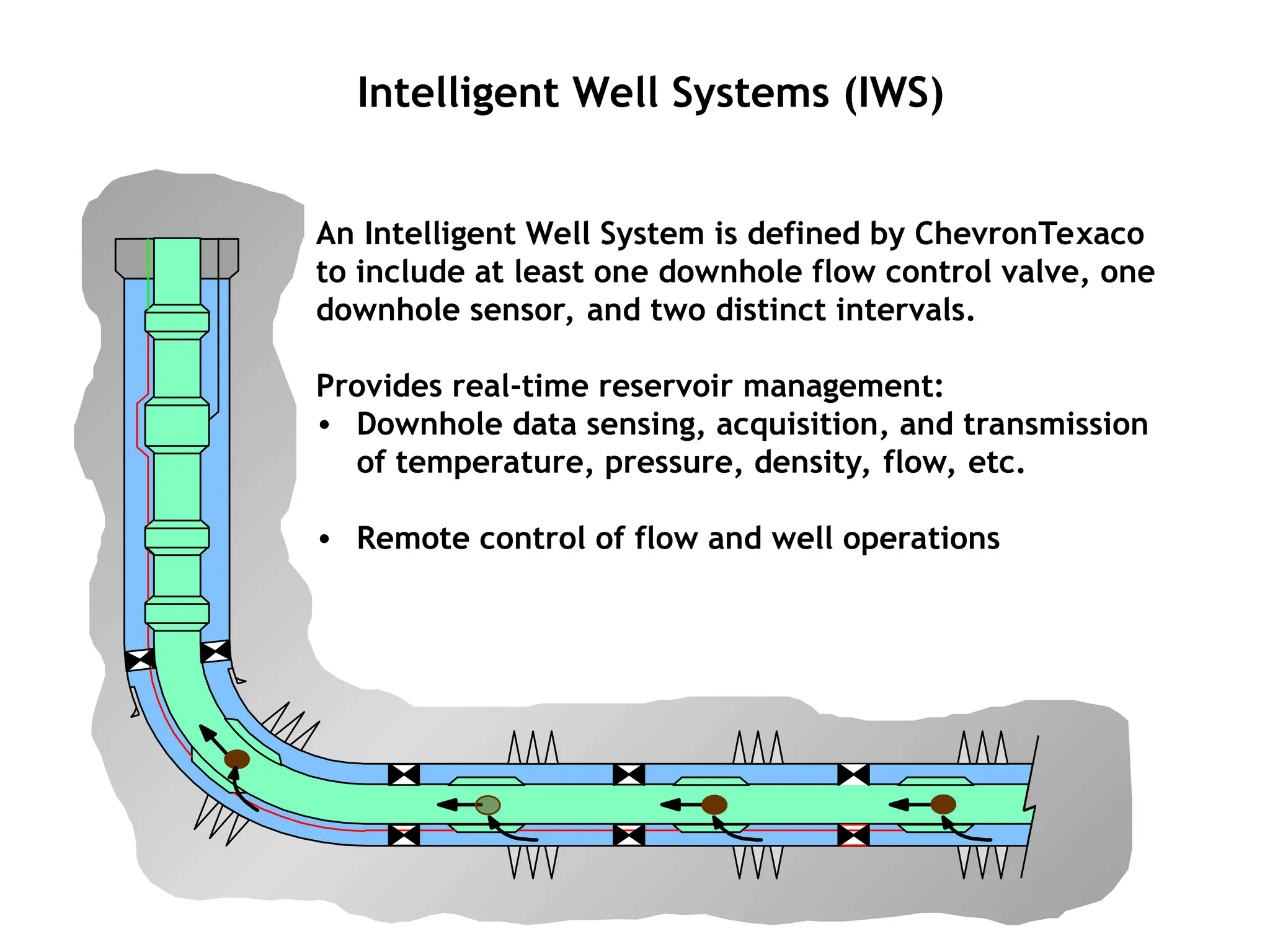
Intelligent Well Systems (IWS)
An Intelligent Well System is defined by ChevronTexaco
to include at least one downhole flow control valve, one
downhole sensor, and two distinct intervals.
Provides real-time reservoir management:
• Downhole data sensing, acquisition, and transmission
of temperature, pressure, density, flow, etc.
• Remote control of flow and well operations
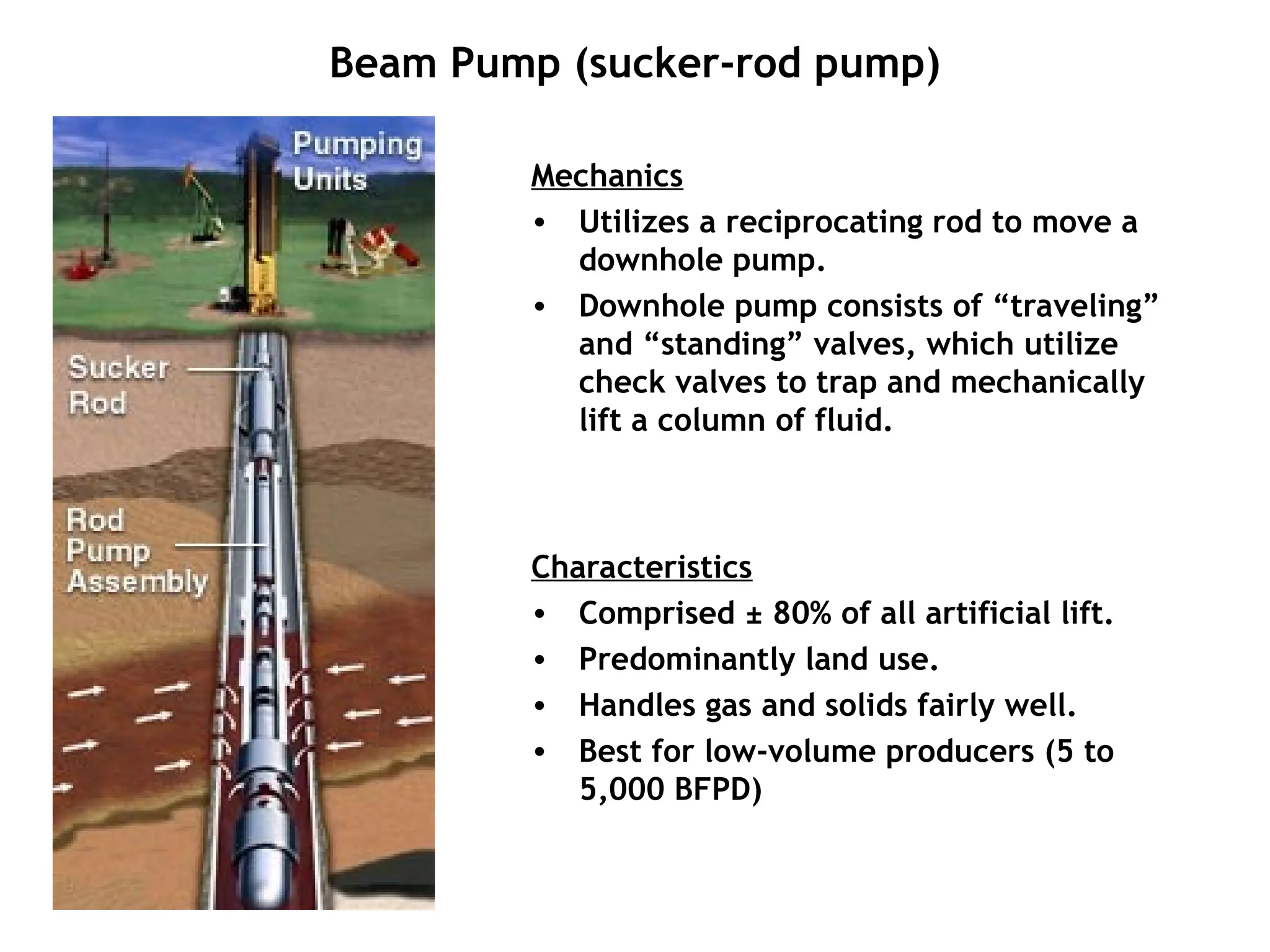
Beam Pump (sucker-rod pump)
Mechanics
• Utilizes a reciprocating rod to move a
downhole pump.
• Downhole pump consists of “traveling”
and “standing” valves, which utilize
check valves to trap and mechanically
lift a column of fluid.
Characteristics
• Comprised ± 80% of all artificial lift.
• Predominantly land use.
• Handles gas and solids fairly well.
• Best for low-volume producers (5 to
5,000 BFPD)
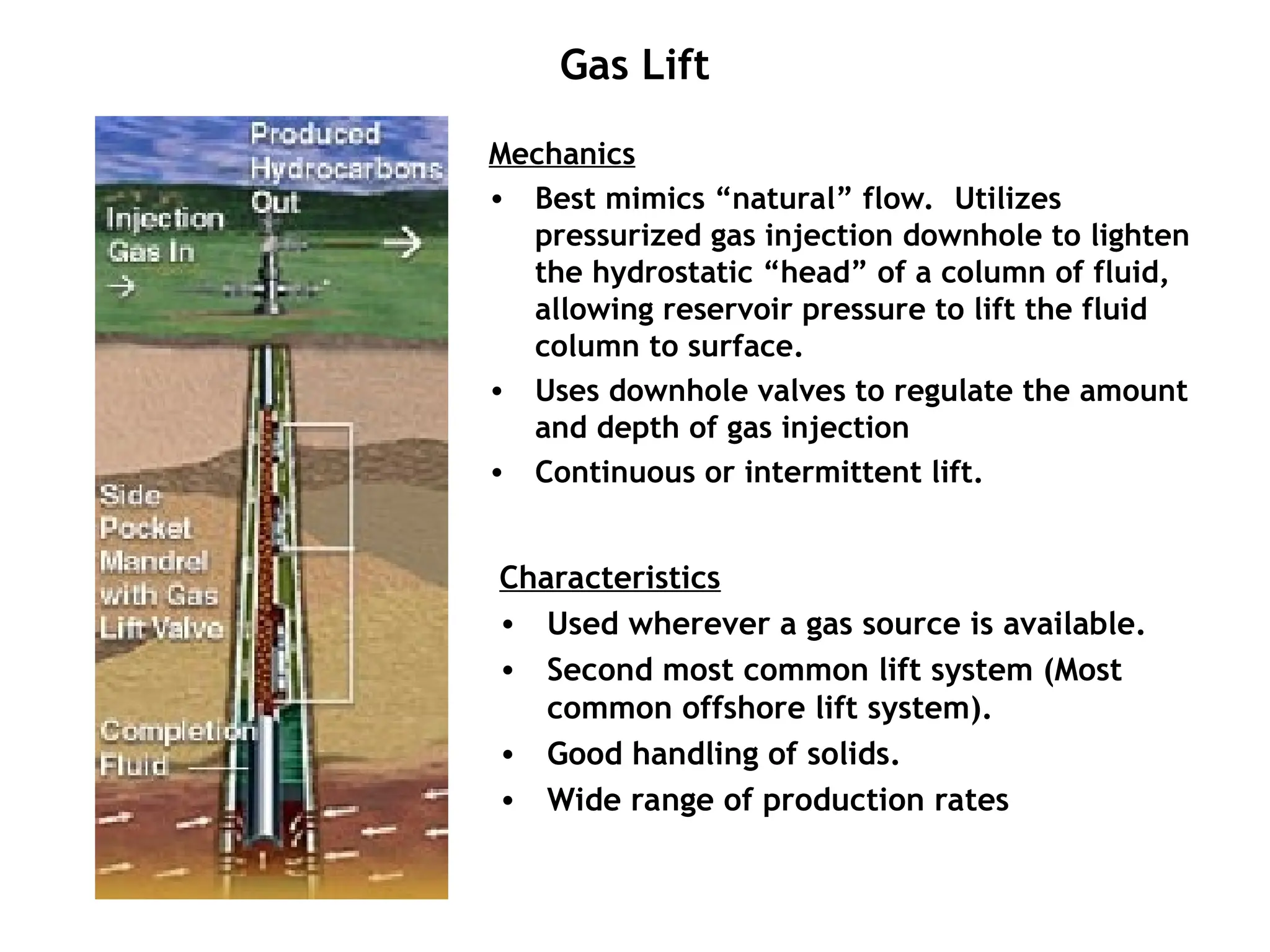
Gas Lift
Mechanics
• Best mimics “natural” flow. Utilizes
pressurized gas injection downhole to lighten
the hydrostatic “head” of a column of fluid,
allowing reservoir pressure to lift the fluid
column to surface.
• Uses downhole valves to regulate the amount
and depth of gas injection
• Continuous or intermittent lift.
Characteristics
• Used wherever a gas source is available.
• Second most common lift system (Most
common offshore lift system).
• Good handling of solids.
• Wide range of production rates
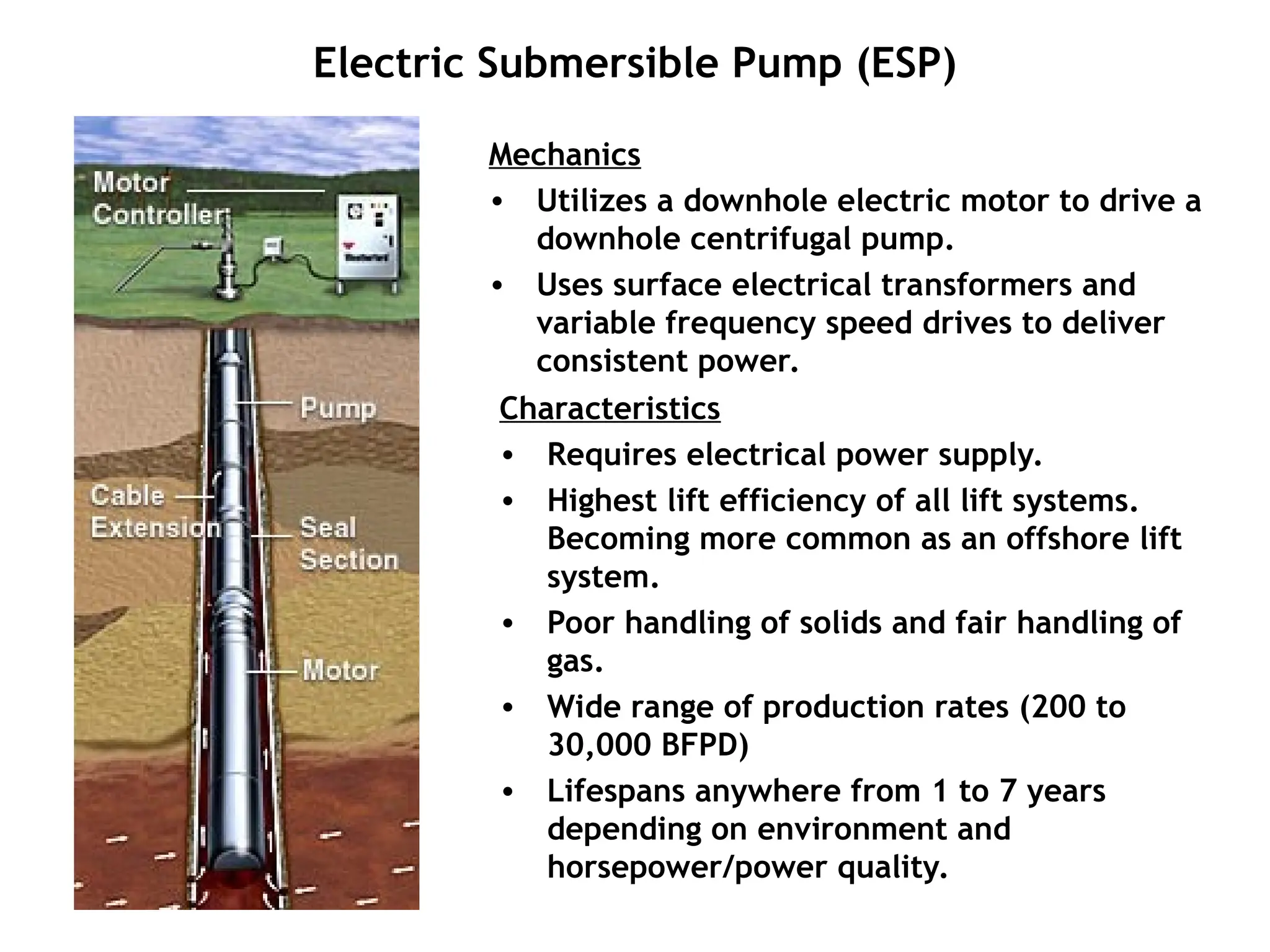
Electric Submersible Pump (ESP)
Mechanics
• Utilizes a downhole electric motor to drive a
downhole centrifugal pump.
• Uses surface electrical transformers and
variable frequency speed drives to deliver
consistent power.
Characteristics
• Requires electrical power supply.
• Highest lift efficiency of all lift systems.
Becoming more common as an offshore lift
system.
• Poor handling of solids and fair handling of
gas.
• Wide range of production rates (200 to
30,000 BFPD)
• Lifespans anywhere from 1 to 7 years
depending on environment and
horsepower/power quality.
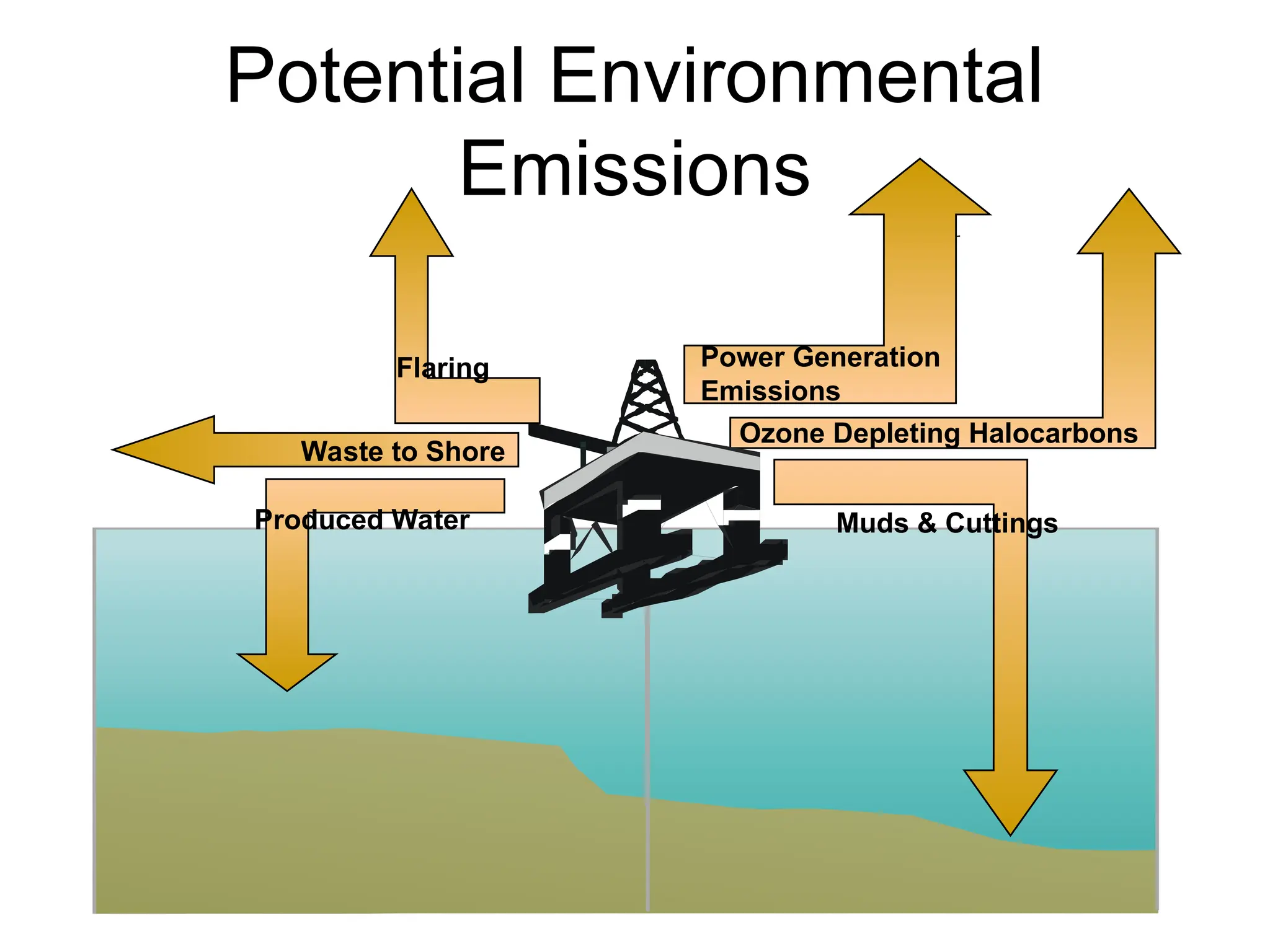
Potential Environmental
Emissions
Ozone Depleting Halocarbons
Flaring
Waste to Shore
Muds & Cuttings
Produced Water
Power Generation
Emissions
Mark Webster
Environmental Team Leader
GoM Deepwater Production BU
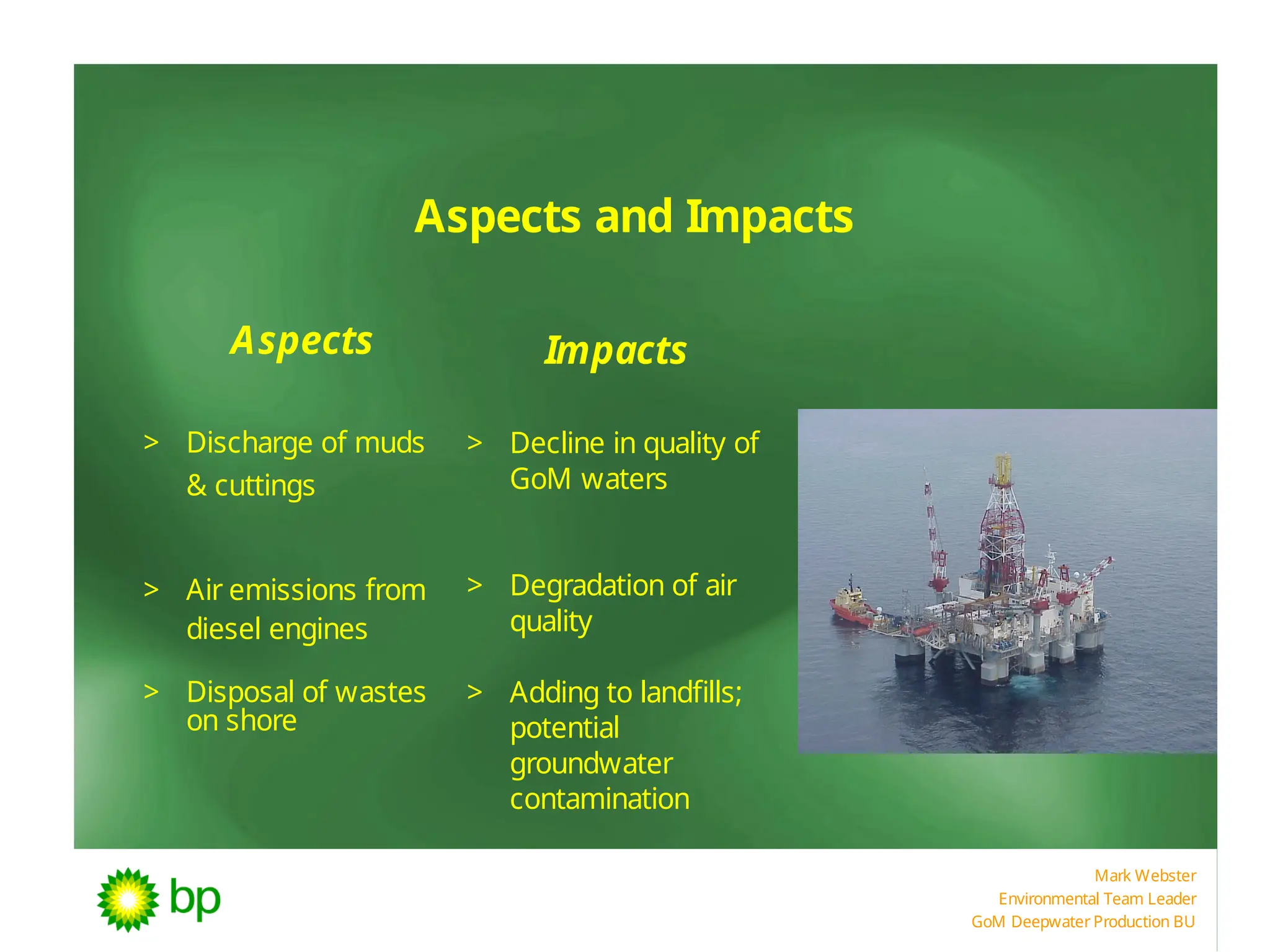
Aspects and Impacts
Aspects Impacts
> Discharge of muds
& cuttings
> Air emissions from
diesel engines
> Disposal of wastes
on shore
> Decline in quality of
GoM waters
> Degradation of air
quality
> Adding to landfills;
potential
groundwater
contamination
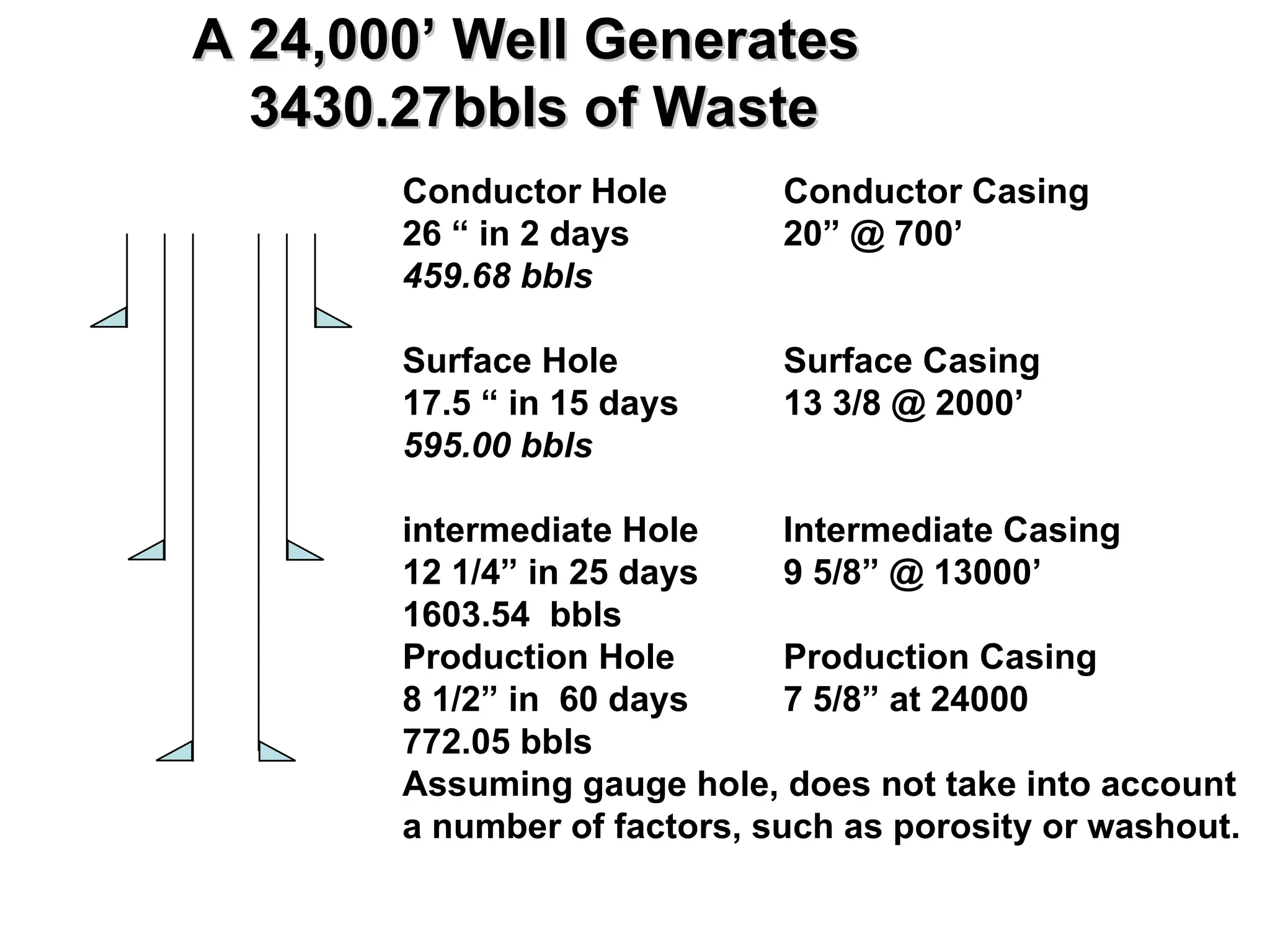
A 24,000’ Well Generates
3430.27bbls of Waste
Conductor Hole Conductor Casing
26 “ in 2 days 20” @ 700’
459.68 bbls
Surface Hole Surface Casing
17.5 “ in 15 days 13 3/8 @ 2000’
595.00 bbls
intermediate Hole Intermediate Casing
12 1/4” in 25 days 9 5/8” @ 13000’
1603.54 bbls
Production Hole Production Casing
8 1/2” in 60 days 7 5/8” at 24000
772.05 bbls
Assuming gauge hole, does not take into account
a number of factors, such as porosity or washout.
Disposal and Treatment
Options
• TREATMENT
– S/S
– Thermal
– Presses/ Washes
– Ultrasonic
Technology
– Dryers
– Separation
techniques
• DISPOSAL?????
– Discharge
– Injection
– Evaporation
– Burial
– Landfarming
– Landspreading
Drilling Waste Concerns
• Offshore
– Oil
– Toxicity
• Onshore
– Salinity
– Oil
– Heavy Metals
WELL PLANNING:
A MULTI-DISCIPLINARY
APPROACH
Geophysical Data
Gravity, seismic, and petrophysical log data are combined
to make 3D Earth Models
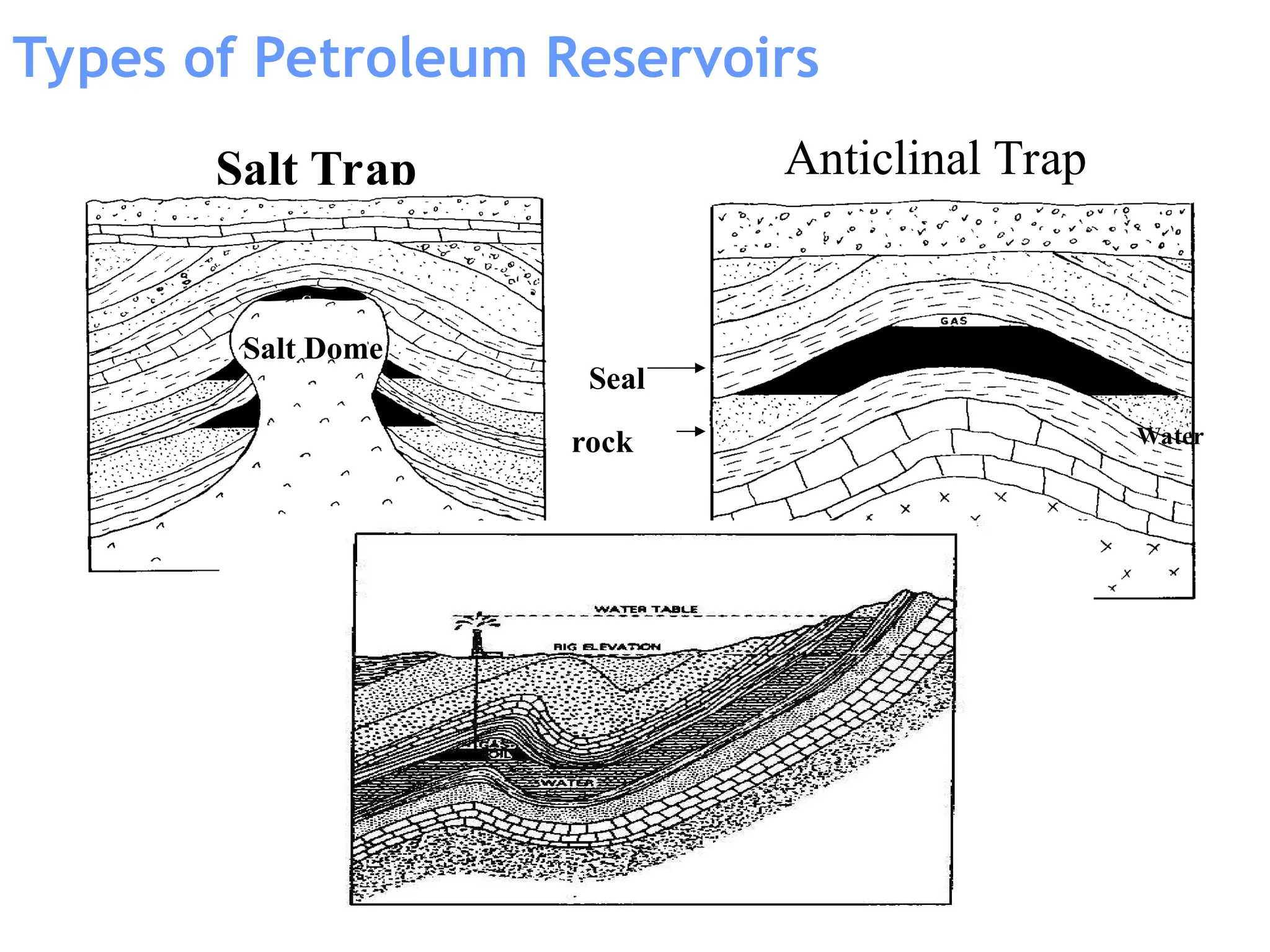
Anticlinal Trap
rock
Seal
Oil
Water
Types of Petroleum Reservoirs
Salt Trap
Salt Dome
Cap
Rock?
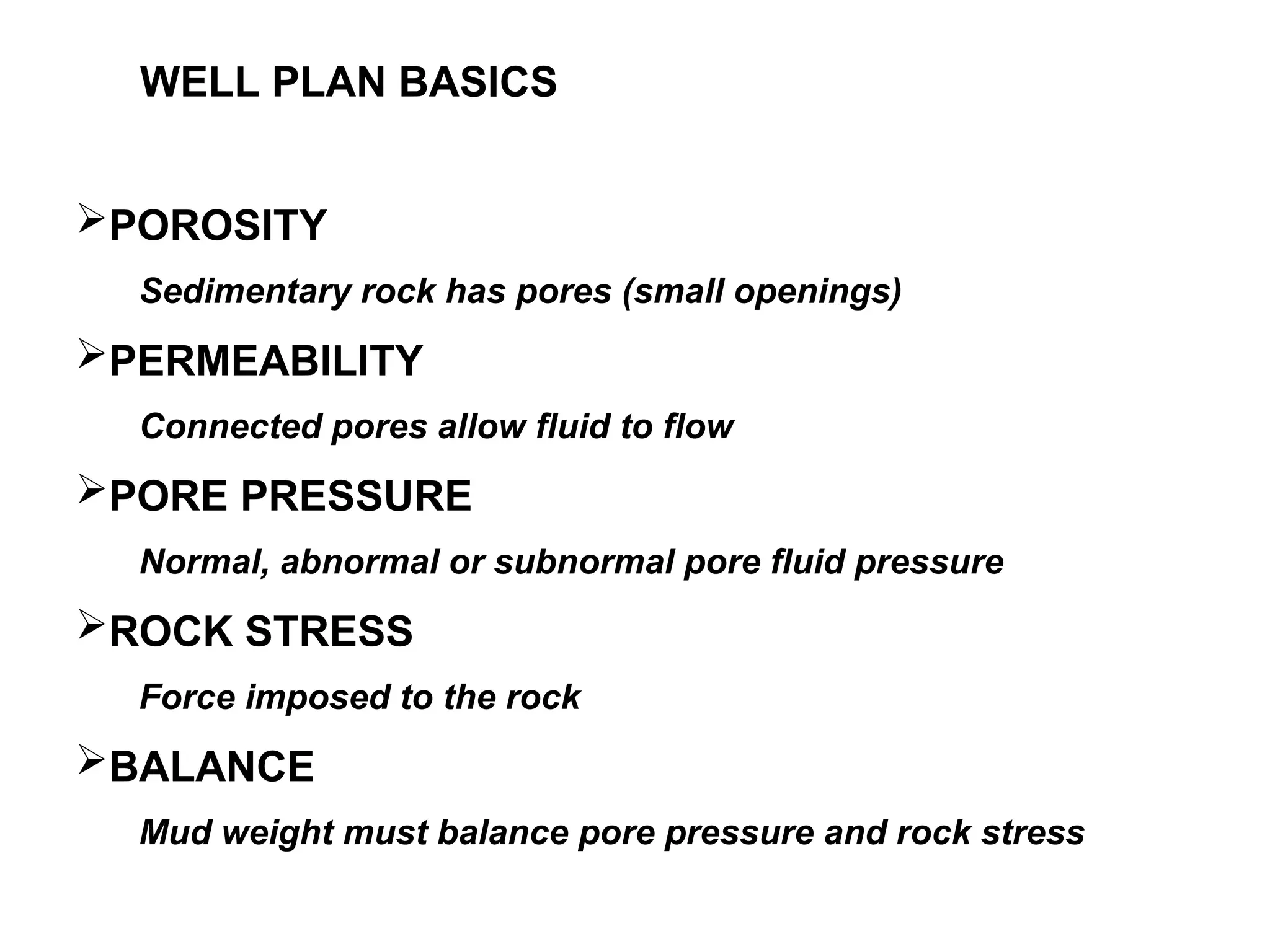
POROSITY
Sedimentary rock has pores (small openings)
PERMEABILITY
Connected pores allow fluid to flow
PORE PRESSURE
Normal, abnormal or subnormal pore fluid pressure
ROCK STRESS
Force imposed to the rock
BALANCE
Mud weight must balance pore pressure and rock stress
WELL PLAN BASICS
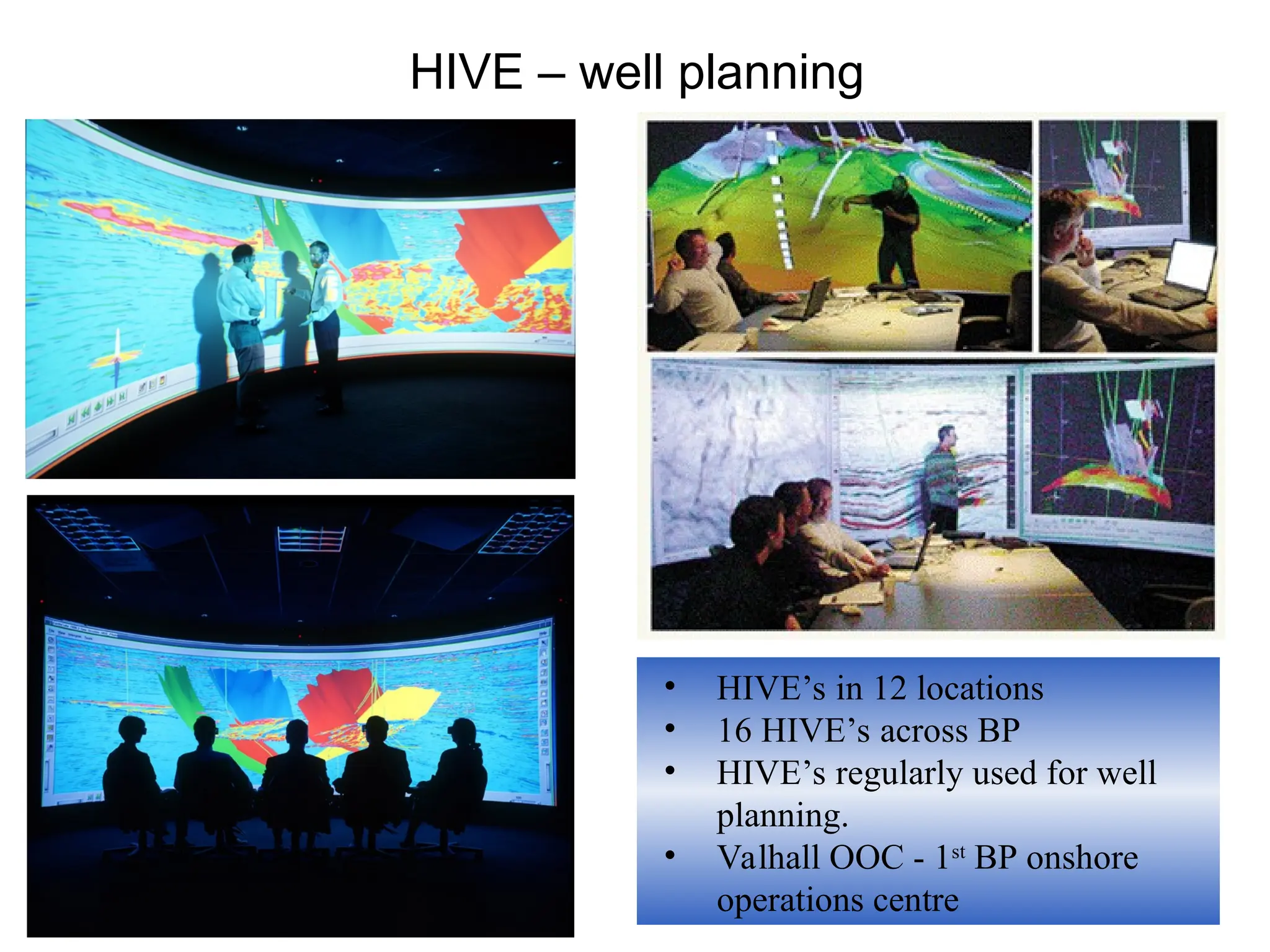
HIVE – well planning
• HIVE’s in 12 locations
• 16 HIVE’s across BP
• HIVE’s regularly used for well
planning.
• Valhall OOC - 1st
BP onshore
operations centre
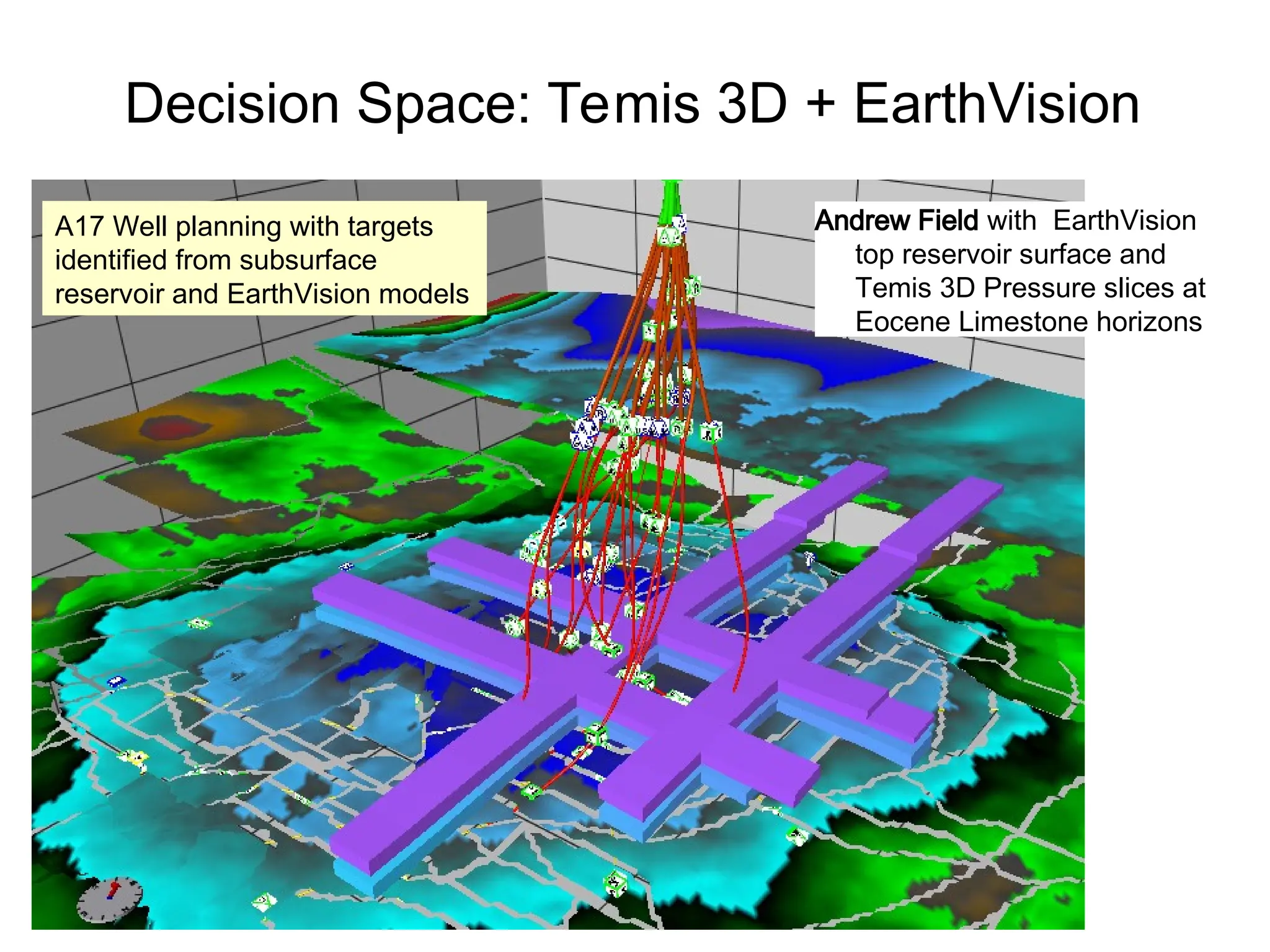
Decision Space: Temis 3D + EarthVision
Andrew Field with EarthVision
top reservoir surface and
Temis 3D Pressure slices at
Eocene Limestone horizons
A17 Well planning with targets
identified from subsurface
reservoir and EarthVision models
Top Reservoir
Rev H:
A17
A09 : comparable trajectory
to Rev H A17
Comparison of Andrew A09 to
Planned Rev H (A17) Trajectory
VIEW NORTH
Wellpath Rev H
Top Reservoir
Andrew Platform
VIEW SOUTH
23”
16”
12 1/4”
Hole Sections Rev H (A17) Trajectory
Grouped drilling
NPT
Grouped drilling
NPT
23/32”
Grouped drilling
NPT
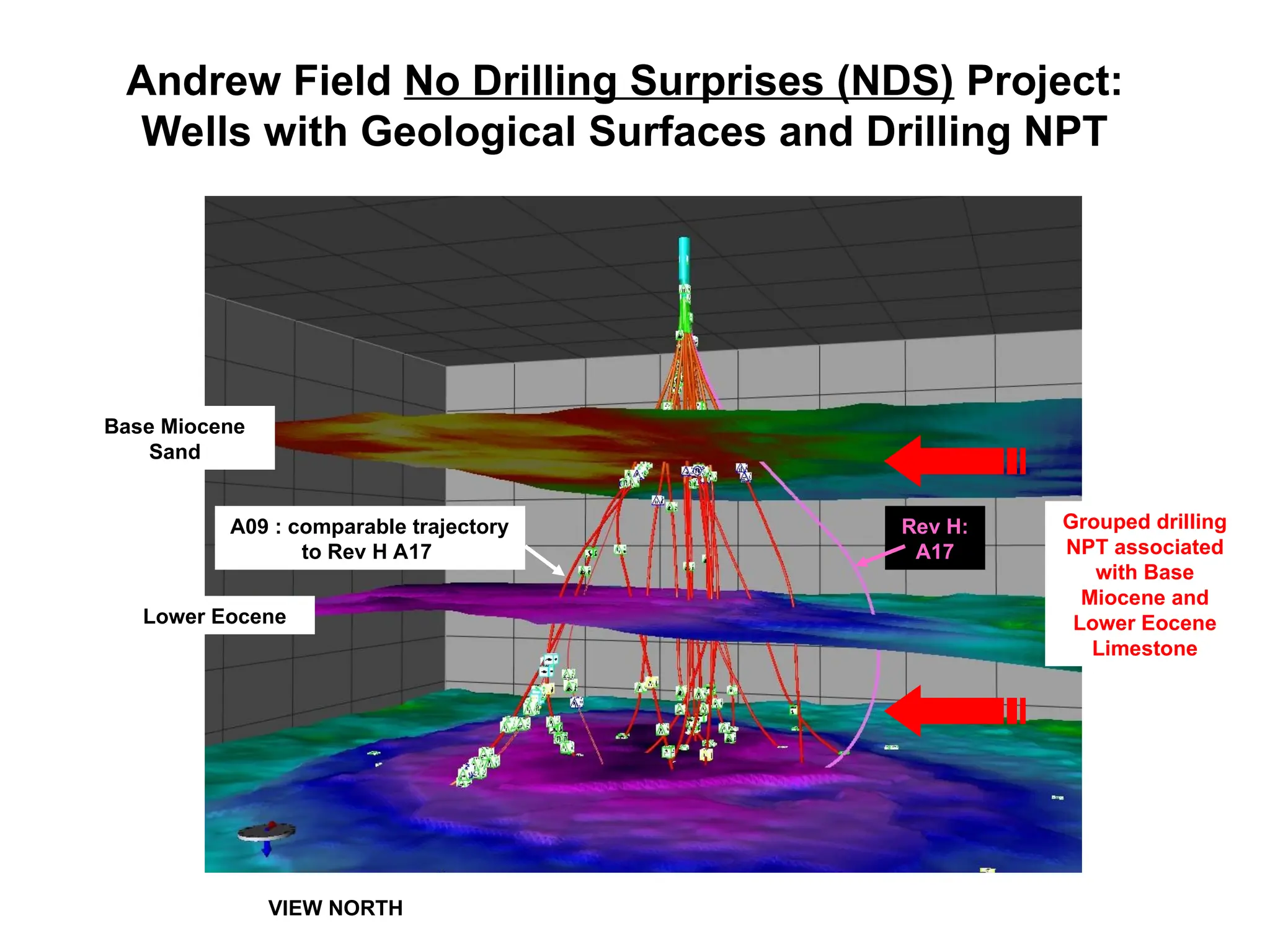
VIEW NORTH
Base Miocene
Sand
Lower Eocene
Grouped drilling
NPT associated
with Base
Miocene and
Lower Eocene
Limestone
Rev H:
A17
Andrew Field No Drilling Surprises (NDS) Project:
Wells with Geological Surfaces and Drilling NPT
A09 : comparable trajectory
to Rev H A17
VIEW NORTH
Base Miocene Sand
Lower Eocene
12 1/4”
A09
NDS Lower 12 ¼”section :
Hole Cleaning, Tight Hole, Stuck
Pipe, Gas in Limestones,
Mudstones washing out.
Andrew NDS : Lower 12 ¼” Section
Drilling Cost Estimation
• Deterministic - Single figure
• Probabilistic - Considers risk and uncertainty using
probabilities (objective, empirical, subjective) - Decision Trees,
Monte Carlo - Cost estimates are given with associated
probabilities, usually P10, P50 and P90
Both methods require base case estimation by hole intervals
Plot of Cost vs. Days – for tracking actual vs. estimated cost
Cost per Foot of offset wells for benchmarking and cost estimating
C o u n t r y : P r o j e c t :
D e l i v e r a b l e : C V P S t a g e :
C o s t E s t i m a t e :
B e s t i n C l a s s P e r f o r m a n c e :
#
S a n c t i o n A m o u n t : S a n c t i o n % i l e :
P r o m i s e ( P 1 0 - P 9 0 ) :
B e s t i n C l a s s P e r f o r m a n c e :
R i g r a t e 0 . 6 1
P r o j e c t S c o p e A s s u m p t i o n s : D r i l l i n g l e a r n i n g r a t e - 0 . 5 9
o S t u c k p i p e f r e q u e n c y 0 . 5 3
o L o s t c i r c u l a t i o n f r e q . 0 . 4 9
o W a i t i n g o n w e a t h e r 0 . 4 1
1 2 - 1 / 4 " h o l e R O P - 0 . 2 9
K e y R i s k A s s u m p t i o n s : 8 - 1 / 2 " h o l e R O P - 0 . 2 1
o A v g . s t u c k p i p e d u r a t i o n 0 . 1 8
o 1 7 - 1 / 2 " R O P - 0 . 1 5
o C o m p l e t i o n l e a r n i n g r a t e - 0 . 1 3
o
M M ( ± )
m i l l i o n
M e a n C o s t : $ 3 8 1
P r o j e c t D e t a i l s
I n p u t D a t a
M u l t i - w e l l e s t i m a t e w i t h l e a r n i n g . I n i t i a l p e r f o r m a n c e b a s e d o n f o u r p r e v i o u s E & A w e l l s . P l a t e a u p e r f o r m a n c e
b a s e d o n m u l t i p l e o f T e c h n i c a l L i m i t .
O r s i n o P h a s e 2 D e v e l o p m e n t
D e f i n e
1 2 o i l p r o d u c e r s + 2 w a t e r i n j e c t o r s
A v e r a g e o f t o p 1 0 % o f a l l I l l y r i a p l a t f o r m w e l l s , 1 9 9 7 - 2 0 0 0 , 2 0 0 1 R u s h m o r e d a t a .
T i m e & C o s t S u m m a r y
2 5 %
$ 4 7 6
$ 2 9 0
P 5 0
m i l l i o n
$ 3 7 9
M M -
W e l l s t e a m i n p l a c e 3 m t h s b e f o r e s p u d
M a j o r N P T r i s k s a r e p o s t - m i t i g a t i o n
F i r s t w e l l s p u d d e d i n 2 n d Q t r
d a y s (
1 2 6 5 P 2 7
K e y P e r f o r m a n c e I n d i c a t o r s P 5 0 P 9 0
)
4 6
5 4
4 8
D a y s / 1 0 K
2 2
3 6
2 7
D a y s / C o m p l e t i o n
R i g r a t e s p e r 2 0 0 1 a c t i v i t y l e v e l s
1 4 w e l l s ( 1 2 p r o d . + 2 i n j . )
2 g e o l . S i d e t r a c k s , 1 r e s p u d
" E x p l o r e r " c l a s s d r i l l i n g r i g
I l l y r i a
D r i l l i n g U n c e r t a i n t y S t a t e m e n t - S u m m a r y
A s s u m p t i o n s & R i s k s
B e s t i n C l a s s
P 1 0
4 4
2 1
- 1 - 0 . 5 0 0 . 5 1
Frequency C
hart
Cert ainty is 79. 74% f rom 1,200. 83 t o 1, 480. 69 days
.000
.006
.013
.019
.026
0
64
128
192
256
1, 000. 00 1, 175. 00 1, 350. 00 1, 525. 00 1,700. 00
10,000 Trials 30 Outliers
Forecast: Total Days
Frequency C
hart
Cert aint y is 80.09% from 290. 00 to 476. 67 million dollars
.000
.008
.015
.023
.030
0
75. 5
151
226. 5
302
150. 00 275. 00 400.00 525. 00 650. 00
10,000 Trials 10 Outliers
Forecast: Total C
ost
B i C
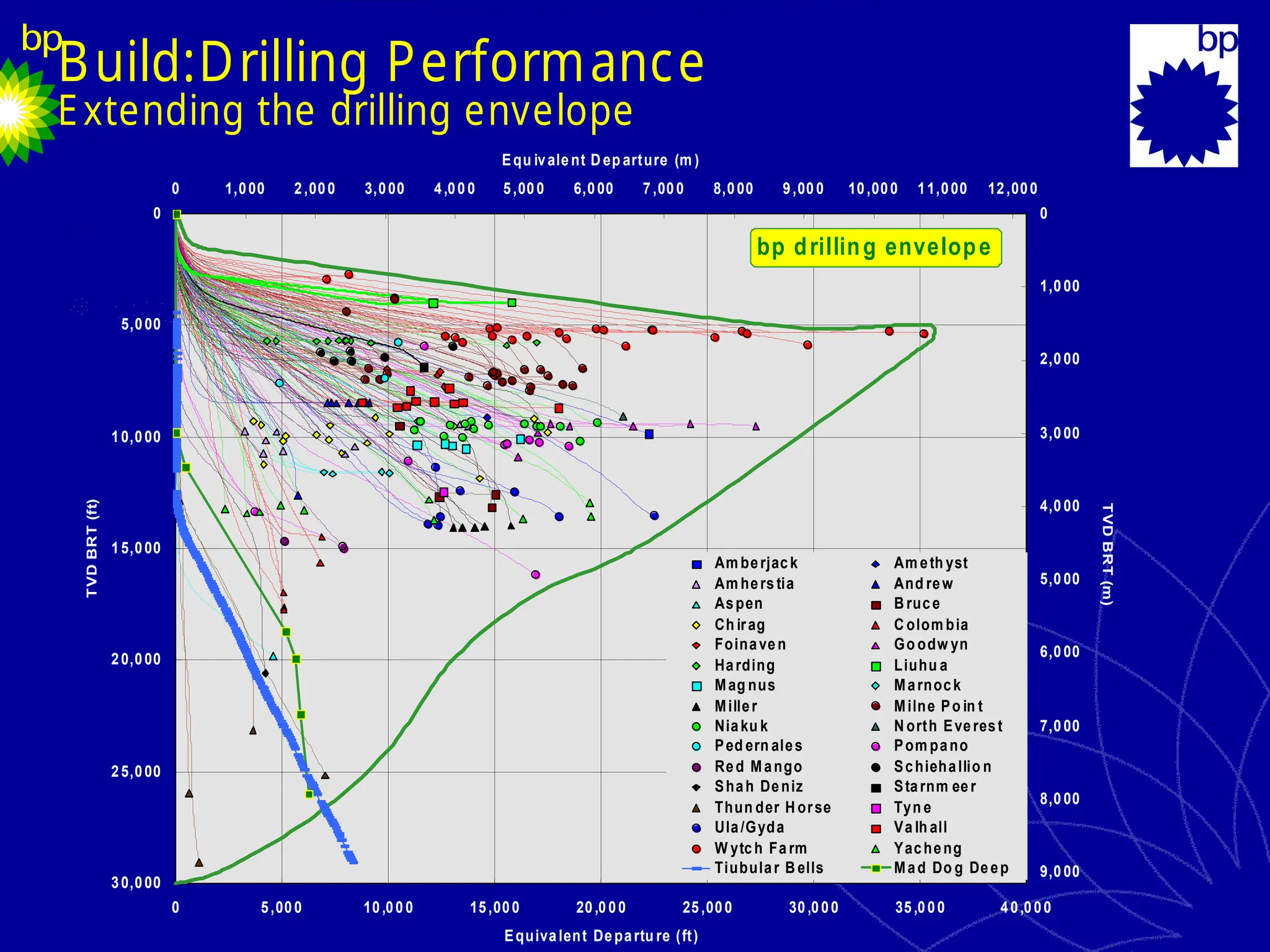
PUSHING THE ENVELOPE….
Build:Drilling Performance
Extending the drilling envelope
0
5,000
10,000
15,000
20,000
25,000
30,000
0 5,000 10,000 15,000 20,000 25,000 30,000 35,000 40,000
Equivalent Departu re (ft)
TVD
BRT
(ft)
0
1,000
2,000
3,000
4,000
5,000
6,000
7,000
8,000
9,000
0 1,000 2,000 3,000 4,000 5,000 6,000 7,000 8,000 9,000 10,000 11,000 12,000
Equ ivalent D ep arture (m )
TVD
BRT
(m)
Am berjac k Am eth yst
Am hers tia And rew
Aspen B ruce
Ch irag C olom bia
Foinaven Go odw yn
Harding Liuhu a
Mag nus Marnock
Miller Milne Po in t
Niaku k N orth Everest
Ped ern ales Pom pano
Red Mango Schiehallio n
Shah Deniz Starnm eer
Thun der H orse Tyn e
Ula/Gyda Va lh all
W ytch Fa rm Yacheng
Tiubular B ells Mad Do g Deep
bp drilling envelope
Tubular Bells
Mad Do g Deep
Thunder
Horse
Total
Depth
Pompano
Pompano Mars
Mars Ursa
Ursa
Empire
Empire
State Bldg.
State Bldg.
Diana
Diana
Hoover
Hoover Na Kika
Na Kika
Horn
Horn
Mtn
Mtn
Holstein
Holstein Atlantis
Atlantis
Mad
Mad
Dog
Dog
Thunder
Thunder
Horse
Horse
Note: Conceptual illustration only
10,000’
15,000’
20,000’
25,000’
30,000’
1,000’
2,000’
3,000’
4,000’
5,000’
6,000’
7,000’
8,000’
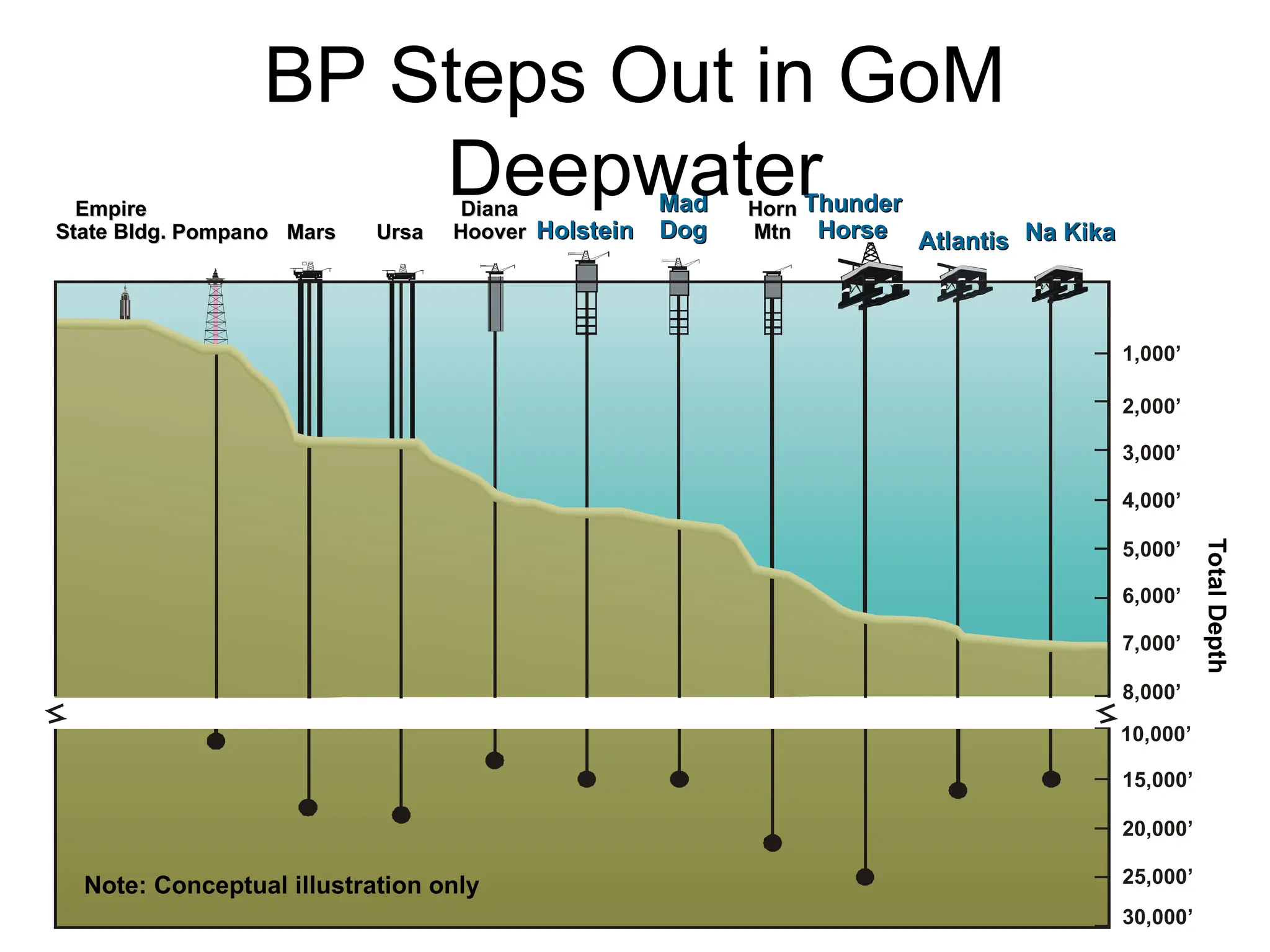
BP Steps Out in GoM
Deepwater
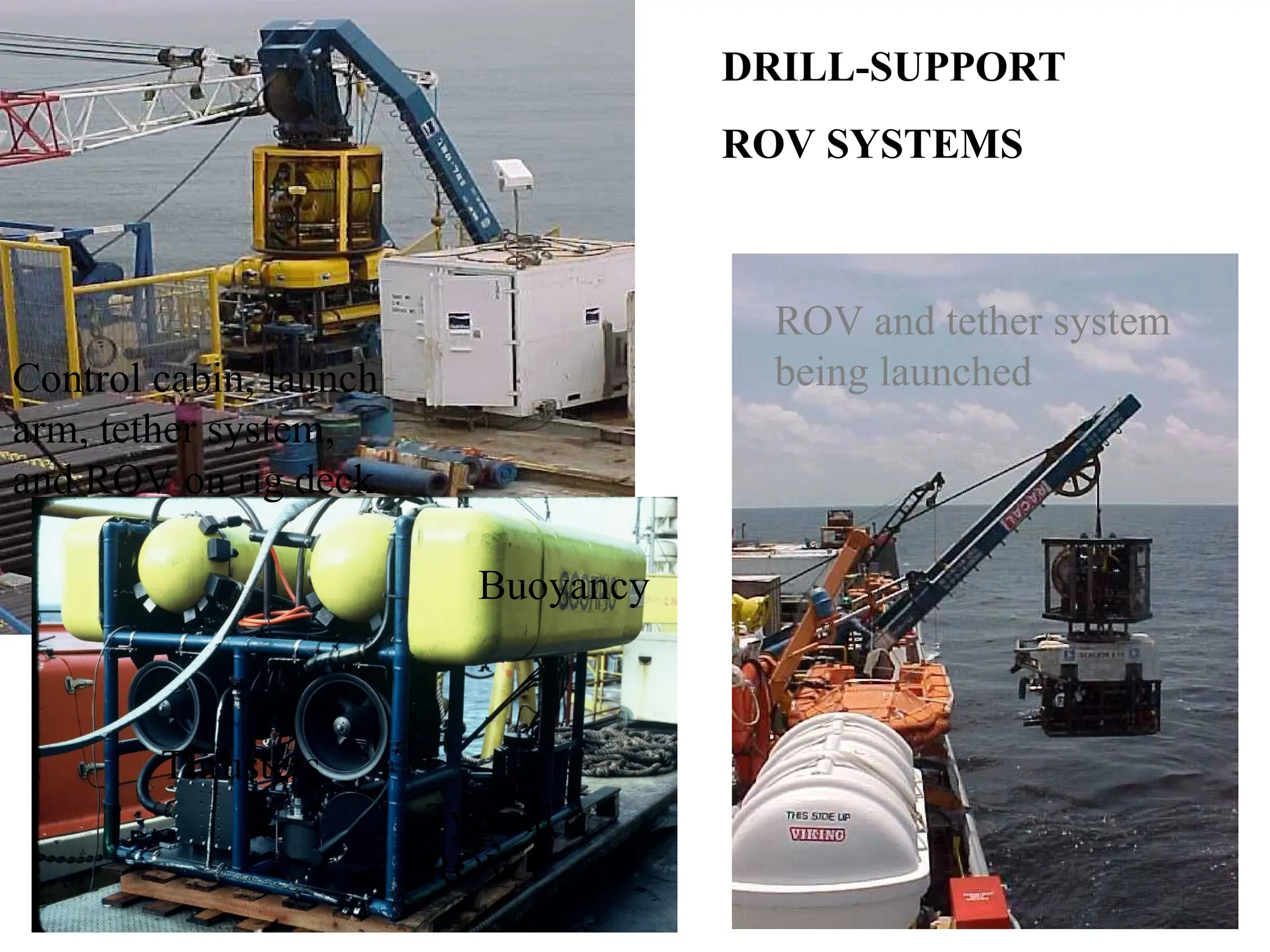
ROV Launch
Control cabin, launch
arm, tether system,
and ROV on rig deck
ROV and tether system
being launched
Typical
ROV
Thrusters
Buoyancy
DRILL-SUPPORT
ROV SYSTEMS

225246727-Introduction-to-Drilling.ppt..

  • 1.
    Drilling and Completions Drillingand Completions Spectrum of Spectrum of D&C activity D&C activity
  • 2.
  • 3.
    Main Components ofa Drilling Rig All drilling rigs have the following basic systems •Hoisting •Rotating •Circulating & Solids Control •Power •Blowout Prevention
  • 4.
    Hoisting System Used forraising and lowering the drilling assembly, and for running casing, completion equipment and other tools in and out of the hole.
  • 5.
    Rotating System A hexagonalor square pipe is connected to the topmost joint of the drill string. The rotary table and kelly drive bushing impart rotation to the drill string while allowing it to be moved up or down. As an alternative to the kelly and rotary table, most modern rigs employ a Top Drive system for rotating the drill string. A powerful electric or hydraulic motor is suspended from the traveling block.
  • 6.
    Circulating System During drilling,fluid is continuously pumped down the drill string, through the bit, and up the annular space between the hole and the drill string. Its main purpose is to bring up the cuttings, cool the bit, maintain hole stability, and prevent formation fluids from entering the wellbore.
  • 7.
    Circulating System &Solids Control
  • 8.
    Types of DrillingFluids Non-dispersed Dispersed Calcium treated Saltwater based Low solids Polymer Water-based Pneumatic Oil-based Diesel based Mineral Oil based Synthetic: Esters Ethers Olefins Dry air/gas Mist Foam Aerated mud Selection of the type of drilling fluid systems for a well is based on: PERFORMANCE, ECONOMICS, and ENVIRONMENTAL CONSIDERATIONS More than one system may be used in the same well.
  • 9.
    Diesel Electric Power System Mostmodern rigs are electric. Generally, large diesel engines are the primary source of power. Electric power generated by the engines is first converted from AC to DC in the SCR unit. DC motors supply power to the drawworks, rotary, and pumps. AC power is still used for auxiliary equipment.
  • 10.
    Drill String &Bit Hole is made by turning a bit connected to the bottom of the drill string and applying weight at the same time. The bit is turned either entirely by drill pipe rotation from surface or with the help of a downhole motor which rotates when drilling fluid is pumped through it. Drill pipe Drill collars Measurement tools Downhole motor Bottom Hole Assembly Bit
  • 11.
    Bit Types Roller Cone FixedCutter Steel tooth Diamond Natural & Synthetic Diamond PDC Tungsten Carbide Insert
  • 12.
    Well Control Primary controlof wellbore pressures is maintained by ensuring that the hydrostatic pressure of the drilling fluid in the well is always slightly higher than the highest formation pressure exposed to the open wellbore. Primary control is lost if a kick is taken due to imbalance of pressures.
  • 13.
  • 14.
  • 15.
  • 16.
    Offshore Drilling Rigs SUBMERSIBLE (35 – 50 world wide)  INLAND BARGES (POSTED) - Very Shallow Water (up to 20 –22ft)  SUBMERSIBLE RIG / BARGE - Shallow Water (up to 70 – 100ft)  PLATFORM Intermediate Water (Petronius US GOM= 1800ft+)  JACK-UP Shallow to Intermediate Water (+/-400 worldwide) (20 – 400ft, very few 300ft)  SEMI-SUBMERSIBLE Intermediate – Deep Water (+/– 180 world wide) (300 – 7500+ft)  DRILL SHIP Intermediate – Deep Water (+/- 50 world wide) (200 – 10,000ft)
  • 17.
  • 18.
  • 19.
    JACK-UP RIG Derrick cantilevered overstern of hull. Well conductor
  • 20.
  • 21.
    Year Rated WaterDeck Mud BOP Built Depth (ft) Load (tons) Capacity (bbls) (Mpsi) 5th 97+ 5000-10000 6000+ 6000+ 15 4th 86+ 2000-5000 4000-5000 4000+ 15 3rd 81-85 1200-2500 2500-3500 2000-3000 15 2nd 73-80 600-1500 1500-2500 1500-2500 10 1st pre-73 600 <1500 <2000 10 Semi-Submersible Generations
  • 22.
    Transocean “Discoverer 534” and“Discoverer Enterprise” Transocean’s “Deepwater Discovery” (+800ft long) DRILLSHIPS
  • 23.
    1. COST Approximate RigRates (September ‘02) Jack-Up (GoM) $30 K /day 2nd / 3rd Generation Semi (<2,000 ft) $40 – 70 K / day Enhanced 3rd Generation Semi (4,500ft WD) $100-130 K / day DP Semi’s & Drill Ships $150-180 K / day DP Dual Activity Drill Ships $200 K / day
  • 24.
  • 25.
    Well Construction andWell Types By Objective • Exploration •P&A or keeper • Delineation •Size of reservoir • Appraisal •Reservoir characteristics • Development •Reservoir drainage • Injection •Pressure maintenance 0 ft Rig Datum - RKB Mud Wt (ppg) D ep th (feet) PP FG Mud Wt (ppg) D ep th (feet) PP FG
  • 26.
    Primary Cementing Process 3Displacing Cement 4 Job completed 2 Pumping Cement Bottom Plug Top Plug Cement Head 1 Hole conditioning Float Shoe Float Collar Annulus Outlet
  • 27.
    Full-bore plug cementing Full-boreplug cementing The Conventional job The Conventional job
  • 28.
    Directional Drilling -Why? • On Land: – Surface constraint due to land owner, natural event, etc. – Relief well in blowout situation – Horizontal • Offshore: – Save Cost on Platform – Relief well in blowout situation – Horizontal – Extended Reach – Multi-Lateral
  • 29.
    Angle Build withMotors • Bent Sub w/ Straight Motor • Single Bend Steerable • Double Bend Steerable
  • 30.
    MWD vs NearBit Sensor
  • 31.
  • 32.
    • Shale – HighGamma Ray – +/- 1 ohmm Resistivity – Density Porosity < Neutron Porosity • Sand – Low Gamma Ray – High Resistivity – Density Porosity = Neutron Porosity Evaluation Methods Electric logs showing oil-bearing sand
  • 33.
    Basic Completion Equipment Terminology Tubinghanger Tubing spool Surface Controlled Subsurface Safety Valve (SCSSV) Gas lift valves Production casing Production packer No Go Nipple Re-entry guide Blast joint Seal bore extension Seal assembly Production tubing Flow coupling Landing Nipple Circulating sleeve
  • 34.
    Completion Types 1. Open-HoleCompletions 2. Cased-Hole Completion Types • single zone completion • single tubing w/ multiple selectives • dual tubing strings • dual tubing strings w/ sand control 3. Monobore Completions 4. Sand Control • gravel packs • frac packs 4. Horizontal Wells • open hole, slotted liner, cased 5. Multi-Laterals • TAML Levels 6. Intelligent Well Systems 7. Artificial Lift Systems • beam (rod) pump • gas lift • electric submersible pumps (ESP) • progressive cavity pumps (PCP) • jet pump • plunger lift
  • 35.
  • 36.
    Horizontal Wells A “horizontalwell” or high angle well describes a well drilled at an angle greater than 70º relative to vertical. • Can connect natural fractures in carbonates. • Prevent water/gas coning by reducing pressure draw down. • Improves sweep efficiency through infill drilling, horizontal injection for waterflood or EOR. • Can enhance property value by increasing recovery in tight gas reservoirs or thin sands or low permeability reservoirs. • Location constraints limiting numerous wells.
  • 37.
    Horizontal Open-Hole GravelPack Packer Sand Control Screen Sized gravel Casing Shoe Unconsolidated Sandstone Reservoir Underlying Water
  • 38.
    Horizontal Well Cased-Hole ReservoirCharacteristics that favor this completion • Vertical permeability greater than 50% horizontal permeability • No inter-bed barriers or sealing laminations • Some sand production or plan to gravel pack • Confined surface and reservoir access • Fracture treatments
  • 39.
    Drivers of MultilateralTechnology • Cost reduction • Slot conservation • Increased reserves • Accelerated reserves • Delineation of the reservoir
  • 40.
    Intelligent Well Systems(IWS) An Intelligent Well System is defined by ChevronTexaco to include at least one downhole flow control valve, one downhole sensor, and two distinct intervals. Provides real-time reservoir management: • Downhole data sensing, acquisition, and transmission of temperature, pressure, density, flow, etc. • Remote control of flow and well operations
  • 41.
    Beam Pump (sucker-rodpump) Mechanics • Utilizes a reciprocating rod to move a downhole pump. • Downhole pump consists of “traveling” and “standing” valves, which utilize check valves to trap and mechanically lift a column of fluid. Characteristics • Comprised ± 80% of all artificial lift. • Predominantly land use. • Handles gas and solids fairly well. • Best for low-volume producers (5 to 5,000 BFPD)
  • 42.
    Gas Lift Mechanics • Bestmimics “natural” flow. Utilizes pressurized gas injection downhole to lighten the hydrostatic “head” of a column of fluid, allowing reservoir pressure to lift the fluid column to surface. • Uses downhole valves to regulate the amount and depth of gas injection • Continuous or intermittent lift. Characteristics • Used wherever a gas source is available. • Second most common lift system (Most common offshore lift system). • Good handling of solids. • Wide range of production rates
  • 43.
    Electric Submersible Pump(ESP) Mechanics • Utilizes a downhole electric motor to drive a downhole centrifugal pump. • Uses surface electrical transformers and variable frequency speed drives to deliver consistent power. Characteristics • Requires electrical power supply. • Highest lift efficiency of all lift systems. Becoming more common as an offshore lift system. • Poor handling of solids and fair handling of gas. • Wide range of production rates (200 to 30,000 BFPD) • Lifespans anywhere from 1 to 7 years depending on environment and horsepower/power quality.
  • 44.
    Potential Environmental Emissions Ozone DepletingHalocarbons Flaring Waste to Shore Muds & Cuttings Produced Water Power Generation Emissions
  • 45.
    Mark Webster Environmental TeamLeader GoM Deepwater Production BU Aspects and Impacts Aspects Impacts > Discharge of muds & cuttings > Air emissions from diesel engines > Disposal of wastes on shore > Decline in quality of GoM waters > Degradation of air quality > Adding to landfills; potential groundwater contamination
  • 46.
    A 24,000’ WellGenerates A 24,000’ Well Generates 3430.27bbls of Waste 3430.27bbls of Waste Conductor Hole Conductor Casing 26 “ in 2 days 20” @ 700’ 459.68 bbls Surface Hole Surface Casing 17.5 “ in 15 days 13 3/8 @ 2000’ 595.00 bbls intermediate Hole Intermediate Casing 12 1/4” in 25 days 9 5/8” @ 13000’ 1603.54 bbls Production Hole Production Casing 8 1/2” in 60 days 7 5/8” at 24000 772.05 bbls Assuming gauge hole, does not take into account a number of factors, such as porosity or washout.
  • 47.
    Disposal and Treatment Options •TREATMENT – S/S – Thermal – Presses/ Washes – Ultrasonic Technology – Dryers – Separation techniques • DISPOSAL????? – Discharge – Injection – Evaporation – Burial – Landfarming – Landspreading
  • 48.
    Drilling Waste Concerns •Offshore – Oil – Toxicity • Onshore – Salinity – Oil – Heavy Metals
  • 49.
  • 50.
    Geophysical Data Gravity, seismic,and petrophysical log data are combined to make 3D Earth Models
  • 51.
    Anticlinal Trap rock Seal Oil Water Types ofPetroleum Reservoirs Salt Trap Salt Dome Cap Rock?
  • 52.
    POROSITY Sedimentary rock haspores (small openings) PERMEABILITY Connected pores allow fluid to flow PORE PRESSURE Normal, abnormal or subnormal pore fluid pressure ROCK STRESS Force imposed to the rock BALANCE Mud weight must balance pore pressure and rock stress WELL PLAN BASICS
  • 53.
    HIVE – wellplanning • HIVE’s in 12 locations • 16 HIVE’s across BP • HIVE’s regularly used for well planning. • Valhall OOC - 1st BP onshore operations centre
  • 54.
    Decision Space: Temis3D + EarthVision Andrew Field with EarthVision top reservoir surface and Temis 3D Pressure slices at Eocene Limestone horizons A17 Well planning with targets identified from subsurface reservoir and EarthVision models
  • 55.
    Top Reservoir Rev H: A17 A09: comparable trajectory to Rev H A17 Comparison of Andrew A09 to Planned Rev H (A17) Trajectory VIEW NORTH
  • 56.
    Wellpath Rev H TopReservoir Andrew Platform VIEW SOUTH 23” 16” 12 1/4” Hole Sections Rev H (A17) Trajectory Grouped drilling NPT Grouped drilling NPT 23/32” Grouped drilling NPT
  • 57.
    VIEW NORTH Base Miocene Sand LowerEocene Grouped drilling NPT associated with Base Miocene and Lower Eocene Limestone Rev H: A17 Andrew Field No Drilling Surprises (NDS) Project: Wells with Geological Surfaces and Drilling NPT A09 : comparable trajectory to Rev H A17
  • 58.
    VIEW NORTH Base MioceneSand Lower Eocene 12 1/4” A09 NDS Lower 12 ¼”section : Hole Cleaning, Tight Hole, Stuck Pipe, Gas in Limestones, Mudstones washing out. Andrew NDS : Lower 12 ¼” Section
  • 62.
    Drilling Cost Estimation •Deterministic - Single figure • Probabilistic - Considers risk and uncertainty using probabilities (objective, empirical, subjective) - Decision Trees, Monte Carlo - Cost estimates are given with associated probabilities, usually P10, P50 and P90 Both methods require base case estimation by hole intervals Plot of Cost vs. Days – for tracking actual vs. estimated cost Cost per Foot of offset wells for benchmarking and cost estimating
  • 63.
    C o un t r y : P r o j e c t : D e l i v e r a b l e : C V P S t a g e : C o s t E s t i m a t e : B e s t i n C l a s s P e r f o r m a n c e : # S a n c t i o n A m o u n t : S a n c t i o n % i l e : P r o m i s e ( P 1 0 - P 9 0 ) : B e s t i n C l a s s P e r f o r m a n c e : R i g r a t e 0 . 6 1 P r o j e c t S c o p e A s s u m p t i o n s : D r i l l i n g l e a r n i n g r a t e - 0 . 5 9 o S t u c k p i p e f r e q u e n c y 0 . 5 3 o L o s t c i r c u l a t i o n f r e q . 0 . 4 9 o W a i t i n g o n w e a t h e r 0 . 4 1 1 2 - 1 / 4 " h o l e R O P - 0 . 2 9 K e y R i s k A s s u m p t i o n s : 8 - 1 / 2 " h o l e R O P - 0 . 2 1 o A v g . s t u c k p i p e d u r a t i o n 0 . 1 8 o 1 7 - 1 / 2 " R O P - 0 . 1 5 o C o m p l e t i o n l e a r n i n g r a t e - 0 . 1 3 o M M ( ± ) m i l l i o n M e a n C o s t : $ 3 8 1 P r o j e c t D e t a i l s I n p u t D a t a M u l t i - w e l l e s t i m a t e w i t h l e a r n i n g . I n i t i a l p e r f o r m a n c e b a s e d o n f o u r p r e v i o u s E & A w e l l s . P l a t e a u p e r f o r m a n c e b a s e d o n m u l t i p l e o f T e c h n i c a l L i m i t . O r s i n o P h a s e 2 D e v e l o p m e n t D e f i n e 1 2 o i l p r o d u c e r s + 2 w a t e r i n j e c t o r s A v e r a g e o f t o p 1 0 % o f a l l I l l y r i a p l a t f o r m w e l l s , 1 9 9 7 - 2 0 0 0 , 2 0 0 1 R u s h m o r e d a t a . T i m e & C o s t S u m m a r y 2 5 % $ 4 7 6 $ 2 9 0 P 5 0 m i l l i o n $ 3 7 9 M M - W e l l s t e a m i n p l a c e 3 m t h s b e f o r e s p u d M a j o r N P T r i s k s a r e p o s t - m i t i g a t i o n F i r s t w e l l s p u d d e d i n 2 n d Q t r d a y s ( 1 2 6 5 P 2 7 K e y P e r f o r m a n c e I n d i c a t o r s P 5 0 P 9 0 ) 4 6 5 4 4 8 D a y s / 1 0 K 2 2 3 6 2 7 D a y s / C o m p l e t i o n R i g r a t e s p e r 2 0 0 1 a c t i v i t y l e v e l s 1 4 w e l l s ( 1 2 p r o d . + 2 i n j . ) 2 g e o l . S i d e t r a c k s , 1 r e s p u d " E x p l o r e r " c l a s s d r i l l i n g r i g I l l y r i a D r i l l i n g U n c e r t a i n t y S t a t e m e n t - S u m m a r y A s s u m p t i o n s & R i s k s B e s t i n C l a s s P 1 0 4 4 2 1 - 1 - 0 . 5 0 0 . 5 1 Frequency C hart Cert ainty is 79. 74% f rom 1,200. 83 t o 1, 480. 69 days .000 .006 .013 .019 .026 0 64 128 192 256 1, 000. 00 1, 175. 00 1, 350. 00 1, 525. 00 1,700. 00 10,000 Trials 30 Outliers Forecast: Total Days Frequency C hart Cert aint y is 80.09% from 290. 00 to 476. 67 million dollars .000 .008 .015 .023 .030 0 75. 5 151 226. 5 302 150. 00 275. 00 400.00 525. 00 650. 00 10,000 Trials 10 Outliers Forecast: Total C ost B i C
  • 64.
  • 65.
    Build:Drilling Performance Extending thedrilling envelope 0 5,000 10,000 15,000 20,000 25,000 30,000 0 5,000 10,000 15,000 20,000 25,000 30,000 35,000 40,000 Equivalent Departu re (ft) TVD BRT (ft) 0 1,000 2,000 3,000 4,000 5,000 6,000 7,000 8,000 9,000 0 1,000 2,000 3,000 4,000 5,000 6,000 7,000 8,000 9,000 10,000 11,000 12,000 Equ ivalent D ep arture (m ) TVD BRT (m) Am berjac k Am eth yst Am hers tia And rew Aspen B ruce Ch irag C olom bia Foinaven Go odw yn Harding Liuhu a Mag nus Marnock Miller Milne Po in t Niaku k N orth Everest Ped ern ales Pom pano Red Mango Schiehallio n Shah Deniz Starnm eer Thun der H orse Tyn e Ula/Gyda Va lh all W ytch Fa rm Yacheng Tiubular B ells Mad Do g Deep bp drilling envelope Tubular Bells Mad Do g Deep Thunder Horse
  • 66.
    Total Depth Pompano Pompano Mars Mars Ursa Ursa Empire Empire StateBldg. State Bldg. Diana Diana Hoover Hoover Na Kika Na Kika Horn Horn Mtn Mtn Holstein Holstein Atlantis Atlantis Mad Mad Dog Dog Thunder Thunder Horse Horse Note: Conceptual illustration only 10,000’ 15,000’ 20,000’ 25,000’ 30,000’ 1,000’ 2,000’ 3,000’ 4,000’ 5,000’ 6,000’ 7,000’ 8,000’ BP Steps Out in GoM Deepwater
  • 68.
    ROV Launch Control cabin,launch arm, tether system, and ROV on rig deck ROV and tether system being launched Typical ROV Thrusters Buoyancy DRILL-SUPPORT ROV SYSTEMS

Editor's Notes

  • #39 Cost Reduction The purpose of the technology is to reduce CAPEX. The idea is simply to incur only the cost of rig time, tools, services, and equipment needed to drill and complete an average deviated lateral of 300-1500 feet. The costs of mobilization/ demobilization, casing, and drilling to top of zone will essentially be borne by the main wellbore. A possible cost reduction scenario would have the multilateral well providing twice the production, but only 1.5 times the cost of a monobore completion.
  • #54 Decision Space upgrade incorporates improved graphics with the ability to input the Earthvision structural model and the Temis Pressure cube.