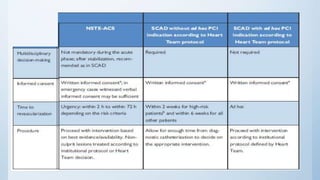
2018 ESC/EACTS
Guidelines on
myocardial
revascularization
Dr. Sumit Shanker
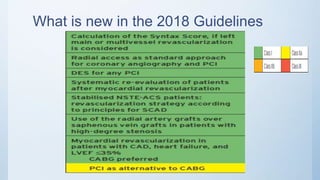
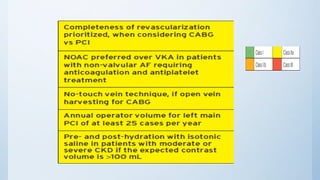
What is new in the 2018 Guidelines
Diagnostic tools to guide
myocardial revascularization
• Non-invasive diagnostic tools
– Assessment of ischaemia and the evaluation of viability in patients
with RWMA or reduced EF
– ECG testing in patients with symptoms of angina, non-invasive
imaging is recommended as the first-line test

– PLATFORM (Prospective LongitudinAl Trial of FFRct: Outcome and
Resource Impacts) study showed that in patients referred for
invasive angiography due to chest pain and intermediate pre-test
probability of CAD, assessment with CT and CT-FFR reduced the
number of patients with subsequently normal invasive coronary
angiograms
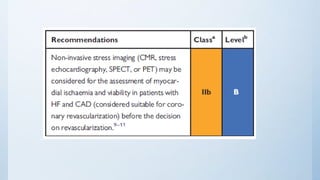
Assessment of myocardial viability
• Myocardial contrast echocardiography, single-photon emission CT
(SPECT), and late gadolinium enhancement cardiac magnetic
resonance (LGE-CMR)  cellular integrity
• Positron emission tomography (PET)  cellular metabolism
• Dobutamine techniques contractile reserve
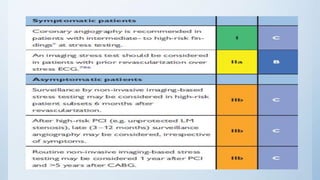
Invasive diagnostic tools
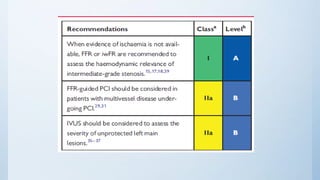
Pressure-derived fractional flow reserve
• Use of FFR in patients with intermediate-grade coronary stenosis
including LM stenosis
– FFR current standard of care for functional assessment of lesion severity with
intermediate-grade stenosis (40 – 90% stenosis) without evidence of ischaemia in
non-invasive testing, or multivessel disease
– PCI can be safely deferred if FFR is > 0.75
– DEFINE-FLAIR and iFR-SWEDEHEART used the 0.80 cut-off for lesion selection
by FFR, with favourable event rates at 1 year
• Use of FFR to identify lesions requiring revascularization in patients
with multivessel CAD undergoing PCI
– FAME trial showed that in patients with multivessel disease randomized to an
FFR-guided PCI strategy (using <_0.80), outcomes at 12 were superior
compared with angiography-guided PCI
• FFR guided management vs. medical therapy in patients
with CAD
– In SCAD and at least one stenosis with FFR <_0.80, the FAME 2
trial showed that PCI using DES implantation improved the primary
endpoint of death, non-fatal MI, or urgent revascularization within 2
years compared with medical treatment alone
• Other pressure-derived indices
– Instantaneous wave-free ratio
• Concomitant severe AS no adequate RCT data to support the use of
FFR or iwFR for the guidance of revascularization
• Use of intravascular imaging for the diagnostic assessment
– IVUS imaging allows real-time assessment of vessel size, lumen area, and
plaque composition and volume
– comparison with OCT it has more limited spatial resolution, but better penetration
depth and potential advantage in terms of vessel sizing
– IVUS axial resolution 150 mcm
– OCT axial resolution 15 mcm
• Disadvantages of OCT imaging are that it requires complete blood
clearance from the lumen for imaging and that it has more limited
penetration
• Uses
– Evaluation of stenosis severity in lesions with intermediate grade stenosis
– Evaluation of lesion morphology in lesions ambiguous with angiographic
assessment
– Characterization of plaque composition
• Revascularization deferred if the minimal luminal area (MLA) >6 mm2
Timing of revascularization
• Ad hoc PCI is defined as a therapeutic intervention performed within
the same procedure as the diagnostic coronary angiography
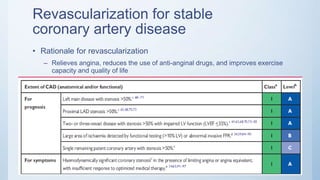
Revascularization for stable
coronary artery disease
• Rationale for revascularization
– Relieves angina, reduces the use of anti-anginal drugs, and improves exercise
capacity and quality of life
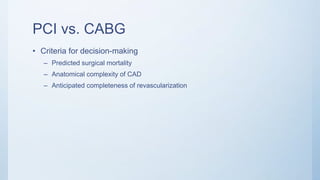
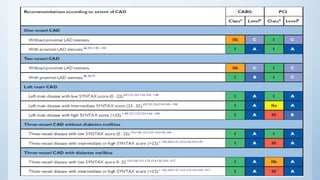
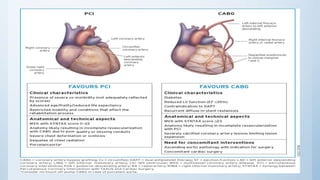
PCI vs. CABG
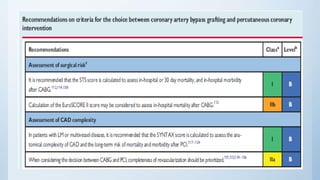
• Criteria for decision-making
– Predicted surgical mortality
– Anatomical complexity of CAD
– Anticipated completeness of revascularization
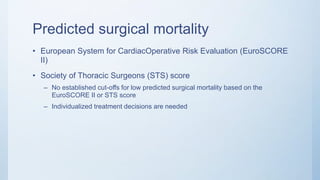
Predicted surgical mortality
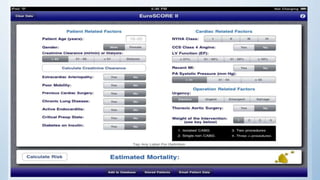
• European System for CardiacOperative Risk Evaluation (EuroSCORE
II)
• Society of Thoracic Surgeons (STS) score
– No established cut-offs for low predicted surgical mortality based on the
EuroSCORE II or STS score
– Individualized treatment decisions are needed
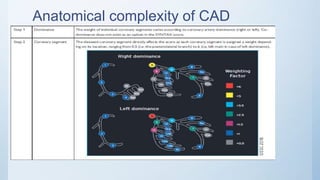
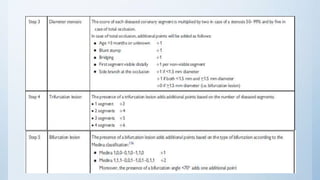
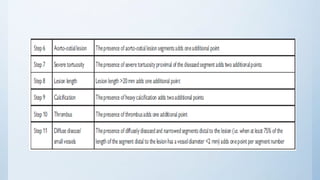
Anatomical complexity of CAD
• SYNTAX score
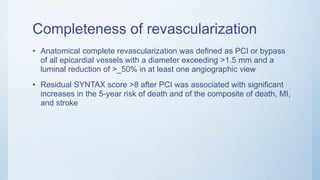
Completeness of revascularization
• Anatomical complete revascularization was defined as PCI or bypass
of all epicardial vessels with a diameter exceeding >1.5 mm and a
luminal reduction of >_50% in at least one angiographic view
• Residual SYNTAX score >8 after PCI was associated with significant
increases in the 5-year risk of death and of the composite of death, MI,
and stroke
• It remains to be determined whether revascularization by PCI improves
prognosis in patients with SCAD
• ISCHEMIA (International Study of Comparative Health Effectiveness
With Medical and Invasive Approaches) study recruiting 5000 patients
with SCAD and evidence of moderate to severe ischemia, randomized
before CAG to medical therapy or an invasive strategy to detect
differences in the primary endpoint of death or MI
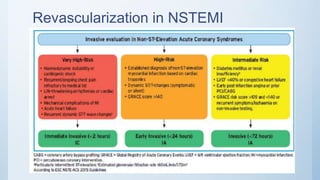
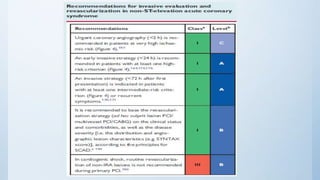
Revascularization in NSTEMI
Type of revascularization
• PCI
– Implantation of new-generation DES  standard treatment strategy
even when DAPT cannot be sustained beyond 1 month post-
intervention
– Complete one-stage revascularization is associated with better
clinical outcome than multistage PCI
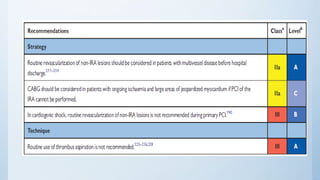
– As in STEMI routine treatment of non-culprit lesions during the
primary intervention by PCI is harmful in NSTE-ACS patients with
cardiogenic shock  CULPRIT-SHOCK (Culprit Lesion Only PCI
versus Multivessel PCI in Cardiogenic Shock) trial
– 5–10% of NSTE-ACS patients require CABG
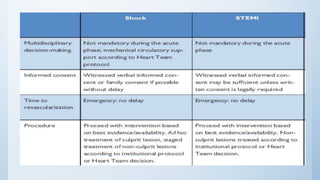
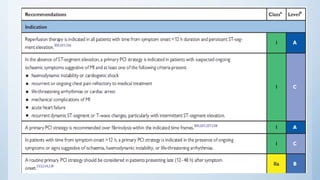
Revascularization in STEMI
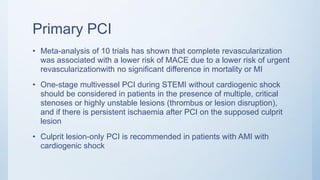
Primary PCI
• Meta-analysis of 10 trials has shown that complete revascularization
was associated with a lower risk of MACE due to a lower risk of urgent
revascularizationwith no significant difference in mortality or MI
• One-stage multivessel PCI during STEMI without cardiogenic shock
should be considered in patients in the presence of multiple, critical
stenoses or highly unstable lesions (thrombus or lesion disruption),
and if there is persistent ischaemia after PCI on the supposed culprit
lesion
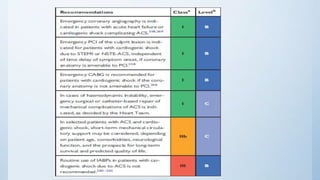
• Culprit lesion-only PCI is recommended in patients with AMI with
cardiogenic shock
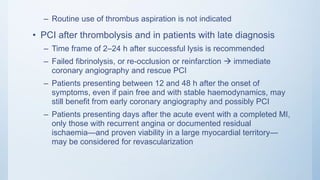
– Routine use of thrombus aspiration is not indicated
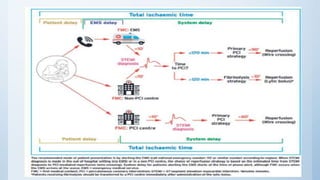
• PCI after thrombolysis and in patients with late diagnosis
– Time frame of 2–24 h after successful lysis is recommended
– Failed fibrinolysis, or re-occlusion or reinfarction  immediate
coronary angiography and rescue PCI
– Patients presenting between 12 and 48 h after the onset of
symptoms, even if pain free and with stable haemodynamics, may
still benefit from early coronary angiography and possibly PCI
– Patients presenting days after the acute event with a completed MI,
only those with recurrent angina or documented residual
ischaemia—and proven viability in a large myocardial territory—
may be considered for revascularization
Myocardial revascularization in
patients with heart failure
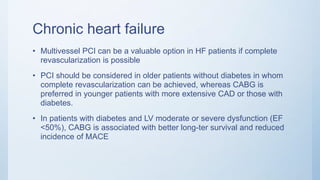
Chronic heart failure
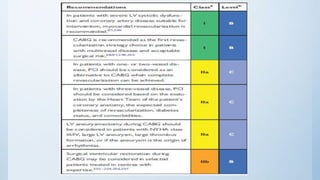
• Multivessel PCI can be a valuable option in HF patients if complete
revascularization is possible
• PCI should be considered in older patients without diabetes in whom
complete revascularization can be achieved, whereas CABG is
preferred in younger patients with more extensive CAD or those with
diabetes.
• In patients with diabetes and LV moderate or severe dysfunction (EF
<50%), CABG is associated with better long-ter survival and reduced
incidence of MACE
Ventricular reconstruction and
aneurysm resection
• Aim of surgical ventricular reconstruction (SVR) is to restore
physiological volume, and achieve an elliptical shape of the LV
• Aim of ventricular aneurysmectomy is to remove fibrous scars in cases
of severe dilatation, thrombus formation, or as a source of life-
threatening ventricular arrhythmias
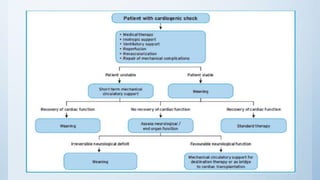
Acute heart failure and cardiogenic
shock
• Mechanical circulatory support
– Intraaortic balloon pump (IABP)
– Veno-arterial extracorporeal membrane oxygenation
(ECMO)
– Percutaneous left ventricular assist devices (pLVADs)
• IABP-SHOCK II trial showed that the use of IABPs did not reduce 30
day mortality and that there was no evidence of long-term benefit
• ECMO
– Decompresses the venous system; increases coronary, cerebral, and peripheral
perfusion; and also provides supplementary blood oxygenation
• pLVADs
– (i) A transaortic microaxial pump (Impella) that directly unloads the LV providing
2.5 - 5 L/min blood flow
– (ii) A transseptal centrifugal assist device (TandemHeart) that unloads the LV via a
cannula introduced into the left atrium through a transseptal puncture
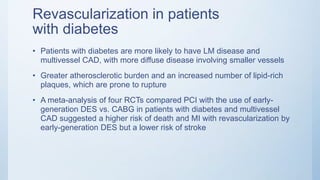
Revascularization in patients
with diabetes
• Patients with diabetes are more likely to have LM disease and
multivessel CAD, with more diffuse disease involving smaller vessels
• Greater atherosclerotic burden and an increased number of lipid-rich
plaques, which are prone to rupture
• A meta-analysis of four RCTs compared PCI with the use of early-
generation DES vs. CABG in patients with diabetes and multivessel
CAD suggested a higher risk of death and MI with revascularization by
early-generation DES but a lower risk of stroke
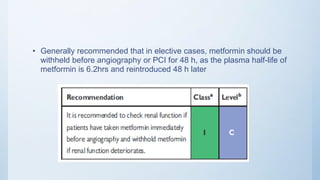
• Generally recommended that in elective cases, metformin should be
withheld before angiography or PCI for 48 h, as the plasma half-life of
metformin is 6.2hrs and reintroduced 48 h later
Revascularization in patients
with chronic kidney disease
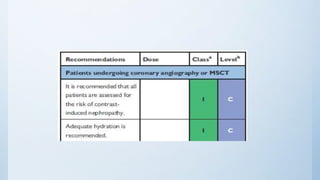
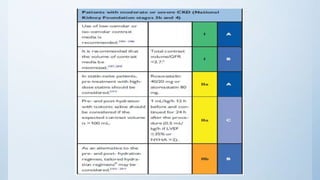
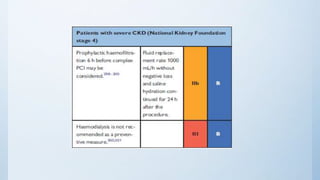
• Prevention of contrast-induced nephropathy
– Factors
– CKD, diabetes mellitus, congestive HF, haemodynamic
instability, reduced plasma volume, female sex,
advanced age, anaemia, and periprocedural bleeding,
type and volume of contrast administered
Revascularization in patients requiring
valve interventions
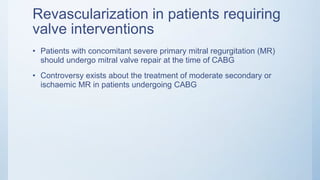
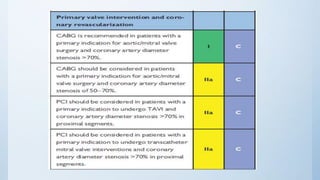
• Patients with concomitant severe primary mitral regurgitation (MR)
should undergo mitral valve repair at the time of CABG
• Controversy exists about the treatment of moderate secondary or
ischaemic MR in patients undergoing CABG
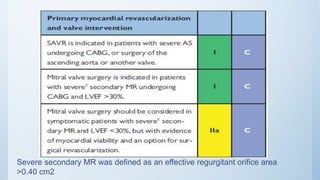
Severe secondary MR was defined as an effective regurgitant orifice area
>0.40 cm2
Associated peripheral artery
diseases
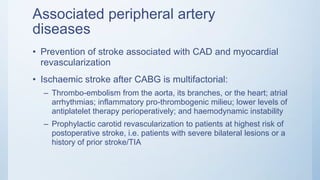
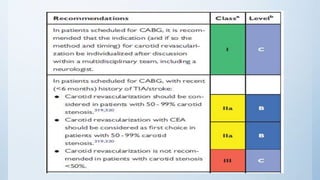
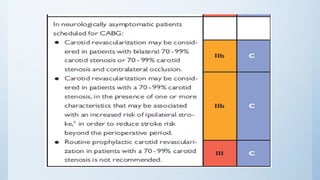
• Prevention of stroke associated with CAD and myocardial
revascularization
• Ischaemic stroke after CABG is multifactorial:
– Thrombo-embolism from the aorta, its branches, or the heart; atrial
arrhythmias; inflammatory pro-thrombogenic milieu; lower levels of
antiplatelet therapy perioperatively; and haemodynamic instability
– Prophylactic carotid revascularization to patients at highest risk of
postoperative stroke, i.e. patients with severe bilateral lesions or a
history of prior stroke/TIA
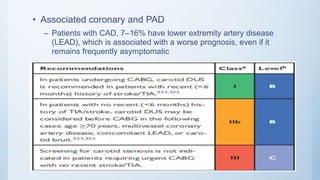
• Associated coronary and PAD
– Patients with CAD, 7–16% have lower extremity artery disease
(LEAD), which is associated with a worse prognosis, even if it
remains frequently asymptomatic
Repeat revascularization
• Early graft failure
– Up to 12% of grafts
– Conduit defects, anastomotic technical errors, poor native vessel
run-off, or competitive flow with the native vessel
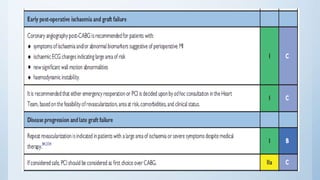
– Perioperative angiography is recommended in cases of Suspected
severe myocardial ischemia
– Emergency ad hoc PCI may limit the extent of infarction
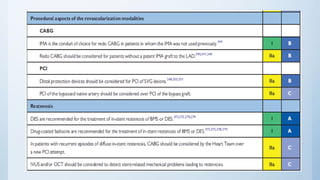
– Target for PCI is the native vessel or the IMA graft
– SVG and any anastomotic site should be avoided
Redo surgery
• Anatomy is unsuitable for PCI, if several important grafts are occluded,
or in the case of clear anastomotic errors
• Asymptomatic patients, repeat revascularization should be considered
if the artery is of an appropriate size and supplies a large territory of
myocardium
Acute PCI failure
• Need for urgent surgery to manage pci-related
complications is uncommon (<1%) and only required
in patients with major complications
– Large, evolving MI due to iatrogenic vessel occlusion that
cannot be salvaged percutaneously
– Recurrent cardiac tamponade after pericardiocentesis
following pci-related vessel rupture
Disease progression and late graft
failure
• Due to the progression of disease in native vessels or de novo disease
of bypass grafts
• Repeat revascularization is indicated in the presence of significant
symptoms despite medical treatment, and in asymptomatic patients
with objective evidence of large myocardial ischemia (>10% of the LV)
Redo CABG or PCI
• PCI in patients with prior CABG has worse acute and long-term
outcomes than in patients without prior CABG
• Redo CABG has a two- to four-fold increased mortality compared with
first-time CABG, and repeat CABG is generally performed infrequently
• PCI is the preferred revascularization strategy in patients with
amenable anatomy
• If PCI in the native vessel fails or is not an option, PCI in the diseased
SVG should be considered
• CABG considered for patients with extensively diseased or occluded
bypass grafts and diffuse native vessel disease
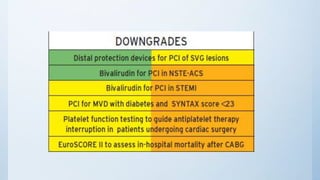
PCI for saphenous vein graft lesions
• Associated with an increased risk of distal coronary embolization,
frequently resulting in periprocedural MI
• Distal occlusion/aspiration, proximal occlusion, suction, filter devices,
or covered stents
Repeat PCI
• Restenosis
• Meta-analysis suggests that repeat stenting with new generation DES
(with EES) and DCB are ranked first and second as the highest
efficacy treatments
• Outcomes of patients with in-stent restenosis after DES are poorer
than those in patients with BMS in-stent restenosis
• Recurrent episodes of diffuse in-stent restenosis in large vessels—and
in those with associated multi vessel disease, especially in the
presence of other complex lesions such as chronic total occlusions—
CABG should be considered
• Disease progression
– Account for up to 50% of re interventions
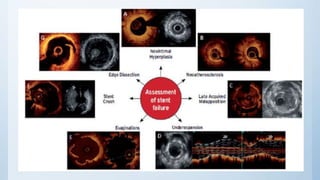
• Stent thrombosis
– Aggressive, high-pressure balloon dilation
– Liberal use of intracoronary imaging
– New stent may be required to overcome edge-related
dissections and adjacent lesions, or to optimize final
results
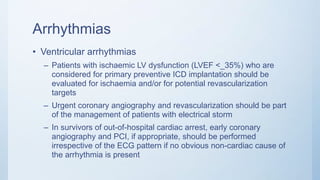
Arrhythmias
• Ventricular arrhythmias
– Patients with ischaemic LV dysfunction (LVEF <_35%) who are
considered for primary preventive ICD implantation should be
evaluated for ischaemia and/or for potential revascularization
targets
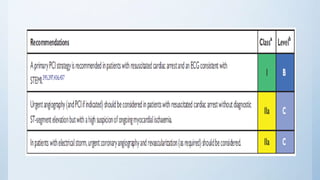
– Urgent coronary angiography and revascularization should be part
of the management of patients with electrical storm
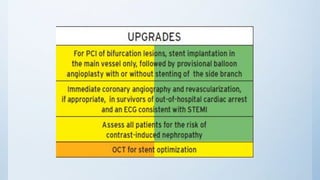
– In survivors of out-of-hospital cardiac arrest, early coronary
angiography and PCI, if appropriate, should be performed
irrespective of the ECG pattern if no obvious non-cardiac cause of
the arrhythmia is present
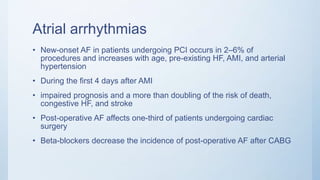
Atrial arrhythmias
• New-onset AF in patients undergoing PCI occurs in 2–6% of
procedures and increases with age, pre-existing HF, AMI, and arterial
hypertension
• During the first 4 days after AMI
• impaired prognosis and a more than doubling of the risk of death,
congestive HF, and stroke
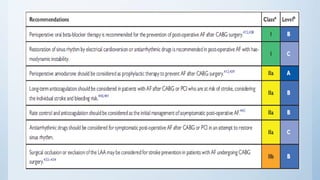
• Post-operative AF affects one-third of patients undergoing cardiac
surgery
• Beta-blockers decrease the incidence of post-operative AF after CABG
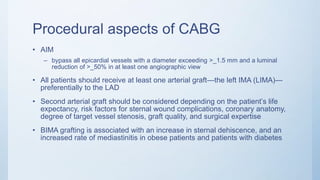
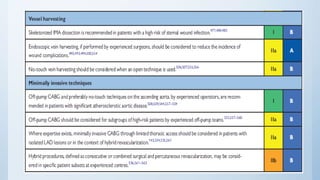
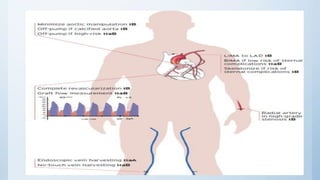
Procedural aspects of CABG
• AIM
– bypass all epicardial vessels with a diameter exceeding >_1.5 mm and a luminal
reduction of >_50% in at least one angiographic view
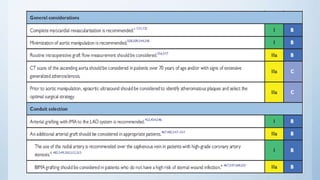
• All patients should receive at least one arterial graft—the left IMA (LIMA)—
preferentially to the LAD
• Second arterial graft should be considered depending on the patient’s life
expectancy, risk factors for sternal wound complications, coronary anatomy,
degree of target vessel stenosis, graft quality, and surgical expertise
• BIMA grafting is associated with an increase in sternal dehiscence, and an
increased rate of mediastinitis in obese patients and patients with diabetes
Procedural aspects of PCI
• Balloon angioplasty might be considered for the treatment of selected
patients in whom implantation of stents is not technically feasible, or in
a vessel that is considered to be too small to be stented
• DCB angioplasty are limited to the treatment of in-stent restenosis
• In cases of stent failure, including restenosis and stent thrombosis, the
use of IVUS should be considered in order to identify and correct
underlying mechanical factors
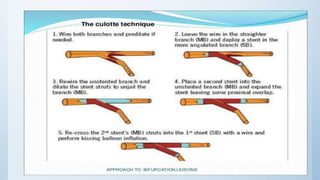
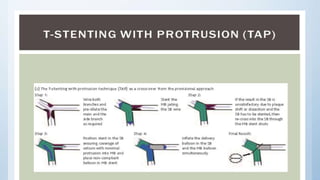
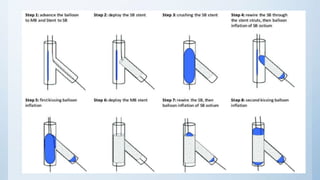
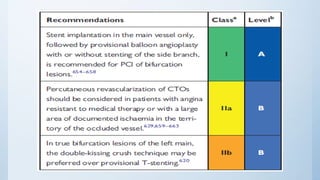
Bifurcation stenosis
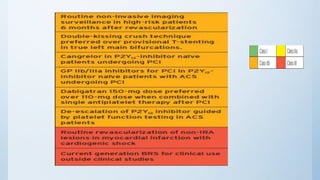
• Main branch-only stenting with provisional stenting of the side branch
should be the preferred approach for most bifurcation lesions
• Upfront side branch stenting may be preferable
– The presence of a large side branch (>_2.75 mm) with a long ostial side branch
lesion (>5 mm)
– Anticipated difficulty in accessing an important side branch after main branch
stenting
– True distal LM bifurcations
• In non-LM bifurcation lesions, there is no compelling evidence that one
technique is superior to the others in terms of major clinical endpoints
• In LM true bifurcation lesions, double-kissing crush has the most
favourable outcome data
Chronic total coronary occlusion
• EUROCTO trial showed symptomatic improvement by PCI of CTO
• In cases of RWMA in the territory of the CTO, objective evidence of
viability should be sought
• The decision to attempt CTO-PCI should be considered against the
risk of greater contrast volume, longer fluoroscopy time, and higher
MACE rates in comparison with non-CTO PCI patients
• Ad hoc PCI is generally not recommended
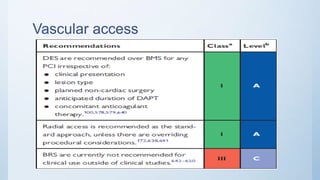
Vascular access
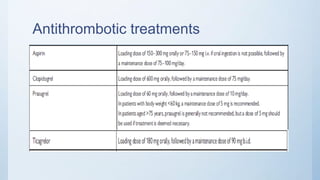
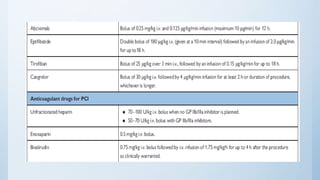
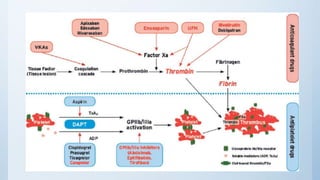
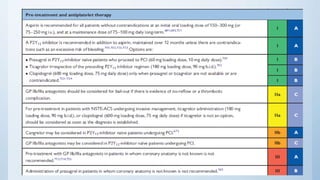
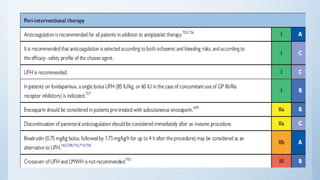
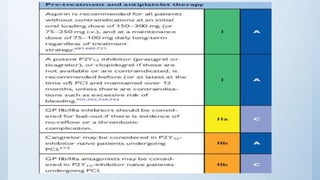
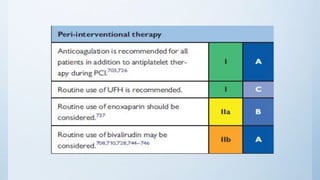
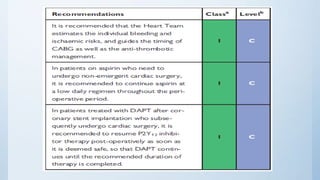
Antithrombotic treatments
Percutaneous coronary intervention
in stable coronary artery disease
PCI in Non-ST-segment elevation acute
coronary syndrome
PCI in ST-segment elevation myocardial
infarction
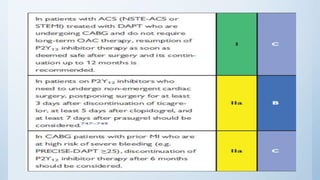
Coronary artery bypass grafting
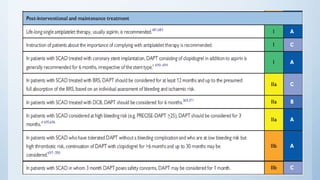
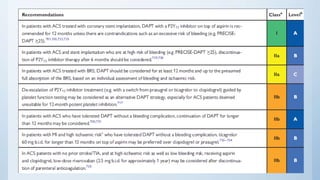
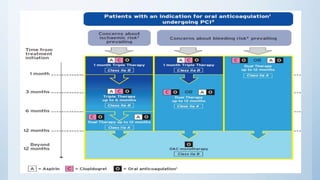
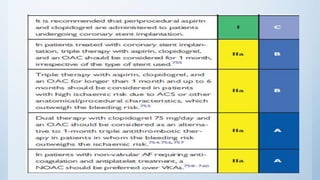
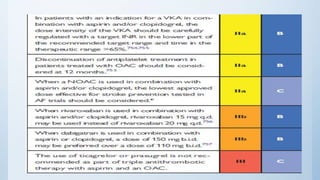
Antithrombotic therapy after PCI in
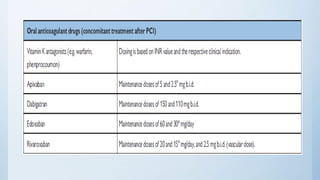
patients requiring oral anticoagulation
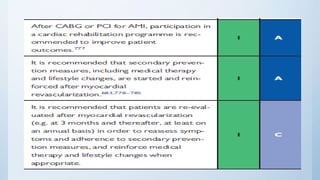
FOLLOW UP
2018 esc revascularization

2018 esc revascularization

  • 1.
  • 4.
    What is newin the 2018 Guidelines
  • 9.
    Diagnostic tools toguide myocardial revascularization • Non-invasive diagnostic tools – Assessment of ischaemia and the evaluation of viability in patients with RWMA or reduced EF – ECG testing in patients with symptoms of angina, non-invasive imaging is recommended as the first-line test – PLATFORM (Prospective LongitudinAl Trial of FFRct: Outcome and Resource Impacts) study showed that in patients referred for invasive angiography due to chest pain and intermediate pre-test probability of CAD, assessment with CT and CT-FFR reduced the number of patients with subsequently normal invasive coronary angiograms

  • 10.
    Assessment of myocardialviability • Myocardial contrast echocardiography, single-photon emission CT (SPECT), and late gadolinium enhancement cardiac magnetic resonance (LGE-CMR)  cellular integrity • Positron emission tomography (PET)  cellular metabolism • Dobutamine techniques contractile reserve
  • 12.
  • 13.
    Pressure-derived fractional flowreserve • Use of FFR in patients with intermediate-grade coronary stenosis including LM stenosis – FFR current standard of care for functional assessment of lesion severity with intermediate-grade stenosis (40 – 90% stenosis) without evidence of ischaemia in non-invasive testing, or multivessel disease – PCI can be safely deferred if FFR is > 0.75 – DEFINE-FLAIR and iFR-SWEDEHEART used the 0.80 cut-off for lesion selection by FFR, with favourable event rates at 1 year • Use of FFR to identify lesions requiring revascularization in patients with multivessel CAD undergoing PCI – FAME trial showed that in patients with multivessel disease randomized to an FFR-guided PCI strategy (using <_0.80), outcomes at 12 were superior compared with angiography-guided PCI
  • 14.
    • FFR guidedmanagement vs. medical therapy in patients with CAD – In SCAD and at least one stenosis with FFR <_0.80, the FAME 2 trial showed that PCI using DES implantation improved the primary endpoint of death, non-fatal MI, or urgent revascularization within 2 years compared with medical treatment alone
  • 15.
    • Other pressure-derivedindices – Instantaneous wave-free ratio • Concomitant severe AS no adequate RCT data to support the use of FFR or iwFR for the guidance of revascularization • Use of intravascular imaging for the diagnostic assessment – IVUS imaging allows real-time assessment of vessel size, lumen area, and plaque composition and volume – comparison with OCT it has more limited spatial resolution, but better penetration depth and potential advantage in terms of vessel sizing – IVUS axial resolution 150 mcm – OCT axial resolution 15 mcm
  • 16.
    • Disadvantages ofOCT imaging are that it requires complete blood clearance from the lumen for imaging and that it has more limited penetration • Uses – Evaluation of stenosis severity in lesions with intermediate grade stenosis – Evaluation of lesion morphology in lesions ambiguous with angiographic assessment – Characterization of plaque composition • Revascularization deferred if the minimal luminal area (MLA) >6 mm2
  • 18.
    Timing of revascularization •Ad hoc PCI is defined as a therapeutic intervention performed within the same procedure as the diagnostic coronary angiography
  • 21.
    Revascularization for stable coronaryartery disease • Rationale for revascularization – Relieves angina, reduces the use of anti-anginal drugs, and improves exercise capacity and quality of life
  • 22.
    PCI vs. CABG •Criteria for decision-making – Predicted surgical mortality – Anatomical complexity of CAD – Anticipated completeness of revascularization
  • 23.
    Predicted surgical mortality •European System for CardiacOperative Risk Evaluation (EuroSCORE II) • Society of Thoracic Surgeons (STS) score – No established cut-offs for low predicted surgical mortality based on the EuroSCORE II or STS score – Individualized treatment decisions are needed
  • 25.
    Anatomical complexity ofCAD • SYNTAX score
  • 28.
    Completeness of revascularization •Anatomical complete revascularization was defined as PCI or bypass of all epicardial vessels with a diameter exceeding >1.5 mm and a luminal reduction of >_50% in at least one angiographic view • Residual SYNTAX score >8 after PCI was associated with significant increases in the 5-year risk of death and of the composite of death, MI, and stroke
  • 32.
    • It remainsto be determined whether revascularization by PCI improves prognosis in patients with SCAD • ISCHEMIA (International Study of Comparative Health Effectiveness With Medical and Invasive Approaches) study recruiting 5000 patients with SCAD and evidence of moderate to severe ischemia, randomized before CAG to medical therapy or an invasive strategy to detect differences in the primary endpoint of death or MI
  • 33.
  • 35.
    Type of revascularization •PCI – Implantation of new-generation DES  standard treatment strategy even when DAPT cannot be sustained beyond 1 month post- intervention – Complete one-stage revascularization is associated with better clinical outcome than multistage PCI – As in STEMI routine treatment of non-culprit lesions during the primary intervention by PCI is harmful in NSTE-ACS patients with cardiogenic shock  CULPRIT-SHOCK (Culprit Lesion Only PCI versus Multivessel PCI in Cardiogenic Shock) trial – 5–10% of NSTE-ACS patients require CABG
  • 36.
  • 38.
    Primary PCI • Meta-analysisof 10 trials has shown that complete revascularization was associated with a lower risk of MACE due to a lower risk of urgent revascularizationwith no significant difference in mortality or MI • One-stage multivessel PCI during STEMI without cardiogenic shock should be considered in patients in the presence of multiple, critical stenoses or highly unstable lesions (thrombus or lesion disruption), and if there is persistent ischaemia after PCI on the supposed culprit lesion • Culprit lesion-only PCI is recommended in patients with AMI with cardiogenic shock
  • 39.
    – Routine useof thrombus aspiration is not indicated • PCI after thrombolysis and in patients with late diagnosis – Time frame of 2–24 h after successful lysis is recommended – Failed fibrinolysis, or re-occlusion or reinfarction  immediate coronary angiography and rescue PCI – Patients presenting between 12 and 48 h after the onset of symptoms, even if pain free and with stable haemodynamics, may still benefit from early coronary angiography and possibly PCI – Patients presenting days after the acute event with a completed MI, only those with recurrent angina or documented residual ischaemia—and proven viability in a large myocardial territory— may be considered for revascularization
  • 43.
  • 44.
    Chronic heart failure •Multivessel PCI can be a valuable option in HF patients if complete revascularization is possible • PCI should be considered in older patients without diabetes in whom complete revascularization can be achieved, whereas CABG is preferred in younger patients with more extensive CAD or those with diabetes. • In patients with diabetes and LV moderate or severe dysfunction (EF <50%), CABG is associated with better long-ter survival and reduced incidence of MACE
  • 45.
    Ventricular reconstruction and aneurysmresection • Aim of surgical ventricular reconstruction (SVR) is to restore physiological volume, and achieve an elliptical shape of the LV • Aim of ventricular aneurysmectomy is to remove fibrous scars in cases of severe dilatation, thrombus formation, or as a source of life- threatening ventricular arrhythmias
  • 47.
    Acute heart failureand cardiogenic shock • Mechanical circulatory support – Intraaortic balloon pump (IABP) – Veno-arterial extracorporeal membrane oxygenation (ECMO) – Percutaneous left ventricular assist devices (pLVADs)
  • 48.
    • IABP-SHOCK IItrial showed that the use of IABPs did not reduce 30 day mortality and that there was no evidence of long-term benefit • ECMO – Decompresses the venous system; increases coronary, cerebral, and peripheral perfusion; and also provides supplementary blood oxygenation • pLVADs – (i) A transaortic microaxial pump (Impella) that directly unloads the LV providing 2.5 - 5 L/min blood flow – (ii) A transseptal centrifugal assist device (TandemHeart) that unloads the LV via a cannula introduced into the left atrium through a transseptal puncture
  • 51.
    Revascularization in patients withdiabetes • Patients with diabetes are more likely to have LM disease and multivessel CAD, with more diffuse disease involving smaller vessels • Greater atherosclerotic burden and an increased number of lipid-rich plaques, which are prone to rupture • A meta-analysis of four RCTs compared PCI with the use of early- generation DES vs. CABG in patients with diabetes and multivessel CAD suggested a higher risk of death and MI with revascularization by early-generation DES but a lower risk of stroke
  • 52.
    • Generally recommendedthat in elective cases, metformin should be withheld before angiography or PCI for 48 h, as the plasma half-life of metformin is 6.2hrs and reintroduced 48 h later
  • 53.
    Revascularization in patients withchronic kidney disease • Prevention of contrast-induced nephropathy – Factors – CKD, diabetes mellitus, congestive HF, haemodynamic instability, reduced plasma volume, female sex, advanced age, anaemia, and periprocedural bleeding, type and volume of contrast administered
  • 57.
    Revascularization in patientsrequiring valve interventions • Patients with concomitant severe primary mitral regurgitation (MR) should undergo mitral valve repair at the time of CABG • Controversy exists about the treatment of moderate secondary or ischaemic MR in patients undergoing CABG
  • 59.
    Severe secondary MRwas defined as an effective regurgitant orifice area >0.40 cm2
  • 60.
    Associated peripheral artery diseases •Prevention of stroke associated with CAD and myocardial revascularization • Ischaemic stroke after CABG is multifactorial: – Thrombo-embolism from the aorta, its branches, or the heart; atrial arrhythmias; inflammatory pro-thrombogenic milieu; lower levels of antiplatelet therapy perioperatively; and haemodynamic instability – Prophylactic carotid revascularization to patients at highest risk of postoperative stroke, i.e. patients with severe bilateral lesions or a history of prior stroke/TIA
  • 61.
    • Associated coronaryand PAD – Patients with CAD, 7–16% have lower extremity artery disease (LEAD), which is associated with a worse prognosis, even if it remains frequently asymptomatic
  • 64.
    Repeat revascularization • Earlygraft failure – Up to 12% of grafts – Conduit defects, anastomotic technical errors, poor native vessel run-off, or competitive flow with the native vessel – Perioperative angiography is recommended in cases of Suspected severe myocardial ischemia – Emergency ad hoc PCI may limit the extent of infarction – Target for PCI is the native vessel or the IMA graft – SVG and any anastomotic site should be avoided
  • 65.
    Redo surgery • Anatomyis unsuitable for PCI, if several important grafts are occluded, or in the case of clear anastomotic errors • Asymptomatic patients, repeat revascularization should be considered if the artery is of an appropriate size and supplies a large territory of myocardium
  • 66.
    Acute PCI failure •Need for urgent surgery to manage pci-related complications is uncommon (<1%) and only required in patients with major complications – Large, evolving MI due to iatrogenic vessel occlusion that cannot be salvaged percutaneously – Recurrent cardiac tamponade after pericardiocentesis following pci-related vessel rupture
  • 67.
    Disease progression andlate graft failure • Due to the progression of disease in native vessels or de novo disease of bypass grafts • Repeat revascularization is indicated in the presence of significant symptoms despite medical treatment, and in asymptomatic patients with objective evidence of large myocardial ischemia (>10% of the LV)
  • 68.
    Redo CABG orPCI • PCI in patients with prior CABG has worse acute and long-term outcomes than in patients without prior CABG • Redo CABG has a two- to four-fold increased mortality compared with first-time CABG, and repeat CABG is generally performed infrequently • PCI is the preferred revascularization strategy in patients with amenable anatomy • If PCI in the native vessel fails or is not an option, PCI in the diseased SVG should be considered • CABG considered for patients with extensively diseased or occluded bypass grafts and diffuse native vessel disease
  • 69.
    PCI for saphenousvein graft lesions • Associated with an increased risk of distal coronary embolization, frequently resulting in periprocedural MI • Distal occlusion/aspiration, proximal occlusion, suction, filter devices, or covered stents
  • 70.
    Repeat PCI • Restenosis •Meta-analysis suggests that repeat stenting with new generation DES (with EES) and DCB are ranked first and second as the highest efficacy treatments • Outcomes of patients with in-stent restenosis after DES are poorer than those in patients with BMS in-stent restenosis • Recurrent episodes of diffuse in-stent restenosis in large vessels—and in those with associated multi vessel disease, especially in the presence of other complex lesions such as chronic total occlusions— CABG should be considered
  • 71.
    • Disease progression –Account for up to 50% of re interventions • Stent thrombosis – Aggressive, high-pressure balloon dilation – Liberal use of intracoronary imaging – New stent may be required to overcome edge-related dissections and adjacent lesions, or to optimize final results
  • 75.
    Arrhythmias • Ventricular arrhythmias –Patients with ischaemic LV dysfunction (LVEF <_35%) who are considered for primary preventive ICD implantation should be evaluated for ischaemia and/or for potential revascularization targets – Urgent coronary angiography and revascularization should be part of the management of patients with electrical storm – In survivors of out-of-hospital cardiac arrest, early coronary angiography and PCI, if appropriate, should be performed irrespective of the ECG pattern if no obvious non-cardiac cause of the arrhythmia is present
  • 76.
    Atrial arrhythmias • New-onsetAF in patients undergoing PCI occurs in 2–6% of procedures and increases with age, pre-existing HF, AMI, and arterial hypertension • During the first 4 days after AMI • impaired prognosis and a more than doubling of the risk of death, congestive HF, and stroke • Post-operative AF affects one-third of patients undergoing cardiac surgery • Beta-blockers decrease the incidence of post-operative AF after CABG
  • 79.
    Procedural aspects ofCABG • AIM – bypass all epicardial vessels with a diameter exceeding >_1.5 mm and a luminal reduction of >_50% in at least one angiographic view • All patients should receive at least one arterial graft—the left IMA (LIMA)— preferentially to the LAD • Second arterial graft should be considered depending on the patient’s life expectancy, risk factors for sternal wound complications, coronary anatomy, degree of target vessel stenosis, graft quality, and surgical expertise • BIMA grafting is associated with an increase in sternal dehiscence, and an increased rate of mediastinitis in obese patients and patients with diabetes
  • 83.
    Procedural aspects ofPCI • Balloon angioplasty might be considered for the treatment of selected patients in whom implantation of stents is not technically feasible, or in a vessel that is considered to be too small to be stented • DCB angioplasty are limited to the treatment of in-stent restenosis • In cases of stent failure, including restenosis and stent thrombosis, the use of IVUS should be considered in order to identify and correct underlying mechanical factors
  • 84.
    Bifurcation stenosis • Mainbranch-only stenting with provisional stenting of the side branch should be the preferred approach for most bifurcation lesions • Upfront side branch stenting may be preferable – The presence of a large side branch (>_2.75 mm) with a long ostial side branch lesion (>5 mm) – Anticipated difficulty in accessing an important side branch after main branch stenting – True distal LM bifurcations
  • 88.
    • In non-LMbifurcation lesions, there is no compelling evidence that one technique is superior to the others in terms of major clinical endpoints • In LM true bifurcation lesions, double-kissing crush has the most favourable outcome data
  • 89.
    Chronic total coronaryocclusion • EUROCTO trial showed symptomatic improvement by PCI of CTO • In cases of RWMA in the territory of the CTO, objective evidence of viability should be sought • The decision to attempt CTO-PCI should be considered against the risk of greater contrast volume, longer fluoroscopy time, and higher MACE rates in comparison with non-CTO PCI patients • Ad hoc PCI is generally not recommended
  • 90.
  • 92.
  • 96.
    Percutaneous coronary intervention instable coronary artery disease
  • 101.
    PCI in Non-ST-segmentelevation acute coronary syndrome
  • 105.
    PCI in ST-segmentelevation myocardial infarction
  • 108.
  • 112.
    Antithrombotic therapy afterPCI in patients requiring oral anticoagulation
  • 119.