
Obesity Series 2020
Lee Kaplan, MD, PhD, FTOS
Director
Obesity, Metabolism, and Nutrition Institute
Massachusetts General Hospital
Why is Bariatric
Surgery So Effective?
Obesity Series 2020
Dr. Lee Kaplan discusses the role of the
gastrointestinal tract and gut microbiota in
the mechanism of action of bariatric surgery.
Why is Bariatric
Surgery So Effective?
MASSACHUSETTS
GENERAL HOSPITAL
MASSACHUSETTS
GENERAL HOSPITAL
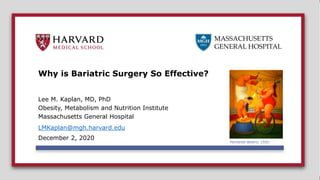
Why is Bariatric Surgery So Effective?
Lee M. Kaplan, MD, PhD
Obesity, Metabolism and Nutrition Institute
Massachusetts General Hospital
LMKaplan@mgh.harvard.edu
December 2, 2020
Fernando Botero, 1932-
MASSACHUSETTS
GENERAL HOSPITAL
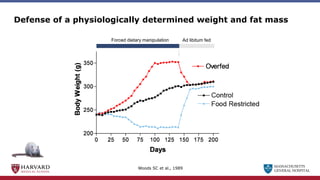
Defense of a physiologically determined weight and fat mass
Forced dietary manipulation Ad libitum fed
Woods SC et al., 1989
MASSACHUSETTS
GENERAL HOSPITAL
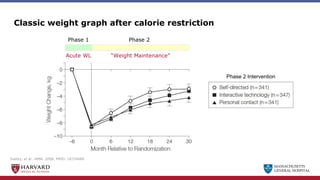
Classic weight graph after calorie restriction
Svetky, et al. JAMA. 2008. PMID: 18334689
Phase 1
Acute WL
Phase 2
“Weight Maintenance”
Phase 2 Intervention
MASSACHUSETTS
GENERAL HOSPITAL
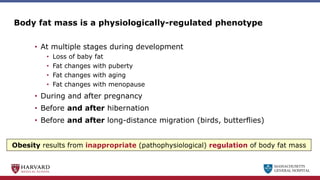
Body fat mass is a physiologically-regulated phenotype
• At multiple stages during development
• Loss of baby fat
• Fat changes with puberty
• Fat changes with aging
• Fat changes with menopause
• During and after pregnancy
• Before and after hibernation
• Before and after long-distance migration (birds, butterflies)
Obesity results from inappropriate (pathophysiological) regulation of body fat mass
MASSACHUSETTS
GENERAL HOSPITAL
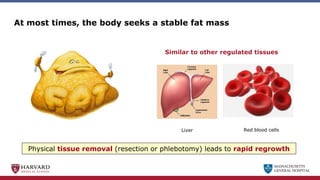
At most times, the body seeks a stable fat mass
Liver
Similar to other regulated tissues
Red blood cells
Physical tissue removal (resection or phlebotomy) leads to rapid regrowth
MASSACHUSETTS
GENERAL HOSPITAL
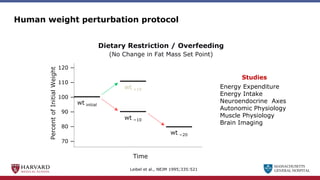
Human weight perturbation protocol
Leibel et al., NEJM 1995;335:521
Percent
of
Initial
Weight
Time
120 −
110 −
100 −
90 −
80 −
70 −
wt initial
wt −10
wt −20
wt +10
Studies
Energy Expenditure
Energy Intake
Neuroendocrine Axes
Autonomic Physiology
Muscle Physiology
Brain Imaging
Dietary Restriction / Overfeeding
(No Change in Fat Mass Set Point)
MASSACHUSETTS
GENERAL HOSPITAL
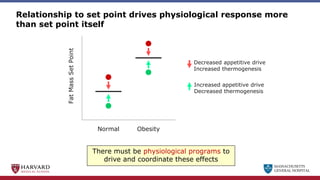
Fat
Mass
Set
Point
Normal Obesity
Decreased appetitive drive
Increased thermogenesis
Increased appetitive drive
Decreased thermogenesis
There must be physiological programs to
drive and coordinate these effects
Relationship to set point drives physiological response more
than set point itself
MASSACHUSETTS
GENERAL HOSPITAL
What this means …
Obesity results from a dysfunction of the normal fat
mass regulatory mechanisms …
… leading to an elevated defended body fat mass
MASSACHUSETTS
GENERAL HOSPITAL
What it also means …
Overeating does not cause obesity …
… obesity causes overeating
MASSACHUSETTS
GENERAL HOSPITAL
And …
Undereating doesn’t fix obesity …
… fixing obesity leads to undereating
MASSACHUSETTS
GENERAL HOSPITAL
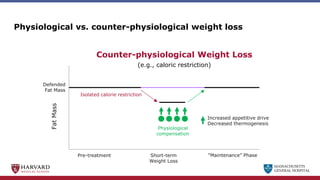
Physiological vs. counter-physiological weight loss
Fat
Mass
Increased appetitive drive
Decreased thermogenesis
Pre-treatment Short-term
Weight Loss
Defended
Fat Mass
Counter-physiological Weight Loss
(e.g., caloric restriction)
“Maintenance” Phase
Physiological
compensation
Isolated calorie restriction
MASSACHUSETTS
GENERAL HOSPITAL
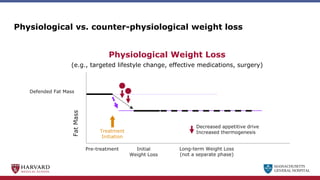
Physiological vs. counter-physiological weight loss
Physiological Weight Loss
(e.g., targeted lifestyle change, effective medications, surgery)
Fat
Mass
Pre-treatment Initial
Weight Loss
Defended Fat Mass
Long-term Weight Loss
(not a separate phase)
Decreased appetitive drive
Increased thermogenesis
Treatment
Initiation
MASSACHUSETTS
GENERAL HOSPITAL
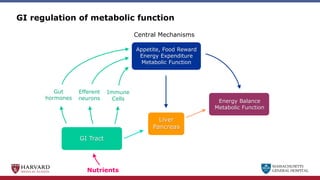
GI regulation of metabolic function
Energy Balance
Metabolic Function
Nutrients
GI Tract
Gut
hormones
Efferent
neurons
Immune
Cells
Appetite, Food Reward
Energy Expenditure
Metabolic Function
Central Mechanisms
Liver
Pancreas
MASSACHUSETTS
GENERAL HOSPITAL
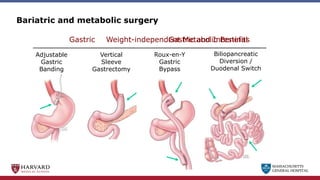
Bariatric and metabolic surgery
Vertical
Sleeve
Gastrectomy
Roux-en-Y
Gastric
Bypass
Gastric
Adjustable
Gastric
Banding
Biliopancreatic
Diversion /
Duodenal Switch
Gastric and Intestinal
Weight-independent Metabolic Benefits
MASSACHUSETTS
GENERAL HOSPITAL
MASSACHUSETTS
GENERAL HOSPITAL
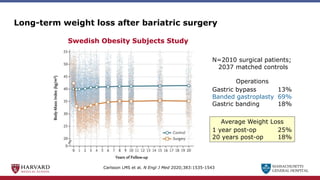
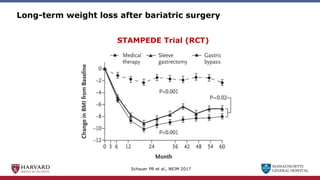
Long-term weight loss after bariatric surgery
Carlsson LMS et al. N Engl J Med 2020;383:1535-1543
Swedish Obesity Subjects Study
N=2010 surgical patients;
2037 matched controls
Operations
Gastric bypass 13%
Banded gastroplasty 69%
Gastric banding 18%
Average Weight Loss
1 year post-op 25%
20 years post-op 18%
MASSACHUSETTS
GENERAL HOSPITAL
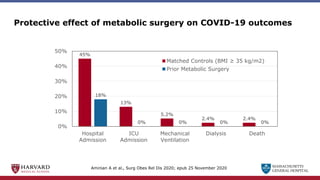
Protective effect of metabolic surgery on COVID-19 outcomes
45%
13%
5.2%
2.4% 2.4%
18%
0% 0% 0% 0%
0%
10%
20%
30%
40%
50%
Hospital
Admission
ICU
Admission
Mechanical
Ventilation
Dialysis Death
Matched Controls (BMI ≥ 35 kg/m2)
Prior Metabolic Surgery
Aminian A et al., Surg Obes Rel Dis 2020; epub 25 November 2020
MASSACHUSETTS
GENERAL HOSPITAL
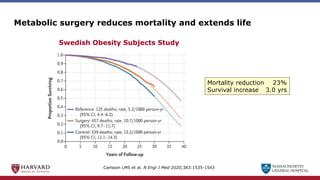
Metabolic surgery reduces mortality and extends life
Carlsson LMS et al. N Engl J Med 2020;383:1535-1543
Swedish Obesity Subjects Study
Mortality reduction 23%
Survival increase 3.0 yrs
MASSACHUSETTS
GENERAL HOSPITAL
Why is bariatric surgery so effective?
MASSACHUSETTS
GENERAL HOSPITAL
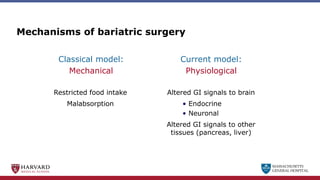
Mechanisms of bariatric surgery
Restricted food intake
Malabsorption
Classical model:
Mechanical
Altered GI signals to brain
• Endocrine
• Neuronal
Altered GI signals to other
tissues (pancreas, liver)
Current model:
Physiological
MASSACHUSETTS
GENERAL HOSPITAL
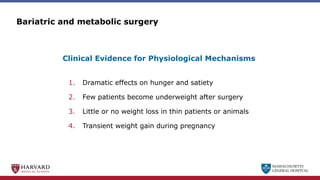
Bariatric and metabolic surgery
1. Dramatic effects on hunger and satiety
2. Few patients become underweight after surgery
3. Little or no weight loss in thin patients or animals
4. Transient weight gain during pregnancy
Clinical Evidence for Physiological Mechanisms
MASSACHUSETTS
GENERAL HOSPITAL
The effects of bariatric surgery are fundamentally
different from the effects of calorie restriction
MASSACHUSETTS
GENERAL HOSPITAL
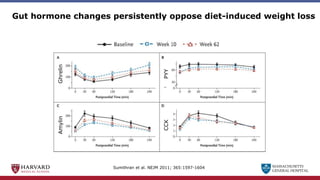
Gut hormone changes persistently oppose diet-induced weight loss
Sumithran et al. NEJM 2011; 365:1597-1604
PYY
CCK
Amylin
Ghrelin
MASSACHUSETTS
GENERAL HOSPITAL
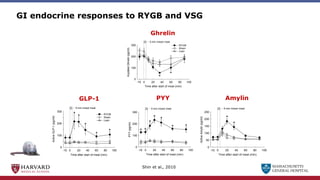
GI endocrine responses to RYGB and VSG
Time after start of meal (min)
0 20 40 60 80 100
Active
GLP-1
(pg/ml)
0
50
100
150
200
250
300
RYGB
Sham
Lean
5 min mixed meal
-10
*
#
*
*
*
GLP-1
Time after start of meal (min)
0 20 40 60 80 100
PYY
(pg/ml)
0
50
100
150
200
250
300
RYGB
Sham
Lean
5 min mixed meal
-10
*
*
*
*
*
*
*
Time after start of meal (min)
0 20 40 60 80 100
PYY
(pg/ml)
0
50
100
150
200
250
300
RYGB
Sham
Lean
5 min mixed meal
-10
*
*
*
*
*
*
*
PYY
Time after start of meal (min)
0 20 40 60 80 100
Active
Amylin
(pg/ml)
0
50
100
150
200
250
5 min mixed meal
-10
*
*
Amylin
Time after start of meal (min)
0 20 40 60 80 100
Acylated
Ghrelin
(pg/ml)
0
50
100
150
200
250
300 RYGB
Sham
Lean
5 min mixed meal
-10
*
*
Ghrelin
Shin et al., 2010
MASSACHUSETTS
GENERAL HOSPITAL
Diet RYGB
Energy expenditure 
Appetite 
Hunger 
Satiety 
Reward-based eating 
Stress response 
Gut peptides
Ghrelin 
GLP-1, PYY, CCK, amylin 
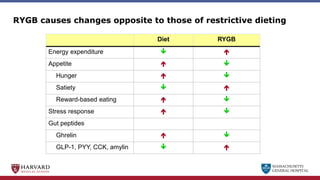
RYGB causes changes opposite to those of restrictive dieting
Diet RYGB
Energy expenditure  
Appetite  
Hunger  
Satiety  
Reward-based eating  
Stress response  
Gut peptides
Ghrelin  
GLP-1, PYY, CCK, amylin  
MASSACHUSETTS
GENERAL HOSPITAL
How does surgery do this?
MASSACHUSETTS
GENERAL HOSPITAL
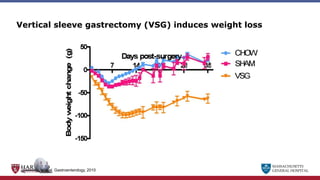
Vertical sleeve gastrectomy (VSG) induces weight loss
Stefater MA et al. Gastroenterology, 2010
MASSACHUSETTS
GENERAL HOSPITAL
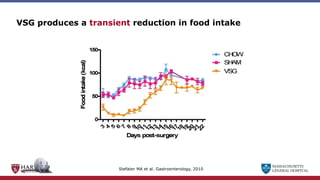
VSG produces a transient reduction in food intake
Stefater MA et al. Gastroenterology, 2010
MASSACHUSETTS
GENERAL HOSPITAL
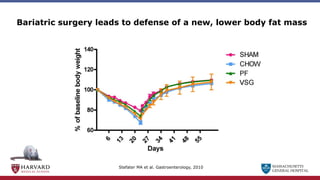
Bariatric surgery leads to defense of a new, lower body fat mass
Stefater MA et al. Gastroenterology, 2010
MASSACHUSETTS
GENERAL HOSPITAL
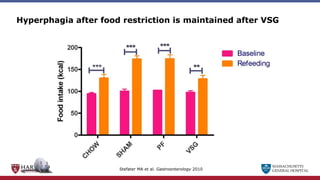
Hyperphagia after food restriction is maintained after VSG
Stefater MA et al. Gastroenterology 2010
MASSACHUSETTS
GENERAL HOSPITAL
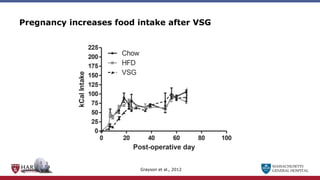
Pregnancy increases food intake after VSG
Grayson et al., 2012
MASSACHUSETTS
GENERAL HOSPITAL
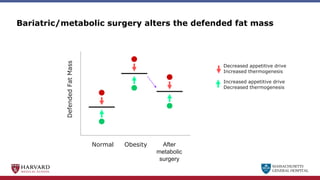
Bariatric/metabolic surgery alters the defended fat mass
Defended
Fat
Mass
Normal Obesity After
metabolic
surgery
Decreased appetitive drive
Increased thermogenesis
Increased appetitive drive
Decreased thermogenesis
MASSACHUSETTS
GENERAL HOSPITAL
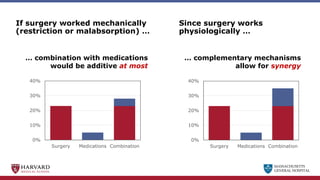
If surgery worked mechanically
(restriction or malabsorption) …
0%
10%
20%
30%
40%
Surgery Medications Combination
… combination with medications
would be additive at most
Since surgery works
physiologically …
… complementary mechanisms
allow for synergy
0%
10%
20%
30%
40%
Surgery Medications Combination
MASSACHUSETTS
GENERAL HOSPITAL
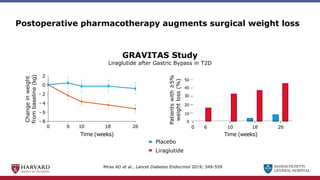
Postoperative pharmacotherapy augments surgical weight loss
GRAVITAS Study
Liraglutide after Gastric Bypass in T2D
0 6 10 18 26
Time (weeks)
p<0·0001
p<
0·0001
Change
in
weight
from
baseline
(kg)
2
0
- 2
- 4
- 6
- 8
Miras AD et al., Lancet Diabetes Endocrinol 2019; 549-559
Placebo
Liraglutide
50
40
30
20
10
0
Patients
with
≥5%
weight
loss
(%)
0 6 10 18 26
Time (weeks)
MASSACHUSETTS
GENERAL HOSPITAL
By what mechanisms does surgery
change the body’s defended fat mass?
MASSACHUSETTS
GENERAL HOSPITAL
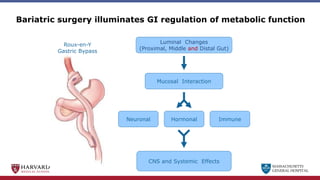
Bariatric surgery illuminates GI regulation of metabolic function
CNS and Systemic Effects
Luminal Changes
(Proximal, Middle and Distal Gut)
Roux-en-Y
Gastric Bypass
Mucosal Interaction
Neuronal Immune
Hormonal
MASSACHUSETTS
GENERAL HOSPITAL
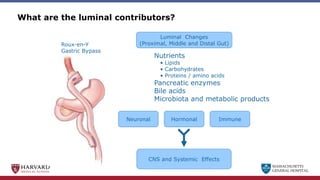
Nutrients
• Lipids
• Carbohydrates
• Proteins / amino acids
Pancreatic enzymes
Bile acids
Microbiota and metabolic products
What are the luminal contributors?
Luminal Changes
(Proximal, Middle and Distal Gut)
Roux-en-Y
Gastric Bypass
Neuronal Immune
Hormonal
CNS and Systemic Effects
MASSACHUSETTS
GENERAL HOSPITAL
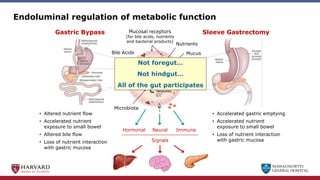
Endoluminal regulation of metabolic function
NH2
COOH
Gastric Bypass Sleeve Gastrectomy
Hormonal Neural Immune
Bile Acids
Nutrients
Microbiota
Mucosal receptors
(for bile acids, nutrients
and bacterial products)
Mucus
• Altered nutrient flow
• Accelerated nutrient
exposure to small bowel
• Altered bile flow
• Loss of nutrient interaction
with gastric mucosa
SCFA
Metabolites
Signals
• Accelerated gastric emptying
• Accelerated nutrient
exposure to small bowel
• Loss of nutrient interaction
with gastric mucosa
Not foregut…
Not hindgut…
All of the gut participates
MASSACHUSETTS
GENERAL HOSPITAL
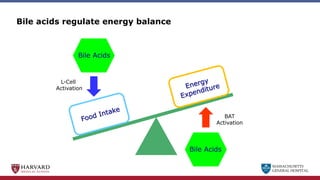
Bile acids regulate energy balance
Bile Acids
Bile Acids
BAT
Activation
L-Cell
Activation
MASSACHUSETTS
GENERAL HOSPITAL
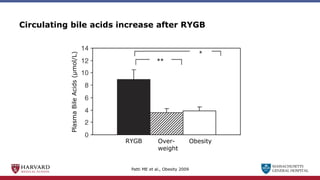
Patti ME et al., Obesity 2009
Circulating bile acids increase after RYGB
RYGB Obesity
Over-
weight
Plasma
Bile
Acids
(μmol/L)
MASSACHUSETTS
GENERAL HOSPITAL
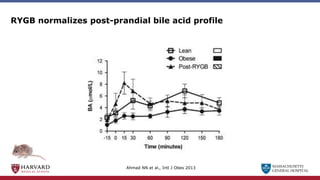
RYGB normalizes post-prandial bile acid profile
Ahmad NN et al., Intl J Obes 2013
MASSACHUSETTS
GENERAL HOSPITAL
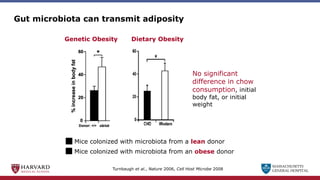
Mice colonized with microbiota from a lean donor
Mice colonized with microbiota from an obese donor
No significant
difference in chow
consumption, initial
body fat, or initial
weight
Genetic Obesity Dietary Obesity
Turnbaugh et al., Nature 2006, Cell Host Microbe 2008
Gut microbiota can transmit adiposity
MASSACHUSETTS
GENERAL HOSPITAL
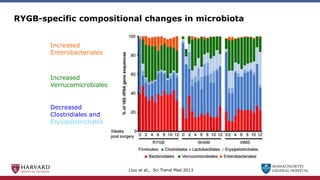
RYGB-specific compositional changes in microbiota
Decreased
Clostridiales and
Erysipelotrichales
Increased
Enterobacteriales
Increased
Verrucomicrobiales
Liou et al., Sci Transl Med 2013
MASSACHUSETTS
GENERAL HOSPITAL
Do these changes contribute to the outcomes after RYGB?
MASSACHUSETTS
GENERAL HOSPITAL
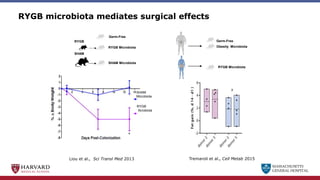
RYGB microbiota mediates surgical effects
Liou et al., Sci Transl Med 2013 Tremaroli et al., Cell Metab 2015
Obesity Microbiota
Germ-Free
RYGB Microbiota
RYGB Microbiota
SHAM Microbiota
Germ-Free
RYGB
SHAM
RYGB
Microbiota
SHAM
Microbiota
MASSACHUSETTS
GENERAL HOSPITAL
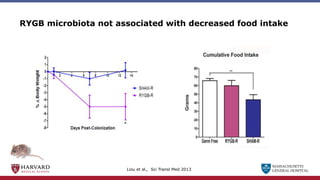
RYGB microbiota not associated with decreased food intake
Liou et al., Sci Transl Med 2013
MASSACHUSETTS
GENERAL HOSPITAL
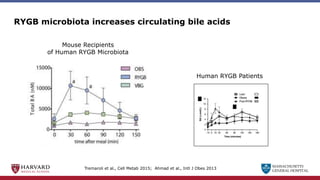
RYGB microbiota increases circulating bile acids
Mouse Recipients
of Human RYGB Microbiota
Human RYGB Patients
Tremaroli et al., Cell Metab 2015; Ahmad et al., Intl J Obes 2013
MASSACHUSETTS
GENERAL HOSPITAL
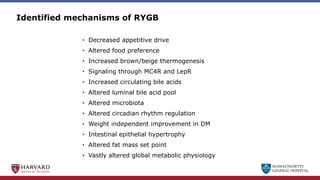
Identified mechanisms of RYGB
• Decreased appetitive drive
• Altered food preference
• Increased brown/beige thermogenesis
• Signaling through MC4R and LepR
• Increased circulating bile acids
• Altered luminal bile acid pool
• Altered microbiota
• Altered circadian rhythm regulation
• Weight independent improvement in DM
• Intestinal epithelial hypertrophy
• Altered fat mass set point
• Vastly altered global metabolic physiology
MASSACHUSETTS
GENERAL HOSPITAL
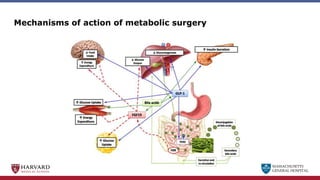
Mechanisms of action of metabolic surgery
MASSACHUSETTS
GENERAL HOSPITAL
How does surgery improve glucose homeostasis?
MASSACHUSETTS
GENERAL HOSPITAL
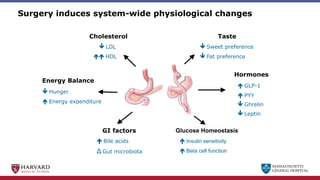
Surgery induces system-wide physiological changes
 LDL
 HDL
Cholesterol
 Hunger
 Energy expenditure
Energy Balance
 Bile acids
Δ Gut microbiota
GI factors
 Sweet preference
 Fat preference
Taste
 GLP-1
 PYY
Hormones
 Ghrelin
 Leptin
 Insulin sensitivity
 Beta cell function
Glucose Homeostasis
MASSACHUSETTS
GENERAL HOSPITAL
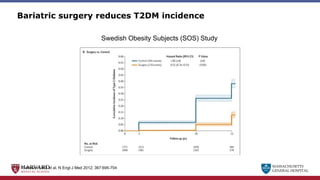
Bariatric surgery reduces T2DM incidence
Carlsson LMS et al. N Engl J Med 2012; 367:695-704
Swedish Obesity Subjects (SOS) Study
MASSACHUSETTS
GENERAL HOSPITAL
Long-term weight loss after bariatric surgery
Schauer PR et al., NEJM 2017
STAMPEDE Trial (RCT)
MASSACHUSETTS
GENERAL HOSPITAL
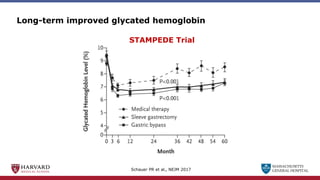
Long-term improved glycated hemoglobin
Schauer PR et al., NEJM 2017
STAMPEDE Trial
MASSACHUSETTS
GENERAL HOSPITAL
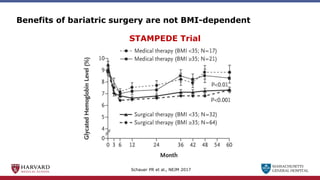
Months Following Randomization
Benefits of bariatric surgery are not BMI-dependent
Schauer PR et al., NEJM 2017
STAMPEDE Trial
MASSACHUSETTS
GENERAL HOSPITAL
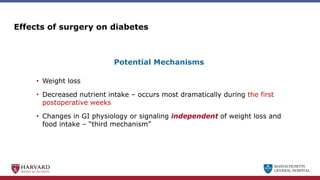
Effects of surgery on diabetes
• Weight loss
• Decreased nutrient intake – occurs most dramatically during the first
postoperative weeks
• Changes in GI physiology or signaling independent of weight loss and
food intake – “third mechanism”
Potential Mechanisms
MASSACHUSETTS
GENERAL HOSPITAL
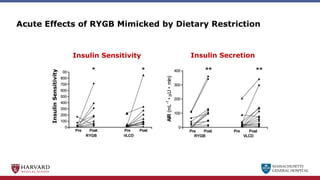
Acute Effects of RYGB Mimicked by Dietary Restriction
Insulin Sensitivity Insulin Secretion
Insulin
Sensitivity
MASSACHUSETTS
GENERAL HOSPITAL
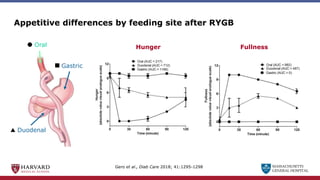
Appetitive differences by feeding site after RYGB
Gero et al., Diab Care 2018; 41:1295-1298
Oral
Gastric
Duodenal
Hunger Fullness
MASSACHUSETTS
GENERAL HOSPITAL
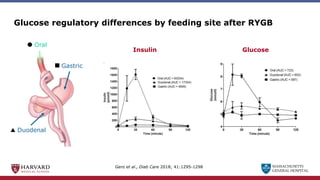
Glucose regulatory differences by feeding site after RYGB
Insulin Glucose
Oral
Gastric
Duodenal
Gero et al., Diab Care 2018; 41:1295-1298
MASSACHUSETTS
GENERAL HOSPITAL
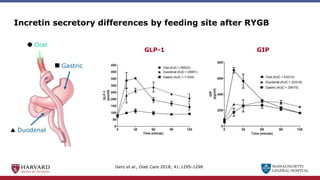
Incretin secretory differences by feeding site after RYGB
Oral
Gastric
Duodenal
GLP-1 GIP
Gero et al., Diab Care 2018; 41:1295-1298
MASSACHUSETTS
GENERAL HOSPITAL
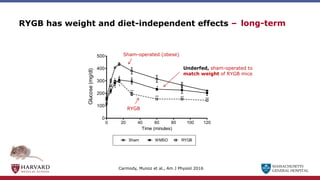
RYGB has weight and diet-independent effects –
0 20 40 60 80 100 120
0
100
200
300
400
500
Sham RYGB
WMSO
**
** ** **
*
*
*
*
*
*
Time (minutes)
Glucose
(mg/dl)
Carmody, Munoz et al., Am J Physiol 2016
long-term
Sham-operated (obese)
RYGB
Underfed, sham-operated to
match weight of RYGB mice
MASSACHUSETTS
GENERAL HOSPITAL
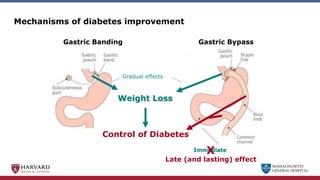
Control of Diabetes
Gastric Banding Gastric Bypass
Mechanisms of diabetes improvement
Gradual effects
Weight Loss
Immediate
Control of Diabetes
X
Late (and lasting) effect
MASSACHUSETTS
GENERAL HOSPITAL
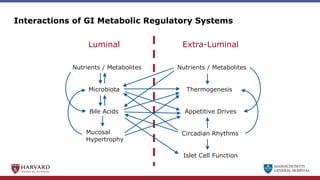
Interactions of GI Metabolic Regulatory Systems
Thermogenesis
Microbiota
Bile Acids
Islet Cell Function
Mucosal
Hypertrophy
Nutrients / Metabolites Nutrients / Metabolites
Circadian Rhythms
Luminal Extra-Luminal
Appetitive Drives
MASSACHUSETTS
GENERAL HOSPITAL
The powerful physiological effects of bariatric
surgery highlight the critical role of the GI tract in
regulating diverse metabolic functions (including
energy balance).
The many cellular and molecular mechanisms of
these GI-based regulatory processes are only now
beginning to be understood.
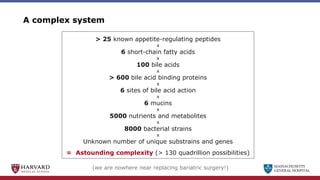
A complex system
> 25 known appetite-regulating peptides
x
6 short-chain fatty acids
x
100 bile acids
x
> 600 bile acid binding proteins
x
6 sites of bile acid action
x
6 mucins
x
5000 nutrients and metabolites
x
8000 bacterial strains
x
Unknown number of unique substrains and genes
= Astounding complexity (> 130 quadrillion possibilities)
(we are nowhere near replacing bariatric surgery!)
MASSACHUSETTS
GENERAL HOSPITAL
No one mechanism appears to dominate the others …
For example, evidence to date suggests that
changes in the microbiota account for no more
than 20% of the weight loss effect of surgery
MASSACHUSETTS
GENERAL HOSPITAL
Conclusions 1 – neither restriction nor malabsorption
• The true metabolic effectiveness of bariatric surgery appears to reside in its
physiological effects
• Mechanical effects (e.g., restriction or malabsorption) are much less important
• In the absence of profound weight loss (>15-20%), weight loss-independent
metabolic effects are particularly important
MASSACHUSETTS
GENERAL HOSPITAL
Conclusions 2 – the gut rules
• Bariatric surgery has demonstrated a critical role of the gut in regulating
metabolic function and energy
• This observation has revealed new therapeutic opportunities for treating
obesity, type 2 diabetes and other obesity complications, using either surgery
itself or “surgicomimetic” therapy
• It has also reinforced the importance of GI targets for effective
pharmacological treatment of obesity and diabetes
• GLP-1 agonists
• Amylin agonists
• DPP-4 inhibitors
MASSACHUSETTS
GENERAL HOSPITAL
Conclusions 3 – evolving mechanistic understanding
• Our understanding of how bariatric surgery works – and thus the role of
the GI tract in metabolic regulation – has evolved:
• Mechanical
• Physiological – overdriving the causative pathophysiology
• Integration with critical physiological “chokepoints” – dependent on functional
regulatory system (e.g., MC4R, LepR, circadian oscillator)
• Global influence on GI-metabolic physiology – widespread, broad-based effects
that influence multiple known mechanisms, leading to a change in metabolic set
points
• Little evidence for isolated, parallel mechanisms
• Each observed mechanism appears integrated with many others
• Few or no “high value” therapeutic targets yet identified
MASSACHUSETTS
GENERAL HOSPITAL
Conclusions 4 – bariatric is metabolic
• Obesity is a metabolic disease (always)
• Whether driven by behavior, environment, genetics, or your mother…
… the final common pathway of obesity (excess fat) is physiological (i.e.,
metabolic)
• Effective bariatric surgery is therefore metabolic surgery …
… even when used for obesity alone
… it causes weight loss by the same mechanisms by which it improves diabetes or
fatty liver disease
MASSACHUSETTS
GENERAL HOSPITAL
Conclusions 5 – looking forward
• The initial goal of identifying both causes and effective treatments of
obesity and metabolic disorders through understanding of metabolic surgery
remains intact …
… but the pharmacological replacement for surgery is less
straightforward than initially imagined
• Nonetheless, understanding the mechanisms of surgery will reveal important
clues about GI regulation of metabolic biology, helping to understand the
coordination among different components of these essential homeostatic
control systems
MASSACHUSETTS
GENERAL HOSPITAL
The powerful physiological effects of bariatric surgery highlight
the critical role of the GI tract in regulating diverse metabolic
functions (including energy balance).
The many cellular and molecular mechanisms of these GI-based
regulatory processes are only now beginning to be understood.
Take-home message
MASSACHUSETTS
GENERAL HOSPITAL
MASSACHUSETTS
GENERAL HOSPITAL
Why is Bariatric Surgery So Effective?
Lee M. Kaplan, MD, PhD
Obesity, Metabolism and Nutrition Institute
Massachusetts General Hospital
LMKaplan@mgh.harvard.edu
December 2, 2020
Fernando Botero, 1932-
Obesity Series 2020
Lee Kaplan, MD, PhD, FTOS
Director
Obesity, Metabolism, and Nutrition Institute
Massachusetts General Hospital
Thank you for
participating!
CLICK HERE to learn
more and watch the
webinar

Why is Bariatric Surgery so Effective?

  • 1.
    Obesity Series 2020 LeeKaplan, MD, PhD, FTOS Director Obesity, Metabolism, and Nutrition Institute Massachusetts General Hospital Why is Bariatric Surgery So Effective?
  • 2.
    Obesity Series 2020 Dr.Lee Kaplan discusses the role of the gastrointestinal tract and gut microbiota in the mechanism of action of bariatric surgery. Why is Bariatric Surgery So Effective?
  • 3.
    MASSACHUSETTS GENERAL HOSPITAL MASSACHUSETTS GENERAL HOSPITAL Whyis Bariatric Surgery So Effective? Lee M. Kaplan, MD, PhD Obesity, Metabolism and Nutrition Institute Massachusetts General Hospital LMKaplan@mgh.harvard.edu December 2, 2020 Fernando Botero, 1932-
  • 4.
    MASSACHUSETTS GENERAL HOSPITAL Defense ofa physiologically determined weight and fat mass Forced dietary manipulation Ad libitum fed Woods SC et al., 1989
  • 5.
    MASSACHUSETTS GENERAL HOSPITAL Classic weightgraph after calorie restriction Svetky, et al. JAMA. 2008. PMID: 18334689 Phase 1 Acute WL Phase 2 “Weight Maintenance” Phase 2 Intervention
  • 6.
    MASSACHUSETTS GENERAL HOSPITAL Body fatmass is a physiologically-regulated phenotype • At multiple stages during development • Loss of baby fat • Fat changes with puberty • Fat changes with aging • Fat changes with menopause • During and after pregnancy • Before and after hibernation • Before and after long-distance migration (birds, butterflies) Obesity results from inappropriate (pathophysiological) regulation of body fat mass
  • 7.
    MASSACHUSETTS GENERAL HOSPITAL At mosttimes, the body seeks a stable fat mass Liver Similar to other regulated tissues Red blood cells Physical tissue removal (resection or phlebotomy) leads to rapid regrowth
  • 8.
    MASSACHUSETTS GENERAL HOSPITAL Human weightperturbation protocol Leibel et al., NEJM 1995;335:521 Percent of Initial Weight Time 120 − 110 − 100 − 90 − 80 − 70 − wt initial wt −10 wt −20 wt +10 Studies Energy Expenditure Energy Intake Neuroendocrine Axes Autonomic Physiology Muscle Physiology Brain Imaging Dietary Restriction / Overfeeding (No Change in Fat Mass Set Point)
  • 9.
    MASSACHUSETTS GENERAL HOSPITAL Fat Mass Set Point Normal Obesity Decreasedappetitive drive Increased thermogenesis Increased appetitive drive Decreased thermogenesis There must be physiological programs to drive and coordinate these effects Relationship to set point drives physiological response more than set point itself
  • 10.
    MASSACHUSETTS GENERAL HOSPITAL What thismeans … Obesity results from a dysfunction of the normal fat mass regulatory mechanisms … … leading to an elevated defended body fat mass
  • 11.
    MASSACHUSETTS GENERAL HOSPITAL What italso means … Overeating does not cause obesity … … obesity causes overeating
  • 12.
    MASSACHUSETTS GENERAL HOSPITAL And … Undereatingdoesn’t fix obesity … … fixing obesity leads to undereating
  • 13.
    MASSACHUSETTS GENERAL HOSPITAL Physiological vs.counter-physiological weight loss Fat Mass Increased appetitive drive Decreased thermogenesis Pre-treatment Short-term Weight Loss Defended Fat Mass Counter-physiological Weight Loss (e.g., caloric restriction) “Maintenance” Phase Physiological compensation Isolated calorie restriction
  • 14.
    MASSACHUSETTS GENERAL HOSPITAL Physiological vs.counter-physiological weight loss Physiological Weight Loss (e.g., targeted lifestyle change, effective medications, surgery) Fat Mass Pre-treatment Initial Weight Loss Defended Fat Mass Long-term Weight Loss (not a separate phase) Decreased appetitive drive Increased thermogenesis Treatment Initiation
  • 15.
    MASSACHUSETTS GENERAL HOSPITAL GI regulationof metabolic function Energy Balance Metabolic Function Nutrients GI Tract Gut hormones Efferent neurons Immune Cells Appetite, Food Reward Energy Expenditure Metabolic Function Central Mechanisms Liver Pancreas
  • 16.
    MASSACHUSETTS GENERAL HOSPITAL Bariatric andmetabolic surgery Vertical Sleeve Gastrectomy Roux-en-Y Gastric Bypass Gastric Adjustable Gastric Banding Biliopancreatic Diversion / Duodenal Switch Gastric and Intestinal Weight-independent Metabolic Benefits MASSACHUSETTS GENERAL HOSPITAL
  • 17.
    MASSACHUSETTS GENERAL HOSPITAL Long-term weightloss after bariatric surgery Carlsson LMS et al. N Engl J Med 2020;383:1535-1543 Swedish Obesity Subjects Study N=2010 surgical patients; 2037 matched controls Operations Gastric bypass 13% Banded gastroplasty 69% Gastric banding 18% Average Weight Loss 1 year post-op 25% 20 years post-op 18%
  • 18.
    MASSACHUSETTS GENERAL HOSPITAL Protective effectof metabolic surgery on COVID-19 outcomes 45% 13% 5.2% 2.4% 2.4% 18% 0% 0% 0% 0% 0% 10% 20% 30% 40% 50% Hospital Admission ICU Admission Mechanical Ventilation Dialysis Death Matched Controls (BMI ≥ 35 kg/m2) Prior Metabolic Surgery Aminian A et al., Surg Obes Rel Dis 2020; epub 25 November 2020
  • 19.
    MASSACHUSETTS GENERAL HOSPITAL Metabolic surgeryreduces mortality and extends life Carlsson LMS et al. N Engl J Med 2020;383:1535-1543 Swedish Obesity Subjects Study Mortality reduction 23% Survival increase 3.0 yrs
  • 20.
    MASSACHUSETTS GENERAL HOSPITAL Why isbariatric surgery so effective?
  • 21.
    MASSACHUSETTS GENERAL HOSPITAL Mechanisms ofbariatric surgery Restricted food intake Malabsorption Classical model: Mechanical Altered GI signals to brain • Endocrine • Neuronal Altered GI signals to other tissues (pancreas, liver) Current model: Physiological
  • 22.
    MASSACHUSETTS GENERAL HOSPITAL Bariatric andmetabolic surgery 1. Dramatic effects on hunger and satiety 2. Few patients become underweight after surgery 3. Little or no weight loss in thin patients or animals 4. Transient weight gain during pregnancy Clinical Evidence for Physiological Mechanisms
  • 23.
    MASSACHUSETTS GENERAL HOSPITAL The effectsof bariatric surgery are fundamentally different from the effects of calorie restriction
  • 24.
    MASSACHUSETTS GENERAL HOSPITAL Gut hormonechanges persistently oppose diet-induced weight loss Sumithran et al. NEJM 2011; 365:1597-1604 PYY CCK Amylin Ghrelin
  • 25.
    MASSACHUSETTS GENERAL HOSPITAL GI endocrineresponses to RYGB and VSG Time after start of meal (min) 0 20 40 60 80 100 Active GLP-1 (pg/ml) 0 50 100 150 200 250 300 RYGB Sham Lean 5 min mixed meal -10 * # * * * GLP-1 Time after start of meal (min) 0 20 40 60 80 100 PYY (pg/ml) 0 50 100 150 200 250 300 RYGB Sham Lean 5 min mixed meal -10 * * * * * * * Time after start of meal (min) 0 20 40 60 80 100 PYY (pg/ml) 0 50 100 150 200 250 300 RYGB Sham Lean 5 min mixed meal -10 * * * * * * * PYY Time after start of meal (min) 0 20 40 60 80 100 Active Amylin (pg/ml) 0 50 100 150 200 250 5 min mixed meal -10 * * Amylin Time after start of meal (min) 0 20 40 60 80 100 Acylated Ghrelin (pg/ml) 0 50 100 150 200 250 300 RYGB Sham Lean 5 min mixed meal -10 * * Ghrelin Shin et al., 2010
  • 26.
    MASSACHUSETTS GENERAL HOSPITAL Diet RYGB Energyexpenditure  Appetite  Hunger  Satiety  Reward-based eating  Stress response  Gut peptides Ghrelin  GLP-1, PYY, CCK, amylin  RYGB causes changes opposite to those of restrictive dieting Diet RYGB Energy expenditure   Appetite   Hunger   Satiety   Reward-based eating   Stress response   Gut peptides Ghrelin   GLP-1, PYY, CCK, amylin  
  • 27.
  • 28.
    MASSACHUSETTS GENERAL HOSPITAL Vertical sleevegastrectomy (VSG) induces weight loss Stefater MA et al. Gastroenterology, 2010
  • 29.
    MASSACHUSETTS GENERAL HOSPITAL VSG producesa transient reduction in food intake Stefater MA et al. Gastroenterology, 2010
  • 30.
    MASSACHUSETTS GENERAL HOSPITAL Bariatric surgeryleads to defense of a new, lower body fat mass Stefater MA et al. Gastroenterology, 2010
  • 31.
    MASSACHUSETTS GENERAL HOSPITAL Hyperphagia afterfood restriction is maintained after VSG Stefater MA et al. Gastroenterology 2010
  • 32.
    MASSACHUSETTS GENERAL HOSPITAL Pregnancy increasesfood intake after VSG Grayson et al., 2012
  • 33.
    MASSACHUSETTS GENERAL HOSPITAL Bariatric/metabolic surgeryalters the defended fat mass Defended Fat Mass Normal Obesity After metabolic surgery Decreased appetitive drive Increased thermogenesis Increased appetitive drive Decreased thermogenesis
  • 34.
    MASSACHUSETTS GENERAL HOSPITAL If surgeryworked mechanically (restriction or malabsorption) … 0% 10% 20% 30% 40% Surgery Medications Combination … combination with medications would be additive at most Since surgery works physiologically … … complementary mechanisms allow for synergy 0% 10% 20% 30% 40% Surgery Medications Combination
  • 35.
    MASSACHUSETTS GENERAL HOSPITAL Postoperative pharmacotherapyaugments surgical weight loss GRAVITAS Study Liraglutide after Gastric Bypass in T2D 0 6 10 18 26 Time (weeks) p<0·0001 p< 0·0001 Change in weight from baseline (kg) 2 0 - 2 - 4 - 6 - 8 Miras AD et al., Lancet Diabetes Endocrinol 2019; 549-559 Placebo Liraglutide 50 40 30 20 10 0 Patients with ≥5% weight loss (%) 0 6 10 18 26 Time (weeks)
  • 36.
    MASSACHUSETTS GENERAL HOSPITAL By whatmechanisms does surgery change the body’s defended fat mass?
  • 37.
    MASSACHUSETTS GENERAL HOSPITAL Bariatric surgeryilluminates GI regulation of metabolic function CNS and Systemic Effects Luminal Changes (Proximal, Middle and Distal Gut) Roux-en-Y Gastric Bypass Mucosal Interaction Neuronal Immune Hormonal
  • 38.
    MASSACHUSETTS GENERAL HOSPITAL Nutrients • Lipids •Carbohydrates • Proteins / amino acids Pancreatic enzymes Bile acids Microbiota and metabolic products What are the luminal contributors? Luminal Changes (Proximal, Middle and Distal Gut) Roux-en-Y Gastric Bypass Neuronal Immune Hormonal CNS and Systemic Effects
  • 39.
    MASSACHUSETTS GENERAL HOSPITAL Endoluminal regulationof metabolic function NH2 COOH Gastric Bypass Sleeve Gastrectomy Hormonal Neural Immune Bile Acids Nutrients Microbiota Mucosal receptors (for bile acids, nutrients and bacterial products) Mucus • Altered nutrient flow • Accelerated nutrient exposure to small bowel • Altered bile flow • Loss of nutrient interaction with gastric mucosa SCFA Metabolites Signals • Accelerated gastric emptying • Accelerated nutrient exposure to small bowel • Loss of nutrient interaction with gastric mucosa Not foregut… Not hindgut… All of the gut participates
  • 40.
    MASSACHUSETTS GENERAL HOSPITAL Bile acidsregulate energy balance Bile Acids Bile Acids BAT Activation L-Cell Activation
  • 41.
    MASSACHUSETTS GENERAL HOSPITAL Patti MEet al., Obesity 2009 Circulating bile acids increase after RYGB RYGB Obesity Over- weight Plasma Bile Acids (μmol/L)
  • 42.
    MASSACHUSETTS GENERAL HOSPITAL RYGB normalizespost-prandial bile acid profile Ahmad NN et al., Intl J Obes 2013
  • 43.
    MASSACHUSETTS GENERAL HOSPITAL Mice colonizedwith microbiota from a lean donor Mice colonized with microbiota from an obese donor No significant difference in chow consumption, initial body fat, or initial weight Genetic Obesity Dietary Obesity Turnbaugh et al., Nature 2006, Cell Host Microbe 2008 Gut microbiota can transmit adiposity
  • 44.
    MASSACHUSETTS GENERAL HOSPITAL RYGB-specific compositionalchanges in microbiota Decreased Clostridiales and Erysipelotrichales Increased Enterobacteriales Increased Verrucomicrobiales Liou et al., Sci Transl Med 2013
  • 45.
    MASSACHUSETTS GENERAL HOSPITAL Do thesechanges contribute to the outcomes after RYGB?
  • 46.
    MASSACHUSETTS GENERAL HOSPITAL RYGB microbiotamediates surgical effects Liou et al., Sci Transl Med 2013 Tremaroli et al., Cell Metab 2015 Obesity Microbiota Germ-Free RYGB Microbiota RYGB Microbiota SHAM Microbiota Germ-Free RYGB SHAM RYGB Microbiota SHAM Microbiota
  • 47.
    MASSACHUSETTS GENERAL HOSPITAL RYGB microbiotanot associated with decreased food intake Liou et al., Sci Transl Med 2013
  • 48.
    MASSACHUSETTS GENERAL HOSPITAL RYGB microbiotaincreases circulating bile acids Mouse Recipients of Human RYGB Microbiota Human RYGB Patients Tremaroli et al., Cell Metab 2015; Ahmad et al., Intl J Obes 2013
  • 49.
    MASSACHUSETTS GENERAL HOSPITAL Identified mechanismsof RYGB • Decreased appetitive drive • Altered food preference • Increased brown/beige thermogenesis • Signaling through MC4R and LepR • Increased circulating bile acids • Altered luminal bile acid pool • Altered microbiota • Altered circadian rhythm regulation • Weight independent improvement in DM • Intestinal epithelial hypertrophy • Altered fat mass set point • Vastly altered global metabolic physiology
  • 50.
  • 51.
    MASSACHUSETTS GENERAL HOSPITAL How doessurgery improve glucose homeostasis?
  • 52.
    MASSACHUSETTS GENERAL HOSPITAL Surgery inducessystem-wide physiological changes  LDL  HDL Cholesterol  Hunger  Energy expenditure Energy Balance  Bile acids Δ Gut microbiota GI factors  Sweet preference  Fat preference Taste  GLP-1  PYY Hormones  Ghrelin  Leptin  Insulin sensitivity  Beta cell function Glucose Homeostasis
  • 53.
    MASSACHUSETTS GENERAL HOSPITAL Bariatric surgeryreduces T2DM incidence Carlsson LMS et al. N Engl J Med 2012; 367:695-704 Swedish Obesity Subjects (SOS) Study
  • 54.
    MASSACHUSETTS GENERAL HOSPITAL Long-term weightloss after bariatric surgery Schauer PR et al., NEJM 2017 STAMPEDE Trial (RCT)
  • 55.
    MASSACHUSETTS GENERAL HOSPITAL Long-term improvedglycated hemoglobin Schauer PR et al., NEJM 2017 STAMPEDE Trial
  • 56.
    MASSACHUSETTS GENERAL HOSPITAL Months FollowingRandomization Benefits of bariatric surgery are not BMI-dependent Schauer PR et al., NEJM 2017 STAMPEDE Trial
  • 57.
    MASSACHUSETTS GENERAL HOSPITAL Effects ofsurgery on diabetes • Weight loss • Decreased nutrient intake – occurs most dramatically during the first postoperative weeks • Changes in GI physiology or signaling independent of weight loss and food intake – “third mechanism” Potential Mechanisms
  • 58.
    MASSACHUSETTS GENERAL HOSPITAL Acute Effectsof RYGB Mimicked by Dietary Restriction Insulin Sensitivity Insulin Secretion Insulin Sensitivity
  • 59.
    MASSACHUSETTS GENERAL HOSPITAL Appetitive differencesby feeding site after RYGB Gero et al., Diab Care 2018; 41:1295-1298 Oral Gastric Duodenal Hunger Fullness
  • 60.
    MASSACHUSETTS GENERAL HOSPITAL Glucose regulatorydifferences by feeding site after RYGB Insulin Glucose Oral Gastric Duodenal Gero et al., Diab Care 2018; 41:1295-1298
  • 61.
    MASSACHUSETTS GENERAL HOSPITAL Incretin secretorydifferences by feeding site after RYGB Oral Gastric Duodenal GLP-1 GIP Gero et al., Diab Care 2018; 41:1295-1298
  • 62.
    MASSACHUSETTS GENERAL HOSPITAL RYGB hasweight and diet-independent effects – 0 20 40 60 80 100 120 0 100 200 300 400 500 Sham RYGB WMSO ** ** ** ** * * * * * * Time (minutes) Glucose (mg/dl) Carmody, Munoz et al., Am J Physiol 2016 long-term Sham-operated (obese) RYGB Underfed, sham-operated to match weight of RYGB mice
  • 63.
    MASSACHUSETTS GENERAL HOSPITAL Control ofDiabetes Gastric Banding Gastric Bypass Mechanisms of diabetes improvement Gradual effects Weight Loss Immediate Control of Diabetes X Late (and lasting) effect
  • 64.
    MASSACHUSETTS GENERAL HOSPITAL Interactions ofGI Metabolic Regulatory Systems Thermogenesis Microbiota Bile Acids Islet Cell Function Mucosal Hypertrophy Nutrients / Metabolites Nutrients / Metabolites Circadian Rhythms Luminal Extra-Luminal Appetitive Drives
  • 65.
    MASSACHUSETTS GENERAL HOSPITAL The powerfulphysiological effects of bariatric surgery highlight the critical role of the GI tract in regulating diverse metabolic functions (including energy balance). The many cellular and molecular mechanisms of these GI-based regulatory processes are only now beginning to be understood. A complex system > 25 known appetite-regulating peptides x 6 short-chain fatty acids x 100 bile acids x > 600 bile acid binding proteins x 6 sites of bile acid action x 6 mucins x 5000 nutrients and metabolites x 8000 bacterial strains x Unknown number of unique substrains and genes = Astounding complexity (> 130 quadrillion possibilities) (we are nowhere near replacing bariatric surgery!)
  • 66.
    MASSACHUSETTS GENERAL HOSPITAL No onemechanism appears to dominate the others … For example, evidence to date suggests that changes in the microbiota account for no more than 20% of the weight loss effect of surgery
  • 67.
    MASSACHUSETTS GENERAL HOSPITAL Conclusions 1– neither restriction nor malabsorption • The true metabolic effectiveness of bariatric surgery appears to reside in its physiological effects • Mechanical effects (e.g., restriction or malabsorption) are much less important • In the absence of profound weight loss (>15-20%), weight loss-independent metabolic effects are particularly important
  • 68.
    MASSACHUSETTS GENERAL HOSPITAL Conclusions 2– the gut rules • Bariatric surgery has demonstrated a critical role of the gut in regulating metabolic function and energy • This observation has revealed new therapeutic opportunities for treating obesity, type 2 diabetes and other obesity complications, using either surgery itself or “surgicomimetic” therapy • It has also reinforced the importance of GI targets for effective pharmacological treatment of obesity and diabetes • GLP-1 agonists • Amylin agonists • DPP-4 inhibitors
  • 69.
    MASSACHUSETTS GENERAL HOSPITAL Conclusions 3– evolving mechanistic understanding • Our understanding of how bariatric surgery works – and thus the role of the GI tract in metabolic regulation – has evolved: • Mechanical • Physiological – overdriving the causative pathophysiology • Integration with critical physiological “chokepoints” – dependent on functional regulatory system (e.g., MC4R, LepR, circadian oscillator) • Global influence on GI-metabolic physiology – widespread, broad-based effects that influence multiple known mechanisms, leading to a change in metabolic set points • Little evidence for isolated, parallel mechanisms • Each observed mechanism appears integrated with many others • Few or no “high value” therapeutic targets yet identified
  • 70.
    MASSACHUSETTS GENERAL HOSPITAL Conclusions 4– bariatric is metabolic • Obesity is a metabolic disease (always) • Whether driven by behavior, environment, genetics, or your mother… … the final common pathway of obesity (excess fat) is physiological (i.e., metabolic) • Effective bariatric surgery is therefore metabolic surgery … … even when used for obesity alone … it causes weight loss by the same mechanisms by which it improves diabetes or fatty liver disease
  • 71.
    MASSACHUSETTS GENERAL HOSPITAL Conclusions 5– looking forward • The initial goal of identifying both causes and effective treatments of obesity and metabolic disorders through understanding of metabolic surgery remains intact … … but the pharmacological replacement for surgery is less straightforward than initially imagined • Nonetheless, understanding the mechanisms of surgery will reveal important clues about GI regulation of metabolic biology, helping to understand the coordination among different components of these essential homeostatic control systems
  • 72.
    MASSACHUSETTS GENERAL HOSPITAL The powerfulphysiological effects of bariatric surgery highlight the critical role of the GI tract in regulating diverse metabolic functions (including energy balance). The many cellular and molecular mechanisms of these GI-based regulatory processes are only now beginning to be understood. Take-home message
  • 73.
    MASSACHUSETTS GENERAL HOSPITAL MASSACHUSETTS GENERAL HOSPITAL Whyis Bariatric Surgery So Effective? Lee M. Kaplan, MD, PhD Obesity, Metabolism and Nutrition Institute Massachusetts General Hospital LMKaplan@mgh.harvard.edu December 2, 2020 Fernando Botero, 1932-
  • 74.
    Obesity Series 2020 LeeKaplan, MD, PhD, FTOS Director Obesity, Metabolism, and Nutrition Institute Massachusetts General Hospital Thank you for participating! CLICK HERE to learn more and watch the webinar