Strengths-based 
approaches to planning 
Jaime Daignault, OCDD 
Jaime.daignault@ocdd.org 
November 3, 2014 
Snow King Lodge * Jackson, WY
Frameworks 
• Asset Based Community Development – John 
McKnight www.abcdinstitute.org 
• The Golden Circle – Simon Sinek 
http://www.ted.com/talks/simon_sinek_how_great_leaders_inspire_action?langu 
age=en 
• Values and beliefs about people, communities 
and service systems – Bruce Anderson 
www.communityactivators.com 
• Appreciative Inquiry (Google it!) 
• Essentialism, Greg McCowan 
https://www.youtube.com/watch?v=T9x6D09AKBU 
2
Asset-Based Community 
Development (ABCD) 
• Mobilizing assets present in any community: 
– People and their gifts 
– Associations of people and their gifts (voluntary) 
– Local institutions (hierarchy, governing body, money is 
exchanged) 
– The physical environment of a community 
– Exchange of gifts/economy 
• Successful community development is asset-based, 
internally-focused, and relationship-driven 
3
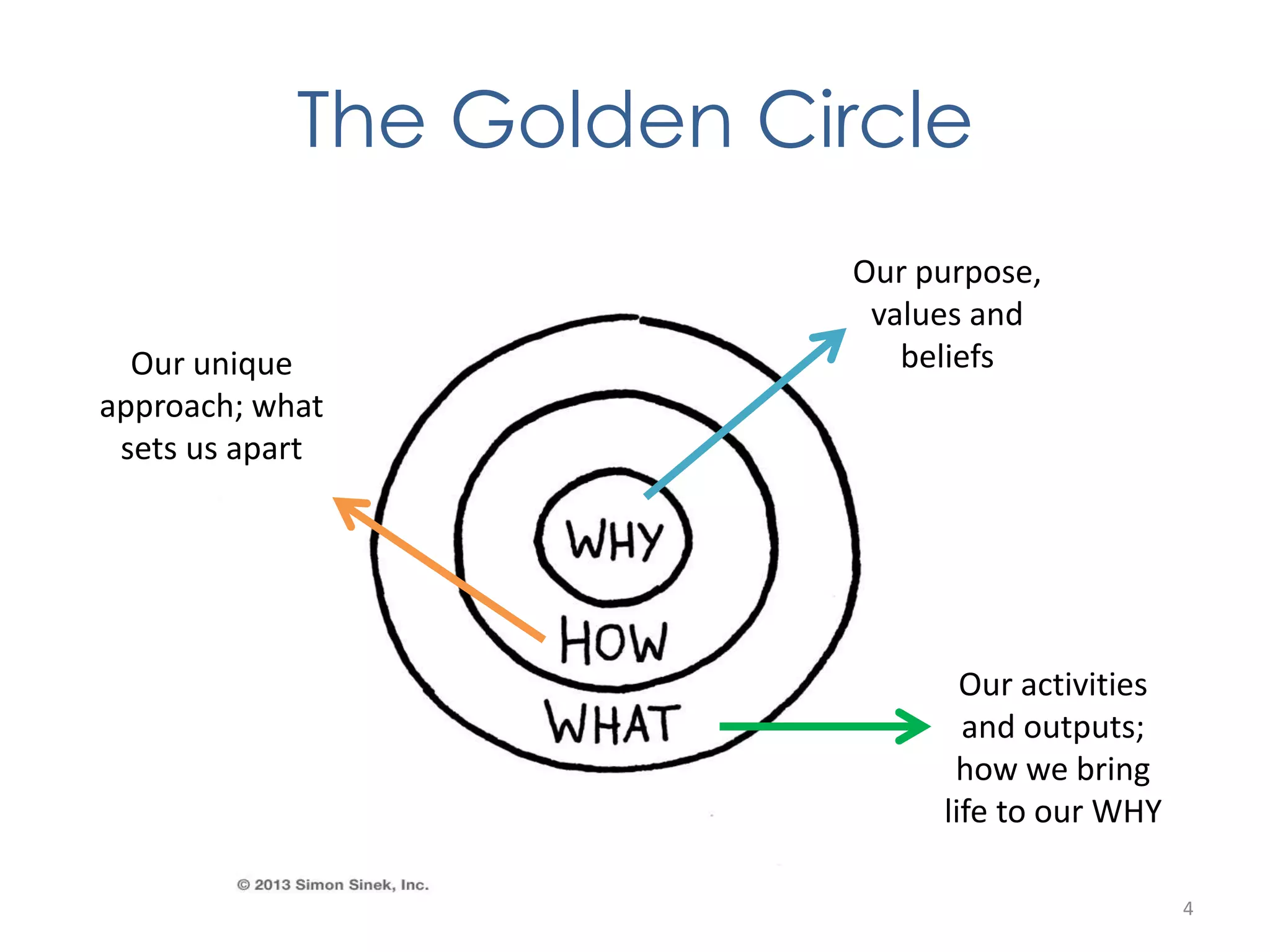
The Golden Circle 
4 
Our purpose, 
values and 
beliefs 
Our activities 
and outputs; 
how we bring 
life to our WHY 
Our unique 
approach; what 
sets us apart
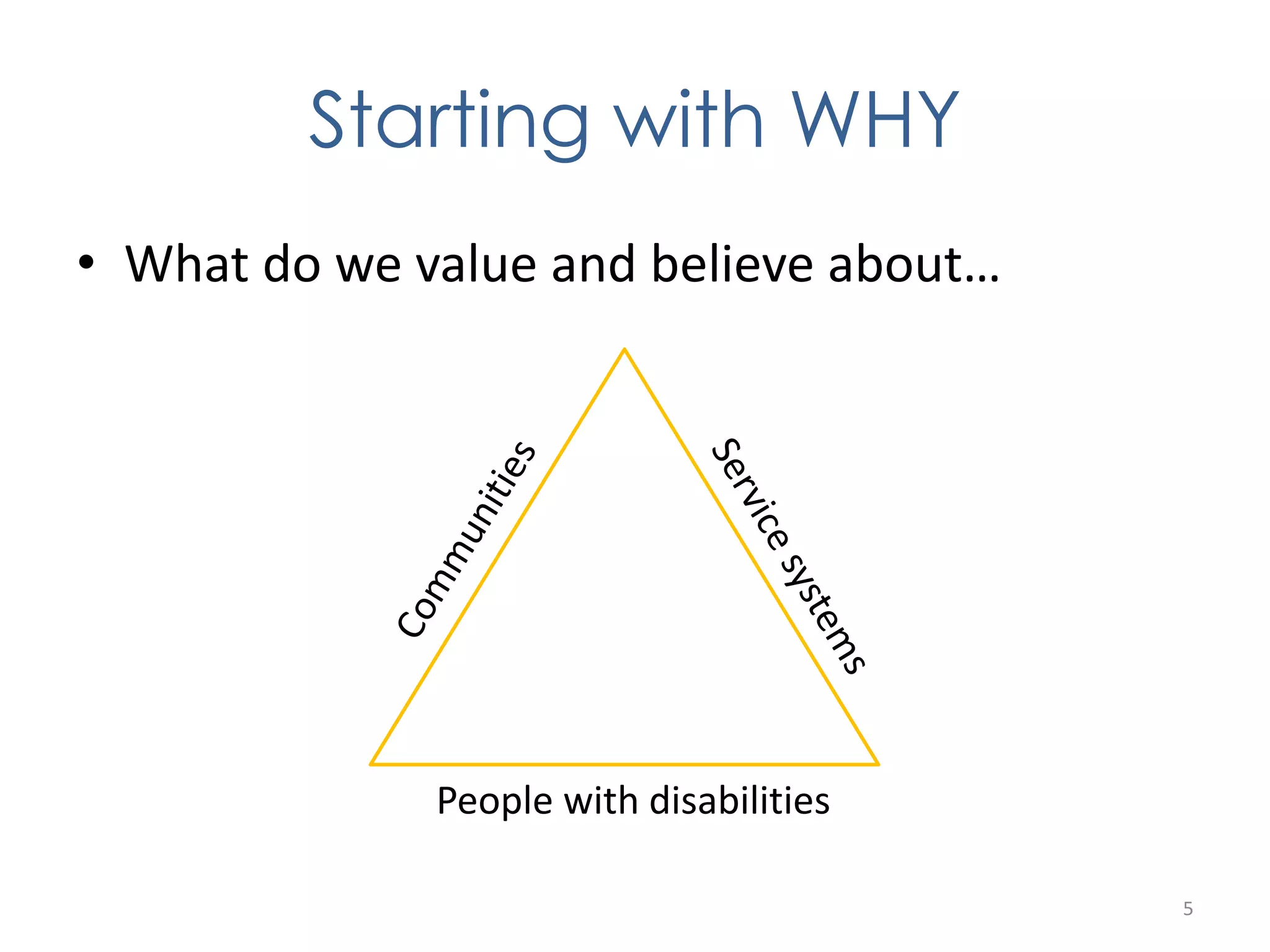
Starting with WHY 
• What do we value and believe about… 
5 
People with disabilities
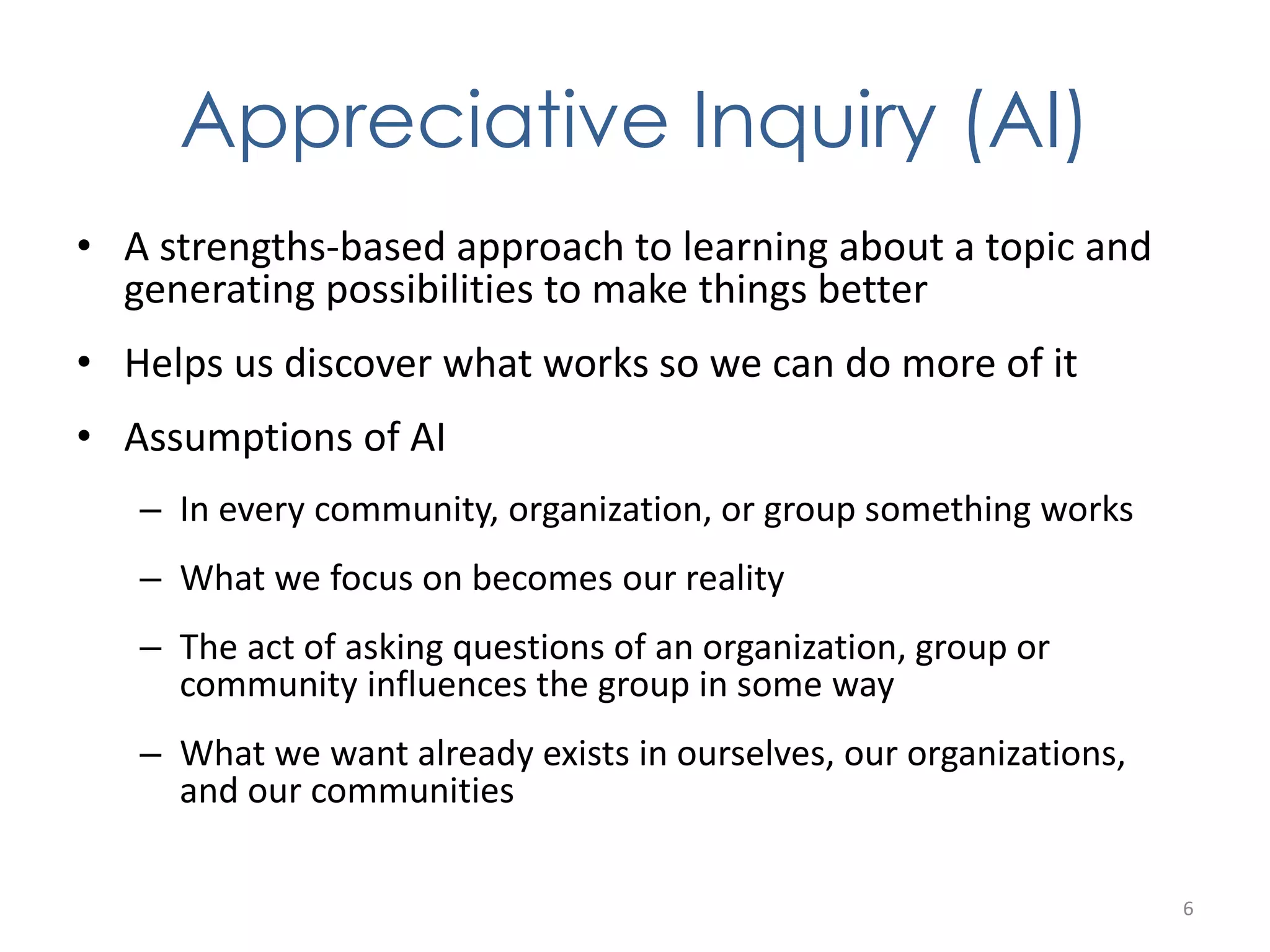
Appreciative Inquiry (AI) 
• A strengths-based approach to learning about a topic and 
generating possibilities to make things better 
• Helps us discover what works so we can do more of it 
• Assumptions of AI 
– In every community, organization, or group something works 
– What we focus on becomes our reality 
– The act of asking questions of an organization, group or 
community influences the group in some way 
– What we want already exists in ourselves, our organizations, 
and our communities 
6
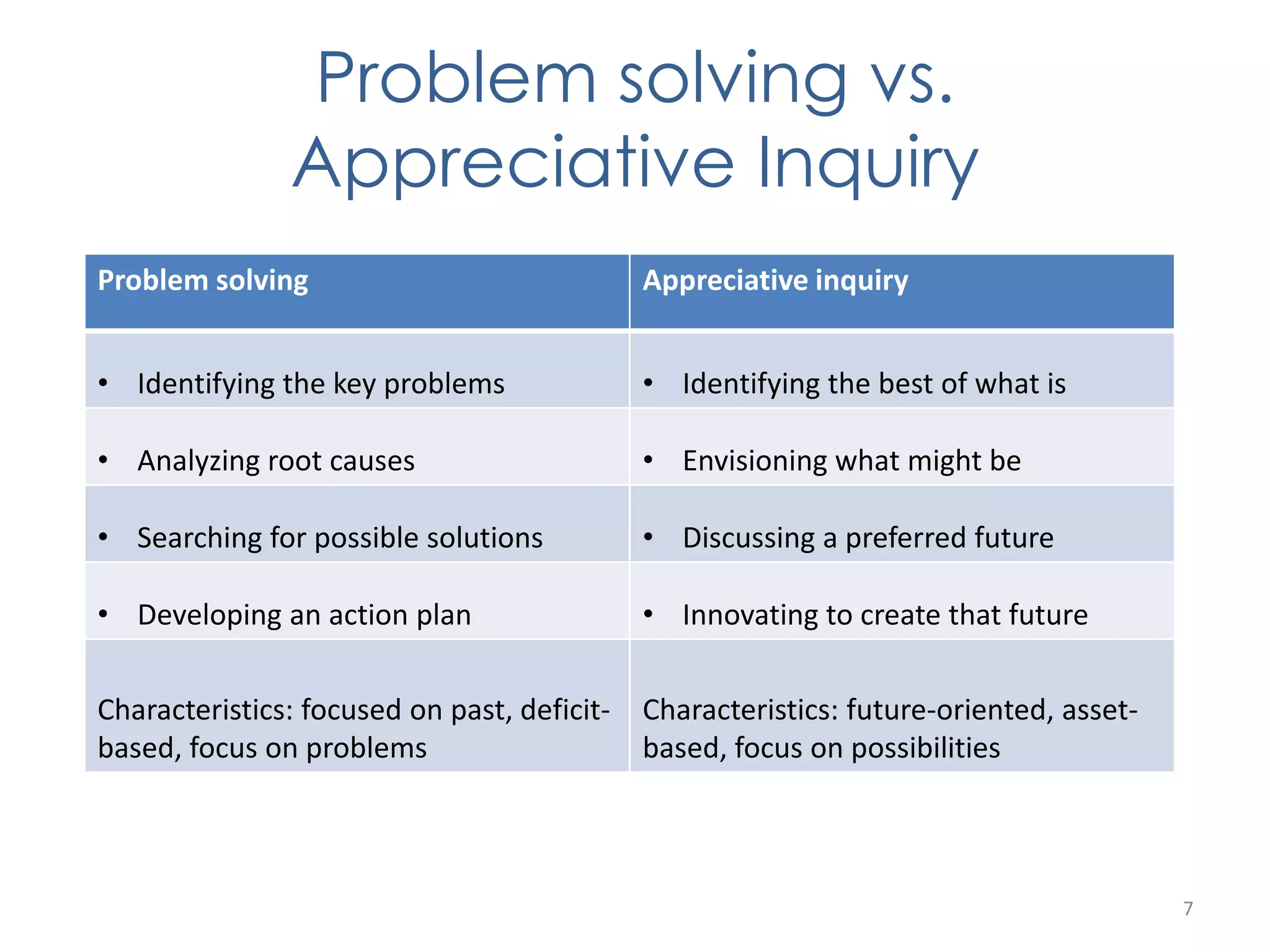
Problem solving vs. 
Appreciative Inquiry 
Problem solving Appreciative inquiry 
• Identifying the key problems • Identifying the best of what is 
• Analyzing root causes • Envisioning what might be 
• Searching for possible solutions • Discussing a preferred future 
• Developing an action plan • Innovating to create that future 
Characteristics: focused on past, deficit-based, 
focus on problems 
Characteristics: future-oriented, asset-based, 
focus on possibilities 
7
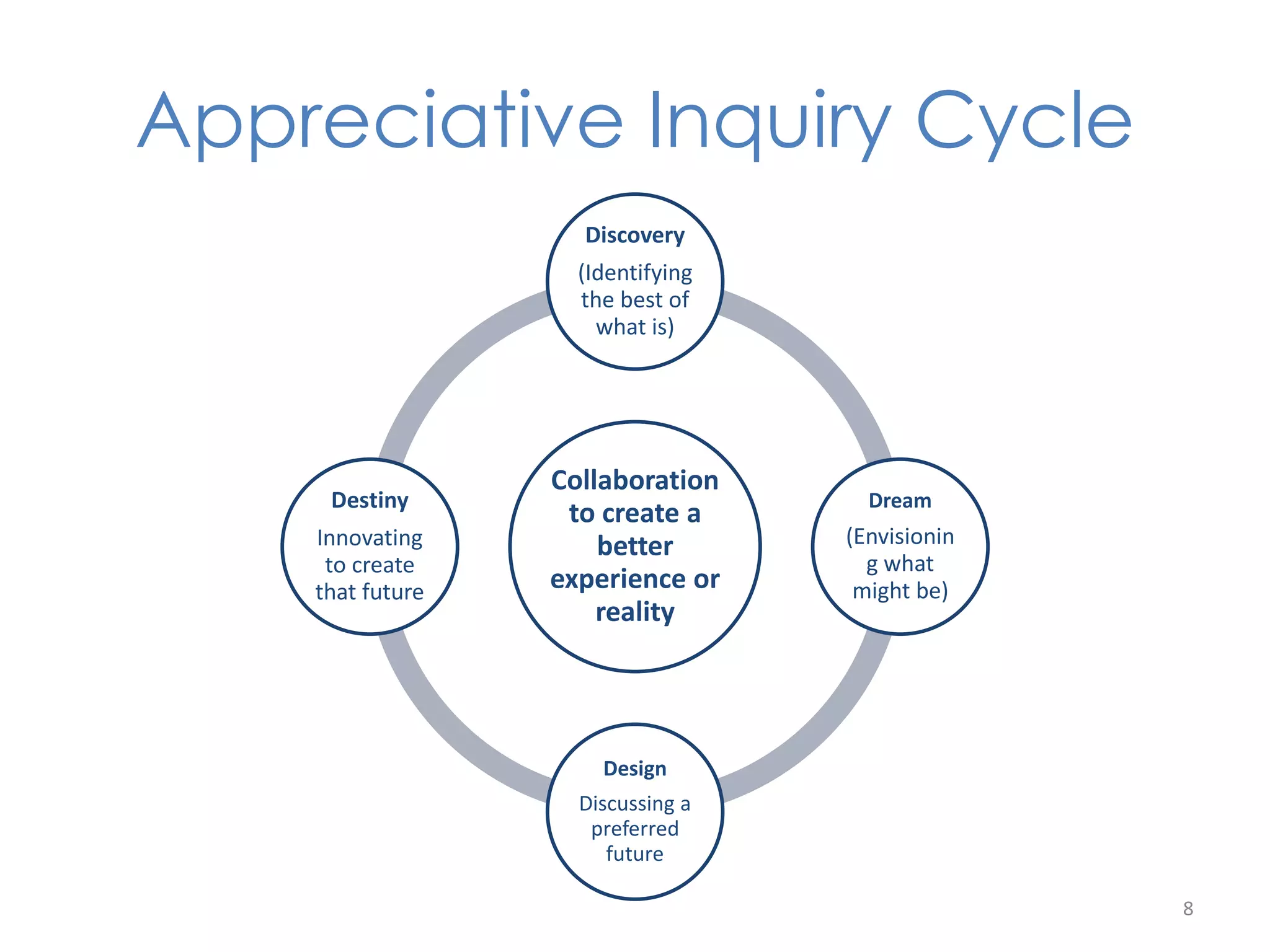
Appreciative Inquiry Cycle 
8 
Discovery 
(Identifying 
the best of 
what is) 
Collaboration 
to create a 
better 
experience or 
reality 
Dream 
(Envisionin 
g what 
might be) 
Design 
Discussing a 
preferred 
future 
Destiny 
Innovating 
to create 
that future
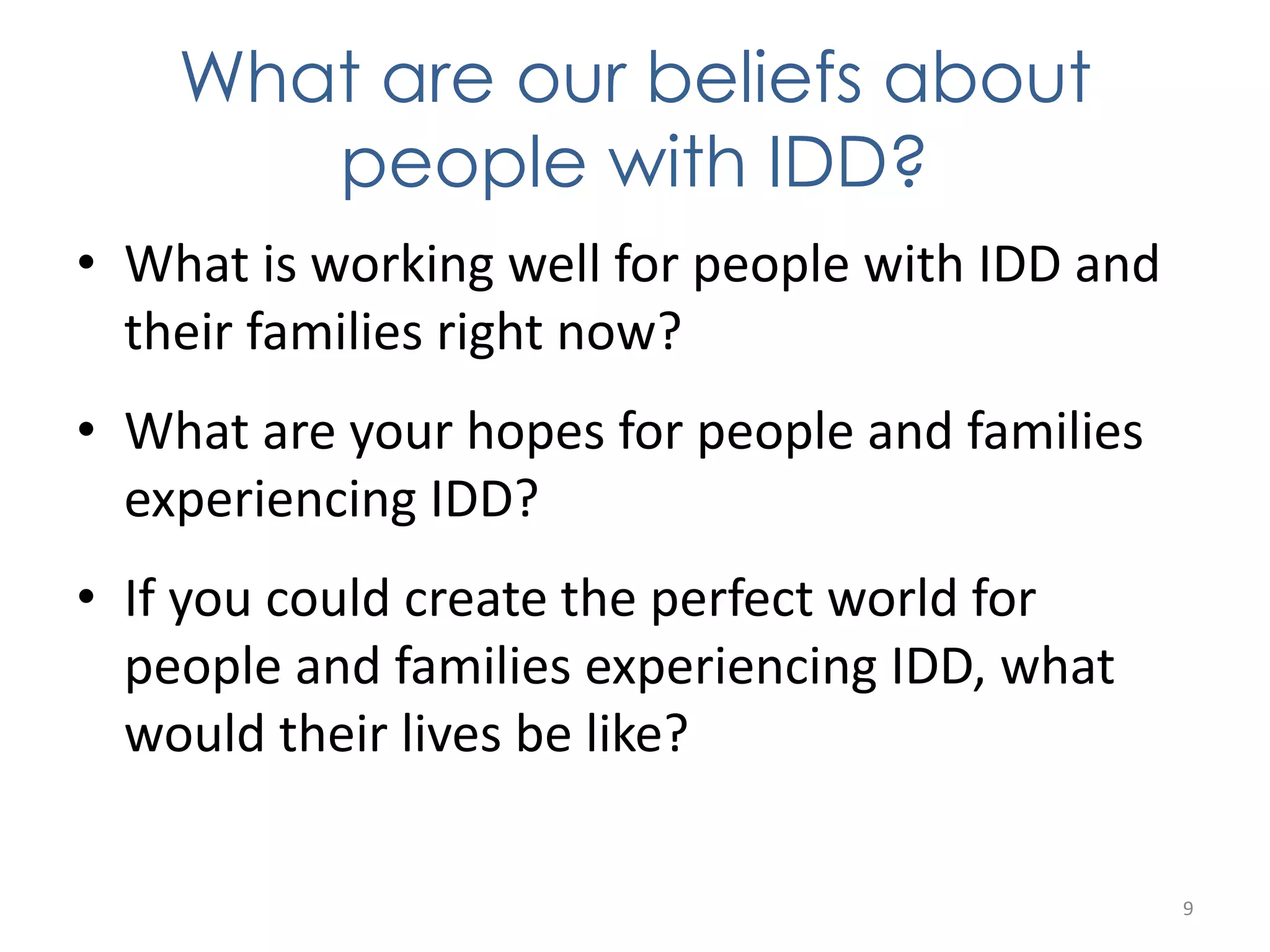
What are our beliefs about 
people with IDD? 
• What is working well for people with IDD and 
their families right now? 
• What are your hopes for people and families 
experiencing IDD? 
• If you could create the perfect world for 
people and families experiencing IDD, what 
would their lives be like? 
9
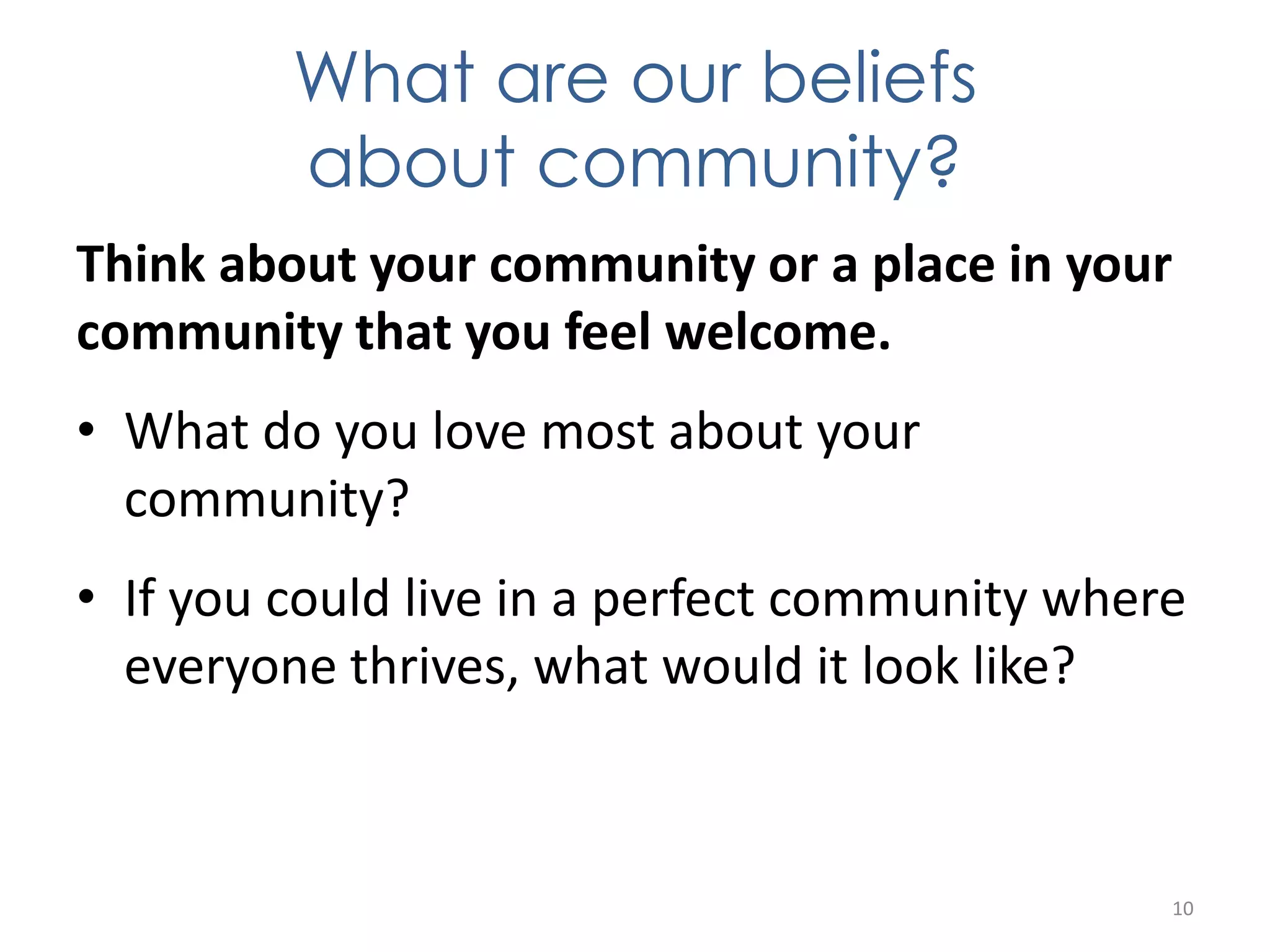
What are our beliefs 
about community? 
Think about your community or a place in your 
community that you feel welcome. 
• What do you love most about your 
community? 
• If you could live in a perfect community where 
everyone thrives, what would it look like? 
10
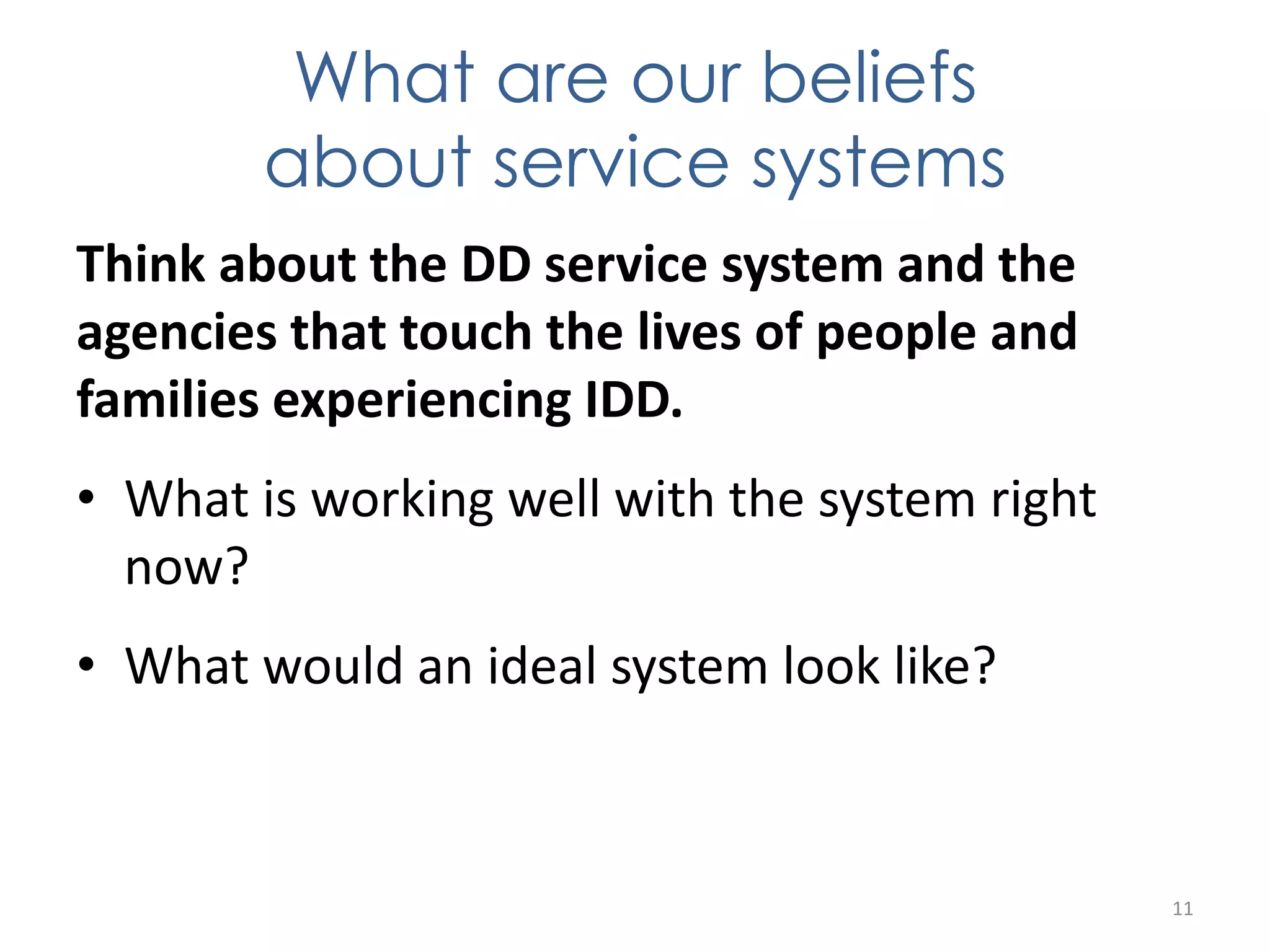
What are our beliefs 
about service systems 
Think about the DD service system and the 
agencies that touch the lives of people and 
families experiencing IDD. 
• What is working well with the system right 
now? 
• What would an ideal system look like? 
11
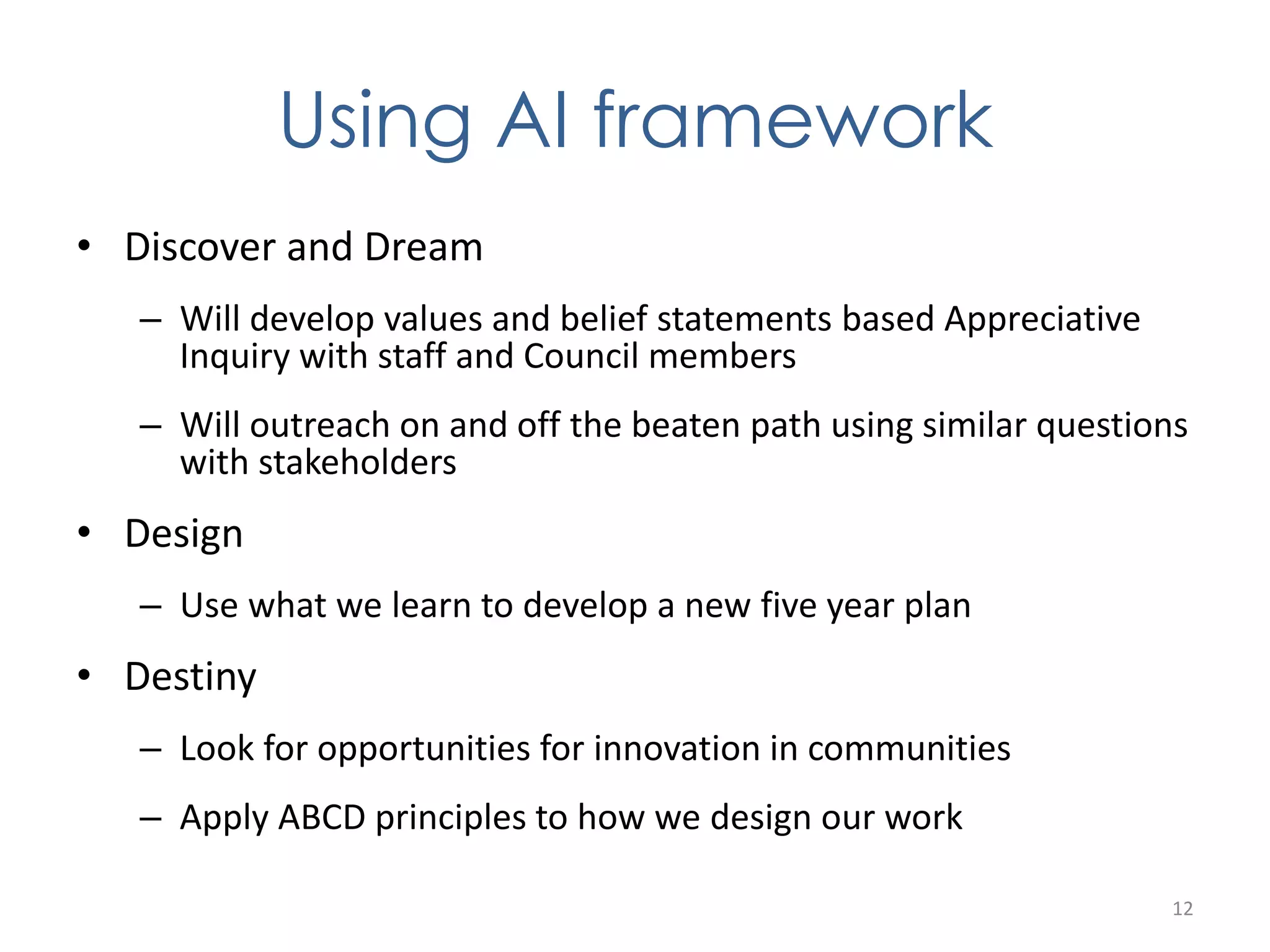
Using AI framework 
• Discover and Dream 
– Will develop values and belief statements based Appreciative 
Inquiry with staff and Council members 
– Will outreach on and off the beaten path using similar questions 
with stakeholders 
• Design 
– Use what we learn to develop a new five year plan 
• Destiny 
– Look for opportunities for innovation in communities 
– Apply ABCD principles to how we design our work 
12
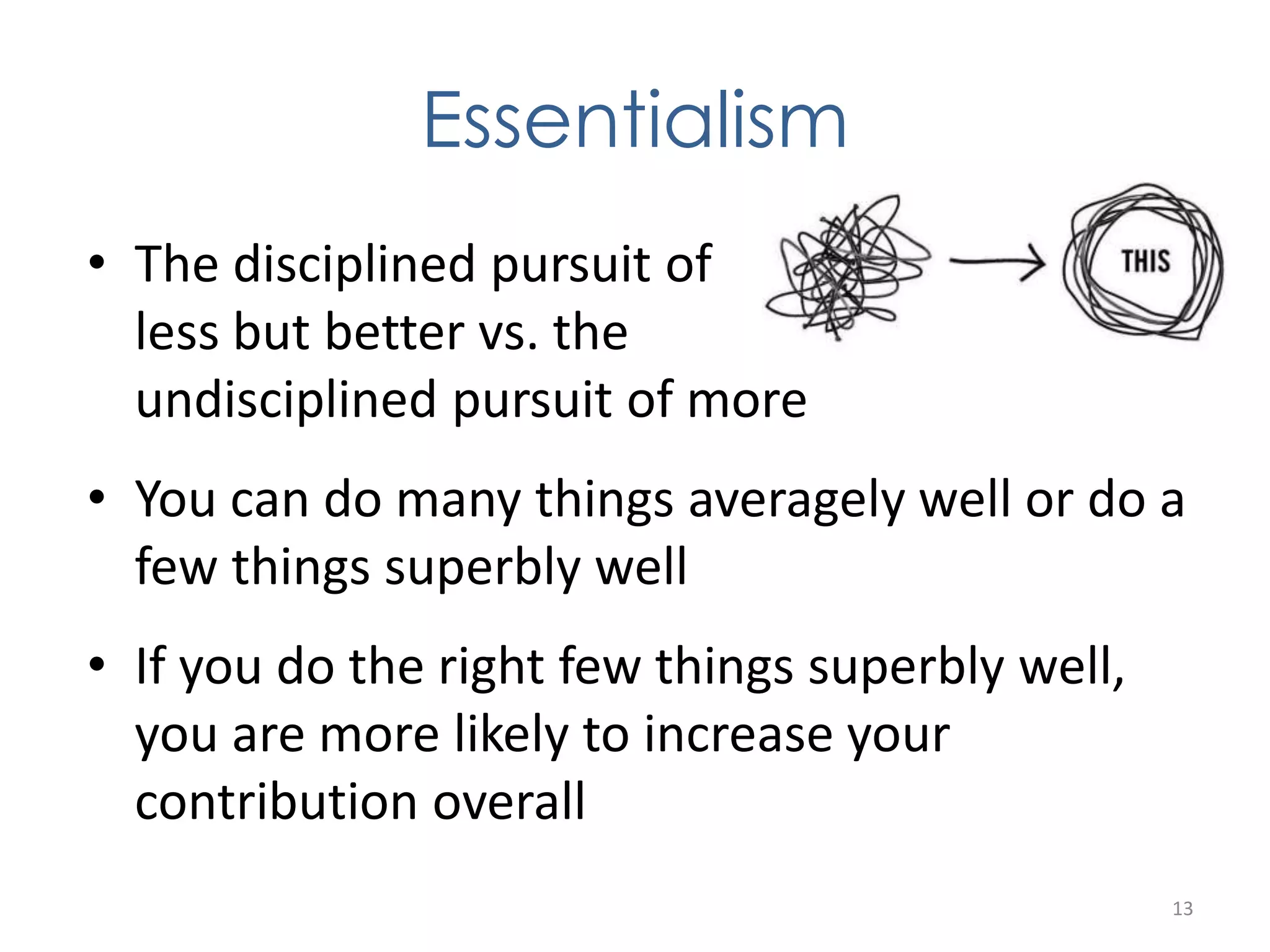
Essentialism 
• The disciplined pursuit of 
less but better vs. the 
undisciplined pursuit of more 
• You can do many things averagely well or do a 
few things superbly well 
• If you do the right few things superbly well, 
you are more likely to increase your 
contribution overall 
13
How do we do less better? 
• Identify top 1-3 priorities (most critical to our purpose 
and vision for the future) 
• Build a routine filled with the essentials 
• Stop saying “yes” to everything we can do 
• Ask: Is this the very best use of my time? 
• If not, question it or say “no” 
• Create space to evaluate how you use your time, 
meetings you attend, activities you do 
• Repeat this review on an ongoing basis 
14

2014 ED Summit Oregon Presentation

  • 1.
    Strengths-based approaches toplanning Jaime Daignault, OCDD Jaime.daignault@ocdd.org November 3, 2014 Snow King Lodge * Jackson, WY
  • 2.
    Frameworks • AssetBased Community Development – John McKnight www.abcdinstitute.org • The Golden Circle – Simon Sinek http://www.ted.com/talks/simon_sinek_how_great_leaders_inspire_action?langu age=en • Values and beliefs about people, communities and service systems – Bruce Anderson www.communityactivators.com • Appreciative Inquiry (Google it!) • Essentialism, Greg McCowan https://www.youtube.com/watch?v=T9x6D09AKBU 2
  • 3.
    Asset-Based Community Development(ABCD) • Mobilizing assets present in any community: – People and their gifts – Associations of people and their gifts (voluntary) – Local institutions (hierarchy, governing body, money is exchanged) – The physical environment of a community – Exchange of gifts/economy • Successful community development is asset-based, internally-focused, and relationship-driven 3
  • 4.
    The Golden Circle 4 Our purpose, values and beliefs Our activities and outputs; how we bring life to our WHY Our unique approach; what sets us apart
  • 5.
    Starting with WHY • What do we value and believe about… 5 People with disabilities
  • 6.
    Appreciative Inquiry (AI) • A strengths-based approach to learning about a topic and generating possibilities to make things better • Helps us discover what works so we can do more of it • Assumptions of AI – In every community, organization, or group something works – What we focus on becomes our reality – The act of asking questions of an organization, group or community influences the group in some way – What we want already exists in ourselves, our organizations, and our communities 6
  • 7.
    Problem solving vs. Appreciative Inquiry Problem solving Appreciative inquiry • Identifying the key problems • Identifying the best of what is • Analyzing root causes • Envisioning what might be • Searching for possible solutions • Discussing a preferred future • Developing an action plan • Innovating to create that future Characteristics: focused on past, deficit-based, focus on problems Characteristics: future-oriented, asset-based, focus on possibilities 7
  • 8.
    Appreciative Inquiry Cycle 8 Discovery (Identifying the best of what is) Collaboration to create a better experience or reality Dream (Envisionin g what might be) Design Discussing a preferred future Destiny Innovating to create that future
  • 9.
    What are ourbeliefs about people with IDD? • What is working well for people with IDD and their families right now? • What are your hopes for people and families experiencing IDD? • If you could create the perfect world for people and families experiencing IDD, what would their lives be like? 9
  • 10.
    What are ourbeliefs about community? Think about your community or a place in your community that you feel welcome. • What do you love most about your community? • If you could live in a perfect community where everyone thrives, what would it look like? 10
  • 11.
    What are ourbeliefs about service systems Think about the DD service system and the agencies that touch the lives of people and families experiencing IDD. • What is working well with the system right now? • What would an ideal system look like? 11
  • 12.
    Using AI framework • Discover and Dream – Will develop values and belief statements based Appreciative Inquiry with staff and Council members – Will outreach on and off the beaten path using similar questions with stakeholders • Design – Use what we learn to develop a new five year plan • Destiny – Look for opportunities for innovation in communities – Apply ABCD principles to how we design our work 12
  • 13.
    Essentialism • Thedisciplined pursuit of less but better vs. the undisciplined pursuit of more • You can do many things averagely well or do a few things superbly well • If you do the right few things superbly well, you are more likely to increase your contribution overall 13
  • 14.
    How do wedo less better? • Identify top 1-3 priorities (most critical to our purpose and vision for the future) • Build a routine filled with the essentials • Stop saying “yes” to everything we can do • Ask: Is this the very best use of my time? • If not, question it or say “no” • Create space to evaluate how you use your time, meetings you attend, activities you do • Repeat this review on an ongoing basis 14