CS245960 
Page 1 of 2 
National Center on Birth Defects and Developmental Disabilities 
Division of Human Development and Disability 
Disability and Health 
Data System (DHDS) 
Innovative Online 
Tool that Provides 
Health Data on 
Adults With and 
Without Disabilities 
by State 
Disability and Health Data 
System (DHDS) is an online 
interactive tool that provides 
instant access to state-level, 
disability-specific health 
data. Users can customize 
the disability and health data 
they view, making it easy to 
identify health disparities 
between adults with and 
without disabilities. DHDS 
can be used to help support 
the development of data-driven, 
fiscally-responsible 
programs, services, and 
policies that include people 
with disabilities. 
This online tool provides 
instant access to state-level 
health and demographic data 
about adults with disabilities. 
What is Disability and Health Data 
System (DHDS)? 
•• Starting point for research, program development, and identifying 
opportunities for improvement of the health of adults with disabilities 
•• State-level data system dedicated to disability and indicators of health 
•• Online interactive data tool that provides instant access to disability and 
health data from the Behavioral Risk Factor Surveillance System (BRFSS) 
•• Health data on adults with and without disabilities to identify differences 
-- View data on a single health indicator across states through 
customizable maps and data tables 
-- View data on a range of health indicators for a single state through 
state profiles 
-- View data on a range of health indicators for two geographic areas 
through dual area profiles 
Why should organizations use DHDS? 
•• Provides state-level data to support programs and efficiently allocate 
resources to improve the health of adults with disabilities 
•• Identifies differences in health for adults with disabilities compared with 
adults without disabilities 
•• Generates research questions to investigate factors that contribute to 
differences in health experienced by adults with disabilities 
•• Identifies opportunities to include adults with disabilities in programs 
and policies 
What Can I Do With DHDS? 
•• Determine the percentage of adults with 
disabilities in your state 
•• Find health data for adults with disabilities in 
your state, and compare these data to adults 
without disabilities 
•• Compare your state health data to other states, 
and to the United States & Territories average 
•• View data on a range of health topics for a 
single state 
•• Create and download customizable data tables
January 2014 Page 2 of 2 
What Data are Available 
in DHDS? 
•• 2004—2012 Behavioral Risk Factor Surveillance 
System (BRFSS) data are available, and are 
updated annually 
•• Disability status data, available on over 70 health and 
demographic indicators, can be viewed by disability 
status overall, and by age, sex, and race/ethnicity 
•• Psychological distress data are available for 38 health 
and demographic indicators 
•• Disability-associated health care expenditures data 
are available 
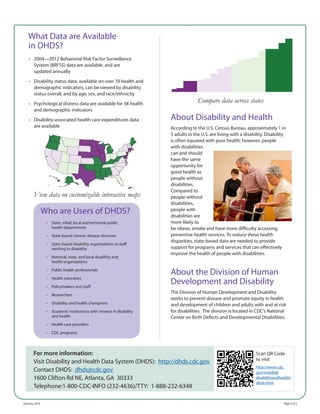
View data on customizable interactive maps 
Who are Users of DHDS? 
•• State, tribal, local and territorial public 
health departments 
•• State-based chronic disease directors 
•• State-based disability organizations or staff 
working in disability 
•• National, state, and local disability and 
health organizations 
•• Public health professionals 
•• Health educators 
•• Policymakers and staff 
•• Researchers 
•• Disability and health champions 
•• Academic institutions with interest in disability 
and health 
•• Health care providers 
•• CDC programs 
Compare data across states 
bar graph 
About Disability and Health 
According to the U.S. Census Bureau, approximately 1 in 
5 adults in the U.S. are living with a disability. Disability 
is often equated with poor health; however, people 
with disabilities 
can and should 
have the same 
opportunity for 
good health as 
people without 
disabilities. 
Compared to 
people without 
disabilities, 
people with 
disabilities are 
more likely to 
be obese, smoke and have more difficulty accessing 
preventive health services. To reduce these health 
disparities, state-based data are needed to provide 
support for programs and services that can effectively 
improve the health of people with disabilities. 
About the Division of Human 
Development and Disability 
The Division of Human Development and Disability 
works to prevent disease and promote equity in health 
and development of children and adults with and at risk 
for disabilities. The division is located in CDC’s National 
Center on Birth Defects and Developmental Disabilities. 
For more information: 
Visit Disability and Health Data System (DHDS): http://dhds.cdc.gov 
Contact DHDS: dhds@cdc.gov 
1600 Clifton Rd NE, Atlanta, GA 30333 
Telephone:1-800-CDC-INFO (232-4636)/TTY: 1-888-232-6348 
Scan QR Code 
to visit 
http://www.cdc. 
gov/ncbddd/ 
disabilityandhealth/ 
dhds.html

DHDS Factsheet

  • 1.
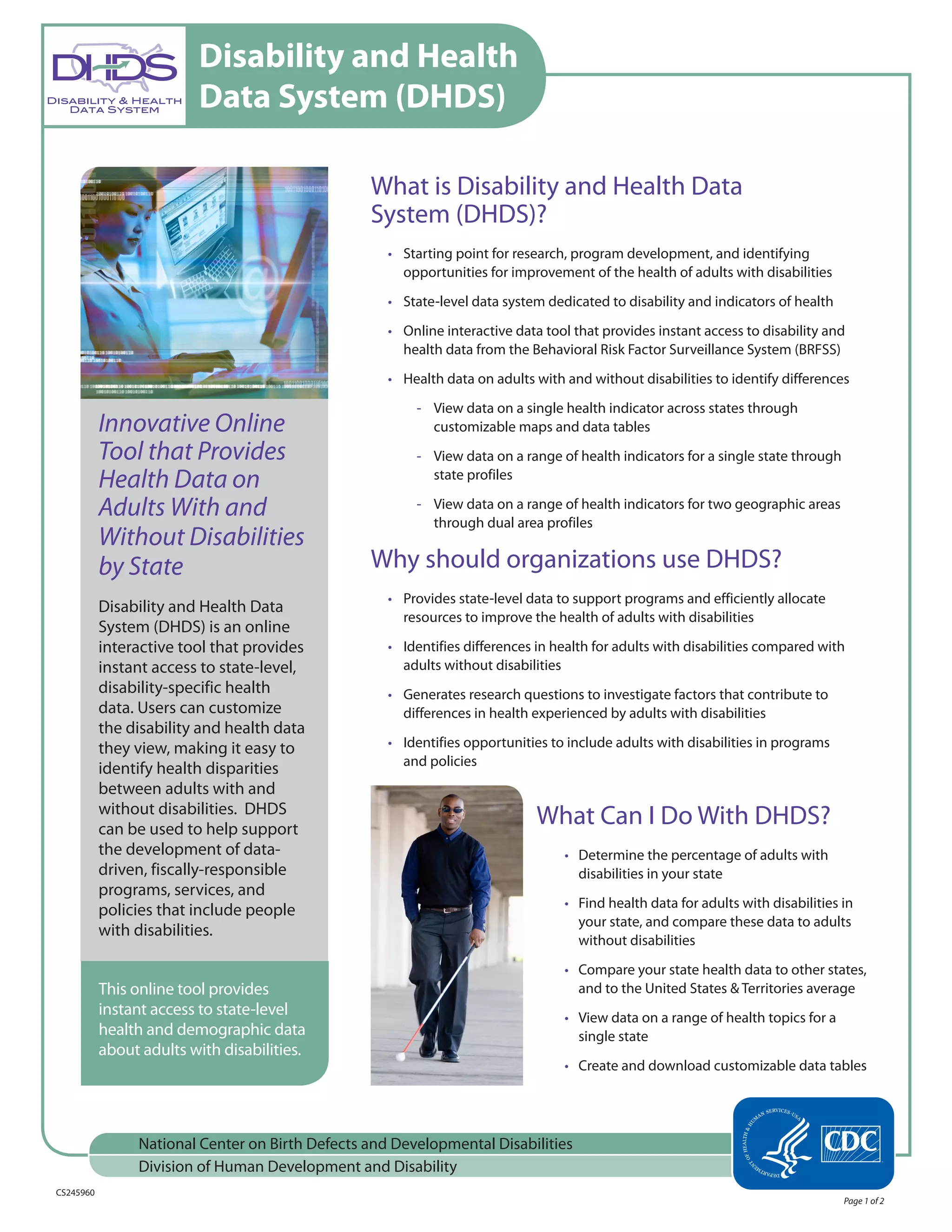
    CS245960 Page 1of 2 National Center on Birth Defects and Developmental Disabilities Division of Human Development and Disability Disability and Health Data System (DHDS) Innovative Online Tool that Provides Health Data on Adults With and Without Disabilities by State Disability and Health Data System (DHDS) is an online interactive tool that provides instant access to state-level, disability-specific health data. Users can customize the disability and health data they view, making it easy to identify health disparities between adults with and without disabilities. DHDS can be used to help support the development of data-driven, fiscally-responsible programs, services, and policies that include people with disabilities. This online tool provides instant access to state-level health and demographic data about adults with disabilities. What is Disability and Health Data System (DHDS)? •• Starting point for research, program development, and identifying opportunities for improvement of the health of adults with disabilities •• State-level data system dedicated to disability and indicators of health •• Online interactive data tool that provides instant access to disability and health data from the Behavioral Risk Factor Surveillance System (BRFSS) •• Health data on adults with and without disabilities to identify differences -- View data on a single health indicator across states through customizable maps and data tables -- View data on a range of health indicators for a single state through state profiles -- View data on a range of health indicators for two geographic areas through dual area profiles Why should organizations use DHDS? •• Provides state-level data to support programs and efficiently allocate resources to improve the health of adults with disabilities •• Identifies differences in health for adults with disabilities compared with adults without disabilities •• Generates research questions to investigate factors that contribute to differences in health experienced by adults with disabilities •• Identifies opportunities to include adults with disabilities in programs and policies What Can I Do With DHDS? •• Determine the percentage of adults with disabilities in your state •• Find health data for adults with disabilities in your state, and compare these data to adults without disabilities •• Compare your state health data to other states, and to the United States & Territories average •• View data on a range of health topics for a single state •• Create and download customizable data tables
  • 2.
    January 2014 Page2 of 2 What Data are Available in DHDS? •• 2004—2012 Behavioral Risk Factor Surveillance System (BRFSS) data are available, and are updated annually •• Disability status data, available on over 70 health and demographic indicators, can be viewed by disability status overall, and by age, sex, and race/ethnicity •• Psychological distress data are available for 38 health and demographic indicators •• Disability-associated health care expenditures data are available View data on customizable interactive maps Who are Users of DHDS? •• State, tribal, local and territorial public health departments •• State-based chronic disease directors •• State-based disability organizations or staff working in disability •• National, state, and local disability and health organizations •• Public health professionals •• Health educators •• Policymakers and staff •• Researchers •• Disability and health champions •• Academic institutions with interest in disability and health •• Health care providers •• CDC programs Compare data across states bar graph About Disability and Health According to the U.S. Census Bureau, approximately 1 in 5 adults in the U.S. are living with a disability. Disability is often equated with poor health; however, people with disabilities can and should have the same opportunity for good health as people without disabilities. Compared to people without disabilities, people with disabilities are more likely to be obese, smoke and have more difficulty accessing preventive health services. To reduce these health disparities, state-based data are needed to provide support for programs and services that can effectively improve the health of people with disabilities. About the Division of Human Development and Disability The Division of Human Development and Disability works to prevent disease and promote equity in health and development of children and adults with and at risk for disabilities. The division is located in CDC’s National Center on Birth Defects and Developmental Disabilities. For more information: Visit Disability and Health Data System (DHDS): http://dhds.cdc.gov Contact DHDS: dhds@cdc.gov 1600 Clifton Rd NE, Atlanta, GA 30333 Telephone:1-800-CDC-INFO (232-4636)/TTY: 1-888-232-6348 Scan QR Code to visit http://www.cdc. gov/ncbddd/ disabilityandhealth/ dhds.html