BUSINESS SIMULATIONS


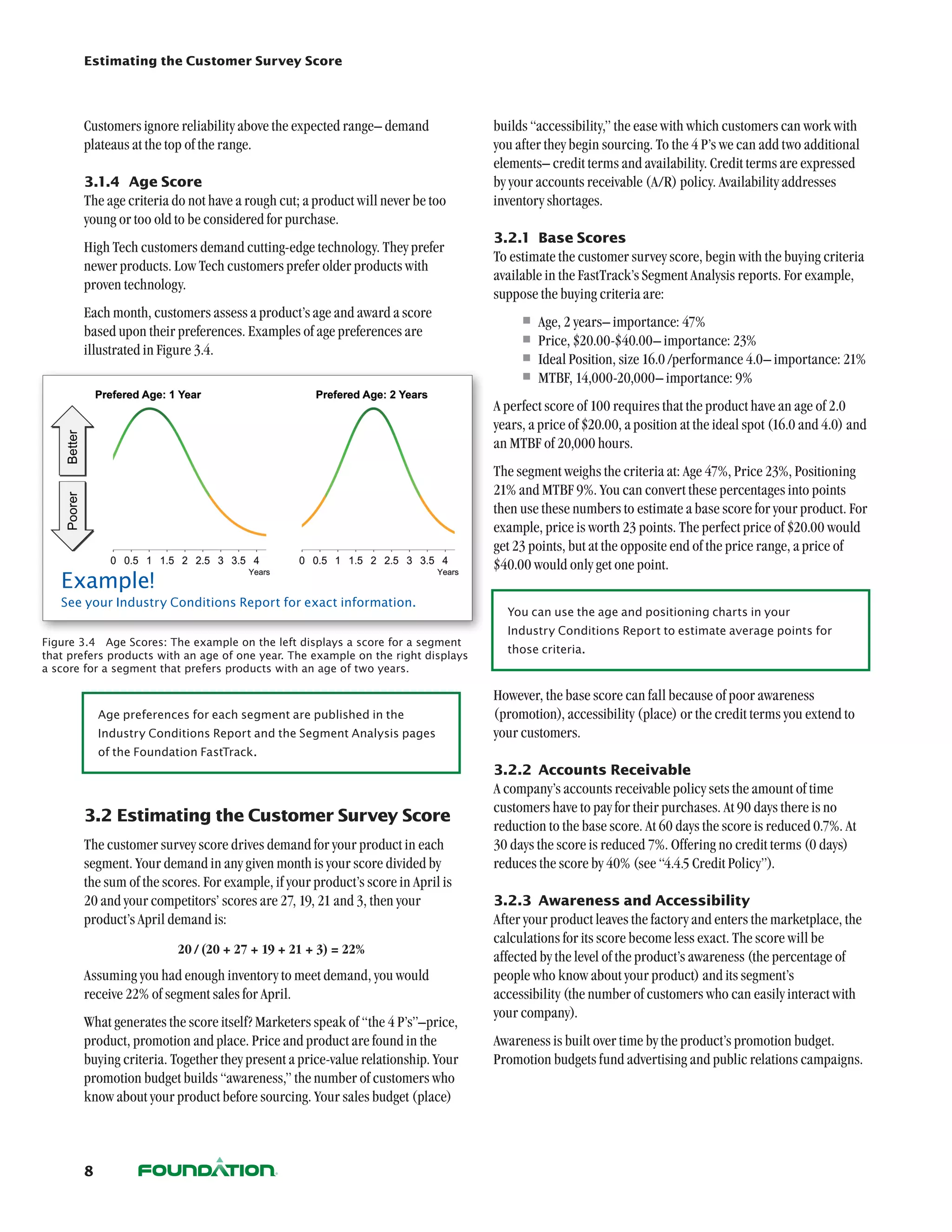
                               USA & Canada
                                  877.477.8787
                       Outside USA & Canada
                                +1.312.477.7200

                                   WWW.CAPSIM.COM
The Course Road Map

                                                    Getting                            Practice Rounds                       Competition
     Registration
                                                    Started                                    (if applicable)                 Rounds                                    (if applicable)


 Go to capsim.com/register,               Login with your User ID and                 Most instructors include           When the Competition                     Your instructor might
 follow the onscreen                      Password at capsim.com.                     team Practice rounds. When         begins, your decisions                   include a Comp-XM exam.
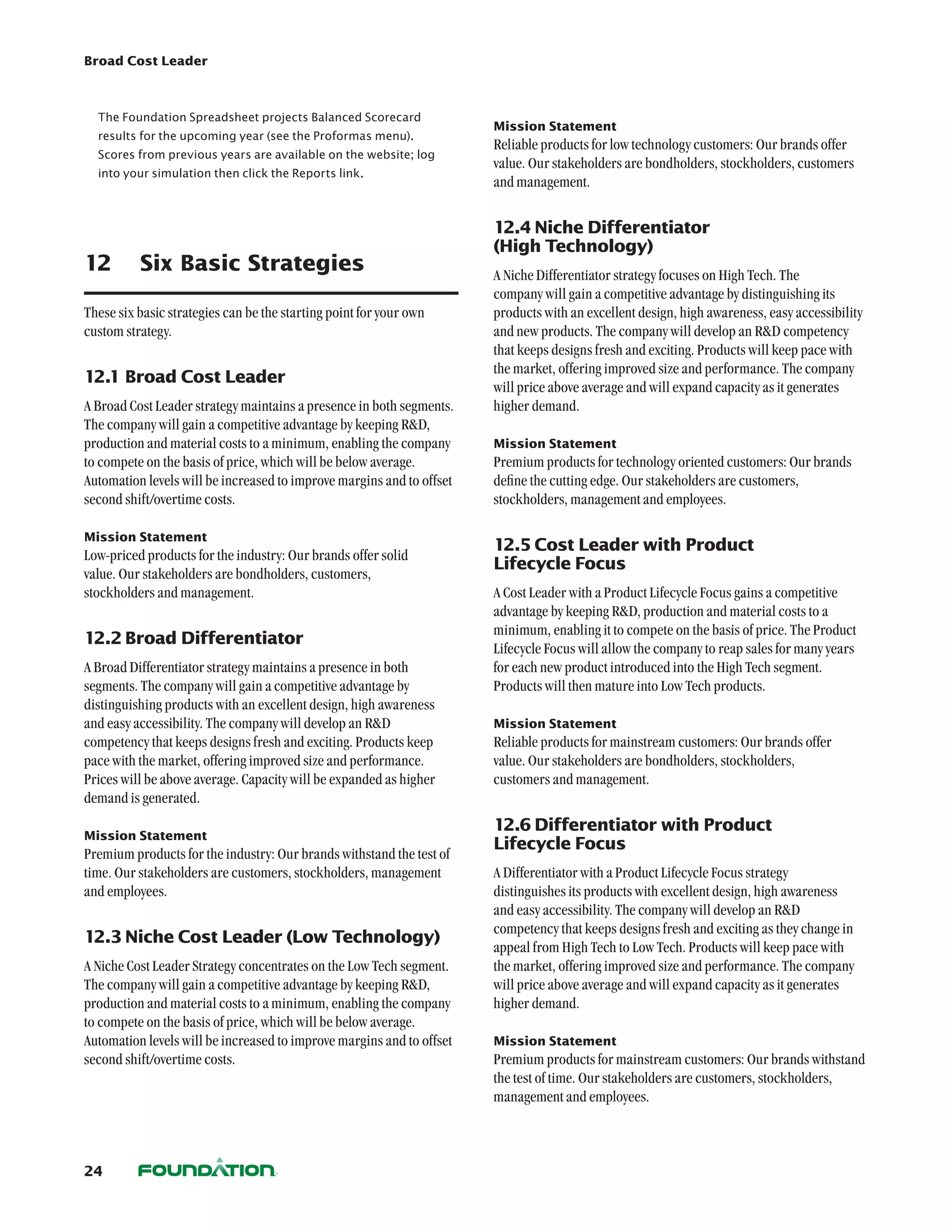
 instructions and register                Click on Foundation. Go                     the Practice is over the           count! Additional tasks                  Go to the Course Page and
 into your Industry.* Create              to Getting Started and follow               simulation will restart from       could include:                           choose Comp-XM. Follow
 your User ID and Password.               the steps that include:                     the beginning, using the           » Optional Homework 		                   the instructions on the
                                          » Reviewing the                             unique model selected by           	 Assignments 		                         Dashboard which include:
 *Your instructor may have                                                            your instructor.
                                          	 Rehearsal Tutorial                                                           »	Peer Evaluations                       »  ecision making
                                                                                                                                                                    D
 given you an Industry ID
 Number. If not, you can                  » Opening the Foundation                                                       See your Dashboard for                     using the Comp-XM
 locate your industry by using            	Spreadsheet                                                                   complete information.                      Spreadsheet
 your school name/campus                  » Forming your company                                                                                                  » Board Queries (quizzes)
 and either the course section
 number, start date or your
 instructor’s initials.


Table of Contents
1	       introduction ............................................................... 1                      5.8 	    Other Reports ............................................................. 19
1.1	     The Industry Conditions Report ..................................1
                                                                                                             6	       proformas and annual reports...................... 19
1.2 	    Management Tools .......................................................1
                                                                                                             6.1 	    Balance Sheet .............................................................. 19
1.3 	    Company Departments ............................................... 2
                                                                                                             6.2 	    Cash Flow Statement ................................................. 20
1.4 	    Inter-Department Coordination ................................. 3
                                                                                                             6.3 	    Income Statement ...................................................... 20
1.5 	    Practice and Competition Rounds .............................. 3
1.6 	    Company Success ......................................................... 3                         7	       additional modules ......................................... 20
                                                                                                             7.1 	    TQM/Sustainability ..................................................... 20
2	       industry conditions .......................................... 3
                                                                                                             7.2 	    HR (Human Resources) .............................................. 20
2.1 	    Buying Criteria .............................................................. 3
2.2 	    Buying Criteria by Segment ........................................ 5                               8	       plug-ins ............................................................. 21

3	       the customer survey score ............................. 5
                                                                                                             8.1 	    Making Decisions ....................................................... 21
3.1 	    Buying Criteria and the Customer Survey Score ............. 6                                       9	       situation analysis ............................................ 21
3.2 	    Estimating the Customer Survey Score ...................... 8
3.3 	    Stock Outs and Seller’s Market ................................... 9                                10	      forecasting ...................................................... 22
                                                                                                             10.1 	   Basic Forecasting Method ........................................ 22
4	       managing your company ................................. 9
                                                                                                             10.2 	   Qualitative Assessment ............................................. 22
4.1 	    Research  Development (RD) ................................ 9                                     10.3 	   Forecasts, Proformas and the December 31 		
4.2 	    Marketing .................................................................... 11                   	        Cash Position ............................................................... 23
4.3 	    Production ...................................................................13                    10.4 	   Worst Case/Best Case ............................................... 23
4.4 	    Finance .........................................................................15
                                                                                                             11	      balanced scorecard ....................................... 23
5	       the foundation fasttrack............................... 17
5.1 	    Front Page ................................................................... 17                   12	      six basic strategies ...................................... 24
5.2 	    Stock  Bond Summaries .......................................... 17                                12.1	    Broad Cost Leader ..................................................... 24
5.3 	    Financial Summary ..................................................... 17                          12.2	    Broad Differentiator ................................................... 24
5.4 	    Production Analysis ....................................................17                          12.3	    Niche Cost Leader (Low Technology) ....................... 24
5.5 	    Segment Analysis Reports .........................................18                                12.4	    Niche Differentiator (High Technology) ................... 24
5.6 	    Market Share Report ..................................................19                            12.5	    Cost Leader with Product Lifecycle Focus ............... 24
5.7 	    Perceptual Map .......................................................... 19                        12.6	    Differentiator with Product Lifecycle Focus ............ 24


     SUPPORT TICKETS:
     If you need assistance, please submit a support ticket. Login at capsim.com, click Foundation, then in the left menu, select Help  Support.
     If you have problems registering, send an email to support@capsim.com.
Management Tools


1	 Introduction                                                         1.1	The Industry Conditions Report
                                                                        Each simulation industry is unique. As your simulation starts, the
Congratulations, you are now in charge of a multimillion dollar         Industry Conditions Report, which is explained in Chapter 2, will
company. You manufacture sensors, which you market to other             outline the beginning business environment, including customer
manufacturers. They put your products into the devices they sell.       buying criteria.
Your company was created when the government split a monopoly
into identical competitors. As a monopoly, operating inefficiencies       The Industry Conditions Report is available from your
and poor product offerings were not addressed because:                    simulation Dashboard.

    •	Increasing costs could be passed onto customers; and
    •	Mediocre products would sell because customers had no             1.2	Management Tools
        other choices.
                                                                        Here are the tools you need to run your company.
While last year’s financial results were decent, your products are
getting old, your marketing efforts are falling short, your             1.2.1	 The Rehearsal Tutorial
production lines need revamping and your financial management is        Think of the Rehearsal Tutorial as a driving school for the
almost nonexistent.                                                     simulation. The tutorial will show you ways to steer the company,
                                                                        including how to:
Competition in the post-monopoly era means you can no longer
ignore these issues. If you do, competitors with better products and/       •	Invent and revise products;
or lower prices will take your market share.                                •	Make marketing decisions;
                                                                            •	Schedule production and buy/sell equipment; and
  Sensors Are Everywhere...
                                                                            •	Ensure your company has the financial resources it needs for
                                                                                the upcoming year.
                                                                        The sample resources used for the Rehearsal, including its
                                                                        Foundation FastTrack (see below) and Industry Conditions Report,
                                                                        mirror those used in the actual simulation.

                                                                          The Rehearsal is available from your simulation Dashboard.


                                                                        1.2.2	 The Foundation FastTrack
                                                                        Every round, you and your competitors will have access to an
                                                                        industry newsletter called the Foundation FastTrack. The FastTrack
                                                                        (described in Chapter 5) is an extensive year-end report of the sensor
                                                                        industry. It includes customer buying patterns, product positioning,
                                                                        public financial records and other information that will help you get
                                                                        ahead. In business, knowledge is power. If you want to evaluate your
                                                                        company’s performance or analyze your competitors, the FastTrack
                                                                        is the place to start.
                                                                        Every product’s Customer Survey Score (Chapter 3) can be found
  Sensors are devices that observe physical conditions. For             in the FastTrack’s Segment Analysis pages. These scores
  example, the average cell phone contains dozens of sensors            determine sales distribution. In general, the higher the score, the
  that allow it to interpret touch, spatial orientation and 	           better the sales.
  signal strength.

  New sensor businesses are created every day in areas as                 The FastTrack Reports “Last Year’s Results”
  diverse as security, aeronautics and biomedical engineering.
                                                                          The FastTrack available at the start of Round 1 displays
  You are in a business-to-business market, not a direct-to-
                                                                          results for Round 0, when all companies were equal just after
  consumer market; the sensors your company manufactures
                                                                          the monopoly’s breakup. The FastTrack available at the start
  are incorporated into the products your customers sell.
                                                                          of Round 2 will display the results for Round 1. As the
                                                                          simulation progresses and strategies are implemented,
                                                                          results among the competing companies will begin to vary.


                                                                                                        Team Member Guide                     1
Company Departments


    The FastTrack is available from two locations:
                                                                           1.3	Company Departments
    •	rom the Foundation Spreadsheet, click Reports in the
     F
                                                                           The Rehearsal Tutorial and Chapter 4 discuss company activities. You
      menu bar; and
                                                                           have four main departments or functional areas:
    •	 n the website, log into your simulation and click the
     O
      Reports link.                                                            •	Research  Development, or RD
1.2.3	 The Situation Analysis
                                                                               •	Marketing
Completing the Situation Analysis (described in Chapter 9) will
                                                                               •	Production
enable you to understand current market conditions and how the
                                                                               •	Finance
industry will evolve in the next few years. It will assist you with your   Many simulations utilize the Human Resources and TQM (Total
operational planning.                                                      Quality Management)/Sustainability modules. These modules
                                                                           require additional management decisions. Your simulation
The Situation Analysis comes in two versions:
                                                                           Dashboard will tell you if the modules are included.
      •	Online interactive                                                 Companies use the Foundation Spreadsheet to enter
      •	Downloadable PDF (pen and paper)                                   departmental decisions.
    The Situation Analysis is available from your
                                                                           1.3.1	 Research  Development (RD)
    simulation Dashboard.
                                                                           Your RD Department designs your product line. The department
                                                                           needs to invent and revise products that appeal to your customers’
1.2.4	 Proformas  Annual Reports
                                                                           changing needs.
Proformas and annual reports are specific to your company.
Proformas are projections for the upcoming year. Annual reports are
                                                                           1.3.2	 Marketing
the results from the previous year.
                                                                           Your Marketing Department prices and promotes your products. It
The proformas will help you envision the impacts of your pending           interacts with your customers via its sales force and distribution
decisions and sales forecasts. The annual reports will help you            system. Marketing is also responsible for sales forecasts.
analyze last year’s results.
                                                                           1.3.3	 Production
    Proformas are only available from the Foundation                       Your Production Department determines how many units will be
    Spreadsheet’s Proformas menu.                                          manufactured during the year. It is also responsible for buying and
                                                                           selling production lines.
    To access the annual reports:

    •	rom the Foundation Spreadsheet, click Reports in the
     F                                                                     1.3.4	 Finance
      menu bar; or                                                         Your Finance Department makes sure your company has the financial
    •	 n the website, log into your simulation then click the
     O                                                                     resources it needs to run through the year. The department can raise
      Reports link.                                                        money via one-year bank notes, 10-year bonds or stock issues.
                                                                           The department can also issue stock dividends, buy back stock or
1.2.5	 The Foundation Spreadsheet
                                                                           retire bonds before their due dates.
The Foundation Spreadsheet is the nerve center of your company
where you formulate and finalize management decisions for every
                                                                           1.3.5	 Plug-ins
department. The spreadsheet comes in two versions:
                                                                           Plug-ins are different than modules. Plug-ins and their decisions have
      •	A Web Version that allows you to work via any Internet             a greater overall impact on your organization.
         browser; and
                                                                           For example, the simulation might include the Ethics plug-in, which
      •	An XLS Version that runs via Microsoft® Excel®.                    presents you with an unexpected dilemma. Group discussion and
                                                                           consensus is imperative because your decisions will affect your
    After you log into your simulation, the spreadsheet is
                                                                           financial results.
    available from the Decisions link.
                                                                           Your simulation Dashboard will notify you if a plug-in has
1.2.6	 Just in Time Information                                            been scheduled.
In the spreadsheet decision areas, look for the
flag symbol shown to the right. Clicking it will
give you detailed information about the area
you are viewing.


2
Buying Criteria


1.4	Inter-Department Coordination                                        After the conclusion of the Practice Rounds the simulation is reset
                                                                         and the real competition begins. Now it’s time to drive your company
1.4.1	 RD and Marketing                                                 to success! Companies compete for up to eight rounds, with each
                                                                         round simulating one year in the life of your company.
RD works with Marketing to make sure products meet
customer expectations.
                                                                         1.5.1	 Decision Audits
1.4.2	 RD and Production                                                The Decision Audit is a complete trail of all team decisions. It will
RD works with Production to ensure assembly lines are purchased         help you identify your decision-making strengths and weaknesses.
for new products. If Production discontinues a product, it should
notify RD.                                                                The audit is available from two locations:


1.4.3	 Marketing and Production
                                                                           •	rom the Foundation Spreadsheet, click Help in the
                                                                            F
                                                                              menu bar; or
Marketing works with Production to make sure manufacturing
quantities are in line with forecasts. Marketing’s market growth
                                                                           •	 n the website, log into your simulation then click the
                                                                            O
                                                                              Decision Audit link.
projections also help Production determine appropriate levels of
capacity. If Marketing wants to discontinue a product, it tells
                                                                         1.6	Company Success
Production to sell the product’s production line.
                                                                         The board of directors, shareholders and other stakeholders expect
1.4.4	 Marketing and Finance                                             you to make the company a market leader. Successful managers will:
Marketing works with Finance to project revenues for each product
and to set the Accounts Receivable policy, which is the amount of time
                                                                              •	Analyze the market and its competing products;
customers can take to pay for their purchases.
                                                                              •	Create and execute a strategy; and
                                                                              •	Coordinate company activities.
1.4.5	 Finance and Production                                            Best of luck in running a profitable and sustainable company!
Production tells Finance if it needs money for additional equipment.
If Finance cannot raise enough money, it can tell Production to scale
back its requests or perhaps sell idle capacity.

1.4.6	 Finance and All Departments                                       2	 Industry Conditions
The Finance Department acts as a watchdog over company
expenditures. Finance should review Marketing and Production
                                                                         The information in your Industry Conditions Report will help you
decisions. Finance should cross-check Marketing’s forecasts and
                                                                         understand your customers.
pricing. Are forecasts too high or too low? Will customers be willing
to pay the prices Marketing has set? Is Production manufacturing         Your customers fall into different groups, which are represented by
too many or too few units? Does Production need additional               market segments. Customers within a market segment have similar
capacity? Has Production considered lowering labor costs by              needs. The segments are named for the customer’s primary
purchasing automation?                                                   requirements such as:
                                                                              •	Low Tech
1.5	Practice and Competition Rounds                                           •	High Tech
Practice Rounds allow you to organize workflow among the members         The Industry Conditions Report lists market segment sales
of your company. You will begin to compete against the other             percentages and projected growth rates unique to your simulation.
companies in your simulation or, if you are in a Footrace competition,
against a common set of computer-run companies.                            The Industry Conditions Report is published once at the
                                                                           beginning of the simulation. It is available from your
                                                                           simulation Dashboard.
  Don’t confuse the Rehearsal Tutorial with the Practice
  Rounds! During the Rehearsal Tutorial, you are shown how to
  make decisions in a scripted environment. During the                   2.1	Buying Criteria
  Practice Rounds, you can experiment with your decisions in a
                                                                         Customers within each market segment employ different standards
  competitive environment.
                                                                         as they evaluate products. They consider four buying criteria: Price,
                                                                         Age, MTBF (Mean Time Before Failure) and Positioning.


                                                                                                         Team Member Guide                       3
Buying Criteria


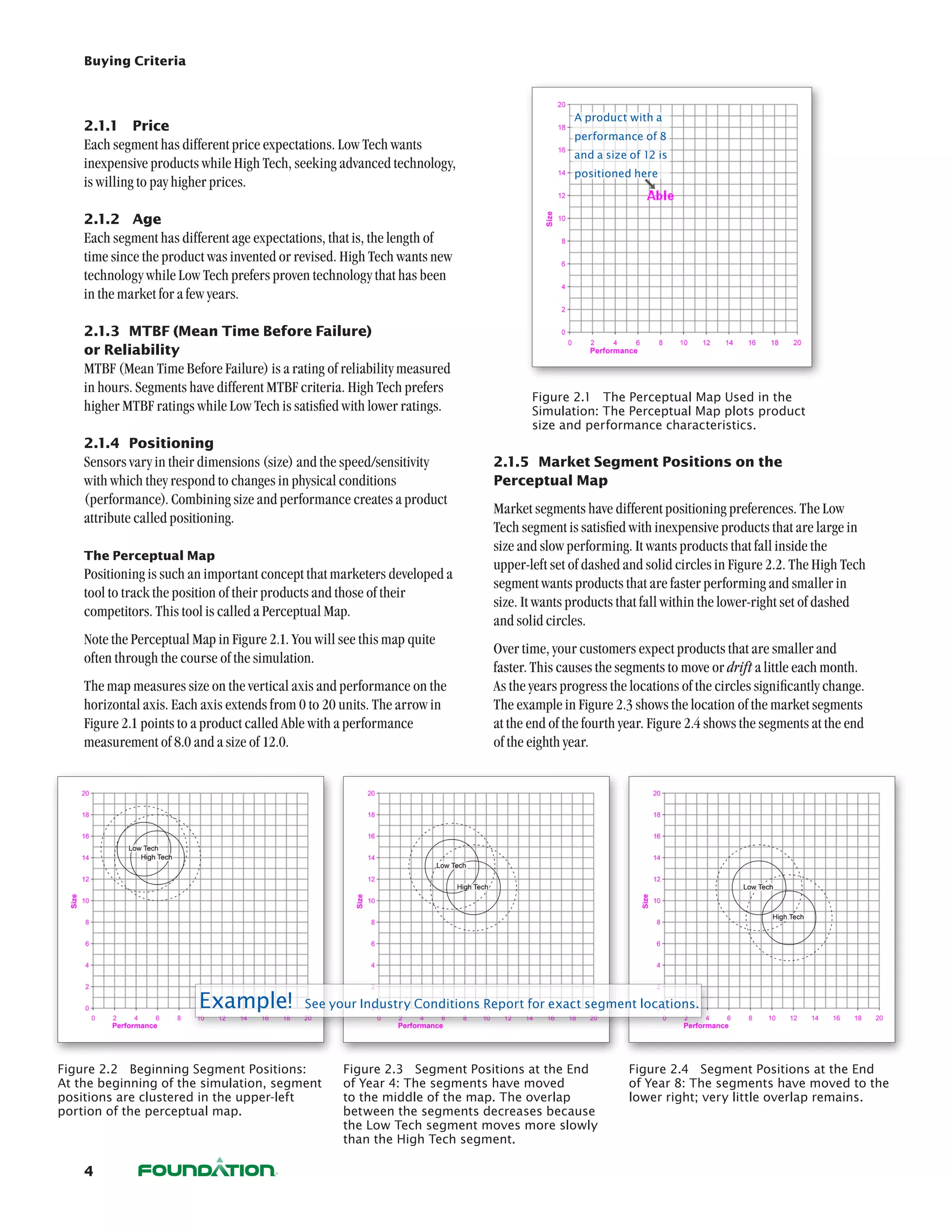
                                                                                          A product with a
    2.1.1	 Price
                                                                                          performance of 8
    Each segment has different price expectations. Low Tech wants
                                                                                          and a size of 12 is
    inexpensive products while High Tech, seeking advanced technology,
                                                                                          positioned here
    is willing to pay higher prices.

    2.1.2	 Age
    Each segment has different age expectations, that is, the length of
    time since the product was invented or revised. High Tech wants new
    technology while Low Tech prefers proven technology that has been
    in the market for a few years.

    2.1.3	 MTBF (Mean Time Before Failure)
    or Reliability
    MTBF (Mean Time Before Failure) is a rating of reliability measured
    in hours. Segments have different MTBF criteria. High Tech prefers
                                                                                  Figure 2.1  The Perceptual Map Used in the
    higher MTBF ratings while Low Tech is satisfied with lower ratings.           Simulation: The Perceptual Map plots product
                                                                                  size and performance characteristics.
    2.1.4	 Positioning
    Sensors vary in their dimensions (size) and the speed/sensitivity      2.1.5	 Market Segment Positions on the
    with which they respond to changes in physical conditions              Perceptual Map
    (performance). Combining size and performance creates a product
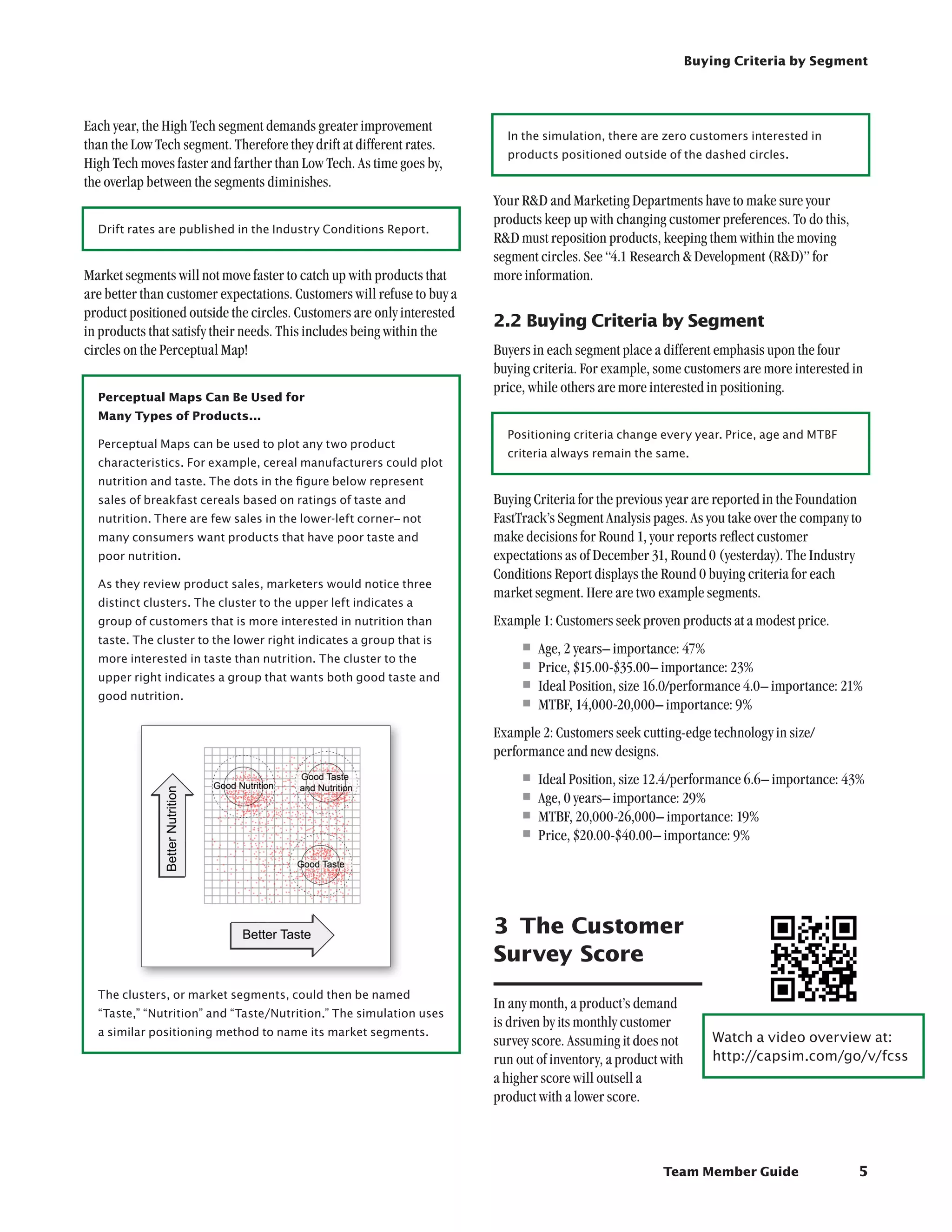
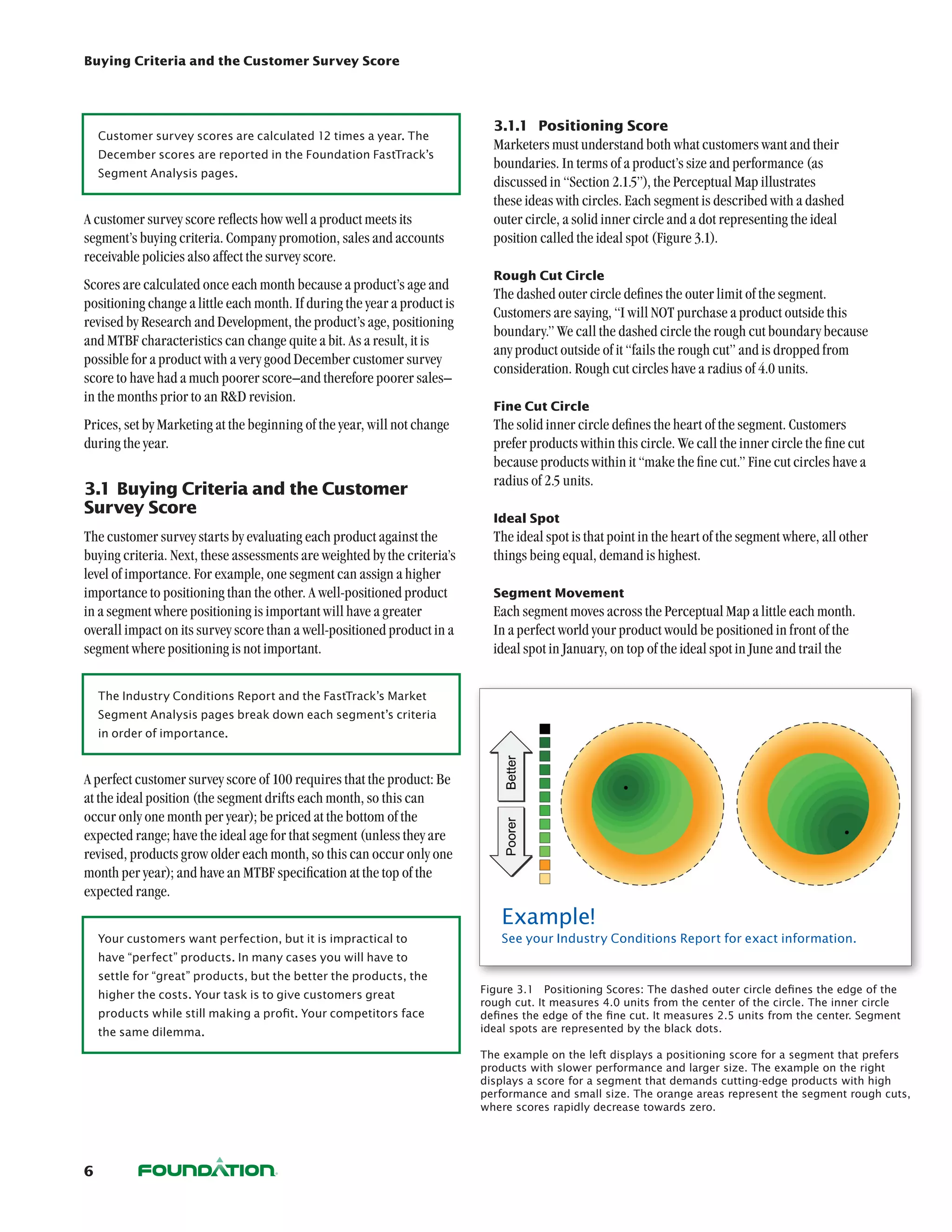
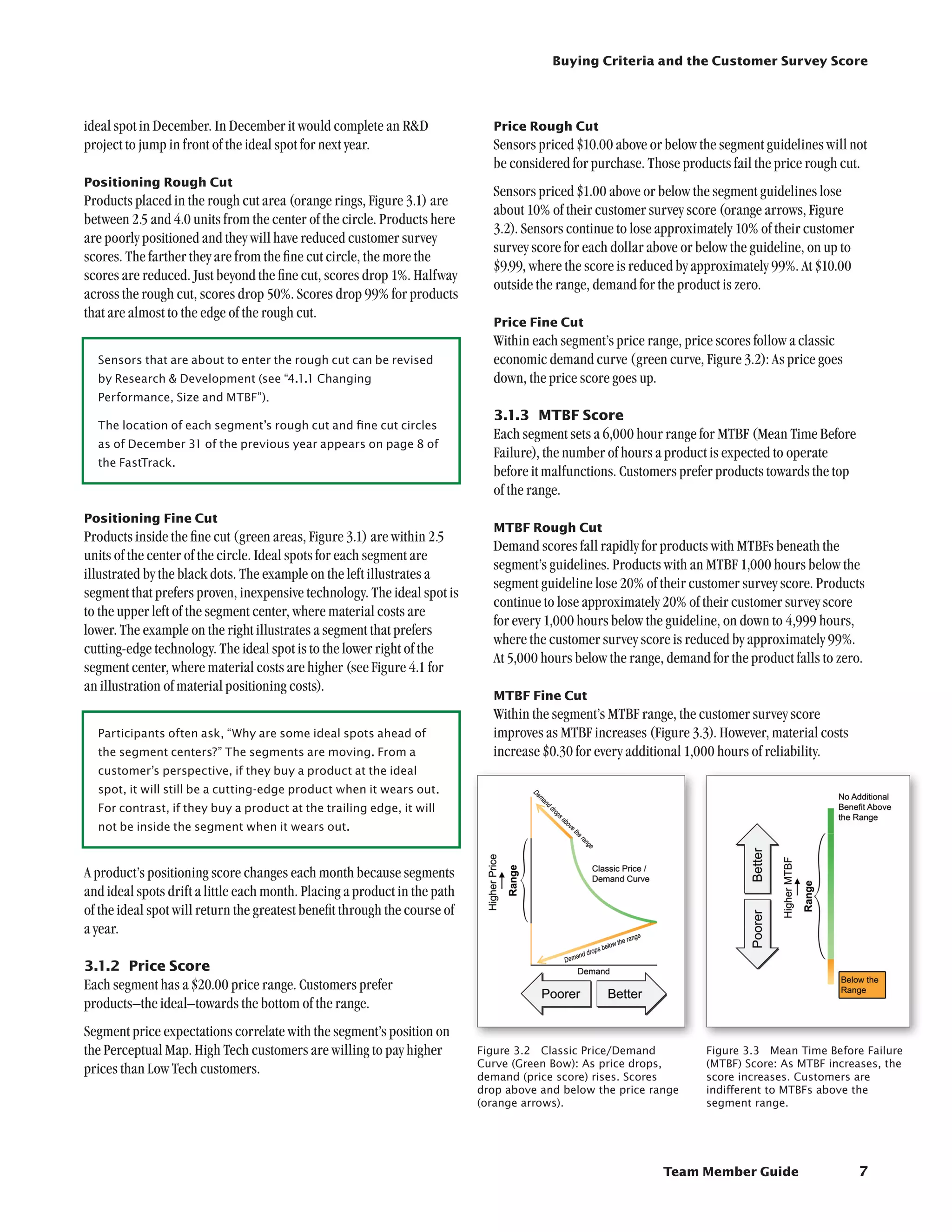
                                                                           Market segments have different positioning preferences. The Low
    attribute called positioning.
                                                                           Tech segment is satisfied with inexpensive products that are large in
                                                                           size and slow performing. It wants products that fall inside the
    The Perceptual Map
                                                                           upper-left set of dashed and solid circles in Figure 2.2. The High Tech
    Positioning is such an important concept that marketers developed a
                                                                           segment wants products that are faster performing and smaller in
    tool to track the position of their products and those of their
                                                                           size. It wants products that fall within the lower-right set of dashed
    competitors. This tool is called a Perceptual Map.
                                                                           and solid circles.
    Note the Perceptual Map in Figure 2.1. You will see this map quite
                                                                           Over time, your customers expect products that are smaller and
    often through the course of the simulation.
                                                                           faster. This causes the segments to move or drift a little each month.
    The map measures size on the vertical axis and performance on the      As the years progress the locations of the circles significantly change.
    horizontal axis. Each axis extends from 0 to 20 units. The arrow in    The example in Figure 2.3 shows the location of the market segments
    Figure 2.1 points to a product called Able with a performance          at the end of the fourth year. Figure 2.4 shows the segments at the end
    measurement of 8.0 and a size of 12.0.                                 of the eighth year.


                         Example!  See your Industry Conditions Report for exact segment locations.


Figure 2.2  Beginning Segment Positions:            Figure 2.3  Segment Positions at the End         Figure 2.4  Segment Positions at the End
At the beginning of the simulation, segment         of Year 4: The segments have moved               of Year 8: The segments have moved to the
positions are clustered in the upper-left 	         to the middle of the map. The overlap            lower right; very little overlap remains.
portion of the perceptual map.                      between the segments decreases because
                                                    the Low Tech segment moves more slowly
                                                    than the High Tech segment.

    4
Buying Criteria by Segment


Each year, the High Tech segment demands greater improvement
                                                                          In the simulation, there are zero customers interested in
than the Low Tech segment. Therefore they drift at different rates.
                                                                          products positioned outside of the dashed circles.
High Tech moves faster and farther than Low Tech. As time goes by,
the overlap between the segments diminishes.
                                                                        Your RD and Marketing Departments have to make sure your
                                                                        products keep up with changing customer preferences. To do this,
  Drift rates are published in the Industry Conditions Report.
                                                                        RD must reposition products, keeping them within the moving
                                                                        segment circles. See “4.1 Research  Development (RD)” for
Market segments will not move faster to catch up with products that     more information.
are better than customer expectations. Customers will refuse to buy a
product positioned outside the circles. Customers are only interested
                                                                        2.2	Buying Criteria by Segment
in products that satisfy their needs. This includes being within the
circles on the Perceptual Map!                                          Buyers in each segment place a different emphasis upon the four
                                                                        buying criteria. For example, some customers are more interested in
                                                                        price, while others are more interested in positioning.
  Perceptual Maps Can Be Used for
  Many Types of Products...
                                                                          Positioning criteria change every year. Price, age and MTBF
  Perceptual Maps can be used to plot any two product
                                                                          criteria always remain the same.
  characteristics. For example, cereal manufacturers could plot
  nutrition and taste. The dots in the figure below represent
  sales of breakfast cereals based on ratings of taste and              Buying Criteria for the previous year are reported in the Foundation
  nutrition. There are few sales in the lower-left corner– not          FastTrack’s Segment Analysis pages. As you take over the company to
  many consumers want products that have poor taste and                 make decisions for Round 1, your reports reflect customer
  poor nutrition.                                                       expectations as of December 31, Round 0 (yesterday). The Industry
                                                                        Conditions Report displays the Round 0 buying criteria for each
  As they review product sales, marketers would notice three
                                                                        market segment. Here are two example segments.
  distinct clusters. The cluster to the upper left indicates a
  group of customers that is more interested in nutrition than          Example 1: Customers seek proven products at a modest price.
  taste. The cluster to the lower right indicates a group that is
                                                                            •	Age, 2 years– importance: 47%
  more interested in taste than nutrition. The cluster to the
                                                                            •	Price, $15.00-$35.00– importance: 23%
  upper right indicates a group that wants both good taste and
                                                                            •	Ideal Position, size 16.0/performance 4.0– importance: 21%
  good nutrition.
                                                                            •	MTBF, 14,000-20,000– importance: 9%
                                                                        Example 2: Customers seek cutting-edge technology in size/
                                                                        performance and new designs.
                                                                            •	Ideal Position, size 12.4/performance 6.6– importance: 43%
                                                                            •	Age, 0 years– importance: 29%
                                                                            •	MTBF, 20,000-26,000– importance: 19%
                                                                            •	Price, $20.00-$40.00– importance: 9%


                                                                        3	 The Customer
                                                                        Survey Score
  The clusters, or market segments, could then be named
                                                                        In any month, a product’s demand
  “Taste,” “Nutrition” and “Taste/Nutrition.” The simulation uses
                                                                        is driven by its monthly customer
  a similar positioning method to name its market segments.
                                                                        survey score. Assuming it does not         Watch a video overview at:	
                                                                        run out of inventory, a product with       http://capsim.com/go/v/fcss
                                                                        a higher score will outsell a
                                                                        product with a lower score.


                                                                                                        Team Member Guide                  5
Buying Criteria and the Customer Survey Score


                                                                            3.1.1	 Positioning Score
    Customer survey scores are calculated 12 times a year. The
                                                                            Marketers must understand both what customers want and their
    December scores are reported in the Foundation FastTrack’s
                                                                            boundaries. In terms of a product’s size and performance (as
    Segment Analysis pages.
                                                                            discussed in “Section 2.1.5”), the Perceptual Map illustrates
                                                                            these ideas with circles. Each segment is described with a dashed
A customer survey score reflects how well a product meets its               outer circle, a solid inner circle and a dot representing the ideal
segment’s buying criteria. Company promotion, sales and accounts            position called the ideal spot (Figure 3.1).
receivable policies also affect the survey score.
                                                                            Rough Cut Circle
Scores are calculated once each month because a product’s age and
                                                                            The dashed outer circle defines the outer limit of the segment.
positioning change a little each month. If during the year a product is
                                                                            Customers are saying, “I will NOT purchase a product outside this
revised by Research and Development, the product’s age, positioning
                                                                            boundary.” We call the dashed circle the rough cut boundary because
and MTBF characteristics can change quite a bit. As a result, it is
                                                                            any product outside of it “fails the rough cut” and is dropped from
possible for a product with a very good December customer survey
                                                                            consideration. Rough cut circles have a radius of 4.0 units.
score to have had a much poorer score–and therefore poorer sales–
in the months prior to an RD revision.
                                                                            Fine Cut Circle
Prices, set by Marketing at the beginning of the year, will not change      The solid inner circle defines the heart of the segment. Customers
during the year.                                                            prefer products within this circle. We call the inner circle the fine cut
                                                                            because products within it “make the fine cut.” Fine cut circles have a
                                                                            radius of 2.5 units.
3.1	Buying Criteria and the Customer
Survey Score
                                                                            Ideal Spot
The customer survey starts by evaluating each product against the           The ideal spot is that point in the heart of the segment where, all other
buying criteria. Next, these assessments are weighted by the criteria’s     things being equal, demand is highest.
level of importance. For example, one segment can assign a higher
importance to positioning than the other. A well-positioned product         Segment Movement
in a segment where positioning is important will have a greater             Each segment moves across the Perceptual Map a little each month.
overall impact on its survey score than a well-positioned product in a      In a perfect world your product would be positioned in front of the
segment where positioning is not important.                                 ideal spot in January, on top of the ideal spot in June and trail the


    The Industry Conditions Report and the FastTrack’s Market
    Segment Analysis pages break down each segment’s criteria
    in order of importance.


A perfect customer survey score of 100 requires that the product: Be
at the ideal position (the segment drifts each month, so this can
occur only one month per year); be priced at the bottom of the
expected range; have the ideal age for that segment (unless they are
revised, products grow older each month, so this can occur only one
month per year); and have an MTBF specification at the top of the
expected range.
                                                                             Example!
    Your customers want perfection, but it is impractical to                 See your Industry Conditions Report for exact information.
    have “perfect” products. In many cases you will have to
    settle for “great” products, but the better the products, the
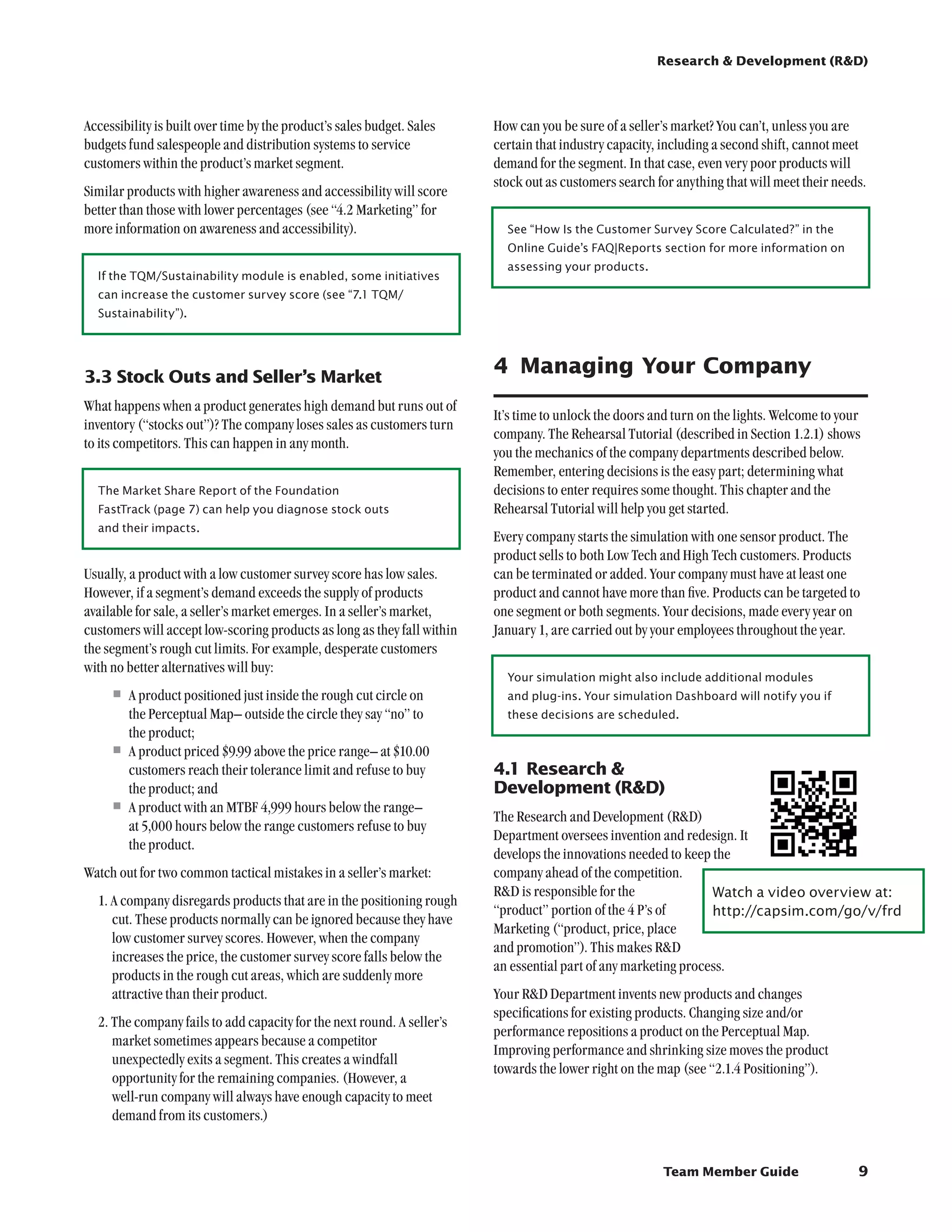
                                                                          Figure 3.1  Positioning Scores: The dashed outer circle defines the edge of the
    higher the costs. Your task is to give customers great
                                                                          rough cut. It measures 4.0 units from the center of the circle. The inner circle
    products while still making a profit. Your competitors face           defines the edge of the fine cut. It measures 2.5 units from the center. Segment
    the same dilemma.                                                     ideal spots are represented by the black dots.	
                                                                          	
                                                                          The example on the left displays a positioning score for a segment that prefers
                                                                          products with slower performance and larger size. The example on the right
                                                                          displays a score for a segment that demands cutting-edge products with high
                                                                          performance and small size. The orange areas represent the segment rough cuts,
                                                                          where scores rapidly decrease towards zero.


6
Buying Criteria and the Customer Survey Score


ideal spot in December. In December it would complete an RD                 Price Rough Cut
project to jump in front of the ideal spot for next year.                    Sensors priced $10.00 above or below the segment guidelines will not
                                                                             be considered for purchase. Those products fail the price rough cut.
Positioning Rough Cut
                                                                             Sensors priced $1.00 above or below the segment guidelines lose
Products placed in the rough cut area (orange rings, Figure 3.1) are
                                                                             about 10% of their customer survey score (orange arrows, Figure
between 2.5 and 4.0 units from the center of the circle. Products here
                                                                             3.2). Sensors continue to lose approximately 10% of their customer
are poorly positioned and they will have reduced customer survey
                                                                             survey score for each dollar above or below the guideline, on up to
scores. The farther they are from the fine cut circle, the more the
                                                                             $9.99, where the score is reduced by approximately 99%. At $10.00
scores are reduced. Just beyond the fine cut, scores drop 1%. Halfway
                                                                             outside the range, demand for the product is zero.
across the rough cut, scores drop 50%. Scores drop 99% for products
that are almost to the edge of the rough cut.
                                                                             Price Fine Cut
                                                                             Within each segment’s price range, price scores follow a classic
  Sensors that are about to enter the rough cut can be revised               economic demand curve (green curve, Figure 3.2): As price goes
  by Research  Development (see “4.1.1 Changing                             down, the price score goes up.
  Performance, Size and MTBF”).
                                                                             3.1.3	 MTBF Score
  The location of each segment’s rough cut and fine cut circles
                                                                             Each segment sets a 6,000 hour range for MTBF (Mean Time Before
  as of December 31 of the previous year appears on page 8 of
                                                                             Failure), the number of hours a product is expected to operate
  the FastTrack.
                                                                             before it malfunctions. Customers prefer products towards the top
                                                                             of the range.
Positioning Fine Cut
                                                                             MTBF Rough Cut
Products inside the fine cut (green areas, Figure 3.1) are within 2.5
                                                                             Demand scores fall rapidly for products with MTBFs beneath the
units of the center of the circle. Ideal spots for each segment are
                                                                             segment’s guidelines. Products with an MTBF 1,000 hours below the
illustrated by the black dots. The example on the left illustrates a
                                                                             segment guideline lose 20% of their customer survey score. Products
segment that prefers proven, inexpensive technology. The ideal spot is
                                                                             continue to lose approximately 20% of their customer survey score
to the upper left of the segment center, where material costs are
                                                                             for every 1,000 hours below the guideline, on down to 4,999 hours,
lower. The example on the right illustrates a segment that prefers
                                                                             where the customer survey score is reduced by approximately 99%.
cutting-edge technology. The ideal spot is to the lower right of the
                                                                             At 5,000 hours below the range, demand for the product falls to zero.
segment center, where material costs are higher (see Figure 4.1 for
an illustration of material positioning costs).
                                                                             MTBF Fine Cut
                                                                             Within the segment’s MTBF range, the customer survey score
  Participants often ask, “Why are some ideal spots ahead of                 improves as MTBF increases (Figure 3.3). However, material costs
  the segment centers?” The segments are moving. From a                      increase $0.30 for every additional 1,000 hours of reliability.
  customer’s perspective, if they buy a product at the ideal
  spot, it will still be a cutting-edge product when it wears out.
  For contrast, if they buy a product at the trailing edge, it will
  not be inside the segment when it wears out.


A product’s positioning score changes each month because segments
and ideal spots drift a little each month. Placing a product in the path
of the ideal spot will return the greatest benefit through the course of
a year.

3.1.2	 Price Score
Each segment has a $20.00 price range. Customers prefer
products–the ideal–towards the bottom of the range.
Segment price expectations correlate with the segment’s position on
the Perceptual Map. High Tech customers are willing to pay higher          Figure 3.2  Classic Price/Demand         Figure 3.3  Mean Time Before Failure
                                                                           Curve (Green Bow): As price drops,       (MTBF) Score: As MTBF increases, the
prices than Low Tech customers.                                            demand (price score) rises. Scores       score increases. Customers are 	
                                                                           drop above and below the price range     indifferent to MTBFs above the 	
                                                                           (orange arrows).                         segment range.


                                                                                                            Team Member Guide                      7
Estimating the Customer Survey Score


       Customers ignore reliability above the expected range– demand               builds “accessibility,” the ease with which customers can work with
       plateaus at the top of the range.                                           you after they begin sourcing. To the 4 P’s we can add two additional
                                                                                   elements– credit terms and availability. Credit terms are expressed
       3.1.4	 Age Score                                                            by your accounts receivable (A/R) policy. Availability addresses
       The age criteria do not have a rough cut; a product will never be too       inventory shortages.
       young or too old to be considered for purchase.
                                                                                   3.2.1	 Base Scores
       High Tech customers demand cutting-edge technology. They prefer
                                                                                   To estimate the customer survey score, begin with the buying criteria
       newer products. Low Tech customers prefer older products with
                                                                                   available in the FastTrack’s Segment Analysis reports. For example,
       proven technology.
                                                                                   suppose the buying criteria are:
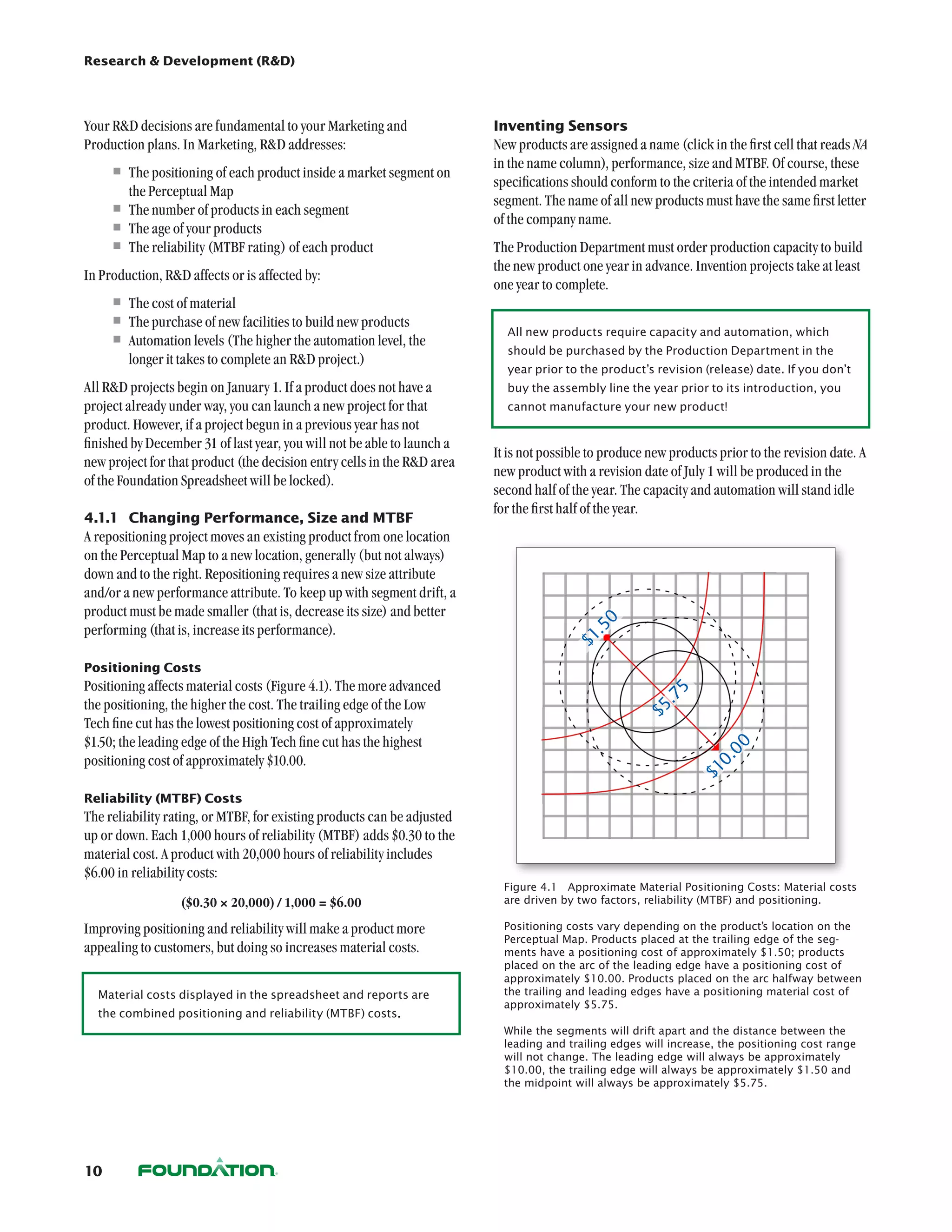
       Each month, customers assess a product’s age and award a score
       based upon their preferences. Examples of age preferences are
                                                                                        •	Age, 2 years– importance: 47%
       illustrated in Figure 3.4.
                                                                                        •	Price, $20.00-$40.00– importance: 23%
                                                                                        •	Ideal Position, size 16.0 /performance 4.0– importance: 21%
                                                                                        •	MTBF, 14,000-20,000– importance: 9%
                                                                                   A perfect score of 100 requires that the product have an age of 2.0
                                                                                   years, a price of $20.00, a position at the ideal spot (16.0 and 4.0) and
                                                                                   an MTBF of 20,000 hours.
                                                                                   The segment weighs the criteria at: Age 47%, Price 23%, Positioning
                                                                                   21% and MTBF 9%. You can convert these percentages into points
                                                                                   then use these numbers to estimate a base score for your product. For
                                                                                   example, price is worth 23 points. The perfect price of $20.00 would
                                                                                   get 23 points, but at the opposite end of the price range, a price of
                                                                                   $40.00 would only get one point.
   Example!
   See your Industry Conditions Report for exact information.
                                                                                     You can use the age and positioning charts in your
                                                                                     Industry Conditions Report to estimate average points for
Figure 3.4  Age Scores: The example on the left displays a score for a segment
that prefers products with an age of one year. The example on the right displays
                                                                                     those criteria.
a score for a segment that prefers products with an age of two years.

                                                                                   However, the base score can fall because of poor awareness
           Age preferences for each segment are published in the                   (promotion), accessibility (place) or the credit terms you extend to
           Industry Conditions Report and the Segment Analysis pages               your customers.
           of the Foundation FastTrack.
                                                                                   3.2.2	 Accounts Receivable
                                                                                   A company’s accounts receivable policy sets the amount of time
                                                                                   customers have to pay for their purchases. At 90 days there is no
       3.2	Estimating the Customer Survey Score
                                                                                   reduction to the base score. At 60 days the score is reduced 0.7%. At
       The customer survey score drives demand for your product in each            30 days the score is reduced 7%. Offering no credit terms (0 days)
       segment. Your demand in any given month is your score divided by            reduces the score by 40% (see “4.4.5 Credit Policy”).
       the sum of the scores. For example, if your product’s score in April is
       20 and your competitors’ scores are 27, 19, 21 and 3, then your             3.2.3	 Awareness and Accessibility
       product’s April demand is:                                                  After your product leaves the factory and enters the marketplace, the
                                                                                   calculations for its score become less exact. The score will be
                         20 / (20 + 27 + 19 + 21 + 3) = 22%
                                                                                   affected by the level of the product’s awareness (the percentage of
       Assuming you had enough inventory to meet demand, you would                 people who know about your product) and its segment’s
       receive 22% of segment sales for April.                                     accessibility (the number of customers who can easily interact with
                                                                                   your company).
       What generates the score itself? Marketers speak of “the 4 P’s”–price,
       product, promotion and place. Price and product are found in the            Awareness is built over time by the product’s promotion budget.
       buying criteria. Together they present a price-value relationship. Your     Promotion budgets fund advertising and public relations campaigns.
       promotion budget builds “awareness,” the number of customers who
       know about your product before sourcing. Your sales budget (place)


       8
Research  Development (RD)


Accessibility is built over time by the product’s sales budget. Sales    How can you be sure of a seller’s market? You can’t, unless you are
budgets fund salespeople and distribution systems to service             certain that industry capacity, including a second shift, cannot meet
customers within the product’s market segment.                           demand for the segment. In that case, even very poor products will
                                                                         stock out as customers search for anything that will meet their needs.
Similar products with higher awareness and accessibility will score
better than those with lower percentages (see “4.2 Marketing” for
more information on awareness and accessibility).                          See “How Is the Customer Survey Score Calculated?” in the
                                                                           Online Guide’s FAQ|Reports section for more information on
                                                                           assessing your products.
  If the TQM/Sustainability module is enabled, some initiatives
  can increase the customer survey score (see “7.1 TQM/
  Sustainability”).


3.3	Stock Outs and Seller’s Market
                                                                         4	 Managing Your Company
What happens when a product generates high demand but runs out of
                                                                         It’s time to unlock the doors and turn on the lights. Welcome to your
inventory (“stocks out”)? The company loses sales as customers turn
                                                                         company. The Rehearsal Tutorial (described in Section 1.2.1) shows
to its competitors. This can happen in any month.
                                                                         you the mechanics of the company departments described below.
                                                                         Remember, entering decisions is the easy part; determining what
  The Market Share Report of the Foundation                              decisions to enter requires some thought. This chapter and the
  FastTrack (page 7) can help you diagnose stock outs                    Rehearsal Tutorial will help you get started.
  and their impacts.
                                                                         Every company starts the simulation with one sensor product. The
                                                                         product sells to both Low Tech and High Tech customers. Products
Usually, a product with a low customer survey score has low sales.       can be terminated or added. Your company must have at least one
However, if a segment’s demand exceeds the supply of products            product and cannot have more than five. Products can be targeted to
available for sale, a seller’s market emerges. In a seller’s market,     one segment or both segments. Your decisions, made every year on
customers will accept low-scoring products as long as they fall within   January 1, are carried out by your employees throughout the year.
the segment’s rough cut limits. For example, desperate customers
with no better alternatives will buy:
                                                                           Your simulation might also include additional modules
     •	A product positioned just inside the rough cut circle on            and plug-ins. Your simulation Dashboard will notify you if
       the Perceptual Map– outside the circle they say “no” to             these decisions are scheduled.
       the product;
     •	A product priced $9.99 above the price range– at $10.00
       customers reach their tolerance limit and refuse to buy           4.1	Research 
       the product; and                                                  Development (RD)
     •	A product with an MTBF 4,999 hours below the range–               The Research and Development (RD)
       at 5,000 hours below the range customers refuse to buy
                                                                         Department oversees invention and redesign. It
       the product.
                                                                         develops the innovations needed to keep the
Watch out for two common tactical mistakes in a seller’s market:         company ahead of the competition.
                                                                         RD is responsible for the              Watch a video overview at:	
  1. A company disregards products that are in the positioning rough
                                                                         “product” portion of the 4 P’s of       http://capsim.com/go/v/frd
     cut. These products normally can be ignored because they have
                                                                         Marketing (“product, price, place
     low customer survey scores. However, when the company
                                                                         and promotion”). This makes RD
     increases the price, the customer survey score falls below the
                                                                         an essential part of any marketing process.
     products in the rough cut areas, which are suddenly more
     attractive than their product.                                      Your RD Department invents new products and changes
                                                                         specifications for existing products. Changing size and/or
  2. The company fails to add capacity for the next round. A seller’s
                                                                         performance repositions a product on the Perceptual Map.
     market sometimes appears because a competitor
                                                                         Improving performance and shrinking size moves the product
     unexpectedly exits a segment. This creates a windfall
                                                                         towards the lower right on the map (see “2.1.4 Positioning”).
     opportunity for the remaining companies. (However, a
     well-run company will always have enough capacity to meet
     demand from its customers.)


                                                                                                        Team Member Guide                    9
Research  Development (RD)


Your RD decisions are fundamental to your Marketing and                 Inventing Sensors
Production plans. In Marketing, RD addresses:                           New products are assigned a name (click in the first cell that reads NA
                                                                         in the name column), performance, size and MTBF. Of course, these
     •	The positioning of each product inside a market segment on        specifications should conform to the criteria of the intended market
        the Perceptual Map
                                                                         segment. The name of all new products must have the same first letter
     •	The number of products in each segment                            of the company name.
     •	The age of your products
     •	The reliability (MTBF rating) of each product                     The Production Department must order production capacity to build
                                                                         the new product one year in advance. Invention projects take at least
In Production, RD affects or is affected by:
                                                                         one year to complete.
     •	The cost of material
     •	The purchase of new facilities to build new products
     •	Automation levels (The higher the automation level, the             All new products require capacity and automation, which
                                                                           should be purchased by the Production Department in the
        longer it takes to complete an RD project.)
                                                                           year prior to the product’s revision (release) date. If you don’t
All RD projects begin on January 1. If a product does not have a          buy the assembly line the year prior to its introduction, you
project already under way, you can launch a new project for that           cannot manufacture your new product!
product. However, if a project begun in a previous year has not
finished by December 31 of last year, you will not be able to launch a
                                                                         It is not possible to produce new products prior to the revision date. A
new project for that product (the decision entry cells in the RD area
                                                                         new product with a revision date of July 1 will be produced in the
of the Foundation Spreadsheet will be locked).
                                                                         second half of the year. The capacity and automation will stand idle
                                                                         for the first half of the year.
4.1.1	 Changing Performance, Size and MTBF
A repositioning project moves an existing product from one location
on the Perceptual Map to a new location, generally (but not always)
down and to the right. Repositioning requires a new size attribute
and/or a new performance attribute. To keep up with segment drift, a
product must be made smaller (that is, decrease its size) and better                        0
performing (that is, increase its performance).
                                                                                          .5
                                                                                        $1


Positioning Costs
Positioning affects material costs (Figure 4.1). The more advanced                                       5
                                                                                                       .7

the positioning, the higher the cost. The trailing edge of the Low
                                                                                                     $5


Tech fine cut has the lowest positioning cost of approximately
$1.50; the leading edge of the High Tech fine cut has the highest
                                                                                                                    00
positioning cost of approximately $10.00.
                                                                                                                  0.
                                                                                                                $1


Reliability (MTBF) Costs
The reliability rating, or MTBF, for existing products can be adjusted
up or down. Each 1,000 hours of reliability (MTBF) adds $0.30 to the
material cost. A product with 20,000 hours of reliability includes
$6.00 in reliability costs:
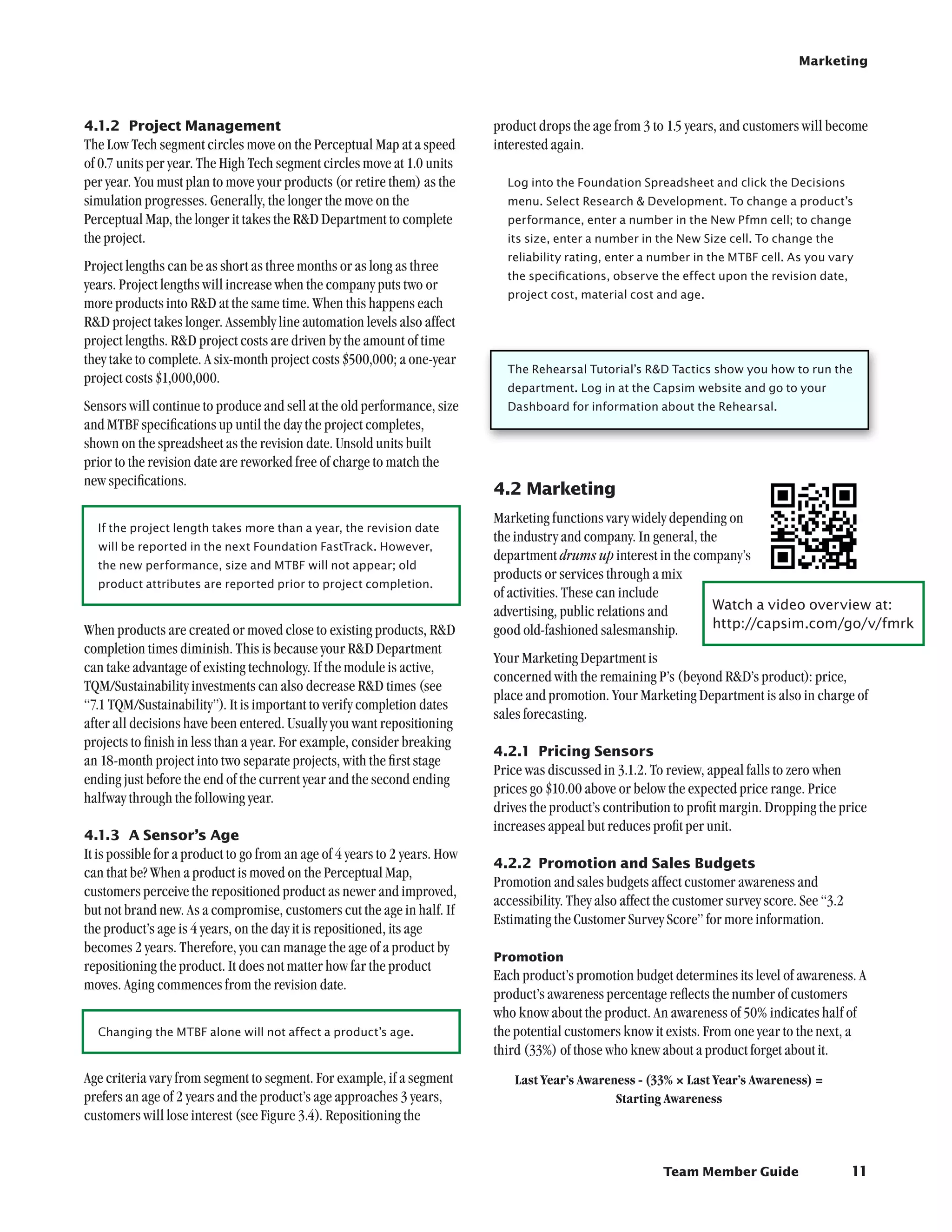
                                                                           Figure 4.1  Approximate Material Positioning Costs: Material costs
                  ($0.30 × 20,000) / 1,000 = $6.00                         are driven by two factors, reliability (MTBF) and positioning.	
                                                                           	
Improving positioning and reliability will make a product more             Positioning costs vary depending on the product’s location on the
                                                                           Perceptual Map. Products placed at the trailing edge of the seg-
appealing to customers, but doing so increases material costs.             ments have a positioning cost of approximately $1.50; products
                                                                           placed on the arc of the leading edge have a positioning cost of
                                                                           approximately $10.00. Products placed on the arc halfway between
  Material costs displayed in the spreadsheet and reports are              the trailing and leading edges have a positioning material cost of
                                                                           approximately $5.75. 	
  the combined positioning and reliability (MTBF) costs.                   	
                                                                           While the segments will drift apart and the distance between the
                                                                           leading and trailing edges will increase, the positioning cost range
                                                                           will not change. The leading edge will always be approximately
                                                                           $10.00, the trailing edge will always be approximately $1.50 and
                                                                           the midpoint will always be approximately $5.75.


10
Marketing


4.1.2	 Project Management                                                   product drops the age from 3 to 1.5 years, and customers will become
The Low Tech segment circles move on the Perceptual Map at a speed          interested again.
of 0.7 units per year. The High Tech segment circles move at 1.0 units
per year. You must plan to move your products (or retire them) as the         Log into the Foundation Spreadsheet and click the Decisions
simulation progresses. Generally, the longer the move on the                  menu. Select Research  Development. To change a product’s
Perceptual Map, the longer it takes the RD Department to complete            performance, enter a number in the New Pfmn cell; to change
the project.                                                                  its size, enter a number in the New Size cell. To change the
                                                                              reliability rating, enter a number in the MTBF cell. As you vary
Project lengths can be as short as three months or as long as three
                                                                              the specifications, observe the effect upon the revision date,
years. Project lengths will increase when the company puts two or
                                                                              project cost, material cost and age.
more products into RD at the same time. When this happens each
RD project takes longer. Assembly line automation levels also affect
project lengths. RD project costs are driven by the amount of time
they take to complete. A six-month project costs $500,000; a one-year
                                                                              The Rehearsal Tutorial’s RD Tactics show you how to run the
project costs $1,000,000.
                                                                              department. Log in at the Capsim website and go to your
Sensors will continue to produce and sell at the old performance, size        Dashboard for information about the Rehearsal.
and MTBF specifications up until the day the project completes,
shown on the spreadsheet as the revision date. Unsold units built
prior to the revision date are reworked free of charge to match the
new specifications.
                                                                            4.2	Marketing
                                                                            Marketing functions vary widely depending on
  If the project length takes more than a year, the revision date
                                                                            the industry and company. In general, the
  will be reported in the next Foundation FastTrack. However,
                                                                            department drums up interest in the company’s
  the new performance, size and MTBF will not appear; old
                                                                            products or services through a mix
  product attributes are reported prior to project completion.
                                                                            of activities. These can include
                                                                            advertising, public relations and       Watch a video overview at:	
When products are created or moved close to existing products, RD          good old-fashioned salesmanship.        http://capsim.com/go/v/fmrk
completion times diminish. This is because your RD Department
                                                                            Your Marketing Department is
can take advantage of existing technology. If the module is active,
                                                                            concerned with the remaining P’s (beyond RD’s product): price,
TQM/Sustainability investments can also decrease RD times (see
                                                                            place and promotion. Your Marketing Department is also in charge of
“7.1 TQM/Sustainability”). It is important to verify completion dates
                                                                            sales forecasting.
after all decisions have been entered. Usually you want repositioning
projects to finish in less than a year. For example, consider breaking
                                                                            4.2.1	 Pricing Sensors
an 18-month project into two separate projects, with the first stage
                                                                            Price was discussed in 3.1.2. To review, appeal falls to zero when
ending just before the end of the current year and the second ending
                                                                            prices go $10.00 above or below the expected price range. Price
halfway through the following year.
                                                                            drives the product’s contribution to profit margin. Dropping the price
                                                                            increases appeal but reduces profit per unit.
4.1.3	 A Sensor’s Age
It is possible for a product to go from an age of 4 years to 2 years. How
                                                                            4.2.2	 Promotion and Sales Budgets
can that be? When a product is moved on the Perceptual Map,
                                                                            Promotion and sales budgets affect customer awareness and
customers perceive the repositioned product as newer and improved,
                                                                            accessibility. They also affect the customer survey score. See “3.2
but not brand new. As a compromise, customers cut the age in half. If
                                                                            Estimating the Customer Survey Score” for more information.
the product’s age is 4 years, on the day it is repositioned, its age
becomes 2 years. Therefore, you can manage the age of a product by
                                                                            Promotion
repositioning the product. It does not matter how far the product
                                                                            Each product’s promotion budget determines its level of awareness. A
moves. Aging commences from the revision date.
                                                                            product’s awareness percentage reflects the number of customers
                                                                            who know about the product. An awareness of 50% indicates half of
  Changing the MTBF alone will not affect a product’s age.                  the potential customers know it exists. From one year to the next, a
                                                                            third (33%) of those who knew about a product forget about it.
Age criteria vary from segment to segment. For example, if a segment            Last Year’s Awareness - (33% × Last Year’s Awareness) =
prefers an age of 2 years and the product’s age approaches 3 years,                               Starting Awareness
customers will lose interest (see Figure 3.4). Repositioning the


                                                                                                            Team Member Guide                     11
Marketing


   If a product ended last year with an awareness of 50%, this year it will      If you have two or more products that meet a segment’s fine cut
   start with an awareness of approximately 33%. This year’s promotion           criteria, the sales budget for each product contributes to that
   budget would build from a starting awareness of approximately 33%.            segment’s accessibility. The more products you have in the segment’s
                                                                                 fine cut, the stronger your distribution channels, support systems,
             Starting Awareness + Additional Awareness from
                                                                                 etc. This is because each product’s sales budget contributes to the
                       Figure 4.2 = New Awareness
                                                                                 segment’s accessibility.
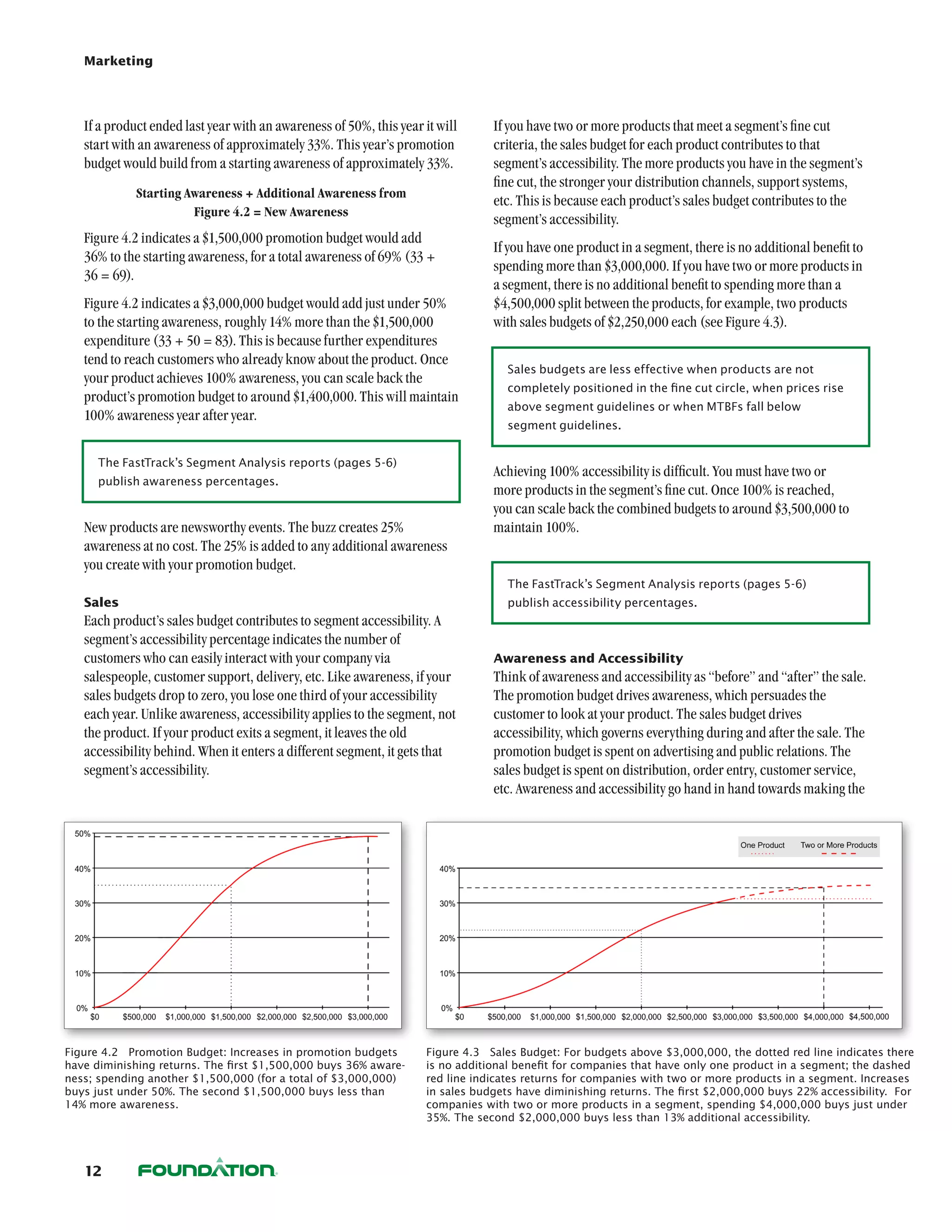
   Figure 4.2 indicates a $1,500,000 promotion budget would add
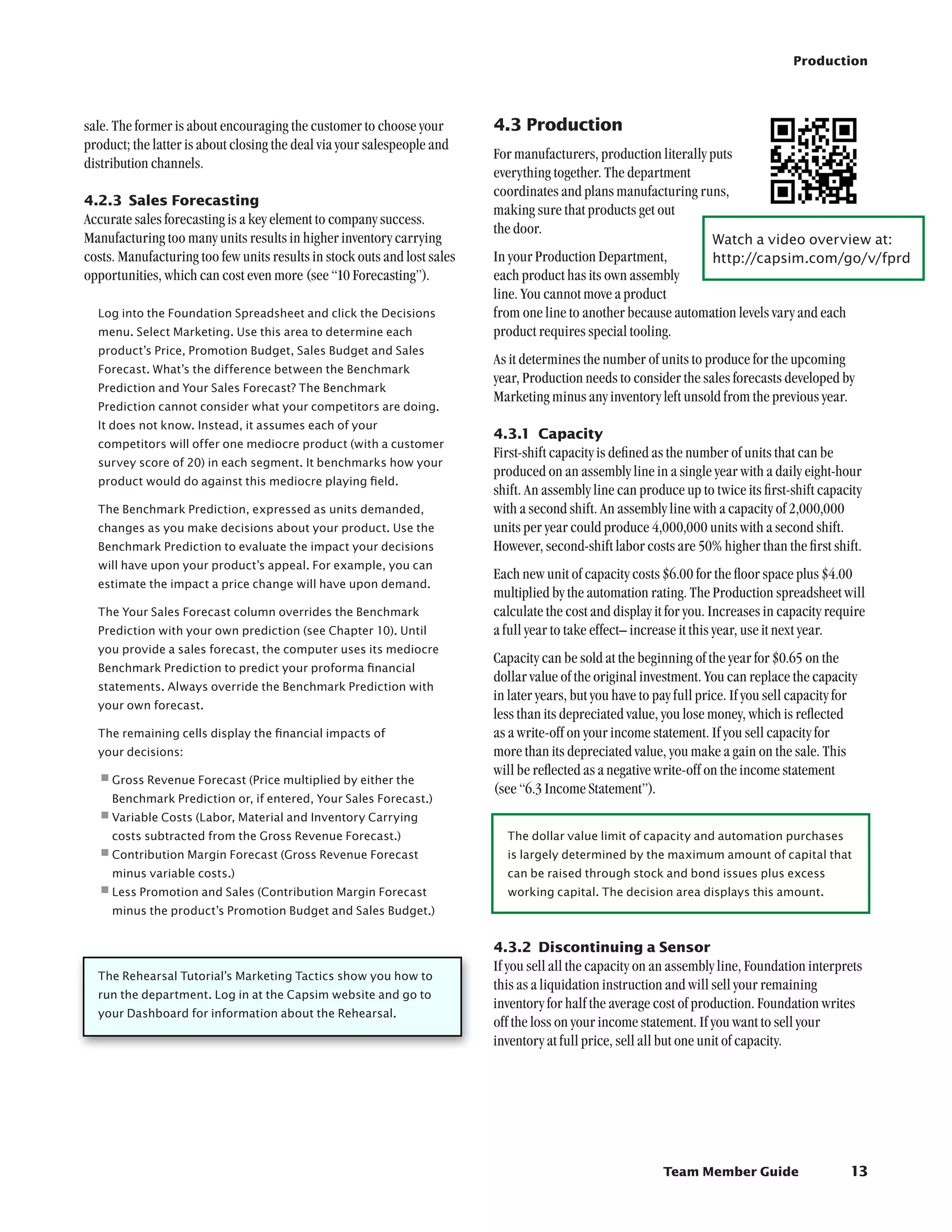
                                                                                 If you have one product in a segment, there is no additional benefit to
   36% to the starting awareness, for a total awareness of 69% (33 +
                                                                                 spending more than $3,000,000. If you have two or more products in
   36 = 69).
                                                                                 a segment, there is no additional benefit to spending more than a
   Figure 4.2 indicates a $3,000,000 budget would add just under 50%             $4,500,000 split between the products, for example, two products
   to the starting awareness, roughly 14% more than the $1,500,000               with sales budgets of $2,250,000 each (see Figure 4.3).
   expenditure (33 + 50 = 83). This is because further expenditures
   tend to reach customers who already know about the product. Once
                                                                                    Sales budgets are less effective when products are not
   your product achieves 100% awareness, you can scale back the
                                                                                    completely positioned in the fine cut circle, when prices rise
   product’s promotion budget to around $1,400,000. This will maintain
                                                                                    above segment guidelines or when MTBFs fall below
   100% awareness year after year.
                                                                                    segment guidelines.


      The FastTrack’s Segment Analysis reports (pages 5-6)
                                                                                 Achieving 100% accessibility is difficult. You must have two or
      publish awareness percentages.
                                                                                 more products in the segment’s fine cut. Once 100% is reached,
                                                                                 you can scale back the combined budgets to around $3,500,000 to
   New products are newsworthy events. The buzz creates 25%                      maintain 100%.
   awareness at no cost. The 25% is added to any additional awareness
   you create with your promotion budget.
                                                                                    The FastTrack’s Segment Analysis reports (pages 5-6)
   Sales                                                                            publish accessibility percentages.
   Each product’s sales budget contributes to segment accessibility. A
   segment’s accessibility percentage indicates the number of
   customers who can easily interact with your company via                       Awareness and Accessibility
   salespeople, customer support, delivery, etc. Like awareness, if your         Think of awareness and accessibility as “before” and “after” the sale.
   sales budgets drop to zero, you lose one third of your accessibility          The promotion budget drives awareness, which persuades the
   each year. Unlike awareness, accessibility applies to the segment, not        customer to look at your product. The sales budget drives
   the product. If your product exits a segment, it leaves the old               accessibility, which governs everything during and after the sale. The
   accessibility behind. When it enters a different segment, it gets that        promotion budget is spent on advertising and public relations. The
   segment’s accessibility.                                                      sales budget is spent on distribution, order entry, customer service,
                                                                                 etc. Awareness and accessibility go hand in hand towards making the


Figure 4.2  Promotion Budget: Increases in promotion budgets         Figure 4.3  Sales Budget: For budgets above $3,000,000, the dotted red line indicates there
have diminishing returns. The first $1,500,000 buys 36% aware-       is no additional benefit for companies that have only one product in a segment; the dashed
ness; spending another $1,500,000 (for a total of $3,000,000)        red line indicates returns for companies with two or more products in a segment. Increases
buys just under 50%. The second $1,500,000 buys less than            in sales budgets have diminishing returns. The first $2,000,000 buys 22% accessibility.  For
14% more awareness.                                                  companies with two or more products in a segment, spending $4,000,000 buys just under
                                                                     35%. The second $2,000,000 buys less than 13% additional accessibility.


   12
Production


sale. The former is about encouraging the customer to choose your         4.3	Production
product; the latter is about closing the deal via your salespeople and
                                                                          For manufacturers, production literally puts
distribution channels.
                                                                          everything together. The department
                                                                          coordinates and plans manufacturing runs,
4.2.3	 Sales Forecasting
                                                                          making sure that products get out
Accurate sales forecasting is a key element to company success.
                                                                          the door.
Manufacturing too many units results in higher inventory carrying                                                    Watch a video overview at:	
costs. Manufacturing too few units results in stock outs and lost sales   In your Production Department,         http://capsim.com/go/v/fprd
opportunities, which can cost even more (see “10 Forecasting”).           each product has its own assembly
                                                                          line. You cannot move a product
  Log into the Foundation Spreadsheet and click the Decisions             from one line to another because automation levels vary and each
  menu. Select Marketing. Use this area to determine each                 product requires special tooling.
  product’s Price, Promotion Budget, Sales Budget and Sales
                                                                          As it determines the number of units to produce for the upcoming
  Forecast. What’s the difference between the Benchmark
                                                                          year, Production needs to consider the sales forecasts developed by
  Prediction and Your Sales Forecast? The Benchmark
                                                                          Marketing minus any inventory left unsold from the previous year.
  Prediction cannot consider what your competitors are doing.
  It does not know. Instead, it assumes each of your
                                                                          4.3.1	 Capacity
  competitors will offer one mediocre product (with a customer
                                                                          First-shift capacity is defined as the number of units that can be
  survey score of 20) in each segment. It benchmarks how your
                                                                          produced on an assembly line in a single year with a daily eight-hour
  product would do against this mediocre playing field.
                                                                          shift. An assembly line can produce up to twice its first-shift capacity
  The Benchmark Prediction, expressed as units demanded,                  with a second shift. An assembly line with a capacity of 2,000,000
  changes as you make decisions about your product. Use the               units per year could produce 4,000,000 units with a second shift.
  Benchmark Prediction to evaluate the impact your decisions              However, second-shift labor costs are 50% higher than the first shift.
  will have upon your product’s appeal. For example, you can
                                                                          Each new unit of capacity costs $6.00 for the floor space plus $4.00
  estimate the impact a price change will have upon demand.
                                                                          multiplied by the automation rating. The Production spreadsheet will
  The Your Sales Forecast column overrides the Benchmark                  calculate the cost and display it for you. Increases in capacity require
  Prediction with your own prediction (see Chapter 10). Until             a full year to take effect– increase it this year, use it next year.
  you provide a sales forecast, the computer uses its mediocre
                                                                          Capacity can be sold at the beginning of the year for $0.65 on the
  Benchmark Prediction to predict your proforma financial
                                                                          dollar value of the original investment. You can replace the capacity
  statements. Always override the Benchmark Prediction with
                                                                          in later years, but you have to pay full price. If you sell capacity for
  your own forecast.
                                                                          less than its depreciated value, you lose money, which is reflected
  The remaining cells display the financial impacts of                    as a write-off on your income statement. If you sell capacity for
  your decisions:                                                         more than its depreciated value, you make a gain on the sale. This
                                                                          will be reflected as a negative write-off on the income statement
  •	 ross Revenue Forecast (Price multiplied by either the
   G
                                                                          (see “6.3 Income Statement”).
     Benchmark Prediction or, if entered, Your Sales Forecast.)
  •	 ariable Costs (Labor, Material and Inventory Carrying
   V
     costs subtracted from the Gross Revenue Forecast.)                     The dollar value limit of capacity and automation purchases
  •	 ontribution Margin Forecast (Gross Revenue Forecast
   C                                                                        is largely determined by the maximum amount of capital that
     minus variable costs.)                                                 can be raised through stock and bond issues plus excess
  •	ess Promotion and Sales (Contribution Margin Forecast
   L                                                                        working capital. The decision area displays this amount.
     minus the product’s Promotion Budget and Sales Budget.)


                                                                          4.3.2	 Discontinuing a Sensor
                                                                          If you sell all the capacity on an assembly line, Foundation interprets
  The Rehearsal Tutorial’s Marketing Tactics show you how to
                                                                          this as a liquidation instruction and will sell your remaining
  run the department. Log in at the Capsim website and go to
                                                                          inventory for half the average cost of production. Foundation writes
  your Dashboard for information about the Rehearsal.
                                                                          off the loss on your income statement. If you want to sell your
                                                                          inventory at full price, sell all but one unit of capacity.


                                                                                                           Team Member Guide                    13
Production


4.3.3	 Automation                                                        Reducing automation costs money. If you reduce automation, you will
As automation levels increase, the number of labor hours required to     be billed for a retooling cost. The net result is you will be spending
produce each unit falls. The lowest automation rating is 1.0; the        money to make your plant less efficient. While reduced automation
highest rating is 10.0.                                                  will speed RD redesigns, by and large, it is not wise to reduce an
                                                                         automation level.
At an automation rating of 1.0, labor costs are highest. Each
additional point of automation decreases labor costs approximately
10%. At a rating of 10.0, labor costs fall about 90%.                      When you buy automation, you might want to determine the
                                                                           return on investment (ROI). On your income statement, find
                                                                           last year’s labor cost for the product you are automating.
  Labor costs increase each year because of an Annual Raise in
                                                                           Your labor cost savings will be approximately 10% for each
  the workers’ contract.
                                                                           new point of automation. Multiply the savings by the number
                                                                           of rounds remaining in your simulation then divide it by the
Despite its attractiveness, two factors should be considered before        total cost of the automation.
raising automation:                                                            (Savings × Remaining Rounds) / Automation Cost = ROI
  1. Automation is expensive: At $4.00 per point of automation,
                                                                           If your plant is highly utilized your ROI will be higher than if
     raising automation from 1.0 to 10.0 costs $36.00 per unit
                                                                           your plant is only partially utilized (if your plant is under-
     of capacity;
                                                                           utilized you might consider selling excess capacity).
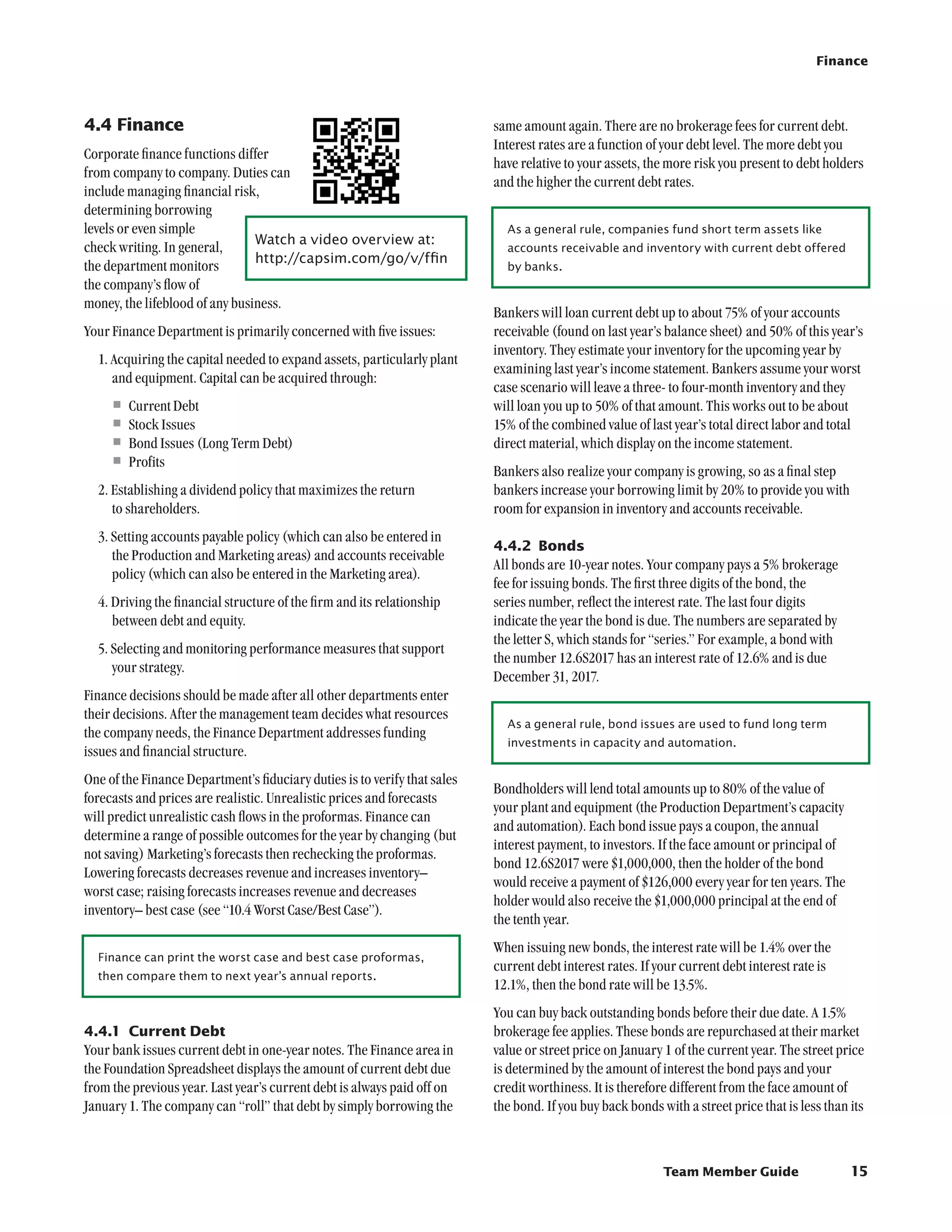
  2. As you raise automation, it becomes increasingly difficult for
                                                                           Clearly, the greater the ROI, the better the investment.
     RD to reposition products short distances on the Perceptual
     Map. For example, a project that moves a product 1.0 on the map
     takes significantly longer at an automation level of 8.0 than at    Changes in automation require a full year to take effect– change it
     5.0 (Figure 4.4). Long moves are less affected. You can move a      this year, use it next year.
     product a long distance at any automation level, but the project
     will take between 2.5 and 3.0 years to complete.                      Log into the Foundation Spreadsheet and click the Decisions
                                                                           menu. Select Production. Use this area to enter for each
Changing Automation                                                        product:
For each point of change in automation, up or down, the company is
charged $4.00 per unit of capacity. For example, if a line has a
                                                                           •	 Production Schedule
                                                                            A

capacity of 1,000,000 units, the cost of changing the automation level
                                                                           •	ncreases in first-shift capacity (Put a positive number in
                                                                            I
                                                                              Buy/Sell Capacity.)
from 5.0 to 6.0 would be $4,000,000.
                                                                           •	 ecreases in first-shift capacity (Put a negative number in
                                                                            D
                                                                              Buy/Sell Capacity.)
                                                                           •	 hanges in automation level (Enter a number in New
                                                                            C
                                                                              Automation Rating.)	


                                                                           The Rehearsal Tutorial’s Production Tactics show you how to
                                                                           run the department. Log in at the Capsim website and go to
                                                                           your Dashboard for information about the Rehearsal.


Figure 4.4  Time Required to Move a Sensor on the Perceptual Map
1.0 Unit at Automation Levels 1 Through 10


14
Finance


4.4	Finance                                                                same amount again. There are no brokerage fees for current debt.
                                                                           Interest rates are a function of your debt level. The more debt you
Corporate finance functions differ
                                                                           have relative to your assets, the more risk you present to debt holders
from company to company. Duties can
                                                                           and the higher the current debt rates.
include managing financial risk,
determining borrowing
levels or even simple                                                        As a general rule, companies fund short term assets like
                                Watch a video overview at:	
check writing. In general,                                                   accounts receivable and inventory with current debt offered
                                http://capsim.com/go/v/ffin
the department monitors                                                      by banks.
the company’s flow of
money, the lifeblood of any business.
                                                                           Bankers will loan current debt up to about 75% of your accounts
Your Finance Department is primarily concerned with five issues:           receivable (found on last year’s balance sheet) and 50% of this year’s
                                                                           inventory. They estimate your inventory for the upcoming year by
  1. Acquiring the capital needed to expand assets, particularly plant
                                                                           examining last year’s income statement. Bankers assume your worst
     and equipment. Capital can be acquired through:
                                                                           case scenario will leave a three- to four-month inventory and they
     •	Current Debt                                                        will loan you up to 50% of that amount. This works out to be about
     •	Stock Issues                                                        15% of the combined value of last year’s total direct labor and total
     •	Bond Issues (Long Term Debt)                                        direct material, which display on the income statement.
     •	Profits                                                             Bankers also realize your company is growing, so as a final step
  2. Establishing a dividend policy that maximizes the return              bankers increase your borrowing limit by 20% to provide you with
     to shareholders.                                                      room for expansion in inventory and accounts receivable.
  3. Setting accounts payable policy (which can also be entered in
                                                                           4.4.2	 Bonds
     the Production and Marketing areas) and accounts receivable
                                                                           All bonds are 10-year notes. Your company pays a 5% brokerage
     policy (which can also be entered in the Marketing area).
                                                                           fee for issuing bonds. The first three digits of the bond, the
  4. Driving the financial structure of the firm and its relationship      series number, reflect the interest rate. The last four digits
     between debt and equity.                                              indicate the year the bond is due. The numbers are separated by
                                                                           the letter S, which stands for “series.” For example, a bond with
  5. Selecting and monitoring performance measures that support
                                                                           the number 12.6S2017 has an interest rate of 12.6% and is due
     your strategy.
                                                                           December 31, 2017.
Finance decisions should be made after all other departments enter
their decisions. After the management team decides what resources
                                                                             As a general rule, bond issues are used to fund long term
the company needs, the Finance Department addresses funding
                                                                             investments in capacity and automation.
issues and financial structure.
One of the Finance Department’s fiduciary duties is to verify that sales
                                                                           Bondholders will lend total amounts up to 80% of the value of
forecasts and prices are realistic. Unrealistic prices and forecasts
                                                                           your plant and equipment (the Production Department’s capacity
will predict unrealistic cash flows in the proformas. Finance can
                                                                           and automation). Each bond issue pays a coupon, the annual
determine a range of possible outcomes for the year by changing (but
                                                                           interest payment, to investors. If the face amount or principal of
not saving) Marketing’s forecasts then rechecking the proformas.
                                                                           bond 12.6S2017 were $1,000,000, then the holder of the bond
Lowering forecasts decreases revenue and increases inventory–
                                                                           would receive a payment of $126,000 every year for ten years. The
worst case; raising forecasts increases revenue and decreases
                                                                           holder would also receive the $1,000,000 principal at the end of
inventory– best case (see “10.4 Worst Case/Best Case”).
                                                                           the tenth year.
                                                                           When issuing new bonds, the interest rate will be 1.4% over the
  Finance can print the worst case and best case proformas,
                                                                           current debt interest rates. If your current debt interest rate is
  then compare them to next year’s annual reports.
                                                                           12.1%, then the bond rate will be 13.5%.
                                                                           You can buy back outstanding bonds before their due date. A 1.5%
4.4.1	 Current Debt                                                        brokerage fee applies. These bonds are repurchased at their market
Your bank issues current debt in one-year notes. The Finance area in       value or street price on January 1 of the current year. The street price
the Foundation Spreadsheet displays the amount of current debt due         is determined by the amount of interest the bond pays and your
from the previous year. Last year’s current debt is always paid off on     credit worthiness. It is therefore different from the face amount of
January 1. The company can “roll” that debt by simply borrowing the        the bond. If you buy back bonds with a street price that is less than its


                                                                                                            Team Member Guide                    15
Finance


face amount, you make a gain on the repurchase. This will be                Book value is equity divided by shares outstanding. Equity equals the
reflected as a negative write-off on the income statement (see “6.3         common stock and retained earnings values listed on the balance
Income Statement”).                                                         sheet. Shares outstanding is the number of shares that have been
                                                                            issued. For example, if equity is $50,000,000 and there are 2,000,000
Bonds are retired in the order they were issued. The oldest bonds
                                                                            shares outstanding, book value is $25.00 per share.
retire first. There are no brokerage fees for bonds that are allowed to
mature to their due date.                                                   EPS is calculated by dividing net profit by shares outstanding.
If a bond remains on December 31 of the year it becomes due, your           The dividend is the amount of money paid per share to stockholders
banker lends you current debt to pay off the bond principal. This, in       each year. Stockholders do not respond to dividends beyond the EPS;
effect, converts the bond to current debt. This amount is combined          they consider them unsustainable. For example, if your EPS is $1.50
with any other current debt due at the beginning of the next year.          per share and your dividend is $2.00 per share, stockholders would
                                                                            ignore anything above $1.50 per share as a driver of stock price. In
When Bonds Are Retired Early                                                general, dividends have little effect upon stock price. However,
A bond with a face amount of $10,000,000 could cost $11,000,000 to          Foundation is unlike the real world in one important aspect– there
repurchase because of fluctuations in interest rates and your credit        are no external investment opportunities. If you cannot use profits to
worthiness. A 1.5% brokerage fee applies. The difference between the        grow the company, idle assets will accumulate. Foundation is
face value and the repurchase price will reflect as a gain or loss in the   designed such that in later rounds your company is likely to become a
income statement’s fees and write-offs.                                     cash cow, spinning off excess cash. How you manage that spin-off is
                                                                            an important consideration in the endgame, and dividends are an
When Bonds Come Due                                                         important tool at your disposal.
Assume the face amount of bond 12.6S2017 is $1,000,000. The
                                                                            You can retire stock. The amount cannot exceed the lesser of either:
$1,000,000 repayment is acknowledged in your reports and
spreadsheets in the following manner: Your annual reports from                   •	5% of your outstanding shares, listed on page 2 of last year’s
December 31, 2017 would reflect an increase in current debt of                      FastTrack; or
$1,000,000 offset by a decrease in long term debt of $1,000,000. The             •	Your total equity listed on page 3 of last year’s FastTrack.
2017 spreadsheet will list the bond because you are making decisions
                                                                            You are charged a 1.5% brokerage fee to retire stock.
on January 1, 2017, when the bond still exists. Your 2018 spreadsheet
would show a $1,000,000 increase in current debt and the bond no
                                                                            4.4.4	 Emergency Loans
longer appears.
                                                                            Financial transactions are carried on throughout the year directly
                                                                            from your cash account. If you manage your cash position poorly
Bond Ratings
                                                                            and run out of cash, the simulation will give you an emergency loan
Each year your company is given a credit rating that ranges from AAA
                                                                            to cover the shortfall. The loan comes from a gentleman named Big
(best) to D (worst). In Foundation, ratings are evaluated by
                                                                            Al, who arrives at your door with a checkbook and a smile. Big Al
comparing current debt interest rates with the prime rate. If your
                                                                            lends you the exact amount of your shortfall. You pay one year’s
company has no debt at all, your company is awarded an AAA bond
                                                                            worth of current debt interest on the loan and Big Al adds a 7.5%
rating. As your debt-to-assets ratio increases, your current debt
                                                                            penalty fee on top to make it worth his while.
interest rates increase. Your bond rating slips one category for each
additional 0.5% in current debt interest. For example, if the prime         For example, suppose the current debt interest rate is 10% and you
rate is 10% and your current debt interest rate is 10.5%, then you          are short $10,000,000 on December 31. You pay one year’s worth of
would be given an AA bond rating instead of an AAA rating.                  interest on the $10,000,000 ($1,000,000) plus an additional 7.5% or
                                                                            $750,000 penalty.
4.4.3	 Stock
                                                                            Emergency loans are combined with any current debt from last
Stock issue transactions take place at the current market price. Your
                                                                            year. The total amount displays in the Due This Year cell under
company pays a 5% brokerage fee for issuing stock. New stock issues
                                                                            Current Debt.
are limited to 20% of your company’s outstanding shares in that year.
                                                                            You do not need to do anything special to repay an emergency loan.
                                                                            However, you need to decide what to do with the current debt (pay it
  As a general rule, stock issues are used to fund long term
                                                                            off, re-borrow it, etc.). The interest penalty only applies to the year in
  investments in capacity and automation.
                                                                            which the emergency loan is taken, not to future years.
                                                                            Emergency loans depress stock prices, even when you are profitable.
Stock price is driven by book value, the last two years’ earnings per
                                                                            Stockholders take a dim view of your performance when they witness
share (EPS) and the last two years’ annual dividend.
                                                                            a liquidity crisis.


16
Production Analysis


  Emergency loans are often encountered when last year’s
                                                                          5	 The Foundation
  sales forecasts were higher than actual sales or when the               FastTrack
  Finance Department failed to raise funds needed for
  expenditures like capacity and automation purchases.
                                                                          Customer purchases and sensor
                                                                          company financial results are
                                                                          reported in an industry newsletter         Watch a video overview at:	
4.4.5	 Credit Policy
                                                                          called the Foundation FastTrack.           http://capsim.com/go/v/fft
Your company determines the number of days between transactions
and payments. For example, your company could give customers 30
                                                                            The FastTrack is available from
days to pay their bills (accounts receivable) while holding up
                                                                            two locations:
payment to suppliers for 60 days (accounts payable).
Shortening A/R (accounts receivable) lag from 30 to 15 days in
                                                                            •	 n the website, log into your simulation then click the
                                                                             O
                                                                               Reports link; and
effect recovers a loan made to customers. Similarly, extending the
A/P (accounts payable) lag from 30 to 45 days extracts a loan from
                                                                            •	rom the Foundation Spreadsheet, click the Reports menu.	
                                                                             F

your suppliers.
                                                                          The FastTrack displays “Last Year’s Results.” The FastTrack available
The accounts receivable lag impacts the customer survey score. At 90      at the start of Round 1 displays last year’s results for Round 0, when
days there is no reduction to the base score. At 60 days the score is     all companies have equal standing. The FastTrack available at the
reduced 0.7%. At 30 days the score is reduced 7%. Offering no credit      start of Round 2 will display the results for Round 1.
terms (0 days) reduces the score by 40%.
The accounts payable lag has implications for production. Suppliers         Printing the FastTrack can make it easier to review. From the
become concerned as the lag grows and they start to withhold                Excel spreadsheet, click the printer icon; from the website,
material for production. At 30 days, they withhold 1%. At 60 days, they     use the PDF version.
withhold 8%. At 90 days, they withhold 26%. At 120 days, they
withhold 63%. At 150 days, they withhold all material. Withholding
                                                                          Successful companies will study the FastTrack to understand the
material creates shortages on the assembly line. As a result, workers
                                                                          marketplace and find opportunities. As the simulation progresses
stand idle and per-unit labor costs rise.
                                                                          and strategies are implemented, company results will begin to vary.
  Log into the Foundation Spreadsheet and click the Decisions
  menu. Select Finance. Use this area to raise money:                     5.1	Front Page
  •	 urrent Debt (These are one-year loans.)
   C                                                                      Use the first page of the FastTrack to see a snapshot of last year’s
  •	ong Term Debt (These are 10-year bonds.)
   L                                                                      results. Be sure to compare your company’s sales, profits and
  •	ssue Stock
   I                                                                      cumulative profits with your competitors’.
  As resources permit, companies can:
                                                                          5.2	Stock  Bond Summaries
  •	etire Stock
   R
  •	etire Bonds
   R                                                                      The Stock and Bond Summaries (page 2) report stock prices and
  •	ssue a Dividend
   I                                                                      bond ratings for all companies. The page also reports the prime
                                                                          interest rate for the upcoming year.
  Finance also establishes Accounts Receivable (A/R) and
  Accounts Payable (A/P) policies.
                                                                          5.3	Financial Summary
                                                                          The Financial Summary (page 3) surveys each company’s cash flow,
                                                                          balance sheet and income statements. This will give you an idea of
  The Rehearsal Tutorial’s Finance Tactics show you how to run
                                                                          your competitors’ financial health. In-depth financial reports for
  the department. Log in at the Capsim website and go to your
                                                                          your company are also available (see Chapter 6).
  Dashboard for information about the Rehearsal.


                                                                          5.4	Production Analysis
                                                                          The Production Analysis (page 4) reports detailed information about
                                                                          each product in the market, including sales and inventory levels,
                                                                          price, material and labor costs. Are you or your competitors building


                                                                                                           Team Member Guide                     17
Segment Analysis Reports


excess inventory? Excess inventory puts pressure on profits (see
Chapter 10).
The Production Analysis also reports product revision dates. Does a
competitor have a product with a revision date in the year after the
year of the report? This indicates a long repositioning project that will
possibly put that product into the other segment.


  If a revision date has yet to conclude, the FastTrack will report
  the product’s current performance, size and MTBF. The new
  coordinates and MTBF will not be revealed until after the
  completion of the project.


Check your competitors’ automation, capacity and plant
utilization. Increases in automation reduce labor costs, and this
could indicate competitors might drop prices for those
products. Did a competitor reduce capacity? Selling capacity
reduces assets. Running the remaining capacity at 150% to
200% can improve Return on Assets (ROA).
The Production Analysis will report the release date (but not the
coordinates) of a new product if:                                           Figure 5.1  Market Segment Analysis: Segment Statistics and Buying Criteria

     •	Production capacity is purchased; and/or                             display in the upper-left corner of each segment analysis. Accessibility and
                                                                            Market Share Actual vs. Potential Charts display to the upper right. Customer
     •	A promotion budget is entered; and/or                                Awareness Percentages and December Customer Survey Scores display on
     •	A sales budget is entered.                                           the lower part of the page.


                                                                            5.5.1	 Accessibility, Market Share and Top
  Are your competitors investing in capacity and automation?
                                                                            Products in Segment
  The Production Analysis reports capacity and automation
                                                                            The Accessibility Chart rates each company’s level of accessibility.
  ratings for the upcoming round. The Financial Summary
                                                                            Accessibility is determined by the Marketing Department’s sales
  reports the cost of plant improvements for all companies.
                                                                            budget– the higher the budget, the higher the accessibility.
                                                                            Accessibility is measured by percentage; 100% means every customer
5.5	Segment Analysis Reports                                                can easily interact with your company– sales, customer support, etc.
The Segment Analysis reports (pages 5 - 6) review both market               The Market Share Actual vs. Potential Chart displays two bars per
segments in detail (Figure 5.1).                                            company. The actual bar reports the market percentage each
                                                                            company attained in the segment. The potential bar indicates what
The Statistics box in the upper-left corner reports Total Industry Unit
                                                                            the company deserved to sell in the segment. If the potential bar is
Demand, Actual Industry Unit Sales, Segment Percent of Total
                                                                            higher than the actual, the company under produced and missed
Industry and Next Year’s Growth Rate. The Customer Buying Criteria
                                                                            sales opportunities. If the potential is lower than the actual, the
box ranks the customer criteria within each segment:
                                                                            company picked up sales because other companies under produced
     •	Ideal Position: The preferred product location, also called          and stocked out (ran out of inventory).
       the ideal spot, as of December 31 of the previous year– ideal
                                                                            The Top Products in Segment area reports, in order of total sales:
       spots drift with the segments, moving a little each month;
     •	Price: Price preferences stay the same year after year;                  •	Market Share
     •	Age: Age preferences stay the same year after year; and                  •	Units Sold to Segment
     •	Reliability: MTBF requirements stay the same year after year.            •	Revision Date
                                                                                •	Stock Out (This tells you whether the product ran
                                                                                    out of inventory.)
  Are your products meeting your buyers’ expectations?
                                                                                •	Performance and Size coordinates
                                                                                •	Price
The Perceptual Map shows the position of each product in the                    •	MTBF
segment as of December 31 of the previous year.                                 •	The product’s Age on December 31
                                                                                •	Promotion and sales budgets

18
Balance Sheet


     •	Awareness                                                           6	 Proformas and
     •	Accessibility                                                       Annual Reports
     •	December Customer Survey Score
5.5.2	 Awareness and the December
Customer Survey Score
                                                                           Proformas and annual reports include:
Customer Awareness is determined by the Marketing Department’s                  •	Balance Sheet
promotion budget– the higher the budget, the higher the awareness.              •	Cash Flow Statement
Awareness is measured by percentage; 100% means every customer                  •	Income Statement
knew about your product.
                                                                           Proformas are projections of results for the upcoming year. Annual
The December Customer Survey Score indicates how customers in              reports are the results from the previous year. The proformas allow
the segment perceived the products. The survey evaluates the product       you to assess the projected financial outcomes of your company
against the buying criteria.                                               decisions entered in the Foundation Spreadsheet.
Product ages and distances from ideal spots change throughout the
                                                                             To access proformas, click the Proformas menu in the
year, therefore scores change month to month.
                                                                             Foundation Spreadsheet. To access the annual reports,
If a repositioning project concludes late in the year, the survey score      click the Reports menu in the Foundation Spreadsheet or,
for December could be significantly higher than the scores for the           on the website, log into your simulation and then click the
previous months.                                                             Reports link.


  Use the Customer Survey Score as a quick comparison tool                   The proforma reports are only as accurate as the
  when conducting a competitive analysis. Perfect scores                     marketing sales forecasts. If you enter a forecast that is
  are almost impossible. Scores of 50 or above are                           unrealistically high, the proformas will take that forecast
  considered good.                                                           and project unrealistic revenue (see “10 Forecasting” for
                                                                             more information).


5.6	Market Share Report
                                                                           6.1	Balance Sheet
The Market Share Report (page 7) details sales volume in both
segments, reporting each product’s actual and potential sales. Did         The balance sheet lists the dollar value of what the company owns
your company under produce? If the actual percentage for your              (assets), what it owes to creditors (liabilities) and the amount
product is less than the potential, you missed sales opportunities. If     contributed by investors (equity). Assets always equal liabilities
your actual is greater than your potential, your competitors under         and equity.
produced and you picked up sales that otherwise would have gone
                                                                                                 Assets = Liabilities + Equity
to them.
                                                                           Assets are divided into two categories, current and fixed. Current
                                                                           assets are those that can be quickly converted, generally in less than
5.7	Perceptual Map
                                                                           a year. These include inventory, accounts receivable and cash. Fixed
The Perceptual Map (page 8) displays both segments and every               assets are those that cannot be easily converted. In the simulation,
product in the industry.                                                   fixed assets are limited to the value of the plant and equipment (see
                                                                           “4.3.1 Capacity” and “4.3.3 Automation”).
  Are your products competitively positioned?
                                                                           Liabilities include accounts payable, current debt and long term debt.
                                                                           In the simulation, current debt is comprised of one-year bank notes;
5.8	Other Reports                                                          long term debt is comprised of 10-year bond issues. Equity is divided
                                                                           into common stock and retained earnings.
The HR/TQM/Sustainability Report displays investments and results
when the optional TQM/Sustainability and/or Human Resources
modules are activated (see Chapter 7).                                       Retained earnings are a portion of shareholders’ equity. They
                                                                             are not an asset.
If simulation plug-ins are scheduled, the results will also display. For
example, the Ethics Plug-in Report shows the impacts of each
company’s decisions (see Chapter 8).                                       Common stock represents the money received from the sale of
                                                                           shares; retained earnings is the portion of profits that was not


                                                                                                            Team Member Guide                   19
Cash Flow Statement


distributed back to shareholders as dividends, but was instead              7	 Additional Modules
reinvested in the company.
                                                                            Some simulations use additional modules. If a module is scheduled,
  Depreciation is an accounting principle that allows                       the simulation Dashboard will tell you the round it is set to begin and
  companies to reduce the value of their fixed assets. Each year            provide a link to the documentation.
  some of the value is “used up.” Depreciation decreases the
                                                                            The HR (Human Resources) and TQM (Total Quality Management)/
  firm’s tax liability by reducing net profits while providing a
                                                                            Sustainability modules described below are frequently enabled. HR
  more accurate picture of the company’s plant and 	
                                                                            and TQM decisions are used by the Balanced Scorecard, which is one
  equipment value.
                                                                            of the simulation assessment methods (see Chapter 11).
  Depreciation is expensed, product by product, on the income
  statement. Total depreciation for the period is reflected as a
                                                                            7.1	 TQM/Sustainability
  gain on the cash flow statement. On the balance sheet,
  accumulated depreciation is subtracted from the value of the              TQM (Total Quality Management)/Sustainability initiatives can
  plant and equipment. The simulation uses a straight line                  reduce material, labor and administrative costs, shorten the length of
  depreciation method calculated over fifteen years.                        time required for RD projects to complete and increase demand for
                                                                            the product line. The impacts of the investments produce returns in
                                                                            the year they are made and in each of the following years.
6.2	Cash Flow Statement                                                     The sustainability-oriented initiatives, UNEP Green Programs and
                                                                            GEMI TQEM Sustainability Initiatives, can lower labor and material
The cash flow statement indicates the movement of cash through the
                                                                            costs. UNEP Green Programs also improve customer perceptions
organization, including operating, investing and financing
                                                                            about your company, which leads to increased sales. The remaining
activities. The annual report’s cash flow statement shows the change
                                                                            initiatives can also increase efficiency and lower costs.
in the amount of cash from the previous year. The proforma cash
flow statement indicates the expected change at the end of the              Your company should determine which initiatives best serve its
upcoming year.                                                              purposes. If you plan to keep automation levels low so RD
                                                                            projects complete more quickly, you might want to invest in areas
                                                                            that lower labor costs (for example, Quality Initiative Training).
6.3	Income Statement
                                                                            If your company is competing in the High Tech segment, which
Your company can use the income statement to diagnose problems              has high material costs, you might consider initiatives that
on a product-by-product basis. Sales for each product are reported in       reduce material costs.
dollars (not the number of products). Subtracting variable costs from
                                                                            To maximize the effect, companies should find complementary
sales determines the contribution margin. Inventory carrying costs
                                                                            initiatives and invest in each of them. For example, to reduce material
are driven by the number of products in the warehouse. If your
                                                                            costs, companies could consider investing in both CPI Systems and
company has $0 inventory carrying costs, you stocked out of the
                                                                            GEMI TQEM Sustainability Initiatives.
product and most likely missed sales opportunities. If your company
has excessive inventory, your carrying costs will be high. Sound sales
forecasts matched to reasonable production schedules will result in         7.2	HR (Human Resources)
modest inventory carrying costs.
                                                                            When the Human Resources Module is activated, three areas must be
Period costs are depreciation added to sales, general and                   addressed:
administrative (SGA) costs, which include RD, promotion, sales
                                                                              1. Complement: The number of workers in the workforce. Needed
and administration expenses. Period costs are subtracted from the
                                                                                 Complement is the number of workers required to fill the
contribution margin to determine the net margin. The net margin for
                                                                                 production schedule without overtime.
all products is totaled then subtracted from other expenses, which in
the simulation include fees, write-offs and, if the module is enabled,        2. Caliber: The talent of the workforce. If you are willing to spend
TQM/Sustainability costs. This determines earnings before interest               the money, you can recruit a higher caliber of worker. This
and taxes, or EBIT. Finally, interest, taxes and profit sharing costs are        results in higher productivity and lower turnover. Companies
subtracted to determine net profit.                                              can set a Recruiting Spend budget of up to an additional $5,000
                                                                                 per worker. If you spend nothing extra, the recruitment cost per
  Once your decisions are final, you can print your proforma                     worker remains at $1,000 and you get an average person off the
  income statement (click the printer icon). When the                            street. The more you spend, the higher the caliber of the worker.
  simulation advances to the next year, you can compare the
  results to your proforma projections.


20
Making Decisions


  3. Training: The amount of time workers spend in training each          The Situation Analysis is divided into five activities:
     year. Training leads to higher productivity and lower turnover,
     but takes people off the job while they are in the classroom.
                                                                              •	Perceptual Map
     Each training hour costs $20.00 per worker.
                                                                              •	Demand Analysis
                                                                              •	Capacity Analysis
Assuming you have sufficient workers (Complement), investments in             •	Margin Analysis
Recruiting and Training raise your Productivity Index, which in turn          •	Consumer Report
lowers your per unit labor costs.
                                                                          The first part of the Perceptual Map activity illustrates “Segment
                                                                          Drift,” which occurs each year as customers demand smaller, faster
  If a module is scheduled, the simulation Dashboard will
                                                                          products. The second part illustrates the “ideal spot” position
  display a link to the documentation.
                                                                          within each segment. This position changes every year. The
                                                                          Perceptual Map activity will help you decide where to place your
                                                                          new or revised products.
                                                                          The Demand Analysis will help you anticipate the yearly upswing in
8	 Plug-ins                                                               demand. At the beginning of the simulation, the growth rate for each
                                                                          segment is different. While the growth rates can change as the
                                                                          simulation progresses, the beginning rates will help you anticipate
Some simulations use plug-in modules. Plug-ins have a more general
                                                                          how many products will be demanded in future years.
impact on your company.
                                                                          The Demand Analysis is an external measure that looks at how many
For example, your response to a dilemma posed by the Ethics Plug-in
                                                                          units the market will want.
could have a negative impact on your corporate profits. Or your
answer to an Accounting Plug-in might help your company avoid a           The Capacity Analysis is an internal measure that determines how
major financial headache.                                                 many units you and your competitors can produce. Comparing this
                                                                          number to the results of the Demand Analysis will give you an idea of
                                                                          how much production capacity you will need. The Capacity Analysis
8.1	Making Decisions
                                                                          also allows you to anticipate the cost of adding capacity and the cost
Your task is to find ways to ensure compliance, minimize exposure         of increasing automation.
and return value to all stakeholders. Group discussion and consensus
                                                                          The Margin Analysis will show you how to calculate the contribution
is imperative. If you do not reach a consensus (that is, if there is no
                                                                          margin, which measures how much money is left over from your sales
clear majority), the system will default to a “do nothing” answer.
                                                                          income once all direct costs like labor and material have been
In the following round, the impacts of your decision will appear in       deducted. The Margin Analysis also helps you investigate your margin
the Foundation FastTrack. The plug-in area will offer a more detailed     potential: If you could cut your costs to the minimum and raise prices
explanation of the events and the reasoning behind the impacts.           to the maximum, how much could you improve your margins?
                                                                          The Consumer Report asks you to think as if you were a customer. It
  The simulation Dashboard will tell you if a plug-in is
                                                                          will give you an idea of how they perceive your product line.
  scheduled. If it is, the Dashboard will display a link to the
  decision-making area and documentation.                                 The Situation Analysis can be done as a group or you can assign parts
                                                                          to individuals and have them report back to the rest of the company.

                                                                            A link to the Situation Analysis can be found on the
                                                                            simulation Dashboard.
9	 Situation
Analysis                                                                    A downloadable “pen and paper” version of the Situation
                                                                            Analysis is also available.

The Situation Analysis
provides a comprehensive
view of the strengths,            Watch a video overview at:	
weaknesses, opportunities         http://capsim.com/go/v/fsa
and threats facing your
company. It will help you
understand current market conditions and how
the industry will evolve over the next several years.


                                                                                                           Team Member Guide                 21
Basic Forecasting Method


10	 Forecasting                                                                Is this number valid? It is highly unlikely that the market in the
                                                                               upcoming year will be identical to the previous year. Prices will
                                                                               adjust, revision projects will complete– the playing field will change.
Forecasting requires a little math and a
                                                                               Still, this number can be a good beginning as you assess your product
little logic. For example, does your
                                                                               offer and speculate what your competitors will offer.
forecast predict your
product will acquire half a         Watch a video overview at:	
                                                                               Keep in mind the possibility that your products sold because
segment’s sales when there          http://capsim.com/go/v/ffrc
                                                                               competitors who otherwise would have made sales under produced
are four or five products in                                                   and stocked out. Page 7 of the FastTrack displays actual and potential
the segment? Unless your                                                       sales as a percentage for each product. If your actual sales far
product’s positioning, age                                                     exceeded your potential because your competitors under produced,
and MTBF are significantly superior to the other products and your             you cannot count on them making the same mistake again.
price is at the low end of the range, it is not likely that you will acquire
half the sales. Does your forecast predict you will take only one tenth
                                                                                 Any new products about to come to market must have a
of the sales when there are four or five products in the segment?
                                                                                 plant. Plant purchases are reported on the Production
Unless your product’s positioning, age and MTBF are significantly
                                                                                 Analysis (FastTrack, page 4).
inferior and your price is at the high end of the range or above,
chances are you can sell more.

                                                                               10.2	Qualitative Assessment
  Forecasts are used by the proformas to calculate financial
  projections (see Chapter 6). If you enter a forecast that is                 Compare your product to others competing within the segment and
  unrealistically high, the proformas will take that forecast and              decide whether it is better or worse than the competition. Start with
  project unrealistic revenue.                                                 the FastTrack Perceptual Map (page 8). It shows where products are
                                                                               currently placed. The Revision Dates at the bottom of the page
  If you do not enter values in the Your Sales Forecast cells, the
                                                                               reveal the timing of any future repositionings. Continue the
  proformas will use the Benchmark Predictions to project
                                                                               comparison using the FastTrack’s Segment Analysis pages. These
  financial results.
                                                                               report each product’s:
                                                                                    •	Age– does the product satisfy customer age demands?
10.1	Basic Forecasting Method
                                                                                    •	MTBF– is reliability near the top of the range?
                                                                                    •	Price– will price trends continue or will new automation
Last year’s sales can be a good starting point for this year’s forecasts.             (displayed on page 4 of the FastTrack) facilitate a
For example, if the segment growth rate for the upcoming year is                      price reduction?
10%, you can say, “All things being equal, we can expect to sell 10%                •	Awareness and Accessibility– are these percentages leading,
more units this year than last year.”                                                 keeping pace with or falling behind other products?
Assume this year’s Low Tech growth rate is 10% and you have a                  All these elements contribute to the monthly customer survey.
product that sold 1,000,000 units last year to the Low Tech segment
without stocking out (running out of inventory):                               10.2.1	 December Customer Survey Score
                                                                               Will your product be better or worse than average? As an estimate,
                       1,000,000 × 0.1 = 100,000
                                                                               look at the December customer survey score in the lower part of each
Adding 100,000 to last year’s sales of 1,000,000 units gives you a             Segment Analysis. The Customer survey drives demand each month.
starting forecast for the upcoming year of 1,100,000 units.                    For example, if there are four products in December scoring 32, 28,
                                                                               22 and 14 (for a total of 96), then the top product’s December
                                                                               demand would be 32/96 or 33%.
  The statistic boxes on the Segment Analysis reports (pages 5
  - 6 of the FastTrack) publish last year’s Industry Unit Demand                       Top Product in Segment’s Score / Sum of All Scores =
  and the Growth Rate for the upcoming year. Multiplying last                                32 / (32 + 28 + 22 + 14) = 32 / 96 = 33%
  year’s demand by the Growth Rate then adding the result to
                                                                               What monthly customer survey scores will your product have during
  last year’s demand will determine this year’s demand.
                                                                               the year? The score will change from month to month because the
                                                                               segments drift, your product ages and it might be revised. Each
If your product stocked out, calculate what it could have sold by              monthly score is driven by how well your product satisfies the
multiplying the segment demand by the potential sales percentage               segment buying criteria, plus its awareness and accessibility levels. If
reported on page 7 of the FastTrack, the Market Share Report. Next,            the TQM/Sustainability module is on, some initiatives could increase
multiply that by the segment growth rate.                                      the score. (See “How Is the Customer Survey Score Calculated?” in


22
Worst Case/Best Case


the Online Guide’s FAQ|Reports section for more information on             three months’ worth of inventory, or 300,000 units, is an acceptable
assessing your product.)                                                   risk when compared to the potential reward of making extra sales.
                                                                           In the Marketing spreadsheet, enter the worst case forecast of 1,200
                                                                           in the Your Sales Forecast cell. In the Production spreadsheet, enter
  Consider whether or not the top products in the segment
                                                                           the best case of 1,500 in the Production Schedule cell (if inventory
  can meet customer demand. On the Production Analysis,
                                                                           remains from the previous year, be sure to subtract that from the
  examine the top products’ capacities. Can they
                                                                           1,500). At the end of the year, in the worst case you will have sold
  manufacture sufficient units? If not, you could have an
                                                                           1,200,000 units and have 300,000 units in inventory. In the best case
  opportunity to exploit.
                                                                           you will have sold 1,500,000 units and have zero inventory.
                                                                           The spread between the positions will show up as inventory on your
                                                                           proforma balance sheet. Your proforma income statement will also
10.3	Forecasts, Proformas and the
                                                                           reflect the worst case for sales. In the Finance area, if the December
December 31 Cash Position
                                                                           31 Cash Position is negative, adjust current debt, long term debt and
On the proforma income statement, sales revenue for each product is        stock issue entries until the December 31 Cash Position becomes
based on its price multiplied by the lesser of either:                     positive. This will help ensure against an emergency loan.
     •	The Your Sales Forecast entry (or, if none is entered, the          To see your best case, return to the Marketing spreadsheet and enter
       Benchmark Prediction); or                                           1,500 in the Your Sales Forecast cell then review the December 31
     •	The total number of units available for sale (that is, the          Cash Position. The actual results should lie somewhere between the
       Production Schedule added to Inventory).                            worst and best cases.
When a forecast is less than the total number of units available for
sale, the proforma income statement will display an inventory                 Log into the Foundation Spreadsheet and select Marketing
carrying cost. When a forecast is equal to or greater than the number         under the Decisions menu. The Benchmark Prediction
of units available, which predicts every unit will be sold, the carrying      assumes your competition has mediocre products and
cost will be zero.                                                            therefore is not reliable. The Your Sales Forecast column
                                                                              allows you to enter forecasts of your own.

  The simulation charges a 12% inventory carrying cost.


On the proforma balance sheet, under current assets, inventory
reflects the dollar value of all unsold units. Cash reflects the amount
left after all company payments are subtracted from the sum of:            11	       Balanced Scorecard
     •	Total sales revenue reported on the proforma
        income statement; and                                              Your simulation might include a tool called the Balanced Scorecard,
     •	Stock, current debt and long term debt entries in the               which measures performance across four categories:
        Finance area.
                                                                                •	Financial– includes profitability, leverage and stock price;
The proforma balance sheet’s cash position also displays as the                 •	Internal Business Process– ranks (among other
Finance spreadsheet’s December 31 Cash Position. Therefore,                       measures) contribution margin, plant utilization and days
unrealistically high forecasts or prices will create cash predictions             of working capital;
that are not likely to come true.                                               •	Customer– examines the company’s product line, including
                                                                                  how well it satisfies buying criteria and awareness/
                                                                                  accessibility levels; and
10.4	Worst Case/Best Case
                                                                                •	Learning and Growth– evaluates employee productivity.
If you wish, you can enter sales forecasts and production schedules
                                                                           The Internal Business Process and Customer perspectives can
that develop worst case/best case scenarios. Here is an example:
                                                                           cross-check performance. Under Internal Business Process, a low
You generate a pessimistic forecast of 1,200,000 for a product that        score for Contribution Margin could indicate the company is
sells to the Low Tech segment, which predicts in the worst case            unprofitable– the company should look at its costs and pricing. Under
monthly sales of 100,000 units. As a matter of policy, your                the Customer perspective, a poor Buying Criteria score suggests the
management team might decide that manufacturing an additional              company should consider RD projects to improve the product line
                                                                           or price adjustments.


                                                                                                           Team Member Guide                   23
Broad Cost Leader


  The Foundation Spreadsheet projects Balanced Scorecard
                                                                       Mission Statement
  results for the upcoming year (see the Proformas menu).
                                                                       Reliable products for low technology customers: Our brands offer
  Scores from previous years are available on the website; log
                                                                       value. Our stakeholders are bondholders, stockholders, customers
  into your simulation then click the Reports link.
                                                                       and management.


                                                                       12.4	Niche Differentiator
                                                                       (High Technology)
12	 Six Basic Strategies                                               A Niche Differentiator strategy focuses on High Tech. The
                                                                       company will gain a competitive advantage by distinguishing its
These six basic strategies can be the starting point for your own      products with an excellent design, high awareness, easy accessibility
custom strategy.                                                       and new products. The company will develop an RD competency
                                                                       that keeps designs fresh and exciting. Products will keep pace with
                                                                       the market, offering improved size and performance. The company
12.1	Broad Cost Leader
                                                                       will price above average and will expand capacity as it generates
A Broad Cost Leader strategy maintains a presence in both segments.    higher demand.
The company will gain a competitive advantage by keeping RD,
production and material costs to a minimum, enabling the company       Mission Statement
to compete on the basis of price, which will be below average.         Premium products for technology oriented customers: Our brands
Automation levels will be increased to improve margins and to offset   define the cutting edge. Our stakeholders are customers,
second shift/overtime costs.                                           stockholders, management and employees.

Mission Statement
                                                                       12.5	Cost Leader with Product
Low-priced products for the industry: Our brands offer solid
                                                                       Lifecycle Focus
value. Our stakeholders are bondholders, customers,
stockholders and management.                                           A Cost Leader with a Product Lifecycle Focus gains a competitive
                                                                       advantage by keeping RD, production and material costs to a
                                                                       minimum, enabling it to compete on the basis of price. The Product
12.2	Broad Differentiator
                                                                       Lifecycle Focus will allow the company to reap sales for many years
A Broad Differentiator strategy maintains a presence in both           for each new product introduced into the High Tech segment.
segments. The company will gain a competitive advantage by             Products will then mature into Low Tech products.
distinguishing products with an excellent design, high awareness
and easy accessibility. The company will develop an RD                Mission Statement
competency that keeps designs fresh and exciting. Products keep        Reliable products for mainstream customers: Our brands offer
pace with the market, offering improved size and performance.          value. Our stakeholders are bondholders, stockholders,
Prices will be above average. Capacity will be expanded as higher      customers and management.
demand is generated.
                                                                       12.6	Differentiator with Product
Mission Statement
                                                                       Lifecycle Focus
Premium products for the industry: Our brands withstand the test of
time. Our stakeholders are customers, stockholders, management         A Differentiator with a Product Lifecycle Focus strategy
and employees.                                                         distinguishes its products with excellent design, high awareness
                                                                       and easy accessibility. The company will develop an RD
                                                                       competency that keeps designs fresh and exciting as they change in
12.3	Niche Cost Leader (Low Technology)
                                                                       appeal from High Tech to Low Tech. Products will keep pace with
A Niche Cost Leader Strategy concentrates on the Low Tech segment.     the market, offering improved size and performance. The company
The company will gain a competitive advantage by keeping RD,          will price above average and will expand capacity as it generates
production and material costs to a minimum, enabling the company       higher demand.
to compete on the basis of price, which will be below average.
Automation levels will be increased to improve margins and to offset   Mission Statement
second shift/overtime costs.                                           Premium products for mainstream customers: Our brands withstand
                                                                       the test of time. Our stakeholders are customers, stockholders,
                                                                       management and employees.


24


Index                           F                              P
                                Finance  2, 3, 15, 17, 23      Perceptual Map  4, 5, 6, 9,
                                Fine Cut                               10, 14, 18
A                                   MTBF  7                    Performance  4, 5, 6, 8, 9,
                                    Positioning  7                     10, 11, 12, 18, 22
Accessibility  8, 12, 18,           Price  7                   Plug-ins  2, 19, 21
       19, 22                   Forecasting  13, 22            Positioning  3, 4, 5, 6, 7,
Accounts Payable (A/P)  15,     Foundation FastTrack  1,               8, 9, 11, 12, 18, 22
       17                              2, 5, 6, 7, 8, 9, 11,   Potential Sales  18, 19, 22
Accounts Receivable (A/R)  
                                       12, 16, 17, 18, 19,     Practice Rounds  3
       8, 15, 17
                                       21, 22                  Price  3, 4, 5, 7, 8, 9, 18,
Actual Sales  18, 19, 22
                                Foundation Spreadsheet  2              22
Age  3, 4, 5, 8, 10, 11,
                                                               Production  2, 3, 13, 17
       18, 22                   H                              Productivity Index  21
Annual Reports  2, 19
                                                               Proformas  2, 19, 23
Automation  10, 13, 14, 15      Human Resources  19, 20
                                                               Promotion Budget  11, 12,
Awareness  8, 12, 18, 19,
                                I                                      18
       22
                                Ideal Spot  6, 7, 8, 18, 19,   R
B
                                        21
                                                               Rehearsal Tutorial  1, 3, 11,
Balanced Scorecard  23          Income Statement  13, 15,
                                                                       13, 14, 17
Balance Sheet  15, 19                   20
                                Industry Conditions Report     Reliability  3, 4, 5, 7, 8, 9,
Benchmark Prediction  13,
                                        1, 3, 5, 6, 8                  10, 11, 12, 18, 22
       22, 23                                                  Research  Development
Bonds  2, 15, 16                Invent a Sensor  9, 10, 12
                                                                       (RD)  2, 3, 5, 9, 14
Book Value  16                                                 Rough Cut
                                L
Buying Criteria  3, 6, 8, 10,                                      MTBF  7
       18, 19, 22               Labor Cost  13, 14, 17, 18,        Positioning  7
                                       20, 21                      Price  7
C                               Long Term Debt  2, 15, 16
Capacity  3, 13, 15
                                                               S
                                M
Cash Flow Statement  20                                        Sales Budget  11, 12, 18
Create a Sensor  9, 10, 12      Marketing  2, 3, 5, 11         Sales Forecasting  13, 22
Current Debt  2, 15, 16         Market Segment Drift  4        Segment Drift  4
Customer Survey Score  5,       Market Segments  3, 4, 5,      Segments  3, 4, 5, 11
       6, 8, 18, 19, 22                11                      Seller’s Market  9
                                Market Share  18, 19, 22       Situation Analysis  21
D                               Material Cost  10, 20          Size  4, 5, 6, 8, 9, 10, 11,
December Customer Survey        Modules  2, 19, 20                      12, 18, 22
         Score  6, 18, 19, 22   MTBF (Mean Time Before         Stock  2, 15, 16
Discontinue a Sensor  3, 13            Failure)  3, 4, 5, 7,   Stock Outs  9, 18, 22
Dividend  15, 16                       8, 9, 10, 11, 12,       Survey Score  5, 6, 8, 18,
Drift  4                               18, 22                           19, 22

E                               N                              T
Earnings Per Share (EPS)  16    New Sensor  9, 10, 12          Terminate a Sensor  3, 13
Emergency Loans  16                                            TQM/Sustainability  9, 20


                                                                                                Team Member Guide   25
2013 Capsim Team Member Guide cover
design by Ed Kang, a Graphic Design student
from Columbia College Chicago.

Copyright © 2012 Capsim Management Simulations, Inc. All rights reserved.
Capsim®, Capstone®, Foundation®, and Comp-XM® are trademarks of
Capsim Management Simulations, Inc.®
Printed in USA                                                              978-1-933681-35-1

2013 foundation team_member_guide

  • 1.
    BUSINESS SIMULATIONS USA & Canada 877.477.8787 Outside USA & Canada +1.312.477.7200 WWW.CAPSIM.COM
  • 2.
    The Course RoadMap Getting Practice Rounds Competition Registration Started (if applicable) Rounds (if applicable) Go to capsim.com/register, Login with your User ID and Most instructors include When the Competition Your instructor might follow the onscreen Password at capsim.com. team Practice rounds. When begins, your decisions include a Comp-XM exam. instructions and register Click on Foundation. Go the Practice is over the count! Additional tasks Go to the Course Page and into your Industry.* Create to Getting Started and follow simulation will restart from could include: choose Comp-XM. Follow your User ID and Password. the steps that include: the beginning, using the » Optional Homework the instructions on the » Reviewing the unique model selected by Assignments Dashboard which include: *Your instructor may have your instructor. Rehearsal Tutorial » Peer Evaluations » ecision making D given you an Industry ID Number. If not, you can » Opening the Foundation See your Dashboard for using the Comp-XM locate your industry by using Spreadsheet complete information. Spreadsheet your school name/campus » Forming your company » Board Queries (quizzes) and either the course section number, start date or your instructor’s initials. Table of Contents 1 introduction ............................................................... 1 5.8 Other Reports ............................................................. 19 1.1 The Industry Conditions Report ..................................1 6 proformas and annual reports...................... 19 1.2 Management Tools .......................................................1 6.1 Balance Sheet .............................................................. 19 1.3 Company Departments ............................................... 2 6.2 Cash Flow Statement ................................................. 20 1.4 Inter-Department Coordination ................................. 3 6.3 Income Statement ...................................................... 20 1.5 Practice and Competition Rounds .............................. 3 1.6 Company Success ......................................................... 3 7 additional modules ......................................... 20 7.1 TQM/Sustainability ..................................................... 20 2 industry conditions .......................................... 3 7.2 HR (Human Resources) .............................................. 20 2.1 Buying Criteria .............................................................. 3 2.2 Buying Criteria by Segment ........................................ 5 8 plug-ins ............................................................. 21 3 the customer survey score ............................. 5 8.1 Making Decisions ....................................................... 21 3.1 Buying Criteria and the Customer Survey Score ............. 6 9 situation analysis ............................................ 21 3.2 Estimating the Customer Survey Score ...................... 8 3.3 Stock Outs and Seller’s Market ................................... 9 10 forecasting ...................................................... 22 10.1 Basic Forecasting Method ........................................ 22 4 managing your company ................................. 9 10.2 Qualitative Assessment ............................................. 22 4.1 Research Development (RD) ................................ 9 10.3 Forecasts, Proformas and the December 31 4.2 Marketing .................................................................... 11 Cash Position ............................................................... 23 4.3 Production ...................................................................13 10.4 Worst Case/Best Case ............................................... 23 4.4 Finance .........................................................................15 11 balanced scorecard ....................................... 23 5 the foundation fasttrack............................... 17 5.1 Front Page ................................................................... 17 12 six basic strategies ...................................... 24 5.2 Stock Bond Summaries .......................................... 17 12.1 Broad Cost Leader ..................................................... 24 5.3 Financial Summary ..................................................... 17 12.2 Broad Differentiator ................................................... 24 5.4 Production Analysis ....................................................17 12.3 Niche Cost Leader (Low Technology) ....................... 24 5.5 Segment Analysis Reports .........................................18 12.4 Niche Differentiator (High Technology) ................... 24 5.6 Market Share Report ..................................................19 12.5 Cost Leader with Product Lifecycle Focus ............... 24 5.7 Perceptual Map .......................................................... 19 12.6 Differentiator with Product Lifecycle Focus ............ 24 SUPPORT TICKETS: If you need assistance, please submit a support ticket. Login at capsim.com, click Foundation, then in the left menu, select Help Support. If you have problems registering, send an email to support@capsim.com.
  • 3.
    Management Tools 1 Introduction 1.1 The Industry Conditions Report Each simulation industry is unique. As your simulation starts, the Congratulations, you are now in charge of a multimillion dollar Industry Conditions Report, which is explained in Chapter 2, will company. You manufacture sensors, which you market to other outline the beginning business environment, including customer manufacturers. They put your products into the devices they sell. buying criteria. Your company was created when the government split a monopoly into identical competitors. As a monopoly, operating inefficiencies The Industry Conditions Report is available from your and poor product offerings were not addressed because: simulation Dashboard. • Increasing costs could be passed onto customers; and • Mediocre products would sell because customers had no 1.2 Management Tools other choices. Here are the tools you need to run your company. While last year’s financial results were decent, your products are getting old, your marketing efforts are falling short, your 1.2.1 The Rehearsal Tutorial production lines need revamping and your financial management is Think of the Rehearsal Tutorial as a driving school for the almost nonexistent. simulation. The tutorial will show you ways to steer the company, including how to: Competition in the post-monopoly era means you can no longer ignore these issues. If you do, competitors with better products and/ • Invent and revise products; or lower prices will take your market share. • Make marketing decisions; • Schedule production and buy/sell equipment; and Sensors Are Everywhere... • Ensure your company has the financial resources it needs for the upcoming year. The sample resources used for the Rehearsal, including its Foundation FastTrack (see below) and Industry Conditions Report, mirror those used in the actual simulation. The Rehearsal is available from your simulation Dashboard. 1.2.2 The Foundation FastTrack Every round, you and your competitors will have access to an industry newsletter called the Foundation FastTrack. The FastTrack (described in Chapter 5) is an extensive year-end report of the sensor industry. It includes customer buying patterns, product positioning, public financial records and other information that will help you get ahead. In business, knowledge is power. If you want to evaluate your company’s performance or analyze your competitors, the FastTrack is the place to start. Every product’s Customer Survey Score (Chapter 3) can be found Sensors are devices that observe physical conditions. For in the FastTrack’s Segment Analysis pages. These scores example, the average cell phone contains dozens of sensors determine sales distribution. In general, the higher the score, the that allow it to interpret touch, spatial orientation and better the sales. signal strength. New sensor businesses are created every day in areas as The FastTrack Reports “Last Year’s Results” diverse as security, aeronautics and biomedical engineering. The FastTrack available at the start of Round 1 displays You are in a business-to-business market, not a direct-to- results for Round 0, when all companies were equal just after consumer market; the sensors your company manufactures the monopoly’s breakup. The FastTrack available at the start are incorporated into the products your customers sell. of Round 2 will display the results for Round 1. As the simulation progresses and strategies are implemented, results among the competing companies will begin to vary. Team Member Guide 1
  • 4.
    Company Departments The FastTrack is available from two locations: 1.3 Company Departments • rom the Foundation Spreadsheet, click Reports in the F The Rehearsal Tutorial and Chapter 4 discuss company activities. You menu bar; and have four main departments or functional areas: • n the website, log into your simulation and click the O Reports link. • Research Development, or RD 1.2.3 The Situation Analysis • Marketing Completing the Situation Analysis (described in Chapter 9) will • Production enable you to understand current market conditions and how the • Finance industry will evolve in the next few years. It will assist you with your Many simulations utilize the Human Resources and TQM (Total operational planning. Quality Management)/Sustainability modules. These modules require additional management decisions. Your simulation The Situation Analysis comes in two versions: Dashboard will tell you if the modules are included. • Online interactive Companies use the Foundation Spreadsheet to enter • Downloadable PDF (pen and paper) departmental decisions. The Situation Analysis is available from your 1.3.1 Research Development (RD) simulation Dashboard. Your RD Department designs your product line. The department needs to invent and revise products that appeal to your customers’ 1.2.4 Proformas Annual Reports changing needs. Proformas and annual reports are specific to your company. Proformas are projections for the upcoming year. Annual reports are 1.3.2 Marketing the results from the previous year. Your Marketing Department prices and promotes your products. It The proformas will help you envision the impacts of your pending interacts with your customers via its sales force and distribution decisions and sales forecasts. The annual reports will help you system. Marketing is also responsible for sales forecasts. analyze last year’s results. 1.3.3 Production Proformas are only available from the Foundation Your Production Department determines how many units will be Spreadsheet’s Proformas menu. manufactured during the year. It is also responsible for buying and selling production lines. To access the annual reports: • rom the Foundation Spreadsheet, click Reports in the F 1.3.4 Finance menu bar; or Your Finance Department makes sure your company has the financial • n the website, log into your simulation then click the O resources it needs to run through the year. The department can raise Reports link. money via one-year bank notes, 10-year bonds or stock issues. The department can also issue stock dividends, buy back stock or 1.2.5 The Foundation Spreadsheet retire bonds before their due dates. The Foundation Spreadsheet is the nerve center of your company where you formulate and finalize management decisions for every 1.3.5 Plug-ins department. The spreadsheet comes in two versions: Plug-ins are different than modules. Plug-ins and their decisions have • A Web Version that allows you to work via any Internet a greater overall impact on your organization. browser; and For example, the simulation might include the Ethics plug-in, which • An XLS Version that runs via Microsoft® Excel®. presents you with an unexpected dilemma. Group discussion and consensus is imperative because your decisions will affect your After you log into your simulation, the spreadsheet is financial results. available from the Decisions link. Your simulation Dashboard will notify you if a plug-in has 1.2.6 Just in Time Information been scheduled. In the spreadsheet decision areas, look for the flag symbol shown to the right. Clicking it will give you detailed information about the area you are viewing. 2
  • 5.
    Buying Criteria 1.4 Inter-Department Coordination After the conclusion of the Practice Rounds the simulation is reset and the real competition begins. Now it’s time to drive your company 1.4.1 RD and Marketing to success! Companies compete for up to eight rounds, with each round simulating one year in the life of your company. RD works with Marketing to make sure products meet customer expectations. 1.5.1 Decision Audits 1.4.2 RD and Production The Decision Audit is a complete trail of all team decisions. It will RD works with Production to ensure assembly lines are purchased help you identify your decision-making strengths and weaknesses. for new products. If Production discontinues a product, it should notify RD. The audit is available from two locations: 1.4.3 Marketing and Production • rom the Foundation Spreadsheet, click Help in the F menu bar; or Marketing works with Production to make sure manufacturing quantities are in line with forecasts. Marketing’s market growth • n the website, log into your simulation then click the O Decision Audit link. projections also help Production determine appropriate levels of capacity. If Marketing wants to discontinue a product, it tells 1.6 Company Success Production to sell the product’s production line. The board of directors, shareholders and other stakeholders expect 1.4.4 Marketing and Finance you to make the company a market leader. Successful managers will: Marketing works with Finance to project revenues for each product and to set the Accounts Receivable policy, which is the amount of time • Analyze the market and its competing products; customers can take to pay for their purchases. • Create and execute a strategy; and • Coordinate company activities. 1.4.5 Finance and Production Best of luck in running a profitable and sustainable company! Production tells Finance if it needs money for additional equipment. If Finance cannot raise enough money, it can tell Production to scale back its requests or perhaps sell idle capacity. 1.4.6 Finance and All Departments 2 Industry Conditions The Finance Department acts as a watchdog over company expenditures. Finance should review Marketing and Production The information in your Industry Conditions Report will help you decisions. Finance should cross-check Marketing’s forecasts and understand your customers. pricing. Are forecasts too high or too low? Will customers be willing to pay the prices Marketing has set? Is Production manufacturing Your customers fall into different groups, which are represented by too many or too few units? Does Production need additional market segments. Customers within a market segment have similar capacity? Has Production considered lowering labor costs by needs. The segments are named for the customer’s primary purchasing automation? requirements such as: • Low Tech 1.5 Practice and Competition Rounds • High Tech Practice Rounds allow you to organize workflow among the members The Industry Conditions Report lists market segment sales of your company. You will begin to compete against the other percentages and projected growth rates unique to your simulation. companies in your simulation or, if you are in a Footrace competition, against a common set of computer-run companies. The Industry Conditions Report is published once at the beginning of the simulation. It is available from your simulation Dashboard. Don’t confuse the Rehearsal Tutorial with the Practice Rounds! During the Rehearsal Tutorial, you are shown how to make decisions in a scripted environment. During the 2.1 Buying Criteria Practice Rounds, you can experiment with your decisions in a Customers within each market segment employ different standards competitive environment. as they evaluate products. They consider four buying criteria: Price, Age, MTBF (Mean Time Before Failure) and Positioning. Team Member Guide 3
  • 6.
    Buying Criteria A product with a 2.1.1 Price performance of 8 Each segment has different price expectations. Low Tech wants and a size of 12 is inexpensive products while High Tech, seeking advanced technology, positioned here is willing to pay higher prices. 2.1.2 Age Each segment has different age expectations, that is, the length of time since the product was invented or revised. High Tech wants new technology while Low Tech prefers proven technology that has been in the market for a few years. 2.1.3 MTBF (Mean Time Before Failure) or Reliability MTBF (Mean Time Before Failure) is a rating of reliability measured in hours. Segments have different MTBF criteria. High Tech prefers Figure 2.1  The Perceptual Map Used in the higher MTBF ratings while Low Tech is satisfied with lower ratings. Simulation: The Perceptual Map plots product size and performance characteristics. 2.1.4 Positioning Sensors vary in their dimensions (size) and the speed/sensitivity 2.1.5 Market Segment Positions on the with which they respond to changes in physical conditions Perceptual Map (performance). Combining size and performance creates a product Market segments have different positioning preferences. The Low attribute called positioning. Tech segment is satisfied with inexpensive products that are large in size and slow performing. It wants products that fall inside the The Perceptual Map upper-left set of dashed and solid circles in Figure 2.2. The High Tech Positioning is such an important concept that marketers developed a segment wants products that are faster performing and smaller in tool to track the position of their products and those of their size. It wants products that fall within the lower-right set of dashed competitors. This tool is called a Perceptual Map. and solid circles. Note the Perceptual Map in Figure 2.1. You will see this map quite Over time, your customers expect products that are smaller and often through the course of the simulation. faster. This causes the segments to move or drift a little each month. The map measures size on the vertical axis and performance on the As the years progress the locations of the circles significantly change. horizontal axis. Each axis extends from 0 to 20 units. The arrow in The example in Figure 2.3 shows the location of the market segments Figure 2.1 points to a product called Able with a performance at the end of the fourth year. Figure 2.4 shows the segments at the end measurement of 8.0 and a size of 12.0. of the eighth year. Example! See your Industry Conditions Report for exact segment locations. Figure 2.2  Beginning Segment Positions: Figure 2.3  Segment Positions at the End Figure 2.4  Segment Positions at the End At the beginning of the simulation, segment of Year 4: The segments have moved of Year 8: The segments have moved to the positions are clustered in the upper-left to the middle of the map. The overlap lower right; very little overlap remains. portion of the perceptual map. between the segments decreases because the Low Tech segment moves more slowly than the High Tech segment. 4
  • 7.
    Buying Criteria bySegment Each year, the High Tech segment demands greater improvement In the simulation, there are zero customers interested in than the Low Tech segment. Therefore they drift at different rates. products positioned outside of the dashed circles. High Tech moves faster and farther than Low Tech. As time goes by, the overlap between the segments diminishes. Your RD and Marketing Departments have to make sure your products keep up with changing customer preferences. To do this, Drift rates are published in the Industry Conditions Report. RD must reposition products, keeping them within the moving segment circles. See “4.1 Research Development (RD)” for Market segments will not move faster to catch up with products that more information. are better than customer expectations. Customers will refuse to buy a product positioned outside the circles. Customers are only interested 2.2 Buying Criteria by Segment in products that satisfy their needs. This includes being within the circles on the Perceptual Map! Buyers in each segment place a different emphasis upon the four buying criteria. For example, some customers are more interested in price, while others are more interested in positioning. Perceptual Maps Can Be Used for Many Types of Products... Positioning criteria change every year. Price, age and MTBF Perceptual Maps can be used to plot any two product criteria always remain the same. characteristics. For example, cereal manufacturers could plot nutrition and taste. The dots in the figure below represent sales of breakfast cereals based on ratings of taste and Buying Criteria for the previous year are reported in the Foundation nutrition. There are few sales in the lower-left corner– not FastTrack’s Segment Analysis pages. As you take over the company to many consumers want products that have poor taste and make decisions for Round 1, your reports reflect customer poor nutrition. expectations as of December 31, Round 0 (yesterday). The Industry Conditions Report displays the Round 0 buying criteria for each As they review product sales, marketers would notice three market segment. Here are two example segments. distinct clusters. The cluster to the upper left indicates a group of customers that is more interested in nutrition than Example 1: Customers seek proven products at a modest price. taste. The cluster to the lower right indicates a group that is • Age, 2 years– importance: 47% more interested in taste than nutrition. The cluster to the • Price, $15.00-$35.00– importance: 23% upper right indicates a group that wants both good taste and • Ideal Position, size 16.0/performance 4.0– importance: 21% good nutrition. • MTBF, 14,000-20,000– importance: 9% Example 2: Customers seek cutting-edge technology in size/ performance and new designs. • Ideal Position, size 12.4/performance 6.6– importance: 43% • Age, 0 years– importance: 29% • MTBF, 20,000-26,000– importance: 19% • Price, $20.00-$40.00– importance: 9% 3 The Customer Survey Score The clusters, or market segments, could then be named In any month, a product’s demand “Taste,” “Nutrition” and “Taste/Nutrition.” The simulation uses is driven by its monthly customer a similar positioning method to name its market segments. survey score. Assuming it does not Watch a video overview at: run out of inventory, a product with http://capsim.com/go/v/fcss a higher score will outsell a product with a lower score. Team Member Guide 5
  • 8.
    Buying Criteria andthe Customer Survey Score 3.1.1 Positioning Score Customer survey scores are calculated 12 times a year. The Marketers must understand both what customers want and their December scores are reported in the Foundation FastTrack’s boundaries. In terms of a product’s size and performance (as Segment Analysis pages. discussed in “Section 2.1.5”), the Perceptual Map illustrates these ideas with circles. Each segment is described with a dashed A customer survey score reflects how well a product meets its outer circle, a solid inner circle and a dot representing the ideal segment’s buying criteria. Company promotion, sales and accounts position called the ideal spot (Figure 3.1). receivable policies also affect the survey score. Rough Cut Circle Scores are calculated once each month because a product’s age and The dashed outer circle defines the outer limit of the segment. positioning change a little each month. If during the year a product is Customers are saying, “I will NOT purchase a product outside this revised by Research and Development, the product’s age, positioning boundary.” We call the dashed circle the rough cut boundary because and MTBF characteristics can change quite a bit. As a result, it is any product outside of it “fails the rough cut” and is dropped from possible for a product with a very good December customer survey consideration. Rough cut circles have a radius of 4.0 units. score to have had a much poorer score–and therefore poorer sales– in the months prior to an RD revision. Fine Cut Circle Prices, set by Marketing at the beginning of the year, will not change The solid inner circle defines the heart of the segment. Customers during the year. prefer products within this circle. We call the inner circle the fine cut because products within it “make the fine cut.” Fine cut circles have a radius of 2.5 units. 3.1 Buying Criteria and the Customer Survey Score Ideal Spot The customer survey starts by evaluating each product against the The ideal spot is that point in the heart of the segment where, all other buying criteria. Next, these assessments are weighted by the criteria’s things being equal, demand is highest. level of importance. For example, one segment can assign a higher importance to positioning than the other. A well-positioned product Segment Movement in a segment where positioning is important will have a greater Each segment moves across the Perceptual Map a little each month. overall impact on its survey score than a well-positioned product in a In a perfect world your product would be positioned in front of the segment where positioning is not important. ideal spot in January, on top of the ideal spot in June and trail the The Industry Conditions Report and the FastTrack’s Market Segment Analysis pages break down each segment’s criteria in order of importance. A perfect customer survey score of 100 requires that the product: Be at the ideal position (the segment drifts each month, so this can occur only one month per year); be priced at the bottom of the expected range; have the ideal age for that segment (unless they are revised, products grow older each month, so this can occur only one month per year); and have an MTBF specification at the top of the expected range. Example! Your customers want perfection, but it is impractical to See your Industry Conditions Report for exact information. have “perfect” products. In many cases you will have to settle for “great” products, but the better the products, the Figure 3.1  Positioning Scores: The dashed outer circle defines the edge of the higher the costs. Your task is to give customers great rough cut. It measures 4.0 units from the center of the circle. The inner circle products while still making a profit. Your competitors face defines the edge of the fine cut. It measures 2.5 units from the center. Segment the same dilemma. ideal spots are represented by the black dots. The example on the left displays a positioning score for a segment that prefers products with slower performance and larger size. The example on the right displays a score for a segment that demands cutting-edge products with high performance and small size. The orange areas represent the segment rough cuts, where scores rapidly decrease towards zero. 6
  • 9.
    Buying Criteria andthe Customer Survey Score ideal spot in December. In December it would complete an RD Price Rough Cut project to jump in front of the ideal spot for next year. Sensors priced $10.00 above or below the segment guidelines will not be considered for purchase. Those products fail the price rough cut. Positioning Rough Cut Sensors priced $1.00 above or below the segment guidelines lose Products placed in the rough cut area (orange rings, Figure 3.1) are about 10% of their customer survey score (orange arrows, Figure between 2.5 and 4.0 units from the center of the circle. Products here 3.2). Sensors continue to lose approximately 10% of their customer are poorly positioned and they will have reduced customer survey survey score for each dollar above or below the guideline, on up to scores. The farther they are from the fine cut circle, the more the $9.99, where the score is reduced by approximately 99%. At $10.00 scores are reduced. Just beyond the fine cut, scores drop 1%. Halfway outside the range, demand for the product is zero. across the rough cut, scores drop 50%. Scores drop 99% for products that are almost to the edge of the rough cut. Price Fine Cut Within each segment’s price range, price scores follow a classic Sensors that are about to enter the rough cut can be revised economic demand curve (green curve, Figure 3.2): As price goes by Research Development (see “4.1.1 Changing down, the price score goes up. Performance, Size and MTBF”). 3.1.3 MTBF Score The location of each segment’s rough cut and fine cut circles Each segment sets a 6,000 hour range for MTBF (Mean Time Before as of December 31 of the previous year appears on page 8 of Failure), the number of hours a product is expected to operate the FastTrack. before it malfunctions. Customers prefer products towards the top of the range. Positioning Fine Cut MTBF Rough Cut Products inside the fine cut (green areas, Figure 3.1) are within 2.5 Demand scores fall rapidly for products with MTBFs beneath the units of the center of the circle. Ideal spots for each segment are segment’s guidelines. Products with an MTBF 1,000 hours below the illustrated by the black dots. The example on the left illustrates a segment guideline lose 20% of their customer survey score. Products segment that prefers proven, inexpensive technology. The ideal spot is continue to lose approximately 20% of their customer survey score to the upper left of the segment center, where material costs are for every 1,000 hours below the guideline, on down to 4,999 hours, lower. The example on the right illustrates a segment that prefers where the customer survey score is reduced by approximately 99%. cutting-edge technology. The ideal spot is to the lower right of the At 5,000 hours below the range, demand for the product falls to zero. segment center, where material costs are higher (see Figure 4.1 for an illustration of material positioning costs). MTBF Fine Cut Within the segment’s MTBF range, the customer survey score Participants often ask, “Why are some ideal spots ahead of improves as MTBF increases (Figure 3.3). However, material costs the segment centers?” The segments are moving. From a increase $0.30 for every additional 1,000 hours of reliability. customer’s perspective, if they buy a product at the ideal spot, it will still be a cutting-edge product when it wears out. For contrast, if they buy a product at the trailing edge, it will not be inside the segment when it wears out. A product’s positioning score changes each month because segments and ideal spots drift a little each month. Placing a product in the path of the ideal spot will return the greatest benefit through the course of a year. 3.1.2 Price Score Each segment has a $20.00 price range. Customers prefer products–the ideal–towards the bottom of the range. Segment price expectations correlate with the segment’s position on the Perceptual Map. High Tech customers are willing to pay higher Figure 3.2  Classic Price/Demand Figure 3.3  Mean Time Before Failure Curve (Green Bow): As price drops, (MTBF) Score: As MTBF increases, the prices than Low Tech customers. demand (price score) rises. Scores score increases. Customers are drop above and below the price range indifferent to MTBFs above the (orange arrows). segment range. Team Member Guide 7
  • 10.
    Estimating the CustomerSurvey Score Customers ignore reliability above the expected range– demand builds “accessibility,” the ease with which customers can work with plateaus at the top of the range. you after they begin sourcing. To the 4 P’s we can add two additional elements– credit terms and availability. Credit terms are expressed 3.1.4 Age Score by your accounts receivable (A/R) policy. Availability addresses The age criteria do not have a rough cut; a product will never be too inventory shortages. young or too old to be considered for purchase. 3.2.1 Base Scores High Tech customers demand cutting-edge technology. They prefer To estimate the customer survey score, begin with the buying criteria newer products. Low Tech customers prefer older products with available in the FastTrack’s Segment Analysis reports. For example, proven technology. suppose the buying criteria are: Each month, customers assess a product’s age and award a score based upon their preferences. Examples of age preferences are • Age, 2 years– importance: 47% illustrated in Figure 3.4. • Price, $20.00-$40.00– importance: 23% • Ideal Position, size 16.0 /performance 4.0– importance: 21% • MTBF, 14,000-20,000– importance: 9% A perfect score of 100 requires that the product have an age of 2.0 years, a price of $20.00, a position at the ideal spot (16.0 and 4.0) and an MTBF of 20,000 hours. The segment weighs the criteria at: Age 47%, Price 23%, Positioning 21% and MTBF 9%. You can convert these percentages into points then use these numbers to estimate a base score for your product. For example, price is worth 23 points. The perfect price of $20.00 would get 23 points, but at the opposite end of the price range, a price of $40.00 would only get one point. Example! See your Industry Conditions Report for exact information. You can use the age and positioning charts in your Industry Conditions Report to estimate average points for Figure 3.4  Age Scores: The example on the left displays a score for a segment that prefers products with an age of one year. The example on the right displays those criteria. a score for a segment that prefers products with an age of two years. However, the base score can fall because of poor awareness Age preferences for each segment are published in the (promotion), accessibility (place) or the credit terms you extend to Industry Conditions Report and the Segment Analysis pages your customers. of the Foundation FastTrack. 3.2.2 Accounts Receivable A company’s accounts receivable policy sets the amount of time customers have to pay for their purchases. At 90 days there is no 3.2 Estimating the Customer Survey Score reduction to the base score. At 60 days the score is reduced 0.7%. At The customer survey score drives demand for your product in each 30 days the score is reduced 7%. Offering no credit terms (0 days) segment. Your demand in any given month is your score divided by reduces the score by 40% (see “4.4.5 Credit Policy”). the sum of the scores. For example, if your product’s score in April is 20 and your competitors’ scores are 27, 19, 21 and 3, then your 3.2.3 Awareness and Accessibility product’s April demand is: After your product leaves the factory and enters the marketplace, the calculations for its score become less exact. The score will be 20 / (20 + 27 + 19 + 21 + 3) = 22% affected by the level of the product’s awareness (the percentage of Assuming you had enough inventory to meet demand, you would people who know about your product) and its segment’s receive 22% of segment sales for April. accessibility (the number of customers who can easily interact with your company). What generates the score itself? Marketers speak of “the 4 P’s”–price, product, promotion and place. Price and product are found in the Awareness is built over time by the product’s promotion budget. buying criteria. Together they present a price-value relationship. Your Promotion budgets fund advertising and public relations campaigns. promotion budget builds “awareness,” the number of customers who know about your product before sourcing. Your sales budget (place) 8
  • 11.
    Research Development(RD) Accessibility is built over time by the product’s sales budget. Sales How can you be sure of a seller’s market? You can’t, unless you are budgets fund salespeople and distribution systems to service certain that industry capacity, including a second shift, cannot meet customers within the product’s market segment. demand for the segment. In that case, even very poor products will stock out as customers search for anything that will meet their needs. Similar products with higher awareness and accessibility will score better than those with lower percentages (see “4.2 Marketing” for more information on awareness and accessibility). See “How Is the Customer Survey Score Calculated?” in the Online Guide’s FAQ|Reports section for more information on assessing your products. If the TQM/Sustainability module is enabled, some initiatives can increase the customer survey score (see “7.1 TQM/ Sustainability”). 3.3 Stock Outs and Seller’s Market 4 Managing Your Company What happens when a product generates high demand but runs out of It’s time to unlock the doors and turn on the lights. Welcome to your inventory (“stocks out”)? The company loses sales as customers turn company. The Rehearsal Tutorial (described in Section 1.2.1) shows to its competitors. This can happen in any month. you the mechanics of the company departments described below. Remember, entering decisions is the easy part; determining what The Market Share Report of the Foundation decisions to enter requires some thought. This chapter and the FastTrack (page 7) can help you diagnose stock outs Rehearsal Tutorial will help you get started. and their impacts. Every company starts the simulation with one sensor product. The product sells to both Low Tech and High Tech customers. Products Usually, a product with a low customer survey score has low sales. can be terminated or added. Your company must have at least one However, if a segment’s demand exceeds the supply of products product and cannot have more than five. Products can be targeted to available for sale, a seller’s market emerges. In a seller’s market, one segment or both segments. Your decisions, made every year on customers will accept low-scoring products as long as they fall within January 1, are carried out by your employees throughout the year. the segment’s rough cut limits. For example, desperate customers with no better alternatives will buy: Your simulation might also include additional modules • A product positioned just inside the rough cut circle on and plug-ins. Your simulation Dashboard will notify you if the Perceptual Map– outside the circle they say “no” to these decisions are scheduled. the product; • A product priced $9.99 above the price range– at $10.00 customers reach their tolerance limit and refuse to buy 4.1 Research the product; and Development (RD) • A product with an MTBF 4,999 hours below the range– The Research and Development (RD) at 5,000 hours below the range customers refuse to buy Department oversees invention and redesign. It the product. develops the innovations needed to keep the Watch out for two common tactical mistakes in a seller’s market: company ahead of the competition. RD is responsible for the Watch a video overview at: 1. A company disregards products that are in the positioning rough “product” portion of the 4 P’s of http://capsim.com/go/v/frd cut. These products normally can be ignored because they have Marketing (“product, price, place low customer survey scores. However, when the company and promotion”). This makes RD increases the price, the customer survey score falls below the an essential part of any marketing process. products in the rough cut areas, which are suddenly more attractive than their product. Your RD Department invents new products and changes specifications for existing products. Changing size and/or 2. The company fails to add capacity for the next round. A seller’s performance repositions a product on the Perceptual Map. market sometimes appears because a competitor Improving performance and shrinking size moves the product unexpectedly exits a segment. This creates a windfall towards the lower right on the map (see “2.1.4 Positioning”). opportunity for the remaining companies. (However, a well-run company will always have enough capacity to meet demand from its customers.) Team Member Guide 9
  • 12.
    Research Development(RD) Your RD decisions are fundamental to your Marketing and Inventing Sensors Production plans. In Marketing, RD addresses: New products are assigned a name (click in the first cell that reads NA in the name column), performance, size and MTBF. Of course, these • The positioning of each product inside a market segment on specifications should conform to the criteria of the intended market the Perceptual Map segment. The name of all new products must have the same first letter • The number of products in each segment of the company name. • The age of your products • The reliability (MTBF rating) of each product The Production Department must order production capacity to build the new product one year in advance. Invention projects take at least In Production, RD affects or is affected by: one year to complete. • The cost of material • The purchase of new facilities to build new products • Automation levels (The higher the automation level, the All new products require capacity and automation, which should be purchased by the Production Department in the longer it takes to complete an RD project.) year prior to the product’s revision (release) date. If you don’t All RD projects begin on January 1. If a product does not have a buy the assembly line the year prior to its introduction, you project already under way, you can launch a new project for that cannot manufacture your new product! product. However, if a project begun in a previous year has not finished by December 31 of last year, you will not be able to launch a It is not possible to produce new products prior to the revision date. A new project for that product (the decision entry cells in the RD area new product with a revision date of July 1 will be produced in the of the Foundation Spreadsheet will be locked). second half of the year. The capacity and automation will stand idle for the first half of the year. 4.1.1 Changing Performance, Size and MTBF A repositioning project moves an existing product from one location on the Perceptual Map to a new location, generally (but not always) down and to the right. Repositioning requires a new size attribute and/or a new performance attribute. To keep up with segment drift, a product must be made smaller (that is, decrease its size) and better 0 performing (that is, increase its performance). .5 $1 Positioning Costs Positioning affects material costs (Figure 4.1). The more advanced 5 .7 the positioning, the higher the cost. The trailing edge of the Low $5 Tech fine cut has the lowest positioning cost of approximately $1.50; the leading edge of the High Tech fine cut has the highest 00 positioning cost of approximately $10.00. 0. $1 Reliability (MTBF) Costs The reliability rating, or MTBF, for existing products can be adjusted up or down. Each 1,000 hours of reliability (MTBF) adds $0.30 to the material cost. A product with 20,000 hours of reliability includes $6.00 in reliability costs: Figure 4.1  Approximate Material Positioning Costs: Material costs ($0.30 × 20,000) / 1,000 = $6.00 are driven by two factors, reliability (MTBF) and positioning. Improving positioning and reliability will make a product more Positioning costs vary depending on the product’s location on the Perceptual Map. Products placed at the trailing edge of the seg- appealing to customers, but doing so increases material costs. ments have a positioning cost of approximately $1.50; products placed on the arc of the leading edge have a positioning cost of approximately $10.00. Products placed on the arc halfway between Material costs displayed in the spreadsheet and reports are the trailing and leading edges have a positioning material cost of approximately $5.75. the combined positioning and reliability (MTBF) costs. While the segments will drift apart and the distance between the leading and trailing edges will increase, the positioning cost range will not change. The leading edge will always be approximately $10.00, the trailing edge will always be approximately $1.50 and the midpoint will always be approximately $5.75. 10
  • 13.
    Marketing 4.1.2 Project Management product drops the age from 3 to 1.5 years, and customers will become The Low Tech segment circles move on the Perceptual Map at a speed interested again. of 0.7 units per year. The High Tech segment circles move at 1.0 units per year. You must plan to move your products (or retire them) as the Log into the Foundation Spreadsheet and click the Decisions simulation progresses. Generally, the longer the move on the menu. Select Research Development. To change a product’s Perceptual Map, the longer it takes the RD Department to complete performance, enter a number in the New Pfmn cell; to change the project. its size, enter a number in the New Size cell. To change the reliability rating, enter a number in the MTBF cell. As you vary Project lengths can be as short as three months or as long as three the specifications, observe the effect upon the revision date, years. Project lengths will increase when the company puts two or project cost, material cost and age. more products into RD at the same time. When this happens each RD project takes longer. Assembly line automation levels also affect project lengths. RD project costs are driven by the amount of time they take to complete. A six-month project costs $500,000; a one-year The Rehearsal Tutorial’s RD Tactics show you how to run the project costs $1,000,000. department. Log in at the Capsim website and go to your Sensors will continue to produce and sell at the old performance, size Dashboard for information about the Rehearsal. and MTBF specifications up until the day the project completes, shown on the spreadsheet as the revision date. Unsold units built prior to the revision date are reworked free of charge to match the new specifications. 4.2 Marketing Marketing functions vary widely depending on If the project length takes more than a year, the revision date the industry and company. In general, the will be reported in the next Foundation FastTrack. However, department drums up interest in the company’s the new performance, size and MTBF will not appear; old products or services through a mix product attributes are reported prior to project completion. of activities. These can include advertising, public relations and Watch a video overview at: When products are created or moved close to existing products, RD good old-fashioned salesmanship. http://capsim.com/go/v/fmrk completion times diminish. This is because your RD Department Your Marketing Department is can take advantage of existing technology. If the module is active, concerned with the remaining P’s (beyond RD’s product): price, TQM/Sustainability investments can also decrease RD times (see place and promotion. Your Marketing Department is also in charge of “7.1 TQM/Sustainability”). It is important to verify completion dates sales forecasting. after all decisions have been entered. Usually you want repositioning projects to finish in less than a year. For example, consider breaking 4.2.1 Pricing Sensors an 18-month project into two separate projects, with the first stage Price was discussed in 3.1.2. To review, appeal falls to zero when ending just before the end of the current year and the second ending prices go $10.00 above or below the expected price range. Price halfway through the following year. drives the product’s contribution to profit margin. Dropping the price increases appeal but reduces profit per unit. 4.1.3 A Sensor’s Age It is possible for a product to go from an age of 4 years to 2 years. How 4.2.2 Promotion and Sales Budgets can that be? When a product is moved on the Perceptual Map, Promotion and sales budgets affect customer awareness and customers perceive the repositioned product as newer and improved, accessibility. They also affect the customer survey score. See “3.2 but not brand new. As a compromise, customers cut the age in half. If Estimating the Customer Survey Score” for more information. the product’s age is 4 years, on the day it is repositioned, its age becomes 2 years. Therefore, you can manage the age of a product by Promotion repositioning the product. It does not matter how far the product Each product’s promotion budget determines its level of awareness. A moves. Aging commences from the revision date. product’s awareness percentage reflects the number of customers who know about the product. An awareness of 50% indicates half of Changing the MTBF alone will not affect a product’s age. the potential customers know it exists. From one year to the next, a third (33%) of those who knew about a product forget about it. Age criteria vary from segment to segment. For example, if a segment Last Year’s Awareness - (33% × Last Year’s Awareness) = prefers an age of 2 years and the product’s age approaches 3 years, Starting Awareness customers will lose interest (see Figure 3.4). Repositioning the Team Member Guide 11
  • 14.
    Marketing If a product ended last year with an awareness of 50%, this year it will If you have two or more products that meet a segment’s fine cut start with an awareness of approximately 33%. This year’s promotion criteria, the sales budget for each product contributes to that budget would build from a starting awareness of approximately 33%. segment’s accessibility. The more products you have in the segment’s fine cut, the stronger your distribution channels, support systems, Starting Awareness + Additional Awareness from etc. This is because each product’s sales budget contributes to the Figure 4.2 = New Awareness segment’s accessibility. Figure 4.2 indicates a $1,500,000 promotion budget would add If you have one product in a segment, there is no additional benefit to 36% to the starting awareness, for a total awareness of 69% (33 + spending more than $3,000,000. If you have two or more products in 36 = 69). a segment, there is no additional benefit to spending more than a Figure 4.2 indicates a $3,000,000 budget would add just under 50% $4,500,000 split between the products, for example, two products to the starting awareness, roughly 14% more than the $1,500,000 with sales budgets of $2,250,000 each (see Figure 4.3). expenditure (33 + 50 = 83). This is because further expenditures tend to reach customers who already know about the product. Once Sales budgets are less effective when products are not your product achieves 100% awareness, you can scale back the completely positioned in the fine cut circle, when prices rise product’s promotion budget to around $1,400,000. This will maintain above segment guidelines or when MTBFs fall below 100% awareness year after year. segment guidelines. The FastTrack’s Segment Analysis reports (pages 5-6) Achieving 100% accessibility is difficult. You must have two or publish awareness percentages. more products in the segment’s fine cut. Once 100% is reached, you can scale back the combined budgets to around $3,500,000 to New products are newsworthy events. The buzz creates 25% maintain 100%. awareness at no cost. The 25% is added to any additional awareness you create with your promotion budget. The FastTrack’s Segment Analysis reports (pages 5-6) Sales publish accessibility percentages. Each product’s sales budget contributes to segment accessibility. A segment’s accessibility percentage indicates the number of customers who can easily interact with your company via Awareness and Accessibility salespeople, customer support, delivery, etc. Like awareness, if your Think of awareness and accessibility as “before” and “after” the sale. sales budgets drop to zero, you lose one third of your accessibility The promotion budget drives awareness, which persuades the each year. Unlike awareness, accessibility applies to the segment, not customer to look at your product. The sales budget drives the product. If your product exits a segment, it leaves the old accessibility, which governs everything during and after the sale. The accessibility behind. When it enters a different segment, it gets that promotion budget is spent on advertising and public relations. The segment’s accessibility. sales budget is spent on distribution, order entry, customer service, etc. Awareness and accessibility go hand in hand towards making the Figure 4.2  Promotion Budget: Increases in promotion budgets Figure 4.3  Sales Budget: For budgets above $3,000,000, the dotted red line indicates there have diminishing returns. The first $1,500,000 buys 36% aware- is no additional benefit for companies that have only one product in a segment; the dashed ness; spending another $1,500,000 (for a total of $3,000,000) red line indicates returns for companies with two or more products in a segment. Increases buys just under 50%. The second $1,500,000 buys less than in sales budgets have diminishing returns. The first $2,000,000 buys 22% accessibility. For 14% more awareness. companies with two or more products in a segment, spending $4,000,000 buys just under 35%. The second $2,000,000 buys less than 13% additional accessibility. 12
  • 15.
    Production sale. The formeris about encouraging the customer to choose your 4.3 Production product; the latter is about closing the deal via your salespeople and For manufacturers, production literally puts distribution channels. everything together. The department coordinates and plans manufacturing runs, 4.2.3 Sales Forecasting making sure that products get out Accurate sales forecasting is a key element to company success. the door. Manufacturing too many units results in higher inventory carrying Watch a video overview at: costs. Manufacturing too few units results in stock outs and lost sales In your Production Department, http://capsim.com/go/v/fprd opportunities, which can cost even more (see “10 Forecasting”). each product has its own assembly line. You cannot move a product Log into the Foundation Spreadsheet and click the Decisions from one line to another because automation levels vary and each menu. Select Marketing. Use this area to determine each product requires special tooling. product’s Price, Promotion Budget, Sales Budget and Sales As it determines the number of units to produce for the upcoming Forecast. What’s the difference between the Benchmark year, Production needs to consider the sales forecasts developed by Prediction and Your Sales Forecast? The Benchmark Marketing minus any inventory left unsold from the previous year. Prediction cannot consider what your competitors are doing. It does not know. Instead, it assumes each of your 4.3.1 Capacity competitors will offer one mediocre product (with a customer First-shift capacity is defined as the number of units that can be survey score of 20) in each segment. It benchmarks how your produced on an assembly line in a single year with a daily eight-hour product would do against this mediocre playing field. shift. An assembly line can produce up to twice its first-shift capacity The Benchmark Prediction, expressed as units demanded, with a second shift. An assembly line with a capacity of 2,000,000 changes as you make decisions about your product. Use the units per year could produce 4,000,000 units with a second shift. Benchmark Prediction to evaluate the impact your decisions However, second-shift labor costs are 50% higher than the first shift. will have upon your product’s appeal. For example, you can Each new unit of capacity costs $6.00 for the floor space plus $4.00 estimate the impact a price change will have upon demand. multiplied by the automation rating. The Production spreadsheet will The Your Sales Forecast column overrides the Benchmark calculate the cost and display it for you. Increases in capacity require Prediction with your own prediction (see Chapter 10). Until a full year to take effect– increase it this year, use it next year. you provide a sales forecast, the computer uses its mediocre Capacity can be sold at the beginning of the year for $0.65 on the Benchmark Prediction to predict your proforma financial dollar value of the original investment. You can replace the capacity statements. Always override the Benchmark Prediction with in later years, but you have to pay full price. If you sell capacity for your own forecast. less than its depreciated value, you lose money, which is reflected The remaining cells display the financial impacts of as a write-off on your income statement. If you sell capacity for your decisions: more than its depreciated value, you make a gain on the sale. This will be reflected as a negative write-off on the income statement • ross Revenue Forecast (Price multiplied by either the G (see “6.3 Income Statement”). Benchmark Prediction or, if entered, Your Sales Forecast.) • ariable Costs (Labor, Material and Inventory Carrying V costs subtracted from the Gross Revenue Forecast.) The dollar value limit of capacity and automation purchases • ontribution Margin Forecast (Gross Revenue Forecast C is largely determined by the maximum amount of capital that minus variable costs.) can be raised through stock and bond issues plus excess • ess Promotion and Sales (Contribution Margin Forecast L working capital. The decision area displays this amount. minus the product’s Promotion Budget and Sales Budget.) 4.3.2 Discontinuing a Sensor If you sell all the capacity on an assembly line, Foundation interprets The Rehearsal Tutorial’s Marketing Tactics show you how to this as a liquidation instruction and will sell your remaining run the department. Log in at the Capsim website and go to inventory for half the average cost of production. Foundation writes your Dashboard for information about the Rehearsal. off the loss on your income statement. If you want to sell your inventory at full price, sell all but one unit of capacity. Team Member Guide 13
  • 16.
    Production 4.3.3 Automation Reducing automation costs money. If you reduce automation, you will As automation levels increase, the number of labor hours required to be billed for a retooling cost. The net result is you will be spending produce each unit falls. The lowest automation rating is 1.0; the money to make your plant less efficient. While reduced automation highest rating is 10.0. will speed RD redesigns, by and large, it is not wise to reduce an automation level. At an automation rating of 1.0, labor costs are highest. Each additional point of automation decreases labor costs approximately 10%. At a rating of 10.0, labor costs fall about 90%. When you buy automation, you might want to determine the return on investment (ROI). On your income statement, find last year’s labor cost for the product you are automating. Labor costs increase each year because of an Annual Raise in Your labor cost savings will be approximately 10% for each the workers’ contract. new point of automation. Multiply the savings by the number of rounds remaining in your simulation then divide it by the Despite its attractiveness, two factors should be considered before total cost of the automation. raising automation: (Savings × Remaining Rounds) / Automation Cost = ROI 1. Automation is expensive: At $4.00 per point of automation, If your plant is highly utilized your ROI will be higher than if raising automation from 1.0 to 10.0 costs $36.00 per unit your plant is only partially utilized (if your plant is under- of capacity; utilized you might consider selling excess capacity). 2. As you raise automation, it becomes increasingly difficult for Clearly, the greater the ROI, the better the investment. RD to reposition products short distances on the Perceptual Map. For example, a project that moves a product 1.0 on the map takes significantly longer at an automation level of 8.0 than at Changes in automation require a full year to take effect– change it 5.0 (Figure 4.4). Long moves are less affected. You can move a this year, use it next year. product a long distance at any automation level, but the project will take between 2.5 and 3.0 years to complete. Log into the Foundation Spreadsheet and click the Decisions menu. Select Production. Use this area to enter for each Changing Automation product: For each point of change in automation, up or down, the company is charged $4.00 per unit of capacity. For example, if a line has a • Production Schedule A capacity of 1,000,000 units, the cost of changing the automation level • ncreases in first-shift capacity (Put a positive number in I Buy/Sell Capacity.) from 5.0 to 6.0 would be $4,000,000. • ecreases in first-shift capacity (Put a negative number in D Buy/Sell Capacity.) • hanges in automation level (Enter a number in New C Automation Rating.) The Rehearsal Tutorial’s Production Tactics show you how to run the department. Log in at the Capsim website and go to your Dashboard for information about the Rehearsal. Figure 4.4  Time Required to Move a Sensor on the Perceptual Map 1.0 Unit at Automation Levels 1 Through 10 14
  • 17.
    Finance 4.4 Finance same amount again. There are no brokerage fees for current debt. Interest rates are a function of your debt level. The more debt you Corporate finance functions differ have relative to your assets, the more risk you present to debt holders from company to company. Duties can and the higher the current debt rates. include managing financial risk, determining borrowing levels or even simple As a general rule, companies fund short term assets like Watch a video overview at: check writing. In general, accounts receivable and inventory with current debt offered http://capsim.com/go/v/ffin the department monitors by banks. the company’s flow of money, the lifeblood of any business. Bankers will loan current debt up to about 75% of your accounts Your Finance Department is primarily concerned with five issues: receivable (found on last year’s balance sheet) and 50% of this year’s inventory. They estimate your inventory for the upcoming year by 1. Acquiring the capital needed to expand assets, particularly plant examining last year’s income statement. Bankers assume your worst and equipment. Capital can be acquired through: case scenario will leave a three- to four-month inventory and they • Current Debt will loan you up to 50% of that amount. This works out to be about • Stock Issues 15% of the combined value of last year’s total direct labor and total • Bond Issues (Long Term Debt) direct material, which display on the income statement. • Profits Bankers also realize your company is growing, so as a final step 2. Establishing a dividend policy that maximizes the return bankers increase your borrowing limit by 20% to provide you with to shareholders. room for expansion in inventory and accounts receivable. 3. Setting accounts payable policy (which can also be entered in 4.4.2 Bonds the Production and Marketing areas) and accounts receivable All bonds are 10-year notes. Your company pays a 5% brokerage policy (which can also be entered in the Marketing area). fee for issuing bonds. The first three digits of the bond, the 4. Driving the financial structure of the firm and its relationship series number, reflect the interest rate. The last four digits between debt and equity. indicate the year the bond is due. The numbers are separated by the letter S, which stands for “series.” For example, a bond with 5. Selecting and monitoring performance measures that support the number 12.6S2017 has an interest rate of 12.6% and is due your strategy. December 31, 2017. Finance decisions should be made after all other departments enter their decisions. After the management team decides what resources As a general rule, bond issues are used to fund long term the company needs, the Finance Department addresses funding investments in capacity and automation. issues and financial structure. One of the Finance Department’s fiduciary duties is to verify that sales Bondholders will lend total amounts up to 80% of the value of forecasts and prices are realistic. Unrealistic prices and forecasts your plant and equipment (the Production Department’s capacity will predict unrealistic cash flows in the proformas. Finance can and automation). Each bond issue pays a coupon, the annual determine a range of possible outcomes for the year by changing (but interest payment, to investors. If the face amount or principal of not saving) Marketing’s forecasts then rechecking the proformas. bond 12.6S2017 were $1,000,000, then the holder of the bond Lowering forecasts decreases revenue and increases inventory– would receive a payment of $126,000 every year for ten years. The worst case; raising forecasts increases revenue and decreases holder would also receive the $1,000,000 principal at the end of inventory– best case (see “10.4 Worst Case/Best Case”). the tenth year. When issuing new bonds, the interest rate will be 1.4% over the Finance can print the worst case and best case proformas, current debt interest rates. If your current debt interest rate is then compare them to next year’s annual reports. 12.1%, then the bond rate will be 13.5%. You can buy back outstanding bonds before their due date. A 1.5% 4.4.1 Current Debt brokerage fee applies. These bonds are repurchased at their market Your bank issues current debt in one-year notes. The Finance area in value or street price on January 1 of the current year. The street price the Foundation Spreadsheet displays the amount of current debt due is determined by the amount of interest the bond pays and your from the previous year. Last year’s current debt is always paid off on credit worthiness. It is therefore different from the face amount of January 1. The company can “roll” that debt by simply borrowing the the bond. If you buy back bonds with a street price that is less than its Team Member Guide 15
  • 18.
    Finance face amount, youmake a gain on the repurchase. This will be Book value is equity divided by shares outstanding. Equity equals the reflected as a negative write-off on the income statement (see “6.3 common stock and retained earnings values listed on the balance Income Statement”). sheet. Shares outstanding is the number of shares that have been issued. For example, if equity is $50,000,000 and there are 2,000,000 Bonds are retired in the order they were issued. The oldest bonds shares outstanding, book value is $25.00 per share. retire first. There are no brokerage fees for bonds that are allowed to mature to their due date. EPS is calculated by dividing net profit by shares outstanding. If a bond remains on December 31 of the year it becomes due, your The dividend is the amount of money paid per share to stockholders banker lends you current debt to pay off the bond principal. This, in each year. Stockholders do not respond to dividends beyond the EPS; effect, converts the bond to current debt. This amount is combined they consider them unsustainable. For example, if your EPS is $1.50 with any other current debt due at the beginning of the next year. per share and your dividend is $2.00 per share, stockholders would ignore anything above $1.50 per share as a driver of stock price. In When Bonds Are Retired Early general, dividends have little effect upon stock price. However, A bond with a face amount of $10,000,000 could cost $11,000,000 to Foundation is unlike the real world in one important aspect– there repurchase because of fluctuations in interest rates and your credit are no external investment opportunities. If you cannot use profits to worthiness. A 1.5% brokerage fee applies. The difference between the grow the company, idle assets will accumulate. Foundation is face value and the repurchase price will reflect as a gain or loss in the designed such that in later rounds your company is likely to become a income statement’s fees and write-offs. cash cow, spinning off excess cash. How you manage that spin-off is an important consideration in the endgame, and dividends are an When Bonds Come Due important tool at your disposal. Assume the face amount of bond 12.6S2017 is $1,000,000. The You can retire stock. The amount cannot exceed the lesser of either: $1,000,000 repayment is acknowledged in your reports and spreadsheets in the following manner: Your annual reports from • 5% of your outstanding shares, listed on page 2 of last year’s December 31, 2017 would reflect an increase in current debt of FastTrack; or $1,000,000 offset by a decrease in long term debt of $1,000,000. The • Your total equity listed on page 3 of last year’s FastTrack. 2017 spreadsheet will list the bond because you are making decisions You are charged a 1.5% brokerage fee to retire stock. on January 1, 2017, when the bond still exists. Your 2018 spreadsheet would show a $1,000,000 increase in current debt and the bond no 4.4.4 Emergency Loans longer appears. Financial transactions are carried on throughout the year directly from your cash account. If you manage your cash position poorly Bond Ratings and run out of cash, the simulation will give you an emergency loan Each year your company is given a credit rating that ranges from AAA to cover the shortfall. The loan comes from a gentleman named Big (best) to D (worst). In Foundation, ratings are evaluated by Al, who arrives at your door with a checkbook and a smile. Big Al comparing current debt interest rates with the prime rate. If your lends you the exact amount of your shortfall. You pay one year’s company has no debt at all, your company is awarded an AAA bond worth of current debt interest on the loan and Big Al adds a 7.5% rating. As your debt-to-assets ratio increases, your current debt penalty fee on top to make it worth his while. interest rates increase. Your bond rating slips one category for each additional 0.5% in current debt interest. For example, if the prime For example, suppose the current debt interest rate is 10% and you rate is 10% and your current debt interest rate is 10.5%, then you are short $10,000,000 on December 31. You pay one year’s worth of would be given an AA bond rating instead of an AAA rating. interest on the $10,000,000 ($1,000,000) plus an additional 7.5% or $750,000 penalty. 4.4.3 Stock Emergency loans are combined with any current debt from last Stock issue transactions take place at the current market price. Your year. The total amount displays in the Due This Year cell under company pays a 5% brokerage fee for issuing stock. New stock issues Current Debt. are limited to 20% of your company’s outstanding shares in that year. You do not need to do anything special to repay an emergency loan. However, you need to decide what to do with the current debt (pay it As a general rule, stock issues are used to fund long term off, re-borrow it, etc.). The interest penalty only applies to the year in investments in capacity and automation. which the emergency loan is taken, not to future years. Emergency loans depress stock prices, even when you are profitable. Stock price is driven by book value, the last two years’ earnings per Stockholders take a dim view of your performance when they witness share (EPS) and the last two years’ annual dividend. a liquidity crisis. 16
  • 19.
    Production Analysis Emergency loans are often encountered when last year’s 5 The Foundation sales forecasts were higher than actual sales or when the FastTrack Finance Department failed to raise funds needed for expenditures like capacity and automation purchases. Customer purchases and sensor company financial results are reported in an industry newsletter Watch a video overview at: 4.4.5 Credit Policy called the Foundation FastTrack. http://capsim.com/go/v/fft Your company determines the number of days between transactions and payments. For example, your company could give customers 30 The FastTrack is available from days to pay their bills (accounts receivable) while holding up two locations: payment to suppliers for 60 days (accounts payable). Shortening A/R (accounts receivable) lag from 30 to 15 days in • n the website, log into your simulation then click the O Reports link; and effect recovers a loan made to customers. Similarly, extending the A/P (accounts payable) lag from 30 to 45 days extracts a loan from • rom the Foundation Spreadsheet, click the Reports menu. F your suppliers. The FastTrack displays “Last Year’s Results.” The FastTrack available The accounts receivable lag impacts the customer survey score. At 90 at the start of Round 1 displays last year’s results for Round 0, when days there is no reduction to the base score. At 60 days the score is all companies have equal standing. The FastTrack available at the reduced 0.7%. At 30 days the score is reduced 7%. Offering no credit start of Round 2 will display the results for Round 1. terms (0 days) reduces the score by 40%. The accounts payable lag has implications for production. Suppliers Printing the FastTrack can make it easier to review. From the become concerned as the lag grows and they start to withhold Excel spreadsheet, click the printer icon; from the website, material for production. At 30 days, they withhold 1%. At 60 days, they use the PDF version. withhold 8%. At 90 days, they withhold 26%. At 120 days, they withhold 63%. At 150 days, they withhold all material. Withholding Successful companies will study the FastTrack to understand the material creates shortages on the assembly line. As a result, workers marketplace and find opportunities. As the simulation progresses stand idle and per-unit labor costs rise. and strategies are implemented, company results will begin to vary. Log into the Foundation Spreadsheet and click the Decisions menu. Select Finance. Use this area to raise money: 5.1 Front Page • urrent Debt (These are one-year loans.) C Use the first page of the FastTrack to see a snapshot of last year’s • ong Term Debt (These are 10-year bonds.) L results. Be sure to compare your company’s sales, profits and • ssue Stock I cumulative profits with your competitors’. As resources permit, companies can: 5.2 Stock Bond Summaries • etire Stock R • etire Bonds R The Stock and Bond Summaries (page 2) report stock prices and • ssue a Dividend I bond ratings for all companies. The page also reports the prime interest rate for the upcoming year. Finance also establishes Accounts Receivable (A/R) and Accounts Payable (A/P) policies. 5.3 Financial Summary The Financial Summary (page 3) surveys each company’s cash flow, balance sheet and income statements. This will give you an idea of The Rehearsal Tutorial’s Finance Tactics show you how to run your competitors’ financial health. In-depth financial reports for the department. Log in at the Capsim website and go to your your company are also available (see Chapter 6). Dashboard for information about the Rehearsal. 5.4 Production Analysis The Production Analysis (page 4) reports detailed information about each product in the market, including sales and inventory levels, price, material and labor costs. Are you or your competitors building Team Member Guide 17
  • 20.
    Segment Analysis Reports excessinventory? Excess inventory puts pressure on profits (see Chapter 10). The Production Analysis also reports product revision dates. Does a competitor have a product with a revision date in the year after the year of the report? This indicates a long repositioning project that will possibly put that product into the other segment. If a revision date has yet to conclude, the FastTrack will report the product’s current performance, size and MTBF. The new coordinates and MTBF will not be revealed until after the completion of the project. Check your competitors’ automation, capacity and plant utilization. Increases in automation reduce labor costs, and this could indicate competitors might drop prices for those products. Did a competitor reduce capacity? Selling capacity reduces assets. Running the remaining capacity at 150% to 200% can improve Return on Assets (ROA). The Production Analysis will report the release date (but not the coordinates) of a new product if: Figure 5.1  Market Segment Analysis: Segment Statistics and Buying Criteria • Production capacity is purchased; and/or display in the upper-left corner of each segment analysis. Accessibility and Market Share Actual vs. Potential Charts display to the upper right. Customer • A promotion budget is entered; and/or Awareness Percentages and December Customer Survey Scores display on • A sales budget is entered. the lower part of the page. 5.5.1 Accessibility, Market Share and Top Are your competitors investing in capacity and automation? Products in Segment The Production Analysis reports capacity and automation The Accessibility Chart rates each company’s level of accessibility. ratings for the upcoming round. The Financial Summary Accessibility is determined by the Marketing Department’s sales reports the cost of plant improvements for all companies. budget– the higher the budget, the higher the accessibility. Accessibility is measured by percentage; 100% means every customer 5.5 Segment Analysis Reports can easily interact with your company– sales, customer support, etc. The Segment Analysis reports (pages 5 - 6) review both market The Market Share Actual vs. Potential Chart displays two bars per segments in detail (Figure 5.1). company. The actual bar reports the market percentage each company attained in the segment. The potential bar indicates what The Statistics box in the upper-left corner reports Total Industry Unit the company deserved to sell in the segment. If the potential bar is Demand, Actual Industry Unit Sales, Segment Percent of Total higher than the actual, the company under produced and missed Industry and Next Year’s Growth Rate. The Customer Buying Criteria sales opportunities. If the potential is lower than the actual, the box ranks the customer criteria within each segment: company picked up sales because other companies under produced • Ideal Position: The preferred product location, also called and stocked out (ran out of inventory). the ideal spot, as of December 31 of the previous year– ideal The Top Products in Segment area reports, in order of total sales: spots drift with the segments, moving a little each month; • Price: Price preferences stay the same year after year; • Market Share • Age: Age preferences stay the same year after year; and • Units Sold to Segment • Reliability: MTBF requirements stay the same year after year. • Revision Date • Stock Out (This tells you whether the product ran out of inventory.) Are your products meeting your buyers’ expectations? • Performance and Size coordinates • Price The Perceptual Map shows the position of each product in the • MTBF segment as of December 31 of the previous year. • The product’s Age on December 31 • Promotion and sales budgets 18
  • 21.
    Balance Sheet • Awareness 6 Proformas and • Accessibility Annual Reports • December Customer Survey Score 5.5.2 Awareness and the December Customer Survey Score Proformas and annual reports include: Customer Awareness is determined by the Marketing Department’s • Balance Sheet promotion budget– the higher the budget, the higher the awareness. • Cash Flow Statement Awareness is measured by percentage; 100% means every customer • Income Statement knew about your product. Proformas are projections of results for the upcoming year. Annual The December Customer Survey Score indicates how customers in reports are the results from the previous year. The proformas allow the segment perceived the products. The survey evaluates the product you to assess the projected financial outcomes of your company against the buying criteria. decisions entered in the Foundation Spreadsheet. Product ages and distances from ideal spots change throughout the To access proformas, click the Proformas menu in the year, therefore scores change month to month. Foundation Spreadsheet. To access the annual reports, If a repositioning project concludes late in the year, the survey score click the Reports menu in the Foundation Spreadsheet or, for December could be significantly higher than the scores for the on the website, log into your simulation and then click the previous months. Reports link. Use the Customer Survey Score as a quick comparison tool The proforma reports are only as accurate as the when conducting a competitive analysis. Perfect scores marketing sales forecasts. If you enter a forecast that is are almost impossible. Scores of 50 or above are unrealistically high, the proformas will take that forecast considered good. and project unrealistic revenue (see “10 Forecasting” for more information). 5.6 Market Share Report 6.1 Balance Sheet The Market Share Report (page 7) details sales volume in both segments, reporting each product’s actual and potential sales. Did The balance sheet lists the dollar value of what the company owns your company under produce? If the actual percentage for your (assets), what it owes to creditors (liabilities) and the amount product is less than the potential, you missed sales opportunities. If contributed by investors (equity). Assets always equal liabilities your actual is greater than your potential, your competitors under and equity. produced and you picked up sales that otherwise would have gone Assets = Liabilities + Equity to them. Assets are divided into two categories, current and fixed. Current assets are those that can be quickly converted, generally in less than 5.7 Perceptual Map a year. These include inventory, accounts receivable and cash. Fixed The Perceptual Map (page 8) displays both segments and every assets are those that cannot be easily converted. In the simulation, product in the industry. fixed assets are limited to the value of the plant and equipment (see “4.3.1 Capacity” and “4.3.3 Automation”). Are your products competitively positioned? Liabilities include accounts payable, current debt and long term debt. In the simulation, current debt is comprised of one-year bank notes; 5.8 Other Reports long term debt is comprised of 10-year bond issues. Equity is divided into common stock and retained earnings. The HR/TQM/Sustainability Report displays investments and results when the optional TQM/Sustainability and/or Human Resources modules are activated (see Chapter 7). Retained earnings are a portion of shareholders’ equity. They are not an asset. If simulation plug-ins are scheduled, the results will also display. For example, the Ethics Plug-in Report shows the impacts of each company’s decisions (see Chapter 8). Common stock represents the money received from the sale of shares; retained earnings is the portion of profits that was not Team Member Guide 19
  • 22.
    Cash Flow Statement distributedback to shareholders as dividends, but was instead 7 Additional Modules reinvested in the company. Some simulations use additional modules. If a module is scheduled, Depreciation is an accounting principle that allows the simulation Dashboard will tell you the round it is set to begin and companies to reduce the value of their fixed assets. Each year provide a link to the documentation. some of the value is “used up.” Depreciation decreases the The HR (Human Resources) and TQM (Total Quality Management)/ firm’s tax liability by reducing net profits while providing a Sustainability modules described below are frequently enabled. HR more accurate picture of the company’s plant and and TQM decisions are used by the Balanced Scorecard, which is one equipment value. of the simulation assessment methods (see Chapter 11). Depreciation is expensed, product by product, on the income statement. Total depreciation for the period is reflected as a 7.1 TQM/Sustainability gain on the cash flow statement. On the balance sheet, accumulated depreciation is subtracted from the value of the TQM (Total Quality Management)/Sustainability initiatives can plant and equipment. The simulation uses a straight line reduce material, labor and administrative costs, shorten the length of depreciation method calculated over fifteen years. time required for RD projects to complete and increase demand for the product line. The impacts of the investments produce returns in the year they are made and in each of the following years. 6.2 Cash Flow Statement The sustainability-oriented initiatives, UNEP Green Programs and GEMI TQEM Sustainability Initiatives, can lower labor and material The cash flow statement indicates the movement of cash through the costs. UNEP Green Programs also improve customer perceptions organization, including operating, investing and financing about your company, which leads to increased sales. The remaining activities. The annual report’s cash flow statement shows the change initiatives can also increase efficiency and lower costs. in the amount of cash from the previous year. The proforma cash flow statement indicates the expected change at the end of the Your company should determine which initiatives best serve its upcoming year. purposes. If you plan to keep automation levels low so RD projects complete more quickly, you might want to invest in areas that lower labor costs (for example, Quality Initiative Training). 6.3 Income Statement If your company is competing in the High Tech segment, which Your company can use the income statement to diagnose problems has high material costs, you might consider initiatives that on a product-by-product basis. Sales for each product are reported in reduce material costs. dollars (not the number of products). Subtracting variable costs from To maximize the effect, companies should find complementary sales determines the contribution margin. Inventory carrying costs initiatives and invest in each of them. For example, to reduce material are driven by the number of products in the warehouse. If your costs, companies could consider investing in both CPI Systems and company has $0 inventory carrying costs, you stocked out of the GEMI TQEM Sustainability Initiatives. product and most likely missed sales opportunities. If your company has excessive inventory, your carrying costs will be high. Sound sales forecasts matched to reasonable production schedules will result in 7.2 HR (Human Resources) modest inventory carrying costs. When the Human Resources Module is activated, three areas must be Period costs are depreciation added to sales, general and addressed: administrative (SGA) costs, which include RD, promotion, sales 1. Complement: The number of workers in the workforce. Needed and administration expenses. Period costs are subtracted from the Complement is the number of workers required to fill the contribution margin to determine the net margin. The net margin for production schedule without overtime. all products is totaled then subtracted from other expenses, which in the simulation include fees, write-offs and, if the module is enabled, 2. Caliber: The talent of the workforce. If you are willing to spend TQM/Sustainability costs. This determines earnings before interest the money, you can recruit a higher caliber of worker. This and taxes, or EBIT. Finally, interest, taxes and profit sharing costs are results in higher productivity and lower turnover. Companies subtracted to determine net profit. can set a Recruiting Spend budget of up to an additional $5,000 per worker. If you spend nothing extra, the recruitment cost per Once your decisions are final, you can print your proforma worker remains at $1,000 and you get an average person off the income statement (click the printer icon). When the street. The more you spend, the higher the caliber of the worker. simulation advances to the next year, you can compare the results to your proforma projections. 20
  • 23.
    Making Decisions 3. Training: The amount of time workers spend in training each The Situation Analysis is divided into five activities: year. Training leads to higher productivity and lower turnover, but takes people off the job while they are in the classroom. • Perceptual Map Each training hour costs $20.00 per worker. • Demand Analysis • Capacity Analysis Assuming you have sufficient workers (Complement), investments in • Margin Analysis Recruiting and Training raise your Productivity Index, which in turn • Consumer Report lowers your per unit labor costs. The first part of the Perceptual Map activity illustrates “Segment Drift,” which occurs each year as customers demand smaller, faster If a module is scheduled, the simulation Dashboard will products. The second part illustrates the “ideal spot” position display a link to the documentation. within each segment. This position changes every year. The Perceptual Map activity will help you decide where to place your new or revised products. The Demand Analysis will help you anticipate the yearly upswing in 8 Plug-ins demand. At the beginning of the simulation, the growth rate for each segment is different. While the growth rates can change as the simulation progresses, the beginning rates will help you anticipate Some simulations use plug-in modules. Plug-ins have a more general how many products will be demanded in future years. impact on your company. The Demand Analysis is an external measure that looks at how many For example, your response to a dilemma posed by the Ethics Plug-in units the market will want. could have a negative impact on your corporate profits. Or your answer to an Accounting Plug-in might help your company avoid a The Capacity Analysis is an internal measure that determines how major financial headache. many units you and your competitors can produce. Comparing this number to the results of the Demand Analysis will give you an idea of how much production capacity you will need. The Capacity Analysis 8.1 Making Decisions also allows you to anticipate the cost of adding capacity and the cost Your task is to find ways to ensure compliance, minimize exposure of increasing automation. and return value to all stakeholders. Group discussion and consensus The Margin Analysis will show you how to calculate the contribution is imperative. If you do not reach a consensus (that is, if there is no margin, which measures how much money is left over from your sales clear majority), the system will default to a “do nothing” answer. income once all direct costs like labor and material have been In the following round, the impacts of your decision will appear in deducted. The Margin Analysis also helps you investigate your margin the Foundation FastTrack. The plug-in area will offer a more detailed potential: If you could cut your costs to the minimum and raise prices explanation of the events and the reasoning behind the impacts. to the maximum, how much could you improve your margins? The Consumer Report asks you to think as if you were a customer. It The simulation Dashboard will tell you if a plug-in is will give you an idea of how they perceive your product line. scheduled. If it is, the Dashboard will display a link to the decision-making area and documentation. The Situation Analysis can be done as a group or you can assign parts to individuals and have them report back to the rest of the company. A link to the Situation Analysis can be found on the simulation Dashboard. 9 Situation Analysis A downloadable “pen and paper” version of the Situation Analysis is also available. The Situation Analysis provides a comprehensive view of the strengths, Watch a video overview at: weaknesses, opportunities http://capsim.com/go/v/fsa and threats facing your company. It will help you understand current market conditions and how the industry will evolve over the next several years. Team Member Guide 21
  • 24.
    Basic Forecasting Method 10 Forecasting Is this number valid? It is highly unlikely that the market in the upcoming year will be identical to the previous year. Prices will adjust, revision projects will complete– the playing field will change. Forecasting requires a little math and a Still, this number can be a good beginning as you assess your product little logic. For example, does your offer and speculate what your competitors will offer. forecast predict your product will acquire half a Watch a video overview at: Keep in mind the possibility that your products sold because segment’s sales when there http://capsim.com/go/v/ffrc competitors who otherwise would have made sales under produced are four or five products in and stocked out. Page 7 of the FastTrack displays actual and potential the segment? Unless your sales as a percentage for each product. If your actual sales far product’s positioning, age exceeded your potential because your competitors under produced, and MTBF are significantly superior to the other products and your you cannot count on them making the same mistake again. price is at the low end of the range, it is not likely that you will acquire half the sales. Does your forecast predict you will take only one tenth Any new products about to come to market must have a of the sales when there are four or five products in the segment? plant. Plant purchases are reported on the Production Unless your product’s positioning, age and MTBF are significantly Analysis (FastTrack, page 4). inferior and your price is at the high end of the range or above, chances are you can sell more. 10.2 Qualitative Assessment Forecasts are used by the proformas to calculate financial projections (see Chapter 6). If you enter a forecast that is Compare your product to others competing within the segment and unrealistically high, the proformas will take that forecast and decide whether it is better or worse than the competition. Start with project unrealistic revenue. the FastTrack Perceptual Map (page 8). It shows where products are currently placed. The Revision Dates at the bottom of the page If you do not enter values in the Your Sales Forecast cells, the reveal the timing of any future repositionings. Continue the proformas will use the Benchmark Predictions to project comparison using the FastTrack’s Segment Analysis pages. These financial results. report each product’s: • Age– does the product satisfy customer age demands? 10.1 Basic Forecasting Method • MTBF– is reliability near the top of the range? • Price– will price trends continue or will new automation Last year’s sales can be a good starting point for this year’s forecasts. (displayed on page 4 of the FastTrack) facilitate a For example, if the segment growth rate for the upcoming year is price reduction? 10%, you can say, “All things being equal, we can expect to sell 10% • Awareness and Accessibility– are these percentages leading, more units this year than last year.” keeping pace with or falling behind other products? Assume this year’s Low Tech growth rate is 10% and you have a All these elements contribute to the monthly customer survey. product that sold 1,000,000 units last year to the Low Tech segment without stocking out (running out of inventory): 10.2.1 December Customer Survey Score Will your product be better or worse than average? As an estimate, 1,000,000 × 0.1 = 100,000 look at the December customer survey score in the lower part of each Adding 100,000 to last year’s sales of 1,000,000 units gives you a Segment Analysis. The Customer survey drives demand each month. starting forecast for the upcoming year of 1,100,000 units. For example, if there are four products in December scoring 32, 28, 22 and 14 (for a total of 96), then the top product’s December demand would be 32/96 or 33%. The statistic boxes on the Segment Analysis reports (pages 5 - 6 of the FastTrack) publish last year’s Industry Unit Demand Top Product in Segment’s Score / Sum of All Scores = and the Growth Rate for the upcoming year. Multiplying last 32 / (32 + 28 + 22 + 14) = 32 / 96 = 33% year’s demand by the Growth Rate then adding the result to What monthly customer survey scores will your product have during last year’s demand will determine this year’s demand. the year? The score will change from month to month because the segments drift, your product ages and it might be revised. Each If your product stocked out, calculate what it could have sold by monthly score is driven by how well your product satisfies the multiplying the segment demand by the potential sales percentage segment buying criteria, plus its awareness and accessibility levels. If reported on page 7 of the FastTrack, the Market Share Report. Next, the TQM/Sustainability module is on, some initiatives could increase multiply that by the segment growth rate. the score. (See “How Is the Customer Survey Score Calculated?” in 22
  • 25.
    Worst Case/Best Case theOnline Guide’s FAQ|Reports section for more information on three months’ worth of inventory, or 300,000 units, is an acceptable assessing your product.) risk when compared to the potential reward of making extra sales. In the Marketing spreadsheet, enter the worst case forecast of 1,200 in the Your Sales Forecast cell. In the Production spreadsheet, enter Consider whether or not the top products in the segment the best case of 1,500 in the Production Schedule cell (if inventory can meet customer demand. On the Production Analysis, remains from the previous year, be sure to subtract that from the examine the top products’ capacities. Can they 1,500). At the end of the year, in the worst case you will have sold manufacture sufficient units? If not, you could have an 1,200,000 units and have 300,000 units in inventory. In the best case opportunity to exploit. you will have sold 1,500,000 units and have zero inventory. The spread between the positions will show up as inventory on your proforma balance sheet. Your proforma income statement will also 10.3 Forecasts, Proformas and the reflect the worst case for sales. In the Finance area, if the December December 31 Cash Position 31 Cash Position is negative, adjust current debt, long term debt and On the proforma income statement, sales revenue for each product is stock issue entries until the December 31 Cash Position becomes based on its price multiplied by the lesser of either: positive. This will help ensure against an emergency loan. • The Your Sales Forecast entry (or, if none is entered, the To see your best case, return to the Marketing spreadsheet and enter Benchmark Prediction); or 1,500 in the Your Sales Forecast cell then review the December 31 • The total number of units available for sale (that is, the Cash Position. The actual results should lie somewhere between the Production Schedule added to Inventory). worst and best cases. When a forecast is less than the total number of units available for sale, the proforma income statement will display an inventory Log into the Foundation Spreadsheet and select Marketing carrying cost. When a forecast is equal to or greater than the number under the Decisions menu. The Benchmark Prediction of units available, which predicts every unit will be sold, the carrying assumes your competition has mediocre products and cost will be zero. therefore is not reliable. The Your Sales Forecast column allows you to enter forecasts of your own. The simulation charges a 12% inventory carrying cost. On the proforma balance sheet, under current assets, inventory reflects the dollar value of all unsold units. Cash reflects the amount left after all company payments are subtracted from the sum of: 11 Balanced Scorecard • Total sales revenue reported on the proforma income statement; and Your simulation might include a tool called the Balanced Scorecard, • Stock, current debt and long term debt entries in the which measures performance across four categories: Finance area. • Financial– includes profitability, leverage and stock price; The proforma balance sheet’s cash position also displays as the • Internal Business Process– ranks (among other Finance spreadsheet’s December 31 Cash Position. Therefore, measures) contribution margin, plant utilization and days unrealistically high forecasts or prices will create cash predictions of working capital; that are not likely to come true. • Customer– examines the company’s product line, including how well it satisfies buying criteria and awareness/ accessibility levels; and 10.4 Worst Case/Best Case • Learning and Growth– evaluates employee productivity. If you wish, you can enter sales forecasts and production schedules The Internal Business Process and Customer perspectives can that develop worst case/best case scenarios. Here is an example: cross-check performance. Under Internal Business Process, a low You generate a pessimistic forecast of 1,200,000 for a product that score for Contribution Margin could indicate the company is sells to the Low Tech segment, which predicts in the worst case unprofitable– the company should look at its costs and pricing. Under monthly sales of 100,000 units. As a matter of policy, your the Customer perspective, a poor Buying Criteria score suggests the management team might decide that manufacturing an additional company should consider RD projects to improve the product line or price adjustments. Team Member Guide 23
  • 26.
    Broad Cost Leader The Foundation Spreadsheet projects Balanced Scorecard Mission Statement results for the upcoming year (see the Proformas menu). Reliable products for low technology customers: Our brands offer Scores from previous years are available on the website; log value. Our stakeholders are bondholders, stockholders, customers into your simulation then click the Reports link. and management. 12.4 Niche Differentiator (High Technology) 12 Six Basic Strategies A Niche Differentiator strategy focuses on High Tech. The company will gain a competitive advantage by distinguishing its These six basic strategies can be the starting point for your own products with an excellent design, high awareness, easy accessibility custom strategy. and new products. The company will develop an RD competency that keeps designs fresh and exciting. Products will keep pace with the market, offering improved size and performance. The company 12.1 Broad Cost Leader will price above average and will expand capacity as it generates A Broad Cost Leader strategy maintains a presence in both segments. higher demand. The company will gain a competitive advantage by keeping RD, production and material costs to a minimum, enabling the company Mission Statement to compete on the basis of price, which will be below average. Premium products for technology oriented customers: Our brands Automation levels will be increased to improve margins and to offset define the cutting edge. Our stakeholders are customers, second shift/overtime costs. stockholders, management and employees. Mission Statement 12.5 Cost Leader with Product Low-priced products for the industry: Our brands offer solid Lifecycle Focus value. Our stakeholders are bondholders, customers, stockholders and management. A Cost Leader with a Product Lifecycle Focus gains a competitive advantage by keeping RD, production and material costs to a minimum, enabling it to compete on the basis of price. The Product 12.2 Broad Differentiator Lifecycle Focus will allow the company to reap sales for many years A Broad Differentiator strategy maintains a presence in both for each new product introduced into the High Tech segment. segments. The company will gain a competitive advantage by Products will then mature into Low Tech products. distinguishing products with an excellent design, high awareness and easy accessibility. The company will develop an RD Mission Statement competency that keeps designs fresh and exciting. Products keep Reliable products for mainstream customers: Our brands offer pace with the market, offering improved size and performance. value. Our stakeholders are bondholders, stockholders, Prices will be above average. Capacity will be expanded as higher customers and management. demand is generated. 12.6 Differentiator with Product Mission Statement Lifecycle Focus Premium products for the industry: Our brands withstand the test of time. Our stakeholders are customers, stockholders, management A Differentiator with a Product Lifecycle Focus strategy and employees. distinguishes its products with excellent design, high awareness and easy accessibility. The company will develop an RD competency that keeps designs fresh and exciting as they change in 12.3 Niche Cost Leader (Low Technology) appeal from High Tech to Low Tech. Products will keep pace with A Niche Cost Leader Strategy concentrates on the Low Tech segment. the market, offering improved size and performance. The company The company will gain a competitive advantage by keeping RD, will price above average and will expand capacity as it generates production and material costs to a minimum, enabling the company higher demand. to compete on the basis of price, which will be below average. Automation levels will be increased to improve margins and to offset Mission Statement second shift/overtime costs. Premium products for mainstream customers: Our brands withstand the test of time. Our stakeholders are customers, stockholders, management and employees. 24
  • 27.
     Index F P Finance 2, 3, 15, 17, 23 Perceptual Map 4, 5, 6, 9, Fine Cut 10, 14, 18 A MTBF 7 Performance 4, 5, 6, 8, 9, Positioning 7 10, 11, 12, 18, 22 Accessibility 8, 12, 18, Price 7 Plug-ins 2, 19, 21 19, 22 Forecasting 13, 22 Positioning 3, 4, 5, 6, 7, Accounts Payable (A/P) 15, Foundation FastTrack 1, 8, 9, 11, 12, 18, 22 17 2, 5, 6, 7, 8, 9, 11, Potential Sales 18, 19, 22 Accounts Receivable (A/R) 12, 16, 17, 18, 19, Practice Rounds 3 8, 15, 17 21, 22 Price 3, 4, 5, 7, 8, 9, 18, Actual Sales 18, 19, 22 Foundation Spreadsheet 2 22 Age 3, 4, 5, 8, 10, 11, Production 2, 3, 13, 17 18, 22 H Productivity Index 21 Annual Reports 2, 19 Proformas 2, 19, 23 Automation 10, 13, 14, 15 Human Resources 19, 20 Promotion Budget 11, 12, Awareness 8, 12, 18, 19, I 18 22 Ideal Spot 6, 7, 8, 18, 19, R B 21 Rehearsal Tutorial 1, 3, 11, Balanced Scorecard 23 Income Statement 13, 15, 13, 14, 17 Balance Sheet 15, 19 20 Industry Conditions Report Reliability 3, 4, 5, 7, 8, 9, Benchmark Prediction 13, 1, 3, 5, 6, 8 10, 11, 12, 18, 22 22, 23 Research Development Bonds 2, 15, 16 Invent a Sensor 9, 10, 12 (RD) 2, 3, 5, 9, 14 Book Value 16 Rough Cut L Buying Criteria 3, 6, 8, 10, MTBF 7 18, 19, 22 Labor Cost 13, 14, 17, 18, Positioning 7 20, 21 Price 7 C Long Term Debt 2, 15, 16 Capacity 3, 13, 15 S M Cash Flow Statement 20 Sales Budget 11, 12, 18 Create a Sensor 9, 10, 12 Marketing 2, 3, 5, 11 Sales Forecasting 13, 22 Current Debt 2, 15, 16 Market Segment Drift 4 Segment Drift 4 Customer Survey Score 5, Market Segments 3, 4, 5, Segments 3, 4, 5, 11 6, 8, 18, 19, 22 11 Seller’s Market 9 Market Share 18, 19, 22 Situation Analysis 21 D Material Cost 10, 20 Size 4, 5, 6, 8, 9, 10, 11, December Customer Survey Modules 2, 19, 20 12, 18, 22 Score 6, 18, 19, 22 MTBF (Mean Time Before Stock 2, 15, 16 Discontinue a Sensor 3, 13 Failure) 3, 4, 5, 7, Stock Outs 9, 18, 22 Dividend 15, 16 8, 9, 10, 11, 12, Survey Score 5, 6, 8, 18, Drift 4 18, 22 19, 22 E N T Earnings Per Share (EPS) 16 New Sensor 9, 10, 12 Terminate a Sensor 3, 13 Emergency Loans 16 TQM/Sustainability 9, 20 Team Member Guide 25
  • 28.
    2013 Capsim TeamMember Guide cover design by Ed Kang, a Graphic Design student from Columbia College Chicago. Copyright © 2012 Capsim Management Simulations, Inc. All rights reserved. Capsim®, Capstone®, Foundation®, and Comp-XM® are trademarks of Capsim Management Simulations, Inc.® Printed in USA 978-1-933681-35-1