“Key Activity of Policy cooperation and innovation in Lifelong KA1
(Studies and Comparative Research)” de la Comisión Europea

Partners:
1
Objetivos

Proyecto

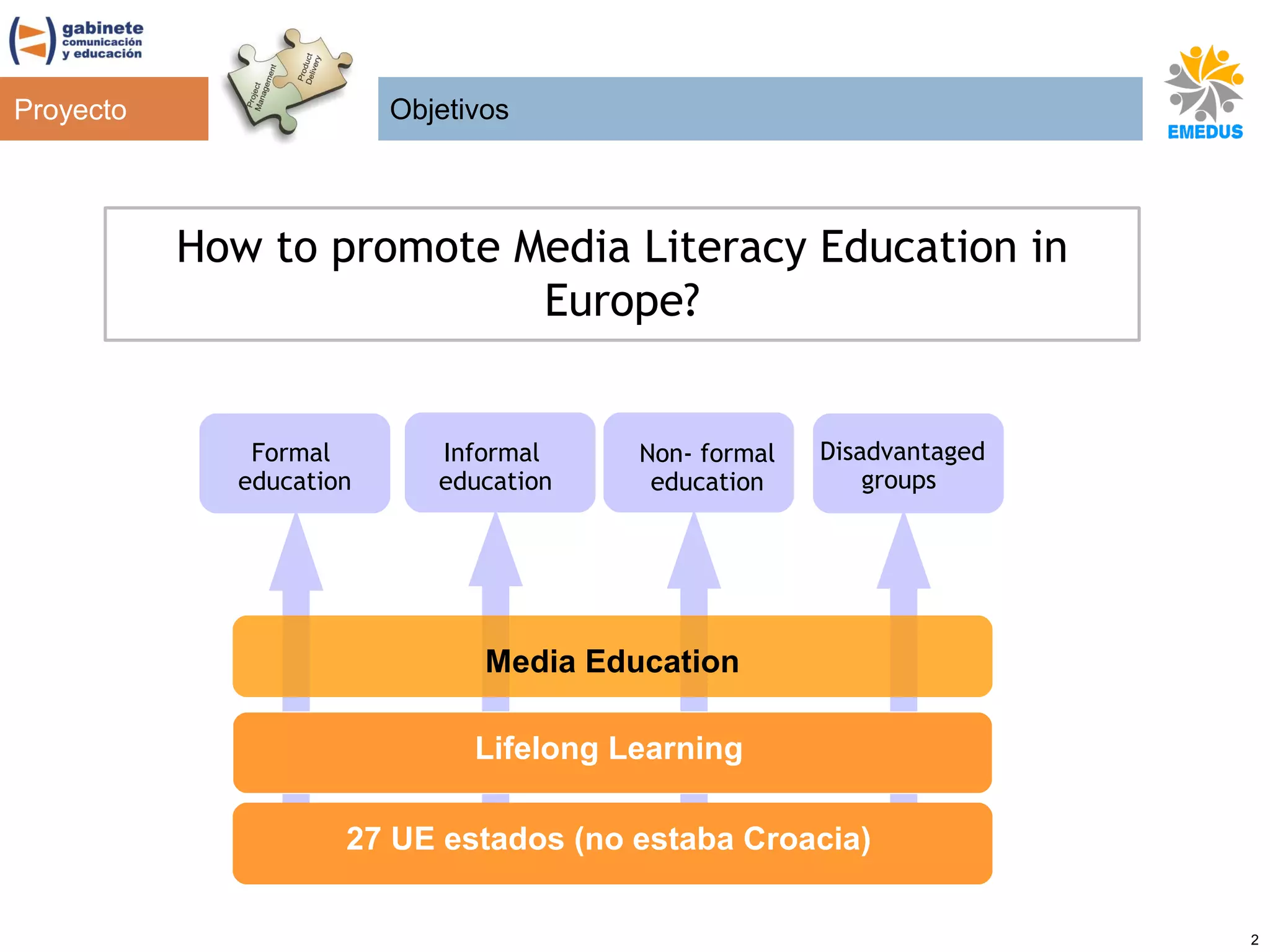
How to promote Media Literacy Education in
Europe?
Formal
education

Informal
education

Non- formal
education

Disadvantaged
groups

Media Education
Lifelong Learning
27 UE estados (no estaba Croacia)
2
SCIENTIFIC APPROACH

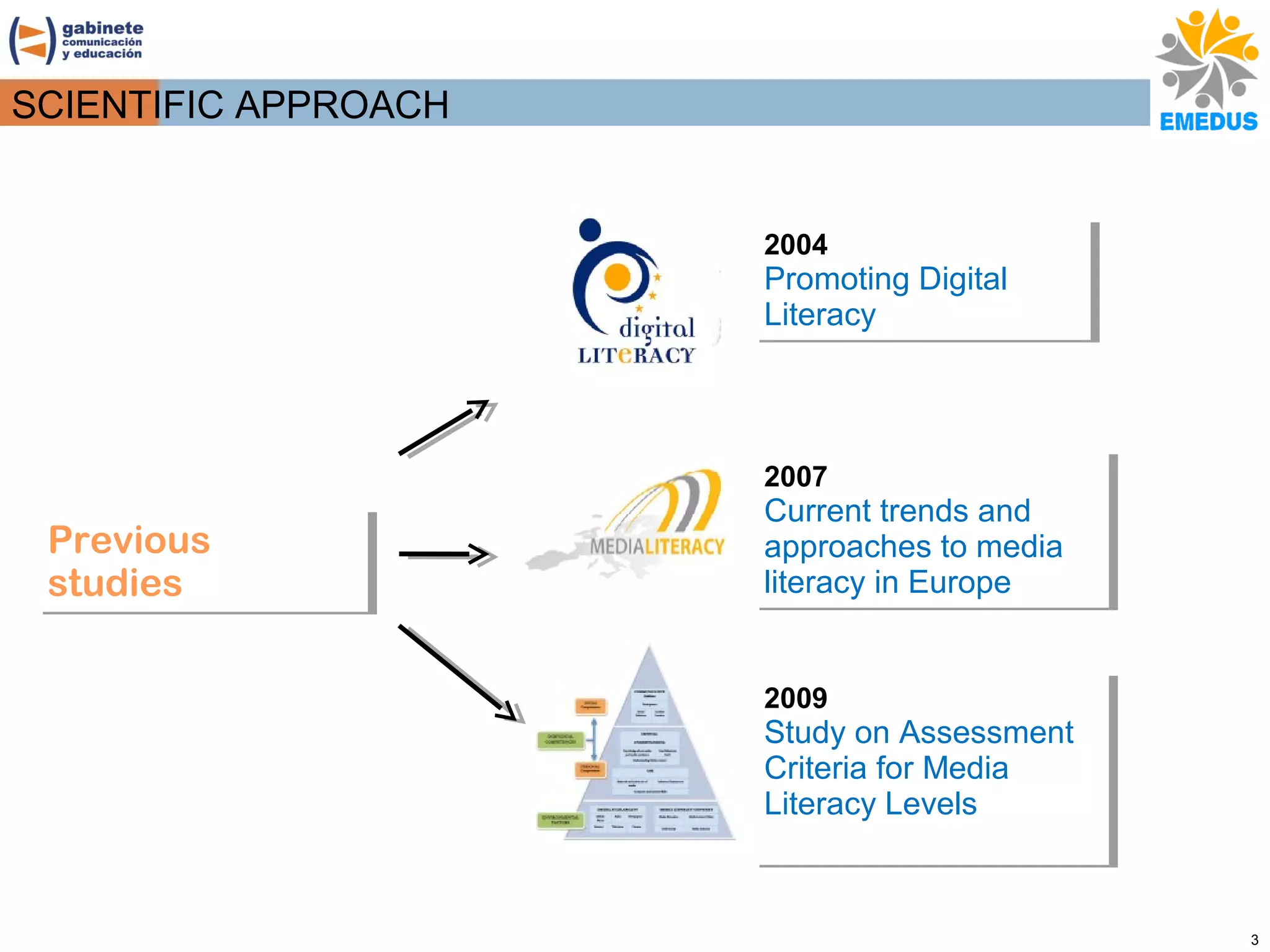
2004
2004

Promoting Digital
Promoting Digital
Literacy
Literacy

2007
2007

Previous
Previous
studies
studies

Current trends and
Current trends and
approaches to media
approaches to media
literacy in Europe
literacy in Europe
2009
2009

Study on Assessment
Study on Assessment
Criteria for Media
Criteria for Media
Literacy Levels
Literacy Levels

3
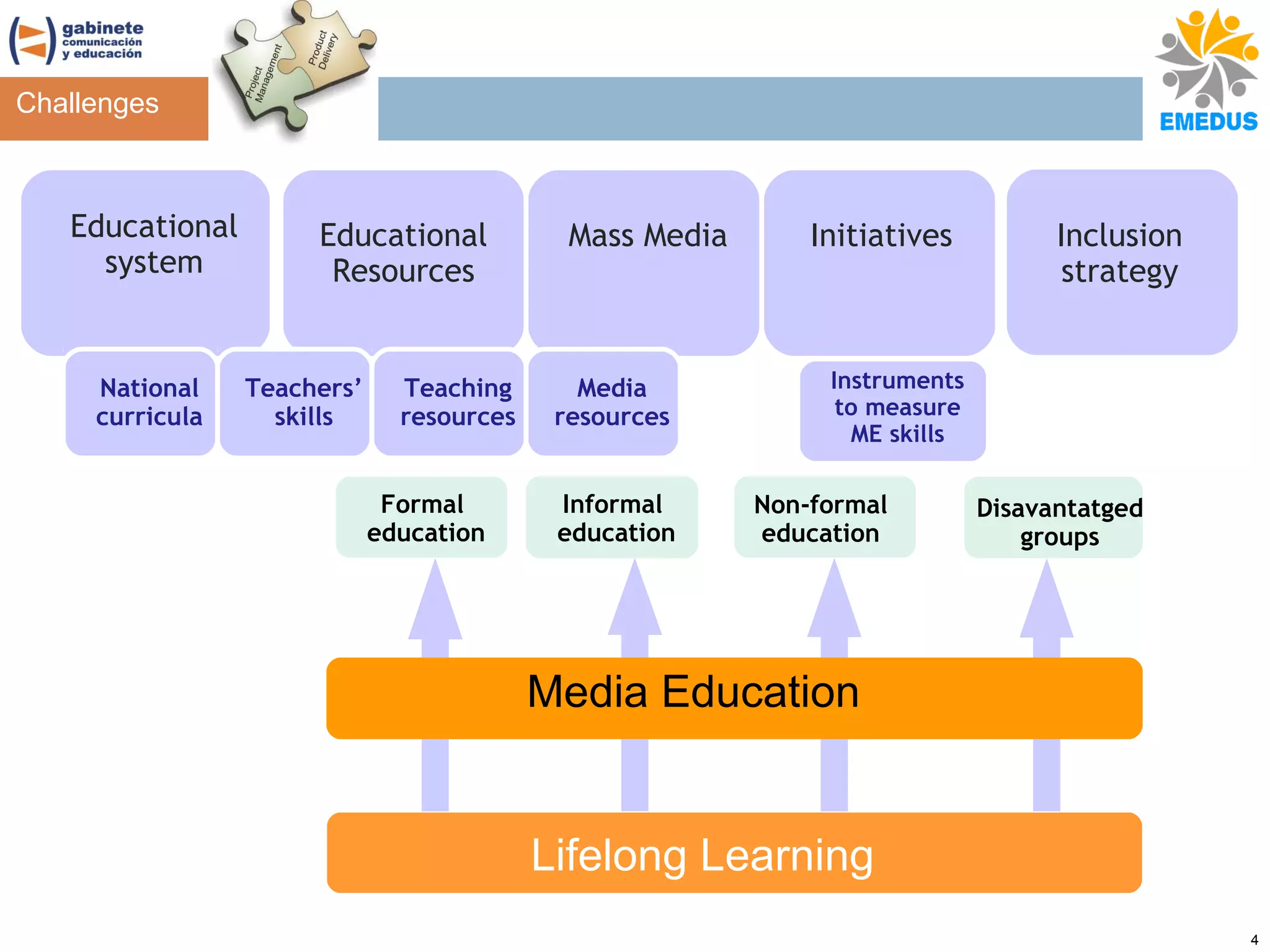
Challenges

Educational
system

National
curricula

Educational
Resources

Teachers’
skills

Teaching
resources
Formal
education

Mass Media

Media
resources
Informal
education

Initiatives

Inclusion
strategy

Instruments
to measure
ME skills

Non-formal
education

Disavantatged
groups

Media Education

Lifelong Learning
4
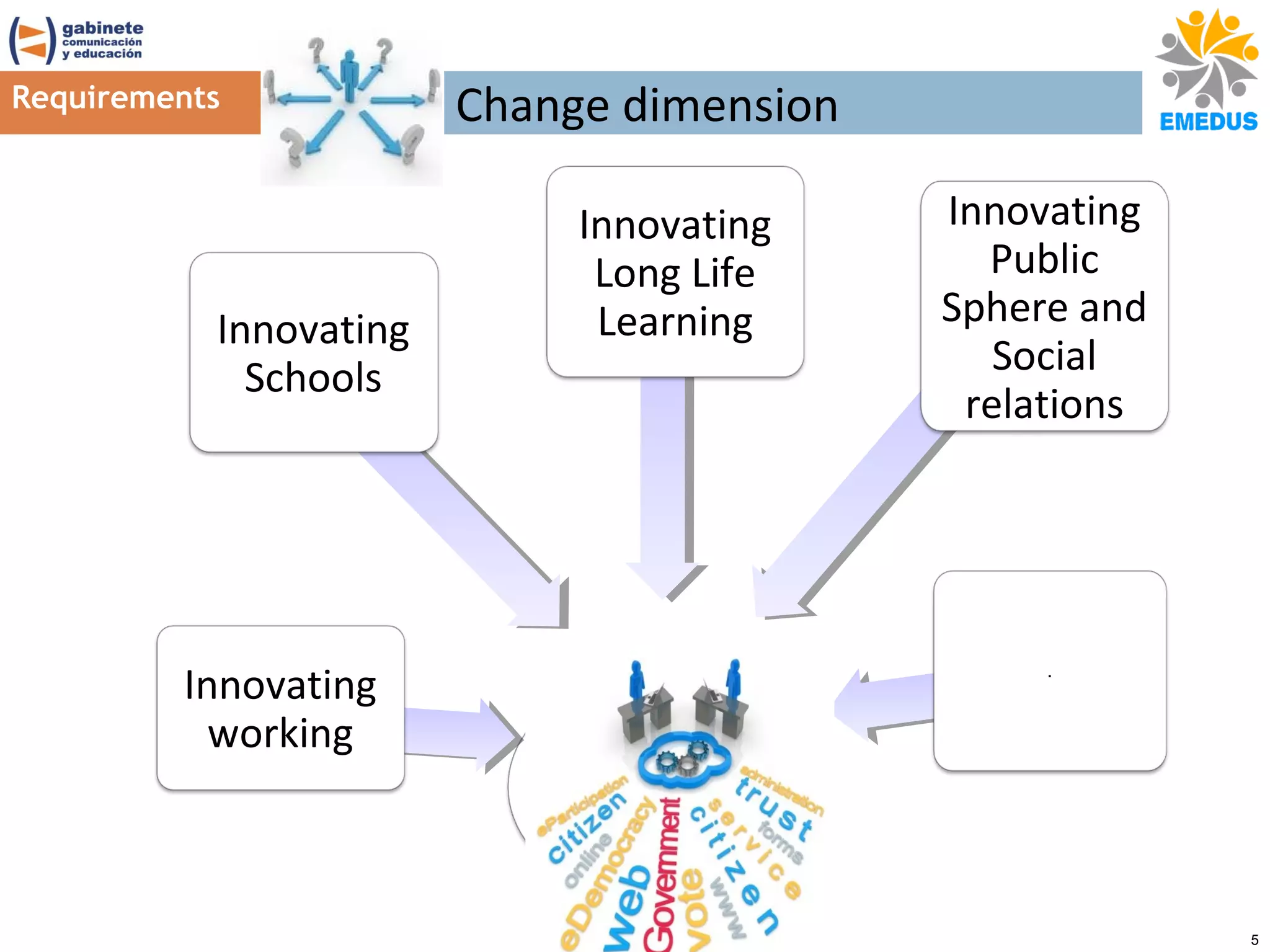
Requirements

Innovating
Schools

Innovating
working

Change dimension
Innovating
Long Life
Learning

Innovating
Public
Sphere and
Social
relations

.

5
6
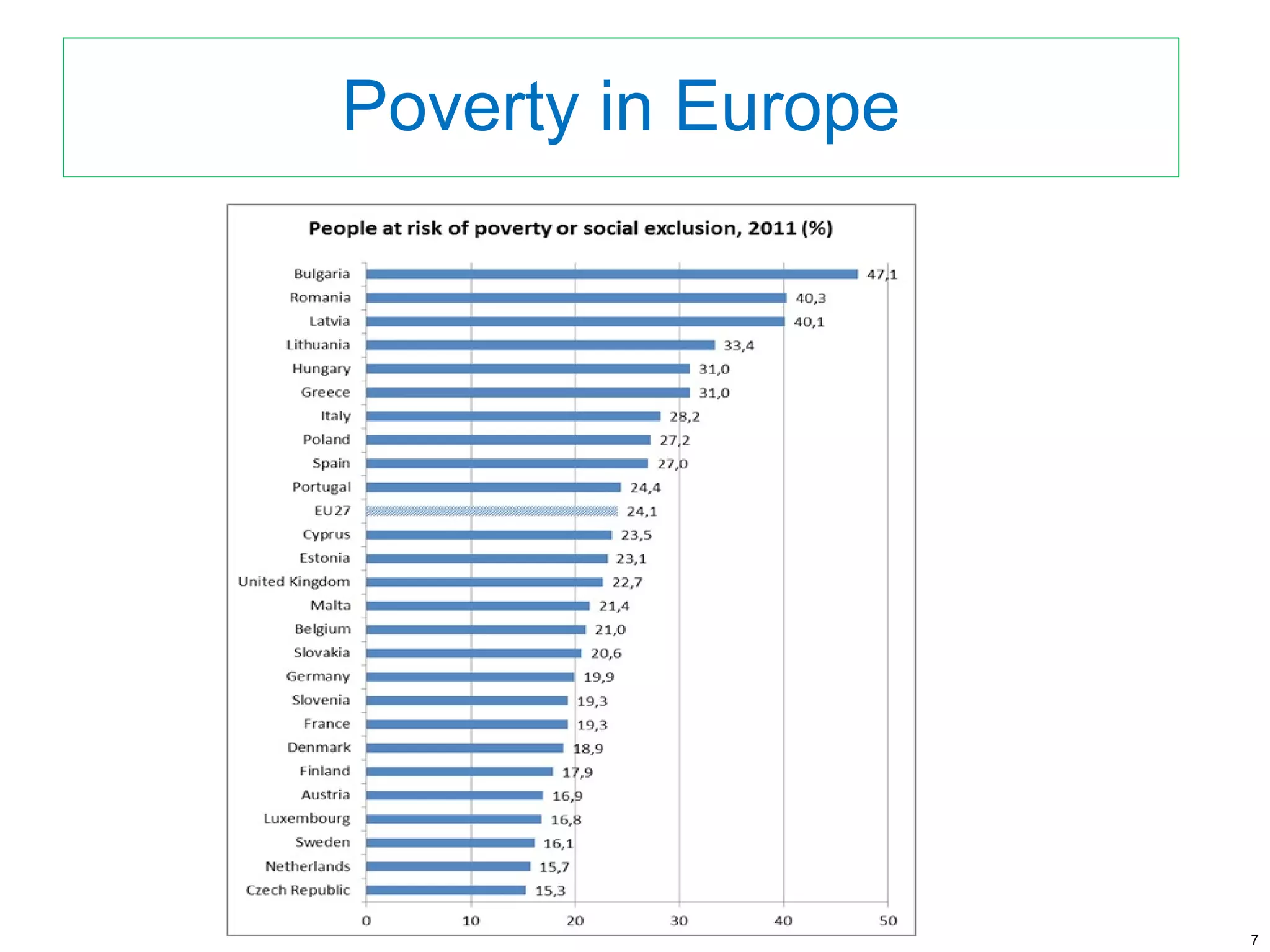
Poverty in Europe

7
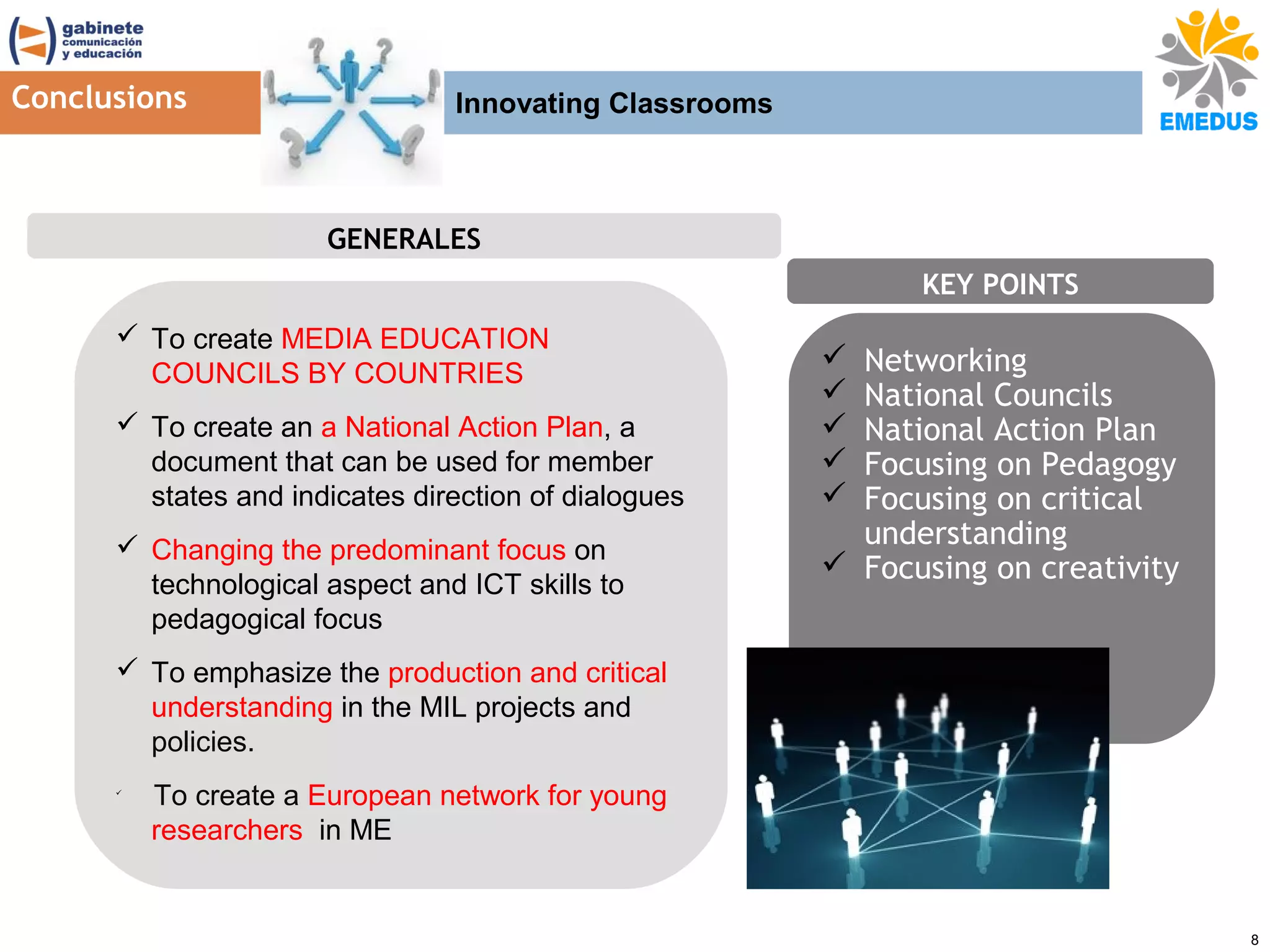
Conclusions

Innovating Classrooms

GENERALES
KEY POINTS
 To create MEDIA EDUCATION
COUNCILS BY COUNTRIES
 To create an a National Action Plan, a
document that can be used for member
states and indicates direction of dialogues
 Changing the predominant focus on
technological aspect and ICT skills to
pedagogical focus

Networking
National Councils
National Action Plan
Focusing on Pedagogy
Focusing on critical
understanding
 Focusing on creativity






 To emphasize the production and critical
understanding in the MIL projects and
policies.


To create a European network for young
researchers in ME

8
Recomendaciones

FORMAL EDUCATION

CURRÍCULOS
Key Points
 To ensure that each EU country has to
develop a national ME curriculum
 Media Literacy should be included in formal
education as a cross-curricular/transversal
subject.
subject.

• Media Educatio in the
urricuum
• Cross-curricular content
• Guide lines on devices
• On line platforms

 Elaborate a common agreement/a guideline
on devices to be used in class
 Create an online platform with educational
content in Europe (films, series etc.)

9
Recomendaciones

FORMAL EDUCATION

TARINING TEACHERS
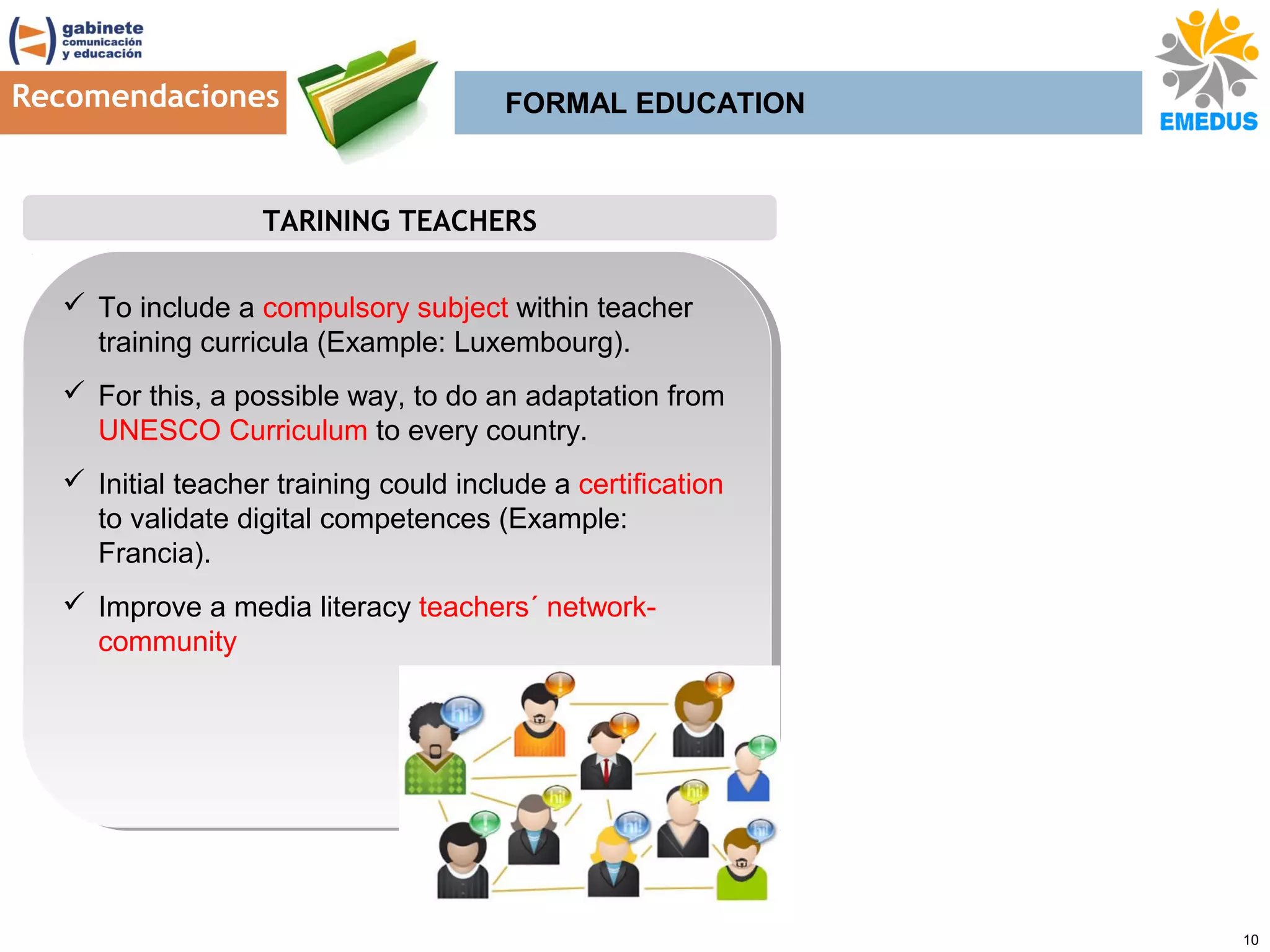
 To include a compulsory subject within teacher
training curricula (Example: Luxembourg).
 For this, a possible way, to do an adaptation from
UNESCO Curriculum to every country.
 Initial teacher training could include a certification
to validate digital competences (Example:
Francia).
Francia).
 Improve a media literacy teachers´ network Improve a media literacy teachers´ networkcommunity
community

10
Recomendaciones

FORMAL EDUCATION

EVALUATION

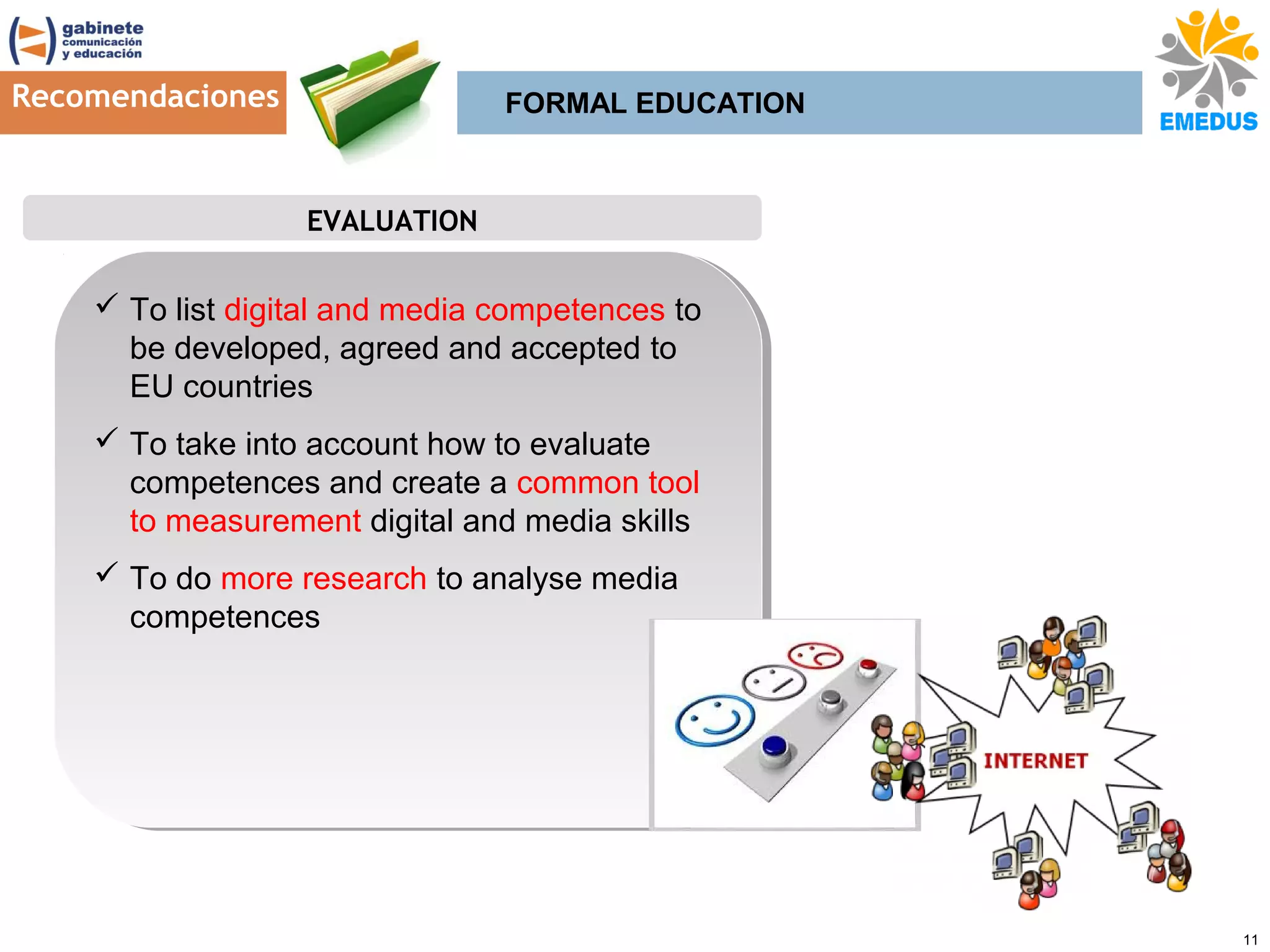
 To list digital and media competences to
be developed, agreed and accepted to
EU countries
EU countries
 To take into account how to evaluate
competences and create a common tool
to measurement digital and media skills
 To do more research to analyse media
competences
competences

11
Recomendaciones

INFORMAL EDUCATION

MEDIA AND ORGANIZATIONS
 There are many and very different stakeholders in
informal media education and non formal media
education
education
 To consider the family implication because is
important in informal education
 National governments should encourage public
service media to produce high quality media
(literacy) educational programmes for various
audiences, especially for the children
 Policy makers should consider financial
transparency of educational programmes
supported from public money as necessary
aspect of any funding.

12
Recomendaciones

DISADVANTAGED GROUPS

Risk of digital exclusion
 To ensure free access to modern information and
communication tools and the use of media in
practice for e.g. trainings, courses.
 To implemente media education projects among
people at risk of digital exclusion, both in terms of
infrastructure such as buildings equipped with
elevators and toilets for people with disabilities and
competencies that enable them to obtain and
maintain occupational activity;
 To disseminate information about the benefits of the
use of modern information and communication
technologies (ICT).
 To promote the access to e- administration and
other services provided by electronic devices;
affordable prices for access to the Internet,
computers with appropriate software.

13
Resultados

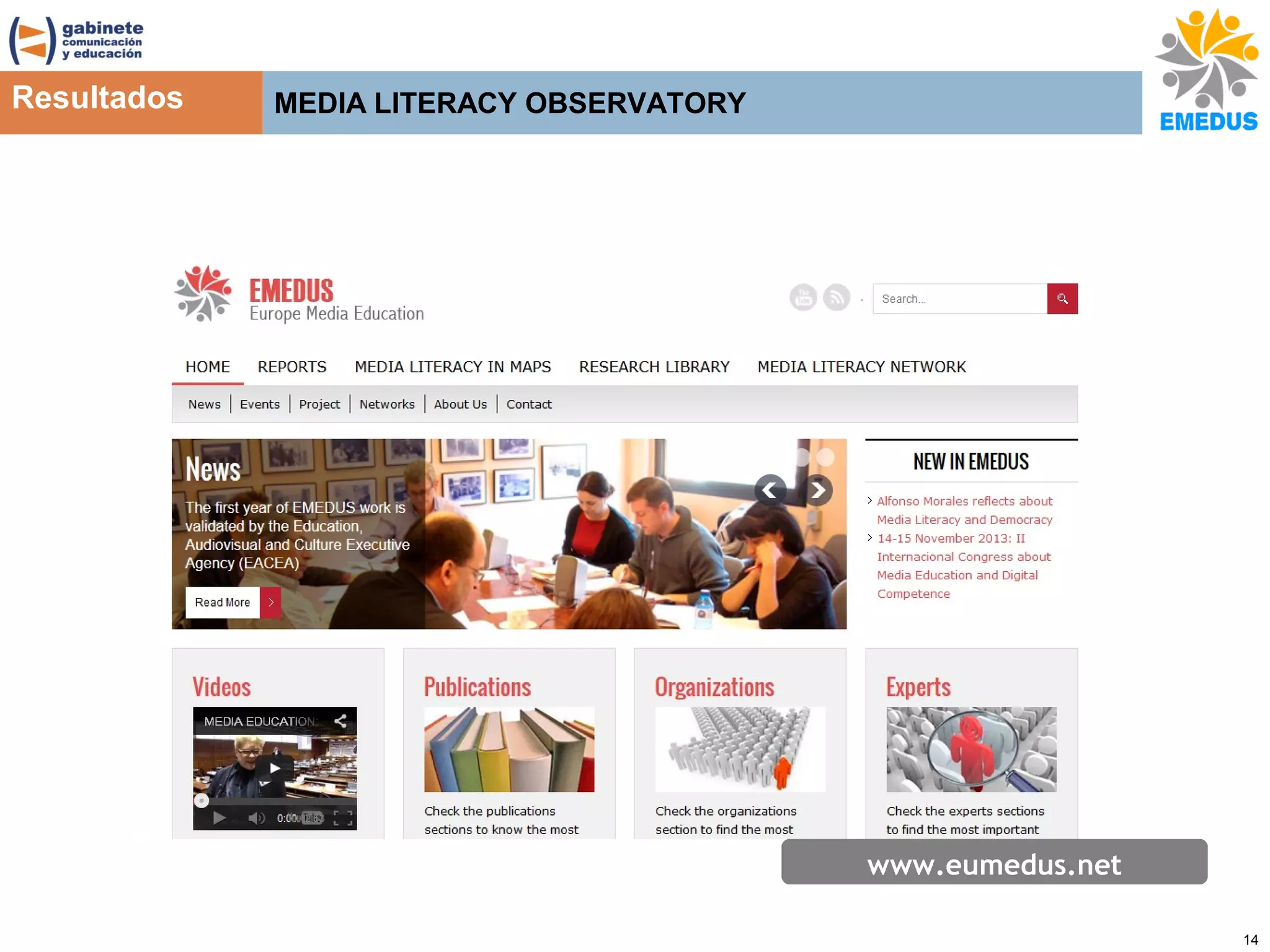
MEDIA LITERACY OBSERVATORY

www.eumedus.net
14
RESULTADOS

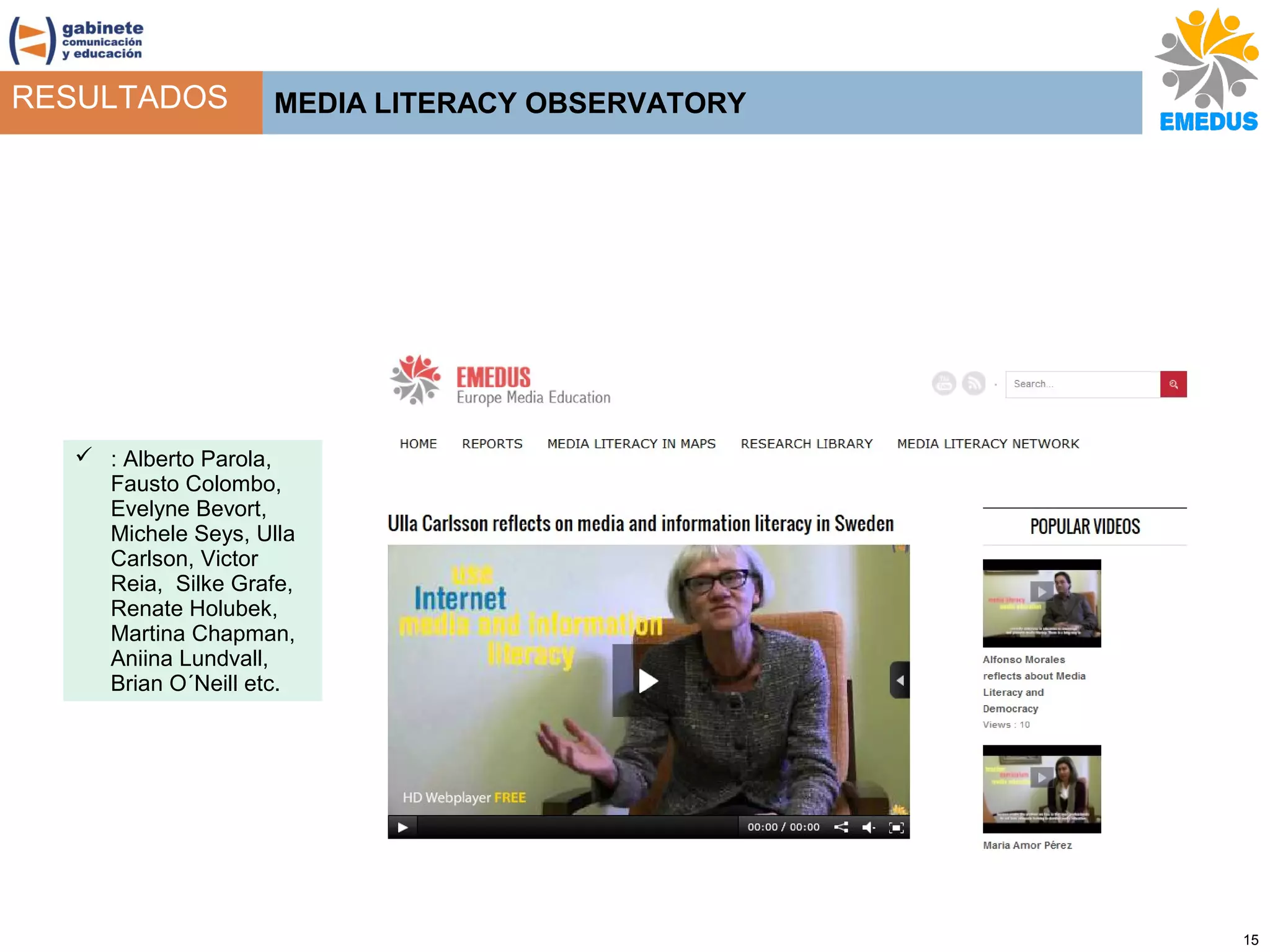
MEDIA LITERACY OBSERVATORY

 : Alberto Parola,
Fausto Colombo,
Evelyne Bevort,
Michele Seys, Ulla
Carlson, Victor
Reia, Silke Grafe,
Renate Holubek,
Martina Chapman,
Aniina Lundvall,
Brian O´Neill etc.

15
Mapas

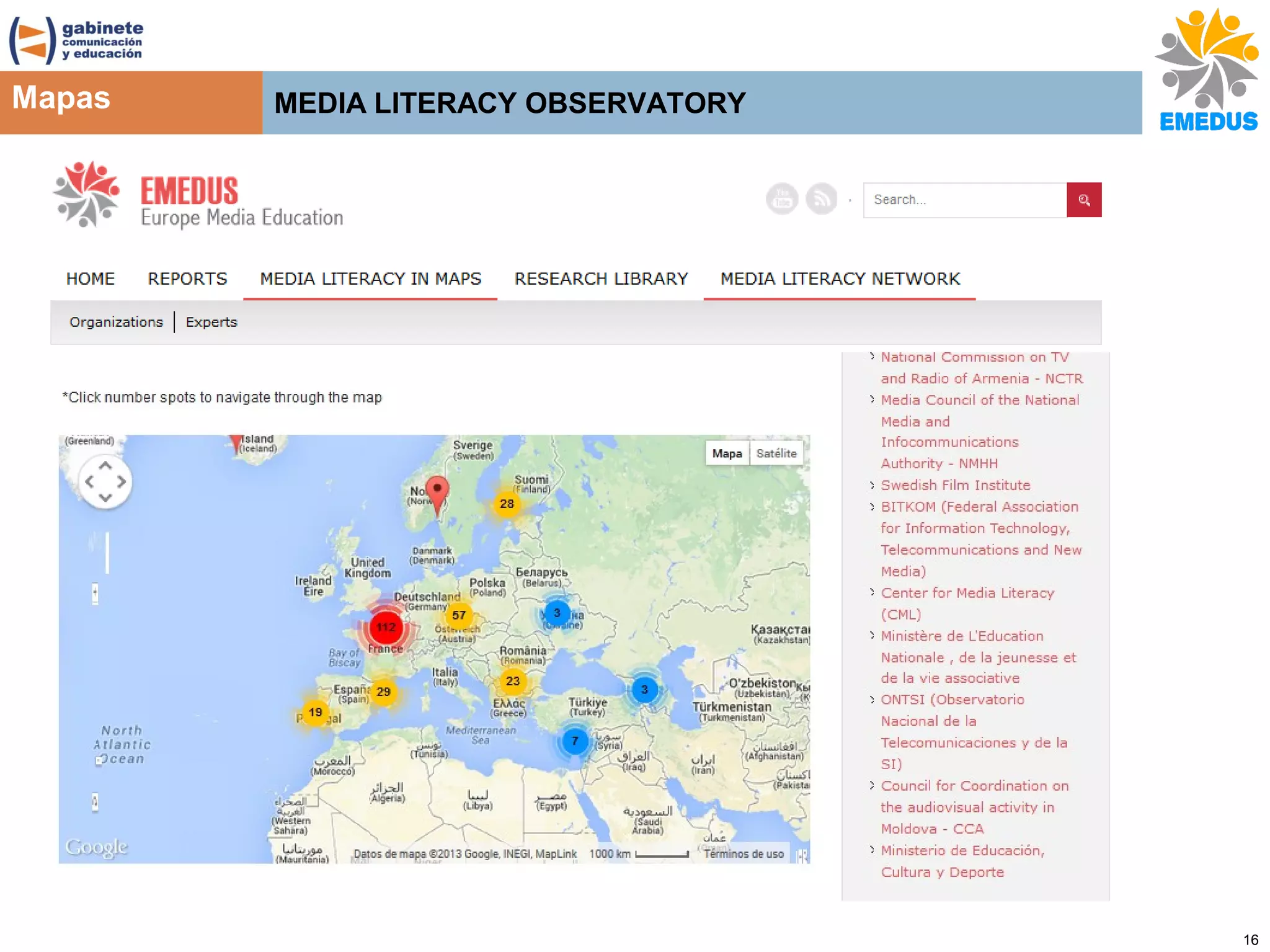
MEDIA LITERACY OBSERVATORY

16

Presentation José Manuel Pérez Tornero & Laura Cervi - MEDEAnet webinar "Researching Media Literacy in Europe"

  • 1.
    “Key Activity ofPolicy cooperation and innovation in Lifelong KA1 (Studies and Comparative Research)” de la Comisión Europea Partners: 1
  • 2.
    Objetivos Proyecto How to promoteMedia Literacy Education in Europe? Formal education Informal education Non- formal education Disadvantaged groups Media Education Lifelong Learning 27 UE estados (no estaba Croacia) 2
  • 3.
    SCIENTIFIC APPROACH 2004 2004 Promoting Digital PromotingDigital Literacy Literacy 2007 2007 Previous Previous studies studies Current trends and Current trends and approaches to media approaches to media literacy in Europe literacy in Europe 2009 2009 Study on Assessment Study on Assessment Criteria for Media Criteria for Media Literacy Levels Literacy Levels 3
  • 4.
  • 5.
  • 6.
  • 7.
  • 8.
    Conclusions Innovating Classrooms GENERALES KEY POINTS To create MEDIA EDUCATION COUNCILS BY COUNTRIES  To create an a National Action Plan, a document that can be used for member states and indicates direction of dialogues  Changing the predominant focus on technological aspect and ICT skills to pedagogical focus Networking National Councils National Action Plan Focusing on Pedagogy Focusing on critical understanding  Focusing on creativity       To emphasize the production and critical understanding in the MIL projects and policies.  To create a European network for young researchers in ME 8
  • 9.
    Recomendaciones FORMAL EDUCATION CURRÍCULOS Key Points To ensure that each EU country has to  To ensure that each EU country has to develop a national ME curriculum develop a national ME curriculum  Media Literacy should be included in formal  Media Literacy should be included in formal education as a cross-curricular/transversal education as a cross-curricular/transversal subject. subject. • Media Educatio in the urricuum • Cross-curricular content • Guide lines on devices • On line platforms  Elaborate a common agreement/a guideline  Elaborate a common agreement/a guideline on devices to be used in class on devices to be used in class  Create an online platform with educational  Create an online platform with educational content in Europe (films, series etc.) content in Europe (films, series etc.) 9
  • 10.
    Recomendaciones FORMAL EDUCATION TARINING TEACHERS To include a compulsory subject within teacher  To include a compulsory subject within teacher training curricula (Example: Luxembourg). training curricula (Example: Luxembourg).  For this, a possible way, to do an adaptation from  For this, a possible way, to do an adaptation from UNESCO Curriculum to every country. UNESCO Curriculum to every country.  Initial teacher training could include a certification  Initial teacher training could include a certification to validate digital competences (Example: to validate digital competences (Example: Francia). Francia).  Improve a media literacy teachers´ network Improve a media literacy teachers´ networkcommunity community 10
  • 11.
    Recomendaciones FORMAL EDUCATION EVALUATION  Tolist digital and media competences to  To list digital and media competences to be developed, agreed and accepted to be developed, agreed and accepted to EU countries EU countries  To take into account how to evaluate  To take into account how to evaluate competences and create a common tool competences and create a common tool to measurement digital and media skills to measurement digital and media skills  To do more research to analyse media  To do more research to analyse media competences competences 11
  • 12.
    Recomendaciones INFORMAL EDUCATION MEDIA ANDORGANIZATIONS  There are many and very different stakeholders in  There are many and very different stakeholders in informal media education and non formal media informal media education and non formal media education education  To consider the family implication because is  To consider the family implication because is important in informal education important in informal education  National governments should encourage public  National governments should encourage public service media to produce high quality media service media to produce high quality media (literacy) educational programmes for various (literacy) educational programmes for various audiences, especially for the children audiences, especially for the children  Policy makers should consider financial  Policy makers should consider financial transparency of educational programmes transparency of educational programmes supported from public money as necessary supported from public money as necessary aspect of any funding. aspect of any funding. 12
  • 13.
    Recomendaciones DISADVANTAGED GROUPS Risk ofdigital exclusion  To ensure free access to modern information and communication tools and the use of media in practice for e.g. trainings, courses.  To implemente media education projects among people at risk of digital exclusion, both in terms of infrastructure such as buildings equipped with elevators and toilets for people with disabilities and competencies that enable them to obtain and maintain occupational activity;  To disseminate information about the benefits of the use of modern information and communication technologies (ICT).  To promote the access to e- administration and other services provided by electronic devices; affordable prices for access to the Internet, computers with appropriate software. 13
  • 14.
  • 15.
    RESULTADOS MEDIA LITERACY OBSERVATORY : Alberto Parola, Fausto Colombo, Evelyne Bevort, Michele Seys, Ulla Carlson, Victor Reia, Silke Grafe, Renate Holubek, Martina Chapman, Aniina Lundvall, Brian O´Neill etc. 15
  • 16.

Editor's Notes

  • #3 The ultimate aim of the project is to provide policy recommendations at both European and national levels to support educational policies in order to foster media education lifelong learning development.
  • #5 Policy recommendations to sustain educational policies at national and European levels; - A comparative analysis of inclusion of media education in national curricula across the EU27; - An analysis of media education teachers’ resources, skills and competencies and their relevance; An insight into informal learning and media resources available on media education, with an additional attention to minorities; - An identification of suitable instruments to measure media education skills and levels in schools; - Policy recommendations to sustain educational policies at national and European levels; - European-wide platforms for effective network and cooperation in lifelong media education learning;