Governments as innovators and market driversMikkel Hippe BrunTechnical Director, PEPPOLChief Consultant, Danish IT- and Telecom AgencyEmail: mhb@itst.dkTwitter: @hippebrunEXPP-SUMMIT 2009AmsterdamSeptember 21st 2009
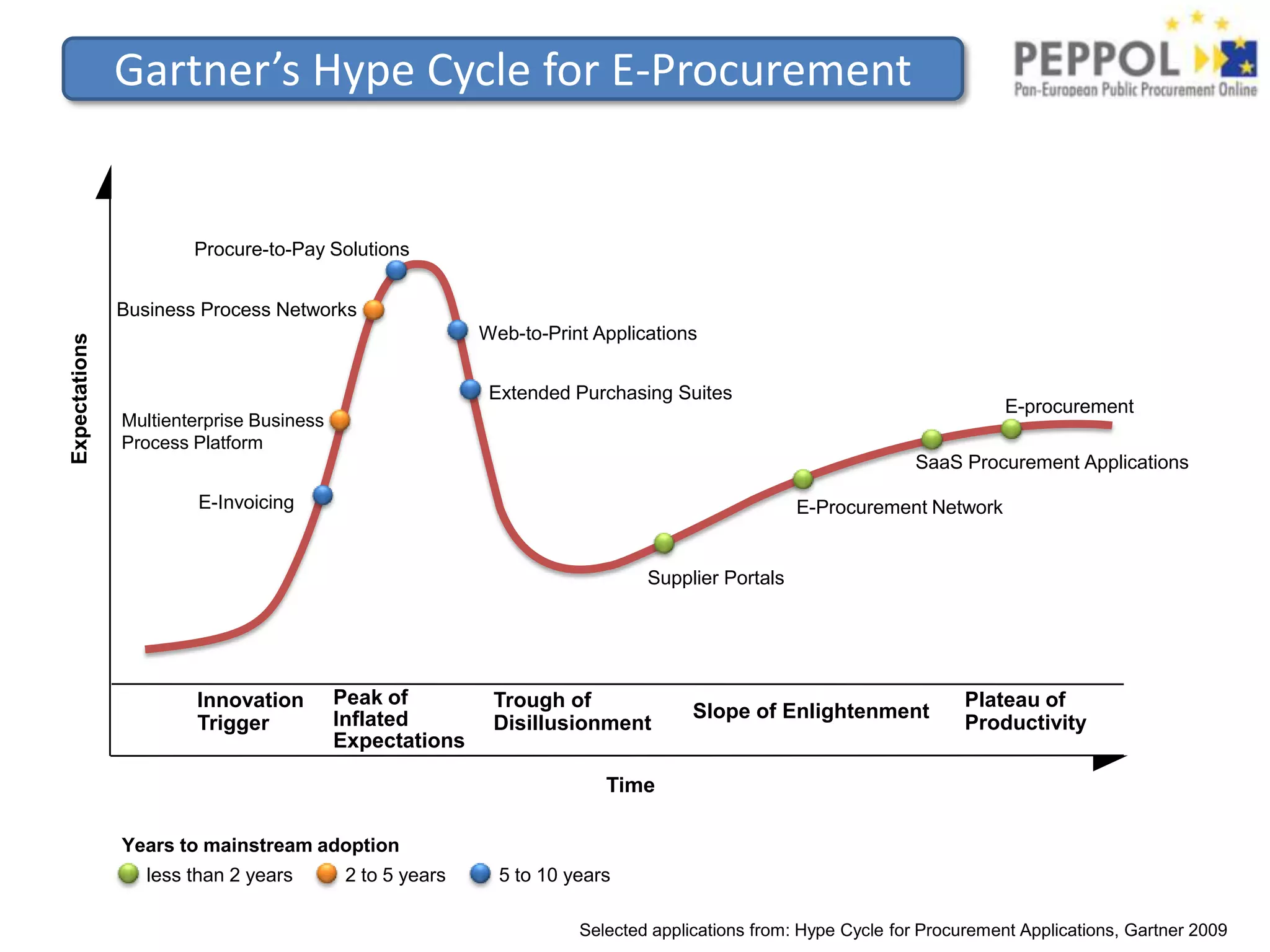
Gartner’s Hype Cycle for E-Procurement Peak of Inflated ExpectationsPlateau ofProductivityTrough ofDisillusionmentInnovationTriggerSlope of EnlightenmentProcure-to-Pay SolutionsBusiness Process NetworksWeb-to-Print ApplicationsExtended Purchasing SuitesExpectationsE-procurementMultienterprise Business Process PlatformSaaS Procurement ApplicationsE-InvoicingE-Procurement NetworkSupplier PortalsTimeYears to mainstream adoption2 to 5 yearsless than 2 years5 to 10 yearsSelected applications from: Hype Cycle for Procurement Applications, Gartner 2009
Imagine 10 years from now...European E-Invoicing is mainstream23 million SME’s have adopted E-Invoicing3 million public sector E-Invoicing endpoints*1-2 billion invoices sent to public sector pr. year*>100,000 work years are being saved in public sector pr. year*How did we get to this situation?What role did governments play?
Imagine 10 years from now...Are these savings on e-invoicing equal to a competitive advantage in 2019?NOCompetitive advantage implies that:We reach mainstream adoption ahead of the curveWe have gone much further in digitizing the full procurement chain
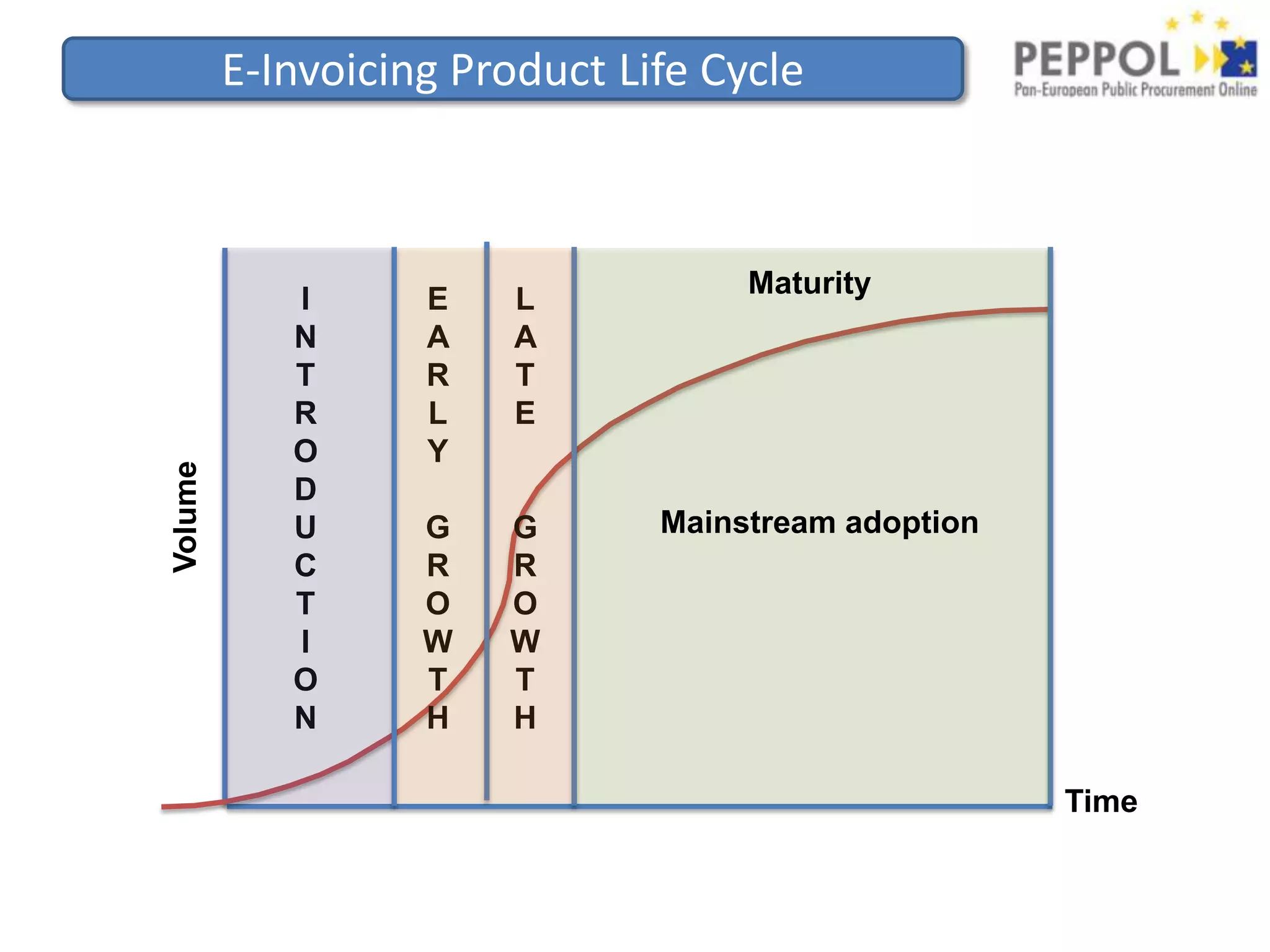
E-Invoicing Product Life CycleMaturityEARLYGROWTHLATEGROWTHINTRODUCTIONVolumeMainstream adoptionTime
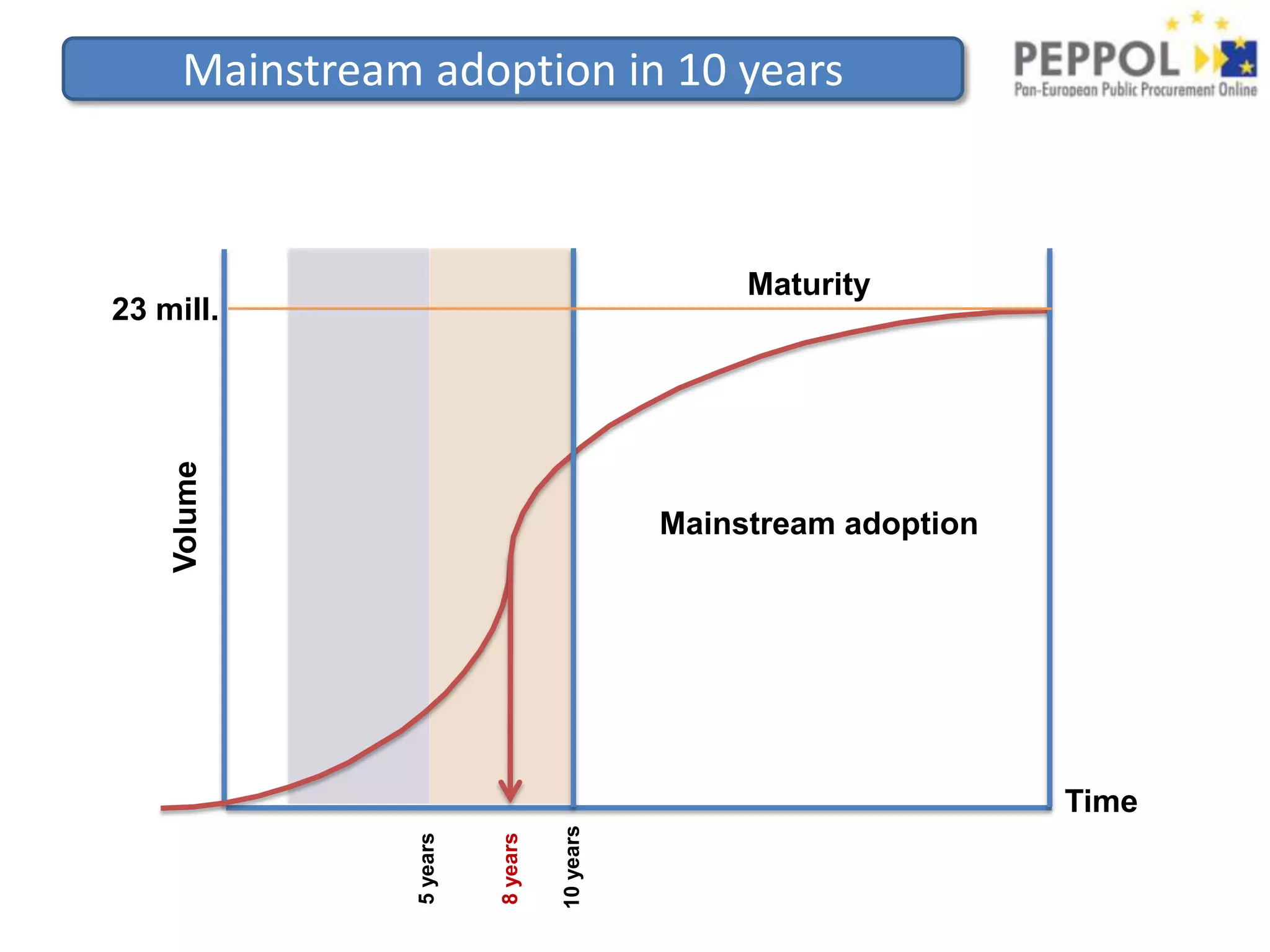
Mainstream adoption in 10 yearsMaturity23 mill.VolumeMainstream adoptionTime10 years8 years5 years
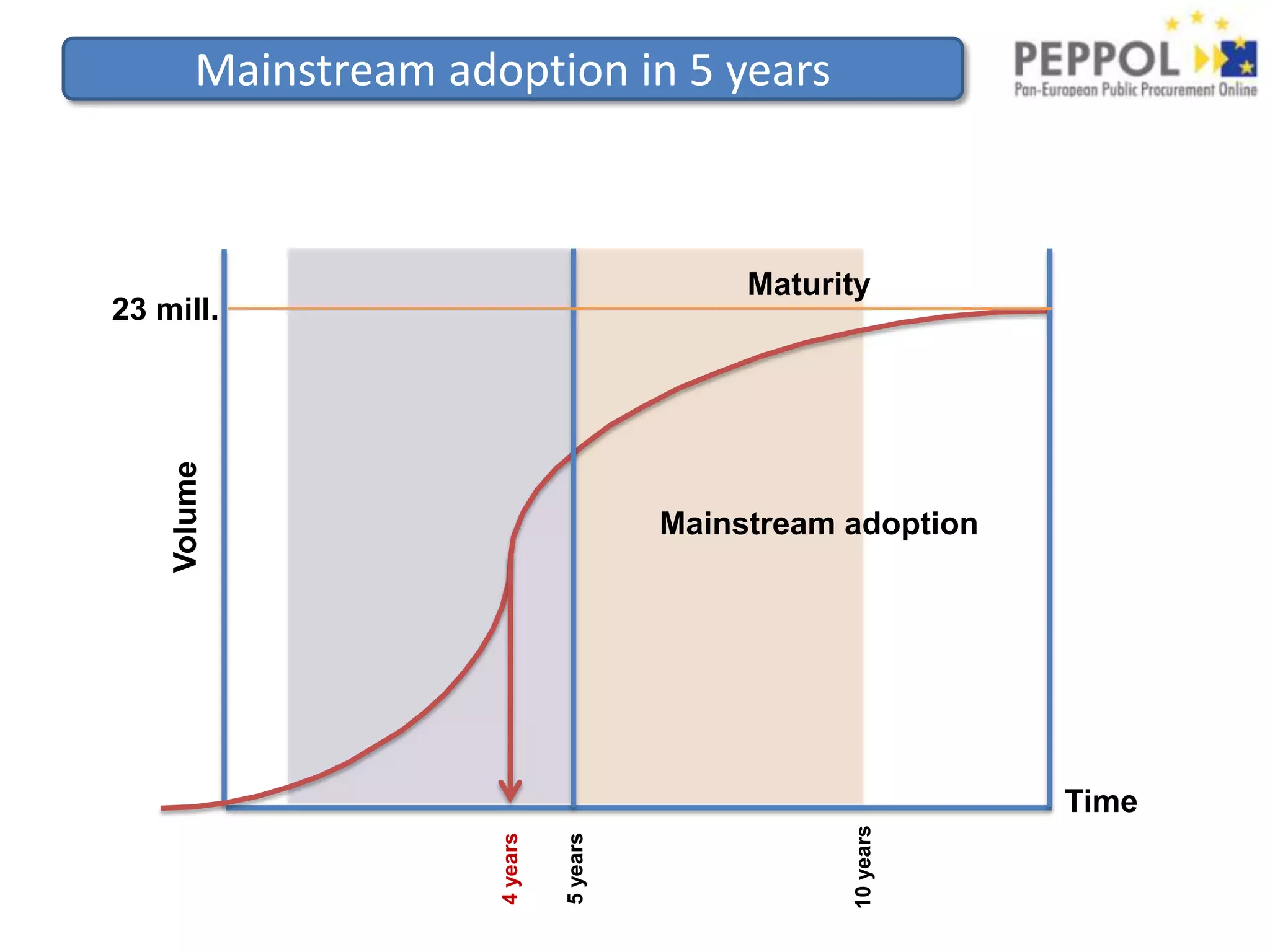
Mainstream adoption in 5 yearsMaturity23 mill.VolumeMainstream adoptionTime10 years4 years5 years
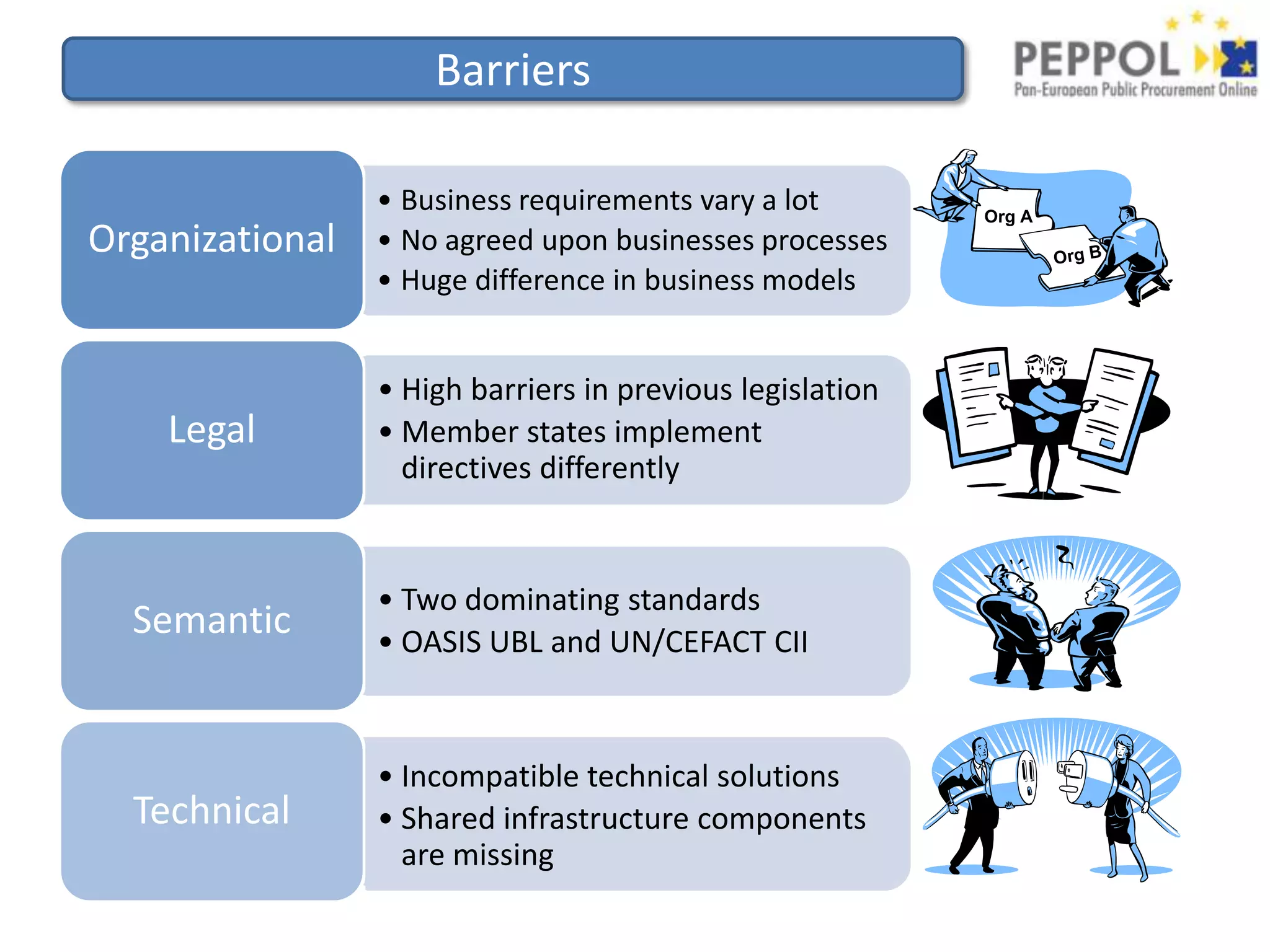
BarriersBusiness requirements vary a lot
No agreed upon businesses processes
Huge difference in business models
High barriers in previous legislation
Member states implement directives differently
Two dominating standards
OASIS UBL and UN/CEFACT CII
Incompatible technical solutions
Shared infrastructure components are missingOrg AOrg B
Removing barriersPrivate sectorThe private sector can provide good solutionsE.g. banks, VAN’s and other Service ProvidersA competitive environment fosters innovationE-government services are lagging behindGovernment should stay out“We do not want this creeping public sector standardization”
Removing barriersPublic sectorGovernment is the single largest buyer in the EUApproximately 1,800 Billion EuroGovernment should be a locomotiveFor standardization For establishment of infrastructureGovernment should raise the barE.g. make E-Invoicing mandatoryGovernments have historically solved large scale market coordination failuresE.g. ARPANET, GSM
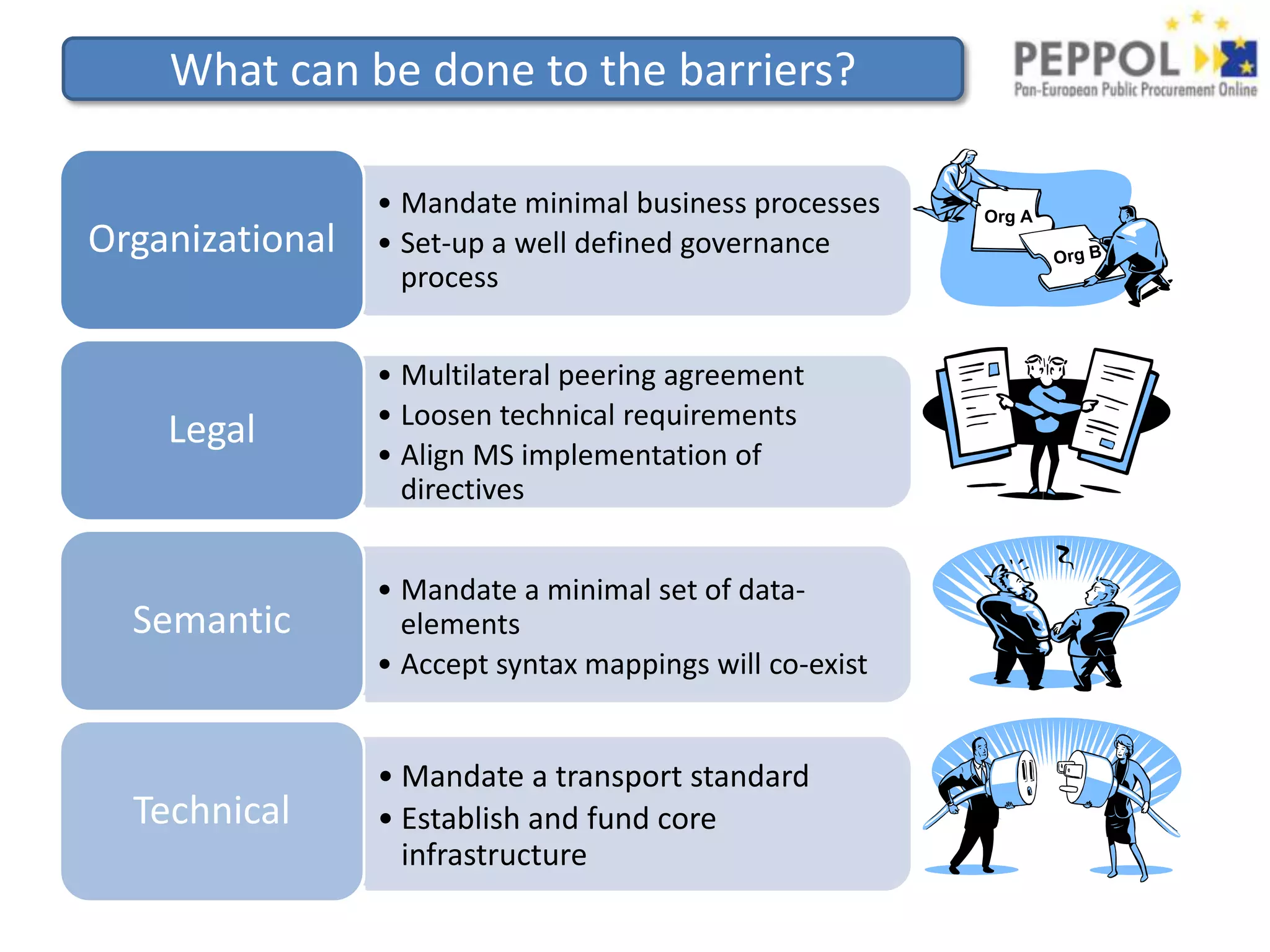
What can be done to the barriers?Mandate minimal business processes
Set-up a well defined governance process
Multilateral peering agreement
Loosen technical requirements
Align MS implementation of directives
Mandate a minimal set of data-elements
Accept syntax mappings will co-exist

PEPPOL key note at EXPP-SUMMIT - E-Invoicing and E-Procurement

  • 1.
    Governments as innovatorsand market driversMikkel Hippe BrunTechnical Director, PEPPOLChief Consultant, Danish IT- and Telecom AgencyEmail: mhb@itst.dkTwitter: @hippebrunEXPP-SUMMIT 2009AmsterdamSeptember 21st 2009
  • 2.
    Gartner’s Hype Cyclefor E-Procurement Peak of Inflated ExpectationsPlateau ofProductivityTrough ofDisillusionmentInnovationTriggerSlope of EnlightenmentProcure-to-Pay SolutionsBusiness Process NetworksWeb-to-Print ApplicationsExtended Purchasing SuitesExpectationsE-procurementMultienterprise Business Process PlatformSaaS Procurement ApplicationsE-InvoicingE-Procurement NetworkSupplier PortalsTimeYears to mainstream adoption2 to 5 yearsless than 2 years5 to 10 yearsSelected applications from: Hype Cycle for Procurement Applications, Gartner 2009
  • 3.
    Imagine 10 yearsfrom now...European E-Invoicing is mainstream23 million SME’s have adopted E-Invoicing3 million public sector E-Invoicing endpoints*1-2 billion invoices sent to public sector pr. year*>100,000 work years are being saved in public sector pr. year*How did we get to this situation?What role did governments play?
  • 4.
    Imagine 10 yearsfrom now...Are these savings on e-invoicing equal to a competitive advantage in 2019?NOCompetitive advantage implies that:We reach mainstream adoption ahead of the curveWe have gone much further in digitizing the full procurement chain
  • 5.
    E-Invoicing Product LifeCycleMaturityEARLYGROWTHLATEGROWTHINTRODUCTIONVolumeMainstream adoptionTime
  • 6.
    Mainstream adoption in10 yearsMaturity23 mill.VolumeMainstream adoptionTime10 years8 years5 years
  • 7.
    Mainstream adoption in5 yearsMaturity23 mill.VolumeMainstream adoptionTime10 years4 years5 years
  • 8.
  • 9.
    No agreed uponbusinesses processes
  • 10.
    Huge difference inbusiness models
  • 11.
    High barriers inprevious legislation
  • 12.
    Member states implementdirectives differently
  • 13.
  • 14.
    OASIS UBL andUN/CEFACT CII
  • 15.
  • 16.
  • 17.
    Removing barriersPrivate sectorTheprivate sector can provide good solutionsE.g. banks, VAN’s and other Service ProvidersA competitive environment fosters innovationE-government services are lagging behindGovernment should stay out“We do not want this creeping public sector standardization”
  • 18.
    Removing barriersPublic sectorGovernmentis the single largest buyer in the EUApproximately 1,800 Billion EuroGovernment should be a locomotiveFor standardization For establishment of infrastructureGovernment should raise the barE.g. make E-Invoicing mandatoryGovernments have historically solved large scale market coordination failuresE.g. ARPANET, GSM
  • 19.
    What can bedone to the barriers?Mandate minimal business processes
  • 20.
    Set-up a welldefined governance process
  • 21.
  • 22.
  • 23.
  • 24.
    Mandate a minimalset of data-elements
  • 25.
  • 26.
  • 27.
    Establish and fundcore infrastructureOrg AOrg B
  • 28.
    Solution?Use Tax PayersMoney toEstablish the core infrastructure services Secure fundingSet up a governance frameworkShared by public and private sectorStep backAllow the private sector to innovate
  • 29.
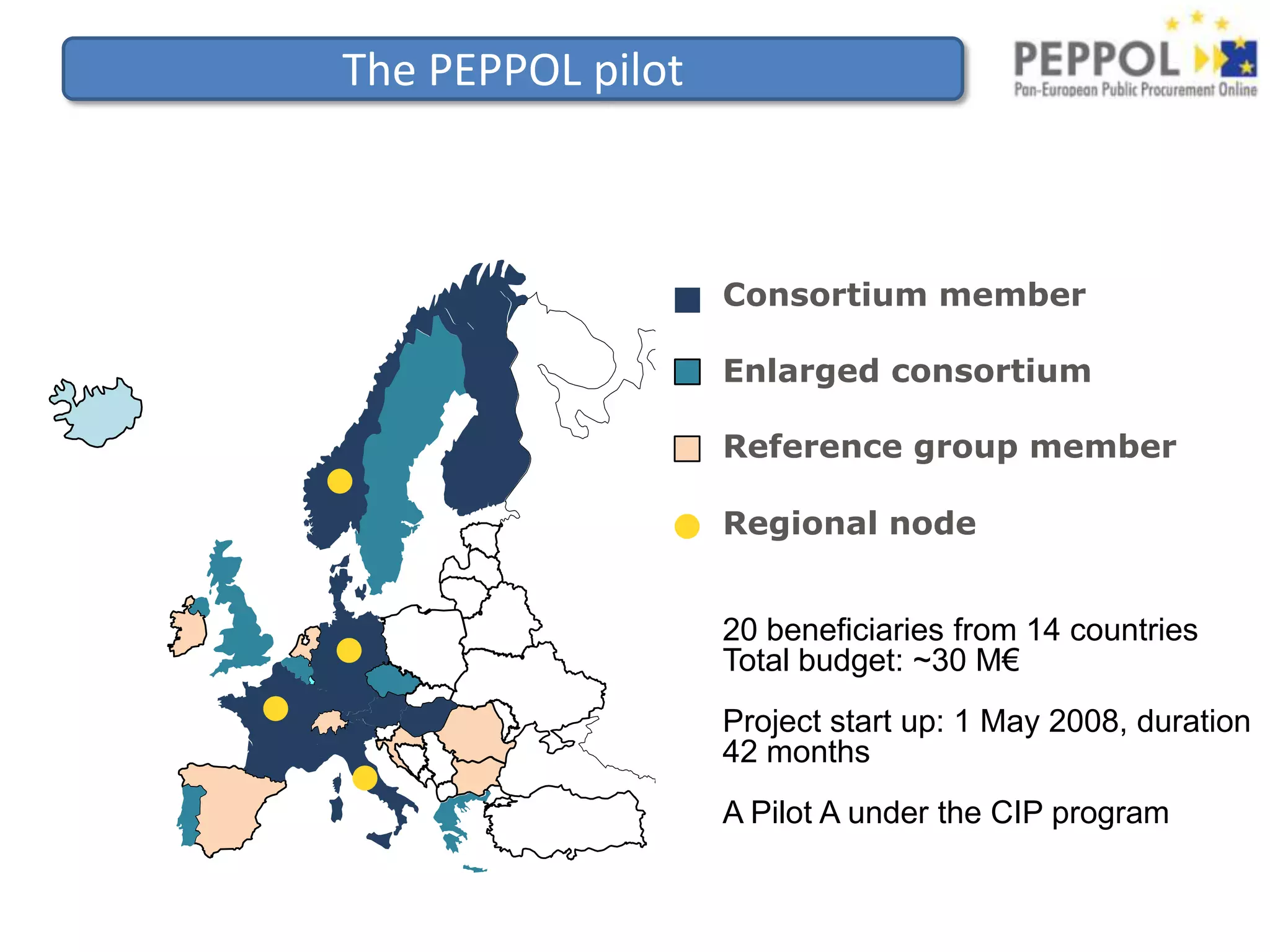
    The PEPPOL pilotConsortiummemberEnlarged consortiumReference group member‏Regional node20 beneficiaries from 14 countriesTotal budget: ~30 M€ Project start up: 1 May 2008, duration 42 monthsA Pilot A under the CIP program
  • 30.
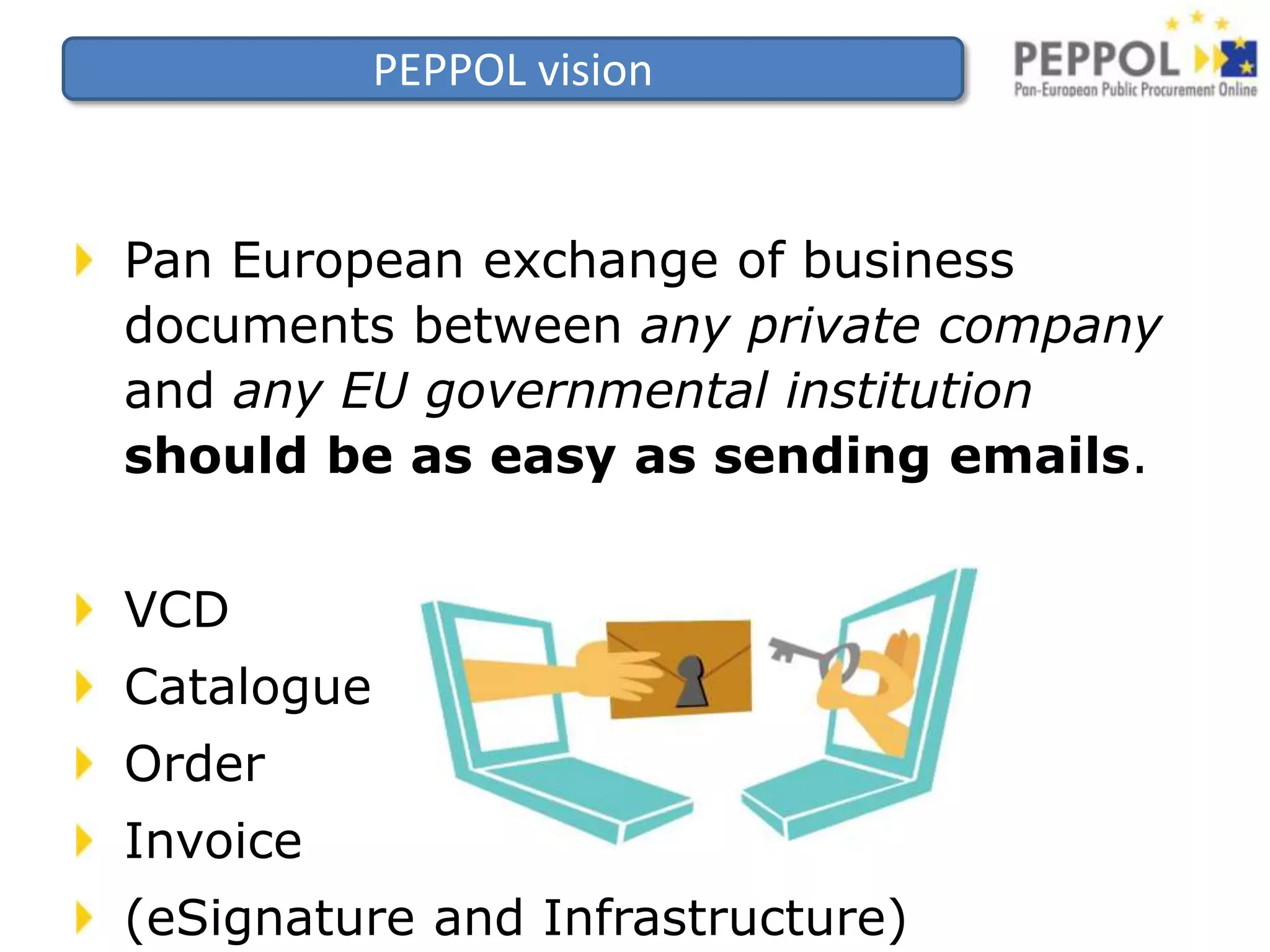
    PEPPOL visionPan Europeanexchange of business documents between any private company and any EU governmental institutionshould be as easy as sending emails.VCDCatalogueOrderInvoice(eSignature and Infrastructure)
  • 31.
    StrategyNational solutions willnot be replacedWill be aligned with common standardsWill be linked through a common infrastructureCommon EU Standards and Infrastructure
  • 32.
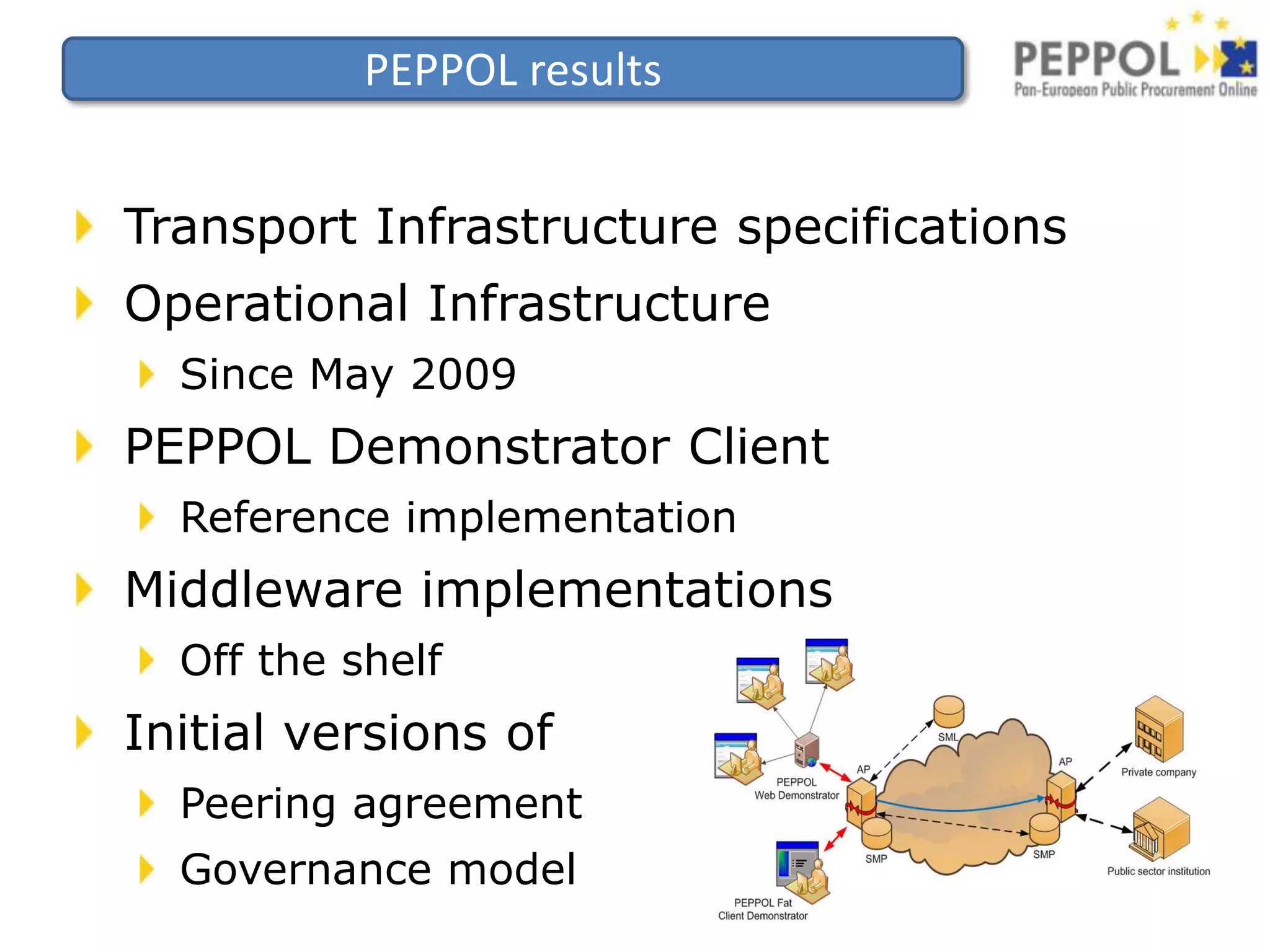
    PEPPOL resultsTransport InfrastructurespecificationsOperational InfrastructureSince May 2009PEPPOL Demonstrator ClientReference implementationMiddleware implementationsOff the shelfInitial versions ofPeering agreementGovernance model
  • 33.
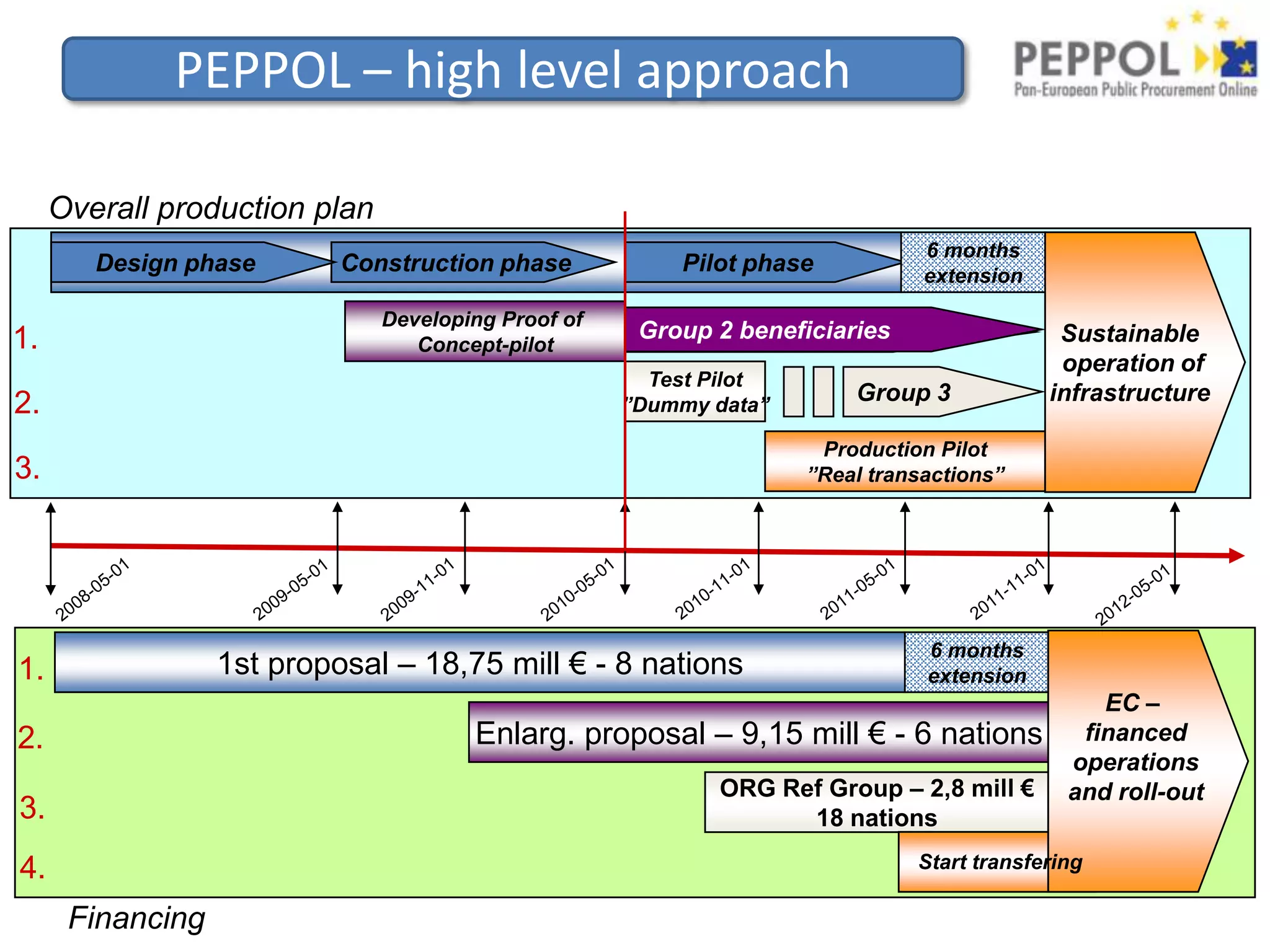
    Overall production planPEPPOL– high level approach6 monthsextensionSustainable operation ofinfrastructure Construction phasePilot phaseDesign phaseDeveloping Proof of Concept-pilotGroup 2 beneficiaries1.Group 1Test Pilot”Dummy data”Group 32.Production Pilot”Real transactions”3.2010-11-012011-05-012011-11-012009-05-012008-05-012010-05-012009-11-012012-05-01EC – financedoperationsand roll-out1st proposal – 18,75 mill € - 8 nations6 monthsextension1.Enlarg. proposal – 9,15 mill € - 6 nations2.ORG Ref Group – 2,8 mill €18 nations3.4.Start transferingFinancing
  • 34.
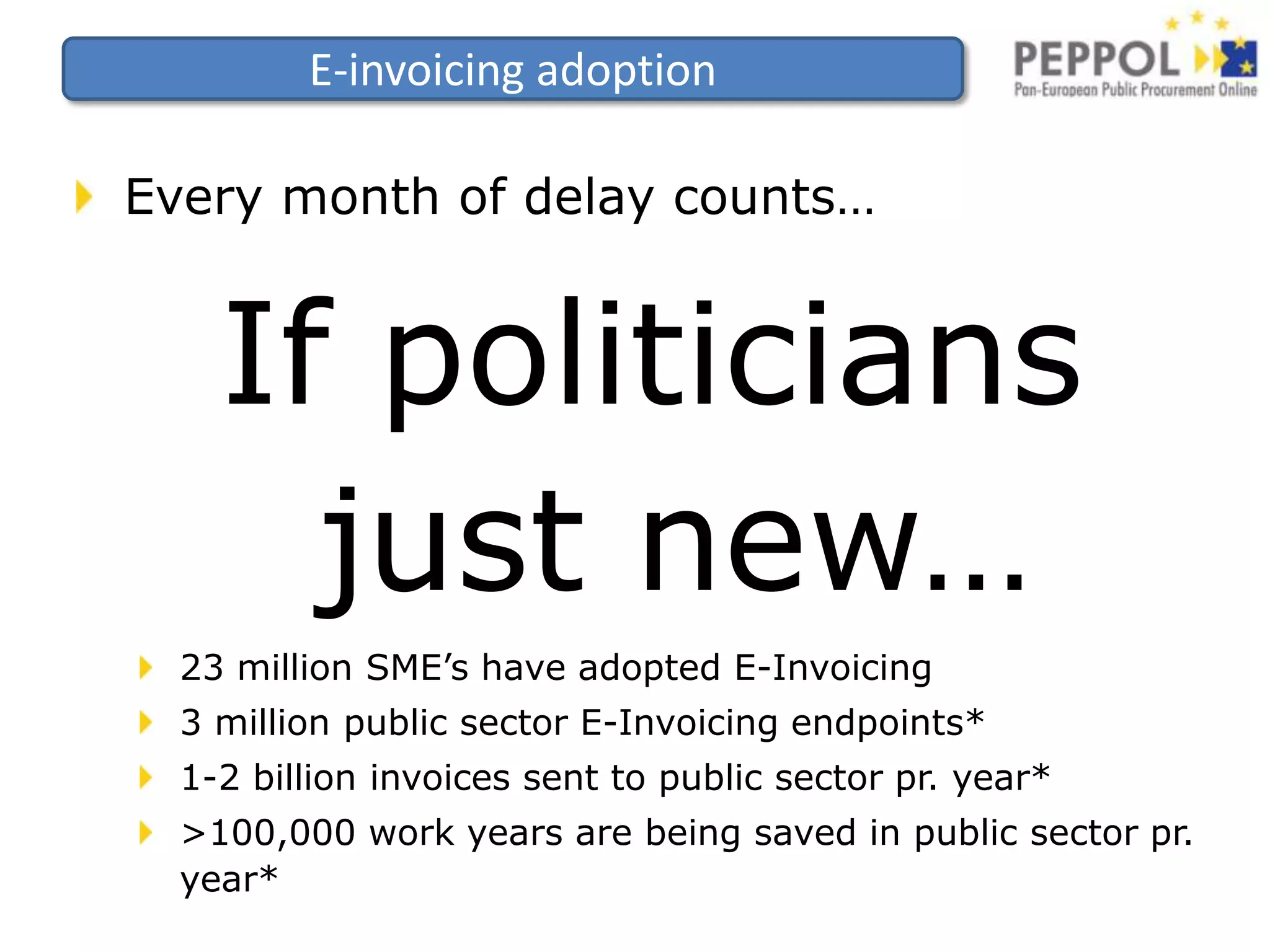
    E-invoicing adoptionEvery monthof delay counts…If politicians just new…23 million SME’s have adopted E-Invoicing3 million public sector E-Invoicing endpoints*1-2 billion invoices sent to public sector pr. year*>100,000 work years are being saved in public sector pr. year*
  • 35.
    Call for actionJoinusGovernment are implementing>30,000 endpoints from May 1st 2010Sustainable and robust infrastructureMultilateral Legal frameworkMix and matchWe are prepared to listen and changeConnect to the PEPPOL Infrastructure
  • 36.
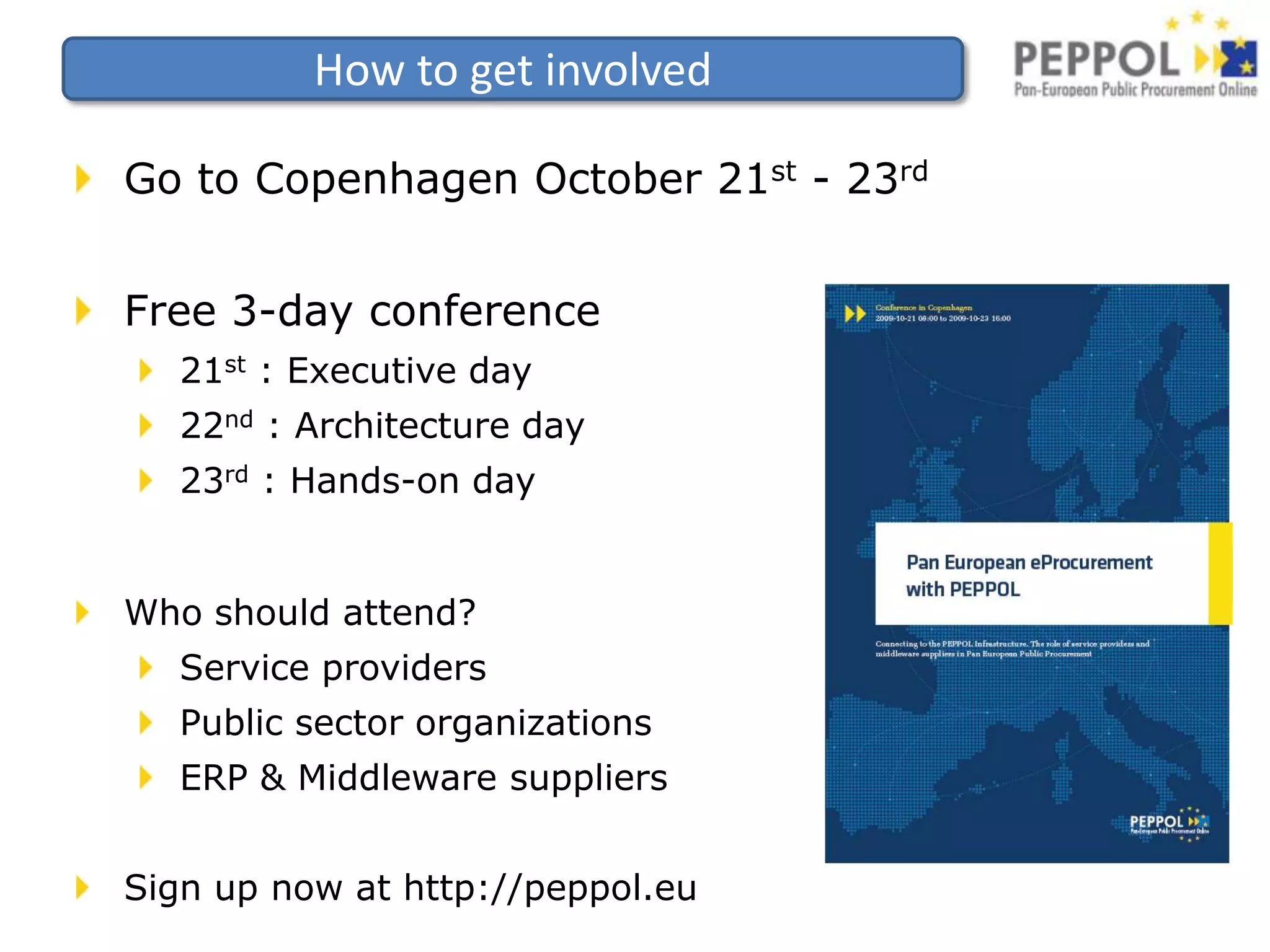
    How to getinvolvedGo to Copenhagen October 21st- 23rdFree 3-day conference21st : Executive day22nd : Architecture day23rd : Hands-on dayWho should attend?Service providersPublic sector organizationsERP & Middleware suppliersSign up now at http://peppol.eu
  • 37.
  • 38.
  • 39.
  • 40.
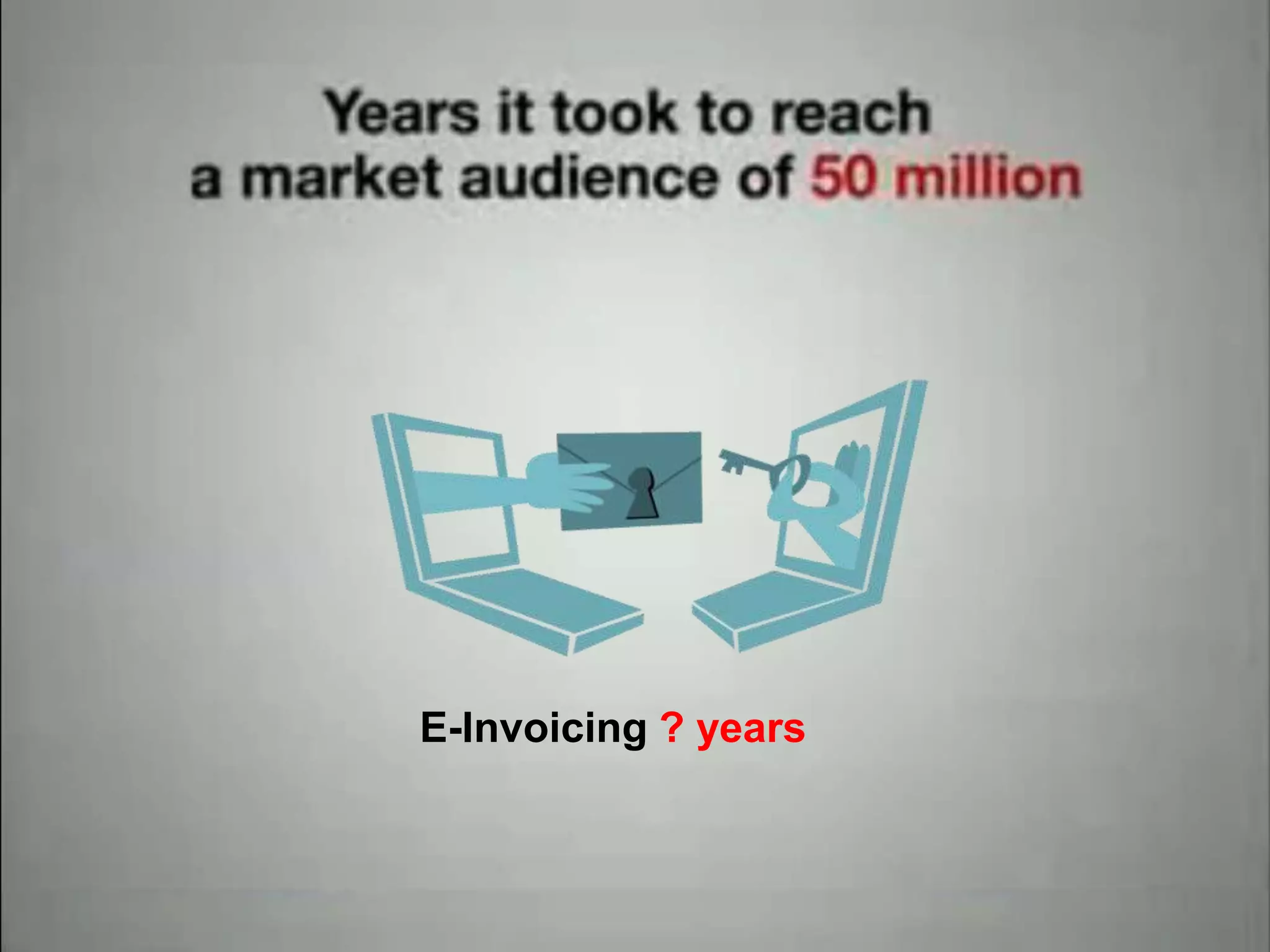
    Business process standardsDidyou know?E-Invoicing? years
  • 41.
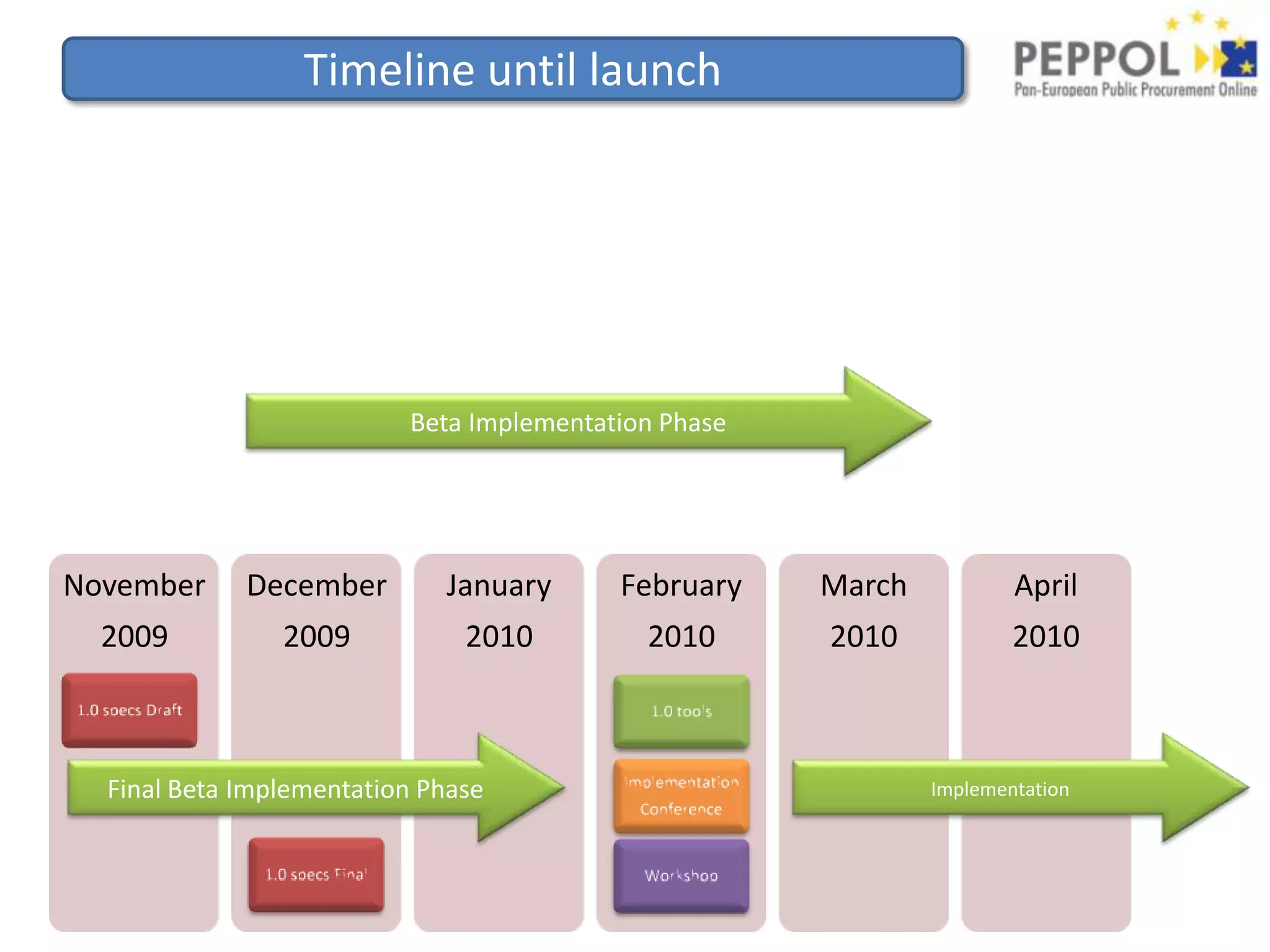
    Timeline until launchBetaImplementation PhaseFinal Beta Implementation PhaseImplementation
  • 42.
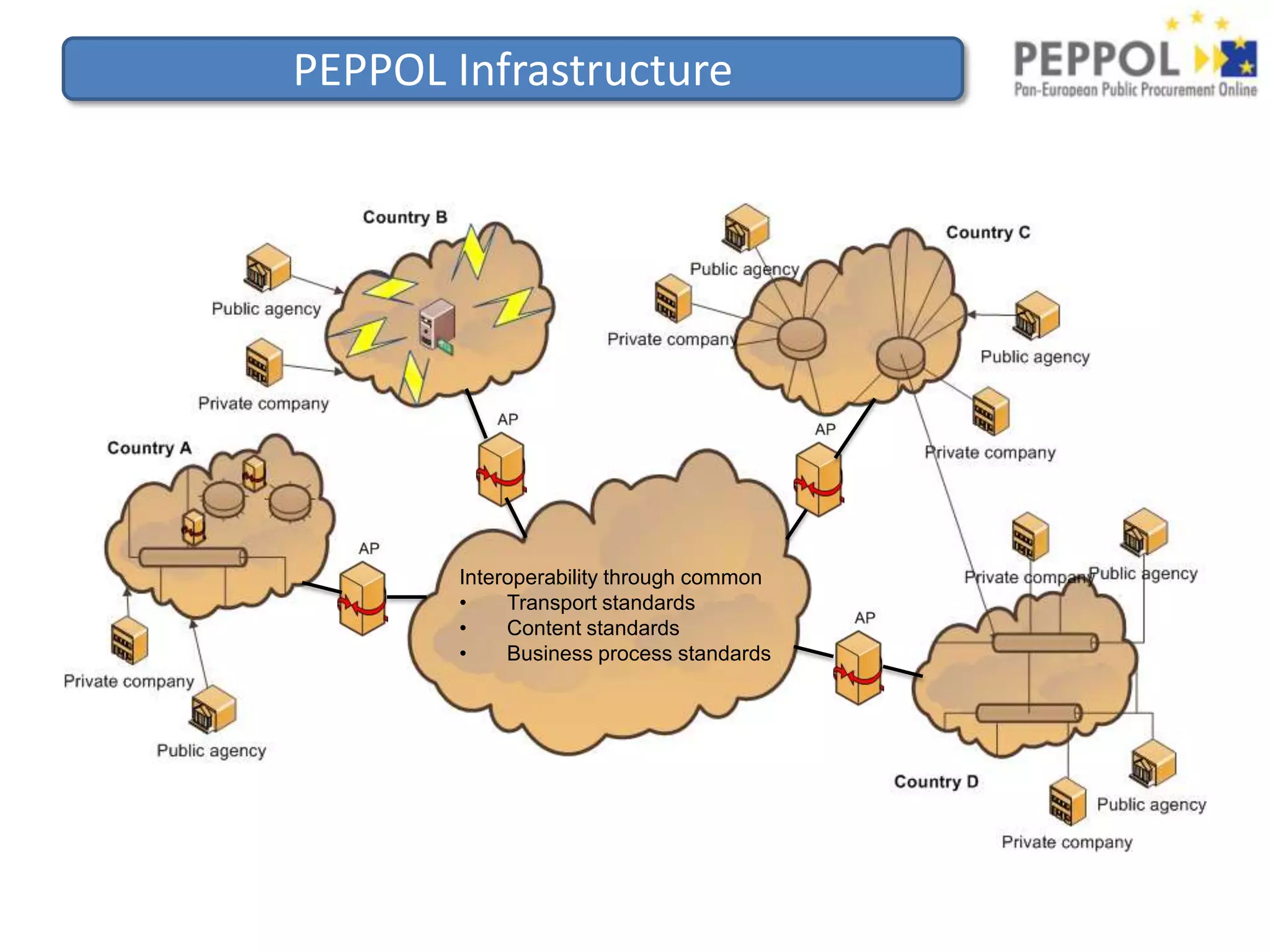
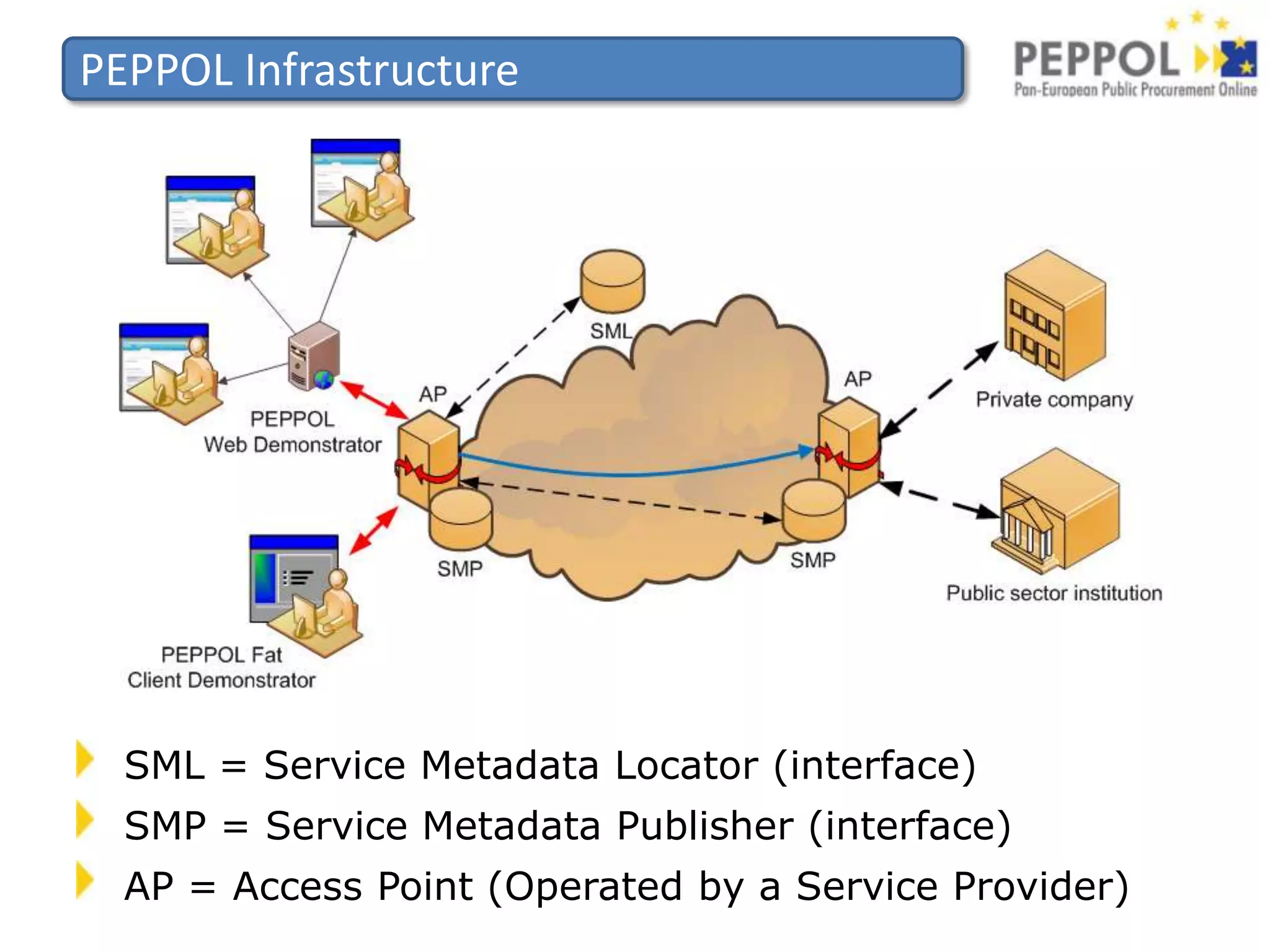
    PEPPOL InfrastructureSML =Service Metadata Locator (interface)SMP = Service Metadata Publisher (interface)AP = Access Point (Operated by a Service Provider)