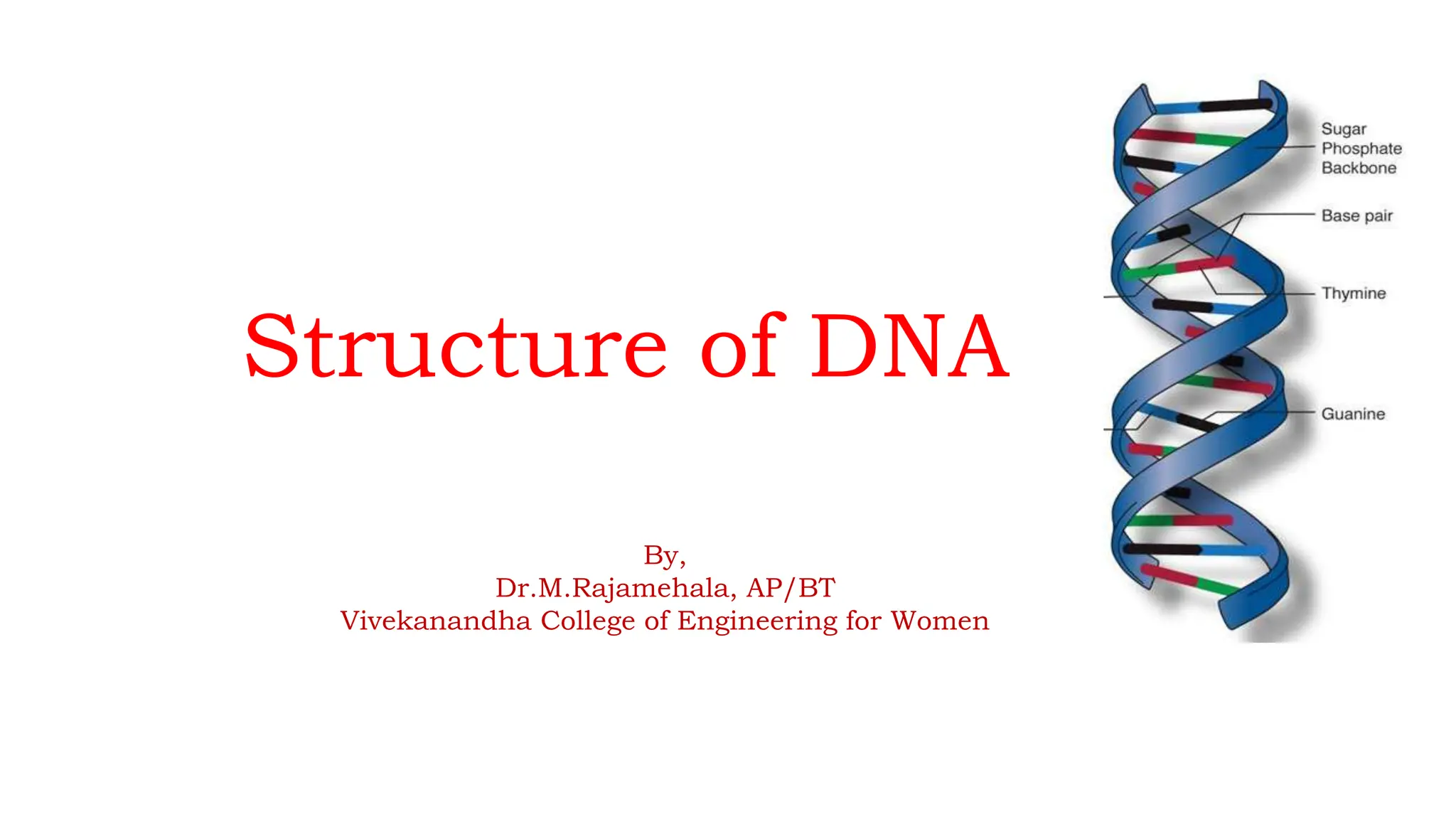
Structure of DNA
By,
Dr.M.Rajamehala, AP/BT
Vivekanandha College of Engineering for Women
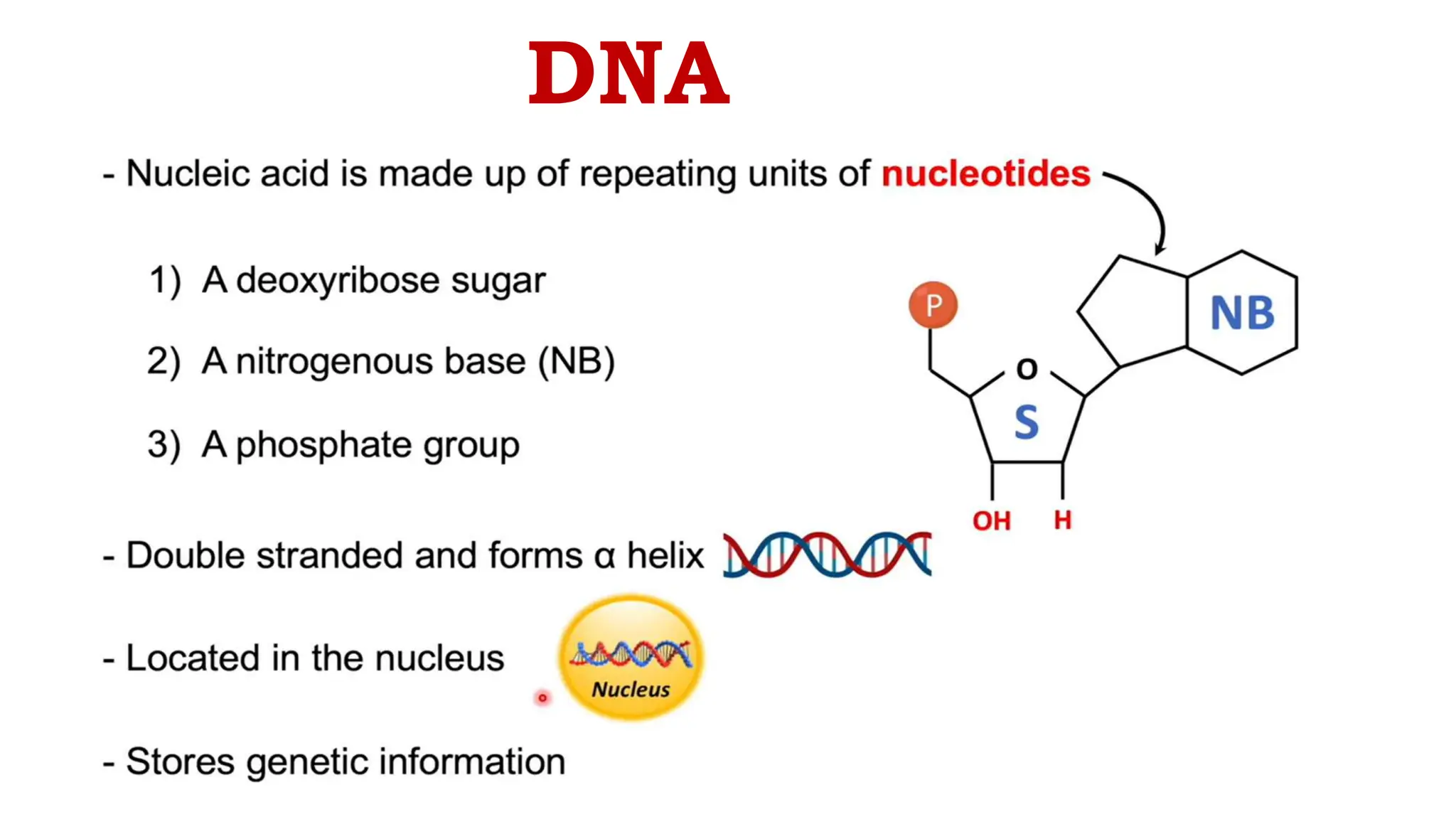
DNA
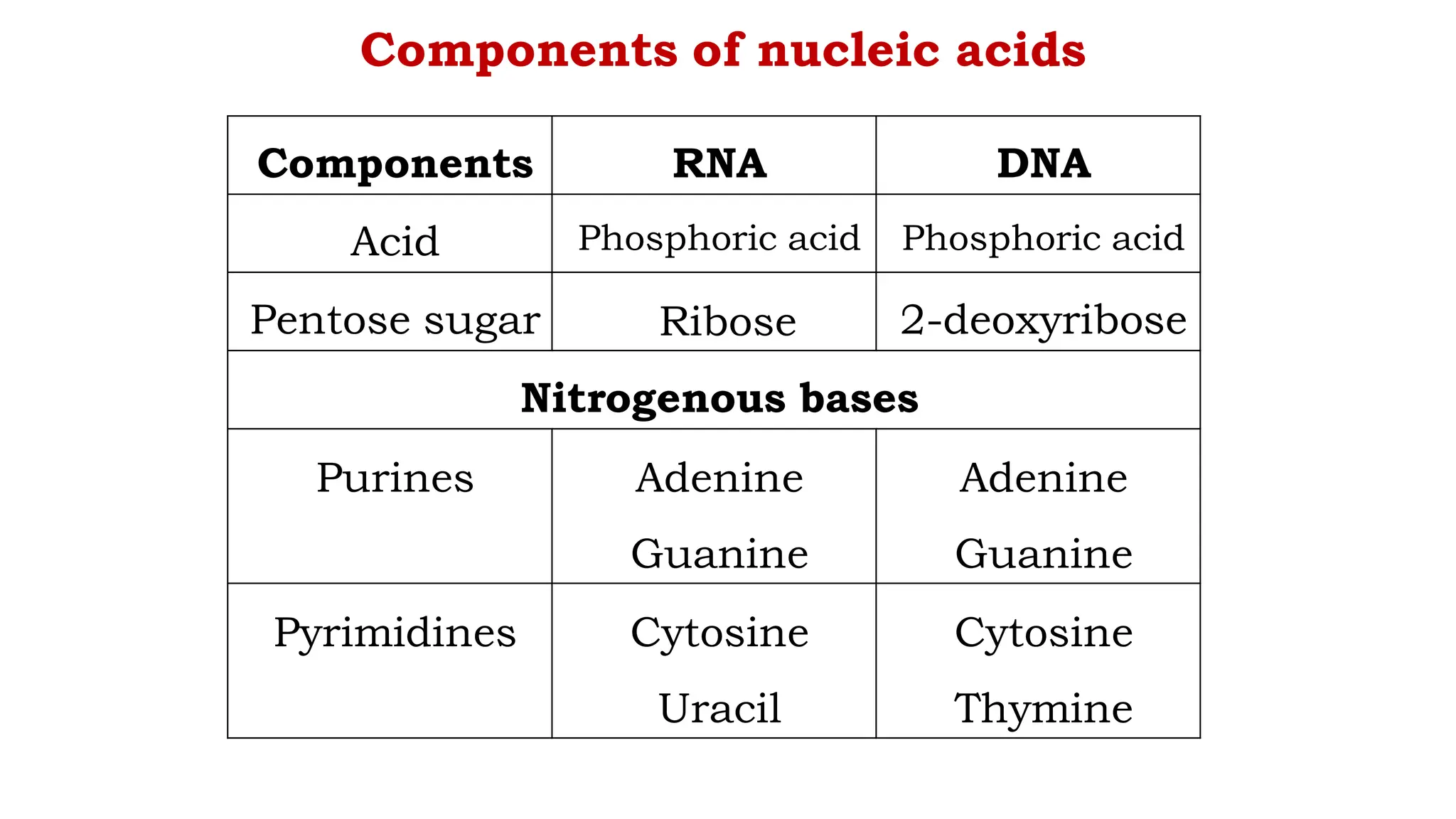
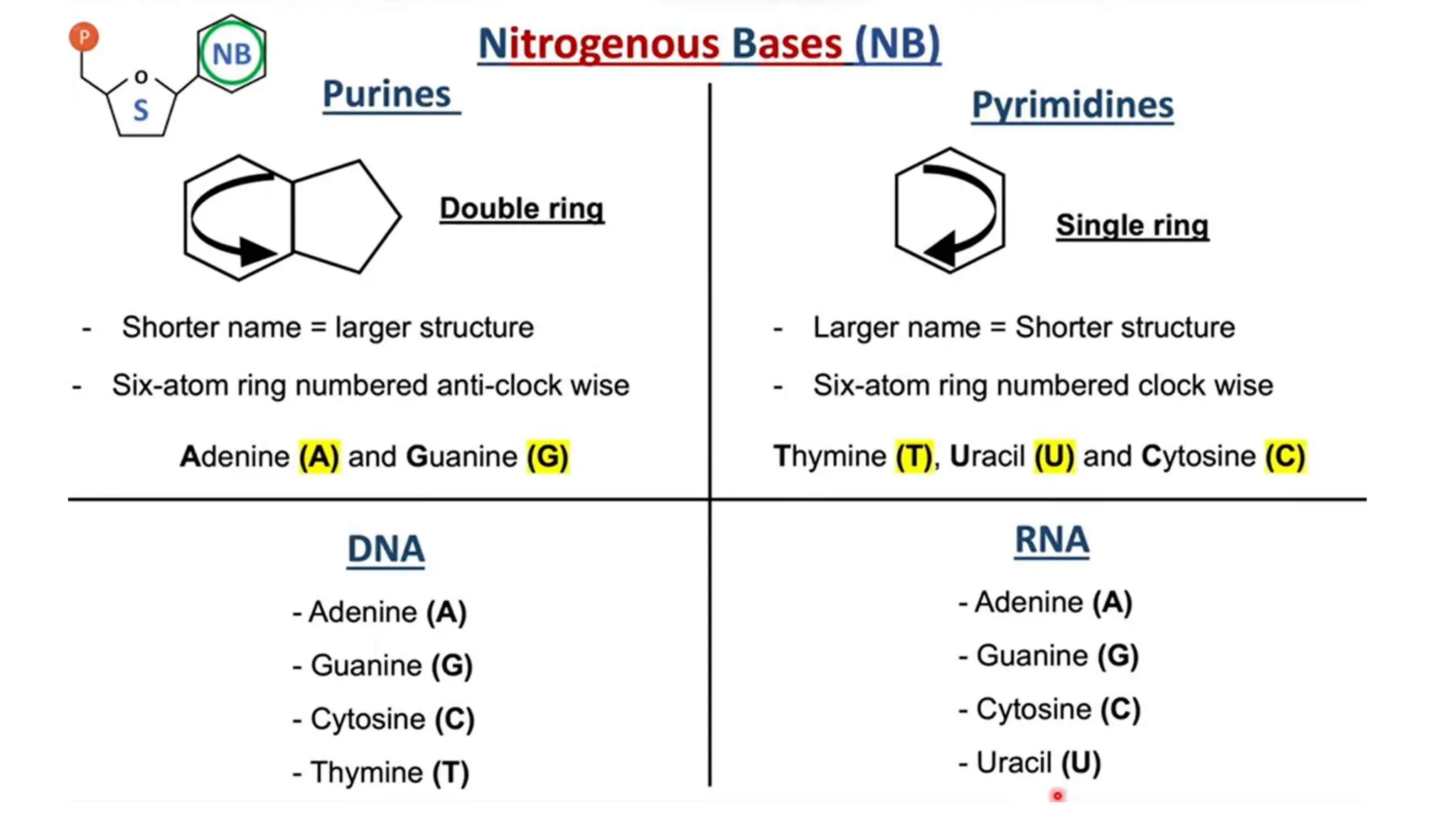
Components of nucleic acids
Components RNA DNA
Acid Phosphoric acid Phosphoric acid
Pentose sugar Ribose 2-deoxyribose
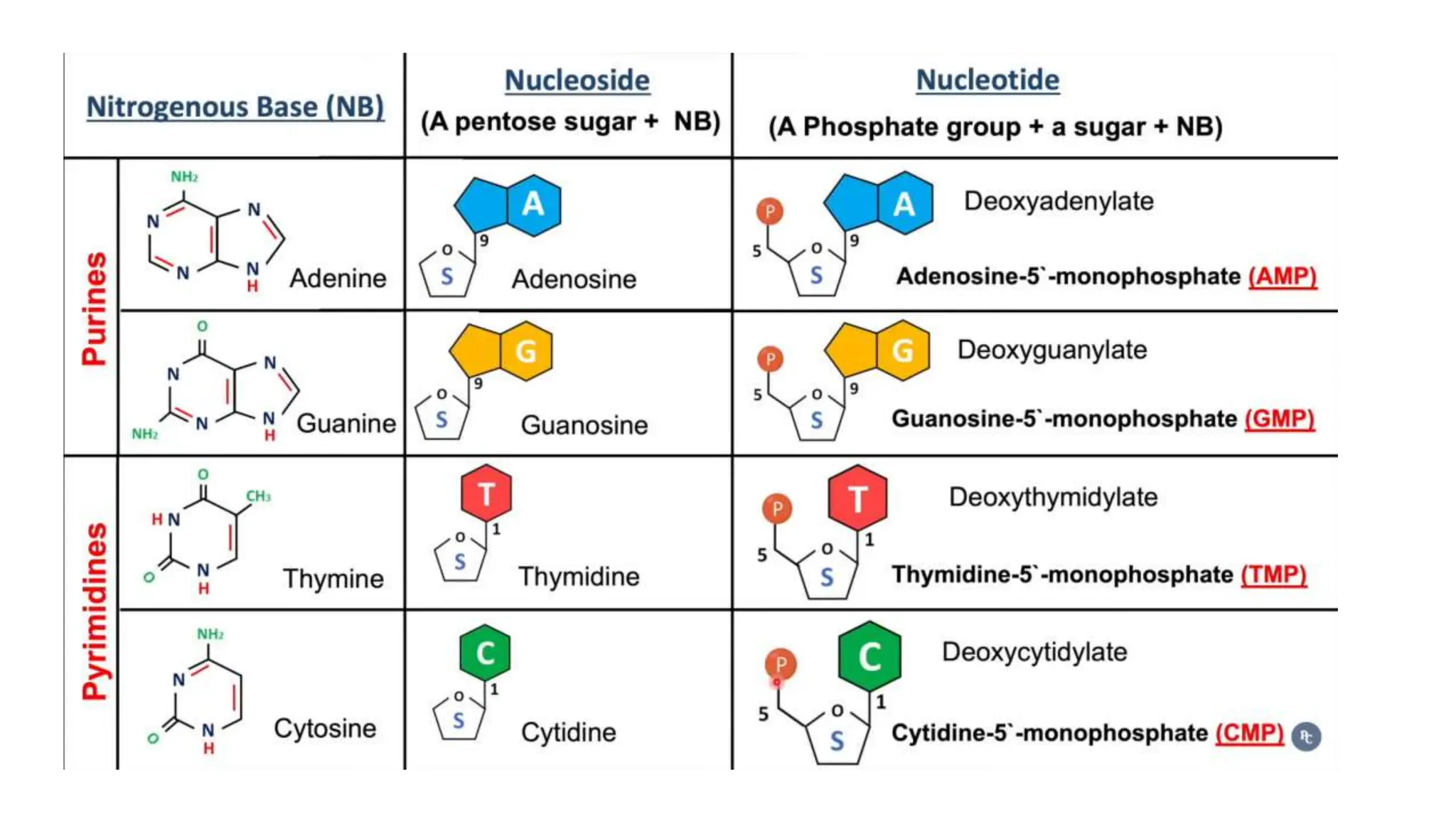
Nitrogenous bases
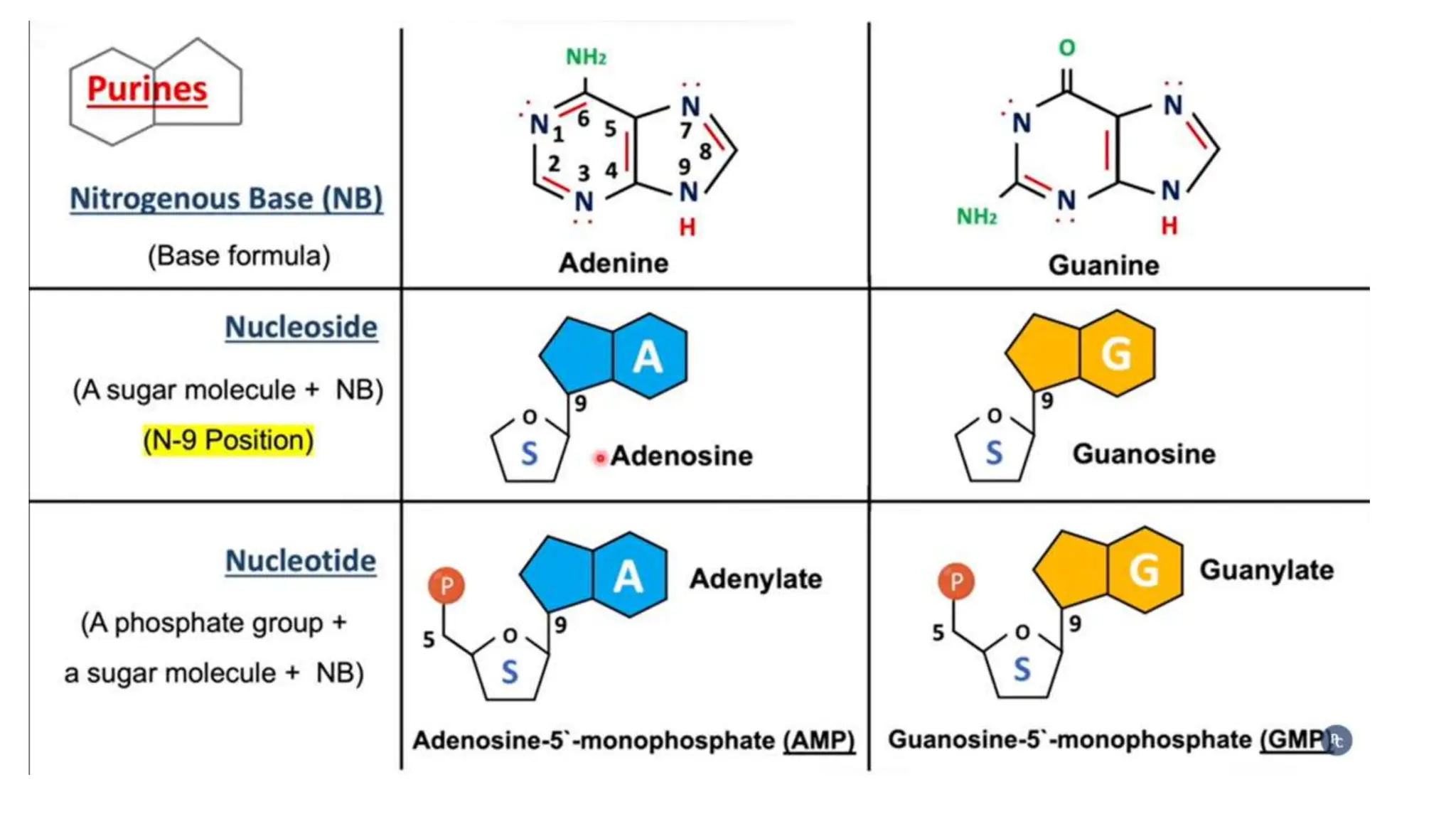
Purines Adenine
Guanine
Adenine
Guanine
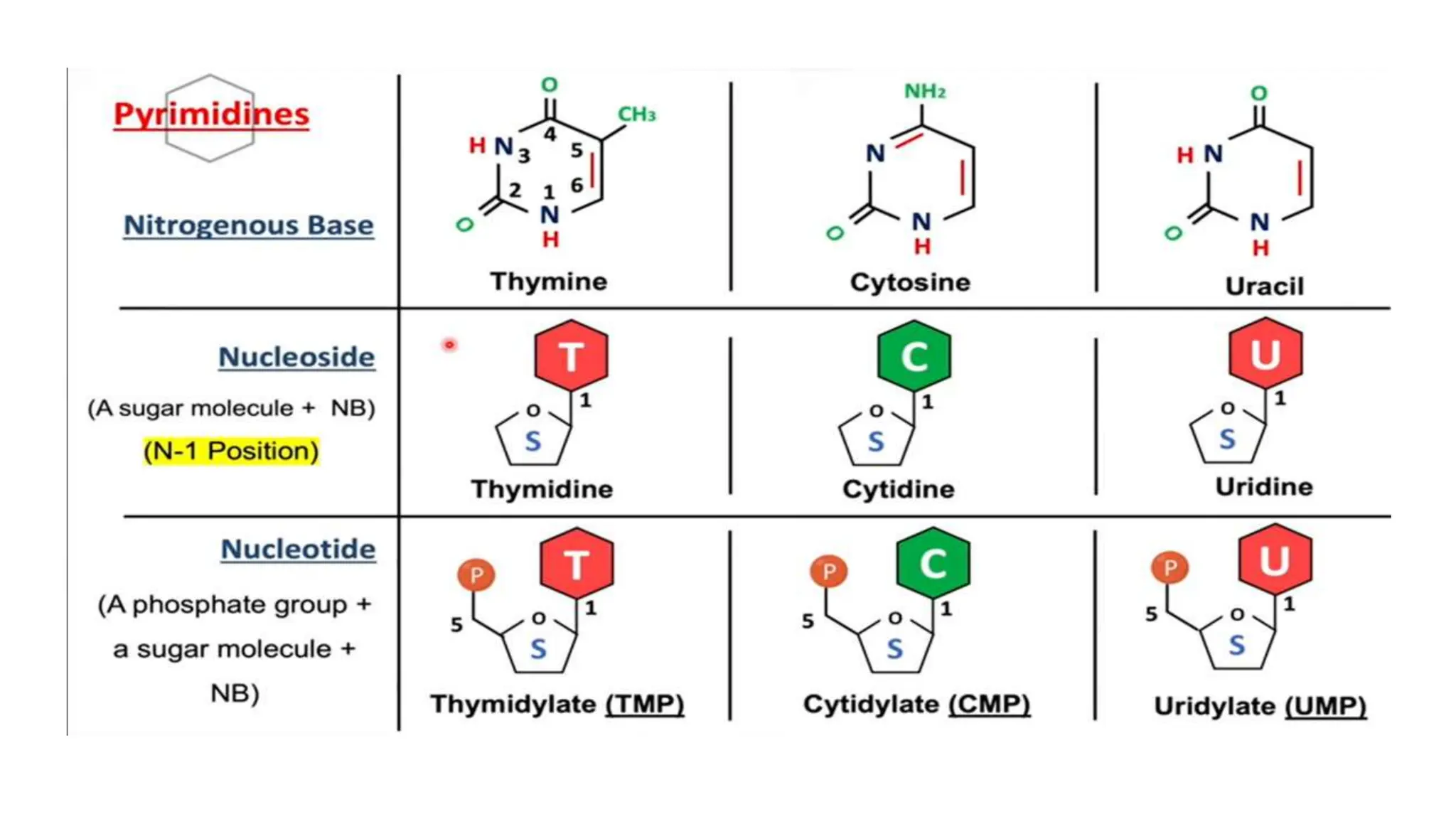
Pyrimidines Cytosine
Uracil
Cytosine
Thymine
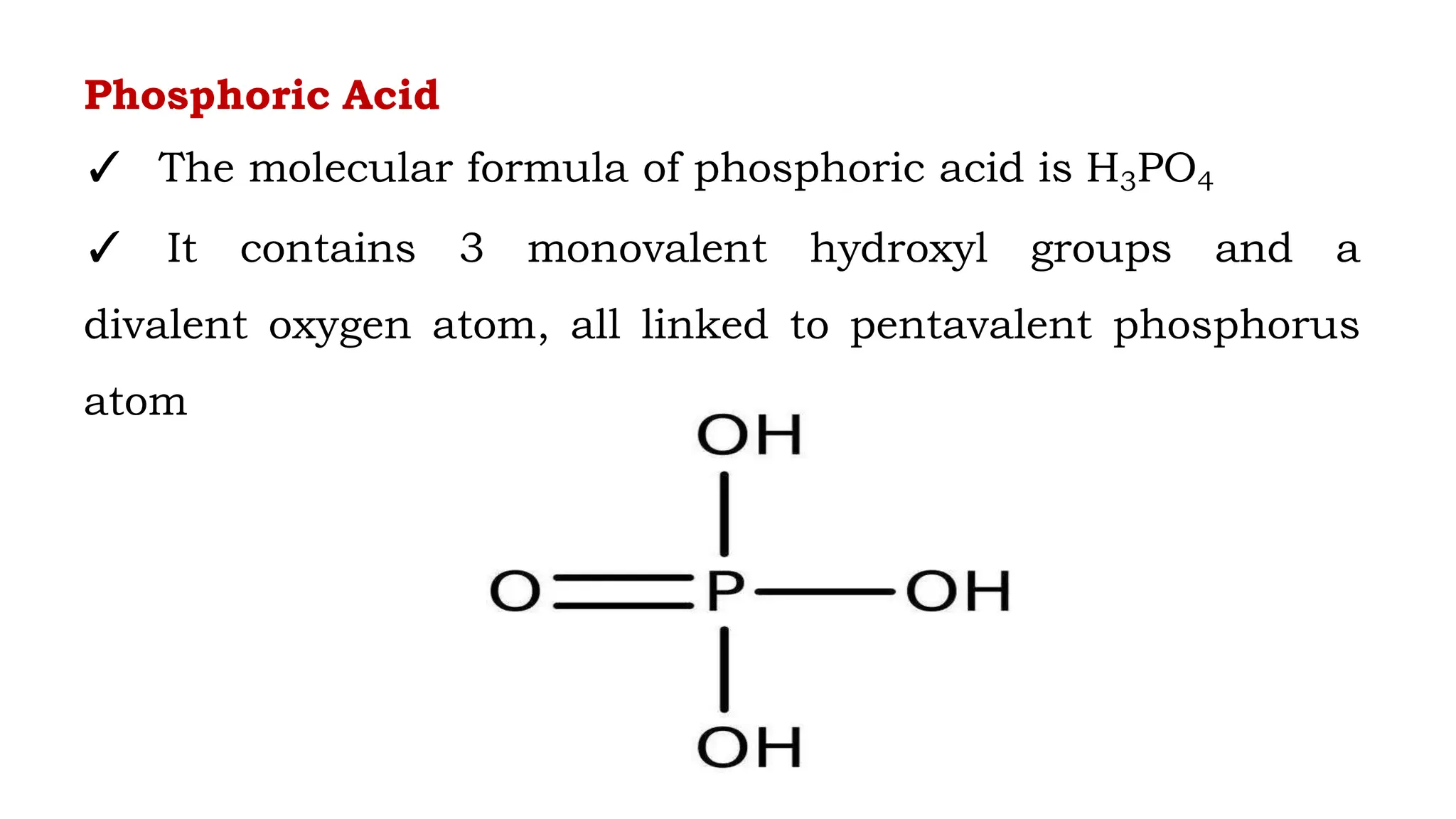
Phosphoric Acid
✓ The molecular formula of phosphoric acid is H3PO4
✓ It contains 3 monovalent hydroxyl groups and a
divalent oxygen atom, all linked to pentavalent phosphorus
atom
Pentose Sugar
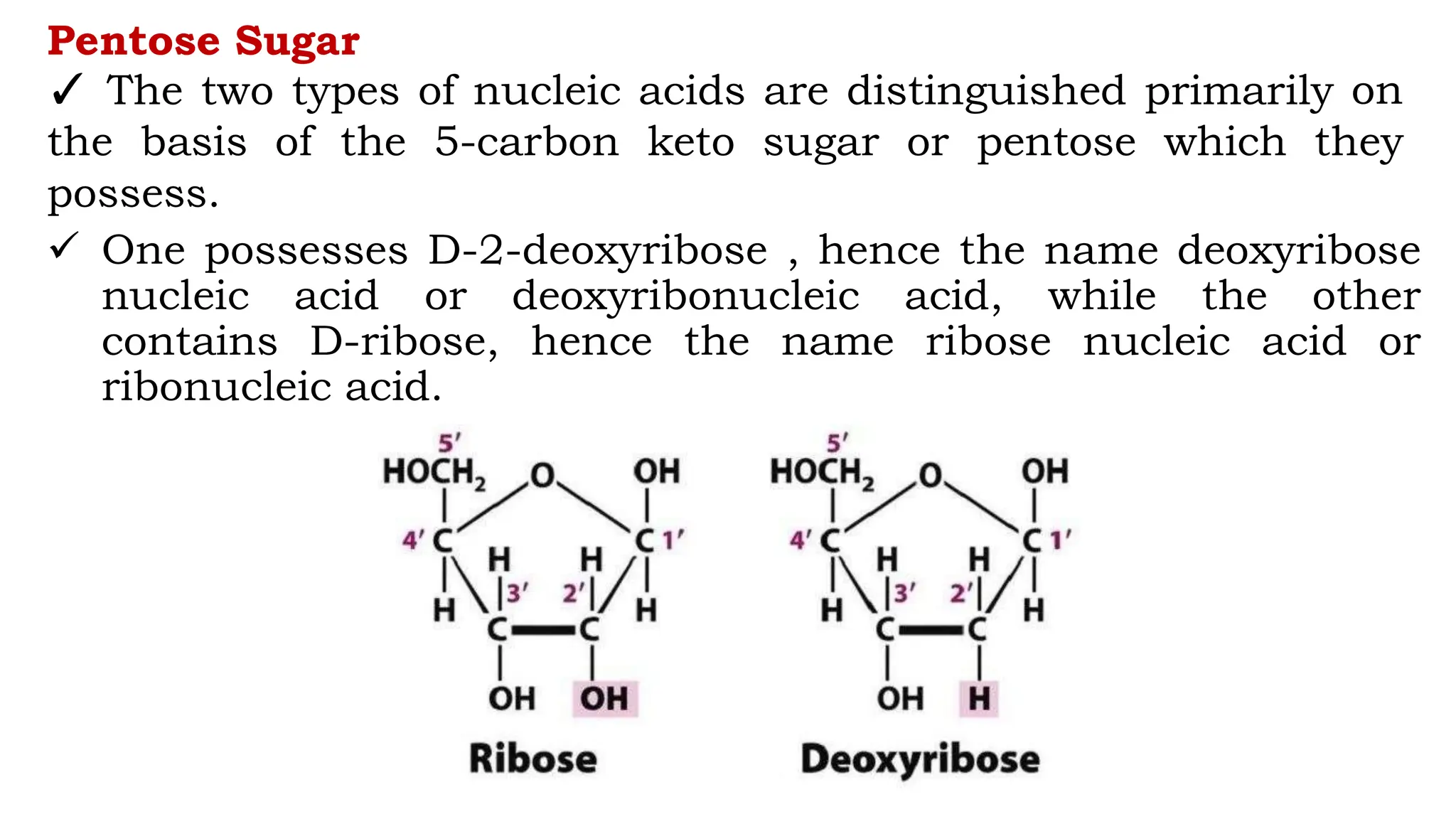
✓ The two types of nucleic acids are distinguished primarily on
the basis of the 5-carbon keto sugar or pentose which they
possess.
 One possesses D-2-deoxyribose , hence the name deoxyribose
nucleic acid or deoxyribonucleic acid, while the other
contains D-ribose, hence the name ribose nucleic acid or
ribonucleic acid.
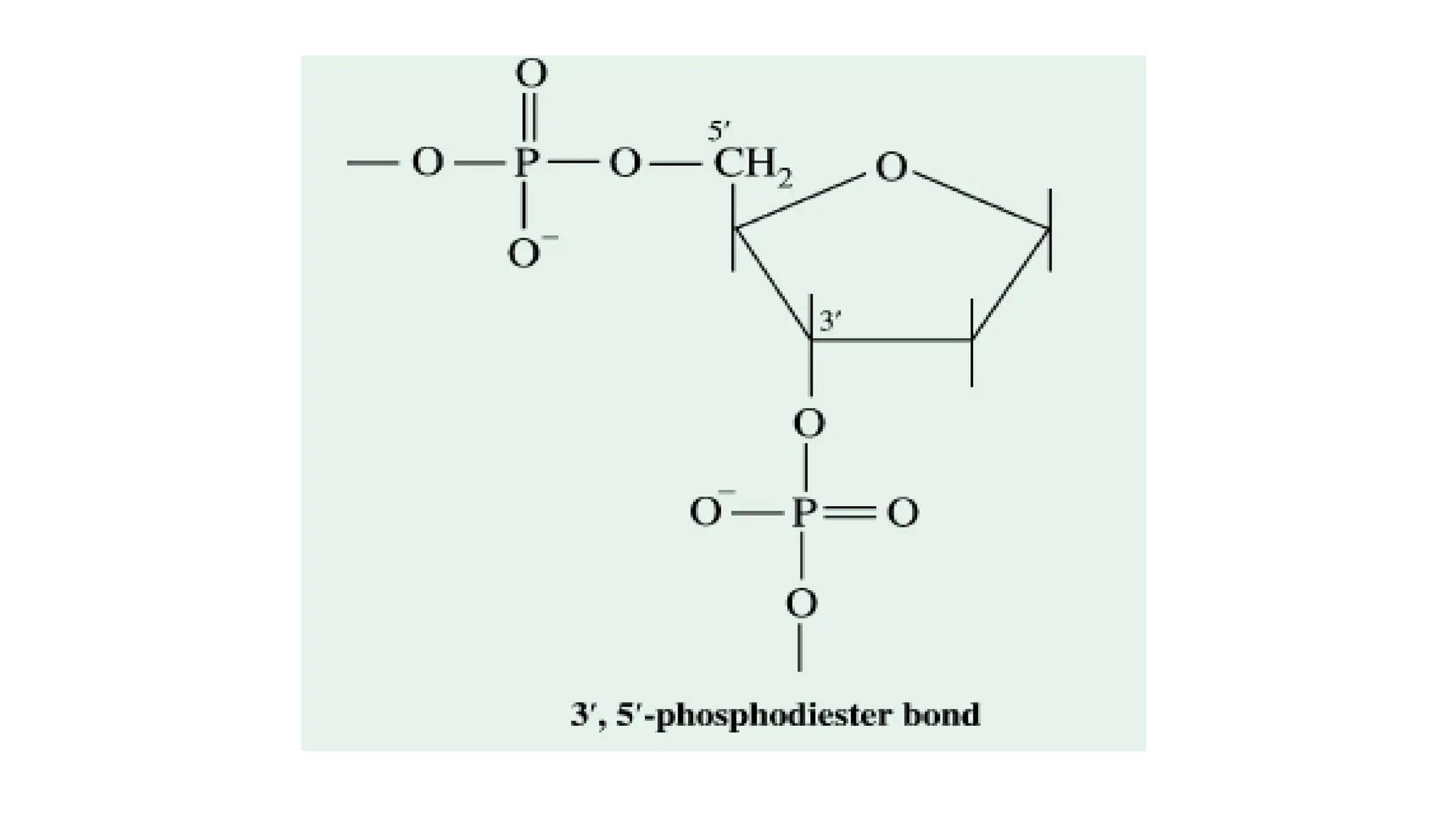
An important property of the pentoses is their capacity
to form esters with phosphoric acid
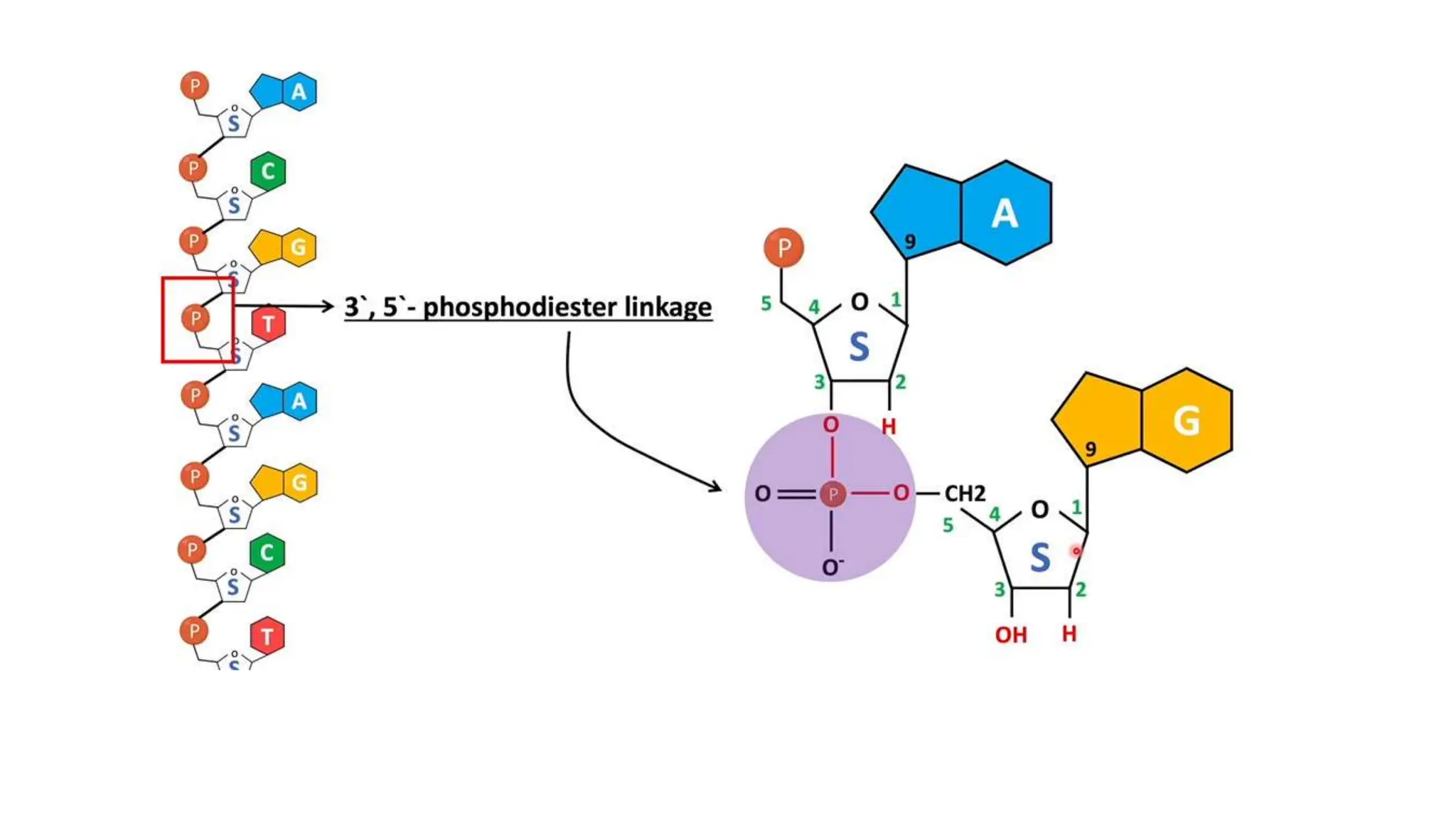
In this reaction the OH groups of the pentose, especially
those at C3 and C5, are involved forming a 3′, 5′-
phosphodiester bond between adjacent pentose residues
This bond, in fact, is an integral part of the structure of
nucleic acids
Nitrogenous Bases
✓ Two types of nitrogenous bases are found in all nucleic
acids.
✓ The nitrogenous bases are derivatives of pyrimidine and
purine.
✓ Pyrimidine bases – Uracil, Thymine and Cytosine
✓ Purine bases – Adenine and guanine
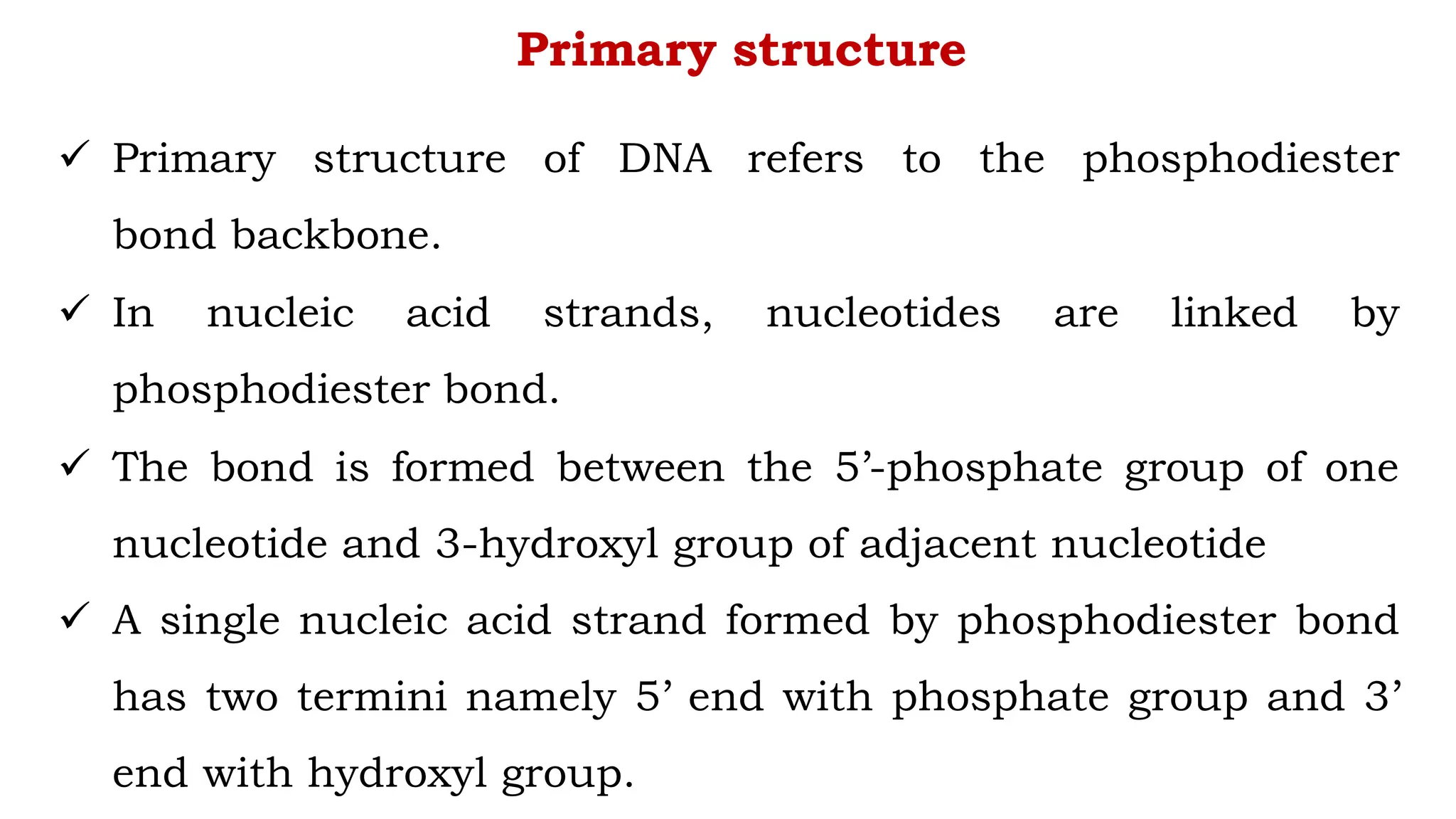
Primary structure
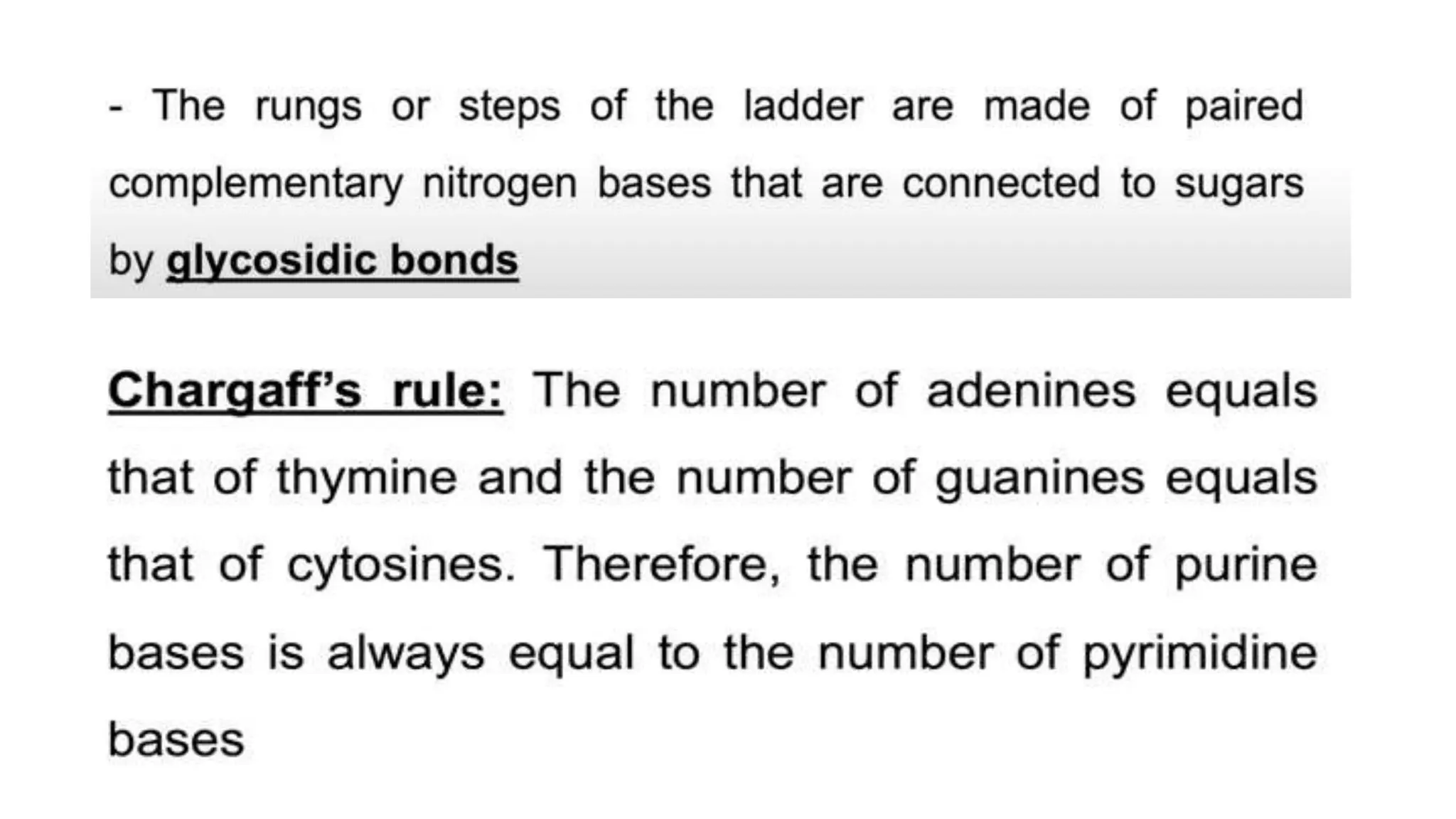
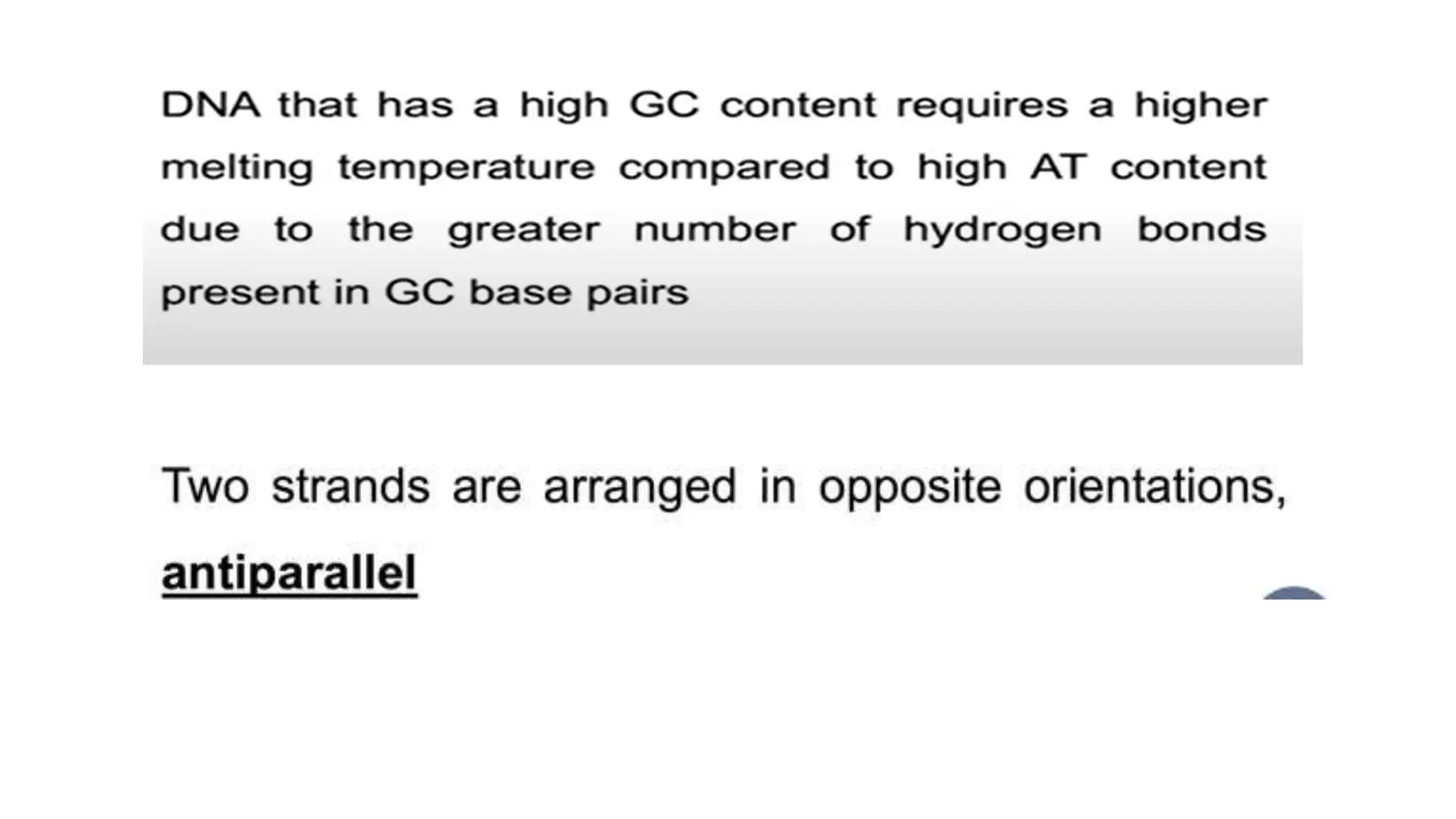
 Primary structure of DNA refers to the phosphodiester
bond backbone.
 In nucleic acid strands, nucleotides are linked by
phosphodiester bond.
 The bond is formed between the 5’-phosphate group of one
nucleotide and 3-hydroxyl group of adjacent nucleotide
 A single nucleic acid strand formed by phosphodiester bond
has two termini namely 5’ end with phosphate group and 3’
end with hydroxyl group.
Secondary Structure
TERTIARY STRUCTURE
OF
DNA
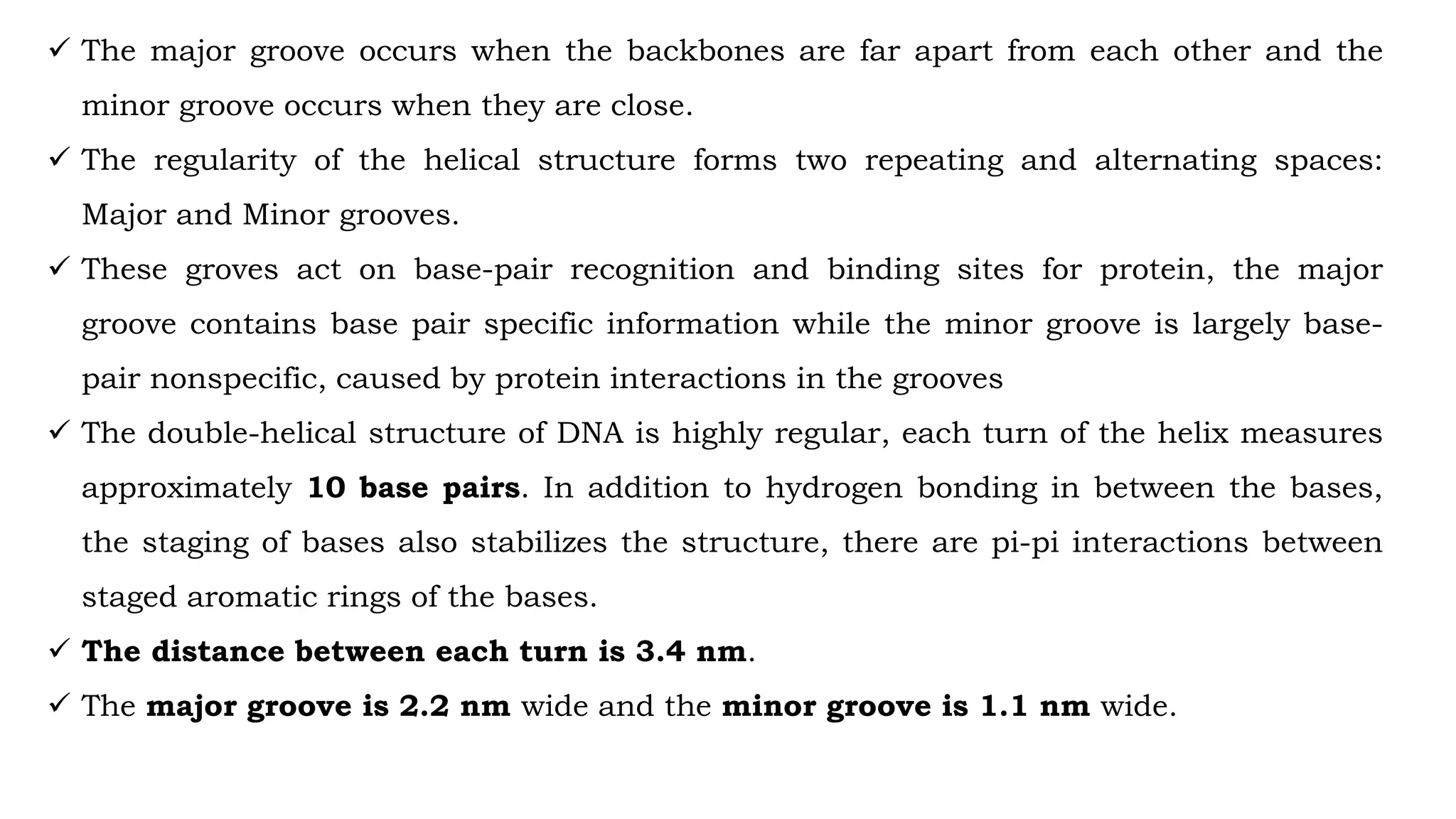
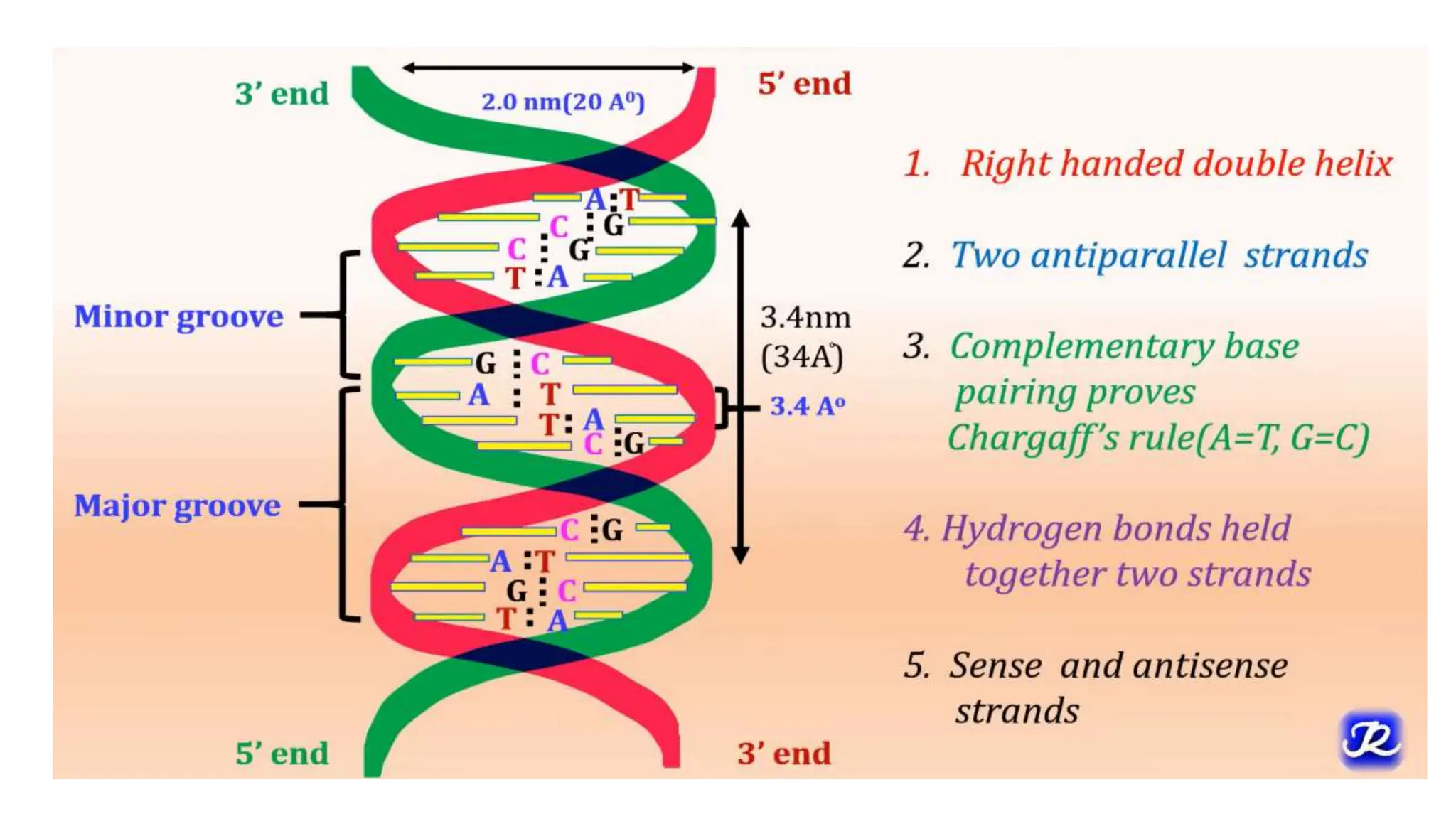
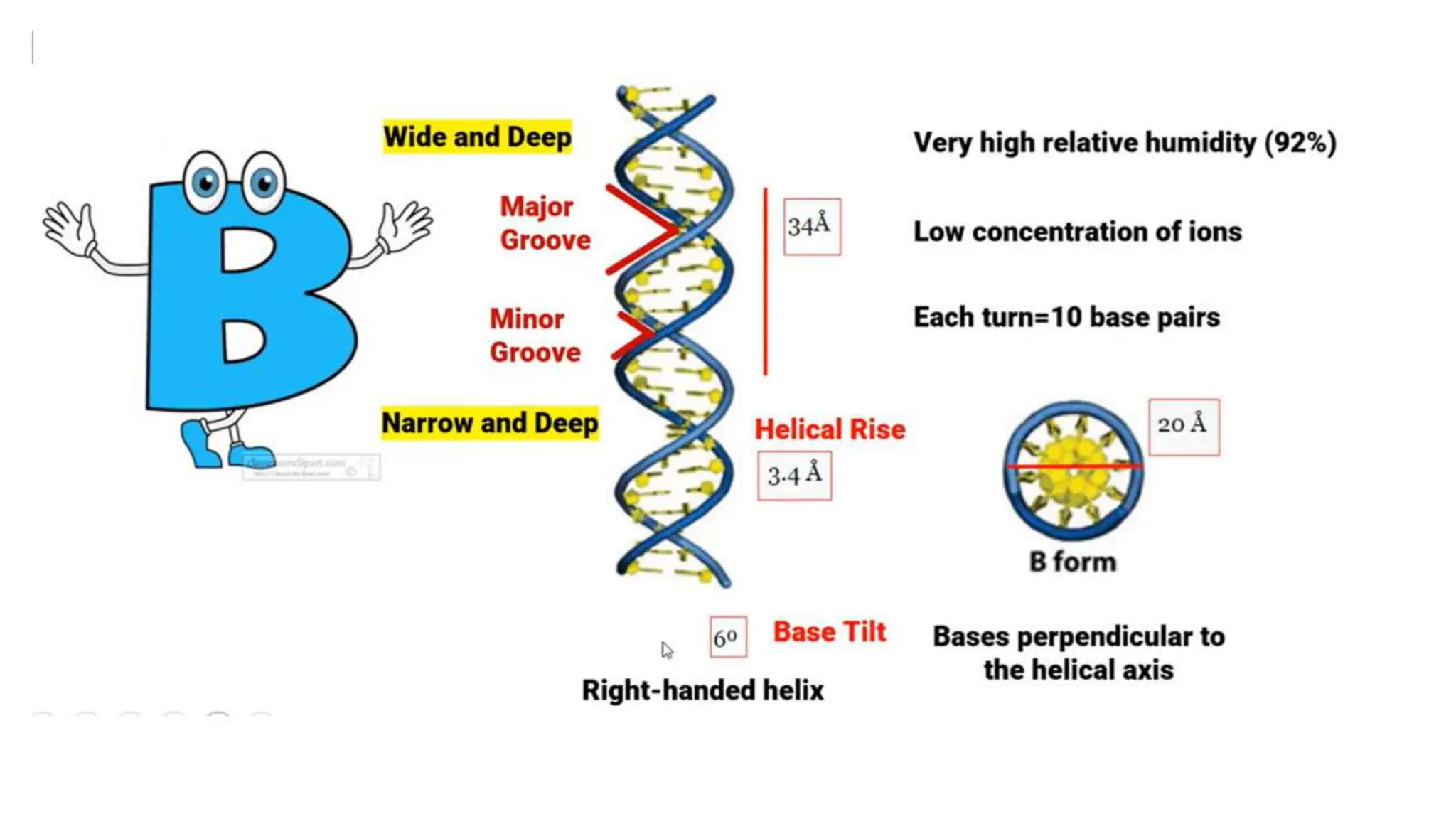
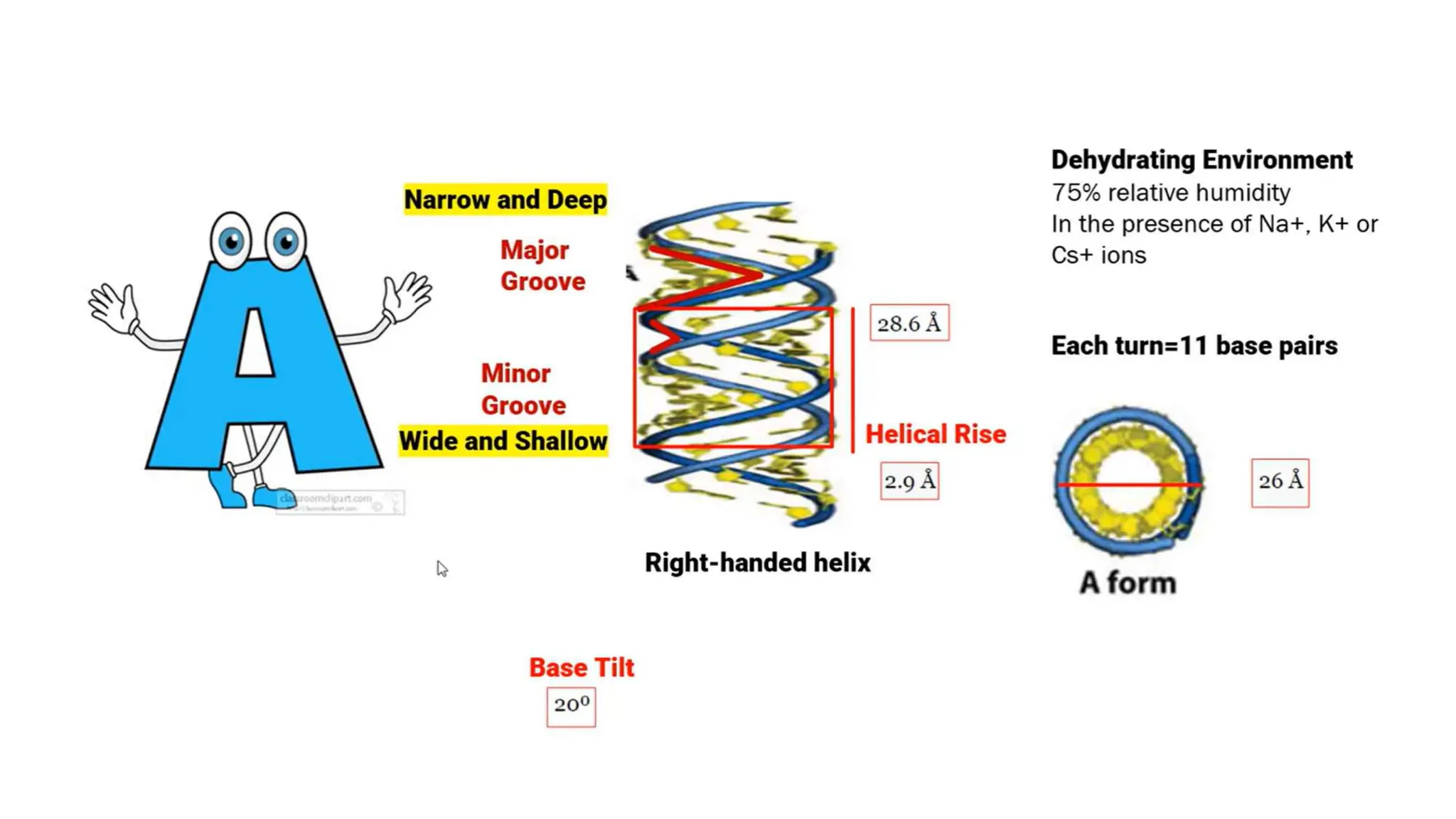
 The major groove occurs when the backbones are far apart from each other and the
minor groove occurs when they are close.
 The regularity of the helical structure forms two repeating and alternating spaces:
Major and Minor grooves.
 These groves act on base-pair recognition and binding sites for protein, the major
groove contains base pair specific information while the minor groove is largely base-
pair nonspecific, caused by protein interactions in the grooves
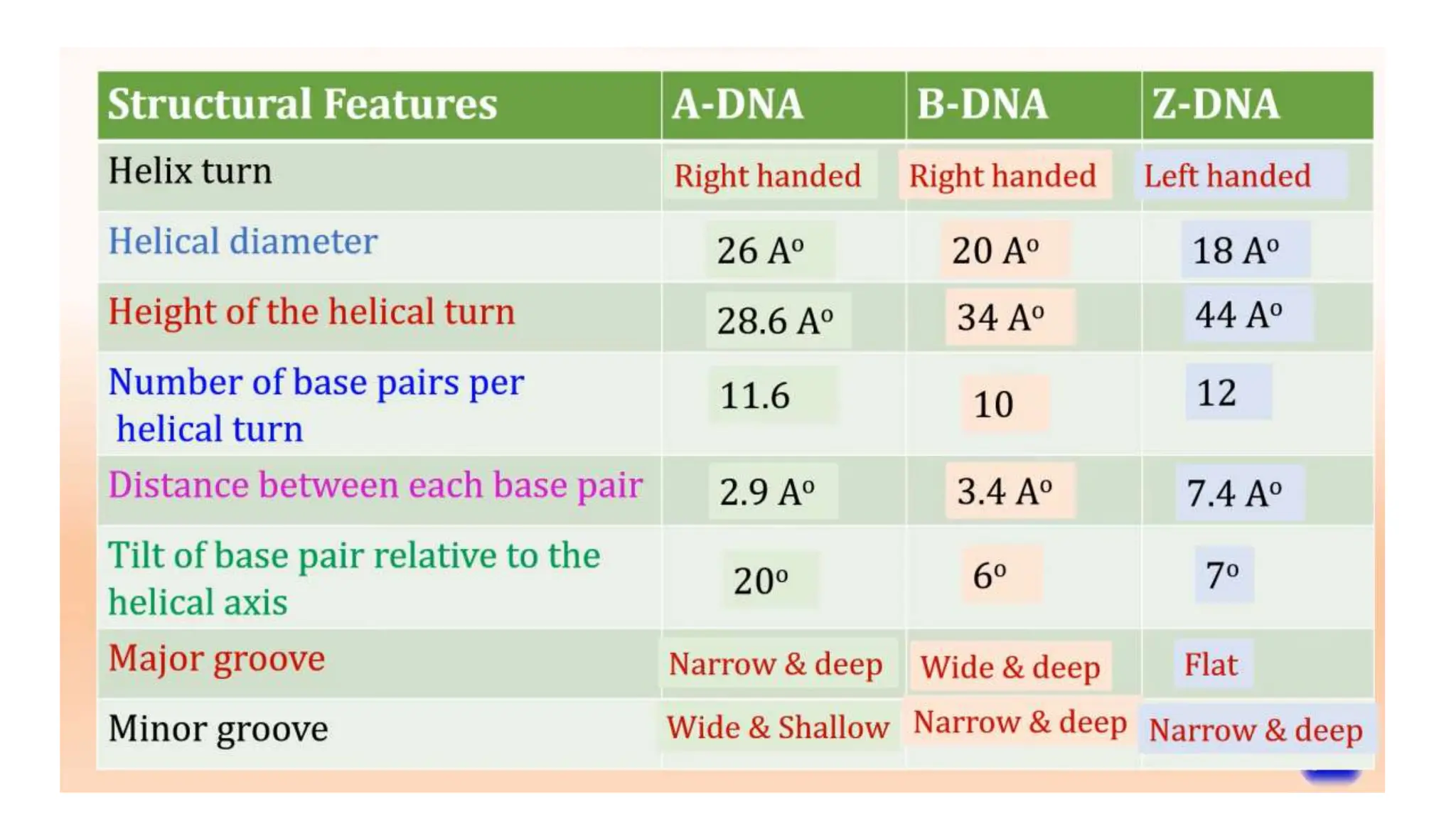
 The double-helical structure of DNA is highly regular, each turn of the helix measures
approximately 10 base pairs. In addition to hydrogen bonding in between the bases,
the staging of bases also stabilizes the structure, there are pi-pi interactions between
staged aromatic rings of the bases.
 The distance between each turn is 3.4 nm.
 The major groove is 2.2 nm wide and the minor groove is 1.1 nm wide.
2. Structure of DNA, Watson & Crick Model.pptx

2. Structure of DNA, Watson & Crick Model.pptx

  • 1.
    Structure of DNA By, Dr.M.Rajamehala,AP/BT Vivekanandha College of Engineering for Women
  • 2.
  • 3.
    Components of nucleicacids Components RNA DNA Acid Phosphoric acid Phosphoric acid Pentose sugar Ribose 2-deoxyribose Nitrogenous bases Purines Adenine Guanine Adenine Guanine Pyrimidines Cytosine Uracil Cytosine Thymine
  • 4.
    Phosphoric Acid ✓ Themolecular formula of phosphoric acid is H3PO4 ✓ It contains 3 monovalent hydroxyl groups and a divalent oxygen atom, all linked to pentavalent phosphorus atom
  • 5.
    Pentose Sugar ✓ Thetwo types of nucleic acids are distinguished primarily on the basis of the 5-carbon keto sugar or pentose which they possess.  One possesses D-2-deoxyribose , hence the name deoxyribose nucleic acid or deoxyribonucleic acid, while the other contains D-ribose, hence the name ribose nucleic acid or ribonucleic acid.
  • 6.
    An important propertyof the pentoses is their capacity to form esters with phosphoric acid In this reaction the OH groups of the pentose, especially those at C3 and C5, are involved forming a 3′, 5′- phosphodiester bond between adjacent pentose residues This bond, in fact, is an integral part of the structure of nucleic acids
  • 8.
    Nitrogenous Bases ✓ Twotypes of nitrogenous bases are found in all nucleic acids. ✓ The nitrogenous bases are derivatives of pyrimidine and purine. ✓ Pyrimidine bases – Uracil, Thymine and Cytosine ✓ Purine bases – Adenine and guanine
  • 13.
    Primary structure  Primarystructure of DNA refers to the phosphodiester bond backbone.  In nucleic acid strands, nucleotides are linked by phosphodiester bond.  The bond is formed between the 5’-phosphate group of one nucleotide and 3-hydroxyl group of adjacent nucleotide  A single nucleic acid strand formed by phosphodiester bond has two termini namely 5’ end with phosphate group and 3’ end with hydroxyl group.
  • 15.
  • 19.
  • 20.
     The majorgroove occurs when the backbones are far apart from each other and the minor groove occurs when they are close.  The regularity of the helical structure forms two repeating and alternating spaces: Major and Minor grooves.  These groves act on base-pair recognition and binding sites for protein, the major groove contains base pair specific information while the minor groove is largely base- pair nonspecific, caused by protein interactions in the grooves  The double-helical structure of DNA is highly regular, each turn of the helix measures approximately 10 base pairs. In addition to hydrogen bonding in between the bases, the staging of bases also stabilizes the structure, there are pi-pi interactions between staged aromatic rings of the bases.  The distance between each turn is 3.4 nm.  The major groove is 2.2 nm wide and the minor groove is 1.1 nm wide.