

two steps to asia
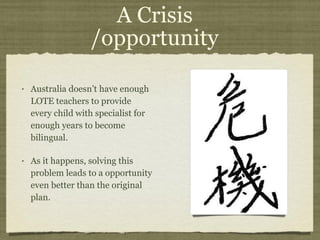
A Crisis /opportunity Australia doesn’t have enough LOTE teachers to provide every child with specialist for enough years to become bilingual. As it happens, solving this problem leads to a opportunity even better than the original plan.
Lo Bianco and Slaughter’s 2009, “Second Languages and Australian Schooling” review concludes that the second of “four components of a broad strategy” should be “a universal apprenticeship in learning how to learn languages” in the primary years, so that students will “successfully transfer such skills to other languages” This 2-step process will enable many more children to to master a target language. This 2-step process will enable many more children to to master a target language. LANGAGE APPRENTICESHIP
Using the world’s easiest language, first,  sets both children and classroom teachers up to succeed. Involving classroom teachers provides effective regular practice, and challenges Australia’s “monolingual mindset”.
Intercultural education is an important part of the rationale for LOTE.
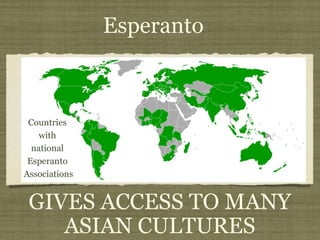
Esperanto GIVES ACCESS TO MANY ASIAN CULTURES Countries  with  national  Esperanto  Associations
....of Great diversity!
 
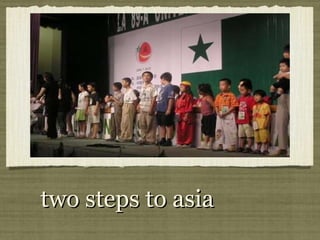
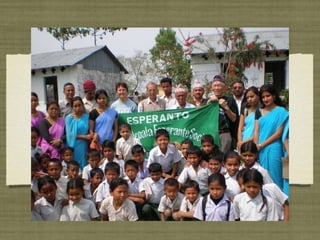
(All photos used in this presentation are from schools and events where Esperanto is being used.


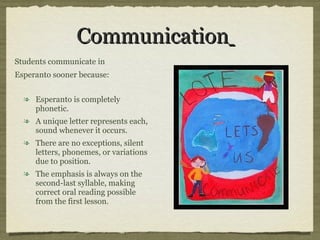
Communication   Esperanto is completely phonetic.  A unique letter represents each, sound whenever it occurs.  There are no exceptions, silent letters, phonemes, or variations due to position.  The emphasis is always on the second-last syllable, making correct oral reading possible from the first lesson .  Students communicate in  Esperanto sooner because:
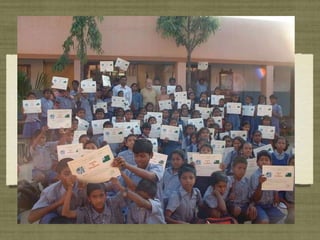
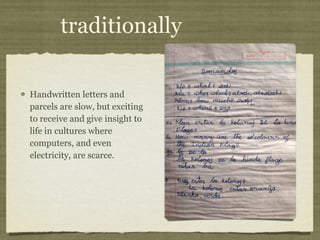
traditionally Handwritten letters and parcels are slow, but exciting to receive and give insight to life in cultures where computers, and even electricity, are scarce.
And using ICT
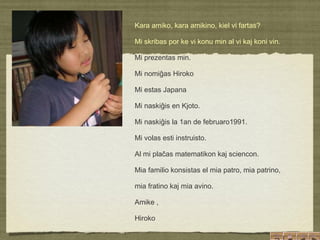
  Kara amiko, kara amikino, kiel vi fartas? Mi skribas por ke vi konu min al vi kaj koni vin. Mi prezentas min. Mi nomiĝas Hiroko Mi estas Japana Mi naskiĝis en Kjoto. Mi naskiĝis la 1an de februaro1991. Mi volas esti instruisto. Al mi plaĉas matematikon kaj sciencon. Mia familio konsistas el mia patro, mia patrino,  mia fratino kaj mia avino. Amike ,  Hiroko
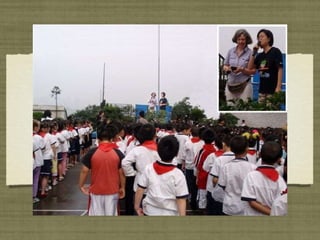
These Chinese Children are learning Esperanto as an apprenticeship language, before they move on to English.
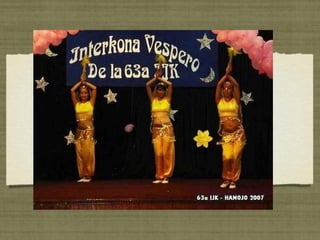
(A guided tour of Hanoi in Esperanto.
Optimizing By-products of LOTE
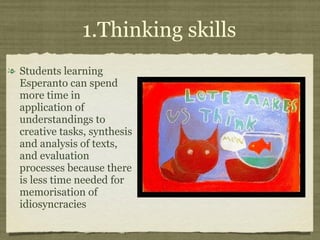
1.Thinking skills Students learning Esperanto can spend more time in application of understandings to creative tasks, synthesis and analysis of texts, and evaluation processes because there is less time needed for memorisation of idiosyncracies
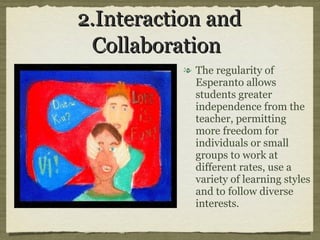
2.Interaction and Collaboration   The regularity of Esperanto allows students greater independence from the teacher, permitting  more freedom for individuals or small groups to work at different rates, use a variety of learning styles and to follow diverse interests.
3.Self Esteem   Esperanto is the only language designed for the express purpose of being a quick and successful second language for everyone.  Contacts with non-English speakers through  Esperanto are contacts between  linguistic  equals.
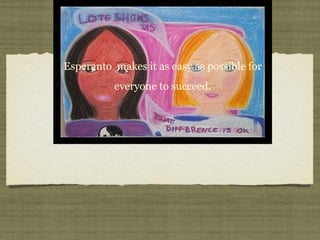
4.Inclusion   Esperanto  makes it as easy as possible for everyone to succeed.
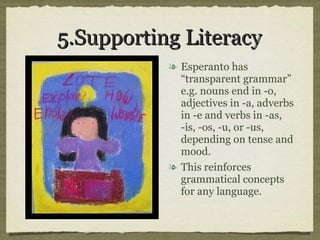
5.Supporting Literacy Esperanto has “transparent grammar” e.g. nouns end in -o, adjectives in -a, adverbs in -e and verbs in -as, -is, -os, -u, or -us, depending on tense and mood.  This reinforces grammatical concepts for any language.
6. A Flexible Future   Whatever languages become important in the world, and in the lives of individual students, the advantage of being bilingual young, continues to make new learning easier.
A Tool  for Positive  Change A substantial  minimum entitlement
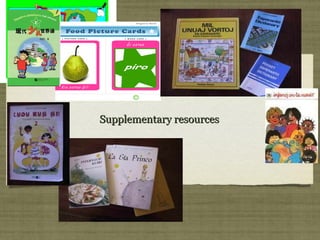
Supplementary resources
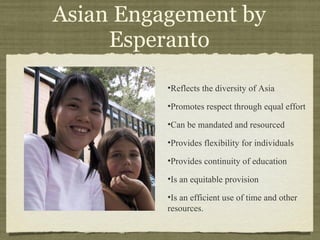
Asian Engagement by Esperanto Reflects the diversity of Asia Promotes respect through equal effort Can be mandated and resourced Provides flexibility for individuals Provides continuity of education Is an equitable provision  Is an efficient use of time and other resources.
 
© Penelope Vos 2010

2 steps to asia

  • 1.
  • 2.
    A Crisis /opportunityAustralia doesn’t have enough LOTE teachers to provide every child with specialist for enough years to become bilingual. As it happens, solving this problem leads to a opportunity even better than the original plan.
  • 3.
    Lo Bianco andSlaughter’s 2009, “Second Languages and Australian Schooling” review concludes that the second of “four components of a broad strategy” should be “a universal apprenticeship in learning how to learn languages” in the primary years, so that students will “successfully transfer such skills to other languages” This 2-step process will enable many more children to to master a target language. This 2-step process will enable many more children to to master a target language. LANGAGE APPRENTICESHIP
  • 4.
    Using the world’seasiest language, first, sets both children and classroom teachers up to succeed. Involving classroom teachers provides effective regular practice, and challenges Australia’s “monolingual mindset”.
  • 5.
    Intercultural education isan important part of the rationale for LOTE.
  • 6.
    Esperanto GIVES ACCESSTO MANY ASIAN CULTURES Countries with national Esperanto Associations
  • 7.
  • 8.
  • 9.
    (All photos usedin this presentation are from schools and events where Esperanto is being used.
  • 10.
  • 11.
  • 12.
  • 13.
    Communication Esperanto is completely phonetic. A unique letter represents each, sound whenever it occurs. There are no exceptions, silent letters, phonemes, or variations due to position. The emphasis is always on the second-last syllable, making correct oral reading possible from the first lesson . Students communicate in Esperanto sooner because:
  • 14.
    traditionally Handwritten lettersand parcels are slow, but exciting to receive and give insight to life in cultures where computers, and even electricity, are scarce.
  • 15.
  • 16.
      Kara amiko,kara amikino, kiel vi fartas? Mi skribas por ke vi konu min al vi kaj koni vin. Mi prezentas min. Mi nomiĝas Hiroko Mi estas Japana Mi naskiĝis en Kjoto. Mi naskiĝis la 1an de februaro1991. Mi volas esti instruisto. Al mi plaĉas matematikon kaj sciencon. Mia familio konsistas el mia patro, mia patrino, mia fratino kaj mia avino. Amike , Hiroko
  • 17.
    These Chinese Childrenare learning Esperanto as an apprenticeship language, before they move on to English.
  • 18.
    (A guided tourof Hanoi in Esperanto.
  • 19.
  • 20.
    1.Thinking skills Studentslearning Esperanto can spend more time in application of understandings to creative tasks, synthesis and analysis of texts, and evaluation processes because there is less time needed for memorisation of idiosyncracies
  • 21.
    2.Interaction and Collaboration The regularity of Esperanto allows students greater independence from the teacher, permitting more freedom for individuals or small groups to work at different rates, use a variety of learning styles and to follow diverse interests.
  • 22.
    3.Self Esteem Esperanto is the only language designed for the express purpose of being a quick and successful second language for everyone. Contacts with non-English speakers through Esperanto are contacts between linguistic equals.
  • 23.
    4.Inclusion Esperanto makes it as easy as possible for everyone to succeed.
  • 24.
    5.Supporting Literacy Esperantohas “transparent grammar” e.g. nouns end in -o, adjectives in -a, adverbs in -e and verbs in -as, -is, -os, -u, or -us, depending on tense and mood. This reinforces grammatical concepts for any language.
  • 25.
    6. A FlexibleFuture Whatever languages become important in the world, and in the lives of individual students, the advantage of being bilingual young, continues to make new learning easier.
  • 26.
    A Tool for Positive Change A substantial minimum entitlement
  • 27.
  • 28.
    Asian Engagement byEsperanto Reflects the diversity of Asia Promotes respect through equal effort Can be mandated and resourced Provides flexibility for individuals Provides continuity of education Is an equitable provision Is an efficient use of time and other resources.
  • 29.
  • 30.