 In this chapter, you will learn
1. what is Elements of Design & Principles of
Design
2. What are the 7 elements of design
3. their definitions and characteristics in design
 The elements of design refer to “what” are
used in design
 The principles of design refer to “how” they
are used in design
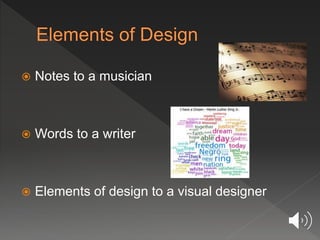
 Notes to a musician
 Words to a writer
 Elements of design to a visual designer
1. Line
2. Shape
3. Negative space
4. Volume
5. Value
6. Color
7. Texture
 The ways of using these elements are called
principles of design, which will be discussed
in the next topic.
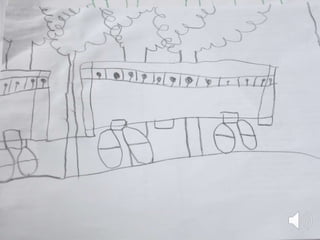
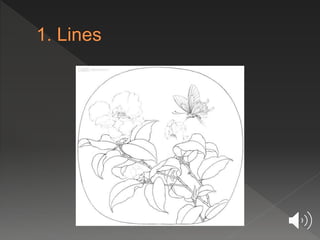
 Line: most basic elements of design
› The child’s first visual means of expression and
the foundation for most works of art
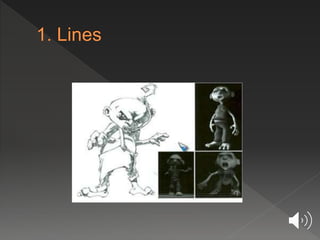
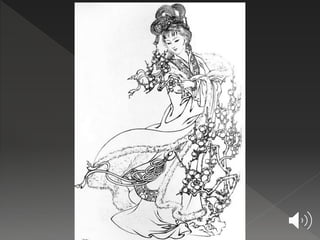
 Many designers use lines to think through
concepts and create preliminary sketches
that communicate their ideas quickly.
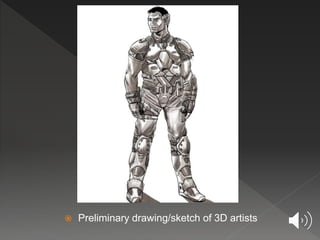
 Preliminary drawing/sketch of 3D artists
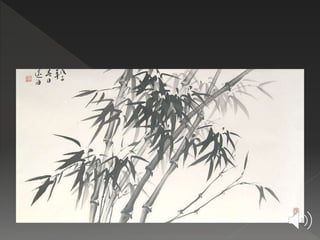
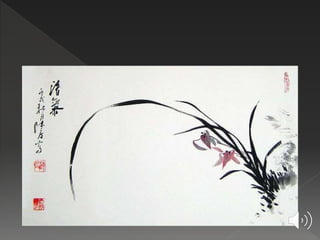
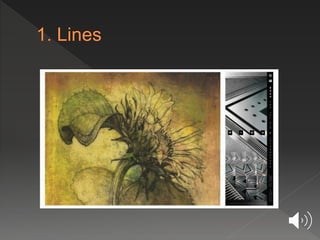
 Lines can be emotional
› Thin, delicate, thick, strong
› Curved, organic, sharp, mechanical
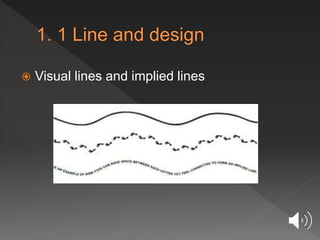
 Visual lines and implied lines
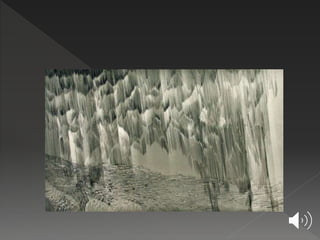
 A line can define the outside contours of a
shape
 multiple lines can create value
 repeated lines can produce patterns and
textures
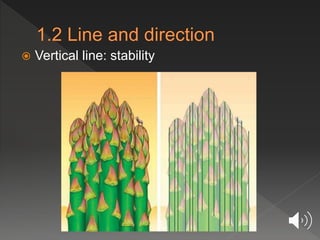
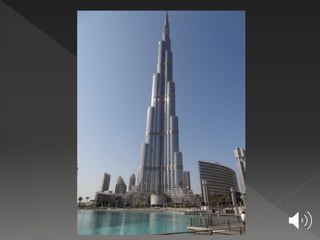
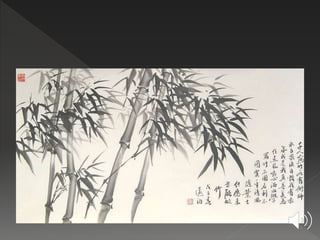
 Vertical line: stability
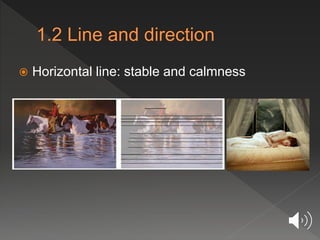
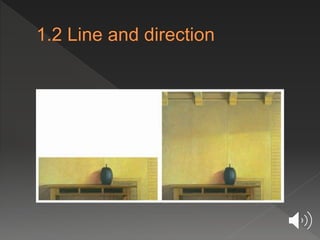
 Horizontal line: stable and calmness
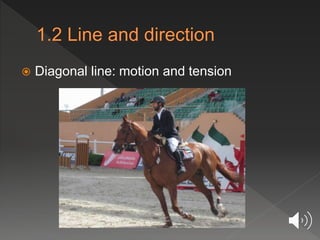
 Diagonal line: motion and tension

2 elements of design line

  • 2.
     In thischapter, you will learn 1. what is Elements of Design & Principles of Design 2. What are the 7 elements of design 3. their definitions and characteristics in design
  • 3.
     The elementsof design refer to “what” are used in design  The principles of design refer to “how” they are used in design
  • 4.
     Notes toa musician  Words to a writer  Elements of design to a visual designer
  • 5.
    1. Line 2. Shape 3.Negative space 4. Volume 5. Value 6. Color 7. Texture
  • 6.
     The waysof using these elements are called principles of design, which will be discussed in the next topic.
  • 7.
     Line: mostbasic elements of design › The child’s first visual means of expression and the foundation for most works of art
  • 13.
     Many designersuse lines to think through concepts and create preliminary sketches that communicate their ideas quickly.
  • 15.
  • 17.
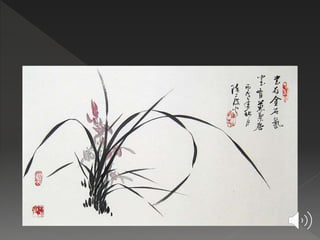
     Lines canbe emotional › Thin, delicate, thick, strong › Curved, organic, sharp, mechanical
  • 26.
     Visual linesand implied lines
  • 27.
     A linecan define the outside contours of a shape  multiple lines can create value  repeated lines can produce patterns and textures
  • 29.
  • 31.
     Horizontal line:stable and calmness
  • 33.
     Diagonal line:motion and tension