Maintain Personal Health &
Hygiene.
• The image you project while dealing with
customers can say a great deal about the way
your company operates. People are more likely
to use a restaurant or food outlet if they can
see that the staff take care of their
appearance and follow good hygiene practices
when dealing with food.
• NLN Personal Hygiene. – Check your knowledge Tab
What is Food Hygiene ?
Food hygiene is following good practices
which lead to the safe production of
food in clean workplaces. – Check your knowledge
Keeping workplaces, staff and equipment
clean is an important part of food
hygiene.
working in a clean area:
• reduces the risk of producing harmful
food.
• Prevents infestation by pests.
• Is more attractive to customers.
The Law and You.
Everyone involved in the preparation and
service of food has a legal duty under
the following regulations.
FOOD SAFETY ACT 1990.
FOOD SAFETY (GENERAL FOOD HYGIENE)
REGULATIONS 1995.
On average there are up to 40 deaths
each year due to food poisoning. This
number has increased in recent years
with cases such as E Coli. Usually the
people who die are in a high risk group,
such as children and elderly.
Food Safety Act 1990.
The Food Safety Act 1990 was introduced
because of public concern about risks
during food preparation.
The main provisions are:
• It is an offence to supply food that fails
to comply with food safety requirements.
• It strengthened powers of enforcement,
including detention and seizure of food.
• It requires training in basic food hygiene
for all food handlers.
• It requires that all food premises are
registered.
• It enables Environmental Health
Officers:
• To issue Improvement Notices if they
feel there is a potential risk.
• To issue emergency Prohibition Notices
to force caterers to stop using the food
premises or equipment immediately.
Environmental Health Officers (EHO’s)
Are responsible for enforcing the
regulations and have a number of
powers which include:
• Being able to enter food premises to
investigate possible offences.
• Inspecting food and where necessary
detaining suspect food or seizing it to
be condemned.
• Asking for information and gaining
assistance.
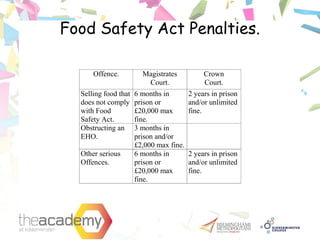
Food Safety Act Penalties.
Offence. Magistrates
Court.
Crown
Court.
Selling food that
does not comply
with Food
Safety Act.
6 months in
prison or
£20,000 max
fine.
2 years in prison
and/or unlimited
fine.
Obstructing an
EHO.
3 months in
prison and/or
£2,000 max fine.
Other serious
Offences.
6 months in
prison or
£20,000 max
fine.
2 years in prison
and/or unlimited
fine.
Food Safety (General Food
Hygiene ) Regulations 1995.
As a food handler, you need to be aware of
the ways in which your clothes, habits
and your personal cleanliness can increase
or reduce the risk of food contamination.
Under the above regulations the food
handler’s responsibilities are clearly
stated.
Food Handler’s Must:
• Protect food from the risk of infection.
• Wear suitable protective clothing.
• Wash hands after visiting the toilet,
smoking or eating .
• Not smoke, spit or sneeze in food rooms.
• Cover cuts or wounds with a clean
washable dressing.
• Report illnesses or contact with illnesses.
Food Handler’s Must also:
• Not wear excessive jewellery and/or nail
varnish.
• Not attend work while suffering from or
have symptoms of food poisoning.
• Not continue to work with eczema and
dermatitis.
• Not scratching sores or spots.
Much of the guidance given to food
handler’s is aimed at reducing the risk of
bacterial food poisoning, this is achieved
by:
• Protecting the food from contamination
by people through the wearing of
protective clothing.
• Ensuring that everyone is aware of the
main sources of bacteria, i.e. throat.
• Ensuring that everyone follows basic
guidelines on personal hygiene.
Sources of Food Poisoning.
As you are involved in food handling it is
important to be aware of the most
common sources of infection.
There are 3 main sources of food
poisoning.
• Natural sources.
• Chemical or metal contamination.
• Bacteria.
• NLN Causes and symptoms of food
poisoning. Check your knowledge
Natural Sources. Such as poisonous
plants (certain types of Fungi) people
will develop food poisoning due to the
poisons in the food item.
Chemical/Metal contamination. Such as
pesticides, cleaning fluids, copper,
mercury. Food poisoning can be
caused by spilling chemicals into
foods.
Bacteria. These are naturally present all around
us and can easily contaminate food. Common
bacteria found:
Staphylococcus Aureus: found in Nose, Mouth,
Cuts.
Salmonella: Animals & Human carriers.
Bacillus Cereus: Soil, Dust, Vegetation & Cereals.
Clostridium Botulinum: Damaged or Bloated Cans
of food.
Protective Clothing.
• Wear the correct protective clothing in
food preparation areas i.e. correct chefs
whites and safety shoes.
• DO NOT wear food protective clothing
to and from work.
• Keep your clothing in good order and
change daily.
• Keep outdoor footwear separate.
Personal Hygiene.
• Keep fingernails short, free from nail
varnish.
• Jewellery: only wedding ring.
• Keep hair neat and tidy and covered.
• Shower or bath regularly.
All work places should have changing and
shower facilities available to use.

2. 151 personal health ppt

  • 1.
    Maintain Personal Health& Hygiene. • The image you project while dealing with customers can say a great deal about the way your company operates. People are more likely to use a restaurant or food outlet if they can see that the staff take care of their appearance and follow good hygiene practices when dealing with food. • NLN Personal Hygiene. – Check your knowledge Tab
  • 2.
    What is FoodHygiene ? Food hygiene is following good practices which lead to the safe production of food in clean workplaces. – Check your knowledge Keeping workplaces, staff and equipment clean is an important part of food hygiene. working in a clean area: • reduces the risk of producing harmful food. • Prevents infestation by pests. • Is more attractive to customers.
  • 3.
    The Law andYou. Everyone involved in the preparation and service of food has a legal duty under the following regulations. FOOD SAFETY ACT 1990. FOOD SAFETY (GENERAL FOOD HYGIENE) REGULATIONS 1995. On average there are up to 40 deaths each year due to food poisoning. This number has increased in recent years with cases such as E Coli. Usually the people who die are in a high risk group, such as children and elderly.
  • 4.
    Food Safety Act1990. The Food Safety Act 1990 was introduced because of public concern about risks during food preparation. The main provisions are: • It is an offence to supply food that fails to comply with food safety requirements. • It strengthened powers of enforcement, including detention and seizure of food. • It requires training in basic food hygiene for all food handlers.
  • 5.
    • It requiresthat all food premises are registered. • It enables Environmental Health Officers: • To issue Improvement Notices if they feel there is a potential risk. • To issue emergency Prohibition Notices to force caterers to stop using the food premises or equipment immediately.
  • 6.
    Environmental Health Officers(EHO’s) Are responsible for enforcing the regulations and have a number of powers which include: • Being able to enter food premises to investigate possible offences. • Inspecting food and where necessary detaining suspect food or seizing it to be condemned. • Asking for information and gaining assistance.
  • 7.
    Food Safety ActPenalties. Offence. Magistrates Court. Crown Court. Selling food that does not comply with Food Safety Act. 6 months in prison or £20,000 max fine. 2 years in prison and/or unlimited fine. Obstructing an EHO. 3 months in prison and/or £2,000 max fine. Other serious Offences. 6 months in prison or £20,000 max fine. 2 years in prison and/or unlimited fine.
  • 8.
    Food Safety (GeneralFood Hygiene ) Regulations 1995. As a food handler, you need to be aware of the ways in which your clothes, habits and your personal cleanliness can increase or reduce the risk of food contamination. Under the above regulations the food handler’s responsibilities are clearly stated.
  • 9.
    Food Handler’s Must: •Protect food from the risk of infection. • Wear suitable protective clothing. • Wash hands after visiting the toilet, smoking or eating . • Not smoke, spit or sneeze in food rooms. • Cover cuts or wounds with a clean washable dressing. • Report illnesses or contact with illnesses.
  • 10.
    Food Handler’s Mustalso: • Not wear excessive jewellery and/or nail varnish. • Not attend work while suffering from or have symptoms of food poisoning. • Not continue to work with eczema and dermatitis. • Not scratching sores or spots.
  • 11.
    Much of theguidance given to food handler’s is aimed at reducing the risk of bacterial food poisoning, this is achieved by: • Protecting the food from contamination by people through the wearing of protective clothing. • Ensuring that everyone is aware of the main sources of bacteria, i.e. throat. • Ensuring that everyone follows basic guidelines on personal hygiene.
  • 12.
    Sources of FoodPoisoning. As you are involved in food handling it is important to be aware of the most common sources of infection. There are 3 main sources of food poisoning. • Natural sources. • Chemical or metal contamination. • Bacteria. • NLN Causes and symptoms of food poisoning. Check your knowledge
  • 13.
    Natural Sources. Suchas poisonous plants (certain types of Fungi) people will develop food poisoning due to the poisons in the food item. Chemical/Metal contamination. Such as pesticides, cleaning fluids, copper, mercury. Food poisoning can be caused by spilling chemicals into foods.
  • 14.
    Bacteria. These arenaturally present all around us and can easily contaminate food. Common bacteria found: Staphylococcus Aureus: found in Nose, Mouth, Cuts. Salmonella: Animals & Human carriers. Bacillus Cereus: Soil, Dust, Vegetation & Cereals. Clostridium Botulinum: Damaged or Bloated Cans of food.
  • 15.
    Protective Clothing. • Wearthe correct protective clothing in food preparation areas i.e. correct chefs whites and safety shoes. • DO NOT wear food protective clothing to and from work. • Keep your clothing in good order and change daily. • Keep outdoor footwear separate.
  • 16.
    Personal Hygiene. • Keepfingernails short, free from nail varnish. • Jewellery: only wedding ring. • Keep hair neat and tidy and covered. • Shower or bath regularly. All work places should have changing and shower facilities available to use.

Editor's Notes

  • #2 Link to NLN personal hygiene
  • #3 Link to NLN prevention_of_food_contamination
  • #13 HospitalityCatering_causes_and_symptoms_of_food_poisoning