Dessert
Accompaniments, Garnishes, & Decorations
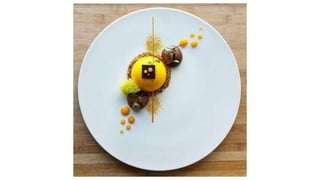
Plating Dessert
is an important task by a chef just like
Picasso did in his blank canvas. The art of
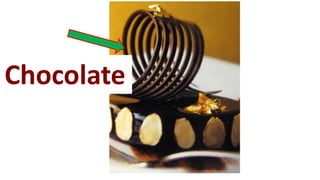
plating a dessert begins with a blank dish
and plate and ends with a beautifully
constructed masterpiece of plate. Plating
is an integral part of any dessert.
Accompaniments,
Garnishes,
& Decorations
for Desserts
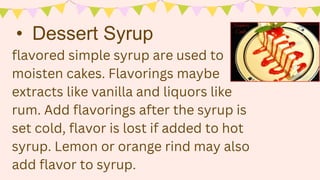
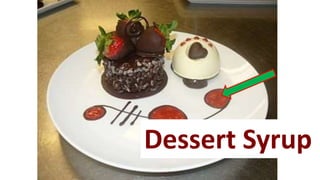
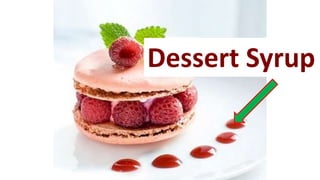
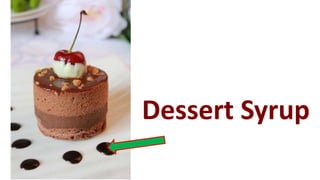
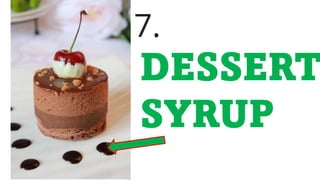
flavored simple syrup are used to
moisten cakes. Flavorings maybe
extracts like vanilla and liquors like
rum. Add flavorings after the syrup is
set cold, flavor is lost if added to hot
syrup. Lemon or orange rind may also
add flavor to syrup.
• Dessert Syrup
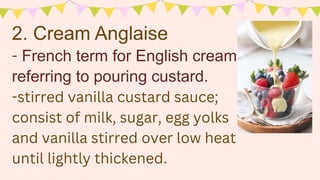
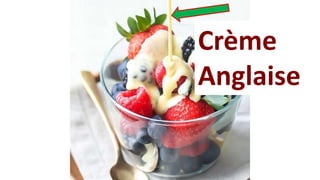
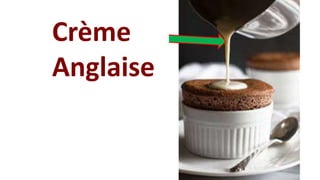
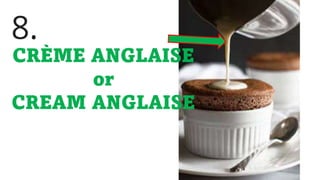
- French term for English cream
referring to pouring custard.
-stirred vanilla custard sauce;
consist of milk, sugar, egg yolks
and vanilla stirred over low heat
until lightly thickened.
2. Cream Anglaise
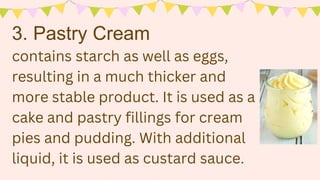
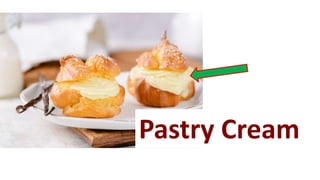
contains starch as well as eggs,
resulting in a much thicker and
more stable product. It is used as a
cake and pastry fillings for cream
pies and pudding. With additional
liquid, it is used as custard sauce.
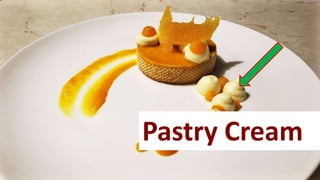
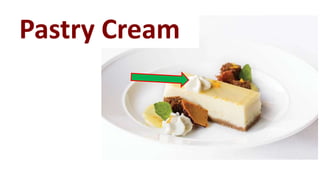
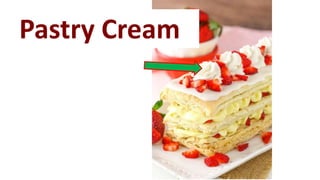
3. Pastry Cream
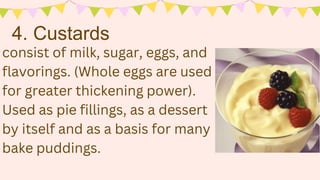
consist of milk, sugar, eggs, and
flavorings. (Whole eggs are used
for greater thickening power).
Used as pie fillings, as a dessert
by itself and as a basis for many
bake puddings.
4. Custards
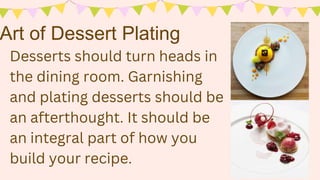
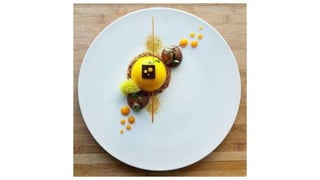
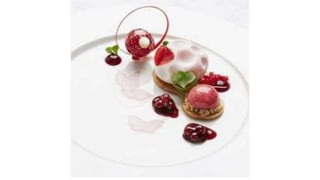
Desserts should turn heads in
the dining room. Garnishing
and plating desserts should be
an afterthought. It should be
an integral part of how you
build your recipe.
Art of Dessert Plating
Garnishes
that
adds attraction
to desserts
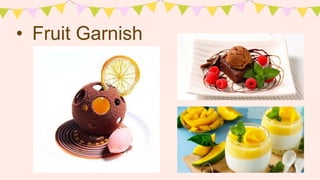
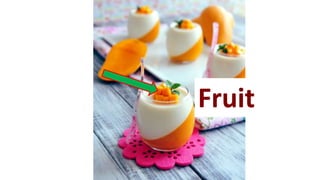
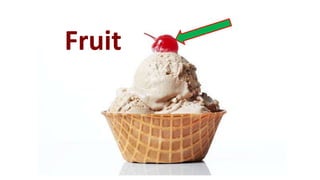
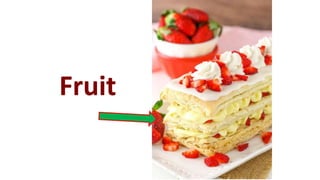
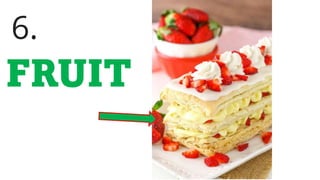
• Fruit Garnish
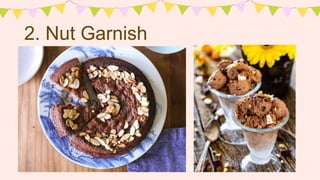
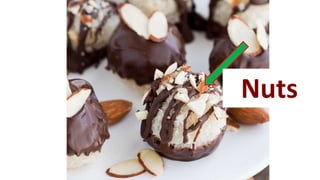
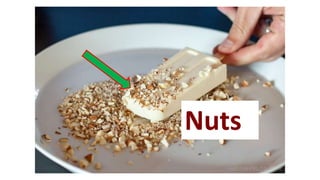
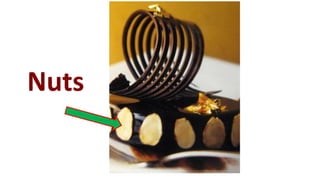
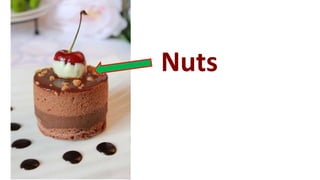
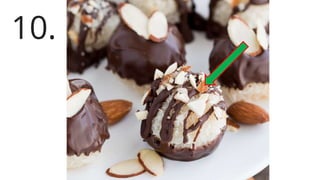
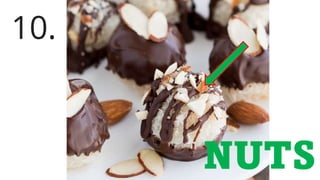
2. Nut Garnish
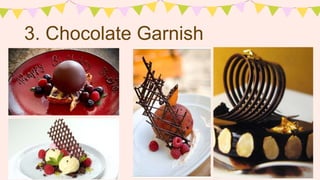
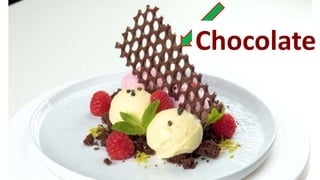
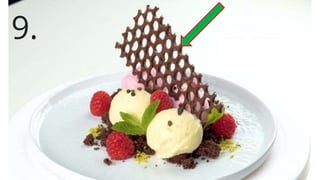
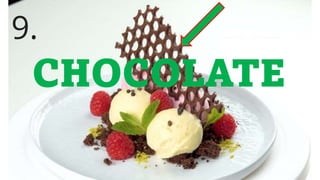
3. Chocolate Garnish
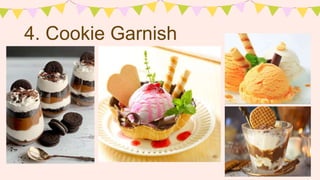
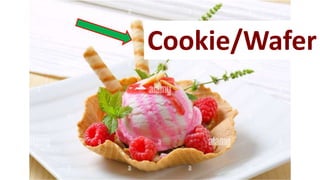
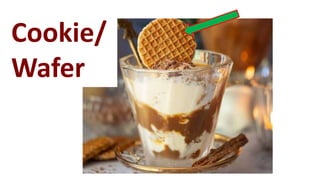
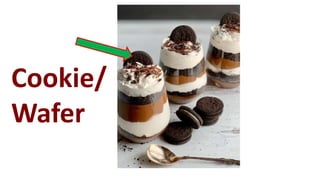
4. Cookie Garnish
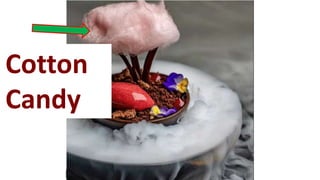
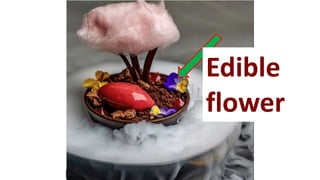
• Other garnishes includes wafers,
pretzels, edible flowers,
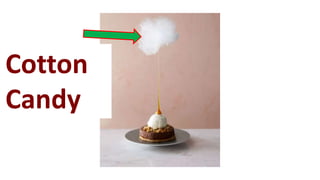
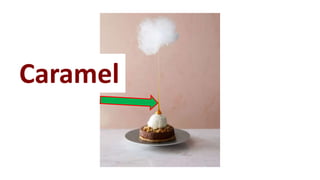
marshmallows, caramel, cotton
candies, sweet powder, etc.
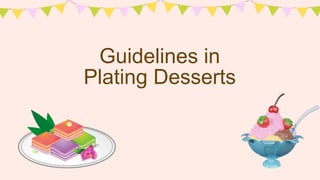
Guidelines in
Plating Desserts
• Make garnishes edible.
Everything on the
dessert plate should
be edible and
delicious.
2. Keep it clean and simple. Don't
crowd the plate. If your dessert is
beautiful, it doesn't need a lot of
garnishes. And keep the rim of the
plate clear, so the servers don't touch
the food when they place the
desserts in front of the customers.
3. Make your garnishes relate to the dessert on
the plate. The only time you should garnish
with fresh mint is if you're serving mint ice
cream. Don't put it on just because you think
the dessert needs color. If you have a brown
dessert, like apples in puff pastry, then make
sure all of those elements are executed well—
puff pastry should look beautiful and crisp.
4. Layer flavors and textures in your dessert.
Textures and flavors hit the palate at different
times. Ask yourself, "How can I make this
better?" If the answer is a little lemon zest,
then add it as a garnish. All the components
on the plate should build on the dessert,
making it better.
5. Try different plates. Various sizes and
shapes. The right plate can add or enhance the
theme really well.
Questions?
Identify the
following
Dessert garnishes or
accompaniments
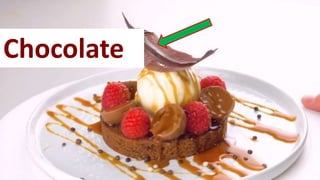
Chocolate
Dessert Syrup
Cookie/Wafer
Fruit
Nuts
Chocolate
Fruit
Crème
Anglaise
Nuts
Dessert Syrup
Pastry Cream
Cookie/
Wafer
Cookie/
Wafer
Chocolate
Nuts
Cotton
Candy
Pastry Cream
Caramel
Cotton
Candy
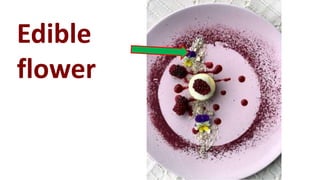
Edible
flower
Crème
Anglaise
Pastry Cream
Pastry Cream
Pastry Cream
Fruit
Nuts
Dessert Syrup
Edible
flower
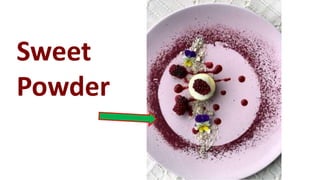
Sweet
Powder
Questions?
Quiz
Directions: Write TRUE
if the statement is
correct and FALSE if
not.
1. Garnishes must
be related to the
dessert.
2. Layer flavors and
textures in your
dessert.
3. Use blue plate to
boost appetite.
4. Keep the rim of
the plate clear.
5. Garnishes must
be edible.
Direction: Identify the
following accompaniments,
garnishes, or decorations
for dessert.
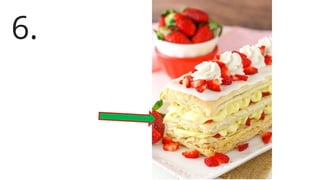
6.
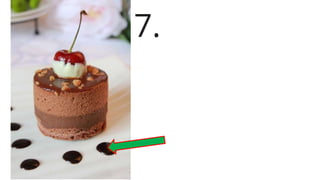
7.
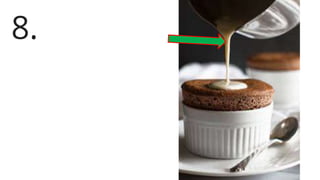
8.
9.
10.
Answers:
Directions: Write TRUE
if the statement is
correct and FALSE if
not.
1. Garnishes must
be related to the
dessert.
TRUE
2. Layer flavors and
textures in your
dessert.
TRUE
3. Use blue plate to
boost appetite.
FALSE
4. Keep the rim of
the plate clear.
TRUE
5. Garnishes must
be edible.
TRUE
Direction: Identify the
following accompaniments,
garnishes, or decorations
for dessert.
6.
FRUIT
7.
DESSERT
SYRUP
8.
CRÈME ANGLAISE
or
CREAM ANGLAISE
9.
CHOCOLATE
10.
NUTS

Week 5 Dessert Accompaniments (Cookery 9)