Primary Glomerular Diseases
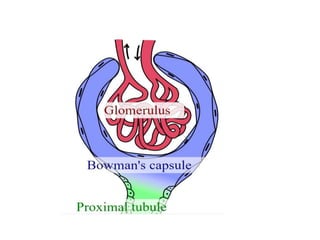
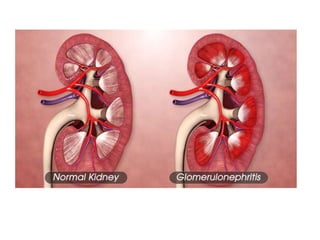
Primary glomerular diseases include acute and
chronic glomerularonephritis, rapidly
progressive glomerulonephritis and nephrotic
syndrome
Acute Glomerulonephritis
Acute GN is defined as the sudden onset of
hematuria, proteinuria, and red blood cell
(RBC) casts.
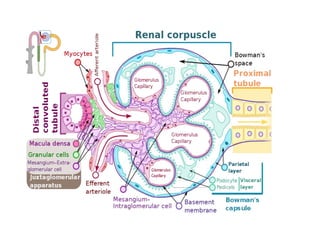
Acute GN comprises a specific set of renal
diseases in which an immunologic mechanism
triggers inflammation and proliferation of
glomerular tissue that can result in damage to
the basement membrane, mesangium, or
capillary endothelium.
Epidemiology
Over the last 2-3 decades, incidence of acute
poststreptococcal glomerulonephritis (APSGN)
has fallen in most Western countries. The
estimated worldwide burden of APSGN is
approximately 472,000 cases per year, with
approximately 404,000 cases being reported
in children and 456,000 cases occurring in less
developed countries.(Medscape)
Globally, 50% of cases may be subclinical stage,
common in winter and spring, more frequent
in children aged 2-12 years, with a peak
prevalence in individuals aged approximately
5-6 years, PSGN remains much more common
in regions such as Africa, the Caribbean, India,
Pakistan, Malaysia, Papua New Guinea, and
South America.
• Postinfectious GN can occur at any age,
usually develops in children. Most cases occur
aged 5-15 years; only 10% occur in older than
40 years. It is common in children aged 6-10
years. Acute nephritis may occur at any age,
including infancy.
• Acute GN predominantly affects males (2:1
male-to-female ratio). A higher incidence
(related to poor hygiene) may be observed in
some socioeconomic groups.
Causes of Acute Glomerulonephritis
• An infection with the bacteria, Streptococcal
infection: streptococcal pharyngitis, impetigo/
skin infection
• Other Infections that rarely cause AGN
include: pneumonia, cellulitis, meningitis,
chicken pox, hepatitis, measles, mumps,
mononucleosis, syphilis, typhoid fever,
bacterial endocarditis, Goodpasture’s
syndrome, lupus, vasculitis.
PATHOPHYSIOLOGY cont..
Streptococcal infection from throat or elsewhere
Attacks immune system, produce antibody
against streptococcal antigen
Antigen antibody reaction with complex
fromation
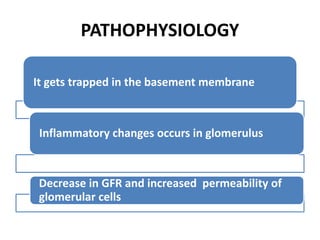
PATHOPHYSIOLOGY
It gets trapped in the basement membrane
Inflammatory changes occurs in glomerulus
Decrease in GFR and increased permeability of
glomerular cells
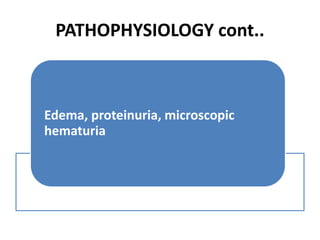
PATHOPHYSIOLOGY cont..
Edema, proteinuria, microscopic
hematuria
Pathophysiology of Acute Glomerulonephritis
Glomerulonephritis is an immunologic disorder that
causes inflammation and increased cells in the
glomerulus .
Antigen-antibody products will trapped
(deposition) in the glomerulus. Increased
production of epithelial cells lining so leukocytes
(influx of leukocytes) infiltrate the glomerulus
cause thickening of the glomerular filtration
membrane.
This bring scarring and loss of glomerular filtration
membrane, finally decrease GFR.
Signs and Symptoms of Glomerulonephritis
• Proteinurias caused by altered permeability of
capillary walls. Client may have history of
foamy urine .
• Hematuria caused by loss of capillary wall
integrity.
• Oliguria or anuria caused by reduced or
absent urine production.
Continue Signs and Symptoms ……………
• Edema of face, eyes, ankles, feet, legs or
abdomen caused by loss of intravascular
oncotic pressure.
• Symptoms of chronic renal failure may appear.
Azotemia caused by impaired filtration of
nitrogenous wastes.
• Hypertension caused by fluid retention and
altered renal regulation of blood pressure.
Some other Symptoms are:
• Diarrhea
• Abdominal pain
• Nose bleed
• Excessive urination
• Fever
• General ill feeling, fatigue, and loss of appetite
• Joint or muscle aches
Severe Symptoms include…….
• Repeated vomiting, excessive fatigue, high blood
pressure
• Low back pain, flank pain
• Shortness of breath: worsens with exertion and
worsens when lying flat
• confusion
Diagnosis
• History and physical examination
• Urinanalysis: may show RBCs and red casts, an
indicator of possible damage to the glomeruli,
WBCs, a common indicator of infection or
inflammation. Increased protein, which may
indicate nephrons damage.
• Blood tests: creatinine and BUN
• Imaging tests: kidney X-rays, IVU,USG, CT Scan
• Kidney biopsy: A kidney biopsy is necessary for
confirm a diagnosis of glomerulonephritis.
Complications
• Hypertension with or without central nervous
system (CNS) manifestations,
• Anemia, pulmonary edema, Congestive heart
failure,
• Nephrotic syndrome
• Kidney failure
Prognosis
Most epidemic cases follow a course ending in
complete patient recovery (as many as 100%).
The mortality of acute GN in the most
commonly affected age group, pediatric
patients, has been reported at 0-7%.
Progressive glomerulonephritis may lead to
chronic kidney failure or ESRD may result.
Treatment
• Prescription of kidney diet that is low sodium,
low protein, low potassium, low calorie diet,
low phosphorus, calcium supplements and
vitamin B supplements.
• Fluid restriction: limiting the amount of fluid
in the diet.
• If residual streptococcal infection, antibiotic
therapy: penicillin therapy.
• Oral corticosteroid medications: Prednisone
Continue Treatment
• Diuretic medications: lasix
• Medications that suppress the immune
system: cyclophosphamide
• Kidney dialysis/Kidney transplant
Client Teaching:
• Clearly and specifically explain the nature of the
disease, its course, and the eventual prognosis of
the condition to the client, parents or caregivers.
• Clearly outline a follow-up plan and discuss the
plan with the family. Blood pressure
measurements and urine examinations for
protein and blood constitute the basis of the
follow-up plan. Perform examinations at 4-6 wks
intervals for the first 6 months and at 3-6 month
intervals, until both hematuria and proteinuria
have been absent and the blood pressure has
been normal for 1 year.
Nursing Management
• Assess need of the client through history taking and
physical examination.
• Nursing Diagnosis: Possible nsg dx are
• altered nutrition: less than required r/t anorexia and
altered renal function;
• fluid volume excess related to reduced urine output;
• activity intolerance r/t fatigue and hematuria,
• altered emotion and coping r/t questionable prognosis
with prolonged illness;
• risk for impaired skin integrity r/t edema and
• risk for infection r/t altered immune response
secondary to treatment.
Nursing Management…………………………
Nursing Interventions
• For altered nutrition less than body requirement,
eat high calorie; low protein diet and low sodium
diet. For nausea and vomiting, provide antiemetic
drug, provide small amount of meal frequently.
• For fluid volume excess, careful monitoring daily
weight, maintain intake and output, fluid intake
should be restricted. Teach client about way of
relieving thirst e.g. sucking hard candies or lemon
slices or by using ice chips rather than a glass of
water.
Nursing Management…………..
• For activity intolerance related to fatigue and
hematuria, provide both physical and
emotional rest for the client.
• For altered emotion and coping mechanism,
encourage
Thank you

1.primary glomerular diseases

  • 1.
  • 2.
    Primary glomerular diseasesinclude acute and chronic glomerularonephritis, rapidly progressive glomerulonephritis and nephrotic syndrome
  • 3.
    Acute Glomerulonephritis Acute GNis defined as the sudden onset of hematuria, proteinuria, and red blood cell (RBC) casts. Acute GN comprises a specific set of renal diseases in which an immunologic mechanism triggers inflammation and proliferation of glomerular tissue that can result in damage to the basement membrane, mesangium, or capillary endothelium.
  • 7.
    Epidemiology Over the last2-3 decades, incidence of acute poststreptococcal glomerulonephritis (APSGN) has fallen in most Western countries. The estimated worldwide burden of APSGN is approximately 472,000 cases per year, with approximately 404,000 cases being reported in children and 456,000 cases occurring in less developed countries.(Medscape)
  • 8.
    Globally, 50% ofcases may be subclinical stage, common in winter and spring, more frequent in children aged 2-12 years, with a peak prevalence in individuals aged approximately 5-6 years, PSGN remains much more common in regions such as Africa, the Caribbean, India, Pakistan, Malaysia, Papua New Guinea, and South America.
  • 9.
    • Postinfectious GNcan occur at any age, usually develops in children. Most cases occur aged 5-15 years; only 10% occur in older than 40 years. It is common in children aged 6-10 years. Acute nephritis may occur at any age, including infancy. • Acute GN predominantly affects males (2:1 male-to-female ratio). A higher incidence (related to poor hygiene) may be observed in some socioeconomic groups.
  • 10.
    Causes of AcuteGlomerulonephritis • An infection with the bacteria, Streptococcal infection: streptococcal pharyngitis, impetigo/ skin infection • Other Infections that rarely cause AGN include: pneumonia, cellulitis, meningitis, chicken pox, hepatitis, measles, mumps, mononucleosis, syphilis, typhoid fever, bacterial endocarditis, Goodpasture’s syndrome, lupus, vasculitis.
  • 11.
    PATHOPHYSIOLOGY cont.. Streptococcal infectionfrom throat or elsewhere Attacks immune system, produce antibody against streptococcal antigen Antigen antibody reaction with complex fromation
  • 12.
    PATHOPHYSIOLOGY It gets trappedin the basement membrane Inflammatory changes occurs in glomerulus Decrease in GFR and increased permeability of glomerular cells
  • 13.
  • 14.
    Pathophysiology of AcuteGlomerulonephritis Glomerulonephritis is an immunologic disorder that causes inflammation and increased cells in the glomerulus . Antigen-antibody products will trapped (deposition) in the glomerulus. Increased production of epithelial cells lining so leukocytes (influx of leukocytes) infiltrate the glomerulus cause thickening of the glomerular filtration membrane. This bring scarring and loss of glomerular filtration membrane, finally decrease GFR.
  • 15.
    Signs and Symptomsof Glomerulonephritis • Proteinurias caused by altered permeability of capillary walls. Client may have history of foamy urine . • Hematuria caused by loss of capillary wall integrity. • Oliguria or anuria caused by reduced or absent urine production.
  • 16.
    Continue Signs andSymptoms …………… • Edema of face, eyes, ankles, feet, legs or abdomen caused by loss of intravascular oncotic pressure. • Symptoms of chronic renal failure may appear. Azotemia caused by impaired filtration of nitrogenous wastes. • Hypertension caused by fluid retention and altered renal regulation of blood pressure.
  • 17.
    Some other Symptomsare: • Diarrhea • Abdominal pain • Nose bleed • Excessive urination • Fever • General ill feeling, fatigue, and loss of appetite • Joint or muscle aches
  • 18.
    Severe Symptoms include……. •Repeated vomiting, excessive fatigue, high blood pressure • Low back pain, flank pain • Shortness of breath: worsens with exertion and worsens when lying flat • confusion
  • 19.
    Diagnosis • History andphysical examination • Urinanalysis: may show RBCs and red casts, an indicator of possible damage to the glomeruli, WBCs, a common indicator of infection or inflammation. Increased protein, which may indicate nephrons damage. • Blood tests: creatinine and BUN • Imaging tests: kidney X-rays, IVU,USG, CT Scan • Kidney biopsy: A kidney biopsy is necessary for confirm a diagnosis of glomerulonephritis.
  • 20.
    Complications • Hypertension withor without central nervous system (CNS) manifestations, • Anemia, pulmonary edema, Congestive heart failure, • Nephrotic syndrome • Kidney failure
  • 21.
    Prognosis Most epidemic casesfollow a course ending in complete patient recovery (as many as 100%). The mortality of acute GN in the most commonly affected age group, pediatric patients, has been reported at 0-7%. Progressive glomerulonephritis may lead to chronic kidney failure or ESRD may result.
  • 22.
    Treatment • Prescription ofkidney diet that is low sodium, low protein, low potassium, low calorie diet, low phosphorus, calcium supplements and vitamin B supplements. • Fluid restriction: limiting the amount of fluid in the diet. • If residual streptococcal infection, antibiotic therapy: penicillin therapy. • Oral corticosteroid medications: Prednisone
  • 23.
    Continue Treatment • Diureticmedications: lasix • Medications that suppress the immune system: cyclophosphamide • Kidney dialysis/Kidney transplant
  • 24.
    Client Teaching: • Clearlyand specifically explain the nature of the disease, its course, and the eventual prognosis of the condition to the client, parents or caregivers. • Clearly outline a follow-up plan and discuss the plan with the family. Blood pressure measurements and urine examinations for protein and blood constitute the basis of the follow-up plan. Perform examinations at 4-6 wks intervals for the first 6 months and at 3-6 month intervals, until both hematuria and proteinuria have been absent and the blood pressure has been normal for 1 year.
  • 25.
    Nursing Management • Assessneed of the client through history taking and physical examination. • Nursing Diagnosis: Possible nsg dx are • altered nutrition: less than required r/t anorexia and altered renal function; • fluid volume excess related to reduced urine output; • activity intolerance r/t fatigue and hematuria, • altered emotion and coping r/t questionable prognosis with prolonged illness; • risk for impaired skin integrity r/t edema and • risk for infection r/t altered immune response secondary to treatment.
  • 26.
    Nursing Management………………………… Nursing Interventions •For altered nutrition less than body requirement, eat high calorie; low protein diet and low sodium diet. For nausea and vomiting, provide antiemetic drug, provide small amount of meal frequently. • For fluid volume excess, careful monitoring daily weight, maintain intake and output, fluid intake should be restricted. Teach client about way of relieving thirst e.g. sucking hard candies or lemon slices or by using ice chips rather than a glass of water.
  • 27.
    Nursing Management………….. • Foractivity intolerance related to fatigue and hematuria, provide both physical and emotional rest for the client. • For altered emotion and coping mechanism, encourage
  • 28.