GLOMERULONEPHRITIS &
NEPHROTIC SYNDROME
AGN
 A specific set of kidney diseases in which an immunologic
mechanism triggers inflammation and proliferation of
glomerular tissue that can result to damage of the basement
membrane or capillary endothelium
 Acute nephritic syndrome is the most serious of these
syndromes
 AGN progresses to chronic GN in -30%
 APSGN is the archetype of AGN: incidences have fallen
 GN associated with Staph aureus increasing due to increased
antibiotic resistance to staph aureus
GN classification
 Immune-complex glomerulonephritis (including infection-related
glomerulonephritis, IgA nephropathy, lupus nephritis)
 Antineutrophil cytoplasmic antibody (ANCA)–associated
glomerulonephritis
 Anti-glomerular basement membrane glomerulonephritis
 C3 glomerulopathy
 Monoclonal immunoglobulin–associated glomerulonephritis –
abnormal immunoglobulins
 AGN Manifests with sudden onset of haematuria ,
proteinuria, and RBC casts in urine
 Also usually accompanied by htn , edema, azotemia, renal
salt and water retention
 Can be due to primary or sec renal disease
AGN Pathophysiology
 Result from glomerular deposition or in situ formation of
immune complexes : kidneys may be enlarged upto 50% of
cases
 PSGN: Streptococcal protein neuraminidase may alter host
IgG
 IgG/ antiIgG immune complexes form and collect in the
glomeruli
 Other antibody titers to other antigens elevations (evidence
of a recent poststreptococcal infection)=ASOT,
antihyaluronidase, DNAase-B, streptokinase
Structural and functional changes
 Cellular proliferation of endothelial, mesangial and epithelial cells
in the glomerular tuft
 Proliferation is in the glomerulus and bowman space
 Proliferation of parietal epithelial cells leads to the formation of
crescents, a feature xstic of rapidly progressive GN
 Leukocytes proliferation within the glomerular capillary
 Thickening of basement memb
 Functional changes: proteinuria, hematuria, low GFR, urine
sedments with RBCs and RBC casts
Etiology
1. Infectious
 Strep spp GABH
 Serotype 12: upper airway
infection
 Serotype 49: skin
infection
 Usually dvps 1-3 wks post
infection
 Incidence 5-10% and 25%
in pharyngitis and skin
infection respectively
 Staph
 Other strep
 Mycobacteria
 Salmonella typhosa
 Brucella suis
 T.pllidum
 CMC
 EBV
 COXSACKIE
 Hep b
 Rubella
 Mumps
 Hep A
 C. immitis
 P.Malariae
 Schistosoma mansoni
 Toxoplasma gondii
 Wuchereria bancrofti
 Trichinella
 Trypanasomes
Aetiology
2. Non infectious
 Primary kidney disease
 Membranoproliferative GN: Due to expansion & proliferation of
mesangial cells as a consequence of complement deposition
 IgA Nephropathy:diffuse mesangial deposition of IgA and IgG
 Idiopathic rapidly progressive GN-xcterised by presence of
glemerular crescents
 Sytemic diseases
 Vasculitis
 Collagen vascular disease e.g. SLE
 Polyarteritis nodosa
 Good pasture syndrome: autoantb against lungs and kidneys
 Miscellaneous non infectious AGN causes
 GBS
 Irradiation of wilms tumor
 DPT vaccine
 Covid 19 vaccine
Prognosis
 Most epidemic cases follow a course ending in complete recovery
 Sporadic cases of acute nephritis often progress to chronic
 In PSGN long term prognosis is generally good , more than 98% of
individuals are asymptomatic after 5 yrs
 Within a week of onset , most PSGN patients experience
spontaneous resolution of fluid retention, and HTN.Proteinuria
may persist for 6 months and microscopic haematuria upto 1 yr
 Eventually, all urinary abnormalities should disappear,
hypertension should subside, and kidney function should return to
normal
 GN is the most common cause of CKD
 The prognosis for nonstreptococcal postinfectious
glomerulonephritis depends on the underlying agent, which
must be identified and addressed
 MRSA associated nephritis usually resolves after treatment
Patient education
 Salt restriction during acute phase
 Bp monitoring
 Ongoing long term monitoring
 Consideration of protein restriction and ACE
 Early antibiotic rx for close contacts
Presentation
 History:Identification of underlying cause, abrupt onset,
 Usually a boy, 2-14 yrs, sudden puffiness,edema of face with hx of
poststreptococcal infection. Dark urine, scanty, high BP,,,fevers,
weakness,malaise, abdominal pains
 Anorexia
 Itching , easy bruising, nose bleeds,
 Sob , leg edema , dyspnoea
 Haematuria, oliguria,
 Flank pain- stretching of renal capsule
Symptoms specific to underling diseases
 Triad of sinusitis, pulmonary infiltrates, and nephritis, suggesting
granulomatosis with polyangiitis (Wegener granulomatosis)- a rare
disorder where blood vessels become inflammed leading to
damage in major organs
 Nausea and vomiting, abdominal pain, and purpura, observed with
Henoch-Schönlein purpura-inflammation of the small blood vessels
of the skin, joints, bowels and kidneys
 Arthralgias, associated with systemic lupus erythematosus (SLE)
 Hemoptysis, occurring with Goodpasture syndrome or idiopathic
progressive glomerulonephritis
 Skin rashes, observed with SLE
PE
 Normal including BP
 Often a combination of edema,
HTN and oliguria
 Periorbital / pedal edema
 Crackles
 Elevated JVP
 Ascites and pleural effusion
 Rash
 pallor
 CVA tenderness
 Hematuria, microscopic or
gross
 Abnormal neurological exam:
HTN, Urea
 Arthritis
 Pharyngitis, impetigo, murmur
 Weight gain
Complications
 Kidney failure
 Severe proteinuria: anasarca and htn
 Hypertensive retinopathy
 Hypertensive encephalopathy
 CKD
 Nephrotic syndrome
DDX
 Renal syndromes commonly
mimick early stage AGN
 Chronic GN with an acute
exacerbation
 Idiopathic hematuria
 Familial nephritis –Alport
syndrome(hearing
loss/ocular abnormalities)
 AKI
 Goodpasture syndrome
 Lupus nephritis
 Membrenoproliferative GN
 PSGN
Workup
 Urinalysis
 Protein
 Blood
 Red blood cells (RBCs)
 White blood cells (WBCs)
 Cellular (ie, RBC,WBC)
casts
 Oval fat bodies
 Presence of RBC casts is
almost pathognomonic of
GN
 Urine sodium
 CBC
 BUN/C/E
 Complement levels
 The antistreptolysin O (ASO) titer is increased in 60-80% of
patients.
 The increase begins in 1-3 weeks, peaks in 3-5 weeks, and
returns to normal in 6 months.ASO titer is unrelated to severity,
duration, or prognosis of kidney disease.
 Increasing ASO titers confirm recent infection.
 In patients with skin infection, anti-DNAase B (ADB) titers
are more sensitive than ASO titers for infection with
Streptococcus
 Cultures throat and skin
 Blood culture: IVDU, iss, indwelling shunts
 Triglyceride levels
 Hepatitis B and C serologies
 Antineutrophil cytoplasmic antibody (ANCA)
 u/s
 Kidney biopsy
Treatment
 Treat the underlying infection
 Antimicrobial therapy does not appear to prevent the development
of glomerulonephritis, except if given within the first 36 hours.
Antibiotic treatment of close contacts of the index case may help
prevent development of PSGN.
 Loop diuretics
 Vasodilators in severe hypertension
 Glucocorticoids and cytotoxics are of no value except in severe
cases of PSGN
Lifestyle changes
 Sodium and water
restriction
 Limit protein intake
 Calcium supplements
 Healthy diet and exercise
 Physiotherapy
NEPHROTIC SYNDROME
 A combination of
 Nephrotic range proteinuria
 >3g/day or on a single spot urine collection the presence of 2g/g of
urine creatinine
 Low serum albumin
 Edema
 May occur in typical form or
in association with nephritic
syndrome
Classification
 Primary
 Minimal-change
nephropathy
 Focal glomerulosclerosis
 Membranous nephropathy
 Hereditary nephropathies
 secondary
 Diabetes mellitus
 Lupus erythematosus
 Viral infections (eg,
hepatitis B, hepatitis C,
human immunodeficiency
virus [HIV] )
 Amyloidosis and
paraproteinemias
 Preeclampsia
 Allo-antibodies from
enzyme replacement
therapy
 From therapeutic perspective
 Steroid sensitive
 Steroid resistant
 Ssteroid dependent
 Frequently relapsing.
PATHOPHYSIOLOGY
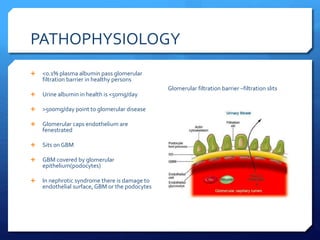
 <0.1% plasma albumin pass glomerular
filtration barrier in healthy persons
 Urine albumin in health is <50mg/day
 >500mg/day point to glomerular disease
 Glomerular caps endothelium are
fenestrated
 Sits on GBM
 GBM covered by glomerular
epithelium(podocytes)
 In nephrotic syndrome there is damage to
endothelial surface, GBM or the podocytes
Glomerular filtration barrier –filtration slits
 Congenital nephrotic syndrome :
 Finnish type-mutated nephrin gene
 Podocin gene mutation
 Theories for edema
 Underfill hypothesis –albuminuria-
hypoalbuminaemia
 Overfill hypothesis-filtered intraluminal protein
stimulate renal epithelial sodium reabsorption
 2 facts favour this
 sodium retention is observed even before the
serum albumin level starts falling
 Intravascular volume is normal or even
increased in most patients with nephrotic
syndrome.
Proteinuria consequences
 Infection
 Hyperlipidaemia and atherosclerosis
 Hypocalcemia and bone abnormalities
 Hypercoagulability
 Hypovolaemia
 Htn
 Gut edema
 Ascites and pleural effusion
1. Infection
 A major concern in nephrotic syndrome
 Varicella infection common
 Most common infectious complications
are bacterial sepsis, cellulitis,
pneumonia, peritonitis
 Urinary immunoglobulin losses
 Edema fluid acting as a culture medium
 Protein deficiency
 Decreased bactericidal activity of the
leukocytes
 Immunosuppressive therapy
 Decreased perfusion of the spleen
caused by hypovolemia
 Urinary loss of a complement factor
that opsonizes certain bacteria
2. Hyperlipidaemia
 Hypoproteinaemia leads to reactive hepatic protein synthesis
including of apolipoproteins and lipoproteins
 Reduced serum levels of lipoprotein lipase leads to reduced
lipid catabolism
 Some lipoproteins filtered in kidneys :lipiduria and classic
finding of oval fat bodies and fatty casts in urine
3. Hypocalcaemia
 Loss of vitamin D binding proteins in urine
 Hypovitaminosis D
 Reduced intestinal calcium absorption
Hypercoagulability
 Risk forVTEs-renal ven thrombosis
 Urinary loss of anticoagulants
 Loss of Antithrombin III and plasminogen
 Increase in clotting factors I,VII,VIII and X
 Protein C and S Altered levels and activity
 Hyperfibrinogenemia –increased hepatic synthesis
 Impaired fibrinolysis due to decreased plasminogen
 Increased plt aggregability
 Alteration in endothelial function
Hypovolaemia
Etiology
 Minimal change disease, membraneous nephropathy, focal
glomerulosclerosis
 StimulateT cells , release cytokines, damage podocytes
 Medications – NSAIDs, gold, penicillamine, lithium,
anticancer drugs,
 Has been reported following Covid 19 infection and
vaccination
Presentation
 History :
 Swelling of face
 Dependent edema
 Foamy urine
 Fatigue
 Loss of appetite
 Thrombotic event
 Recent start of a drug e.g NSAID
PE Ddx
 Edema
 Haematuria
 Htn
 Heart failure
 Cirrhosis
 Dm nephropathy
 HIV associated
nephropathy
 Radiation nephropathy
Workup
 Urinalysis
 Urine protein:urine creatine ration >2g/g corresponds to >3gram
protein/day
 Urine sediment examination
 Urinary protein measurement
 Serum albumin
 Serologic studies for infection and immune abnormalities
 Renal ultrasonography
 Kidney biopsy
Important definitions
 Response: protein free urine on 3 consequtive days within 7 days
 Relapse: Protein +ve urine on 3 consequtive days within one week
 Frequent relapsing : steroid sensitive NS with 2 or more relapses in
6 months or > 3 in 1 year
 Steroid dependant:responders who relapses while steroid is being
tapered or within 14 days of stopping steroid treatment
 Initial non responders: No response during initial 8 weeks of rx
 Late non responders:Initial steroid responder who fails to respond
to 4 week treatment in relapse
Treatment
 Specific treatment depends on the cause
 Diuretics
 Anticoagulation
 Statins
 ARB/ACE for secondary nephrotic syndrome
Specific treatment
 Minimal change nephropathy 70-80% of NS: Glucocorticoids e.g
prednisolone
 It is Idiopathic loss of net negative charge in cap BM
 Sec causes:Infections , NSAIDs, Hodgkins lymphoma
 StimulateT cells-cytokines destroy podocytes
 Membraneous nephropathy:Primary:antiPLA2R receptor antibody.
Attacks a protein in podocytes. Sec: HBA/B, syphillis,Gold,
Penicillamine.
 Antibodies deposit in subepithelial region, inflammation, activation
of compliment system, podocyte effacement
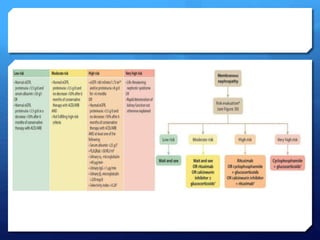
 Watchful waiting,Rituximab or cyclophosphamide+/-
glucocorticoids
Focal segmental glomerulosclerosis
 Can be primary-idiopathic
 Sec: HIV,SCD, Heroin use
 Sclerosis of parts of the
glomerulous leading to
podocyte effacement
 Longterm
immunosupressants
 In all treat the sec cause
 In primary cause start on
steroids
 Good response usually
indicates MC disease.Bx
may not be necessary
 Poor response ?FSGS
Longterm
immunosupressants
Diet
 Low sodium <2g/day (24hr urine<88mEq/day
LONGTERM MONITORING
 Adjustments for diuretics
 Immunizations :Pneumococcal and influenza
 Monitoring corticosteroid toxicity every 3 months
 Supplemental vit D and Calcium may attenuate bone loss
GLOMERULONEPHRITIS disease description pptx

GLOMERULONEPHRITIS disease description pptx

  • 1.
  • 2.
    AGN  A specificset of kidney diseases in which an immunologic mechanism triggers inflammation and proliferation of glomerular tissue that can result to damage of the basement membrane or capillary endothelium  Acute nephritic syndrome is the most serious of these syndromes  AGN progresses to chronic GN in -30%  APSGN is the archetype of AGN: incidences have fallen
  • 3.
     GN associatedwith Staph aureus increasing due to increased antibiotic resistance to staph aureus
  • 4.
    GN classification  Immune-complexglomerulonephritis (including infection-related glomerulonephritis, IgA nephropathy, lupus nephritis)  Antineutrophil cytoplasmic antibody (ANCA)–associated glomerulonephritis  Anti-glomerular basement membrane glomerulonephritis  C3 glomerulopathy  Monoclonal immunoglobulin–associated glomerulonephritis – abnormal immunoglobulins
  • 5.
     AGN Manifestswith sudden onset of haematuria , proteinuria, and RBC casts in urine  Also usually accompanied by htn , edema, azotemia, renal salt and water retention  Can be due to primary or sec renal disease
  • 6.
    AGN Pathophysiology  Resultfrom glomerular deposition or in situ formation of immune complexes : kidneys may be enlarged upto 50% of cases  PSGN: Streptococcal protein neuraminidase may alter host IgG  IgG/ antiIgG immune complexes form and collect in the glomeruli  Other antibody titers to other antigens elevations (evidence of a recent poststreptococcal infection)=ASOT, antihyaluronidase, DNAase-B, streptokinase
  • 7.
    Structural and functionalchanges  Cellular proliferation of endothelial, mesangial and epithelial cells in the glomerular tuft  Proliferation is in the glomerulus and bowman space  Proliferation of parietal epithelial cells leads to the formation of crescents, a feature xstic of rapidly progressive GN  Leukocytes proliferation within the glomerular capillary  Thickening of basement memb  Functional changes: proteinuria, hematuria, low GFR, urine sedments with RBCs and RBC casts
  • 8.
    Etiology 1. Infectious  Strepspp GABH  Serotype 12: upper airway infection  Serotype 49: skin infection  Usually dvps 1-3 wks post infection  Incidence 5-10% and 25% in pharyngitis and skin infection respectively  Staph  Other strep  Mycobacteria  Salmonella typhosa  Brucella suis  T.pllidum
  • 9.
     CMC  EBV COXSACKIE  Hep b  Rubella  Mumps  Hep A  C. immitis  P.Malariae  Schistosoma mansoni  Toxoplasma gondii  Wuchereria bancrofti  Trichinella  Trypanasomes
  • 10.
    Aetiology 2. Non infectious Primary kidney disease  Membranoproliferative GN: Due to expansion & proliferation of mesangial cells as a consequence of complement deposition  IgA Nephropathy:diffuse mesangial deposition of IgA and IgG  Idiopathic rapidly progressive GN-xcterised by presence of glemerular crescents  Sytemic diseases  Vasculitis  Collagen vascular disease e.g. SLE  Polyarteritis nodosa  Good pasture syndrome: autoantb against lungs and kidneys
  • 11.
     Miscellaneous noninfectious AGN causes  GBS  Irradiation of wilms tumor  DPT vaccine  Covid 19 vaccine
  • 12.
    Prognosis  Most epidemiccases follow a course ending in complete recovery  Sporadic cases of acute nephritis often progress to chronic  In PSGN long term prognosis is generally good , more than 98% of individuals are asymptomatic after 5 yrs  Within a week of onset , most PSGN patients experience spontaneous resolution of fluid retention, and HTN.Proteinuria may persist for 6 months and microscopic haematuria upto 1 yr  Eventually, all urinary abnormalities should disappear, hypertension should subside, and kidney function should return to normal  GN is the most common cause of CKD
  • 13.
     The prognosisfor nonstreptococcal postinfectious glomerulonephritis depends on the underlying agent, which must be identified and addressed  MRSA associated nephritis usually resolves after treatment
  • 14.
    Patient education  Saltrestriction during acute phase  Bp monitoring  Ongoing long term monitoring  Consideration of protein restriction and ACE  Early antibiotic rx for close contacts
  • 15.
    Presentation  History:Identification ofunderlying cause, abrupt onset,  Usually a boy, 2-14 yrs, sudden puffiness,edema of face with hx of poststreptococcal infection. Dark urine, scanty, high BP,,,fevers, weakness,malaise, abdominal pains  Anorexia  Itching , easy bruising, nose bleeds,  Sob , leg edema , dyspnoea  Haematuria, oliguria,  Flank pain- stretching of renal capsule
  • 16.
    Symptoms specific tounderling diseases  Triad of sinusitis, pulmonary infiltrates, and nephritis, suggesting granulomatosis with polyangiitis (Wegener granulomatosis)- a rare disorder where blood vessels become inflammed leading to damage in major organs  Nausea and vomiting, abdominal pain, and purpura, observed with Henoch-Schönlein purpura-inflammation of the small blood vessels of the skin, joints, bowels and kidneys  Arthralgias, associated with systemic lupus erythematosus (SLE)  Hemoptysis, occurring with Goodpasture syndrome or idiopathic progressive glomerulonephritis  Skin rashes, observed with SLE
  • 17.
    PE  Normal includingBP  Often a combination of edema, HTN and oliguria  Periorbital / pedal edema  Crackles  Elevated JVP  Ascites and pleural effusion  Rash  pallor  CVA tenderness  Hematuria, microscopic or gross  Abnormal neurological exam: HTN, Urea  Arthritis  Pharyngitis, impetigo, murmur  Weight gain
  • 18.
    Complications  Kidney failure Severe proteinuria: anasarca and htn  Hypertensive retinopathy  Hypertensive encephalopathy  CKD  Nephrotic syndrome
  • 19.
    DDX  Renal syndromescommonly mimick early stage AGN  Chronic GN with an acute exacerbation  Idiopathic hematuria  Familial nephritis –Alport syndrome(hearing loss/ocular abnormalities)  AKI  Goodpasture syndrome  Lupus nephritis  Membrenoproliferative GN  PSGN
  • 20.
    Workup  Urinalysis  Protein Blood  Red blood cells (RBCs)  White blood cells (WBCs)  Cellular (ie, RBC,WBC) casts  Oval fat bodies  Presence of RBC casts is almost pathognomonic of GN  Urine sodium  CBC  BUN/C/E  Complement levels
  • 21.
     The antistreptolysinO (ASO) titer is increased in 60-80% of patients.  The increase begins in 1-3 weeks, peaks in 3-5 weeks, and returns to normal in 6 months.ASO titer is unrelated to severity, duration, or prognosis of kidney disease.  Increasing ASO titers confirm recent infection.  In patients with skin infection, anti-DNAase B (ADB) titers are more sensitive than ASO titers for infection with Streptococcus
  • 22.
     Cultures throatand skin  Blood culture: IVDU, iss, indwelling shunts  Triglyceride levels  Hepatitis B and C serologies  Antineutrophil cytoplasmic antibody (ANCA)
  • 23.
  • 24.
    Treatment  Treat theunderlying infection  Antimicrobial therapy does not appear to prevent the development of glomerulonephritis, except if given within the first 36 hours. Antibiotic treatment of close contacts of the index case may help prevent development of PSGN.  Loop diuretics  Vasodilators in severe hypertension  Glucocorticoids and cytotoxics are of no value except in severe cases of PSGN
  • 25.
    Lifestyle changes  Sodiumand water restriction  Limit protein intake  Calcium supplements  Healthy diet and exercise  Physiotherapy
  • 26.
  • 27.
     A combinationof  Nephrotic range proteinuria  >3g/day or on a single spot urine collection the presence of 2g/g of urine creatinine  Low serum albumin  Edema
  • 28.
     May occurin typical form or in association with nephritic syndrome Classification  Primary  Minimal-change nephropathy  Focal glomerulosclerosis  Membranous nephropathy  Hereditary nephropathies  secondary  Diabetes mellitus  Lupus erythematosus  Viral infections (eg, hepatitis B, hepatitis C, human immunodeficiency virus [HIV] )  Amyloidosis and paraproteinemias  Preeclampsia  Allo-antibodies from enzyme replacement therapy
  • 29.
     From therapeuticperspective  Steroid sensitive  Steroid resistant  Ssteroid dependent  Frequently relapsing.
  • 30.
    PATHOPHYSIOLOGY  <0.1% plasmaalbumin pass glomerular filtration barrier in healthy persons  Urine albumin in health is <50mg/day  >500mg/day point to glomerular disease  Glomerular caps endothelium are fenestrated  Sits on GBM  GBM covered by glomerular epithelium(podocytes)  In nephrotic syndrome there is damage to endothelial surface, GBM or the podocytes Glomerular filtration barrier –filtration slits
  • 31.
     Congenital nephroticsyndrome :  Finnish type-mutated nephrin gene  Podocin gene mutation
  • 32.
     Theories foredema  Underfill hypothesis –albuminuria- hypoalbuminaemia  Overfill hypothesis-filtered intraluminal protein stimulate renal epithelial sodium reabsorption  2 facts favour this  sodium retention is observed even before the serum albumin level starts falling  Intravascular volume is normal or even increased in most patients with nephrotic syndrome.
  • 33.
    Proteinuria consequences  Infection Hyperlipidaemia and atherosclerosis  Hypocalcemia and bone abnormalities  Hypercoagulability  Hypovolaemia  Htn  Gut edema  Ascites and pleural effusion
  • 34.
    1. Infection  Amajor concern in nephrotic syndrome  Varicella infection common  Most common infectious complications are bacterial sepsis, cellulitis, pneumonia, peritonitis  Urinary immunoglobulin losses  Edema fluid acting as a culture medium  Protein deficiency  Decreased bactericidal activity of the leukocytes  Immunosuppressive therapy  Decreased perfusion of the spleen caused by hypovolemia  Urinary loss of a complement factor that opsonizes certain bacteria
  • 35.
    2. Hyperlipidaemia  Hypoproteinaemialeads to reactive hepatic protein synthesis including of apolipoproteins and lipoproteins  Reduced serum levels of lipoprotein lipase leads to reduced lipid catabolism  Some lipoproteins filtered in kidneys :lipiduria and classic finding of oval fat bodies and fatty casts in urine
  • 36.
    3. Hypocalcaemia  Lossof vitamin D binding proteins in urine  Hypovitaminosis D  Reduced intestinal calcium absorption
  • 37.
    Hypercoagulability  Risk forVTEs-renalven thrombosis  Urinary loss of anticoagulants  Loss of Antithrombin III and plasminogen  Increase in clotting factors I,VII,VIII and X  Protein C and S Altered levels and activity  Hyperfibrinogenemia –increased hepatic synthesis  Impaired fibrinolysis due to decreased plasminogen  Increased plt aggregability  Alteration in endothelial function
  • 38.
  • 39.
    Etiology  Minimal changedisease, membraneous nephropathy, focal glomerulosclerosis  StimulateT cells , release cytokines, damage podocytes  Medications – NSAIDs, gold, penicillamine, lithium, anticancer drugs,  Has been reported following Covid 19 infection and vaccination
  • 40.
    Presentation  History : Swelling of face  Dependent edema  Foamy urine  Fatigue  Loss of appetite  Thrombotic event  Recent start of a drug e.g NSAID
  • 41.
    PE Ddx  Edema Haematuria  Htn  Heart failure  Cirrhosis  Dm nephropathy  HIV associated nephropathy  Radiation nephropathy
  • 42.
    Workup  Urinalysis  Urineprotein:urine creatine ration >2g/g corresponds to >3gram protein/day  Urine sediment examination  Urinary protein measurement  Serum albumin  Serologic studies for infection and immune abnormalities  Renal ultrasonography  Kidney biopsy
  • 43.
    Important definitions  Response:protein free urine on 3 consequtive days within 7 days  Relapse: Protein +ve urine on 3 consequtive days within one week  Frequent relapsing : steroid sensitive NS with 2 or more relapses in 6 months or > 3 in 1 year  Steroid dependant:responders who relapses while steroid is being tapered or within 14 days of stopping steroid treatment  Initial non responders: No response during initial 8 weeks of rx  Late non responders:Initial steroid responder who fails to respond to 4 week treatment in relapse
  • 44.
    Treatment  Specific treatmentdepends on the cause  Diuretics  Anticoagulation  Statins  ARB/ACE for secondary nephrotic syndrome
  • 45.
    Specific treatment  Minimalchange nephropathy 70-80% of NS: Glucocorticoids e.g prednisolone  It is Idiopathic loss of net negative charge in cap BM  Sec causes:Infections , NSAIDs, Hodgkins lymphoma  StimulateT cells-cytokines destroy podocytes  Membraneous nephropathy:Primary:antiPLA2R receptor antibody. Attacks a protein in podocytes. Sec: HBA/B, syphillis,Gold, Penicillamine.  Antibodies deposit in subepithelial region, inflammation, activation of compliment system, podocyte effacement  Watchful waiting,Rituximab or cyclophosphamide+/- glucocorticoids
  • 47.
    Focal segmental glomerulosclerosis Can be primary-idiopathic  Sec: HIV,SCD, Heroin use  Sclerosis of parts of the glomerulous leading to podocyte effacement  Longterm immunosupressants  In all treat the sec cause
  • 48.
     In alltreat the sec cause  In primary cause start on steroids  Good response usually indicates MC disease.Bx may not be necessary  Poor response ?FSGS Longterm immunosupressants
  • 49.
    Diet  Low sodium<2g/day (24hr urine<88mEq/day
  • 50.
    LONGTERM MONITORING  Adjustmentsfor diuretics  Immunizations :Pneumococcal and influenza  Monitoring corticosteroid toxicity every 3 months  Supplemental vit D and Calcium may attenuate bone loss