Iodine
Introduction

Iodine is an essential trace mineral not made by the body so must be obtained by
food or supplements. It is found naturally in some foods and is added to
supplements and some salt seasonings. Iodine is needed to make the thyroid
hormones thyroxine and triiodothyronine, which assist with the creation of proteins
and enzyme activity, as well as regulating normal metabolism. Without enough
iodine, these thyroid hormones do not work properly and can lead to an under-
active or overactive thyroid gland, causing the medical conditions of
hypothyroidism and hyperthyroidism with various negative side effects in the body.
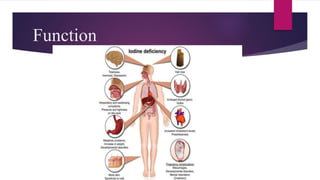
Function
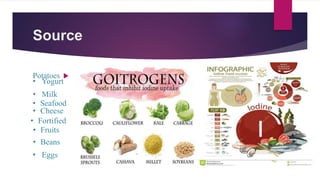
Source

Potatoes
• Yogurt
• Eggs
• Milk
• Seafood
• Cheese
• Fortified
• Fruits
• Beans
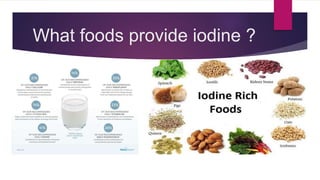
What foods provide iodine ?
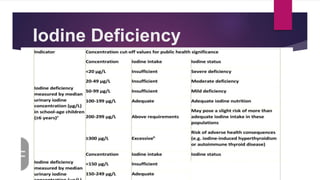
Iodine Deficiency
Absorption

Iodine from the diet is absorbed throughout the gastrointestinal tract.
Dietary iodine is converted into the iodide ion before it is absorbed. The
iodide ion is bio-available and absorbed totally from food and water. This is
not true for iodine within thyroid hormones ingested for therapeutic
purposes. Iodine enters the circulation as plasma inorganic iodide, which is
cleared from circulation by the thyroid and kidney. The iodide is used by the
thyroid gland for synthesis of thyroid hormones, and the kidney excretes
iodine with urine. The excretion of iodine in the urine is a good measure of
iodine intake
.
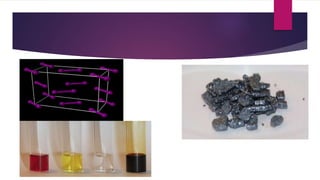
Iodine chemical form

atomicatomic weight number

acid-base properties symbolof higher-valence oxides53

[Kr]4d105s25p5 iodine

electroncrystal structure configuration physical state name at 20 oc (6B OF)

Halogens
Solid

Orthorhombic
Strongly acidic Brit

Phase at STP
solid

Melting point
(b) 386.85 K

(113.7 O C, 236.66 O F)

Boiling point
(12) 457.4 K (184.3 o c, 363.7 OF)

Density (near r.t.)
4.933 g/cm 3

Triple point
386.65 K, 12.1 kPa

Critical point
819 K, 11.7 MPa

Heat of fusion
(12) 15.52 kJ/mol

Heat of vaporisation
(12) 41.57 kJ/mol
عرض تقديمي (1).pptx
عرض تقديمي (1).pptx

عرض تقديمي (1).pptx

  • 1.
  • 2.
    Introduction  Iodine is anessential trace mineral not made by the body so must be obtained by food or supplements. It is found naturally in some foods and is added to supplements and some salt seasonings. Iodine is needed to make the thyroid hormones thyroxine and triiodothyronine, which assist with the creation of proteins and enzyme activity, as well as regulating normal metabolism. Without enough iodine, these thyroid hormones do not work properly and can lead to an under- active or overactive thyroid gland, causing the medical conditions of hypothyroidism and hyperthyroidism with various negative side effects in the body.
  • 3.
  • 4.
    Source  Potatoes • Yogurt • Eggs •Milk • Seafood • Cheese • Fortified • Fruits • Beans
  • 5.
  • 6.
  • 9.
    Absorption  Iodine from thediet is absorbed throughout the gastrointestinal tract. Dietary iodine is converted into the iodide ion before it is absorbed. The iodide ion is bio-available and absorbed totally from food and water. This is not true for iodine within thyroid hormones ingested for therapeutic purposes. Iodine enters the circulation as plasma inorganic iodide, which is cleared from circulation by the thyroid and kidney. The iodide is used by the thyroid gland for synthesis of thyroid hormones, and the kidney excretes iodine with urine. The excretion of iodine in the urine is a good measure of iodine intake .
  • 10.
    Iodine chemical form  atomicatomicweight number  acid-base properties symbolof higher-valence oxides53  [Kr]4d105s25p5 iodine  electroncrystal structure configuration physical state name at 20 oc (6B OF)  Halogens Solid  Orthorhombic Strongly acidic Brit  Phase at STP solid  Melting point (b) 386.85 K  (113.7 O C, 236.66 O F)  Boiling point (12) 457.4 K (184.3 o c, 363.7 OF)  Density (near r.t.) 4.933 g/cm 3  Triple point 386.65 K, 12.1 kPa  Critical point 819 K, 11.7 MPa  Heat of fusion (12) 15.52 kJ/mol  Heat of vaporisation (12) 41.57 kJ/mol