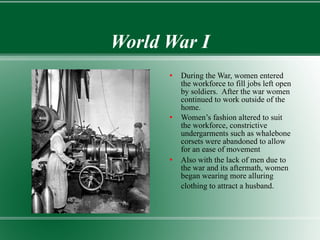
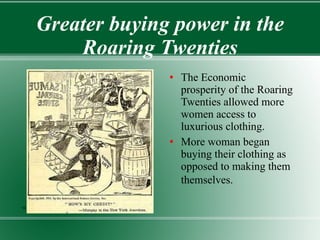
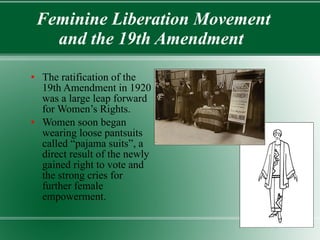
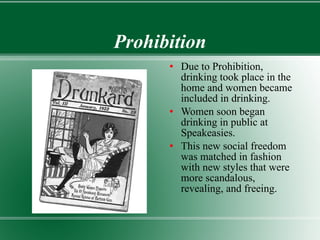
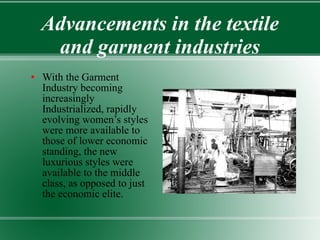
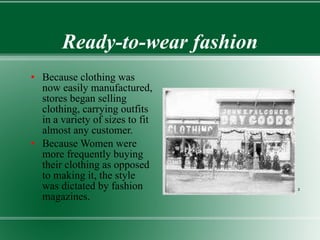
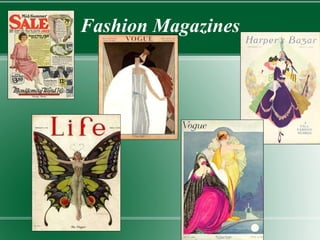
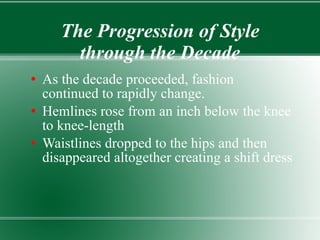
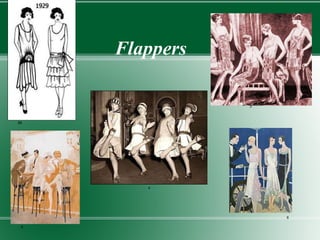
The document summarizes factors that led to fashion reforms in the 1920s including World War I, women's rights movements, and technological advancements. Women entered the workforce during WWI and continued working afterwards, leading to looser, more comfortable clothing. The roaring 20s brought economic prosperity and new buying power. Women gained voting rights in 1920 and embraced liberated styles like pantsuits. Prohibition led women to drink publicly in revealing outfits. Mass production through advances in textiles and garment industries made luxurious styles affordable for middle classes. Ready-to-wear fashion dominated with standardized sizing sold in stores and inspired by magazines. Hemlines rose and silhouettes shifted as the decade progressed, epitomized