Fashion
History
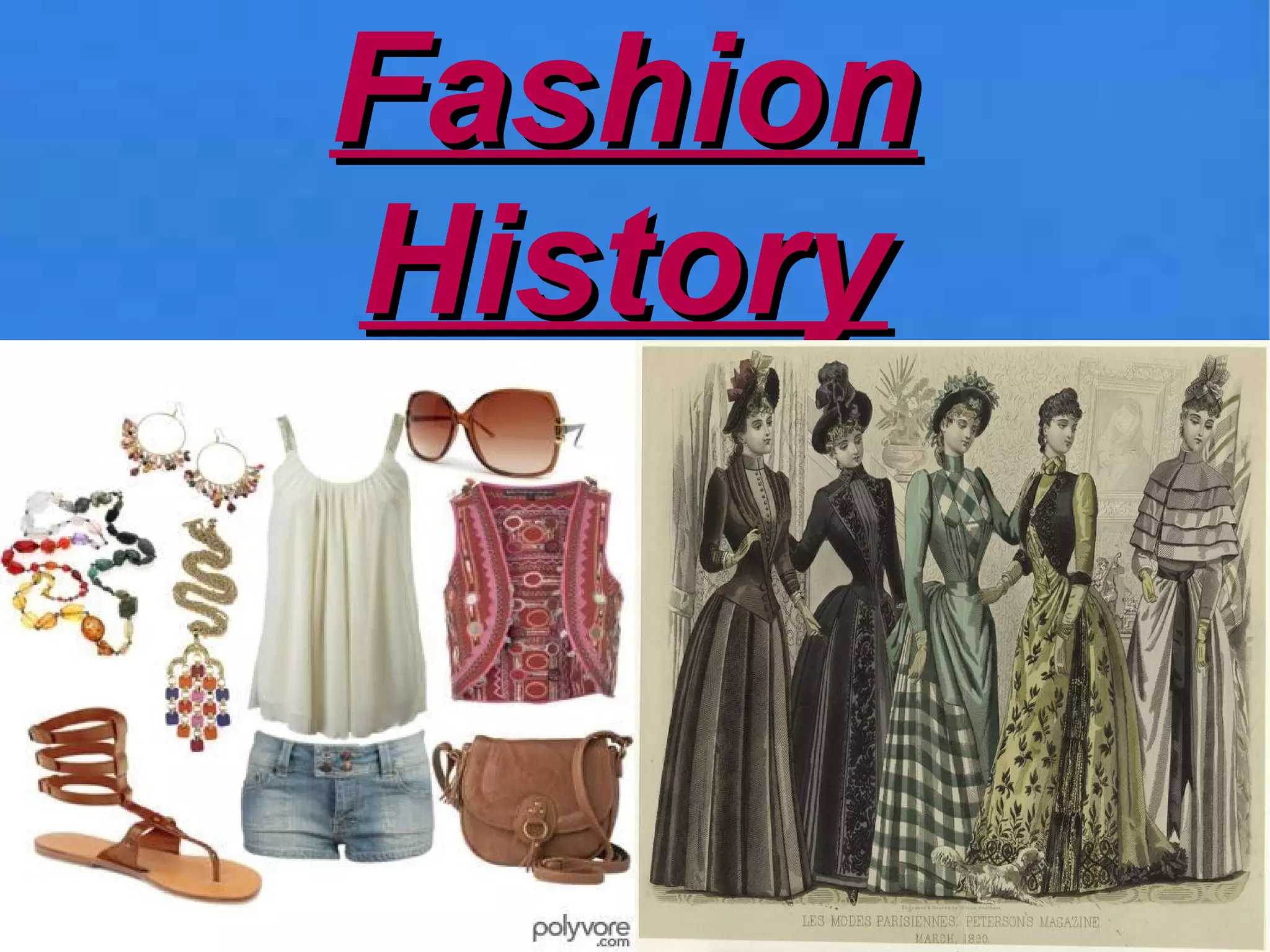
Fashion History

                  Fashion
                    is the
                    way to
                   express
                   yourself
                     with
                   clothing
                      and
                  personal
                  appearan-
                      ce.
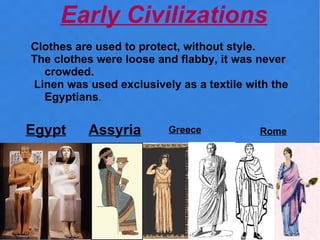
Early Civilizations
Clothes are used to protect, without style.
The clothes were loose and flabby, it was never
  crowded.
Linen was used exclusively as a textile with the
  Egyptians.


Egypt     Assyria        Greece           Rome
The middle age
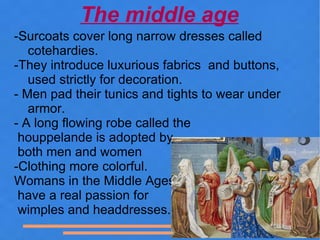
-Surcoats cover long narrow dresses called
   cotehardies.
-They introduce luxurious fabrics and buttons,
   used strictly for decoration.
- Men pad their tunics and tights to wear under
   armor.
- A long flowing robe called the
 houppelande is adopted by
 both men and women
-Clothing more colorful.
Womans in the Middle Ages
 have a real passion for
 wimples and headdresses.
The Renaissance (1450-1600)
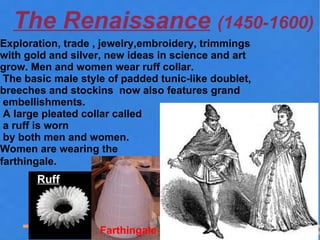
Exploration, trade , jewelry,embroidery, trimmings
with gold and silver, new ideas in science and art
grow. Men and women wear ruff collar.
 The basic male style of padded tunic-like doublet,
breeches and stockins now also features grand
 embellishments.
 A large pleated collar called
 a ruff is worn
 by both men and women.
Women are wearing the
farthingale.
       Ruff


                    Farthingale
1700s
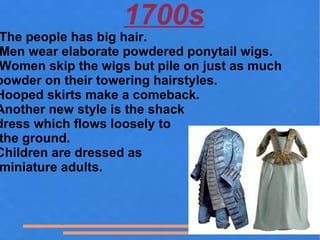
The people has big hair.
Men wear elaborate powdered ponytail wigs.
Women skip the wigs but pile on just as much
powder on their towering hairstyles.
Hooped skirts make a comeback.
Another new style is the shack
dress which flows loosely to
the ground.
Children are dressed as
miniature adults.
1800s
 The new sewing machines cut down on the time it
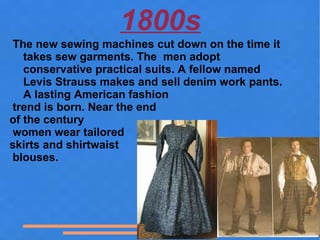
   takes sew garments. The men adopt
   conservative practical suits. A fellow named
   Levis Strauss makes and sell denim work pants.
   A lasting American fashion
 trend is born. Near the end
of the century
 women wear tailored
skirts and shirtwaist
 blouses.
1900-1920
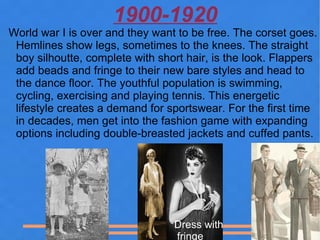
World war I is over and they want to be free. The corset goes.
 Hemlines show legs, sometimes to the knees. The straight
 boy silhoutte, complete with short hair, is the look. Flappers
 add beads and fringe to their new bare styles and head to
 the dance floor. The youthful population is swimming,
 cycling, exercising and playing tennis. This energetic
 lifestyle creates a demand for sportswear. For the first time
 in decades, men get into the fashion game with expanding
 options including double-breasted jackets and cuffed pants.


                                 Dress with
                                 fringe
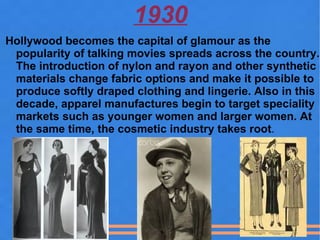
1930
Hollywood becomes the capital of glamour as the
 popularity of talking movies spreads across the country.
 The introduction of nylon and rayon and other synthetic
 materials change fabric options and make it possible to
 produce softly draped clothing and lingerie. Also in this
 decade, apparel manufactures begin to target speciality
 markets such as younger women and larger women. At
 the same time, the cosmetic industry takes root.
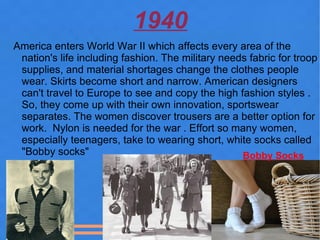
1940
America enters World War II which affects every area of the
 nation's life including fashion. The military needs fabric for troop
 supplies, and material shortages change the clothes people
 wear. Skirts become short and narrow. American designers
 can't travel to Europe to see and copy the high fashion styles .
 So, they come up with their own innovation, sportswear
 separates. The women discover trousers are a better option for
 work. Nylon is needed for the war . Effort so many women,
 especially teenagers, take to wearing short, white socks called
 "Bobby socks"                                     Bobby Socks
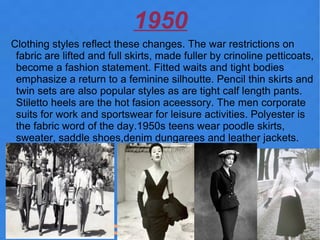
1950
Clothing styles reflect these changes. The war restrictions on
 fabric are lifted and full skirts, made fuller by crinoline petticoats,
 become a fashion statement. Fitted waits and tight bodies
 emphasize a return to a feminine silhoutte. Pencil thin skirts and
 twin sets are also popular styles as are tight calf length pants.
 Stiletto heels are the hot fasion aceessory. The men corporate
 suits for work and sportswear for leisure activities. Polyester is
 the fabric word of the day.1950s teens wear poodle skirts,
 sweater, saddle shoes,denim dungarees and leather jackets.
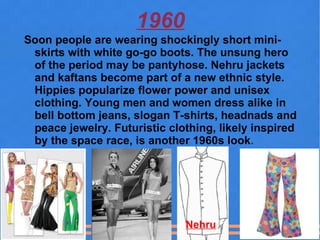
1960
Soon people are wearing shockingly short mini-
 skirts with white go-go boots. The unsung hero
 of the period may be pantyhose. Nehru jackets
 and kaftans become part of a new ethnic style.
 Hippies popularize flower power and unisex
 clothing. Young men and women dress alike in
 bell bottom jeans, slogan T-shirts, headnads and
 peace jewelry. Futuristic clothing, likely inspired
 by the space race, is another 1960s look.


                              Nehru
1970
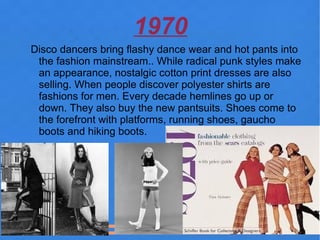
Disco dancers bring flashy dance wear and hot pants into
 the fashion mainstream.. While radical punk styles make
 an appearance, nostalgic cotton print dresses are also
 selling. When people discover polyester shirts are
 fashions for men. Every decade hemlines go up or
 down. They also buy the new pantsuits. Shoes come to
 the forefront with platforms, running shoes, gaucho
 boots and hiking boots.
1980
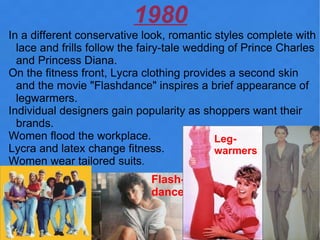
In a different conservative look, romantic styles complete with
  lace and frills follow the fairy-tale wedding of Prince Charles
  and Princess Diana.
On the fitness front, Lycra clothing provides a second skin
  and the movie "Flashdance" inspires a brief appearance of
  legwarmers.
Individual designers gain popularity as shoppers want their
  brands.
Women flood the workplace.                   Leg-
Lycra and latex change fitness.              warmers
Women wear tailored suits.
                              Flash-
                              dance
1990
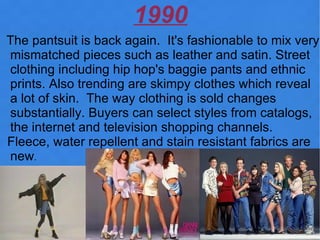
The pantsuit is back again. It's fashionable to mix very
mismatched pieces such as leather and satin. Street
clothing including hip hop's baggie pants and ethnic
prints. Also trending are skimpy clothes which reveal
a lot of skin. The way clothing is sold changes
substantially. Buyers can select styles from catalogs,
the internet and television shopping channels.
Fleece, water repellent and stain resistant fabrics are
new.
2000-2012
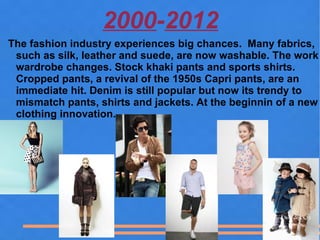
The fashion industry experiences big chances. Many fabrics,
 such as silk, leather and suede, are now washable. The work
 wardrobe changes. Stock khaki pants and sports shirts.
 Cropped pants, a revival of the 1950s Capri pants, are an
 immediate hit. Denim is still popular but now its trendy to
 mismatch pants, shirts and jackets. At the beginnin of a new
 clothing innovation.
The End

     Sara Álvarez Suárez

Trabajo de la moda

  • 1.
  • 2.
    Fashion History Fashion is the way to express yourself with clothing and personal appearan- ce.
  • 3.
    Early Civilizations Clothes areused to protect, without style. The clothes were loose and flabby, it was never crowded. Linen was used exclusively as a textile with the Egyptians. Egypt Assyria Greece Rome
  • 4.
    The middle age -Surcoatscover long narrow dresses called cotehardies. -They introduce luxurious fabrics and buttons, used strictly for decoration. - Men pad their tunics and tights to wear under armor. - A long flowing robe called the houppelande is adopted by both men and women -Clothing more colorful. Womans in the Middle Ages have a real passion for wimples and headdresses.
  • 5.
    The Renaissance (1450-1600) Exploration,trade , jewelry,embroidery, trimmings with gold and silver, new ideas in science and art grow. Men and women wear ruff collar. The basic male style of padded tunic-like doublet, breeches and stockins now also features grand embellishments. A large pleated collar called a ruff is worn by both men and women. Women are wearing the farthingale. Ruff Farthingale
  • 6.
    1700s The people hasbig hair. Men wear elaborate powdered ponytail wigs. Women skip the wigs but pile on just as much powder on their towering hairstyles. Hooped skirts make a comeback. Another new style is the shack dress which flows loosely to the ground. Children are dressed as miniature adults.
  • 7.
    1800s The newsewing machines cut down on the time it takes sew garments. The men adopt conservative practical suits. A fellow named Levis Strauss makes and sell denim work pants. A lasting American fashion trend is born. Near the end of the century women wear tailored skirts and shirtwaist blouses.
  • 8.
    1900-1920 World war Iis over and they want to be free. The corset goes. Hemlines show legs, sometimes to the knees. The straight boy silhoutte, complete with short hair, is the look. Flappers add beads and fringe to their new bare styles and head to the dance floor. The youthful population is swimming, cycling, exercising and playing tennis. This energetic lifestyle creates a demand for sportswear. For the first time in decades, men get into the fashion game with expanding options including double-breasted jackets and cuffed pants. Dress with fringe
  • 9.
    1930 Hollywood becomes thecapital of glamour as the popularity of talking movies spreads across the country. The introduction of nylon and rayon and other synthetic materials change fabric options and make it possible to produce softly draped clothing and lingerie. Also in this decade, apparel manufactures begin to target speciality markets such as younger women and larger women. At the same time, the cosmetic industry takes root.
  • 10.
    1940 America enters WorldWar II which affects every area of the nation's life including fashion. The military needs fabric for troop supplies, and material shortages change the clothes people wear. Skirts become short and narrow. American designers can't travel to Europe to see and copy the high fashion styles . So, they come up with their own innovation, sportswear separates. The women discover trousers are a better option for work. Nylon is needed for the war . Effort so many women, especially teenagers, take to wearing short, white socks called "Bobby socks" Bobby Socks
  • 11.
    1950 Clothing styles reflectthese changes. The war restrictions on fabric are lifted and full skirts, made fuller by crinoline petticoats, become a fashion statement. Fitted waits and tight bodies emphasize a return to a feminine silhoutte. Pencil thin skirts and twin sets are also popular styles as are tight calf length pants. Stiletto heels are the hot fasion aceessory. The men corporate suits for work and sportswear for leisure activities. Polyester is the fabric word of the day.1950s teens wear poodle skirts, sweater, saddle shoes,denim dungarees and leather jackets.
  • 12.
    1960 Soon people arewearing shockingly short mini- skirts with white go-go boots. The unsung hero of the period may be pantyhose. Nehru jackets and kaftans become part of a new ethnic style. Hippies popularize flower power and unisex clothing. Young men and women dress alike in bell bottom jeans, slogan T-shirts, headnads and peace jewelry. Futuristic clothing, likely inspired by the space race, is another 1960s look. Nehru
  • 13.
    1970 Disco dancers bringflashy dance wear and hot pants into the fashion mainstream.. While radical punk styles make an appearance, nostalgic cotton print dresses are also selling. When people discover polyester shirts are fashions for men. Every decade hemlines go up or down. They also buy the new pantsuits. Shoes come to the forefront with platforms, running shoes, gaucho boots and hiking boots.
  • 14.
    1980 In a differentconservative look, romantic styles complete with lace and frills follow the fairy-tale wedding of Prince Charles and Princess Diana. On the fitness front, Lycra clothing provides a second skin and the movie "Flashdance" inspires a brief appearance of legwarmers. Individual designers gain popularity as shoppers want their brands. Women flood the workplace. Leg- Lycra and latex change fitness. warmers Women wear tailored suits. Flash- dance
  • 15.
    1990 The pantsuit isback again. It's fashionable to mix very mismatched pieces such as leather and satin. Street clothing including hip hop's baggie pants and ethnic prints. Also trending are skimpy clothes which reveal a lot of skin. The way clothing is sold changes substantially. Buyers can select styles from catalogs, the internet and television shopping channels. Fleece, water repellent and stain resistant fabrics are new.
  • 16.
    2000-2012 The fashion industryexperiences big chances. Many fabrics, such as silk, leather and suede, are now washable. The work wardrobe changes. Stock khaki pants and sports shirts. Cropped pants, a revival of the 1950s Capri pants, are an immediate hit. Denim is still popular but now its trendy to mismatch pants, shirts and jackets. At the beginnin of a new clothing innovation.
  • 17.
    The End Sara Álvarez Suárez