Universidad autónoma del Carmen
Facultad de ciencias educativas
Licenciatura de lengua inglesa
By: Bryan Formoso Hernández
Act. 1.8
Behavioristic CALL
The first phase of CALL, conceived in the 1950s and
implemented in the 1960s and '70s, was based on the then-
dominant behaviorist theories of learning. Programs of this
phase entailed repetitive language drills and can be referred to
as "drill and practice" (or, more pejoratively, as "drill and kill").
A computer can present such material on an individualized
basis, allowing students to proceed at their own pace and
freeing up class time for other activities
Communicative CALL
The second phase of CALL was based on the communicative
approach to teaching which became prominent in the 1970s
and 80s. Proponents of this approach felt that the drill and
practice programs of the previous decade did not allow enough
authentic communication to be of much value.
One of the main advocates of this new approach was John
Underwood, who in 1984 proposed a series of "Premises for
'Communicative' CALL" (Underwood 1984:52).
Steps toward integrative CALL: the Internet
Computer Mediated Communication allows users to share not
only brief messages, but also lengthy (formatted or
unformatted) documents - thus facilitating collaborative writing
- and also graphics, sounds, and video.
They can also use the Web to publish their texts or multimedia
materials to share with partner classes or with the general
public.
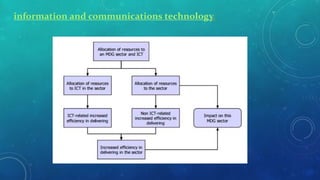
information and communications technology.
References:
https://www.cs.cmu.edu/~rtongia/ICT4SD_Ch_2--ICT.pdf

1.8bryanformoso

  • 1.
    Universidad autónoma delCarmen Facultad de ciencias educativas Licenciatura de lengua inglesa By: Bryan Formoso Hernández Act. 1.8
  • 2.
    Behavioristic CALL The firstphase of CALL, conceived in the 1950s and implemented in the 1960s and '70s, was based on the then- dominant behaviorist theories of learning. Programs of this phase entailed repetitive language drills and can be referred to as "drill and practice" (or, more pejoratively, as "drill and kill"). A computer can present such material on an individualized basis, allowing students to proceed at their own pace and freeing up class time for other activities
  • 3.
    Communicative CALL The secondphase of CALL was based on the communicative approach to teaching which became prominent in the 1970s and 80s. Proponents of this approach felt that the drill and practice programs of the previous decade did not allow enough authentic communication to be of much value. One of the main advocates of this new approach was John Underwood, who in 1984 proposed a series of "Premises for 'Communicative' CALL" (Underwood 1984:52).
  • 4.
    Steps toward integrativeCALL: the Internet Computer Mediated Communication allows users to share not only brief messages, but also lengthy (formatted or unformatted) documents - thus facilitating collaborative writing - and also graphics, sounds, and video. They can also use the Web to publish their texts or multimedia materials to share with partner classes or with the general public.
  • 5.
  • 6.